Tag: Bank Fraud Prevention

  • How to Use FDIC BankFind to Verify a Bank: 6 Smart Tips

    How to Use FDIC BankFind to Verify a Bank: 6 Smart Tips

    How to Use FDIC BankFind to Verify a Bank: 2026 Guide

    Written by
    Subhash Rukade
    Founder, FinanceInvestment

    Published:

    Updated:

    Reading Time:

    12 min


     How to Use FDIC BankFind to Verify a Bank Introduction: Why Verifying a Bank Matters

    A savings account catches your attention with a competitive rate. The website looks legitimate, and an FDIC logo appears near the bottom. Before transferring your savings, wouldn’t you want to confirm the bank is actually insured?

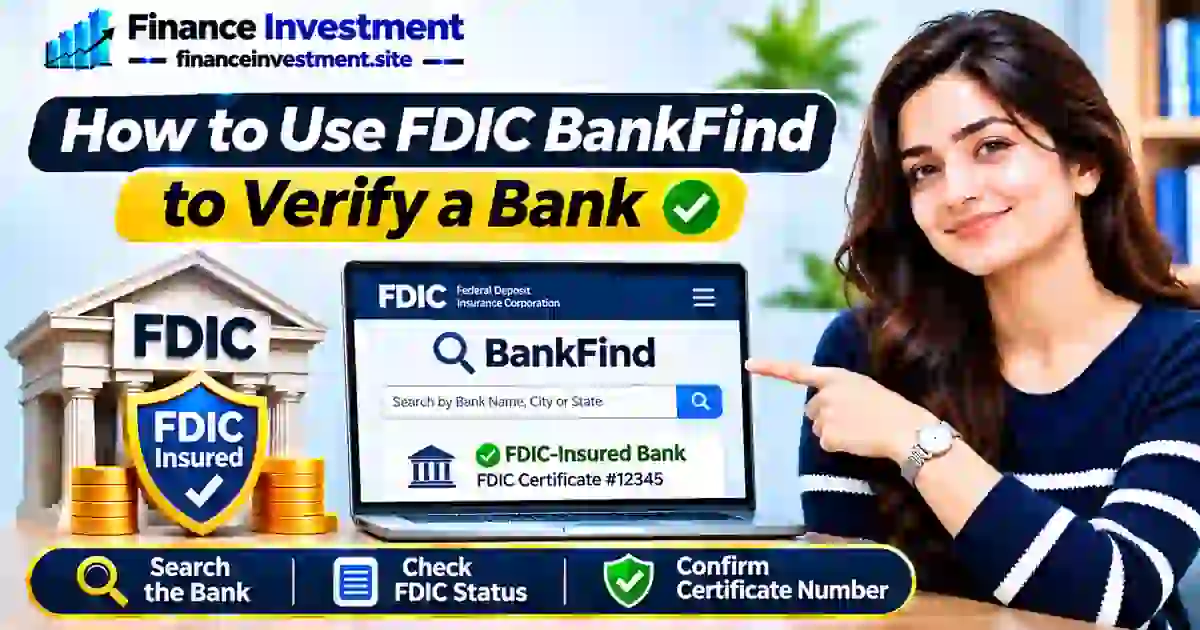
    Knowing how to use FDIC BankFind to verify a bank helps you check its identity and federal deposit insurance status through an official government database. You can compare the bank’s name, certificate number and other identifying information instead of relying on marketing claims.

    BankFind confirms institutional details, not the exact insurance coverage of every individual account. For a broader explanation of deposit protection, read our FDIC and NCUA insurance guide.

    What You’ll Learn

    • Where to access the official FDIC BankFind Suite.
    • How to search by bank name, location or certificate number.
    • Which bank details to compare before opening an account.
    • What to check if your bank doesn’t appear in the results.

    Quick Answer: How to Verify a Bank Using FDIC BankFind

    Quick Answer: Open the official FDIC BankFind Suite, search for your bank, select the matching institution and review its insurance status, FDIC certificate number and identifying details. Confirm that the result matches the institution actually holding your deposits.

    6 Key Takeaways

    • Use the official database: Start with the FDIC website rather than a bank advertisement.
    • Match the institution: Similar bank names don’t necessarily represent the same legal bank.
    • Check the certificate number: It helps distinguish one insured institution from another.
    • Review current status: Historical records alone don’t establish that a bank is currently operating.
    • Check banking partners: A fintech app’s brand name may differ from the bank holding customer funds.
    • Understand the limit: BankFind verifies institutions, not your personal insured deposit balance.

    Bottom Line: A matching BankFind record is an important first check. Verify the institution and account relationship before transferring money.

    FDIC BankFind at a Glance

    FDIC BankFind helps you identify insured banks and review their official records. Here’s a quick reference before you begin.

    QUICK FACT
    Free FDIC Tool
    BEST FOR
    Verifying U.S. Banks
    STANDARD COVERAGE LIMIT
    $250,000*
    FeatureWhat You Can Check
    Institution SearchFind banks by name and available identifying information.
    FDIC CertificateMatch the certificate number to the insured institution.
    Bank StatusReview institution details and available historical records.
    Personal CoverageDoes not calculate your individual insured deposit amount.

    *Important: The standard FDIC insurance limit is $250,000 per depositor, per insured bank, per ownership category. This is an insurance rule, not a BankFind search feature.

    FDIC BankFind: Complete Beginner Guide How to Use FDIC BankFind to Verify a Bank

    A bank may have a familiar name, a polished website and attractive savings rates. But how can you confirm that the institution behind the account is federally insured? That’s where FDIC BankFind becomes useful.

    What Is FDIC BankFind?

    FDIC BankFind is a free online directory maintained by the Federal Deposit Insurance Corporation. It provides official information about FDIC-insured banking institutions, including their names, locations, certificate numbers and available historical records.

    Why Does the Bank’s Legal Name Matter?

    The name advertised on a banking website may differ from the institution’s legal name. Some online banking brands operate as divisions of established banks, while certain financial apps work with separate partner banks.

    Finding an insured bank in the directory is helpful, but it doesn’t automatically establish that every product offered through a particular app or website qualifies for FDIC protection.

    What Does FDIC Insurance Actually Protect?

    FDIC insurance generally protects eligible deposits, such as checking accounts, savings accounts and certificates of deposit, if an insured bank fails. It does not insure investment losses, cryptocurrency holdings or money lost to scams simply because an FDIC-insured bank is involved.

    Does BankFind Cover Credit Unions?

    No. Federally insured credit unions are generally protected through the National Credit Union Administration (NCUA), not the FDIC. You can verify their insurance through MyCreditUnion.gov.

    Beginner Tip: Treat BankFind as an institution-verification tool, not a guarantee that a banking website is legitimate or that your entire balance is insured.

    How to Use FDIC BankFind: Step-by-Step Instructions

    You can check a bank’s identity without creating an account or sharing your financial information. Follow these six steps before depositing money with an unfamiliar institution.

    Step 1: Open the Official BankFind Tool

    Go directly to the FDIC BankFind Suite. Confirm the address ends in the official fdic.gov domain, not a similar-looking website.

    Step 2: Search for the Bank

    Find the Name/Cert/Website search area. Choose the relevant search type, enter the bank’s name and select Search. A partial name may return more possible matches.

    Step 3: Refine Your Results

    If multiple banks appear, narrow the search using the available state, city or ZIP code fields. You can also search by FDIC certificate number or website information when you have reliable details.

    Step 4: Confirm the Institution’s Status

    Review the matching result for its FDIC-Insured designation, certificate number and headquarters address. Select View Details when available. Remember that BankFind also contains historical records of banks that no longer operate independently.

    Step 5: Compare the Bank’s Identity

    Compare the official name, address and listed website with information obtained independently. If an online brand or fintech app offers the account, identify the actual bank holding the deposits. A matching certificate number alone does not authenticate an app or website.

    Step 6: Resolve Missing or Conflicting Information

    Try the bank’s legal name or check whether it merged with another institution. If questions remain, contact the FDIC at 1-877-275-3342. Don’t transfer funds until you understand the discrepancy.

    Important: BankFind helps verify an institution’s FDIC insurance status. It does not independently guarantee that a banking website is genuine or that every financial product offered through it is insured.

    FDIC BankFind: Benefits and Drawbacks

    BankFind makes checking a bank’s official records easier, although some questions require additional verification.

    Benefits (Pros)

    • Government source: Access institution information maintained by the FDIC.
    • No cost: Search without paying fees or creating an account.
    • Clear identification: Compare legal names, locations and FDIC certificate numbers.
    • Historical context: Available records may help explain bank name changes or mergers.

    Limitations (Cons)

    • No website authentication: Scammers can misuse genuine bank details.
    • No balance calculation: Personal deposit insurance amounts require a separate assessment.
    • Brand-name differences: Fintech companies may advertise accounts held at partner banks.
    • Bank-focused directory: Credit union insurance must be checked through NCUA resources.

    Quick Take: Use BankFind to confirm the institution, then independently verify the account provider and applicable deposit insurance coverage.

    FDIC BankFind vs. FDIC Sign vs. Certificate Number

    These three verification methods serve different purposes. Understanding what each one establishes can help you avoid relying on misleading claims.

    MethodWhat It EstablishesLimitation
    FDIC BankFindProvides government-maintained institution and insurance information.Does not independently authenticate an account provider’s website.
    FDIC SignSignals that FDIC insurance is being represented.A logo displayed online can be copied or misused.
    FDIC Certificate NumberIdentifies an insured institution in FDIC records.A genuine number can be used in fraudulent advertising.

    Which Method Should You Trust?

    Start with BankFind to check the institution’s official record. Match its certificate number and independently verify the bank’s identity and contact information. Don’t treat an FDIC logo or certificate number shown on an unfamiliar website as proof of legitimacy.

    Quick Take: BankFind provides the official reference; a certificate number helps identify the bank; an FDIC sign alone cannot confirm a website is trustworthy.

    FDIC BankFind: Costs, Risks and Expert Tips

    Does FDIC BankFind Cost Money?

    No. FDIC BankFind is a free government service. You don’t need a subscription, payment card or banking login to search for an institution. Be suspicious of websites demanding payment to perform a basic FDIC bank lookup.

    Risks to Understand Before Depositing Money

    • Impersonation scams: Fraudulent websites may copy legitimate bank names, logos and certificate numbers.
    • Fintech confusion: An insured partner bank does not automatically make every app balance FDIC-insured.
    • Coverage misunderstandings: The standard $250,000 limit generally applies per depositor, per insured bank, per ownership category—not separately to every account.
    • Outdated assumptions: A bank may change names or merge, so review its current institutional record.

    Expert Tip: Verify Before You Transfer

    Open BankFind independently, compare the institution’s legal name and contact information, and confirm where your deposits will actually be held. If anything seems inconsistent, contact the bank through independently verified channels before sending money.

    Remember: FDIC insurance generally addresses eligible deposits when an insured bank fails. It isn’t a blanket guarantee against scams or unauthorized transfers. Learn more in our guide to FDIC insurance and bank fraud.

    Common FDIC BankFind Mistakes to Avoid

    Even a correct BankFind search can lead to the wrong conclusion if you overlook these details.

    • Trusting the logo: An FDIC image on a website is not independent proof of insurance.
    • Matching only the name: Similar names may belong to different institutions.
    • Ignoring bank history: An old record may refer to an institution that merged or closed.
    • Assuming every balance qualifies: An insured partner bank doesn’t automatically insure every fintech product.

    Real-Life Example: An Online Savings Offer

    Hypothetical scenario: Sarah finds a savings app advertising an attractive APY and FDIC protection. Searching the app’s brand name produces no matching bank record.

    She identifies the claimed partner bank and finds its official BankFind record. Before depositing, she independently contacts the bank to confirm the relationship and asks how her funds would be held and insured.

    Lesson: Finding an insured partner bank is a useful first step—not automatic proof that an app or its advertised account is protected.

    Who Should Use FDIC BankFind?

    FDIC BankFind is particularly helpful when you need to confirm which insured institution is responsible for your deposits.

    • First-time savers: Check a bank’s FDIC insurance status before opening an account.
    • Online banking customers: Research unfamiliar institutions advertising competitive rates.
    • Fintech app users: Identify and verify the bank named as the deposit-holding partner.
    • Families using multiple banks: Investigate whether different brands operate under the same insured institution.
    • Retirees and high-balance savers: Confirm bank identities before assessing deposit insurance limits across accounts.

    Quick Tip: BankFind checks FDIC-insured banks, not credit unions. For federally insured credit unions, use official NCUA resources.

    Frequently Asked Questions About FDIC BankFind

    1. Is FDIC BankFind free to use?

    Yes. BankFind is free and doesn’t require an account, registration or payment.

    2. How do I check if a bank is FDIC-insured?

    Search the bank’s legal name in BankFind, then review its insurance status and identifying details.

    3. What if my bank doesn’t appear in BankFind?

    Try another legal name or check for a merger. Contact the FDIC if the institution remains unclear.

    4. What is an FDIC certificate number?

    It’s an identifier assigned to an FDIC-insured bank that helps distinguish it from other institutions.

    5. Does an FDIC logo prove a website is legitimate?

    No. A logo can be copied. Independently verify the bank’s official identity and contact information.

    6. Can BankFind verify a fintech app?

    It can verify a partner bank, but it doesn’t automatically confirm the app’s legitimacy or account coverage.

    7. Does BankFind calculate my FDIC coverage?

    No. Individual coverage depends on deposit amounts, ownership categories and the insured bank involved.

    8. Can I check a credit union using BankFind?

    No. Check federally insured credit unions through official NCUA resources instead.


    Final Verdict: Verify the Bank Before You Deposit

    A few minutes spent checking a bank can prevent costly misunderstandings later. FDIC BankFind gives you a government-maintained reference for confirming an institution’s identity and deposit insurance status.

    Still, finding a legitimate bank doesn’t automatically prove that an unfamiliar website is trustworthy or that every advertised account qualifies for coverage. Verify the actual deposit-holding institution and investigate anything that doesn’t match.

    Keep Learning: Understand insurance limits, ownership categories and credit union protection in our complete FDIC and NCUA insurance guide.

    Have a Money Question? Keep Exploring.

    A little research can make a meaningful difference when choosing where to keep your savings. Checking the bank is one step; understanding how your deposits are protected is another.

    Explore our FDIC and NCUA insurance guide or read what FDIC insurance doesn’t cover before making your next banking decision.

    📩 Get in Touch With FinanceInvestment

    Have a banking question or an idea for a future guide? We’d love to hear what you want explained next.

    Disclaimer: This content is for general educational purposes and is not personalized financial, legal or banking advice. FDIC insurance coverage depends on the insured bank, deposit ownership category and applicable rules. Confirm current requirements with the FDIC or your financial institution before making decisions.


  • Can You Reverse a Bank Transfer After It Is Completed?

    Can You Reverse a Bank Transfer After It Is Completed?

    Can You Reverse a Bank Transfer After It Is Completed?

    Subhash Rukade
    Founder, FinanceInvestment
    Published
    October 30, 2026
    Last Updated
    October 30, 2026
    Reading Time
    About 10 minutes


    can you reverse a bank transfer after it is completed

    What Happens After a Bank Transfer Is Completed?

    Can you reverse a bank transfer after it is completed? Sometimes, yes—but recovery is not guaranteed. If you sent money to the wrong person, entered incorrect payment details, or discovered a scam after sending money, the next steps depend on the transfer method and what happened. Acting quickly gives your bank a better opportunity to investigate and request the return of funds.

    In the United States, ACH transfers, wire transfers, and person-to-person payments such as Zelle follow different rules and recovery procedures. A bank may be able to request a recall, correction, or return, but it generally cannot promise that the money will come back. The options can also differ depending on whether you authorized the payment yourself or someone made an unauthorized transaction using your account.

    This guide explains what you can do, whom to contact, and which mistakes to avoid when a completed payment goes wrong. For a broader overview of payment methods, timing, and transfer options, visit our Bank Transfers and Payments guide.

    What You’ll Learn

    • When a completed bank transfer may be recoverable.
    • How ACH reversals, wire recalls, and Zelle disputes differ.
    • What to do immediately after sending money by mistake or falling victim to a scam.
    • How to contact your bank and identify possible dispute or fraud-reporting options.

    Quick Answer: Can You Reverse a Completed Bank Transfer?

    Yes, sometimes—but a completed bank transfer usually cannot be canceled like a pending payment. Your bank may be able to request a recall, return, or correction, depending on the payment method and circumstances. Contact the sending bank immediately and provide the transaction details. If you did not authorize the transaction, report it as unauthorized rather than describing it only as a mistaken payment. Different legal protections and deadlines may apply.

    Key Takeaways

    • Contact your bank as soon as you discover an incorrect, unexpected, or fraudulent transfer.
    • ACH transfers, wire transfers, and Zelle payments have different return and recovery procedures.
    • A bank recall or recovery request does not guarantee that the recipient’s funds will be returned.
    • Keep transaction receipts, reference numbers, messages, and records of your conversations with the bank.

    The Bottom Line

    Speed matters, but the right response matters too. Ask your bank which recovery process applies and whether any deadlines affect your case. If you suspect fraud or account access by someone else, report that specifically and secure your banking credentials. Do not assume that a payment is recoverable simply because you reported it.

    Bank Transfer Recovery at a Glance

    A completed bank transfer may still be recoverable, but the outcome depends on the payment method, the reason for the request, and how quickly you act. Here are the essentials to know before contacting your bank.

    FIRST STEP
    Contact your bank promptly
    RECOVERY
    Not guaranteed
    WHAT MATTERS
    Payment type and circumstances

    Quick Comparison

    Payment typePossible next stepImportant limitation
    ACH transferAsk your bank whether a return, correction, or permitted reversal applies.ACH reversals are limited to specific reasons and timeframes.
    Wire transferAsk the sending bank to initiate an urgent recall request.A recall does not guarantee the receiving bank can return the funds.
    Zelle paymentContact your bank promptly and report suspected fraud.An authorized completed payment generally cannot simply be canceled; other remedies may depend on the circumstances.

    Important: If someone made a transfer without your permission, tell your bank clearly that the transaction was unauthorized. Do not report it as unauthorized if you personally approved the payment but were deceived; explain exactly what happened so the bank can assess the appropriate process.

    Can a Completed Bank Transfer Be Reversed?can you reverse a bank transfer after it is completed

    Sometimes, but a completed bank transfer usually cannot be canceled as easily as a pending payment. Once funds have reached the recipient’s account, recovery may require your bank to investigate and contact the receiving bank or payment provider. Whether the money can be returned depends on the transfer method, the reason for the payment, and how quickly you report the problem.

    When Might Recovery Be Possible?

    If you sent money to the wrong account, made a duplicate payment, or noticed an error, contact your bank immediately. For an ACH transaction, ask whether a permitted reversal, return, or correction applies; ACH reversals are limited to specific circumstances and deadlines. For a wire transfer, request an urgent recall. A recall is a request—not a guarantee that the funds will be returned. With Zelle, a payment to an enrolled recipient generally cannot be canceled once completed, but you should still contact your bank if something went wrong. Review the official Zelle Help Center for payment-specific guidance.

    What If the Transfer Was Unauthorized?

    If someone initiated a transfer without your permission, notify your bank promptly and identify it as an unauthorized transaction. Federal protections may apply to certain electronic fund transfers, depending on the account and payment method. If you personally approved a payment after being deceived by a scammer, the situation may be treated differently. Explain exactly what happened rather than assuming every scam payment qualifies as an unauthorized transfer.

    Your first step: Contact your bank through its official phone number or app. Provide the transfer date, amount, recipient details, and confirmation number. Ask which recovery or dispute process applies, record your case number, and follow up promptly.

    How Bank Transfer Recalls and Reversals Work

    A bank transfer recall or reversal may help recover money, but neither term guarantees a refund. The process depends on the payment network, the reason for the request, and whether the transaction qualifies under the applicable rules. Acting quickly gives your bank more time to investigate and contact the relevant institution.

    1. Contact the Sending Bank

    Use your bank’s official phone number or secure banking app. Explain whether you sent money to the wrong recipient, made a duplicate payment, or suspect fraud. Provide the transfer date, amount, confirmation number, and recipient details. Ask whether a recall, return, correction, or formal dispute is appropriate.

    2. The Bank Checks Your Options

    The bank reviews the transaction and the rules for that payment method. ACH reversals are permitted only for specific reasons and within applicable time limits. A wire recall asks the receiving institution to help recover the funds. Zelle payments have separate cancellation and error-reporting procedures, so describe the situation accurately.

    3. The Recovery Request Is Processed

    The receiving institution or payment provider reviews the request under the applicable procedures. The outcome may depend on the transaction details, available funds, timing, and relevant rules. A request can be unsuccessful, particularly when funds have already been withdrawn or the payment does not qualify for reversal or return.

    Expert tip: Request a case number, ask about reporting deadlines, and keep records of all communications. If you suspect fraud or account compromise, report it immediately and ask the bank how to secure your account while the case is reviewed.

    Recovery Options: Benefits and Limitations

    If a bank transfer has been completed, the right recovery option depends on the payment method and what happened. Contact your bank promptly, explain the facts accurately, and ask which procedure applies.

    Recall, Return or Correction

    Benefit: May help address an eligible ACH error, misdirected payment, or wire transfer sent by mistake.

    Limitation: Rules and time limits vary, and a recall or return request does not guarantee recovery.

    Fraud or Unauthorized-Transfer Report

    Benefit: Gives the bank an opportunity to investigate and assess whether consumer protections or dispute procedures apply.

    Limitation: Eligibility, evidence requirements, and reporting deadlines depend on the transaction and circumstances.

    Important distinction: If you personally approved a payment after being deceived, explain that it was a scam payment. If someone initiated the transfer without your permission, report it as unauthorized. These situations may follow different procedures, so describe exactly what happened.

    ACH vs. Wire Transfers vs. Zelle: How Recovery Differs

    The payment method affects how a completed transfer can be challenged or recovered. ACH transfers, wire transfers, and Zelle payments follow different procedures, so ask your bank which option applies to your specific transaction.

    Payment typePossible next stepImportant limitation
    ACH transferAsk whether a permitted reversal or return applies.ACH reversals are limited to specified reasons and timeframes; other returns follow their own rules.
    Wire transferRequest an urgent recall through the sending bank.A recall is not a guaranteed reversal, and recovery may become harder once funds are withdrawn.
    ZelleContact your bank promptly and report any error or suspected fraud.A completed payment to an enrolled recipient generally cannot simply be canceled; available remedies depend on the circumstances.

    What should you do first? Contact your bank as soon as you discover the problem, regardless of the payment method. For more detail, read our guides to ACH vs. wire transfers and ACH transfers vs. Zelle.

    Important: A payment you authorized after being deceived may be handled differently from a transaction someone initiated without your permission. Explain exactly what happened so your bank can assess the appropriate reporting and recovery process.

    Costs, Risks and Expert Tips for Recovering a Bank Transfer

    Recovering a completed bank transfer can involve delays and uncertainty. Some banks charge fees for particular wire services or investigations, while other recovery requests may not carry a separate fee. Charges depend on the institution and service, so ask your bank to confirm any cost before proceeding.

    Risks to Keep in Mind

    • A recall or return request may not succeed, particularly if funds are no longer available or the payment does not qualify.
    • Delays can affect your options. Reporting deadlines depend on the payment type and whether you are reporting an error or an unauthorized transaction.
    • Beware of recovery scams. Do not trust people who guarantee a refund, demand unusual upfront payments, or ask for your banking password, one-time passcode, or remote access to your device.

    Expert Tips

    Contact your bank using its official app, website, or verified phone number. Save the transaction receipt, messages, case number, and details of every conversation. If you suspect fraud or account compromise, report it immediately and ask how to secure your account and any linked payment methods.

    For more ways to protect your money, read our bank security and fraud prevention guide.

    Common Mistakes When Trying to Reverse a Bank Transfer

    Your response after a mistaken or suspicious payment can affect how quickly your bank assesses the situation. Avoid these common errors:

    • Waiting to report it: Contact your bank promptly and ask whether any reporting or recovery deadline applies.
    • Assuming a recall guarantees a refund: A recall or return request may fail, so ask your bank what to expect.
    • Deleting important evidence: Save transaction receipts, confirmation numbers, messages, and the bank’s case reference.
    • Describing the transaction inaccurately: Explain whether you sent money by mistake, authorized a payment after being deceived, or never authorized the transaction.

    Hypothetical Example: Money Sent to the Wrong Person

    Imagine Jordan intends to send $850 to a contractor but accidentally selects the wrong saved recipient. After noticing that the payment is complete, Jordan contacts the sending bank, provides the transaction reference, and asks whether a recall or other recovery process is available.

    The bank reviews the payment method and explains the available next steps. Jordan records the case number, keeps the payment confirmation, and follows up as instructed. The money may be recovered, but success depends on the circumstances and applicable procedures.

    Takeaway: Report the issue promptly, explain exactly what happened, preserve your records, and follow up with the bank. If fraud is suspected, ask about additional account-security steps.

    Which Bank Transfer Recovery Action Should You Take?

    Your first step depends on what happened. Identify whether you made a payment mistake, were deceived into sending money, or experienced a transaction you never authorized.

    You sent money to the wrong recipient

    Contact your bank immediately and ask whether a recall, return, or correction is available for that payment method.

    You authorized a payment after being deceived

    Report the scam, request recovery assistance, and preserve messages, receipts, and other evidence. Explain that you authorized the payment but were deceived.

    Someone transferred money without your permission

    Report the transaction as unauthorized promptly. Ask about applicable dispute deadlines and steps to secure your account.

    If the issue remains unresolved, ask your bank about its formal complaint process and keep written records. You can also submit a complaint to the Consumer Financial Protection Bureau (CFPB) when appropriate. A complaint may help seek a response, but it does not guarantee that your money will be recovered.

    Frequently Asked Questions

    1. Can you reverse a bank transfer after it is completed?

    Sometimes. Your bank may request a recall, return, or correction, but recovery depends on the payment method, the circumstances, and applicable rules. A request does not guarantee a refund.

    2. How quickly should I contact my bank?

    Contact your bank as soon as you discover the problem. Prompt reporting gives the bank an opportunity to assess recovery options and helps you avoid missing applicable reporting deadlines.

    3. Can a completed wire transfer be recalled?

    You can ask the sending bank to initiate a wire recall. However, a recall is a request, and the money may not be recoverable, especially if it has already been withdrawn or moved.

    4. Can I reverse an ACH transfer?

    ACH reversals are permitted only for specific reasons and within applicable time limits. Other ACH returns may follow different rules, so ask your bank which process applies.

    5. Can I cancel a completed Zelle payment?

    A completed Zelle payment to an enrolled recipient generally cannot simply be canceled. Contact your bank promptly if the payment was mistaken, involved a scam, or appears unauthorized.

    6. What if someone transferred money without my permission?

    Report the transaction to your bank immediately as unauthorized. Ask about applicable protections, reporting deadlines, and steps to secure your account. Rules vary by payment method and circumstances.

    7. Will my bank charge a fee to recover the money?

    It depends on the bank and the service requested. Before proceeding, ask whether a recall, wire investigation, or other recovery service carries a fee.

    8. What if the bank cannot recover my money?

    Ask the bank to explain its decision and provide written confirmation when available. You can use its formal complaint process and consider reporting suspected fraud to the appropriate authorities. Recovery is not guaranteed.


    Final Verdict: Can You Get Your Money Back?

    You may be able to recover a completed bank transfer, but success depends on the payment method, the circumstances, and the applicable rules. Contact your bank as soon as you discover the problem and ask whether a recall, return, correction, or formal dispute is appropriate. None of these options guarantees a refund.

    Be specific about what happened, keep your transaction records, and ask about reporting deadlines. If you authorized a payment after being deceived, explain that it involved a scam. If someone moved money without your permission, report it as unauthorized. Acting promptly gives your bank an opportunity to assess the available options.

    Explore the Complete Bank Transfers Guide

    For more help with payment methods, transfer timing, fees, and safer ways to move money, read our Bank Transfers and Payments: Complete Guide.

    Make Smarter Banking Decisions

    Explore practical guides on bank transfers, fraud prevention, and personal finance to help you make more informed banking decisions.

    Explore Related Guides

    Want to learn more? Browse FinanceInvestment for additional banking and personal finance resources.

  • How to Cancel a Bank Transfer Before It Goes Through

    How to Cancel a Bank Transfer Before It Goes Through

    How to Cancel a Bank Transfer Before It Goes Through

    Subhash Rukade
    Founder, FinanceInvestment
    Published
    October 30, 2026
    Last Updated
    October 30, 2026
    Reading Time
    About 10 minutes


    how to cancel a bank transfer before it goes through

    How to Cancel a Bank Transfer Before It Goes Through

    If you need to cancel a bank transfer before it goes through, time matters. Perhaps you entered the wrong amount, chose the wrong recipient, or no longer want to make the payment. Whether your bank can stop it depends on the transfer method, its processing status, and the bank’s cancellation rules.

    A scheduled payment that has not started processing may be easier to cancel than a transfer already on its way. ACH payments and bank wires follow different procedures, and transfers through payment apps may have their own restrictions. If the money has already arrived, you may need to request a return or recovery instead of a cancellation.

    Start by checking the transaction status, then contact your bank through its official app, website, or verified phone number. For a suspected scam or an incorrect recipient, contact the bank immediately. Our complete guide to bank transfers and payments explains common transfer methods and how they work.

    What You’ll Learn

    • How to request cancellation before a transfer is completed.
    • What to do when an ACH payment or wire is processing.
    • How bank deadlines, fees, and cancellation rules can affect your options.
    • What to do if you sent money to the wrong recipient or suspect fraud.
    • What steps to take if your bank cannot stop the payment.

    Quick Answer: Can You Cancel a Bank Transfer Before It Goes Through?

    Sometimes, but it depends on the payment. Open your banking app and check whether the transfer is scheduled, processing, or completed. If a cancellation option is available, use it immediately and save the confirmation. If there is no option, contact your bank through an official channel and ask whether the payment can still be stopped. A pending status does not guarantee cancellation, and completed transfers may require a separate recovery request.

    Key Takeaways

    • Act promptly because processing status can affect your options.
    • Check the payment details and available cancellation controls.
    • Contact your bank immediately if you cannot cancel the transfer online.
    • ACH payments and wire transfers follow different procedures.
    • A completed payment may not be reversible.
    • If you suspect fraud, notify your bank’s fraud department immediately and keep the case number.

    The Bottom Line

    Check the transaction status, request cancellation as soon as possible, and follow your bank’s instructions. Acting quickly may preserve your options, but neither cancellation nor recovery is guaranteed.

    Bank Transfer Cancellation at a Glance

    If you need to stop a bank transfer, check its current status, identify the payment method, and contact your bank promptly. Your options depend on the bank’s rules and whether processing has started.

    FIRST STEP
    Check the payment status
    WHEN TO ACT
    Immediately, if possible
    WHAT AFFECTS CANCELLATION
    Method, status and bank rules

    What to Do at Each Stage

    Status shownRecommended action
    ScheduledCheck for a cancellation option and confirm the bank’s deadline.
    Pending or processingContact the bank immediately and ask whether the payment can still be stopped.
    CompletedAsk whether a return, recall, or recovery request is available.

    Keep in mind: Status labels and cancellation procedures vary by financial institution and payment method. A pending transfer is not necessarily cancellable, and a recall request does not guarantee that money will be returned.

    Understanding Bank Transfer Cancellationhow to cancel a bank transfer before it goes through

    Canceling a bank transfer means asking your bank or payment provider to stop a payment before it is completed. Whether that is possible depends on the payment method, the transaction’s status, and the provider’s rules. A scheduled payment may have a cancellation option, but a transfer already being processed can be harder to stop.

    First, open your banking app or website and find the transaction. Check the recipient, amount, date, and current status. If a cancellation option appears, follow the instructions and save the confirmation. If it is unavailable, contact your bank through its official app, website, or verified phone number. Explain that you need to stop a specific transfer and ask what options remain.

    Cancellation, Recall, and Fraud Reports Are Different

    • Cancellation: A request to stop a payment before it is completed, if the payment method and bank rules permit it.
    • Recall or recovery: A request to retrieve funds after a payment has been sent. The outcome depends on the circumstances and may require cooperation from the receiving institution or recipient.
    • Fraud report: A report of a potentially unauthorized payment or scam. Contact the bank’s fraud department immediately and ask about urgent protective steps.

    Practical tip: Keep the transaction confirmation, record when you contacted the bank, and ask for a case number. If you entered incorrect details or suspect fraud, explain exactly what happened. Do not assume that a cancellation request or recall guarantees the money will be returned.

    How to Request a Bank Transfer Cancellation

    If you spot a mistake after initiating a bank transfer, contact your bank as soon as possible. Acting quickly may give you more options, but cancellation depends on the payment method, processing stage, and bank rules.

    1. Check the Transaction Status

    Open your banking app or website and find the payment. If it is scheduled, look for a cancel option and check any deadline. If it says pending or processing, do not assume it can still be stopped; contact the bank to confirm your options.

    2. Contact the Bank or Payment Provider

    Use the official app, website, or verified phone number. Provide the transaction date, amount, recipient details, and confirmation number. Ask whether the payment can be canceled or stopped. If it has already been sent, ask whether a recall or recovery request is possible.

    3. Record the Request and Check the Result

    Ask whether the request was accepted, whether a fee applies, and how you will be notified of the outcome. Keep the case number and monitor your account. If the payment was unauthorized or connected to a scam, report it to the bank’s fraud department immediately and follow its instructions.

    Important: ACH payments, wire transfers, and payment-app transactions follow different procedures. A recall request does not guarantee that funds will be returned. Learn more in our guide to ACH transfers vs. wire transfers.

    Benefits and Drawbacks of Canceling a Bank Transfer

    Canceling a bank transfer may help you correct a mistake before the payment is completed. However, the available options depend on the payment method, transaction status, and your bank’s policies. Cancellation is not always possible.

    Potential Benefits

    • May stop a scheduled payment before it is processed, if cancellation is permitted.
    • Can help prevent an incorrect amount or unintended recipient from receiving the funds.
    • May avoid the extra effort involved in requesting a return or recovery after a payment is sent.

    Potential Drawbacks

    • A payment already processed or completed may not be cancellable.
    • Some banks or payment providers may charge a cancellation or recall fee; check the applicable terms.
    • A recall or recovery request may take time and does not guarantee that the money will be returned.

    Practical takeaway: Review the recipient and amount before confirming a transfer. If you discover a mistake, contact your bank promptly and ask what action is available for that specific payment. Do not assume that a pending status means the transfer can still be stopped.

    ACH vs. Wire Transfers vs. Payment Apps

    Your options for stopping a payment depend on how you sent it, whether processing has begun, and the provider’s rules. Identify the payment method first, then contact the bank or service that initiated the transaction.

    Payment methodWhat you can tryKey limitation
    ACH transferCheck whether a scheduled payment can be canceled or a stop-payment request is available.Options and deadlines depend on the payment type and circumstances.
    Wire transferContact the sending bank immediately to ask whether cancellation or a recall request is possible.Once completed, a wire may be difficult to recover.
    Payment appsCheck the transaction for a cancel option or use the provider’s official support or dispute process.Instant or completed payments may not be cancelable; eligibility varies by service and transaction.

    To understand the differences in more detail, explore our guides to ACH transfers vs. wire transfers and how to send a wire transfer safely.

    Important: If you sent money to the wrong recipient or suspect fraud, contact the bank or payment provider immediately. Explain whether you authorized the payment and what happened. A cancellation, recall, or dispute request does not guarantee that the funds will be recovered.

    Bank Transfer Cancellation Costs, Risks, and Expert Tips

    The cost of canceling a bank transfer depends on your financial institution, payment method, and account terms. Some providers may charge for a stop-payment request or wire recall, while others may not. Ask about applicable fees when contacting your bank, but never delay reporting suspected fraud just to check the cost.

    Risks to Understand

    • The transfer may be processed before the bank receives or acts on your request.
    • A recall or recovery request may be unsuccessful, particularly if the recipient or receiving institution cannot return the funds.
    • Sending a replacement payment before confirming the original transfer’s status may result in paying twice.

    Expert Tips to Protect Your Money

    • Double-check the recipient, account details, and amount before authorizing a payment.
    • Contact your bank through an official channel and save the confirmation or case number.
    • If a transfer may involve fraud, report it to your bank’s fraud department immediately and follow its instructions.

    Important tip: Before sending the money again, ask your bank to confirm whether the original transfer was canceled, rejected, or completed. A pending status alone does not confirm that the funds will be returned.

    Common Mistakes When Canceling a Bank Transfer

    When you notice a transfer mistake, the steps you take next can affect your options. Avoid these common errors:

    • Waiting too long: Contact your bank immediately because processing may continue while you wait.
    • Assuming pending means cancellable: A pending status does not guarantee that the bank can stop the payment.
    • Sending the money again: Confirm the original transfer’s status first to reduce the risk of a duplicate payment.
    • Using unverified contact details: Contact your bank through its official app, website, or verified phone number.

    Example: A Mistyped Bank Transfer

    Illustrative scenario: Alex schedules a $500 bank transfer and then notices that the recipient details may be incorrect. Alex opens the banking app, checks the transaction status, and contacts the bank immediately. The bank reviews the payment and explains whether cancellation is still possible.

    If the payment has already been sent, Alex asks whether a recall or recovery request is available and records the case number. The outcome depends on the transfer method, processing status, and circumstances; recovery is not guaranteed.

    Key lesson: Act promptly, provide accurate transaction details, and ask your bank to confirm the outcome. Do not assume that submitting a cancellation request means the payment has been stopped.

    What Should You Do in Your Situation?

    The best next step depends on the payment method, transaction status, and reason you want to stop the transfer. Use these guidelines to decide where to start.

    Your payment is scheduled: Look for a cancellation option in your banking app and check the applicable deadline.

    Your payment is pending or processing: Contact your bank immediately and ask whether it can still stop the transaction.

    Your payment is completed: Ask whether a recall or recovery request is available. The bank may not be able to retrieve the funds.

    You suspect fraud or an unauthorized transfer: Contact your bank’s fraud department immediately, explain what happened, and follow its instructions.

    Practical advice: Keep the transaction confirmation and any case number. Before sending the money again, confirm the original payment’s status with your bank to reduce the risk of a duplicate transfer.

    Frequently Asked Questions

    1. Can I cancel a bank transfer before it goes through?

    Sometimes. Contact your bank immediately and check the transaction status. Cancellation depends on the payment method, processing stage, and bank rules.

    2. Can I cancel a pending bank transfer?

    Possibly, but a pending status does not guarantee that cancellation is available. Ask your bank whether it can still stop the payment.

    3. Can I cancel an ACH transfer?

    A scheduled ACH payment may be cancelable before processing if your bank permits it and you meet its deadline. Once processing has begun, your options may be more limited.

    4. Can I stop a wire transfer after sending it?

    Contact the sending bank immediately and ask whether cancellation or a recall is possible. A completed wire may be difficult to recover, and a recall is not guaranteed to succeed.

    5. Will I pay a fee to cancel a bank transfer?

    That depends on your bank, account terms, and payment method. Ask whether a cancellation, stop-payment, or recall fee applies.

    6. What if I sent money to the wrong person?

    Contact your bank or payment provider promptly. Ask whether it can stop the payment or request a return. Recovery depends on the circumstances and is not guaranteed.

    7. Can I reverse a completed bank transfer?

    A completed transfer usually cannot be canceled as though it were never sent. Your bank may be able to request a recall or return, depending on the payment method and circumstances.

    8. What should I do if a transfer is fraudulent?

    Contact your bank’s fraud department immediately, report the transaction, and follow its instructions. Keep relevant records and ask for a case number.


    Final Verdict: Act Quickly to Stop a Bank Transfer

    If you need to cancel a bank transfer before it goes through, check the transaction status and contact your bank immediately. A scheduled payment may be easier to stop than one already being processed, but your options depend on the payment method and your bank’s rules.

    If the funds have already been sent, ask whether a recall or recovery request is available. If you suspect fraud or an unauthorized transaction, report it to your bank’s fraud department without delay. Keep your transaction details and case number, and confirm the original payment’s status before sending another payment.

    Bottom line: Acting quickly may preserve your options, but neither cancellation nor recovery is guaranteed. To understand transfer methods, processing, and payment options, read our complete guide to bank transfers and payments.

    Need Help With Your Next Banking Step?

    If you need to stop a bank transfer, check its status and contact your bank immediately. Cancellation is not guaranteed, so confirm the outcome before sending the payment again. For more guidance, explore our complete bank transfers and payments guide.

    Have feedback or a question about this article? Send us an email.

    ✉ Email Us

    For account-specific transfer issues, contact your bank directly. Never email passwords, full account numbers, or verification codes.

  • What Is a Wire Transfer? Fees, Time & Safety Guide

    What Is a Wire Transfer? Fees, Time & Safety Guide

    What Is a Wire Transfer? Complete Beginner Guide

    BANKING GUIDE · USA
    Subhash Rukade
    Founder & Personal Finance Writer
    FinanceInvestment
    Published
    October 27, 2026
    Last Updated
    October 27, 2026
    Reading Time
    9 min read

    what is a wire transfer

    What Is a Wire Transfer, and When Would You Use One?

    A wire transfer is an electronic way to send money from one bank or financial institution to another. You might use one when closing on a home, making a large payment, or sending money to someone in another country. Understanding what a wire transfer is can help you decide whether it suits your situation.

    Wire transfers can be useful when money needs to move directly between financial institutions, including across international borders. However, fees, processing cut-off times, and recipient requirements can vary. A transfer sent with incorrect details or to a scammer may be difficult to recover, so verifying the recipient independently before authorizing payment is essential.

    A wire transfer is only one way to move money. Read our guide to bank transfers and payment methods to compare common options and understand how their costs, timing, and convenience differ.

    What You’ll Learn

    • What a wire transfer is and how it works.
    • How domestic and international wire transfers differ.
    • Which fees and processing delays to consider.
    • How wire transfers compare with ACH and other payment methods.
    • How to verify payment details and reduce the risk of wire transfer scams.

    Quick Answer: What Is a Wire Transfer?

    A wire transfer is an electronic payment sent between banks or other financial institutions through a wire payment network. People commonly use wires for real estate closings, large payments, and domestic or international transfers. Fees and delivery times vary, and recovering money sent to the wrong recipient may be difficult.

    Key Takeaways

    • Electronic transfer: A wire sends payment instructions electronically rather than using a paper check.
    • Domestic and international: Domestic wires transfer money within the United States; international wires send it across national borders.
    • Fees can add up: Sending, receiving, intermediary-bank, and currency-conversion fees may apply.
    • Timing varies: Bank cut-off times, holidays, destination, and additional checks can affect delivery.
    • Verify before sending: Confirm the recipient’s name and banking details using a trusted source.
    • Watch for scams: Independently verify unexpected changes to payment instructions before authorizing a transfer.

    Bottom line: A wire transfer can be useful when a direct bank payment fits the transaction. Before sending money, verify the recipient, review all applicable fees, and ask your bank about the expected delivery time.

    Wire Transfers at a Glance

    Quick take: A wire transfer sends money electronically through financial institutions. It can be useful for property closings, large payments, and certain international transactions. Fees, delivery times, and options for recovering a payment depend on the banks and transaction involved.

    Quick FactWhat to Know
    Common usesReal estate closings, large payments, and transfers between people or businesses
    Main typesDomestic wires within the United States and international wires sent across borders
    Possible costsSending or receiving fees, intermediary-bank charges, and currency-conversion costs where applicable
    Delivery timeDepends on bank cut-off times, destination, currency, business days, and required checks
    Key precautionIndependently verify recipient details and any changes to payment instructions before authorizing the transfer

    Before sending: Ask your bank about the total cost, expected delivery time, and available recall procedures. A recall request may not recover money that has already reached the recipient.

    Wire Transfers Explained for Beginnerswhat is a wire transfer

    A wire transfer is an electronic payment used to send money from one bank or financial institution to another. The institutions process the payment through the applicable payment network, rather than relying on a paper check. Wire transfers are commonly used for home purchases, business payments, and other transactions where the recipient requires this payment method.

    Domestic Wire Transfers

    A domestic wire transfer moves money between financial institutions within the United States. Depending on the bank and transaction, you may need the recipient’s legal name, bank account number, and routing information. Your bank will explain which details are required before you authorize the payment.

    International Wire Transfers

    An international wire sends money across national borders. The transfer may involve intermediary banks, foreign currencies, and additional processing requirements. Depending on the destination and receiving institution, you may need a SWIFT/BIC code and other recipient banking details. Exchange rates and intermediary or receiving-bank fees can also affect the final amount delivered.

    Beginner tip: A wire transfer and an ACH transfer use different payment systems and may differ in cost, processing time, and availability. Compare them in our ACH transfer vs. wire transfer guide before choosing a method.

    Before sending money, confirm the recipient’s details and ask your bank about fees, processing times, and any transfer limits. Verify payment instructions through a trusted, independently confirmed channel—especially if someone emails or messages you updated banking details.

    How Wire Transfers Work

    A wire transfer typically involves the sending bank, a payment network, and the receiving bank. The exact route and processing steps depend on the institutions involved and whether the payment is domestic or international.

    1. Enter the Recipient’s Details

    Provide the information your bank requires, which may include the recipient’s name, account number, and routing details. International transfers may require a SWIFT/BIC code or other destination-specific information.

    2. Review and Authorize the Transfer

    Check the recipient details, transfer amount, applicable fees, and currency before approving the payment. Your bank may require identity verification or additional security checks.

    3. The Payment Is Routed and Processed

    The sending institution submits the payment through the applicable wire system. Depending on the route, especially for international transfers, one or more intermediary institutions may help move the funds to the receiving bank.

    4. The Receiving Bank Processes the Payment

    The receiving institution processes the incoming wire before making the funds available, subject to its procedures and any required checks. Processing and availability times can vary.

    Safety tip: Verify wire instructions through a trusted, independently confirmed channel—especially if payment details change unexpectedly. If you notice an error or suspect fraud after authorizing the transfer, contact your bank immediately and ask whether the payment can be stopped or recalled. Recovery is not guaranteed.

    Benefits and Drawbacks of Wire Transfers

    Wire transfers can be useful for moving money between financial institutions, particularly for large or cross-border payments. However, fees, processing requirements, and the difficulty of recovering a completed payment are important considerations.

    Benefits

    • Useful for large payments: Commonly used for real estate closings and certain business transactions.
    • Can be fast: Some domestic wires are processed the same business day when submitted before the applicable cut-off, subject to bank processing and other checks.
    • Supports international payments: Wires can send money across borders through participating financial institutions and payment routes.

    Drawbacks

    • Fees may apply: Sending, receiving, intermediary-bank, and currency-conversion charges can increase the total cost.
    • Errors can cause problems: Incorrect recipient details may delay the transfer or send it to the wrong account.
    • Recovery is uncertain: Once a wire has been processed, stopping or recovering the funds may be difficult, especially in cases of fraud.

    Bottom line: A wire transfer may be a good choice when the recipient requires it or the transaction calls for this payment method. Before proceeding, compare fees and expected delivery times with alternatives, and independently verify the recipient’s payment instructions.

    Wire Transfer vs. Other Payment Methods

    A wire transfer is one of several ways to send money. The right option depends on the payment amount, urgency, fees, recipient requirements, and whether the transaction is domestic or international.

    Payment MethodCommon UsesWhat to Consider
    Wire transferReal estate closings, large payments, and some international transfersFees may apply, and recovery can be difficult after processing
    ACH transferPayroll, recurring bills, and routine bank-to-bank paymentsOften low-cost; standard and same-day processing options may be available
    Paper checkPayments to people or businesses that accept checksMail delivery and bank processing can delay access to funds
    Payment appEveryday payments between eligible usersTransfer limits, fees, timing, and dispute options vary by provider and transaction

    Which should you choose? Consider a wire when the recipient requires it or the transaction calls for that payment method. For routine payments, ACH may be a lower-cost alternative, depending on timing and availability.

    For more detail, read our ACH transfer vs. wire transfer comparison. Before sending money, confirm current fees, processing estimates, transfer limits, and any applicable protections with your bank or payment provider.

    Wire Transfer Costs, Risks, and Expert Tips

    Before sending a wire transfer, check the total cost, confirm the recipient’s instructions, and understand what to do if something goes wrong. Fees and processing requirements vary by bank, account, destination, and currency.

    Understand the Total Cost

    Your bank may charge a sending fee, and the receiving or intermediary bank may deduct additional charges. International wires may also include currency-conversion costs through the exchange rate offered. Ask your bank about the total fees, applicable exchange rate, expected delivery time, and the amount the recipient is likely to receive.

    Recognize Wire Transfer Fraud Risks

    Wire transfers can be difficult to reverse after processing. Scammers may impersonate a real estate agent, business partner, bank employee, or someone you know. Unexpected urgency or last-minute changes to payment instructions should be treated as warning signs—not proof that a request is legitimate.

    Expert Tips Before You Send

    • Verify recipient details using a trusted phone number you obtained independently.
    • Confirm fees, exchange rates, cut-off times, and estimated delivery.
    • If wire instructions change unexpectedly, call the intended recipient using a previously verified number before sending money.
    • If you suspect fraud or notice an error, contact your bank immediately and ask whether the transfer can be stopped or recalled. Recovery is not guaranteed.

    You can also review our bank account security checklist for additional ways to protect your banking information and recognize suspicious activity.

    Common Wire Transfer Mistakes and a Real-Life Example

    Wire transfer mistakes can lead to delays, unexpected costs, or financial losses. Before approving a payment, watch out for these common errors:

    • Entering an incorrect account number, routing number, or recipient name.
    • Trusting new or changed payment instructions without independently verifying them.
    • Overlooking sending fees, intermediary charges, or currency-conversion costs.
    • Assuming a completed wire can always be canceled or recovered.

    Example: A Homebuyer Faces Wire Fraud

    Consider this hypothetical scenario: A homebuyer is preparing to send a $25,000 closing deposit to a title company. Shortly before the deadline, an email arrives with supposedly updated bank details. The buyer trusts the message and sends the money without confirming the change. The instructions were fraudulent, and the funds are sent to an account controlled by a scammer.

    Once the buyer discovers the fraud, they contact their bank immediately and request a wire recall. Quick action may help, but the money is not guaranteed to be recovered. Calling the title company using a previously verified phone number before sending the payment could have helped prevent the loss.

    Remember: Never rely solely on email to confirm changed wire instructions. Independently verify the recipient and payment details before authorizing the transfer.

    Who Should Use a Wire Transfer?

    A wire transfer may be appropriate when the recipient requires this payment method, the transaction involves a substantial amount, or the payment needs to move between financial institutions through a supported wire network. Common situations include:

    • Homebuyers: Sending closing funds when instructed by a verified title or escrow company.
    • Businesses: Paying suppliers or settling transactions when a wire is the agreed payment method.
    • People sending money internationally: Transferring funds abroad when the banks and destination support the transaction.

    For routine payments, an ACH transfer or a suitable payment app may be more convenient or less expensive. The best option depends on the amount, urgency, fees, recipient requirements, and available payment protections.

    Before you decide: Compare total fees and expected delivery times, confirm the recipient accepts wires, and independently verify payment instructions. Never rely solely on an unexpected email or message announcing a change in bank details.

    Frequently Asked Questions About Wire Transfers

    1. What is a wire transfer?

    A wire transfer is an electronic payment sent between financial institutions through an applicable wire payment system. It is commonly used for real estate closings, large payments, and certain international transactions.

    2. How long does a wire transfer take?

    Some domestic wires can arrive the same business day, while international transfers may take longer. Cut-off times, bank procedures, destination, currency, and required checks can affect when funds become available.

    3. How much does a wire transfer cost?

    Costs depend on the financial institution, account, and destination. Sending, receiving, intermediary-bank, and currency-conversion charges may apply. Check the total cost before authorizing the payment.

    4. Is a wire transfer the same as an ACH transfer?

    No. Wire transfers and ACH payments use different payment systems and have different processing rules, costs, and typical uses. Compare your bank’s options in our ACH transfer vs. wire transfer guide.

    5. Can I cancel a wire transfer after sending it?

    It may be possible to stop a transfer before it is processed, depending on the bank and transaction. Once a wire has been processed, cancellation or recovery may be difficult. Contact your bank immediately to ask about available options.

    6. Are wire transfers safe?

    Wire transfers can be processed securely, but incorrect details and scams remain risks. Independently verify the recipient’s identity and payment instructions before sending money, especially for large or unfamiliar transactions.

    7. What information do I need to send a wire transfer?

    Requirements vary by bank and destination. You may need the recipient’s name, account number, and routing details. International wires may require a SWIFT/BIC code and additional information. Confirm the exact requirements with your bank.

    8. What should I do if I sent a wire transfer to a scammer?

    Contact your bank immediately, explain that the transfer may be fraudulent, and request a recall or other available intervention. Preserve transaction records and relevant messages, and report the incident to the appropriate authorities. Recovery is not guaranteed.


    Final Verdict: Is a Wire Transfer Right for You?

    A wire transfer can be useful for real estate closings, certain large payments, and international transactions when the recipient requires this method. However, fees, delivery times, and recovery options vary, so compare alternatives before deciding.

    Before sending money, confirm the total cost with your bank and independently verify the recipient’s payment instructions. If a request feels unusually urgent or the banking details have suddenly changed, pause and confirm the information through a trusted contact.

    Bottom line: Choose a wire transfer because it suits the transaction—not simply because someone demands an urgent payment. For more guidance, explore our complete guide to bank transfers and payments.

    Make Smarter Banking Decisions

    Before sending a wire transfer, compare the fees, confirm the recipient’s details, and understand the risks. Explore more practical banking guides from FinanceInvestment to help you make informed financial decisions.

    Email the Author

    Want to learn more? Read our complete guide to bank transfers and payments.

  • SIM Swap Scams: Protect Your Bank Verification Codes

    SIM Swap Scams: Protect Your Bank Verification Codes

    SIM Swap Scams: How Criminals Hijack Bank Verification Codes

    Personal Finance & Banking Security
    Subhash Rukade
    Founder, FinanceInvestment

    Updated October 22, 2026


    Estimated reading time: 9–11 minutes

    SIM swap scams

    SIM Swap Scams: When Your Phone Suddenly Loses Service

    Your phone suddenly loses service. Calls will not connect, text messages stop arriving, and restarting your device does not help. A carrier outage could explain the problem, but an unexpected loss of service can also be a warning sign of SIM swap scams—a type of attack that may put your bank verification codes at risk.

    In a SIM swap, a criminal tricks or manipulates your mobile carrier into transferring your phone number to a SIM card or eSIM they control. They may then receive your text messages and attempt to access accounts that rely on SMS codes. Losing service alone does not prove a scam has occurred, but you should investigate an unexplained interruption quickly.

    This guide covers the warning signs, practical prevention steps, and actions to take if your number is hijacked. For wider account-protection advice, read our Bank Security and Fraud Prevention Guide.

    What You’ll Learn

    • How criminals hijack phone numbers and target bank verification codes.
    • Which warning signs may indicate a SIM swap or compromised account.
    • How to strengthen mobile-carrier security and protect your bank access.

    Quick Answer: How Can You Protect Yourself From SIM Swap Scams?

    To reduce the risk of SIM swap scams, secure your mobile-carrier account with a strong password and any available account PIN, number-transfer lock, or port-out protection. Use an authenticator app or security key for banking when supported. If your phone unexpectedly loses service and you suspect a number takeover, contact your mobile carrier through its official channel and notify your bank promptly. Check recent transactions and take steps to secure affected accounts.

    Key Takeaways

    • Lock down your carrier account: Enable available account PIN, number-transfer, or port-out safeguards.
    • Take sudden service loss seriously: Contact your carrier if calls and texts stop unexpectedly.
    • Strengthen bank sign-in: Prefer an authenticator app or security key if your financial institution supports one.
    • Secure your email: Use a unique password and stronger authentication for your recovery email account.
    • Review account activity: Check for unfamiliar transactions, login alerts, or password-reset requests.
    • Report suspected takeovers promptly: Contact both your mobile carrier and bank using official contact details.

    Bottom line: A hijacked phone number can expose SMS verification codes, but it does not automatically give a criminal access to every account. Quick reporting, stronger authentication, and monitoring can help limit damage. If money or account access is at risk, do not wait for your phone service to return before contacting your bank.

    SIM Swap Scams at a Glance

    A SIM swap scam occurs when a criminal tricks or manipulates a mobile carrier into transferring your phone number to a SIM card or eSIM they control. The criminal may then receive your text messages and attempt to misuse SMS verification or account-recovery processes. Anyone whose financial accounts rely on their phone number for security could be exposed to this risk.

    Warning sign
    Unexpected loss of calls and text messages
    Who may be at risk?
    People using SMS for account verification or recovery
    Protection to consider
    Carrier transfer safeguards and stronger authentication

    Quick Safety Summary

    Security areaPractical action
    Mobile serviceCheck unexplained service loss with your carrier; outages and device issues are also possible causes.
    Bank sign-inUse an authenticator app or security key when your financial institution supports it.
    Carrier accountEnable available account PINs, port-out locks, or number-transfer safeguards.
    Suspected takeoverContact your carrier and bank promptly through verified channels and check for unauthorized activity.

    Key point: Losing phone service does not prove that a SIM swap has occurred, and a successful swap does not guarantee access to a bank account. Treat unexplained service loss seriously, verify it with your carrier, and act quickly if other signs of account compromise appear.

    A Beginner’s Guide to SIM Swap ScamsSIM swap scams

    A SIM swap scam targets your phone number, not necessarily your physical phone. A criminal may trick or manipulate your mobile carrier into transferring your number to a SIM card or eSIM they control. Your phone can remain in your possession while calls and text messages intended for you begin going elsewhere.

    Why Text Message Codes Can Be a Weak Link

    Some banks use one-time SMS codes to confirm sign-ins, verify changes, or help customers recover access. If a criminal controls your number, they may receive these messages and attempt to use the codes with a stolen password or other personal details. A code by itself does not guarantee account access; the result depends on the bank’s additional security checks.

    How Account Recovery Can Become a Target

    Personal information exposed through phishing, data breaches, or social engineering may help criminals impersonate an account holder. They may then attempt to reset a password or change account settings. Protecting your email, banking login, and mobile-carrier account together makes it harder for one compromised detail to put everything else at risk.

    The key difference: Phone theft means someone takes your device; a SIM swap means someone gains control of your number. For practical steps to strengthen your account security, use our Bank Account Security Checklist.

    How SIM Swap Scams Work

    A SIM swap scam can progress from stolen personal information to a compromised phone number and attempted account access. Knowing the warning signs at each stage helps you decide when to act.

    Personal Information Is Gathered

    A criminal may obtain personal details through phishing, exposed data, or impersonation. Treat unexpected requests for passwords, identity information, or account details with caution, even when the sender sounds convincing.

    The Number Is Moved to Another SIM

    The criminal tries to convince the mobile carrier to transfer the number to a SIM card or eSIM they control. An unexpected SIM-change or number-transfer notification is a reason to contact your carrier immediately.

    Accounts May Be Targeted

    Once the number is under their control, criminals may try to access financial or email accounts. Unfamiliar login alerts, unexpected password-reset messages, or transactions you do not recognize deserve prompt investigation.

    You Secure Your Number and Accounts

    Contact your carrier through its official support channel and ask it to investigate the transfer. If your banking access or money may be affected, notify your bank, report unauthorized transactions, and secure compromised accounts from a trusted device.

    Remember: These stages do not occur in every case, and phone service can fail for ordinary reasons. If an unexpected SIM change coincides with account alerts or unexplained activity, contact your carrier and bank promptly rather than waiting for a confirmed loss.

    Benefits and Drawbacks of SIM Swap Protection Methods

    Different security measures protect different parts of your digital life. Carrier safeguards help protect your phone number, while stronger sign-in methods can reduce the risk of someone using that number to access an account. Combining both offers more protection than relying on SMS verification alone.

    Benefits

    • Carrier transfer safeguards: Can add a barrier against unauthorized number transfers.
    • Authenticator apps: Can reduce reliance on text messages for verification.
    • Security keys: Can provide phishing-resistant sign-in when supported by the service.

    Drawbacks

    • Carrier safeguards: Features and activation procedures vary by provider.
    • SMS verification: Codes may be intercepted if a criminal takes control of your number.
    • Apps and security keys: Require setup and a safe plan for account recovery if a device or key is lost.

    Practical choice: Enable available carrier protections and use the strongest authentication option your bank supports. Secure backup codes and recovery details separately. No single method prevents every attack, so keep your contact information current and monitor important account alerts.

    Authentication Methods Compared

    The way you verify your identity affects how exposed your accounts may be to SIM swap scams. Text-message codes are familiar and convenient, but authentication methods that do not rely on your phone number can reduce exposure to number-transfer attacks. Availability varies by bank and service.

    MethodConvenienceSIM-swap exposureLimitations
    SMS codesSimple when mobile service is availableVulnerable if a criminal gains control of your numberDepends on carrier security and access to the phone number
    Authenticator appRequires initial setup on a compatible deviceGenerally less exposed because codes do not arrive by SMSDevice loss, app access, and account recovery need planning
    Security keyRequires a compatible physical or built-in key and serviceDoes not rely on receiving text messagesCompatibility, backup access, and safe key storage matter

    A practical approach: If your bank supports an authenticator app or security key, consider using it instead of relying only on SMS codes. Follow your bank’s instructions and keep recovery options secure. No method removes every risk, so combine strong authentication with mobile-carrier safeguards and account alerts.

    Costs, Risks, and Expert Safety Tips

    Protecting yourself from SIM swap scams does not always require buying extra security products. Start by checking the protections included with your mobile carrier and bank. Optional paid services may be available, but compare their features and costs before signing up.

    Make Your Accounts Harder to Take Over

    • Secure your carrier account: Use a unique password and activate an account PIN, port-out lock, or number-transfer protection if your carrier offers one.
    • Protect your bank login: Avoid password reuse and enable stronger authentication wherever your bank supports it.
    • Turn on account alerts: Set up notifications for transactions, sign-ins, and profile changes when available.
    • Review your statements: Look for unfamiliar transfers or other activity you cannot explain.

    To learn how stronger sign-in checks work, read our guide to two-factor authentication for bank accounts.

    What to Do If You Suspect a SIM Swap

    1. Contact your mobile carrier through its official support channel and ask it to investigate any unauthorized number transfer.
    2. Notify your bank using its official app or verified phone number. Report suspicious activity and ask how to secure your account.
    3. Using a trusted device, change compromised passwords, secure your email account, and review recent transactions.

    Common Mistakes and a Real-Life Example

    A common mistake is ignoring an unexpected carrier notification about a SIM change or number transfer. People may assume it is routine, reuse passwords across accounts, or overlook unfamiliar banking alerts. These habits can give a developing security problem more time to spread.

    A Realistic Example

    David receives a carrier notification saying a SIM change was requested on his account. He assumes it is a routine update and ignores it. Later, his phone loses service, and he notices a bank alert for a sign-in he does not recognize.

    David contacts his mobile carrier through its official support channel and calls his bank using a verified number. He reports the suspicious activity and asks both organizations to help secure his accounts. Their teams can investigate, although the outcome depends on what happened and which protections apply.

    The Safer Response

    Check unexpected SIM-change notices rather than assuming they are harmless. If the message seems suspicious, do not use its links or phone numbers; contact your carrier directly through a trusted channel. If you also see unfamiliar banking activity, notify your bank promptly.

    Who Needs Extra Protection From SIM Swap Scams?

    Anyone who uses a phone number to secure a bank, email, investment, or payment account can benefit from extra protection. Families may find it useful to agree on how to verify unexpected account alerts. Retirees and younger users can benefit from a clear plan for contacting their carrier and bank if something seems wrong. Investors should also secure the email accounts and phone numbers connected to their financial accounts. Risk depends more on account security and the circumstances than on a person’s age.

    A useful first step: Set up available carrier-transfer safeguards, choose stronger authentication where supported, and save your bank’s official contact details somewhere accessible if your phone number stops working.

    Frequently Asked Questions About SIM Swap Scams

    1. What are the warning signs of a SIM swap scam?

    Unexpected loss of mobile service, an unfamiliar SIM-change notification, or bank alerts you cannot explain may indicate a problem. Contact your carrier to investigate; service loss alone does not confirm a SIM swap.

    2. Can criminals receive my bank verification codes after a SIM swap?

    They may receive SMS codes sent to a number they control. Whether they can access your account depends on the bank’s other security checks and whether they have additional information.

    3. How can I prevent SIM swap scams?

    Use a strong, unique carrier-account password and enable available account PIN or number-transfer safeguards. Choose an authenticator app or security key for banking when supported, and protect your email and banking credentials with unique passwords.

    4. What should I do if I suspect a SIM swap?

    Contact your mobile carrier through an official channel and report the suspected transfer. Notify your bank promptly if financial accounts may be affected, and review recent transactions and security alerts.

    5. Can I recover money lost after a SIM swap?

    Recovery may be possible, but reimbursement is not guaranteed. Report unauthorized transactions to your bank immediately, explain what happened, and ask which investigation and recovery options apply to your situation.

    6. Is an authenticator app safer than SMS verification?

    An authenticator app generally reduces exposure to SIM-swap attacks because its codes are generated on a device rather than delivered by text. Secure the device and plan for recovery if it is lost. Your bank must support the method.

    7. Where can I report a SIM swap scam in the United States?

    Report the suspected number takeover to your mobile carrier and affected financial institutions. You can also file a complaint with the Federal Trade Commission or report suspected internet-enabled crime to the FBI Internet Crime Complaint Center.

    8. Does losing phone service always mean my SIM was swapped?

    No. Network outages, device problems, and carrier issues can also interrupt service. Contact your carrier if the loss is unexpected, especially if you receive a SIM-change notice or notice suspicious account activity.


    Final Verdict: Protect Your Phone Number and Bank Accounts

    SIM swap scams can expose your bank verification codes and put financial accounts at risk. To reduce that risk, secure your mobile-carrier account, enable available number-transfer safeguards, and use an authenticator app or security key for banking when supported. Protect your email with a unique password and stronger authentication, and monitor your financial alerts regularly. If your phone unexpectedly loses service and you suspect a takeover, contact your carrier and bank through verified channels immediately. Report unauthorized transactions promptly and follow each organization’s instructions to secure your accounts. For more practical steps, read our Bank Security and Fraud Prevention Guide.

    Stay Informed and Get More Banking Security Guides

    Stay prepared with practical advice on fraud prevention, safer online banking, and account protection. Start with our Bank Security and Fraud Prevention Guide for more ways to help protect your money and personal information.

    Get Future Banking Security Updates

    Newsletter form placeholder: Insert your email subscription form here so readers can sign up for future fraud prevention and banking security guides.

    Have a question or a suggestion for a future article? Email the FinanceInvestment team.


    Email FinanceInvestment