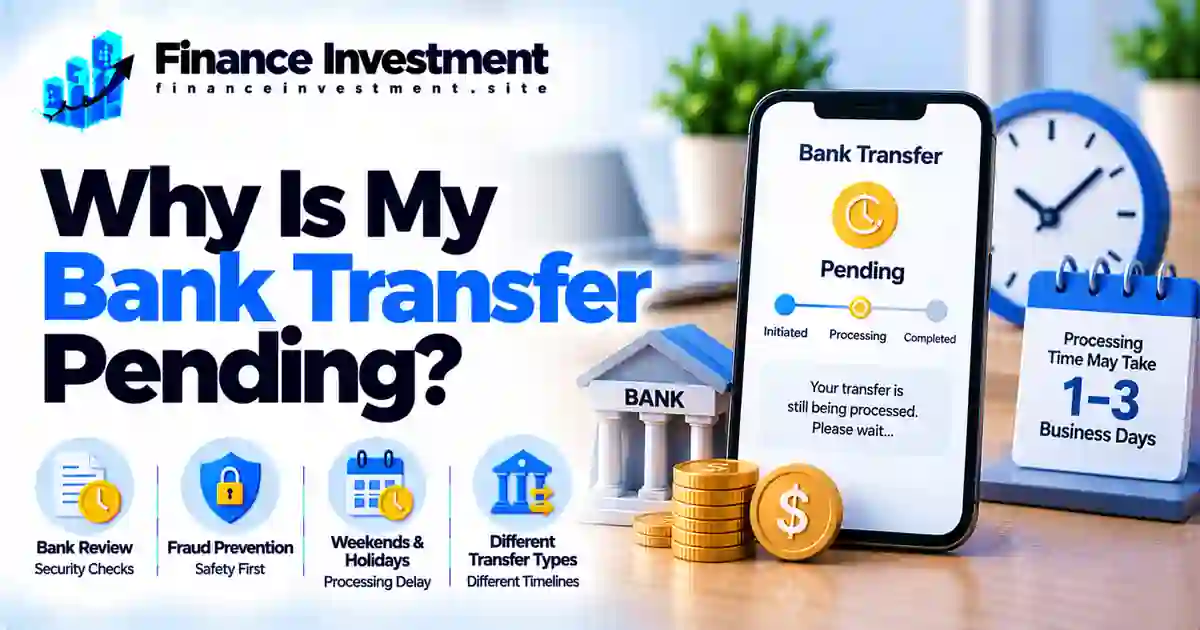
Why Is My Bank Transfer Pending? Causes and What to Do
Why Is My Bank Transfer Pending?
You sent the money, checked your banking app, and expected the payment to go through. Instead, the status still says “pending.” If you’re wondering why is my bank transfer pending, don’t panic—but don’t ignore the status either. It doesn’t automatically mean your money is lost.
A bank may still be processing the payment, reviewing transaction details, or waiting for its next processing window. ACH transfers often take multiple business days, while wire transfers and eligible instant payments follow different timelines. Weekends, bank holidays, cutoff times, and verification checks can all affect when a payment moves forward.
Start by checking the transaction status, recipient details, and estimated arrival date in your banking app. Avoid sending the payment again until you confirm what happened, since a duplicate transfer could leave you paying twice. For a broader overview, read our complete guide to bank transfers and payments.
What You’ll Learn
- Why bank transfers can remain pending.
- How ACH, wire, and instant payments differ.
- What to check before contacting your bank.
- When a delay may require urgent action.
Quick Answer: Why Is My Bank Transfer Pending?
A bank transfer can remain pending while the payment is being processed, awaiting a scheduled processing window, or undergoing a security check. Weekends, bank holidays, cutoff times, and incorrect payment details can also affect progress. Check the transaction status and estimated arrival date in your banking app. If the expected time has passed, contact your bank using its official app or verified phone number.
Key Takeaways
- A pending status does not automatically mean your money is lost.
- ACH transfers can take multiple business days, depending on the bank and processing schedule.
- Wire transfers and eligible instant payments follow different timelines.
- Weekends, holidays, and missed cutoff times can delay processing.
- A security review or incorrect recipient details may require follow-up.
- Confirm the transaction status before sending the money again.
The Bottom Line
Start by checking the payment method, recipient details, and expected completion time. If the transfer is overdue, the details appear incorrect, or you suspect fraud, contact your bank promptly. Avoid making a duplicate payment until the first transaction’s status is clear.
Pending Bank Transfers at a Glance
A pending label means your bank has not yet shown the transaction as fully completed, but the exact meaning depends on the payment method and the bank’s system. The money may still be processing, awaiting review, or waiting for a scheduled transfer window. Check the transaction details before deciding what to do next.
Quick Facts
Common causes: Processing schedules, cutoff times, weekends, holidays, or additional verification.
First step: Review the transaction status, recipient details, and estimated completion date.
When to follow up: Contact your bank if its stated timeframe has passed, the details look incorrect, or you suspect fraud.
Typical Transfer Processing Times
| Transfer method | General timing |
|---|---|
| Transfer between accounts at the same bank | Often quick, but bank rules and account restrictions apply |
| Standard ACH transfer | Commonly 1–3 business days; some eligible payments may be faster |
| Domestic wire transfer | May arrive the same business day if accepted before the bank’s cutoff |
| Eligible instant payment | Often seconds when both institutions and the transaction are supported |
Important: These are general processing estimates, not guarantees for a pending transaction. A payment marked “sent” may not yet be available to the recipient. Check your bank’s displayed status and estimated arrival time, and don’t send the payment again until you confirm the first transaction’s status.
Understanding Pending Bank Transfers

A pending bank transfer is a payment that has not yet reached its final status in your bank’s system. Your bank may have received the instruction but still need to process the payment, verify certain details, or wait for a scheduled processing window. Depending on the bank and transfer type, the amount may be deducted from your available balance, temporarily held, or still appear in your account.
Which Transfers Can Show as Pending?
- ACH transfers: Direct deposits, bill payments, and bank-to-bank transfers may remain pending while they move through the ACH processing cycle.
- Wire transfers: A wire may show as pending while the sending bank processes or reviews it. Cutoff times and receiving-bank procedures can affect delivery.
- Transfers between your own accounts: These may appear quickly or take longer, depending on the account types, transfer rules, and bank processing.
- Instant payments: Eligible payments can arrive within seconds when the service supports the transaction, although verification or other restrictions may affect individual payments.
Remember: “Pending,” “processing,” “completed,” and “available” are not always interchangeable. A completed transaction does not necessarily mean the recipient can immediately spend the funds. Check your bank’s status definitions and the recipient’s account information before drawing conclusions.
If you don’t recognize the transfer, notice incorrect recipient details, suspect fraud, or the bank’s stated timeframe has passed, contact your bank through its official app or verified phone number. Don’t send a second payment until you understand the status of the first one.
How Bank Transfer Processing Works
Sending a payment is only the beginning. Depending on the transfer method, the bank may need to validate your instructions, process the payment through a banking network, and confirm the result. That is why a transfer can remain pending after you submit it.
1. You Authorize the Payment
You enter the amount and recipient information, then approve the transfer. Your bank may check available funds, account details, transfer limits, and whether additional security verification is needed.
2. The Transfer Enters Processing
The bank handles the instruction according to the payment service’s rules. Standard ACH transfers follow processing schedules, while wire transfers and eligible instant payments use different systems. Cutoff times may affect some payments.
3. The Payment Is Sent or Routed
For an external transfer, the payment may pass through the relevant payment network before reaching the recipient’s bank. Internal transfers may follow a different process. Incorrect details, reviews, or processing issues can delay or prevent completion.
4. The Transaction Reaches Its Final Status
The bank updates the transaction status when it receives the relevant processing information. Depending on the payment method and bank, a “completed” label may not tell you exactly when the recipient can use the money. Confirm the status with the institutions involved if the timing is unclear.
If the transfer appears stuck: Check its latest status, recipient details, and estimated arrival time. If the bank’s stated timeframe has passed, contact it through its official app or verified phone number. Keep your confirmation number or transaction reference available.
Benefits and Drawbacks of Different Transfer Methods
No transfer method is ideal for every situation. The right choice depends on how quickly the money needs to arrive, the fees involved, and the options available through your bank.
Pros
- ACH transfers: Convenient for payroll, recurring bills, and routine payments; fees may be low or waived.
- Wire transfers: Can suit time-sensitive or high-value payments when the bank can process them within the required timeframe.
- Instant payments: Eligible transactions may reach the recipient within seconds when both institutions support the service.
Cons
- ACH transfers: Standard processing can take multiple business days, depending on the payment and bank.
- Wire transfers: Fees may apply, cutoff times matter, and recovering a completed payment sent to the wrong recipient can be difficult.
- Instant payments: Service availability and limits vary, and payments sent to scammers may be difficult to recover.
Before choosing a method, compare the estimated arrival time, fees, transaction limits, and cancellation or recall options. Read our guide to ACH transfers versus wire transfers for a closer comparison.
Bank Transfer Status Comparison: What Each Label Means
Seeing a status such as “pending” or “completed” can be confusing when you’re waiting for money to arrive. Banks and payment services may use these labels differently, so treat them as clues about the transaction—not as universal definitions.
| Status | What it may mean | What to do next |
|---|---|---|
| Pending | The transaction has not reached its final status in the bank’s system. | Check the estimated arrival time and transaction details. |
| Processing | The bank or payment service is handling the payment instruction. | Follow the bank’s stated timeframe. |
| Completed | The transaction has reached the completion stage defined by that bank or service. | If the recipient cannot see the funds, ask both banks to confirm the payment status. |
| Failed | The attempted payment was not completed. | Check the reason and whether the funds were returned. |
| Returned | A payment that was sent into the payment process has been sent back. | Confirm the return reason and when the funds will be available again. |
Expert tip: Keep the confirmation number, transfer date, amount, and recipient details. If the expected timeframe has passed, these details can help your bank investigate the transaction.
A status label alone may not tell you whether the recipient can spend the money. If the transfer is overdue, the details look wrong, or you suspect fraud, contact your bank through its official app or verified phone number. Don’t resend the payment until you confirm what happened to the original transaction.
Processing Delays, Cutoff Times and Expert Tips
Even when you enter the correct information, a bank transfer may take longer than expected. The reason could be the payment schedule, a bank review, or a problem with the transaction. Knowing how these factors work can help you decide whether to wait or contact your bank.
What Can Delay a Bank Transfer?
- Missed cutoff time: A payment submitted after the applicable cutoff may be handled on the next processing day.
- Weekends and bank holidays: These can affect standard ACH and wire processing schedules.
- Security or verification review: Your bank may need to review unusual activity or confirm transaction details.
- Incorrect recipient information: Wrong account details may cause a delay, rejection, or misdirected payment. Contact your bank promptly if you spot an error.
Expert Tips to Reduce Avoidable Delays
- Check your bank’s cutoff time and estimated arrival date before initiating the payment.
- Verify the recipient’s account information before confirming the transfer.
- Allow for business-day processing when a weekend or bank holiday is approaching.
- Keep your confirmation number and contact the bank if the stated timeframe passes.
An online banking app may be available around the clock, but some transfers still follow specific processing schedules. Eligible instant-payment services may operate outside traditional banking hours, depending on the service, participating institutions, and transaction requirements.
Common Mistakes That Can Complicate a Pending Transfer
When a bank transfer remains pending, acting too quickly can create additional problems. Avoid these common mistakes:
- Sending the payment again: Check the original transaction before retrying to avoid a possible duplicate payment.
- Overlooking recipient details: If you notice an incorrect account or routing number, contact your bank promptly rather than assuming the transfer will correct itself.
- Ignoring an unfamiliar transaction: A routine delay is possible, but report any payment you did not authorize immediately.
- Trusting unexpected messages: Contact your bank through its official app or verified phone number. Never share your password or one-time verification code with someone who contacts you unexpectedly.
Real-Life Example: An ACH Transfer Started on Friday
Suppose you initiate an ACH transfer late Friday, after your bank’s cutoff time. The payment may not enter processing until the next business day. A weekend or bank holiday can extend the wait, depending on the bank and payment schedule.
Instead of submitting another payment, review the transaction status and estimated arrival date. If the stated timeframe passes, contact your bank with the confirmation number and ask whether the transfer is still processing, has failed, or has been returned.
**Remember:** Waiting is reasonable when a transfer is within its expected timeframe. Suspected fraud, incorrect recipient details, or an unauthorized payment calls for prompt action.
Remember: Waiting is reasonable when a transfer is within its expected timeframe. Suspected fraud, incorrect recipient details, or an unauthorized payment calls for prompt action.
When to Wait and When to Contact Your Bank
If your bank transfer is still within the estimated processing timeframe, check its status and allow the stated period to pass. Cutoff times, weekends, holidays, and the transfer method can affect when funds arrive.
Contact Your Bank Promptly If:
- The bank’s estimated processing timeframe has passed and the transfer remains unresolved.
- You entered incorrect recipient details or sent money to the wrong account.
- The transfer failed, was returned, or its status is unclear.
- You notice an unauthorized transaction or suspect fraud.
Contact your bank through its official app or verified phone number, and keep your transaction reference handy. If you sent money to the wrong recipient, ask whether the payment can be stopped or recalled; recovery is not guaranteed. For suspected fraud or an unauthorized transfer, report it immediately. Avoid sending the payment again until your bank clarifies the original transaction’s status.
Frequently Asked Questions About Pending Bank Transfers
1. Why is my bank transfer pending?
Your transfer may be awaiting processing, a scheduled payment window, verification, or handling by the receiving bank. Check your bank’s transaction status and estimated completion time.
2. How long can a pending bank transfer take?
It depends on the payment method, bank cutoff times, weekends, holidays, and any required review. Standard ACH transfers commonly take one to three business days, but some transactions take longer. Check your bank’s estimate for your specific payment.
3. Can a pending bank transfer fail?
Yes. A pending transfer may later fail or be returned because of incorrect details, insufficient funds, account restrictions, or other processing issues. Review the bank’s explanation before attempting another payment.
4. Does pending mean the money has left my account?
Not necessarily. Depending on your bank and payment method, the amount may affect your available balance before the transaction is fully posted. Check your account activity and balance details for the latest information.
5. Why is my transfer pending over the weekend?
Some bank transfers follow business-day processing schedules. A payment submitted after Friday’s cutoff may not begin processing until the next business day. A bank holiday can extend the wait further.
6. Should I send the transfer again if it is pending?
Do not resend it until you have confirmed the original transaction’s status. Otherwise, both payments could go through, creating a duplicate payment that may take time to resolve.
7. Can I cancel a pending bank transfer?
Possibly. Cancellation depends on the payment method and how far the transaction has progressed. Contact your bank immediately to ask whether it can stop or recall the payment. Cancellation or recovery is not guaranteed, particularly after processing is complete.
8. When should I contact my bank about a pending transfer?
Contact your bank if the estimated processing timeframe has passed, the status remains unclear, or you entered incorrect recipient details. Report an unauthorized transfer or suspected fraud immediately rather than waiting for the usual processing period to end.
Final Verdict: What to Do When Your Bank Transfer Is Pending
A pending bank transfer is a reason to check the details, not automatically a sign that your money is lost. Review the transaction status, recipient information, and estimated arrival time before deciding what to do next.
If the bank’s stated timeframe has passed, contact it through an official channel. Report unauthorized activity or suspected fraud immediately, and avoid sending a second payment until the original transfer’s status is clear.
For a broader understanding of ACH transfers, wire transfers, and other payment options, explore our complete guide to bank transfers and payments before choosing a method for your next transaction.
Ready to Make Your Next Bank Transfer With Confidence?
Know what to check when a transfer is pending, understand your payment options, and learn how to avoid common transfer mistakes.
FinanceInvestment provides educational information to help readers make informed personal finance decisions. For a pending transaction, contact your bank through an official channel.
Leave a Reply