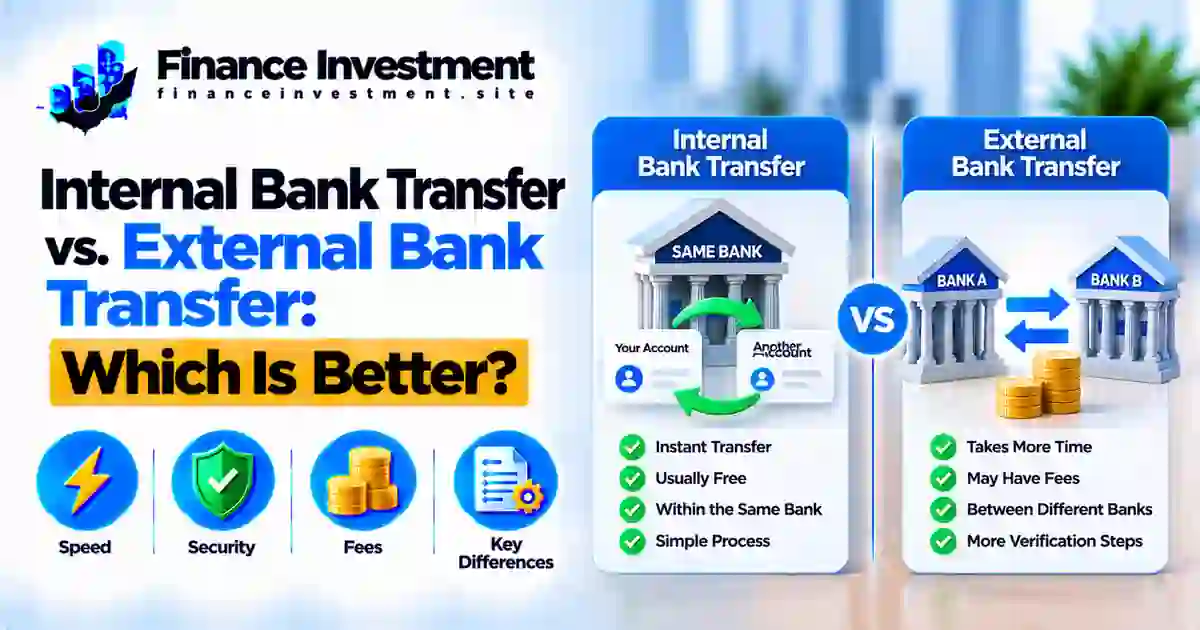
 Internal Bank Transfer vs. External Bank Transfer: What’s the Difference?
You might want to move money from checking to savings, fund an account at another bank, or keep household finances organized. When you open your banking app, the choice between an internal and an external transfer can be confusing.
An internal vs external bank transfer moves money between eligible accounts at the same financial institution. An external bank transfer moves money between accounts at different institutions. In the United States, external transfers commonly use the ACH network, although other transfer methods are available.
The better option depends on where your accounts are, how quickly you need the money, and whether fees or transfer limits apply. If you’re comparing ways to send money, our guide to bank transfers and payments provides broader context. Below, we’ll focus on the practical differences that can help you choose.
What You’ll Learn
- When an internal or external transfer makes sense.
- How transfer times, fees, and limits can vary.
- What families, retirees, and savers should consider.
- How to avoid common mistakes when moving money.
Which Bank Transfer Is Better?
An internal transfer is usually the convenient choice when both eligible accounts are at the same bank or credit union. An external transfer is the option to consider when money needs to move between different financial institutions. Compare the available transfer methods, delivery estimates, fees, and limits before deciding.
Key Takeaways
- Keeping accounts at one institution can make routine transfers simpler.
- External transfers help you move funds between banks, such as when funding a separate savings account.
- ACH transfers commonly take longer than some faster transfer options; check the bank’s estimated delivery date.
- Transfer fees, dollar limits, and processing cutoffs vary by institution and method.
- A new external account may need to be linked and verified before the first transfer.
- Check the recipient details carefully. A completed transfer may be difficult to reverse.
The Bottom Line
Choose based on where the money is going, how soon you need it, and the terms your financial institution offers. The simplest option is not always the fastest or cheapest.
Internal vs. External Bank Transfers at a Glance
For eligible accounts at one institution
Useful for moving money between checking and savings accounts held at the same bank or credit union, subject to account rules.
For accounts at different institutions
Useful for moving funds between separate banks or credit unions, such as funding an outside savings account.
Quick Comparison
| Feature | Internal | External |
|---|---|---|
| Destination | Same financial institution | Different financial institution |
| Setup | Choose an eligible account | Link the outside account; verification may be required |
| Timing | Often quick, but not always immediate | May require additional processing time |
| Fees and limits | Depend on account terms | Depend on method and bank terms |
Important: A bank’s transfer labels and rules can differ. Check which institution holds each account and review the estimated delivery date, fees, and limits before confirming.
A Beginner’s Guide to Internal and External Bank Transfers
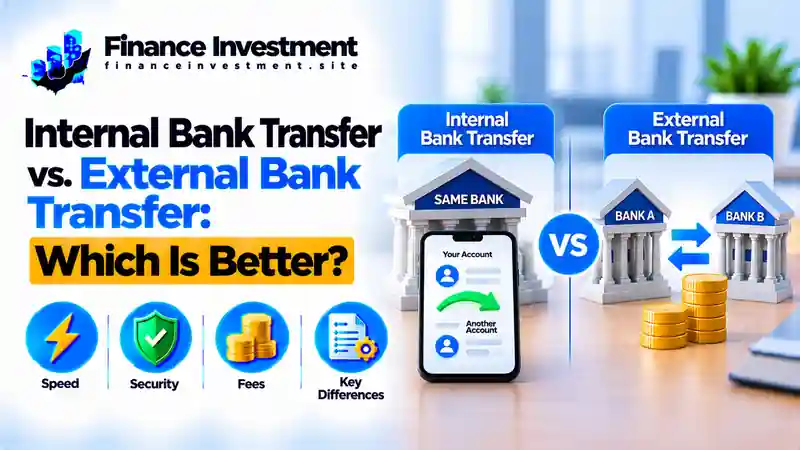
Before choosing a transfer option, check which financial institution holds each account. The account names alone may not tell the whole story, especially if a banking group operates more than one brand or platform.
A Simple Example: Two Accounts at One Bank
Suppose your paycheck goes into checking and you keep an emergency fund in a savings account at the same bank. If both accounts are eligible, you can usually select them in online banking and move money between them. This can help you set aside cash for bills or unexpected expenses without sending it to another institution.
When You Need to Move Money to Another Bank
Now suppose your checking account is at one bank and your savings account is at another. You may need to add the outside account, provide its routing and account numbers, and complete any verification steps your bank requires. Some banks let you initiate the transfer from either institution; others offer different options.
Check Before You Transfer
Confirm the actual account provider, whether the receiving account is eligible, and how your bank classifies the transfer. Shared branding does not automatically mean two accounts use the same internal transfer system.
Want to understand a common method for moving money between U.S. financial institutions? Read our guide to how ACH transfers work.
How Internal and External Bank Transfers Work
A transfer moves through several stages, from the initial request to processing and final posting. The exact steps depend on your bank, account type, and transfer method.
- Select the accounts.
Choose the account sending the money and the account receiving it. Check that the selected accounts support the transfer. - Complete any required setup.
For an external transfer, the bank may request routing and account numbers, account linking, or verification. Follow the instructions shown by your institution. - Review before confirming.
Verify the destination, amount, applicable fees, transfer limits, and estimated delivery date. Save the confirmation or reference number if one is provided. - Check the transfer status.
A request marked pending may still be processing or awaiting a required review. Processing cutoffs, weekends, holidays, and verification checks can affect some transfers. - Confirm the funds are available.
Review the transaction history and receiving account. A submitted or completed status does not always mean the funds are immediately available to spend; check the bank’s displayed status and terms.
What to Do if a Transfer Is Still Pending
Open the transaction details in your bank’s official app or website. Look for an estimated arrival date, a request for more information, or a notice explaining the delay.
If the expected date has passed, contact your bank using its official contact details. Before starting another transfer, confirm whether the original request is still processing or has failed. This helps reduce the risk of sending the money twice.
Benefits and Drawbacks of Internal and External Transfers
Both transfer types can be useful. The main trade-off is how easily you can move money where it needs to go, along with any extra steps, costs, or waiting time.
Pros: The Advantages
- Internal transfers: Convenient for shifting money between eligible accounts at one institution, such as setting aside savings after payday.
- External transfers: Give you access to accounts at different institutions, which can be useful when managing separate checking and savings accounts.
- Digital access: Many banks let customers start and track supported transfers through online banking or a mobile app.
Cons: The Trade-Offs
- Internal transfers: They do not, by themselves, move money to an account held at a different institution.
- External transfers: Account setup, verification, or processing schedules may mean you need to plan ahead.
- Either option: Your bank may apply transfer limits, eligibility rules, or fees depending on the account and method.
Before You Choose
If the money is needed for rent, a scheduled bill, or another time-sensitive expense, check the bank’s delivery estimate first. Allow for any processing time instead of assuming the funds will arrive immediately.
Internal vs. External Bank Transfers: Which Fits Your Needs?
A useful comparison goes beyond where the money is going. Consider how much setup is required, when you need access to the funds, and what your bank allows for each transfer option.
| Decision Factor | Internal Transfer | External Transfer |
|---|---|---|
| Getting started | Choose eligible accounts available in the institution’s transfer service. | An outside account may need to be added and verified. |
| Everyday use | Convenient for moving money between your eligible accounts at one institution. | Helpful when your money is spread across different institutions. |
| When funds arrive | Timing depends on the account, transfer rules, and availability of funds. | Processing may involve additional steps or time, depending on the method. |
| Potential costs | Review the institution’s account terms and any applicable limits or charges. | Check transfer fees, limits, and terms at the sending and receiving institutions. |
| Practical example | Setting aside part of your paycheck in savings at the same institution. | Moving money to a savings account at another bank. |
| Before confirming | Check eligibility, destination, and the expected availability date. | Check account details, verification status, delivery estimate, and limits. |
Make the Decision Based on Your Situation
If both accounts are eligible at the same institution, an internal transfer may be the simplest route. If the receiving account is elsewhere, look at the external options available and compare the delivery estimate, cost, and restrictions before proceeding.
Bank Transfer Costs, Risks, and Safety Tips
A convenient transfer is not always the best choice. Before moving money, check the potential fees, processing time, transfer limits, and steps you can take to protect your funds.
Review Fees and Processing Times
Check your bank’s fee schedule, transfer limits, cutoff times, and estimated delivery date before confirming. Some transfers are free, while others may carry a fee depending on the bank and transfer method. Weekends, holidays, and security reviews can delay processing.
Double-Check Recipient Details
Carefully verify the recipient’s name, routing number, account number, and amount. If the details have changed unexpectedly, confirm them using a trusted contact method—not a number or link in a suspicious message. If someone asks you to install remote-access software to complete a transfer, review our guide to remote-access banking scams.
Recognize Suspicious Transfer Requests
Be cautious of urgent demands to send money or move funds into a supposed “safe account.” Your bank should be contacted through its official app, website, or a trusted phone number if a request seems suspicious. Learn the warning signs in our guide to wire transfer scams.
Practical Tip
Keep your confirmation number and check the transfer status. If the transaction is unfamiliar, the details are incorrect, or the money has not arrived when expected, contact your bank promptly. Avoid sending the money again until the original transfer’s status is clear. If you suspect fraud, report it to your bank immediately.
Common Bank Transfer Mistakes and How to Avoid Them
A small mistake can delay a bank transfer or create an unexpected payment problem. Before sending money, review the details and understand what to do if a transaction does not go as planned.
Four Mistakes to Avoid
- Incorrect recipient details: Verify the recipient’s name, routing number, account number, and amount before confirming. If you discover an error, contact your bank immediately.
- Misreading a pending status: Pending does not necessarily mean failed. Check the transaction details and ask your bank whether it is still processing before taking further action.
- Sending a duplicate payment: Review your transaction history and confirmation number before submitting the same transfer again.
- Overlooking bank limits: Check applicable transfer limits, cutoff times, and estimated delivery dates, especially when the money is needed by a deadline.
Example: When a Transfer Is Still Pending
Imagine Alex transfers $600 from a checking account at one bank to an account at another bank. The transaction shows “pending,” so Alex considers sending another $600 to avoid a late payment.
Instead, Alex checks the transaction history, saves the confirmation number, and contacts the bank through its official app. The bank explains the current status and expected next steps. Alex avoids submitting a duplicate transfer before confirming what happened to the original payment.
What to Do When Something Goes Wrong
- Act quickly: Contact your bank if the recipient details are incorrect, the transfer appears unauthorized, or the money has gone to the wrong account.
- Ask about available options: Find out whether the bank can stop, recall, or investigate the transfer. Recovery is not guaranteed.
- Keep records: Save the confirmation number, date, amount, and any relevant messages or bank communications.
Important: Do not assume that a pending transfer has failed. Confirm its status with your bank before sending the money again.
Who Should Choose an Internal vs. External Bank Transfer?
The best option depends on where your accounts are held, what you need the money for, and when you need it. Here is how to choose based on your situation.
An Internal Transfer May Be Best If…
- You move money between your checking and savings accounts at the same bank.
- You want to keep everyday spending money and savings organized within one institution.
- You regularly move funds between eligible accounts without needing to use another bank’s transfer setup.
An External Transfer May Be Best If…
- You need to move money between eligible accounts at different banks.
- You want to fund a savings account or another account held at a separate institution.
- You need to move funds between banks to manage money held in multiple places.
Make the final check: Confirm that both accounts are eligible for the transfer method you plan to use. Compare fees, transfer limits, setup requirements, and estimated delivery times. If a bill or payment has a deadline, allow extra time for possible delays. Transfers within the same bank may still be subject to processing rules, and external transfers are not necessarily more expensive.
Frequently Asked Questions About Bank Transfers
1. Is an internal bank transfer faster than an external transfer?
An internal transfer may be completed sooner because both accounts are at the same bank. However, processing rules, account restrictions, and transaction timing can affect availability. Check your bank’s estimated processing time instead of assuming the money will arrive instantly.
2. Do internal and external bank transfers have fees?
Some transfers are free, while others may involve fees based on the bank, account type, and transfer method. Check the current fee schedule before confirming, especially if you are transferring money internationally or using a wire transfer.
3. How much money can I transfer at one time?
Transfer limits vary by bank, account, and payment method. Your institution may set per-transaction, daily, or other limits, and external transfers may have different restrictions from internal ones. Confirm your available limit before scheduling a large payment.
4. What should I do if my transfer is still pending?
Review the transaction status, expected delivery date, and any bank notifications. Pending does not necessarily mean failed. If the transfer is taking longer than expected, contact your bank through its official app, website, or trusted phone number. Do not send a duplicate payment until you understand the original transaction’s status.
5. Can I cancel a bank transfer after submitting it?
Cancellation depends on the transfer method and whether processing has begun. Some scheduled transfers may be cancellable before processing, but completed payments may be difficult to recover. Contact your bank immediately to ask whether cancellation, a recall, or another remedy is available.
6. What if I enter the wrong account or routing number?
The transfer might be rejected, delayed, or potentially credited to an unintended account, depending on the details and verification process. Contact your bank promptly with the amount, date, and confirmation number. Ask whether the payment can be stopped, recalled, or investigated. Recovery is not guaranteed.
7. How can I make an external bank transfer safer?
Use your bank’s official services, verify recipient details independently, and protect your login credentials. Enable multifactor authentication when available. Never move money because an unexpected caller or message pressures you to transfer funds to a supposed “safe account.”
8. Should I use an internal or external transfer for savings?
An internal transfer may be convenient when your checking and savings accounts are at the same bank. If your savings account is at another institution, an external transfer may be suitable. Compare fees, limits, processing times, and account requirements before choosing.
Before you transfer: Confirm the recipient, amount, transfer method, and estimated delivery time. For unfamiliar or suspicious requests, contact your bank through a trusted channel before authorizing payment.
Final Verdict: Internal vs. External Bank Transfers
The better option depends on where your accounts are held and how you need to move your money. An internal transfer is often convenient for moving funds between eligible accounts at the same bank. An external transfer is designed for moving money between accounts at different financial institutions.
Use this simple rule: For accounts at the same bank, check whether an internal transfer meets your needs. For accounts at different banks, review the available external transfer options. Before confirming, compare fees, limits, account requirements, and estimated delivery times—especially if the money is needed by a deadline.
For a broader overview of your options, read our complete guide to bank transfers and payment methods.
FinanceInvestment
Questions or Feedback About This Guide?
Have feedback about this article or a general question about bank transfers? Contact FinanceInvestment by email. For help with a specific payment, contact your bank directly. Never include passwords, PINs, full account details, or one-time verification codes in an email.
Explore More Banking Guides
Continue learning about bank transfers, electronic payments, and account security with these related resources.
Disclaimer: This article is for general educational purposes and is not personalized financial or legal advice. Confirm transfer details, fees, and applicable policies with your financial institution.
Leave a Reply