How to Dispute an Unauthorized Bank Withdrawal
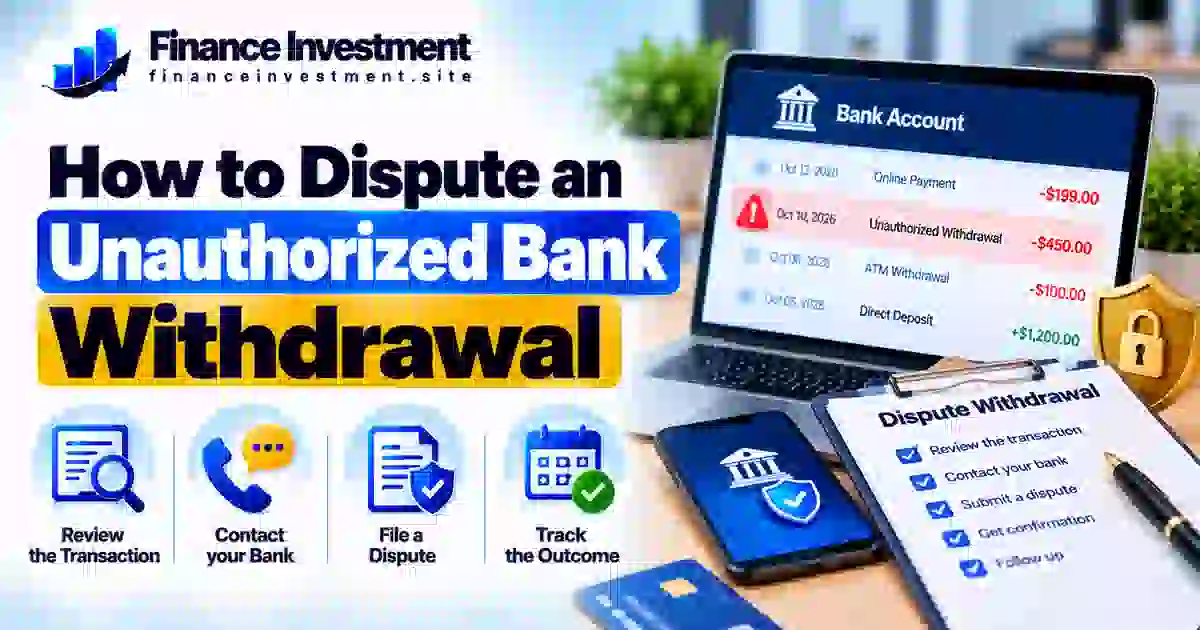
A Practical Guide for U.S. Bank Customers
How to Challenge a Withdrawal You Didn’t Authorize
Seeing money leave your account without your permission can be unsettling. Knowing how to dispute an unauthorized bank withdrawal gives you a clear starting point: contact your bank, report the transaction, and ask how to file a formal dispute.
First, check the date, amount, and transaction description. If you still cannot identify the withdrawal, contact your bank promptly through an official channel. Explain what happened, follow its dispute instructions, and save your case number and related messages.
The process and your available protections depend on how the money was taken. A dispute does not guarantee reimbursement, but clear records and prompt reporting can help the bank investigate. For broader prevention advice, see our bank security and fraud prevention guide.
What You’ll Learn
- How to report a withdrawal and open a formal bank dispute.
- Which transaction details and records to keep.
- Why certain electronic transfers have important reporting deadlines.
- What to expect during the bank’s investigation.
- What options you may have if the bank rejects your claim.
Quick Answer: How Do You Dispute an Unauthorized Withdrawal?
Contact your bank promptly through its official app, website, or verified phone number. Identify the withdrawal and explain why you believe you did not authorize it. Ask which dispute procedure applies, whether written notice is required, and what deadline you must meet. Secure any affected card or account access, submit the requested information, and keep copies of your correspondence and case number.
Key Takeaways
- Report suspicious withdrawals as soon as you notice them.
- Record the transaction date, amount, and description.
- Keep relevant statements, messages, and your dispute reference number.
- Ask the bank whether your card, login credentials, or account access need securing.
- Check the deadline for your transaction type; rules and protections can differ.
- If your claim is denied, request the bank’s explanation and ask about further review options.
Bottom line: Be prompt, specific, and organized. A formal dispute allows the bank to review your claim, but the outcome depends on the facts and applicable rules. A refund is not guaranteed.
Unauthorized Withdrawal at a Glance
If a withdrawal appears that you did not authorize, verify the transaction and contact your bank promptly if it remains unexplained. The correct dispute procedure depends on how the money was withdrawn or transferred.
| Quick Fact | What It Means |
|---|---|
| When to act | As soon as you identify a withdrawal you did not authorize. |
| What to record | Date, amount, transaction description, bank correspondence, and dispute reference number. |
| What may happen | The bank reviews the claim and communicates its findings under the applicable procedure. |
| Why the type matters | Electronic transfers, debit-card transactions, and checks may follow different rules and deadlines. |
Quick takeaway: Verify the transaction, report it promptly, and keep your records. Ask the bank which dispute procedure and deadline apply to your specific withdrawal.
How to Dispute an Unauthorized Bank Withdrawal Step by Step 
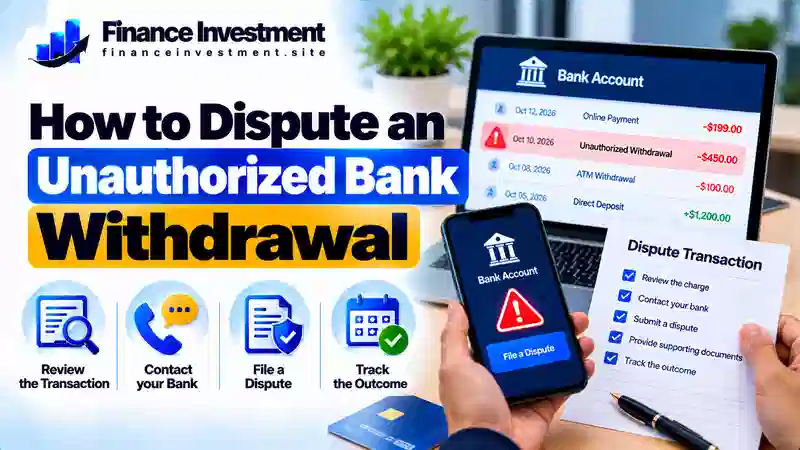
If money leaves your account without your permission, take action promptly. Follow these steps to report the transaction, protect your account, and create a clear record of your dispute.
Step 1: Check the Transaction
Review the date, amount, and transaction description. Check whether it could be a forgotten purchase, recurring payment, or unfamiliar merchant name before deciding it is unauthorized.
Step 2: Contact Your Bank Through an Official Channel
Call the number on your bank card or statement, or use the bank’s verified app or website. Clearly state that you did not authorize the withdrawal. If your card or login details may be compromised, ask the bank to secure the account and block or replace affected access methods.
Step 3: File a Formal Dispute
Provide the transaction date, amount, and reason you believe it was unauthorized. Follow the bank’s dispute procedure and ask whether written confirmation is required, where to send it, and what deadline applies. For covered electronic transfers, see the CFPB’s Regulation E error-resolution rules.
Step 4: Keep a Paper Trail
Save relevant statements, screenshots, messages, submitted forms, and the dispute reference number. Record when you contacted the bank and what you were told. Never share your PIN or one-time verification code in response to an unexpected call or message.
Step 5: Follow Up on the Decision
Ask when the bank expects to respond and whether provisional credit may apply. It is not guaranteed in every case. If the bank denies your claim, request its written explanation and ask how to challenge the decision. If the issue remains unresolved, you can consider filing a complaint with the Consumer Financial Protection Bureau.
Important: Reporting promptly can help protect your rights. Deadlines and protections depend on the transaction and circumstances, and disputing a withdrawal does not guarantee reimbursement.
How the Bank Investigation Works
After you report an unauthorized withdrawal, your bank reviews the claim to determine whether an error occurred. The steps and deadlines depend on the type of transaction and the consumer-protection rules that apply.
What Does the Bank Check?
The bank may review transaction records, account activity, payment details, and relevant information from merchants or payment networks. It may ask for additional details or documents. Explain clearly why you believe the withdrawal was unauthorized and respond promptly to legitimate requests.
How Long Can an Investigation Take?
For electronic fund transfer errors covered by Regulation E, a bank generally must determine whether an error occurred within 10 business days. If it needs more time, it may generally take up to 45 days, subject to conditions that include provisional credit in many cases. Certain transactions, including qualifying point-of-sale debit card transactions, can have an extended period of up to 90 days. Special rules and exceptions may apply, so these timelines should not be assumed to cover every withdrawal or payment dispute.
Read the CFPB’s Regulation E error-resolution rules for details on covered electronic transfers.
What Should You Do While Waiting?
Monitor your account for further suspicious activity, save your case number and correspondence, and ask the bank when to expect an update. If the bank decides no error occurred, request its written explanation and ask how to obtain copies of the documents it relied on, where applicable.
Remember: A bank investigation does not guarantee a refund. Keep your records and review the final decision carefully before deciding whether to challenge it.
Benefits and Drawbacks of Disputing an Unauthorized Bank Withdrawal
Reporting a withdrawal you did not authorize gives your bank an opportunity to investigate the transaction. The process can help you address suspicious activity, but it may also require documentation and follow-up.
Benefits
- May help you recover money if the claim is approved.
- Creates an official record of your complaint.
- May help identify other suspicious transactions.
- Gives you an opportunity to secure compromised account access.
Possible Drawbacks
- Investigation and follow-up can take time.
- You may need to provide records or additional information.
- Provisional credit is not available in every case.
- The bank may deny the claim after reviewing the evidence.
Bottom line: If you believe a withdrawal was unauthorized, report it promptly and follow the bank’s dispute procedure. Keep your records, check the applicable deadlines, and remember that filing a dispute does not guarantee reimbursement.
Unauthorized Withdrawal Types Compared
The right way to dispute a withdrawal depends on how the money left your account. Identify the transaction type and explain exactly what happened so your bank can apply the appropriate procedure.
| Transaction Type | Example | What to Do |
|---|---|---|
| Debit card | An unfamiliar purchase or ATM withdrawal | Report the transaction and ask the bank to block or replace a compromised card. |
| ACH or electronic transfer | A transfer you did not authorize | Report it promptly and ask about the applicable electronic-transfer dispute process. |
| Check | A forged signature or altered check | Notify the bank and ask about its check-fraud procedure and applicable deadlines. |
| Scam-related payment | You sent money after being deceived by a scammer | Explain how the payment occurred and ask whether recovery or dispute options are available. |
Important: A transfer made without your permission may be treated differently from a payment you personally approved after being deceived. Protections depend on the transaction, applicable law, and circumstances. Report the issue quickly and confirm the relevant deadline with your bank.
Deadlines, Risks, Costs and Expert Tips
When disputing an unauthorized bank withdrawal, timing matters. Reporting promptly can help limit further losses and protect your rights under applicable rules.
Know the Reporting Deadlines
For certain unauthorized electronic fund transfers covered by Regulation E, reporting a lost or stolen access device within two business days of learning about the loss can affect your potential liability. You should also report an unauthorized electronic transfer shown on a periodic statement within 60 days after the bank sends the statement to help avoid liability for certain later transfers. These are not universal deadlines for every withdrawal, and different rules may apply to checks and other payment disputes. Review the CFPB’s Regulation E liability rules.
Understand Possible Risks and Costs
A disputed transaction may leave you with less money available while the bank reviews your claim. Provisional credit may be required in some qualifying cases, but it is not guaranteed for every type of dispute. Ask the bank how it handles related overdraft fees or other charges, and keep records of any additional costs.
Practical Tips That Can Help
- Report the suspicious transaction through an official bank channel as soon as possible.
- Ask for a case number, written confirmation, and the applicable deadline.
- Secure any compromised card, password, or banking access.
- Save statements, screenshots, forms, and dispute communications.
- Check your account regularly for additional unfamiliar transactions.
Expert tip: Do not delay reporting while collecting every document. Notify your bank promptly, then ask how to submit any additional evidence and what deadlines apply to your specific transaction.
Common Mistakes and a Realistic Example
When disputing an unauthorized bank withdrawal, avoid these common mistakes to keep your claim organized and reduce the risk of missing important steps.
Common Mistakes to Avoid
- Delaying the report: Notify your bank promptly because applicable deadlines may affect your rights.
- Providing incomplete details: Include the transaction date, amount, and description when available.
- Ignoring account security: Ask the bank to secure compromised cards or access, and change affected passwords.
- Losing dispute records: Save your case number, submitted documents, and bank communications.
- Skipping follow-ups: Track the investigation and respond to legitimate requests from the bank.
A Realistic Example
Suppose Maria notices an unfamiliar $240 electronic withdrawal. She checks her records, contacts her bank through an official channel, and explains that she did not authorize the transaction. She records the case number, follows the bank’s security instructions, and monitors her account for further suspicious activity.
If the bank rejects her claim, Maria can request the written explanation and ask about available review options. The outcome depends on the evidence and applicable rules, so a refund cannot be guaranteed.
Key lesson: Report suspicious withdrawals promptly, protect your account, and keep a clear record until the dispute is resolved. For additional guidance, read the CFPB’s guidance on unauthorized transactions.
Who Should Take Extra Care?
Anyone who notices an unfamiliar bank withdrawal should check it promptly. Extra care is especially important in these situations:
- Seniors and retirees: Review account activity regularly and contact the bank if a transaction remains unexplained.
- Families with joint accounts: Check with authorized account holders before disputing a transaction, while reporting any genuinely unauthorized activity promptly.
- Online banking users: If login details or a device may be compromised, secure your account and contact the bank through an official channel.
- Scam or identity-theft victims: Explain exactly how the payment occurred, including whether you approved it after being deceived.
- People seeing repeated suspicious transactions: Report the relevant transactions and ask the bank how to prevent further losses.
Remember: An unfamiliar transaction is not automatically fraud, but delaying a genuine report can affect your options. Verify the details, report suspected unauthorized activity promptly, and ask which protections and deadlines apply to your situation.
Final Verdict: Act Quickly and Protect Your Account
Knowing how to dispute an unauthorized bank withdrawal helps you respond when money leaves your account without permission. Contact your bank promptly, explain the transaction, secure any compromised access, and keep a record of your dispute.
The right procedure, reporting deadlines, and available protections depend on the transaction and applicable rules. If your claim is denied, request the bank’s written explanation and explore the available review or complaint options. Reimbursement may be possible, but it is not guaranteed.
Your next step: Check your recent account activity and report any genuinely unauthorized withdrawal through an official bank channel. Then explore our Bank Security and Fraud Prevention Guide for more ways to protect your account.
Have a Money Question? Keep Exploring.
Understanding your banking options starts with reliable information. Explore more FinanceInvestment guides to learn about account security, fraud prevention, and safer online banking habits.
Have a question or suggestion?
Email FinanceInvestment for general website questions or feedback. For an active unauthorized withdrawal, contact your bank directly through an official channel.
Continue Your Research
This article provides general educational information and is not individualized legal or financial advice. Reporting deadlines and available protections depend on the transaction and applicable rules.
Leave a Reply