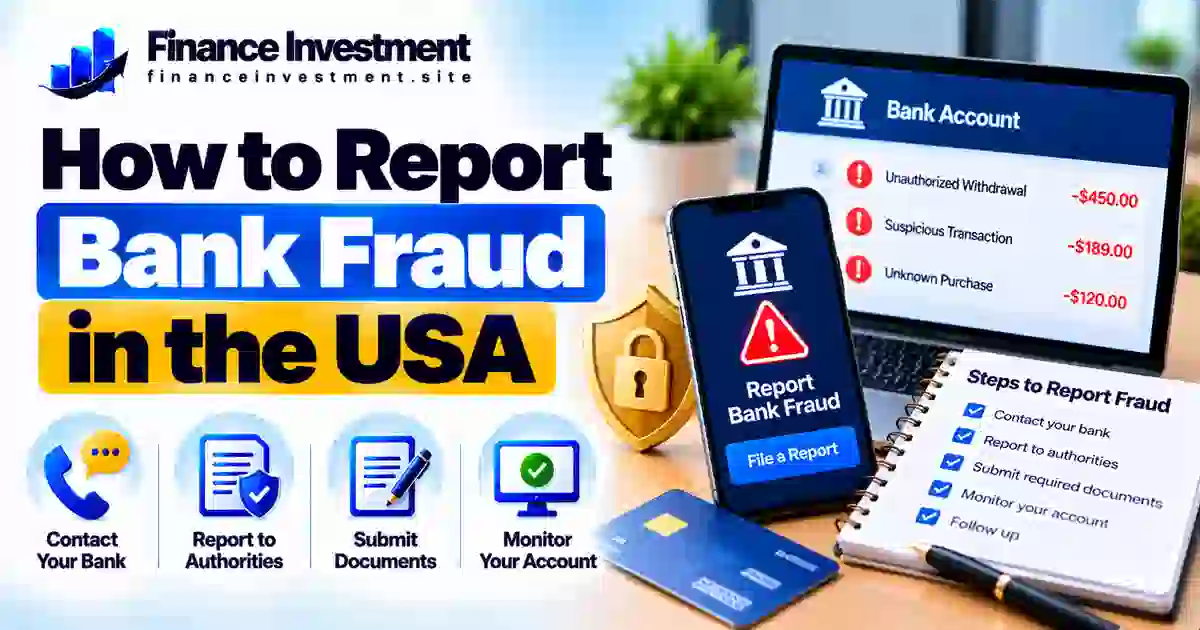
How to Report Bank Fraud in the USA
How to Report Bank Fraud in the USA
Knowing how to report bank fraud in the USA matters when you spot a transfer you did not make, discover unfamiliar withdrawals, or realize someone has impersonated your bank. Start by contacting your bank through its official app, verified website, or the number printed on your card. Ask the bank to secure your account and explain how to dispute the suspicious activity.
Your bank may be the first call, but it is not always the only one. Depending on the incident, you may also report a scam to the Federal Trade Commission (FTC), submit an online-crime complaint to the FBI’s Internet Crime Complaint Center (IC3), or contact local law enforcement. Save transaction records, messages, emails, dates, and complaint numbers. These details can help you explain the incident and follow up.
What You’ll Learn
- How to report suspected bank fraud step by step.
- When to contact your bank, the FTC, the IC3, or law enforcement.
- Which records to keep and why reporting deadlines matter.
- How to secure your account and help prevent further losses.
For practical prevention steps, read our Bank Security and Fraud Prevention Guide.
Quick Answer: How Do You Report Bank Fraud?
If you suspect bank fraud, contact your bank immediately using its official app, verified website, or the number on your card. Report the suspicious activity, ask the bank to secure your account, and find out how to submit a formal transaction dispute. Depending on what happened, you may also need to report the scam to a government agency or local law enforcement.
Key Takeaways
- Contact your bank promptly and request a fraud case or reference number.
- Ask whether your card, online banking access, or affected account needs to be blocked or secured.
- Change compromised passwords from a trusted device and enable two-factor authentication.
- Keep transaction records, screenshots, messages, dates, and copies of your bank complaint.
- Report suspected scams through the FTC’s ReportFraud website or internet crime through the FBI’s IC3, when appropriate.
- Report unauthorized electronic transfers quickly because legal protections and deadlines depend on the transaction and circumstances.
Bottom line: Notify your bank, follow its dispute process, and keep written records. An FTC or IC3 complaint does not replace notifying your bank, and reporting fraud does not guarantee reimbursement.
Bank Fraud at a Glance: Where Should You Report It?
Start with your bank. If you see a transaction you did not authorize or suspect someone has accessed your account, contact your bank promptly. Ask it to secure your account and explain how to file a formal dispute. Additional reports may be appropriate depending on the type of fraud.
| Reporting channel | When to consider it | What it does |
|---|---|---|
| Your bank | Unrecognized transfers, withdrawals, or account changes | Helps secure the account and starts the bank’s dispute process |
| Federal Trade Commission (FTC) | Scams, deceptive practices, or fraud attempts | Collects reports and provides consumer guidance |
| FBI Internet Crime Complaint Center (IC3) | Suspected internet-enabled crime | Accepts information about suspected online crime |
| IdentityTheft.gov | Someone misuses your personal information | Provides identity-theft reporting and recovery steps |
Before you report: Gather transaction dates, amounts, relevant messages, account statements, and your bank’s case number. Never include your password, PIN, or one-time verification code in a complaint. If money is missing, do not delay contacting your bank while preparing other reports.
Where and How to Report Bank Fraud in the USA
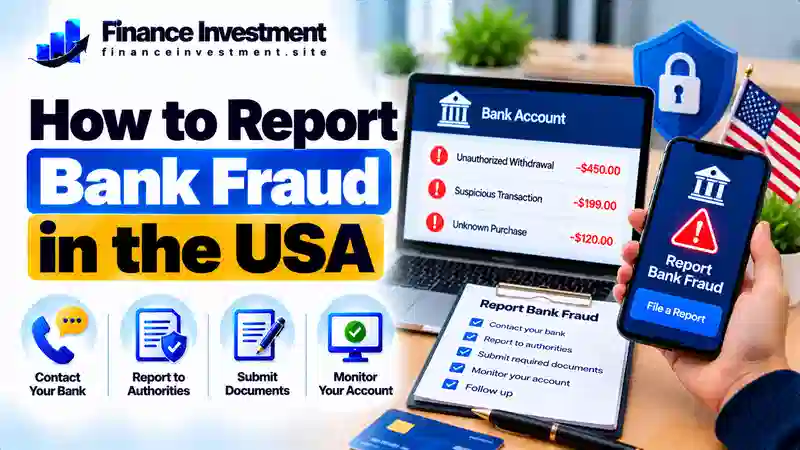
If you notice an unfamiliar withdrawal, a transfer you did not authorize, or signs that someone has accessed your account, act promptly. Start with your bank, then consider other reporting channels based on what happened.
1. Notify Your Bank and Open a Fraud Case
Contact your bank through its official app, verified website, or the phone number on your card or statement. Identify the suspicious transaction and ask the bank to secure your account, block compromised access where appropriate, and explain how to file a formal dispute. Request a case number and ask whether a transfer recall is possible. A recall is not guaranteed.
2. Choose the Right Reporting Agency
For scams and deceptive practices, submit a report through the Federal Trade Commission (FTC). For suspected internet-enabled crime, such as online scams or phishing-related financial losses, use the FBI’s Internet Crime Complaint Center (IC3). These reports provide information to authorities; they do not replace a bank dispute or guarantee that money will be recovered.
3. Contact Local Law Enforcement When Appropriate
Consider contacting your local police department if you suspect theft, identity misuse, or another crime, or if your bank requests a police report. Call 911 for an immediate emergency, not for routine account disputes.
4. Save Evidence and Follow Up
Keep statements, transaction dates and amounts, relevant messages, screenshots, and complaint numbers. Follow your bank’s instructions for submitting supporting documents and keep copies of anything you send. For unauthorized electronic fund transfers, notify your bank as soon as possible: certain federal rules use specific reporting deadlines, and the applicable protections depend on the facts and transaction type.
Scam warning: A legitimate bank representative should not ask you to move money to a stranger’s “safe account” or reveal your password or one-time verification code. End suspicious calls and contact your bank using a verified number.
How to Report Bank Fraud Step by Step
You do not need to know exactly how the fraud happened before reporting it. Start with the suspicious activity you noticed, then follow these steps.
Step 1: Contact Your Bank Through an Official Channel
Call the verified number on your card or statement, or use the bank’s official app or website. Identify the suspicious transaction and ask the bank to open a fraud case. Request a case number for your records.
Step 2: Secure Your Account
Ask whether your card should be locked or replaced and whether online banking access needs to be secured. Change compromised passwords from a trusted device and enable two-factor authentication. Never share verification codes with an unexpected caller.
Step 3: File a Formal Transaction Dispute
Tell the bank which transaction you did not authorize and follow its dispute instructions. Include the date, amount, and any relevant details. Keep a copy of your submission. Do not assume that a general fraud report automatically completes the dispute process.
Step 4: Preserve the Evidence
Save statements, screenshots, suspicious messages, emails, transaction details, and complaint numbers. Record when you contacted the bank and the instructions you received.
Step 5: Make Other Reports if Needed
Report scams through the FTC or suspected internet-related crime through the FBI’s IC3, where appropriate. These reports do not replace your bank’s dispute process.
Keep in mind: Report unauthorized electronic transfers promptly. Legal deadlines and protections depend on the type of transaction and circumstances. Ask your bank how to submit a dispute and keep written records of every follow-up.
Benefits and Drawbacks of Reporting Bank Fraud Quickly
Reporting suspicious activity promptly gives your bank a chance to respond sooner. It may not solve everything immediately, but waiting can make account protection and dispute resolution harder.
Benefits
- Gives the bank an earlier opportunity to secure your account.
- Helps you start the formal transaction-dispute process.
- Creates a record of when you reported the issue.
- May help limit further unauthorized activity.
Possible Drawbacks
- You may need a replacement card or new login credentials.
- Some transactions may remain under review during the investigation.
- You may need to provide documents and follow up.
- A report does not guarantee reimbursement.
Expert tip: Do not delay contacting your bank while collecting paperwork. For certain unauthorized electronic fund transfers, Regulation E sets liability rules that depend on the circumstances and timing of your notice. Review the CFPB’s Regulation E liability rules and ask your bank which procedures apply.
Bank vs. FTC vs. FBI IC3 vs. Police: What’s the Difference?
Different reporting channels serve different purposes. If money has left your account without your permission, contact your bank first. You may also need to report the scam or suspected crime elsewhere.
| Reporting channel | When to use it | Main purpose |
|---|---|---|
| Your bank or credit union | Unauthorized transfers, withdrawals, or suspicious account access | Secure the account and handle the transaction-dispute process |
| Federal Trade Commission (FTC) | Consumer scams and deceptive practices | Collect fraud reports and support consumer-protection efforts |
| FBI Internet Crime Complaint Center (IC3) | Suspected internet-enabled fraud or cybercrime | Collect online crime complaints for analysis and potential investigative action |
| Local police or sheriff | Suspected theft, identity misuse, or another possible crime | Document the incident and determine appropriate local action |
Which should you contact first? For an unauthorized bank transaction, notify your bank promptly and ask how to file a formal dispute. Depending on the circumstances, submit an additional report to the FTC, IC3, or local law enforcement. None of these reports guarantees reimbursement.
Costs, Risks, Deadlines, and Expert Tips
Reporting fraud through a government complaint website is generally free. You may still face indirect costs, such as replacing a card, updating automatic payments, or spending time collecting records. Be wary of anyone demanding an upfront payment to recover stolen money or promising a guaranteed refund.
Why Reporting Deadlines Matter
For certain unauthorized electronic fund transfers from consumer accounts, federal Regulation E rules make prompt notice important. If a lost or stolen access device is involved, reporting it within two business days after learning of the loss or theft can affect your potential liability. You should also report an unauthorized electronic transfer shown on a periodic statement within 60 days after the bank sends that statement. Delaying notice may affect liability for certain later transfers. The precise rules depend on the circumstances, and Regulation E does not cover every type of bank fraud or payment.
Warning: Checks, wire transfers, credit-card transactions, and payments you were tricked into making may follow different rules. Contact your bank promptly and ask which protections and dispute procedures apply to your situation.
Practical Tips to Protect Yourself
- Request a fraud case number and keep notes of every conversation.
- Change compromised passwords from a trusted device and secure your email account.
- Review recent transactions and automatic payments for unfamiliar activity.
- Never share your PIN, password, or one-time code with an unexpected caller.
Read the CFPB’s Regulation E liability rules for the details that may apply to certain unauthorized electronic transfers.
Common Mistakes When Reporting Bank Fraud
When you discover suspicious bank activity, avoid these common mistakes:
- Delaying notification: Contact your bank as soon as possible. Some consumer protections depend on reporting deadlines.
- Using an unverified phone number: Contact the bank through its official app, website, or the number on your card or statement.
- Skipping the formal dispute: Ask how to dispute each unauthorized transaction and whether written notice or a specific form is required.
- Deleting evidence: Save relevant messages, screenshots, transaction details, and the bank’s case number.
- Trusting recovery scammers: Be cautious of anyone demanding an upfront fee or promising guaranteed recovery.
A Realistic Example of Reporting Bank Fraud
Imagine Sarah notices a $240 electronic transfer from her checking account that she did not authorize. She contacts her bank through its official app, reports the transaction, and asks how to secure her account. She records the case number and follows the bank’s instructions to submit a formal dispute.
Sarah also saves relevant transaction details and suspicious messages, changes any compromised passwords, and checks for other unfamiliar activity. If the incident involved an online scam, she may also file a report with the Federal Trade Commission or, when appropriate, the FBI’s Internet Crime Complaint Center. These reports do not replace notifying her bank, and reimbursement is not guaranteed.
Key takeaway: Report suspicious activity promptly, follow the bank’s dispute process, keep records, and never share passwords, PINs, or one-time verification codes with callers or strangers.
Who Should Take Extra Care When Reporting Bank Fraud?
Bank fraud can affect anyone. However, some people may need additional help securing their accounts, recognizing scams, or completing a fraud report.
- Seniors and retirees: Be cautious of unexpected calls claiming to come from a bank, government agency, or fraud department. Verify the caller independently.
- Families and joint-account holders: Review shared account activity and notify the bank if a transaction appears unauthorized.
- Students and first-time account holders: Verify suspicious emails and texts before clicking links or sharing account information.
- Online banking users: If login details may be compromised, contact the bank and secure affected accounts, email, and devices.
- Identity theft victims: If personal information has been misused, use IdentityTheft.gov for official identity-theft reporting and recovery guidance.
Important safety tip: Never move money to an unfamiliar “safe account” because of an unexpected call or message. Do not disclose your password, PIN, or one-time verification code to someone who contacts you unexpectedly. Contact your bank using a verified channel instead.
Frequently Asked Questions About Reporting Bank Fraud
1. How do I report bank fraud in the USA?
Contact your bank through its official app, website, or verified phone number. Report suspicious activity, ask how to secure your account, and file a formal dispute for unauthorized transactions. You may also report scams to the FTC or suspected internet crime to the FBI’s IC3.
2. Can I report bank fraud online?
Yes. Many banks accept fraud reports online or through their mobile apps. You can also report scams at ReportFraud.ftc.gov or suspected internet-enabled crime at IC3.gov. These reports do not replace contacting your bank.
3. Should I contact my bank before reporting fraud to the FTC?
Usually, contact your bank promptly first, especially when money or account access is at risk. An FTC report can help document a scam, but it does not replace notifying your bank or disputing an unauthorized transaction.
4. Can I get my money back after bank fraud?
You may qualify for reimbursement, depending on the transaction type, applicable law, circumstances, and investigation. Report the issue quickly and follow the bank’s dispute process. A refund is not guaranteed, and some scam-related payments may have different protections.
5. How long do I have to report an unauthorized bank transaction?
The deadline depends on the payment and circumstances. For certain electronic fund transfers covered by Regulation E, reporting a lost or stolen access device within two business days after learning of the loss or theft can affect liability. Reporting an unauthorized transfer within 60 days after the bank sends the statement showing it can also be important. Contact your bank immediately; other payment types may follow different rules.
6. Do I need a police report for bank fraud?
Not always. Your bank may request supporting documents, and a police report may be appropriate for suspected crimes such as forged checks or identity theft. Ask your bank what documentation it requires and keep a copy of any report you file.
7. What evidence should I keep when reporting bank fraud?
Save transaction dates and amounts, account statements, relevant emails or texts, screenshots, complaint numbers, and correspondence with your bank. Store the records securely. Never include passwords, PINs, or one-time verification codes in ordinary complaint messages.
8. What should I do if my bank does not resolve my fraud complaint?
Ask the bank for its written decision and complaint escalation process. Depending on the issue, you can submit a complaint to the Consumer Financial Protection Bureau. Keep copies of all records and note any applicable deadlines.
Final Verdict: Report Bank Fraud Without Delay
Knowing how to report bank fraud in the USA helps you respond when suspicious transactions or account activity appear. Contact your bank through a verified channel, secure affected accounts, and formally dispute unauthorized transactions. Save relevant records and consider reporting scams to the appropriate government agency when necessary.
Act promptly because reporting deadlines and legal protections vary by transaction type. Although a report does not guarantee reimbursement, keeping clear records and following the correct process can help support your case.
Take the next step: Learn how to reduce future risks with our Bank Security and Fraud Prevention Guide, which covers practical ways to recognize scams and protect your bank account.
Have a Money Question? Keep Exploring.
Want to learn more about protecting your money? Explore our practical banking security guides or contact FinanceInvestment with a question or suggestion.
Leave a Reply