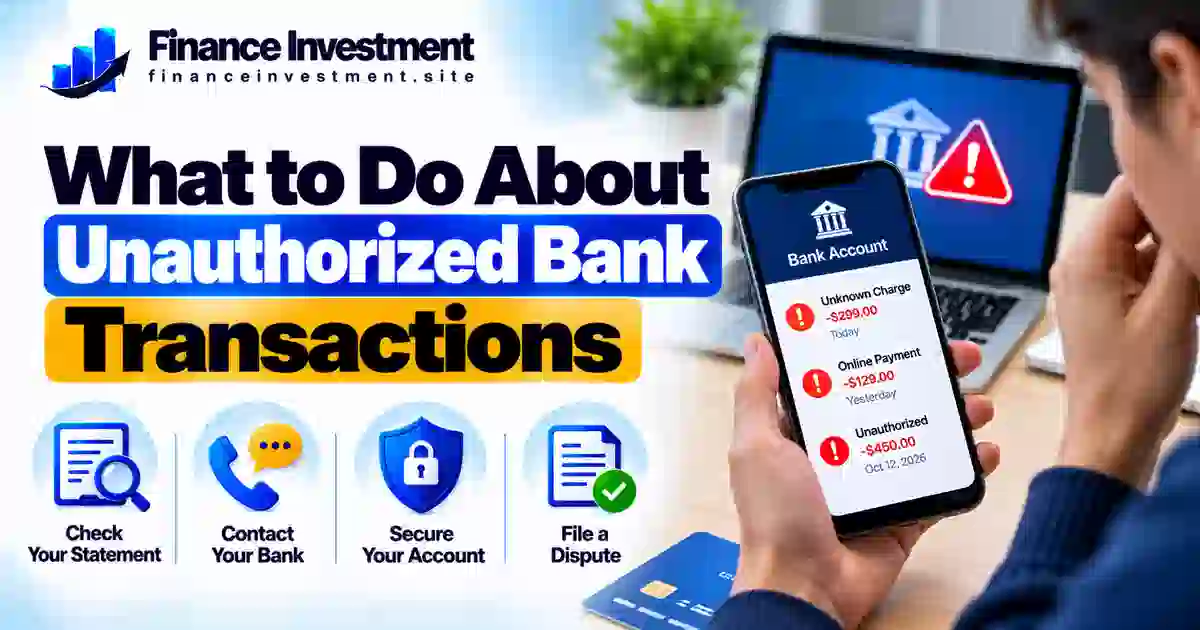
If you’re trying to figure out what to do about unauthorized bank transactions, contact your bank as soon as possible. Use the official banking app, type the bank’s known website address yourself, or call the number printed on your debit card. Don’t use contact details from a suspicious text or email.
An unfamiliar charge isn’t always fraud. It might be a merchant using a different billing name or a purchase you forgot. But if you didn’t authorize the transaction, treat it seriously. Ask your bank to review it, secure your account if needed, and explain how to submit a formal dispute. You can also read our bank security and fraud prevention guide for more ways to protect your money.
What You’ll Learn
- What to do immediately after spotting a transaction you didn’t authorize.
- How to contact your bank and request an investigation.
- Why reporting deadlines can depend on the transaction type.
- How to save records and follow up on a dispute.
- How to reduce the chance of additional unauthorized activity.
Important: Don’t delay reporting a transaction while trying to identify its source. Consumer protections and deadlines vary by transaction type and circumstances, so ask your bank which rules apply to your situation.
What Should You Do First?
If you notice a bank transaction you didn’t authorize, contact your bank immediately through its official app or the phone number on your card. Report the transaction and ask how to file a formal dispute. If your card, login, or account details may be compromised, ask the bank how to secure the affected access. Save the case number and transaction details, and change compromised passwords from a trusted device. Never pay an unsolicited person who promises to recover your money.
Key Takeaways
- Report unauthorized activity promptly because some reporting deadlines can affect your protections.
- Ask your bank whether to lock the card, replace it, or restrict compromised digital access.
- Keep transaction dates, amounts, statements, alerts, and dispute confirmation details.
- Check for other suspicious transactions and review recent account activity.
- Ask the bank about its investigation process and when you should follow up.
- Never share your password or one-time verification code with an unsolicited caller or message sender.
Bottom line: Contact your bank quickly, follow its dispute instructions, and keep a written record of every step. Your rights and deadlines depend on the type of transaction and the circumstances.
What to Do About Unauthorized Bank Transactions: Step by Step
An unexpected withdrawal can be worrying, but you don’t have to figure everything out before acting. Start with your bank, protect any exposed access, and keep a record of each step.
1. Report the transaction promptly
Contact your bank through its official app, the number on your card, or a verified website. Identify the transaction by date and amount, explain that you did not authorize it, and ask the bank to record your report.
2. Protect your card and account
Ask whether your card should be locked or replaced and whether online banking access needs to be secured. If your password may be compromised, change it from a trusted device and review your contact details and account alerts.
3. Open a formal dispute
Ask the bank how to dispute the charge and whether it needs written notice or a particular form. Note the date you reported it, the representative’s name if available, and your case or confirmation number.
4. Keep the evidence
Save statements, transaction details, alerts, relevant messages, and copies of any dispute forms. Don’t share your password or one-time verification code with callers or message senders who contact you unexpectedly.
5. Follow up and check the applicable deadline
Ask when the bank expects to respond and whether it needs more information. For many electronic fund transfers covered by Regulation E, notifying the bank within 60 days after it sends the statement showing the unauthorized transfer can be important. Other rules and deadlines may apply, so report the problem as soon as possible.
Read the official CFPB Regulation E rules on unauthorized transfers and its error-resolution procedures for more detail.
Keep in mind: A bank investigation does not guarantee reimbursement. Continue checking your account, respond to the bank’s requests, and keep copies of all communications until you receive an outcome.
How Bank Reporting and Investigations Work
Once you report a transaction you didn’t authorize, your bank records the complaint and reviews the available information. It may examine account records, transaction details, and any evidence you provide before deciding whether an error occurred.
What happens after you report it?
- The bank records your report and may ask for transaction details or written confirmation.
- It reviews the dispute under the rules that apply to your account and payment type.
- If a covered electronic-transfer investigation takes longer than the initial period, provisional credit may be required when the applicable conditions are met.
- The bank communicates its findings and corrects an error when required.
How long can an investigation take?
For many consumer electronic fund transfer errors covered by Regulation E, the bank generally has 10 business days to investigate. If it cannot finish in that period, it may generally take up to 45 days if it follows the rule’s provisional-credit and notice requirements. Certain transactions, including some point-of-sale debit-card purchases and qualifying newer accounts, can have a 90-day investigation period. Different rules may apply to transactions outside Regulation E.
Keep your case number and respond quickly if the bank requests written confirmation. For details, read the official CFPB guide to unauthorized transactions and the official Regulation E error-resolution rule.
Good to know: Provisional credit is temporary, not a final decision. If the bank later determines that no error occurred, it may reverse the credit after following the applicable notice requirements.
Benefits and Drawbacks of Acting Quickly
Reporting a suspicious transaction promptly gives your bank an earlier opportunity to review it and help secure your account. It can also help you meet applicable reporting deadlines, although quick reporting does not guarantee reimbursement.
Benefits
- Gives the bank an opportunity to investigate and help prevent further unauthorized activity.
- Creates an earlier record of your complaint.
- Helps you address relevant reporting deadlines promptly.
Things to consider
- Replacing a card may mean updating recurring payments.
- The bank may request documents or written confirmation.
- An investigation may take time, and the outcome depends on the facts and applicable rules.
Practical tip: You don’t need to finish investigating the charge yourself before reporting it. Contact your bank promptly, explain what you know, and provide additional details as requested.
Unauthorized Transaction Types: What Should You Do?
The right response depends on how the money left your account. Use this table to identify a sensible first step, then ask your bank or payment provider which dispute rules apply.
| Transaction type | What to do | Important point |
|---|---|---|
| Debit-card purchase | Report the charge and ask whether to lock or replace the card. | Review recent activity for other purchases you did not authorize. |
| ACH or electronic transfer | Contact your bank promptly with the date, amount, and recipient details. | Ask which electronic-transfer protections and reporting deadlines apply. |
| Check or check fraud | Notify your bank and ask about its check-dispute process and stop-payment options, if relevant. | Check disputes may follow different rules from electronic transfers. |
| Online banking compromise | Secure your login, change compromised credentials, and report any transfers you did not authorize. | Ask the bank to review linked accounts, payment recipients, and recent account changes. |
| Payment sent after a scam | Contact the bank or payment service immediately and ask whether the payment can be stopped or recalled. | A payment you personally approved may be treated differently from a transfer initiated without your authority. |
Keep in mind: Regulation E may cover qualifying electronic transfers from consumer accounts, including certain debit-card, ACH, and person-to-person payments. Coverage depends on the facts. If a scammer tricked you into sharing account access details, explain that clearly to the bank; don’t assume the transfer is automatically excluded from protection. See the CFPB’s electronic-transfer FAQs.
Risks, Deadlines and Expert Tips
Delaying a fraud report can give someone more time to make additional transactions and may affect your protections. You could also face temporary cash-flow problems while the bank reviews your claim. Report suspicious activity promptly, even if you are still gathering details.
Know which reporting rule applies
Lost or stolen debit card: Under Regulation E, reporting the loss or theft within two business days after learning about it can limit your liability for certain unauthorized electronic transfers.
Unauthorized transfer shown on a statement: For covered electronic fund transfers, you generally should notify your bank within 60 days after it sends the statement showing the transfer. Waiting longer can leave you responsible for certain later unauthorized transfers that could have been prevented by earlier notice.
These rules have conditions and exceptions. Read the official CFPB Regulation E liability rule and contact your bank promptly.
Practical ways to protect yourself
- Turn on transaction alerts and check your account activity regularly.
- Contact your bank through its official app, website, or verified phone number.
- Ask whether to replace a compromised card or secure online banking access.
- Keep your case number, transaction details, and written bank responses together.
- If your dispute is denied, request the explanation in writing and ask about the bank’s review process.
Expert tip: If you cannot resolve a covered consumer banking complaint with your bank, you can submit it through the CFPB complaint process. Keep copies of your original report and the bank’s response.
Common Mistakes and a Real-Life Example
When you spot a suspicious bank transaction, avoid these common mistakes:
- Ignoring a small charge because the amount seems insignificant.
- Delaying your report while waiting for another transaction or bank statement.
- Using phone numbers or links from unexpected texts or emails to contact your bank.
- Failing to save transaction details, confirmation messages, and your dispute reference number.
Example scenario
Jordan spots an unfamiliar $12 charge
Jordan checks a bank statement and notices a $12 debit-card purchase they do not recognize. After checking their own records, Jordan still cannot identify it. They contact the bank through its official app, report the charge, and ask whether the card should be locked or replaced.
Jordan also records the dispute number and keeps relevant messages. The bank explains the next steps and investigates the claim. A refund is not guaranteed, but reporting the charge promptly helps the bank review the issue and may help prevent further unauthorized activity.
**Remember:** If you do not recognize a transaction, do not assume it is fraud—but do not ignore it. Verify the charge and contact your bank promptly through an official channel.
Who Should Take Extra Care?
Unauthorized bank transactions can affect anyone. Extra care is especially helpful when your account activity is difficult to monitor or your banking details may have been exposed.
- Seniors and people who want help managing finances: Consider transaction alerts or help from someone you trust. Keep passwords and verification codes private.
- Families with shared accounts: Review transactions regularly and make sure account holders know how to report suspicious activity.
- Frequent online shoppers: Check card activity and use trusted websites and payment methods.
- People who bank on public networks: Prefer a trusted, secure connection for banking. Avoid links in unexpected messages and use your bank’s official app or website.
- Anyone who loses a phone or card: Contact the bank promptly, block or secure the affected access method, and change compromised login credentials.
Practical tip: Turn on available transaction alerts, review account activity routinely, and report unfamiliar transactions promptly. Alerts can help you spot activity, but they do not replace checking your account.
For more practical security steps, read our guide on how to protect your bank account.
Final Verdict: Take Action Without Delay
Knowing what to do about unauthorized bank transactions starts with one simple step: do not ignore a charge you cannot explain. Check your recent purchases and payment records, then contact your bank through its official app, website, or verified phone number if the transaction still looks suspicious.
Report the transaction promptly, secure any affected card or account access, and save your dispute records. Reporting deadlines and legal protections vary by transaction type and circumstances, so follow your bank’s instructions and applicable deadlines carefully.
Remember: Acting quickly can help limit further problems and give the bank an opportunity to investigate. However, a successful dispute or refund is not guaranteed.
Want to strengthen your account security before another problem occurs? Explore our guide to bank security and fraud prevention for more practical ways to protect your money.
Have a Money Question? Keep Exploring.
Making informed financial decisions starts with reliable information. Keep learning about bank security, review your transactions regularly, and contact your bank promptly if you notice activity you cannot explain.
Get in Touch with FinanceInvestment
Have a general personal-finance question or feedback about our educational content? Send us an email.
Continue Your Research
→ Bank Security and Fraud Prevention Guide
→ How to Protect Your Bank Account
FinanceInvestment provides educational information, not individualized legal or financial advice. If you notice a suspicious transaction, contact your bank directly through an official channel.
Leave a Reply