Category: Investing

  • Treasury Bill Price vs Face Value Explained: 2026 Guide

    Treasury Bill Price vs Face Value Explained: 2026 Guide

    Treasury Bill Price vs Face Value Explained

    SR
    Subhash Rukade
    Founder, FinanceInvestment
    Published: September 21, 2026 • Updated: September 21, 2026 • Reading Time: 10–12 min


    Treasury Bill Price vs Face Value: Why the Difference Matters

    Treasury Bill Price vs Face Value explained with T-bill pricing and maturity valueA Treasury bill can have a $1,000 face value but cost less than $1,000 when you buy it. That difference is a key part of how T-bills provide a return. Instead of receiving regular interest payments, you generally buy the bill at a discount and receive its face value when it matures.

    For example, suppose a $1,000 Treasury bill has a purchase price of $975. You pay $975 upfront. If you hold the bill until maturity, you receive $1,000. The $25 difference between your purchase price and the face value is the gross return built into that transaction, before considering taxes or any result from selling the bill before maturity.

    This is where beginners often get tripped up. Price, face value, discount rate and investment yield are connected, but they measure different things. Once you separate those numbers, a T-bill quote becomes much easier to read.

    In this guide, we’ll walk through the numbers step by step. We’ll also connect this topic with our complete Treasury Bills guide so you can see how pricing fits into the bigger picture.

    What You’ll Learn

    • What Treasury bill price and face value mean.
    • Why T-bills can be purchased below face value.
    • How the price difference becomes part of your return at maturity.
    • How price, discount rate and yield relate to each other.
    • How the purchase price affects your actual investment.
    • What can happen when you sell a T-bill before maturity.

    Quick Answer: How Is Treasury Bill Price Different From Face Value?

    A Treasury bill’s face value is the stated amount paid when the bill matures, while its purchase price is the amount you pay to acquire it. T-bills are generally issued at a price below their face value. The difference between those two amounts is the discount, which forms the basic return for an investor who holds the bill until maturity.

    Key Takeaways

    • The face value is the stated amount the Treasury bill is redeemed for at maturity.
    • The purchase price is the amount paid to acquire the bill.
    • For a T-bill issued at a discount, the purchase price is lower than its face value.
    • The difference between face value and purchase price is the discount amount.
    • T-bills do not make periodic coupon payments like Treasury notes and bonds.
    • The discount rate is a pricing measure and should not be treated as the same thing as the investor’s annualized return.

    BOTTOM LINE: Face value tells you the amount tied to the bill at maturity. Purchase price tells you what you pay upfront. When a T-bill is bought below face value and held to maturity, the difference between those amounts is the basic source of the return.

    Table of Contents

    Treasury Bill Price vs Face Value at a Glance

    The simplest way to read a Treasury bill is to separate its face value from its purchase price. For a newly issued T-bill sold at a discount, you pay less than the bill’s face value. If you hold it until maturity, the bill is redeemed for its stated face value. The difference between those amounts is the discount.

    Quick FactWhat It Means
    Face valueThe stated amount for which the T-bill is redeemed at maturity.
    Purchase priceThe amount an investor pays to acquire the T-bill.
    DiscountThe difference between the face value and the purchase price.
    MaturityThe date when the T-bill reaches the end of its stated term.

    QUICK TAKE: For example, if a hypothetical T-bill has a $10,000 face value and a $9,800 purchase price, the $200 difference is the discount. If the bill is held to maturity, the stated $10,000 face value is the maturity amount.

    Treasury Bill Price vs Face Value: A Complete Beginner Guide

    Treasury Bill Price vs Face ValueThe easiest way to understand a Treasury bill is to separate four numbers: face value, price per $100, purchase price, and discount amount. A newly issued T-bill is generally sold at a price below its face value. If you hold it until maturity, the bill is redeemed at its stated par amount. Treasury bills are short-term securities with maturities of one year or less and do not make periodic coupon payments.

    1. Start With Face Value

    Face value, also called par value, is the stated dollar amount of the T-bill. Suppose a bill has a $10,000 face value. If you hold that bill until maturity, the Treasury redeems it at its $10,000 par amount. You do not receive separate coupon payments during the bill’s term.

    2. Look at the Price Per $100

    Treasury bill pricing is expressed on a per-$100-of-face-value basis. For example, a price of $98.00 per $100 means an investor pays $98 for each $100 of face value. For a $10,000 bill, that works out to a $9,800 purchase price. Treasury’s rules use the price per $100 and the par amount to determine the total purchase price.

    3. Calculate the Discount Amount

    If the $10,000 bill costs $9,800, the discount amount is $200. That is simply the face value minus the purchase price. If you hold the bill until maturity, this difference represents the interest earned through the bill’s discounted purchase structure.

    4. Don’t Confuse Price With the Discount Rate

    The price tells you how much the bill costs. The discount rate expresses the price difference as an annualized rate using the bill’s face value and a 360-day convention. Treasury uses the discount rate to derive the price per $100. So a quoted discount rate and the resulting purchase price are connected, but they are not the same thing.

    BEGINNER TIP: When reading a T-bill quote, ask three questions first: What is the face value? What is the price per $100? How much will I actually pay? Once those numbers are clear, the discount and annualized rates become much easier to understand.

    How Treasury Bill Pricing Works

    Treasury bill pricing follows a simple chain: the discount rate helps determine the price per $100 of face value, and that price determines how much you actually pay. The face value does not change. What changes is the amount required upfront to buy the bill.

    Step 1: Convert the Discount Rate Into a Price

    Treasury’s formula for converting a T-bill discount rate into a price per $100 is:

    Price per $100 = 100 × [1 − (Discount Rate × Days to Maturity ÷ 360)]

    For example, using a hypothetical 5% discount rate and 91 days to maturity, the calculated price is approximately $98.736 per $100 of face value before applying the applicable auction-price rounding convention.

    Step 2: Calculate the Purchase Price

    Once the price per $100 is known, Treasury calculates the purchase price by dividing the bill’s face value by 100 and multiplying that amount by the price per $100. For a $10,000 face-value T-bill priced at $98.736 per $100, the approximate purchase price would be $9,873.60.

    Step 3: Find the Discount

    The discount is simply the difference between face value and purchase price. In this example, $10,000 minus $9,873.60 equals approximately $126.40. If the bill is held to maturity, that price-to-face-value difference is the basic return built into the T-bill’s discounted structure.

    Key point: The price tells you what you pay. Face value tells you the amount associated with maturity. The discount connects the two, while the quoted discount rate is the annualized rate calculated using Treasury’s 360-day convention.

    Treasury Bill Price vs Face Value: Benefits & Drawbacks

    The difference between a Treasury bill’s price and face value creates a straightforward way to understand how the bill’s return is built. Still, the price alone does not tell you everything about the investment. Maturity, taxes, market prices and your holding period can all affect the final result.

    Benefits of the T-Bill Pricing Structure

    • Simple purchase structure: Newly issued Treasury bills are generally bought below face value, with the discount built into the purchase price.
    • No periodic coupon payments: T-bills do not make regular interest payments during their term. The difference between the purchase amount and the amount received at maturity represents interest when held to maturity.
    • Easy price comparison: The price per $100 makes it easier to compare the upfront cost with the bill’s face value.
    • Predictable maturity amount: If you hold the bill until maturity, the Treasury pays the stated face amount, subject to applicable tax withholding or other account-specific considerations.

    Drawbacks to Consider

    • Price and yield are different: A lower purchase price increases the dollar discount, but it should not be confused with the annualized investment rate.
    • Early sale can change the result: If you sell a T-bill before maturity through a brokerage, its market price may be above or below your original purchase price.
    • Federal taxes apply: Treasury bill interest is subject to federal income tax, although it is generally exempt from state and local income taxes.
    • Inflation still matters: A positive T-bill return does not automatically mean your purchasing power increased after inflation.
    Quick Take: Face value shows the amount tied to maturity, while price shows your upfront cost. The difference can create interest when the bill is held to maturity, but investors should also consider annualized yield, taxes, inflation and the possibility of selling before maturity.

    Treasury Bill Price vs Face Value vs Yield

    Treasury bill price, face value, discount rate and investment rate are connected, but they are not interchangeable. Face value shows the bill’s stated amount at maturity. Price shows the amount paid upfront. The investment rate, also called the coupon-equivalent yield, expresses the annualized return based on the bill’s purchase price.

    TermWhat It MeansWhat It Tells You
    Face ValueThe bill’s stated par amountAmount associated with maturity
    Purchase PriceThe amount paid for the T-billYour upfront investment
    Discount RateAn annualized rate calculated using par valueThe discount quoted on a 360-day basis
    Investment RateAn annualized rate based on purchase priceA more useful measure for comparing the bill’s return with other investments

    Why the Discount Rate and Investment Rate Differ

    Consider a hypothetical T-bill with a $10,000 face value and a purchase price of $9,800. The $200 difference is the discount. However, that $200 is not automatically a 2% annual return because the bill has a specific time remaining until maturity. The investment rate accounts for the actual purchase price and the holding period. Treasury normally calculates this rate using a 365-day basis, or 366 days when applicable.

    Quick Take: Face value tells you the bill’s stated maturity amount. Price tells you what you pay. The discount rate describes the discount using par value, while the investment rate annualizes the return based on the price you actually paid.

    Treasury Bill Price vs Face Value: Costs, Risks & Expert Tips

    A Treasury bill does not work like a savings account that simply pays a stated interest rate. Your result depends on the price you pay, the amount tied to maturity, the time you hold the bill and the taxes that apply. Looking at these details before buying can prevent common misunderstandings.

    Costs to Check Before Buying

    • Purchase price: This is the actual amount committed upfront and should be compared with the bill’s face value.
    • Brokerage charges: If you buy through a broker, check the firm’s current pricing, spreads or other applicable charges. Costs can vary by provider.
    • Taxes: Treasury bill interest is subject to federal income tax but is exempt from state and local income taxes under federal tax rules.

    Risks to Understand

    • Early-sale price risk: If you sell before maturity, the market price may be different from the amount you originally paid. The result can therefore differ from simply holding the bill to maturity.
    • Reinvestment risk: When the bill matures, a new Treasury bill may offer a different rate, so the same return may not be available when you reinvest.
    • Inflation risk: A positive nominal return does not guarantee an increase in purchasing power after inflation.
    Expert Tip: Before buying, write down the face value, purchase price, maturity date and investment rate. Then compare the return with your actual money invested—not just the face value shown on the T-bill quote.

    Common Treasury Bill Pricing Mistakes & Real-Life Example

    Treasury bill pricing becomes much easier when you keep the key numbers separate. Beginners often make mistakes by treating face value, purchase price, discount rate and investment rate as if they were interchangeable.

    Common Mistakes to Avoid

    • Confusing face value with purchase price: A $10,000 face-value T-bill can cost less than $10,000 when it is issued at a discount.
    • Treating the discount rate as the actual return: Treasury’s discount rate and investment rate use different calculations and day-count conventions.
    • Ignoring the holding period: The dollar discount alone does not show the annualized return because the time until maturity also matters.
    • Assuming early sale equals maturity: Selling before maturity can produce a different result because the T-bill’s market price may change.

    Real-Life Example

    Suppose an investor buys a hypothetical Treasury bill with a $10,000 face value for $9,800 and holds it until maturity. The investor pays $9,800 upfront and receives the $10,000 face amount at maturity. The $200 difference is the interest income created by the discounted purchase price. It should not, however, be described as a 2% annual return because the investment rate also depends on the time to maturity and the purchase price.

    Beginner Tip: When reviewing a T-bill quote, check the face value, price per $100, purchase price and maturity date first. Then look at the discount rate or investment rate. This order makes it easier to understand what you are paying and how the quoted return is calculated.

    Who May Consider Treasury Bills?

    Treasury bills may fit investors looking for short-term U.S. government debt and a defined maturity date. Because newly issued T-bills are generally sold at a discount, investors can compare the purchase price with the amount received at maturity when evaluating a potential investment.

    T-Bills May Fit These Situations

    • Short-term goals: You have money that can remain invested until a known maturity date.
    • Defined maturity: You prefer a Treasury security with a specific date when the bill matures.
    • Price-based investing: You want to evaluate an investment using its purchase price, face value and annualized rate.
    • Federal Treasury exposure: You want a direct U.S. government debt security rather than a corporate or municipal obligation.
    • Tax considerations: Treasury bill interest is subject to federal income tax but exempt from state and local income taxes under federal tax rules.

    When to Compare Other Options

    A T-bill may not match every cash need. If you need unrestricted access to your money, want periodic interest payments, or expect to sell before maturity, compare the relevant features, costs and risks of other short-term investments before making a decision.

    Quick Take: The right fit depends on your time horizon, liquidity needs, tax situation and how you plan to hold the T-bill. The price-versus-face-value relationship is only one part of that decision.

    Frequently Asked Questions About Treasury Bill Price vs Face Value

    1. What is the difference between Treasury bill price and face value?

    Face value is the stated par amount of a Treasury bill. The purchase price is the amount you pay upfront. Treasury bills are generally issued at a discount, so the purchase price can be lower than the face value paid at maturity.

    2. Why are Treasury bills sold below face value?

    Treasury bills generally do not make periodic coupon payments. Instead, they are issued at a discount, and the difference between the discounted purchase price and the face value received at maturity represents interest income when the bill is held to maturity.

    3. Is the Treasury bill discount rate the same as the investment rate?

    No. Treasury calculates the discount rate using the bill’s par value and a 360-day convention. The investment rate, also called the coupon-equivalent yield, is calculated from the purchase price and the applicable annual day count. These rates therefore can differ even for the same T-bill.

    4. How do I calculate the discount on a T-bill?

    Subtract the purchase price from the face value. For example, a hypothetical $10,000 face-value T-bill purchased for $9,800 has a $200 discount. If held to maturity, that difference represents the bill’s interest income before considering applicable taxes.

    5. Can a Treasury bill’s market price change after I buy it?

    Yes. If you sell a T-bill before maturity through a brokerage, its market price can change as market conditions change. The amount you receive from an early sale can therefore differ from the amount you would receive by holding the bill until maturity.

    6. Are Treasury bill earnings taxable?

    Treasury bill interest is subject to federal income tax but is exempt from state and local income taxes under federal tax rules. Your individual tax situation may require additional considerations.

    Bottom Line: Face value, purchase price, discount rate and investment rate describe different parts of a Treasury bill. Keeping those figures separate makes T-bill quotes much easier to compare and understand.

    Final Verdict: Understanding Treasury Bill Price vs Face Value

    The difference between Treasury bill price and face value comes down to one simple idea: face value is the bill’s stated par amount, while the purchase price is what you pay upfront. When a T-bill is purchased at a discount and held to maturity, the difference between those amounts represents interest income.

    For a broader explanation of T-bill maturities, pricing, buying methods and how Treasury bills work, continue with our complete Treasury Bills guide. It provides a useful next step if you want to understand the bigger picture beyond price versus face value.

    For this specific topic, check the purchase price, face value, maturity date and applicable investment rate together. The discount rate is a separate measure and should not automatically be treated as the investment’s annualized return. If you sell before maturity, the market price can also affect the amount you receive.

    Bottom Line: Price tells you what you pay. Face value tells you the stated amount associated with maturity. Comparing both with the maturity period and investment rate gives you a clearer picture of a Treasury bill’s pricing and potential return.

    Have a Money Question? Keep Exploring.

    Understanding Treasury bills starts with knowing what you pay, what the bill is worth at maturity and how the stated rate is calculated. Keep exploring FinanceInvestment for practical guides that can help you understand different short-term investing topics.

    📩 Get in Touch With FinanceInvestment
    Have a finance question, topic suggestion or feedback?
    Email FinanceInvestment
  • Treasury Bill Discount Rate Explained: 2026 Guide

    Treasury Bill Discount Rate Explained: 2026 Guide

    Treasury Bill Discount Rate Explained

    SR
    Subhash Rukade
    Founder, FinanceInvestment


    Published:

    September 21, 2026


    •


    Updated:

    September 21, 2026


    •


    Reading Time:

    14 min

    What Is the Treasury Bill Discount Rate?

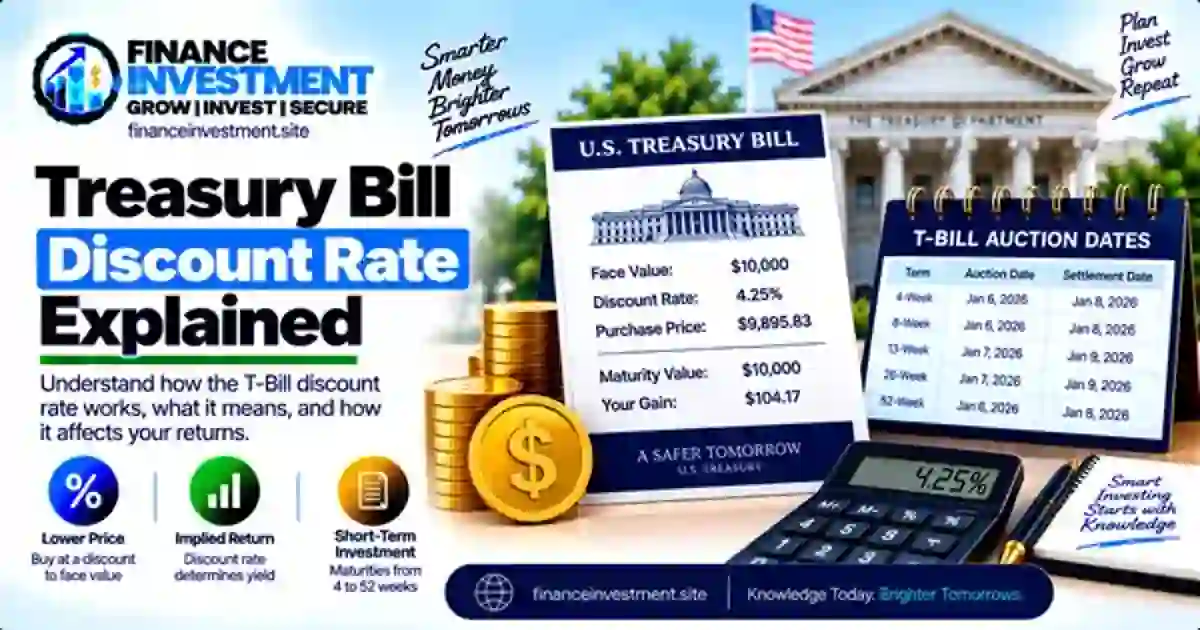
    Treasury Bill Discount Rate ExplainedThe Treasury Bill Discount Rate Explained guide starts with a number that can look confusing on a Treasury auction result. A T-bill is normally sold for less than its face value and redeemed at face value when it matures. The discount rate helps express that difference as an annualized rate using the bill’s par value and a 360-day convention.

    That distinction matters because the discount rate is not the same thing as the investment rate or the return you calculate from the price you actually pay. TreasuryDirect uses the investment rate for comparing a T-bill’s return with other investments.

    If you are new to Treasury bills, our

    Treasury Bills Explained

    guide covers the broader picture. This article goes one step further and focuses on how the discount rate is calculated, how it affects the purchase price, and how to read it alongside the investment rate.

    What You’ll Learn

    • What the Treasury bill discount rate actually measures.
    • How the discount rate connects to a T-bill’s purchase price.
    • Why the 360-day calculation matters.
    • How the discount rate differs from the investment rate and yield.
    • How to use these numbers when evaluating a Treasury bill purchase.

    Quick Answer: What Is a Treasury Bill Discount Rate?

    A Treasury bill discount rate is an annualized rate used to express the discount between a T-bill’s face value and its purchase price. Treasury calculates this discount using the bill’s par value, the number of days to maturity, and a 360-day year. Since the calculation is based on face value rather than the amount paid, the discount rate is not the same as the investment rate or the percentage return calculated from the purchase price.

    Key Takeaways

    • Treasury bills are generally sold below face value and redeemed at face value at maturity.
    • The discount-rate calculation uses a 360-day convention.
    • The discount amount is calculated from the bill’s par value, not its purchase price.
    • For the same face value and maturity period, a higher discount rate corresponds to a larger discount amount.
    • The Treasury’s investment rate uses the purchase price and a different day-count convention.
    • When comparing a T-bill with another short-term investment, consider the investment rate and purchase price rather than relying on the discount rate alone.

    BOTTOM LINE: The discount rate describes a T-bill’s discount relative to its face value. To understand the amount you pay and how the return compares with other investments, also look at the purchase price, maturity period, and Treasury’s investment rate.

    Table of Contents

    Treasury Bill Discount Rate at a Glance

    The Treasury bill discount rate expresses the annualized discount between a bill’s par value and its purchase price. Treasury uses the bill’s par value, the number of days to maturity, and a 360-day year for this calculation. That makes the discount rate useful for understanding T-bill pricing, but it is not the same measure as the investment rate.

    Quick FactWhat It Means
    Rate basisAn annualized discount rate calculated using a 360-day convention.
    Calculation baseThe bill’s par or face value, rather than the purchase price.
    Purchase priceA T-bill sold at a discount is purchased for less than its face value.
    At maturityThe bill is redeemed according to its stated maturity and face-value terms.
    Investment rateUses the purchase price and a different day-count basis to express the return.

    Who May Find This Useful?

    The discount rate is especially useful when you are reviewing Treasury auction results, checking T-bill pricing, or trying to understand why a bill’s purchase price is below its face value. It becomes even more useful when you pair it with the investment rate.

    QUICK TAKE: Think of the discount rate as a pricing measure based on face value. When you want to understand the return relative to the money invested, check the Treasury’s investment rate as well.

    Treasury Bill Discount Rate: A Beginner’s Guide

    Treasury Bill Discount Rate ExplainedThe easiest way to understand a Treasury bill discount rate is to start with the price. A T-bill has a stated face value, but it is generally purchased for less than that amount. The difference between the purchase price and the face value is the bill’s discount.
    1. Start With Face Value

    Imagine a Treasury bill with a $10,000 face value. If the bill is sold at a discount, you pay less than $10,000 when you buy it. At maturity, the bill is redeemed according to its stated terms. The difference between the amount paid and the amount received at maturity represents the discount-based return before applicable taxes.

    2. Understand What the Discount Rate Measures

    The discount rate annualizes the discount using the bill’s face value and a 360-day convention. The calculation also reflects the number of days until maturity. Because the rate is based on face value rather than the purchase price, it does not directly represent the percentage return on the money you invested.

    3. Connect the Rate to the Purchase Price

    A quoted discount rate helps determine how far the purchase price is below face value for a particular bill term. The rate alone does not tell you the complete return because the maturity period and purchase price also matter. This is why comparing T-bills solely by their discount rates can give you an incomplete picture.

    BEGINNER TIP: When reading a T-bill quote, look at the face value, purchase price, maturity period, discount rate, and investment rate together. That gives you a clearer view of the pricing and potential return than focusing on one percentage.

    How the Treasury Bill Discount Rate Works

    The calculation becomes easier when you connect three numbers: the bill’s face value, its purchase price, and the number of days until maturity. Treasury expresses the price difference as an annualized discount rate using the bill’s face value and a 360-day convention. The resulting percentage describes the discount relative to face value, rather than the return calculated from the cash you invested.

    Step 1: Find the Discount

    Start with the face value and subtract the purchase price. For example, if a $10,000 T-bill costs $9,800, the discount is $200. That $200 is the difference between the purchase price and the bill’s face value.

    Step 2: Apply the Discount Rate Formula

    For a Treasury bill, the discount rate can be expressed as:

    Discount Rate = [(Face Value − Purchase Price) ÷ Face Value] × (360 ÷ Days to Maturity)

    Using the $10,000 example, assume the purchase price is $9,800 and there are 90 days to maturity. The calculation is $200 ÷ $10,000 × 360 ÷ 90, which equals an 8% discount rate. This is a simplified illustration, not a current Treasury auction quote.

    Step 3: Understand the Effect of Time

    The number of days to maturity affects the annualized rate. A discount amount that stays the same can produce a different discount rate when the maturity period changes. That is why the bill’s term must be considered alongside its quoted rate.

    Step 4: Separate Discount Rate From Investment Rate

    The Treasury’s investment rate uses the purchase price and a different day-count basis. That makes it a more useful figure when comparing the T-bill’s return with other investments. The two rates describe the same security from different calculation perspectives, so they should not be treated as interchangeable.

    EXPERT TIP: When comparing a T-bill with a savings account, CD, or another short-term investment, do not compare the discount rate alone. Check the purchase price, maturity period, and investment rate so the comparison uses a more meaningful return measure.

    Benefits & Drawbacks of the Treasury Bill Discount Rate

    The Treasury bill discount rate is useful because it connects the bill’s face value, purchase price, and time to maturity. But it should not be treated as the complete measure of what an investor earns. Understanding both sides helps you read T-bill quotes without confusing a pricing measure with an investment return.

    Why the Discount Rate Is Useful

    • Explains T-bill pricing: It shows the annualized discount between the bill’s face value and its purchase price.
    • Helps interpret auction results: Treasury auction results can report discount rates, making it easier to understand how bills were priced.
    • Works with maturity: The calculation accounts for the number of days until the bill matures.
    • Useful for pricing calculations: The discount rate can help you understand how a quoted rate relates to the bill’s purchase price.

    Where the Discount Rate Can Be Misleading

    • It is not your percentage return on cash invested: The calculation uses face value as its base, while the investment rate uses the purchase price.
    • The day-count convention differs: The Treasury bill discount rate uses a 360-day basis, so it should not be treated as interchangeable with other annualized rates.
    • The percentage alone is incomplete: You also need to consider the purchase price and days to maturity to understand the economics of the bill.
    • It does not capture every investment consideration: An investor may also need to consider taxes, liquidity, and the possibility of a different price if the bill is sold before maturity.

    QUICK TAKE: Think of the discount rate primarily as a T-bill pricing measure. When comparing the investment itself, look beyond that percentage and check the purchase price, maturity, and investment rate as well.

    Treasury Bill Discount Rate vs. Investment Rate vs. Yield

    The Treasury bill discount rate, investment rate, and yield are related, but they are not interchangeable. The main difference is what each measure uses as its calculation base. The discount rate is based on face value, while the Treasury investment rate is based on the bill’s purchase price.

    MeasureCalculation BasisWhat It Shows
    Discount RateFace value and a 360-day conventionAnnualized discount used to express T-bill pricing
    Investment RatePurchase price and a 365/366-day conventionAnnualized return measure based on the amount invested
    YieldDepends on the specific yield convention being usedA general return measure; the calculation method should be checked before comparing it with another rate

    Why the Calculation Base Matters

    Imagine a Treasury bill with a $10,000 face value that you purchase for less than $10,000. The discount rate measures the discount relative to the $10,000 face value. The investment rate instead uses the purchase price, which represents the cash invested in the bill. Because the calculation bases and day-count conventions differ, the two percentages will normally not be the same.

    That distinction matters when comparing a T-bill with another short-term investment. A quoted percentage can look attractive simply because it uses a different calculation method. Always check what the rate represents before comparing it with a savings rate, CD rate, or another investment yield.

    QUICK TAKE: The discount rate helps explain T-bill pricing. The investment rate expresses the annualized return using the purchase price. “Yield” is a broader term, so check the calculation method before comparing one quoted yield with another rate.

    Costs, Risks & Expert Tips for Treasury Bill Investors

    The Treasury bill discount rate is not a fee. It is a way of expressing the discount between a bill’s face value and purchase price. Your overall investment result, however, can also depend on taxes, how you purchase the bill, and whether you hold it until maturity.

    Costs and Risks to Keep in Mind

    • Federal taxes: Income from Treasury bills is generally subject to federal income tax, while Treasury bill income is generally exempt from state and local income taxes.
    • Early-sale price risk: If you sell a T-bill before maturity through a bank or broker, its market price can differ from the amount you originally paid.
    • Transaction costs: TreasuryDirect does not charge a purchase commission for marketable Treasury securities, but a bank or broker may have its own fees or account-related charges.
    • Different rate conventions: A discount rate should not be compared directly with an APY or another quoted yield until you understand how each rate is calculated.

    EXPERT TIP

    When reviewing a T-bill quote, check the face value, purchase price, maturity date, discount rate, and investment rate together. This gives you a clearer picture than looking at the discount rate alone. Before placing an order, verify the latest Treasury auction announcement for the specific bill you are considering.

    Common Mistakes & Illustrative Example

    The Treasury bill discount rate can be confusing when you look at the percentage without checking the numbers behind it. The most common mistakes involve the calculation base, the maturity period, and the difference between the discount rate and the return on money invested.

    Mistake 1: Treating the Discount Rate as Your Actual Return

    The discount rate uses the bill’s face value as its calculation base. Your actual cash investment is the purchase price. Because those amounts are different, the discount rate should not automatically be treated as the percentage return earned on your invested cash.

    Mistake 2: Ignoring the Days to Maturity

    The discount rate is annualized using a 360-day convention. As a result, the number of days until maturity affects the quoted rate. The same dollar discount can produce different annualized discount rates when the maturity periods are different.

    Illustrative Example: A $10,000 Treasury Bill

    Suppose a hypothetical Treasury bill has a $10,000 face value, a $9,800 purchase price, and 90 days to maturity.

    The discount is $200. Using the Treasury bill discount-rate formula:

    Discount Rate = ($10,000 − $9,800) ÷ $10,000 × (360 ÷ 90) = 8%

    The 8% figure is the annualized discount rate, not an 8% return on the $9,800 purchase price. The example is purely illustrative and does not represent a current Treasury auction quote.

    SMART MOVE: When comparing T-bills, look at the face value, purchase price, days to maturity, discount rate, and investment rate together. That gives you a clearer picture than relying on one percentage alone.

    Who Should Pay Attention to the Treasury Bill Discount Rate?

    The Treasury bill discount rate is especially useful for anyone who wants to understand how a T-bill is priced. You do not need to calculate it every time you buy a bill, but knowing what the number represents can make auction results and purchase quotes much easier to read.

    Investors Reviewing Treasury Auctions

    If you follow Treasury auction results, the discount rate can help you understand the relationship between a bill’s face value and its purchase price.

    Beginners Learning T-Bill Pricing

    For beginners, the discount rate provides a useful starting point for understanding why a T-bill can be purchased for less than its face value. It also helps explain why the quoted discount rate is not automatically the same as the return on the cash invested.

    Investors Comparing Short-Term Options

    When comparing a T-bill with another short-term investment, understanding the discount rate can prevent an apples-to-oranges comparison. Check the purchase price, maturity, investment rate, and the calculation method behind any competing rate before comparing percentages.

    QUICK TAKE: You do not need to be an expert in Treasury pricing to understand the discount rate. Focus on what it measures, what calculation base it uses, and how it differs from the investment rate.

    Frequently Asked Questions About the Treasury Bill Discount Rate

    The discount rate becomes much easier to understand once you separate the bill’s face value, purchase price, maturity period, and investment rate. These common questions cover the points investors most often need to clarify.

    1. What is the Treasury bill discount rate?

    The Treasury bill discount rate is an annualized measure of the discount between a bill’s face value and its purchase price. Treasury calculates it using the bill’s par value, days to maturity, and a 360-day convention.

    2. How is the Treasury bill discount rate calculated?

    A basic Treasury bill discount-rate formula is: Discount Rate = [(Face Value − Purchase Price) ÷ Face Value] × (360 ÷ Days to Maturity). The result is an annualized discount rate rather than a direct percentage return on the cash invested.

    3. Why does the Treasury bill discount rate use 360 days?

    Treasury uses a 360-day basis for the discount-rate calculation. This convention annualizes the discount using 12 months of 30 days each. It is different from the 365-day or 366-day basis used for the Treasury bill investment rate.

    4. Is the Treasury bill discount rate the same as the investment rate?

    No. The discount rate is based on face value and a 360-day convention. The investment rate is based on the purchase price and uses a 365-day basis, or 366 days when applicable. Because the calculation bases differ, the two rates are not interchangeable.

    5. Does a higher Treasury bill discount rate always mean a higher return?

    Not necessarily when comparing different bills without considering their terms and calculation conventions. A higher discount rate indicates a larger annualized discount relative to face value, but investors should also compare purchase price, days to maturity, and the investment rate.

    6. Is Treasury bill discount income taxable?

    Treasury bill income is generally subject to federal income tax but is exempt from state and local income taxes. The IRS states that Treasury bill interest is reported on Form 1099-INT, generally in Box 3.

    7. Can I compare a Treasury bill discount rate directly with a CD APY?

    Not directly. A T-bill discount rate uses a different calculation basis and day-count convention from an APY. For a meaningful comparison, check the T-bill’s purchase price, maturity, and investment rate alongside the CD’s quoted APY and applicable terms.

    8. Where can I find the current Treasury bill discount rate?

    Current Treasury bill discount rates can be found in the U.S. Treasury’s auction announcements and auction results. Because rates change from auction to auction, use the latest Treasury information rather than relying on an older rate shown in an example.

    QUICK TAKE: The discount rate explains T-bill pricing, while the investment rate provides a return measure based on the purchase price. For comparisons, always check the calculation method instead of comparing percentages at face value.

    Final Takeaway: How to Read a Treasury Bill Discount Rate

    The Treasury bill discount rate is primarily a pricing measure. It expresses the annualized discount between a T-bill’s face value and purchase price using a 360-day convention. That makes it useful for understanding how Treasury bills are priced, but it does not by itself tell you the exact percentage return on the cash you invested.

    For a clearer picture, look at the face value, purchase price, maturity period, discount rate, and investment rate together. The investment rate uses the purchase price and a different day-count convention, which is why it should not be confused with the discount rate.

    THE BIG IDEA: Don’t judge a Treasury bill from its discount rate alone. Understanding the purchase price and the rate used to express the investment’s return gives you a more complete view of the opportunity.

    If you want to understand Treasury bills from the ground up, continue with our

    complete Treasury Bills guide
    .
    It covers how T-bills work, how they are purchased, and the key details investors should understand before buying.

    Have a Money Question? Keep Exploring.

    Understanding the Treasury bill discount rate is one step toward making sense of T-bill pricing. If you are researching your next move, keep learning about how Treasury bills are purchased and managed.

    📩 Get in Touch With FinanceInvestment

    Have a finance question or topic suggestion? Send us a message.


    Email FinanceInvestment

  • How to Buy Treasury Bills in 2026: Beginner’s Guide

    How to Buy Treasury Bills in 2026: Beginner’s Guide

    How to Buy Treasury Bills

    Subhash Rukade
    Founder, FinanceInvestment


    Updated: September 20, 2026


    Reading Time: ~14 minutes

    How to Buy Treasury Bills: Start With the Right Route

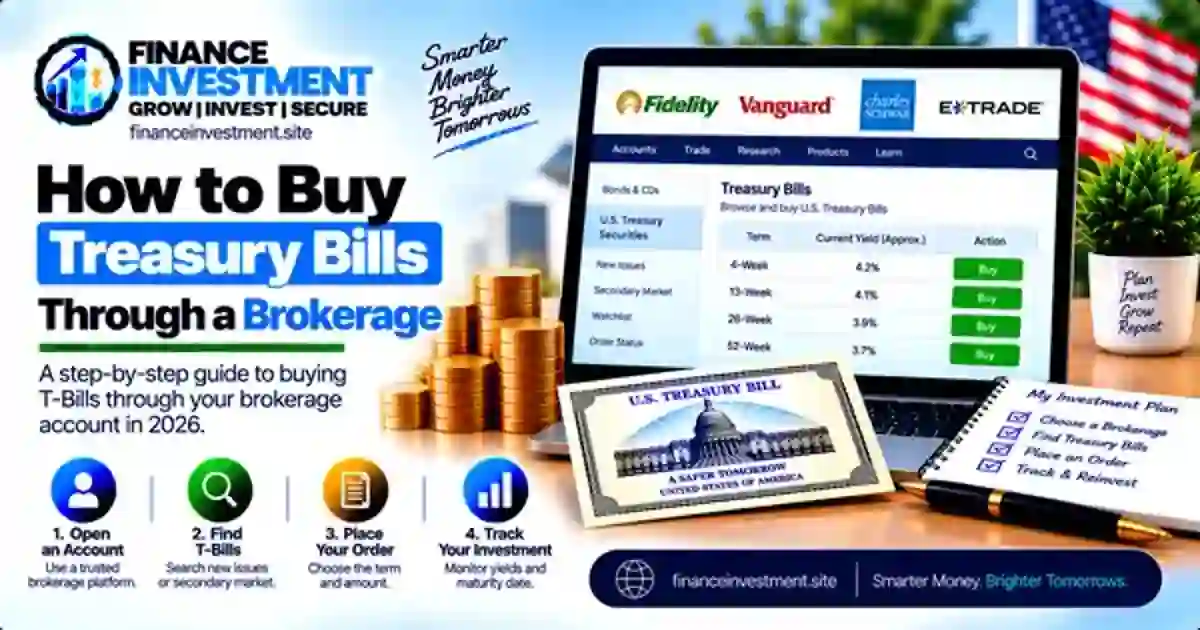
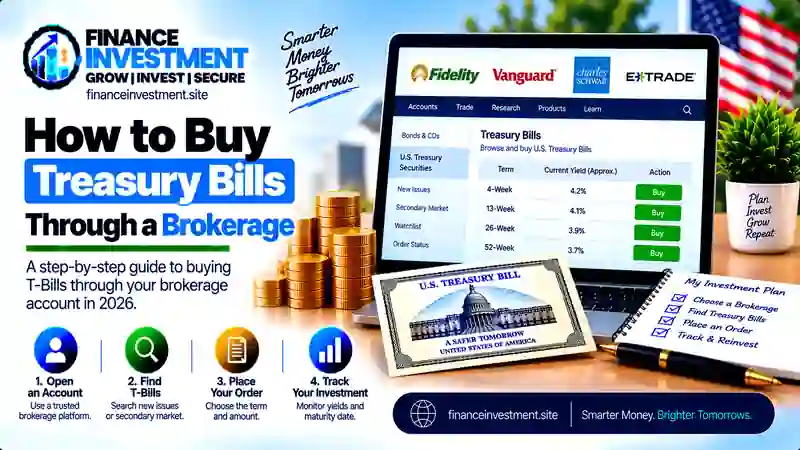
    How to Buy Treasury BillsHow to Buy Treasury Bills is easier when you first understand where the purchase happens and what you are actually ordering. In the U.S., individual investors can buy Treasury bills directly through TreasuryDirect or through a brokerage account. The steps are different, but both routes can give you access to Treasury bill investments.

    Buying a T-bill is more than choosing an amount and clicking purchase. You need to select a maturity, decide how much face value you want, understand whether you are placing a new-issue order, and know when the bill will mature. Treasury bills are issued at a discount and generally pay their face value at maturity when held until then.

    If Treasury bills are new to you, our

    Treasury Bills Explained guide

    covers the fundamentals. This article goes one step further by showing how the buying process fits together, from choosing an account to placing an order and planning for maturity.

    What You’ll Learn

    • What you need before buying your first Treasury bill.
    • How the TreasuryDirect purchase process works.
    • How a brokerage can be used to purchase Treasury bills.
    • How to choose a maturity that fits your cash timeline.
    • What a noncompetitive order means for individual investors.
    • What to check before submitting a Treasury bill order.

    Quick Answer: How Do You Buy Treasury Bills?

    To buy Treasury bills, you can purchase newly issued bills through TreasuryDirect or through a brokerage that offers Treasury securities. Start by choosing a maturity and deciding how much to invest. Then review the available offering, submit the appropriate order and check the settlement and maturity details. TreasuryDirect uses noncompetitive bidding for individual purchases, meaning you accept the yield determined at the auction.

    Key Takeaways

    • Treasury bills can be purchased directly through TreasuryDirect or through a brokerage that offers Treasury securities.
    • Before placing an order, choose a maturity that matches when you expect to need the money.
    • TreasuryDirect individual purchases use noncompetitive bidding, so you do not enter the auction yield yourself.
    • Treasury bills are generally issued at a discount and pay their face value at maturity when held to maturity.
    • A brokerage may also provide access to Treasury bills already trading in the secondary market.
    • Before buying, review the purchase amount, maturity date, settlement information and any applicable brokerage fees or charges.
    BOTTOM LINE

    Buying a T-bill is fairly simple once you know the route you want to use. The important part is matching the maturity to your cash needs and understanding whether you are buying a new issue or a bill in the secondary market.

    Table of Contents

    Treasury Bills Buying at a Glance

    Buying a Treasury bill comes down to a few practical decisions: where you will buy it, which maturity fits your plans, how much you want to invest and whether you are purchasing a new issue or a bill already trading in the secondary market. Once those choices are clear, the order itself becomes easier to follow.

    BUYING ROUTES
    TreasuryDirect or Brokerage
    Common ways to purchase Treasury bills
    MATURITY
    Select an Available Term
    Match the maturity to your cash timeline
    PRICING
    Generally Sold at a Discount
    Face value is generally paid at maturity

    Key Details to Check

    DetailWhat to CheckWhy It Matters
    MaturityAvailable bill term and maturity dateTells you when the bill is scheduled to mature.
    Purchase priceAmount required for the orderHelps determine the difference between what you pay and the face value received at maturity.
    Order typeNew issue or secondary marketPricing and the purchase process can differ between the two markets.
    AccountTreasuryDirect or brokerageDetermines where you place, hold and manage the investment.
    QUICK TAKE

    Before opening the order screen, know how long you can leave the money invested and when you may need it back. Then compare the available bill terms and purchase details that fit that timeline.

    Complete Beginner Guide: What You Need Before Buying Treasury Bills

    How to Buy Treasury BillsBefore you buy Treasury bills, get three things clear: where you will purchase them, how long you can leave the money invested and how much you want to commit. Having those answers ready makes the order process much easier to follow.

    1. Choose Your Buying Account

    You can buy eligible Treasury securities directly through TreasuryDirect or use a brokerage that offers Treasury securities. TreasuryDirect is designed for direct purchases from the Treasury, while a brokerage may also give you access to Treasury securities in the secondary market.

    2. Match the Maturity to Your Cash Needs

    Look at your upcoming expenses before selecting a bill. The maturity date tells you when the security becomes due, so avoid choosing a term that conflicts with a known cash need. If you may need the money earlier, understand the secondary-market selling process before you buy.

    3. Prepare the Purchase Details

    For a new Treasury auction, you specify the par amount you want to purchase. Treasury auction announcements state the applicable minimum bid and purchase multiples. A noncompetitive bid accepts the yield or discount rate determined at the auction instead of entering your own competitive rate.

    BEGINNER CHECK

    Before submitting an order, confirm the account, bill maturity, par amount and order type. If you are using a brokerage, also check its current transaction pricing and any applicable fees or minimums.

    If you want to understand the security before placing an order, read our

    guide to how Treasury bills work
    .
    Then you can move on to the actual purchase process.

    How Buying Treasury Bills Works

    Once you know which account and maturity you want, the buying process follows a simple sequence. The exact screens depend on the platform, but you generally select the bill, review the order details, submit the purchase and then wait for the issue or trade to settle.

    Step 1: Choose the Bill and Maturity

    Start by reviewing the available Treasury bill offerings. For a new auction, check the bill’s term, auction date, issue date, maturity date and the minimum purchase amount or applicable purchase multiples stated in the offering information.

    Step 2: Submit Your Order

    For a new TreasuryDirect purchase, an individual investor generally submits a noncompetitive bid. You enter the par amount you want to purchase rather than specifying your own competitive discount rate. A noncompetitive bid accepts the rate or discount rate awarded through the auction.

    Step 3: Complete the Purchase

    For a new issue, the Treasury conducts the auction and determines the resulting pricing. Your purchase is then completed according to the applicable settlement terms. If you buy an existing T-bill through a brokerage’s secondary market, the transaction uses the market price available when your order is executed instead of waiting for a new Treasury auction.

    Step 4: Track the Maturity Date

    After the purchase, keep the maturity date in your records. A Treasury bill becomes due on that date. If you hold it until maturity, the Treasury pays the bill’s face value. You can then use the proceeds, reinvest them or move the money toward another financial goal.

    PROCESS TIP

    Save your order confirmation, issue date and maturity date after buying. If you plan to reinvest the proceeds, note the maturity date on your calendar so you have time to review the next available Treasury bill options.

    The biggest difference between the two buying routes is what happens after you place the order. TreasuryDirect is built around direct Treasury purchases, while a brokerage can also give you access to securities already trading in the secondary market.

    Benefits and Drawbacks of Buying Treasury Bills

    Treasury bills can be useful for short-term cash that has a defined purpose and timeline. They offer a clear maturity structure, but buying them also means thinking ahead about liquidity, taxes and what you will do when the bill matures.

    Benefits

    • You can choose an available maturity that fits a planned cash need.
    • Treasury bills are obligations of the U.S. government.
    • Treasury bill interest is generally exempt from state and local income taxes.
    • TreasuryDirect provides a direct way to purchase newly issued Treasury securities.

    Drawbacks

    • If you need the money before maturity, you may need to sell the bill through the secondary market.
    • A pre-maturity sale can produce a market price that is different from what you originally paid.
    • The yield available when you reinvest may be higher or lower than the yield on your current bill.
    • Treasury bill interest is generally subject to federal income tax.
    BEFORE YOU BUY

    Look at your cash timeline before focusing on the quoted yield. A bill that matures when you actually need the money may fit your plan more naturally than one selected only because its annualized yield appears higher.

    TreasuryDirect vs. Brokerage: How to Buy Treasury Bills

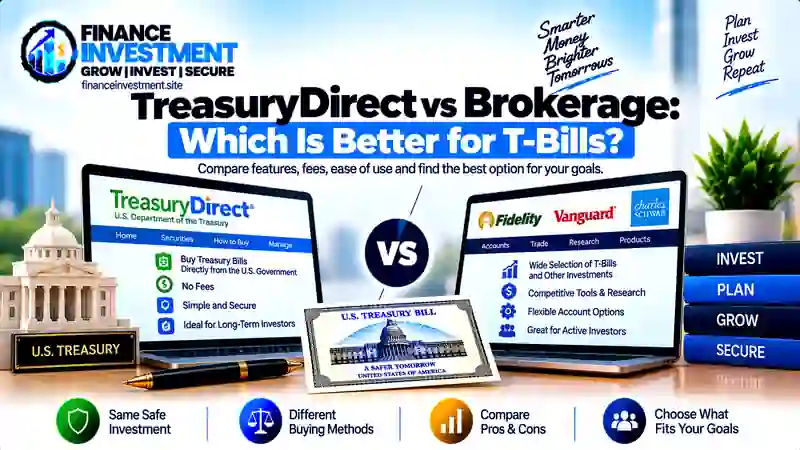
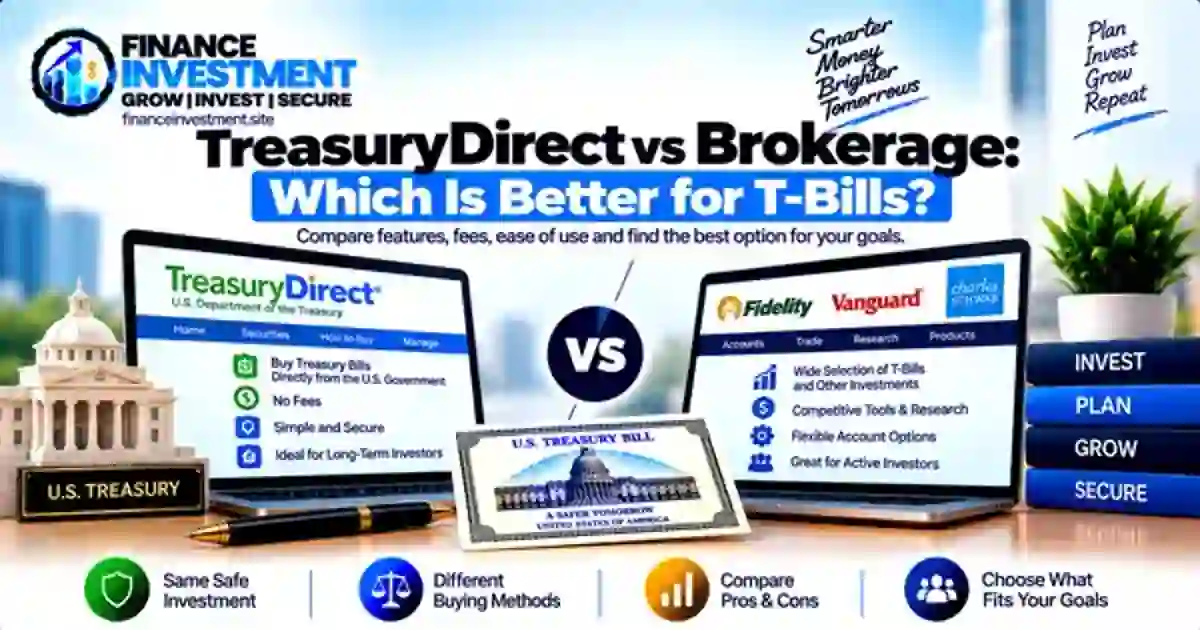
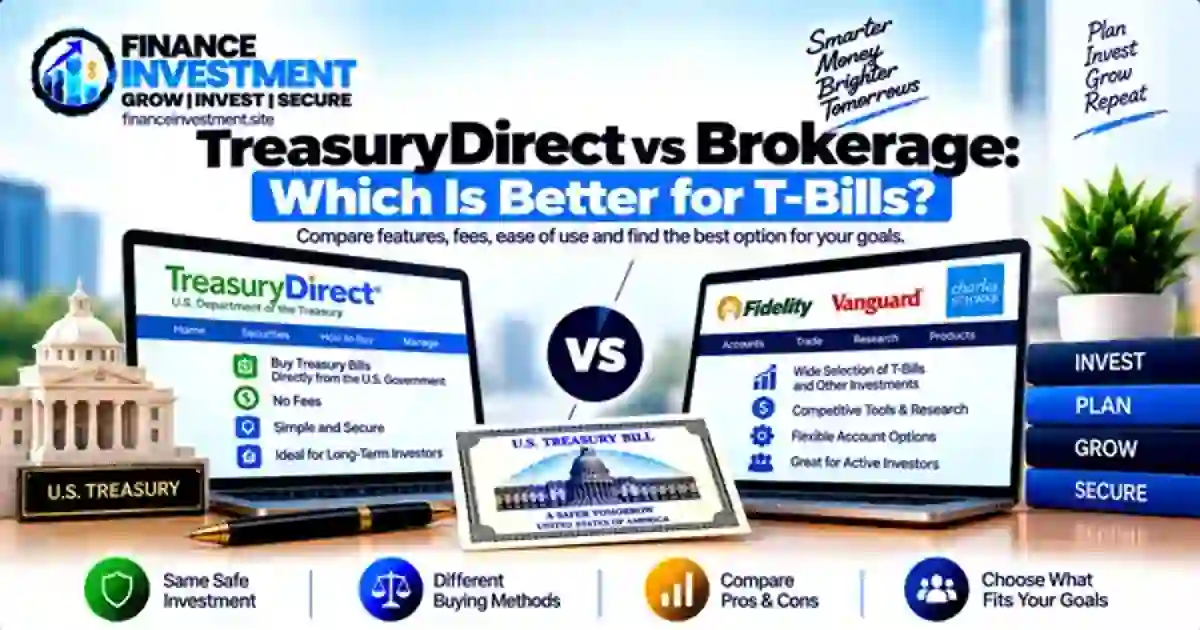
    TreasuryDirect and brokerage accounts can both provide access to Treasury bills, but they serve different purposes. TreasuryDirect lets investors purchase eligible Treasury securities directly from the U.S. Treasury, while a brokerage can place Treasury orders alongside stocks, bonds and other investments. Some brokers also provide access to Treasury securities in the secondary market.

    FeatureTreasuryDirectBrokerage
    New Treasury issuesDirect access to eligible Treasury auctionsAvailable through brokers that offer Treasury auction orders
    Existing T-billsTreasuryDirect is primarily designed for Treasury holdings and direct purchasesSome brokers offer existing Treasury securities in the secondary market
    Auction orderIndividual investors generally use noncompetitive biddingOrder process depends on the brokerage
    Account experienceFocused on Treasury securitiesTreasury bills can be managed alongside other investments
    Purchase costsTreasuryDirect charges no purchase fee or commissionCosts depend on the brokerage, account and transaction

    When a Brokerage May Be Convenient

    A brokerage can be convenient if you already keep your investments in one account. Depending on the firm, you may be able to purchase new Treasury issues and access existing securities in the secondary market. However, brokerage fees and trading arrangements vary, so review the firm’s current fee schedule and transaction terms before placing an order. Investor.gov notes that brokerage costs can include commissions, markups or markdowns and other account-related charges. 1

    What to Compare Before Choosing

    • Whether you want a newly issued Treasury bill or an existing security in the secondary market.
    • How easily you want to manage Treasury bills alongside your other investments.
    • The brokerage’s current transaction costs, account requirements and trading terms.
    • How you would handle the investment if your cash needs change before maturity.
    COMPARISON TIP

    Compare the complete buying experience rather than looking only at a commission. Check auction access, secondary-market availability, pricing, account features and how you plan to manage the bill after purchase.

    Costs, Taxes, Risks and Expert Tips

    Buying Treasury bills is relatively straightforward, but the purchase price is only one part of the decision. Before placing an order, consider brokerage costs, federal taxes, maturity timing and what could happen if you need to sell the bill before it matures.

    Costs to Know

    TreasuryDirect does not charge a purchase fee or commission for Treasury securities. Brokerage costs can vary by firm and transaction, so check the broker’s current pricing before placing an order. A secondary-market purchase can also have a different price from a newly issued Treasury bill.

    Taxes and Market Risk

    Treasury bill interest is generally subject to federal income tax but exempt from state and local income taxes. The discount on a Treasury bill is generally treated as interest income when the bill reaches maturity. If you sell before maturity, the market price can be higher or lower than what you paid because market conditions and interest rates can change.

    PRACTICAL TIP

    Before buying, check the maturity date, purchase amount, expected cash need and tax treatment. If you may need the money early, understand how selling through the secondary market could affect your proceeds.

    For a closer look at Treasury bill pricing, read our

    Treasury Bill Yield vs. Interest Rate guide
    .

    Common Mistakes When Buying Treasury Bills

    Buying Treasury bills is straightforward, but the details still matter. Most problems happen when investors choose a maturity, purchase amount or buying method without first considering when they may need the money.

    1. Choosing a Maturity Without Checking Your Cash Needs

    Before buying, look at when you expect to use the money. If you need the funds before the bill matures, you may need to sell through the secondary market, where the market price can be different from your original purchase price.

    2. Confusing Face Value With Purchase Price

    Treasury bills are generally issued at a discount and mature at face value. That means the amount paid at purchase can be less than the amount due at maturity. Review both figures before submitting an order so you understand the transaction.

    3. Forgetting to Plan for Maturity

    A Treasury bill has a defined maturity date. Before buying, decide what you expect to do with the proceeds when the bill matures. You may need the money for an expense, move it to another account or consider another investment.

    REAL-LIFE EXAMPLE

    Suppose an investor has $10,000 available for a Treasury bill and expects to use that money for a planned expense in about four months. Instead of selecting a maturity without checking the timeline, the investor can review the available Treasury bill terms and consider which maturity date fits the expected cash need. If the money is needed earlier than the selected maturity, the investor should also understand the potential effects of selling in the secondary market.

    A Simple Pre-Purchase Check

    • Confirm the bill’s maturity date.
    • Review the purchase amount and face value.
    • Check whether you are buying a new issue or a secondary-market security.
    • Decide how you expect to use the proceeds when the bill matures.

    Who Should Consider Buying T-Bills?

    Treasury bills may fit investors who have cash available for a defined period and want a U.S. Treasury security with a specific maturity date. Whether they fit your situation depends on your cash needs, investment timeline and overall financial plan.

    May Fit

    • Investors planning for a known short-term cash need.
    • Families setting aside money for an upcoming expense.
    • Investors who want short-term Treasury securities as part of a broader portfolio.
    • Retirees managing a portion of their cash for planned near-term spending.

    Consider the Timing First

    • Investors who may need the money before the selected maturity should understand the secondary market.
    • Investors seeking long-term portfolio growth may need to consider other asset types as well.
    • Money needed for an emergency reserve may require a more accessible cash option.
    PLANNING POINT

    Start with the date you expect to need the money. Then compare that timeline with the available Treasury bill maturities. If your cash needs could change, understand the potential price impact of selling before maturity before committing the funds.

    Frequently Asked Questions About Buying Treasury Bills

    1. Where can I buy Treasury bills?

    You can buy newly issued Treasury bills directly through TreasuryDirect or through a brokerage that offers Treasury securities. Some brokerages also provide access to Treasury bills in the secondary market.

    2. Can beginners buy Treasury bills?

    Yes. Individual investors can buy Treasury bills through TreasuryDirect or an eligible brokerage account. For TreasuryDirect auction purchases, individual investors generally use noncompetitive bids, which accept the yield or discount rate determined at the auction.

    3. Do Treasury bills pay monthly interest?

    No. Treasury bills do not make periodic coupon payments. They are generally issued at a discount and mature at face value. The difference between the purchase price and amount paid at maturity generally represents the bill’s interest income.

    4. What happens when a Treasury bill matures?

    When a Treasury bill reaches its maturity date, the Treasury pays its face value. If you hold the bill through maturity, you do not need to sell it in the secondary market. Eligible TreasuryDirect investors can also arrange for proceeds from maturing securities to be reinvested into new Treasury securities.

    5. Can I sell a Treasury bill before maturity?

    Yes. Treasury bills are marketable securities and can generally be sold in the secondary market before maturity. The selling price may be higher or lower than your original purchase price because market prices can change.

    6. Are Treasury bill earnings taxable?

    Treasury bill interest is generally subject to federal income tax but exempt from state and local income taxes. Your individual tax situation may differ, so review the applicable IRS rules and tax documents when preparing your return.

    7. Can I buy Treasury bills through a brokerage?

    Yes. Many brokerages offer Treasury securities, including newly issued Treasury bills and, depending on the firm, securities available in the secondary market. Check the brokerage’s current trading terms, pricing and order requirements before buying.

    8. Is holding a Treasury bill until maturity an option?

    Yes. An investor can hold a Treasury bill until its maturity date instead of selling it in the secondary market. This can avoid the need to sell at a changing market price, but the appropriate approach depends on when the investor expects to need the money.

    FAQ NOTE

    Treasury auction procedures, account rules and tax requirements can change. Check current TreasuryDirect and IRS information before placing a purchase or making a tax decision.

    Final Takeaway: How to Buy Treasury Bills

    Buying Treasury bills comes down to a few practical decisions. Choose where you want to buy, select a maturity that matches your cash timeline, decide how much you want to invest and review the order details before submitting the purchase.

    TreasuryDirect provides a direct way to purchase newly issued Treasury securities. A brokerage can place Treasury bills alongside other investments and, depending on the firm, may also provide access to the secondary market. Your choice of platform should reflect how you want to purchase and manage the investment.

    Before placing an order, check the maturity date, purchase amount, pricing, tax treatment and the process for selling before maturity. If you are still comparing Treasury bill basics, our

    Treasury Bills Explained guide

    can help you review how these securities work.

    FINAL CHECK

    The key connection is between the Treasury bill’s maturity date and your expected cash need. Once that timeline is clear, you can compare the available buying routes, review the costs and understand what happens if your plans change before maturity.

    Have a Money Question? Keep Exploring.

    Understanding how to buy Treasury bills is one step. You can continue exploring Treasury maturities, pricing and other fixed-income topics to make more informed decisions about your cash.

    📩 Get in Touch With FinanceInvestment

    Have a question, suggestion or Treasury topic you would like us to cover?


    Email FinanceInvestment