How to Buy Treasury Bills Through a Brokerage
Buying Treasury Bills Through a Brokerage
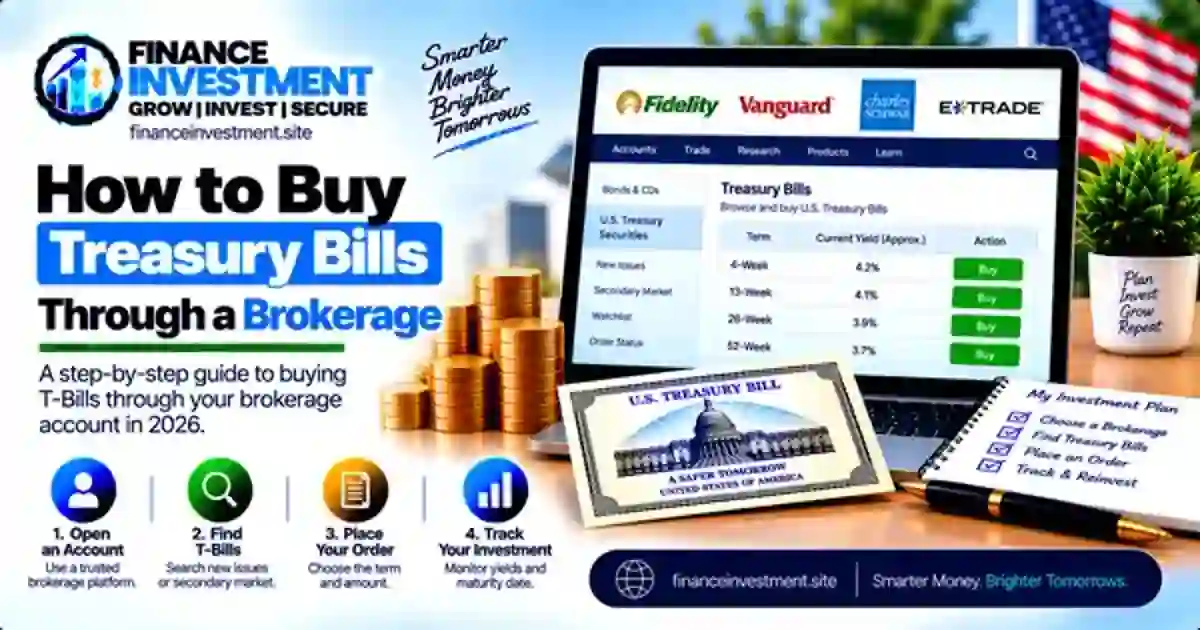 How to Buy Treasury Bills Through a Brokerage starts with one simple question: what does your broker actually offer? Depending on the platform, you may be able to buy newly issued T-bills through an auction, purchase existing bills in the secondary market, or use both options.
That distinction matters. A new-issue purchase follows the Treasury auction process, while a secondary-market purchase involves buying a Treasury security that is already outstanding. Prices, availability and the way you place the order can therefore differ between the two.
If you are new to T-bills, start with our
Treasury Bills Explained guide
for the basics. This article then takes the next step: how to find a T-bill inside a brokerage account, review the price and maturity, place an order, understand costs and taxes, and handle the security after you buy it.
What You’ll Learn
- What to look for when choosing a brokerage account for T-bills.
- How new-issue Treasury auctions differ from secondary-market purchases.
- How to find and evaluate individual T-bills on a brokerage platform.
- How pricing, fees and taxes can affect your purchase.
- What happens when you hold a T-bill to maturity or sell it earlier.
- Common mistakes to avoid when placing a Treasury bill order.
Quick Answer: How Brokerage T-Bill Purchases Work
To buy Treasury bills through a brokerage, sign in to a brokerage account that offers individual Treasuries, open its fixed-income or Treasury section, and review the available T-bills. Depending on the broker, you may be able to place an order for a new Treasury issue, buy an existing bill in the secondary market, or access both.
Key Takeaways
- Available Treasury bills and order choices vary by brokerage platform.
- New-issue T-bills are purchased through the Treasury auction process.
- Secondary-market bills are already outstanding, so their market prices can move before maturity.
- Check the maturity date and amount before placing an order so they match your cash timeline.
- Review the quoted price or yield, order details, and any applicable brokerage charges before confirming a trade.
- Treasury bill interest is subject to federal income tax but exempt from state and local income taxes.
BOTTOM LINE:
Before placing a brokerage order, identify whether the T-bill is a new issue or a secondary-market security. Then compare its maturity, pricing information and order terms rather than choosing from the yield alone.
Table of Contents
Treasury Bills Through a Brokerage at a Glance
A brokerage account can make it easier to keep Treasury bills alongside your other investments. Depending on the platform, you may find newly issued T-bills offered through the auction process, existing bills available in the secondary market, or both. Features, availability, pricing and transaction costs can vary by brokerage.
| What to Check | Why It Matters |
|---|---|
| New issues | Some brokers offer newly issued T-bills through Treasury auctions. |
| Secondary market | You may be able to buy an existing T-bill before its maturity date. |
| Maturity | Shows when the bill is scheduled to mature and pay its face value if held to maturity. |
| Price and yield | Helps you evaluate the purchase price and potential return based on the bill’s terms. |
| Fees and order terms | Brokerage charges and trading rules can differ, particularly for secondary-market transactions. |
QUICK TAKE
Before placing an order, identify whether you are buying a new Treasury issue or an existing T-bill in the secondary market. Then check the maturity, price or yield, and applicable order terms so you know exactly what you are purchasing.
How to Buy Treasury Bills Through a Brokerage: Beginner Guide
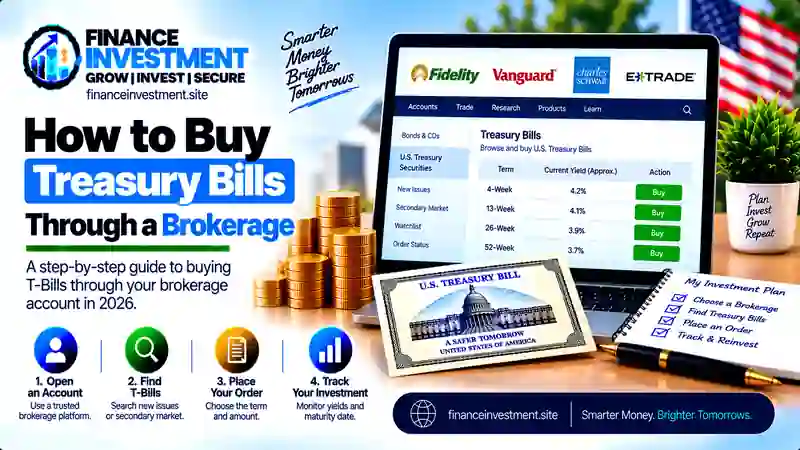 If you already have a brokerage account, buying an individual Treasury bill can be a straightforward process. The important part is knowing which type of T-bill you are purchasing and understanding the order details before you submit the trade. Start by checking whether your brokerage offers individual Treasury securities and which purchase options are available.
1. Find the Brokerage’s Treasury Section
Sign in to your brokerage account and look for its bonds, fixed-income or Treasury section. The menu name can vary by platform. If you want an individual security with a specific maturity date, make sure you are selecting an individual Treasury bill rather than a Treasury ETF or bond fund.
2. Choose How You Want to Buy
Depending on the broker, you may see newly issued T-bills offered through an auction, existing bills available in the secondary market, or both. A new issue follows the Treasury auction process. A secondary-market purchase involves an already-issued bill and can have a different price, yield and transaction terms.
3. Review the T-Bill Details
Before ordering, check the maturity date, quoted price or yield, investment amount and settlement information. If your plan is to hold the bill until maturity, make sure the maturity date fits your cash needs. For a secondary-market purchase, pay close attention to the quoted price because it may differ from the bill’s original issue price.
4. Review and Submit the Order
Review the final order quantity, price or yield, estimated cost, settlement date and any applicable brokerage charges. Once the transaction is completed, save the trade confirmation. It gives you a record of the security you purchased and helps you track it through maturity or a future sale.
How Brokerage T-Bill Purchases Work
When you buy a Treasury bill through a brokerage, the process depends on whether you are purchasing a new issue or an existing bill. Your brokerage provides the platform for placing and settling the transaction, while newly issued T-bills follow the U.S. Treasury’s auction process.
New-Issue T-Bills
Some brokerages allow customers to request newly issued T-bills before an upcoming auction. The exact order process varies by broker. For a noncompetitive purchase, you generally agree to accept the auction’s resulting terms rather than specifying your own discount rate. Treasury auction rules accept noncompetitive bids before competitive bids are used to determine the auction result.
For Treasury bills, competitive auction bids specify a discount rate. The auction establishes the accepted rate, which is then used under Treasury’s auction terms to determine the purchase price for the securities awarded. Your brokerage should provide the resulting trade details after the transaction is processed.
Secondary-Market T-Bills
A secondary-market purchase works differently because the T-bill has already been issued. Your brokerage may display available bills with current market prices and yield information. The amount you pay can be above or below the bill’s original issue price, depending on market conditions and the remaining time to maturity.
What Happens After You Buy
If you hold the T-bill until maturity, the Treasury pays its face value according to the security’s terms. The difference between your purchase price and face value generally represents your return before taxes and applicable costs. If you sell before maturity, your result depends on the market price available when you sell, which can be different from your original purchase price.
Benefits and Drawbacks of Buying T-Bills Through a Brokerage
Buying Treasury bills through a brokerage can be convenient if you already manage stocks, ETFs and other investments in the same account. It can also give you access to different Treasury maturities and, depending on the broker, both new issues and secondary-market securities. However, the available features, pricing and transaction costs can vary by platform.
Benefits
- Keeps individual Treasury bills alongside your other investments.
- May provide access to new Treasury issues and secondary-market T-bills.
- Makes it easier to view Treasury positions within an existing investment account.
- Some brokers may offer auto-roll features for eligible Treasury purchases.
Drawbacks
- Treasury offerings and available maturities can differ between brokers.
- A secondary-market T-bill can change in market value before maturity.
- Secondary-market transactions may involve broker-specific charges or pricing differences.
- Beginners may need to understand several price, yield and order details before confirming a trade.
QUICK TAKE
A brokerage can make Treasury bill investing more convenient, but convenience does not remove the need to review the trade. Before buying, check the maturity, price or yield, purchase type and any applicable costs.
TreasuryDirect vs Brokerage: What’s the Difference?
TreasuryDirect and brokerage accounts can both provide access to individual Treasury bills, but they serve different purposes. TreasuryDirect is operated by the U.S. Treasury and lets investors purchase eligible marketable Treasury securities directly. A brokerage can place Treasury investments alongside stocks, ETFs and other securities in the same account. TreasuryDirect charges no purchase fee or commission for marketable securities, while brokerage pricing and transaction costs depend on the firm and the type of trade.
| Feature | TreasuryDirect | Brokerage |
|---|---|---|
| New Treasury issues | Available for eligible Treasury auctions. | Available through some brokerage platforms. |
| Secondary market | Not a secondary-market trading platform. | Many brokers provide access to existing Treasury securities. |
| Purchase costs | No purchase fee or commission for marketable securities. | Pricing and applicable costs depend on the brokerage and transaction. |
| Selling before maturity | A marketable security generally needs to be transferred to a broker or financial institution for an early sale. | A broker may provide a secondary-market route for selling eligible Treasury securities. |
| Account experience | Focused on Treasury and savings products. | Can combine Treasuries with stocks, ETFs and other investments. |
| Reinvestment | Reinvestment options are available for eligible securities. | Some brokers offer auto-roll features for eligible Treasury purchases. |
QUICK TAKE
TreasuryDirect provides a direct way to buy eligible Treasury securities, while a brokerage can add secondary-market access and broader investment management features. The better fit depends on how you plan to buy, hold, reinvest or potentially sell your T-bills.
Costs, Taxes, Risks and Practical Tips
The amount you pay for a Treasury bill is only one part of the transaction. Before placing an order, review the quoted price or yield, maturity date, settlement details and any applicable brokerage charges. Costs and pricing can vary by broker, particularly when you trade in the secondary market.
Understand the Tax Treatment
Interest income from U.S. Treasury bills is generally subject to federal income tax but exempt from state and local income taxes. Treasury bill interest is generally reported on Form 1099-INT in Box 3. Your broker may include this information in a consolidated tax statement, so keep the documents for your federal tax return.
Consider the Risk of Selling Early
A T-bill sold before maturity may have a market value that is different from the amount you originally paid. Your sale proceeds can therefore be higher or lower than your purchase price. If you hold the bill until maturity, the Treasury pays its face value according to the security’s terms. Tax reporting may depend on when and how the bill is sold or matures.
Practical Tips Before You Buy
- Confirm whether you are buying a new issue or a secondary-market T-bill.
- Check the maturity date against when you expect to need the money.
- Review both the quoted price and yield instead of relying on a single figure.
- Check your brokerage’s current charges, settlement terms and order details before confirming the trade.
Common Mistakes When Buying T-Bills Through a Brokerage
Buying a Treasury bill through a brokerage is straightforward once you understand the order. The mistakes usually happen when investors focus on the quoted yield and overlook the maturity date, purchase type, price or transaction terms.
Mistakes to Avoid
- Choosing a maturity date that does not match when you expect to need the money.
- Confusing an individual T-bill with a Treasury ETF or bond fund.
- Assuming every brokerage offers the same Treasury maturities, auction access or trading features.
- Overlooking applicable charges or pricing differences in a secondary-market transaction.
- Selling before maturity without first reviewing the current market price and possible tax reporting.
Real-Life Example: A $10,000 T-Bill Purchase
Imagine an investor has $10,000 available and finds an individual Treasury bill through a brokerage. Before placing the order, the investor checks the bill’s maturity date, quoted price or yield, purchase amount and applicable transaction terms. The investor also confirms whether the bill is a new issue or an existing security in the secondary market.
If the investor holds the T-bill until maturity, the Treasury redeems it at its face value according to the security’s terms. Because T-bills are issued at a discount, the difference between the purchase price and face value represents the interest earned before taxes and applicable costs. If the investor sells before maturity, the amount received depends on the market price available at that time and can differ from the original purchase price.
PRACTICAL LESSON
The amount you invest is only one part of the decision. Before confirming a brokerage order, check the maturity, purchase type, price or yield and any applicable costs.
Who Should Choose a Brokerage for T-Bills?
A brokerage can be useful for investors who already manage stocks, ETFs and other investments in one account and want to add individual Treasury bills to the same platform. Depending on the broker, the account may also provide access to new Treasury issues, secondary-market T-bills or both.
A Brokerage May Be Relevant If You Want:
- Individual Treasury bills held alongside your other investments.
- Potential access to existing Treasury securities in the secondary market.
- Brokerage tools for reviewing Treasury prices, yields and available maturities.
- Reinvestment or auto-roll features, if offered by your brokerage for eligible Treasury purchases.
TreasuryDirect is another option for investors who want to purchase eligible Treasury securities directly from the U.S. Treasury. A brokerage may provide a broader investment account experience, while TreasuryDirect focuses on Treasury and savings products. The practical difference comes down to the purchase method, available features, secondary-market access and how you plan to manage the securities.
Treasury Bill FAQs
1. Can I buy Treasury bills through a brokerage?
Yes. Some brokerages offer individual Treasury bills, including newly issued securities and, depending on the platform, bills available in the secondary market. Available maturities and features vary by broker.
2. Can I buy a T-bill at auction through a broker?
Some brokers provide access to new Treasury issues before an auction. The broker’s order process determines how you submit the purchase request and which auction options are available to you.
3. Can I buy an existing T-bill through a brokerage?
Many brokerage platforms provide access to Treasury securities already trading in the secondary market. Their market price and yield can differ from those of a newly issued bill.
4. Do Treasury bills pay monthly interest?
No. T-bills do not make periodic coupon payments. They are generally issued at a discount, although auction results can affect the final terms, and they are redeemed at face value at maturity. The difference between the purchase price and face value generally represents the interest for a bill held to maturity.
5. Are T-bill earnings taxable?
Treasury bill interest is generally subject to federal income tax but exempt from state and local income taxes. Treasury interest is generally reported on Form 1099-INT, Box 3. The tax year in which the interest is reported can depend on when the bill matures or is sold.
6. Can I sell a T-bill before maturity?
Yes. Marketable T-bills can generally be sold before maturity through a broker or dealer in the secondary market. The amount you receive depends on the market price available when you sell.
7. Is buying T-bills through a brokerage the same as using TreasuryDirect?
No. TreasuryDirect lets investors purchase eligible Treasury securities directly from the U.S. Treasury. A brokerage can provide Treasury access within a broader investment account and may also provide secondary-market trading.
8. Should I check the broker’s fees before buying?
Yes. Review the brokerage’s current pricing and order terms before placing a trade. Costs and pricing can differ depending on the firm and whether you are buying a new issue or trading in the secondary market.
Final Verdict: Buying T-Bills Through a Brokerage
Buying Treasury bills through a brokerage gives investors another way to access individual Treasury securities while keeping them within a broader investment account. Depending on the brokerage, you may be able to purchase new issues through Treasury auctions, buy existing T-bills in the secondary market, and use features such as reinvestment or auto-roll.
Before placing an order, identify the type of transaction and review the details carefully. Check the T-bill’s maturity date, price or yield, purchase amount, settlement information and any applicable brokerage costs. If you may need the money before maturity, understand how a secondary-market sale works and how the market price can affect your proceeds.
THE KEY POINT
TreasuryDirect and brokerage accounts provide different ways to manage Treasury investments. Your choice can depend on whether you want direct Treasury access, secondary-market flexibility, broader investment-account features, or a particular reinvestment option.
Have a Money Question? Keep Exploring.
Before buying your next Treasury bill, review the maturity, pricing, purchase method and any applicable brokerage costs. A little research can make the order details much easier to understand.
📩 Get in Touch With FinanceInvestment
Leave a Reply