Treasury Bill Rates Explained
Why Treasury Bill Rates Matter
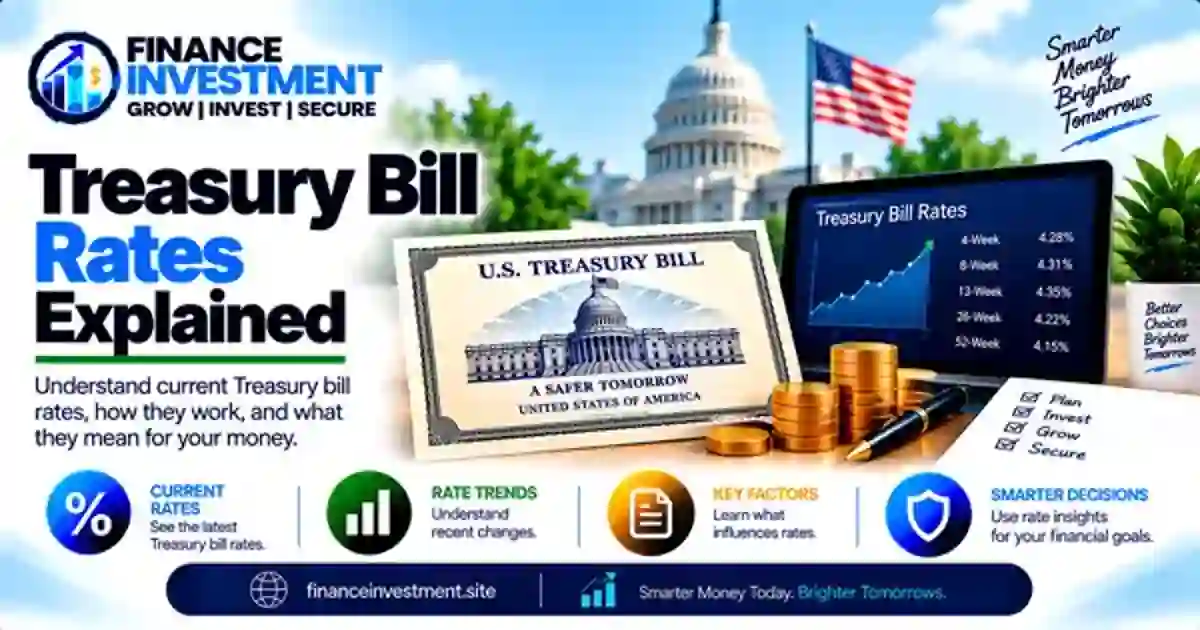 Treasury Bill Rates Explained is easier once you know what the numbers on a Treasury auction actually mean. You may see a discount rate, investment rate, purchase price, and maturity value. They are related, but each number tells you something different about the T-bill.
Treasury bills are short-term U.S. government securities generally sold at a price below their face value. Instead of receiving regular coupon payments, the investor’s return generally comes from the difference between the purchase price and the amount paid at maturity. The quoted rate can vary as market conditions, investor demand, inflation expectations, and monetary policy change.
If you are new to Treasury securities, our
Treasury Bills Explained
guide gives you the broader foundation. Here, we will focus specifically on how T-bill rates are presented, what they mean, and how to read them before making an investment decision.
What You’ll Learn
- What a Treasury bill rate represents
- How the discount rate differs from the investment rate
- Why T-bill rates change over time
- How different maturity terms can have different rates
- How to compare T-bill yields with other short-term investments
- What to check before buying a Treasury bill
Quick Answer: What Is a Treasury Bill Rate?
A Treasury bill rate describes the annualized return associated with a short-term Treasury bill. Because T-bills are issued at a discount and redeemed at their face value at maturity, the rate is tied to the bill’s price, face value, and time to maturity. Treasury auction results can show both a discount rate and an investment rate, and those figures are calculated differently.
Key Takeaways
- T-bills are generally purchased for less than their face value.
- The difference between the purchase price and face value represents the bill’s discount.
- The discount rate is calculated using the bill’s par value and a 360-day basis.
- The investment rate is based on the purchase price and is useful for comparing returns.
- T-bill rates can change as market conditions and investor demand change.
- Different Treasury bill maturities can carry different rates.
Don’t look at a T-bill’s quoted rate in isolation. Check the purchase price, maturity date, and investment rate to get a clearer picture of the return you are comparing.
Treasury Bill Rates at a Glance
Treasury bill rates become easier to understand once you separate the bill’s price from the rate used to quote its return. T-bills are generally issued at a discount to face value and paid at face value at maturity. The quoted rate depends on the calculation method, purchase price, and time remaining until maturity.
Quick Facts
- Security: Short-term U.S. Treasury security
- Pricing: Generally issued below face value
- Maturity: The bill is redeemed at face value according to its terms
- Return: Generally reflects the difference between the purchase price and the amount received at maturity
- Rates: Can vary by maturity, auction conditions, and broader market conditions
- Useful for: Investors comparing short-term Treasury investments
| Rate or Term | What It Means |
|---|---|
| Discount Rate | An annualized rate calculated from the bill’s discount from face value using a 360-day basis. |
| Investment Rate | An annualized rate based on the purchase price and calculated on a 365- or 366-day basis. It is useful for comparing T-bill returns with other investments. |
| Purchase Price | The amount paid for the Treasury bill, generally below its face value. |
| Maturity | The date when the T-bill reaches the end of its stated term and is redeemed according to its terms. |
The discount rate and investment rate are not interchangeable. When you want to compare a T-bill’s annualized return with another short-term investment, the investment rate provides the more useful comparison.
Complete Beginner Guide to Treasury Bill Rates
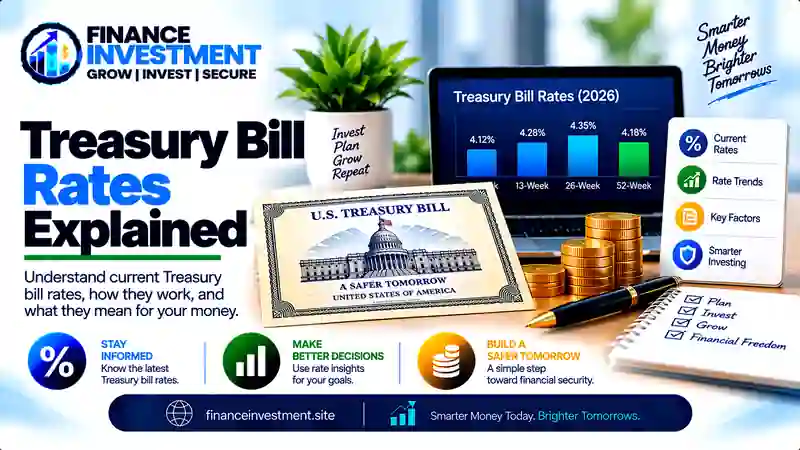 Treasury bill rates make more sense once you separate three things: what you pay, what the bill is worth at maturity, and how the return is expressed as an annualized rate. A T-bill generally does not send you regular interest payments. Instead, it is issued at a discount and redeemed at face value when it matures.
Start With the Price
Suppose a Treasury bill has a $10,000 face value and an investor pays $9,800. If the investor holds the bill until maturity, the Treasury pays the $10,000 face value according to the security’s terms. In this simplified example, the $200 difference is the discount and represents the investment’s return before applicable taxes.
Understand the Two Rate Measures
Treasury auction results can include both a discount rate and an investment rate. The discount rate is calculated from the bill’s par value using a 360-day convention. The investment rate is calculated using the purchase price and a 365- or 366-day basis. Because of these different calculations, the two percentages can be different even for the same T-bill.
Compare the Maturity Terms
The rate can also vary depending on how long the money is invested. A 4-week bill may have a different rate from a 13-week, 26-week, or 52-week bill. If you want to explore the shorter terms, see our
4-week Treasury bill guide
and
13-week Treasury bill guide
.
For a longer holding period, our
52-week Treasury bill guide
explains what changes when you choose a one-year Treasury bill.
When comparing T-bills, look at the maturity, purchase price, and investment rate together. A single percentage does not tell the whole story.
How Treasury Bill Rates Work
Treasury bill rates are established through the U.S. Treasury auction process. Investors can submit either competitive or noncompetitive bids. Competitive bidders specify the discount rate they are willing to accept, while noncompetitive bidders agree to receive the rate determined by the auction.
1. Investors Submit Bids
A competitive bid states both the amount the investor wants and the discount rate they are willing to accept. Noncompetitive bidders do not choose a discount rate. Instead, they agree to accept the rate established through the auction, subject to the auction’s terms.
2. Treasury Determines the Accepted Rate
After the auction closes, Treasury accepts noncompetitive bids and then evaluates competitive bids from the lowest discount rates upward until the required amount of securities has been allocated. The highest accepted competitive discount rate becomes the auction’s stop-out rate for Treasury bills.
3. The Rate Determines the Purchase Price
Because Treasury bills are generally sold below face value, the auction’s discount rate is used to calculate the price paid for the bill. A lower purchase price means a larger dollar difference between the amount paid and the face value received at maturity, all else being equal.
4. Investment Rate Shows the Return Differently
The discount rate and investment rate are not interchangeable. The discount rate is calculated using par value and a 360-day convention. The investment rate uses the purchase price and a 365- or 366-day basis. That difference is why the investment rate can be more useful when comparing a T-bill with other short-term investments.
5. Future Auction Rates Can Change
A rate from one Treasury auction does not lock in the rate for future bills. Market interest rates, investor demand, inflation expectations, economic conditions, and Federal Reserve policy can influence the rates available at later auctions.
The simplest way to follow the process is: investors bid → Treasury accepts bids → the auction establishes the rate → the rate determines the bill’s price. The investment rate then expresses the return using the purchase price.
Benefits and Drawbacks of Treasury Bill Rates
Looking at the rate is only one part of evaluating a Treasury bill. The maturity date, purchase price, access to your money, and the rate available when you invest can all affect how the security fits into your short-term plans.
Pros
- Known maturity: Each T-bill has a stated maturity date, making the timing easier to plan around.
- Simple pricing structure: T-bills are generally purchased below face value and redeemed at face value at maturity.
- U.S. government obligation: Treasury securities are backed by the full faith and credit of the U.S. government.
- Transparent auction information: Treasury publishes auction results, including relevant pricing and rate information.
Cons
- Rates can move: A new T-bill may offer a different rate when market conditions change.
- Early access involves the market: Selling before maturity can expose you to a secondary-market price that differs from your purchase price.
- Reinvestment risk: When a T-bill matures, the rate available on a replacement investment may be higher or lower than the original rate.
- Taxes still matter: T-bill interest is generally subject to federal income tax, although it is generally exempt from state and local income taxes.
A higher quoted rate does not tell the entire story. Look at the maturity, purchase price, investment rate, and your expected use for the money before comparing T-bills.
Treasury Bill Rate Comparison by Maturity
Treasury bill rates can vary from one maturity to another because each auction reflects market conditions at that time. Instead of comparing percentages alone, look at the rate together with the bill’s term, purchase price, and maturity date.
| T-Bill Term | Rate Consideration | Planning Consideration |
|---|---|---|
| 4 weeks | The applicable rate is established through the auction for that issue. | The scheduled maturity arrives relatively soon, which can suit a shorter cash timeline. |
| 13 weeks | The auction determines the rate for that specific 13-week issue. | Provides a longer maturity than a 4-week bill while remaining a short-term security. |
| 26 weeks | The rate reflects the pricing established at the auction for the 26-week issue. | The scheduled maturity is farther away, so consider how long the money can remain invested. |
| 52 weeks | The auction determines the applicable rate for the 52-week issue. | The longer maturity may require more planning around when the funds become available. |
One important detail: the rate on a T-bill is annualized. Your actual dollar return depends on the purchase price, face value, and length of the investment. Therefore, a higher quoted annualized rate does not automatically mean a larger dollar return for every investor or every maturity.
Compare the investment rate, maturity period, purchase price, and your cash timeline together. That gives you a more meaningful comparison than looking at the headline percentage alone.
Costs, Risks and Expert Tips
A Treasury bill’s quoted rate is useful, but it is not the only number worth checking. Your purchase price, maturity date, taxes, and the rate available when you reinvest can all affect the outcome.
Costs to Check
If you buy or sell T-bills through a brokerage, review that firm’s current pricing and trading terms. Depending on the institution and transaction, costs can include commissions, markups, markdowns, or bid-ask spreads. These expenses can reduce your effective return.
Tax Considerations
Interest income from Treasury bills is generally subject to federal income tax but exempt from state and local income taxes. For T-bills, the difference between the discounted purchase price and the face value received at maturity is generally treated as interest income under federal tax rules.
Risks Worth Understanding
- Rate risk: A new T-bill may offer a different rate when market conditions change.
- Early-sale risk: Selling before maturity means accepting the secondary-market price available at that time.
- Reinvestment risk: A maturing T-bill may need to be replaced at a different rate.
- Opportunity cost: Money committed to one maturity may not be available for another investment during that period.
Before comparing two T-bills, write down the purchase price, face value, maturity date, and investment rate. Looking at these details together gives you a much clearer comparison than the headline rate alone.
Common Treasury Bill Rate Mistakes + Example
Treasury bill pricing is straightforward once the numbers are separated. Still, a few common mistakes can make a T-bill rate look better or worse than it really is. The biggest issue is usually comparing figures that are calculated differently.
Mistakes to Avoid
- Mixing up the two rate measures: The discount rate and investment rate use different formulas and day-count conventions.
- Ignoring the purchase price: The dollar return depends on what you actually pay for the bill.
- Comparing different terms without context: A rate on a short maturity and a rate on a longer maturity may reflect different market conditions.
- Treating an auction rate as permanent: A future Treasury auction can produce a different rate.
- Overlooking taxes: Treasury bill interest generally has federal income-tax implications, although it is generally exempt from state and local income taxes.
A Simple Example
Suppose an investor purchases a Treasury bill with a $10,000 face value for $9,800. If the investor holds it until maturity and the security pays $10,000 according to its terms, the difference is $200.
That $200 is the dollar difference in this simplified example, but it is not by itself the annualized Treasury bill rate. The investment period matters. For example, the same $200 difference over a shorter period represents a different annualized return than $200 earned over a longer period.
When a T-bill rate catches your attention, look at the calculation behind it and the time period it covers. That small step can prevent a misleading comparison.
Who Should Consider Treasury Bills?
Treasury bills can be relevant for investors looking at short-term U.S. government securities with a stated maturity date. Whether they fit a particular financial plan depends on the investor’s time horizon, cash needs, available rates, and other investment choices.
Common Situations
- You have funds that may remain invested until a known short-term maturity date.
- You are researching U.S. Treasury securities for short-term cash management.
- You want to compare Treasury bill rates with savings accounts, money market accounts, or CDs.
- You want to understand an investment whose return generally comes from buying below face value and receiving face value at maturity.
Your timeline matters. If you could need the money before maturity, selling the T-bill may involve a secondary-market transaction, and the market price at that time can be different from your original purchase price.
Start by identifying when you may need the money. Then compare the available Treasury bill rate, maturity period, and alternatives that serve the same purpose.
Frequently Asked Questions About Treasury Bill Rates
1. What are Treasury bill rates?
Treasury bill rates are annualized measures associated with short-term U.S. Treasury bills. T-bills are generally issued at a discount and redeemed at face value when they mature.
2. How are Treasury bill rates determined?
Treasury bills are sold through auctions. Competitive bidders specify the discount rate they are willing to accept, while noncompetitive bidders agree to accept the rate determined by the auction.
3. What is the difference between the Treasury bill discount rate and investment rate?
The discount rate is calculated using the bill’s par value and a 360-day basis. The investment rate is based on the purchase price and uses a 365-day basis, or 366 days during a leap year. TreasuryDirect says the investment rate can be used to compare bill yields with other investments.
4. Why do Treasury bill rates change?
T-bill rates can change because auction pricing responds to market conditions, investor demand, interest-rate expectations, inflation expectations, and broader economic conditions.
5. Do longer Treasury bills always have higher rates?
No. Rates can differ across maturities, and the relationship can change with market conditions. A longer maturity does not automatically mean a higher Treasury bill rate.
6. Are Treasury bill rates the same as savings account rates?
No. They are different types of rates. Treasury bills are generally issued below face value and pay the face value at maturity, while savings accounts generally credit interest based on the account’s terms.
7. Can I sell a Treasury bill before maturity?
Generally, yes. A marketable T-bill can be sold before maturity through a bank or broker that supports secondary-market Treasury transactions. The market price at that time can differ from the original purchase price.
8. Is Treasury bill interest taxable?
Yes, Treasury bill interest is generally subject to federal income tax but exempt from state and local income taxes. Individual tax circumstances can vary, so current IRS guidance should be reviewed for your situation.
Final Thoughts on Treasury Bill Rates
Treasury Bill Rates Explained comes down to understanding what sits behind the percentage you see. A T-bill’s purchase price, face value, maturity period, and rate calculation all affect how the investment is presented.
One detail deserves special attention: the discount rate and investment rate are different measures. Because they use different calculation methods, the two percentages can vary for the same Treasury bill. Looking at the investment rate can make comparisons with other short-term investments more meaningful.
If you want to build a stronger foundation before comparing individual bills, visit our
Treasury Bills Explained
guide. It covers the broader basics, while this article focuses on understanding the rates behind those securities.
A Treasury bill rate is more useful when you know what the number represents. Check the rate calculation, purchase price, and maturity together before comparing one T-bill with another.
Have a Money Question? Keep Exploring.
Understanding Treasury bill rates is a good starting point. Keep exploring related Treasury topics to build a clearer picture of short-term investing.
Leave a Reply