How AI Detects Credit Card Fraud in Real Time: 2026 Guide
Published: June 13, 2026
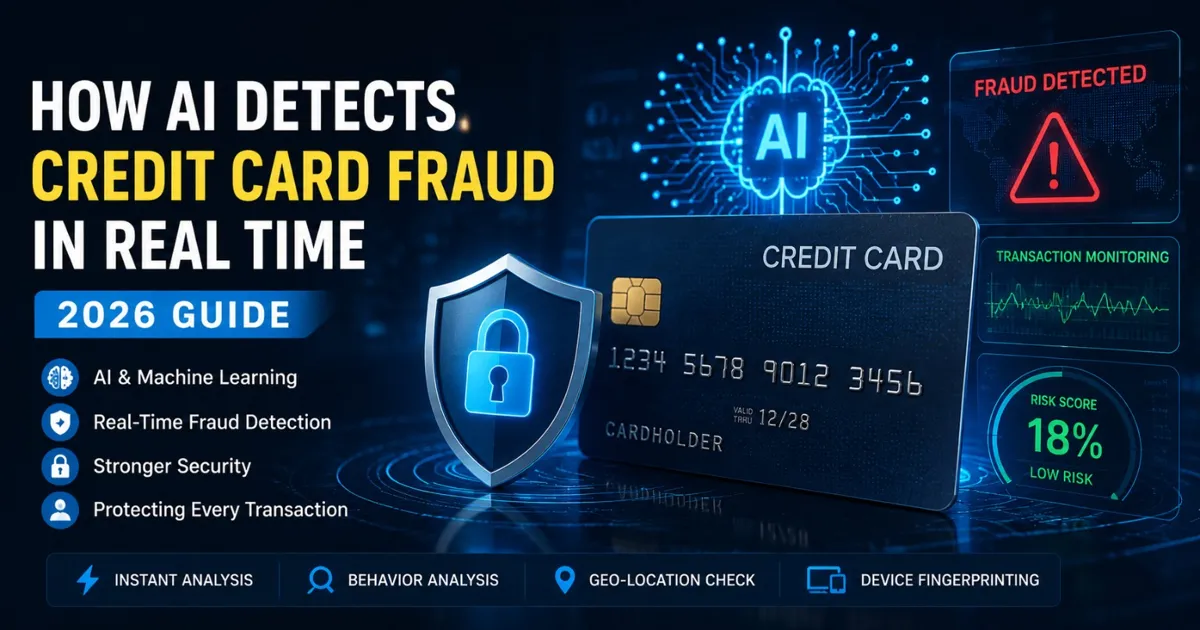
Why AI Credit Card Fraud Detection Matters More Than Ever
Credit card fraud continues to be one of the fastest-growing financial crimes in the United States. As digital payments become more common, criminals are developing increasingly sophisticated methods to steal card information and perform unauthorized transactions.
AI Credit Card Fraud detection has become one of the most important banking security technologies in 2026. Banks use artificial intelligence to identify suspicious transactions, prevent fraud losses, and protect cardholders in real time.
For consumers, a single fraudulent transaction can create stress, financial disruption, and countless hours spent resolving account issues. For banks and credit card companies, fraud costs billions of dollars every year.
This is where AI Credit Card Fraud detection is changing the game.
Traditional fraud detection systems relied heavily on predefined rules. For example, a transaction above a certain amount or a purchase made in another country might trigger an alert. While these systems provided some protection, they often struggled to keep up with modern fraud techniques.
Artificial intelligence offers a much smarter solution.
Today’s AI systems can analyze millions of transactions in real time, identify suspicious behavior patterns, and detect potential fraud within seconds. Instead of relying only on fixed rules, AI continuously learns from new data and adapts to emerging threats.
This ability to learn and improve makes AI one of the most powerful tools available for protecting consumers and financial institutions.
Many of the same technologies transforming fraud prevention are also changing investing, budgeting, and personal finance. Investors interested in these innovations should explore our
AI Investing & Personal Finance Guide 2026.
Banks, payment processors, and credit card networks now use advanced AI systems to monitor spending patterns, evaluate risk levels, and stop suspicious transactions before they cause significant financial damage.
The result is faster fraud detection, stronger security, fewer false alarms, and improved protection for consumers.
In this guide, you’ll learn exactly how AI detects credit card fraud in real time, the technologies behind these systems, real-world examples, practical security tips, and what the future of AI-powered fraud prevention may look like.
How AI Fraud Detection Works Behind the Scenes
To understand why AI Credit Card Fraud prevention has become so effective, it’s important to see what happens every time a credit card transaction is processed.
When a customer swipes a card, taps a smartphone, or makes an online purchase, AI systems immediately begin analyzing dozens of data points before approving the transaction.
This entire process often takes less than a second.
Unlike traditional fraud detection systems that depend mainly on fixed rules, artificial intelligence evaluates behavior patterns, spending history, device information, geographic location, transaction amounts, and thousands of other variables simultaneously.
Machine Learning Learns Normal Behavior
The foundation of modern Credit Card Fraud Detection is machine learning.
Machine learning algorithms study historical transaction data and learn what normal customer behavior looks like.
For example, if a customer typically shops within Texas, spends between $20 and $300 per transaction, and rarely makes international purchases, AI recognizes these patterns.
When activity suddenly changes, the system becomes more alert.
Real-Time Transaction Monitoring
Every transaction generates a digital footprint.
AI banking security systems continuously monitor these transactions in real time.
The software compares new purchases against previous spending habits and evaluates whether the transaction appears legitimate.
If something unusual occurs, the transaction may receive a higher fraud risk score.
Behavioral Analysis
One of the most powerful features of AI fraud detection is behavioral analysis.
Instead of looking only at transaction amounts, AI studies how customers normally behave.
It can analyze purchasing frequency, merchant preferences, login habits, device usage, and geographic movement patterns.
Because every consumer has unique financial habits, AI creates highly personalized risk assessments.
Risk Scoring Systems
Modern AI systems assign a risk score to every transaction.
Low-risk purchases proceed normally, while higher-risk transactions may trigger additional verification requests.
In some situations, banks may temporarily block suspicious transactions until customers confirm their identity.
Pattern Recognition at Massive Scale
AI excels at identifying fraud patterns that human analysts might miss.
As fraudsters develop new techniques, machine learning models continuously update and improve. This adaptive capability allows banks to respond quickly to emerging threats.
Many of the same AI technologies used in fraud prevention are also transforming budgeting and financial management. To learn more, visit our
AI Personal Finance Guide 2026.
The combination of machine learning, behavioral analysis, risk scoring, and real-time monitoring is why AI Credit Card Fraud systems are now considered one of the strongest defenses against modern financial crime.
AI Technologies Used to Stop Credit Card Fraud
The effectiveness of AI Credit Card Fraud prevention comes from several advanced technologies working together behind the scenes. These systems analyze millions of transactions every day and help financial institutions detect suspicious activity before fraud causes significant damage.
Unlike traditional fraud detection systems that depend heavily on static rules, artificial intelligence continuously learns and adapts to new threats.
Machine Learning Models
Machine learning serves as the foundation of modern Credit Card Fraud Detection.
These models are trained using enormous datasets containing both legitimate and fraudulent transactions.
Over time, the algorithms learn to identify patterns that often indicate fraud.
As criminals change tactics, machine learning models continue updating themselves, making fraud detection increasingly accurate.
Neural Networks
Many financial institutions now use neural networks to improve AI banking security.
Neural networks mimic certain aspects of human decision-making by processing large amounts of information simultaneously.
These systems can identify subtle fraud indicators that traditional rule-based software might overlook.
This helps reduce financial losses while improving customer protection.
Predictive Analytics
Predictive analytics allows AI systems to anticipate fraud risks before fraudulent transactions are completed.
Instead of reacting after fraud occurs, AI evaluates current transaction behavior and predicts whether a purchase may be suspicious.
This proactive approach has become one of the most valuable components of modern fraud prevention.
Device Fingerprinting
Another important technology is device fingerprinting.
AI systems analyze information about the device being used for a transaction, including browser settings, operating systems, IP addresses, and device characteristics.
If a transaction suddenly originates from an unfamiliar device, the risk score may increase.
Geolocation Monitoring
AI also monitors geographic activity.
For example, if a customer makes a purchase in Florida and another transaction appears from another country minutes later, the system immediately recognizes the inconsistency.
Geolocation analysis helps banks detect impossible travel patterns and suspicious activity in real time.
Consumers interested in choosing secure credit card options should also review our
Best Credit Cards 2026
guide.
Traditional Fraud Detection vs AI Fraud Detection
| Feature | Traditional Detection | AI Fraud Detection |
|---|---|---|
| Learning Ability | Fixed Rules | Continuous Learning |
| Detection Speed | Slower | Real-Time |
| Accuracy | Moderate | High |
| Adaptability | Limited | Dynamic |
| Fraud Prevention | Reactive | Predictive |
These advanced technologies explain why AI Credit Card Fraud systems have become one of the most effective tools available for protecting consumers, banks, and payment networks from financial crime.
Real-World Example: How AI Stops Credit Card Fraud in Seconds
To understand how AI Credit Card Fraud detection works in practice, let’s look at a realistic example involving a typical American credit card user.
Imagine John, a 42-year-old professional from Chicago, who regularly uses his credit card for groceries, fuel, online shopping, and travel bookings.
Over several years, his bank’s AI system has learned his normal spending behavior. It understands the stores he visits, the average amount he spends, the devices he uses, and even the locations where transactions usually occur.
One evening, John is at home watching television when a criminal attempts to use his stolen card information to make a $2,800 online purchase from another country.
The transaction reaches the bank’s payment network within seconds.
Step 1: AI Analyzes the Transaction
As soon as the purchase request appears, the AI fraud detection system begins evaluating dozens of risk factors.
- Purchase location
- Device information
- Transaction amount
- Merchant category
- Historical spending patterns
- Recent account activity
- Geographic behavior
The AI immediately notices that the purchase location is thousands of miles away from John’s normal activity.
It also detects that the device being used has never been associated with his account.
Step 2: Risk Score Calculation
Modern Credit Card Fraud Detection systems assign a fraud probability score to every transaction.
Because multiple risk indicators are present, the AI calculates a high-risk score for the transaction.
The amount is unusually large compared to John’s typical purchases, and the location does not match his normal behavior.
Within milliseconds, the transaction is flagged for further review.
Step 3: Real-Time Fraud Prevention
Instead of waiting for a customer complaint, the AI system acts immediately.
The payment request is temporarily blocked while additional verification takes place.
John instantly receives a fraud alert through his banking app and text message.
The notification asks whether he attempted the purchase.
He selects “No.”
The transaction is permanently declined, and a fraud investigation begins automatically.
Step 4: Continuous Learning
One of the biggest advantages of AI Credit Card Fraud systems is continuous learning.
After the fraud attempt is confirmed, the transaction becomes part of the system’s training data.
This helps the AI identify similar fraud patterns in the future and improve detection accuracy across millions of accounts.
Many of the same machine learning technologies used in fraud prevention are also helping investors make smarter financial decisions. Readers interested in AI-driven financial innovation should revisit our
AI Investing & Personal Finance Guide 2026.
This real-world example shows why artificial intelligence has become such a powerful tool in modern banking security. By analyzing data instantly, assigning risk scores, and taking action within seconds, AI helps protect consumers from financial losses before fraud can cause significant damage.
Common Mistakes and Limitations of AI Fraud Detection
While AI Credit Card Fraud detection has dramatically improved banking security, no system is perfect. Artificial intelligence can identify suspicious transactions faster than humans, but there are still challenges and limitations that both consumers and financial institutions must understand.
Knowing these limitations helps cardholders use credit cards more safely and respond appropriately when fraud alerts occur.
1. False Positive Alerts
One of the most common issues with modern Credit Card Fraud Detection systems is false positives.
Sometimes legitimate transactions are mistakenly flagged as suspicious.
For example, if a customer travels to a new city, makes an unusually large purchase, or shops at an unfamiliar retailer, AI may temporarily block the transaction.
Although this can be frustrating, these alerts are designed to protect consumers from unauthorized activity.
2. Identity Theft Remains a Risk
Even the most advanced AI banking security systems cannot completely eliminate identity theft.
If criminals gain access to personal information through phishing attacks, data breaches, or stolen credentials, they may still attempt fraudulent activities.
This is why strong passwords, multi-factor authentication, and secure online behavior remain important.
3. Overreliance on Automation
Many consumers assume their bank’s AI system will catch every fraudulent transaction.
While AI significantly improves fraud detection accuracy, customers should continue monitoring account activity regularly.
Reviewing statements and transaction histories remains an important part of financial security.
4. Data Privacy Concerns
AI systems require large amounts of transaction data to function effectively.
Some consumers worry about how personal financial information is collected, stored, and analyzed.
Financial institutions must balance fraud prevention efforts with privacy protections and regulatory compliance.
5. User Errors Create Security Risks
Many fraud cases still result from simple mistakes.
Sharing card information through unsecured websites, clicking suspicious links, or responding to scam emails can expose sensitive financial data.
Even the best AI Credit Card Fraud systems work most effectively when consumers follow good security practices.
Investors and consumers concerned about protecting their finances during uncertain economic conditions should also review our
Recession-Proof Investing 2026
guide.
For additional consumer protection information, trusted resources such as the
Consumer Financial Protection Bureau (CFPB)
and the
Federal Trade Commission (FTC)
provide valuable guidance on fraud prevention and financial security.
Ultimately, the most effective protection comes from combining AI-powered fraud detection with responsible financial habits, account monitoring, and consumer awareness.
Practical Ways to Protect Your Credit Cards Using AI and Smart Security Habits
While banks invest heavily in AI Credit Card Fraud detection systems, consumers also play an important role in protecting their financial accounts. The good news is that modern technology provides several tools that make fraud prevention easier than ever.
By combining AI-powered security features with responsible financial habits, cardholders can significantly reduce the risk of becoming fraud victims.
Enable Real-Time Banking Alerts
One of the simplest ways to improve financial security is enabling transaction alerts through your bank or credit card provider.
Most major financial institutions now use AI banking security systems that send instant notifications whenever purchases are made.
If unauthorized activity occurs, customers can react immediately rather than discovering fraud weeks later.
Monitor Transactions Regularly
Even though modern Credit Card Fraud Detection systems are highly effective, reviewing account activity remains important.
Checking recent transactions weekly can help identify suspicious activity before significant financial losses occur.
Many banking apps now use AI to automatically highlight unusual purchases for customer review.
Use Mobile Security Apps
Many financial institutions offer mobile applications with built-in security features.
These apps often include fraud alerts, biometric authentication, transaction tracking, spending analysis, and account monitoring tools.
AI continuously evaluates account activity and helps identify potential threats in real time.
Create Strong Passwords and Enable Multi-Factor Authentication
Strong account security begins with strong login credentials.
Consumers should avoid simple passwords and enable multi-factor authentication whenever available.
This additional security layer makes it much harder for criminals to access financial accounts.
Review Credit Reports
Identity theft often appears on credit reports before victims realize fraud has occurred.
Regularly reviewing credit reports can help detect unauthorized accounts, suspicious inquiries, and other warning signs.
Maintaining strong financial awareness remains an important part of AI Credit Card Fraud prevention.
Human Monitoring vs AI Fraud Monitoring
| Feature | Human Monitoring | AI Fraud Monitoring |
|---|---|---|
| Speed | Manual Reviews | Real-Time Analysis |
| Data Processing | Limited | Millions of Transactions |
| Pattern Recognition | Moderate | Advanced |
| Availability | Business Hours | 24/7 Monitoring |
| Scalability | Limited | Extremely High |
Investors interested in building long-term wealth while maintaining strong financial habits should also explore our
Top Dividend Stocks USA 2026
guide.
Another highly recommended personal finance resource is
The Simple Path to Wealth by JL Collins.
The book offers practical lessons on wealth building, investing, and long-term financial success.
Combining AI-powered monitoring with smart personal security practices provides one of the strongest defenses against modern credit card fraud.
Future of AI Credit Card Security
The future of AI Credit Card Fraud detection looks incredibly promising. As cybercriminals develop more sophisticated attack methods, financial institutions are investing heavily in artificial intelligence to stay ahead of emerging threats.
Banks are moving beyond traditional fraud detection and adopting predictive security systems that can identify suspicious behavior before fraud occurs.
These next-generation technologies will help reduce financial losses while improving customer protection and convenience.
Biometric Authentication
Future AI banking security systems are expected to rely more heavily on biometric verification.
Fingerprint recognition, facial recognition, voice authentication, and behavioral biometrics can provide additional layers of security that are difficult for criminals to bypass.
Predictive Fraud Prevention
Instead of simply reacting to suspicious transactions, future AI systems will focus on predicting fraud risks before transactions are completed.
This proactive approach may significantly reduce fraud attempts and improve overall payment security.
Smarter AI Banking Security
As machine learning models continue improving, banks will be able to identify increasingly complex fraud patterns while reducing false positive alerts.
This means legitimate transactions will experience fewer interruptions while suspicious activity receives faster attention.
Frequently Asked Questions
1. How does AI detect credit card fraud in real time?
AI analyzes transaction data, spending patterns, device information, and customer behavior to identify suspicious activity within seconds.
2. Is AI fraud detection more effective than traditional systems?
Yes. AI can process significantly more data, learn from new threats, and adapt faster than traditional rule-based systems.
3. Can AI stop every fraudulent transaction?
No. While AI greatly improves security, no system can eliminate fraud completely.
4. Why do legitimate purchases sometimes get declined?
AI systems occasionally flag unusual transactions as suspicious. These false positives occur when activity differs from normal spending behavior.
5. Do consumers still need to monitor their accounts?
Absolutely. AI improves protection, but regular account monitoring remains an important security practice.
6. What is the future of AI banking security?
Future systems will likely include predictive fraud prevention, biometric authentication, and even more advanced machine learning models.
Conclusion: How AI Detects Credit Card Fraud in Real Time
Artificial intelligence has transformed the way banks, payment processors, and financial institutions protect consumers from fraud.
By combining machine learning, behavioral analysis, predictive analytics, and real-time monitoring, AI Credit Card Fraud systems can identify suspicious activity faster and more accurately than ever before.
Although no security solution is perfect, AI continues to strengthen financial protection while making digital payments safer for millions of Americans.
To learn more about how artificial intelligence is transforming investing, personal finance, and wealth management, visit our
AI Investing & Personal Finance Guide 2026.
Investors focused on long-term financial growth should also explore our
How to Build a Dividend Portfolio
guide.
📩 Join Our Free Finance Newsletter
Get AI finance insights, investing tips, credit card security updates, and wealth-building strategies delivered directly to your inbox.
Subscribe today and stay one step ahead of financial threats and opportunities!
📘 Recommended Reading:
I Will Teach You To Be Rich by Ramit Sethi
About the Author
Subhash Rukade writes about AI, investing, personal finance, and financial security to help readers make smarter money decisions.
🚀 Thank you for reading. Stay secure, stay informed, and keep building a stronger financial future!
Leave a Reply