Tag: FinTech 2026

  • AI Spending Analysis: Where Your Money Really Goes in 2026

    AI Spending Analysis: Where Your Money Really Goes in 2026


    AI Spending Analysis: Where Your Money Really Goes in 2026

    Author: Subhash Rukade

    Published: June 15, 2026

    AI Spending Analysis

    Why Understanding Your Spending Matters More Than Ever

    Most Americans know how much they earn.

    Far fewer know exactly where their money goes every month.

    That disconnect is one of the biggest reasons people struggle to build savings, reduce debt, and grow investments.

    In 2026, rising living costs, subscription overload, impulse purchases, and digital payment convenience make it easier than ever to lose track of spending.

    A quick coffee, a streaming subscription, a food delivery order, and an online purchase may seem insignificant individually.

    However, when repeated throughout the month, these small expenses can quietly consume thousands of dollars every year.

    This is where AI Spending Analysis is changing personal finance.

    Modern AI-powered financial tools can automatically track transactions, categorize expenses, identify spending patterns, and reveal hidden financial leaks that many consumers never notice on their own.

    Instead of manually reviewing bank statements and spreadsheets, users receive clear insights into where their money is actually going.

    For investors, this information is extremely valuable.

    Every unnecessary dollar spent is a dollar that cannot be invested for future growth.

    Many Americans discover that improving spending habits creates more wealth-building opportunities than trying to find the next hot investment.

    Artificial intelligence is rapidly becoming a powerful financial assistant for budgeting, saving, investing, and long-term money management.

    Readers interested in the broader impact of artificial intelligence on investing and financial planning should also explore our
    AI Investing Guide 2026.

    Throughout this guide, you’ll learn how AI Spending Analysis works, where Americans typically overspend, common financial mistakes, practical savings strategies, and how AI can help transform everyday spending decisions into long-term wealth-building opportunities.

    By the end, you’ll have a clearer understanding of where your money really goes—and how to take greater control of it.

    Understanding AI Spending Analysis in 2026

    The average American completes hundreds of financial transactions every month.

    From groceries and gas to streaming subscriptions and online shopping, money moves quickly through bank accounts and credit cards.

    Unfortunately, most people do not have the time to manually review every transaction.

    This is why AI Spending Analysis has become one of the most valuable personal finance tools available in 2026.

    AI Spending Analysis uses artificial intelligence to examine spending behavior, categorize expenses, identify patterns, and provide personalized recommendations that help consumers make smarter financial decisions.

    What Is AI Spending Analysis?

    AI Spending Analysis is the process of using artificial intelligence to automatically review financial transactions and generate insights about spending habits.

    Instead of relying on spreadsheets or manual tracking, AI systems continuously monitor financial activity and organize purchases into categories.

    This allows consumers to quickly understand where their money is going.

    Many AI-powered financial apps connect directly to checking accounts, savings accounts, credit cards, and investment platforms.

    Once connected, they begin analyzing financial behavior almost immediately.

    How AI Categorizes Transactions

    One of the biggest advantages of AI Spending Analysis is automatic categorization.

    Artificial intelligence can identify spending patterns and place transactions into categories such as:

    • Housing
    • Utilities
    • Transportation
    • Groceries
    • Restaurants
    • Subscriptions
    • Healthcare
    • Shopping
    • Entertainment
    • Travel

    This organization makes spending behavior much easier to understand.

    Instead of seeing hundreds of individual transactions, users see a clear breakdown of how money is being spent.

    Real-Time Expense Tracking

    Traditional budgeting often relies on reviewing expenses after the month has ended.

    AI Spending Analysis works differently.

    Many platforms provide real-time updates whenever spending occurs.

    This gives consumers immediate visibility into financial activity.

    Real-time tracking helps prevent overspending before it becomes a problem.

    Users can identify budget issues early and make adjustments quickly.

    AI-Powered Budget Insights

    Tracking expenses is only part of the process.

    AI Spending Analysis also generates personalized insights based on spending behavior.

    For example, the system may identify:

    • Increasing dining expenses
    • Unused subscriptions
    • High discretionary spending
    • Unusual transactions
    • Opportunities to increase savings

    These insights help consumers make informed financial decisions without manually analyzing large amounts of data.

    Spending Alerts and Notifications

    Many AI-powered budgeting tools provide automated alerts.

    Users can receive notifications when:

    • Spending exceeds budget limits
    • Large purchases occur
    • Subscription prices increase
    • Account balances fall below target levels
    • Potential savings opportunities are detected

    These alerts help improve financial awareness and reduce unnecessary spending.

    Benefits of AI Spending Analysis

    There are several reasons why millions of Americans now use AI Spending Analysis tools:

    • Automatic expense tracking
    • Real-time financial insights
    • Improved budgeting accuracy
    • Better spending awareness
    • Identification of hidden expenses
    • Personalized savings recommendations
    • More efficient money management

    Consumers looking to expand their AI-powered financial strategy should also review our
    AI Personal Finance 2026
    guide.

    Limitations of AI Spending Analysis

    Although AI Spending Analysis is extremely useful, it is not perfect.

    Artificial intelligence can identify patterns and trends, but it does not fully understand personal priorities, family goals, or emotional factors that influence spending decisions.

    This is why consumers should use AI insights as guidance rather than blindly following every recommendation.

    When combined with personal judgment and financial discipline, AI Spending Analysis can become a powerful tool for building stronger financial habits.

    In the next section, we’ll explore where Americans actually spend most of their money and uncover the biggest spending categories impacting household budgets in 2026.

    Where Americans Really Spend Their Money in 2026

    One of the biggest surprises people experience after using AI Spending Analysis is discovering how different their actual spending habits are from what they believed.

    Many consumers think they have a clear understanding of where their money goes.

    However, AI Spending Analysis often reveals hidden patterns, overlooked expenses, and spending categories that consume a larger portion of income than expected.

    Understanding these categories is essential because every dollar saved can potentially be redirected toward investing and wealth building.

    1. Housing: The Largest Expense for Most Americans

    Housing remains the biggest expense category for most households.

    Mortgage payments, rent, property taxes, insurance, maintenance, and utilities often consume a substantial percentage of monthly income.

    AI Spending Analysis frequently shows that housing costs account for 25% to 40% of total household spending.

    While housing expenses are often difficult to reduce significantly, AI tools can identify opportunities to lower utility bills and improve overall efficiency.

    2. Transportation Costs Continue Rising

    Transportation is another major spending category.

    Vehicle payments, fuel, maintenance, insurance, parking, and rideshare services can add up quickly.

    Many Americans underestimate transportation expenses because costs are spread across multiple transactions throughout the month.

    AI Spending Analysis consolidates these expenses into one category, making them easier to evaluate.

    3. Food and Dining Expenses

    Food spending is one of the areas where AI Spending Analysis often uncovers surprising insights.

    Small restaurant purchases, food delivery fees, coffee runs, and convenience purchases may seem harmless individually.

    However, over the course of a year, these expenses can become substantial.

    Many users discover that dining-related spending exceeds their expectations by thousands of dollars annually.

    4. Subscription Spending

    The subscription economy continues expanding in 2026.

    Streaming services, software subscriptions, fitness memberships, cloud storage, gaming platforms, and premium apps create recurring monthly charges.

    Many households pay for services they rarely use.

    AI Spending Analysis is particularly effective at identifying forgotten subscriptions and recurring charges that quietly drain cash flow.

    5. Shopping and Impulse Purchases

    Online shopping has made spending easier than ever.

    With one-click purchasing and mobile payment systems, impulse buying has become a major challenge for many consumers.

    AI Spending Analysis can identify spending spikes and reveal behavioral patterns that contribute to unnecessary purchases.

    Recognizing these trends is often the first step toward reducing wasteful spending.

    6. Entertainment and Lifestyle Spending

    Entertainment spending includes streaming platforms, sporting events, concerts, hobbies, gaming, and leisure activities.

    These expenses are important for quality of life, but they can sometimes grow beyond intended limits.

    AI Spending Analysis helps consumers maintain balance between enjoying life today and preparing for future financial goals.

    📊 Average Household Spending Categories (Example)

    CategoryEstimated Share of Monthly Spending
    Housing35%
    Transportation15%
    Food & Dining13%
    Healthcare8%
    Subscriptions5%
    Entertainment7%
    Shopping10%
    Other Expenses7%

    Why This Information Matters for Investors

    The goal of AI Spending Analysis is not simply tracking expenses.

    The goal is identifying opportunities to free up cash that can be used more effectively.

    For example, reducing subscription spending by $50 per month creates an additional $600 annually.

    When invested consistently, small savings can grow into meaningful long-term wealth.

    Consumers looking to maximize spending efficiency should also review our
    Best Credit Cards 2026
    guide.

    📘 Recommended Reading:

    The Psychology of Money by Morgan Housel

    The most important lesson from AI Spending Analysis is simple:

    You cannot improve what you do not measure.

    Once spending patterns become visible, smarter financial decisions become much easier to make.

    Real-World Case Study: How AI Spending Analysis Exposed Hidden Spending Leaks

    Many Americans believe they have a good understanding of their spending habits.

    However, once they begin using AI Spending Analysis, the results are often surprising.

    Small purchases, recurring charges, and overlooked expenses can quietly drain thousands of dollars every year.

    The following case study demonstrates how artificial intelligence helped one investor uncover hidden spending leaks and improve overall financial health.

    Meet Michael, a 38-year-old professional from Florida earning approximately $92,000 per year.

    Despite earning a solid income, he struggled to increase his savings account balance and felt frustrated that he never seemed to have enough money available for investing.

    To better understand his finances, Michael connected his bank accounts and credit cards to an AI Spending Analysis platform.

    AI Spending Analysis Case Study 2026

    Step 1: AI Reviews 12 Months of Transactions

    The AI system analyzed over 3,000 transactions from the previous year.

    Within minutes, it identified spending patterns that Michael had never noticed.

    Several categories stood out:

    • Food delivery services
    • Streaming subscriptions
    • Online shopping purchases
    • Coffee and convenience purchases
    • Unused memberships

    Individually, these expenses seemed small.

    Collectively, they represented a significant amount of money.

    Step 2: Hidden Spending Leaks Discovered

    The AI Spending Analysis report revealed:

    • Food Delivery: $285/month
    • Streaming Services: $72/month
    • Coffee Purchases: $118/month
    • Impulse Shopping: $210/month
    • Unused Memberships: $35/month

    Michael was shocked.

    He knew he spent money in these areas but never realized the total impact.

    The AI system highlighted several opportunities to reduce spending without making major lifestyle sacrifices.

    📊 Before vs After AI Spending Analysis

    • Monthly Spending Before Review = $5,800
    • Monthly Spending After Optimization = $5,420
    • Monthly Savings Improvement = $380
    • Annual Savings Potential = $4,560

    By making a few adjustments, Michael immediately improved his monthly cash flow.

    How the Savings Were Used

    Instead of increasing discretionary spending, Michael redirected most of the savings toward:

    • Emergency fund contributions
    • Retirement investments
    • Dividend stock purchases

    This allowed him to strengthen both short-term financial security and long-term wealth-building goals.

    📈 Case Study Summary

    • Location: Florida
    • Annual Income: $92,000
    • Transactions Reviewed: 3,000+
    • Monthly Savings Found: $380
    • Annual Savings Potential: $4,560
    • Time Required: Less Than One Hour

    Key Lesson for Investors

    The biggest lesson from this case study is that wealth building often starts with understanding spending behavior.

    Many investors spend enormous amounts of time searching for better investments while ignoring spending leaks that could immediately improve financial results.

    AI Spending Analysis provides visibility that many consumers simply do not have on their own.

    Once hidden expenses become visible, making smarter financial decisions becomes much easier.

    For many households, the fastest way to increase investable cash is not earning more money—it’s gaining a better understanding of where current money is actually going.

    Common Spending Mistakes Americans Make

    One of the biggest benefits of AI Spending Analysis is its ability to expose spending habits that often go unnoticed.

    Many Americans work hard, earn good incomes, and still struggle to build wealth because small financial mistakes quietly accumulate over time.

    These mistakes are rarely dramatic.

    Instead, they involve everyday spending decisions that slowly reduce savings and limit investing opportunities.

    Understanding these habits is the first step toward improving financial outcomes.

    1. Lifestyle Inflation

    Lifestyle inflation occurs when spending increases every time income increases.

    A promotion, bonus, or raise should improve financial security.

    However, many consumers immediately increase spending on cars, dining, entertainment, travel, or shopping.

    As a result, higher earnings never translate into higher savings.

    AI Spending Analysis often detects lifestyle inflation by comparing spending trends over time.

    Many users are surprised to discover that expenses have risen almost as quickly as income.

    2. Subscription Overload

    Subscription services have become a major source of hidden spending.

    Streaming platforms, cloud storage plans, fitness memberships, premium apps, software subscriptions, and online services can create dozens of recurring charges.

    Because each charge seems small, consumers often overlook the total monthly cost.

    AI Spending Analysis helps identify subscriptions that are rarely used and highlights opportunities to reduce recurring expenses.

    3. Impulse Buying

    Online shopping has made impulse purchases easier than ever.

    One-click ordering, targeted advertisements, and mobile payment systems encourage spending without much planning.

    While individual purchases may seem harmless, repeated impulse buying can significantly impact long-term financial goals.

    AI tools frequently identify patterns showing that impulse purchases occur more often than consumers realize.

    4. Emotional Spending

    Money decisions are often emotional.

    Many people spend more when they feel stressed, bored, excited, or frustrated.

    This behavior can create spending habits that are difficult to recognize without objective analysis.

    AI Spending Analysis tracks spending behavior over time and may reveal emotional patterns linked to specific situations or events.

    Recognizing these triggers is often the first step toward better financial control.

    5. Ignoring a Budget

    Many households create budgets but rarely follow them consistently.

    Others never create a budget at all.

    Without clear spending limits, expenses can gradually drift beyond intended levels.

    AI Spending Analysis provides continuous visibility, making it easier to stay aligned with financial goals.

    6. Failing to Track Small Purchases

    Large expenses attract attention.

    Small purchases often do not.

    Daily coffee runs, convenience-store purchases, food delivery fees, and minor online purchases may seem insignificant individually.

    However, AI Spending Analysis frequently reveals that these transactions add up to hundreds or even thousands of dollars annually.

    Example of How Small Expenses Grow

    Consider the following monthly spending habits:

    • Coffee Purchases = $120/month
    • Food Delivery Fees = $150/month
    • Unused Subscriptions = $40/month
    • Impulse Shopping = $100/month

    Total Monthly Impact = $410

    Annual Impact = $4,920

    This example demonstrates why spending awareness is so important.

    Even small financial leaks can significantly reduce long-term wealth-building opportunities.

    Investors looking to develop stronger saving habits should review our
    SIP Investing Guide 2026.

    Additionally, households preparing for uncertain economic conditions can benefit from our
    Recession-Proof Investing 2026
    guide.

    The most successful investors understand that building wealth is not only about earning more money.

    It is also about understanding where money goes and ensuring that spending decisions support long-term financial goals.

    Practical Strategies to Reduce Spending and Build Wealth

    Understanding spending habits is important, but lasting financial success comes from taking action.

    The real value of AI Spending Analysis is its ability to turn financial insights into measurable improvements.

    Once spending leaks become visible, investors can make smarter decisions that improve savings, increase investment contributions, and strengthen long-term financial security.

    The following strategies can help Americans gain greater control over their money in 2026.

    1. Automate Your Budget

    One of the easiest ways to improve financial discipline is automation.

    Many AI Spending Analysis platforms automatically categorize transactions, monitor spending limits, and generate monthly financial reports.

    Automation reduces the need for manual budgeting and helps consumers stay informed about their finances.

    Instead of reacting after overspending occurs, users receive real-time visibility into spending activity.

    2. Set Clear Savings Goals

    People are more likely to save when they have a specific goal.

    Whether the objective is building an emergency fund, purchasing a home, funding retirement, or investing for passive income, clear goals improve motivation.

    AI Spending Analysis tools can help identify how much money is available for saving each month.

    Even small monthly contributions can create significant long-term results.

    3. Use Spending Alerts

    Many financial mistakes occur because consumers do not realize spending is increasing.

    AI-powered alerts provide early warnings when expenses exceed normal levels.

    These notifications help prevent overspending before it affects financial goals.

    Spending alerts are particularly useful for dining, entertainment, subscriptions, and discretionary purchases.

    4. Review Expenses Monthly

    Financial reviews should not happen only once a year.

    Monthly reviews help consumers identify trends, evaluate progress, and adjust spending behavior before problems become larger.

    AI Spending Analysis makes these reviews much easier by organizing financial information automatically.

    5. Invest the Money You Save

    Reducing expenses creates an opportunity that many people overlook.

    Instead of spending the extra cash elsewhere, investors can redirect those savings into wealth-building assets.

    Dividend investing remains one of the most popular strategies for generating passive income.

    If you’re interested in creating a long-term income stream, explore our
    How to Build a Dividend Portfolio
    guide.

    You can also review our
    Top Dividend Stocks USA 2026
    article for additional ideas.

    💰 Annual Savings Calculator Example

    Assume AI Spending Analysis identifies the following opportunities:

    • Dining Reduction = $100/month
    • Subscription Savings = $50/month
    • Impulse Purchase Reduction = $75/month
    • Shopping Optimization = $50/month

    Total Monthly Savings = $275

    Annual Savings = $275 × 12 = $3,300

    If invested consistently, that money could contribute significantly to long-term wealth accumulation.

    Recommended Financial Resources

    📘

    Atomic Habits by James Clear

    📘

    The Psychology of Money by Morgan Housel

    💰

    Rocket Money Budgeting Platform

    The goal of AI Spending Analysis is not simply spending less.

    The goal is spending more intentionally.

    When consumers understand where their money really goes, they gain the ability to align spending decisions with long-term financial goals and create a stronger financial future.

    Future of AI Spending Analysis (2026–2030)

    The future of AI Spending Analysis looks incredibly promising.

    What began as a simple budgeting technology is rapidly evolving into a complete financial intelligence system capable of helping consumers make smarter money decisions every day.

    Between 2026 and 2030, artificial intelligence is expected to become even more integrated into banking, investing, budgeting, and personal financial planning.

    For millions of Americans, AI may become a permanent financial assistant working behind the scenes to improve financial outcomes automatically.

    AI Financial Assistants Will Become Standard

    Today’s AI Spending Analysis tools primarily focus on categorizing transactions and tracking expenses.

    Future systems will do much more.

    AI financial assistants may:

    • Monitor spending continuously
    • Predict future expenses
    • Optimize savings contributions
    • Track investment performance
    • Recommend debt reduction strategies
    • Identify financial risks before they become problems

    Instead of simply reporting financial information, AI systems will increasingly help consumers make proactive decisions.

    Predictive Spending Alerts

    One of the most exciting developments is predictive spending analysis.

    Rather than identifying problems after they occur, future AI Spending Analysis platforms may predict spending patterns before transactions happen.

    For example, AI could recognize seasonal spending trends, holiday shopping behavior, or recurring expense increases and warn users in advance.

    This capability could dramatically improve budgeting accuracy.

    Hyper-Personalized Financial Planning

    Artificial intelligence is becoming more personalized every year.

    Future AI Spending Analysis systems will likely create recommendations based on individual goals, risk tolerance, income levels, family responsibilities, and spending habits.

    Instead of generic budgeting advice, consumers will receive customized recommendations designed specifically for their financial situations.

    This personalization may significantly improve financial outcomes.

    Better Integration with Investing

    Spending and investing are closely connected.

    Future AI systems may automatically identify surplus cash and suggest investment opportunities that align with personal goals.

    This could help consumers transition more easily from spending management to long-term wealth building.

    The connection between AI Spending Analysis and investing is expected to become much stronger over the next decade.

    Frequently Asked Questions

    1. What is AI Spending Analysis?

    AI Spending Analysis uses artificial intelligence to track transactions, categorize expenses, identify spending patterns, and provide personalized financial insights.

    2. Can AI Spending Analysis really save money?

    Yes. Many consumers discover hidden subscriptions, unnecessary spending habits, and budget inefficiencies that can be corrected immediately.

    3. Is AI Spending Analysis safe?

    Most reputable financial platforms use advanced encryption and security measures. Consumers should always choose trusted providers and follow good cybersecurity practices.

    4. How often should spending be reviewed?

    Monthly reviews are ideal. AI tools make this process much easier by organizing and summarizing financial activity automatically.

    5. Can AI Spending Analysis help investors?

    Absolutely. Understanding spending behavior often creates additional cash flow that can be redirected toward savings and investments.

    6. Will AI replace financial advisors?

    AI will likely complement financial advisors rather than replace them entirely. Human expertise remains valuable for complex financial planning and major life decisions.

    Conclusion

    The biggest lesson from AI Spending Analysis is simple:

    Most financial problems begin with a lack of visibility.

    When consumers understand where their money really goes, they gain the power to make better decisions.

    Artificial intelligence helps reveal spending patterns, identify wasteful expenses, improve budgeting, and create opportunities for saving and investing.

    For many Americans, AI Spending Analysis is becoming one of the most valuable tools available for improving financial health.

    The same technology helping consumers understand spending behavior is also transforming investing, retirement planning, and wealth management.

    To learn more about the future of AI-driven investing and financial planning, explore our
    AI Investing Guide 2026.

    For additional financial education resources, visit:

    📩 Join Our Free Finance Newsletter

    Get AI investing insights, spending strategies, budgeting tips, and wealth-building ideas delivered directly to your inbox.


    Subscribe today and take greater control of your financial future.


    👨‍💼 About the Author

    Subhash Rukade writes about AI, personal finance, investing, budgeting, and wealth-building strategies. His mission is to help readers make smarter financial decisions through practical, easy-to-understand financial education designed for modern investors.


    🚀 Every dollar you understand is a dollar you can control, save, or invest.

  • AI-Powered Subscription Cancellation Tools: Complete 2026 Guide

    AI-Powered Subscription Cancellation Tools: Complete 2026 Guide


    AI-Powered Subscription Cancellation Tools: Complete 2026 Guide

    Author: Subhash Rukade

    Published: June 15, 2026

    AI Subscription Tools

    Why Subscription Costs Are Becoming a Bigger Financial Problem

    Americans love convenience. Streaming platforms, cloud storage services, fitness memberships, productivity apps, meal delivery subscriptions, and premium software plans make life easier than ever.

    However, that convenience often comes with a hidden cost.

    Many households unknowingly spend hundreds of dollars every month on recurring subscriptions they rarely use. In 2026, subscription spending has become one of the fastest-growing household expenses across the United States.

    This is exactly why AI Subscription Tools have become so popular.

    Instead of manually reviewing bank statements and credit card transactions, consumers can now use artificial intelligence to identify recurring charges automatically.

    Modern AI-Powered Subscription Cancellation Tools scan financial accounts, detect subscriptions, analyze usage patterns, and recommend opportunities to reduce unnecessary spending.

    Some platforms can even assist users with canceling unwanted subscriptions directly from the app.

    The result is simple: lower monthly expenses, better budgeting, and more money available for saving and investing.

    The same AI technologies helping Americans reduce subscription costs are also transforming investing, retirement planning, and personal finance management. Readers interested in the broader impact of artificial intelligence on money management should explore our
    AI Investing Guide 2026.

    For investors, reducing recurring expenses can have a powerful long-term effect.

    Saving just $100 per month by eliminating unnecessary subscriptions creates an additional $1,200 per year that can be invested into dividend stocks, retirement accounts, or other wealth-building opportunities.

    Many consumers are surprised when AI discovers forgotten subscriptions that have quietly charged their accounts for months or even years.

    Because these charges are often small, they frequently go unnoticed.

    AI Subscription Tools are designed to solve this problem by providing full visibility into recurring expenses and helping users make smarter financial decisions.

    In this guide, you’ll learn how AI-Powered Subscription Cancellation Tools work, which platforms perform best, real-world savings examples, common mistakes to avoid, and how AI may completely change subscription management over the next decade.

    Understanding the Subscription Trap in 2026

    The average American household now manages more subscriptions than ever before.

    Entertainment, productivity, cloud storage, health services, shopping memberships, and premium mobile applications have become a normal part of everyday life.

    While each service may seem affordable individually, the combined monthly cost can quickly become significant.

    This growing challenge is often called the subscription trap.

    Many consumers sign up for services with good intentions but eventually stop using them while continuing to pay monthly fees.

    This is where AI Subscription Tools provide tremendous value.

    Artificial intelligence can automatically detect recurring payments, identify underused subscriptions, and recommend opportunities to reduce unnecessary expenses.

    Streaming Services Add Up Quickly

    Streaming subscriptions remain one of the largest recurring expenses for American households.

    Many families subscribe to multiple entertainment platforms simultaneously.

    A household may have several video streaming services, music subscriptions, sports packages, and premium content memberships.

    Individually, the costs appear manageable.

    Combined, they can easily exceed hundreds of dollars annually.

    AI Subscription Tools automatically identify these recurring charges and help users evaluate whether each service still provides enough value.

    Mobile App Subscriptions

    Many smartphone users subscribe to premium mobile apps without realizing how quickly costs accumulate.

    Photo editing tools, fitness apps, productivity platforms, language learning services, and AI-powered applications often charge recurring monthly fees.

    Because app store payments are automated, users frequently forget about them after the initial purchase.

    AI monitoring tools help bring these expenses back into view.

    Software and Productivity Platforms

    Software subscriptions have become common among both professionals and casual users.

    Cloud-based services often charge monthly fees for storage, collaboration tools, security software, and productivity applications.

    Over time, duplicate services and unused accounts can create unnecessary expenses.

    AI Subscription Tools identify overlapping subscriptions and suggest areas where costs can be reduced.

    Cloud Storage Expenses

    Cloud storage services are another category where recurring expenses often go unnoticed.

    Consumers may subscribe to multiple providers without realizing they are paying for more storage than they actually need.

    Artificial intelligence can highlight these inefficiencies and help consumers optimize spending.

    Gym Memberships and Lifestyle Services

    Fitness memberships represent another common source of wasted spending.

    Many consumers maintain memberships they rarely use.

    Lifestyle subscriptions, wellness programs, and specialty memberships can produce similar issues.

    Because these expenses renew automatically, they often remain active long after usage declines.

    Why Americans Forget About Subscriptions

    Several factors contribute to subscription overspending:

    • Automatic renewals
    • Small monthly charges
    • Free trial conversions
    • Multiple payment methods
    • Busy lifestyles
    • Lack of spending visibility

    These factors make it easy for recurring charges to remain hidden for long periods.

    Consumers seeking a broader view of AI-driven money management should also review our
    AI Personal Finance 2026
    guide.

    Understanding the subscription trap is the first step toward reducing recurring expenses. Once consumers know where money is being spent, AI Subscription Tools can help identify opportunities to save and redirect those funds toward investing and long-term financial goals.

    Best AI-Powered Subscription Cancellation Tools in 2026

    Now that we’ve identified how subscription costs quietly drain household budgets, the next question becomes obvious:

    Which AI Subscription Tools actually help consumers save money?

    Fortunately, several platforms now use artificial intelligence to detect recurring charges, identify unused memberships, track spending patterns, and recommend cancellations.

    These tools are especially useful for busy professionals, families, and investors who want to reduce unnecessary expenses without manually reviewing bank statements every month.

    Let’s examine some of the most effective AI-Powered Subscription Cancellation Tools available in 2026.

    1. Rocket Money

    Rocket Money remains one of the most popular AI Subscription Tools in America.

    The platform automatically scans connected accounts and identifies recurring subscription payments.

    Users receive alerts when subscriptions are detected, allowing them to review and cancel services they no longer need.

    Rocket Money also offers budgeting features, spending analysis, and bill negotiation assistance.

    For consumers looking to eliminate hidden expenses quickly, Rocket Money is often the first tool recommended.

    2. Trim

    Trim focuses heavily on reducing recurring expenses.

    Its AI system analyzes spending habits and identifies opportunities to lower costs.

    The platform is particularly useful for subscription management and bill reduction.

    Many users appreciate its simple interface and automated savings recommendations.

    3. Monarch Money

    Monarch Money combines subscription tracking with broader financial planning capabilities.

    Instead of focusing solely on cancellations, Monarch helps consumers understand how recurring expenses affect long-term financial goals.

    The platform provides budgeting tools, spending insights, account aggregation, and financial forecasting.

    This makes it a strong choice for households focused on wealth building.

    4. Copilot Money

    Copilot Money uses artificial intelligence to categorize transactions automatically and monitor spending behavior.

    The platform highlights recurring charges and helps consumers understand exactly where their money goes each month.

    Its visual reporting features make subscription analysis easy to understand.

    Comparison of Popular AI Subscription Tools

    ToolBest FeatureIdeal User
    Rocket MoneySubscription DetectionEveryday Budgeters
    TrimExpense ReductionCost-Conscious Consumers
    Monarch MoneyFinancial PlanningFamilies & Investors
    Copilot MoneySpending AnalysisActive Budget Trackers

    How Investors Benefit from AI Subscription Tools

    Reducing recurring expenses creates more money available for investing.

    Even modest subscription savings can compound significantly over time when redirected toward dividend stocks, retirement accounts, or other long-term investments.

    Consumers looking to maximize rewards and optimize spending should also review our
    Best Credit Cards 2026
    guide.

    📘 Recommended Reading:

    The Psychology of Money by Morgan Housel

    One of the biggest advantages of AI Subscription Tools is simplicity.

    Instead of spending hours reviewing statements and tracking payments manually, consumers receive instant insights into recurring expenses.

    That efficiency allows families to focus more on saving, investing, and building financial security.

    In the next section, we’ll look at a real-world case study showing how one American family used AI-Powered Subscription Cancellation Tools to uncover hidden subscriptions and save hundreds of dollars per year.

    Real-World Case Study: How AI Subscription Tools Helped a Family Save Money

    Many consumers wonder whether AI Subscription Tools actually generate meaningful savings or simply provide better visibility into spending.

    To answer that question, let’s look at a realistic example showing how one American family reduced recurring expenses using AI-Powered Subscription Cancellation Tools.

    Meet Ryan and Jennifer, a married couple living in Texas with two children.

    Like many households, they believed they had a reasonable monthly budget. However, despite earning a comfortable income, they struggled to increase their savings account balance.

    They decided to connect their bank accounts and credit cards to an AI-powered subscription management platform.

    AI Subscription Tools Case Study 2026

    Step 1: AI Scans Financial Accounts

    Within minutes, the AI system analyzed twelve months of transaction history.

    The software automatically identified every recurring payment across checking accounts and credit cards.

    The family was surprised by what it found.

    • Three unused streaming subscriptions
    • Two forgotten fitness memberships
    • Duplicate cloud storage services
    • Premium mobile app subscriptions
    • Unused software subscriptions

    Most of these charges had gone unnoticed because they renewed automatically each month.

    Step 2: AI Recommendations

    After identifying recurring charges, the AI Subscription Tools generated personalized recommendations.

    Instead of eliminating every subscription, the platform focused on services that provided little value relative to their cost.

    The recommendations included:

    • Canceling duplicate services
    • Removing inactive memberships
    • Consolidating cloud storage plans
    • Downgrading underused premium subscriptions

    The family implemented most of the suggestions within a single afternoon.

    📊 Monthly Subscription Savings Chart

    • Streaming Services: $38/month
    • Fitness Memberships: $35/month
    • Cloud Storage Plans: $18/month
    • Mobile Apps: $24/month
    • Software Subscriptions: $30/month

    Total Monthly Savings: $145

    Total Annual Savings: $1,740

    What Happened Next?

    Instead of spending the extra money, Ryan and Jennifer redirected their savings into investment accounts and emergency savings funds.

    The family quickly noticed that small monthly savings created a much larger financial impact than expected.

    Over time, those savings contributed to stronger financial security without requiring major lifestyle changes.

    📈 Case Study Summary

    • Family Location: Texas
    • Analysis Period: 12 Months
    • Hidden Subscriptions Found: 9
    • Monthly Savings: $145
    • Annual Savings: $1,740
    • Time Required: Less Than One Hour

    Why This Example Matters

    This case study highlights one of the biggest advantages of AI Subscription Tools.

    Most households do not intentionally waste money. Instead, recurring expenses slowly accumulate over time until they become significant financial drains.

    Artificial intelligence helps consumers identify these hidden costs quickly and efficiently.

    The result is more money available for saving, investing, debt reduction, and long-term financial goals.

    As subscription-based services continue growing across America, AI-Powered Subscription Cancellation Tools will likely become an increasingly important part of personal finance management.

    Common Subscription Mistakes That Waste Money

    Even the best AI Subscription Tools cannot save money if consumers continue making the same costly subscription mistakes.

    Many Americans lose hundreds of dollars every year because recurring charges often go unnoticed.

    The problem is not necessarily overspending on large purchases. Instead, it is the accumulation of small monthly expenses that quietly drain financial resources over time.

    Understanding these common mistakes can help households gain more value from AI-Powered Subscription Cancellation Tools.

    1. Falling Into Free Trial Traps

    Free trials are designed to encourage users to test products and services before paying.

    However, many consumers forget to cancel before the trial period ends.

    Once the billing cycle begins, recurring charges continue automatically.

    Because the monthly fee often appears small, consumers may not notice the expense immediately.

    AI Subscription Tools can identify these recurring payments and alert users before unnecessary costs accumulate.

    2. Paying for Duplicate Subscriptions

    Many households accidentally pay for multiple services that provide similar benefits.

    For example, a family may subscribe to several streaming platforms, multiple cloud storage providers, or overlapping software tools.

    In many cases, only one service is actively used.

    Artificial intelligence helps identify duplicate subscriptions and highlights opportunities to consolidate expenses.

    3. Forgetting About Memberships

    Gym memberships, premium apps, online learning platforms, and professional services often continue billing long after usage declines.

    Consumers may stop using these services but continue paying because automatic renewals remain active.

    AI monitoring systems make these hidden expenses visible.

    4. Ignoring Auto-Renewal Settings

    Auto-renewal is one of the biggest reasons subscription costs remain hidden.

    Most services automatically renew by default.

    Without regular account reviews, consumers may continue paying for services they no longer need.

    AI Subscription Tools track renewal schedules and provide reminders before charges occur.

    5. Subscription Stacking

    Subscription stacking occurs when consumers continue adding new services without removing old ones.

    Over time, monthly costs increase significantly.

    A household may pay for multiple streaming services, productivity platforms, gaming memberships, and premium applications simultaneously.

    Although each service seems affordable individually, the combined cost can become surprisingly large.

    Example of Subscription Waste

    Consider a household with:

    • Three unused streaming services = $45/month
    • Forgotten fitness membership = $30/month
    • Premium mobile apps = $20/month
    • Unused software subscriptions = $25/month

    Total Monthly Waste = $120

    Total Annual Waste = $1,440

    This example demonstrates why recurring expenses deserve regular attention.

    Small monthly charges can quietly become major annual costs.

    Consumers who want to improve overall financial discipline should also review our
    SIP Investing Guide 2026.

    Families preparing for economic uncertainty may also benefit from our
    Recession-Proof Investing 2026
    guide.

    Avoiding these subscription mistakes allows households to redirect more money toward emergency funds, investing, debt reduction, and long-term wealth building.

    Practical AI Strategies to Cut Subscription Costs

    Finding hidden subscriptions is only the first step. The real value comes from taking action on the recommendations generated by AI Subscription Tools.

    Many consumers discover dozens of recurring charges but never fully optimize their subscription spending.

    Fortunately, artificial intelligence can help households create a sustainable system for controlling recurring expenses while improving overall financial health.

    Here are some of the most effective strategies available in 2026.

    1. Create a Subscription Budget

    Most households create budgets for groceries, utilities, and entertainment.

    However, very few people create a dedicated subscription budget.

    AI Subscription Tools can automatically categorize recurring charges and show exactly how much is being spent each month.

    Once consumers establish a spending limit, it becomes easier to decide which services provide enough value to keep.

    2. Enable AI Spending Alerts

    AI-powered alerts provide real-time visibility into subscription activity.

    Instead of discovering unwanted charges months later, users receive notifications when new recurring payments appear.

    This allows consumers to catch unnecessary expenses early.

    AI alerts are especially useful for identifying free trials that convert into paid memberships.

    3. Review Subscriptions Quarterly

    Financial needs change throughout the year.

    A subscription that seemed valuable six months ago may no longer be necessary today.

    Many AI Subscription Tools automatically generate periodic reviews that help consumers evaluate recurring expenses.

    Quarterly reviews prevent subscription stacking and reduce unnecessary spending.

    4. Set Spending Limits

    Artificial intelligence can help households establish spending thresholds for recurring services.

    For example, consumers may decide that all subscriptions combined should not exceed a specific monthly amount.

    When expenses approach that limit, AI systems provide alerts and recommendations.

    This creates greater control over subscription growth.

    5. Redirect Savings Into Investments

    The money saved through subscription optimization can become a powerful wealth-building tool.

    Instead of spending those savings elsewhere, consumers can invest them for long-term growth.

    Even modest monthly savings can compound significantly over time.

    Investors looking to build passive income should review our
    How to Build a Dividend Portfolio
    guide.

    You can also explore our
    Top Dividend Stocks USA 2026
    article for additional investment ideas.

    💰 Annual Subscription Savings Calculator

    Assume AI Subscription Tools identify:

    • Streaming Savings = $40/month
    • App Subscription Savings = $25/month
    • Software Savings = $35/month
    • Membership Savings = $20/month

    Total Monthly Savings = $120

    Annual Savings = $120 × 12 = $1,440

    If invested annually, those savings could contribute significantly to long-term wealth accumulation.

    Recommended Financial Resources

    📘

    Atomic Habits by James Clear

    💰

    Rocket Money Subscription Management Platform

    Consumers who consistently apply AI-generated recommendations often discover that small recurring savings produce surprisingly large financial benefits over time.

    The combination of AI Subscription Tools, disciplined spending habits, and long-term investing can dramatically improve financial security while reducing unnecessary monthly expenses.

    Future of AI Subscription Management (2026–2030)

    The future of AI Subscription Tools is expected to become even more advanced over the next several years.

    As artificial intelligence continues evolving, subscription management will move beyond simple tracking and cancellation features.

    Future systems will actively help consumers optimize spending, prevent unnecessary charges, and improve financial decision-making automatically.

    For millions of Americans, AI may soon become a permanent financial assistant that works in the background every day.

    Predictive Subscription Cancellation

    Today’s AI Subscription Tools identify recurring charges after they appear.

    Future systems will predict which subscriptions are likely to become unnecessary before consumers even realize it.

    For example, AI may detect declining usage patterns and recommend cancellation before another billing cycle occurs.

    This proactive approach could save consumers even more money while reducing financial waste.

    AI Financial Assistants

    Artificial intelligence is rapidly moving toward becoming a complete financial assistant.

    Instead of managing subscriptions alone, future AI systems may monitor spending, optimize bills, automate savings, track investments, and improve budgeting simultaneously.

    Consumers will receive personalized recommendations based on financial goals, income levels, and spending behavior.

    This creates a more efficient and personalized money management experience.

    Smart Banking Integration

    Banks and financial institutions are increasingly integrating AI into their services.

    Future subscription management systems may connect directly with checking accounts, credit cards, and budgeting platforms.

    This integration will provide real-time financial insights while helping consumers identify opportunities to reduce recurring expenses automatically.

    The result could be a fully connected financial ecosystem that continuously works to improve household finances.

    More Personalized Financial Insights

    One of the biggest advantages of future AI Subscription Tools will be personalization.

    Instead of generic recommendations, AI systems will analyze individual spending patterns and suggest actions tailored specifically to each household.

    This level of customization may dramatically improve savings outcomes and financial awareness.

    Frequently Asked Questions

    1. What are AI Subscription Tools?

    AI Subscription Tools use artificial intelligence to identify recurring charges, track subscriptions, detect spending leaks, and recommend ways to reduce unnecessary expenses.

    2. Can AI really save money on subscriptions?

    Yes. Many consumers discover forgotten memberships, duplicate services, and unused subscriptions that can be canceled immediately.

    3. Are AI Subscription Tools safe?

    Most reputable platforms use strong encryption and security measures. Consumers should always choose trusted financial providers.

    4. How much money can AI Subscription Tools save?

    Savings vary by household, but many users save hundreds or even thousands of dollars annually after optimizing recurring expenses.

    5. Can AI Subscription Tools help investors?

    Yes. Reducing unnecessary subscription costs creates more cash flow that can be redirected toward savings, retirement accounts, and investment portfolios.

    6. Will AI completely manage subscriptions in the future?

    Future AI systems will likely automate much of the subscription management process while still allowing consumers to maintain full control over final decisions.

    Conclusion

    AI-Powered Subscription Cancellation Tools are becoming one of the most practical applications of artificial intelligence in personal finance.

    By identifying recurring charges, reducing unnecessary expenses, and improving spending awareness, AI Subscription Tools help consumers keep more of their hard-earned money.

    The same technologies helping Americans reduce subscription costs are also transforming investing, retirement planning, budgeting, and wealth management.

    To learn more about how artificial intelligence is reshaping financial decision-making, explore our
    AI Investing Guide 2026.

    For additional consumer finance information and financial education resources, visit:

    📩 Join Our Free Finance Newsletter

    Get AI investing insights, money-saving strategies, budgeting tips, and wealth-building ideas delivered directly to your inbox.


    Subscribe today and discover smarter ways to save, invest, and grow your wealth.


    👨‍💼 About the Author

    Subhash Rukade writes about AI, personal finance, investing, budgeting, and wealth-building strategies. His goal is to help readers make smarter financial decisions and achieve long-term financial success through practical and easy-to-understand guidance.


    🚀 Every canceled subscription is another opportunity to invest in your future.

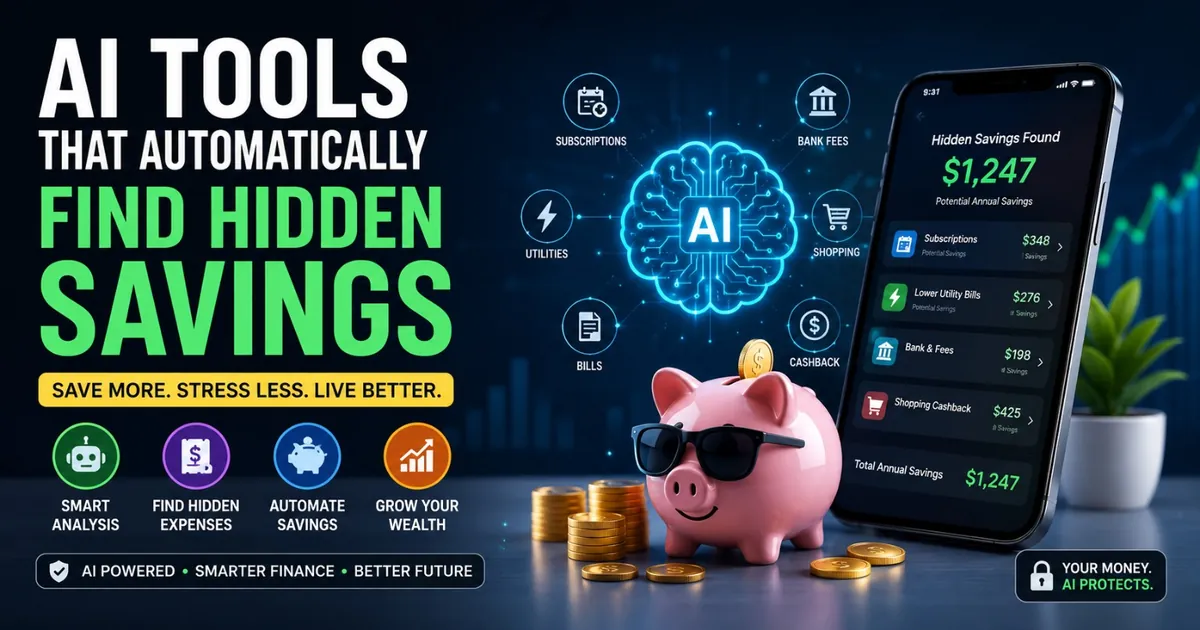
  • AI Tools That Automatically Find Hidden Savings: Complete 2026 Guide

    AI Tools That Automatically Find Hidden Savings: Complete 2026 Guide


    AI Tools That Automatically Find Hidden Savings: Complete 2026 Guide

    Author: Subhash Rukade

    Published: June 14, 2026

    AI Savings Tools

    Why AI Tools That Automatically Find Hidden Savings Are Becoming Essential

    Millions of Americans unknowingly lose money every month through forgotten subscriptions, unnecessary fees, higher-than-needed bills, and inefficient spending habits.

    The good news is that AI Tools That Automatically Find Hidden Savings are helping consumers uncover these hidden costs and keep more money in their pockets.

    Modern AI Savings Tools analyze spending patterns, monitor recurring expenses, identify wasteful transactions, and recommend personalized ways to save money.

    Instead of manually reviewing hundreds of transactions, artificial intelligence can scan financial activity within seconds and highlight opportunities that most people would never notice.

    For many households, these small savings add up quickly. Eliminating a few unused subscriptions, lowering utility bills, reducing bank fees, and optimizing spending habits can save hundreds or even thousands of dollars each year.

    As inflation and living costs continue affecting American families in 2026, finding hidden savings has become more important than ever.

    The same artificial intelligence technologies helping people save money are also transforming investing, budgeting, retirement planning, and wealth building.

    If you want to understand how AI is reshaping personal finance, explore our
    AI Investing Guide 2026.

    Unlike traditional budgeting methods that require significant manual effort, AI Savings Tools work continuously in the background.

    They can identify duplicate subscriptions, negotiate lower bills, track spending trends, recommend smarter financial products, and even automate savings transfers based on your financial behavior.

    This creates a more efficient approach to money management while helping consumers build stronger financial habits.

    In this guide, you’ll learn how AI Tools That Automatically Find Hidden Savings work, which strategies are most effective, common mistakes consumers make, real-world examples, future trends, and practical ways to use AI to improve your financial life.

    How AI Savings Tools Work

    Modern AI Savings Tools use artificial intelligence to analyze financial activity, identify wasteful spending, and uncover money-saving opportunities that many consumers miss.

    Instead of manually reviewing bank statements and credit card transactions, AI can evaluate thousands of data points within seconds.

    This makes AI Tools That Automatically Find Hidden Savings one of the most practical financial innovations available in 2026.

    Let’s look at how these systems work behind the scenes.

    Transaction Monitoring

    AI continuously monitors spending activity across connected financial accounts.

    It categorizes purchases, tracks recurring expenses, and identifies unusual spending patterns.

    For example, if a consumer’s dining expenses increase significantly from one month to the next, AI may highlight the change and recommend adjustments.

    This real-time visibility helps consumers understand exactly where their money is going.

    Subscription Detection

    One of the most popular features of AI Savings Tools is automatic subscription tracking.

    Many Americans pay for services they rarely use or completely forget about.

    AI can identify recurring charges from streaming services, software subscriptions, gym memberships, and other monthly expenses.

    By highlighting unused subscriptions, consumers can quickly eliminate unnecessary costs.

    Bill Negotiation and Optimization

    Some AI-powered financial platforms help users reduce monthly bills.

    These tools analyze utility costs, internet plans, insurance premiums, and mobile phone expenses.

    The system may recommend cheaper alternatives or identify opportunities to negotiate better rates.

    Over time, these small reductions can create significant annual savings.

    Spending Pattern Analysis

    AI Budgeting Tools do more than simply track transactions.

    They identify long-term spending habits and compare behavior against personal financial goals.

    For example, AI may notice excessive spending in certain categories and suggest realistic budget adjustments.

    This personalized approach often produces better results than generic budgeting advice.

    Automatic Savings Recommendations

    Many AI Savings Tools can recommend how much money consumers should save each month.

    Some platforms even automate transfers into savings accounts based on income patterns and spending behavior.

    This helps users build emergency funds and achieve financial goals with minimal effort.

    Traditional Budgeting vs AI Savings Tools

    FeatureTraditional BudgetingAI Savings Tools
    Expense TrackingManualAutomatic
    Subscription DetectionLimitedReal-Time Monitoring
    Savings SuggestionsUser DrivenAI Generated
    Bill OptimizationManual ResearchAI Recommendations
    Time RequiredHighLow

    Consumers who want to explore additional AI-powered financial tools should also review our
    AI Personal Finance 2026
    guide.

    As artificial intelligence becomes more advanced, AI Tools That Automatically Find Hidden Savings will continue helping Americans reduce wasteful spending, improve budgeting habits, and accelerate long-term wealth building.

    Best AI Strategies for Finding Hidden Savings

    Finding extra money in your budget does not always require earning more income.

    Many Americans can improve their financial situation simply by using AI Tools That Automatically Find Hidden Savings.

    Modern AI Savings Tools identify wasteful spending, uncover overlooked opportunities, and help consumers keep more of their hard-earned money.

    Here are some of the most effective AI-powered strategies available in 2026.

    1. Subscription Optimization

    Streaming services, software subscriptions, gaming memberships, and fitness apps can quietly drain your budget.

    AI Savings Tools automatically detect recurring charges and identify subscriptions you rarely use.

    Many consumers discover they are paying for multiple services they forgot existed.

    Canceling just a few unnecessary subscriptions can free up hundreds of dollars each year.

    2. Utility Bill Reduction

    Utility bills continue rising across many parts of the United States.

    AI can analyze historical utility costs and identify unusual increases in electricity, water, internet, and mobile phone bills.

    Some platforms even recommend lower-cost service providers or negotiation opportunities.

    Small monthly reductions often create substantial annual savings.

    3. Credit Card Rewards Optimization

    Many consumers use credit cards without maximizing available rewards.

    AI Savings Tools evaluate spending habits and recommend the most beneficial reward categories.

    For example, frequent travelers may benefit from travel-focused cards, while everyday spenders may earn more through cashback programs.

    Choosing the right rewards strategy can increase annual savings significantly.

    To compare leading options, visit our
    Best Credit Cards 2026
    guide.

    4. Shopping Price Tracking

    AI-powered shopping assistants monitor product prices across multiple retailers.

    Instead of purchasing immediately, consumers can receive alerts when prices drop.

    This strategy is especially useful for electronics, appliances, travel bookings, and large household purchases.

    Buying at the right time often saves more money than consumers expect.

    5. Cashback and Rewards Opportunities

    Many consumers overlook cashback programs and promotional offers.

    AI can automatically identify reward opportunities that align with normal spending behavior.

    Rather than searching manually, consumers receive personalized recommendations based on their transaction history.

    These rewards can accumulate into meaningful savings throughout the year.

    💰 Monthly Savings Calculator Example

    Suppose AI identifies the following opportunities:

    • Unused Streaming Services = $25/month
    • Lower Internet Bill = $20/month
    • Better Credit Card Rewards = $35/month
    • Reduced Shopping Costs = $40/month

    Total Monthly Savings: $120

    Annual Savings: $120 × 12 = $1,440

    This simple example shows how AI Tools That Automatically Find Hidden Savings can produce substantial financial benefits without requiring major lifestyle changes.

    Even small savings improvements become powerful when combined with long-term investing and disciplined financial planning.

    The most successful savers often use AI not only to reduce expenses but also to redirect those savings toward investments, emergency funds, and wealth-building opportunities.

    As AI Savings Tools continue evolving, consumers will gain even more personalized insights into spending habits and hidden opportunities to improve financial health.

    Real-World Case Study: How AI Found Hidden Savings for an American Family

    Understanding how AI Tools That Automatically Find Hidden Savings work becomes easier when we look at a real-world example.

    Meet Jason and Emily, a married couple from Texas with two children. Like many American families, they earned a decent income but often wondered why their savings account never seemed to grow.

    Despite careful budgeting, they felt as though money disappeared every month without a clear explanation.

    In early 2026, they decided to connect their bank accounts and credit cards to an AI-powered financial management platform.

    AI Tools That Automatically Find Hidden Savings Case Study

    Step 1: AI Reviews Spending Patterns

    Within minutes, the AI Savings Tools analyzed over 12 months of transaction history.

    The system categorized spending, identified recurring charges, and highlighted areas where money was being wasted.

    Several surprising discoveries appeared immediately.

    • Three unused streaming subscriptions
    • Duplicate cloud storage services
    • Higher-than-average internet bill
    • Unused gym membership
    • Low cashback credit card rewards

    The family had completely forgotten about some of these expenses.

    Step 2: AI Identifies Savings Opportunities

    The AI platform recommended specific actions.

    It suggested canceling unnecessary subscriptions, negotiating a lower internet plan, switching to a better rewards credit card, and automating monthly savings transfers.

    The software also identified recurring spending habits that could be reduced without affecting the family’s lifestyle.

    Step 3: Financial Results After Six Months

    After following the AI recommendations, Jason and Emily achieved significant savings.

    The improvements were surprisingly simple yet highly effective.

    📊 Case Study Summary

    • Cancelled Subscriptions: $45/month
    • Reduced Internet Costs: $25/month
    • Improved Credit Card Rewards: $40/month
    • Reduced Impulse Spending: $65/month
    • Total Monthly Savings: $175
    • Annual Savings Potential: $2,100

    Why This Example Matters

    Many Americans assume meaningful savings require major sacrifices.

    In reality, AI Tools That Automatically Find Hidden Savings often uncover small inefficiencies that quietly drain financial resources over time.

    The family did not dramatically change their lifestyle. They simply eliminated waste and optimized existing spending habits.

    This demonstrates one of the biggest advantages of AI Savings Tools. They make it easier to identify opportunities that are often overlooked during manual budgeting.

    Consumers who are preparing for economic uncertainty should also review our
    Recession-Proof Investing 2026
    guide for additional strategies to strengthen long-term financial security.

    As artificial intelligence continues improving, more households will be able to discover hidden savings opportunities, reduce unnecessary expenses, and redirect extra money toward investing, debt reduction, and wealth building.

    Common Money Mistakes That Waste Hidden Savings

    Even the best AI Savings Tools cannot help consumers who ignore obvious spending problems.

    Many Americans lose hundreds or even thousands of dollars each year because of avoidable financial mistakes.

    The good news is that AI Tools That Automatically Find Hidden Savings can identify many of these problems before they become serious financial drains.

    Understanding these common mistakes is the first step toward improving your financial health.

    1. Forgotten Subscriptions

    Subscription services have become one of the biggest hidden expenses in modern households.

    Streaming platforms, software tools, fitness apps, gaming memberships, and cloud storage services often continue charging long after consumers stop using them.

    Many people underestimate how much these recurring charges cost over an entire year.

    AI Savings Tools automatically detect these subscriptions and highlight opportunities to cancel unnecessary services.

    2. Unused Memberships

    Gym memberships, warehouse clubs, loyalty programs, and premium services often go unused for months.

    Yet the monthly fees continue.

    Artificial intelligence can identify recurring charges associated with memberships that show little or no activity.

    Eliminating these expenses is often one of the fastest ways to increase monthly savings.

    3. High-Interest Debt

    Credit card debt remains one of the most expensive financial mistakes Americans make.

    High interest rates can consume money that could otherwise be directed toward savings and investments.

    AI Budgeting Tools frequently recommend strategies for reducing debt faster and improving cash flow.

    Lower debt levels create more opportunities for long-term wealth building.

    4. Choosing the Wrong Credit Cards

    Many consumers use credit cards that provide limited rewards or poor benefits.

    As a result, they miss cashback opportunities, travel rewards, and other valuable incentives.

    AI Savings Tools can analyze spending patterns and recommend better reward structures based on individual behavior.

    Small reward improvements often generate meaningful annual savings.

    5. Impulse Spending

    Impulse purchases remain one of the largest obstacles to financial progress.

    Small unplanned purchases may seem harmless individually, but they often add up quickly over time.

    Artificial intelligence can identify spending categories where impulsive behavior is affecting savings goals.

    This awareness helps consumers make better purchasing decisions.

    📊 Savings Leak Chart

    Common sources of hidden financial waste:

    • Forgotten Subscriptions — 30%
    • Impulse Spending — 25%
    • High-Interest Debt — 20%
    • Unused Memberships — 15%
    • Poor Credit Card Rewards — 10%

    Example Scenario

    Consider a consumer paying for four unused subscriptions, carrying high-interest credit card debt, and frequently making impulse purchases online.

    Individually, each expense may appear manageable.

    Combined, however, these habits could easily cost more than $2,000 per year.

    This is exactly where AI Tools That Automatically Find Hidden Savings provide value by identifying spending leaks that are difficult to spot manually.

    Consumers interested in developing stronger long-term financial habits should also review our
    SIP Investing Guide 2026.

    Avoiding these common mistakes can dramatically improve savings rates and help consumers redirect more money toward investing, emergency funds, and long-term financial goals.

    How to Use AI Savings Tools Effectively

    Finding hidden savings is only the first step. To achieve meaningful financial progress, consumers must take action on the recommendations generated by AI Savings Tools.

    The most successful users treat artificial intelligence as a financial assistant rather than simply a budgeting app.

    When used consistently, AI Tools That Automatically Find Hidden Savings can help build stronger financial habits, increase savings rates, reduce debt, and support long-term wealth creation.

    1. Automate Your Savings

    One of the most powerful features of modern AI Savings Tools is automation.

    Instead of relying on willpower, consumers can automatically transfer money into savings accounts based on income patterns and spending behavior.

    Many financial experts recommend paying yourself first.

    By automating savings contributions, you ensure that financial goals receive priority before discretionary spending occurs.

    Even saving an additional $100 per month can result in $1,200 annually.

    2. Build Better Money Habits

    Artificial intelligence can identify spending patterns that may be preventing financial progress.

    For example, AI may highlight excessive dining expenses, impulse purchases, or recurring charges that have gradually increased over time.

    Small behavioral adjustments often create significant long-term financial improvements.

    The goal is not perfection but steady progress.

    3. Reduce High-Interest Debt

    Many consumers focus exclusively on saving money while ignoring expensive debt obligations.

    However, reducing high-interest debt is often one of the fastest ways to improve overall financial health.

    AI Savings Tools can help prioritize repayment strategies and identify opportunities to lower borrowing costs.

    Less money spent on interest means more money available for investing and saving.

    4. Redirect Savings Toward Investments

    Hidden savings become much more valuable when invested wisely.

    Instead of allowing extra cash to sit idle, consumers can use those funds to build long-term wealth.

    One effective strategy is creating an income-producing portfolio through dividend investing.

    To get started, explore our
    How to Build a Dividend Portfolio
    guide.

    You can also review our
    Top Dividend Stocks USA 2026
    article for additional investment ideas.

    5. Set Clear Financial Goals

    AI performs best when it has a target.

    Whether your goal is building an emergency fund, paying off debt, purchasing a home, or investing for retirement, clearly defined objectives help AI tools generate more useful recommendations.

    Tracking progress regularly increases motivation and improves long-term consistency.

    Recommended Financial Resources

    📘

    The Psychology of Money by Morgan Housel

    📘

    Atomic Habits by James Clear

    💰

    Rocket Money Budgeting Platform

    Consumers who consistently apply AI-generated recommendations often discover that small savings improvements compound over time.

    As AI Savings Tools continue evolving, they will play an increasingly important role in helping Americans improve financial discipline, eliminate wasteful spending, and accelerate wealth-building efforts.

    Future of AI Savings Tools (2026–2030)

    The future of AI Tools That Automatically Find Hidden Savings looks incredibly promising. As artificial intelligence becomes more advanced, consumers will gain access to smarter financial tools that can identify savings opportunities faster and with greater accuracy.

    Between 2026 and 2030, experts expect AI Savings Tools to evolve from simple budgeting assistants into full-service financial advisors capable of managing many aspects of personal finance automatically.

    For Americans looking to improve financial security, these innovations could become game changers.

    AI Financial Assistants

    Future AI systems will function like personal financial coaches.

    Instead of simply tracking spending, AI assistants will proactively recommend actions that improve financial health.

    For example, they may suggest refinancing debt, increasing retirement contributions, switching financial products, or adjusting spending habits before financial problems arise.

    This level of personalization could help consumers make smarter financial decisions every day.

    Hyper-Personalized Budgeting

    Traditional budgeting often relies on generic rules.

    Future AI Savings Tools will create highly customized financial plans based on individual income, goals, lifestyle, and spending behavior.

    As a result, recommendations will become more relevant and effective.

    Consumers may receive real-time alerts that help prevent overspending before it happens.

    Smart Banking Integration

    Banks are increasingly integrating artificial intelligence into everyday financial services.

    Future AI Savings Tools will likely connect directly with checking accounts, savings accounts, investment platforms, and credit products.

    This integration will allow AI to optimize money movement automatically while helping consumers maximize savings opportunities.

    The result could be a fully connected financial ecosystem that works continuously in the background.

    Greater Financial Awareness

    One of the biggest benefits of AI is increased financial awareness.

    Many consumers struggle because they do not clearly understand where their money goes each month.

    Advanced AI systems will provide deeper insights and more actionable recommendations than traditional budgeting tools.

    This could lead to higher savings rates and stronger long-term financial outcomes.

    Frequently Asked Questions

    1. What are AI Savings Tools?

    AI Savings Tools use artificial intelligence to analyze spending patterns, identify wasteful expenses, and recommend ways to save money.

    2. Can AI really find hidden savings?

    Yes. AI can identify forgotten subscriptions, excessive fees, inefficient spending habits, and other opportunities that consumers often overlook.

    3. Are AI Savings Tools safe to use?

    Most reputable platforms use strong encryption and security measures. Consumers should always choose trusted financial providers.

    4. How much money can AI Savings Tools help save?

    Results vary, but many users save hundreds or even thousands of dollars annually by eliminating unnecessary expenses and optimizing spending.

    5. Can AI Savings Tools help with investing?

    Many platforms now combine budgeting, saving, and investing features to help users build wealth more efficiently.

    6. Will AI replace human financial advisors?

    AI will likely complement human advisors rather than replace them entirely. Complex financial planning often benefits from professional guidance.

    Conclusion

    AI Tools That Automatically Find Hidden Savings are transforming personal finance in America.

    By identifying spending leaks, optimizing subscriptions, reducing unnecessary expenses, and automating savings, AI helps consumers keep more of their money and make smarter financial decisions.

    The same technology driving AI Savings Tools is also changing investing, retirement planning, budgeting, and wealth management.

    To explore how artificial intelligence is reshaping the financial world, visit our
    AI Investing Guide 2026.

    For additional consumer finance information, visit:

    📩 Join Our Free Finance Newsletter

    Get AI investing insights, saving strategies, budgeting tips, and wealth-building ideas delivered directly to your inbox.


    Subscribe today and discover smarter ways to grow your money.


    👨‍💼 About the Author

    Subhash Rukade writes about AI, investing, personal finance, budgeting, and wealth-building strategies. His mission is to help readers make informed financial decisions and achieve long-term financial success.


    🚀 Thank you for reading. Every dollar saved today can become an investment in your future tomorrow.

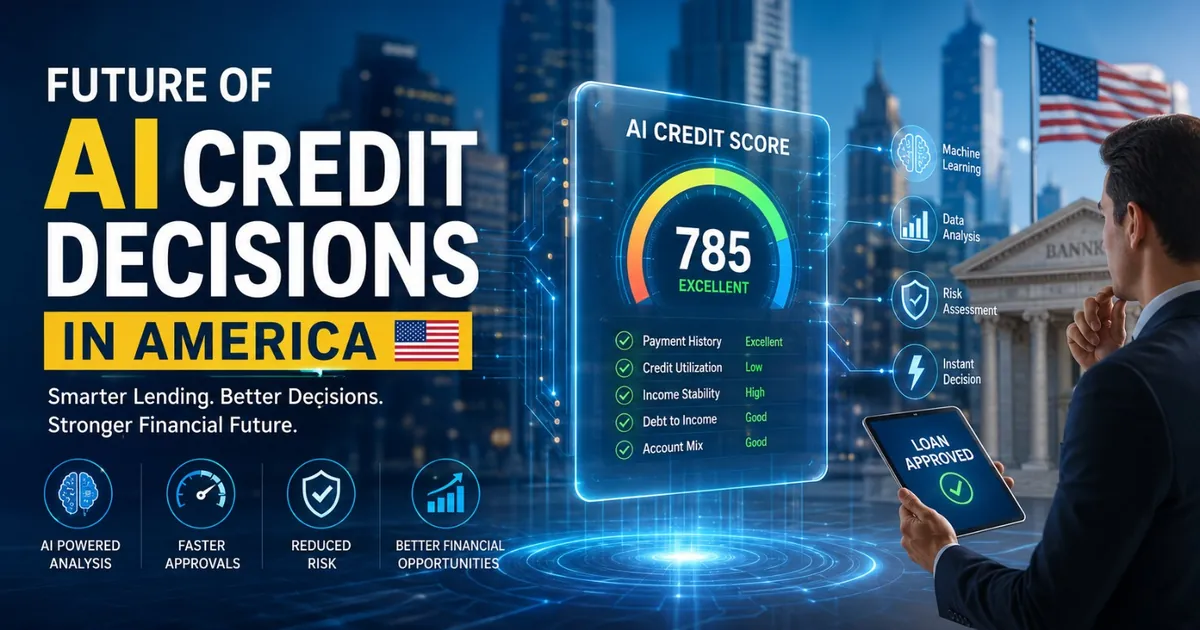
  • Future of AI Credit Decisions in America: Complete 2026 Guide

    Future of AI Credit Decisions in America: Complete 2026 Guide


    Future of AI Credit Decisions in America: Complete 2026 Guide

    Author: Subhash Rukade

    Published: June 14, 2026

    AI Credit Decisions

    Why the Future of AI Credit Decisions in America Matters

    The Future of AI Credit Decisions in America is becoming one of the most important developments in modern finance. Banks, lenders, fintech companies, and credit card issuers are rapidly adopting artificial intelligence to improve lending decisions and reduce financial risk.

    For decades, credit decisions were largely based on traditional credit scores, income verification, and manual underwriting processes. While these methods remain important, they often fail to provide a complete picture of a consumer’s financial behavior.

    Today, AI Credit Decisions are changing that reality.

    Modern artificial intelligence systems can analyze hundreds of financial variables within seconds. These systems evaluate spending behavior, debt obligations, income stability, repayment history, account activity, and fraud indicators to create a more accurate borrower profile.

    As a result, lenders can make faster and smarter decisions while consumers benefit from quicker approvals and more personalized financial products.

    The same AI technologies transforming credit approvals are also reshaping investing, retirement planning, budgeting, and wealth management. Readers interested in the broader impact of artificial intelligence should explore our
    AI Investing Guide 2026.

    Supporters believe AI Lending can make financial services more accessible and efficient. Critics, however, raise questions about transparency, privacy, and fairness.

    These discussions are becoming increasingly important as more financial institutions rely on machine learning models to make lending decisions.

    In this guide, you’ll learn how AI Credit Decisions work, the technologies behind them, real-world examples, common mistakes borrowers make, and what the future of AI-powered lending may look like in America between 2026 and 2030.

    How AI Makes Credit Decisions in America

    Modern AI Credit Decisions systems are transforming how lenders evaluate borrowers. Instead of relying only on traditional credit scores, artificial intelligence analyzes a much broader range of financial information.

    This allows banks and financial institutions to make faster, more accurate, and more personalized lending decisions.

    As the Future of AI Credit Decisions in America continues to evolve, understanding how these systems work is becoming increasingly important for consumers and investors alike.

    AI Credit Scoring

    Traditional credit scoring models focus primarily on payment history, credit utilization, account age, and outstanding debt.

    AI Credit Decisions go much further.

    Artificial intelligence evaluates hundreds of data points simultaneously and identifies patterns that may not be visible through traditional underwriting methods.

    Machine learning models continuously improve as they process more financial information, making lending decisions more accurate over time.

    Income Verification and Financial Stability

    AI Lending systems can analyze income consistency, cash flow patterns, employment stability, and banking activity.

    Instead of relying solely on reported income, AI evaluates whether consumers demonstrate stable financial behavior over extended periods.

    This provides lenders with a more complete understanding of repayment capacity.

    Spending Behavior Analysis

    One of the most powerful advantages of AI Credit Decisions is behavioral analysis.

    Artificial intelligence examines spending habits, recurring expenses, savings activity, debt obligations, and financial discipline.

    Consumers who consistently demonstrate responsible money management often receive more favorable risk assessments.

    This creates opportunities for borrowers who may not fit traditional lending models.

    Fraud Detection

    Fraud prevention has become a major priority for lenders.

    AI systems can detect suspicious activity, identity inconsistencies, unusual application behavior, and abnormal transaction patterns within seconds.

    This helps protect both financial institutions and consumers from fraud-related losses.

    Traditional Lending vs AI Credit Decisions

    FactorTraditional LendingAI Credit Decisions
    Decision SpeedHours or DaysSeconds or Minutes
    Data SourcesLimited Financial DataHundreds of Financial Variables
    Fraud DetectionBasic VerificationAdvanced AI Monitoring
    PersonalizationLowHigh
    Risk AssessmentMainly Credit ScoresBehavior + Financial Data

    Consumers interested in maximizing approval opportunities should also review our
    Best Credit Cards 2026
    guide to understand how lenders evaluate applicants.

    The Future of AI Credit Decisions in America will likely involve even more advanced analytics, allowing lenders to make fairer and more accurate credit decisions while expanding access to financial products for qualified consumers.

    Technologies Behind AI Credit Decisions

    The rapid growth of AI Credit Decisions would not be possible without several advanced technologies working together behind the scenes.

    Banks, credit card companies, and fintech firms are investing billions of dollars in artificial intelligence to improve lending accuracy, reduce fraud, and expand access to financial services.

    As the Future of AI Credit Decisions in America continues evolving, these technologies will become even more important.

    Machine Learning

    Machine learning serves as the foundation of most AI Lending systems.

    Machine learning models are trained using millions of historical lending records, repayment histories, and financial transactions.

    These systems learn which borrower behaviors are associated with successful repayment and which patterns indicate elevated risk.

    Unlike traditional underwriting models, machine learning continuously improves as more data becomes available.

    This allows lenders to adapt quickly to changing economic conditions and consumer behavior.

    Predictive Analytics

    Predictive analytics helps AI estimate future borrower behavior.

    Rather than focusing only on past financial performance, AI Credit Decisions use predictive models to forecast future repayment probability.

    For example, borrowers with stable income, responsible spending habits, and strong repayment histories may receive lower risk scores.

    This improves approval accuracy and reduces default rates.

    Alternative Data Sources

    Traditional lending often relies heavily on credit scores and credit reports.

    Modern AI Lending systems can also analyze alternative financial information.

    Examples include:

    • Bank account activity
    • Income consistency
    • Savings patterns
    • Recurring bill payments
    • Cash flow behavior
    • Financial stability indicators

    These additional insights help create a more complete picture of borrower risk.

    Open Banking

    Open banking is becoming one of the most important drivers of AI Credit Decisions.

    With customer permission, lenders can securely access broader financial information directly from banking institutions.

    This allows AI systems to evaluate real-time financial health rather than relying only on historical credit data.

    As open banking expands across America, lending decisions are expected to become more personalized and accurate.

    Debt-to-Income Calculator Example

    One important metric frequently used in AI Lending models is the debt-to-income ratio (DTI).

    Formula:

    Debt-to-Income Ratio = Monthly Debt Payments ÷ Monthly Income × 100

    Example:

    • Monthly Income = $6,000
    • Monthly Debt Payments = $1,800

    Calculation:

    ($1,800 ÷ $6,000) × 100 = 30%

    A lower DTI ratio generally improves AI Credit Decisions because it indicates stronger repayment capacity.

    Consumers interested in AI-driven budgeting, saving, and investing tools should also explore our
    AI Personal Finance 2026
    guide.

    By combining machine learning, predictive analytics, alternative data, and open banking, AI Credit Decisions are creating a smarter and more efficient lending environment for both consumers and financial institutions.

    Real-World Case Study: How AI Credit Decisions Work in Practice

    To understand the Future of AI Credit Decisions in America, it helps to look at a realistic example of how artificial intelligence evaluates borrowers today.

    Meet David, a 32-year-old software engineer living in California. David earns a stable income, maintains consistent savings habits, and pays his bills on time. However, because he had only been actively building credit for a few years, his credit history was shorter than many traditional lenders preferred.

    In early 2026, David applied for a premium rewards credit card offered by a major U.S. financial institution.

    Future of AI Credit Decisions in America Case Study

    Step 1: AI Reviews the Application

    Immediately after David submitted his application, the lender’s AI system began analyzing hundreds of financial data points.

    Instead of reviewing only his credit score, the AI Lending platform evaluated:

    • Income consistency
    • Employment stability
    • Monthly cash flow
    • Debt-to-income ratio
    • Credit utilization rate
    • Savings activity
    • Payment history
    • Fraud risk indicators

    This process took less than one minute.

    Step 2: AI Risk Assessment

    The AI Credit Decisions system identified several positive signals.

    David had maintained the same employer for four years, regularly contributed to savings accounts, and kept his credit utilization below 20%.

    The model also found a strong history of on-time payments and no suspicious financial activity.

    Although his credit history was shorter than average, the AI recognized multiple indicators of financial responsibility.

    As a result, the system assigned David a low-risk score.

    Step 3: Approval Decision

    After completing its analysis, the AI recommended approval.

    The lender automatically approved the application and assigned a competitive credit limit based on David’s overall financial profile.

    The entire process—from application submission to approval—took less than three minutes.

    📊 Case Study Summary

    • Applicant: David (California)
    • Employment Stability: 4 Years
    • Credit Utilization: 18%
    • Debt-to-Income Ratio: 28%
    • Fraud Indicators: None
    • AI Risk Assessment: Low Risk
    • Decision: Approved
    • Approval Time: Under 3 Minutes

    What This Means for Borrowers

    This example demonstrates one of the biggest advantages of AI Credit Decisions.

    Traditional lending systems may have focused heavily on David’s shorter credit history. AI Lending models looked at the bigger picture and identified strong financial habits that reduced overall risk.

    As the Future of AI Credit Decisions in America continues evolving, more consumers may benefit from fairer and more comprehensive evaluations.

    Investors preparing for economic uncertainty should also explore our
    Recession-Proof Investing 2026
    guide for additional long-term financial strategies.

    The combination of speed, accuracy, and broader financial analysis is one reason AI-powered lending is expected to become the standard across the U.S. financial industry.

    Common Mistakes That Hurt AI Credit Decisions

    While modern AI Credit Decisions systems are becoming more advanced, borrowers can still make mistakes that negatively impact approval outcomes.

    Artificial intelligence may evaluate hundreds of financial variables, but responsible financial behavior remains one of the most important factors in lending decisions.

    Understanding these common mistakes can help consumers improve approval chances and strengthen their overall financial profiles.

    1. High Credit Utilization

    Credit utilization measures how much of your available credit you are currently using.

    Many consumers carry balances that use a large percentage of their credit limits.

    AI Lending systems often view high utilization as a sign of increased financial risk.

    Most financial experts recommend keeping utilization below 30%, while levels below 10% are often viewed more favorably.

    2. Submitting Multiple Credit Applications

    Applying for several loans or credit cards within a short period can create concerns for lenders.

    Multiple hard inquiries may signal financial stress or an urgent need for credit.

    AI Credit Decisions models frequently monitor application frequency when calculating borrower risk.

    Consumers should apply strategically and avoid unnecessary credit applications.

    3. Missing Payments

    Payment history remains one of the strongest predictors of future repayment behavior.

    Even a few missed payments can significantly affect risk assessments.

    AI systems recognize patterns associated with repayment problems and may adjust lending decisions accordingly.

    Making every payment on time remains one of the most effective ways to improve financial credibility.

    4. Ignoring Credit Reports

    Many consumers rarely review their credit reports.

    Unfortunately, reporting errors, outdated information, and fraudulent activity can negatively impact borrowing opportunities.

    Regular monitoring helps identify problems before they affect future AI Credit Decisions.

    5. Carrying Excessive Debt

    Debt levels continue to play an important role in AI Lending models.

    Borrowers carrying excessive debt may appear riskier, even when income levels are relatively strong.

    Reducing debt obligations often improves both financial health and approval odds.

    📊 AI Credit Risk Factors Chart

    The following factors commonly influence AI Credit Decisions:

    • Payment History — 35%
    • Credit Utilization — 30%
    • Debt-to-Income Ratio — 15%
    • Income Stability — 10%
    • Credit History Length — 10%

    Example Scenario

    Consider two borrowers applying for the same credit product.

    Applicant A has a credit score of 720 but uses 85% of available credit and recently submitted four credit applications.

    Applicant B has a credit score of 690, maintains 15% credit utilization, and has a stable repayment history.

    Many AI Credit Decisions systems may consider Applicant B less risky despite the slightly lower credit score.

    This demonstrates why modern AI Lending models evaluate broader financial behavior instead of focusing solely on traditional credit metrics.

    Consumers who want to build stronger long-term financial habits should also explore our
    SIP Investing Guide 2026.

    Avoiding these common mistakes can significantly improve future approval opportunities and help borrowers present a stronger financial profile to AI-powered lending systems.

    How to Improve Future AI Credit Decisions

    As the Future of AI Credit Decisions in America continues evolving, consumers who build strong financial habits will have a significant advantage.

    Modern AI Lending systems evaluate much more than traditional credit scores. They analyze repayment behavior, debt management, income stability, spending habits, and overall financial responsibility.

    The good news is that many of these factors are within your control.

    By taking proactive steps today, you can improve future approval opportunities and strengthen your financial profile.

    1. Build a Strong Credit Profile

    Your credit profile remains one of the most important components of AI Credit Decisions.

    Pay bills on time, keep credit card balances low, and avoid unnecessary hard inquiries.

    Consistent positive behavior helps AI systems recognize you as a lower-risk borrower.

    Even small improvements made consistently can have a meaningful impact over time.

    2. Reduce Existing Debt

    AI Lending models closely evaluate debt obligations.

    Borrowers carrying high debt levels may appear riskier, regardless of income.

    Reducing balances on credit cards, personal loans, and other debts can improve debt-to-income ratios and strengthen future AI Credit Decisions.

    Lower debt also creates greater financial flexibility during economic uncertainty.

    3. Use AI Budgeting and Financial Tools

    Many modern financial platforms use artificial intelligence to help consumers manage money more effectively.

    These tools can track spending patterns, identify unnecessary expenses, monitor credit utilization, and suggest opportunities to improve financial health.

    Using AI-powered budgeting tools can help build the positive financial behaviors that lenders increasingly value.

    4. Maintain Stable Financial Habits

    AI systems look for consistency.

    Stable income, regular savings contributions, responsible spending, and on-time payments all contribute to stronger risk assessments.

    The Future of AI Credit Decisions in America will likely place even greater emphasis on long-term financial behavior rather than isolated financial events.

    5. Focus on Long-Term Wealth Building

    Strong financial habits extend beyond borrowing.

    Building investments, creating passive income streams, and maintaining emergency savings can improve overall financial stability.

    Investors looking to strengthen their financial future should explore our
    How to Build a Dividend Portfolio
    guide.

    You can also review our
    Top Dividend Stocks USA 2026
    article for additional long-term investment opportunities.

    Recommended Financial Resources

    📘

    The Psychology of Money by Morgan Housel

    📘

    I Will Teach You To Be Rich by Ramit Sethi

    📊

    Experian Credit Monitoring Services

    Consumers who combine responsible borrowing with disciplined financial planning are likely to benefit the most from future AI Credit Decisions.

    As AI Lending continues advancing, strong financial habits will remain one of the most powerful factors influencing approval outcomes and access to better financial opportunities.

    Future Trends in AI Credit Decisions (2026–2030)

    The Future of AI Credit Decisions in America is expected to evolve rapidly between 2026 and 2030. Financial institutions are investing heavily in artificial intelligence to create faster, more accurate, and more personalized lending experiences.

    As AI technology becomes more sophisticated, consumers may see significant improvements in credit approvals, financial accessibility, fraud prevention, and personalized lending products.

    The next generation of AI Credit Decisions will likely transform nearly every aspect of consumer lending.

    Hyper-Personalized Lending

    One of the biggest trends in AI Lending is hyper-personalization.

    Instead of using broad approval criteria, future AI systems will evaluate each borrower individually using real-time financial data.

    This could help lenders offer customized credit limits, interest rates, repayment schedules, and financial products tailored to each consumer’s financial situation.

    Borrowers with strong financial habits may receive more favorable lending terms than ever before.

    Real-Time Credit Approvals

    The future of AI Credit Decisions will likely involve instant approvals.

    As machine learning models become faster and more accurate, lenders may be able to complete risk assessments within seconds.

    Consumers could receive lending decisions almost immediately after submitting applications.

    This level of efficiency would dramatically improve the customer experience while reducing operational costs for financial institutions.

    Expansion of Open Banking

    Open banking is expected to become a major driver of AI Credit Decisions.

    With customer permission, lenders can securely access broader financial information, including spending patterns, account balances, savings behavior, and cash flow data.

    This creates a more complete financial profile and allows AI systems to make smarter lending decisions.

    Responsible AI and Regulation

    As AI Lending becomes more common, regulators are increasing oversight to ensure transparency and fairness.

    Organizations such as the
    Consumer Financial Protection Bureau (CFPB),
    the
    Federal Reserve,
    and the
    U.S. Securities and Exchange Commission (SEC)
    continue monitoring AI adoption across the financial industry.

    Future regulations may require lenders to provide greater transparency regarding how AI Credit Decisions are made and how consumer data is used.

    Frequently Asked Questions

    1. What are AI Credit Decisions?

    AI Credit Decisions use artificial intelligence and machine learning to evaluate borrowers, assess risk, and improve lending decisions.

    2. Will AI replace traditional credit scores?

    Not completely. Credit scores will likely remain important, but AI systems will supplement them with broader financial analysis.

    3. Can AI improve approval rates?

    Yes. AI can identify responsible borrowers who may be overlooked by traditional underwriting methods.

    4. Is AI Lending safe?

    When properly regulated and monitored, AI Lending can improve fraud detection, risk management, and lending accuracy.

    5. How does open banking affect AI Credit Decisions?

    Open banking provides AI systems with additional financial information that can improve lending accuracy and personalization.

    6. How can consumers prepare for future AI Credit Decisions?

    Maintaining strong financial habits, reducing debt, monitoring credit reports, and building stable income streams can improve future lending outcomes.

    Conclusion

    The Future of AI Credit Decisions in America represents one of the most important transformations in modern finance.

    Artificial intelligence is helping lenders make faster, smarter, and more accurate decisions while creating new opportunities for responsible borrowers.

    As AI Lending continues evolving, consumers who maintain strong financial habits and embrace modern financial tools will be best positioned to benefit from these changes.

    The same innovations transforming credit approvals are also reshaping investing, wealth management, retirement planning, and personal finance.

    To learn more about how artificial intelligence is changing the financial world, explore our
    AI Investing Guide 2026.

    📩 Join Our Free Finance Newsletter

    Get AI investing insights, credit strategies, wealth-building ideas, and personal finance tips delivered directly to your inbox.


    Subscribe today and stay ahead of the future of finance.


    👨‍💼 About the Author

    Subhash Rukade is a finance writer focused on AI, investing, credit strategies, and wealth-building opportunities. His goal is to help readers make smarter financial decisions and build long-term financial success in a rapidly changing economy.


    🚀 Thank you for reading. Build strong financial habits today and prepare for the future of AI-powered finance.

  • AI Credit Card Approval: How Banks Use AI to Approve Credit Cards in 2026

    AI Credit Card Approval: How Banks Use AI to Approve Credit Cards in 2026


    AI Credit Card Approval: How Banks Use AI to Approve Credit Cards in 2026

    Author: Subhash Rukade

    Published: June 14, 2026

    AI Credit Card Approval

    How Banks Use AI to Approve Credit Cards in 2026

    AI Credit Card Approval systems are transforming the way banks evaluate applications in 2026. Instead of relying only on traditional credit scores and manual reviews, financial institutions now use artificial intelligence to analyze risk, verify information, and make approval decisions within minutes.

    Modern AI models evaluate multiple factors, including credit history, income stability, spending behavior, payment patterns, debt levels, and banking activity. This allows banks to make faster and more accurate lending decisions while reducing fraud and financial risk.

    As artificial intelligence becomes a larger part of personal finance, many consumers are curious about what happens behind the scenes when they apply for a new credit card.

    To understand how AI is changing investing, banking, and financial planning, explore our
    AI Investing Guide 2026.

    In this guide, you’ll learn how banks use AI to approve credit cards, what data is analyzed, why approvals are becoming faster, and how consumers can improve their chances of getting approved in 2026.

    Traditional vs AI Credit Card Approval

    For decades, banks relied on traditional underwriting systems to approve or reject credit card applications. These systems primarily focused on credit scores, income verification, debt levels, and manual reviews performed by loan officers.

    While traditional methods worked reasonably well, they often required more time and sometimes failed to capture a complete picture of an applicant’s financial behavior.

    Today, AI Credit Card Approval systems are changing the process dramatically.

    Artificial intelligence allows banks to analyze large amounts of financial information within seconds. Instead of reviewing only a few data points, AI evaluates hundreds of variables simultaneously to determine risk levels and approval eligibility.

    How Traditional Credit Card Approval Worked

    In the traditional process, banks generally reviewed:

    • Credit score
    • Credit history length
    • Income information
    • Existing debt obligations
    • Past payment history
    • Manual verification documents

    This process could take several days and sometimes required additional paperwork before a final decision was made.

    Although effective, traditional underwriting often depended heavily on historical credit data.

    How AI Credit Card Approval Works

    Modern AI systems go far beyond traditional scoring models.

    Banks use machine learning algorithms to evaluate spending patterns, banking activity, debt management behavior, account stability, fraud indicators, and financial trends.

    The system then calculates a risk score and recommends an approval decision within minutes.

    Because AI can process significantly more information than a human reviewer, the approval process becomes faster and often more accurate.

    Benefits for Banks

    • Faster application processing
    • Improved fraud detection
    • Lower operational costs
    • More accurate risk assessment
    • Better customer experience

    Benefits for Consumers

    • Quicker approval decisions
    • Less paperwork
    • More personalized credit offers
    • Improved access to credit
    • Fairer evaluation methods

    Traditional vs AI Credit Card Approval Comparison

    FactorTraditional ApprovalAI Credit Card Approval
    Decision SpeedHours to DaysMinutes or Seconds
    Data AnalysisLimited VariablesHundreds of Variables
    Fraud DetectionBasic ChecksAdvanced AI Monitoring
    PersonalizationLowHigh
    Operational EfficiencyManual ReviewAutomated Processing

    Consumers looking for the best cards available today should also review our
    Best Credit Cards 2026
    guide before applying.

    As AI continues evolving, banks are increasingly replacing slow manual reviews with intelligent systems that deliver faster, smarter, and more reliable credit decisions.

    AI Technologies Used by Banks to Approve Credit Cards

    Modern AI Credit Card Approval systems rely on several advanced technologies that help banks evaluate applications faster and more accurately than traditional underwriting methods.

    Instead of looking at only a credit score, artificial intelligence analyzes hundreds of financial signals simultaneously. This allows banks to make smarter lending decisions while reducing fraud and financial risk.

    Let’s examine the key technologies driving today’s AI lending systems.

    Machine Learning

    Machine learning is the foundation of most AI credit decisions.

    Banks train machine learning models using millions of historical lending records. These systems learn which financial behaviors are associated with responsible borrowers and which patterns may indicate higher risk.

    As new data becomes available, the models continuously improve their accuracy.

    This means AI can adapt to changing economic conditions and consumer behavior much faster than traditional underwriting systems.

    Predictive Analytics

    Predictive analytics helps banks estimate the likelihood that an applicant will successfully manage future credit obligations.

    Rather than focusing only on past financial behavior, AI evaluates trends and forecasts future risk.

    This approach helps financial institutions make more informed lending decisions while expanding access to qualified applicants.

    Behavioral Analysis

    Modern AI systems analyze spending habits, payment behavior, banking activity, and account stability.

    For example, consistent bill payments and responsible account management may strengthen an application, even when traditional credit history is limited.

    Behavioral analysis provides a more complete picture of financial responsibility.

    Alternative Data Sources

    One reason AI Credit Card Approval systems are becoming more popular is their ability to evaluate alternative financial data.

    Some AI models may consider factors such as banking activity, income consistency, savings behavior, and cash flow patterns.

    This can help applicants with shorter credit histories demonstrate financial reliability.

    Credit Risk Models

    Banks use AI-powered risk models to assign a credit risk score to every application.

    The lower the predicted risk, the greater the likelihood of approval.

    These models evaluate hundreds of variables simultaneously, helping lenders make decisions with greater confidence.

    Credit Utilization Calculator Example

    Credit utilization is one of the most important factors in many approval decisions.

    Simple Formula:

    Credit Utilization = (Current Balance ÷ Total Credit Limit) × 100

    Example:

    • Total Credit Limit = $10,000
    • Current Balance = $2,500

    Calculation:

    ($2,500 ÷ $10,000) × 100 = 25%

    A utilization rate below 30% is generally viewed more favorably by lenders and AI underwriting systems.

    To learn how artificial intelligence is improving budgeting, investing, and financial planning, explore our
    AI Personal Finance Guide 2026.

    By combining machine learning, predictive analytics, behavioral analysis, and advanced risk models, AI lending platforms help banks approve qualified applicants faster while maintaining strong risk controls.

    Real-World Case Study: How AI Approved a Credit Card Application

    To better understand how AI Credit Card Approval works, let’s look at a realistic example that reflects how many modern banks evaluate applications in 2026.

    Meet Michael, a 27-year-old software engineer from Texas. Although he had a stable income and strong savings habits, he had only recently started building his credit history.

    Because of his limited credit profile, Michael worried that traditional lenders might reject his application.

    How Banks Use AI to Approve Credit Cards

    The Application Process

    Michael applied online for a rewards credit card offered by a major U.S. bank.

    Within seconds, the bank’s AI lending system began analyzing his application.

    Instead of relying only on a traditional credit score, the AI reviewed multiple financial indicators:

    • Monthly income consistency
    • Bank account activity
    • Savings patterns
    • Existing debt obligations
    • Payment history
    • Credit utilization levels
    • Employment stability

    How the AI Evaluated Risk

    The applicant’s credit history was relatively short, which might have created challenges under older underwriting models.

    However, the AI Credit Card Approval system identified several positive signals.

    Michael maintained regular direct deposits, consistently paid bills on time, carried very little debt, and demonstrated responsible financial behavior.

    The machine learning model recognized these patterns as indicators of a lower-risk borrower.

    As a result, the system generated a favorable risk score.

    The Approval Decision

    After analyzing hundreds of variables, the AI recommended approval.

    The bank automatically approved the application and provided a competitive credit limit based on the applicant’s overall financial profile.

    The entire process took less than three minutes.

    📊 Case Study Summary

    • Applicant: Michael (Texas)
    • Credit History: Limited
    • Income Stability: Strong
    • Debt Level: Low
    • Credit Utilization: 18%
    • AI Risk Assessment: Low Risk
    • Decision: Approved
    • Approval Time: Under 3 Minutes

    This example demonstrates one of the biggest advantages of modern AI lending systems. Instead of focusing exclusively on credit scores, banks can evaluate a broader financial picture.

    That approach may help qualified consumers gain access to credit even when their traditional credit history is relatively limited.

    Investors and consumers preparing for uncertain economic conditions should also review our
    Recession-Proof Investing 2026
    guide.

    As AI Credit Card Approval systems continue evolving, banks are becoming better at identifying responsible borrowers while reducing unnecessary rejections and improving customer experiences.

    Common Mistakes That Reduce Credit Card Approval Chances

    Even though modern AI Credit Card Approval systems are more advanced than traditional underwriting models, applicants can still make mistakes that reduce their chances of getting approved.

    Artificial intelligence helps banks make smarter decisions, but the quality of those decisions still depends on the financial information available.

    Understanding these common mistakes can help consumers improve approval odds and strengthen their overall financial profile.

    1. High Credit Utilization

    Credit utilization remains one of the most important factors evaluated during the approval process.

    Many applicants carry balances that use a large percentage of their available credit limits.

    High utilization may signal financial stress and increase perceived lending risk.

    Most experts recommend keeping utilization below 30%, while levels under 10% are often viewed even more favorably.

    2. Applying for Multiple Credit Cards at Once

    Submitting several credit card applications within a short period can trigger multiple hard inquiries.

    AI lending systems may interpret excessive applications as a sign that an applicant urgently needs credit.

    This behavior can negatively affect approval decisions.

    Instead, consumers should apply strategically and only when necessary.

    3. Income Reporting Errors

    Providing inaccurate income information is another common mistake.

    Banks use income data to evaluate repayment capacity and overall financial stability.

    Applicants should always provide accurate and verifiable information.

    Even small reporting mistakes can delay or complicate the approval process.

    4. Ignoring Credit Monitoring

    Many consumers fail to monitor their credit reports regularly.

    Errors, fraudulent activity, or outdated information may reduce approval chances without the applicant realizing it.

    Regular monitoring helps identify potential issues before applying for new credit.

    5. Carrying Excessive Debt

    AI Credit Card Approval systems evaluate existing debt obligations carefully.

    High debt levels may increase risk scores and reduce approval odds, even when credit scores appear strong.

    Reducing debt before applying can improve the overall application profile.

    📊 Factors That Influence AI Credit Card Approval

    The chart below illustrates common factors considered by many AI lending systems.

    Approval Influence Ranking:

    • Payment History — 35%
    • Credit Utilization — 30%
    • Income Stability — 15%
    • Credit History Length — 10%
    • Existing Debt Levels — 10%

    Consumers looking to strengthen their financial profiles should also review our
    AI Credit Score Tools Guide,
    which explains how artificial intelligence can help improve credit health and borrowing opportunities.

    Avoiding these common mistakes can significantly improve approval odds and help applicants present a stronger financial profile to AI-powered lending systems.

    How to Increase Your Credit Card Approval Chances in 2026

    While banks continue improving AI Credit Card Approval systems, consumers can take several practical steps to improve their chances of getting approved.

    The good news is that many of the factors evaluated by AI lending models are within your control.

    By strengthening your financial profile before applying, you can significantly improve approval odds and potentially qualify for better credit card offers.

    1. Improve Your Credit Score

    Although AI evaluates more than just credit scores, your score still plays an important role in most lending decisions.

    Paying bills on time, reducing outstanding balances, and avoiding unnecessary credit applications can help strengthen your credit profile.

    Consistent positive behavior often produces the best long-term results.

    2. Reduce Existing Debt

    AI lending systems carefully evaluate current debt obligations.

    Applicants carrying high levels of debt may appear riskier to lenders.

    Reducing balances before applying can improve debt-to-income ratios and lower overall risk scores.

    Even modest debt reduction can make a positive difference.

    3. Monitor Credit Reports Regularly

    Errors on credit reports can negatively impact approval decisions.

    Reviewing reports regularly allows consumers to identify inaccurate information and dispute mistakes before submitting applications.

    Many AI-powered financial tools now provide automated credit monitoring and alerts.

    4. Use AI Financial Tools

    Modern AI tools can help consumers track spending, manage debt, monitor credit utilization, and improve overall financial health.

    These platforms often provide personalized recommendations that support stronger approval outcomes.

    The same technologies driving AI Credit Card Approval are also helping consumers build healthier financial habits.

    5. Practice Smart Borrowing Habits

    Responsible borrowing remains one of the strongest signals evaluated by AI underwriting systems.

    Making payments on time, maintaining low utilization, and avoiding excessive debt can demonstrate financial responsibility over time.

    Banks reward applicants who consistently manage credit wisely.

    Investors interested in strengthening their long-term financial future should also explore our
    How to Build a Dividend Portfolio
    guide.

    For additional investing ideas, review our
    Top Dividend Stocks USA 2026
    and
    SIP Investing Guide 2026.

    Recommended Resources

    📘

    The Psychology of Money by Morgan Housel

    📘

    I Will Teach You To Be Rich by Ramit Sethi

    📊

    Experian Credit Monitoring Services

    As AI lending technology continues evolving, consumers who maintain strong financial habits will remain in the best position to benefit from faster approvals, better offers, and improved access to credit.

    Future of AI Credit Decisions in America

    The future of AI Credit Card Approval is expected to be faster, smarter, and more personalized than ever before.

    As artificial intelligence continues evolving, banks will gain access to more advanced tools that improve lending accuracy while helping consumers receive fairer and more customized credit decisions.

    Many experts believe AI lending technology will play a major role in shaping the future of consumer finance throughout the next decade.

    Open Banking and Better Financial Insights

    One of the biggest trends influencing AI credit decisions is open banking.

    With consumer permission, financial institutions can securely analyze broader financial information, including banking activity, savings habits, income patterns, and cash flow behavior.

    This creates a more complete picture of financial health and may help qualified consumers gain access to credit even when traditional credit histories are limited.

    Personalized Lending Decisions

    Future AI systems will become increasingly personalized.

    Instead of applying identical approval standards to every applicant, banks may tailor lending decisions based on individual financial behavior and risk profiles.

    This approach can improve both customer experience and lending accuracy.

    Responsible AI and Regulation

    As AI lending expands, regulators are paying closer attention to transparency and fairness.

    Financial institutions must ensure AI systems avoid bias and comply with consumer protection laws.

    Organizations such as the
    Consumer Financial Protection Bureau (CFPB),
    the
    Federal Reserve,
    and the
    U.S. Securities and Exchange Commission (SEC)
    continue monitoring developments across the financial industry.

    Frequently Asked Questions

    1. How do banks use AI to approve credit cards?

    Banks use AI to analyze credit history, income patterns, debt levels, spending behavior, fraud indicators, and other financial data to assess risk and make approval decisions.

    2. Is AI Credit Card Approval faster than traditional underwriting?

    Yes. AI systems can review hundreds of variables within seconds, allowing many applications to receive decisions almost instantly.

    3. Can AI approve applicants with limited credit history?

    In some cases, yes. AI may evaluate alternative financial signals such as income stability, banking activity, and savings behavior.

    4. What factors matter most during AI credit decisions?

    Payment history, credit utilization, debt levels, income stability, and overall financial behavior remain important factors.

    5. Does AI replace human underwriters completely?

    No. Many lenders still use human oversight for complex cases, compliance reviews, and final approval decisions.

    6. How can consumers improve approval chances?

    Maintaining strong credit habits, reducing debt, monitoring credit reports, and using AI financial tools can improve approval odds.

    Conclusion

    Artificial intelligence is transforming the credit card industry. Modern AI Credit Card Approval systems help banks evaluate risk more accurately, reduce fraud, improve efficiency, and provide faster lending decisions.

    For consumers, these advancements can create better access to credit, more personalized offers, and a smoother application experience.

    The same technologies shaping AI lending are also transforming investing, wealth management, retirement planning, and personal finance.

    To explore these broader innovations, visit our
    AI Investing Guide 2026.

    📩 Join Our Free Finance Newsletter

    Get investing insights, AI finance trends, credit card strategies, and wealth-building ideas delivered directly to your inbox.


    Subscribe today and stay ahead of the future of finance.


    About the Author

    Subhash Rukade writes about investing, AI finance, credit management, and wealth-building strategies to help readers make smarter financial decisions in a rapidly changing economy.


    🚀 Thank you for reading. Use technology wisely, build strong financial habits, and create a better financial future.

  • AI Credit Score Tools: Best 2026 Guide to Credit Improvement

    AI Credit Score Tools: Best 2026 Guide to Credit Improvement


    AI-Powered Credit Score Improvement Tools: Best 2026 Guide

    Author. Subhash Rukade

    Published: June 13, 2026

    AI Credit Score Tools

    AI-Powered Credit Score Improvement Tools: Why They Matter in 2026

    Your credit score affects more than just loan approvals. It influences mortgage rates, car financing costs, credit card offers, insurance premiums, and sometimes even employment opportunities.

    AI Credit Score Tools are helping Americans improve credit health, track credit reports, and make smarter financial decisions in 2026.

    In 2026, maintaining a strong credit score has become more important than ever for Americans who want financial flexibility and long-term wealth-building opportunities.

    Traditionally, improving a credit score required manually tracking payments, reviewing credit reports, monitoring debt balances, and understanding complex credit-scoring rules.

    Today, artificial intelligence is making that process significantly easier.

    AI-Powered Credit Score Improvement Tools are transforming the way consumers manage their financial health. These intelligent platforms analyze spending habits, monitor credit activity, identify risks, and provide personalized recommendations designed to help users improve their scores faster.

    Instead of guessing what actions might increase a credit score, consumers can now receive data-driven insights tailored specifically to their financial situation.

    For example, AI tools can notify users when credit utilization becomes too high, recommend the best time to pay down balances, identify errors on credit reports, and even predict how certain financial decisions may affect future scores.

    These capabilities help consumers make smarter financial choices while avoiding costly mistakes.

    Many of the same technologies improving credit management are also transforming investing and wealth-building strategies. Readers interested in the broader impact of artificial intelligence on personal finance should explore our
    AI Investing & Personal Finance Guide 2026.

    One reason AI Credit Score Tools have gained popularity is their ability to simplify complex financial information. Instead of reviewing hundreds of data points manually, users receive clear recommendations that are easy to understand and act upon.

    As competition among lenders continues increasing, maintaining a strong credit profile can unlock lower borrowing costs and create more opportunities to build wealth.

    In this guide, you’ll discover how AI-Powered Credit Score Improvement Tools work, the technologies behind them, practical strategies for improving your score, common mistakes to avoid, and future trends shaping credit management in America.

    How AI Credit Score Tools Work

    Modern AI-Powered Credit Score Improvement Tools do much more than simply display a credit score. These platforms continuously analyze financial data and provide personalized recommendations that help consumers make smarter decisions.

    Instead of manually reviewing credit reports and financial statements, users can rely on artificial intelligence to identify opportunities for Credit Score Improvement.

    The goal is simple: help consumers build stronger credit profiles while reducing financial mistakes.

    Credit Monitoring in Real Time

    One of the most valuable features of AI Credit Score Tools is real-time credit monitoring.

    AI systems continuously track changes across credit reports. If a new account appears, a hard inquiry is added, or a balance changes significantly, users receive immediate alerts.

    This helps consumers identify potential issues before they negatively affect their credit scores.

    Early detection is especially important when dealing with identity theft or reporting errors.

    Spending Pattern Analysis

    Artificial intelligence can analyze spending behavior and identify patterns that may impact credit health.

    For example, AI tools can detect when credit card balances are increasing too quickly or when spending habits may cause credit utilization ratios to rise above recommended levels.

    Since credit utilization plays a major role in most scoring models, these insights can be extremely valuable.

    Debt Tracking and Optimization

    Many consumers struggle to decide which debts should be paid first.

    AI-powered systems evaluate balances, interest rates, payment histories, and credit utilization levels to suggest the most effective repayment strategies.

    Some tools even estimate how specific debt payments may influence future credit scores.

    Smart Payment Reminders

    Payment history remains one of the most important factors in credit scoring.

    Missing even a single payment can significantly impact a score.

    AI systems help reduce this risk by sending personalized reminders before due dates and identifying accounts that may require immediate attention.

    These automated alerts help consumers maintain positive payment histories and avoid costly penalties.

    Personalized Recommendations

    Unlike traditional financial apps, AI Credit Score Tools provide recommendations tailored to individual financial situations.

    The system may suggest reducing utilization on a specific card, disputing a reporting error, paying down a balance before a statement closing date, or avoiding unnecessary credit applications.

    Because these recommendations are based on personal financial data, they are often far more effective than generic advice.

    Consumers interested in broader AI-driven financial strategies should also explore our
    AI Personal Finance Guide 2026.

    By combining credit monitoring, spending analysis, debt management, and personalized coaching, AI-Powered Credit Score Improvement Tools are helping Americans take greater control of their financial future.

    AI Technologies Behind Credit Score Improvement

    The success of modern AI-Powered Credit Score Improvement Tools comes from advanced technologies that analyze financial behavior, identify risks, and provide highly personalized recommendations.

    Unlike traditional credit monitoring services that mainly report information, AI actively helps consumers make better financial decisions.

    These technologies work together to support faster and smarter Credit Score Improvement.

    Machine Learning Learns Your Financial Habits

    Machine learning is the foundation of most AI Credit Score Tools.

    The technology studies spending patterns, payment history, credit utilization, account balances, and borrowing behavior.

    Over time, the system learns how users manage credit and identifies behaviors that may positively or negatively affect future scores.

    Because machine learning continuously updates itself, recommendations become more accurate as additional financial data becomes available.

    Predictive Analytics Forecasts Future Scores

    One of the most powerful features of AI is predictive analytics.

    Instead of only showing current credit scores, AI systems estimate how future actions may influence credit performance.

    For example, an AI platform might predict how paying off a credit card balance, reducing utilization, or avoiding new credit inquiries could impact a score over the next several months.

    This forward-looking approach helps consumers make more informed financial decisions.

    Behavioral Analysis Identifies Hidden Risks

    AI also uses behavioral analysis to evaluate financial habits.

    The system can identify recurring behaviors that may hurt credit health, such as consistently carrying high balances or making payments close to due dates.

    By recognizing these patterns early, AI tools can recommend corrective actions before significant damage occurs.

    Personalized Financial Recommendations

    Every consumer has a unique financial situation.

    This is why AI-Powered Credit Score Improvement Tools generate personalized recommendations rather than offering generic advice.

    The system evaluates individual credit profiles and suggests actions based on each user’s specific goals and challenges.

    These tailored recommendations often produce better results than one-size-fits-all financial guidance.

    Credit Risk Assessment

    AI systems continuously assess credit risk by analyzing multiple factors simultaneously.

    This helps consumers understand which financial behaviors are helping their scores and which actions may increase risk.

    The result is a clearer path toward long-term financial stability.

    Traditional Credit Monitoring vs AI Credit Score Tools

    FeatureTraditional MonitoringAI Credit Score Tools
    Credit TrackingBasic UpdatesReal-Time Monitoring
    RecommendationsGeneric AdvicePersonalized Guidance
    Future Score ForecastsNoYes
    Risk DetectionLimitedAdvanced Analysis
    AutomationLowHigh

    Consumers seeking better borrowing opportunities should also review our
    Best Credit Cards 2026
    guide to find products that support responsible credit building.

    These advanced technologies explain why AI Credit Score Tools are becoming an essential part of modern personal finance management.

    Real-World Example of AI Improving a Credit Score

    To understand how AI-Powered Credit Score Improvement Tools work in practice, let’s look at a realistic example.

    Meet Sarah, a 32-year-old marketing professional from Texas. She had a credit score of 645 and wanted to improve it before applying for a mortgage.

    Like many Americans, Sarah paid her bills regularly but struggled with high credit card balances and inconsistent budgeting habits.

    Although she knew her credit score needed improvement, she wasn’t sure which actions would have the greatest impact.

    AI Credit Score Improvement Example

    Step 1: Connecting Financial Accounts

    Sarah connected her credit cards, bank accounts, and credit monitoring service to an AI-powered credit management platform.

    Within minutes, the system analyzed payment history, utilization ratios, account age, debt balances, and recent credit activity.

    The AI identified several opportunities for immediate Credit Score Improvement.

    Step 2: Reducing Credit Utilization

    The platform discovered that Sarah was using nearly 75% of her available credit limits.

    Because credit utilization is a major factor in most credit scoring models, the AI recommended paying down specific balances first.

    Instead of spreading payments across multiple cards, the system identified the accounts that would provide the greatest score improvement.

    Step 3: Optimizing Payment Timing

    Many consumers don’t realize that when they make payments can matter almost as much as how much they pay.

    The AI suggested making payments before statement closing dates rather than waiting until due dates.

    This helped lower reported balances and improved utilization ratios appearing on credit reports.

    Step 4: Ongoing Monitoring and Alerts

    One of the biggest benefits of AI Credit Score Tools is continuous monitoring.

    Whenever Sarah’s balances increased or unusual activity appeared on her accounts, the system sent alerts and updated recommendations.

    This allowed her to maintain progress and avoid setbacks.

    Many of the same technologies helping consumers improve credit scores are also transforming investing and financial planning. Readers interested in these broader innovations should revisit our
    AI Investing & Personal Finance Guide 2026.

    After approximately twelve months of following AI recommendations, Sarah’s credit score increased from 645 to over 740.

    This improvement helped her qualify for more favorable mortgage terms and potentially save thousands of dollars over the life of her loan.

    For additional insights on building better financial habits, consider reading
    The Psychology of Money by Morgan Housel.
    The book provides valuable lessons about behavior, decision-making, and long-term financial success.

    Sarah’s experience demonstrates how AI-Powered Credit Score Improvement Tools can help consumers make smarter financial decisions and achieve meaningful results over time.

    Common Mistakes When Using AI Credit Score Tools

    While AI-Powered Credit Score Improvement Tools can provide valuable guidance, success still depends on how consumers use the information. Artificial intelligence can identify opportunities for improvement, but it cannot make financial decisions on your behalf.

    Many people expect immediate results after installing an AI credit app. However, improving a credit score usually requires consistency, patience, and responsible financial behavior.

    Understanding common mistakes can help consumers get the most value from modern AI Credit Score Tools.

    Ignoring AI Recommendations

    One of the most common mistakes is simply ignoring the recommendations generated by the platform.

    AI systems analyze financial data and identify actions that may improve credit health. If users fail to act on these recommendations, the benefits of the technology become limited.

    The best results occur when consumers actively follow personalized guidance.

    Maintaining High Credit Utilization

    Credit utilization remains one of the most important factors affecting credit scores.

    Many consumers continue carrying high balances even after AI tools identify utilization problems.

    A credit utilization ratio above 30% may negatively impact scores, while lower utilization levels generally support stronger credit profiles.

    Reducing balances remains one of the fastest paths to meaningful Credit Score Improvement.

    Missing Payments

    Even with automated reminders and alerts, some consumers still miss payment deadlines.

    Payment history plays a major role in most credit scoring models.

    A single late payment can remain on a credit report for years and may significantly reduce a score.

    Using automatic payments and AI reminders can help avoid this costly mistake.

    Applying for Too Much Credit

    Some consumers mistakenly believe opening multiple credit accounts will improve their scores quickly.

    In reality, excessive credit applications can generate multiple hard inquiries and increase perceived borrowing risk.

    AI-powered platforms often warn users when new applications could negatively affect credit health.

    Expecting Instant Results

    Perhaps the biggest mistake is expecting overnight success.

    Even the best AI-Powered Credit Score Improvement Tools cannot instantly repair years of poor financial habits.

    Building strong credit requires time, discipline, and consistent positive behavior.

    Consumers focused on protecting their finances during uncertain economic conditions should also explore our
    Recession-Proof Investing 2026
    guide.

    For additional consumer education, trusted resources such as the
    Consumer Financial Protection Bureau (CFPB)
    and the
    Federal Trade Commission (FTC)
    offer valuable information about credit management and financial protection.

    The most successful users combine AI-powered insights with responsible financial habits, creating a stronger foundation for long-term credit health and financial stability.

    Practical Tips to Improve Your Credit Score Faster

    While AI-Powered Credit Score Improvement Tools can provide valuable insights, the best results come from combining technology with smart financial habits. Consumers who consistently follow proven credit-building strategies often see the greatest long-term improvements.

    The good news is that many of these actions are simple to implement and can have a meaningful impact on credit health over time.

    Keep Credit Utilization Low

    One of the fastest ways to improve a credit score is reducing credit utilization.

    Credit utilization measures how much available credit you are currently using.

    Most financial experts recommend keeping utilization below 30%, while lower levels may provide even stronger benefits.

    Modern AI Credit Score Tools continuously monitor utilization ratios and notify users when balances become too high.

    Make Every Payment on Time

    Payment history remains one of the most important factors in credit scoring.

    Even a single missed payment can negatively affect a score.

    AI-powered financial apps help users stay organized by providing payment reminders, due-date alerts, and automated notifications.

    Consistent on-time payments create a strong credit foundation.

    Monitor Your Credit Reports

    Errors on credit reports can sometimes reduce scores unnecessarily.

    Consumers should review credit reports regularly and dispute inaccurate information when necessary.

    Many AI-Powered Credit Score Improvement Tools automatically monitor reports and notify users when significant changes occur.

    Early detection can prevent small issues from becoming larger problems.

    Use AI Alerts and Automation

    One of the biggest advantages of AI technology is automation.

    AI systems can track balances, monitor spending patterns, detect unusual activity, and provide personalized recommendations.

    These automated insights help consumers stay proactive rather than reactive.

    Build Positive Credit History

    Credit improvement is not only about avoiding mistakes.

    Building a long history of responsible credit use is equally important.

    Maintaining older accounts, managing balances responsibly, and making consistent payments can strengthen credit profiles over time.

    Manual Credit Improvement vs AI Credit Improvement

    FeatureManual ApproachAI Credit Score Tools
    Credit MonitoringPeriodic ReviewsReal-Time Alerts
    Debt AnalysisManual CalculationsAutomated Insights
    Payment TrackingSelf-MonitoringSmart Reminders
    RecommendationsGeneric AdvicePersonalized Guidance
    EfficiencyTime-ConsumingHighly Efficient

    Investors interested in strengthening their overall financial future should also explore our
    Top Dividend Stocks USA 2026
    guide for long-term wealth-building ideas.

    Another excellent personal finance resource is
    The Simple Path to Wealth by JL Collins.
    The book offers practical lessons on investing, financial independence, and long-term money management.

    When combined with responsible financial habits, AI-Powered Credit Score Improvement Tools can help consumers make smarter decisions and achieve stronger credit profiles over time.

    Future of AI Credit Score Improvement

    The future of AI-Powered Credit Score Improvement Tools looks incredibly promising. As artificial intelligence continues evolving, consumers will gain access to smarter financial insights, faster recommendations, and more personalized credit-building strategies.

    Instead of simply monitoring credit reports, future AI platforms will act like digital financial coaches that help users make better decisions every day.

    Predictive Credit Coaching

    One of the biggest trends expected in the coming years is predictive credit coaching.

    AI systems will not only analyze current credit data but also forecast future score changes based on financial behavior.

    Consumers will receive personalized guidance before problems occur, helping them avoid actions that may negatively impact their credit profiles.

    AI Financial Assistants

    Many experts believe AI assistants will become a standard part of personal finance management.

    These assistants may automatically track spending, monitor debt levels, recommend payment strategies, and help consumers improve financial habits.

    This level of automation could make credit management easier than ever before.

    Open Banking and Personalized Credit Strategies

    As open banking expands across the financial industry, AI tools will gain access to richer financial data.

    This will allow platforms to generate highly personalized recommendations tailored to each consumer’s goals, income, debt profile, and spending patterns.

    The result will be more effective and accurate credit improvement strategies.

    Frequently Asked Questions

    1. Do AI Credit Score Tools really work?

    Yes. Many AI-powered platforms help consumers identify opportunities to improve payment history, lower utilization, and manage debt more effectively.

    2. Can AI increase my credit score instantly?

    No. Credit improvement takes time. AI provides guidance, but long-term results depend on consistent financial habits.

    3. Are AI Credit Score Tools safe?

    Most reputable platforms use strong encryption and security measures to protect financial data.

    4. What is the biggest benefit of AI-powered credit monitoring?

    The biggest advantage is personalized recommendations based on individual financial behavior.

    5. Can AI help detect errors on credit reports?

    Yes. Many tools monitor credit reports and alert users when unusual changes or potential errors appear.

    6. Who should use AI-Powered Credit Score Improvement Tools?

    Anyone looking to improve credit health, qualify for better loan terms, or strengthen their overall financial profile can benefit.

    Conclusion

    Strong credit remains one of the most valuable financial assets Americans can build. Better credit scores often lead to lower borrowing costs, improved financial opportunities, and greater long-term wealth-building potential.

    By combining technology, automation, and personalized insights, AI-Powered Credit Score Improvement Tools are helping consumers make smarter financial decisions and improve credit health more efficiently than ever before.

    To learn more about how artificial intelligence is transforming investing, wealth building, and personal finance, revisit our
    AI Investing & Personal Finance Guide 2026.

    Investors focused on long-term financial growth should also explore our
    How to Build a Dividend Portfolio
    guide.

    📩 Join Our Free Finance Newsletter

    Get AI finance insights, credit-building strategies, investing tips, and wealth-building ideas delivered directly to your inbox.

    Subscribe today and take control of your financial future!

    📘 Recommended Reading:

    I Will Teach You To Be Rich by Ramit Sethi


    About the Author

    Subhash Rukade writes about AI, investing, credit management, and personal finance to help readers make smarter money decisions and build long-term wealth.

    🚀 Thank you for reading. Build stronger credit, make smarter financial decisions, and create a brighter financial future!