What to Do If a Bank Transfer Is Unauthorized: 7 Essential Steps
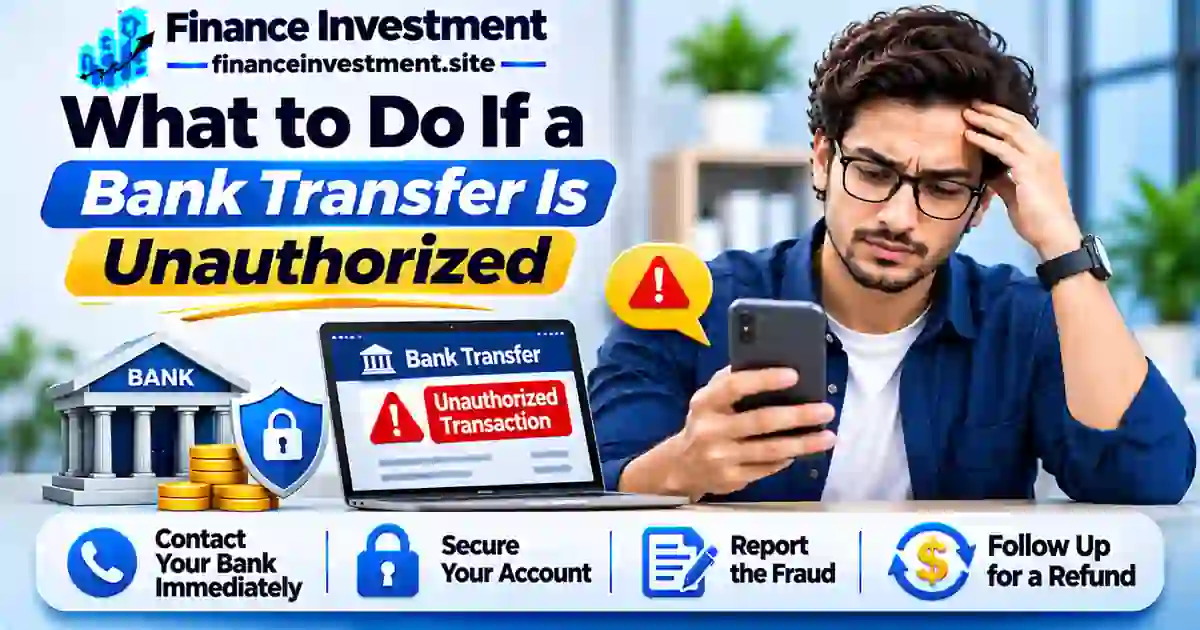
What to Do If a Bank Transfer Is Unauthorized
Discovering money leaving your bank account without your permission can be alarming. If you’re searching for what to do if a bank transfer is unauthorized, contact your bank immediately using its official app, website, or the number on your debit card. Report the transaction as soon as you notice it, even if you don’t know how the payment happened.
An unfamiliar transfer could involve stolen login credentials, account takeover, or someone accessing your banking information. However, a payment you never approved may be treated differently from one you personally initiated after a scammer deceived you. That distinction can affect how the bank investigates the transaction and which consumer protections may apply.
This guide explains how to report the payment, protect your remaining funds, preserve evidence, and follow up on a dispute. You’ll also learn what information to request from your bank and where to seek further help. For a broader understanding of payment methods and banking transactions, explore our Bank Transfers and Payments Guide.
What You’ll Learn
- What to do immediately after spotting an unauthorized transfer.
- How to report the transaction and contact your bank.
- How to secure your account and banking credentials.
- Which records and evidence to preserve for a dispute.
- How unauthorized payments differ from scam-induced transfers.
- What to do if your bank’s investigation is taking longer than expected.
Quick Answer: What Should You Do About an Unauthorized Bank Transfer?
If you notice an unauthorized bank transfer, contact your bank immediately through an official channel. Report the transaction, ask whether it can be stopped or recalled, and follow the bank’s instructions to secure your account. Save the payment details and request a case or dispute reference number. Whether the money can be recovered depends on the payment method, timing, and circumstances. Reporting the transaction does not guarantee reimbursement.
Key Takeaways
- Report the suspicious transfer as soon as you discover it.
- Contact your bank using verified contact information.
- Ask about stopping, recalling, or disputing the payment.
- Change compromised credentials and review account access.
- Save transaction records, screenshots, and bank reference numbers.
- Follow up with the bank and keep records of its responses.
Remember: A transfer you never authorized may be handled differently from a payment you personally sent after being deceived. Explain exactly what happened when reporting the transaction.
Table of Contents
Unauthorized Bank Transfers: A Complete Beginner Guide

A bank transfer moves money electronically between accounts. Common methods include ACH payments, wire transfers, and transfers made through online banking. If money leaves your account and you do not recognize or remember approving it, check the transaction details and contact your bank promptly. An unfamiliar payment should be investigated, but it is not automatically proof of fraud.
What Is an Unauthorized Transfer?
An unauthorized transfer is a payment made from your account without your permission. For example, someone may gain access to your banking credentials and move money without your approval. By contrast, if you personally send a payment after a scammer tricks you, the bank may need to assess the circumstances differently. The payment method and facts matter when determining how the transaction should be reported.
Why Reporting Matters
Reporting promptly allows your bank to begin reviewing the transaction and explain which security or dispute procedures may apply. Depending on the payment type and timing, ask whether a stop, recall, or investigation is available. Keep the transaction date, amount, recipient information, confirmation details, and bank case number so you can refer to them during follow-up.
Beginner tip: You do not need to identify the cause before reporting a suspicious transfer. Contact your bank first, explain what you know, and ask what information it needs to investigate.
Benefits of Acting Quickly—and Challenges You May Face
If you spot an unauthorized bank transfer, reporting it promptly gives your bank an opportunity to review the transaction, protect your account, and explain whether any stop, recall, or dispute procedure may apply. It also creates a record of when you reported the issue. Acting quickly does not guarantee that the payment can be recovered, but it helps you begin the bank’s review without unnecessary delay.
Why Prompt Reporting Helps
- Allows the bank to begin reviewing the suspicious transaction.
- Helps you check for other unfamiliar or pending payments.
- Creates a record of your report and the steps you took.
- Gives you an opportunity to ask about account security and available remedies.
Challenges to Expect
The bank may need to review transaction records, request additional information, or determine whether the payment was authorized. A transfer may already be completed, and the available procedures can vary by payment type. Keep your case number, answer the bank’s questions, and ask when and how it will provide the next update.
Practical takeaway: Report the transfer, secure your account, and keep a written record of the bank’s response. If the issue remains unresolved, ask how to submit a formal complaint and where to find information about applicable consumer protections.
Costs, Risks & Expert Tips for Unauthorized Bank Transfers
An unauthorized transfer can create problems beyond the missing money. Depending on your account, you could face overdraft charges, returned payments, delayed bills, or time spent resolving the dispute. These costs are not automatic. Ask your bank to review fees or payment problems connected to the suspicious transaction and explain whether any adjustment is available.
Risks to Watch For
- Further suspicious activity if account access remains compromised.
- Overdrafts, returned payments, or bills that may be delayed.
- Reporting deadlines that could affect your rights or liability.
- Recovery scams offering guaranteed refunds for an upfront fee.
Expert Tips to Protect Your Money
For covered electronic transfers, Regulation E generally requires a bank to investigate a properly reported error. If it cannot finish within 10 business days, it may generally extend the investigation to 45 days by providing provisional credit within the required period, subject to exceptions and other conditions. Some transactions have different timelines. For many covered errors, reporting within 60 days after the statement showing the problem is sent is important. Review the CFPB’s Regulation E error-resolution rules.
Change compromised passwords, enable account alerts, and review linked accounts. If you sent money to a scammer, contact your bank or payment provider immediately and ask whether the transaction can be stopped or reversed. Report the scam to the FTC as well. See the FTC’s guidance on what to do after a scam.
Expert tip: Keep your case number, bank messages, transaction records, and a timeline of events. Be cautious of anyone demanding payment to guarantee recovery of your stolen money.
Common Mistakes to Avoid After an Unauthorized Bank Transfer
Finding an unfamiliar transfer can be stressful, but taking unverified steps may complicate the response. Contact your bank promptly, protect your account, and preserve the records that help explain what happened. You do not need to investigate the entire incident yourself before reporting it.
Mistakes That Can Complicate Your Case
- Delaying your bank report while trying to identify the person responsible.
- Deleting transaction alerts, messages, or other records that may help explain the incident.
- Sharing passwords, one-time codes, or account details with someone offering assistance.
- Assuming every transfer can be stopped, reversed, or reimbursed.
Practical Example
Imagine you notice a $450 ACH transfer that you did not authorize. You contact your bank through its official app, report the transaction, and ask how to submit an ACH error notice. You secure your account, review recent activity, and save the transaction details, relevant messages, and case number. The bank reviews the report and explains whether it needs more information and what investigation or resolution process applies.
Lesson: Report the transfer, secure your account, and keep organized records. These steps help you communicate clearly with the bank, but the investigation determines what happened and whether recovery or reimbursement is available.
Who Should Take Which Action After an Unauthorized Bank Transfer?
Your next step depends on how the payment occurred. Report the suspicious transaction to your bank promptly, then take the actions that fit your situation.
- If someone transferred money without your permission: Contact your bank’s fraud or electronic-transfer department, report the transaction, and ask how to submit an error notice.
- If your account or login was compromised: Secure your account, change affected passwords from a trusted device, review linked accounts, and check for other suspicious activity.
- If you personally sent money after a scam: Contact your bank or payment provider immediately and ask whether the payment can be stopped, recalled, or disputed.
- If the bank’s response is unclear: Keep your case number, request an explanation, and ask about its formal complaint process.
Remember: Report promptly, but do not assume every payment has the same protections or recovery options. The applicable process depends on the payment method and circumstances.
Frequently Asked Questions About Unauthorized Bank Transfers
1. What should I do first if a bank transfer is unauthorized?
Contact your bank promptly through its official app, website, or verified phone number. Report the transaction, ask whether it can be stopped or recalled, and secure your account.
2. Can I get my money back from an unauthorized bank transfer?
You may be able to recover the money. The outcome depends on the payment method, circumstances, reporting timeline, and applicable protections. Report the transfer promptly; reimbursement is not guaranteed.
3. How long do I have to report an unauthorized transfer?
For many covered electronic transfers, Regulation E generally requires notice within 60 days after the bank sends the statement showing the error. Other liability rules may apply, so report the transaction as soon as you discover it.
4. What if I shared my bank details with a scammer?
Contact your bank, explain what information you shared, change affected credentials from a trusted device, and review your account. If a fraudster used that information to initiate an EFT without authority, the transfer may qualify as unauthorized under Regulation E.
5. Is a payment I sent to a scammer considered unauthorized?
Not automatically. A payment you personally initiated after being deceived may be treated differently from an EFT initiated by someone without authority. Explain exactly what happened and ask your bank or payment provider about available recovery options.
6. Can my bank require a police report before investigating?
For a covered Regulation E error claim, the bank generally must begin investigating after receiving oral or written notice. It cannot delay starting the investigation while waiting for a police report or other documentation.
7. Will the bank automatically freeze my account?
Not necessarily. Ask your bank whether it recommends a temporary restriction, new card, password reset, or other security measure. The response depends on the suspected compromise and account circumstances.
8. What if my bank denies the unauthorized transfer claim?
Request the decision and explanation in writing, provide relevant evidence, and ask about the bank’s formal complaint process. You may also submit a complaint to the Consumer Financial Protection Bureau if appropriate.
Important: These answers describe general U.S. consumer banking guidance. Coverage, deadlines, and liability depend on the payment method, account, and circumstances. Contact your bank promptly for instructions specific to your case.
Final Verdict: Act Quickly, Protect Your Account, and Keep Records
If you notice a bank transfer you did not authorize, contact your bank through an official channel as soon as possible. Explain what happened, identify the transaction, and ask whether it can be stopped or recalled. Follow the bank’s instructions for reporting the error or submitting a dispute.
Then secure your account, review recent activity, and save transaction details, relevant messages, and your case number. If you sent money after being deceived by a scammer, explain how the payment happened and ask your bank or payment provider what recovery options may be available.
Bottom line: Report promptly, protect your banking access, and document your communication with the bank. Whether money can be recovered depends on the payment method, circumstances, and applicable protections.
For more help understanding electronic payments, explore our Bank Transfers and Payments Guide.
Need More Help With Bank Transfers?
Questions about unauthorized transfers, payment security, or banking basics? Contact FinanceInvestment for general information, or explore our related guides to learn how to manage electronic payments and protect your account.
Have a question about this guide? Send FinanceInvestment a message about banking and payment topics.
For more practical payment information, visit our Bank Transfers and Payments Guide.
Leave a Reply