How to Dispute an Unauthorized Electronic Bank Payment: 7 Powerful Steps
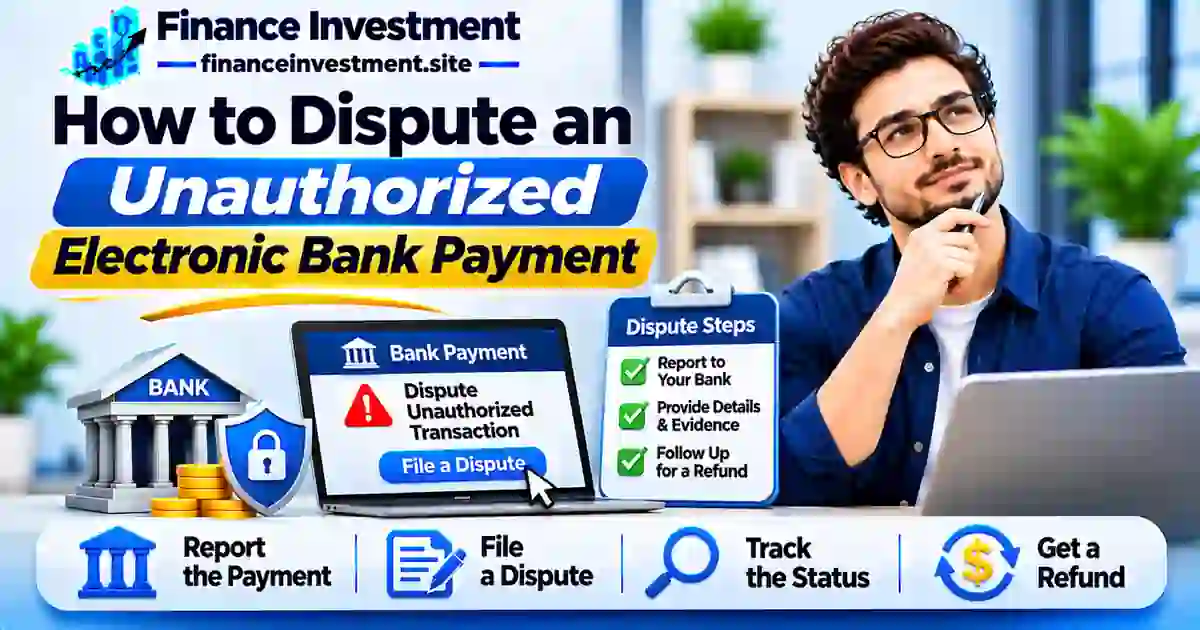
How to Dispute an Unauthorized Electronic Bank Payment
Discovering an unfamiliar payment in your bank account can raise an immediate question: how to dispute an unauthorized electronic bank payment before more money leaves your account. Whether you notice an unexpected ACH withdrawal, debit card charge, or electronic transfer, acting promptly can help you protect your account and give your bank the information it needs to review the transaction.
Start by checking the transaction details and contacting your bank through its official phone number, website, or app. Explain what you recognize, what you did not authorize, and when you first noticed the payment. Keep your explanation accurate. A transfer made by someone without your permission may be treated differently from a payment you personally approved after being deceived.
This guide explains the dispute process in practical steps, including how to report the transaction, document your communication, and follow up with your bank. If you need a broader understanding of payment methods first, explore our Bank Transfers and Payments Guide.
What You’ll Learn
- How to identify and document a suspicious electronic payment.
- What information to provide when contacting your bank.
- How to submit a dispute and track the investigation.
- Why payment type and reporting deadlines matter.
- What to do if your bank denies the claim or the money has already moved.
Quick Answer: How Do You Dispute an Unauthorized Electronic Bank Payment?
Contact your bank immediately through its official phone number or secure app and report the electronic payment you did not authorize. Ask how to submit a formal error notice or dispute, and whether your account, debit card, or online banking access needs to be secured. Record the date, transaction amount, case number, and instructions you receive. Keep copies of your messages and follow up with the bank until it provides an investigation update. Reporting promptly is important because deadlines and protections depend on the payment type and circumstances. A refund is not guaranteed in every case.
Key Takeaways
- Contact your bank promptly: Use a verified number or secure banking channel, not a link from a suspicious message.
- Describe what happened honestly: Explain whether you made the payment, approved it, or had no involvement.
- Keep a paper trail: Save transaction details, dates, messages, case numbers, and copies of notices.
- Protect account access: Ask the bank whether a card replacement, password change, or account restriction is appropriate.
- Track the dispute: Follow the bank’s instructions and keep written records of updates and decisions.
Table of Contents
Unauthorized Payment Dispute at a Glance
If you find an electronic payment you did not authorize, use this overview to organize your response. The exact process depends on the payment method, the facts, and whether the transaction falls under federal electronic fund transfer protections.
| Step | What to Do |
|---|---|
| 1. Check | Review the transaction date, amount, payment type, and recipient details. |
| 2. Contact | Call your bank using a verified number or use its secure app. Explain what happened accurately. |
| 3. Submit | Ask how to provide a formal error notice or dispute and whether written confirmation is required. |
| 4. Record | Keep transaction details, messages, dates, submitted notices, and your bank’s case number. |
| 5. Follow Up | Track the investigation, review the bank’s written decision, and ask about available next steps if unresolved. |
Know the timing: For many covered electronic fund transfers, reporting an error within 60 days after the bank sends the statement showing it can be important. Regulation E generally provides an initial 10-business-day investigation period, but certain circumstances allow more time. When an extension applies, provisional credit may be required if the regulation’s conditions are met. These are not universal deadlines for every payment dispute, so notify your bank promptly and ask which rules apply.
A Beginner’s Guide to Disputing an Unauthorized Electronic Payment
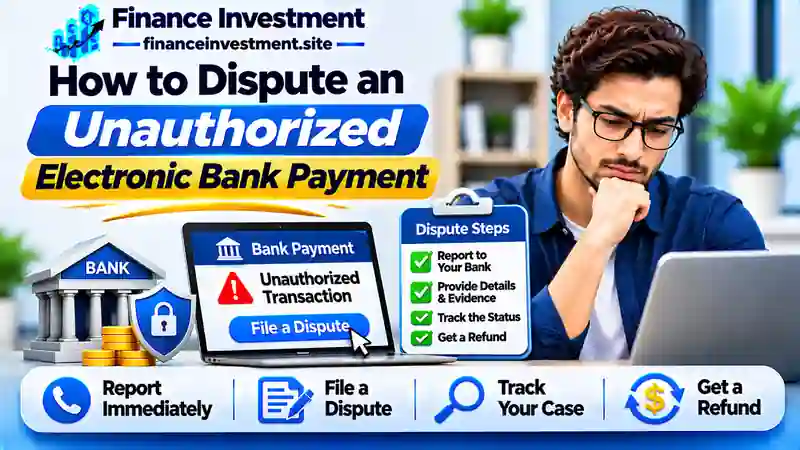
An electronic payment dispute is a request for your bank or financial institution to review a transaction you believe was unauthorized, incorrect, or otherwise made in error. Depending on how the payment was made, it may involve an ACH withdrawal, debit card transaction, ATM transfer, or certain person-to-person payments. Before reporting it, check the transaction details and explain exactly what happened.
What Is an Unauthorized Electronic Fund Transfer?
Under Regulation E, an unauthorized electronic fund transfer generally means a transfer from a consumer’s account initiated by someone other than the consumer, without actual authority, and from which the consumer receives no benefit. For example, if a fraudster uses stolen account credentials to move money from your account, that transfer may qualify as an unauthorized EFT. The details matter, including whether another person had permission to access the account and what authority was given.
What If a Scammer Tricked You Into Sharing Account Information?
Sharing account information after being deceived does not automatically mean you authorized a later transfer. CFPB guidance explains that an EFT initiated by a fraudster using information obtained through fraudulent inducement may still meet Regulation E’s definition of an unauthorized EFT. However, if you personally initiated and approved the payment, the facts and applicable rules may be different. Tell your bank exactly what you did and what the scammer did.
Remember: Regulation E includes error-resolution procedures and protections for covered electronic transfers. Whether a transaction qualifies, and whether any consumer liability applies, depends on the facts and reporting circumstances. A dispute does not automatically guarantee reimbursement.
For the official definition and examples, review the CFPB’s Regulation E definitions and its Electronic Fund Transfers FAQs.
How an Electronic Payment Dispute Works
After you report an unauthorized electronic payment, your bank reviews the information you provide and investigates the alleged error. For transfers covered by Regulation E, federal rules establish how the bank must handle a qualifying error notice. The process generally includes receiving your report, investigating the transaction, and explaining the result.
1. The Bank Receives Your Error Notice
Explain why you believe the payment was unauthorized and provide the transaction date, amount, and available details. Regulation E generally requires notice within 60 days after the bank sends the statement first showing the alleged error. You may usually report an error orally or in writing. If the bank requires written confirmation after an oral report, it must tell you and provide the address. It cannot delay starting its investigation while waiting for that confirmation.
2. The Bank Investigates
For a covered error, the bank generally must determine whether an error occurred within 10 business days. If it cannot finish in that period, it may generally take up to 45 days, subject to Regulation E requirements. Certain transactions—including some point-of-sale debit card, out-of-state, and recently opened account transfers—can have an extended investigation period of up to 90 days. When an extension requires provisional credit, the bank must follow the applicable conditions and exceptions.
3. The Bank Reports Its Decision
If the bank finds an error, it generally must correct it within one business day and report the results within three business days after completing the investigation. If it finds no error, it must provide a written explanation and inform you that you can request the documents it relied on. If provisional credit is reversed, specific notice and account protections may apply.
Important: Provisional credit is not a final refund. It may be required during an eligible extended investigation, but exceptions apply. If the bank determines no error occurred, it may reverse provisional credit after following the required procedures. Keep the bank’s notices and ask for the written findings if your claim is denied.
Review the official CFPB Regulation E error-resolution rules for the complete requirements and exceptions.
Benefits and Drawbacks of Disputing an Unauthorized Payment
Reporting a payment you did not authorize gives your bank a chance to review the transaction and determine whether an error occurred. The process can help document the incident, but it may require follow-up and does not guarantee that the money will be returned.
Potential Benefits
- Earlier review: Reporting promptly gives the bank an opportunity to investigate the transaction and consider account-security steps.
- Error-resolution rights: A qualifying notice can trigger the investigation and correction procedures required by Regulation E.
- Possible reimbursement: If the bank identifies a covered error, it generally must correct it under the applicable rules.
- Written record: A case number, submitted notice, and bank response help you track what happened.
Possible Drawbacks
- Time and paperwork: You may need to explain the transaction, submit details, and respond to follow-up questions.
- Uncertain result: The bank may conclude that the transaction was not a covered error.
- Temporary credit may change: Provisional credit, when required and provided, may be reversed after the bank follows applicable procedures.
- Account disruption: Depending on the incident, the bank may recommend replacing a card, changing credentials, or restricting access while it reviews the activity.
Bottom line: Reporting a suspicious payment promptly helps establish a record and allows the bank to review the transaction. Keep your documentation, follow the bank’s instructions, and remember that the dispute outcome depends on the facts and applicable rules—not simply on filing a claim.
Unauthorized EFT vs. Other Payment Disputes
Not every unfamiliar payment follows the same dispute process. The right approach depends on how the money moved, whether you authorized the transaction, and which consumer protections apply.
| Payment Type | Common Dispute | First Step |
|---|---|---|
| Unauthorized EFT | Someone transferred money without actual authority. | Notify your bank or credit union and report an EFT error. |
| Debit card | An unauthorized purchase or withdrawal from your deposit account. | Contact the card issuer promptly and ask about its EFT dispute process. |
| Credit card | An unauthorized charge or qualifying billing error. | Contact the issuer and follow its billing-error instructions. |
| Wire transfer | An unauthorized wire or money sent to the wrong recipient. | Contact your bank immediately; wire-transfer protections may differ. |
| P2P payment | A transfer initiated by a fraudster or a payment you authorized after being deceived. | Report it to the bank and payment provider, clearly explaining what happened. |
Important: Regulation E covers many consumer EFTs, including qualifying ACH, debit-card, and P2P transfers. Certain wire transfers are excluded. A payment you authorized but later regretted is not automatically an unauthorized EFT.
When reporting the transaction, explain whether you made the payment, were tricked into sharing account access, or had no involvement. That distinction helps the bank determine which review process applies.
Deadlines, Risks & Expert Tips
If you discover an unauthorized electronic payment, report it as soon as possible. Your potential liability and the bank’s investigation timeline may depend on when you notify the bank, how the transfer occurred, and whether an access device was lost or stolen.
Important Regulation E Timelines
- Lost or stolen debit card: Report the loss within two business days of discovering it. Delayed notice can increase your potential liability for unauthorized transfers.
- Statement showing an EFT error: Generally, notify your bank within 60 days after it sends the statement. Waiting may affect your liability for later transfers.
- Bank investigation: A covered EFT error generally must be investigated within 10 business days. Certain circumstances allow more time, subject to applicable requirements.
Expert Tips to Protect Your Dispute
- Use your bank’s official app, website, or verified phone number to report the transaction.
- Save the statement, transaction details, case number, and copies of messages.
- Explain accurately whether you made the payment, were deceived, or had no involvement.
- If the bank requests written confirmation after an oral report, ask where to send it and meet the stated deadline.
- Change compromised credentials and ask whether your card or account access should be secured.
Important: These are general Regulation E guidelines, not deadlines for every payment dispute. Investigation extensions and provisional-credit requirements have exceptions. Contact your bank immediately rather than waiting until the final day.
Common Dispute Mistakes and a Practical Example
Reporting an unauthorized payment promptly is important, but unclear details or missed follow-up can make the process more difficult. Avoid these common mistakes:
- Waiting too long: Delayed notice may affect your rights or potential liability under applicable rules.
- Giving incomplete details: Identify the transaction date, amount, and why you believe it was unauthorized.
- Assuming every payment follows the same rules: Different transaction types may have different dispute procedures.
- Ignoring follow-up: Save your case number and respond to bank requests within the stated timeframe.
- Misrepresenting what happened: Explain honestly whether you made the payment, were deceived, or had no involvement.
Example: An Unfamiliar ACH Withdrawal
Imagine you notice a $275 ACH withdrawal you did not authorize. You contact your bank through its verified number, identify the transaction, and report it as an error. You save the case number, ask whether your account needs protection, and follow any written-confirmation instructions. The bank investigates and communicates its findings. Whether the transaction is corrected depends on the facts and applicable rules.
Remember: Report the payment promptly, keep your records, and describe exactly what happened. For a qualifying EFT error, the bank must begin its investigation after receiving notice; it cannot require you to contact the merchant first.
Who Should Take Which Dispute Action?
Your next step depends on how the payment happened. Use this guide to decide where to begin:
- An EFT you never authorized: Contact your bank or credit union promptly, report the transaction as an error, and request an investigation.
- A lost or stolen debit card: Report it immediately and ask the bank to block or replace the card and secure your account.
- A transfer initiated by a scammer: Explain how the fraud occurred, report the transfer to your bank and payment provider, and ask about recovery options.
- A payment you personally sent to a scammer: Contact your bank or payment provider immediately. Explain that you authorized the transfer but were deceived; the applicable protections may differ.
- A purchase or billing problem: Contact the merchant and payment provider about non-delivery, incorrect billing, or another transaction dispute.
Key point: If you believe a covered EFT was unauthorized, notify your bank promptly. It cannot require you to contact the merchant first before beginning the required error investigation.
Frequently Asked Questions
1. How do I dispute an unauthorized electronic bank payment?
Contact your bank or credit union through its official app, website, or verified phone number. Identify the transaction, explain why you did not authorize it, and report an EFT error. Save your case number and follow any confirmation instructions.
2. How long do I have to report an unauthorized EFT?
Generally, notify your bank within 60 days after it sends the statement showing the error. If your card or access device is lost or stolen, report it immediately. Delayed notice can affect liability for unauthorized transfers.
3. Can I get my money back from an unauthorized bank transfer?
You may receive a correction if the bank determines that a covered error occurred. Recovery depends on the transaction, facts, reporting timeline, and applicable protections. A refund is not guaranteed.
4. How long does a bank take to investigate?
A covered EFT error generally must be investigated within 10 business days. Certain circumstances allow longer periods, including up to 45 days or, for specified transactions, 90 days. New-account rules may also affect the timeline.
5. What is provisional credit?
Provisional credit is temporary credit provided during an eligible investigation. When a bank uses an allowed investigation extension, it generally must provide credit within 10 business days, subject to applicable conditions and exceptions. The credit may later be reversed under the required procedures.
6. What if a scammer initiated the transfer?
Tell your bank how the scam occurred. A qualifying EFT initiated by a fraudster using stolen credentials or account information obtained through fraudulent inducement may be an unauthorized EFT under Regulation E.
7. Should I contact the merchant before disputing an unauthorized EFT?
No. Your bank cannot require you to contact the merchant first before beginning its investigation of a qualifying EFT error.
8. What should I do if my bank denies the dispute?
Request the bank’s written explanation and the documents it relied on. Review the decision, provide relevant evidence, and ask about further review options. You can also submit a complaint to the CFPB.
Final Verdict: Report the Payment and Protect Your Account
If you find an electronic payment you did not authorize, contact your bank or credit union promptly through a verified channel. Identify the transaction, explain why you believe it was an error, and ask how to submit the required notice. Keep your case number, statements, and messages, and follow any written-confirmation instructions.
For many covered EFT errors, the statement notice deadline is generally 60 days, but lost or stolen access devices and other circumstances can involve different liability rules. A payment you personally authorized after being deceived may also be treated differently from a transfer initiated by a fraudster. A refund is not guaranteed, but prompt reporting gives the bank an opportunity to investigate and helps preserve your records.
For more guidance on ACH transfers, wires, and payment safety, visit our Bank Transfers and Payments Guide.
Take the Next Step Toward Better Bank Security
Have a question about bank fraud or account security? Email FinanceInvestment with your general question, and explore our guides to learn practical ways to protect your money.
Continue reading: Bank Transfers and Payments Guide · Bank Account Security Checklist
This website provides general educational information and does not offer individualized financial or legal advice.
Leave a Reply