Tag: TreasuryDirect

  • How to Buy Treasury Bills in 2026: Beginner’s Guide

    How to Buy Treasury Bills in 2026: Beginner’s Guide

    How to Buy Treasury Bills

    Subhash Rukade
    Founder, FinanceInvestment


    Updated: September 20, 2026


    Reading Time: ~14 minutes

    How to Buy Treasury Bills: Start With the Right Route

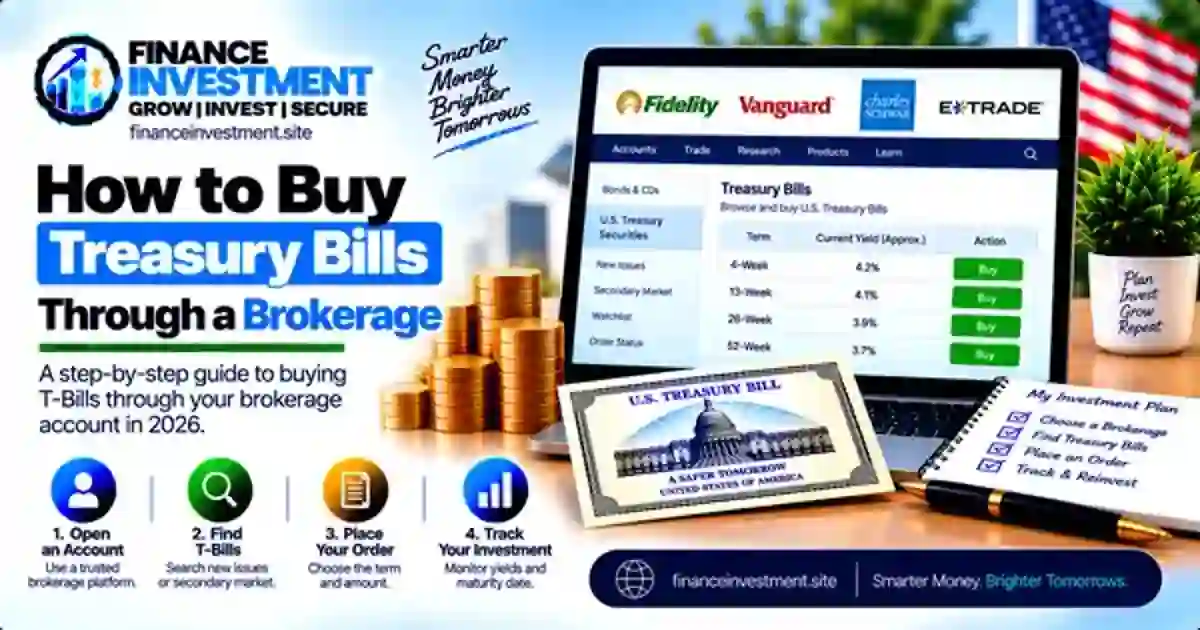
    How to Buy Treasury BillsHow to Buy Treasury Bills is easier when you first understand where the purchase happens and what you are actually ordering. In the U.S., individual investors can buy Treasury bills directly through TreasuryDirect or through a brokerage account. The steps are different, but both routes can give you access to Treasury bill investments.

    Buying a T-bill is more than choosing an amount and clicking purchase. You need to select a maturity, decide how much face value you want, understand whether you are placing a new-issue order, and know when the bill will mature. Treasury bills are issued at a discount and generally pay their face value at maturity when held until then.

    If Treasury bills are new to you, our

    Treasury Bills Explained guide

    covers the fundamentals. This article goes one step further by showing how the buying process fits together, from choosing an account to placing an order and planning for maturity.

    What You’ll Learn

    • What you need before buying your first Treasury bill.
    • How the TreasuryDirect purchase process works.
    • How a brokerage can be used to purchase Treasury bills.
    • How to choose a maturity that fits your cash timeline.
    • What a noncompetitive order means for individual investors.
    • What to check before submitting a Treasury bill order.

    Quick Answer: How Do You Buy Treasury Bills?

    To buy Treasury bills, you can purchase newly issued bills through TreasuryDirect or through a brokerage that offers Treasury securities. Start by choosing a maturity and deciding how much to invest. Then review the available offering, submit the appropriate order and check the settlement and maturity details. TreasuryDirect uses noncompetitive bidding for individual purchases, meaning you accept the yield determined at the auction.

    Key Takeaways

    • Treasury bills can be purchased directly through TreasuryDirect or through a brokerage that offers Treasury securities.
    • Before placing an order, choose a maturity that matches when you expect to need the money.
    • TreasuryDirect individual purchases use noncompetitive bidding, so you do not enter the auction yield yourself.
    • Treasury bills are generally issued at a discount and pay their face value at maturity when held to maturity.
    • A brokerage may also provide access to Treasury bills already trading in the secondary market.
    • Before buying, review the purchase amount, maturity date, settlement information and any applicable brokerage fees or charges.
    BOTTOM LINE

    Buying a T-bill is fairly simple once you know the route you want to use. The important part is matching the maturity to your cash needs and understanding whether you are buying a new issue or a bill in the secondary market.

    Table of Contents

    Treasury Bills Buying at a Glance

    Buying a Treasury bill comes down to a few practical decisions: where you will buy it, which maturity fits your plans, how much you want to invest and whether you are purchasing a new issue or a bill already trading in the secondary market. Once those choices are clear, the order itself becomes easier to follow.

    BUYING ROUTES
    TreasuryDirect or Brokerage
    Common ways to purchase Treasury bills
    MATURITY
    Select an Available Term
    Match the maturity to your cash timeline
    PRICING
    Generally Sold at a Discount
    Face value is generally paid at maturity

    Key Details to Check

    DetailWhat to CheckWhy It Matters
    MaturityAvailable bill term and maturity dateTells you when the bill is scheduled to mature.
    Purchase priceAmount required for the orderHelps determine the difference between what you pay and the face value received at maturity.
    Order typeNew issue or secondary marketPricing and the purchase process can differ between the two markets.
    AccountTreasuryDirect or brokerageDetermines where you place, hold and manage the investment.
    QUICK TAKE

    Before opening the order screen, know how long you can leave the money invested and when you may need it back. Then compare the available bill terms and purchase details that fit that timeline.

    Complete Beginner Guide: What You Need Before Buying Treasury Bills

    How to Buy Treasury BillsBefore you buy Treasury bills, get three things clear: where you will purchase them, how long you can leave the money invested and how much you want to commit. Having those answers ready makes the order process much easier to follow.

    1. Choose Your Buying Account

    You can buy eligible Treasury securities directly through TreasuryDirect or use a brokerage that offers Treasury securities. TreasuryDirect is designed for direct purchases from the Treasury, while a brokerage may also give you access to Treasury securities in the secondary market.

    2. Match the Maturity to Your Cash Needs

    Look at your upcoming expenses before selecting a bill. The maturity date tells you when the security becomes due, so avoid choosing a term that conflicts with a known cash need. If you may need the money earlier, understand the secondary-market selling process before you buy.

    3. Prepare the Purchase Details

    For a new Treasury auction, you specify the par amount you want to purchase. Treasury auction announcements state the applicable minimum bid and purchase multiples. A noncompetitive bid accepts the yield or discount rate determined at the auction instead of entering your own competitive rate.

    BEGINNER CHECK

    Before submitting an order, confirm the account, bill maturity, par amount and order type. If you are using a brokerage, also check its current transaction pricing and any applicable fees or minimums.

    If you want to understand the security before placing an order, read our

    guide to how Treasury bills work
    .
    Then you can move on to the actual purchase process.

    How Buying Treasury Bills Works

    Once you know which account and maturity you want, the buying process follows a simple sequence. The exact screens depend on the platform, but you generally select the bill, review the order details, submit the purchase and then wait for the issue or trade to settle.

    Step 1: Choose the Bill and Maturity

    Start by reviewing the available Treasury bill offerings. For a new auction, check the bill’s term, auction date, issue date, maturity date and the minimum purchase amount or applicable purchase multiples stated in the offering information.

    Step 2: Submit Your Order

    For a new TreasuryDirect purchase, an individual investor generally submits a noncompetitive bid. You enter the par amount you want to purchase rather than specifying your own competitive discount rate. A noncompetitive bid accepts the rate or discount rate awarded through the auction.

    Step 3: Complete the Purchase

    For a new issue, the Treasury conducts the auction and determines the resulting pricing. Your purchase is then completed according to the applicable settlement terms. If you buy an existing T-bill through a brokerage’s secondary market, the transaction uses the market price available when your order is executed instead of waiting for a new Treasury auction.

    Step 4: Track the Maturity Date

    After the purchase, keep the maturity date in your records. A Treasury bill becomes due on that date. If you hold it until maturity, the Treasury pays the bill’s face value. You can then use the proceeds, reinvest them or move the money toward another financial goal.

    PROCESS TIP

    Save your order confirmation, issue date and maturity date after buying. If you plan to reinvest the proceeds, note the maturity date on your calendar so you have time to review the next available Treasury bill options.

    The biggest difference between the two buying routes is what happens after you place the order. TreasuryDirect is built around direct Treasury purchases, while a brokerage can also give you access to securities already trading in the secondary market.

    Benefits and Drawbacks of Buying Treasury Bills

    Treasury bills can be useful for short-term cash that has a defined purpose and timeline. They offer a clear maturity structure, but buying them also means thinking ahead about liquidity, taxes and what you will do when the bill matures.

    Benefits

    • You can choose an available maturity that fits a planned cash need.
    • Treasury bills are obligations of the U.S. government.
    • Treasury bill interest is generally exempt from state and local income taxes.
    • TreasuryDirect provides a direct way to purchase newly issued Treasury securities.

    Drawbacks

    • If you need the money before maturity, you may need to sell the bill through the secondary market.
    • A pre-maturity sale can produce a market price that is different from what you originally paid.
    • The yield available when you reinvest may be higher or lower than the yield on your current bill.
    • Treasury bill interest is generally subject to federal income tax.
    BEFORE YOU BUY

    Look at your cash timeline before focusing on the quoted yield. A bill that matures when you actually need the money may fit your plan more naturally than one selected only because its annualized yield appears higher.

    TreasuryDirect vs. Brokerage: How to Buy Treasury Bills

    TreasuryDirect and brokerage accounts can both provide access to Treasury bills, but they serve different purposes. TreasuryDirect lets investors purchase eligible Treasury securities directly from the U.S. Treasury, while a brokerage can place Treasury orders alongside stocks, bonds and other investments. Some brokers also provide access to Treasury securities in the secondary market.

    FeatureTreasuryDirectBrokerage
    New Treasury issuesDirect access to eligible Treasury auctionsAvailable through brokers that offer Treasury auction orders
    Existing T-billsTreasuryDirect is primarily designed for Treasury holdings and direct purchasesSome brokers offer existing Treasury securities in the secondary market
    Auction orderIndividual investors generally use noncompetitive biddingOrder process depends on the brokerage
    Account experienceFocused on Treasury securitiesTreasury bills can be managed alongside other investments
    Purchase costsTreasuryDirect charges no purchase fee or commissionCosts depend on the brokerage, account and transaction

    When a Brokerage May Be Convenient

    A brokerage can be convenient if you already keep your investments in one account. Depending on the firm, you may be able to purchase new Treasury issues and access existing securities in the secondary market. However, brokerage fees and trading arrangements vary, so review the firm’s current fee schedule and transaction terms before placing an order. Investor.gov notes that brokerage costs can include commissions, markups or markdowns and other account-related charges. 1

    What to Compare Before Choosing

    • Whether you want a newly issued Treasury bill or an existing security in the secondary market.
    • How easily you want to manage Treasury bills alongside your other investments.
    • The brokerage’s current transaction costs, account requirements and trading terms.
    • How you would handle the investment if your cash needs change before maturity.
    COMPARISON TIP

    Compare the complete buying experience rather than looking only at a commission. Check auction access, secondary-market availability, pricing, account features and how you plan to manage the bill after purchase.

    Costs, Taxes, Risks and Expert Tips

    Buying Treasury bills is relatively straightforward, but the purchase price is only one part of the decision. Before placing an order, consider brokerage costs, federal taxes, maturity timing and what could happen if you need to sell the bill before it matures.

    Costs to Know

    TreasuryDirect does not charge a purchase fee or commission for Treasury securities. Brokerage costs can vary by firm and transaction, so check the broker’s current pricing before placing an order. A secondary-market purchase can also have a different price from a newly issued Treasury bill.

    Taxes and Market Risk

    Treasury bill interest is generally subject to federal income tax but exempt from state and local income taxes. The discount on a Treasury bill is generally treated as interest income when the bill reaches maturity. If you sell before maturity, the market price can be higher or lower than what you paid because market conditions and interest rates can change.

    PRACTICAL TIP

    Before buying, check the maturity date, purchase amount, expected cash need and tax treatment. If you may need the money early, understand how selling through the secondary market could affect your proceeds.

    For a closer look at Treasury bill pricing, read our

    Treasury Bill Yield vs. Interest Rate guide
    .

    Common Mistakes When Buying Treasury Bills

    Buying Treasury bills is straightforward, but the details still matter. Most problems happen when investors choose a maturity, purchase amount or buying method without first considering when they may need the money.

    1. Choosing a Maturity Without Checking Your Cash Needs

    Before buying, look at when you expect to use the money. If you need the funds before the bill matures, you may need to sell through the secondary market, where the market price can be different from your original purchase price.

    2. Confusing Face Value With Purchase Price

    Treasury bills are generally issued at a discount and mature at face value. That means the amount paid at purchase can be less than the amount due at maturity. Review both figures before submitting an order so you understand the transaction.

    3. Forgetting to Plan for Maturity

    A Treasury bill has a defined maturity date. Before buying, decide what you expect to do with the proceeds when the bill matures. You may need the money for an expense, move it to another account or consider another investment.

    REAL-LIFE EXAMPLE

    Suppose an investor has $10,000 available for a Treasury bill and expects to use that money for a planned expense in about four months. Instead of selecting a maturity without checking the timeline, the investor can review the available Treasury bill terms and consider which maturity date fits the expected cash need. If the money is needed earlier than the selected maturity, the investor should also understand the potential effects of selling in the secondary market.

    A Simple Pre-Purchase Check

    • Confirm the bill’s maturity date.
    • Review the purchase amount and face value.
    • Check whether you are buying a new issue or a secondary-market security.
    • Decide how you expect to use the proceeds when the bill matures.

    Who Should Consider Buying T-Bills?

    Treasury bills may fit investors who have cash available for a defined period and want a U.S. Treasury security with a specific maturity date. Whether they fit your situation depends on your cash needs, investment timeline and overall financial plan.

    May Fit

    • Investors planning for a known short-term cash need.
    • Families setting aside money for an upcoming expense.
    • Investors who want short-term Treasury securities as part of a broader portfolio.
    • Retirees managing a portion of their cash for planned near-term spending.

    Consider the Timing First

    • Investors who may need the money before the selected maturity should understand the secondary market.
    • Investors seeking long-term portfolio growth may need to consider other asset types as well.
    • Money needed for an emergency reserve may require a more accessible cash option.
    PLANNING POINT

    Start with the date you expect to need the money. Then compare that timeline with the available Treasury bill maturities. If your cash needs could change, understand the potential price impact of selling before maturity before committing the funds.

    Frequently Asked Questions About Buying Treasury Bills

    1. Where can I buy Treasury bills?

    You can buy newly issued Treasury bills directly through TreasuryDirect or through a brokerage that offers Treasury securities. Some brokerages also provide access to Treasury bills in the secondary market.

    2. Can beginners buy Treasury bills?

    Yes. Individual investors can buy Treasury bills through TreasuryDirect or an eligible brokerage account. For TreasuryDirect auction purchases, individual investors generally use noncompetitive bids, which accept the yield or discount rate determined at the auction.

    3. Do Treasury bills pay monthly interest?

    No. Treasury bills do not make periodic coupon payments. They are generally issued at a discount and mature at face value. The difference between the purchase price and amount paid at maturity generally represents the bill’s interest income.

    4. What happens when a Treasury bill matures?

    When a Treasury bill reaches its maturity date, the Treasury pays its face value. If you hold the bill through maturity, you do not need to sell it in the secondary market. Eligible TreasuryDirect investors can also arrange for proceeds from maturing securities to be reinvested into new Treasury securities.

    5. Can I sell a Treasury bill before maturity?

    Yes. Treasury bills are marketable securities and can generally be sold in the secondary market before maturity. The selling price may be higher or lower than your original purchase price because market prices can change.

    6. Are Treasury bill earnings taxable?

    Treasury bill interest is generally subject to federal income tax but exempt from state and local income taxes. Your individual tax situation may differ, so review the applicable IRS rules and tax documents when preparing your return.

    7. Can I buy Treasury bills through a brokerage?

    Yes. Many brokerages offer Treasury securities, including newly issued Treasury bills and, depending on the firm, securities available in the secondary market. Check the brokerage’s current trading terms, pricing and order requirements before buying.

    8. Is holding a Treasury bill until maturity an option?

    Yes. An investor can hold a Treasury bill until its maturity date instead of selling it in the secondary market. This can avoid the need to sell at a changing market price, but the appropriate approach depends on when the investor expects to need the money.

    FAQ NOTE

    Treasury auction procedures, account rules and tax requirements can change. Check current TreasuryDirect and IRS information before placing a purchase or making a tax decision.

    Final Takeaway: How to Buy Treasury Bills

    Buying Treasury bills comes down to a few practical decisions. Choose where you want to buy, select a maturity that matches your cash timeline, decide how much you want to invest and review the order details before submitting the purchase.

    TreasuryDirect provides a direct way to purchase newly issued Treasury securities. A brokerage can place Treasury bills alongside other investments and, depending on the firm, may also provide access to the secondary market. Your choice of platform should reflect how you want to purchase and manage the investment.

    Before placing an order, check the maturity date, purchase amount, pricing, tax treatment and the process for selling before maturity. If you are still comparing Treasury bill basics, our

    Treasury Bills Explained guide

    can help you review how these securities work.

    FINAL CHECK

    The key connection is between the Treasury bill’s maturity date and your expected cash need. Once that timeline is clear, you can compare the available buying routes, review the costs and understand what happens if your plans change before maturity.

    Have a Money Question? Keep Exploring.

    Understanding how to buy Treasury bills is one step. You can continue exploring Treasury maturities, pricing and other fixed-income topics to make more informed decisions about your cash.

    📩 Get in Touch With FinanceInvestment

    Have a question, suggestion or Treasury topic you would like us to cover?


    Email FinanceInvestment

  • Treasury Bill Rates Explained: A Clear Guide for 2026

    Treasury Bill Rates Explained: A Clear Guide for 2026

    Treasury Bill Rates Explained

    Subhash Rukade
    Founder, FinanceInvestment


    Updated: September 18, 2026


    Reading Time: ~11 minutes

    Why Treasury Bill Rates Matter

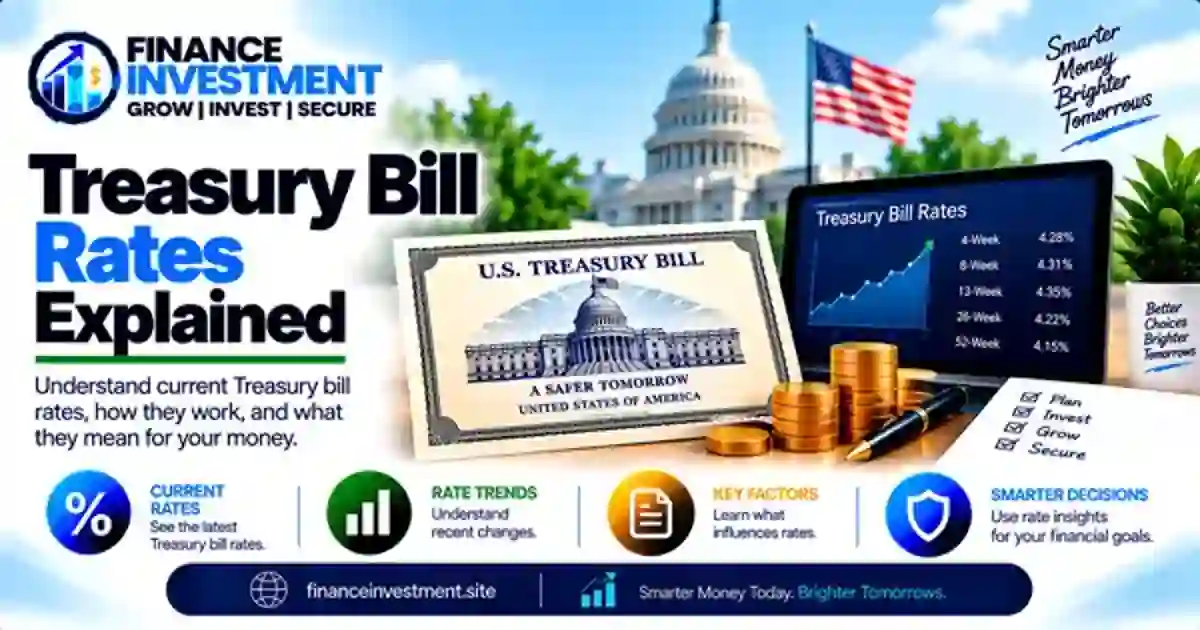
    Treasury Bill Rates ExplainedTreasury Bill Rates Explained is easier once you know what the numbers on a Treasury auction actually mean. You may see a discount rate, investment rate, purchase price, and maturity value. They are related, but each number tells you something different about the T-bill.

    Treasury bills are short-term U.S. government securities generally sold at a price below their face value. Instead of receiving regular coupon payments, the investor’s return generally comes from the difference between the purchase price and the amount paid at maturity. The quoted rate can vary as market conditions, investor demand, inflation expectations, and monetary policy change.

    If you are new to Treasury securities, our

    Treasury Bills Explained

    guide gives you the broader foundation. Here, we will focus specifically on how T-bill rates are presented, what they mean, and how to read them before making an investment decision.

    What You’ll Learn

    • What a Treasury bill rate represents
    • How the discount rate differs from the investment rate
    • Why T-bill rates change over time
    • How different maturity terms can have different rates
    • How to compare T-bill yields with other short-term investments
    • What to check before buying a Treasury bill

    Quick Answer: What Is a Treasury Bill Rate?

    A Treasury bill rate describes the annualized return associated with a short-term Treasury bill. Because T-bills are issued at a discount and redeemed at their face value at maturity, the rate is tied to the bill’s price, face value, and time to maturity. Treasury auction results can show both a discount rate and an investment rate, and those figures are calculated differently.

    Key Takeaways

    • T-bills are generally purchased for less than their face value.
    • The difference between the purchase price and face value represents the bill’s discount.
    • The discount rate is calculated using the bill’s par value and a 360-day basis.
    • The investment rate is based on the purchase price and is useful for comparing returns.
    • T-bill rates can change as market conditions and investor demand change.
    • Different Treasury bill maturities can carry different rates.
    BOTTOM LINE:

    Don’t look at a T-bill’s quoted rate in isolation. Check the purchase price, maturity date, and investment rate to get a clearer picture of the return you are comparing.

    Treasury Bill Rates at a Glance

    Treasury bill rates become easier to understand once you separate the bill’s price from the rate used to quote its return. T-bills are generally issued at a discount to face value and paid at face value at maturity. The quoted rate depends on the calculation method, purchase price, and time remaining until maturity.

    Quick Facts

    • Security: Short-term U.S. Treasury security
    • Pricing: Generally issued below face value
    • Maturity: The bill is redeemed at face value according to its terms
    • Return: Generally reflects the difference between the purchase price and the amount received at maturity
    • Rates: Can vary by maturity, auction conditions, and broader market conditions
    • Useful for: Investors comparing short-term Treasury investments
    Rate or TermWhat It Means
    Discount RateAn annualized rate calculated from the bill’s discount from face value using a 360-day basis.
    Investment RateAn annualized rate based on the purchase price and calculated on a 365- or 366-day basis. It is useful for comparing T-bill returns with other investments.
    Purchase PriceThe amount paid for the Treasury bill, generally below its face value.
    MaturityThe date when the T-bill reaches the end of its stated term and is redeemed according to its terms.
    QUICK TAKE:

    The discount rate and investment rate are not interchangeable. When you want to compare a T-bill’s annualized return with another short-term investment, the investment rate provides the more useful comparison.

    Complete Beginner Guide to Treasury Bill Rates

    Treasury Bill Rates ExplainedTreasury bill rates make more sense once you separate three things: what you pay, what the bill is worth at maturity, and how the return is expressed as an annualized rate. A T-bill generally does not send you regular interest payments. Instead, it is issued at a discount and redeemed at face value when it matures.

    Start With the Price

    Suppose a Treasury bill has a $10,000 face value and an investor pays $9,800. If the investor holds the bill until maturity, the Treasury pays the $10,000 face value according to the security’s terms. In this simplified example, the $200 difference is the discount and represents the investment’s return before applicable taxes.

    Understand the Two Rate Measures

    Treasury auction results can include both a discount rate and an investment rate. The discount rate is calculated from the bill’s par value using a 360-day convention. The investment rate is calculated using the purchase price and a 365- or 366-day basis. Because of these different calculations, the two percentages can be different even for the same T-bill.

    Compare the Maturity Terms

    The rate can also vary depending on how long the money is invested. A 4-week bill may have a different rate from a 13-week, 26-week, or 52-week bill. If you want to explore the shorter terms, see our

    4-week Treasury bill guide

    and

    13-week Treasury bill guide
    .

    For a longer holding period, our

    52-week Treasury bill guide

    explains what changes when you choose a one-year Treasury bill.

    BEGINNER TIP:

    When comparing T-bills, look at the maturity, purchase price, and investment rate together. A single percentage does not tell the whole story.

    How Treasury Bill Rates Work

    Treasury bill rates are established through the U.S. Treasury auction process. Investors can submit either competitive or noncompetitive bids. Competitive bidders specify the discount rate they are willing to accept, while noncompetitive bidders agree to receive the rate determined by the auction.

    1. Investors Submit Bids

    A competitive bid states both the amount the investor wants and the discount rate they are willing to accept. Noncompetitive bidders do not choose a discount rate. Instead, they agree to accept the rate established through the auction, subject to the auction’s terms.

    2. Treasury Determines the Accepted Rate

    After the auction closes, Treasury accepts noncompetitive bids and then evaluates competitive bids from the lowest discount rates upward until the required amount of securities has been allocated. The highest accepted competitive discount rate becomes the auction’s stop-out rate for Treasury bills.

    3. The Rate Determines the Purchase Price

    Because Treasury bills are generally sold below face value, the auction’s discount rate is used to calculate the price paid for the bill. A lower purchase price means a larger dollar difference between the amount paid and the face value received at maturity, all else being equal.

    4. Investment Rate Shows the Return Differently

    The discount rate and investment rate are not interchangeable. The discount rate is calculated using par value and a 360-day convention. The investment rate uses the purchase price and a 365- or 366-day basis. That difference is why the investment rate can be more useful when comparing a T-bill with other short-term investments.

    5. Future Auction Rates Can Change

    A rate from one Treasury auction does not lock in the rate for future bills. Market interest rates, investor demand, inflation expectations, economic conditions, and Federal Reserve policy can influence the rates available at later auctions.

    RATE CHECK:

    The simplest way to follow the process is: investors bid → Treasury accepts bids → the auction establishes the rate → the rate determines the bill’s price. The investment rate then expresses the return using the purchase price.

    Benefits and Drawbacks of Treasury Bill Rates

    Looking at the rate is only one part of evaluating a Treasury bill. The maturity date, purchase price, access to your money, and the rate available when you invest can all affect how the security fits into your short-term plans.

    Pros

    • Known maturity: Each T-bill has a stated maturity date, making the timing easier to plan around.
    • Simple pricing structure: T-bills are generally purchased below face value and redeemed at face value at maturity.
    • U.S. government obligation: Treasury securities are backed by the full faith and credit of the U.S. government.
    • Transparent auction information: Treasury publishes auction results, including relevant pricing and rate information.

    Cons

    • Rates can move: A new T-bill may offer a different rate when market conditions change.
    • Early access involves the market: Selling before maturity can expose you to a secondary-market price that differs from your purchase price.
    • Reinvestment risk: When a T-bill matures, the rate available on a replacement investment may be higher or lower than the original rate.
    • Taxes still matter: T-bill interest is generally subject to federal income tax, although it is generally exempt from state and local income taxes.
    KEEP IN MIND:

    A higher quoted rate does not tell the entire story. Look at the maturity, purchase price, investment rate, and your expected use for the money before comparing T-bills.

    Treasury Bill Rate Comparison by Maturity

    Treasury bill rates can vary from one maturity to another because each auction reflects market conditions at that time. Instead of comparing percentages alone, look at the rate together with the bill’s term, purchase price, and maturity date.

    T-Bill TermRate ConsiderationPlanning Consideration
    4 weeksThe applicable rate is established through the auction for that issue.The scheduled maturity arrives relatively soon, which can suit a shorter cash timeline.
    13 weeksThe auction determines the rate for that specific 13-week issue.Provides a longer maturity than a 4-week bill while remaining a short-term security.
    26 weeksThe rate reflects the pricing established at the auction for the 26-week issue.The scheduled maturity is farther away, so consider how long the money can remain invested.
    52 weeksThe auction determines the applicable rate for the 52-week issue.The longer maturity may require more planning around when the funds become available.

    One important detail: the rate on a T-bill is annualized. Your actual dollar return depends on the purchase price, face value, and length of the investment. Therefore, a higher quoted annualized rate does not automatically mean a larger dollar return for every investor or every maturity.

    COMPARE SMARTER:

    Compare the investment rate, maturity period, purchase price, and your cash timeline together. That gives you a more meaningful comparison than looking at the headline percentage alone.

    Costs, Risks and Expert Tips

    A Treasury bill’s quoted rate is useful, but it is not the only number worth checking. Your purchase price, maturity date, taxes, and the rate available when you reinvest can all affect the outcome.

    Costs to Check

    If you buy or sell T-bills through a brokerage, review that firm’s current pricing and trading terms. Depending on the institution and transaction, costs can include commissions, markups, markdowns, or bid-ask spreads. These expenses can reduce your effective return.

    Tax Considerations

    Interest income from Treasury bills is generally subject to federal income tax but exempt from state and local income taxes. For T-bills, the difference between the discounted purchase price and the face value received at maturity is generally treated as interest income under federal tax rules.

    Risks Worth Understanding

    • Rate risk: A new T-bill may offer a different rate when market conditions change.
    • Early-sale risk: Selling before maturity means accepting the secondary-market price available at that time.
    • Reinvestment risk: A maturing T-bill may need to be replaced at a different rate.
    • Opportunity cost: Money committed to one maturity may not be available for another investment during that period.
    EXPERT TIP:

    Before comparing two T-bills, write down the purchase price, face value, maturity date, and investment rate. Looking at these details together gives you a much clearer comparison than the headline rate alone.

    Common Treasury Bill Rate Mistakes + Example

    Treasury bill pricing is straightforward once the numbers are separated. Still, a few common mistakes can make a T-bill rate look better or worse than it really is. The biggest issue is usually comparing figures that are calculated differently.

    Mistakes to Avoid

    • Mixing up the two rate measures: The discount rate and investment rate use different formulas and day-count conventions.
    • Ignoring the purchase price: The dollar return depends on what you actually pay for the bill.
    • Comparing different terms without context: A rate on a short maturity and a rate on a longer maturity may reflect different market conditions.
    • Treating an auction rate as permanent: A future Treasury auction can produce a different rate.
    • Overlooking taxes: Treasury bill interest generally has federal income-tax implications, although it is generally exempt from state and local income taxes.

    A Simple Example

    Suppose an investor purchases a Treasury bill with a $10,000 face value for $9,800. If the investor holds it until maturity and the security pays $10,000 according to its terms, the difference is $200.

    That $200 is the dollar difference in this simplified example, but it is not by itself the annualized Treasury bill rate. The investment period matters. For example, the same $200 difference over a shorter period represents a different annualized return than $200 earned over a longer period.

    SMART CHECK:

    When a T-bill rate catches your attention, look at the calculation behind it and the time period it covers. That small step can prevent a misleading comparison.

    Who Should Consider Treasury Bills?

    Treasury bills can be relevant for investors looking at short-term U.S. government securities with a stated maturity date. Whether they fit a particular financial plan depends on the investor’s time horizon, cash needs, available rates, and other investment choices.

    Common Situations

    • You have funds that may remain invested until a known short-term maturity date.
    • You are researching U.S. Treasury securities for short-term cash management.
    • You want to compare Treasury bill rates with savings accounts, money market accounts, or CDs.
    • You want to understand an investment whose return generally comes from buying below face value and receiving face value at maturity.

    Your timeline matters. If you could need the money before maturity, selling the T-bill may involve a secondary-market transaction, and the market price at that time can be different from your original purchase price.

    QUICK CHECK:

    Start by identifying when you may need the money. Then compare the available Treasury bill rate, maturity period, and alternatives that serve the same purpose.

    Frequently Asked Questions About Treasury Bill Rates

    1. What are Treasury bill rates?

    Treasury bill rates are annualized measures associated with short-term U.S. Treasury bills. T-bills are generally issued at a discount and redeemed at face value when they mature.

    2. How are Treasury bill rates determined?

    Treasury bills are sold through auctions. Competitive bidders specify the discount rate they are willing to accept, while noncompetitive bidders agree to accept the rate determined by the auction.

    3. What is the difference between the Treasury bill discount rate and investment rate?

    The discount rate is calculated using the bill’s par value and a 360-day basis. The investment rate is based on the purchase price and uses a 365-day basis, or 366 days during a leap year. TreasuryDirect says the investment rate can be used to compare bill yields with other investments.

    4. Why do Treasury bill rates change?

    T-bill rates can change because auction pricing responds to market conditions, investor demand, interest-rate expectations, inflation expectations, and broader economic conditions.

    5. Do longer Treasury bills always have higher rates?

    No. Rates can differ across maturities, and the relationship can change with market conditions. A longer maturity does not automatically mean a higher Treasury bill rate.

    6. Are Treasury bill rates the same as savings account rates?

    No. They are different types of rates. Treasury bills are generally issued below face value and pay the face value at maturity, while savings accounts generally credit interest based on the account’s terms.

    7. Can I sell a Treasury bill before maturity?

    Generally, yes. A marketable T-bill can be sold before maturity through a bank or broker that supports secondary-market Treasury transactions. The market price at that time can differ from the original purchase price.

    8. Is Treasury bill interest taxable?

    Yes, Treasury bill interest is generally subject to federal income tax but exempt from state and local income taxes. Individual tax circumstances can vary, so current IRS guidance should be reviewed for your situation.

    Final Thoughts on Treasury Bill Rates

    Treasury Bill Rates Explained comes down to understanding what sits behind the percentage you see. A T-bill’s purchase price, face value, maturity period, and rate calculation all affect how the investment is presented.

    One detail deserves special attention: the discount rate and investment rate are different measures. Because they use different calculation methods, the two percentages can vary for the same Treasury bill. Looking at the investment rate can make comparisons with other short-term investments more meaningful.

    If you want to build a stronger foundation before comparing individual bills, visit our

    Treasury Bills Explained

    guide. It covers the broader basics, while this article focuses on understanding the rates behind those securities.

    FINAL TAKE:

    A Treasury bill rate is more useful when you know what the number represents. Check the rate calculation, purchase price, and maturity together before comparing one T-bill with another.

    Have a Money Question? Keep Exploring.

    Understanding Treasury bill rates is a good starting point. Keep exploring related Treasury topics to build a clearer picture of short-term investing.

    📩 Get in Touch With FinanceInvestment


    Email Us

  • What Happens If You Hold a Treasury Bill Until Maturity? 2026

    What Happens If You Hold a Treasury Bill Until Maturity? 2026

    What Happens If You Hold a Treasury Bill Until Maturity?

    Subhash Rukade
    Founder, FinanceInvestment


    Updated: September 18, 2026


    Reading Time: ~12 minutes

    What Happens When a Treasury Bill Reaches Maturity?

    What Happens If You Hold a Treasury Bill Until Maturity?What happens if you hold a Treasury bill until maturity? When the T-bill reaches its maturity date, the U.S. Treasury pays the bill’s face value according to its terms. Treasury bills are generally purchased at a discount, so the difference between the purchase price and the amount paid at maturity represents the bill’s interest.

    Unlike Treasury notes and bonds, T-bills do not make periodic coupon payments. Your return is built into the discounted purchase price. Once the bill matures, the scheduled payment is made according to how and where you hold the security, and you can then decide what to do with the proceeds.

    If you’re new to T-bills, our

    Treasury Bills Explained

    guide covers the basics. This article focuses on what happens at maturity, how the payment works, what happens to your earnings, tax considerations, and the choices you have afterward.

    What You’ll Learn

    • What happens on a Treasury bill’s maturity date
    • How the maturity payment works
    • Why T-bills are sold at a discount
    • How your T-bill return is realized
    • What tax considerations may apply
    • What you can do with the proceeds after maturity

    Quick Answer: What Happens at T-Bill Maturity?

    When you hold a Treasury bill until maturity, the security reaches its scheduled maturity date and the U.S. Treasury pays its face value according to the bill’s terms. Because T-bills are generally purchased at a discount, the difference between your purchase price and the maturity payment represents the interest built into the investment.

    Key Takeaways

    • The T-bill reaches its stated maturity date.
    • The Treasury pays the bill’s face value according to its terms.
    • T-bills generally do not make periodic coupon payments.
    • Your return is generally the difference between the purchase price and the maturity payment.
    • How the maturity proceeds are credited or delivered depends on where you hold the T-bill.
    • Treasury interest is generally subject to federal income tax but exempt from state and local income taxes.
    • After maturity, you can use or reinvest the proceeds according to your financial needs.
    BOTTOM LINE:

    If you keep a T-bill until maturity, you do not need to rely on a secondary-market sale. The Treasury makes the scheduled maturity payment, with the difference between your discounted purchase price and that payment representing the bill’s return.

    Treasury Bill Maturity at a Glance

    When you hold a Treasury bill through its full term, you keep the security until its stated maturity date. At maturity, the U.S. Treasury pays the bill’s face value according to its terms. Because T-bills are generally purchased for less than face value, the difference between your purchase price and the maturity payment represents the return built into the bill.

    Quick FactWhat It Means
    Investment typeShort-term U.S. Treasury security
    Purchase priceGenerally below the bill’s face value
    Interest structureNo periodic coupon payments; the return is generally the difference between the purchase price and maturity value
    At maturityThe Treasury pays the bill’s face value according to its terms
    Typical useA short-term investment with a defined maturity date
    After maturityThe proceeds can generally be used or reinvested according to your account setup and financial plans
    QUICK TAKE:

    The maturity payment is based on the T-bill’s face value. Since the bill is generally bought at a discount, the difference between what you paid and what the Treasury pays at maturity is the return built into the investment.

    Complete Beginner Guide to Holding a Treasury Bill Until Maturity

    What Happens If You Hold a Treasury Bill Until Maturity?A Treasury bill follows a straightforward investment cycle. You purchase the bill at a price that is generally below its face value, hold it in a TreasuryDirect or brokerage account, and wait for its stated maturity date. If you keep it through maturity, you do not need to sell the security in the secondary market.


    Start With the Maturity Date

    Every T-bill has a specific maturity date. That date marks the end of the bill’s term. Treasury bills are offered in several terms, including 4, 8, 13, 17, 26, and 52 weeks. The term you purchase determines when the scheduled maturity payment is due.

    If you are comparing different terms, our guides to

    4-week Treasury bills

    and

    13-week Treasury bills

    explain how shorter maturity periods work.

    Understand How the Return Is Earned

    T-bills generally do not make periodic coupon payments. Instead, you normally buy the bill at a discount to its face value. When the bill reaches maturity, the Treasury pays the face value according to its terms. The difference between your purchase price and the maturity payment represents the interest built into the investment.

    What to Check Before Maturity

    You usually do not need to take action simply because the T-bill is approaching maturity. Still, review your account and any maturity instructions beforehand. If you need the proceeds for a bill, purchase, or other financial goal, knowing the expected payment date can make cash planning easier.

    Beginner Tip:

    Treat the maturity date as an important cash-flow date. Once the T-bill reaches maturity, the scheduled payment is made according to its terms. From there, your next step is deciding how you want to use or reinvest the proceeds.

    How a Treasury Bill Maturity Works

    When your Treasury bill reaches its maturity date, its scheduled term ends and the Treasury makes the maturity payment according to the bill’s terms. If you have held the T-bill throughout the term, you do not need to find a buyer or arrange a secondary-market sale.

    1. The T-Bill Reaches Its Maturity Date

    Every T-bill has a stated maturity date. If you continue holding the security until that date, the bill completes its scheduled term. The maturity date is therefore an important cash-flow date to keep on your calendar.

    2. The Treasury Pays the Face Value

    Treasury bills are generally purchased at a discount to face value. For example, an investor might pay $9,700 for a T-bill with a $10,000 face value. If the investor holds it until maturity, the Treasury pays the $10,000 face value according to the security’s terms. The $300 difference represents the interest built into this simplified example.

    3. The Maturity Proceeds Are Credited or Paid

    The way you receive the maturity proceeds depends on where the T-bill is held and the applicable account procedures. TreasuryDirect and brokerage accounts can have different processes, so review your account information before the maturity date.

    4. Decide What to Do With the Proceeds

    Once the maturity proceeds are available, you can use them for a planned expense, keep the cash in an appropriate account, or consider another investment. If you are considering another T-bill, our

    guide to how Treasury bills make money

    explains how the discount-based return works.

    MATURITY CHECK:

    Before the T-bill matures, confirm the maturity date, review your account instructions, and have a clear plan for the proceeds. That small check can prevent surprises when the investment reaches its end date.

    Benefits and Drawbacks of Holding a Treasury Bill to Maturity

    Holding a T-bill through its maturity date can make the timing of your investment easier to plan because you are waiting for the scheduled maturity payment rather than relying on a secondary-market sale. However, this approach also comes with trade-offs.

    Pros

    • Defined maturity date: You know when the T-bill’s scheduled maturity payment is due.
    • No secondary-market sale needed: You can keep the bill through its stated term instead of arranging an early sale.
    • Simple return structure: The return generally comes from the difference between the discounted purchase price and the maturity value.
    • Easier cash planning: A known maturity date can help you plan around a future financial need.

    Cons

    • Early access may require a sale: If you need the money before maturity, you generally need to use a secondary-market transaction rather than wait for the scheduled payment.
    • Opportunity cost: Market yields can change during the T-bill’s term, so other investments may offer different rates later.
    • Reinvestment risk: When the T-bill matures, a new Treasury bill may have a different yield than the one you originally purchased.
    • Tax considerations: Treasury interest is generally subject to federal income tax but exempt from state and local income taxes.
    KEY POINT:

    Holding a T-bill to maturity gives you a defined end date and avoids depending on a secondary-market sale for the scheduled payment. The main trade-offs involve access to the money before maturity and what market rates may look like when you reinvest.

    Treasury Bill Maturity Comparison

    Treasury bills can have different maturity periods, but the basic maturity process is similar. The main difference is how long you hold the security before the scheduled payment date arrives.

    T-Bill TermWhat Happens at Maturity?Planning Consideration
    4-week or 8-weekThe bill reaches its stated maturity date, and the Treasury pays its face value according to its terms.The shorter term means the scheduled maturity date arrives sooner.
    13-week or 26-weekThe scheduled maturity payment is made when the bill reaches its stated maturity date.Consider the maturity date when planning for future cash needs or possible reinvestment.
    52-weekThe bill reaches maturity after its stated 52-week term, and the Treasury pays the face value according to its terms.The longer term means waiting longer for the scheduled maturity payment.
    After maturityThe maturity proceeds are handled according to the procedures of the account where the T-bill is held.You can then decide whether to use the proceeds or consider another investment.
    QUICK COMPARISON:

    The basic maturity process does not change with the T-bill term: the security reaches its stated maturity date and the Treasury makes the scheduled payment. What changes is the length of time before that date arrives.

    Costs, Taxes, Risks and Expert Tips

    Holding a Treasury bill until maturity is generally straightforward, but a few details still deserve attention. Taxes, changing market yields, reinvestment decisions, and your plans for the maturity proceeds can all affect what happens next.

    What About Taxes?

    Treasury bill interest is generally subject to federal income tax but exempt from state and local income taxes. The IRS treats the discount on a Treasury bill as interest income under applicable tax rules. For the details that apply to your situation, review

    IRS Publication 550

    and keep your purchase records and tax documents.

    TAX TIP:

    Tax reporting can depend on the type of transaction and your individual circumstances. If you need personalized tax advice, consider speaking with a qualified tax professional.

    Understand Reinvestment Risk

    When your T-bill matures, the yield available on a new Treasury security may be different from the rate available when you made your original purchase. If you plan to reinvest, check the current rates and maturity options at that time rather than assuming the same return will be available.

    Expert Tips Before Maturity

    • Mark the T-bill’s maturity date on your calendar.
    • Check how your account handles the maturity proceeds.
    • Keep your purchase confirmation and tax records.
    • Decide whether the proceeds are needed for spending, saving, or another investment.
    • If you plan to reinvest, compare the Treasury rates available when the bill matures.

    Common Mistakes When Holding a Treasury Bill to Maturity

    A T-bill is simple to understand once you know the basic structure, but small oversights can still cause confusion around the maturity date, payment, taxes, or what happens afterward. A little preparation can make the end of the investment much easier to manage.

    Mistakes to Avoid

    • Forgetting the maturity date: Each T-bill has its own stated maturity date, so check the details of your specific security.
    • Expecting periodic interest payments: T-bills generally do not make coupon payments during their term.
    • Confusing purchase price with face value: A T-bill is generally purchased at a discount, so the amount paid can be lower than its face value.
    • Overlooking tax reporting: Treasury interest generally has federal tax implications, so keep the relevant records and tax documents.
    • Waiting until the last minute to plan: Know what you want to do with the maturity proceeds before the payment date arrives.

    A Simple Example

    Suppose an investor purchases a Treasury bill for $9,700 with a face value of $10,000. The investor keeps the bill until its stated maturity date. If the security’s terms provide for a $10,000 maturity payment, the $300 difference represents the interest in this simplified example, before considering applicable taxes.

    Because the investor held the T-bill through maturity, there is no need to arrange a secondary-market sale to receive the scheduled payment. Once the maturity proceeds are available according to the account’s procedures, the investor can use the money or consider another investment.

    SMART CHECK:

    Keep four details handy: your purchase price, face value, maturity date, and plan for the proceeds. Together, they show what you paid, what the bill is scheduled to pay, and what you want to do next.

    Who Should Consider Holding a Treasury Bill to Maturity?

    Holding a T-bill until maturity may make sense for an investor whose cash needs line up with the security’s scheduled maturity date. The fixed end date can also make it easier to plan when the investment is expected to reach maturity.

    Situations to Consider

    • You have a short-term financial goal with a reasonably clear timeline.
    • You expect to keep the T-bill through its scheduled maturity date.
    • You are comfortable waiting for the maturity payment rather than seeking access to the money sooner.
    • You want an investment with a stated maturity date for cash-flow planning.

    Your circumstances still matter. If you might need the money unexpectedly, remember that selling before maturity involves a secondary-market transaction and a market price that can differ from your purchase price. If you plan to reinvest after maturity, the yield available on a new T-bill may also be different.

    QUICK CHECK:

    Compare the T-bill’s maturity date with your expected cash needs. If those timelines do not match, consider how you would handle the money before making the investment.

    Frequently Asked Questions About Treasury Bill Maturity

    1. What happens if you hold a Treasury bill until maturity?

    The T-bill reaches its stated maturity date, and the U.S. Treasury pays the bill’s face value according to its terms. The difference between the discounted purchase price and the maturity payment generally represents the interest.

    2. Do Treasury bills pay interest at maturity?

    T-bills generally do not make periodic coupon payments. Instead, they are normally purchased at a discount, and the difference between the purchase price and the amount paid at maturity represents the interest.

    3. Do I get the face value of a Treasury bill at maturity?

    Generally, yes. If you hold the T-bill until maturity, the Treasury pays its face value according to the security’s terms. The original purchase price is generally lower because the bill is issued at a discount.

    4. What happens to a T-bill after it matures?

    The T-bill reaches the end of its term, and the maturity proceeds are handled according to the procedures of the account where the security is held. You can then decide what to do with the proceeds.

    5. Is Treasury bill interest taxable?

    Treasury bill interest is generally subject to federal income tax but exempt from state and local income taxes. Your individual tax situation may differ, so review current IRS guidance or consult a qualified tax professional.

    6. Can I reinvest a Treasury bill when it matures?

    Reinvestment may be available depending on where you hold the T-bill and the options provided by that account. A new Treasury security will have its own purchase price, maturity date, and yield.

    7. What if I need the money before the T-bill matures?

    You may generally be able to sell a marketable T-bill before maturity through a bank, broker, or brokerage that supports secondary-market Treasury transactions. The market price can differ from the amount you originally paid.

    8. What should I do when my Treasury bill matures?

    First, check that the maturity proceeds have been handled according to your account’s procedures. You can then consider whether to use the money, keep it as cash, or reinvest it based on your financial plans.

    Final Thoughts on Holding a Treasury Bill Until Maturity

    What happens if you hold a Treasury bill until maturity? The T-bill reaches its stated maturity date, and the U.S. Treasury makes the scheduled payment of the bill’s face value according to its terms. Because T-bills are generally purchased below face value, the difference between the purchase price and maturity payment represents the interest built into the investment.

    Keeping the bill through maturity also means you are not depending on a secondary-market sale to complete the investment. Once the maturity proceeds are handled according to your account’s procedures, you can decide whether the money is needed for a planned expense, kept as cash, or considered for another investment.

    For a broader explanation of Treasury securities, visit our

    Treasury Bills Explained

    guide. It covers the basics, while this article focuses on the final stage of a T-bill’s life cycle.

    BOTTOM LINE:

    When a T-bill reaches maturity, the Treasury makes the scheduled face-value payment according to the security’s terms. Your purchase price and maturity value determine the return built into the bill, while your account and financial plans determine what happens next.

    Have a Money Question? Keep Exploring.

    Keep learning with FinanceInvestment. Explore practical guides on Treasury bills, savings, CDs, and everyday money decisions.

    📩 Get in Touch With FinanceInvestment

    Have a question or feedback about this guide? Send us an email and get in touch with FinanceInvestment.


    Email FinanceInvestment

  • Can You Sell a Treasury Bill Before Maturity? 2026 Guide

    Can You Sell a Treasury Bill Before Maturity? 2026 Guide

    Can You Sell a Treasury Bill Before Maturity?

    SR
    Subhash Rukade
    Founder, FinanceInvestment


    Updated: September 18, 2026


    Reading Time: ~10 minutes

    Selling a Treasury Bill Before Maturity

    Can You Sell a Treasury Bill Before Maturity?Can you sell a Treasury bill before maturity? Yes. If you need access to the money sooner, you can generally sell the T-bill in the secondary market through a bank or brokerage that supports Treasury securities. The key detail is price: the amount you receive can be different from what you originally paid.

    That difference matters because Treasury bill prices can change before maturity as interest rates and market conditions move. Selling early is therefore different from holding the bill until its maturity date, when the Treasury makes the scheduled payment according to the security’s terms.

    If you are just getting started, our

    Treasury Bills Explained

    guide covers the basics. This article goes one step further by looking at the early-sale process, pricing, potential costs, risks, taxes, and the points worth checking before you sell.

    What You’ll Learn

    • Whether you can sell a Treasury bill before maturity
    • How the secondary market works
    • Why a T-bill’s market price can change
    • How selling early differs from holding to maturity
    • Potential costs, risks, and tax considerations
    • What to check before placing a sale

    Quick Answer: Can You Sell a Treasury Bill Before Maturity?

    Yes. You can generally sell a Treasury bill before maturity through a bank, broker, or brokerage that supports secondary-market Treasury transactions. The important detail is that you sell at the market price available at that time. Depending on market conditions, that price may be above or below what you originally paid.

    Key Takeaways

    • Treasury bills can generally be sold before their maturity date.
    • An early sale is normally completed through the secondary market.
    • TreasuryDirect does not provide a direct sell feature for marketable securities; selling generally involves transferring the security to a bank, broker, or appropriate brokerage account.
    • The T-bill’s market price can change before maturity as interest rates and market conditions change.
    • You may receive more or less than your original purchase price when selling early.
    • Holding the bill until maturity follows a different path because you are not relying on a secondary-market sale price.
    • Before selling, review the estimated proceeds, any applicable transaction costs, and your tax considerations.
    Bottom Line:

    You can generally sell a Treasury bill before maturity, but the amount you receive depends on its market price when you sell. If you need the cash early, understand that price difference before placing the order.

    Treasury Bill Early Sale at a Glance

    Can you sell a Treasury bill before maturity? Generally, yes. An investor can sell a T-bill before its maturity date through a bank, broker, or brokerage that supports secondary-market Treasury transactions. The key difference is that an early sale is based on the market price at the time of the sale.

    Quick FactWhat It Means
    Can you sell early?Generally yes, through a bank, broker, or brokerage that supports secondary-market Treasury transactions.
    Can TreasuryDirect sell it?TreasuryDirect does not provide a direct selling feature for marketable securities.
    How is the sale price set?The price depends on market conditions and the price available when you sell.
    What could you receive?The proceeds may be higher or lower than your original purchase price.
    What should you check?Review the estimated sale proceeds, applicable costs, and your need for the cash before selling.
    QUICK TAKE:

    Selling a T-bill early can provide access to your money before maturity, but you are selling at a market price rather than simply receiving the bill’s scheduled maturity payment.

    Complete Beginner Guide to Selling a Treasury Bill Early

    Can You Sell a Treasury Bill Before Maturity?Treasury bills are short-term U.S. government securities with a set maturity date. However, you do not necessarily have to keep one until that date. If you need the money sooner, you can generally sell the T-bill in the secondary market through a bank, broker, or brokerage that handles Treasury securities.

    What Happens When You Want to Sell?

    The first step depends on where you hold the security. TreasuryDirect lets investors buy and hold eligible marketable Treasury securities, but it does not provide a direct selling feature. If you want to sell a TreasuryDirect-held T-bill before maturity, you generally need to transfer it to a bank, broker, or brokerage account that can handle the secondary-market transaction.

    After the security is in an appropriate account, the financial institution can provide the available market price and transaction details. Your sale proceeds will depend on that price, the amount of the security being sold, and any applicable charges.

    Why Is the Sale Price Different?

    A T-bill’s market price can change before maturity. Interest rates, investor demand, and other market conditions can affect what buyers are willing to pay. For example, if newly issued Treasury securities begin offering higher yields, an existing T-bill may need to trade at a different price to remain competitive.

    This creates an important difference between selling early and holding the bill to maturity. An early sale exposes you to the price available in the secondary market at that moment. Before selling, review the quoted price, estimated proceeds, settlement details, and any applicable transaction costs.

    Beginner Tip:

    Do not compare only your original purchase price with today’s sale quote. Also consider how much time remains until maturity and whether receiving the cash now is worth giving up the remaining return.

    How Selling a Treasury Bill Before Maturity Works

    Selling a Treasury bill early is a secondary-market transaction. Instead of waiting for the bill to reach its maturity date, you sell the security through a financial institution that supports Treasury transactions. The amount you receive depends on the market price available when you sell.

    1. Check Where You Hold the T-Bill

    First, check whether your T-bill is held at TreasuryDirect or through a brokerage. TreasuryDirect does not provide a direct selling feature for marketable Treasury securities. If your bill is held there and you want to sell it early, you generally need to transfer it to a bank, broker, or brokerage account that can handle the secondary-market sale.

    2. Review the Available Sale Price

    Once the security is in an account that supports selling, the financial institution can provide the available market price and transaction details. Ask whether any commission, markup, spread, or other charge applies. These costs can reduce the amount you ultimately receive.

    3. Understand the Price Difference

    For example, suppose you purchased a T-bill for $9,700. If the current sale quote is $9,820, the quoted value is above your original purchase price before applicable costs and taxes. If the quote is $9,600, you would receive less than you originally paid.

    The result can differ because the secondary-market price changes as interest rates, demand, and other market conditions change. The closer the bill gets to maturity, the remaining time and prevailing market yields can also affect its price.

    4. Place the Sale and Wait for Settlement

    If you decide to proceed, the broker or dealer processes the sale. The cash may not be available immediately because the transaction has a settlement period. Check the expected settlement date and when the proceeds will become available in your account.

    Key Point:

    An early T-bill sale gives you access to the market before maturity, but the final proceeds depend on the quoted price, transaction costs, and settlement terms. Review all three before selling.

    Benefits and Drawbacks of Selling a Treasury Bill Early

    Selling a Treasury bill before maturity can give you more flexibility when your financial plans change. At the same time, an early sale exposes you to the current market price and possible transaction costs.

    Pros

    • Earlier access to cash: You may be able to access your money without waiting for the scheduled maturity date.
    • Greater flexibility: Selling can help if an unexpected expense changes your original plan.
    • Potential for a gain: If the market sale price is above what you paid, the sale can produce a gain before applicable costs and taxes.
    • Freedom to redirect funds: The proceeds can be used for another financial goal or investment.

    Cons

    • Market-price risk: The T-bill’s market value can be below your purchase price when you decide to sell.
    • Possible transaction costs: A broker or dealer may charge a commission, markup, spread, or other applicable fee.
    • Remaining return is no longer earned: After selling, you no longer hold the T-bill for the rest of its original term.
    • Settlement timing: The sale proceeds may not become available immediately.
    Key Point:

    The main trade-off is access versus market-price uncertainty. Before selling, consider the current sale price, time remaining until maturity, possible costs, and when you actually need the money.

    TreasuryDirect vs. Brokerage vs. Holding to Maturity

    TreasuryDirect and brokerage accounts are different ways to hold Treasury securities, while holding to maturity describes what you do with the investment. Understanding that distinction makes the early-sale process much easier to follow.

    SituationCan You Sell Early?How Is the Amount Determined?What to Know
    TreasuryDirectNot directly through TreasuryDirectA direct sale is not available on the platformA marketable security generally must be transferred to an appropriate financial institution for an early sale.
    Brokerage accountGenerally, if the firm supports secondary-market Treasury salesThe market price and transaction terms at the time of saleReview the quoted price, spread or other charges, and settlement timing.
    Hold to maturityNo sale is requiredPayment follows the Treasury bill’s terms at maturityYou keep the bill through its scheduled maturity date instead of selling it in the secondary market.
    QUICK COMPARISON:

    If you need cash before maturity, the key question is whether your financial institution can facilitate a secondary-market sale. If you keep the T-bill until maturity, you do not need to find a buyer or accept a secondary-market price.

    Costs, Risks and Expert Tips Before Selling a Treasury Bill

    Before selling a Treasury bill before maturity, do more than check the quoted price. The amount you actually receive can be affected by the market price, transaction costs, and settlement timing. A quick review of these details can help you make a more informed decision.

    Check the Total Selling Cost

    Depending on the financial institution, a Treasury transaction may involve a commission, markup, markdown, spread, or another charge. Pricing practices vary by firm. Before accepting a quote, ask how much you are expected to receive after applicable transaction costs.

    Understand Interest-Rate and Market Risk

    A T-bill’s market price can change before maturity. Interest rates are an important factor. When market yields rise, existing securities can become less attractive compared with newly issued securities, which can put downward pressure on their prices. Demand and other market conditions can also affect the price you are quoted.

    Warning:

    Do not assume that your original purchase price or the T-bill’s face value is the amount you will receive from an early sale. A secondary-market sale uses the price available when the transaction is made.

    Expert Tips Before You Sell

    • Check the remaining time until the T-bill matures.
    • Compare the current sale quote with what you originally paid.
    • Ask for the estimated net proceeds after applicable costs.
    • Confirm the settlement date if you need the money by a specific date.
    • Consider any federal tax implications that may apply to your transaction.

    Common Mistakes When Selling a Treasury Bill Early

    An early T-bill sale involves more than clicking a sell button. The market quote, transaction costs, settlement timing, and time remaining until maturity can all matter. Checking these details first can make the decision much clearer.

    Mistakes to Avoid

    • Ignoring the maturity date: If maturity is close, compare the timing of selling with your actual need for cash.
    • Looking only at the quoted price: Check whether commissions, spreads, markups, or other charges could reduce your proceeds.
    • Assuming face value is the sale price: A secondary-market sale uses the market price available at the time of the transaction.
    • Forgetting settlement timing: The day you place a sale order may not be the day the cash becomes available.
    • Overlooking tax considerations: Keep your transaction records and consider the federal tax treatment that may apply.

    A Simple Example

    For illustration, suppose Michael bought a Treasury bill for $9,700. Before maturity, he needs cash for an unexpected $9,000 expense. His brokerage shows an estimated sale value of $9,760 before any applicable transaction costs.

    Michael can review the quoted terms and decide whether to sell. If he proceeds, his final proceeds can be affected by applicable charges, and the money may not be available until settlement. If he does not need the cash immediately, he can also compare the early-sale option with keeping the T-bill until its scheduled maturity.

    SMART CHECK:

    Before selling, write down the current estimated proceeds, any applicable costs, the settlement date, and the time remaining until maturity.

    Who Should Consider Selling a Treasury Bill Early?

    An early sale may become relevant when your cash needs change before the T-bill reaches its maturity date. Instead of waiting for the scheduled payment, you can review the current market value and decide whether accessing the money now fits your plans.

    Common Situations

    • You have an unexpected expense and need access to cash before maturity.
    • A financial goal has changed since you purchased the T-bill.
    • You want to review the current market value of the security.
    • You need to redirect funds toward another financial goal or investment.

    If you do not need the money right away, look at how much time remains before maturity. Compare the current sale price, possible transaction costs, settlement timing, and the cash you expect to receive under your original maturity plan.

    SIMPLE CHECK:

    Before selling, ask: “Do I need this money before the T-bill matures?” Then compare the early-sale numbers with your original timeline.

    Frequently Asked Questions About Selling Treasury Bills Early

    1. Can you sell a Treasury bill before maturity?

    Yes. You can generally sell a Treasury bill before maturity through a bank, broker, or brokerage that supports secondary-market Treasury transactions. The price you receive depends on the market conditions when you sell.

    2. Can I sell a T-bill directly through TreasuryDirect?

    No. TreasuryDirect does not provide a direct selling feature for marketable Treasury securities. If you want to sell a TreasuryDirect-held T-bill before maturity, you generally need to transfer it to an appropriate bank, broker, or brokerage that can facilitate the transaction.

    3. Will I get the full face value if I sell a T-bill early?

    Not necessarily. An early sale takes place at the current secondary-market price. You may receive more or less than the bill’s face value or the amount you originally paid.

    4. Why can a Treasury bill’s price change before maturity?

    Market prices can change as interest rates, demand, and other market conditions change. For example, higher market yields can put downward pressure on prices of existing fixed-income securities.

    5. Are there fees when selling a Treasury bill?

    It depends on the financial institution and transaction. A broker or dealer may apply a commission, markup, markdown, spread, or another applicable charge. Review the estimated net proceeds before selling.

    6. Can I sell a Treasury bill at any time?

    You can generally sell a marketable T-bill before maturity when your financial institution can facilitate a secondary-market transaction. Available pricing, trading conditions, and settlement timing can vary.

    7. What happens to my T-bill’s return if I sell early?

    T-bills do not make periodic coupon payments. When you sell before maturity, your proceeds are based on the market sale price rather than a separate interest payment. The result can be different from the return you would have received by holding the bill to maturity.

    8. Is selling a Treasury bill before maturity taxable?

    An early sale can have federal tax consequences, including a potential gain or loss depending on the transaction and your circumstances. Keep your purchase and sale records, and consult a qualified tax professional for advice specific to your situation.

    Final Thoughts on Selling a Treasury Bill Before Maturity

    Can you sell a Treasury bill before maturity? Generally, yes. An early sale takes place through the secondary market, where the T-bill is sold at the market price available at that time. That price can be different from both your original purchase price and the bill’s face value.

    Before selling, review the current quote, any applicable transaction costs, and the expected settlement timing. It is also useful to check how much time remains until maturity and compare the cash you could receive from selling with your original investment plan.

    If you want to understand the bigger picture, our

    Treasury Bills Explained

    guide covers how T-bills work, while this article focuses on what changes when you decide to sell before maturity.

    BOTTOM LINE:

    An early T-bill sale can provide access to your money before maturity, but the proceeds depend on the market price and transaction terms when you sell.

    Have a Money Question? Keep Exploring.

    Keep learning with FinanceInvestment. Explore practical guides on Treasury bills, savings, CDs, and everyday cash decisions, and stay connected for more personal finance insights.

    📩 Get in Touch With FinanceInvestment

    Have a question or feedback about this guide? Send us an email.


    Email Us

  • What Happens When a Treasury Bill Matures? A 2026 Guide

    What Happens When a Treasury Bill Matures? A 2026 Guide

    What Happens When a Treasury Bill Matures?

    SR
    Subhash Rukade
    Founder, FinanceInvestment


    Updated: September 17, 2026


    Reading Time: ~11 minutes

    When a Treasury Bill Reaches Maturity

    What Happens When a Treasury Bill Matures?What happens when a Treasury bill matures? For most investors, the process is straightforward. The bill reaches its maturity date, and the U.S. Treasury pays its face value according to the security’s terms. If you purchased the bill for less than its face value, the difference represents your return.

    The bigger question comes next. Once the money becomes available, you can use the proceeds, move the cash to another account, or reinvest in another Treasury bill. The right choice depends on when you need the money, what yields are available, and how long you want to keep your cash invested.

    So, the maturity date is not simply the finish line. It is also a natural point to review your next move. Our Treasury Bills Explained guide covers the broader topic, while this article focuses on the practical steps that follow maturity.

    What You’ll Learn

    • What happens on the Treasury bill maturity date
    • How the maturity payment works
    • What happens when you reinvest the proceeds
    • What to know about taxes and timing
    • How to think about your next use of the money

    Quick Answer: What Happens at T-Bill Maturity?

    When a Treasury bill reaches its maturity date, the bill’s term ends and the Treasury pays its face value according to the security’s terms. Because T-bills are generally bought at a discount, the difference between the purchase price and the face value represents the investor’s return. Once the proceeds are received, you can use the cash or consider another investment.

    Key Takeaways

    • The maturity date marks the end of the T-bill’s stated term.
    • The Treasury pays the bill’s face value at maturity.
    • The return generally comes from purchasing the bill below face value.
    • After maturity, you can use, transfer, or reinvest the proceeds.
    • TreasuryDirect offers reinvestment options for eligible Treasury bills.
    • Federal income tax generally applies to Treasury interest, while state and local income taxes generally do not.
    Bottom Line:

    Treasury bill maturity gives you a clear decision point. You can take the proceeds, put the money toward a goal, or reinvest it based on your current cash needs.

    Treasury Bill Maturity at a Glance

    When a Treasury bill matures, its scheduled term ends and the Treasury makes the maturity payment according to the bill’s terms. If you purchased the bill at a discount, the difference between your purchase price and its face value generally represents your return.

    Quick FactWhat It Means
    Maturity dateThe date when the Treasury bill reaches the end of its stated term
    Maturity paymentThe bill’s face value is paid according to its terms
    Investor returnGenerally the difference between the purchase price and face value
    After maturityUse the proceeds, move the cash, or consider another investment
    Best forInvestors planning for a future cash need or deciding what to do with the proceeds
    QUICK TAKE:

    Maturity is a natural checkpoint for your cash plan. Once the bill reaches its end date, the next decision is what you want to do with the proceeds.

    Complete Beginner Guide to Treasury Bill Maturity

    What Happens When a Treasury Bill Matures?If you are new to Treasury bills, maturity is simply the point when the bill’s stated term ends. You purchase the bill, hold it during the term, and receive its face value at maturity according to its terms. Because T-bills are generally issued at a discount, the amount you paid can be lower than the amount you receive.

    What Happens While You Hold the Bill?

    Treasury bills do not make regular coupon payments. Instead, the return is generally built into the purchase price. For example, if a bill has a $1,000 face value and you pay $970, the $30 difference represents the return before applicable taxes.

    You can hold the bill until its maturity date. If you need the money sooner, you may be able to sell the security through a bank or brokerage that supports Treasury securities. However, the market price can change before maturity, so the amount you receive from an early sale may be different from what you originally paid.

    What Happens When the Bill Matures?

    On the maturity date, the Treasury bill reaches the end of its term and the Treasury makes the scheduled payment. After the proceeds become available, you can use the money for a financial goal, move it to another cash account, or put it into another investment.

    Can You Reinvest the Proceeds?

    Yes. TreasuryDirect allows eligible Treasury bill investments to be scheduled for reinvestment. This can make it easier to continue a short-term Treasury strategy without manually starting from scratch each time.

    Beginner Tip:

    Check your maturity date before buying and decide in advance what you want the proceeds to do. That simple step can prevent a last-minute cash decision.

    What Happens When a Treasury Bill Matures?

    When a Treasury bill matures, its stated term ends. If you have held the bill until maturity, you generally do not need to sell it. Instead, the Treasury makes the scheduled maturity payment based on the bill’s face value and terms. Your original purchase price determines how much you invested, while the difference generally represents your return.

    1. The Bill Reaches Its Maturity Date

    Every Treasury bill has a specific maturity date established when it is issued. On that date, the bill reaches the end of its term. For example, if you purchased a $1,000 face-value T-bill for $970 and held it to maturity, the scheduled payment is based on the $1,000 face value. The $30 difference is the return before applicable taxes.

    2. The Maturity Proceeds Are Credited

    Where the money goes depends on how you purchased and hold the bill. With TreasuryDirect, maturity proceeds are handled through your TreasuryDirect account according to the applicable instructions. With a brokerage, the proceeds are generally reflected in the brokerage account under that firm’s procedures.

    3. You Choose What to Do Next

    Once the proceeds are available, you can use the money for a planned expense, move it to an appropriate cash account, or consider another investment. If your goal has changed since you bought the T-bill, maturity gives you a natural opportunity to reassess your cash needs.

    4. Reinvestment Starts a New Investment

    Eligible TreasuryDirect Treasury bills can be scheduled for reinvestment. A reinvestment means the proceeds are used to purchase another Treasury bill when the new bill is issued. The new bill has its own maturity date and auction-determined terms, so its yield may differ from the original investment.

    Key Point:

    Maturity does not automatically mean you must invest again. Your original T-bill ends, the maturity proceeds are handled through your account, and you then decide whether to spend, save, or reinvest the money.

    Benefits and Drawbacks of Treasury Bill Maturity

    A maturing Treasury bill gives you a defined point at which the investment ends and the proceeds can be redirected. That can make planning easier, but there are still a few trade-offs to consider before deciding what to do next.

    Pros

    • Defined maturity date: You know when the bill is scheduled to reach the end of its term.
    • Predictable maturity value: When held to maturity, the Treasury pays the bill’s face value according to its terms.
    • Useful for planning: The maturity date can be matched with a known future cash need.
    • Reinvestment available: Eligible TreasuryDirect bills can be scheduled for reinvestment.
    • State tax treatment: Treasury interest is generally exempt from state and local income taxes.

    Cons

    • Limited access before maturity: If you need the money early, you generally must sell the bill through the secondary market.
    • Early-sale price risk: The market value can be above or below your purchase price when you sell.
    • Changing reinvestment yields: A new T-bill may have a different yield from your original bill.
    • Federal taxation: Treasury interest is generally subject to federal income tax.
    Key Point:

    The maturity date gives you a clear point to reassess your money. Before reinvesting, consider your cash needs, the new available yield, and how long you are comfortable keeping the money invested.

    Maturity, Reinvestment and Cash Options

    Once a Treasury bill matures, the proceeds give you a new choice. You can reinvest the money in another Treasury bill, move it to a suitable cash account, or use it for a planned expense. The right path depends on when you expect to need the money and what you want your cash to accomplish next.

    ChoiceAccess to MoneyWhat Happens Next?May Make Sense When
    ReinvestMoney is placed into another Treasury billA new T-bill begins with its own purchase price, yield, and maturity dateYou want to keep the money invested
    Move to a cash accountGenerally more accessible than a maturing investmentThe proceeds can be transferred to an appropriate savings or money market accountYou may need the cash soon
    Use the proceedsDepends on how the funds are held and accessedThe money can be directed toward a planned expense or financial goalThe original purpose for the money has arrived
    QUICK COMPARISON:

    Reinvesting keeps the proceeds in another Treasury bill, while moving the money to a cash account can provide easier access. A new T-bill can have different terms and yield, so review the new opportunity before reinvesting.

    Taxes, Risks and Expert Tips for Treasury Bill Maturity

    Treasury bill maturity is straightforward, but taxes, early sales, and reinvestment decisions can affect how you use the money afterward. Understanding these points before maturity can make the next step easier to plan.

    How Are Treasury Bill Returns Taxed?

    Treasury bill interest is generally subject to federal income tax but is generally exempt from state and local income taxes. For a bill purchased at a discount and held to maturity, the difference between the purchase price and the amount received is generally treated as interest income for federal tax purposes.

    What Risks Should You Consider?

    Holding a T-bill until maturity is different from selling it early. If you sell before maturity, its market price can change as interest rates and market conditions move. Reinvestment also involves uncertainty because a new Treasury bill may have a different yield from the bill that just matured.

    Warning:

    Do not assume that reinvesting will preserve your previous yield. A new Treasury bill has its own auction price, yield, and maturity date.

    Expert Tips Before Maturity

    • Check the maturity date and review your plans before it arrives.
    • Decide whether you need the proceeds for an upcoming expense.
    • Compare the available yield before choosing to reinvest.
    • Keep your Treasury records for your federal tax reporting.

    Common Treasury Bill Maturity Mistakes

    A Treasury bill can be easy to hold, but the maturity date deserves some attention. The investment may be ending, yet you still need to decide what should happen to the money next.

    Mistakes to Avoid

    • Forgetting the maturity date: You may not have enough time to plan how the proceeds will be used.
    • Reinvesting automatically without reviewing the new yield: A new T-bill has its own auction price and yield.
    • Overlooking upcoming expenses: Money you expect to need soon may deserve a more accessible home.
    • Confusing early sale with maturity: Selling before maturity means accepting the market price available at that time.
    • Ignoring tax treatment: Federal taxes can affect the amount of your return that you ultimately keep.

    A Simple Real-Life Example

    Suppose Sarah buys a Treasury bill with a $10,000 face value for $9,700. She plans to hold it until maturity. If she holds the bill through maturity, the Treasury pays the $10,000 face value according to its terms. The $300 difference between her purchase price and the face value represents her return before applicable taxes.

    Sarah now needs to decide what happens next. If she has a planned home repair, she could use the proceeds for that expense. If she does not need the money, she could consider another Treasury bill, a money market account, or another suitable option. The new decision should reflect her current financial timeline.

    SMART MOVE:

    Treat the maturity date as a financial checkpoint. Review your upcoming needs first, then decide where the proceeds belong.

    Who Should Consider a Treasury Bill?

    A Treasury bill may be worth considering when you have cash that can remain invested for its full term and you have a clear idea of when you may need the money. A defined maturity date can make it easier to connect the investment with a future expense or savings goal.

    It May Fit If You

    • Have cash you do not expect to need before maturity.
    • Want to hold a U.S. Treasury security.
    • Can match the bill’s maturity date with a future cash need.
    • Value the generally favorable state and local tax treatment of Treasury interest.
    • Prefer a maturity-based return rather than periodic coupon payments.

    When Another Option May Be Worth Comparing

    If you expect to need the money before maturity, consider how easily you can access the funds. A savings or money market account may provide different access features, while a shorter-term Treasury bill may better match a nearer cash need.

    SIMPLE CHECK:

    Look at the date first. If the maturity timeline matches your financial goal, you can then compare the available yield, taxes, access, and other terms.

    Frequently Asked Questions About Treasury Bill Maturity

    1. What happens when a Treasury bill matures?

    When a Treasury bill reaches its maturity date, its term ends and the Treasury makes the scheduled payment according to the bill’s terms. The proceeds are then handled through the account where you hold the security.

    2. Do I receive a separate interest payment when a T-bill matures?

    Generally, no. T-bills do not make periodic coupon payments. They are typically purchased at a discount, and the difference between the purchase price and face value generally represents the return.

    3. What happens to my money after a Treasury bill matures?

    You can use the maturity proceeds for a planned expense, move the money to an appropriate cash account, or consider another investment. The exact process depends on where you hold the T-bill.

    4. Can I reinvest a matured Treasury bill?

    Yes. Eligible TreasuryDirect Treasury bills can be scheduled for reinvestment. The new purchase has its own price, yield, and maturity date.

    5. Is a Treasury bill automatically reinvested at maturity?

    Not necessarily. Reinvestment depends on your instructions and the platform or account you use. Check your settings before the maturity date if you want to continue investing the proceeds.

    6. Are Treasury bill returns taxable when the bill matures?

    Treasury bill interest is generally subject to federal income tax but is generally exempt from state and local income taxes. Keep your Treasury tax records for your federal tax reporting.

    7. Can I sell a Treasury bill before maturity?

    Generally, yes, if your bank or brokerage supports secondary-market Treasury transactions. The market price can change before maturity, so you may receive more or less than your original purchase price.

    8. What should I do before my T-bill matures?

    Check the maturity date, review upcoming expenses, compare current Treasury yields, and decide whether you want to use, move, or reinvest the proceeds.

    Final Thoughts on Treasury Bill Maturity

    When a Treasury bill matures, its stated term ends and the Treasury makes the scheduled maturity payment according to the bill’s terms. For a bill purchased at a discount, the difference between the purchase price and face value generally represents the investor’s return.

    What happens next depends on your financial plans. You may need the proceeds for an upcoming expense, want to keep the money accessible, or decide to reinvest in another Treasury bill. If you reinvest, remember that the new bill has its own purchase price, yield, and maturity date.

    For a broader look at how Treasury bills work, visit our Treasury Bills Explained guide. It can help you understand where T-bills fit alongside other Treasury securities and short-term cash options.

    BOTTOM LINE:

    Treat maturity as a planning checkpoint. Before deciding what to do with the proceeds, consider your cash needs, available yields, tax treatment, and how soon you may need the money.

    Have a Money Question? Keep Exploring.

    Your T-bill may have reached maturity, but your cash plan can keep moving. Explore FinanceInvestment for practical guides on Treasury bills, savings accounts, CDs, and money market accounts.

    📩 Get in Touch With FinanceInvestment


    Email Us