
Credit Union Savings vs High-Yield Savings: Which Is Better in 2026?
Credit Union Savings vs High-Yield Savings: How Are They Different?
Saving money is simple. Choosing the right account can be less so. A credit union savings account and a high-yield savings account can both help your cash earn interest, but the accounts may differ in rates, fees, access, membership requirements, and the institution providing them.
The key distinction is that a credit union savings account describes an account offered by a member-owned financial cooperative. A high-yield savings account describes a savings account that offers a relatively competitive yield. A HYSA can be offered by a bank or a credit union, so the two terms are not exact opposites.
If you are new to credit unions, start with our complete guide to credit unions. Then use this comparison to evaluate APY, account access, fees, insurance, and other practical details before deciding where your savings belong.
What You’ll Learn
- How credit union savings accounts and high-yield savings accounts work.
- How APYs, fees, access, and membership rules can differ.
- How federal insurance can apply to eligible savings accounts.
- What to compare before moving your savings.
Quick Answer: Credit Union Savings vs High-Yield Savings
The right choice depends on the account and your priorities. A credit union savings account may offer member-focused service and access to other credit union products. A high-yield savings account may appeal if a competitive APY and convenient online access are important to you. Since a high-yield account can also be offered by a credit union, compare the actual account terms rather than relying on the label alone.
Key Takeaways
- Compare APY when evaluating savings accounts.
- Check monthly fees, minimum balance requirements, and account rules.
- Confirm whether the institution provides applicable federal deposit or share insurance.
- Check whether a credit union has membership eligibility requirements.
- Consider branch access, digital banking tools, customer service, and transfer convenience.
Credit Union Savings vs High-Yield Savings: At a Glance
| Factor | Credit Union Savings | High-Yield Savings |
|---|---|---|
| Account type | Savings account offered by a credit union | Savings account marketed around a competitive yield |
| Membership | Credit union eligibility may be required | Depends on the bank or credit union offering the account |
| APY | Varies by credit union, account, and current rate | Varies by provider, account, and current rate |
| Access | Branch, ATM, phone, and digital options vary | Digital access may be a major feature, depending on the provider |
Credit Union Savings vs High-Yield Savings: A Beginner Guide
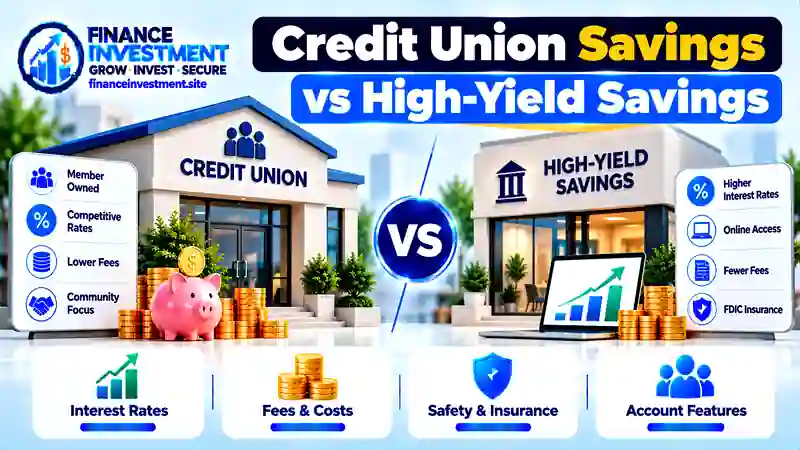
The easiest way to understand this comparison is to separate the institution from the account’s yield. A credit union savings account is offered by a member-owned credit union. You may need to meet the credit union’s membership requirements before opening one.
A high-yield savings account, or HYSA, is a savings account that offers a relatively competitive APY. “High-yield” describes the account’s earning potential, not who owns the institution. A bank or a credit union can offer a high-yield savings account.
For beginners, both can be useful places for money needed in the near term. You might use one for an emergency fund, a planned purchase, or cash you want to keep separate from long-term investments. The practical differences usually come down to APY, fees, minimum balance rules, access, membership requirements, and insurance.
If credit unions are new to you, our complete credit union guide explains membership, services, and how these institutions work.
How Credit Union Savings and High-Yield Savings Work
The basic idea is similar with both accounts: you deposit money, the institution calculates earnings according to the account terms, and you can access your balance subject to its rules. The main differences appear in how the institution is structured, how earnings are described, and what account conditions apply.
How Credit Union Savings Works
A credit union savings account is typically tied to membership. After meeting the credit union’s eligibility requirements, you can open an account under its terms. Credit unions may refer to savings earnings as dividends rather than interest. The dividend rate, APY, minimum balance, fees, and access options vary by institution and account.
How High-Yield Savings Works
A high-yield savings account works much like a regular savings account, but it is marketed around a relatively competitive APY. You deposit funds and earn interest based on the provider’s current terms. The APY is generally variable, so it can change after you open the account.
Benefits and Drawbacks of Credit Union Savings vs High-Yield Savings
Both account types can help you keep short-term money accessible while earning a return. The actual advantages and limitations depend on the institution, account terms, and how you plan to use the money.
Credit Union Savings
Potential benefits:
- Member-owned structure and access to other credit union services.
- Some credit unions provide branch-based or personalized service.
- Some accounts may offer competitive dividends or APYs.
Potential drawbacks:
- Membership eligibility requirements can apply.
- Branch, ATM, and digital access vary by credit union.
- APYs, fees, minimum balances, and other terms differ by account.
High-Yield Savings
Potential benefits:
- May offer a competitive APY compared with some lower-yield savings accounts.
- Online and mobile tools can make account management convenient.
- Can be offered by either a bank or a credit union.
Potential drawbacks:
- APYs can change over time.
- Some accounts may have minimum balance, fee, or other account conditions.
- Branch access may be limited depending on the provider.
Credit Union Savings vs High-Yield Savings: Detailed Comparison
The clearest way to compare these accounts is to look at the actual terms. A credit union savings account describes where the account is offered, while “high-yield” describes the account’s earning potential. The two can overlap, so the institution and account details both matter.
| Factor | Credit Union Savings | High-Yield Savings |
|---|---|---|
| Provider | Offered by a member-owned credit union | Can be offered by a bank or credit union |
| APY | Varies by credit union and account | Varies by provider and account |
| Membership | Eligibility requirements may apply | Depends on the provider; bank accounts generally do not use credit union membership rules |
| Fees | Varies by credit union and account | Varies by provider and account |
| Access | Branch, ATM, phone, and digital options vary | Online, mobile, ATM, and branch access vary by provider |
| Federal insurance | Eligible accounts at federally insured credit unions may have NCUA share insurance | Eligible deposits at FDIC-insured banks may have FDIC insurance; a credit union HYSA follows applicable NCUA share-insurance rules |
| Earnings | May be described as dividends and reported through the account’s APY | Generally earns interest reported through the account’s APY |
What Should You Compare First?
Start with the APY, fees, and minimum balance requirements. Then look at how easily you can deposit, transfer, and withdraw money. If you are considering a credit union, confirm that you qualify for membership and understand the services available to members.
Finally, verify the institution’s applicable federal insurance and coverage rules. Checking these details together gives you a clearer picture than comparing the words “credit union” and “high-yield” by themselves.
Costs, Access, Risks & Practical Tips
The account with the highest APY is not automatically the most useful one. Before opening an account, look beyond the advertised yield and check the costs, access options, and conditions attached to the account.
Costs and Account Rules
Review monthly maintenance fees, minimum balance requirements, and any conditions that affect the account’s APY. Also check the provider’s current terms for transfers, withdrawals, deposits, and other account activity.
Access and Safety
Think about how you normally move money. Depending on the provider, you may have branches, ATMs, online transfers, mobile banking, or other deposit options. Before depositing money, verify whether the institution provides applicable NCUA share insurance or FDIC deposit insurance.
Practical Tips Before You Open
- Compare the APY with the account’s fees and requirements.
- Confirm the institution’s applicable federal insurance and coverage rules.
- Make sure deposits, transfers, and withdrawals are convenient for your needs.
- Recheck the account terms when rates, fees, or your savings goals change.
Common Mistakes to Avoid
A savings account can have an attractive APY and still include terms that do not fit your needs. A few simple checks can help you make a more complete comparison.
- Looking only at APY: Compare the yield with fees, minimum balances, and other account conditions.
- Overlooking membership rules: A credit union may require you to meet specific eligibility requirements.
- Assuming every HYSA is online-only: A high-yield savings account can be offered by a bank or credit union, with access options that vary.
- Skipping the insurance check: Confirm the institution’s applicable federal insurance before placing a large balance in the account.
- Forgetting that APYs can change: Savings rates are generally variable, so the advertised APY can change after you open the account.
Real-Life Example
Illustrative example: Suppose a family has $15,000 set aside as an emergency fund. Account A offers a higher current APY, while Account B offers a different APY along with branch access that is more convenient for the family.
Instead of comparing the APYs alone, the family reviews fees, minimum balance requirements, insurance, transfer options, and access. They can then weigh the account terms against how they actually expect to use the emergency fund.
Who Should Choose Which?
The right account depends on how you plan to use your savings. Consider your access needs, credit union eligibility, desired yield, fees, and the services you expect from the provider.
Consider Credit Union Savings If…
- You qualify for membership and want to use the credit union’s other financial services.
- Branch, ATM, phone, or local service options are important to you.
- The credit union’s APY, fees, minimum balance, and account rules work for your savings goals.
Consider a High-Yield Savings Account If…
- The account’s APY is an important factor in your savings comparison.
- You are comfortable managing your savings through online or mobile banking.
- The provider’s fees, access options, insurance, and other terms meet your needs.
Credit Union Savings vs High-Yield Savings: FAQs
1. Is a credit union savings account the same as a high-yield savings account?
No. A credit union savings account describes an account offered by a credit union, while high-yield savings describes an account offering a relatively competitive APY. A credit union can also offer a high-yield savings account.
2. Can a credit union offer a high-yield savings account?
Yes. “High-yield” describes the account’s earning potential. It does not identify a separate type of financial institution.
3. Are credit union savings accounts NCUA insured?
Eligible shares at federally insured credit unions may be covered by NCUA share insurance, subject to applicable coverage rules and limits.
4. Are high-yield savings accounts FDIC insured?
An eligible HYSA offered by an FDIC-insured bank may be covered by FDIC deposit insurance, subject to applicable rules and limits. If the account is offered by a credit union, NCUA share-insurance rules may apply instead.
5. Do credit union savings accounts pay interest?
Credit unions generally describe earnings on savings shares as dividends rather than interest. The dividend rate and APY depend on the credit union and the account’s current terms.
6. Can a high-yield savings APY change?
Yes. Savings APYs are generally variable, so the rate can change after you open the account.
7. Which is safer: credit union savings or a HYSA?
The account label alone does not determine safety. Check the institution’s insurance status, the type of account, and the applicable coverage rules. Eligible bank deposits may have FDIC insurance, while eligible shares at federally insured credit unions may have NCUA share insurance.
8. Can I have both a credit union savings account and a HYSA?
Yes. You can use separate savings accounts for different purposes. Compare each account’s APY, fees, access, insurance, and other terms.
Final Verdict: Credit Union Savings vs High-Yield Savings
The comparison comes down to the specific account, not simply the label. A credit union savings account and a high-yield savings account can have different APYs, fees, access options, membership requirements, and account conditions.
For a meaningful comparison, review the current APY, fees, minimum balance requirements, transfer and withdrawal options, customer access, and applicable federal insurance. Also remember that a high-yield savings account can be offered by either a bank or a credit union.
If you are still learning how credit unions work, our complete guide to credit unions explains membership, services, and the basic structure of these financial institutions.

 If Treasury bills are new to you, begin with the goal rather than the security. Write down what you are saving for, the amount you expect to need, and roughly when you expect to spend it. Once those three pieces are clear, you can decide whether a T-bill fits the timeline.
 Start with the goal rather than the account. Maybe you’re saving for a car, a home project, tuition, a vacation, or another expense you expect to pay within the next few months or years. Write down the amount you need and the date you expect to use it. That simple step gives you a clear target for the rest of your decision.
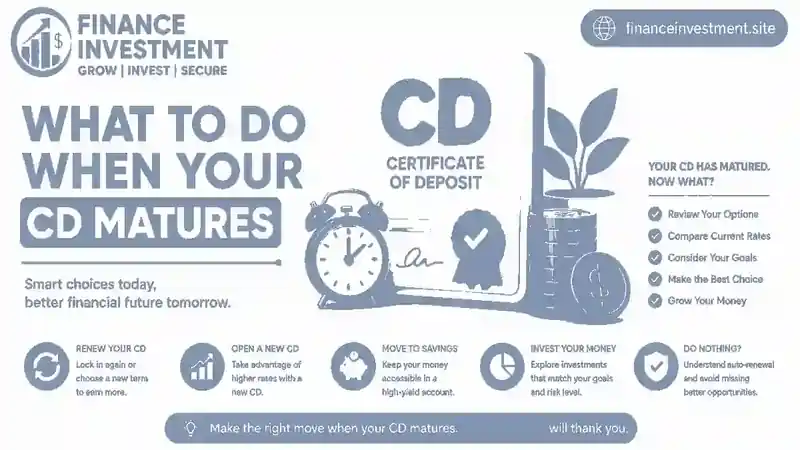 When your CD reaches maturity, you do not need to make the next decision blindly. A simple review of the account notice, available dates, and your current cash plans can help you move the money deliberately instead of reacting at the last minute.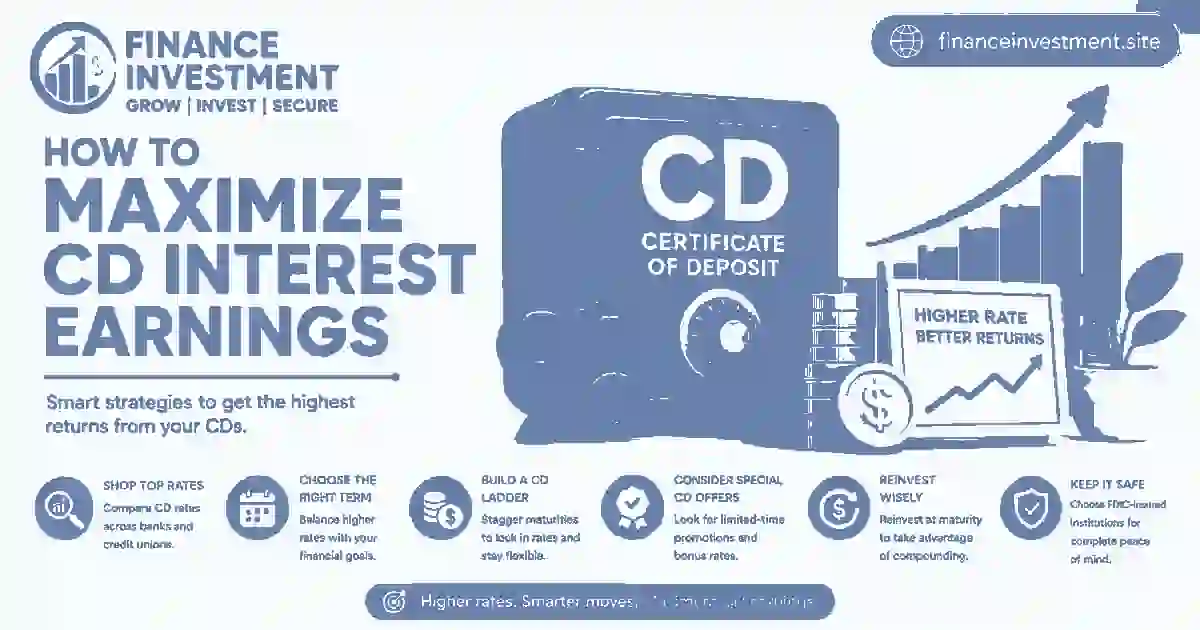
 If you are opening your first CD, start with the money itself rather than the advertised rate. Decide what the funds are for, when you might need them, and how much can remain untouched. That gives you a practical limit for the CD before you begin comparing offers.
 Once you know which money is available for longer-term saving, the next job is turning that balance into actual certificates. The process is straightforward: decide how much to commit, choose the number of CDs, select terms, divide the money, and set reminders for every maturity.