Tag: Banking Security

  • Bank Transfer vs. Payment Apps: 9 Key Differences (2026)

    Bank Transfer vs. Payment Apps: 9 Key Differences (2026)


    Bank-to-Bank Transfer vs. Payment Apps: 9 Key Differences to Help You Choose

    SR
    Subhash Rukade
    Founder, FinanceInvestment
    Published: November 2, 2026
    Last Updated: November 2, 2026
    Reading Time: 11 minutes

    Bank-to-Bank Transfer vs. Payment AppsBank-to-Bank Transfer vs. Payment Apps: Which Is Better for Your Money?

    Sending money in the United States is easier than ever. You can move funds directly between bank accounts, pay someone through a mobile payment app, or use a bank-connected service such as Zelle. Although these options may seem similar, they do not always handle your money in the same way.

    When comparing bank-to-bank transfers vs. payment apps, speed is only one part of the decision. Fees, transfer limits, where your money is held, fraud protection, and the possibility of recovering a mistaken payment can matter just as much.

    For example, a direct bank transfer may be more suitable for moving a larger amount between your accounts, while an app may be convenient for splitting a restaurant bill or paying someone you know. However, the best choice depends on the payment amount, recipient, and level of protection you need.

    This guide examines nine important differences to help you make an informed decision. If you want to understand the wider range of payment methods first, read our complete guide to bank transfers and payments.

    What You’ll Learn

    • How direct bank transfers differ from app-based payments.
    • How transfer speed, fees, and sending limits compare.
    • What happens when you send money to the wrong person or encounter fraud.
    • How deposit insurance and payment protections may differ.
    • Which payment method makes sense for different financial situations.

    Quick Answer: Bank Transfers vs. Payment Apps

    Bank-to-bank transfers are often suitable for moving money between your own accounts, paying larger amounts, and handling regular financial transactions. Payment apps such as Venmo and Cash App can make everyday payments between individuals more convenient. Bank-connected services such as Zelle work differently by transferring money directly between participating bank accounts. The best option depends on the amount, timing, fees, recipient, and protections available.

    Key Takeaways

    • Fees: Standard ACH transfers are often free, while wire transfers and some instant app withdrawals may involve fees.
    • Speed: Transfer timing varies. ACH transfers can take business days, while eligible instant payments may arrive much sooner.
    • Protection: Unauthorized transactions and payments you personally approve to a scammer may receive different treatment.
    • Money storage: Some apps offer stored balances, while Zelle transfers money directly between participating bank accounts.
    • Limits: Banks and payment services apply different sending limits and restrictions.

    Bottom Line

    There is no single best payment method for every situation. Compare the fees, transfer limits, delivery time, and available protections. Always verify the recipient and payment details before sending money.

    Table of Contents

    Bank-to-Bank Transfer vs. Payment Apps: At a Glance

    Here is a quick comparison of direct bank transfers and popular wallet-based payment apps in the United States.

    Quick FactBank-to-Bank TransferPayment Apps
    Common useMoving funds between bank accountsPaying friends and splitting bills
    Transfer speedDepends on ACH, wire, or instant transferApp payments may be quick; withdrawals vary
    Typical feesStandard ACH is often free; wires may cost extraDepends on funding and withdrawal method
    Money storageFunds move between bank accountsSome services provide an app balance
    Sending limitsSet by the bank and transfer methodSet by the app and account status

    Important distinction: Venmo and Cash App can hold an in-app balance. Zelle works differently: it sends money directly between participating bank accounts and does not operate as a stored-value wallet.

    Quick reminder: Neither option is automatically cheaper, faster, or safer in every situation. Check the provider’s current fees, limits, delivery estimates, and protections before sending money.

    Understanding Bank-to-Bank Transfers and Payment AppsBank-to-Bank Transfer vs. Payment Apps

    Before choosing a payment method, understand how each one moves your money. Both allow electronic payments, but they can involve different financial institutions, payment networks, and account arrangements.

    What Is a Bank-to-Bank Transfer?

    A bank-to-bank transfer moves funds electronically between bank accounts. Common U.S. methods include ACH transfers, wire transfers, and internal transfers between accounts at the same bank. ACH is widely used for direct deposits, bill payments, and routine transfers. Wire transfers are commonly used when a bank payment needs to be processed more quickly, particularly for larger transactions. Fees, processing times, and eligibility depend on the bank and transfer type.

    What Are Payment Apps?

    Services such as Venmo and Cash App let people send and receive money through a mobile interface. Depending on the service and transaction, payments may use a linked bank account or debit card. Some services also let users keep money in an app balance before withdrawing it to a bank account. Funding and withdrawal methods can have different fees and processing times.

    Where Does Zelle Fit In?

    Zelle is a bank-connected payment network, not a stored-value wallet like Venmo or Cash App. It sends money directly between eligible accounts at participating U.S. banks and credit unions. Its standalone app stopped supporting payments on April 1, 2025; consumers generally access Zelle through their participating financial institution’s banking app or online banking. Read our guide to ACH transfers vs. Zelle for a closer comparison.

    The key distinction: Bank transfers use banking services such as ACH or wires, while wallet-based apps provide an additional payment interface and may hold a separate balance. Knowing how each option handles your funds helps you compare them more confidently.

    How Bank Transfers and Payment Apps Work

    Both methods move money electronically, but the payment journey is different. Understanding what happens after you press the send button helps explain why delivery times and account balances can vary.

    How a Bank-to-Bank Transfer Works

    1. You select the receiving bank account and enter the required payment details.
    2. Your bank submits the transaction through the selected payment method, such as ACH or a wire transfer.
    3. The payment network processes the instructions, and the receiving bank credits the recipient’s account according to its processing and availability rules.

    For ACH payments, the sending bank submits payment instructions through the ACH Network. The network routes them to the receiving financial institution. Depending on eligibility and processing schedules, an ACH payment may settle the same day or on a later banking day.

    How a Payment App Works

    1. You select a recipient using their username, phone number, or another supported identifier.
    2. You choose an available funding source, such as a linked bank account, debit card, or app balance.
    3. The service processes the payment and credits the recipient’s app balance or, with bank-connected services such as Zelle, their enrolled bank account.

    For example, a Venmo payment generally appears in the recipient’s Venmo account. Moving that balance to a bank account is a separate transaction, with standard and instant transfer options subject to different timing and fees.

    To understand how transfers within the same bank differ from transfers to another institution, read our guide to internal vs. external bank transfers.

    Benefits and Drawbacks of Bank Transfers and Payment Apps

    Both payment methods offer convenience, but their advantages and limitations depend on how you send money, where funds are held, and what happens if a transaction goes wrong.

    Bank Transfers: Pros

    • Useful for moving funds between your own accounts.
    • Standard ACH transfers are often a low-cost option.
    • Eligible deposits at insured banks and credit unions receive federal deposit protection within applicable limits.

    Bank Transfers: Cons

    • Some ACH transfers take more than one business day.
    • Wire transfers may involve sending and receiving fees.
    • Incorrect or authorized fraudulent payments may be difficult to recover.

    Payment Apps: Pros

    • Convenient for everyday person-to-person payments.
    • Simple recipient selection through supported app details.
    • Some services provide quick payment notifications and transfer options.

    Payment Apps: Cons

    • Instant withdrawals may involve additional fees.
    • Stored balances may not automatically qualify for FDIC or NCUA insurance.
    • Payments sent to scammers or unintended recipients may be difficult to recover.

    Important protection distinction: FDIC insurance generally protects eligible deposits if an insured bank fails. It does not reimburse ordinary payment mistakes or scam losses. Some app balances may qualify for pass-through insurance when specific legal and recordkeeping requirements are satisfied. See the FDIC’s explanation of third-party banking arrangements.

    Bottom line: Compare convenience, costs, account protections, and recovery options before choosing either method. Never send money without verifying the recipient and payment details.

    9 Key Differences Between Bank-to-Bank Transfers and Payment Apps
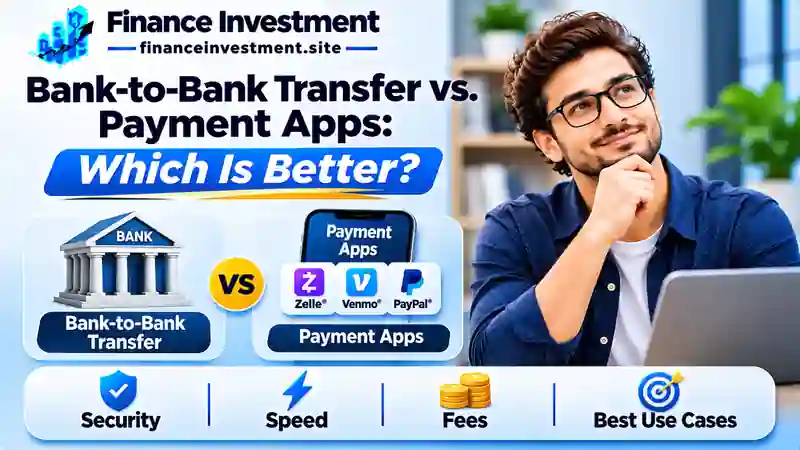
    Both methods move money electronically, but they differ in how payments are processed, where funds are held, and what happens when something goes wrong. This comparison focuses on direct bank transfers and wallet-based apps such as Venmo and Cash App. Zelle is explained separately where relevant.

    Key DifferenceBank-to-Bank TransferWallet-Based Payment Apps
    1. How money movesUses bank payment systems such as ACH, wire transfers, or internal transfers.Uses an app’s payment service and an eligible funding source. Zelle instead transfers directly between participating bank accounts.
    2. Where money sitsFunds are debited from and credited to bank accounts.Some apps maintain a separate customer balance; others process payments through linked accounts or cards.
    3. Transfer speedDepends on the method, bank processing schedule, and eligibility for faster services.Payments may arrive quickly, but withdrawing an app balance can take additional time.
    4. FeesStandard ACH is often free; wire and certain expedited transfers may cost extra.Fees depend on the app, funding source, and withdrawal method.
    5. Sending limitsDetermined by the bank, account, and transfer method.Determined by the provider, account verification, and transaction history.
    6. Reversals and errorsCertain ACH errors may be corrected or returned; completed wire transfers can be difficult to recall.Completed person-to-person payments are often difficult to cancel or recover, although reporting options may exist.
    7. Fraud protectionLegal protections depend on the transaction, account, and whether the transfer was authorized.Unauthorized transactions and payments personally approved after a scam can receive different treatment.
    8. Deposit insuranceEligible deposits at FDIC-insured banks receive coverage within applicable limits.App balances are not automatically insured. Qualifying pass-through arrangements may provide coverage if FDIC requirements are met.
    9. Privacy and convenienceUsually managed through banking interfaces and account details, with transaction records maintained by the bank.Often uses usernames or phone numbers; payment visibility depends on the app’s privacy settings.

    Important: Zelle is a bank-connected payment network, not a stored-value wallet. It sends money directly between eligible accounts at participating banks and credit unions.

    What this means: Neither method is automatically cheaper, safer, or faster in every situation. Compare the payment method, funding source, recipient, and protections before sending money. For another focused comparison, read our bank transfer vs. payment guide.

    Consumer protection resources: Read the CFPB’s payment-app balance guidance, the FDIC’s explanation of third-party banking arrangements, and the FTC’s advice on recovering money after a scam.

    Bank Transfer Fees, Risks and Expert Tips

    A payment that appears free may still involve other charges. Before sending money, compare the total cost, processing time, and risks associated with your chosen method.

    Understand the Transfer Costs

    Standard ACH transfers are often free, while domestic or international wires may involve sending, receiving, or intermediary bank fees. Payment apps may charge for instant withdrawals or certain funding methods. Check the provider’s fee schedule before confirming. Explore our guides to bank transfer fees and bank transfer limits.

    Reduce Payment Risks

    • Verify the recipient’s identity and payment details independently.
    • Never act on unexpected urgent payment requests without confirming them.
    • Use strong passwords, multifactor authentication, and account alerts.
    • Contact your bank and payment provider immediately if you notice suspicious activity or send money to a scammer.

    Expert tip: Understand whether you are authorizing a payment yourself or whether someone else has fraudulently accessed your account. These situations can have different protections under federal electronic-transfer rules. Report suspected unauthorized transfers promptly and request an investigation. Read the CFPB’s Regulation E guidance.

    If you believe you have paid a scammer, contact your bank or payment provider immediately and ask whether the transaction can be stopped or recovered. A refund is not guaranteed, but reporting quickly may improve your options. See the FTC’s recovery steps after a scam.

    Common Mistakes When Choosing a Bank Transfer or Payment App

    Choosing a convenient payment method is only half the job. Small oversights involving recipient details, fees, or security can create expensive problems.

    Common Payment Mistakes

    • Not verifying the recipient: A similar username, phone number, or incorrect account detail can send money to the wrong person.
    • Overlooking extra fees: Instant withdrawals, card funding, and wire transfers may cost more than expected.
    • Assuming payments can always be reversed: Completed wires and person-to-person app payments can be difficult to recover.
    • Ignoring how app balances are protected: Understand where your money is held and whether applicable FDIC pass-through requirements are satisfied.
    • Responding to urgent payment requests: Scammers may impersonate relatives, banks, or government agencies to pressure people into sending money.

    Real-Life Examples

    Example 1: Moving $4,000 between personal accounts

    Sarah wants to move savings from one bank to another. She compares ACH processing times with wire fees and chooses the method that meets her deadline without unnecessary costs.

    Example 2: Splitting a $45 restaurant bill

    Michael uses a payment app to request his friend’s share. Before accepting the payment details, he checks that the account belongs to the correct person.

    Safety reminder: Never share one-time banking verification codes with someone who contacts you unexpectedly. Learn how to recognize Zelle scams and protect yourself, and follow our bank account security checklist to strengthen your everyday banking habits.

    Who Should Choose Bank Transfers and Who Should Use Payment Apps?

    There is no single payment method that works best for everyone. Your choice should depend on the recipient, transaction amount, transfer deadline, fees, and available protections.

    Choose Bank-to-Bank Transfers If You:

    • Frequently move money between your own bank accounts.
    • Make rent payments, recurring bill payments, or other account-to-account transactions.
    • Prefer funds to move directly between eligible bank accounts.

    Choose Payment Apps If You:

    • Regularly split restaurant bills or reimburse friends and family.
    • Want a convenient mobile payment experience for supported transactions.
    • Prefer using an app’s supported recipient details instead of manually entering bank account information.

    Practical recommendation: Use the method that fits the payment rather than automatically choosing the fastest option. For larger or unfamiliar transactions, independently verify the recipient, confirm the transfer limits, and review the provider’s fees and recovery policies before sending money.

    Frequently Asked Questions: Bank Transfers vs. Payment Apps

    1. Is a bank transfer better than a payment app?

    It depends on your needs. Bank transfers are useful for moving funds between accounts, while payment apps are convenient for everyday person-to-person payments.

    2. Are payment apps faster than bank transfers?

    Some app payments arrive within minutes. ACH transfers may also settle the same day when eligible, but timing depends on processing schedules and bank policies.

    3. Are bank-to-bank transfers free?

    Standard ACH transfers are often free, but wire transfers and expedited services may involve fees. Check your bank’s current fee schedule.

    4. Can I reverse a payment sent through an app?

    Completed person-to-person payments are often difficult to cancel. Contact the provider immediately if you send money to the wrong person or suspect fraud.

    5. Are payment app balances FDIC-insured?

    Not automatically. Some balances may qualify for pass-through FDIC insurance if specific deposit ownership and recordkeeping requirements are met. This does not insure against the failure of the app company.

    6. Is Zelle considered a payment app?

    Zelle is a bank-connected payment network that sends money directly between participating bank accounts. Its standalone payment app has been discontinued; customers generally access Zelle through participating banks and credit unions.

    7. Which payment method is safer for large transfers?

    Neither method is automatically safer. Verify the recipient, check transfer limits, and independently confirm payment instructions before sending a large amount.

    8. What should I do if I send money to a scammer?

    Contact your bank and payment provider immediately, report the transaction, and ask whether it can be stopped or recovered. A refund is not guaranteed.

    For additional guidance, read the CFPB’s payment-app safety guidance and the FDIC’s explanation of third-party banking apps.


    Final Verdict: Bank-to-Bank Transfer vs. Payment Apps

    There is no universal winner between bank-to-bank transfers and payment apps. The better choice depends on where your money needs to go, how quickly it must arrive, and what fees and protections apply.

    For moving money between your own accounts, paying recurring obligations, or making eligible account-to-account transfers, a bank transfer may be the more practical option. For splitting bills, reimbursing friends, and other everyday payments, wallet-based apps can offer greater convenience. Zelle is another option for eligible bank-connected payments, but it works differently from Venmo and Cash App.

    Our recommendation: Match the payment method to the transaction. Before confirming, verify the recipient, compare the total fees, check transfer limits, and understand the available recovery and fraud protections.

    Want to compare more U.S. payment methods? Explore our complete guide to bank transfers and payments for a broader understanding.

    FINANCEINVESTMENT

    Make Smarter Money Transfer Decisions

    Understanding transfer fees, payment limits, security, and consumer protections can help you make better financial decisions. Choose the payment method that fits your needs, verify every recipient, and stay informed before moving your money.

    Have a question or suggestion?

    We welcome your feedback and questions about personal finance and banking.

    Contact FinanceInvestment

    Continue learning with our Complete Bank Transfers and Payments Guide.

    Thank you for reading FinanceInvestment. Stay informed, protect your money, and make confident financial decisions.

  • How to Set Up Direct Deposit With Your Bank (2026 Guide)

    How to Set Up Direct Deposit With Your Bank (2026 Guide)

    How to Set Up Direct Deposit With Your Bank: A Step-by-Step Guide

    SR
    Subhash Rukade
    Founder, FinanceInvestment

    BANKING GUIDE

    Published: October 31, 2026
    Updated: October 31, 2026
    Reading time: 10 minutes

    how to set up direct deposit

    How to Set Up Direct Deposit With Your Bank

    Learning how to set up direct deposit can make getting paid easier, whether you have started a new job, want to stop handling paper checks, or receive regular government benefits. Instead of depositing a physical check yourself, your employer or benefit provider can send the money electronically to your eligible checking or savings account.

    The enrollment process is usually simple, but accuracy matters. Your payroll department may ask for your bank’s routing number, account number, account type, and a completed direct deposit form. Entering incorrect information or missing your employer’s payroll deadline could delay your first deposit.

    In this guide, you’ll learn how to gather your banking details, choose where your money should go, complete the enrollment process, and confirm that your first payment arrives. For a broader understanding of electronic payments, you can also explore our Bank Transfers and Payments Guide.

    What You’ll Learn

    • How to find your bank routing number and account number.
    • How to complete a direct deposit form or enroll through your employer’s payroll portal.
    • Whether to deposit your paycheck into checking, savings, or both.
    • How to verify your enrollment and prepare for your first deposit.
    • What to check if your expected direct deposit does not arrive.

    Quick Answer: How Do You Set Up Direct Deposit?

    To set up direct deposit, get your bank’s routing number and account number, then complete the enrollment process provided by your employer or benefit agency. Choose the eligible checking or savings account where you want the money deposited, enter the requested details, and review everything before submitting the form. Depending on the payer, you may need to provide a direct deposit form, a voided check, or other account verification. Ask when the change will take effect so you know whether your first payment will arrive by direct deposit or another method.

    Key Takeaways

    • Gather the correct bank details: You will generally need your routing number, account number, and account type.
    • Follow the payer’s enrollment process: Employers and government agencies may have different forms, portals, and verification requirements.
    • Choose your deposit account: You may be able to use checking, savings, or split your payment between eligible accounts.
    • Allow time for processing: If you miss a payroll cutoff, your first payment may still arrive through your previous payment method.
    • Confirm the effective date: Check with payroll or the benefit provider before assuming the new account is active.

    Security reminder: Never give your online banking password or one-time verification code to someone claiming to enroll you in direct deposit. Use your employer’s verified payroll system or your benefit provider’s official website.

    Direct Deposit at a Glance

    Direct deposit allows an employer, government agency, or another eligible payer to send money electronically to your bank account. Before enrolling, review these essential details to understand what you need and how the process generally works.

    What it meansAn electronic payment sent directly to an eligible bank account.
    Common usesEmployer paychecks, Social Security benefits, and other eligible government payments.
    Information neededBank routing number, account number, and account type.
    Where to enrollEmployer payroll portal, HR department, or the relevant benefit agency.
    Activation timeVaries by payer, account verification, submission date, and payroll or payment schedule.

    Best for: Employees, retirees, and benefit recipients who receive regular payments and prefer automatic deposits over paper checks. Enrollment requirements and eligible account types depend on the organization sending the money.

    Complete Beginner’s Guide to Setting Up Direct Deposithow to set up direct deposit

    Setting up direct deposit is generally straightforward once you have the correct bank information and know how your employer or payment provider handles enrollment. Follow these steps to prepare your details and avoid common setup problems.

    1. Choose the Bank Account for Your Deposit

    Decide whether you want your money deposited into a checking or savings account. Checking is useful for everyday purchases, bills, and automatic payments, while savings can help you set aside money for future goals. If your employer supports split deposits, you may be able to direct specific amounts or percentages into more than one eligible account.

    2. Find Your Routing and Account Numbers

    Locate your details through your bank’s official app, online banking account, statement, or direct deposit form. Confirm that you are using the correct routing number for ACH deposits. Some banks use different routing numbers for ACH and domestic wire transfers, so do not assume they are interchangeable.

    3. Complete Your Direct Deposit Enrollment

    Follow your employer’s verified payroll portal instructions or request an enrollment form from HR. Enter your legal name, account number, routing number, account type, and any requested deposit allocation. Provide a voided check or bank verification document only if your employer requires it.

    4. Submit and Verify the Setup

    Double-check every detail before submitting your information. Ask payroll when the change is expected to take effect and whether your next paycheck will use the new account. After that payment date, check your bank account and pay stub. Keep your existing payment arrangement in place until the first direct deposit is successfully confirmed.

    How Direct Deposit Works Behind the Scenes

    Most U.S. payroll direct deposits are processed through the Automated Clearing House (ACH) network, an electronic payment system used by banks and credit unions. After your enrollment is accepted, your employer or payroll provider uses your banking information to prepare and initiate the payment to your account.

    How the Direct Deposit Process Works

    Step 1 — Payroll calculation: Your employer calculates your gross pay, taxes, other deductions, and final take-home pay.
    Step 2 — Payment initiation: The employer or payroll provider submits the ACH payment instructions through its financial institution.
    Step 3 — ACH processing: The ACH network processes and routes the payment information to the receiving bank or credit union.
    Step 4 — Deposit to your account: Your financial institution processes the incoming credit and makes the funds available according to applicable rules and its processing schedule.

    Direct deposit does not always mean instant access to money. The payment’s effective date, payroll submission deadline, weekends, federal holidays, and bank processing schedules can affect when funds become available. Some banks offer early direct deposit by making eligible payroll payments available before the scheduled payday, but this is a bank-specific feature rather than a guaranteed ACH delivery time.

    To understand the payment network in more detail, read our guide on how ACH transfers work.

    Benefits and Drawbacks of Direct Deposit

    Direct deposit can simplify how you receive regular income, but it also comes with a few limitations. Understanding both sides can help you decide whether it suits your banking and payment needs.

    Benefits

    • Convenience: Eligible payments go directly into your account without requiring a branch visit or check deposit.
    • Payment planning: A regular deposit schedule can make budgeting and bill management easier.
    • Less paperwork: You do not need to handle, carry, or deposit a physical paycheck.
    • Flexible allocation: Some employers allow you to divide your paycheck between multiple eligible accounts.

    Drawbacks

    • Enrollment delays: Missing a payroll cutoff or completing verification late may delay activation.
    • Incorrect account details: A wrong routing or account number can cause a rejected or misdirected payment.
    • Account access issues: Bank outages, account restrictions, or account closures may affect access to deposited funds.
    • Payment schedule limitations: You depend on the payer’s processing schedule and your bank’s funds-availability policies.

    Practical takeaway: Direct deposit is useful for people who want regular payments handled electronically. Protect your banking information, review incoming deposits, and know whom to contact if a payment is delayed or sent to the wrong account.

    Direct Deposit Setup Methods Compared

    Your employer or payment provider determines which enrollment methods are available. Some organizations use online payroll systems, while others accept paper forms or bank-provided documents. Here is how the common options compare.

    Setup methodHow it worksBest suited for
    Employer payroll portalLog in to your employer’s verified payroll system, enter your bank details, and submit the enrollment request.Employees with access to online payroll services.
    Paper direct deposit formComplete the official form with your banking information and return it to the designated HR or payroll department.Employees whose workplace uses paper-based enrollment.
    Bank-provided form or assistanceObtain a prefilled direct deposit form or account details from your bank, then submit the required information through your payer’s approved process.People who need help locating or confirming their banking information.

    Which method should you choose? An employer’s secure payroll portal is often convenient when available. If your workplace accepts paper enrollment, request its official form. A bank-provided form can help supply accurate account details, but it does not necessarily complete enrollment on your behalf. Always follow the payer’s instructions and use a verified submission channel.

    Direct Deposit Costs, Risks, and Expert Tips

    Standard payroll direct deposits into eligible bank accounts generally do not carry a separate fee for receiving the payment. However, your bank account may have maintenance charges, balance requirements, or fees for optional services. Understanding these details and protecting your enrollment information can help prevent avoidable problems.

    Potential Banking Costs

    • Monthly maintenance fees: Some checking or savings accounts charge a fee unless you meet specific waiver conditions.
    • Minimum balance requirements: Certain accounts require a minimum balance to avoid charges.
    • Optional service fees: Other banking services may carry separate charges under your account agreement.

    Risks to Watch For

    • Incorrect bank details: A wrong routing or account number can cause a deposit to be rejected or potentially credited to an unintended account.
    • Payroll impersonation scams: Fraudulent emails or messages may try to trick you into changing direct deposit details.
    • Last-minute account changes: Updates submitted after payroll processing begins may not apply to the upcoming payment.

    Expert Tips for Safer Direct Deposit Setup

    • Verify your routing and account numbers through your bank’s official app, website, or account documents.
    • Submit enrollment changes only through your employer’s verified payroll portal or an authorized HR contact.
    • Confirm unexpected requests to change payroll details through a trusted contact method, not by replying to the suspicious message.
    • Never share your online banking password or one-time security code to complete enrollment.
    • Check your pay stub and bank activity after the expected deposit date.

    Common Direct Deposit Mistakes and How to Avoid Them

    Even a small mistake during enrollment can create problems with your first paycheck. Before submitting your direct deposit details, watch for these common errors:

    • Using the wrong routing number: Check that the number is intended for ACH deposits, not a different banking transaction.
    • Entering an incorrect account number: Compare every digit with your bank’s official account information.
    • Missing the payroll cutoff: Submit your enrollment early and ask when the change will become effective.
    • Selecting the wrong account type: Confirm whether your destination account is checking or savings.
    • Skipping confirmation: Do not assume enrollment is active until your payroll department confirms it.

    Real-Life Example: An Incorrect Account Number

    Imagine a new employee submits a direct deposit form but accidentally enters one incorrect digit in the account number. Depending on the details and receiving bank, the payment could be rejected, delayed, or credited to an unintended account. Once the employee notices the missing paycheck, the right step is to contact payroll immediately, confirm the payment status, and ask about the correction process. If the payment was sent to an unfamiliar account, the employee should also contact the bank promptly.

    What to remember: Verify your routing number, account number, and account type before submitting the form. After enrollment, confirm the effective date and monitor your first expected deposit.

    Who Should Set Up Direct Deposit?

    Direct deposit can suit different people depending on how they receive regular income and manage their bank accounts. It may be particularly useful for:

    • Employees: People who receive regular wages and want their paychecks sent directly to their bank accounts.
    • Retirees: Individuals receiving eligible Social Security or pension payments electronically.
    • Government benefit recipients: People who receive eligible federal payments and want an electronic payment option.
    • Families managing household finances: People who want to organize incoming income across checking and savings accounts, where split deposits are supported.
    • People starting a new job: Employees who want to arrange payroll deposits before their first payday.

    Who may need another option? People without an eligible bank account or those whose payment provider does not support direct deposit may need an alternative payment method. Check the payer’s requirements before enrolling.

    Frequently Asked Questions About Setting Up Direct Deposit

    1. What information do I need to set up direct deposit?

    You generally need your bank’s routing number, account number, account type, and the enrollment information requested by your employer or payment provider. Some organizations may also require a voided check or another form of account verification.

    2. Can I set up direct deposit online?

    Yes. Many employers allow employees to enroll through a secure payroll portal. Government agencies and other payment providers may also offer online enrollment through their official websites.

    3. How long does direct deposit take to start?

    It depends on the payer’s verification process and payment schedule. If you submit your information after the payroll cutoff, your next paycheck may still use your previous payment method. Ask payroll when the new instructions become effective.

    4. Can I use a savings account for direct deposit?

    Often, yes. However, your employer or payment provider must support the account type, and your bank must be able to receive the payment. Confirm your account details before submitting the enrollment form.

    5. Do I need a voided check to set up direct deposit?

    Not necessarily. Many employers accept online enrollment or a bank-provided direct deposit form. Provide a voided check only if your employer specifically requests one.

    6. Can I split my paycheck between two bank accounts?

    Some employers allow you to divide your paycheck between multiple eligible accounts using fixed dollar amounts or percentages. The available options depend on your employer’s payroll system.

    7. Is direct deposit free?

    Receiving a standard payroll direct deposit is generally free. However, your bank may charge separate monthly maintenance or optional service fees under your account agreement.

    8. What should I do if my direct deposit does not arrive?

    Check your pay stub and bank account first. Contact your payroll department or payment provider to confirm whether the payment was submitted, rejected, delayed, or sent to another account. If the money may have gone to an unintended account, contact your bank promptly as well.

    Final Verdict: Is Direct Deposit the Right Choice for You?

    For most people who receive regular eligible payments, direct deposit is a convenient alternative to paper checks. The key is not simply completing the enrollment form but making sure your banking details are accurate and your payment provider has accepted the change. Taking a few minutes to verify your information and confirm the effective date can help prevent avoidable payday problems.

    If you are comparing direct deposit with other electronic payment options, our Bank Transfers and Payments Guide explains how different bank payment methods fit into everyday financial transactions.

    Our final advice: Use an official enrollment channel, double-check your routing and account numbers, and verify your first deposit. A careful setup can make managing regular income simpler without relying on paper checks.

    Take the Next Step Toward Smarter Banking

    Setting up direct deposit can simplify how you receive regular payments. Keep your banking details accurate, follow your payer’s enrollment instructions, and explore more practical personal finance guides from FinanceInvestment.

    Clear information. Confident decisions. Smarter personal finance.

  • Bank Transfer vs. Payment: Key Differences Explained

    Bank Transfer vs. Payment: Key Differences Explained

    FinanceInvestment
    Straightforward guidance for everyday money decisions

    Bank Transfer vs. Payment: What’s the Difference?

    Written by
    Subhash Rukade
    Publish date: October,  25,  10.
    FinanceInvestment

    Learn how bank transfers differ from payments, how common methods work, and what to consider before sending money.

    Bank Transfer vs. Payment: Understanding the Differencebank transfer vs payment

    When comparing bank transfer vs. payment, remember that a transfer describes moving money between accounts, while a payment means giving money to settle a purchase, bill, or obligation. The terms can overlap: paying a bill from your checking account may involve a bank transfer behind the scenes.

    For example, moving savings to another bank is a transfer. Paying for groceries with a debit card is a payment. Sending rent to a landlord is a payment that may use an electronic transfer. Knowing the difference helps you compare fees, understand processing times, and choose a method that fits the situation.

    For a wider overview, start with our
    guide to bank transfers and payment methods.
    This article takes a closer look at how the terms differ and when they overlap.

    What You’ll Learn

    • How transfers and payments differ—and where they overlap.
    • Where ACH, wire transfers, debit cards, and payment apps fit in.
    • How to compare fees, timing, and recipient details.
    • How to recognize common payment risks and make informed choices.

    QUICK ANSWER

    Bank Transfer vs. Payment: The Short Answer

    A bank transfer moves money between accounts; a payment settles a purchase, bill, or obligation. One transaction can do both—for example, paying a bill through your bank using ACH. Choose a method based on the recipient, urgency, fees, and available options.

    Key Takeaways

    • ACH is commonly used for routine electronic bank transactions.
    • Wire transfers may suit urgent or wire-required payments, but fees can apply.
    • Debit cards are mainly used to pay merchants, not transfer funds between your own accounts.
    • Payment apps can simplify eligible person-to-person payments.
    • Fees, limits, and delivery times depend on the bank or service.
    • Check the recipient details before authorizing a transaction.

    Bottom Line

    Match the method to the purpose, cost, timing, and recipient requirements.

    Bank Transfer vs. Payment at a Glance

    A transfer describes how money moves; a payment describes what the money is for. One transaction can be both, such as paying a bill through your bank.

    Bank Transfer
    Moves funds

    Example: moving savings between your bank accounts.

    Payment
    Pays for something

    Example: paying rent, a utility bill, or a store.

    On a small screen, swipe horizontally to see every column.

    FeatureBank TransferPayment
    PurposeMove money between accountsSettle a purchase or obligation
    ExamplesACH or wire transferDebit card, bill, or app payment
    FeesDepend on the bank and methodDepend on the provider and method
    TimingVaries by transfer typeVaries by payment method

    Quick Take

    Start with the purpose of the transaction, then compare the available methods, fees, delivery estimates, and recipient requirements.

    A Beginner’s Guide to Bank Transfers and Paymentsbank transfer vs payment

    In U.S. banking, a transfer describes how money moves, while a payment describes what the money is for. The same transaction can be both. Your bank statement may label activity as a transfer, bill payment, card purchase, or electronic withdrawal, depending on how it was processed.

    Three Everyday Examples

    Moving Savings

    Moving $500 from checking at one bank to savings at another is a bank transfer.

    Paying Rent

    Paying your landlord is a payment. Your bank may send the money electronically or mail a check.

    Buying Groceries

    A debit-card purchase is a payment, usually processed through a card network.

    Where ACH and Wire Transfers Fit In

    ACH is a U.S. electronic network used for transactions such as direct deposits, bill payments, and bank transfers. Wire transfers use wire networks and may suit urgent or high-value transactions. Fees, availability, and processing times depend on the provider and transfer details.

    Beginner Tip

    Check the recipient’s details, fees, and expected delivery time before authorizing a transaction. A confirmation screen does not necessarily mean the money has arrived.

    How Bank Transfers and Payments Work

    A typical electronic transaction has three stages: authorization, processing, and completion. The exact steps depend on whether you use an ACH transfer, wire transfer, debit card, or payment service.

    STEP 1

    Authorize

    Enter the amount and recipient details, review any fee, and approve the transaction through your bank or payment provider.

    STEP 2

    Process

    The relevant bank or payment network handles the transaction according to its rules, checks, and processing schedule.

    STEP 3

    Complete

    The payment or transfer reaches the applicable completion stage. When funds become available depends on the method and provider.

    Why Processing Times Differ

    ACH transfers may take longer than some faster electronic payment options. Wire transfers have their own deadlines and processing rules, while a debit-card authorization can appear before final settlement. Cutoff times, weekends, holidays, and provider policies can also affect timing.

    Before You Send Money

    Double-check the recipient, account details, and amount. For an unexpected request, verify it using a trusted contact method before authorizing the transaction.

    How Bank Transfers and Payments Work

    An electronic transaction generally involves authorizing the transaction, processing it through the relevant bank or payment network, and completing the transfer or payment. The exact process depends on the method you choose.

    STEP 1

    Authorize

    Enter the amount and recipient details, review any fee, and approve the transaction through your bank or payment provider.

    STEP 2

    Process

    The transaction is routed and handled under the relevant network’s rules. Processing may include verification and other required checks.

    STEP 3

    Complete

    The transaction progresses to completion, and the recipient’s access to the funds depends on the payment method and provider.

    Why Processing Times Differ

    ACH transfers follow ACH network processing schedules, while wire transfers have separate deadlines and procedures. Debit-card transactions may show a pending authorization before final settlement. Bank cutoff times, weekends, holidays, and provider policies can affect when a transaction is completed or funds become available.

    Before You Send Money

    Verify the recipient’s details and the amount before approving a transaction. If a payment request is unexpected, contact the person or organization through a trusted, independently verified channel.

    Benefits and Drawbacks of Bank Transfers and Payments

    Bank transfers and payment methods offer convenience, but the right choice depends on your purpose, timing, fees, and risk tolerance.

    Benefits

    • Move money electronically without handling cash.
    • Use ACH for many direct deposits, bills, and recurring transfers.
    • Use cards or payment apps for convenient purchases and eligible person-to-person payments.
    • Choose wire transfers when their features and timing fit the transaction.

    Drawbacks

    • Fees and transfer limits vary by provider and method.
    • Processing and fund availability may take longer than expected.
    • Incorrect recipient details can cause delays or misdirected funds.
    • Scam payments may be difficult to recover, even when you contact your provider quickly.

    Before You Choose

    Compare fees, delivery estimates, limits, and applicable protections. Verify the recipient independently, and contact your bank or payment provider immediately if you suspect fraud.

    Bank Transfer vs. Payment: A Side-by-Side Comparison

    ACH and wire transfers are ways to move money between accounts. Debit cards and payment apps are commonly used to make payments, although an app may rely on a bank transfer or another payment network behind the scenes. Compare the options by purpose, timing, and cost—not by speed alone.

    Common U.S. transfer and payment options
    OptionTypical UseTimingCost
    ACH transferDirect deposits, bills, recurring transfersDepends on processing schedules and serviceBank or service fees may apply
    Wire transferCertain urgent or high-value transfersMay arrive the same business day; deadlines and checks matterSending or receiving fees may apply
    Debit cardIn-store and online purchasesAuthorization is often quick; settlement occurs laterCosts depend on account and transaction terms
    Payment appEligible person-to-person payments or purchasesApp payments and withdrawals to a bank may have different timelinesFees depend on the app, funding source, and transaction

    Timing, fees, limits, and dispute options vary by provider and transaction type. Review the applicable terms before authorizing a transaction.

    Which Option Fits Your Needs?

    ACH is commonly used for recurring bills and direct deposits. Debit cards suit many everyday purchases. A wire transfer may fit a transaction requiring that network’s capabilities. Before using a payment app, verify the recipient and understand the provider’s cancellation and dispute policies.

    Costs, Risks, and Tips for Safer Transactions

    The cost and risk of sending money depend on the payment method, provider, and transaction details. Compare fees, delivery estimates, and available protections before choosing an option.

    Understand the Possible Fees

    • ACH transfers: Many common transactions have no customer fee, but charges depend on the bank, account, and service.
    • Wire transfers: Domestic or international wires may involve sending, receiving, or intermediary-bank fees.
    • Cards and payment apps: Fees can vary by funding source, transaction type, and whether you choose an instant transfer.

    Recognize the Risks

    Incorrect recipient details can delay a transaction or send money to the wrong account. Scammers may impersonate banks, landlords, relatives, or businesses and pressure you to pay urgently. Some authorized transactions are difficult to reverse, so verify unexpected requests before sending money.

    Review these guides to learn about payment app scams and strengthen your account with this bank account security checklist.

    Before You Send Money

    • Confirm the recipient, account details, and amount.
    • Check fees, limits, and estimated delivery time.
    • Verify unexpected requests using a trusted contact method you find independently.
    • Enable transaction alerts and contact your bank immediately if you suspect fraud.

    Common Mistakes When Sending Money

    Rushing a transaction can lead to avoidable costs, delays, or financial loss. Before sending money, check these common mistakes.

    1. Selecting the Wrong Recipient

    A wrong account detail, phone number, or saved contact can direct a payment to the wrong person. Confirm the recipient and transaction details before authorizing it.

    2. Overlooking Fees and Timing

    Ignoring service fees, transfer limits, cutoff times, or estimated delivery can lead to unexpected costs or late payments.

    3. Trusting Urgent Payment Requests

    Scammers may impersonate a bank, landlord, relative, or business and pressure you to act quickly. Verify unexpected requests using contact details you already trust or independently obtain.

    Illustrative Example: A Rent Payment

    Fictional scenario: Jordan needs to pay $1,200 in monthly rent. An email claims the landlord has changed bank accounts and demands immediate payment to the new account.

    Rather than sending the money, Jordan contacts the landlord using the phone number listed on the signed lease. The landlord confirms that the payment instructions have not changed.

    Lesson: Never rely solely on an email or message announcing new payment details. Verify the change independently before transferring money.

    If you send money to the wrong recipient or suspect fraud, contact your bank or payment provider immediately. Ask what options are available to stop, recall, or dispute the transaction. Recovery is not guaranteed, and the available options depend on the payment method and circumstances.

    Who Should Choose a Bank Transfer or Another Payment Method?

    The right option depends on the purpose of the transaction, how quickly funds are needed, the cost, and the recipient’s payment options.

    Regular Bills

    ACH payments or bank bill pay can work well for recurring bills. Check the payment deadline and allow enough processing time.

    Everyday Purchases

    Debit cards are convenient for many in-store and online purchases. Review your account terms and check transactions for unfamiliar charges.

    Large or Urgent Transfers

    A wire transfer may fit certain high-value or time-sensitive transactions. Verify the recipient, fees, cutoff time, and receiving instructions first.

    Friends and Family

    A supported payment app can simplify person-to-person payments. Confirm the recipient because mistaken or scam payments may be difficult to recover.

    Before You Decide

    Compare the total cost, expected arrival time, recipient details, and applicable protections. The fastest-looking option may not be the best fit for every transaction.

    Frequently Asked Questions

    1. What is the difference between a bank transfer and a payment?

    A bank transfer describes moving money between accounts. A payment is money given to settle a purchase, bill, or other obligation. A payment may use a bank transfer as its underlying method.

    2. Is an ACH transfer the same as a wire transfer?

    No. ACH transactions use the U.S. Automated Clearing House network for activities such as direct deposits and bill payments. Wire transfers use wire networks and have different processing procedures, fees, and rules.

    3. Which is faster: a bank transfer or a payment?

    It depends on the method and provider. Some card or app transactions are authorized quickly, while ACH and wire transfers follow their own processing schedules. Authorization does not necessarily mean the funds have fully settled or are available to the recipient.

    4. Do bank transfers usually have fees?

    Some transfers are free, while others carry fees. The cost depends on the bank, account, transfer type, destination, and service. Review the applicable fee schedule before confirming the transaction.

    5. Can I cancel a bank transfer after sending it?

    Not always. Cancellation or recall options depend on the transfer method, transaction status, and provider rules. Contact your bank promptly if you entered incorrect details or suspect fraud.

    6. Are payment apps considered bank transfers?

    Not necessarily. A payment app is a service for sending or receiving money. Depending on the app and transaction, funds may move through an app balance, linked bank account, card, or another supported method.

    7. Which option is safer for sending money?

    No method is risk-free, and protections differ by transaction type. Use a trusted provider, verify the recipient, secure your account, and understand the applicable dispute process. Treat unexpected urgent payment requests with caution.

    8. What should I do if I send money to the wrong person?

    Contact your bank or payment provider immediately. Explain the mistake and ask whether a cancellation, recall, or dispute is available. Recovery is not guaranteed; provide accurate transaction details and follow the provider’s instructions.

    Final Verdict: Bank Transfer vs. Payment

    The key difference in bank transfer vs. payment is what each term describes. A bank transfer explains how money moves between accounts, while a payment is made to settle a purchase, bill, or other obligation. A payment may be completed through a bank transfer, debit card, or payment app.

    Choose based on the transaction, not just convenience. ACH may suit eligible recurring bills, debit cards work well for many everyday purchases, and wire transfers may fit certain high-value or time-sensitive transactions. Compare fees, expected timing, recipient details, and applicable protections before authorizing payment.

    Continue Learning

    For a broader explanation of how money moves through the U.S. banking system, explore our complete guide to bank transfers and payments.

    FinanceInvestment

    Make More Confident Banking Decisions

    Understanding bank transfers and payment methods can help you compare costs, check processing times, and make informed financial decisions. Always verify transaction details and choose a method that fits your needs.

    Have a question or feedback about this guide? You can contact FinanceInvestment by email.


    Email FinanceInvestment

    This link opens your device’s default email application, if configured.

    Explore More Banking Guides

    Continue learning with these related FinanceInvestment resources.

    How ACH Transfers Work

    Understand how ACH is used for direct deposits, bills, and electronic transfers.

    Bank Account Security Checklist

    Find practical ways to protect your account and monitor transactions.

    How to Use Online Banking Safely

    Learn safer habits for accessing accounts and managing digital transactions.

  • How to Transfer Money Between Bank Accounts (2026)

    How to Transfer Money Between Bank Accounts (2026)

    PERSONAL BANKING GUIDE

    How to Transfer Money Between Bank Accounts

    Written by Subhash Rukade
    Founder, FinanceInvestment
    Publish date: October,  25, 10.
    Reading Time: 10, Menits.

    how to transfer money between bank accounts

    How to Transfer Money Between Bank Accounts

    Your paycheck may arrive in one bank account while your savings sit in another. You might need to move money to cover rent, add funds to a joint household account, or put extra cash into an account that earns a better interest rate. Knowing how to transfer money between bank accounts helps you handle these everyday tasks without unnecessary hassle.

    The best method depends on where your accounts are held, how quickly the money needs to arrive, and what your bank charges. Transfers between accounts at the same bank may be quick, while transfers between different banks can take one or more business days. Wire transfers may suit certain time-sensitive payments, but they can cost more. Bank cutoff times, weekends, holidays, security checks, and transfer limits can also affect the process.

    Not sure how ACH transfers and wire payments differ? Start with our
    complete guide to bank transfers and payments
    for a broader look at common U.S. payment methods. Here, we’ll focus on the steps, costs, and precautions involved in moving money between bank accounts.

    What You’ll Learn

    • How to move money between accounts at the same bank or different banks.
    • When to consider ACH transfers, wire transfers, and other options.
    • How to check transfer fees, limits, and estimated arrival times.
    • How to avoid common mistakes and protect your money.

    QUICK ANSWER

    What Is the Best Way to Transfer Money Between Bank Accounts?

    For routine transfers, start by checking your bank’s online or mobile banking options. Transfers between accounts at the same bank may be straightforward, while transfers between different banks often use ACH. A wire transfer may be appropriate when a payment is time-sensitive or involves a large amount, but fees can apply. The right choice depends on your bank’s available services, delivery estimates, transfer limits, and the recipient’s details.

    Key Takeaways

    • Transfers at the same bank:
      You can often move money between eligible accounts through online or mobile banking. Availability and posting times vary.
    • Transfers between different banks:
      You may need to link the external account and complete the bank’s verification process before sending money.
    • ACH transfers:
      Standard ACH payments commonly take one to three business days, although the actual timing depends on the payment and the institutions involved.
    • Wire transfers:
      Eligible domestic wires may arrive the same business day when sent before the applicable cutoff time. Arrival is not guaranteed, and fees may apply.
    • Fees and limits:
      Review your bank’s current fee schedule, daily limits, and per-transfer restrictions before moving a large amount.
    • Security matters:
      Verify the recipient and account details independently. If you notice an error or suspect fraud, contact your bank immediately.

    The Bottom Line

    For everyday banking, an internal transfer or ACH transfer may be all you need. For a time-sensitive payment, compare wire options and costs before proceeding. Whichever method you choose, confirm the recipient, understand the expected delivery time, and keep the confirmation for your records.

    Table of Contents

    Find the transfer method, practical steps, fees, safety tips, or answers you need.

    Bank Transfer Methods at a Glance

    Moving money between bank accounts can be simple, but the best option depends on how quickly you need the funds, where the accounts are held, and what the transfer costs. Here is a quick comparison of common methods in the United States.

    Quick Facts

    • Transfers between eligible accounts at the same bank may be available quickly, depending on the bank’s systems and account rules.
    • ACH transfers are commonly used for routine payments between U.S. bank accounts.
    • Eligible domestic wire transfers may arrive the same business day if submitted before the applicable cutoff time.
    • Fees, transfer limits, and delivery times depend on the bank, payment method, and transaction details.

    Compare Bank Transfer Options

    MethodTypical timingBest suited forTypical cost
    Same-bank transferMay be quick; timing variesMoving funds between eligible accounts at one bankOften free
    ACH transferStandard transfers commonly take 1–3 business daysRoutine transfers between bank accountsOften low-cost; fees vary
    Wire transferSame-business-day delivery may be possibleEligible large or time-sensitive paymentsFees often apply
    P2P payment serviceDepends on the service and withdrawal methodSending money to another personDepends on the service and transaction type

    Before you transfer:
    Check the current fees, transfer limits, estimated delivery date, and recipient details in your bank’s official app or website. Processing estimates can change, and a submitted transfer is not always immediately available to the recipient.

    A Beginner’s Guide to Bank-to-Bank Transfershow to transfer money between bank accounts

    Before moving money, check whether both accounts are held at the same bank or at different financial institutions. This affects which transfer options are available, what information you need, and how the transfer is processed.

    Internal vs. External Transfers

    An internal transfer moves money between eligible accounts at the same bank, such as your checking and savings accounts. You can often start one through online banking or the bank’s mobile app. An external transfer moves money between accounts at different banks or credit unions. Depending on the institution, you may need to add and verify the external account before sending funds.

    Linking Accounts and Finding the Right Details

    For many U.S. bank transfers, you may need the receiving account’s routing number and account number. A routing number identifies a financial institution for a particular type of transaction, while an account number identifies the individual account. The exact details required depend on the transfer method.

    Banks may verify an external account through a secure connection or small trial deposits that you confirm later. Follow the instructions provided by your own bank and double-check the details before submitting a transfer. For help locating this information, read our guide to checking account routing numbers.

    Safety tip:
    Open your bank’s official website or app yourself when linking accounts. Never disclose your password or one-time security code to an unexpected caller or message claiming to be from your bank.

    How to Transfer Money Between Bank Accounts Step by Step

    Most U.S. banks allow customers to initiate transfers through online banking or a mobile app. Although menu names and requirements vary, these steps can help you move money more carefully.

    Step 1: Open Your Bank’s Transfer Menu

    Sign in through your bank’s official website or app. Look for an option such as “Transfers,” “Move Money,” or “External Accounts.” Choose the transfer method available for your accounts.

    Step 2: Select the Sending and Receiving Accounts

    Choose the account the money will come from and the account that will receive it. If you are adding an external account, complete your bank’s required linking and verification process before proceeding.

    Step 3: Verify the Banking Details

    For an account you own, confirm the linked account details. When sending money to someone else, independently verify the recipient’s name and payment instructions. Check routing and account numbers whenever the chosen method requires them.

    Step 4: Enter the Amount and Check the Delivery Date

    Enter the amount and choose an available transfer date. Review fees, transfer limits, and the estimated arrival time. Bank cutoff times, weekends, holidays, and security reviews may affect processing. Make sure sufficient funds are available.

    Step 5: Review, Submit, and Save the Confirmation

    Check the amount, accounts, fees, and scheduled date before confirming. Save the confirmation number or receipt, then monitor your account activity until the transfer is completed.

    Important:
    Cancellation options depend on the transfer method and its status. If you spot an error or suspect fraud, contact your bank immediately. Do not assume a submitted payment can be stopped or reversed.

    Benefits and Drawbacks of Bank Transfers

    Bank transfers can simplify everyday money management, from moving savings into a checking account to funding an account at another bank. Before choosing a method, consider its convenience, cost, processing time, and potential risks.

    Benefits of Bank Transfers

    • Convenient access: Many banks let you initiate eligible transfers through online banking or a mobile app without visiting a branch.
    • Potentially lower costs: Transfers between your own accounts and standard ACH transfers may be free or inexpensive, depending on the bank and transaction.
    • Flexible money management: You can organize household spending, move money into savings, or keep funds in separate accounts for different goals.
    • Useful transaction records: Confirmations and account statements can help you track payments and reconcile your finances.

    Drawbacks to Consider

    • Possible delays: External transfers may take several business days. Cutoff times, weekends, holidays, and bank processing rules can affect arrival.
    • Fees and restrictions: Some transfer methods have service charges, daily limits, or account eligibility requirements.
    • Errors and fraud exposure: Incorrect payment details can delay or misdirect a transfer. Money voluntarily sent to a scammer may be difficult to recover.

    Before you transfer:
    Check your bank’s current fees, limits, and estimated delivery date. Verify the recipient and payment instructions independently, especially when transferring a large amount or sending money to someone new.

    Compare ACH vs. Wire vs. Zelle vs. Other Transfer Methods

    Not every payment method works the same way. An ACH transfer or wire can move funds between eligible bank accounts, while Zelle is designed primarily for eligible payments between people. Compare the purpose, delivery estimate, and cost before choosing.

    MethodBest suited forTiming and cost
    ACH transferRoutine transfers between eligible U.S. bank accountsStandard transfers commonly take 1–3 business days; fees and timing vary.
    Wire transferPayments that require a wire or have a tight deadlineEligible domestic wires may arrive the same business day; fees often apply.
    ZelleEligible payments to people you know and trustPayments to enrolled recipients are typically fast; availability and limits apply.
    Same-bank transferMoving money between eligible accounts at one bankOften quick and free, depending on account terms and bank processing.
    Other P2P appsPersonal payments through supported payment servicesDelivery speed and fees depend on the service and withdrawal option.

    Which Transfer Method Should You Choose?

    For routine transfers between your own accounts at different banks, an external ACH transfer is often a practical starting point. Consider a wire if the receiving institution requires one or the payment deadline makes it appropriate; check the fee and cutoff time first. Zelle is intended for eligible person-to-person payments, so do not assume it can replace an external bank transfer for every purpose. Other payment apps have their own eligibility rules, fees, and withdrawal options.

    Safety reminder:
    Before sending money through Zelle or another payment service, verify the recipient and payment purpose. Payments to enrolled recipients can be difficult to reverse if you send money to the wrong person or voluntarily pay a scammer. Read our guide to recognizing and avoiding Zelle scams.

    Bank Transfer Costs, Risks & Expert Tips

    Before moving money, check more than the delivery estimate. Transfer fees, account limits, processing rules, and security risks can all affect your transaction. A few checks before submitting a payment can help prevent avoidable problems.

    Check Fees and Transfer Limits

    Internal transfers and standard ACH transfers may be free, while wire transfers often carry fees. Your bank may also impose per-transfer or daily limits, account eligibility rules, or additional verification requirements. Check the current fee schedule and transfer terms before sending money, particularly for a large payment.

    Protect Your Banking Information

    • Use your bank’s official website or mobile app, and enable multifactor authentication and transaction alerts when available.
    • Verify the recipient and payment instructions independently. If someone unexpectedly changes bank details, confirm the change through a previously trusted phone number.
    • Never disclose your password or one-time security code to an unexpected caller, text sender, or email contact claiming to represent your bank.

    What to Do If a Transfer Goes Wrong

    If you enter incorrect details, send money to the wrong recipient, or suspect fraud, contact your bank immediately using its official contact information. Provide the transaction amount, date, recipient details, and confirmation number. Ask whether the transfer can be stopped, recalled, or investigated; the available options depend on the payment method and transaction status. Keep receipts and relevant messages, and follow the bank’s reporting instructions. A reversal or recovery is not guaranteed.

    Expert tip:
    Save your transfer confirmation and check your account activity until the transaction is complete. For more ways to protect your money, use our bank account security checklist.

    Common Bank Transfer Mistakes and How to Avoid Them

    A routine bank transfer can become stressful when details are incorrect or the money takes longer than expected to arrive. These simple checks can help you avoid common problems.

    • Entering incorrect account details:
      Double-check the routing number, account number, and recipient information before confirming. If you discover an error after submitting the transfer, contact your bank immediately.
    • Sending a duplicate payment:
      Check your transaction history and transfer status before submitting another payment. A pending transaction may still be processing.
    • Ignoring processing times:
      Bank cutoff times, weekends, holidays, and verification checks can affect when funds arrive.
    • Overlooking fees and limits:
      Review the bank’s current transfer limits, fees, and account requirements before sending money.

    Real-Life Example: A Delayed Rent Transfer

    Imagine Sarah schedules a $1,200 ACH transfer from her savings account to her checking account to cover rent. The money does not appear immediately, so she assumes the transfer failed and submits another one. Later, both transfers process, leaving her checking account with an unexpected extra $1,200 deposit and her savings balance reduced by the same amount twice.

    Sarah could have avoided the duplicate by checking the transfer status and estimated arrival date before acting. If a transfer appears delayed, review your bank activity and contact the bank when needed. Do not assume a payment has failed simply because the funds have not appeared yet.

    Remember:
    Save the confirmation number, verify recipient details before submitting, and allow the stated processing time. If you suspect an incorrect or fraudulent transfer, contact your bank promptly.

    Who Should Choose Each Bank Transfer Method?

    The most suitable transfer method depends on who is receiving the money, how quickly it is needed, and which services your bank supports. Use these guidelines to narrow down your options.

    • Beginners:
      Start with an internal transfer if both eligible accounts are at the same bank. For accounts at different banks, consider a standard ACH transfer and review the setup instructions, fees, and estimated delivery date.
    • Families and joint-account users:
      Internal or external bank transfers can help organize household bills, savings, and shared expenses. Confirm which account is sending the money and keep a record of recurring transfers.
    • Retirees:
      Online transfers may simplify managing checking and savings accounts. Choose a method you can use confidently, verify account details carefully, and enable transaction alerts when available.
    • Urgent payments:
      A domestic wire may be appropriate when the recipient requires it or a deadline is close. Check the bank’s cutoff time, fees, and receiving instructions. Same-day arrival is not guaranteed.

    Choosing tip:
    Zelle may be convenient for eligible payments to people you know and trust, but it is not a universal substitute for moving money between your own bank accounts. Compare the available methods and verify the recipient before sending funds.

    Frequently Asked Questions About Bank Transfers

    1. How long does it take to transfer money between bank accounts?

    Transfers between eligible accounts at the same bank may be available quickly. Standard ACH transfers commonly take one to three business days, while eligible domestic wire transfers may arrive the same business day. Actual timing depends on the banks, cutoff times, and transaction details.

    2. Is it free to transfer money between bank accounts?

    Some internal and ACH transfers are free, but fees depend on your bank, account terms, and transfer method. Wire transfers often carry fees. Check your bank’s current fee schedule before sending money.

    3. What information do I need for an external bank transfer?

    Depending on the method, you may need the receiving bank’s routing number, account number, and account-holder details. Some banks offer secure account-linking services or other verification methods. Follow your bank’s instructions and confirm the details before submitting the transfer.

    4. Can I transfer money between banks on weekends?

    You may be able to schedule a transfer online during the weekend, but standard ACH processing generally follows business-day schedules. Processing may begin on the next business day, depending on the bank and transfer type. Check the estimated delivery date shown by your bank.

    5. Are there limits on how much money I can transfer?

    Banks and payment services may set per-transfer, daily, or other limits. Restrictions can depend on your account, transfer method, verification status, and the institution’s policies. Contact your bank before arranging a large transfer.

    6. What should I do if I enter the wrong account details?

    Contact your bank immediately and provide the transaction details and confirmation number. Ask whether the transfer can be stopped, recalled, or investigated. The available options depend on the payment method and transaction status, and recovery is not guaranteed.

    7. Can I cancel a bank transfer after submitting it?

    Cancellation depends on the transfer method, timing, and status. Some scheduled transfers may be cancellable before processing, while completed payments may be difficult or impossible to reverse. Contact your bank promptly if you need to stop a transfer.

    8. Can I use Zelle to transfer money between my own bank accounts?

    Zelle is designed primarily for eligible person-to-person payments, not as a universal method for moving money between your own bank accounts. For accounts at different banks, check whether an external ACH transfer is available. Use payment services only in accordance with their terms.


    Final Verdict: Choose the Right Bank Transfer Method

    Knowing how to transfer money between bank accounts starts with identifying your needs. For routine transfers between your own accounts at different banks, a standard ACH transfer is often a practical option. Moving money between eligible accounts at the same bank may be simpler, while a wire transfer can suit certain time-sensitive payments when the recipient accepts or requires it.

    Before sending money, compare fees, transfer limits, and estimated delivery times. Verify the receiving account details, use your bank’s official website or app, and save the confirmation for your records. If a transfer appears delayed, check its status with your bank before submitting another one.

    Explore More Bank Transfer Guides

    Want to understand other payment options? Read our complete guide to bank transfers and payments for an overview of common methods, how they work, and what to consider before moving your money.

    FINANCEINVESTMENT

    Make Your Next Bank Transfer with Confidence

    Before moving money, compare the available transfer methods, review the fees and estimated delivery time, and verify the recipient details. A few simple checks can help you avoid unnecessary delays and prevent common transfer mistakes.

    Continue Exploring Our Banking Guides

    Questions or Suggestions?

    Have feedback about this guide or an idea for a future banking article? You can contact FinanceInvestment by email.


    Email FinanceInvestment

    FinanceInvestment provides educational information, not individualized financial advice. For account-specific questions, contact your bank directly. Never email passwords, account numbers, one-time security codes, or other sensitive banking information.

  • AI Voice Cloning Scams: How to Stay Safe

    AI Voice Cloning Scams: How to Stay Safe

    AI Voice-Cloning Bank Scams: How to Recognize and Avoid Them

    Personal Finance & Banking Security
    Subhash Rukade
    Founder, FinanceInvestment


    Banking Security Guide


    Practical Fraud Prevention

    Last reviewed:
    October 23, 2026

    Website:
    FinanceInvestment

    AI voice cloning scams

    Banking Security & Fraud Prevention

    AI Voice-Cloning Bank Scams: Why a Familiar Voice Isn’t Proof

    AI voice cloning scams can make a fraudulent phone call feel surprisingly real. You might hear what sounds like your child asking for emergency money or a caller claiming your bank account has been compromised. A familiar voice can trigger fear and trust—but it is not reliable proof of someone’s identity.

    Scammers use urgency to pressure people into sending money or revealing sensitive information. Don’t rely on how a voice sounds. Hang up and verify the story through a separate, trusted channel. Call your family member using a saved number, or contact your bank through its official app or the number printed on your bank card. Never disclose your password or one-time security code to an unexpected caller.

    This guide explains how voice-cloning scams work, what warning signs to watch for, and what steps can help protect your money. For wider protection, read our bank security and fraud prevention guide.

    What You’ll Learn

    • How scammers use cloned voices to impersonate relatives and bank representatives.
    • How to verify suspicious calls before transferring money.
    • Practical ways to protect your accounts and personal information.
    • What to do if you think you have been targeted or already sent money.
    Quick Answer

    How Can You Avoid AI Voice-Cloning Bank Scams?

    To avoid AI voice-cloning bank scams, verify who is calling before sending money or sharing sensitive information. Scammers can imitate familiar voices or pose as bank representatives to make urgent requests seem legitimate. Even if a voice sounds convincing, do not treat it as proof of identity.

    Your first line of defense

    End the suspicious call and verify the request independently. Call your relative using a saved number, or contact your bank through its official app or the number printed on your bank card. Never use a callback number provided by the suspicious caller.

    Key Takeaways

    Verify through another channel. Call back using a trusted number before acting on an urgent request.

    Slow the situation down. Treat demands for immediate payment, secrecy, or unusual transfers as warning signs.

    Keep credentials private. Never share your password or one-time verification code with an unexpected caller.

    Respond quickly if targeted. Contact your bank immediately if you sent money or disclosed account information, and ask what steps are available to secure your account.

    Scam Overview

    AI Voice-Cloning Scams at a Glance

    Know the tactics, understand the risks, and verify before responding.

    AI voice-cloning scams use artificial intelligence to imitate someone’s voice and make a fraudulent call sound genuine. A scammer might impersonate a relative facing an emergency or a bank representative warning about suspicious account activity. The goal is to exploit trust and panic so the victim sends money, reveals sensitive information, or follows unsafe instructions.

    Who may be targeted?
    Bank customers, families, older adults, and anyone who trusts the caller
    Common red flags
    Urgent payment demands, secrecy, or requests for security codes
    What is at risk?
    Money, account access, personal information, and identity security
    Safest response
    Stop, end the suspicious call, and verify independently

    Keep in mind: A familiar voice and a convincing caller ID are not proof of identity. Call back using a trusted number or contact your bank through its official app before moving money or sharing sensitive details.

    Beginner’s Guide

    A Beginner’s Guide to Voice-Cloning ScamsAI voice cloning scams

    Voice cloning uses artificial intelligence to generate speech that resembles a real person’s voice. Depending on the technology and audio available, it may imitate characteristics such as tone, pronunciation, and speaking style. Scammers can misuse this technology to impersonate relatives, trusted contacts, or bank representatives over the phone.

    Why Do Scammers Use It?

    Familiar voices can create a false sense of trust. A caller might claim a family member is in danger or say your bank account needs immediate attention. The aim is to trigger fear or urgency so you send money, disclose sensitive information, or follow instructions without checking whether the story is genuine.

    What Should Beginners Remember?

    • A familiar-sounding voice does not prove who is calling.
    • Audio shared publicly online may be misused to imitate someone, although the risk varies.
    • Urgent payment demands, secrecy, and requests for security codes are warning signs.
    • Verify the request independently before transferring money or sharing account details.

    Remember: You do not need to identify whether a voice is AI-generated. End a suspicious call and contact the person or bank through a trusted, separate channel.

    Inside the Scam

    How AI Voice-Cloning Scams Work

    AI voice-cloning scams often follow four stages: gathering information, impersonating someone, creating urgency, and requesting money or access. Not every scam follows the same sequence, but knowing these patterns can help you recognize suspicious calls before you act.

    1

    Information May Be Gathered

    A scammer may misuse publicly available voice recordings or personal details to make an impersonation more convincing. However, not every scam requires a custom-cloned voice.

    Protect yourself: Review social media privacy settings and avoid publicly sharing sensitive personal or financial information.

    2

    A Trusted Person Is Impersonated

    The caller may sound like a relative needing emergency help or a bank representative reporting suspicious activity. Caller ID may also be falsified.

    Protect yourself: Do not rely on the voice or displayed number alone. Verify the caller through a separate, trusted channel.

    3

    Pressure Is Applied

    The caller may demand immediate payment, insist that you keep the request secret, or ask for passwords and verification codes.

    Protect yourself: Pause and refuse unexpected requests for credentials or security codes. A genuine emergency still deserves independent verification.

    4

    Money or Account Access Is Requested

    The final demand may involve a wire transfer, payment app, gift card, or instructions that expose your bank account.

    Protect yourself: End the call and verify the request using a saved contact number or your bank’s official app before taking action.

    Already sent money or shared details? Contact your bank or payment provider immediately, explain the suspected fraud, and ask whether the payment can be stopped or recalled. Change compromised passwords, secure affected accounts, and report the incident to the appropriate authorities.

    Banking Technology

    Benefits and Drawbacks of Voice Authentication

    Voice authentication is a security method that attempts to verify identity using characteristics of a person’s voice. When properly implemented, it can make some banking interactions more convenient. However, it is different from AI voice cloning, which can be misused to imitate someone else. Voice authentication is not foolproof, and its reliability depends on the system and how it is used.

    Potential Benefits
    • Can make some phone-based verification steps more convenient.
    • May reduce reliance on repeated identity questions.
    • Can support other security checks as part of a layered system.
    Potential Drawbacks
    • AI-generated or manipulated audio may be used in impersonation attempts.
    • Performance can vary with audio quality, the user, and the technology.
    • Voice matching alone may not provide enough assurance for sensitive transactions.

    What customers should do: Use your bank’s official verification process and any additional security checks it provides. Independently confirm unusual payment requests, and never assume a familiar voice or a caller’s claim of successful verification proves that the request is legitimate.

    Scam Comparison

    Voice Cloning vs. Traditional Bank Phone Scams

    Both scams can target your money, account access, or personal information. The main difference is the impersonation method: voice-cloning scams may use AI-generated speech that resembles a real person, while traditional bank phone scams often depend on false claims, pressure, or a caller pretending to represent a financial institution. A scammer can also combine both methods.

    AI Voice-Cloning Scam

    How it works: A caller may use an AI-generated voice to imitate a family member, trusted contact, or another person.

    Main risk: The familiar-sounding voice may make a fake emergency or urgent money request seem believable.

    Traditional Bank Phone Scam

    How it works: The caller falsely claims to be from your bank and may invent suspicious transactions, account problems, or refunds.

    Main risk: The caller uses fear or apparent authority to obtain money, account details, or security codes.

    Warning Signs Shared by Both
    • Pressure to act immediately or keep the request secret.
    • Unexpected requests for passwords, one-time codes, or payment.
    • Instructions to transfer money to a supposedly “safe” account.
    • Attempts to stop you from contacting your bank through its official channels.

    Your safest move: End the suspicious call and contact your bank using its official app or the number on your card. If the caller claims to be a relative, call that person on a saved number. Verify before sending money or sharing sensitive information.

    Risk Assessment & Prevention

    Costs, Risks & Expert Safety Tips

    AI voice-cloning bank scams can cause serious financial and personal harm. Victims may lose savings through fraudulent transfers, expose sensitive account information, or become targets for further fraud. Recovering stolen money is not guaranteed; the outcome may depend on the payment method, timing, and applicable consumer protections.

    Three Major Risks

    • Financial loss: Wire transfers and some payment-app transactions can be difficult to reverse.
    • Account takeover: Stolen login credentials or verification codes may help criminals gain access to your account.
    • Identity misuse: Personal details can be reused in follow-up scams or attempts to impersonate you.

    Practical Safety Tips

    • Verify unexpected calls through your bank’s official app or the number printed on your bank card.
    • Never disclose passwords or one-time security codes in response to an unsolicited call.
    • Use multifactor authentication and enable transaction alerts when available.
    • If money or account details are compromised, contact your bank immediately, secure affected accounts, and ask whether the transaction can be stopped, recalled, or disputed.

    Bottom line: Do not let urgency replace verification. Pause, confirm the caller’s identity through a trusted channel, and only then consider the request.

    Scam Awareness

    Common Mistakes & a Realistic Example

    AI voice-cloning scams exploit trust and urgency. Even careful people can make costly decisions when a call sounds familiar and the caller creates fear. Avoid these common mistakes:

    • Assuming a familiar voice or caller ID proves the caller is genuine.
    • Sending money before independently confirming an emergency.
    • Sharing passwords or one-time security codes with an unexpected caller.
    • Ignoring warning signs because the caller insists on secrecy or immediate action.
    Illustrative U.S. Scenario

    An Urgent Call From “Her Son”

    A mother in Ohio receives a call from someone who sounds like her adult son. The caller claims he has lost access to his bank account and urgently needs $1,200 sent through a payment app. Worried, she considers sending the money immediately.

    Instead, she ends the call and dials her son’s saved number. He answers and says he never made the request. By checking independently, she avoids sending money to an impersonator.

    Key lesson: Never let panic decide where your money goes. Hang up, verify through a trusted contact method, and consider agreeing on a family code phrase for emergencies.

    Note: The Ohio scenario is fictional and provided for educational purposes; it does not describe a verified real incident.

    Personalized Protection

    Who Needs Extra Protection?

    Anyone who uses a bank account, payment app, or phone-based banking service can be targeted by AI voice-cloning scams. These practical precautions can help people and businesses verify requests before risking their money or personal information.

    Older Adults

    Verify urgent requests independently. If needed, ask a trusted person to help check the request before transferring money.

    Families

    Agree on a private family code phrase and call the person’s saved number to confirm emergencies or unusual payment requests.

    Small-Business Owners

    Independently verify new payment instructions and unusual transfers. Require a second authorized approval for high-risk transactions.

    Everyday Banking Customers

    Enable transaction alerts and multifactor authentication when available. Contact your bank through its official app or verified phone number if a call seems suspicious.

    Key takeaway: Anyone can be fooled by a convincing voice. Pause, verify the request through a separate trusted channel, and never let pressure determine how you handle money.

    Reader Questions

    Frequently Asked Questions About AI Voice-Cloning Bank Scams

    1. What is an AI voice-cloning bank scam?

    It is a scam in which criminals use or attempt to use AI-generated speech to imitate a trusted person or impersonate a bank representative to steal money or sensitive information.

    2. Can AI really copy a family member’s voice?

    Yes. Some AI tools can generate speech that resembles a person’s voice. A familiar-sounding voice alone does not verify the caller’s identity.

    3. How can I tell if a banking call is fake?

    Warning signs include pressure to act immediately, requests for sensitive information, secrecy, and instructions to transfer money to a “safe” account. End the call and contact your bank through its official app or verified phone number.

    4. Can scammers clone a voice from social media?

    Public audio may be misused to create voice imitations, although the risk varies. Review your privacy settings and avoid posting sensitive personal details.

    5. Should I share a one-time security code with an unexpected caller?

    Do not disclose a one-time code in response to an unexpected call or at a caller’s direction. If you are unsure whether a request is legitimate, end the call and contact your bank through an official channel.

    6. What should I do if I have already sent money?

    Contact your bank or payment provider immediately. Ask whether the payment can be stopped, recalled, or disputed. Secure affected accounts and keep messages, receipts, and transaction records.

    7. Can I recover money lost to a voice-cloning scam?

    Recovery is not guaranteed. Report the fraud promptly to your financial institution, follow its dispute process, and report the incident to the appropriate authorities.

    8. How can my family protect itself from voice-cloning scams?

    Agree on a private family code phrase, verify emergencies by calling a saved number, and never send money based only on a familiar voice or an urgent phone call.

    Final Takeaway

    Final Verdict: Verify Before You Trust

    AI voice-cloning bank scams can make a false emergency sound real. Criminals may imitate a loved one or exploit the appearance of a legitimate bank call to pressure people into transferring money or revealing sensitive information.

    Remember three rules: pause, verify, and protect. Do not rely on a familiar voice or caller ID alone. End suspicious calls, contact the bank through its official app or the number on your card, and confirm family emergencies using a saved number. Never disclose passwords or security codes to unexpected callers.

    Your Next Step

    Today, enable banking transaction alerts and agree on a private family verification phrase. If you suspect a scam or have already sent money, contact your bank or payment provider immediately and ask what protective steps are available.

    Stay Informed

    Email Contact & Newsletter Updates

    Have feedback or a question about this banking security guide? Contact FinanceInvestment or look for future educational updates about financial safety, fraud prevention, and smarter money management.

    Contact FinanceInvestment

    Send your feedback by email. For your security, do not include passwords, full bank account details, card numbers, or one-time verification codes.


    Email FinanceInvestment

    Newsletter Updates

    Interested in future financial security tips? Subscribe when the newsletter signup form becomes available.

    Newsletter signup form coming soon. Subscription collection is not active in this placeholder.

    Please review FinanceInvestment’s Privacy Policy before subscribing, and only provide information requested by the actual signup form.