Tag: Banking Safety

  • Are Cashier’s Checks FDIC Insured? 7 Essential Facts

    Are Cashier’s Checks and Money Orders FDIC Insured?

    WRITTEN BY
    Subhash Rukade
    Founder, FinanceInvestment
    PUBLISHED
    LAST UPDATED
    READING TIME
    12 min read


     Are Cashier's Checks FDIC Insured Are Cashier’s Checks and Money Orders FDIC Insured? What Buyers Should Know
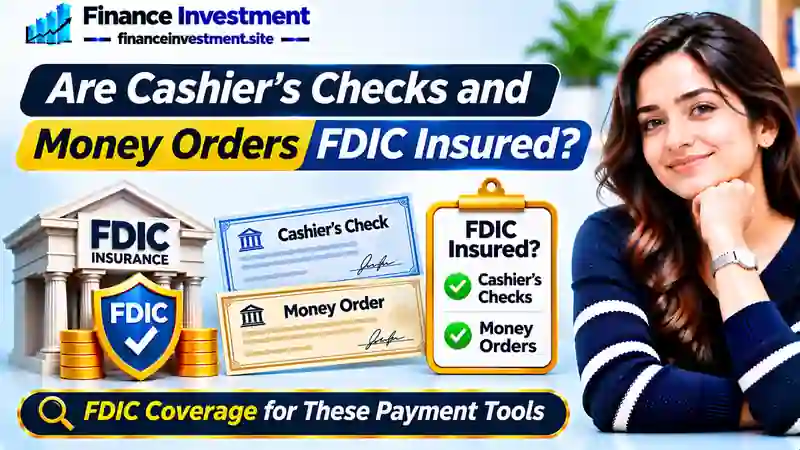
    Are cashier’s checks and money orders FDIC insured? Imagine buying a cashier’s check for a car purchase or picking up a money order to pay rent. You’ve already handed over the money, but what protects that payment if the company or bank behind it runs into trouble?

    The answer starts with the issuer. Cashier’s checks are generally issued by banks or credit unions, while money orders may come from banks, the U.S. Postal Service, or private companies. FDIC insurance can apply to qualifying instruments issued by FDIC-insured banks, subject to applicable ownership and coverage rules.

    Are Cashier’s Checks FDIC Insured

     A money order purchased elsewhere isn’t automatically FDIC insured.

    Our FDIC and NCUA insurance guide covers deposit protection more broadly. This article focuses on payment instruments, bank failures, and the practical differences between insurance coverage and protection against fraud.

    What You’ll Learn

    • When cashier’s checks and money orders qualify for FDIC coverage.
    • Why the issuing bank or company makes a difference.
    • What happens if an issuing bank fails.
    • How to compare payment methods before handing over your money.

    Quick Answer: Are Cashier’s Checks and Money Orders FDIC Insured?

    Yes, in qualifying cases. Cashier’s checks and money orders issued by FDIC-insured banks generally qualify for deposit insurance, subject to applicable limits and ownership rules. Money orders issued by nonbank providers, including the U.S. Postal Service, are not automatically FDIC insured.

    6 Key Takeaways

    • Bank-issued cashier’s checks: Generally eligible when issued by an FDIC-insured bank.
    • Bank-issued money orders: Generally eligible under applicable FDIC rules.
    • Retail and postal money orders: Do not assume FDIC coverage.
    • Coverage limit: Generally $250,000 per depositor, per insured bank, per ownership category.
    • Bank failure: FDIC insurance addresses qualifying losses when an insured bank fails.
    • Fraud or theft: FDIC deposit insurance does not reimburse ordinary payment scams or stolen instruments.

    Bottom Line: Check who issued the payment, confirm the bank’s FDIC status, and understand that deposit insurance is different from protection against fraud.

    Table of Contents

    At a Glance: Cashier’s Checks and Money Orders

    QUICK FACT
    FDIC eligibility depends on the issuing institution and applicable deposit rules.
    BEST FOR
    Cashier’s checks suit larger payments; money orders often suit smaller prepaid transactions.
    KEY NUMBER
    $250,000
    Standard FDIC limit per depositor, per insured bank, per ownership category.

    Quick Coverage Comparison

    Payment TypeFDIC StatusTypical Use
    Bank cashier’s checkGenerally eligible*Large purchases
    Bank-issued money orderGenerally eligible*Prepaid payments
    USPS money orderNot FDIC insuredMail and bill payments
    Retail-provider money orderNot automatically FDIC insuredEveryday payments

    *Coverage note: Eligible bank-issued instruments are subject to FDIC rules and applicable insurance limits. The $250,000 standard limit is not a separate allowance for every check or money order.

    Complete Beginner Guide: Cashier’s Checks, Money Orders and FDIC Eligibility Are Cashier's Checks FDIC Insured

    Suppose you’re paying a contractor $4,000. Your bank offers a cashier’s check, while a nearby store sells money orders. Both let you pay without writing a personal check, but they work differently. Understanding those differences can help you avoid confusion when making an important payment.

    What Is a Cashier’s Check?

    A cashier’s check is issued by a bank or credit union after it receives the required funds. The institution, rather than your personal checking account, is responsible for paying the check. These checks are commonly requested for vehicle purchases, property transactions and other substantial payments.

    What Is a Money Order?

    A money order is a prepaid payment instrument available from banks, post offices and private providers. It’s useful when you need a paper payment but don’t have checks. Each issuer sets its own purchase limits, fees and replacement procedures.

    When Does FDIC Insurance Apply?

    Cashier’s checks and money orders issued by FDIC-insured banks are recognized as deposit products. Their coverage is subject to FDIC ownership rules and insurance limits. It isn’t a separate insurance allowance for every payment instrument.

    Credit unions use a different system: qualifying deposits at federally insured credit unions are protected through the NCUA, not the FDIC. Private-provider money orders should not be assumed to carry FDIC protection simply because the provider has a banking relationship.

    Before purchasing: Ask who actually issues the instrument and whether that institution is federally insured. Our FDIC insurance verification guide explains how to check a bank’s status.

    Finally, keep your receipt and record the instrument number. If a payment is delayed, lost or questioned, those details can make tracing it easier.

    How FDIC Coverage Works for Cashier’s Checks and Money Orders

    What if a bank closes while its cashier’s check is still sitting in someone’s drawer? The payment hasn’t been cashed, but the bank that issued it no longer operates. Here’s how deposit insurance comes into play.

    Step 1: Confirm the Issuing Bank

    First, identify the bank responsible for the instrument. FDIC insurance applies to eligible official items issued by FDIC-insured banks. A store selling a money order does not necessarily make that store the issuer.

    Step 2: Determine the Applicable Coverage

    If an insured bank fails while an eligible cashier’s check or money order remains unpaid, the FDIC determines coverage using the relevant ownership information and deposit records. The amount may be combined with other deposits in the same ownership category at that bank.

    Step 3: Understand the Bank-Failure Process

    The FDIC may arrange for another bank to assume insured deposits or pay eligible claimants directly. Treatment of outstanding instruments can depend on the resolution method and documentation available. Learn more in our guide to how the FDIC transfers accounts after a bank failure.

    Important: Keep the original instrument, receipt and issuer details. If the issuing bank fails before payment, follow the FDIC’s instructions rather than assuming the check will clear normally.

    Benefits and Drawbacks of Cashier’s Checks and Money Orders

    Cashier’s checks and money orders can make certain payments easier, especially when the recipient doesn’t accept personal checks. However, both have costs and limitations worth understanding before you pay.

    ✓ Benefits

    • Funds collected upfront: The issuer generally receives payment before providing the instrument.
    • Payment flexibility: Money orders can help people who don’t have personal checks.
    • Useful for larger purchases: Some sellers request cashier’s checks for substantial transactions.
    • Potential FDIC coverage: Eligible instruments issued by insured banks receive applicable deposit insurance protection.

    ✕ Drawbacks

    • Possible fees: Issuers may charge purchase or replacement fees.
    • Replacement delays: Lost instruments may require an investigation or additional documentation.
    • Counterfeit risks: Fraudsters can create fake checks or exploit payment scams.
    • Coverage differences: Nonbank-issued money orders don’t automatically qualify for FDIC insurance.

    Practical takeaway: Consider the recipient’s requirements, issuer, fees and replacement process before deciding which payment method to use.

    Cashier’s Check vs. Money Order: A Practical Comparison

    A cashier’s check may be more suitable for a major purchase, while a money order can be convenient for everyday payments. However, fees, purchase limits and insurance eligibility vary by issuer. Compare the details before choosing.

    FeatureCashier’s CheckBank Money OrderUSPS Money OrderRetail Money Order
    IssuerBank or credit unionBankU.S. Postal ServiceUsually a private payment company
    Typical AmountOften used for larger paymentsIssuer-specific limitsUp to $1,000 per domestic money orderProvider-specific limits
    Purchase FeesBank-dependentBank-dependentPublished USPS ratesProvider-dependent
    FDIC EligibilityIf issued by an FDIC-insured bank*Generally eligible*Not FDIC insuredNot automatically insured
    Where to BuyBanks or credit unionsParticipating banksPost officesParticipating retail outlets

    *Insurance note: FDIC coverage applies to eligible instruments issued by FDIC-insured banks, subject to applicable limits and ownership rules. Qualifying credit union obligations may fall under NCUA share insurance instead.

    Quick Take: Choose a cashier’s check when a recipient requests bank-backed payment for a larger transaction. For smaller bills, a money order may be easier to obtain. Always verify the issuer and the recipient’s requirements.

    Costs, Risks and Expert Tips Before You Buy

    Before paying for a cashier’s check or money order, consider more than the purchase price. Fees, replacement rules and fraud risks can affect the total cost of a transaction.

    Purchase and Replacement Fees

    Banks may charge for cashier’s checks, although certain account packages waive the fee. Money order prices vary by issuer and amount. If an instrument is lost, replacement may require documentation, additional charges and a waiting period. Cashier’s checks can have stricter replacement requirements than ordinary personal checks.

    The Risk of Fake Checks

    A counterfeit cashier’s check may look genuine, even to an experienced seller. Your bank might make deposited funds available before discovering the check is fraudulent. If the payment is later returned, the bank may reverse the credit.

    Fraud Warning: Be suspicious of buyers who overpay and request a refund. Never send back the difference simply because a deposited check appears in your available balance. FDIC insurance does not cover this type of scam.

    Expert Tips for Safer Transactions

    Expert Tip: For an unfamiliar buyer or expensive sale, independently contact the issuing bank to ask about verification. Remember that verification efforts cannot guarantee a check will never be returned.

    • Confirm fees and replacement policies before purchasing.
    • Keep receipts, instrument numbers and transaction records.
    • Report a missing or suspicious instrument to its issuer promptly.

    For more information, read the FTC’s guide to avoiding fake-check scams.

    Common Mistakes to Avoid

    Cashier’s checks and money orders may seem straightforward, but a few misunderstandings can create expensive problems.

    • Assuming every money order is FDIC insured: Coverage depends on the actual issuer and applicable deposit insurance rules.
    • Confusing FDIC insurance with fraud protection: Deposit insurance protects eligible deposits when an insured bank fails, not against counterfeit payments.
    • Trusting an available balance: A deposited check can appear available before the bank discovers it is fake.
    • Discarding purchase records: Losing receipts or instrument numbers can complicate tracking and replacement requests.

    Real-Life Example: A $3,000 Cashier’s Check

    Imagine Sarah sells her laptop for $2,000. A buyer sends a $3,000 cashier’s check and asks her to return the extra $1,000. The deposit appears in Sarah’s account, so she sends the refund.

    Days later, her bank identifies the check as counterfeit and reverses the $3,000 credit. Sarah may now lose the $1,000 she sent. FDIC insurance would not reimburse that scam loss.

    Bottom line: Verify unfamiliar payments independently, keep your records and understand what deposit insurance actually protects.

    Who Should Choose a Cashier’s Check or Money Order?

    Choosing a payment method becomes easier when you consider the amount, recipient requirements and issuing institution.

    • Homebuyers and vehicle buyers: Consider a cashier’s check for larger transactions when the recipient accepts it. Independently confirm payment instructions.
    • People without checking accounts: USPS or retail money orders can be convenient for eligible bills and smaller payments.
    • Bank customers: Compare cashier’s checks and bank-issued money orders for fees, purchase limits and replacement policies.
    • Insurance-conscious consumers: Verify the actual issuer. FDIC insurance applies to eligible bank-issued instruments; qualifying credit union obligations may have NCUA protection instead.

    Quick recommendation: Confirm acceptance, total fees and cancellation or replacement rules before paying. Never assume all issuers offer identical protections.

    Frequently Asked Questions

    1. Are cashier’s checks FDIC insured?

    Yes. Cashier’s checks issued by FDIC-insured banks qualify as deposit products. Coverage depends on the applicable ownership category and insurance limits.

    2. Are bank-issued money orders FDIC insured?

    Yes. Money orders actually issued by FDIC-insured banks are eligible deposit obligations. A money order merely sold at a bank may have a different issuer.

    3. Are USPS money orders FDIC insured?

    No. USPS money orders are issued by the U.S. Postal Service, not an FDIC-insured bank. They have separate issuer-backed payment arrangements.

    4. Are Walmart or other retail money orders FDIC insured?

    Not automatically. Retailers commonly sell money orders issued by third-party companies. FDIC eligibility cannot be assumed from the store or payment brand.

    5. Does every cashier’s check get $250,000 of FDIC coverage?

    No. The standard limit is $250,000 per depositor, per insured bank, per ownership category. Outstanding official checks may be combined with other deposits in the same category.

    6. What happens if the issuing bank fails?

    The FDIC handles the failed bank’s resolution. Eligible insured obligations may be assumed by another bank or addressed through the FDIC’s insurance payment process.

    7. Does FDIC insurance cover fake or stolen cashier’s checks?

    No. FDIC deposit insurance covers eligible deposits if an insured bank fails. It does not reimburse counterfeit-check scams or theft simply because a cashier’s check was involved.

    8. Are credit union cashier’s checks FDIC insured?

    No. Credit unions are not FDIC insured. Federally insured credit unions have NCUA share insurance, but coverage for a particular outstanding instrument should be confirmed with the issuer.


    Final Verdict: Are Cashier’s Checks and Money Orders FDIC Insured?

    Yes, when issued by an FDIC-insured bank. Eligible cashier’s checks and bank-issued money orders receive deposit insurance protection, subject to applicable coverage limits and ownership rules. USPS money orders are not FDIC insured, while retail money orders require separate issuer verification.

    For larger payments, a cashier’s check may be practical. For smaller transactions, a money order may offer greater convenience. Neither eliminates counterfeit-payment risks.

    Our Recommendation: Verify the issuing institution and payment requirements before buying. For a deeper explanation, read our FDIC and NCUA Insurance Explained guide.

    Have a Money Question? Keep Exploring.

    Understanding FDIC insurance can help you make more informed payment decisions. Explore our guides on FDIC and NCUA insurance and verifying FDIC coverage.

    📩 Get in Touch With FinanceInvestment

    Disclaimer: This article is for educational purposes only and is not personalized financial or legal advice. Confirm current insurance rules and issuer policies with the appropriate institution.

  • What Happens to Direct Deposit When a Bank Closes? 5 Smart Steps

    What Happens to Direct Deposit When a Bank Closes? 5 Smart Steps

    What Happens to Direct Deposit When a Bank Closes?

    Written by
    Subhash Rukade
    Founder, FinanceInvestment
    Banking Guide
    2026 Edition

    Published:

    Updated:

    Reading Time: Approx. 11 min


     What Happens to Direct Deposit When a Bank Closes Your Bank Closed. Is Your Next Paycheck Still Coming?

    It’s payday tomorrow, but your bank has just failed. Suddenly, one question matters more than anything else: what happens to direct deposit when a bank closes? Will your paycheck arrive on time, or could your Social Security or pension payment get caught in the disruption?

    The answer depends on what happens to your account. If another bank takes over, direct deposits often continue without interruption. If your account closes instead, future payments may need to be redirected or returned to the sender.

    Our guide to FDIC and NCUA deposit insurance explains how eligible balances are protected. Here, we’ll focus on the money you’re still waiting to receive.

    What You’ll Learn

    • Whether payroll, Social Security and pension deposits can continue.
    • What changes when an acquiring bank takes over.
    • What to do if a deposit is delayed or returned.
    • When to give your employer or benefit agency new banking details.

    Quick Answer: Will Your Direct Deposit Still Arrive?

    In many bank failures, direct deposits continue. If another insured bank takes over your account, paychecks and benefit payments can keep arriving. If your account closes without a takeover, incoming deposits may be returned or require new instructions. Some government payments may receive temporary arrangements.

    6 Key Takeaways

    • Acquiring bank: Existing deposit instructions may continue working.
    • Closed account: A future payment could be returned to its sender.
    • Employer payroll: Check with payroll before changing bank details.
    • Federal benefits: Follow official payment and account-update instructions.
    • FDIC protection: Deposit insurance protects eligible balances, not paycheck arrival dates.
    • Backup account: Having another verified account can reduce future disruption.

    Bottom Line: Check the FDIC’s bank-specific announcement and your account activity first. If an expected deposit is missing, contact the employer or agency that sent it and ask whether the payment was completed or returned.

    At a Glance: Direct Deposit After a Bank Closure

    PAYMENT METHOD
    ACH Direct Deposit
    STANDARD FDIC LIMIT
    $250,000*
    WHO SHOULD CHECK
    Employees, retirees and benefit recipients
    SituationLikely Outcome
    Bank acquiredDeposits typically continue if accounts transfer.
    Account closedFuture credits may be returned to the sender.
    Federal benefitsTemporary receiving arrangements may be available.
    Missing paycheckAsk payroll to check payment status and return details.

    *FDIC insurance generally covers eligible deposits up to $250,000 per depositor, per insured bank, per ownership category. It does not guarantee the arrival date of a future deposit.

    Quick Take: Check whether your account transferred to another bank before changing direct deposit instructions. An unnecessary update could create confusion while a scheduled payment is already being processed.

    Complete Beginner Guide: How Direct Deposit Reaches Your Account What Happens to Direct Deposit When a Bank Closes

    Direct deposit lets you receive a paycheck, pension or government benefit electronically. Instead of mailing a paper check, the organization paying you sends instructions to deposit money into your designated bank or credit union account.

    Who Sends the Money?

    Your employer may use a payroll company to send wages, while retirement administrators and government agencies arrange their own payments. Each sender needs valid banking information. If you’re new to the process, our guide to direct deposit explains the basics.

    What Is an ACH Credit?

    Most direct deposits use the Automated Clearing House (ACH) network. An ACH credit pushes money toward your account, unlike an ACH debit that pulls an authorized payment from it. See how ACH transfers work for a fuller explanation.

    One detail matters during a bank failure: payment submitted doesn’t mean payment received. The receiving bank must still process the credit. If the account is no longer available, the deposit may be returned to the sender.

    How Direct Deposit Works After a Bank Failure

    A bank failure doesn’t always mean your account disappears overnight. The FDIC may transfer deposits to another insured bank or arrange a payout when accounts aren’t assumed. What happens next determines how your incoming payments are handled.

    1. Your Account Moves to Another Bank

    When an acquiring bank assumes your deposit account, existing payroll and benefit deposits generally continue. You may receive updated banking information later, but don’t change routing numbers based on rumors. Follow the FDIC’s bank-specific notice and the acquiring bank’s instructions.

    2. No Bank Takes Over Your Account

    If your account closes instead, future ACH credits may be returned. Ask your employer or pension administrator whether a payment was sent, accepted or returned before requesting a replacement. Our guide to changing direct deposit details explains the usual update process.

    3. Social Security and Other Federal Benefits

    For federal benefit payments, temporary receiving arrangements may be made when no bank assumes the accounts. However, those arrangements vary. Check official FDIC instructions and contact the appropriate benefit agency if your payment doesn’t appear as expected.

    Before changing anything: Confirm whether your account is still active, save the official bank notice and ask the payment sender about any deposit already in progress. This helps prevent conflicting instructions or duplicate payments.

    Benefits and Drawbacks of Direct Deposit Transfers

    When another bank takes over your account, the transition may be easier than opening a replacement account yourself. However, some changes can affect how you manage your money.

    Potential Benefits

    • Fewer disruptions: Existing payroll instructions may keep working.
    • Less paperwork: You may not need to submit new bank details immediately.
    • Continued access: The acquiring bank may provide access to transferred deposits.

    Possible Drawbacks

    • Updated details: Routing numbers or account information may eventually change.
    • Payment follow-up: Some deposits may need verification during the transition.
    • Different terms: Account fees, features or service arrangements may change.

    Practical tip: Read the acquiring bank’s account notices and compare any new terms before deciding whether to keep the transferred account.

    Bank Takeover vs. FDIC Payout vs. Closed Account

    The important difference is whether your account stays open to receive new money. An FDIC payout and an account closure can happen together, so these situations aren’t always separate.

    SituationExisting DepositsFuture Direct DepositWhat to Do
    Acquiring bank assumes accountAssumed balances transfer to the new bank.Generally continues through the transferred account.Follow the acquiring bank’s notices.
    FDIC pays insured depositsEligible insured balances are paid under FDIC rules.May require a new account if the original closes.Check payout and account instructions.
    Receiving account closedHandled according to the bank’s resolution.May be returned; special benefit arrangements can apply.Verify status with the payment sender.

    Key distinction: FDIC insurance addresses eligible money already deposited at the failed bank. It does not guarantee that a future paycheck or benefit payment will reach a closed account on schedule.

    Delayed Paychecks, Missing Deposits and Expert Tips

    If payday arrives and your account is still empty, start with the payment trail. A missing deposit could be delayed, redirected or returned—not necessarily lost.

    Four Steps to Take

    1. Read the FDIC notice: Confirm which bank now handles your account, if any.
    2. Check your account: Look for a posted deposit; pending transactions may not always appear.
    3. Contact the sender: Ask payroll or the benefit agency whether the ACH credit was sent or returned.
    4. Confirm the next payment: If new details are required, ask about processing deadlines before updating them.

    Expert Tip: Save the expected payment date, amount and any ACH trace number available from the sender. These details can help investigate a missing credit. See our guide to why direct deposit may arrive late.

    Watch for fees and scams: A delay may affect bill payments. Ask creditors about possible flexibility, and never share banking credentials with someone claiming they can release your paycheck for a fee.

    Common Mistakes to Avoid After a Bank Closes

    A sudden bank closure can make even routine payroll decisions stressful. Avoid these mistakes while your account’s status is being confirmed.

    • Updating payroll immediately: An acquiring bank may still accept deposits using your existing instructions.
    • Assuming a returned payment is lost: The sender may need to trace and reissue it.
    • Requesting payment twice: Ask payroll to verify the original credit before arranging a replacement.
    • Following unofficial instructions: Verify account-change requests through trusted bank or employer channels.

    Example: A $2,400 Paycheck During a Bank Closure

    Hypothetical example: Maria expects a $2,400 paycheck on Friday. Her bank fails on Thursday. If another bank assumes her account, her existing direct deposit instructions may continue working.

    If the receiving account closes instead, the credit may be returned. Maria asks payroll to confirm the payment’s status before providing new banking details or requesting reissuance.

    Key lesson: A bank failure doesn’t automatically erase an incoming paycheck. Confirm the account’s status and trace the payment before taking further action.

    Who Should Act First After a Bank Closure?

    The closer your next payment date, the more important it is to confirm whether your account can still receive deposits. Different payment sources require different contacts.

    Employees

    Contact payroll if payday is approaching and your account status is unclear. Ask about the deadline for changing deposit instructions.

    Retirees

    For private pension payments, contact the plan administrator to confirm the next deposit and any required banking updates.

    Federal Benefit Recipients

    If your receiving account has closed, follow official instructions from Social Security or the agency issuing your benefit.

    Priority rule: Act promptly when an upcoming payment has no working destination. Otherwise, verify the transfer before changing account details.

    Frequently Asked Questions

    1. Will my paycheck arrive if my bank closes?

    Possibly. If an acquiring bank assumes your account, direct deposits generally continue. Check its official transition instructions.

    2. What if payroll sends money to a closed account?

    The ACH credit may be returned. Ask payroll to trace the payment before requesting reissuance.

    3. Does FDIC insurance protect my paycheck?

    Eligible funds already deposited may be insured. A future paycheck not yet deposited isn’t automatically covered.

    4. Must I change direct deposit immediately?

    Not always. Confirm whether your account transferred before updating payroll or benefit instructions.

    5. Will Social Security deposits continue?

    They may continue through an assumed account or temporary arrangements. Follow FDIC and Social Security guidance.

    6. How long does a returned deposit take?

    Timing varies. Your payment sender can check the return status and explain when reissuance may occur.

    7. Will my routing number change?

    It may change later. Follow the acquiring bank’s verified instructions rather than updating details prematurely.

    8. Who can help locate a missing deposit?

    Contact payroll or the paying agency first. The receiving bank may also help investigate.


    Final Verdict: What Happens to Your Direct Deposit?

    A failed bank doesn’t automatically mean a lost paycheck. If another bank assumes your account, direct deposits generally continue. If the account closes, incoming payments may be returned and need to be traced or reissued by the sender.

    Before updating payroll details, confirm your account’s status through official notices. If a payment is missing, contact your employer or benefit agency promptly.

    Remember: Deposit insurance protects eligible bank balances, not the timing of future paychecks. Learn more in our FDIC and NCUA insurance guide.

    Have a Money Question? Keep Exploring.

    Waiting for a paycheck during a bank closure can feel uncertain. FinanceInvestment makes banking topics easier to understand, so you can ask better questions and make informed decisions.

    Start with our guides to verifying FDIC insurance and handling delayed direct deposits.

    📩 Get in Touch With FinanceInvestment

    Disclaimer: This content is educational, not personalized financial or legal advice. Bank-failure procedures and payment timelines vary. Follow official FDIC, bank and payment-agency instructions for your situation.

  • What Happens to Automatic Payments When Your Bank Fails? 7 Smart Tips

    What Happens to Automatic Payments When Your Bank Fails? 7 Smart Tips

    What Happens to Automatic Payments When Your Bank Fails?

    Written by Subhash Rukade
    Founder, FinanceInvestment

    BANKING GUIDE 2026

    Published: Nov 10, 2026

    Updated: Nov 10, 2026

    Reading Time: 11 min


     What Happens to Automatic Payments When Your Bank Fails Your Bank Failed. Are Your Bills Still Getting Paid?

    Your mortgage payment is due Monday. Your electricity bill is on autopay. Then, on Friday, you learn that your bank has failed. Suddenly, a question you never expected to ask becomes urgent: What happens to automatic payments when your bank fails?

    Some payments may continue normally if another bank takes over your accounts. Others may be delayed, returned or require updated payment instructions. The outcome depends on how the failed bank is resolved and how each payment was arranged.

    FDIC insurance protects eligible deposits, but it does not guarantee that every scheduled bill will be paid on time. Our FDIC and NCUA Insurance Explained guide covers the protection basics.

    What You’ll Learn

    • Whether existing automatic payments can continue.
    • How ACH debits, bill pay and recurring card charges differ.
    • Which payments and account details to check first.
    • How to avoid missed bills and possible late fees.

    Quick Answer: Do Automatic Payments Continue After a Bank Failure?

    Sometimes, but not always. When another bank assumes the failed bank’s deposits, many existing automatic payments may continue. If the FDIC instead pays depositors directly and closes their accounts, linked payments may be rejected or require new instructions. Even after a takeover, confirm that important payments are still active.

    6 Key Takeaways

    • Bank takeover: Existing payment arrangements may remain active.
    • FDIC payout: A replacement account may be necessary.
    • ACH withdrawals: Pending does not mean successfully paid.
    • Online bill pay: Review scheduled payments individually.
    • Upcoming due dates: Contact billers before payments become overdue.
    • Payment records: Keep confirmations and check for returned transactions.

    Bottom Line: Check the status of your next essential bill before its due date. If payment instructions have changed, update the biller and use a verified alternative payment method. Avoid sending a duplicate payment until you know whether the original one settled.

    At a Glance: Automatic Payments After a Bank Failure

    FDIC COVERAGE LIMIT
    $250,000
    Per depositor, per insured bank, per ownership category.
    AUTOPAY STATUS
    Must Be Verified
    A bank takeover does not guarantee every payment will settle.

    Best for: Households managing mortgage, rent, utility, insurance, loan or credit card payments through an affected bank.

    SituationWhat You Should Do
    Bank takeoverCheck account details and upcoming autopay.
    FDIC payoutArrange replacement payment instructions.
    Pending paymentConfirm whether the biller received it.

    Quick Take: Start with bills due soonest. Confirm the payment status with each biller, and follow the acquiring bank’s or FDIC’s instructions before changing account details.

    Automatic Payments Explained: What Beginners Should Know What Happens to Automatic Payments When Your Bank Fails

    Automatic payments may look identical on your bank statement, but they can follow different routes. Knowing who initiates each payment helps you decide whom to contact if your bank fails.

    1. ACH Autopay: The Biller Collects the Payment

    A mortgage lender or utility provider can withdraw money from your checking account after you authorize recurring ACH debits. Because the biller initiates the withdrawal, contact it to update your payment account. Our ACH Push vs. ACH Pull guide explains the difference.

    2. Online Bill Pay: Your Bank Arranges the Payment

    When you schedule bills through online banking, your bank or its payment provider sends the money electronically or by check. Check the bank’s bill-pay service for scheduled transactions and follow its instructions before rescheduling. See Online Bill Pay vs. Automatic ACH.

    3. Recurring Debit-Card Charges: The Merchant Uses Your Card

    Subscriptions and memberships often charge a stored debit card. If the card stops working or its details change, the merchant may decline the charge. Check the card’s status before updating your subscription.

    Practical Tip: Check your recent statements and list each recurring payment by type. This makes it easier to find the correct contact and avoid overlooking a bill.

    What Actually Happens to Automatic Payments After a Bank Failure?

    When an FDIC-insured bank closes, the FDIC determines how its deposits will be handled. That decision affects whether existing automatic payment arrangements can continue.

    Scenario 1: Another Bank Takes Over

    The FDIC often arranges for another bank to assume the failed bank’s deposits. In many cases, ACH withdrawals, checks and online bill payments continue with little disruption. Existing routing and account numbers may remain valid during the transition.

    However, the acquiring bank may later change account details or payment services. Review its notices and confirm that essential payments remain active.

    Scenario 2: The FDIC Pays Depositors Directly

    If no bank assumes your deposit account and the FDIC pays insured deposits directly, the failed account is closed. Outstanding checks and payment requests presented after closure are returned unpaid. You will need to arrange payments from another account.

    A returned payment caused by the bank closing does not, by itself, damage your credit standing. Still, contact creditors promptly because an unpaid bill can lead to separate consequences.

    What Happens to Pending ACH Payments?

    A transaction labeled “scheduled” or “pending” is not proof that the biller received the money. Check your account records and ask the biller whether the payment settled before submitting another one.

    What to Do First: Read the FDIC failed-bank notice, confirm your account’s status and review bills due within the next few days. If a payment was returned, contact the biller. Our automatic bill payment troubleshooting guide explains common payment problems.

    Benefits and Drawbacks of FDIC Bank Resolution

    A bank failure does not always mean starting over with every bill. The FDIC’s resolution process can preserve familiar banking services, although some customers may need to make new payment arrangements.

    Benefits: What May Work in Your Favor

    • Deposit protection: Eligible funds remain insured within applicable FDIC limits.
    • Payment continuity: An acquiring bank may maintain existing automatic payment services.
    • Clear instructions: Official FDIC and acquiring-bank notices explain account transitions.

    Drawbacks: Where Problems Can Arise

    • Returned transactions: A direct FDIC deposit payoff can leave outstanding bills unpaid.
    • Payment updates: New account details may require changes with lenders and billers.
    • Possible penalties: Unpaid bills may lead to late fees or other consequences under the biller’s terms.

    Worth remembering: FDIC insurance protects qualifying deposits, not a promise that every automatic payment will arrive on time.

    ACH Autopay vs. Bank Bill Pay vs. Recurring Card Payments

    Each payment method has a different point of contact. This comparison shows where problems may arise and what to verify if your bank fails.

    Payment TypeInitiated ByPossible RiskWhat to Verify
    ACH AutopayBiller or lenderDebit returned if the account closes.Ask the biller whether the payment settled.
    Bank Bill PayBank, on your instructionsScheduled payment may be interrupted.Check bank records and payee receipt.
    Recurring Debit CardMerchant, with your authorizationCharge may fail if the card becomes inactive.Confirm card status and merchant billing details.

    Important: If another bank assumes your account, these payments may continue normally. Check the payment’s final status before paying again to avoid duplicate charges. For related payment arrangements, see Recurring Bank Transfers Explained.

    Costs, Missed Payments, Late Fees and Expert Tips

    A bank failure does not automatically trigger late fees. Problems arise when a scheduled payment fails and the bill remains unpaid. The costs depend on your agreement with the lender, landlord or service provider.

    Three Financial Risks to Watch

    • Late-payment charges: A creditor or biller may assess a fee after the applicable payment deadline or grace period.
    • Returned-payment fees: Some billers charge when an ACH debit or check is returned, depending on their terms and applicable law.
    • Credit-reporting risks: An unresolved late loan or credit-card payment may eventually be reported and affect your credit score.

    How to Reduce Potential Costs

    Contact billers before payments become overdue. Explain the bank closure, confirm whether the original payment cleared and ask about another payment method. If a fee appears, request a waiver and keep the response in writing.

    Expert Tip: Save the FDIC notice, account records and payment confirmations. A returned payment marked as caused by bank closure does not itself damage your credit standing, but the underlying bill still needs payment. If an inaccurate late payment appears on your credit report, dispute it with supporting evidence.

    Common Mistakes After a Bank Failure—and a Mortgage Payment Example

    A bank closure can create confusion, especially when several bills are scheduled. Avoid these mistakes before changing payment instructions.

    Four Mistakes to Avoid

    • Assuming autopay stopped: An acquiring bank may continue existing payments.
    • Paying twice: Check whether the original transaction settled before sending another payment.
    • Ignoring biller notices: Review emails and account alerts for returned payments.
    • Waiting until the deadline: Contact essential billers early if payment status is uncertain.

    Example: A $1,800 Mortgage Payment

    Imagine Sarah has a $1,800 mortgage payment scheduled for Monday. Her bank fails on Friday.

    If another bank assumes her account, the withdrawal may continue. If the FDIC instead pays depositors directly and closes the account, the payment request may be returned.

    Sarah’s next step: Contact her mortgage servicer, verify whether payment was received, and arrange another payment only if needed. She should save confirmation and ask about any deadline or fee concerns.

    Remember: A failed bank does not erase your mortgage obligation. The goal is to prevent both missed and duplicate payments.

    Who Should Act First After a Bank Failure?

    Prioritize bills by their due dates and the consequences of missing them—not simply by payment type. These groups often need attention first.

    Payments to Review First

    1. Mortgage and rent: Check upcoming housing payments and contact the lender or landlord if uncertain.
    2. Insurance and utilities: Confirm payments needed to maintain coverage or essential services.
    3. Loans and credit cards: Verify minimum payments and deadlines to reduce potential fees.
    4. Subscriptions: Review less urgent recurring charges after essential obligations.

    Priority rule: An overdue bill or imminent coverage lapse comes first, regardless of category. Confirm whether the original payment settled before sending another.

    Frequently Asked Questions About Automatic Payments After Bank Failure

    1. Do automatic payments stop when a bank fails?

    Not always. Payments may continue when another bank assumes your account. If the FDIC pays depositors directly and closes the account, new payment arrangements may be necessary.

    2. Will my mortgage autopay still work?

    Possibly. Contact your mortgage servicer to confirm whether the payment was received and whether your account details need updating.

    3. Does FDIC insurance cover missed automatic payments?

    No. FDIC insurance protects eligible deposits within applicable coverage limits. It does not guarantee that scheduled bills will be paid on time or reimburse ordinary late fees.

    4. Can ACH payments be returned after a bank closes?

    Yes. If the FDIC closes an account through a direct deposit payoff, ACH debits presented afterward may be returned unpaid.

    5. Should I immediately update all my autopay details?

    First review official FDIC or acquiring-bank instructions. Update payment details when necessary, prioritizing bills approaching their deadlines.

    6. Will a returned payment damage my credit score?

    A return caused by bank closure does not itself damage your credit standing. However, an unpaid debt that becomes delinquent may affect your credit.

    7. Can I ask for a late-fee waiver?

    Yes. Explain the bank failure, provide supporting records and request a waiver from the biller. Approval is not guaranteed.

    8. How do I avoid paying the same bill twice?

    Review your account records and confirm whether the biller received the original payment before sending a replacement.


    Final Verdict: What to Do If Your Bank Fails

    Your next step depends on how the FDIC resolves the failed bank. An acquiring bank may preserve existing payment arrangements, while a direct deposit payoff can leave you needing a replacement account.

    Check official notices, prioritize bills approaching their deadlines and confirm payment receipt with each biller. If something failed, arrange another payment promptly—but verify the original transaction first to avoid paying twice.

    Bottom Line: Deposit insurance and payment continuity are different protections. Learn how coverage works in our FDIC and NCUA Insurance Explained guide.

    Have a Money Question? Keep Exploring.

    When your bank changes unexpectedly, even a routine bill can become a concern. A little preparation makes the next steps easier: keep your payment records organized, know which bills are approaching and use official instructions before updating accounts.

    Want to understand your protections and payment options? Read our guides to FDIC and NCUA insurance and paying bills through your bank.

    📩 Get in Touch With FinanceInvestment

    Disclaimer: This content is for general educational purposes, not personalized financial or legal advice. Verify account-specific details with the FDIC, your bank and your billers.

  • Pass-Through FDIC Insurance: 5 Essential Steps for Safer Banking

    Pass-Through FDIC Insurance: 5 Essential Steps for Safer Banking

    How Pass-Through FDIC Insurance Works for Banking Apps

    Written by Subhash Rukade
    Founder, FinanceInvestment

    BANKING GUIDE

    Published:
    Updated:
    Reading Time:
    12 minutes


     Pass-Through FDIC Insurance Introduction: Where Does Your Banking App Keep Your Money?

    Understanding how pass-through FDIC insurance works matters when your savings sit inside a banking app rather than an account opened directly with a bank. The app may handle your transactions, but another institution could actually hold the deposit.

    Some fintech companies place customer funds at FDIC-insured partner banks through custodial accounts. Eligible deposits may qualify for pass-through coverage when ownership and recordkeeping requirements are satisfied. However, using an insured bank does not automatically make every app balance insured.

    We’ll explain how these arrangements operate, what can interrupt access to your money and how to check the details before depositing substantial savings. For the wider coverage rules, visit our FDIC and NCUA insurance guide.

    What You’ll Learn

    • How banking apps and partner banks handle deposits.
    • Which conditions determine pass-through coverage.
    • Why ownership records and intermediaries matter.
    • How to investigate coverage before moving money.

    Quick Answer: How Does Pass-Through FDIC Insurance Work?

    Quick Answer: Pass-through FDIC insurance may cover eligible deposits held at an FDIC-insured bank through a banking app or intermediary. The arrangement must satisfy applicable ownership, account-disclosure and recordkeeping requirements. When it qualifies, coverage is based on the actual deposit owner, insured bank and ownership category—not the app’s branding.

    6 Key Takeaways

    • Insured bank: Eligible funds must be deposited at an FDIC-insured institution.
    • Ownership records: Required records must establish the customers’ interests in the deposits.
    • Insurance limit: The standard limit is $250,000 per depositor, per insured bank, per ownership category.
    • Combined balances: Deposits in the same ownership category at one insured bank generally count together.
    • Failure protection: FDIC insurance covers insured bank failures, not the standalone failure of a fintech provider.
    • Product distinction: Stocks, cryptocurrency and other nondeposit products do not receive FDIC deposit insurance.

    Bottom Line: Don’t rely on an app’s FDIC-related marketing alone. Identify the partner bank, review how your ownership is recorded and check your combined deposits at that institution before assuming your balance is fully covered.

    Table of Contents

    Pass-Through FDIC Insurance at a Glance

    A banking app may display your balance while an insured bank holds the actual deposit. These quick facts show which details matter when evaluating pass-through protection.

    QUICK FACT
    Coverage depends on qualifying bank deposits and required records.
    BEST FOR
    Customers comfortable reviewing app disclosures and bank details.
    STANDARD LIMIT
    $250,000
    Per depositor, per insured bank, per ownership category.

    Quick Coverage Summary

    Coverage CheckWhy It Matters
    Insured bankThe deposit must be held at an FDIC-insured institution.
    Ownership recordsApplicable account-disclosure and beneficial ownership requirements must be met.
    Other depositsEligible balances at the same bank in the same ownership category are generally combined.
    Provider failureA fintech company’s failure alone does not trigger FDIC deposit insurance.

    Quick Take: An insured partner bank is necessary, but it does not guarantee that every app balance qualifies for FDIC coverage.

    Beginner Guide: Banking Apps, Partner Banks and Custodial Accounts Pass-Through FDIC Insurance

    You open a banking app, transfer $2,000 and see the money appear on your screen. Simple enough. But the company displaying your balance may not be the institution holding your deposit.

    The App and the Bank Play Different Roles

    A fintech company may manage the app, customer service and payment features. An FDIC-insured partner bank may hold the deposited money. Some arrangements also involve a separate technology provider responsible for transaction processing or customer records.

    What Is a Custodial or FBO Account?

    FBO means “For Benefit Of.” In a pooled custodial arrangement, an intermediary holds funds on behalf of multiple customers, while underlying records identify each customer’s ownership interest.

    For example, a single bank account might hold money belonging to 500 app users. The records must establish each person’s share and satisfy applicable deposit insurance requirements. Simply labeling an account “FBO” does not guarantee pass-through coverage.

    Not Every Banking App Uses the Same Setup

    Some apps facilitate accounts opened directly in customers’ names at partner banks. Others use pooled custodial structures. The difference matters because ownership documentation, access arrangements and insurance eligibility can vary. Before depositing significant savings, check which structure your provider actually uses.

    How Pass-Through FDIC Insurance Actually Works

    When money moves through a banking app, several companies may handle the transaction. Pass-through insurance depends on the legal deposit arrangement and whether the required records establish who owns the funds.

    Step 1: Money Is Deposited at an Insured Bank

    Customer funds must actually be held as eligible deposits at an FDIC-insured bank. A balance displayed in an app does not, by itself, establish that the money has reached an insured deposit account.

    Step 2: The Bank’s Records Disclose the Relationship

    The bank’s deposit account records generally must show that the named account holder acts for others, such as an agent or custodian. This disclosure helps distinguish customer-owned funds from money belonging to the intermediary.

    Step 3: Ownership Interests Must Be Verifiable

    Records maintained in accordance with FDIC requirements must establish the actual owners and their respective interests. Where several intermediaries are involved, the records must support tracing those interests through the arrangement. The customers must also genuinely own the deposits under applicable law.

    Step 4: Coverage Is Calculated if the Bank Fails

    If the insured bank fails, the FDIC determines coverage using the applicable ownership categories and limits. Qualifying pass-through deposits are generally added to the same customer’s other deposits at that bank within the same ownership category.

    Important: A fintech or intermediary failure does not itself trigger FDIC insurance while the partner bank remains open. Incomplete or conflicting records can also complicate ownership verification and delay access to funds.

    Benefits and Drawbacks of Pass-Through FDIC Coverage

    A banking app can make everyday money management easier without requiring you to open an account directly through a bank’s website. Still, the way customer deposits are held deserves attention.

    Benefits

    • Eligible deposit coverage: Qualifying customer funds may receive FDIC protection through the insured bank.
    • Convenient features: Apps may simplify payments, transfers and balance monitoring.
    • Flexible access: Customers can explore bank deposit services through different digital platforms.

    Drawbacks

    • Additional intermediaries: More companies may handle transactions, records or customer support.
    • Access delays: Recordkeeping disputes or service interruptions can make funds temporarily unavailable.
    • Different failure risks: FDIC deposit insurance does not cover the standalone failure of a fintech company.

    Practical Take: Choose an app for its useful features, but evaluate deposit protection separately from convenience and marketing claims.

    Direct Bank Deposits vs. Banking Apps vs. Nondeposit Balances

    A familiar app interface does not tell you how the money behind it is held. Some apps facilitate direct bank accounts; others use custodial arrangements or offer products that are not bank deposits.

    FeatureDirect Bank DepositCustodial App DepositNondeposit Product
    Account structureCustomer holds an account at the bankIntermediary holds funds for customersInvestment or other nondeposit arrangement
    FDIC insuranceEligible deposits covered within limitsPossible when pass-through requirements are satisfiedNot covered by FDIC deposit insurance
    Customer recordsBank generally maintains ownership recordsBank and intermediaries may maintain required recordsDepends on the product
    What to verifyBank identity and coverage categoryPartner bank, ownership and recordkeepingProduct terms and applicable risks

    Quick Take: Check whether your balance is a direct bank deposit, a qualifying custodial deposit or a nondeposit product. The distinction determines which protections may apply.

    Costs, Recordkeeping Risks and Expert Tips

    A banking app can offer convenient features and low advertised fees. Yet the real cost of using it may include service charges, transfer restrictions and unexpected interruptions to your access to money.

    Check Fees Beyond the Monthly Charge

    Depending on the provider, instant transfers, out-of-network ATM withdrawals or replacement cards may carry fees. Review the current fee schedule, withdrawal limits and transfer timelines before relying on the account for everyday expenses.

    Understand Recordkeeping and Access Risks

    Your app balance may depend on records maintained across several companies. Missing transactions, inconsistent ledgers or interrupted data sharing can make it harder to reconcile balances and establish ownership.

    An intermediary’s financial or operational failure may also delay withdrawals even if the partner bank remains open. FDIC insurance does not guarantee uninterrupted access during such disruptions.

    Expert Tip: Verify the Details Before Depositing

    Use FDIC BankFind to verify the partner bank’s insured status. Then read the app’s deposit disclosures, identify who maintains customer records and keep copies of statements.

    Remember: Finding an insured bank in BankFind does not independently confirm that your particular app balance qualifies for pass-through coverage.

    Common Mistakes and a $300,000 Practical Example

    Using two financial apps does not necessarily provide two separate FDIC insurance limits. The insured bank, legal ownership and deposit category matter more than the number of accounts shown on your phone.

    Four Mistakes to Avoid

    • Confusing fintech with bank insurance: An app’s FDIC-related claim does not make the fintech itself an insured bank.
    • Missing shared partner banks: Different apps may deposit money at the same institution.
    • Counting separate app limits: Deposits at one bank in the same ownership category are generally aggregated.
    • Ignoring ownership records: An FBO label alone does not establish pass-through eligibility.

    Example: $300,000 at One Insured Bank

    Maya has $180,000 in an individual savings account at Bank A and $120,000 through an app that places her funds at Bank A.

    Assume the app deposit qualifies for pass-through coverage, both balances are in the same ownership category and Maya has no other deposits at Bank A.

    $180,000 + $120,000 = $300,000

    Result: If Bank A fails, the standard $250,000 limit would cover $250,000, leaving $50,000 uninsured. Separate apps would not increase that limit.

    Who Should Use Banking Apps With Pass-Through Coverage?

    A banking app may work well when its features match your daily needs and you understand where your deposits are held. For essential savings, account transparency deserves equal attention.

    Banking Apps May Suit

    • Digital-first customers who frequently transfer or manage money online.
    • People who can identify the partner bank and review deposit disclosures.
    • Users who keep an alternative account available for unexpected expenses.

    A Direct Bank Account May Suit

    • Savers who prefer dealing directly with the institution holding their deposits.
    • Households seeking a simpler arrangement for essential emergency funds.
    • Customers unable to verify an app’s partner bank or deposit structure.

    Bottom Line: Choose based on transparency, accessibility and your savings priorities—not promotional rates alone.

    Frequently Asked Questions About Pass-Through FDIC Insurance

    1. Are all banking apps FDIC insured?

    No. A fintech app is not automatically an insured bank. Eligible deposits at an FDIC-insured partner bank may qualify for coverage.

    2. Does an FBO account guarantee FDIC coverage?

    No. Pass-through coverage requires qualifying deposits, genuine ownership interests and compliance with applicable disclosure and recordkeeping rules.

    3. What is the standard FDIC insurance limit?

    Generally, $250,000 per depositor, per insured bank, per ownership category, including applicable same-bank deposits.

    4. Can two banking apps share one insurance limit?

    Yes. Eligible deposits at the same insured bank in the same ownership category are generally added together.

    5. What happens if the fintech company fails?

    Fintech failure alone does not trigger FDIC deposit insurance. Customers may experience delays accessing their funds.

    6. Are funds in transit automatically insured?

    No. Insurance depends on where the funds are actually held and whether they qualify as deposits at an insured bank.

    7. How can I verify a partner bank?

    Use FDIC BankFind to verify the bank’s insured status. This alone does not confirm coverage for your app balance.

    8. Does FDIC insurance cover investment balances?

    No. Stocks, mutual funds and other nondeposit investments are not covered by FDIC deposit insurance.


    Final Verdict: Know What Protects Your Banking App Balance

    Pass-through FDIC insurance can protect eligible deposits if the insured bank fails, provided applicable ownership and recordkeeping requirements are satisfied. A fintech’s insurance claim alone cannot establish coverage.

    Before depositing substantial savings, identify the partner bank, review account disclosures and check whether other deposits at that bank affect your insurance limit.

    For more guidance, explore our FDIC and NCUA Insurance Explained guide.

    Have a Money Question? Keep Exploring.

    Knowing how your money is held can help you make more informed banking decisions. Explore our guides on deposit protection, or send us a question about the topics covered here.


    📩 Get in Touch With FinanceInvestment

    Disclaimer: This content is for general educational purposes, not personalized financial or legal advice. FDIC insurance depends on the actual deposit arrangement, applicable coverage rules and account records. Confirm important details with the bank and the FDIC.