SWIFT Transfers Explained: How International Bank Payments Work
Why SWIFT Matters When Money Crosses Borders
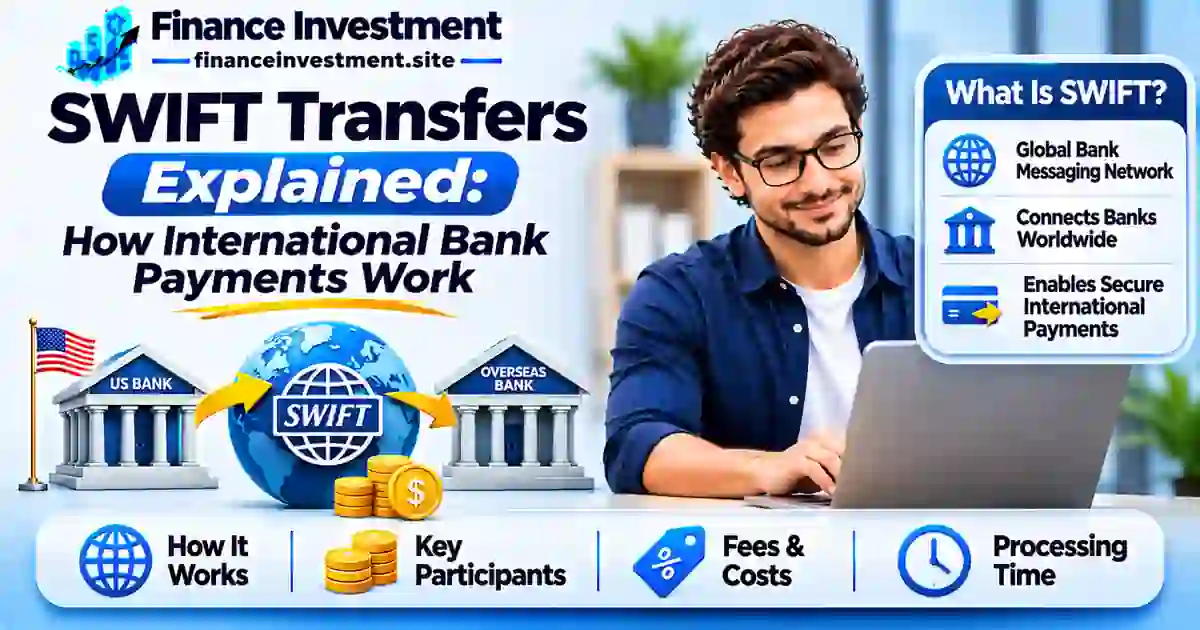
Understanding SWIFT transfers explained in simple terms starts with one important distinction: SWIFT provides a secure messaging network that banks use to exchange payment instructions. It does not directly hold, move, or settle the money. The actual transfer is handled by the banks and payment systems involved.
Imagine you are in the United States and need to pay university tuition for a family member studying overseas. Your bank may use the SWIFT network to send payment instructions to the receiving bank. Depending on the countries, currencies, and banking relationships involved, one or more intermediary banks may also help route the payment before it reaches the recipient.
That is why an international bank payment can involve more than two banks—and why understanding the process matters before you send money abroad. If you are new to bank payments, start with our complete bank transfers and payments guide.
What You’ll Learn
- What SWIFT is and how its messaging network works.
- What SWIFT codes and BIC numbers identify.
- How banks and intermediary institutions route international payments.
- Why transfers can face delays, checks, or deductions.
- How to make an international bank payment more safely.
Quick Answer: What Is a SWIFT Transfer?
A SWIFT transfer is a commonly used term for an international bank payment in which financial institutions exchange payment instructions through the SWIFT network. SWIFT provides secure financial messaging; it does not hold, move, or settle the money itself. The banks and payment systems involved handle the actual movement of funds. Not every international payment uses SWIFT, and the route depends on the institutions, currencies, and countries involved.
Key Takeaways
- SWIFT sends messages: It helps financial institutions exchange standardized payment instructions securely.
- BIC identifies institutions: A BIC, often called a SWIFT code, identifies a financial institution and may identify a specific branch.
- Intermediary banks may help: Some payments pass through correspondent banks before reaching the recipient’s bank.
- Delivery times vary: Banking hours, compliance checks, currencies, and payment routes can affect processing.
- Accurate details matter: Correct recipient and bank information can reduce avoidable delays and payment rejections.
Table of Contents
SWIFT Transfers at a Glance
Here is a quick overview of how SWIFT supports international bank payments, what information banks use, and why the payment route can vary. These basics will help you understand the process before looking at each step in detail.
| Feature | What It Means |
|---|---|
| SWIFT network | A global network for secure financial messaging between institutions. |
| Main purpose | Exchanging standardized payment instructions and other financial messages. |
| SWIFT code / BIC | Identifies a financial institution and may identify a specific branch. |
| Payment route | May involve the sending bank, receiving bank, and one or more intermediary banks. |
| Processing time | Depends on banking hours, payment route, currencies, and required checks. |
| Common uses | Personal and business international bank payments handled through participating institutions. |
Complete Beginner Guide to SWIFT

SWIFT stands for the Society for Worldwide Interbank Financial Telecommunication. It operates a global financial messaging network that helps banks and other participating institutions exchange standardized messages securely. These messages can include international payment instructions, confirmations, and other financial information.
Is SWIFT a Bank or Money Transfer Service?
No. SWIFT is not a bank, does not hold customer deposits, and does not directly move money between bank accounts. Think of it as a secure communication network that helps financial institutions coordinate transactions. The banks and relevant payment systems handle the actual processing and settlement of funds.
What Is a SWIFT Code or BIC?
A Business Identifier Code (BIC) identifies an eligible institution or business entity in financial messaging. It is commonly called a SWIFT code. A BIC has either 8 or 11 characters. The first 8 identify the business party and its location; an optional final 3 characters identify a specific branch or unit.
Why Do Banks Use SWIFT?
Banks use SWIFT to exchange structured payment instructions in a standardized format, helping them communicate across borders. Depending on the destination, the sender may need the recipient’s account number, BIC, IBAN where applicable, and additional bank details requested by the sending institution.
How a SWIFT International Payment Works
Imagine sending money from your U.S. bank account to a relative’s bank account overseas. If the payment uses SWIFT, the network helps the financial institutions exchange the necessary payment instructions. Here is a simplified look at how the process works:
- You provide the payment details: You enter the recipient’s name, account number or IBAN where applicable, receiving bank details, BIC/SWIFT code, currency, and amount.
- Your bank reviews the request: The sending bank checks the payment details, available funds, applicable limits, and required security and compliance information.
- Payment instructions are exchanged: If SWIFT is used, your bank sends a structured financial message to the relevant institution or institutions involved in the payment route.
- Banks arrange funds movement and settlement: The institutions use their banking relationships, correspondent accounts, or other payment arrangements to move and settle the funds. One or more intermediary banks may be involved, depending on the route.
- The recipient’s bank processes the payment: After the necessary funds and instructions are received and checked, the receiving bank processes the payment and may credit the recipient’s account.
To understand the broader process behind bank wire payments, read our guide on how wire transfers work.
Benefits and Drawbacks of SWIFT Transfers
SWIFT supports international banking by giving financial institutions a standardized way to exchange payment instructions. However, the overall payment experience still depends on the banks and payment arrangements involved.
Benefits
- Global connectivity: Helps participating financial institutions communicate across international banking networks.
- Standardized messaging: Structured financial messages make payment instructions easier for institutions to process.
- Multiple payment routes: Correspondent banking relationships can help banks reach institutions in different countries.
- Payment information: Banks can exchange references and relevant transaction details to support payment processing.
Drawbacks
- Processing delays: Banking hours, compliance reviews, and intermediary institutions can extend processing time.
- Additional charges: Sending, receiving, or intermediary banks may apply fees.
- Complex payment routes: Multiple institutions can make it harder to understand where a payment is being processed.
- Incorrect details: Errors in recipient or bank information can cause delays, rejection, or payment recovery difficulties.
SWIFT vs. Other International Payment Methods
When sending money abroad, you may have several options. One important distinction: SWIFT is a financial messaging network, while banks and money-transfer providers offer payment services that use different networks and payout methods.
| Payment Option | How It Works | Common Use |
|---|---|---|
| International bank wire | Banks arrange cross-border payments; SWIFT may carry the payment instructions. | Personal and business payments to overseas bank accounts. |
| Online remittance service | A provider arranges the transfer through its banking partners or payment network. | Sending money to family or individuals abroad. |
| International card payment | Card networks and payment processors handle eligible purchases and transactions. | Paying overseas merchants, hotels, and service providers. |
Which option should you choose? An international bank wire may suit payments directly to overseas bank accounts, while a remittance provider may offer convenient payout choices for personal transfers. Cards are generally useful for purchases rather than sending money directly to someone’s bank account.
Before choosing, compare the total fees, exchange rate, delivery estimate, recipient options, and payment protections. You can also read our guide to bank-to-bank transfers vs. payment apps.
SWIFT Transfer Costs, Risks and Expert Tips
The cost of an international bank payment can involve more than the outgoing wire fee charged by your U.S. bank. Although SWIFT provides financial messaging, the banks and payment providers handling the transaction may charge fees or apply currency-conversion margins.
Costs to Check Before Sending
- Sending bank fee: Your U.S. bank may charge an outgoing international wire fee.
- Intermediary bank deductions: Correspondent banks involved in the payment route may deduct processing charges.
- Receiving bank fee: The recipient’s bank may charge an incoming international payment fee.
- Exchange-rate markup: The conversion rate offered by the bank may include a margin over the market exchange rate.
Common Risks to Understand
- Incorrect recipient or bank details can cause delays, rejection, or misdirected payments.
- Fake payment instructions and impersonation scams can lead to financial losses.
- Compliance checks, missing information, or intermediary processing can delay a payment.
Learn more in our guides to bank transfer fees and sending a wire transfer safely.
Common SWIFT Transfer Mistakes and a Real-Life Example
International bank payments require accurate instructions. Even a small mistake can lead to additional checks, processing delays, or a rejected payment. Avoid these common errors:
- Wrong BIC/SWIFT code: An incorrect bank identifier can prevent the payment from reaching the intended institution.
- Incorrect account information: A wrong account number, IBAN where applicable, or recipient name may cause processing problems.
- Ignoring currency instructions: Sending a payment in an unexpected currency may lead to conversion or handling issues.
- Assuming a message means delivery: A SWIFT payment message does not confirm that the recipient’s account has been credited.
- Failing to verify changed bank details: Fraudulent invoices or emails may redirect payments to an unauthorized account.
Imagine a parent in the United States sending tuition money to a university overseas. The parent uses an old invoice containing outdated bank details. The payment may be delayed, rejected, or require investigation if the information no longer matches the university’s account. Checking the latest payment instructions directly with the university before sending could help avoid this problem.
If a payment does not arrive as expected, contact your bank and request a status check. You can also read our guides on why a bank transfer has not arrived and why a bank transfer may be rejected.
Who Should Use SWIFT Transfers?
International bank wires that use SWIFT messaging may be suitable when money needs to reach a bank account in another country. Common situations include:
- Families: Sending financial support to relatives living overseas.
- Students and parents: Paying international university tuition or other education expenses.
- Businesses: Paying overseas suppliers, contractors, or business partners.
- Property buyers and investors: Making eligible cross-border payments through their financial institutions.
However, a SWIFT-based bank wire may not be the most convenient choice for every transfer. For smaller personal payments or cash-pickup needs, a remittance provider may offer more suitable options. Your bank determines the payment route, so compare available methods, total fees, exchange rates, delivery estimates, and recipient requirements before sending.
Frequently Asked Questions About SWIFT Transfers
1. What is a SWIFT transfer?
A SWIFT transfer is a common term for an international bank payment in which financial institutions exchange payment instructions through the SWIFT messaging network. Banks and payment systems handle the actual movement and settlement of funds.
2. How long does a SWIFT transfer take?
There is no universal delivery time. Processing depends on the destination, banks, currencies, payment route, banking hours, and compliance checks. Ask your bank for its current delivery estimate.
3. Is a SWIFT code the same as a BIC?
The terms are commonly used interchangeably. BIC stands for Business Identifier Code and identifies an eligible institution or business entity. An 8-character BIC identifies the business party and location, while an optional final 3 characters can identify a branch or unit.
4. Do all international transfers require a SWIFT code?
No. Requirements depend on the country, receiving institution, and payment method. Some international payments use other payment networks or local banking details instead.
5. Do all SWIFT transfers use intermediary banks?
No. Some payments can be routed directly between financial institutions, while others involve one or more correspondent or intermediary banks. The route depends on the banks’ relationships and payment arrangements.
6. Can I track a SWIFT transfer?
You can request a payment reference and available tracking information from your sending bank. Your bank may investigate the payment status, but a message reference alone does not confirm that the recipient’s account has been credited.
7. Are SWIFT transfers safe?
SWIFT provides secure financial messaging between participating institutions, but this does not eliminate fraud or incorrect payment instructions. Verify recipient details independently and use your bank’s official channels.
8. Can I cancel a SWIFT transfer after sending it?
You can contact your bank immediately and request a cancellation or recall. However, success is not guaranteed, particularly if the payment has already been processed or credited to the recipient’s account.
Final Verdict: Is a SWIFT Transfer the Right Choice?
International payments involve more than simply sending money from one bank account to another. SWIFT helps financial institutions communicate payment instructions across borders, while banks and their payment arrangements handle the actual movement and settlement of funds. Understanding this distinction makes it easier to follow an international bank payment.
For U.S. families, students, and businesses, a SWIFT-based bank wire may be appropriate when an overseas recipient requires payment directly into a bank account. However, the right option depends on the destination, amount, delivery requirements, and available payment services.
Before authorizing a transfer, verify the recipient’s banking instructions and compare the total fees, exchange rate, and estimated delivery time. For a broader understanding of your options, explore our complete guide to bank transfers and payments.
Make Your Next International Bank Payment with Confidence
Have questions or suggestions about this guide? Contact FinanceInvestment for general article feedback and banking education topics.
Continue learning with our complete guide to everyday bank transfers, payment methods, and banking safety.
Leave a Reply