Tag: International Wire Transfers

  • Domestic vs. International Wire Transfers: Key Differences

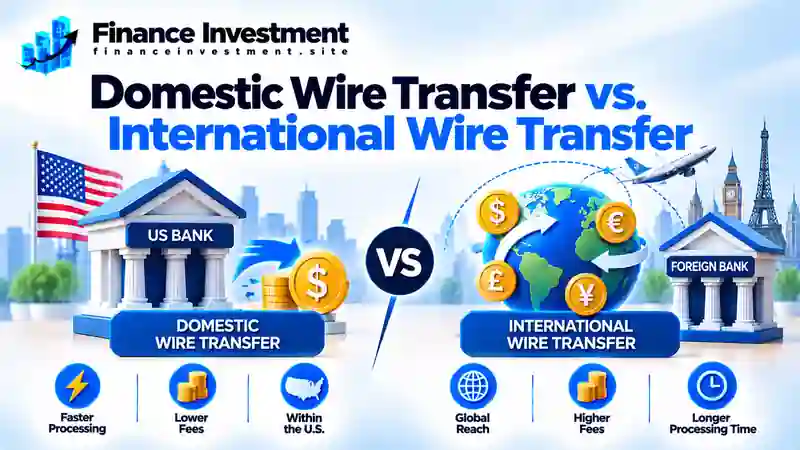
    Domestic Wire Transfer vs. International Wire Transfer: Key Differences

    Subhash Rukade
    Founder, FinanceInvestment
    PERSONAL FINANCE · USA
    PUBLISHED
    October 27, 2026*
    LAST UPDATED
    October 27, 2026*
    READING TIME
    About 10 min
    Straightforward banking explanations to help you make informed money decisions.


    domestic wire transfer vs international wire transfer

    Domestic Wire Transfer vs. International Wire Transfer: What’s the Difference?

    Sending money to another U.S. bank is different from wiring funds to someone in another country. When comparing a domestic wire transfer vs. an international wire transfer, the important questions are how the payment travels, what it costs, how long it may take, and how much money reaches the recipient.

    A domestic wire typically moves money between financial institutions within the United States. An international wire sends funds across borders and may involve currency conversion, intermediary banks, and additional recipient details. Processing times and fees depend on the banks, payment route, destination, currency, and submission time.

    Before authorizing either transfer, check the total cost and verify the recipient’s payment instructions through a trusted source. For a broader look at your options, explore our guide to bank transfers and payments.

    What You’ll Learn

    • The main differences between domestic and international wires.
    • What can affect delivery times and transfer fees.
    • How exchange rates and intermediary charges may change the amount received.
    • How to choose a suitable payment method and avoid common mistakes.

    Quick Answer: Domestic vs. International Wire Transfers

    Domestic wires transfer funds within the United States, while international wires send funds across national borders. International payments can involve exchange-rate costs, intermediary banks, and extra processing checks. The actual fees, delivery time, and recipient requirements depend on the banks, destination, currency, and payment route.

    Key Takeaways

    • Domestic wire fees and cutoff times vary by financial institution.
    • International transfers may require SWIFT/BIC details or other destination-specific banking information.
    • If currencies differ, the exchange rate can change the amount the recipient receives.
    • Sending, receiving, and intermediary fees may affect the total cost.
    • Banking hours, holidays, and compliance checks can affect delivery.
    • Confirm recipient details and verify any changed payment instructions using a trusted contact method.

    Bottom line: Before sending a wire, compare the total fees, expected arrival window, and amount the recipient should receive. Choose the transfer that fits your payment needs, rather than assuming one type is always faster or cheaper.

    Domestic vs. International Wire Transfers at a Glance

    QUICK TAKE

    Domestic wires send funds between financial institutions within the United States. International wires cross national borders and may involve foreign-currency conversion, intermediary banks, or additional payment checks.

    Domestic Wire

    Can suit U.S. payments when the recipient requires a wire, such as certain real-estate closings or business transactions.

    International Wire

    Can suit cross-border payments to family, businesses, or other recipients, subject to the provider’s supported destinations and requirements.

    FeatureDomestic WireInternational Wire
    Delivery timeMay be completed the same business day if submitted before the bank’s cutoffCan take several business days, depending on the route and destination
    Potential costsSending fee and possible receiving feeSending and receiving fees, possible intermediary charges, and currency-conversion costs
    Bank detailsRecipient information and required U.S. bank routing detailsRecipient information plus required destination-specific bank identifiers, which may include SWIFT/BIC or an IBAN where applicable

    These are general comparisons, not guarantees. Actual delivery times and charges depend on the banks, cutoff times, holidays, destination, currency, and any required checks. Before authorizing a transfer, ask about the total cost and the estimated amount the recipient will receive.

    Domestic and International Wire Transfer Basics domestic wire transfer vs international wire transfer

    The payment route is one of the main differences between domestic and international wires. A domestic wire transfers funds between financial institutions within the United States. Depending on the institutions and transaction, it may be processed through a domestic wire system such as the Federal Reserve’s Fedwire Funds Service or another supported network.

    What Happens With an International Wire?

    An international wire sends money across national borders. The sending and receiving banks may use intermediary institutions to route the payment. Banks commonly use the SWIFT network to exchange payment instructions, but SWIFT is a financial messaging network—not a bank account or a currency-exchange service. If the payment involves different currencies, the exchange rate and any conversion markup can affect the amount the recipient receives.

    What Information Might You Need?

    • The recipient’s full name and account number or other required account identifier.
    • The receiving bank’s required routing number or country-specific bank identifier.
    • For some international transfers, a SWIFT/BIC code, an IBAN where applicable, or another local banking code.
    • The transfer amount and currency, plus any additional information the bank requires for that destination.

    Safety tip: Requirements vary by bank and destination. Obtain the instructions from your financial institution, then independently verify any new or changed payment details using a trusted phone number before authorizing the transfer.

    How Domestic and International Wire Transfers Work

    Both types start when the sender submits payment instructions, but the route and checks can differ. Here’s how a wire typically moves from the sender to the recipient.

    1. Provide the recipient’s details. Enter the required account information and bank identifiers. Confirm the details directly with the recipient or their financial institution.
    2. Review the payment terms. Check the amount, currency, applicable fees, exchange rate where relevant, and the bank’s estimated delivery window.
    3. Authorize the wire. Follow your bank’s authentication process. The bank may request additional identity or transaction checks.
    4. The sending bank reviews and releases it. The bank processes the instructions and routes the payment through an available wire system or supported payment arrangement.
    5. The payment travels to the receiving institution. A domestic wire generally follows a U.S. payment route. An international wire may pass through correspondent banks or involve currency conversion, depending on the service and destination.
    6. The receiving bank handles the funds. After any required checks, the receiving institution processes the payment and credits the recipient’s account under its procedures.

    If a wire is delayed or sent incorrectly: Contact your bank promptly, provide the transaction reference if available, and ask it to investigate or request a recall. A recall may not succeed once the payment has been processed or the recipient has received the funds.

    Benefits and Drawbacks of Domestic and International Wires

    A wire can be a practical choice when a recipient requires one or when a payment needs to move directly between financial institutions. But fees, processing requirements, and the difficulty of reversing a completed payment deserve attention before you send money.

    Advantages

    • Useful for property closings and other payments when the recipient specifically requests a wire.
    • Some domestic wires can be processed the same business day, subject to bank cutoff times and checks.
    • Can support cross-border payments to destinations served by the provider.

    Drawbacks

    • Sending, receiving, intermediary, or currency-conversion charges may apply.
    • International transfers may take longer because of routing, local banking hours, or additional checks.
    • Incorrect details and scams can be costly to resolve; a recall may not recover the funds.

    Expert tip: Ask whether the recipient actually requires a wire. For routine domestic payments, compare the fees, timing, and eligibility requirements of an ACH transfer versus a wire transfer before deciding.

    Domestic vs. International Wire Transfer: Side-by-Side Comparison

    The main difference is the destination, but the payment route, currency, and recipient’s banking requirements matter too. Compare these features before choosing a transfer method.

    FeatureDomestic WireInternational Wire
    DestinationA recipient within the United StatesA recipient in another country
    Payment routeA supported domestic wire system, depending on the banksA cross-border payment route; intermediary banks may be involved
    CurrencyOften U.S. dollars for U.S. bank paymentsMay be sent or received in U.S. dollars or another currency
    Possible costsSending fee and possible receiving feeBank fees and, where applicable, intermediary or currency-conversion costs
    Bank detailsRecipient details and the required U.S. bank routing informationRecipient details and any bank identifiers required by the destination
    Best fitU.S. payments when a wire is required or appropriateCross-border payments when the provider supports the destination and the wire suits the recipient’s needs

    Before you send: Confirm the total cost, expected arrival window, exchange rate if applicable, and estimated amount the recipient will receive. For eligible domestic payments where a wire is not required, compare an ACH transfer with a wire transfer to see whether another option better fits your needs.

    Fees, Risks, and Expert Tips for Wire Transfers

    The transfer amount is not necessarily the total cost of sending a wire. Depending on the bank and payment route, you may face an outgoing fee, a receiving fee, or intermediary-bank charges. For an international wire involving currency conversion, the exchange rate offered by the provider may also include a markup that reduces the amount received.

    Check the Full Cost Before Sending

    Before authorizing the payment, ask your bank about applicable fees, the exchange rate, the estimated amount the recipient will receive, and the expected delivery window. Confirm the submission cutoff, too. A transfer sent after the cutoff or before a banking holiday may not be processed on the schedule you expect.

    Protect Your Money Before You Authorize a Wire

    • Verify the recipient’s name, account details, and required bank identifiers before submitting the transfer.
    • If payment instructions change, confirm them using a trusted phone number you obtained independently—not the contact details in the unexpected message.
    • Save your confirmation and transaction reference for follow-up.
    • If you suspect fraud or notice an error, contact your bank immediately and ask whether a trace or recall is possible.

    Expert tip: Wire transfers can be difficult to reverse once processed. A bank may attempt to recover the funds, but a recall does not guarantee that your money will be returned.

    For more ways to protect your banking information, use our bank account security checklist.

    Common Wire Transfer Mistakes and a Real-Life Example

    A wire transfer can go wrong when payment details are inaccurate, costs are overlooked, or instructions are not independently verified. Avoid these common mistakes before authorizing a payment:

    • Using the wrong payment method: Confirm that the recipient requires a wire and that your bank supports the destination and currency.
    • Entering incorrect bank details: Check the recipient’s name, account number, routing information, and any required international banking identifiers.
    • Overlooking the final amount: For international wires, check the exchange rate and ask about applicable receiving or intermediary fees.
    • Accepting unexpected payment changes: Fraudsters may impersonate vendors, home sellers, or real estate professionals to redirect funds.

    Real-Life Example: A Changed Closing Instruction

    Imagine a U.S. homebuyer preparing to wire money for a property closing. An email arrives with new bank details shortly before the deadline. The buyer sends the payment without confirming the change, and the instructions turn out to be fraudulent. Before sending, the buyer could have called the title company using a previously verified phone number to confirm the correct account details.

    If you notice an error or suspect fraud after sending a wire, contact your bank immediately. Provide the transaction reference and ask whether a trace or recall is possible. Acting quickly may help, but recovery is not guaranteed.

    Who Should Choose a Domestic or International Wire Transfer?

    A Domestic Wire May Suit You If…

    You are sending money between U.S. bank accounts for a property closing, business transaction, or another payment where the recipient requires a wire. Confirm the recipient’s details, your bank’s cutoff time, applicable fees, and expected processing window before authorizing it.

    An International Wire May Suit You If…

    You need to send funds to a bank account in another country, such as paying an overseas supplier or supporting family abroad. Check whether your bank supports the destination, which recipient details are required, whether currency conversion applies, and how much the recipient is expected to receive.

    Make the right choice: A wire may not be necessary for every payment. For routine transfers, compare eligible alternatives such as ACH or your bank’s international payment services. Choose based on the recipient’s requirements, total cost, supported destination, and delivery expectations.

    Frequently Asked Questions

    1. What is the difference between a domestic and an international wire transfer?

    A domestic wire transfers funds within the United States. An international wire sends funds across national borders and may involve intermediary banks, currency conversion, or additional processing requirements.

    2. How long does a domestic wire transfer take?

    A domestic wire may be completed the same business day when submitted before the bank’s cutoff. Processing reviews, holidays, and bank policies can affect the actual arrival time.

    3. How long does an international wire transfer take?

    An international wire can take several business days or longer. Timing depends on the destination, participating banks, currency, local holidays, and any required compliance checks.

    4. Are international wire transfers more expensive than domestic wires?

    They can be. Depending on the payment route, costs may include sending and receiving fees, intermediary-bank charges, and an exchange-rate markup. Compare the total cost and expected amount received before authorizing the transfer.

    5. Do all international wire transfers require a SWIFT code or IBAN?

    No. Required details depend on the destination country, receiving bank, and payment route. Your bank can tell you whether a SWIFT/BIC, IBAN, local bank code, or other identifier is required.

    6. Can I track a wire transfer?

    Your bank may provide a status update or tracing service. Contact the sending bank with your transaction reference and ask whether it can investigate the payment.

    7. Can I cancel or reverse a wire transfer?

    Cancellation may be possible before a payment is processed, depending on the bank and transaction status. After processing, a recall may be attempted, but recovery is not guaranteed. Contact your bank immediately if you identify an error or suspect fraud.

    8. Is a wire transfer safer than an ACH transfer?

    Neither method is automatically safer for every situation. The appropriate choice depends on the payment purpose, timing, costs, and applicable protections. Read our ACH transfer vs. wire transfer guide to compare the options.

    Final Verdict: Domestic vs. International Wire Transfers

    The right choice in the domestic wire transfer vs. international wire transfer decision depends on the destination and the payment requirements. A domestic wire suits payments between U.S. bank accounts, while an international wire is designed for cross-border payments that may involve currency conversion or additional banks.

    Before authorizing either transfer, confirm the recipient’s details, review the total cost, and check the expected delivery window. If you are making a routine domestic payment, consider ACH when it meets the recipient’s requirements and timing needs.

    Bottom line: Choose a domestic wire for an appropriate U.S. payment or an international wire for a supported cross-border payment. Verify the instructions independently before sending, especially when payment details have recently changed.

    Make Your Next Wire Transfer With Confidence

    Understand your payment options, review the total cost, and verify recipient details before sending money. Explore more practical banking guidance from FinanceInvestment.

    FinanceInvestment · Practical personal finance guidance for U.S. readers.

  • How Do Wire Transfers Work? Step-by-Step Guide

    How Do Wire Transfers Work? Step-by-Step Guide

    How Do Wire Transfers Work? A Step-by-Step Guide

    Subhash Rukade
    Founder, FinanceInvestment
    PERSONAL FINANCE · USA
    Published: October 27, 2026
    Updated: October 27, 2026
    Reading time: About 10 minutes


    how do wire transfers work

    How Do Wire Transfers Work? Understanding Each Step

    If you need to pay for a home purchase, send money to family, or move funds between banks, knowing how wire transfers work can help you avoid delays and costly errors. The process typically starts when you provide the recipient’s details and authorize your bank or transfer provider to send the payment.

    The provider then checks the instructions and processes the payment through the relevant payment system. The time it takes depends on factors such as the transfer route, submission cutoff, bank procedures, holidays, and any intermediary institutions involved. International payments may also require currency conversion and additional checks.

    This guide explains what happens from authorization to delivery, how to check a transfer, and how to reduce the risk of sending money to the wrong recipient. For a broader overview, see our complete guide to bank transfers and payments.

    What You’ll Learn

    • How banks and transfer providers process wire instructions.
    • How domestic and international wires can differ.
    • How fees, cutoff times, and intermediary banks affect delivery.
    • How to verify recipient details and respond quickly to a suspected wire-fraud incident.

    Quick Answer: How Do Wire Transfers Work?

    A wire transfer starts when the sender provides the recipient’s banking details and authorizes a payment. The sending bank or provider verifies and processes the instruction through the appropriate payment system. The receiving institution then processes the incoming funds under its procedures. How quickly the money arrives depends on the transfer route, processing cutoffs, business days, security checks, and any intermediary institutions.

    Key Takeaways

    • Verify every detail: Check the recipient’s name, account number, routing information, and any required international bank codes before authorizing the transfer.
    • Allow for processing time: Some domestic wires arrive the same business day, but cutoff times, bank reviews, weekends, and holidays can cause delays.
    • Check the total cost: Sending and receiving fees, intermediary charges, or currency-conversion costs may apply.
    • Respond immediately to problems: If you send money to the wrong recipient or suspect fraud, contact your bank or transfer provider immediately and ask whether a recall is possible. Recovery is not guaranteed.

    Wire Transfers at a Glance

    QUICK TAKE: A wire transfer can be useful when a payment needs to move directly between financial institutions. Before sending, compare the cost and timing with other payment methods, and independently verify the recipient’s instructions.

    Common usesProperty closings, large payments, and domestic or international transfers where the recipient or transaction requires a wire
    Delivery timeSome domestic wires arrive the same business day; international transfers may take several business days. Cutoff times, reviews, holidays, and intermediary banks can affect timing.
    Possible feesOutgoing or incoming wire fees, intermediary charges, and currency-conversion costs, depending on the provider and route
    Details requiredRecipient name and banking details, plus routing numbers or international bank codes as required for the transfer
    Main riskIncorrect details and payment-instruction scams; a completed wire can be difficult to recover, so contact your provider immediately if a problem occurs

    Wire Transfer Basics: How Banks Connect Paymentshow do wire transfers work

    A wire transfer is an electronic payment processed through financial institutions and the payment systems they use. No physical cash travels between banks. Instead, payment instructions are transmitted and the funds are transferred or settled through the relevant financial infrastructure.

    Domestic vs. International Wire Transfers

    A domestic wire moves money between institutions within the same country. In the United States, systems such as Fedwire Funds Service and CHIPS support certain domestic or wholesale payments, depending on the transaction and participating institutions. An international wire crosses national borders and may involve correspondent banks, currency conversion, and additional compliance checks. SWIFT helps financial institutions exchange payment messages internationally; it is not itself a bank or a direct money-transfer service.

    What Information Might You Need?

    Requirements vary by bank, provider, and destination. You may be asked for:

    • The recipient’s full name and account number or other required account details.
    • The recipient bank’s routing number or other domestic bank identifier, when applicable.
    • A SWIFT/BIC code, IBAN, or country-specific bank code if required for an international transfer.
    • The transfer amount, currency, and any additional information requested by the provider.

    Safety tip: Verify the recipient’s banking details before authorizing payment. If wire instructions change unexpectedly, confirm the change through a trusted phone number or another independently verified channel—not by replying to the same email.

    The Wire Transfer Process, Step by Step

    The exact process depends on the banks, payment system, and destination, but a typical wire transfer follows these stages:

    1. Provide the recipient’s details. Enter the required name, account information, bank identifiers, and payment amount. International transfers may require additional country-specific codes.
    2. Review the payment details. Check the amount, applicable fees, exchange rate if relevant, estimated delivery time, and any transfer limits before submitting the request.
    3. Authorize the transfer. Submit the instruction through your bank or transfer provider and complete any required identity or security verification.
    4. The sending institution processes it. Your bank or provider performs applicable checks and sends the payment instruction through the relevant payment system. Additional review may delay processing.
    5. Intermediaries may be involved. Some international transfers pass through one or more intermediary banks; others do not. Each institution involved may affect processing time or fees.
    6. The receiving institution processes the incoming payment. It applies its own procedures before making the funds available to the recipient. Keep your confirmation or reference number so you can ask your bank to trace the payment if it is delayed.

    Before and after sending: Verify recipient details independently before authorizing the wire. If you discover an error or suspect fraud, contact your bank immediately, provide the transfer reference, and ask whether a recall or other recovery action is possible. Recovery is not guaranteed.

    Benefits and Drawbacks of Wire Transfers

    Wire transfers can be a practical choice when a payment must reach another financial institution, but the right option depends on the transaction, urgency, cost, and risk.

    Advantages

    • Some domestic wires can be processed and delivered on the same business day.
    • Often suitable for transactions such as property closings when a wire is required.
    • Can send funds internationally through providers that support the destination.
    • A confirmation or reference number can help when checking payment status.

    Drawbacks

    • Outgoing, incoming, intermediary, or currency-conversion fees may apply.
    • Cutoff times, holidays, and additional checks can affect delivery.
    • Incorrect recipient details may delay a payment or send it to the wrong account.
    • A completed wire may be difficult to recover, particularly if fraud is involved.

    Expert tip: Before sending a wire, compare the total fees, expected delivery time, and recipient’s requirements. For recurring bills or routine transfers, ACH may be a suitable alternative, depending on the payment deadline and provider. Read our comparison of ACH transfers vs. wire transfers.

    Wire Transfers vs. Other Payment Methods

    The right payment method depends on the deadline, total cost, recipient’s requirements, and available services. Compare these typical characteristics before choosing; actual timing and fees vary by provider and transaction.

    MethodTypical timingCost and common use
    Wire transferSome domestic wires are completed the same business day if submitted before the applicable cutoff; international delivery can take longer.Fees may apply. Often used for property closings and other payments where a wire is required.
    ACH transferStandard ACH timing varies and commonly takes one or more business days; eligible same-day ACH payments may be available.Often low-cost. Common for payroll, bill payments, and routine bank transfers.
    Paper checkMail delivery, deposit processing, and funds availability can each add time.May be convenient when a check is accepted; mailing and other costs depend on the situation.
    P2P payment appTransfers between supported users may be quick, while moving money to a bank account can take additional time.Convenient for eligible person-to-person payments; limits, eligibility, and fees vary by service.

    Which should you choose? Use a wire when the recipient requires it or its payment route suits the transaction. For routine payments, compare ACH and other available methods before paying wire fees. Read our guides to ACH vs. wire transfers and ACH vs. paper checks.

    Wire Transfer Fees, Risks, and Expert Tips

    Wire transfer costs vary by financial institution, account type, destination, and currency. Before approving a payment, check the sending fee, the exchange rate if applicable, and the amount the recipient is expected to receive. Some routes may also involve charges from intermediary or receiving banks.

    Costs and Risks to Consider

    • Sending and receiving fees: Your bank or the recipient’s institution may charge for processing a wire.
    • International transfer costs: Currency-conversion markups and intermediary-bank charges may affect the final amount delivered.
    • Delays: Cutoff times, weekends, holidays, and additional verification may affect when funds arrive.
    • Fraud or incorrect details: A mistaken account number or fraudulent payment instruction can delay a transfer or put funds at risk.

    Expert Tips for Safer Wire Transfers

    • Confirm new or changed payment instructions through a trusted phone number you already know. Do not rely only on a phone number or link in the payment request.
    • Double-check the recipient’s name, account details, amount, currency, and applicable fees before authorizing the transfer.
    • Save the confirmation and reference number so your bank can help trace the payment if needed.
    • If you suspect fraud or an error, contact your bank immediately and ask whether a recall or other recovery action is possible. Recovery is not guaranteed.

    For more ways to protect your finances, use our bank account security checklist and enable transaction alerts if your bank offers them.

    Common Wire Transfer Mistakes—and How to Avoid Them

    • Entering incorrect recipient details: Double-check the account number, recipient name, and required bank identifiers before approving the wire.
    • Overlooking the total cost: Review the sending fee, applicable exchange rate, and estimated amount the recipient will receive.
    • Ignoring processing deadlines: Check your provider’s cutoff time and allow for weekends, holidays, or additional verification.
    • Accepting changed instructions without checking: Verify unexpected account changes through a trusted phone number or contact method you already know.

    Real-Life Scenario: A Last-Minute Wire Change

    Imagine a homebuyer in the United States is preparing to wire a down payment to an escrow company. Just before the deadline, an email appears to come from the company and provides different bank details. The buyer sends the money without independently confirming the change. Later, the buyer discovers the message was fraudulent.

    What could have prevented it? The buyer could have called the escrow company using a previously verified phone number before sending the wire. If the payment has already been sent, the buyer should contact the bank immediately, report suspected fraud, and request a wire recall. A recall may not succeed, so prevention is critical.

    Be cautious with unexpected payment requests, even when they appear to come from a familiar organization. Read our guide to recognizing bank impersonation scams to learn more about common warning signs.

    Who Should Use a Wire Transfer?

    A wire transfer may suit you when the recipient requires a wire, the transaction has specific payment instructions, or the available wire service meets your timing needs. Common situations include:

    • Homebuyers sending closing funds to a verified escrow or title company using independently confirmed instructions.
    • Individuals or businesses making payments when the recipient specifically requests a wire.
    • People sending money internationally through a provider that supports the destination and currency.
    • Customers who have compared the transfer’s total cost, expected delivery time, and payment requirements with other available methods.

    When might another method be better? For routine bills, recurring payments, or everyday bank transfers, ACH or another supported option may be more suitable. Compare the fees, timing, limits, and recipient requirements before deciding. Read our guide to ACH transfers vs. wire transfers.

    Frequently Asked Questions About Wire Transfers

    1. How long does a wire transfer take?

    Some domestic wires can arrive the same business day, depending on the bank, submission time, and processing requirements. International wires may take several business days, depending on the destination and institutions involved.

    2. Are wire transfers instant?

    Not necessarily. A payment may be processed quickly, but bank cutoffs, verification checks, holidays, and the receiving institution’s procedures can affect when funds become available.

    3. How much does a wire transfer cost?

    Fees depend on the bank or provider, account type, destination, and currency. International transfers may also involve intermediary-bank charges or currency-conversion costs. Check the total cost before authorizing payment.

    4. What details are needed to send a wire?

    You generally need the recipient’s name and account details, plus the bank identifiers required for the transfer route. International payments may require a SWIFT/BIC code, IBAN, or another country-specific identifier. Confirm the exact requirements with your provider.

    5. Can I cancel a wire transfer after sending it?

    You may be able to stop a transfer before it is completed, but cancellation is not guaranteed. Once a wire has been processed, recovery can be difficult. Contact your bank immediately to ask about cancellation or recall options.

    6. What happens if I enter the wrong account details?

    The payment may be delayed, rejected, or sent to an unintended recipient. Contact your bank immediately if you discover an error. The available recovery options depend on the payment status and circumstances.

    7. How can I track a wire transfer?

    Check your bank’s transfer status or contact the provider using your confirmation or reference number. If the payment is delayed, ask whether the institution can trace it through the relevant payment system.

    8. Are international wire transfers safe?

    They can be used for legitimate payments, but scams, incorrect details, and unexpected fees remain risks. Verify recipient details independently and confirm any unexpected changes to payment instructions before authorizing a transfer.


    Final Verdict: Is a Wire Transfer the Right Choice?

    A wire transfer can be the right option when a recipient requires one, a property closing has specific payment instructions, or a supported international payment route meets your needs. However, a wire is not automatically the best choice for every large or urgent payment. Fees, processing times, and recipient requirements vary.

    Before authorizing a transfer, compare the total cost and expected delivery time, independently verify the recipient’s banking instructions, and save your confirmation details. If you suspect an error or fraud, contact your bank immediately and ask what action is possible.

    Bottom line: Choose a payment method based on the deadline, total cost, and recipient’s requirements—not speed alone. For help comparing your options, explore our complete guide to bank transfers and payments.

    Questions or Feedback About Wire Transfers?

    Have a question about this guide or a suggestion for a future topic? Send a message to Subhash Rukade at FinanceInvestment.

    Email the Author

    Continue learning with our complete guide to bank transfers and payments.