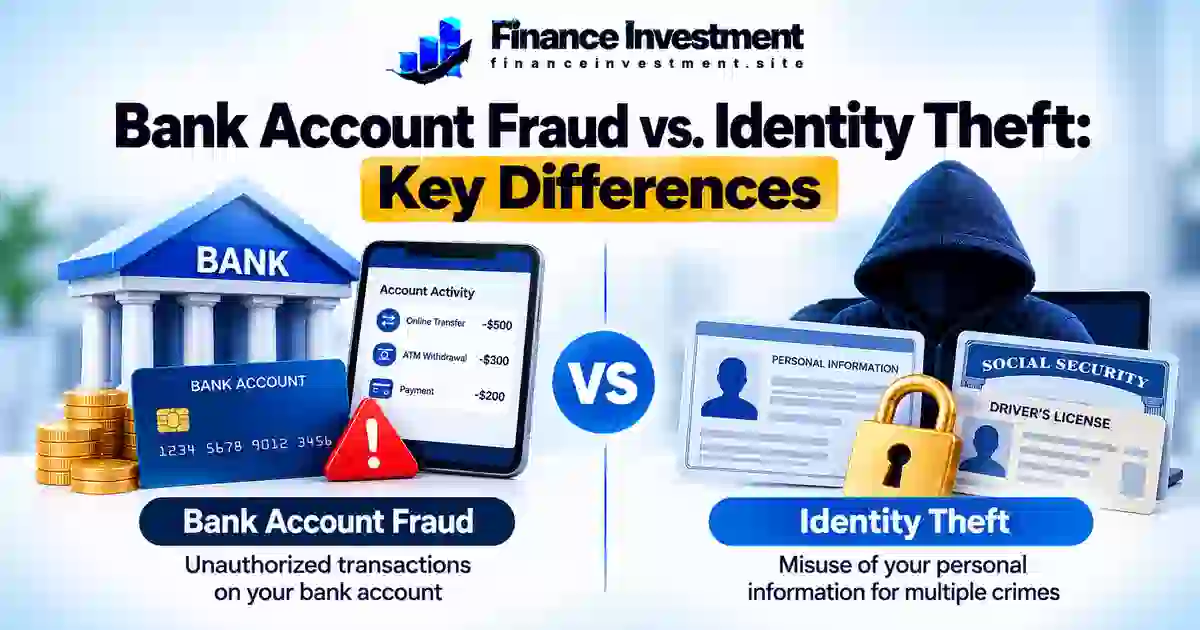
Bank Account Fraud vs. Identity Theft: Why the Difference Matters
You check your bank balance and notice a payment you never made. Then, a letter arrives confirming a credit card you never applied for. Both situations are warning signs, but they may involve different crimes. Understanding bank account fraud vs. identity theft helps you recognize the problem and take the right steps.
Bank account fraud generally involves unauthorized activity affecting your bank account or its funds. Identity theft occurs when someone uses your personal information without permission, potentially to open accounts, obtain credit, or impersonate you. The two can overlap: a criminal might steal your identity and then use your information to access your checking account.
Your response depends on what happened. You may need to contact your bank, secure your login credentials, check your credit reports, or report identity theft. Acting quickly can help limit further damage, although recovery procedures and legal protections vary by situation.
What You’ll Learn
- The key differences between bank fraud and identity theft.
- Common warning signs and how to recognize them.
- What to do when you discover suspicious activity.
- Practical ways to protect your money and personal information.
For broader protection advice, explore our bank security and fraud prevention guide to learn how to recognize threats and strengthen your banking security.
Quick Answer: Bank Account Fraud vs. Identity Theft
The key difference is what is being misused. Bank account fraud involves unauthorized activity affecting a bank account or its funds. Identity theft occurs when someone uses your personal information without permission, such as to impersonate you or apply for credit. One incident can involve both.
Key Takeaways
- Check the target: Unauthorized account activity points toward possible bank fraud; misuse of your identity may indicate identity theft.
- Watch for different clues: Unfamiliar withdrawals and unrecognized credit applications deserve attention.
- Remember the overlap: Stolen personal information can be used to access an existing account or open a new one.
- Notify your bank: Report suspicious transactions promptly and ask how to secure your account.
- Review your credit: Look for unfamiliar accounts or applications that you did not authorize.
- Keep evidence: Save transaction records, suspicious messages, correspondence, and report reference numbers.
The Bottom Line
A suspicious transaction does not automatically mean your identity has been stolen, and identity theft does not always cause an immediate loss from your bank account. Report the warning signs, protect your account, and check whether your personal information may also have been misused.
Bank Account Fraud vs. Identity Theft at a Glance
Both crimes can put your finances at risk, and sometimes they occur together. The key is to identify what may have been misused and respond accordingly.
Example: A withdrawal you did not authorize.
Example: A credit account opened in your name without permission.
Quick Comparison Table
| Comparison | Bank Account Fraud | Identity Theft |
|---|---|---|
| Main target | Bank account or funds | Personal information or identity |
| Possible warning sign | An unfamiliar transaction | An unfamiliar account or credit application |
| First response | Contact your bank and report the activity | Report the identity misuse and secure affected accounts |
QUICK TAKE: These crimes can overlap. Contact your bank about suspicious transactions, then investigate whether your personal information or credit has also been affected.
Bank Account Fraud vs. Identity Theft: A Beginner’s Guide
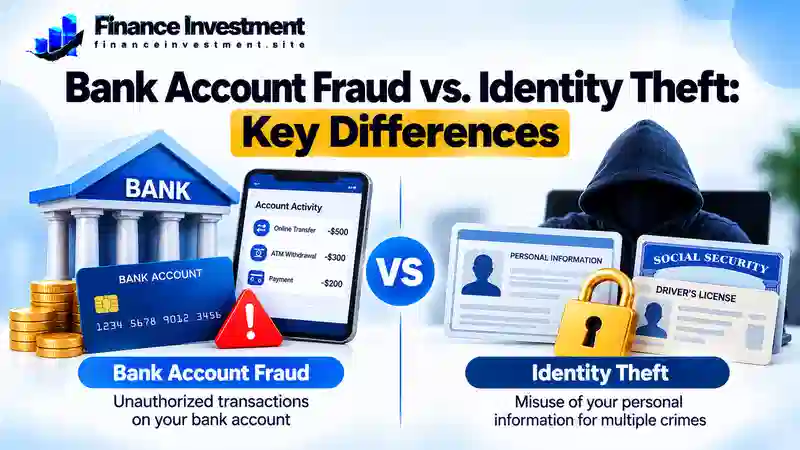
Bank account fraud and identity theft can happen together, but they describe different kinds of wrongdoing. Understanding the distinction helps you recognize what may have happened and choose the right next step.
What Is Bank Account Fraud?
Bank account fraud involves deceptive or unauthorized activity affecting a bank account or its funds. Someone might use stolen login details, a compromised debit card, or fraudulent payment instructions to access money without permission.
For example, you notice a transfer you did not make. First, check the transaction details in case the merchant name is unfamiliar or the payment is still pending. If it remains suspicious, contact your bank promptly. Read our guide to what bank fraud means for more examples.
What Is Identity Theft?
Identity theft occurs when someone uses your personal identifying information without permission. This could include your name, Social Security number, or other details to impersonate you, apply for credit, or open accounts.
Warning signs may include an unfamiliar credit inquiry, a bill for an account you never opened, or a collection notice you cannot explain. Our guide explains what can happen when someone misuses your personal information.
Remember: Bank account fraud concerns unauthorized or deceptive account activity. Identity theft concerns the misuse of your identity. If both occur, you may need to secure your bank account and address the identity misuse separately.
How Bank Account Fraud and Identity Theft Work
The two crimes can begin with different warning signs. A compromised debit card may lead to an unauthorized purchase, while stolen personal information may be used to impersonate someone or apply for credit in their name.
How Bank Account Fraud Happens
- Someone obtains account credentials, card details, or access to a payment method.
- They attempt an unauthorized transfer, withdrawal, or purchase.
- The account holder or bank may spot the activity through alerts, account reviews, or transaction monitoring.
How Identity Theft Can Connect to Bank Fraud
A criminal may obtain personal information through phishing, a data breach, or a stolen document. They might then use it to impersonate the victim, apply for credit, or attempt to access an account. Identity theft can lead to bank fraud, but it can also occur without any unauthorized bank transaction.
What to watch for: If you find an unfamiliar bank transaction and an unexpected credit application, investigate both. Contact your bank about account activity and check your credit reports for accounts or inquiries you do not recognize.
One account-level threat to understand is bank account takeover fraud, which can occur when someone gains unauthorized control of an account.
Benefits of Early Detection and Risks of Delayed Action
Spotting suspicious activity early gives you more time to protect your account, investigate possible identity misuse, and understand your reporting options. It cannot guarantee that every loss will be prevented or reimbursed, but taking prompt action can help limit further harm.
Benefits of Acting Early
- Your bank can help secure affected accounts and investigate suspicious transactions.
- You can take steps to prevent additional unauthorized access.
- You can identify unfamiliar credit accounts and begin disputing them.
Risks of Delayed Action
- More unauthorized activity may occur before access is secured.
- Unrecognized accounts or credit activity may remain undisputed longer.
- You may miss deadlines that affect your rights or available remedies.
Expert tip: If you suspect an unauthorized electronic transfer, contact your bank immediately and keep a record of when you reported it. Under U.S. federal rules, some electronic fund transfer disputes have specific notification deadlines. The applicable deadline depends on the circumstances, so do not delay while trying to investigate everything yourself.
Bank Account Fraud vs. Identity Theft: Key Differences
The difference becomes clearer when you compare what is misused and what action may be needed. Bank account fraud concerns deceptive or unauthorized activity involving an account or its funds. Identity theft involves using another person’s identifying information without permission. One incident may involve both.
| Factor | Bank Account Fraud | Identity Theft |
|---|---|---|
| What is misused? | An account, payment method, or funds | Personal identifying information |
| Example | A transfer made without your authorization | A credit account opened using your identity |
| Possible warning sign | An unfamiliar withdrawal or payment | An unexpected credit inquiry or account notice |
| Possible consequence | Loss of access to funds or account disruption | Fraudulent debts or problems with your credit history |
| First response | Contact your bank and report the suspicious activity | Report the identity misuse and investigate unfamiliar credit activity |
Important distinction: These are overlapping risks, not mutually exclusive categories. If someone steals your personal information and uses it to access your checking account, you may need to report both identity theft and unauthorized account activity.
Costs, Risks & Expert Tips
Fraud can cost more than the money taken from an account. You may need to replace cards, secure your accounts, dispute transactions, or correct inaccurate credit records. Identity theft can also lead to unfamiliar debts and time-consuming recovery work. The actual impact depends on what happened and how quickly it is addressed.
Practical Ways to Reduce Your Risk
- Enable transaction alerts and review account activity regularly.
- Use unique passwords and multifactor authentication where available.
- Review your credit reports for unfamiliar accounts or inquiries.
- Save evidence and report suspicious activity using verified contact details.
Expert Tip: Report Suspicious Transfers Promptly
For certain unauthorized electronic transfers, federal rules set notification deadlines that can affect your liability. Contact your bank as soon as you notice a problem. Read the CFPB guide to unauthorized bank transactions to understand the next steps.
If you suspect identity theft, use IdentityTheft.gov to report it and get a recovery plan.
For additional steps, see our guide on how to report bank fraud.
Common Mistakes and a Real-Life Example
When you suspect fraud, avoid these common mistakes:
- Delaying the report: Contact your bank promptly about unauthorized transactions. Reporting deadlines can affect your legal protections.
- Checking only your bank balance: Identity theft may involve new credit accounts or inquiries that do not appear in your bank activity.
- Trusting unexpected messages: Avoid links or phone numbers in suspicious texts and emails. Use your bank’s verified contact details.
- Assuming one report fixes everything: A bank dispute may not resolve fraudulent credit accounts or other identity theft issues.
Example: One Person, Two Warning Signs
Imagine Maria finds an unauthorized transfer in her checking account. She contacts her bank and secures her account. Later, she discovers a credit card opened in her name without permission.
The transfer may indicate bank account fraud, while the unfamiliar credit card may indicate identity theft. Maria follows up with her bank about the transfer and contacts the card issuer to report the fraudulent account. She keeps records of both reports and uses IdentityTheft.gov for recovery guidance.
**Key lesson:** Investigate each warning sign separately. Bank account fraud and identity theft can overlap, but resolving one issue does not automatically resolve the other.
Who Should Take Extra Precautions?
Anyone can experience bank account fraud or identity theft. Extra precautions are especially useful when personal or financial information may be exposed:
- People who bank online frequently: Use unique passwords, enable multifactor authentication, and turn on transaction alerts.
- Anyone who loses a phone or wallet: Contact your bank to secure affected cards and accounts. If identification documents are missing, watch for signs of identity misuse.
- People affected by a data breach: Change exposed passwords, especially if reused elsewhere, and monitor bank and credit activity.
- People who need help managing finances: Work with someone trustworthy, but never share PINs, passwords, or one-time verification codes unnecessarily.
- Anyone who spots unfamiliar activity: Report unauthorized transactions to the bank and investigate unknown credit accounts with the relevant issuer.
Remember: You do not need to wait for a financial loss to take action. An unfamiliar account, unexpected credit inquiry, or suspicious login alert can be a reason to investigate. Contact the relevant institution through verified contact details.
Frequently Asked Questions
1. What is the difference between bank account fraud and identity theft?
Bank account fraud involves unauthorized activity in or involving a bank account, such as an unapproved withdrawal or transfer. Identity theft occurs when someone uses your personal information without permission, potentially to open accounts, obtain credit, or commit fraud.
2. Can identity theft lead to bank account fraud?
Yes. Someone who obtains your personal information may impersonate you or attempt to gain access to your financial accounts. However, identity theft does not always lead to bank account fraud.
3. What should I do if I find an unauthorized bank transaction?
Contact your bank promptly through its verified phone number, official app, or website. Report the transaction, ask how to secure your account and dispute the charge, and keep copies of relevant records. Reporting deadlines may affect your legal protections.
4. What are common signs of identity theft?
Warning signs include unfamiliar credit accounts, unexpected collection notices, credit inquiries you do not recognize, or bills for services you never requested. Review the information and contact the relevant company or creditor to investigate.
5. Where can I report identity theft in the United States?
Visit the Federal Trade Commission’s official IdentityTheft.gov website to report identity theft and get a personalized recovery plan. Contact your bank or affected financial institution separately when account activity is involved.
6. Can I completely prevent bank account fraud and identity theft?
No security measure guarantees complete protection. Using unique passwords, enabling multifactor authentication, turning on transaction alerts, and reviewing bank statements and credit reports can reduce risk and help you identify suspicious activity earlier.
Final Verdict: Bank Account Fraud vs. Identity Theft
Bank account fraud and identity theft are closely related, but they describe different types of wrongdoing. Bank account fraud involves unauthorized activity affecting a bank account, while identity theft involves using someone’s personal information without permission. Identity theft can lead to bank fraud, but either problem can occur on its own.
If you spot an unfamiliar transaction, contact your bank promptly through verified contact details, report the activity, and ask how to secure your account and dispute the transaction. If you find an unfamiliar credit account or inquiry, contact the relevant issuer or credit bureau and investigate it separately. Keep records of your reports and follow-up steps.
The bottom line: Act promptly, protect your account access, and investigate each warning sign. For more prevention steps, read our complete bank security and fraud prevention guide.
Leave a Reply