How to Close a Checking Account Properly
Updated August 10, 2026
8–10 Min Read
2026 Banking Guide
Closing a checking account can be simple, but doing it too early can leave a payment, deposit, or outstanding check in the wrong place. This guide explains what to review before you ask the bank to shut the account down.
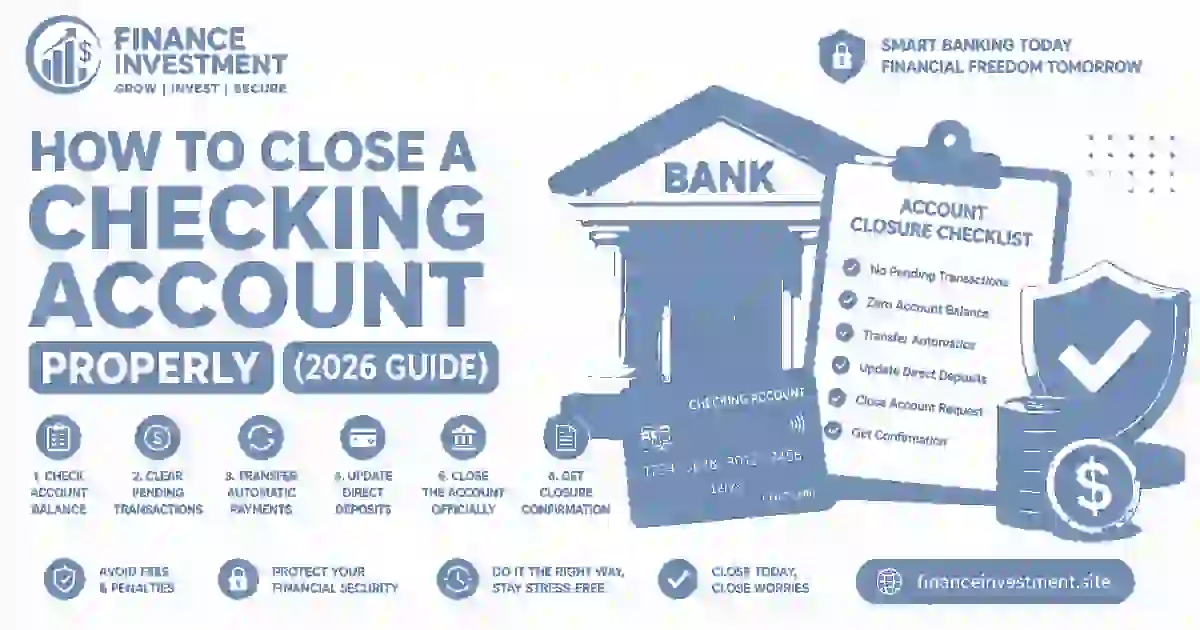 How to Close a Checking Account Properly is not just about asking your bank to shut the account move the money, contact the bank, and walk away. The trouble usually starts afterward. A payment may still be heading to the old account, a subscription may charge it without warning, or a check written weeks ago may finally be presented.
That is why How to Close a Checking Account Properly is less about the closing request itself and more about what happens before it. Pending card transactions, automatic payments, direct deposits, paper checks, and subscriptions all need a quick review. Even the final balance deserves attention because a small pending charge can change how much money is actually available.
A careful closure also means moving your paycheck and recurring withdrawals to the account you plan to keep. Once those items are settled, transfer the remaining funds and ask the bank for confirmation that the old account has been closed.
For a broader look at choosing and managing checking accounts, see our Checking Accounts USA 2026 guide.
What You’ll Learn
You’ll see what to check before closing, how to deal with pending payments and deposits, when to move your balance, what can go wrong, and how to confirm the account is truly finished. The goal is a clean handoff with no surprise payment waiting behind you.
First, let’s look at the short answer and the few checks that matter most before making the closure request.
Quick Answer & Key Takeaways
Close the account only after payments, deposits, checks, and linked services have been moved or cleared. Leaving even one active transaction behind can create a returned payment, an unexpected fee, or extra work after you thought the account was finished.
The safest approach is to finish the money-moving tasks first, wait for outstanding activity to settle, transfer the final balance, and then request closure from the bank.
- Check pending transactions: Make sure recent card purchases and withdrawals have posted.
- Move direct deposit: Update your paycheck or other recurring deposits before closing.
- Change automatic payments: Give subscriptions, utilities, loans, and other billers the new account details.
- Clear outstanding checks: Don’t assume an old paper check has already been presented.
- Handle the remaining balance: Transfer the money only after accounting for pending activity.
- Get closure confirmation: Keep the bank’s confirmation and final statement for your records.
The key idea behind How to Close a Checking Account Properly is simple: finish the loose ends before ending the account. With those basics clear, the guide can be mapped out step by step.
Table of Contents
The quick snapshot below brings the main closing steps into view before we get into the details.
At a Glance
The account should usually stay open until important payments, deposits, checks, and pending activity have been reviewed.
People who have moved to another bank, no longer need an account, or want to simplify several banking relationships.
The How to Close a Checking Account Properly process is mostly about timing. Moving money is only one part of it; the dates of your deposits, bills, checks, and final transactions matter too.
| Check | When to Handle It | What to Confirm |
|---|---|---|
| Pending transactions | Before closure | Recent charges have posted |
| Direct deposit | Before final closure | New account receives income |
| Recurring payments | Before next due date | New payment details are active |
| Checks | Before closure | Outstanding checks are resolved |
| Final balance | After activity settles | Money has been transferred |
| Closure confirmation | After requesting closure | Bank confirms account is closed |
Once these checkpoints make sense, the full process becomes much easier to follow from the first review through the final confirmation.
Complete Beginner Guide
 Closing an account properly starts several days before you contact the bank. First, look through recent activity and make a list of anything that still uses the account. Check card purchases, ACH withdrawals, deposits, subscriptions, utilities, loan payments, and transfers. This gives you a clear picture of what needs to change.
1. Move Income and Recurring Payments
Change your direct deposit before shutting the old account down. Then update recurring payments with the companies that charge the account regularly. Don’t forget less frequent expenses such as annual insurance premiums, memberships, or property-related bills.
2. Deal With Checks and Pending Activity
Look for paper checks that haven’t cleared and recent debit-card purchases that are still pending. Give those transactions time to post. A check written weeks ago can still appear later, so don’t assume an apparently quiet account is completely finished.
3. Transfer the Remaining Money
Once pending activity has settled, calculate the amount available and move the remaining funds to your new account. Leave enough time for anything still outstanding rather than transferring every dollar too early.
4. Request the Closure
Banks may let you close an account through online banking, by phone, in person, or with a written request, depending on their procedures. Ask for confirmation showing that the account has been closed. Keep it with your financial records.
💡 Did You Know?
An account can look empty while a transaction is still waiting to post. Checking the transaction history and pending activity before closure can prevent an avoidable problem later.
A Simple Real-Life Example
Maria moved her everyday banking to a new bank. Before closing the old account, she noticed that her internet provider still had the old routing and account numbers. She updated the payment, waited for the change to take effect, then transferred the remaining balance and requested closure.
For a broader look at account basics before making changes, see our guide to how a checking account works.
That sequence is the heart of How to Close a Checking Account Properly: identify what is still connected, give transactions time to settle, move the money, and keep proof of the final closure.
Once the account is closed, the important question is what actually happens to transactions and account activity behind the scenes.
How It Works
A checking account does not necessarily become inactive How to Close a Checking Account Properly The bank first has to deal with activity that is still moving through the account. That is why the timing of your request matters, even when the displayed balance has already reached $0.
A recent debit-card purchase may still be pending. An ACH withdrawal could arrive after you made the request. A direct deposit may also be on its way from an employer or another payer. Paper checks create another possibility because they can be presented after they were written.
Recurring withdrawals need special attention as well. Streaming services, insurance companies, utilities, and lenders may continue using the old account details until you update them.closing an old checking account Once the account is closed, those transactions may be rejected rather than simply disappearing.
A $0 Balance Doesn’t Tell the Whole Story
A zero balance only shows what has posted so far. It does not necessarily account for pending card charges, scheduled ACH activity, or an unpresented check. Review recent activity before treating the account as finished.
For a basic explanation of account activity and transactions, see our guide to how checking accounts work.
A Different Example
James requested closure after moving his paycheck to another bank. His balance showed $0, but an ACH payment for his car insurance was scheduled for the following week. Because he had already changed the payment details, the insurer charged the new account instead. James then kept the closure confirmation with his records.
That small timing check is central to How to Close a Checking Account Properly. Once the remaining activity has been accounted for, the old account can be closed with far less risk of an unwanted surprise.
With the mechanics clear, it becomes easier to weigh what you gain by closing an account against the possible downsides.
Benefits & Drawbacks
An unused checking account can quietly become another thing to remember. Closing it may make your banking simpler, especially when you have already moved to another bank and no longer need the old account.
✓ Pros
- Fewer accounts to monitor: Your banking activity becomes easier to follow.
- Fewer possible fees: An account you no longer use won’t have ongoing maintenance requirements to watch.
- Simpler money management: You have fewer balances, statements, and account details to maintain.
- Less account clutter: Old accounts no longer sit alongside the ones you actively use.
✕ Cons
- Missed payments: A biller using the old account may not receive the updated details in time.
- Returned transactions: An old check or ACH payment can become a problem after closure.
- Transition inconvenience: Updating employers, companies, apps, and financial services takes time.
- Possible costs: Some banks may charge account-related or closure fees, depending on their terms.
A Beginner Example
Daniel had two checking accounts but used only one. He decided to close the older account after noticing a small monthly charge. Before doing so, he checked the statement and found an old gym membership still connected to it. He cancelled the membership, waited for the final charge to post, and then closed the account.
That is why How to Close a Checking Account Properly involves more than removing the balance. The convenience comes after the loose ends have been handled.
A side-by-side look at keeping an account versus closing it can make that decision much clearer.
Comparison Table
The right choice depends on whether the old account still serves a useful purpose. Closing it can simplify your banking, while keeping it open may make sense when payments, deposits, or other services still depend on it.
| Factor | Close the Account | Keep It Open |
|---|---|---|
| Fees | No future account fees once fully closed | Fees or balance rules may continue |
| Account monitoring | Less to monitor afterward | Regular reviews remain necessary |
| Pending transactions | Should be reviewed before closure | Can continue normally |
| Recurring payments | Must be moved or cancelled | Can remain connected |
| Direct deposit | Must be redirected first | Can continue using the account |
| Outstanding checks | Should clear before closure | Can be presented as usual |
| Convenience | Better after all connections are moved | Useful during a transition |
| Account access | Ends after closure | Remains available |
| Best use case | An account you genuinely no longer need | An account still tied to active finances |
How to Read This Table
Don’t focus only on fees. A free account may still be worth keeping temporarily when an employer, biller, or payment service hasn’t been moved yet. On the other hand, an unused account with no remaining connections may have little reason to stay open.
Before making the final decision, you may also want to review our Types of Checking Accounts Explained guide to understand how different account arrangements can fit different banking needs.
For many people, the deciding factor is not convenience alone. Fees, timing, and the possibility of a forgotten payment deserve a closer look before the closure request goes through.
Costs, Risks & Expert Tips
Closing an account may cost nothing, but don’t assume the final step is always free. Check the bank’s current terms for possible closure charges, early-account restrictions, or other fees. Also review the balance carefully. A pending charge that posts after you transfer the money could leave the account short.
Automatic withdrawals are another concern. A forgotten subscription, insurance payment, or loan draft can still be connected to the old account. Outstanding checks deserve the same attention because a payment written earlier may not have cleared yet.
An overdraft or negative balance can complicate the closure. Don’t treat a $0 displayed balance as proof that nothing else is coming. Review recent activity, pending transactions, and scheduled payments before moving the final amount.
💡 Expert Tip
Save the final statement and closure confirmation in your records. Keep them with your banking documents until you’re satisfied that no remaining payment, deposit, or fee is outstanding.
⚠️ Warning
Don’t transfer the final dollar simply because the visible balance is zero. Confirm that pending activity has settled and that important payment details have already been changed.
The safest approach to How to Close a Checking Account Properly is to treat the closure as the last step, not the first. A few minutes spent checking the account can prevent a much bigger cleanup later.
Most closure problems come from small details that were easy to overlook. Knowing those mistakes in advance makes the final review much easier.
Common Mistakes + Real-Life Example
Most account-closing problems come from one small detail being overlooked. A quick review before closure can prevent several of them.
- Closing before pending transactions clear: Check recent card activity and wait for important charges to post.
- Forgetting automatic payments: Update utilities, loans, insurance, and other recurring withdrawals first.
- Ignoring outstanding checks: Confirm that checks you’ve written have cleared before ending the account.
- Not moving direct deposit: Change your paycheck instructions before the old account disappears.
- Transferring the balance too early: Leave enough money for legitimate charges that have not posted yet.
- Forgetting subscriptions: Review streaming services, memberships, apps, and less frequent charges.
- Not saving closure confirmation: Keep the bank’s confirmation and final statement with your records.
- Overlooking a final fee or negative balance: Check the account again after closure for any remaining activity.
✓ Avoid These Mistakes
- Review the last 30–60 days of transactions.
- Check both pending and scheduled activity.
- Update every recurring payment before closure.
- Keep proof that the bank closed the account.
A Real-Life Example
Tom closed an old account after moving his paycheck to a new bank. A few days later, he noticed the old bank had charged a small monthly fee because the account had not actually been closed when he expected. He contacted the bank, settled the remaining amount, and saved the written closure confirmation.
The experience showed Tom why How to Close a Checking Account Properly requires confirmation rather than assumption. He now checks the final statement and keeps the bank’s closure notice before considering the job finished.
A clean closure should leave you with fewer accounts to manage, not a new problem to solve. That makes the next question simple: is closing this particular account actually the right move?
Knowing who benefits from closing an account—and who may be better off waiting—can help you make that decision with less guesswork.
Who Should Choose This?
Closing a checking account makes sense when it no longer has a useful job. Someone who has moved to a new bank, stopped using an old account, or is paying fees on an account they rarely touch may prefer to simplify their banking. The same can be true for households trying to reduce the number of accounts they manage.
Closing is usually worth considering when another account is already handling your income and bills, the old account has no important connections, and you have checked for pending activity.
The How to Close a Checking Account Properly decision should wait when a paycheck still arrives there, automatic withdrawals remain active, outstanding checks haven’t cleared, or a payment dispute is unresolved. In those cases, keeping the account open temporarily can prevent unnecessary trouble.
Before making the request, look through the recent statement and confirm that every important payment and deposit has a new destination. Once those loose ends are settled, closure becomes much more straightforward.
A few common questions can help clear up the details before you make the final move.
Frequently Asked Questions
How do I close a checking account properly?
Review pending activity, move direct deposits, update recurring payments, wait for outstanding checks to clear, transfer the remaining balance, and request closure from the bank. Keep written confirmation and the final statement so you have a record that the account was closed.
Can I close a checking account online?
Yes, some banks allow online closure, but the available method depends on the institution and account type. You may instead need to call customer service, visit a branch, or submit a written request. Check the bank’s current instructions before transferring the final balance.
Does closing a checking account hurt your credit?
Usually, closing a checking account does not directly lower your credit score. However, an unpaid negative balance that is sent to collections can create a credit problem. Settle outstanding amounts and keep proof of the closure to avoid leaving an unresolved balance behind.
Is there a fee to close a checking account?
It depends on the bank and the account terms. Some institutions charge no closure fee, while others may have specific conditions or charges. Review the current fee schedule before closing, especially if the account was opened recently or has special requirements.
What happens to pending transactions after closure?
Pending transactions may be handled differently depending on the bank and transaction type. A debit-card charge, ACH withdrawal, or other payment could be rejected after closure. That’s why pending activity should be reviewed and important payments moved before you finish the closure.
What happens to direct deposit after closing?
A direct deposit should be redirected before the old account is closed. Give your employer, benefits provider, or other payer the new account information and allow enough time for the change to take effect. Otherwise, an incoming payment could be delayed or returned.
Should I wait for checks to clear before closing?
Yes, whenever possible, wait for outstanding checks to clear or make another arrangement with the recipients. A check written earlier can appear after you think the account is finished. Leaving the account open until those items are resolved can prevent a returned payment.
Can automatic payments still charge a closed account?
A closed account generally cannot process normal withdrawals, so an automatic payment may be rejected rather than completed. Update the payment details with the company before closure. This is especially important for bills, subscriptions, insurance, loans, and other recurring charges.
How do I confirm a checking account is fully closed?
Ask the bank for written confirmation and keep the final statement. You can also review your online banking access and watch for any final communication from the institution. For How to Close a Checking Account Properly, confirmation matters because an empty balance alone does not prove closure.
The practical lesson behind these questions is straightforward: account closure is finished when the bank confirms it and your remaining financial connections have been dealt with. That leaves one final decision—whether closing the account was the right move in the first place.
Final Verdict
Closing a checking account is usually a sensible move when you no longer need it, but there is little benefit in rushing the process. The better approach is to finish every important connection first, then let the bank handle the closure once the account is ready.
The How to Close a Checking Account Properly process comes down to a few final checks: make sure pending activity has cleared, move direct deposits, update recurring payments, resolve outstanding checks, and transfer the remaining balance. Afterward, get written confirmation from the bank and save the final statement.
Final Safety Check
- Pending transactions reviewed
- Direct deposit moved
- Recurring payments updated
- Outstanding checks cleared
- Final balance transferred
- Closure confirmed by the bank
For broader guidance on choosing, using, and managing checking accounts, visit our Checking Accounts USA 2026 guide.
Once those boxes are checked, the old account can become one less financial detail on your monthly list.
Ready to Simplify Your Banking?
One closed account can mean one less balance, statement, and login to keep track of. Take a look at our other checking-account guides for practical help with choosing, opening, and managing the account that stays with you.
Want more practical money guides? Join the Finance Investment newsletter for new banking and personal finance articles delivered to your inbox.
Have a banking experience worth sharing? Leave a comment, or pass this guide along to someone who is closing an old account.
Leave a Reply