CD vs Other Savings and Investment Options: What to Choose
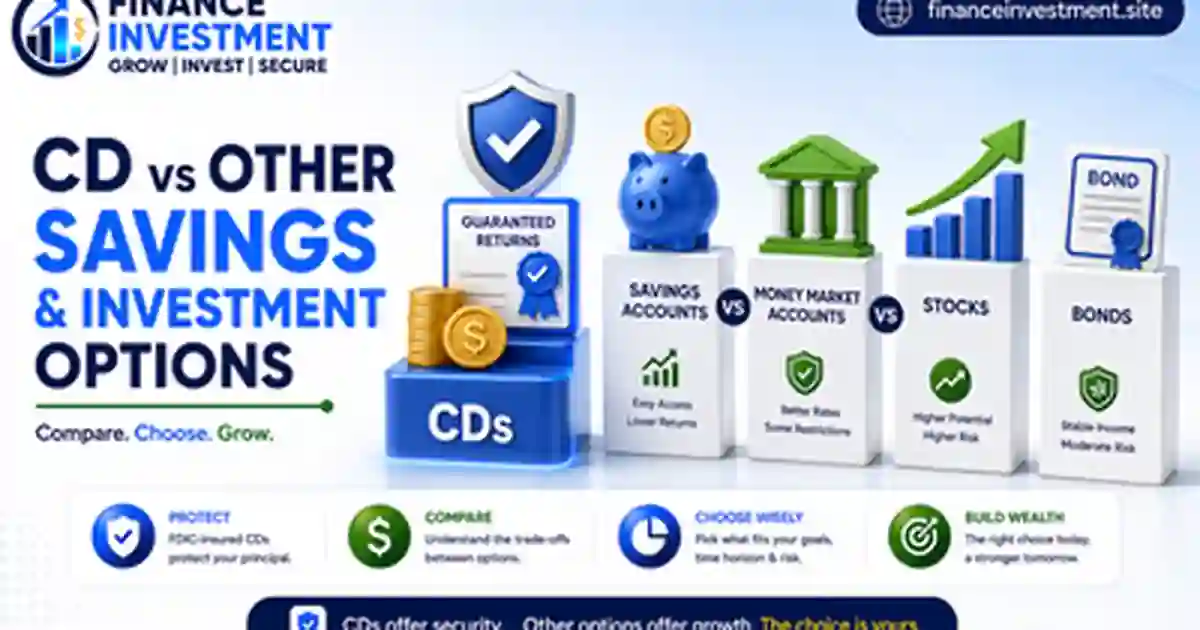 When you have cash to put to work, a certificate of deposit isn’t the only place it can go. A CD may offer a predictable return, but a high-yield savings account can keep your money easier to reach, while Treasury bills and bonds may play a different role in a broader investment plan. The real question isn’t simply which option pays more.
This guide to CD vs other savings and investment options looks at those choices from a practical angle: how long your money can stay put, how much access you need, what can happen to your return, and what risks you are actually taking. Instead of chasing a single rate, you’ll see where each option can fit—and where it may fall short.
What You’ll Learn
- When a CD can make more sense than a savings account.
- How access to your money changes the trade-off.
- Where Treasury bills and bonds fit into the comparison.
- How rates, taxes, inflation and risk can affect your results.
- Which option may fit short-term cash, planned expenses or longer-term goals.
By the end, you’ll have a clearer way to compare these products based on the job your money needs to do—not just the number printed next to the interest rate.
A CD can be a strong choice when you know you won’t need the money for a set period and want a more predictable return. A high-yield savings account usually wins on flexibility, while Treasury bills and bonds can serve different goals and time horizons. The best option comes down to access, return, risk and how long you can leave the money untouched.
- CDs trade some flexibility for predictable interest.
- Savings accounts are generally easier to access.
- Money market accounts can combine savings with convenient access.
- Treasury bills may suit short-term government-backed investing.
- Bonds can bring greater price movement and longer-term exposure.
- Taxes and inflation can reduce the return you actually keep.
Bottom Line
Don’t judge these choices by APY alone. Match the account or investment to when you’ll need the cash, how much fluctuation you can accept and how much access matters.
CD vs Other Savings and Investment Options: At a Glance
Each option solves a slightly different money problem. A CD is built around a fixed term and predictable return, while savings and money market accounts emphasize access. Treasury bills and bonds can add different levels of market exposure and time commitment.
Quick Facts
- Best for CDs: Money you can leave untouched for a defined term.
- Best for savings: Cash you may need without notice.
- Best for Treasury bills: Short-term government securities.
- Best for bonds: Investors seeking broader fixed-income exposure.
| Option | Main Strength | Access | Value Can Fluctuate? |
|---|---|---|---|
| CD | Predictable return | Limited | Generally no |
| HYSA | Flexibility | High | Generally no |
| Treasury bills | Short-term government debt | Moderate | Depends on how sold |
| Bonds | Income & diversification | Varies | Yes |
Note: Features, rates and withdrawal terms vary by institution and product.
CD vs Other Savings and Investment Options: A Beginner Guide
 Choosing where to keep your money starts with one simple question: When will you need it? A CD, savings account, money market account, Treasury bill and bond can all hold or grow money, but they do not work the same way.
Certificates of Deposit
A CD generally pays an agreed interest rate for a stated term. In exchange for that predictability, you usually agree to leave the deposit untouched until maturity. Taking money out early can trigger an early-withdrawal penalty. That makes a CD useful for money tied to a known future date, such as a planned purchase or part of a cash reserve that you won’t need immediately.
If you’re new to CDs, our
complete CD guide for 2026
explains the basics before you compare specific products.
Savings and Money Market Accounts
A savings account gives you easier access to your cash, which can matter more than earning the highest possible rate. A high-yield savings account may offer a stronger yield than a basic savings account, while a money market account can combine interest earnings with convenient account access. Rates on these accounts can change, so today’s yield is not necessarily tomorrow’s yield.
Treasury Bills and Bonds
Treasury bills are short-term U.S. government securities, while bonds generally involve longer maturities and can trade in a market where prices move. That difference matters if you might sell before maturity. A bond can be worth more or less than what you paid when market interest rates change.
A useful starting point
Think in buckets: keep money you may need soon accessible, use CDs for cash with a known timeline, and consider market-based investments for goals that can handle price swings.
How CDs, Savings Accounts, Treasury Bills, Bonds and Money Market Accounts Work
The biggest difference between these choices is what happens to your money after you deposit or invest it. Some products emphasize a known return, while others give you easier access or expose you to changing market prices.
CDs: Lock In a Term
With a traditional CD, you deposit money for a selected term and generally receive the stated interest rate during that period. Interest may be paid monthly, quarterly or at maturity, depending on the account. When the CD matures, you normally receive your principal plus any unpaid interest and can decide whether to withdraw or reinvest it.
Savings and Money Market Accounts: Keep Access
Savings accounts and money market accounts are designed for greater access to your cash. Their interest rates can change as the financial institution adjusts its offering. That flexibility can be valuable when you don’t know exactly when you’ll need the money. However, a lower future rate can reduce the interest you earn.
Treasury Bills and Bonds: Market-Based Choices
Treasury bills are short-term U.S. government securities sold at a discount or with a stated yield and generally mature within a year. Bonds typically have longer maturities and can be bought or sold before maturity. Their market prices can rise or fall as interest rates and investor expectations change.
The practical difference
A CD mainly asks, “How long can you leave this money alone?” A savings account asks, “How easily might you need it?” Market investments add another question: “How much price movement can you tolerate?”
Benefits and Drawbacks of CDs and Other Options
There isn’t one universal winner here. Each option gives you something useful while asking you to accept a different trade-off.
Where These Options Shine
- CDs can provide a predictable return for a chosen term.
- Savings accounts make emergency and near-term cash easier to reach.
- Money market accounts can offer interest while retaining useful access.
- Treasury securities can add government debt exposure to a portfolio.
What to Watch
- CDs can charge penalties when money is withdrawn early.
- Variable savings rates can fall after you open an account.
- Market-based investments can lose value before you sell.
- Inflation can reduce the purchasing power of a fixed return.
A simple rule of thumb
The more important immediate access is, the less attractive a locked-up product may become. The more predictable your timeline is, the more useful a fixed-term option can be.
CD vs Other Savings and Investment Options
The biggest difference is what you give up in exchange for the return. CDs can provide a defined term and predictable interest, while savings and money market accounts keep your cash easier to reach. Treasury bills and bonds work differently because their pricing, maturity and market considerations can vary.
| Option | Main Purpose | Access to Cash | Return Behavior | Main Trade-Off |
|---|---|---|---|---|
| CD | Predictable interest for a set term | Limited before maturity | Usually fixed for the term | Early-withdrawal restrictions |
| High-Yield Savings | Accessible cash with interest | High | Rate can change | Future yield isn’t guaranteed |
| Money Market Account | Interest plus convenient access | High | Rate can change | Terms vary by bank |
| Treasury Bills | Short-term government debt | Through sale before maturity | Yield set at purchase | Selling early can affect proceeds |
| Bonds | Income and portfolio diversification | Market dependent | Prices can move | Interest-rate and market risk |
Which difference matters most?
If protecting principal and knowing your return matter most, a CD may fit. If you need frequent access, a savings or money market account can be more practical. For investors comfortable with market movement, Treasury securities and bonds offer another route.
Costs, Risks and Expert Tips to Check First
A higher advertised yield can look attractive, but the fine print can change the picture. Before moving cash into a CD or another savings or investment option, look at access, taxes, insurance and what could happen if your plans change.
Early-Withdrawal Costs and Access
A traditional CD may charge an early-withdrawal penalty if you take money out before maturity. Check the penalty formula before opening the account. A savings or money market account may provide easier access, which can be more valuable if the cash could become an emergency fund or near-term spending money.
Deposit Insurance and Investment Risk
Check whether a bank deposit is covered by FDIC insurance and whether your total deposits remain within applicable coverage limits. Treasury securities have different protections from bank deposits, while bonds can lose market value if you sell before maturity. Don’t treat every interest-paying product as having the same risk.
Inflation, Taxes and Reinvestment Risk
The rate you see isn’t necessarily the return you keep. Inflation can weaken purchasing power, and interest from many taxable accounts can affect your tax bill. You should also consider reinvestment risk: when a CD or Treasury security matures, new rates may be lower than the rate available when you originally invested.
Expert Tip
Keep your timeline visible. If a deposit has a known job within the next year, don’t sacrifice access simply to earn a little more interest. For longer horizons, compare the expected after-tax return, inflation impact and risk—not just the headline APY.
Common Mistakes When Comparing CDs and Other Options
A good rate can grab your attention, but it shouldn’t end the comparison. Many costly decisions happen because the account looks attractive on the surface while its access, rules or risk don’t match the purpose of the money.
Five Mistakes Worth Avoiding
- Chasing the highest rate: A higher APY can look appealing, but it may not be worth giving up convenient access to money you could need soon.
- Ignoring the withdrawal rules: Check CD penalties and account restrictions before committing funds.
- Skipping the insurance check: Confirm whether a bank deposit is covered by FDIC insurance and keep coverage limits in mind.
- Forgetting taxes: Compare what you expect to keep after applicable taxes rather than focusing only on the quoted yield.
- Choosing the wrong timeline: Don’t lock money into a term when you already expect to need it sooner.
A Real-Life Example
Imagine Maya has $15,000 that she plans to use for a home-related expense in about 12 months. She finds a CD offering a better rate than her savings account and moves the entire amount into it. Six months later, the expense arrives earlier than expected. Taking the money out of the CD triggers an early-withdrawal penalty.
A better setup might have been to keep the portion she could need soon in an accessible savings account and place only the genuinely unused cash into a CD. The lesson isn’t that CDs are bad; it’s that the purpose of the money should come before the rate.
Quick check
Before moving money, ask: “When might I need this cash, and what happens if that date changes?”
Who Should Choose Which Option?
There isn’t one account that works equally well for every dollar. The better choice depends on when you need the money, how much access you want and how comfortable you are with changing returns or market prices.
Choose a CD
A CD may suit you when the money has a clear time horizon and you value predictable interest more than instant access.
Choose a Savings Account
A high-yield savings account can make more sense for emergency funds, irregular expenses or cash you may need without notice.
Consider Treasuries or Bonds
Treasury securities or bonds may appeal to investors looking beyond bank deposits and who understand their different risks and pricing.
A simple way to decide
Start with the job of the money, not the advertised yield. If access matters most, keep the cash liquid. If the date is known and the money can stay untouched, locking in a CD rate may be worth considering.
Frequently Asked Questions About CDs and Savings Options
Are CDs safer than savings accounts?
Both can provide a relatively stable place for cash when held at an FDIC-insured bank and within applicable coverage limits. The bigger difference is access: a CD generally requires you to leave the money untouched until maturity or accept an early-withdrawal penalty.
Can I withdraw money from a CD before maturity?
Often, yes, but the bank may charge an early-withdrawal penalty. The exact cost depends on the CD agreement, so check the terms before depositing money.
Is CD interest guaranteed?
For a traditional fixed-rate CD, the stated rate generally remains in place for the agreed term. Variable-rate CDs are different because their rate can change according to the account’s terms.
How much money do I need to open a CD?
Minimum deposits vary by bank and CD. Some accounts accept relatively small deposits, while others require a larger opening balance. Always check the specific product’s minimum.
What happens when a CD matures?
At maturity, you can generally withdraw the money, move it elsewhere or reinvest it according to the bank’s available options. Check the maturity notice and renewal deadline so you don’t miss your preferred choice.
Are CD deposits FDIC insured?
A CD issued by an FDIC-insured bank can qualify for FDIC deposit insurance, subject to applicable ownership categories and coverage limits. Confirm that the institution is insured before depositing money.
Is a CD good for short-term savings?
It can be, but the maturity date and withdrawal rules matter. If you may need the money unexpectedly, an accessible savings account may be a better fit.
Should I choose a CD based only on APY?
No. Compare the APY with the term, minimum deposit, withdrawal penalty, insurance coverage and when you expect to need the money. A slightly lower yield can be more useful when it comes with better access.
Final Verdict: Which Option Makes Sense for You?
Choosing between a CD, savings account, Treasury security or another investment starts with one simple question: what job does this money need to do? If you have a specific future date and don’t expect to need the cash early, a CD can provide a straightforward way to earn interest while keeping the plan predictable.
Savings accounts can be a better home for emergency funds and money you may need at short notice. Treasury securities may appeal to savers who want government debt exposure, while bonds and other investments can make more sense for longer-term goals where some market fluctuation is acceptable.
The key takeaway
Don’t let the highest advertised yield make the decision for you. Compare the return, access, term, taxes, insurance and risk together. The best option is the one that fits the purpose and timeline of the money.
Keep Your CD Decisions Simple
Want more practical money guides without the jargon? Join our newsletter for helpful updates on CDs, savings, interest rates and everyday investing.
📧 subhashr325@gmail.com
Keep learning, compare carefully, and choose accounts that fit your timeline.
Leave a Reply