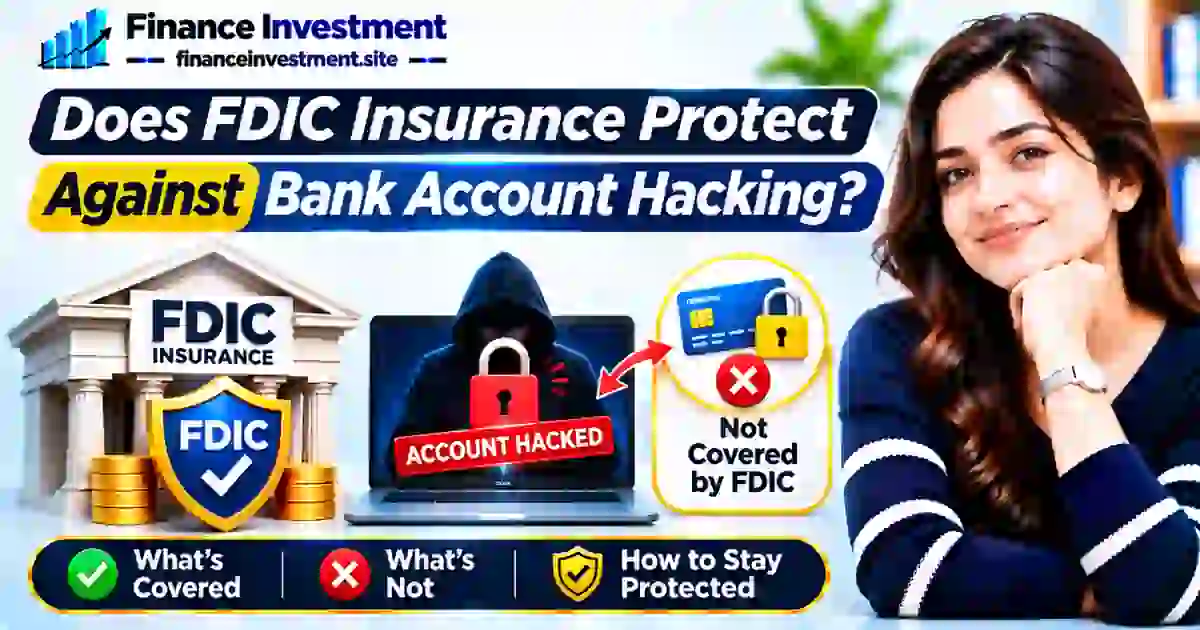
Does FDIC Insurance Protect Against Bank Account Hacking?
 When Someone Gets Into Your Bank Account, What Protects You?
 When Someone Gets Into Your Bank Account, What Protects You?
You open your banking app and see a login alert from a device you don’t recognize. Minutes later, your password stops working. Your money might still be there, but you cannot access it. Suddenly, you’re wondering: Does FDIC insurance protect against bank account hacking?
FDIC insurance does not cover hacking itself. It protects eligible deposits if an FDIC-insured bank fails. If a criminal actually transfers money from your consumer account without permission, other federal protections—particularly Regulation E for qualifying electronic transfers—may apply.
That distinction matters. A stolen password, a locked account, and a missing balance can require different responses. If you’re unsure how deposit coverage works, our FDIC and NCUA insurance guide explains the fundamentals.
What You’ll Learn
- What FDIC coverage means when an account is hacked.
- How criminals gain access to online banking.
- Which unauthorized transfers may receive federal protection.
- What to do immediately if you notice suspicious activity.
Quick Answer: Is a Hacked Bank Account FDIC-Insured?
FDIC insurance does not reimburse hacking losses. It covers eligible deposits when an FDIC-insured bank fails. If someone uses your account without permission to make a qualifying electronic transfer, federal consumer protections under Regulation E may apply instead.
6 Key Takeaways
- FDIC coverage: Bank failure and account hacking are different financial risks.
- Compromised login: Unauthorized access does not always mean money was transferred.
- Electronic theft: Qualifying unauthorized consumer transfers may have federal liability protections.
- Early reporting: Notify your bank as soon as you spot unfamiliar activity.
- Account security: Reset compromised credentials and ask the bank to review account access.
- Scam payments: Money you personally send after being deceived may follow different recovery rules.
Bottom Line: If your account is hacked, focus first on securing access and checking for unauthorized transactions. Your next steps depend on what the intruder actually did.
Table of Contents
At a Glance: Bank Account Hacking Protection
The protection available after a banking security incident depends on what happened—not simply whether the account was FDIC-insured.
Quick Facts: FDIC insurance covers eligible deposits after an insured bank fails. It does not pay hacking claims.
Who This Helps: Online banking users, families sharing financial responsibilities, and retirees protecting savings.
Key Numbers: FDIC coverage is generally $250,000 per depositor, per insured bank, per ownership category for bank-failure losses—not a hacking reimbursement limit.
| Situation | Potential Protection |
|---|---|
| FDIC-insured bank fails | FDIC deposit insurance |
| Someone accesses your login | Bank security and account recovery procedures |
| Unauthorized electronic transfer | Regulation E, when applicable |
| Payment sent after a scam | Recovery depends on payment type and circumstances |
Quick Take: A suspicious login calls for immediate account security measures. Missing money also requires a prompt transaction dispute with your bank.
Complete Beginner Guide: What Is Bank Account Hacking?
Bank account hacking generally means someone gains access to your online banking without permission. This is often called an account takeover. The intruder might read account details, change contact information, add payment recipients, or attempt unauthorized transactions.
Common Ways Banking Accounts Get Compromised
Criminals do not always attack the bank’s systems. They may target the customer instead.
- Phishing: Fraudulent messages or websites collect passwords and other login details.
- Reused passwords: Credentials exposed elsewhere may unlock accounts using the same password.
- SIM swapping: A hijacked phone number may expose verification codes delivered by text message.
- Malware: Malicious software may capture sensitive information or interfere with banking sessions.
Warning Signs of an Account Takeover
Watch for login alerts you cannot explain, password-reset notices you did not request, unfamiliar payment recipients, or changes to your registered phone number or email. Being unexpectedly locked out can also indicate trouble.
Important: A compromised login does not always mean money is missing. Even when your balance appears unchanged, contact your bank using its official app, website, or a verified phone number to secure access and review account activity.
How Bank Account Takeovers Happen—and How Recovery Works
An account takeover does not follow one fixed pattern. Some intruders quietly inspect account details, while others immediately change security settings or attempt transfers. The earlier you identify unauthorized activity, the sooner your bank can respond.
What Can Happen After Unauthorized Access?
- Suspicious sign-in: An unfamiliar person accesses online banking using compromised credentials or another method.
- Security changes: The intruder may register a device, replace contact information, or add a payment recipient.
- Transaction attempt: Funds may be transferred, or a payment may be scheduled for later.
- Account lockout: Modified passwords or recovery settings may prevent the customer from signing in.
How to Regain Control of Your Account
- Call your bank immediately. Use the number on your bank card or official website. Ask its fraud team to secure the account.
- Restore secure access. From a trusted device, change compromised passwords, review authentication methods, and ask the bank to terminate suspicious sessions.
- Check for hidden changes. Examine recent activity, scheduled payments, linked accounts, registered devices, and recovery contact details.
- Report missing funds. Identify each unfamiliar transfer, request a formal investigation, and save the case number and reporting date.
Recovery Tip: Ask whether pending payments can be stopped and whether the bank recommends replacing affected account credentials or numbers. Recovery of stolen funds depends on the facts, reporting timelines, and applicable consumer protections.
Benefits and Drawbacks of Bank Account Security Protections
Security features can make unauthorized access harder and help banks detect unusual activity. Their effectiveness varies, and no single safeguard eliminates every risk.
Benefits: What Can Help
- Login notifications: Help identify unfamiliar account access sooner.
- Multifactor authentication: Adds a barrier when passwords are compromised.
- Transaction controls: Some banks flag, delay, or block unusual transfers.
- Federal consumer rights: Regulation E separately provides protections for qualifying unauthorized electronic transfers.
Drawbacks: What These Safeguards Cannot Guarantee
- Authentication weaknesses: Criminals may steal verification codes or exploit compromised devices.
- Missed warnings: Alerts may arrive after a suspicious transaction begins.
- Temporary disruption: Fraud reviews may restrict legitimate account access.
- Different payment rules: Scam-induced payments may not receive the same treatment as unauthorized transfers.
Hacked Login vs. Unauthorized Transfer vs. Scam: What’s the Difference?
A suspicious login, missing money, and a payment made after deception may look similar at first. However, each situation raises different security and consumer protection questions.
| Situation | What Happened? | Potential Protection | First Response |
|---|---|---|---|
| Hacked login | Someone accesses your account without permission. | Bank security and account recovery procedures. | Contact the bank and secure access. |
| Unauthorized transfer | A criminal initiates a covered electronic payment without authorization. | Regulation E protections may apply to qualifying consumer transfers. | Report and dispute the transaction promptly. |
| Scam-induced payment | You send money after being deceived. | Rights vary by transaction type and circumstances. | Notify the bank and request recovery assistance. |
Important distinction: A fraudster using stolen login credentials to initiate a transfer may create an unauthorized electronic fund transfer under Regulation E. By contrast, when a customer personally authorizes a payment after being tricked, the legal analysis can differ. FDIC deposit insurance does not reimburse either type of hacking or scam loss.
Costs, Liability, Reporting Deadlines & Expert Tips
If a hacker moves money from your consumer bank account, your potential loss depends on the payment method, how the transfer occurred, and when you notified the bank. Regulation E limits consumer liability for qualifying unauthorized electronic fund transfers.
Understanding the $50, $500 and 60-Day Rules
- Within 2 business days: Reporting a lost or stolen access device generally limits liability to the lesser of $50 or unauthorized transfers made before notification.
- After 2 business days: Liability may rise to $500, but only under the conditions established by Regulation E.
- Within 60 calendar days: Report unauthorized transfers within 60 days after the bank sends the statement showing them. Delays may create liability for additional, preventable transfers occurring afterward.
Important: Access devices can include certain banking credentials, not just physical cards. When no access device is involved, the $50/$500 tiers generally do not apply. Read the official CFPB liability rules.
Expert Tip: Document Everything
Notify your bank immediately, identify disputed transactions, and save alerts, transaction IDs, reporting dates, and case numbers. Ask about the investigation process and any temporary credit. Sharing credentials through deception does not automatically eliminate Regulation E protections.
Common Mistakes After Bank Account Hacking
When banking access is compromised, small decisions can affect how quickly suspicious activity is identified and resolved.
- Waiting for a financial loss: Unfamiliar logins should be reported even when no money is missing.
- Calling numbers in suspicious messages: Fraudsters may impersonate your bank’s security department.
- Relying on FDIC insurance: Bank-failure coverage does not replace unauthorized-transfer dispute rights.
- Overlooking pending transactions: Scheduled payments or newly added recipients may signal further risk.
- Failing to document the report: Missing transaction IDs, dates, and case numbers can complicate follow-up.
Hypothetical Example: A $2,400 Unauthorized Transfer
Maria notices an unfamiliar $2,400 electronic transfer from her checking account. She reports it to her bank that morning, disputes the transaction, and requests an account security review.
What happens next? If the transaction qualifies as an unauthorized electronic fund transfer under Regulation E, the bank must follow applicable error-resolution requirements. Maria’s liability depends on the circumstances and reporting rules—not FDIC insurance.
Bank Account Hacking Protection for Families, Retirees & Investors
Good banking security is important for everyone, but the most useful precautions depend on how you manage your accounts.
Families With Shared Finances
Where supported, give each joint account holder separate login credentials. Enable transaction alerts and agree on how to verify unexpected payment requests.
Retirees Managing Savings
Check deposits and withdrawals regularly. Treat urgent calls asking you to transfer retirement savings into a supposedly safer account as a warning sign.
Investors With Linked Accounts
Review connections between bank and brokerage accounts. Use unique passwords, stronger authentication, and transfer alerts where available. Brokerage investments are not FDIC-insured deposits.
Practical Tip: Make account monitoring part of your normal financial routine. Alerts work best when someone actually reviews them and knows how to respond.
Frequently Asked Questions About FDIC Insurance and Bank Account Hacking
1. Does FDIC insurance cover money stolen by hackers?
No. FDIC insurance protects eligible deposits if an insured bank fails. It does not reimburse hacking losses. Separate consumer protections may apply to qualifying unauthorized electronic transfers.
2. Will my bank refund money taken from a hacked account?
Qualifying unauthorized electronic transfers may be protected under Regulation E. Banks must follow applicable investigation and error-resolution requirements. Your rights and potential liability depend on the facts and reporting timelines.
3. What if my online banking password was stolen but no money is missing?
Notify your bank, reset compromised credentials using a trusted device, and review registered devices, contact details, and pending transactions. Do not wait for money to disappear.
4. Does Regulation E cover transfers made using stolen login details?
It can. A criminal using stolen credentials does not automatically make a qualifying electronic transfer authorized. Coverage depends on the transaction and applicable Regulation E rules.
5. How quickly should I report an unauthorized bank transfer?
Report it immediately. Regulation E includes a two-business-day rule for lost or stolen access devices and a 60-day statement-reporting rule. Which liability limits apply depends on the circumstances.
6. Is a hacked banking app covered by FDIC insurance?
No. A bank’s FDIC-insured status does not make app hacking an insured event. FDIC deposit insurance applies when an insured bank fails, subject to coverage requirements.
7. Does FDIC insurance protect against phishing or SIM-swap attacks?
No. FDIC insurance does not cover these attacks. If an attack results in a qualifying unauthorized electronic transfer, Regulation E protections may be relevant.
8. Can a bank deny a fraud claim because I shared a verification code?
Sharing a code after deception does not automatically eliminate Regulation E protections. Whether a transfer was authorized must be evaluated under the applicable rules and facts.
Final Verdict: Does FDIC Insurance Protect Against Bank Account Hacking?
FDIC insurance protects your eligible deposits against insured bank failure—not account hacking. If someone compromises your login or steals money electronically, the relevant safeguards are your bank’s security procedures and applicable consumer protection laws.
Act quickly when something looks wrong. Report suspicious access, secure your account, and dispute unauthorized transactions. Regulation E may provide important protections for qualifying consumer electronic transfers.
For a clearer understanding of deposit coverage, explore our FDIC and NCUA insurance guide.
Leave a Reply