Tag: Short-Term Investing

  • Who Should Not Buy Treasury Bills? A 2026 Guide

    Who Should Not Buy Treasury Bills? A 2026 Guide

    Who Should Not Buy Treasury Bills?

    Subhash Rukade
    Founder, FinanceInvestment


    Published: Sep 28, 2026


    Updated: Sep 28, 2026


    Reading Time: 10–12 min


    Who Should Not Buy Treasury Bills?

    Who Should Not Buy Treasury Bills?Who should not buy Treasury bills? In many cases, it is the person who needs immediate access to cash, cannot match the investment to a fixed timeline, or is using short-term money for a long-term goal. T-bills can be useful, but the maturity date matters.

    A family building an emergency fund may need more flexibility. A retiree may need cash available for an unexpected bill. A long-term investor may also have little reason to put growth-focused money into a short-term Treasury security. The issue is not simply whether T-bills are safe. It is whether they fit the job your money needs to perform.

    If you are new to Treasury securities, our Treasury Bills Explained guide covers the basics. This article takes the next step by showing when buying T-bills may create an unnecessary limitation or mismatch.

    What You’ll Learn

    • When a Treasury bill maturity may not match your cash needs.
    • Why emergency savings and everyday spending money need flexibility.
    • How early selling, reinvestment, inflation, and tax considerations can affect T-bill decisions.
    • When savings accounts, money market accounts, or CDs may be worth comparing.
    • Common mistakes people make when choosing short-term Treasury investments.

    Quick Answer: When Should You Avoid Treasury Bills?

    Treasury bills may not fit investors who need their money on demand, cannot comfortably wait until a chosen maturity date, or are using the funds for a long-term objective. They can also be a poor match when an upcoming expense has an uncertain date.

    KEY TAKEAWAYS

    • Money needed for emergencies may require easier access than a T-bill provides.
    • A maturity date can become inconvenient when your spending timeline changes.
    • Selling before maturity can result in a market price different from your purchase price.
    • Short-term Treasury securities are not a substitute for a diversified long-term portfolio.
    • After maturity, reinvestment may involve different rates and terms.
    • Taxes, liquidity, and opportunity cost should be considered before buying.

    Bottom line: A T-bill can be useful for the right purpose, but the wrong maturity can make even a conservative investment inconvenient. Start with the job of the money, then decide whether a Treasury bill fits.

    Who Should Not Buy Treasury Bills? at a Glance

    Treasury bills can be useful for certain short-term goals, but they may not suit every cash need. The clearest warning sign is a mismatch between your financial timeline and the fixed maturity of the bill.

    Investor SituationWhy a T-Bill May Not FitWhat to Check
    Needs immediate accessThe money may be needed before the bill reaches maturity.Keep emergency and everyday cash readily accessible.
    Has an uncertain expense dateA fixed maturity may not line up with when the expense actually occurs.Consider whether a flexible account would work better.
    Needs long-term growthA short-term Treasury security may not serve a long investment horizon.Review whether the portfolio needs growth-oriented assets.
    May need to sell earlyThe market price before maturity can differ from the original purchase price.Consider whether you can reasonably hold until maturity.
    QUICK TAKE

    A Treasury bill may be the wrong tool when flexibility matters more than a defined maturity. Start with the purpose of the money, then decide whether a T-bill fits that timeline.

    Complete Beginner Guide: When Treasury Bills May Not Fit

    Who Should Not Buy Treasury Bills?For a beginner, the first step is not choosing a Treasury bill. It is deciding whether the money can reasonably stay invested for a set period. Start with the purpose of the cash, the date you may need it, and how much flexibility you want.

    Treasury bills have specific maturity dates. That can be helpful for planned expenses, but it can also become inconvenient if your plans change. If you need the money earlier, selling before maturity may involve a different market price than the amount you originally paid.

    Three Questions to Ask Before Buying

    1. When might I need the money? Choose a maturity only after considering the likely spending date.
    2. Can I leave the money invested? Cash that may be needed unexpectedly may require a more accessible option.
    3. What will I do at maturity? Decide whether you will spend the proceeds, keep them available, or evaluate another investment.
    BEGINNER CHECK

    Do not select a T-bill based only on its quoted return. Make sure the maturity, access to the money, and purpose of the investment fit your situation first.

    How Treasury Bills Work — And Where the Mismatch Happens

    Treasury bills are short-term U.S. Treasury securities. They are generally sold at a discount, so the purchase price is below the bill’s face value. At maturity, the investor receives the face value. The difference between the purchase price and face value generally represents the investment’s interest.

    The potential problem appears when your plans change. If you need the money before maturity, you may choose to sell the bill in the secondary market. The price at that time can be above or below what you paid, depending on market conditions. That makes an early sale different from simply holding the bill until maturity.

    Where the Fit Can Break Down

    • Cash-flow mismatch: You need the proceeds before the scheduled maturity date.
    • Access mismatch: Your money needs to remain available for unpredictable expenses.
    • Goal mismatch: The funds are intended for a much longer investment objective.
    • Reinvestment mismatch: You plan to reinvest after maturity, but future rates may be different.
    KEY IDEA

    The mechanics of a T-bill are simple. The real question is whether the investment timeline still works if your financial plans change.

    Benefits & Drawbacks of Treasury Bills

    Treasury bills can have useful features, but those features do not make them suitable for every investor. The same fixed maturity that helps with planning can become inconvenient when the timing or purpose of your money changes.

    ✓ Potential Benefits

    • Short maturities can work for certain defined cash goals.
    • T-bills are direct obligations of the U.S. Treasury.
    • Interest is generally exempt from state and local income taxes.
    • Different maturities can help investors organize future cash needs.
    ✕ Potential Drawbacks

    • The money is linked to a defined maturity date.
    • An early sale can expose you to changes in market price.
    • Future reinvestment rates can be different from today’s rates.
    • T-bills may not match a portfolio’s long-term growth objectives.
    EXPERT TIP

    Look beyond the purchase yield. Before choosing a T-bill, consider when the money is needed, how much access you require, the tax treatment, and whether the investment matches the purpose of the cash.

    T-Bills vs. Other Cash Options

    If Treasury bills do not match your cash needs, compare them with options built for different purposes. A high-yield savings account, money market account, or CD may offer a different balance of access, timing, and account features.

    OptionMay Fit WhenMain Point to Check
    Treasury BillsYou have a defined short-term timeline and can plan around maturity.Maturity date, early-sale price, taxes, and reinvestment.
    High-Yield Savings AccountYou want savings with relatively easy access to your money.Rate changes, fees, withdrawal terms, and FDIC coverage.
    Money Market AccountYou want a bank deposit account with savings features and potential transaction access.Rate, fees, transaction rules, minimum balance, and FDIC coverage.
    CDYou can leave the money deposited for a stated term.Early-withdrawal penalty, maturity date, rate, and FDIC coverage.

    For a closer look at the differences, see our guides on Treasury bills vs. CDs and Treasury bills vs. money market accounts.

    QUICK COMPARISON

    Treasury bills are U.S. government securities, while savings accounts, money market accounts, and CDs are bank deposits. Compare access, maturity, taxes, fees, and applicable FDIC coverage before choosing where to keep the money.

    Costs, Risks & Expert Tips

    Buying a Treasury bill does not automatically mean paying a traditional account fee. However, your overall result can still be affected by the purchase method, an early sale, taxes, inflation, and what happens when the bill matures.

    Costs and Risks to Watch

    • Transaction costs: Check whether your brokerage charges any applicable fee or markup for buying or selling Treasury securities.
    • Early-sale risk: A T-bill sold before maturity can have a market price above or below your original purchase price.
    • Reinvestment risk: When the bill matures, a new T-bill may carry a different rate.
    • Inflation risk: Inflation can reduce the purchasing power of the money you receive at maturity.
    • Tax consideration: Treasury bill interest is generally subject to federal income tax but exempt from state and local income taxes.
    EXPERT TIP

    Before buying, write down the amount you can invest, the earliest date you may need the money, and your plan if that date changes. If the timeline is uncertain, compare a more flexible cash option first.

    Common Mistakes + Real-Life Example

    The biggest T-bill mistakes often happen before the order is placed. Investors may focus on the advertised return while overlooking how soon the money could be needed or what happens if their plans change.

    Common Mistakes to Avoid

    • Putting emergency cash into a T-bill: Emergency money may need to remain readily accessible.
    • Choosing a maturity without a purpose: The term should connect to an actual financial timeline.
    • Looking only at the yield: A competitive return does not solve a liquidity or timing problem.
    • Ignoring the maturity plan: Decide in advance whether the proceeds will be spent, held, or considered for reinvestment.

    A Simple Family Example

    Suppose a family has $12,000 reserved for a home repair, but the contractor has not confirmed the project date. They choose a T-bill without leaving enough flexible cash. Two months later, the repair needs to start sooner than expected. The family now has to consider selling the T-bill instead of simply using available savings.

    LESSON

    When the spending date is uncertain, flexibility can matter more than locking money into a defined maturity. Match the investment to the certainty of the goal.

    Who Should Choose Something Else?

    Treasury bills are only one way to handle short-term money. If your priority is immediate access, a bank deposit with specific account features, or a much longer investment horizon, it may make sense to compare other choices before committing the cash.

    Situations Worth Comparing

    • Emergency savings: Money that may be needed without warning generally calls for easy access. Compare the differences in our Treasury bills vs. savings accounts guide.
    • Flexible cash needs: A money market account may be worth reviewing when deposit-account access and transaction features are important.
    • Fixed bank deposit: A CD uses a stated deposit term and may be considered when you can leave the money deposited for that period. See our Treasury bills vs. CDs guide.
    • Long-term goals: Money intended for a longer horizon may need to be evaluated within a broader investment strategy rather than treated as short-term cash.
    CHOICE CHECK

    Before choosing an alternative, identify how quickly you may need the money, how long you can leave it untouched, and what account or investment features matter to you.

    Frequently Asked Questions About Who Should Not Buy Treasury Bills

    Who should not buy Treasury bills?

    Treasury bills may not fit people who need immediate access to their money, cannot comfortably wait until maturity, or are using the funds for a long-term investment objective.

    Should beginners avoid Treasury bills?

    Beginners do not automatically need to avoid them. They should first understand the maturity date, purchase price, early-sale considerations, tax treatment, and reinvestment before investing.

    Should I use Treasury bills for my emergency fund?

    Emergency savings may need quick access. Consider whether a T-bill’s maturity structure fits that need or whether a more accessible savings option is appropriate for your emergency cash.

    Can you lose money by selling a Treasury bill early?

    Yes. If you sell before maturity, the market price may be above or below your original purchase price. The result depends on market conditions when you sell.

    Are Treasury bills bad for long-term investors?

    Not necessarily. T-bills can have a role in short-term cash management, but money intended primarily for long-term growth may need to be evaluated within a broader investment strategy.

    Are Treasury bills less flexible than savings accounts?

    They work differently. A T-bill has a maturity date, while a savings account is a bank deposit account designed to provide access to deposited funds according to its account terms.

    Do Treasury bills have tax advantages?

    Treasury bill interest is generally subject to federal income tax but exempt from state and local income taxes. Individual tax circumstances can vary.

    What should I consider before buying a Treasury bill?

    Consider when you need the money, whether you can hold until maturity, the possibility of an early-sale price change, applicable taxes, your reinvestment plan, and whether another cash option fits your needs.

    Final Verdict: When Treasury Bills May Not Fit

    Treasury bills can serve a useful role in short-term financial planning, but the same maturity structure that works for one goal may be inconvenient for another. The key question is whether you can leave the money invested for the period you selected.

    If your cash is needed for emergencies, an expense date may change, or the money is intended primarily for long-term growth, compare other options before buying. Savings accounts, money market accounts, CDs, and other investments each have different features to evaluate.

    If you want to understand the broader role and mechanics of T-bills, continue with our Treasury Bills Explained guide before making a decision.

    THE BOTTOM LINE

    Start with the purpose of the money, then consider the timeline and access you need. A Treasury bill should fit those conditions rather than forcing your financial plan to fit the investment.

    Related Resources

    If you want to explore the topic further, these resources cover emergency savings, T-bill comparisons, buying, maturity planning, pricing, and official tax information.

    FinanceInvestment Guides

    Official & Educational Sources

    • TreasuryDirect — Official U.S. Treasury information about Treasury securities, auctions, purchases, and account management.
    • IRS Publication 550 — Federal tax information covering Treasury securities and investment income.
    • NerdWallet Treasury Bills Guide — Additional educational information about T-bills, purchasing, and common considerations.

    Have a Money Question? Keep Exploring.

    Money decisions become easier when you understand how each option fits your timeline and goals. Keep exploring FinanceInvestment for practical guides on saving, investing, Treasury bills, CDs, and other personal finance topics.

    📬 Stay Connected With FinanceInvestment
    Follow new money guides and practical investing topics as they are published.
    📧 Email FinanceInvestment

  • Who Should Buy Treasury Bills? A 2026 Guide

    Who Should Buy Treasury Bills? A 2026 Guide

    Who Should Buy Treasury Bills?

    Subhash Rukade
    Founder, FinanceInvestment


    Published: Sep 28, 2026


    Updated: Sep 28, 2026


    Reading Time: 12–15 min


    Who Should Buy Treasury Bills?Choosing where to keep your money becomes easier when you first define the job that money needs to perform. Treasury bills can be useful for investors who want to keep funds relatively conservative while working toward a short-term goal, managing cash, or covering an upcoming expense.

    That does not mean T-bills belong in every portfolio. Someone saving for a home purchase within a year may have very different needs from a retiree managing living expenses or an investor building long-term wealth. The right decision can depend on your time horizon, liquidity needs, risk tolerance, tax situation, and what you plan to do with the money when the bill matures.

    If Treasury bills are new to you, begin with our Treasury Bills Explained guide. Then use this guide to determine which types of investors may find T-bills useful, who may want to consider other options, and what to check before placing an order.

    What You’ll Learn

    • Which investors may consider Treasury bills for short-term goals.
    • How T-bills can fit into cash-management and conservative strategies.
    • How beginners, retirees, and families may approach them differently.
    • When Treasury bills may not match an investor’s needs.
    • How T-bills compare with CDs, savings accounts, and money market options.
    • Which risks, taxes, liquidity considerations, and reinvestment decisions deserve attention.

    Quick Answer: Who Should Consider Treasury Bills?

    Treasury bills may be a reasonable option for investors who have cash to invest for a defined short-term period and want exposure to short-term U.S. government debt. They can also fit a portfolio when the priority is keeping money in a relatively conservative investment rather than taking stock-market risk for a near-term goal.

    A beginner might use T-bills to gain experience with fixed-income investing. A retiree could consider them for money needed for upcoming expenses, while a family might use them for a known financial goal with a clear timeline. In each case, the maturity should match when the money is likely to be needed.


    KEY TAKEAWAYS

    • T-bills are short-term U.S. Treasury securities.
    • They may suit investors with defined short-term cash needs.
    • The maturity should match the investor’s expected timeline.
    • They can play a role in conservative cash-management strategies.
    • Federal taxes, state-tax treatment, liquidity, reinvestment, and overall portfolio goals still matter.

    So the better question is not simply whether Treasury bills are a good investment. It is whether their maturity, risk profile, tax treatment, and expected use of the cash match your particular financial goal.

    Who Should Buy Treasury Bills? at a Glance

    The right investor depends on why the money is being invested, when it will be needed, and how much market risk the investor is willing to accept. This quick comparison shows where Treasury bills may fit before we examine each situation more closely.

    Investor TypePotential UseImportant Check
    BeginnersShort-term fixed-income investing and learning how Treasury securities work.Understand maturity, purchase price, taxes, and reinvestment.
    RetireesMoney reserved for expenses with a defined near-term timeline.Keep enough readily accessible cash for expenses and emergencies.
    FamiliesFunds set aside for a known goal with a relatively clear date.Choose a maturity that does not conflict with the planned expense.
    Conservative InvestorsShort-term exposure to U.S. Treasury securities within a broader portfolio.Consider reinvestment needs, liquidity, taxes, and opportunity cost.

    QUICK TAKE

    Treasury bills may fit when the investment’s maturity matches the purpose and timing of the money. They should not automatically replace an emergency fund, long-term growth investments, or cash that must remain immediately available.

    Treasury Bills for Beginners

    Who Should Buy Treasury Bills?For someone buying Treasury bills for the first time, the basic structure is worth understanding before placing an order. A T-bill is a short-term U.S. Treasury security with a stated maturity date. It is generally issued at a price below its face value, and the investor receives the face value when the bill matures.


    That structure makes the maturity date especially important. Before buying, a beginner should ask a simple question: When will I need this money? The answer can help determine which maturity fits the intended use of the cash. Money needed soon should not be committed to an investment whose timing does not match the expense.

    What Beginners Should Understand First

    • Purchase price: T-bills are generally purchased for less than their face value.
    • Maturity date: The Treasury pays the bill’s face value when it matures.
    • Tax treatment: Interest from Treasury bills is generally subject to federal income tax but exempt from state and local income taxes.
    • Early sale: If you sell before maturity, the market price may be higher or lower than the amount you originally paid.
    • Reinvestment: When a bill matures, you must decide whether to use the money or invest it again.

    BEGINNER TIP

    Before buying your first T-bill, separate money that must remain immediately available from money that can stay invested until a planned maturity date. That small step can prevent a timing mismatch later.

    Treasury Bills for Retirees

    For retirees, Treasury bills may be considered for money connected to upcoming spending needs rather than as a replacement for an entire retirement portfolio. Their short maturities can make them useful when an investor wants to coordinate certain cash needs with a defined investment timeline.

    For example, a retiree expecting a significant expense several months from now could look at a T-bill whose maturity is reasonably close to that expected need. The important point is to work backward from the spending date instead of choosing a maturity first and figuring out the cash requirement later.

    What Retirees Should Consider

    • Cash-flow timing: Consider whether the maturity date fits an expected withdrawal or major expense.
    • Accessible cash: Keep a separate amount readily available for emergencies and expenses that cannot be predicted.
    • Reinvestment: Have a plan for the money when a T-bill matures, especially if another expense is approaching.
    • Tax treatment: Treasury bill interest is generally subject to federal income tax but exempt from state and local income taxes.
    • Portfolio role: T-bills can address certain short-term needs, while other investments may serve longer-term income or growth objectives.

    RETIREMENT TIP

    A practical approach is to start with the spending timeline. If money is needed before a T-bill matures, that investment may not match the purpose. Keep the maturity schedule aligned with the retirement cash-flow plan.

    Treasury Bills for Families and Short-Term Goals

    Family savings often have a specific purpose, such as upcoming tuition, a home project, a vehicle purchase, or another planned expense. Treasury bills may fit when the money has a reasonably clear timeline and can remain invested until the chosen maturity date.

    For example, imagine a family setting aside $8,000 for a home improvement project expected about six months from now. A 26-week Treasury bill could be one option to evaluate alongside a savings account or CD. The family would need to consider when the money will be needed, how accessible it must remain, applicable taxes, and whether the project date could change.

    Family Goals That May Fit a T-Bill Timeline

    • Planned purchases: Money reserved for a vehicle, appliance, or other expense with a reasonably defined date.
    • Upcoming education costs: Funds intended for tuition or other school expenses due within a shorter time frame.
    • Home projects: Savings that can remain invested until contractors, materials, or other costs are due.
    • Specific short-term goals: Money assigned to a known purpose rather than everyday household spending.

    FAMILY SAVINGS TIP

    Keep emergency savings separate from money committed to a Treasury bill. If the timing of a family expense is uncertain, access to cash may matter more than locking in a specific maturity. Families with several expenses at different dates can also explore a Treasury bill ladder to spread maturities across multiple dates.

    Treasury Bills for Conservative Investors

    Investors who prefer to keep some money in short-term government securities may consider Treasury bills as one part of their overall strategy. T-bills are short-term obligations of the U.S. Treasury with defined maturity dates, making the timing of the investment an important part of the decision.

    An investor might purchase an individual bill for a specific future cash need or use several maturities to create a ladder. The amount allocated and the maturity selected should reflect the investor’s cash requirements, existing portfolio, and willingness to accept the trade-offs associated with short-term fixed-income investing.

    Why Some Conservative Investors Consider T-Bills

    • Short maturities: Investors can select Treasury bill terms that align with different short-term timelines.
    • Defined maturity dates: Each bill has a scheduled maturity, which can help with planning for known future cash needs.
    • U.S. government obligation: Treasury bills are direct obligations of the U.S. government.
    • Flexible structuring: Multiple maturities can be combined when an investor wants money to become available at different dates.

    INVESTOR TIP

    A conservative approach still involves trade-offs. Before buying T-bills, consider liquidity, reinvestment risk, inflation, taxes, and whether your portfolio also needs assets intended for longer-term growth.

    T-Bills vs. Other Cash Options

    Treasury bills are one option for short-term money, but they work differently from bank deposit accounts and CDs. Before choosing where to keep cash, consider when you need the money, how easily you need to access it, and whether the funds are intended for spending, saving, or investing.

    OptionHow It May Be UsedImportant Consideration
    Treasury BillsShort-term money with a defined Treasury maturity.Maturity timing, early-sale price, taxes, and reinvestment.
    High-Yield Savings AccountCash that may need relatively easy access.Interest rates can change; FDIC coverage depends on the bank and account eligibility.
    Money Market AccountSavings with account features that may provide access to funds.Rates, fees, transaction rules, and FDIC coverage depend on the account.
    CDMoney committed for a stated deposit term.Maturity date, early-withdrawal rules, and applicable FDIC coverage.

    QUICK TAKE

    The choice depends on the job of the money. T-bills have defined maturities, while deposit accounts may provide easier access. CDs also use fixed terms, but they are bank deposits rather than Treasury securities. Compare liquidity, taxes, insurance coverage, and timing before committing the cash.

    Treasury Bill Risks and When They May Not Fit

    Treasury bills are direct obligations of the U.S. government, but their government backing does not make every T-bill strategy suitable for every investor. The main questions are when you need the money, whether you can hold the bill until maturity, and what role the investment plays in your broader financial plan.

    Key Risks to Understand

    • Market price risk: If you sell a T-bill before maturity, its market price may be higher or lower than your purchase price because market conditions can change.
    • Reinvestment risk: When a T-bill matures, a new bill may not offer the same return or terms as the one that matured.
    • Inflation risk: Inflation can reduce the purchasing power of the money you receive at maturity.
    • Timing risk: If your money is needed before the selected maturity date, you may have to sell the bill rather than simply waiting for maturity.
    • Opportunity cost: Money committed to short-term Treasury securities may not capture the potential long-term growth of investments with greater market risk.

    When T-Bills May Not Fit

    T-bills may not match money that needs to remain immediately accessible, a long-term goal where growth is a major priority, or an expense whose timing is uncertain. They may also create a mismatch if the selected maturity extends beyond the date when the money is expected to be needed.


    RISK CHECK

    Before buying, identify the amount you can leave invested, the date you may need the money, and whether you are prepared to hold the bill until maturity. If those details do not line up, reconsider the maturity or compare another cash option.

    How to Buy Treasury Bills

    U.S. investors can generally buy Treasury bills directly through TreasuryDirect or through a brokerage that offers Treasury securities. TreasuryDirect provides access to Treasury auctions, while a brokerage may provide access to new issues and, depending on the platform, Treasury securities available in the secondary market.

    A Simple Buying Process

    1. Choose where to buy: Compare TreasuryDirect and brokerage features based on how you plan to manage the investment.
    2. Choose a maturity: Select a T-bill term that fits the date when you expect to need the money.
    3. Review the offering: Check the security type, auction information, purchase amount, and transaction details.
    4. Submit the order: Follow the platform’s instructions and confirm the order before completing the purchase.
    5. Plan for maturity: Decide whether you will use the proceeds or reinvest them when the bill matures.

    BUYING TIP

    For a first purchase, start with the purpose and maturity date rather than the purchase platform. The account you use is only one part of the decision; the timing of the investment should match the job assigned to the money.

    Real-Life Example: Matching a T-Bill to a Financial Goal

    Consider a hypothetical family with $20,000 that is not needed for everyday spending. They expect to use $10,000 for a home renovation in about six months and anticipate another $10,000 expense later in the year. Rather than treating the full amount as one pool of cash, they could separate the money according to its purpose and expected timing.

    Step 1: Start With the Spending Date

    The family could first identify when the renovation payment is expected and then evaluate a Treasury bill whose maturity fits that timeline. The purpose is not to choose a maturity simply because it is available. The timing should work with the planned expense so the family does not have to sell the investment unexpectedly.

    Step 2: Separate Emergency Cash

    The family should keep emergency savings and money needed for unpredictable household bills outside the T-bill allocation. A planned expense can have a maturity date, but an emergency cannot. Keeping those two purposes separate can make the cash plan easier to manage.

    Step 3: Decide What Happens at Maturity

    When the T-bill matures, the family can use the proceeds for the planned expense or reassess the money if the goal has changed. If the funds are still needed later, they can evaluate another short-term investment based on the terms and circumstances available at that time.


    STRATEGY CHECK

    A thoughtful T-bill strategy starts with the financial goal rather than the security itself. Identify how much money can be invested, when it may be needed, how much access is required, and what maturity fits those conditions.

    The same planning process can be adapted to different situations. A retiree might organize cash around upcoming withdrawals, while a beginner could use it for a known purchase or a family goal. The amounts and dates will vary, but the basic sequence remains useful: purpose first, timing second, investment third.

    Treasury Bills FAQs

    Who should consider buying Treasury bills?

    Investors with defined short-term cash needs, a preference for short-term Treasury securities, or money tied to a known future date may consider T-bills as one option.

    Are Treasury bills suitable for beginners?

    They may be considered by beginners who understand the purchase price, maturity date, tax treatment, early-sale considerations, and reinvestment decisions before investing.

    Are Treasury bills suitable for retirees?

    They may fit certain short-term retirement cash needs, but their role should be considered alongside the investor’s broader retirement income and investment plan.

    Can Treasury bills lose money?

    If a T-bill is sold before maturity, its market price can be higher or lower than the purchase price. Holding the bill until maturity is a different situation because the Treasury pays its face value at maturity.

    Are Treasury bill earnings taxable?

    Treasury bill interest is generally subject to federal income tax but exempt from state and local income taxes.

    Related Resources and Authority Sources

    Before buying Treasury bills, it can help to review both practical investing guides and official government information. The resources below cover T-bill basics, purchasing, maturity structures, and federal tax treatment.

    FinanceInvestment Guides

    Official and Educational Sources

    Have a Money Question? Keep Exploring.

    Treasury bills can serve different purposes depending on your timeline and cash needs. Before buying, make sure the maturity, liquidity, taxes, and investment purpose fit your financial plan.


    📩 Get in Touch With FinanceInvestment


    subhashr325@gmail.com
  • Treasury Bills for Large Cash Balances: 2026 Guide

    Treasury Bills for Large Cash Balances: 2026 Guide

    Treasury Bills for Large Cash Balances

    Subhash Rukade
    Founder, FinanceInvestment


    Published: Sep 27, 2026


    Updated: Sep 27, 2026


    Reading Time: 12–15 min


    Treasury Bills for Large Cash Balances: Where Should Your Cash Go?

    Treasury Bills for Large Cash BalancesTreasury Bills for Large Cash Balances can be worth considering when a substantial amount of money is sitting in cash and you want to balance potential income with safety, access and timing. With $100,000, $250,000 or more, even a modest difference in yield can become meaningful. But the rate alone does not tell the whole story.


    A large cash balance may have several jobs at once. Some money might be needed soon, while another portion could remain untouched for several months. You may also be holding cash for a home purchase, taxes, a business need, retirement expenses or a future investment opportunity.

    That is where maturity planning becomes important. Treasury bills offer different short-term maturities, but they work differently from a savings account, money market account or CD. If you are starting from the basics, our Treasury Bills Explained guide covers the foundation. Here, we focus on the practical question of how a larger cash position can be organized.

    What You’ll Learn

    • How Treasury bills can fit into a large cash-management strategy.
    • How maturity dates and Treasury bill ladders can spread cash availability over time.
    • What to consider when allocating $100,000, $250,000 or more.
    • How T-bills compare with money market accounts, savings accounts and CDs.
    • How taxes, liquidity, reinvestment and early selling can affect the overall picture.
    • Common mistakes to avoid when moving a large cash balance into Treasury bills.

    The idea is simple: instead of treating a large cash balance as one pool, look at when each portion may be needed and choose the appropriate place for it.

    Are Treasury Bills a Good Option for Large Cash Balances?

    Quick answer: Treasury bills can be useful for part of a large cash balance when the money has a defined time horizon and does not need to remain instantly accessible. Their short maturities can help divide a larger balance into manageable time periods. However, putting the entire balance into T-bills may not fit every situation. Access needs, taxes, reinvestment and the possibility of selling before maturity should all be considered.

    The most useful question is what each portion of the cash is meant to do. Money reserved for a near-term expense has a different job from money that can remain untouched for several months. Separating those purposes can make the comparison between T-bills and other cash options much clearer.

    Key Takeaways
    • T-bills can give part of a large cash position a defined short-term maturity.
    • A Treasury bill ladder can create several maturity dates instead of one large maturity date.
    • Cash needed immediately may belong in a more accessible account.
    • Federal, state and local tax treatment can affect comparisons with other options.
    • Selling a marketable T-bill before maturity means accepting its current market price.
    • Future Treasury rates may be different when a bill matures and needs to be reinvested.

    Bottom line: For a large cash balance, start with the timing and purpose of the money. Then decide which portion, if any, belongs in Treasury bills.

    Treasury Bills for Large Cash Balances at a Glance

    With a substantial cash balance, the amount matters, but timing matters just as much. Treasury bills can be considered for money that is not needed immediately, while cash required for near-term expenses may need a more accessible home.

    Quick Facts

    FactorWhat It Means for a Large Cash Balance
    MaturityTreasury bills have short-term maturity dates, allowing cash to be matched with a planned time frame.
    Common termsCommon bill maturities include 4, 8, 13, 26 and 52 weeks.
    Large balancesA balance such as $100,000 or $250,000 can be organized across different maturity dates rather than handled as one pool.
    Early accessMarketable bills can generally be sold before maturity, but the selling price can change with market conditions.

    When T-Bills May Fit

    They may be worth considering when part of your cash has a known time horizon and does not need to remain instantly accessible. This can include money reserved for a future purchase, planned expenses, short-term investing or a portion of a retirement cash reserve.

    QUICK TAKE:
    A large cash balance does not have to be treated as one single bucket. Looking at when different portions may be needed can make maturity choices much easier to evaluate.

    Complete Guide to Using T-Bills for Large Cash

    Managing a large cash balance starts with one simple question: when will you need the money? A portion may be needed within weeks, while another portion could remain untouched for several months. Separating those timelines can make Treasury bill decisions much easier.

    Start With Your Cash Timeline

    Imagine you have $250,000 in cash. Before buying anything, identify upcoming expenses, emergency reserves and money that has no immediate purpose. The amount left after those needs are considered is the portion you can evaluate for short-term Treasury securities.

    Match the Maturity to the Money

    TreasuryDirect currently lists regular bill maturities of 4, 6, 8, 13, 17, 26 and 52 weeks. A shorter maturity may fit a nearer cash need, while a longer one may suit money that can remain invested for more time. The right term depends on your timeline, not simply on which maturity has the most attractive rate.

    If you want several maturity dates, a Treasury bill ladder can divide a larger balance across different terms. As bills mature, the proceeds can become available for planned expenses or be considered for reinvestment.

    EXPERT TIP:
    For a large cash position, build the maturity schedule around your financial calendar. Decide when you may need the money first, then choose Treasury terms that fit those dates.

    How Treasury Bills Work for Large Cash Positions

    Once you know how much cash you may want to place in T-bills, it helps to understand what happens from purchase to maturity. The basic process involves an auction price, a defined maturity date and, if necessary, the option to sell a marketable bill before it matures.

    1. The Treasury Holds an Auction

    Treasury bills are sold through Treasury auctions. With a noncompetitive bid, you agree to accept the discount rate determined at the auction. TreasuryDirect says most individual investors use this approach, and the full requested amount is awarded up to the applicable purchase limit.

    2. The Purchase Price Is Below Face Value

    Treasury bills are generally sold at a discount or at par. They do not make regular coupon payments. Instead, the difference between what you pay and the face value you receive at maturity represents the bill’s interest.

    For example, imagine a $100,000 face-value bill has an illustrative purchase price of $98,000. If you hold that bill until maturity, the Treasury would pay the $100,000 face value according to its terms. The $2,000 difference would represent the gross interest in this simplified example. The actual auction price will vary.

    3. You Can Hold or Sell Before Maturity

    If you hold the bill until maturity, the Treasury pays its face value. Marketable Treasury bills can also be sold before maturity, but the selling price can change after purchase. You could therefore receive more or less than the amount originally paid.

    IMPORTANT:
    A large T-bill position is not the same as a bank savings balance. Holding until maturity and selling early are different situations, so liquidity planning matters before purchasing.

    Benefits and Drawbacks of Using T-Bills for Large Cash

    With a larger cash balance, the advantages and limitations of Treasury bills can become more noticeable. T-bills may fit some short-term cash needs, but they do not serve exactly the same purpose as a bank account or every other cash-management option.

    Potential Benefits

    • Defined maturity: Each bill has a stated maturity date, making it easier to plan around known future cash needs.
    • U.S. government obligation: T-bills are Treasury securities rather than debt issued by a corporation.
    • Several short-term terms: Different maturities can give investors more than one way to structure a large cash position.
    • State and local tax treatment: Treasury interest is generally subject to federal income tax but exempt from state and local income taxes.

    Potential Drawbacks

    • Cash-flow planning matters: Although marketable T-bills can generally be sold before maturity, the proceeds depend on the market price at the time of sale.
    • Early-sale price risk: A bill sold before maturity may be worth more or less than its original purchase price.
    • Reinvestment risk: The rate available when a bill matures may be different from the rate on the original investment.
    • More tracking: A large position spread across several maturities requires attention to maturity dates and reinvestment decisions.
    KEEP IN MIND:
    For a large cash balance, yield is only one part of the comparison. The maturity schedule, access needs, tax treatment and effort required to manage the position can also matter.

    T-Bills vs. Other Cash Options for a Large Balance

    When a large amount of cash is involved, comparing the headline yield is only one part of the decision. Liquidity, maturity, access rules, taxes and the type of protection that applies can be just as important.

    OptionMaturityAccessInsurance / Backing
    Treasury BillsFixed short-term maturityHold to maturity or sell a marketable bill before maturityU.S. Treasury obligation; not FDIC-insured
    Savings AccountNo fixed maturityGenerally designed for accessible cash, subject to the account’s termsEligible deposits at FDIC-insured banks are generally covered within applicable limits
    Money Market Deposit AccountNo fixed maturityGenerally accessible, subject to account terms and applicable rulesEligible deposits at FDIC-insured banks are generally covered within applicable limits
    Bank CDFixed termEarly withdrawal may be restricted or subject to a penalty, depending on the CD termsEligible deposits at FDIC-insured banks are generally covered within applicable limits

    If you are comparing specific options, explore our guides on T-bills vs. money market accounts, T-bills vs. savings accounts and T-bills vs. CDs.

    COMPARISON TIP:
    A large cash balance does not have to use one product from top to bottom. You can evaluate each portion according to when the money may be needed, how accessible it should remain and which account or security features matter most.

    Costs, Risks and Expert Tips for Large Cash Balances

    When a large amount of cash is involved, a small difference in costs, taxes or timing can have a noticeable dollar impact. That makes the details worth checking before moving a substantial balance into Treasury bills.

    Costs and Tax Details to Check

    TreasuryDirect states that it charges no purchase fee or commission for buying Treasury securities. If you use a brokerage account, review the broker’s current pricing, account terms and transaction policies before placing a large order.

    Treasury bill interest is generally subject to federal income tax but exempt from state and local income taxes. TreasuryDirect also reports that T-bill interest is generally reported in the year the bill is sold or matures, rather than necessarily the year it was purchased.

    Risks That Deserve Attention

    • Early-sale risk: A marketable bill sold before maturity can have a different market price from its original purchase price.
    • Reinvestment risk: The rate available when a bill matures may not match the rate on the original investment.
    • Inflation risk: Inflation can reduce the purchasing power of the return.
    • Timing risk: Concentrating a large balance in one maturity can leave you with fewer planned cash-access points.
    EXPERT TIP:
    Before investing a large amount, write down your expected cash-use dates. Then compare those dates with the maturities you are considering. A good cash plan starts with timing, not simply the quoted yield.

    Common Mistakes When Using T-Bills for Large Cash

    A large Treasury bill position can look simple on paper, yet the day-to-day details still matter. Most problems come from overlooking cash timing rather than from the basic mechanics of buying a bill.

    Mistakes to Watch For

    • Using one maturity for everything: A single maturity date may not match several different future cash needs.
    • Putting emergency cash into a maturity strategy: Money that may be needed immediately should be evaluated separately.
    • Looking only at the quoted yield: Taxes, liquidity and the possibility of an early sale can affect the practical result.
    • Missing maturity dates: When a bill matures, you need to know whether the proceeds will be spent or considered for reinvestment.
    • Skipping the transaction details: Before placing a large order, review the TreasuryDirect or brokerage account rules, available purchase methods and applicable transaction terms.

    Illustrative $250,000 Example

    Consider a hypothetical family with $250,000 in cash. Some of the money may be needed for upcoming expenses, while another portion may not be needed for several months. Instead of treating the entire balance as one block, they could first separate the money according to expected use dates.

    For the portion being considered for T-bills, they could then compare different maturities. A Treasury bill ladder is one approach for spreading maturity dates rather than having the entire amount mature at once.

    KEY LESSON:
    A large cash balance is easier to organize when you first identify what each portion is for and when it may be needed. The Treasury maturity can then be chosen around that timeline.

    Who Should Consider T-Bills for Large Cash?

    Treasury bills may be worth evaluating when a substantial cash balance includes money that can remain invested for a defined period. The starting point is not the size of the balance alone, but when the money is expected to be used.

    Situations Where T-Bills May Fit

    • Known future expenses: Cash is reserved for a purchase, tax payment or another expense with a reasonably clear time frame.
    • Short-term reserves: A portion of the balance is unlikely to be needed immediately and can be matched with a defined maturity.
    • Cash awaiting a future investment: Money intended for a later investment decision has a known or estimated holding period.
    • Multiple cash-use dates: Different portions of the balance may be needed at different times, making several maturity dates worth evaluating.

    When Immediate Access Matters More

    If you may need the cash unexpectedly, a maturity-based approach requires extra planning. Money intended for immediate or uncertain expenses should be evaluated separately from funds that can remain invested until a planned date.

    KEY QUESTION:
    For every portion of the balance, ask: “When might I need this money?” That answer can provide a more useful starting point than the account balance itself.

    Treasury Bills for Large Cash Balances: FAQs

    1. Are Treasury bills suitable for a large cash balance?

    Treasury bills can be considered for a portion of a large cash balance when the money can remain invested for a defined period. The amount and maturity depend on the timing of your cash needs and the level of liquidity you want to maintain.

    2. Can I buy Treasury bills with $100,000?

    A $100,000 cash position can be considered for Treasury bills, subject to the applicable purchase rules and the limits of the account or purchasing method used. The money can also be evaluated across different maturities.

    3. Can I put $250,000 into Treasury bills?

    A $250,000 cash position can be evaluated for Treasury bills, subject to applicable Treasury, account and purchase rules. A large amount does not have to be placed into one maturity, so different terms can be considered when cash needs occur at different times.

    4. How are Treasury bills different from money in a bank account?

    Treasury bills are U.S. government securities and are not FDIC-insured. Eligible deposits at FDIC-insured banks, including savings accounts, money market deposit accounts and CDs, are generally insured up to $250,000 per depositor, per insured bank, for each ownership category, subject to FDIC rules.

    5. Can I sell a Treasury bill before maturity?

    Yes. Marketable Treasury bills can generally be sold before maturity through an appropriate brokerage or market channel. However, the market price at the time of sale can be different from the original purchase price.

    6. Are Treasury bill earnings taxable?

    Treasury bill interest is generally subject to federal income tax but exempt from state and local income taxes. Your individual tax situation may differ, so tax treatment should be considered when comparing T-bills with other cash options.

    7. What is a Treasury bill ladder?

    A Treasury bill ladder spreads money across multiple maturity dates instead of having the entire position mature at one time. This can create several planned points when portions of the cash become available.

    8. Should I put all of my cash into Treasury bills?

    Not necessarily. A large cash balance may have several purposes, such as immediate expenses, emergency reserves, taxes or future investments. Evaluate each portion according to its timing, liquidity needs, tax treatment and intended use.


    Final Takeaway: Treasury Bills for Large Cash Balances

    A large cash balance deserves more than a simple yield comparison. Treasury bills can be evaluated for money that has a defined time horizon, while cash needed for immediate or uncertain expenses may need to remain more accessible.

    If you are managing $100,000, $250,000 or more, start by dividing the balance according to its purpose and expected timing. Then compare Treasury bill maturities with those dates rather than choosing one term for the entire amount.

    A ladder can be considered when different portions of the balance may be needed at different times. At the same time, keep the broader picture in view: liquidity, taxes, early-sale considerations and what happens when each bill matures.

    BOTTOM LINE:
    The purpose of a large-cash strategy is to match each portion of your money with an appropriate timeline. Treasury bills are one option to evaluate within that broader plan.

    Related Resources for Treasury Bills and Large Cash

    Before making a decision about a large cash balance, it helps to separate official rules from general investing guidance. The resources below can help you verify Treasury information, review tax treatment and compare different ways to manage short-term cash.

    Official Sources

    • TreasuryDirect — Use the U.S. Treasury’s official platform to review Treasury securities, auctions, purchases and account information.
    • IRS Publication 550 — Review federal tax treatment of Treasury bills and other investment income.
    • FDIC Deposit Insurance — Review current deposit-insurance rules when comparing Treasury bills with eligible bank deposits.

    FinanceInvestment Guides

    For the fundamentals, read our Treasury Bills Explained guide. If you are planning multiple maturity dates, explore What Is a Treasury Bill Ladder?. You can also compare T-Bills vs. Money Market Accounts and T-Bills vs. CDs.

    RESEARCH TIP:
    Treasury rates, auction details, tax rules and deposit-insurance information can change. Check the relevant official source for the latest information before acting on a financial decision.

    Have a Money Question? Keep Exploring.

    A large cash balance can involve different goals, timelines and access needs. Continue researching the options that may fit each portion of your money, and verify current rates, rules and tax details before making a financial decision.

    📩 Get in Touch With FinanceInvestment


    subhashr325@gmail.com

    Continue Your Research

  • Treasury Bills for Emergency Funds in 2026: What to Know

    Treasury Bills for Emergency Funds in 2026: What to Know

    Treasury Bills for Emergency Funds

    Subhash Rukade
    Founder, FinanceInvestment

    Published: Sep 26, 2026

    Updated: Sep 26,   2026

    Reading Time: 12–14 min


    Treasury Bills for Emergency Funds: A Practical Starting Point

    Treasury Bills for Emergency FundsTreasury Bills for Emergency Funds can be worth considering if you want part of your short-term reserves invested in U.S. government securities. But an emergency fund has a different priority from a regular investment account: you need to be able to reach the money when an unexpected bill arrives.

    That is why liquidity matters before yield. A T-bill has a stated maturity date, while cash in a checking or savings account can generally be accessed without waiting for a security to mature. Some people may therefore keep their most immediate emergency cash in an accessible account and use shorter-term T-bills for money they may not need right away.

    If Treasury bills are new to you, our Treasury Bills Explained guide is a useful starting point. It covers what T-bills are and how they work before you decide whether they fit your emergency-fund plan.

    What You’ll Learn

    • Where T-bills can fit within an emergency-fund strategy.
    • Why immediate access can matter more than yield for emergency cash.
    • How T-bill maturities affect when invested money becomes available.
    • The potential benefits and drawbacks of using T-bills.
    • How T-bills compare with savings and money market accounts.
    • What to consider before using T-bills for unexpected expenses.

    The central question is not simply whether T-bills are safe or offer a competitive return. It is whether the maturity, access, and structure of the investment match the kind of emergency you are preparing for.

    Quick Answer: Can Treasury Bills Be Used for Emergency Funds?

    Yes, Treasury bills can be part of an emergency-fund strategy, but they may not be suitable for every portion of your reserve. Emergency money needs dependable access. Because a T-bill has a maturity date, it can require more planning than cash held in an accessible bank account. Keeping some emergency savings readily available can reduce the chance of needing to sell a T-bill at an inconvenient time.

    Key Takeaways

    • Liquidity matters: The money you may need immediately should be easy to access without relying on a security sale.
    • Maturity dates matter: A T-bill follows a defined maturity schedule, so the timing should fit your expected cash needs.
    • Shorter maturities offer more frequent planning points: They can give you more opportunities to reassess the money as bills mature.
    • You can split your emergency reserves: Some money can remain in an accessible account while another portion is allocated to short-term T-bills.
    • Early sales carry market-price risk: If you sell a marketable T-bill before maturity, the amount you receive may be different from your purchase price.
    • Future yields can change: Reinvesting after maturity does not guarantee the same yield as the original T-bill.
    • Tax treatment is different from bank interest: T-bill interest is generally subject to federal income tax but exempt from state and local income taxes.

    BOTTOM LINE: T-bills can be one component of an emergency-fund plan. The key is to match the amount and maturity of the T-bills with how quickly you may need the money, while keeping sufficient cash accessible for immediate surprises.

    Table of Contents

    Treasury Bills for Emergency Funds at a Glance

    Treasury bills can be useful for part of an emergency-fund plan, but they should be viewed differently from cash in a checking or savings account. The main issue is timing: a T-bill has a defined maturity, while an unexpected expense may arrive at any time.

    FeatureWhat It Means for an Emergency Fund
    MaturityT-bills have short-term maturities, so the maturity date should fit when you expect the money could be needed.
    AccessAccess is different from withdrawing cash from an ordinary bank account, particularly if the T-bill has not yet matured.
    FDIC insuranceT-bills are not FDIC-insured deposits. They are marketable securities issued by the U.S. Department of the Treasury.
    Before maturityA marketable T-bill can generally be sold before maturity through a broker, but its market price can change.
    Tax treatmentT-bill interest is generally subject to federal income tax but exempt from state and local income taxes.
    Potential roleT-bills may fit a portion of emergency reserves that does not need to remain immediately accessible.

    QUICK TAKE: An emergency fund is about more than earning a return. If you use T-bills, match their maturity and access requirements with your expected cash needs. Money needed for an immediate emergency can remain in an easily accessible account, while a separate portion may be considered for short-term T-bills.

    Complete Beginner Guide to Using Treasury Bills for an Emergency Fund

    Treasury Bills for Emergency FundsA simple way to think about Treasury Bills for Emergency Funds is to divide your reserves according to when you might need the money. Cash needed for an expense tomorrow should be handled differently from money that may remain untouched for several months.
    1. Build an Accessible Cash Reserve First

    Start with money that can be accessed easily through a checking or savings account. This portion can help cover an urgent car repair, insurance deductible, unexpected household expense, or temporary gap in income without requiring you to sell an investment.

    2. Identify Money You May Not Need Immediately

    After setting aside readily accessible cash, look at the remaining emergency reserve. If some of that money is unlikely to be needed immediately, short-term Treasury bills may be one option to consider. The important point is to avoid treating the entire reserve as though it has the same access requirements.

    3. Choose a Maturity That Fits Your Timeline

    Each T-bill has a stated maturity. Before buying one, consider when the money may be needed and whether you are comfortable waiting until maturity. A shorter maturity can bring the maturity date closer, while a longer one may require a longer planning horizon.

    4. Decide What Happens When the Bill Matures

    At maturity, you can reassess the money based on your current circumstances. You might keep it available as cash, use it for an upcoming need, or consider another short-term investment. This review point can help keep your emergency reserves aligned with your changing financial situation.

    BEGINNER TIP: Build the emergency-fund structure around access rather than chasing the highest available yield. The right setup is one where you know which money is immediately available and which portion follows a T-bill maturity schedule.

    How Treasury Bills Work for Emergency Funds

    Using Treasury bills for an emergency fund involves more than buying a government security. You need to plan around the purchase amount, maturity date, account you use, and what you would do if an unexpected expense occurs before the bill matures.

    1. Decide How Much to Put Into T-Bills

    First, identify the portion of your emergency reserve that can follow a maturity schedule. Money needed for an immediate expense may be better kept in an easily accessible account. The T-bill portion should be money you are comfortable keeping invested for its selected term.

    2. Select the Maturity

    Treasury bills are short-term Treasury securities with maturities of one year or less. Different bill terms are offered through Treasury auctions. When choosing a term, consider how long you can leave that portion of your emergency reserve invested without needing it.

    3. Choose Where to Buy

    Individuals can buy Treasury bills through TreasuryDirect or through a brokerage that offers Treasury securities. The two routes differ in how securities are purchased, held, transferred, and sold, so the account you choose matters when planning for emergency access.

    For the purchase process, see our How to Buy Treasury Bills guide. You can also compare the two account options in TreasuryDirect vs. Brokerage T-Bills.

    4. Hold Until Maturity or Plan for an Early Sale

    Holding the T-bill until maturity follows the scheduled maturity process. If you need the money earlier, a marketable T-bill may be sold before maturity, but the process depends on where the security is held. With TreasuryDirect, a marketable security generally needs to be transferred to the commercial book-entry system for sale, and the amount received can be affected by market conditions.

    5. Review the Money at Maturity

    When the T-bill matures, reassess your emergency-fund needs. You may keep the proceeds accessible, use them for an upcoming expense, or consider another short-term investment. If you choose to reinvest, remember that the yield available on a new T-bill may be different from the original one.

    PRACTICAL POINT: For emergency savings, the purchase decision and the access plan should be considered together. A T-bill can provide a scheduled source of funds, but it should not be treated as identical to cash that is immediately available in a bank account.

    Benefits and Drawbacks of Using Treasury Bills for Emergency Funds

    Treasury bills can serve a purpose within a broader emergency-fund plan, particularly for reserves that do not need to remain immediately accessible. However, their advantages come with trade-offs that are important to understand before using them for unexpected expenses.

    Potential Benefits

    • U.S. government obligation: T-bills are securities issued by the U.S. Treasury and backed by the federal government’s obligation to pay according to their terms.
    • Short-term maturities: Their relatively short terms can suit money that has a defined short-term purpose.
    • State and local tax treatment: Interest from Treasury securities is generally exempt from state and local income taxes.
    • Known maturity date: The maturity date is established when the bill is issued, which can make future cash planning easier.

    Potential Drawbacks

    • Not immediate cash: A T-bill follows a security and maturity process rather than functioning like a bank-account balance.
    • Early-sale risk: If you sell before maturity, the market price may be different from the price you paid.
    • Changing future yields: If you reinvest after maturity, the new T-bill may have a different yield.
    • More administration: You need to keep track of maturities, account access, and how the proceeds will be handled.

    KEY POINT: T-bills can add a short-term government-security layer to an emergency-fund plan, but they do not eliminate the need for accessible cash. The important question is whether the maturity and access arrangements fit the type of emergency you are preparing for.

    Treasury Bills vs. Other Emergency-Fund Options

    Different emergency-fund options solve different cash-management needs. The key differences are how quickly you can access the money, whether there is a maturity date, whether the product is a bank deposit, and what happens if you need the funds earlier than planned.

    OptionAccessMaturity / WithdrawalFDIC InsurancePotential Role
    Treasury BillsDepends on maturity or an early-sale processFixed maturity; marketable bills may generally be sold before maturityNoA portion of reserves that can follow a Treasury maturity schedule
    High-Yield Savings AccountGenerally convenient accessNo fixed maturityGenerally yes, if it is a deposit at an FDIC-insured bank and within applicable limitsReadily accessible emergency cash
    Money Market Deposit AccountGenerally convenient accessNo fixed maturityGenerally yes, if it is an FDIC-insured bank deposit and within applicable limitsAccessible cash with bank-account features
    Certificate of Deposit (CD)Usually less flexible before maturityFixed term; early withdrawal may involve a penaltyGenerally yes, if it is an FDIC-insured bank CD and within applicable limitsMoney that can remain committed for a defined period

    QUICK COMPARISON: Bank savings and money market deposit accounts generally provide simpler access to emergency cash. T-bills and CDs add a defined investment term, so they require more planning when the money may be needed unexpectedly. FDIC insurance applies to eligible bank deposits, not Treasury bills.

    Costs, Risks and Expert Tips for Using T-Bills in an Emergency Fund

    Treasury bills generally have a straightforward cost structure when purchased directly through TreasuryDirect. The bigger issue for an emergency fund is often the trade-off between earning a return and keeping money readily available. Your purchase method and the timing of a potential withdrawal both matter.

    Potential Costs and Trade-Offs

    • TreasuryDirect purchase cost: The U.S. Treasury states that it does not charge a purchase fee or commission when you buy Treasury securities through TreasuryDirect.
    • Brokerage pricing: If you use a brokerage, review that firm’s current pricing and trading terms because costs and transaction policies can vary.
    • Liquidity trade-off: Money invested in a T-bill follows a maturity schedule, so it may not be as convenient for an emergency as cash held in an accessible bank account.

    Key Risks

    • Timing risk: An emergency may occur before your T-bill reaches maturity.
    • Market-price risk: If you sell a marketable T-bill before maturity, the price you receive can differ from the amount you originally paid.
    • Reinvestment risk: When a T-bill matures, a new bill may have a different yield.
    • Access considerations: The steps for accessing funds before maturity depend partly on where the T-bill is held and how it is sold or transferred.

    EXPERT TIP: For emergency savings, think about liquidity before yield. Keep an accessible cash layer for expenses that cannot wait, and consider T-bills only for the portion of your reserve that fits comfortably within a maturity schedule.

    Common Mistakes and an Illustrative Real-Life Example

    Treasury bills can be useful for part of an emergency-fund plan, but mistakes often happen when investors focus on the investment itself and overlook how quickly the money may be needed.

    Common Mistakes to Avoid

    • Putting the entire emergency fund into T-bills: This can create an access problem if an urgent expense occurs before a bill matures.
    • Choosing a maturity without considering cash needs: The maturity date should fit how long you can reasonably leave that portion of your reserve invested.
    • Assuming early access works like a bank withdrawal: Selling or transferring a marketable T-bill before maturity involves a different process.
    • Assuming future yields will remain unchanged: A new T-bill may have a different yield when the original bill matures.
    • Overlooking tax treatment: T-bill interest is generally subject to federal income tax but exempt from state and local income taxes.
    • Never reviewing the emergency-fund structure: Changes in income, expenses, family circumstances, or other liquid assets can affect how much accessible cash you need.

    Illustrative Example: A $24,000 Emergency Reserve

    Consider a hypothetical household with a $24,000 emergency reserve. The household decides to keep $8,000 in an accessible savings account and considers using the remaining $16,000 for short-term Treasury bills. The purpose is to separate money needed for immediate expenses from money that can follow a maturity schedule.

    Suppose an unexpected $3,000 expense occurs. The household could use part of its accessible cash instead of immediately trying to sell a T-bill. Later, when a T-bill matures, the household can reassess its cash needs and decide whether to keep the proceeds available or consider another short-term option.

    IMPORTANT: The $8,000 and $16,000 amounts are only illustrative. They are not a recommended emergency-fund allocation. The appropriate structure depends on factors such as monthly expenses, income stability, household obligations, other liquid assets, and how quickly the money may be needed.

    Who Should Consider Using Treasury Bills for an Emergency Fund?

    Treasury bills may be considered by people who want to keep part of their short-term reserves in U.S. government securities while maintaining separate funds that are readily accessible. Whether this approach fits depends on how quickly the money may be needed and how comfortable you are with a security that has a defined maturity.

    This Approach May Fit People Who:

    • Already keep some emergency money in an easily accessible account.
    • Can identify a portion of their reserves that is unlikely to be needed immediately.
    • Are comfortable tracking T-bill maturity dates and managing Treasury securities.
    • Understand that selling a marketable T-bill before maturity can involve changes in its market price.
    • Want to consider Treasury interest and its federal, state, and local tax treatment when comparing short-term options.

    It May Be Less Suitable When:

    You have very little readily accessible cash, expect frequent or unpredictable withdrawals, or do not want to manage maturity dates and potential early-sale considerations. In those circumstances, an emergency-fund structure with greater immediate access may better match your cash-flow needs.

    KEY QUESTION: Before using a T-bill for emergency savings, ask: “If I needed this money unexpectedly, would the maturity timing and access process work for me?”

    Frequently Asked Questions About Treasury Bills for Emergency Funds

    1. Can Treasury bills be used for an emergency fund?

    Yes. Treasury bills can be used for a portion of an emergency fund, particularly money that does not need to remain immediately accessible. Keeping some cash readily available can help cover expenses that cannot wait for a T-bill to mature.

    2. Are T-bills good for emergency savings?

    They can be useful for part of an emergency reserve, but they are not the same as immediately accessible cash. The appropriate choice depends on when you may need the money and whether the T-bill’s maturity and access arrangements fit your circumstances.

    3. How much of an emergency fund should be in T-bills?

    There is no universal percentage. The amount depends on your expenses, income, other liquid assets, and how quickly you might need the money. A useful framework is to separate immediately accessible cash from reserves that can follow a T-bill maturity schedule.

    4. Can you access T-bill money before maturity?

    Marketable T-bills can generally be sold before maturity, but the process depends on where the security is held. A TreasuryDirect-held marketable security may need to be transferred or sold through the applicable TreasuryDirect process, and an early sale can produce a price different from the amount originally paid.

    5. Are Treasury bills FDIC insured?

    No. Treasury bills are securities issued by the U.S. Treasury, not FDIC-insured bank deposits. FDIC insurance applies to eligible deposits held at FDIC-insured banks, subject to applicable coverage limits.

    6. Do T-bills have state and local tax benefits?

    Generally, yes. Interest from U.S. Treasury securities is generally exempt from state and local income taxes, while federal income tax generally applies.

    7. What T-bill maturity is best for an emergency fund?

    There is no single maturity that is best for everyone. The appropriate term depends on how long you can leave the money invested, how much accessible cash you already have, and how soon you may need the reserve.

    8. Should you keep some emergency money in a savings account?

    Keeping some emergency money in an accessible savings account can make sense when immediate access is important. The appropriate amount depends on your expected expenses, cash-flow needs, and overall financial situation.

    FAQ NOTE: These answers explain the general framework. Your emergency-fund structure should reflect your own cash needs, access requirements, and financial circumstances.


    Final Verdict: Where Treasury Bills Can Fit in an Emergency Fund

    Treasury Bills for Emergency Funds can be considered for a portion of short-term reserves when that money does not need to remain immediately accessible. Their defined maturities can help with planned cash management, while their status as U.S. Treasury securities gives them a different role from ordinary bank deposits.

    The main consideration is liquidity. An unexpected expense can arise before a T-bill reaches maturity. If you need to access the money earlier, the process depends on where the security is held, and selling before maturity can expose you to changes in market price. This is why emergency-fund planning should account for readily accessible cash as well as investments with defined terms.

    THE BIG IDEA: Think of an emergency fund as a liquidity structure rather than a single investment. Accessible cash can cover immediate needs, while T-bills may be considered for reserves that can comfortably follow a maturity schedule.

    There is no universal T-bill allocation or maturity for every household. The appropriate structure depends on expenses, income, other liquid assets, expected cash needs, and your comfort with managing Treasury securities.

    Have a Money Question? Keep Exploring.

    Emergency savings work best when the access plan matches your real-life needs. If you are considering Treasury bills, explore the guides below to understand the basics and compare them with other short-term options.

    📩 Get in Touch With FinanceInvestment

    Email FinanceInvestment

    Continue Your Research
  • How to Build a Treasury Bill Ladder in 2026: Beginner Guide

    How to Build a Treasury Bill Ladder in 2026: Beginner Guide

    How to Build a Treasury Bill Ladder

    Subhash Rukade
    Founder, FinanceInvestment
    Published: Sep 26, 2026Updated: Sep 26, 2026

    Reading Time: 12–14 min


    How to Build a Treasury Bill Ladder: A Simple Starting Point

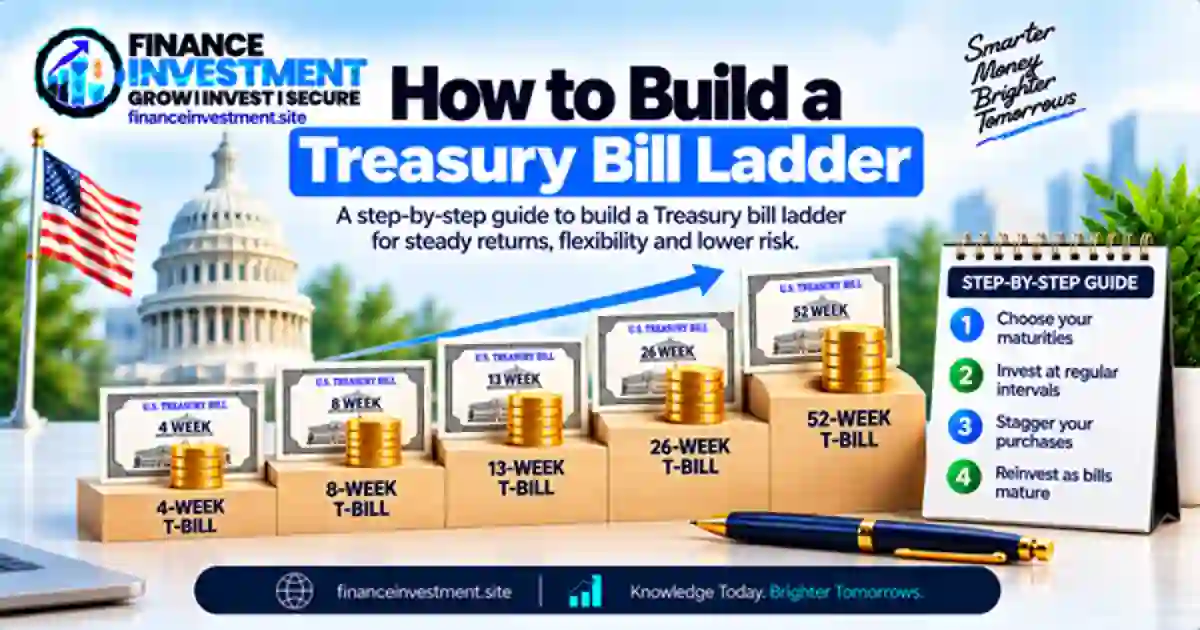
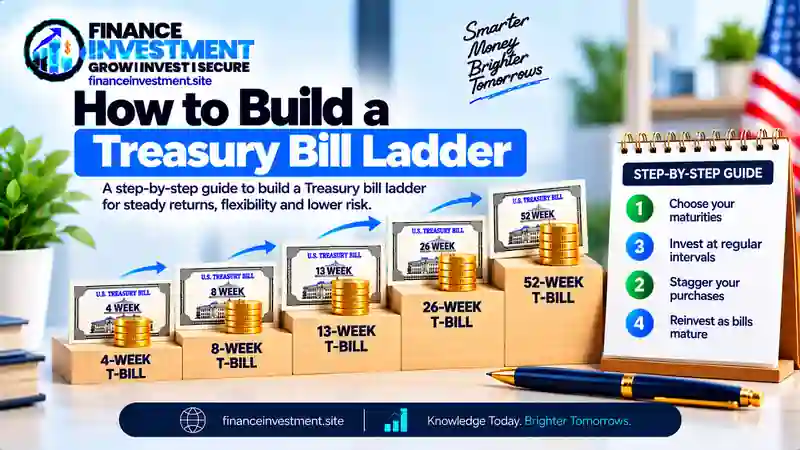
    how to build a treasury bill ladderHow to Build a Treasury Bill Ladder is easier to understand when you look at the timing of your cash. Instead of putting all your money into one Treasury bill with a single maturity date, a ladder spreads purchases across several maturity dates. As one bill matures, that cash becomes available while the other bills continue toward their own maturity dates.

    This approach can give you a more organized way to manage short-term money. For instance, you may want part of your savings to become available every few months instead of having everything mature at once. The right setup depends on your starting amount, expected cash needs, and the Treasury bill maturities available when you invest.

    If Treasury bills are still new to you, begin with our Treasury Bills Explained guide. It covers the basics of T-bills, including how they work and mature. Here, we’ll focus on turning individual Treasury bills into a simple ladder you can manage over time.

    What You’ll Learn

    • What a Treasury bill ladder is and how the strategy is structured.
    • How to choose maturity dates around your expected cash needs.
    • How to divide money among different T-bill maturities.
    • What happens when one bill reaches maturity.
    • How reinvesting can keep a ladder going over time.
    • What to consider before selling a T-bill before maturity.
    • Common mistakes that can make a ladder difficult to manage.

    The idea is straightforward: give different portions of your cash different maturity dates. Once the schedule is set up, you can decide whether each maturity should be spent, held in cash, or reinvested.

    Quick Answer: How to Build a Treasury Bill Ladder

    A Treasury bill ladder uses multiple T-bills with different maturity dates. You start by identifying when you may need your money, choose maturities that fit that timeline, divide your cash among the purchases, and keep track of each maturity. When a bill matures, you can use the proceeds or reinvest them, depending on your next cash need.

    Key Takeaways

    • Spread maturity dates: Instead of having all your money mature at once, you create several maturity points.
    • Plan around your cash needs: Your expected spending dates should guide the ladder more than a particular maturity schedule.
    • Divide the investment: You can allocate different amounts to different T-bills rather than committing everything to one purchase.
    • Decide what happens at maturity: Each maturity can provide cash for spending or become the starting point for another T-bill purchase.
    • Understand early sales: A marketable T-bill can generally be sold before maturity, but its market price may be different from what you paid.
    • Expect changing yields: Reinvesting later may produce a different return because Treasury market rates can change.
    • Track the schedule: Recording purchase amounts and maturity dates can make the ladder much easier to manage.

    BOTTOM LINE: A T-bill ladder is a way to organize short-term Treasury investments around future cash needs. The important part is not simply buying several bills. It is choosing maturity dates and amounts that make sense for your own timeline.

    Table of Contents

    Treasury Bill Ladder at a Glance

    A Treasury bill ladder is a group of T-bills arranged with different maturity dates. Instead of having all your money tied to one maturity, you spread purchases across a schedule. When each bill matures, its proceeds become available for spending or another investment.

    BEST FOR

    Investors who want to spread short-term cash availability across several planned maturity dates.

    KEY NUMBERS

    Treasury bills have maturities of one year or less. The number of rungs in your ladder depends on your cash needs and investment amount.

    FeatureWhat It Means
    StructureMultiple T-bills with maturity dates spread across a chosen schedule
    Starting pointIdentify your expected cash needs and decide how much money to allocate
    MaturityEach T-bill reaches maturity on its own scheduled date
    When a bill maturesYou can use the proceeds for a planned expense or consider reinvesting them
    Early saleA marketable T-bill can generally be sold before maturity, but its market price may differ from the purchase price
    Tax treatmentT-bill interest is generally subject to federal income tax but exempt from state and local income taxes

    QUICK TAKE: Think about the dates first. A useful ladder starts with when you expect to need your cash, then works backward to the T-bill maturities and amounts that fit those needs.

    Treasury Bill Ladder: A Complete Beginner Guide

    how to build a treasury bill ladderFor a first-time investor, a Treasury bill ladder may sound more complicated than it really is. At its core, you are combining several T-bill purchases so that they reach maturity on different dates. That gives you a planned sequence of future cash availability.
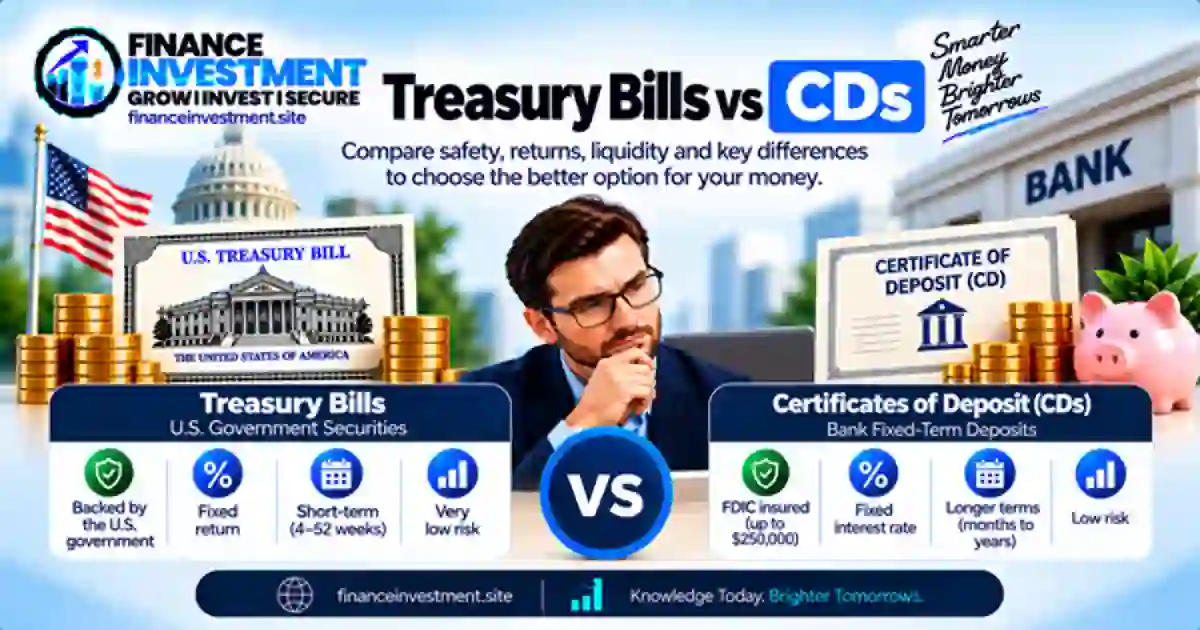
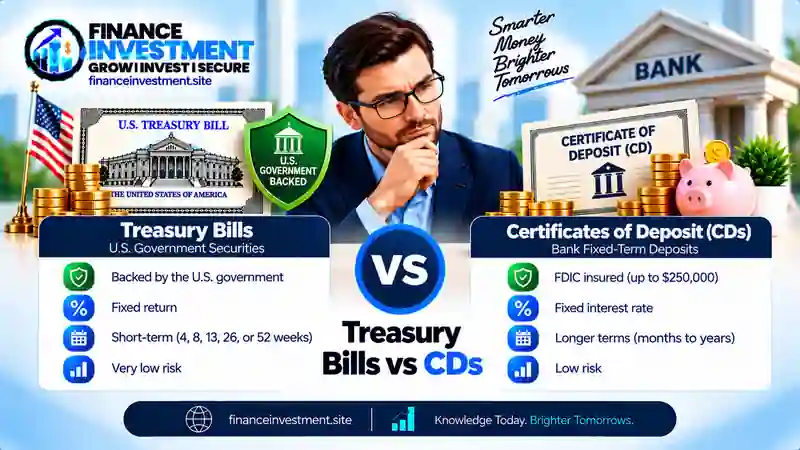
    What Is a Treasury Bill Ladder?

    Suppose you have $20,000 that you do not expect to use immediately. You could put the entire amount into one T-bill. Another approach is to divide the money among several T-bills with different maturity dates. The result is a series of dates when portions of the investment can become available.

    Start With Your Cash Timeline

    The first question is not, “Which T-bill has the highest yield?” It is, “When might I need this money?” A planned tax payment, tuition bill, home repair, travel expense, or other short-term goal can help you decide when individual rungs should mature.

    What Is a Ladder Rung?

    Each T-bill in the arrangement can be thought of as one rung. The rungs do not have to contain equal amounts. You can allocate more money to a maturity that matches a larger upcoming expense and less to another. When a bill matures, you can use the proceeds or decide whether to replace that rung with a new T-bill.

    BEGINNER TIP: Your first ladder does not need to be elaborate. A small number of clearly planned rungs can make it easier to track maturity dates, cash needs, and reinvestment decisions.

    How to Build a Treasury Bill Ladder

    A workable ladder starts with your cash calendar. Once you know how much money you can set aside and when you may need it, you can choose T-bill maturities and assign an amount to each one.

    1. Set Aside the Right Amount

    Use money intended for short-term investing rather than cash needed for everyday bills. Keep your immediate spending needs and emergency reserves separate. This helps prevent an unexpected expense from forcing you to sell a T-bill before maturity.

    2. List Your Expected Cash Dates

    Write down upcoming expenses and the approximate dates when you may need the money. A home project, tuition payment, tax bill, or planned purchase can give you a useful target for one or more maturities.

    3. Match T-Bill Maturities to Your Timeline

    Treasury bills come in several short-term maturities. Select the available maturities that fit your schedule rather than copying someone else’s ladder. If you need a refresher on the purchase process, see our guide to buying Treasury bills.

    4. Assign an Amount to Each Rung

    You can divide the money evenly or use different amounts. For example, a larger upcoming expense may justify a larger allocation to the T-bill maturing around that time. The important point is to make the amounts fit your actual cash plan.

    5. Decide What Happens at Maturity

    Each maturity creates a decision point. If you need the money, use the proceeds for the planned expense. If you do not, you can consider reinvesting them into another T-bill. Reinvestment can keep the ladder running, but the new T-bill’s yield may differ from the rate available when you made the original purchase.

    SIMPLE EXAMPLE: Suppose you have $20,000 for short-term goals. You could split it across several T-bills with different maturity dates. When the first bill matures, you decide whether to spend that cash or buy a replacement T-bill. That decision can then be repeated as the next rungs mature.

    Treasury Bill Ladder: Benefits and Drawbacks

    A Treasury bill ladder can bring structure to short-term cash management, but it is not a set-it-and-forget-it strategy. Its usefulness depends on how well the maturity schedule fits your goals. Before building one, consider both the advantages and the trade-offs.

    BENEFITS
    • Staggered access: Different maturity dates can provide several planned opportunities to access cash.
    • Goal-based planning: You can align individual T-bills with known or expected short-term expenses.
    • Reinvestment flexibility: At maturity, you can use the proceeds or evaluate another Treasury investment.
    • Government obligation: T-bills are direct obligations of the U.S. government, subject to the government’s ability to meet its obligations.
    DRAWBACKS
    • More recordkeeping: Multiple T-bills mean more purchase details and maturity dates to monitor.
    • Changing reinvestment rates: The yield available when a bill matures may be higher or lower than your original yield.
    • Market-price risk before maturity: If you sell a marketable T-bill before maturity, its price can be different from what you paid.
    • Planning risk: A poorly timed ladder may not provide cash exactly when an expense is due.

    KEY POINT: The goal of a ladder is not to create as many maturity dates as possible. A practical ladder uses a manageable number of rungs that fit your expected cash needs and your willingness to reinvest.

    Treasury Bill Ladder Comparison

    A Treasury bill ladder can be structured in different ways. The main difference is how you divide the money and what you plan to do when each bill matures. The table below compares four common approaches without assuming that one structure works for every investor.

    StructureHow It WorksMain Planning Focus
    Single T-billMost or all of the money is placed into one T-bill maturity.One primary maturity date.
    Equal-rung ladderSimilar amounts are divided among T-bills with staggered maturity dates.Keeping the schedule simple and consistent.
    Goal-based ladderAmounts and maturity dates are selected around specific expected cash needs.Matching proceeds with planned expenses.
    Rolling ladderWhen a T-bill matures, its proceeds may be used to purchase another T-bill and extend the schedule.Maintaining an ongoing short-term investment cycle.

    QUICK TAKE: The structure should follow your purpose. A simple equal-rung schedule may be easier to track, while a goal-based ladder gives you more flexibility when future expenses vary in size or timing.

    Treasury Bill Ladder: Costs, Risks and Expert Tips

    A Treasury bill ladder does not require complicated maintenance, but you still need to consider purchase costs, market prices, reinvestment rates, and the timing of your cash needs. Understanding these details can help you avoid building a ladder that looks organized but does not fit your actual financial schedule.

    Potential Costs

    • TreasuryDirect purchases: TreasuryDirect does not charge a fee or commission for purchasing Treasury securities directly through the platform.
    • Brokerage costs: A broker may have its own commissions, spreads, markups, markdowns, or other transaction-related costs. Review the broker’s current pricing before placing an order.
    • Management effort: A ladder with several rungs requires you to keep track of purchase amounts, maturity dates, and what you want to do with each maturity.

    Key Risks

    • Early-sale price risk: If you sell a marketable T-bill before maturity, its market price may be above or below the amount you paid.
    • Reinvestment risk: When a T-bill matures, the yield available on a replacement bill may be different from the yield on your original investment.
    • Cash-flow risk: If a maturity date does not line up with an upcoming expense, you may need another source of cash or may have to consider selling a bill early.
    • Opportunity cost: Money committed to a ladder may not be available for another investment or financial goal during the selected maturity period.

    EXPERT TIP: Build the ladder around your expected cash-flow dates first. Then compare available maturities, yields, and purchase costs. If you use a brokerage account, check its current fee schedule and understand how the broker handles Treasury purchases and secondary-market sales.

    Common Treasury Bill Ladder Mistakes and an Illustrative Example

    A Treasury bill ladder can be easy to understand but still easy to mismanage. The most common problems usually come from building the schedule without considering when the money will actually be needed.

    Common Mistakes to Avoid

    • Choosing maturities by yield alone: A higher yield may not be useful if the maturity date does not fit your cash needs.
    • Investing money you may need soon: Keep money for immediate expenses and emergencies accessible rather than automatically adding it to the ladder.
    • Making every rung the same size: Equal allocations are simple, but your future expenses may not be equal.
    • Skipping the maturity plan: Decide in advance whether each maturity is likely to be spent, held as cash, or considered for reinvestment.
    • Assuming the same yield will continue: Future T-bill yields can change, so a replacement bill may have a different return.

    Illustrative Example: A $30,000 Ladder

    Consider a hypothetical investor with $30,000 available for several short-term goals. Instead of placing the entire amount into one T-bill, the investor could divide the money among several T-bills with staggered maturity dates. The actual amounts and maturities would depend on the investor’s expected cash needs.

    If one maturity is scheduled around a planned expense, those proceeds could be used for that expense. The remaining T-bills could continue until their own maturity dates. At each maturity, the investor can reassess the next step rather than automatically reinvesting every dollar.

    KEY LESSON: A useful ladder connects three things: how much money you have available, when you expect to need it, and what you plan to do when each T-bill matures. The schedule should serve your cash needs rather than exist simply for the sake of having multiple rungs.

    Who Should Consider a Treasury Bill Ladder?

    A Treasury bill ladder is generally designed for short-term money that has a planned timeline. It can be useful when you want several T-bills to mature at different points instead of having one maturity date for the entire amount.

    A Ladder May Fit Your Situation If You:

    • Have money available for goals that are months away rather than immediate expenses.
    • Expect to need portions of your savings at different times.
    • Want to organize several T-bill maturities around a cash-flow schedule.
    • Are comfortable keeping track of multiple purchase and maturity dates.
    • Want to make a fresh decision whenever a T-bill matures.

    A Ladder May Be Less Suitable If You:

    Need the money available at any time, do not want to monitor multiple securities, or are investing for a goal that requires a longer time horizon. A ladder also should not replace an appropriate emergency cash reserve or money needed for near-term bills.

    Frequently Asked Questions About Treasury Bill Ladders

    1. What is a Treasury bill ladder?

    A Treasury bill ladder is a strategy that uses multiple T-bills with different maturity dates. Instead of having the entire investment mature at one time, portions of the money become available according to a planned schedule.

    2. How do I build a Treasury bill ladder?

    Start by deciding how much money you can allocate and when you may need it. Then select available T-bill maturities, divide the money among the purchases, record the maturity dates, and decide whether to use or reinvest each maturity.

    3. How many T-bills should be in a ladder?

    There is no standard number of rungs. The appropriate number depends on your investment amount, expected cash needs, preferred maturity spacing, and how much activity you want to manage.

    4. What happens when a T-bill in the ladder matures?

    At maturity, the Treasury pays the bill according to its terms. For a typical discount T-bill, you receive its face value at maturity. You can then use the proceeds for a planned expense or consider reinvesting them.

    5. Can I sell a T-bill before it matures?

    Marketable T-bills can generally be sold before maturity through a brokerage or other appropriate secondary-market channel. The market price at the time of sale can be higher or lower than your purchase price, so the amount you receive may differ from the amount originally invested.

    6. Are Treasury bills FDIC insured?

    No. Treasury bills are not FDIC-insured bank deposits. They are direct debt obligations of the U.S. government, subject to the government’s ability to meet its obligations.

    7. Are Treasury bill earnings exempt from state income tax?

    Generally, interest income from U.S. Treasury bills is subject to federal income tax but exempt from state and local income taxes. Individual tax situations can vary, so review your circumstances with a qualified tax professional when appropriate.

    8. Should I reinvest every maturing T-bill?

    Not necessarily. You can use the proceeds for a planned expense, keep the money available for another goal, or consider buying another Treasury security. The decision depends on your cash needs, the available yields, and your overall financial plan.


    Final Comparison: How to Build a Treasury Bill Ladder

    A Treasury bill ladder is ultimately a way to organize short-term money around future dates. The structure you use should reflect how often you expect to need cash, how much you want to invest, and whether you plan to spend or reinvest the proceeds when each T-bill matures.

    Planning QuestionWhat to Consider
    When will I need the money?Use expected cash-flow dates to help determine when individual T-bills should mature.
    How much should each rung contain?Equal amounts can simplify tracking, while different amounts may better match expenses of different sizes.
    What happens at maturity?Decide whether to use the proceeds, hold the cash for another goal, or consider reinvesting.
    Could my plans change?Leave enough flexibility so an unexpected cash need does not force an unnecessary early sale.

    FINAL TAKEAWAY: A well-planned T-bill ladder starts with your cash-flow needs, not with the number of rungs. Choose maturities and investment amounts that you can comfortably track, then reassess the plan whenever a bill matures or your financial needs change.

    Have a Money Question? Keep Exploring.

    A Treasury bill ladder works best when the maturity schedule reflects your actual cash needs. Before adding a new rung, consider when you may need the money, how much you want to allocate, and what you will do when each T-bill matures.

    📩 Get in Touch With FinanceInvestment

    Have a Treasury bill question or a topic you’d like us to explain?

    Email FinanceInvestment

  • Treasury Bills vs CDs: Safety, Taxes, Rates & Liquidity

    Treasury Bills vs CDs: Safety, Taxes, Rates & Liquidity

    Treasury Bills vs CDs

    Subhash Rukade
    Founder, FinanceInvestment
    Published: Sep 25, 2026
    Updated: Sep 25, 2026
    Reading Time: 10–12 min


    Treasury Bills vs CDs: What Should You Know?

    Treasury Bills vs CDsTreasury Bills vs CDs is a useful comparison when you have cash to put aside and want to earn a return without taking on the volatility of stocks. Both can serve short-term savings goals, but they work differently. A T-bill is a short-term U.S. Treasury security, while a CD is a time deposit offered by a bank or credit union.

    The real difference shows up when you look past the advertised rate. The maturity date, access to your money, taxes, insurance, and what happens if your plans change can all affect the outcome. T-bills have maturities of one year or less, while CDs can come with a much wider range of terms.

    What You’ll Learn

    • How Treasury bills and CDs work from purchase to maturity.
    • How U.S. government backing differs from FDIC or NCUA insurance.
    • What can happen when you need your money before maturity.
    • How federal and state taxes can affect your actual return.
    • Which rates, fees, terms, and access rules deserve attention.
    • How to match each option with a short-term financial goal.

    If T-bills are new to you, start with our Treasury Bills Explained guide. It covers the basics before we get into the practical differences between T-bills and CDs.

    Quick Answer: Treasury Bills vs CDs

    Treasury bills and CDs can both fit short-term savings goals, but they are built differently. A T-bill is a short-term U.S. Treasury security with a maturity of one year or less. A CD is a time deposit from a bank or credit union with a specific term and account rules.

    Key Takeaways

    • Different products: T-bills are Treasury securities; CDs are deposit products.
    • Protection differs: T-bills are backed by the U.S. government, while eligible CDs at FDIC-insured banks can receive FDIC insurance within applicable limits.
    • Maturity differs: T-bills mature within one year, while CDs can have terms ranging from short periods to several years.
    • Early access differs: A CD may impose an early-withdrawal penalty. A marketable T-bill can generally be sold before maturity, but its market price may be higher or lower than the purchase price.
    • Taxes matter: T-bill interest is generally subject to federal income tax but exempt from state and local income taxes. CD interest is generally taxable income.
    • Yield is only one factor: Compare the return with taxes, maturity, insurance, fees, access rules, and your cash timeline.

    BOTTOM LINE: Start with when you expect to need the money. Then compare the current T-bill yield or CD APY, applicable protection, tax treatment, fees, and the consequences of accessing the money early.

    Table of Contents

    Treasury Bills vs CDs at a Glance

    T-bills and CDs can both be used for money you expect to keep relatively stable, but they are structured differently. A T-bill is a marketable U.S. Treasury security with a maturity of one year or less. A CD is a time deposit with a specific term and institution-specific rules.

    BEST FOR

    T-bills may fit a defined cash timeline. CDs may fit savers who are comfortable committing money for a selected term.

    KEY NUMBERS

    T-bills mature in 1 year or less. Standard FDIC coverage is $250,000 per depositor, per insured bank, for each ownership category.

    FeatureTreasury BillsCDs
    ProductU.S. Treasury securityTime deposit at a bank or credit union
    MaturityOne year or lessSpecific term selected when opened
    ProtectionBacked by the U.S. government; not FDIC-insuredEligible bank CDs may receive FDIC insurance; eligible credit-union CDs may receive NCUA share insurance
    Early accessA marketable bill can generally be sold before maturity at the available market priceEarly withdrawal may involve a penalty or other product-specific restrictions
    ReturnFor a bill held to maturity, generally based on purchase price and maturity valueInterest is earned according to the CD’s stated terms

    QUICK TAKE: Don’t stop at the advertised return. Check the maturity, applicable insurance or government backing, taxes, access rules, and what happens if you need the money earlier than planned.

    Treasury Bills vs CDs: A Complete Beginner Guide

    Treasury Bills vs CDsIf you’re new to Treasury Bills vs CDs, start with the basic difference. A Treasury bill is a short-term U.S. government security. A CD is a time deposit offered by a bank or credit union. Both can be used for money you expect to keep relatively stable, but the way you earn and access that money is different.

    Treasury Bills in Simple Terms

    T-bills have maturities of one year or less. They are generally issued at a discount to face value, although an auction can result in a price at par. When a discounted bill reaches maturity, you receive its face value, with the difference between your purchase price and the amount received representing the interest earned.

    CDs in Simple Terms

    A certificate of deposit is a time deposit with a selected term. Traditional CDs commonly offer a fixed rate for that term, although the exact terms depend on the institution and CD type. Taking money out before maturity may trigger an early-withdrawal penalty, so the account’s disclosure matters before you open one.

    A SIMPLE WAY TO THINK ABOUT IT: A T-bill is a short-term Treasury security with a maturity date. A CD is a time deposit with a selected term. Once you understand that difference, compare the return, taxes, protection, and access rules.

    How Treasury Bills and CDs Work

    The practical difference becomes clearer when you follow the money from purchase to maturity. A T-bill is issued through a Treasury auction and has a defined maturity. A CD is opened with a bank or credit union for a selected term, with the institution’s terms controlling interest, maturity, and early access.

    How a Treasury Bill Works

    The Treasury sells bills through auctions. T-bills are issued at a discount and redeemed at their face value when they mature. For a discounted bill, the difference between the purchase price and the amount received at maturity is the interest earned. A marketable T-bill can generally be sold before maturity, but the sale price is determined by the market at that time.

    How a CD Works

    With a CD, you deposit money for a stated term and earn interest according to the CD’s terms. When the term ends, the deposit becomes available according to the institution’s maturity rules. If you need the money earlier, the CD agreement determines whether early withdrawal is permitted and what penalty or other restriction may apply.

    THE PRACTICAL DIFFERENCE: With a T-bill, getting out before maturity generally means selling a security at its current market price. With a CD, early access is governed by the deposit agreement and may involve a penalty.

    Treasury Bills vs CDs: Benefits and Drawbacks

    Neither product is automatically the right fit for every cash goal. The useful question is what you value most: a Treasury security with a defined maturity, or a time deposit with institution-specific terms.

    Treasury Bills: Pros and Cons

    PROS
    • Backed by the full faith and credit of the U.S. government.
    • Maturities of one year or less can fit short-term cash planning.
    • Interest is generally exempt from state and local income taxes.
    • Marketable T-bills can generally be sold before maturity.
    CONS
    • An early sale exposes you to the market price at that time.
    • Buying and managing Treasury securities may require more steps than opening a bank CD.
    • T-bills are securities, not FDIC-insured deposits.

    CDs: Pros and Cons

    PROS
    • Traditional CDs commonly provide a fixed rate for a defined term.
    • Different terms can accommodate different savings timelines.
    • Eligible bank CDs can receive FDIC insurance within applicable limits.
    • Eligible CDs at federally insured credit unions can receive NCUA share insurance.
    CONS
    • Early withdrawal may result in a penalty under the CD’s terms.
    • Your money may be less accessible during the selected term.
    • CD interest is generally subject to federal income tax and may also be subject to applicable state or local taxes.

    WHAT MATTERS MOST: A T-bill can be sold before maturity, but its market price can change. A traditional CD can keep its stated rate through the term, but early access may cost you through an early-withdrawal penalty. Your cash timeline should come first.

    Treasury Bills vs CDs: Detailed Comparison

    The headline return is only one piece of the puzzle. When comparing Treasury bills and CDs, look at how each product handles maturity, access, taxes, protection and what happens if your plans change.

    FeatureTreasury BillsCDs
    What you ownA short-term U.S. Treasury securityA time deposit with a bank or credit union
    MaturityOne year or lessThe term selected when the CD is opened
    ReturnFor a discounted bill held to maturity, the purchase price and maturity value determine the returnInterest is earned according to the CD’s stated terms
    ProtectionBacked by the U.S. government; not FDIC-insuredEligible bank CDs may receive FDIC insurance; eligible share certificates at federally insured credit unions may receive NCUA share insurance
    Early accessA marketable bill can generally be sold before maturity at the market price available thenEarly withdrawal depends on the CD agreement and may involve a penalty
    Federal taxInterest is generally subject to federal income taxInterest is generally taxable income
    State & local taxGenerally exempt from state and local income taxesMay be subject to applicable state and local income taxes
    Main trade-offDefined maturity with the ability to sell before maturity at the prevailing market priceDefined deposit term with early-access rules set by the CD

    HOW TO USE THIS TABLE: Start with your expected cash date. Then compare the current return, applicable protection, tax treatment and early-access rules. That gives you a more useful comparison than looking at the advertised rate alone.

    Costs, Risks and Expert Tips

    A good comparison goes beyond the advertised return. Before choosing a T-bill or CD, look at the cost of buying or exiting, the tax treatment, and what could happen if you need the money sooner than expected.

    Costs and Risks to Watch

    • T-bills: TreasuryDirect charges no purchase fee or commission. A broker may have its own charges or terms. Selling before maturity also means accepting the market price available at that time.
    • CDs: Check the specific CD agreement for early-withdrawal provisions, minimum deposit requirements, renewal terms, and any other conditions.
    • Taxes: Compare after-tax returns. T-bill interest is generally subject to federal income tax but exempt from state and local income taxes. CD interest is generally taxable income.
    • Protection: Confirm whether a CD is held at an FDIC-insured bank or through a federally insured credit union, and check the applicable insurance rules and limits.

    Expert Tips Before You Buy

    1. Start with the date you expect to need the money.
    2. Compare the current T-bill yield with the CD’s APY after considering taxes and applicable costs.
    3. Read the CD disclosure, especially the early-withdrawal and maturity sections.
    4. If buying a T-bill, decide whether you can hold it to maturity or accept the possibility of a different market price if you sell early.

    EXPERT TIP: Don’t compare the rate alone. A slightly higher return may not matter if the product’s maturity, taxes, fees, or early-access rules don’t fit your plans.

    Common Mistakes and a Real-Life Example

    The rate may grab your attention first, but the details can matter more. A few common mistakes can make a T-bill or CD less convenient than expected.

    Common Mistakes to Avoid

    • Looking only at the highest rate: Taxes, fees, maturity and access rules can change the practical value of a return.
    • Ignoring the maturity date: Make sure the T-bill maturity or CD term fits your expected cash date.
    • Confusing selling with withdrawing: A marketable T-bill can generally be sold before maturity at its market price, while a CD follows the withdrawal terms in its agreement.
    • Forgetting tax differences: T-bill interest is generally exempt from state and local income taxes, while CD interest may be subject to applicable state and local taxes.
    • Assuming every CD has identical protection: Check whether the deposit is at an FDIC-insured bank or whether the share certificate is at a federally insured credit union.

    Real-Life Example

    Suppose a couple has $25,000 set aside for a home improvement project they expect to fund in about six months. They could compare a T-bill with a maturity close to that date against a CD whose term fits their timeline.

    They would then compare the current return, taxes, applicable insurance, and early-access rules. If the project date moves, the consequences also matter: selling a T-bill before maturity means accepting its market price, while accessing a CD early depends on the CD’s terms and any applicable penalty.

    KEY LESSON: Choose the time frame first, then compare the return. Matching the product to your cash date can prevent an avoidable early-access problem.

    Who Should Choose Treasury Bills or CDs?

    Your plans for the money can help narrow the choice. Consider how long you can leave it untouched, whether you prefer a Treasury security or a deposit account, and how each product’s terms affect your return.

    Treasury Bills May Fit If:

    • Your spending date matches an available short-term T-bill maturity.
    • You want to hold a security backed by the U.S. government.
    • The state and local income tax treatment matters to you.
    • You can hold until maturity or accept market-price risk if you sell early.

    CDs May Fit If:

    • You want a deposit product with a term suited to your savings goal.
    • You prefer the predictable rate offered by a traditional fixed-rate CD.
    • You can meet the minimum deposit and early-withdrawal conditions.
    • You have confirmed applicable FDIC coverage for an eligible bank CD or NCUA coverage for an eligible credit-union share certificate.

    ONE MORE THING: If you might need this money without warning, neither product should be treated like an everyday spending account. Keep your immediate cash needs in mind before committing to a maturity date or deposit term.

    Frequently Asked Questions About Treasury Bills vs CDs

    1. How do Treasury bills and CDs differ?

    A T-bill is a short-term U.S. Treasury security, while a CD is a time deposit offered by a bank or credit union. Their maturity, access, tax treatment and protection work differently.

    2. Are Treasury bills FDIC-insured?

    No. Treasury bills are not FDIC-insured deposits. They are U.S. Treasury securities backed by the full faith and credit of the U.S. government.

    3. Are CDs FDIC-insured?

    An eligible CD at an FDIC-insured bank can receive FDIC coverage within applicable limits. A share certificate at a federally insured credit union may receive NCUA share insurance instead.

    4. Can you sell a Treasury bill before maturity?

    Yes. A marketable T-bill can generally be sold before maturity, but the amount received depends on its market price at the time of sale.

    5. Can you withdraw money from a CD early?

    That depends on the CD’s terms. A traditional CD may allow early withdrawal with a penalty, while certain CD types can have different access rules.

    6. Are Treasury bill earnings exempt from state taxes?

    Generally, yes. Interest from U.S. Treasury securities is generally exempt from state and local income taxes, while federal income tax generally applies.

    7. Do CDs and Treasury bills have the same tax treatment?

    No. T-bill interest generally receives state and local tax exemption. CD interest is generally taxable income and may also be subject to applicable state and local taxes.

    8. Which should you compare for short-term cash?

    Compare the specific T-bill and CD based on your cash date, current return, taxes, fees, access rules and applicable protection. There is no single comparison that fits every situation.

    REMEMBER: A T-bill is a Treasury security, while a CD is a deposit product. Their insurance, tax and early-access rules should be evaluated separately.


    Treasury Bills vs CDs: Final Comparison

    Treasury bills and CDs can both be used for short-term cash planning, but they work in different ways. A T-bill is a short-term U.S. Treasury security with a defined maturity. A CD is a time deposit with a term and conditions set by the financial institution.

    Before comparing them, look at when you need the money, the current return, applicable taxes, protection, and early-access rules. With a T-bill, consider the maturity date and the market price if you sell before maturity. With a CD, review the term, rate, maturity instructions, and early-withdrawal provisions.

    FINAL CHECK: A useful comparison goes beyond the headline rate. Review the cash timeline, access rules, tax treatment, applicable insurance or government backing, and any costs before making a decision.

    For a broader introduction to Treasury securities, read our Treasury Bills Explained guide. You can also compare another short-term cash option in our CD vs Money Market Account guide.

    Have a Money Question? Keep Exploring.

    Understanding the details can make short-term money decisions easier to compare. Keep exploring FinanceInvestment for practical guides on Treasury bills, CDs, and other personal finance topics.

    📩 Get in Touch With FinanceInvestment

    Have a money question or a topic you’d like us to cover?

    Email FinanceInvestment

    Continue Your Research