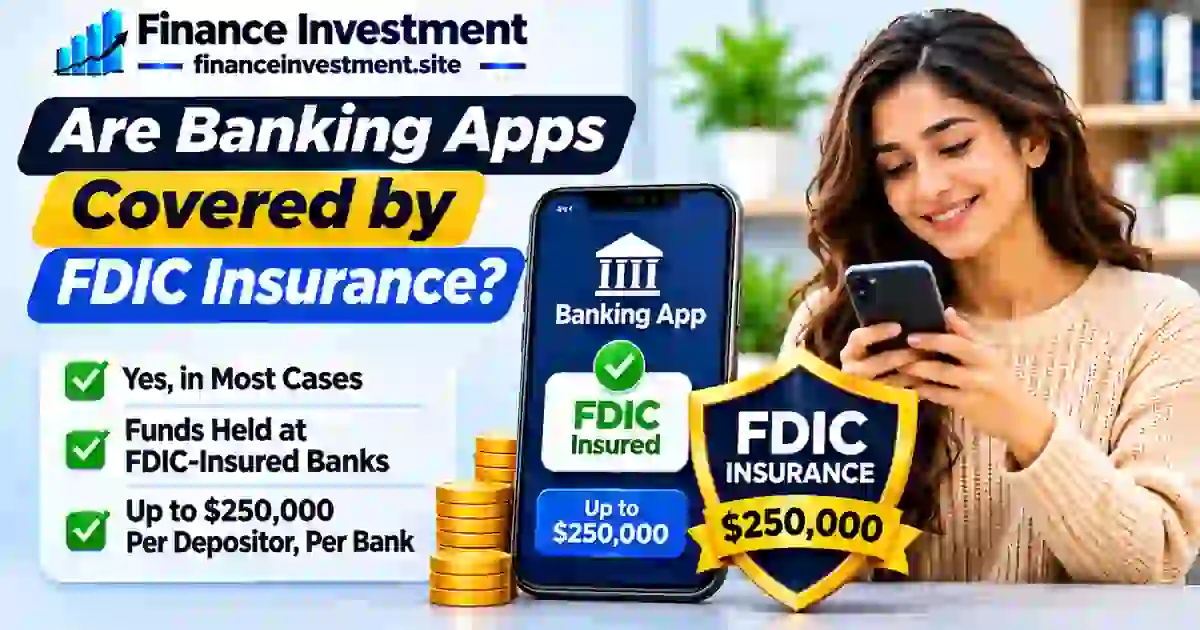
Are Banking Apps Covered by FDIC Insurance? 2026 Guide
 Are Banking Apps Covered by FDIC Insurance? What You Should Know
Are banking apps covered by FDIC insurance? It’s a fair question when an app lets you open an account in minutes, promises competitive savings rates and displays the words “FDIC insured.” Those words sound reassuring, but they don’t always tell you who actually holds your money.
An app operated by an FDIC-insured bank is different from one run by a financial technology company. Fintech apps may use partner banks to hold deposits, but customer coverage depends on how the arrangement is structured and whether applicable insurance requirements are met.
Our FDIC and NCUA insurance guide explains federal deposit protection. This article focuses on the details worth checking before you move your savings into a banking app.
What You’ll Learn
- Which banking apps may offer FDIC-insured deposits.
- How partner banks and pass-through insurance work.
- What happens when an app or its partner bank fails.
- How to check insurance claims before depositing money.
Quick Answer: Are Banking Apps FDIC Insured?
Some banking app deposits may qualify for FDIC insurance, but an app itself is not FDIC-insured. Eligible deposits held at an FDIC-insured bank can receive protection, including through qualifying fintech arrangements. Coverage generally reaches $250,000 per depositor, per insured bank, per ownership category if the insured bank fails.
6 Key Takeaways
- Bank-owned apps: Eligible deposits at the insured bank generally receive standard FDIC protection.
- Fintech apps: A partnership with an insured bank does not automatically guarantee coverage for every balance.
- Pass-through insurance: The arrangement must meet applicable ownership and recordkeeping requirements.
- Coverage limits: Eligible deposits at the same insured bank within the same ownership category are generally added together.
- Provider failure: FDIC insurance does not protect against the failure of a nonbank app company itself, or guarantee uninterrupted access to funds.
- Verification: Identify the bank through FDIC BankFind, then read the app’s deposit disclosures.
Bottom Line: Before moving your savings, confirm which institution holds the deposits, how insurance eligibility works and what could happen if the app provider stops operating.
Table of Contents
Banking App FDIC Insurance: At a Glance
A familiar-looking banking app isn’t proof that every dollar inside it is insured. What matters is where your deposits are held and whether the account meets FDIC requirements.
Quick Facts
- Standard FDIC limit: $250,000 per depositor, per insured bank, per ownership category.
- Bank-owned apps: Eligible deposits at an FDIC-insured bank are covered.
- Fintech apps: Coverage may apply through an insured partner bank if pass-through requirements are satisfied.
- Best for: People comparing digital checking, savings and fintech accounts before depositing money.
Banking App Coverage Comparison
| App Type | FDIC Coverage | What to Check |
|---|---|---|
| FDIC-insured bank’s app | Eligible bank deposits covered | Bank identity and account type |
| Fintech banking app | Conditional pass-through coverage | Partner bank, ownership and records |
| Credit union app | Generally NCUA, not FDIC, if federally insured | Credit union’s insurance status |
Quick Take: An insured partner bank is a useful starting point, not a guarantee that every app balance qualifies. Check the deposit agreement before moving significant savings.
Understanding FDIC Insurance for Banking Apps

A banking app may look like a traditional bank account, but the company behind the screen isn’t necessarily a bank. Before trusting an app with your savings, understand who actually holds your deposits.
Apps Operated by FDIC-Insured Banks
An insured bank’s official mobile app is simply a digital way to access your bank account. Eligible checking, savings and money market deposits held directly at that bank generally qualify for FDIC protection, subject to coverage limits and ownership rules.
Fintech Apps Using Partner Banks
Some fintech companies provide banking features without holding a bank charter. Instead, they work with insured partner banks that may hold customer deposits.
Those funds may qualify for pass-through FDIC insurance when the arrangement meets applicable requirements, including proper ownership identification and recordkeeping. A partner bank’s insured status alone does not establish coverage for every app balance.
Importantly, FDIC insurance responds to the failure of an insured bank—not the failure of a nonbank fintech provider. An app shutdown could still disrupt access to your money.
Apps From Credit Unions
Eligible share accounts at federally insured credit unions generally receive NCUA share insurance rather than FDIC coverage. Some credit unions use private insurance, so verify the institution’s status before opening an account.
For more on these services, read our credit union mobile banking guide.
Beginner Tip: Look beyond the app’s branding. Read its deposit agreement to identify the institution holding your money and understand which insurance protections may apply.
How Pass-Through FDIC Insurance Works
Some fintech apps place customer money at FDIC-insured partner banks through custodial or other intermediary accounts. When specific requirements are met, pass-through insurance allows eligible deposits to be insured based on the customers who actually own the funds, rather than solely on the intermediary’s name.
How Your Money Moves
Step 1 — Deposit: You transfer money through a fintech app.
Step 2 — Bank placement: The provider arranges for funds to be held at an insured partner bank, sometimes through an intermediary account.
Step 3 — Recordkeeping: Required records establish the custodial relationship and each customer’s ownership interest.
Step 4 — Insurance determination: If the insured bank fails, the FDIC evaluates whether the deposits qualify for pass-through coverage.
Conditions That Affect Coverage
The insured bank’s deposit account records generally must disclose the agency or custodial relationship. Records maintained in good faith and in the regular course of business must identify the actual owners and their respective interests. The arrangement must also satisfy other applicable FDIC requirements.
The standard limit is $250,000 per depositor, per insured bank, per ownership category. Deposits you hold directly and through an app at the same bank generally count together when they fall within the same ownership category. Learn more in our FDIC insurance at different banks guide.
If the Fintech Provider Shuts Down
A nonbank app’s failure does not itself trigger FDIC insurance when its partner bank remains open. Customers may still experience frozen transactions or delayed access, particularly if account records cannot be reconciled. FDIC deposit insurance responds to the failure of an insured bank, subject to eligibility and coverage limits.
Key Point: Pass-through FDIC insurance can protect qualifying deposits if the partner bank fails. It does not insure the fintech company or guarantee uninterrupted access to your money.
Benefits and Drawbacks of Banking Apps
Banking apps offer convenience and useful money-management tools. Still, their features don’t tell you whether your deposits qualify for federal insurance or how easily you can access your funds during a disruption.
Benefits
- Easy access: Manage balances, transfers and payments from your phone.
- Competitive features: Some providers offer attractive savings rates, lower fees or automatic savings tools.
- Account monitoring: Alerts and transaction histories help you track everyday activity.
Drawbacks
- Coverage conditions: Some fintech arrangements may not meet pass-through FDIC insurance requirements.
- Access problems: Outages, account restrictions or intermediary failures can interrupt withdrawals.
- Limited assistance: Certain app-based providers lack branches or offer fewer support options.
Practical Tip: Review deposit insurance disclosures, withdrawal policies and customer support before choosing an app. Our mobile banking security tips explain additional ways to protect your account.
Bank Apps vs. Fintech Apps vs. Credit Union Apps
A polished app doesn’t reveal who holds your money. This comparison highlights the differences that matter when evaluating deposit protection and account access.
| Feature | Bank App | Fintech App | Credit Union App |
|---|---|---|---|
| Provider | FDIC-insured bank | Nonbank company; may partner with banks | Credit union |
| Deposit Insurance | FDIC for eligible deposits | Possible FDIC pass-through coverage | NCUA if federally insured |
| Insured Failure | Bank failure | Partner-bank failure, if eligible | Federally insured credit union failure |
| Verify Before Using | Bank identity and account type | Partner bank, deposit terms and ownership records | Credit union’s insurance status |
Comparison Insight: Direct accounts at FDIC-insured banks generally have a simpler insurance structure. Fintech apps require additional checks because a partner-bank relationship alone doesn’t guarantee pass-through coverage. Explore our online banks vs. traditional banks guide for more context.
Banking App Costs, Risks and Expert Tips
A banking app may advertise free accounts or attractive interest rates, but fees and access restrictions vary by provider. Review the account terms before moving a substantial balance.
Costs Worth Checking
- Account charges: Possible monthly fees, overdraft charges or minimum-balance requirements.
- Transaction fees: Out-of-network ATMs, expedited transfers and certain international payments.
- Interest conditions: Promotional APYs, balance tiers or qualifying activity requirements.
Risks Beyond FDIC Coverage
FDIC deposit insurance protects eligible deposits when an insured bank fails. It doesn’t insure a nonbank fintech provider against failure or cover investment losses and fraud. Separate consumer protection laws may address certain unauthorized transactions. App outages, account restrictions or inaccurate intermediary records can also interrupt access to funds.
Expert Tip: Verify Before Depositing
Use FDIC BankFind to confirm the named bank is insured. Then review the app’s deposit disclosures, withdrawal rules and any other deposits you hold at that bank. BankFind verifies bank status, not an individual fintech balance’s insurance eligibility.
Common Banking App Insurance Mistakes
Banking apps can make saving effortless, but a few mistaken assumptions may create unexpected insurance gaps.
- Relying on an FDIC logo: Marketing language alone doesn’t establish coverage for every fintech balance.
- Skipping the deposit agreement: Always identify the bank holding your funds and review applicable insurance terms.
- Counting apps instead of banks: Eligible deposits at one insured bank may be combined across different apps.
- Misunderstanding provider failure: A fintech shutdown doesn’t itself trigger FDIC deposit insurance.
Practical Example: Two Accounts, One Bank
Suppose Sarah has $180,000 in an individual savings account at an FDIC-insured bank and another $100,000 through a fintech app whose partner bank is that same institution.
If the fintech funds qualify for pass-through coverage and both balances fall within the same ownership category, her combined deposits total $280,000. Assuming no other relevant deposits, $250,000 would be insured and $30,000 would exceed the standard limit if that bank failed.
Lesson: Check your total eligible deposits at each insured bank, not just the balance displayed in each app.
Who Should Use Banking Apps?
Banking apps suit many everyday needs, but the best arrangement depends on how you use your money and how easily you can verify its protection.
A Good Fit For
- Everyday banking: People who want convenient payments, transfers and account monitoring.
- Digital savers: Those comfortable reviewing account terms and verifying deposit insurance.
- Busy households: Families who value mobile access and reliable customer support.
Consider Extra Caution If
- Your combined deposits at one insured bank may exceed applicable coverage limits.
- You rely on immediate access to emergency funds during service disruptions.
- You cannot confirm the partner bank or understand how customer deposits are held.
Smart Choice: Choose an account with transparent insurance disclosures, reasonable fees and dependable access—not simply the most attractive app design.
Frequently Asked Questions About Banking App FDIC Insurance
Are all banking apps FDIC insured?
No. FDIC insurance protects eligible deposits at insured banks, not the apps themselves. Fintech balances may qualify through partner banks if applicable pass-through requirements are satisfied.
Are fintech apps covered by FDIC insurance?
Some fintech arrangements may provide pass-through coverage for eligible deposits at insured partner banks. A bank partnership alone does not guarantee coverage for every customer balance.
Does FDIC insurance cover $250,000 in every app?
No. The standard limit is $250,000 per depositor, per insured bank, per ownership category. Eligible deposits at the same bank in the same category are generally combined.
What happens if a fintech banking app shuts down?
A nonbank provider’s failure does not itself trigger FDIC insurance. Customers may experience delayed access even if the insured partner bank remains open.
How can I verify a banking app’s FDIC coverage?
Identify the bank holding deposits, verify its insured status through FDIC BankFind and review the app’s deposit agreement. BankFind cannot confirm whether an individual fintech balance qualifies.
Are credit union mobile apps FDIC insured?
Generally, no. Eligible share accounts at federally insured credit unions receive NCUA insurance instead. Some credit unions use private insurance.
Does FDIC insurance cover banking app fraud?
No. FDIC deposit insurance covers qualifying deposits when an insured bank fails, not fraud or unauthorized transactions. Separate consumer protection laws may apply.
Are savings accounts opened through apps insured?
Eligible savings deposits held at FDIC-insured banks are covered within applicable limits. Fintech app balances depend on the deposit arrangement and applicable insurance requirements.
Final Verdict: Are Banking Apps Covered by FDIC Insurance?
A banking app can be a practical place to manage savings, but the screen you use doesn’t determine whether your money is insured. The deposit arrangement does.
Eligible accounts held directly at FDIC-insured banks receive protection within applicable limits. Fintech app balances may qualify through partner banks when pass-through insurance requirements are met. Neither arrangement makes an app outage or nonbank provider failure an FDIC-insured event.
Before transferring substantial funds, confirm the institution holding your deposits, read the insurance disclosures and account for other balances at the same bank. Our FDIC and NCUA insurance guide provides additional context.
Our Verdict: Favor clear deposit ownership, verifiable insurance and dependable access. A polished app is useful, but it isn’t a substitute for understanding where your money sits.
Have a Money Question? Keep Exploring.
Clear information makes banking decisions easier. Explore our deposit protection and mobile security guides, or reach out with a money question.
📩 Get in Touch With FinanceInvestment
Disclaimer: This content is educational and does not constitute personalized financial or legal advice. Confirm deposit insurance eligibility and account terms with the relevant institution or federal agency.