
Can You Access Your Money Immediately After a Bank Failure?
 Can You Get Your Money Right Away if Your Bank Fails?
Your bank closes on Friday. Rent is due Monday, and most of your savings are sitting in that account. Can you access your money immediately after a bank failure? It’s the question that matters when bills won’t wait.
For many U.S. customers, insured deposits are available by the next business day. The FDIC may transfer accounts to another bank or pay depositors directly. Still, quick access to insured funds doesn’t always mean every ATM, debit card or online banking feature works without interruption.
Understanding your coverage before trouble starts can make a difference. Our FDIC and NCUA insurance guide explains which deposits qualify and how protection works.
What You’ll Learn
- How soon insured money may become available.
- What changes when another bank takes over.
- Why card, ATM and online access may be interrupted.
- What to do when you urgently need cash.
Quick Answer: How Soon Can You Access Your Money?
FDIC-insured deposits are generally available by the next business day after a bank failure. When another bank takes over, customers may access their funds through the acquiring institution. If no bank assumes the deposits, the FDIC arranges payment. Actual access depends on the resolution method, account details and payment arrangements.
6 Key Takeaways
- Next-day access is common: Many insured deposits become available by the next business day, although delays are possible.
- Bank takeovers can simplify access: An acquiring bank may continue accounts and banking services.
- Not every service is guaranteed: ATM, debit card and online banking access may vary during the transition.
- Coverage has limits: Standard FDIC insurance is $250,000 per depositor, per insured bank, per ownership category.
- Uninsured funds face uncertainty: Amounts above applicable limits may be recovered partly, fully or not at all through the receivership process.
- Official notices matter: Check FDIC instructions before making changes to deposits, withdrawals or payments.
Bottom Line: A failed bank doesn’t automatically mean your insured savings disappear. But having insurance coverage and being able to withdraw money immediately are not always the same thing.
At a Glance: Accessing Money After a Bank Failure
When a U.S. bank fails, the FDIC moves quickly to protect insured depositors. But how you receive your money depends on what happens to the failed bank’s accounts.
Quick Facts & Key Numbers
- Typical availability: Insured deposits are generally available by the next business day, although some cases take longer.
- Standard insurance: $250,000 per depositor, per insured bank, per ownership category.
- Best for: Checking, savings and CD customers concerned about access to their funds.
| Situation | What Customers Can Expect |
|---|---|
| Bank takeover | Deposits may transfer to an acquiring bank, allowing account access to resume. |
| FDIC payment | The FDIC arranges payment of insured deposits if another bank doesn’t assume them. |
| Uninsured funds | Recovery depends on the receivership process and may be partial or delayed. |
Quick Take: FDIC insurance protects eligible deposits within applicable limits. Immediate access through a debit card, ATM or banking app is a separate question.
What Actually Happens to Your Money When a Bank Fails?

A bank failure doesn’t automatically erase your account balance. When an FDIC-insured bank closes, the FDIC takes over as receiver, reviews deposit records and determines which balances qualify for insurance protection.
Your Checking and Savings Accounts
If another institution assumes the failed bank’s deposits, your accounts may continue there under its instructions. Account access and certain services can change during the transition. Our checking and savings FDIC insurance guide explains how these deposit types are protected.
What Happens to Your CDs?
Certificates of deposit also qualify for FDIC coverage within applicable limits. If an acquiring bank assumes a CD, it may adjust interest terms subject to applicable requirements, including customer notice and withdrawal rights. If the FDIC pays an insured CD directly, covered interest generally accrues only through the failed bank’s closing date.
Why Your Account Records Matter
Account titles, ownership shares and beneficiary information can affect coverage. Keep statements and relevant records available, particularly for joint, trust or other complex accounts that may need additional review.
How the FDIC Restores Access After a Bank Failure
When regulators close an FDIC-insured bank, the FDIC steps in to resolve the failure. Customers usually encounter one of two main outcomes: their deposits move to another bank, or the FDIC pays their insured balances.
1. Another Bank Assumes the Deposits
The FDIC may arrange a purchase-and-assumption transaction with a healthy institution. When deposits are transferred, customers can often access their accounts through the acquiring bank by the next business day. Branches and digital services may reopen on different schedules.
Read the acquiring bank’s instructions before using old checks, cards or payment details. Some services may continue, while others require updates.
2. The FDIC Pays Insured Depositors
If no bank assumes the deposits, the FDIC arranges payment directly or through another institution. Payments may be made by check or another designated method. Most straightforward insured balances are handled promptly, but complex ownership records can require additional review.
3. Uninsured Balances Enter Receivership
Money above applicable insurance limits may become a receivership claim. Customers might receive partial distributions as assets are recovered, but the amount and timing are uncertain. Full repayment isn’t assured.
What to Do First: Find your bank on the FDIC’s official failed-bank list. Its notice explains who holds the deposits, how customers can access funds and where to direct account questions.
Benefits and Drawbacks of FDIC Bank Resolution
FDIC insurance helps protect depositors when a bank closes. Yet even a well-managed resolution can involve temporary inconvenience, particularly for people who rely on one account for everyday expenses.
✓ Benefits
- Insured savings are protected: Eligible deposits remain covered up to applicable limits.
- No need to await asset sales: Insured depositors generally receive access or payment without waiting for the failed bank’s assets to be liquidated.
- Banking may continue: An acquiring institution can maintain deposit accounts and selected services.
✕ Drawbacks
- Service interruptions: Debit cards, transfers or online access may not work as usual.
- Additional verification: Joint, trust or other complex accounts may need documentation.
- Uninsured balances face risk: Recovery above applicable coverage limits may be delayed or incomplete.
Bank Failure Access Timeline: What Can You Expect?
Banks often close on Fridays, but that doesn’t guarantee cash access by Monday morning. The outcome depends on how the FDIC resolves the failure and whether your account needs additional review.
| Situation | Typical Timing | What Customers Should Know |
|---|---|---|
| Acquiring bank assumes deposits | Often by the next business day | Deposit access may resume through the acquiring institution. |
| FDIC insurance payment | Generally prompt; delivery time varies | Payment arrangements and delivery methods affect when funds can be used. |
| Complex account review | Additional time may be needed | Ownership or beneficiary records may require verification. |
| Uninsured balance | No fixed recovery timeline | Receivership distributions depend on asset recoveries and may be incomplete. |
Important: Deposit availability, payment delivery and access through cards, ATMs or online banking are separate matters. Check the FDIC’s failed-bank notice for instructions specific to your institution.
Withdrawal Limits, Payment Delays and Smart Next Steps
Your insured balance may be protected even if a familiar banking service is temporarily unavailable. Before withdrawing cash or making a payment, check the instructions issued for your failed bank.
ATM Access and Automatic Payments
Existing ATM limits may still apply, while card or online banking availability can change during a transition. Pending transfers and automatic payments deserve a closer look, especially when a bill is due soon. Confirm whether a payment was completed before sending it again. Our automatic bill payment guide covers common payment problems.
Expert Tip: Consider keeping a modest emergency reserve at a second FDIC-insured bank or federally insured credit union. Separate access can help cover essential expenses if your main account becomes temporarily unavailable.
Warning: Scammers may pose as FDIC representatives or employees of an acquiring bank. Never provide passwords, one-time security codes or login credentials in response to an unexpected message. Verify contact details independently through official channels.
Common Mistakes After a Bank Failure
A sudden bank closure can trigger rushed decisions. Before moving money or changing payment instructions, confirm what has actually happened to your account.
Four Mistakes to Avoid
- Assuming deposits are lost: Review your insurance coverage and the FDIC’s official announcement.
- Repeating pending payments: Check transaction status before sending another transfer or bill payment.
- Overlooking account ownership: Joint, trust and individual deposits may receive different coverage calculations.
- Responding to suspicious alerts: Verify unexpected calls, texts and emails independently.
Example: A Family With $18,000 in Savings
Imagine a family has $18,000 in a savings account at an FDIC-insured bank that closes on Friday. If the entire balance qualifies for coverage, the money remains insured. However, the family shouldn’t assume its debit card or online transfers will work immediately.
Instead, they review the FDIC’s notice, check whether another bank has assumed the deposits and arrange an alternative way to cover any urgent bills.
Key Lesson: Deposit protection and immediate transaction access are different. Verified information helps the family plan without making costly assumptions.
Who Should Take Action First After a Bank Failure?
Your next step depends on upcoming financial obligations, account access and whether your deposits are fully insured. Prioritize urgent needs rather than changing everything at once.
Families With Essential Payments
Review rent, mortgage, utility and childcare due dates. Confirm pending transactions before arranging another payment method.
Retirees Receiving Direct Deposits
Check upcoming Social Security or pension payments. Don’t change deposit instructions unless official guidance or your payment provider indicates it’s necessary.
Investors and High-Balance Savers
Review deposit ownership categories and potential uninsured balances. Brokerage investments generally aren’t FDIC-insured deposits, although eligible deposits held through certain brokerage arrangements may qualify.
Frequently Asked Questions About Money Access After a Bank Failure
1. Can I withdraw money immediately after my bank fails?
Not always. Insured deposits are protected, but cash withdrawals depend on the resolution arrangements and available banking services.
2. How quickly does the FDIC make insured deposits available?
The FDIC generally makes insured deposits available by the next business day in most bank failures. Some accounts or payment methods take longer.
3. Will my debit card work after another bank takes over?
It may continue working, but service availability depends on the acquiring bank’s arrangements. Follow its official instructions.
4. What if my deposits exceed $250,000?
FDIC coverage is generally $250,000 per depositor, per insured bank, per ownership category. Amounts exceeding applicable coverage may be at risk.
5. Will direct deposits continue after a bank failure?
They may continue through an acquiring bank, but arrangements vary. Confirm official instructions before changing payroll or benefit deposit details.
6. Are certificates of deposit insured if a bank fails?
Eligible bank CDs are covered within FDIC limits. When the FDIC pays depositors directly, insured accrued interest generally runs through the closing date.
7. What happens if my bank closes on Friday?
Insured funds are often available by the next business day, but Monday morning ATM access or payment delivery isn’t guaranteed.
8. Where can I find reliable bank failure updates?
Check the official failed-bank notices and customer instructions at FDIC.gov.
Final Verdict: Can You Access Your Money Immediately After a Bank Failure?
Sometimes, but not always. In most bank failures, the FDIC makes insured deposits available by the next business day. However, that doesn’t guarantee immediate ATM withdrawals, online transfers or uninterrupted card access.
Check the official resolution notice, verify your coverage and review urgent payments before making changes. To understand how federal deposit protection works across banks and credit unions, explore our FDIC and NCUA Insurance Explained guide.
Bottom Line: Deposit insurance protects eligible balances. Actual access depends on the bank’s resolution and available payment services.
Have a Money Question? Keep Exploring.
A bank failure can disrupt everyday finances, even when deposits are insured. Understanding your coverage and keeping a backup payment option can make unexpected situations easier to manage. Explore these guides for practical steps to protect your savings.
📩 Get in Touch With FinanceInvestment
Disclaimer: This content is for general educational purposes and isn’t personalized financial or legal advice. Verify current insurance coverage and bank-specific instructions with official sources.


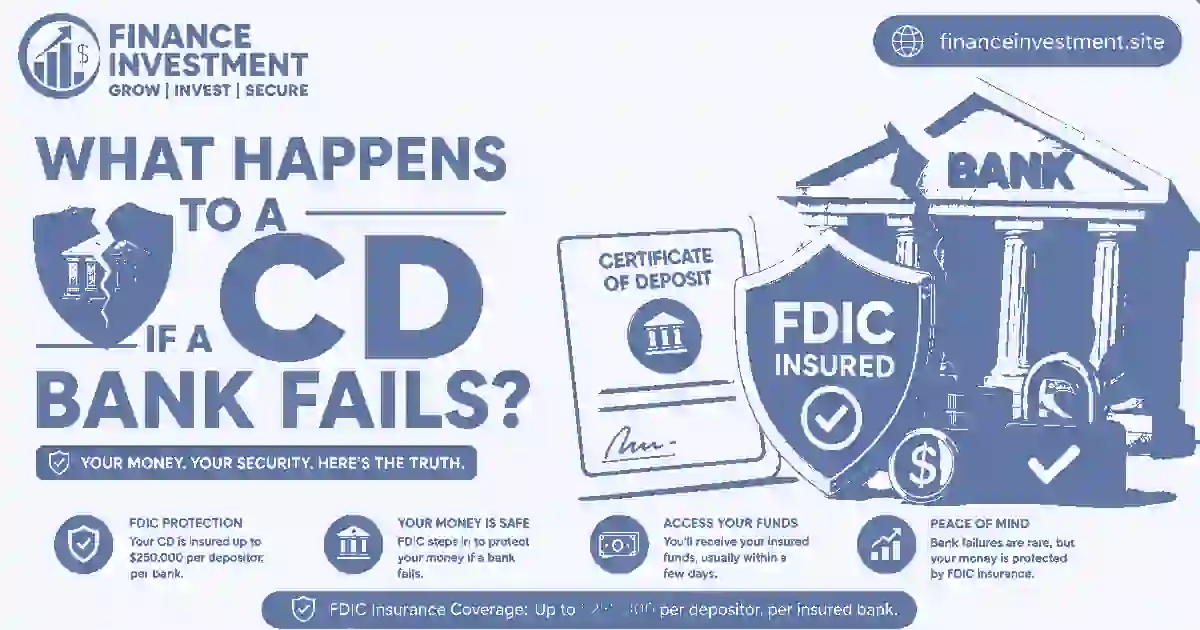
 FDIC protection gives CD owners an important safety net, but it does not mean every part of the original CD agreement survives a bank failure unchanged. The biggest benefit is protection of eligible deposits; the main tradeoff is that the resolution can alter how the CD is serviced.