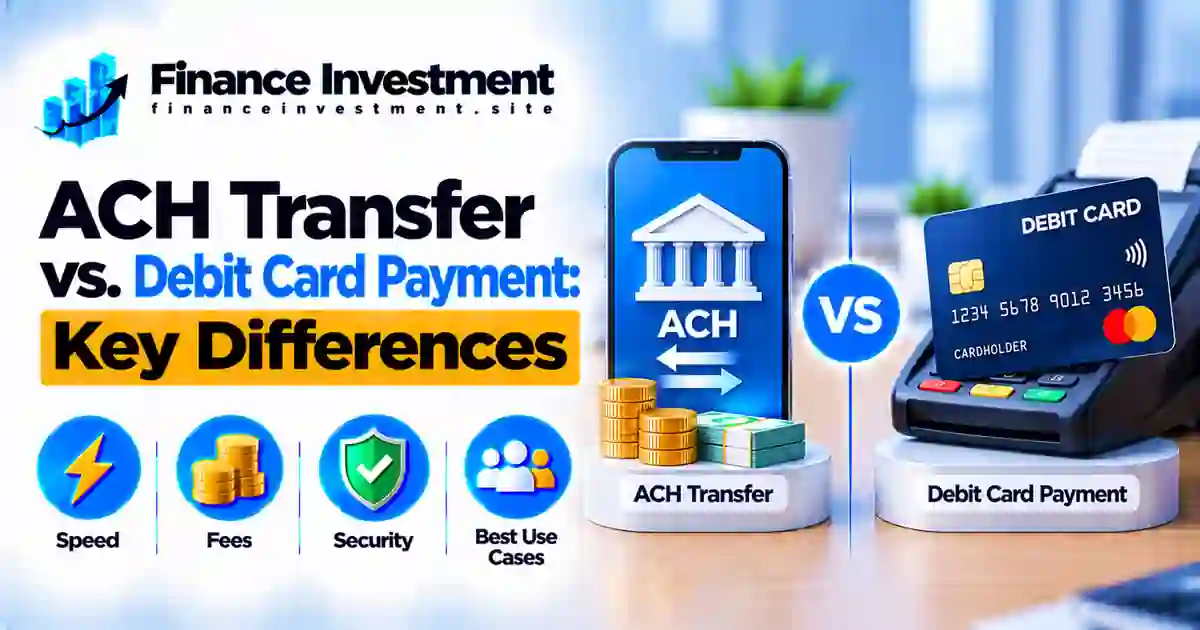
ACH Transfer vs. Debit Card Payment: What’s the Difference? 
When you pay a bill, shop online, or move money, you may use an ACH transfer or a debit card payment. Both move money electronically, but they follow different payment processes. Understanding the difference can help you choose the right option based on speed, fees, convenience, and the type of transaction.
In an ACH transfer vs. debit card payment comparison, the main distinction is how the payment is processed. ACH transfers move money between bank accounts through the Automated Clearing House network. Debit card payments generally use a card network and draw money from your linked bank account. ACH is commonly used for recurring bills and bank-to-bank transfers, while debit cards are widely used for everyday purchases and online checkout.
Neither method is always faster, cheaper, or safer in every situation. Processing times, fees, dispute rights, and transaction limits depend on the payment type, your bank, and the merchant. For a broader overview, explore our complete guide to bank transfers and payments.
What You’ll Learn
- How ACH transfers and debit card payments work.
- How processing speed, fees, and convenience compare.
- What to know about payment security and disputes.
- Which method may suit bills, subscriptions, shopping, and bank transfers.
- How to avoid common payment mistakes and protect your money.
Quick Answer: ACH Transfer vs. Debit Card Payment
An ACH transfer moves money electronically between bank accounts and is commonly used for direct deposits, recurring bills, and account-to-account transfers. A debit card payment lets you pay a merchant using funds from your linked bank account, typically through a card network. Debit card authorizations are often quick, while ACH payments may take one or more business days depending on the processing schedule and payment type. Neither method is automatically cheaper or safer in every situation.
Key Takeaways
- Processing speed: Debit card authorization is often immediate, but final posting may take longer. ACH timing depends on the payment and processing schedule.
- Common uses: ACH is useful for eligible recurring payments and bank transfers; debit cards are convenient for everyday purchases.
- Fees: Costs vary by bank, card issuer, merchant, and transaction type. Check the terms before paying.
- Protection: Both methods have safeguards, but applicable error-resolution rights and dispute procedures can differ.
Bottom Line
Consider ACH for bank-to-bank transfers, direct deposits, and eligible recurring bills. Consider a debit card for convenient merchant payments and everyday shopping. Before choosing, compare the expected processing time, fees, transaction terms, and protections that apply to your specific payment.
Table of Contents
ACH Transfer vs. Debit Card: At a Glance
QUICK TAKE
ACH transfers are commonly used for bank-to-bank transfers, direct deposits, and eligible recurring bills. Debit cards are convenient for everyday purchases and merchant checkout. Compare the processing time, fees, and applicable protections before choosing.
| Feature | ACH Transfer | Debit Card Payment |
|---|---|---|
| Common uses | Bank transfers, direct deposits, recurring bills | In-store and online purchases |
| Processing | Often one or more business days; some payments qualify for same-day processing | Authorization is often quick; final posting may take longer |
| Potential fees | Often low-cost, but provider fees may apply | Consumer purchases are often fee-free; certain transactions or account terms may involve charges |
| Best suited for | Scheduled payments and moving money between accounts | Convenient payments to merchants |
Important: Actual processing times, fees, limits, and dispute rights depend on the transaction, financial institution, payment provider, and applicable rules. Card authorization does not necessarily mean final settlement is complete.
ACH Transfers and Debit Card Payments Explained
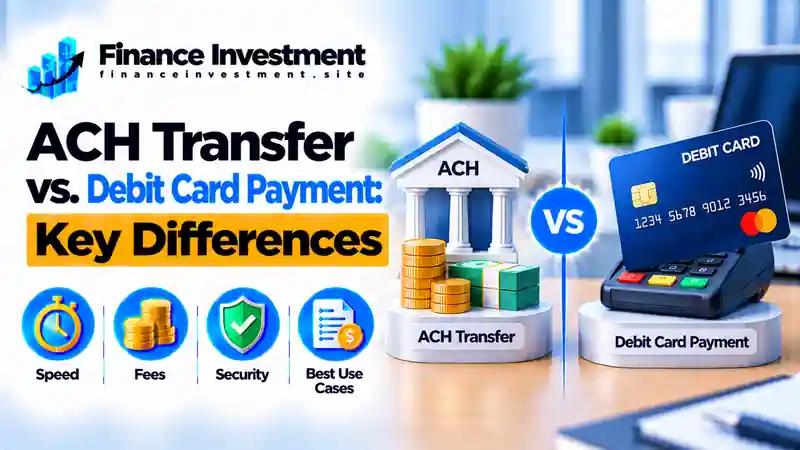
What Is an ACH Transfer?
An ACH transfer is an electronic payment processed through the Automated Clearing House network in the United States. It allows participating financial institutions to process payments between eligible bank accounts. Common uses include payroll direct deposits, utility bills, mortgage payments, and transfers between your own accounts.
ACH payments can be credits, which send money into an account, such as a paycheck deposit, or debits, which withdraw money with appropriate authorization, such as an automatic bill payment. Processing times depend on submission cutoffs, business days, bank procedures, and eligibility for same-day ACH. Read our guide to how ACH transfers work for more details.
What Is a Debit Card Payment?
A debit card payment uses a card linked to your bank account to pay a merchant. When you tap, insert, or enter your card details, the payment network routes an authorization request to the card issuer. If approved, the transaction may appear as pending before it is posted to your account. The final amount can differ from the initial authorization in situations such as restaurant tips or certain merchant holds.
Debit cards are commonly used for in-store purchases, online shopping, and recurring merchant payments. Protect your card information and check account activity regularly. Learn more in our guide to what a debit card is and how it works.
Remember: ACH is an electronic bank-payment network, while debit card payments generally use card networks. Both move money electronically, but their processing steps, timing, and applicable consumer protections can differ.
How Each Payment Method Works
How an ACH Transfer Works
- You provide the required bank details and authorize the payment or transfer.
- The originating bank or payment provider submits the payment instructions for ACH processing.
- The ACH network sorts and delivers payment instructions between participating financial institutions for processing.
- The receiving bank processes the entry. Posting time and when funds are available depend on the transaction, processing schedule, and bank policies.
How a Debit Card Payment Works
- You tap, insert, or enter your debit card details at checkout.
- The merchant routes an authorization request through its payment processor and the relevant card network.
- Your card issuer evaluates the request and approves or declines it.
- For an approved purchase, the transaction can move through clearing and settlement before the final amount is posted to your account.
Practical tip: A debit card authorization does not necessarily mean the transaction has settled. Likewise, initiating an ACH payment does not guarantee that the recipient already has available funds. If a payment is time-sensitive, confirm its status and expected processing time with your bank or payment provider.
Benefits and Drawbacks of ACH Transfers vs. Debit Card Payments
ACH Transfers
Benefits: ACH can be a cost-effective option for eligible bank-to-bank transfers, direct deposits, and recurring bill payments. Scheduled payments can also reduce the need to handle each payment manually.
Drawbacks: Processing may take one or more business days, and cutoff times, account limits, or insufficient funds can affect a payment. Errors and unauthorized ACH transactions may require prompt contact with your bank and may be subject to specific return deadlines.
Debit Card Payments
Benefits: Debit cards are convenient for in-store purchases, online shopping, and many recurring merchant payments. Authorization is often quick, and you usually do not need to enter bank routing details at checkout.
Drawbacks: A transaction hold can temporarily reduce your available balance. Lost or compromised card details can lead to unauthorized charges, while merchant disputes and transaction fees depend on the circumstances and applicable terms.
Expert Tip
Choose the method that fits the payment and its deadline. Verify account or card details before authorizing a transaction, enable account alerts, and contact your bank promptly if you notice an unfamiliar payment. Reporting deadlines and protections vary by transaction type, so do not delay.
ACH Transfer vs. Debit Card Payment: Detailed Comparison
ACH transfers and debit card payments differ in how transactions are initiated, processed, and handled. Use this comparison to identify which method better fits your payment needs.
| Feature | ACH Transfer | Debit Card Payment |
|---|---|---|
| How it works | Payment instructions are processed through the ACH network between participating financial institutions. | A card-network transaction is authorized by the card issuer and may proceed through clearing and settlement. |
| Processing time | Often one or more business days; eligible transactions may qualify for same-day processing. | Authorization is often quick, but final posting and settlement can take longer. |
| Common uses | Direct deposits, recurring bills, and transfers between eligible bank accounts. | In-store purchases, online shopping, and merchant payments. |
| Potential fees | Fees depend on the bank, payment provider, and type of transfer. | Ordinary consumer purchases often have no separate card fee, but account or transaction-specific charges may apply. |
| Recurring payments | Commonly used for authorized automatic bill payments. | Available when the merchant accepts debit cards for recurring billing. |
| Errors and disputes | ACH rules, applicable consumer protections, and bank procedures determine the process. | Issuer procedures, applicable law, and the type of transaction affect the process. |
| Best suited for | Scheduled payments and eligible account-to-account transfers. | Convenient payments to merchants. |
Key takeaway: ACH is generally designed for bank-account payments, while debit cards are designed for card-based purchases. Compare the actual fees, timing, and applicable protections rather than assuming one method is always faster, cheaper, or safer.
Costs, Risks, and Expert Tips
Compare the Potential Costs
ACH transfers may be free or low-cost, but fees can apply depending on your bank, provider, and transaction type. Ordinary debit card purchases often carry no separate consumer transaction fee, although ATM withdrawals, foreign transactions, and certain account terms may involve charges. Review your bank’s fee schedule and the merchant’s payment terms before proceeding.
Understand the Risks
ACH payments may be delayed or returned because of incorrect account details, insufficient funds, processing cutoffs, or bank holidays. Unauthorized ACH debits may have specific reporting and return deadlines. Debit card risks include stolen card details, unauthorized purchases, and temporary authorization holds that reduce your available balance. The applicable protections and deadlines depend on the transaction and governing rules.
Expert Tips to Protect Your Money
- Verify the recipient, account details, and payment amount before authorizing a transaction.
- Enable transaction alerts and review account activity regularly.
- Keep sufficient available funds for scheduled ACH debits and check payment dates.
- Contact your bank promptly if you notice an unfamiliar transaction, and follow its reporting instructions.
For more practical guidance, review our bank account security checklist and learn how to dispute an unauthorized bank transaction.
Common Mistakes to Avoid
- Assuming every payment is instant: Debit card authorization is often quick, but final posting may take longer. ACH timing depends on processing schedules, bank cutoffs, and the type of payment.
- Overlooking available balances: An ACH debit may be returned if sufficient funds are unavailable. A debit card authorization hold can also temporarily reduce the money available in your checking account.
- Skipping payment details: Before authorizing an ACH transfer, verify the recipient and account information. For card payments, check the merchant, amount, and any additional charges.
- Delaying fraud reports: Contact your bank promptly about unfamiliar or unauthorized transactions. Applicable reporting deadlines and protections vary by payment type and circumstances.
Real-Life Example
Suppose Maya needs to pay her $120 monthly electricity bill. Her utility company accepts both ACH autopay and debit card payments.
Maya chooses ACH autopay because she wants a recurring payment. She checks the scheduled withdrawal date, confirms the authorization, and keeps enough money in her account. Later, she uses her debit card for an online purchase, checks the total before paying, and monitors her account for the posted transaction.
Lesson: ACH can simplify recurring bills, while debit cards offer convenient merchant checkout. Either method requires attention to payment details, available funds, and account activity.
If you spot an unfamiliar charge, read our guide on how to dispute an unauthorized bank transaction for practical next steps.
Which Payment Method Should You Choose?
The right choice depends on the payment’s purpose, the merchant’s options, the expected processing time, and any applicable fees or transaction limits.
ACH May Be a Better Fit If You Want To
- Move money between eligible bank accounts.
- Receive direct deposits or arrange authorized recurring bill payments.
- Make scheduled payments when the processing timeline suits your needs.
A Debit Card May Be a Better Fit If You Want To
- Pay for in-store purchases or online shopping.
- Use a card-based checkout option accepted by the merchant.
- Avoid entering bank routing and account details directly at checkout.
Before deciding: Compare fees, processing times, available funds, and applicable dispute procedures. If a payment has a strict deadline, confirm the expected timing with your bank or provider instead of assuming either method will complete immediately.
Frequently Asked Questions
1. Is an ACH transfer the same as a debit card payment?
No. ACH transfers use the Automated Clearing House network to process payments involving bank accounts. Debit card payments generally use card networks to pay merchants.
2. Is ACH faster than a debit card?
Debit card authorization is often quick at checkout, while ACH processing may take one or more business days. Eligible ACH payments can qualify for same-day processing, but authorization and final settlement are different stages.
3. Which payment method usually costs less?
It depends on the bank, payment provider, merchant, and transaction. ACH may be cost-effective for certain transfers, while ordinary consumer debit card purchases often have no separate transaction fee. Check the applicable terms.
4. Can I use ACH to pay monthly bills?
Yes. Many utility companies, lenders, and service providers accept authorized ACH payments for recurring bills. Check the payment schedule and keep sufficient funds available.
5. Are ACH transfers safer than debit cards?
Neither method is automatically safer in every situation. Security depends on how the payment is authorized, fraud controls, account security, and the protections that apply to the specific transaction.
6. Can an ACH payment be reversed?
Some ACH entries can be returned or corrected under applicable rules, but a completed payment cannot always be reversed on request. Contact your bank promptly if you identify an error or unauthorized debit.
7. Do debit card payments come directly from checking?
A standard debit card is linked to a deposit account, commonly a checking account. An approved purchase may first appear as pending before the final transaction amount is posted.
8. Should I use ACH or a debit card for recurring payments?
ACH can be convenient for eligible recurring bills, while debit cards work for subscriptions and services that accept card payments. Compare fees, payment dates, cancellation procedures, and how you can stop future payments.
Final Verdict: ACH Transfer vs. Debit Card Payment
ACH transfers and debit card payments both move money electronically, but each is suited to different needs. ACH is commonly used for direct deposits, authorized recurring bills, and transfers between eligible bank accounts. Debit cards are convenient for everyday shopping, online purchases, and payments to merchants that accept cards.
There is no universal winner. Compare the expected processing time, fees, available balance, and applicable dispute protections before choosing. For time-sensitive payments, confirm the deadline with your bank or payment provider, and always verify the recipient and transaction details.
Our Takeaway
Choose ACH when a bank-account payment or scheduled transfer fits your needs. Choose a debit card when you want convenient merchant checkout. The best option is the one that suits your payment purpose, timing, and provider’s terms.
Want to explore more ways to move money? Read our complete guide to bank transfers and payments for practical information about electronic payments and bank transfers.
Make Smarter Banking Decisions
Want to understand your payment options better? Explore our practical guides to bank transfers, electronic payments, and account security.
Have a question or feedback? Email Subhash Rukade.
Important Disclaimer
This article is for general educational and informational purposes only and does not constitute personalized financial or legal advice. Payment processing times, fees, error-resolution procedures, and consumer protections depend on the transaction, financial institution, provider, and applicable laws. Confirm the relevant terms with your bank or payment provider before making a decision.
Written by Subhash Rukade | Founder, FinanceInvestment
Leave a Reply