Is This a Good Time to Lock a CD?
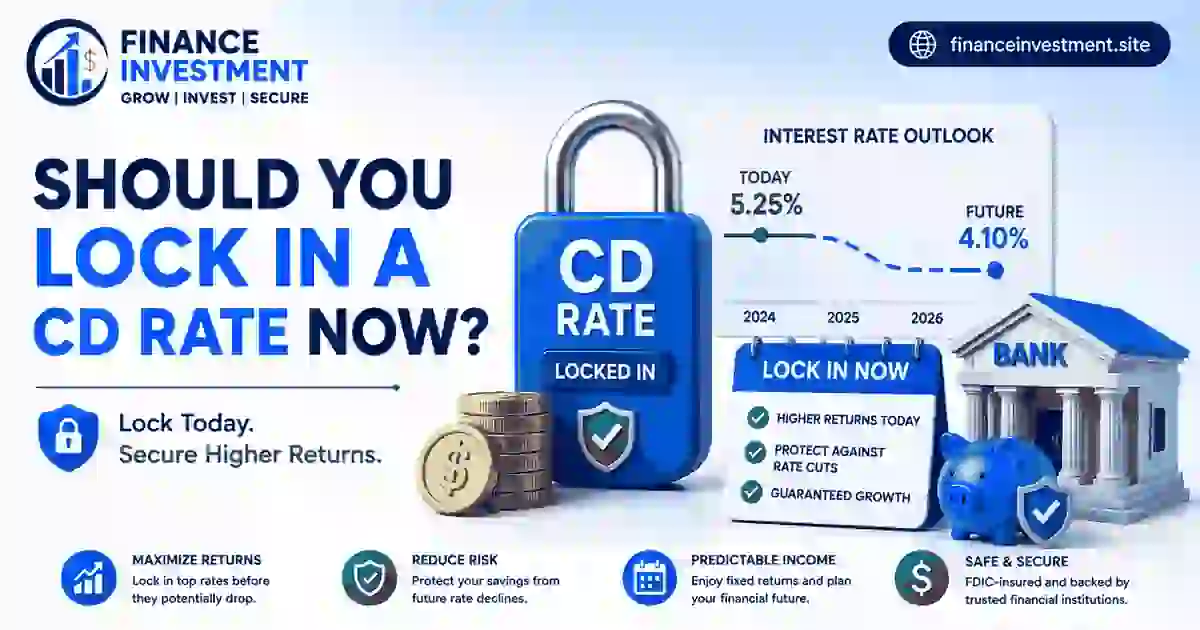 If you’re asking, Should You Lock in a CD Rate Now, August 2026 offers a genuinely interesting choice. The Fed has kept its target range at 3.50%–3.75%, while some competitive CDs are offering around 4.5% APY.
The right move depends less on guessing the next Fed decision and more on when you’ll need the money. A fixed CD can protect an attractive rate, but locking everything away can become frustrating if rates rise or your plans change.
What You’ll Learn
You’ll see when locking a rate may make sense, when waiting could be reasonable, how term length changes the decision, and how splitting your cash can reduce timing risk.
For the bigger picture, start with our
Complete CD Guide for 2026
.
Quick answer: There is no universal “right now” answer. With competitive August 2026 CDs reaching roughly 4%–4.5% APY, locking can make sense when the rate fits your goal and you can leave the money untouched. 0
- Locking fixes your APY for the CD term.
- Waiting preserves access and future shopping power.
- Shorter CDs can reduce timing risk.
- Longer CDs can protect today’s yield for longer.
- A CD ladder can spread maturity dates.
- Never lock emergency cash just for a higher APY.
Locking a CD Rate: At a Glance
Should You Lock in a CD Rate Now? In August 2026, the answer depends on your timeline, liquidity needs and the APY you can actually secure. The Fed’s target range is 3.50%–3.75%, while some competitive CDs are offering roughly 4%–4.5% APY.
Best for: Money you can leave untouched until maturity.
Key numbers: APY, term, minimum deposit and early-withdrawal penalty.
| August 2026 Snapshot | What It Means |
|---|---|
| Fed range: 3.50%–3.75% | Rates remain sensitive to Fed decisions |
| Top offers: about 4%–4.5%+ | Competitive yields are available |
| Short terms remain attractive | Flexibility may matter when timing is uncertain |
When Does Locking a CD Rate Make Sense?
 If you’re wondering Should You Lock in a CD Rate Now, start with one question: When will I need this money? That matters more than trying to predict the next rate move. In August 2026, competitive CD offers are reaching roughly 4.5% APY, while the Federal Reserve’s target range remains 3.50%–3.75%.
When Locking Can Work
Locking may fit when you have cash you won’t need before maturity and the APY is strong enough for your goal. A fixed rate removes one uncertainty: your bank generally won’t lower that agreed rate during the CD term. Recent market data also shows unusually strong yields on several shorter-term CDs, making term selection especially important.
When Waiting Can Be Better
Waiting can make sense if you may need the cash soon or if you expect better offers and can accept the risk that today’s rate disappears. Don’t sacrifice liquidity simply to chase a slightly higher APY.
Compare the guaranteed APY with your expected holding period, minimum deposit, penalty and access needs.
Before choosing a term, read our
guide to CD interest rates
and see the practical math in
how much you can earn from a CD
.
How Locking a CD Rate Actually Works
When you open a fixed-rate CD, you agree to leave your deposit with the bank for a specific term in exchange for the stated yield. The Should You Lock in a CD Rate Now decision is really about trading flexibility for rate certainty. The FDIC defines a CD as a deposit instrument that pays interest for a specific period and may carry either a fixed or variable rate.
APY
Shows the annualized yield, including the effect of compounding.
Term
Sets how long your money is committed before maturity.
Maturity
At maturity, you can generally take the funds or follow the bank’s renewal rules.
For example, suppose you open a 12-month CD in August 2026 at 4.25% APY. If rates later move higher, your existing fixed-rate CD normally keeps its agreed rate through maturity. If you withdraw early, however, the bank may apply the disclosed penalty. Renewal terms also matter because some CDs automatically renew unless you act during a stated grace period.
Before choosing, compare the
best CD rates available
and review
how CDs work
from deposit to maturity.
Benefits & Drawbacks of Locking a CD Rate
Locking a competitive rate can be attractive in August 2026 because some top CDs are offering yields around 4% or more. A fixed rate gives you certainty for the agreed term, even if banks later reduce rates.
✓ Pros
- Locks in a predictable APY.
- Protects the rate if new CD yields fall.
- Makes future interest easier to estimate.
- Works well for money with a known future use.
− Cons
- Your money is less flexible during the term.
- Higher future rates could leave you with a lower yield.
- Early withdrawal may trigger a penalty.
- Long terms can create opportunity-cost risk.
The trade-off:
you’re exchanging some flexibility for rate certainty. That can be worthwhile when the APY fits your goal, but keeping part of your cash liquid can make sense when your plans or rates may change.
Lock Now vs. Wait: Which Strategy Fits?
The best choice depends on what your money needs to do next. In August 2026, top CD offers were reaching about 4.50% APY, while the Federal Reserve’s target range remained 3.50%–3.75%.
| Strategy | APY Certainty | Flexibility | Rate Risk | Best Use |
|---|---|---|---|---|
| Lock now | High | Lower | Misses higher future rates | Known future goal |
| Wait | None | Higher | Today’s offer may disappear | Near-term flexibility |
| Split money | Mixed | Medium–High | Reduced timing risk | Uncertain plans |
A practical middle ground:
If you’re unsure, you don’t have to make an all-or-nothing decision. Lock the portion you know you won’t need while keeping the rest accessible or using shorter maturities.
Costs, Taxes, Risks & Expert Tips
Before you decide Should You Lock in a CD Rate Now, look beyond the advertised APY. CD interest is generally taxable when it becomes available to you. The IRS also provides for reporting certain early-withdrawal penalties on Form 1099-INT.
💡 Expert Tip
Suppose you lock $25,000 at a hypothetical 4.25% APY for one year. The simple interest estimate is about $1,062.50 before taxes. Compare that after-tax result with keeping some money flexible.
⚠️ Warning Before You Lock
If an unexpected expense forces you to break the CD, your bank may charge an early-withdrawal penalty or reduce the interest you keep. FDIC guidance recommends checking the bank’s specific fees before opening the CD.
Common Lock-In Mistakes + A $60,000 Example
One mistake is locking every dollar simply because today’s APY looks attractive. Another is waiting forever for a better rate. In August 2026, competitive CDs were reaching about 4.55% APY, while shorter terms remained particularly competitive.
Real-Life Example: Jennifer Has $60,000
Jennifer has $60,000 in cash. She knows $20,000 may be needed within a year, while $25,000 can remain untouched for two years. The remaining $15,000 is her emergency reserve. Instead of putting the entire balance into one CD, she could keep the emergency money liquid, use a shorter CD for the near-term portion, and consider a longer maturity for the money she won’t need soon.
Practical Lesson
- Don’t lock money you’ll need soon.
- Compare the APY with the full term, not just the headline rate.
- Use multiple maturities when timing is uncertain.
- Check the early-withdrawal penalty before opening.
Who Should Lock in a CD Rate?
Should You Lock in a CD Rate Now is easier to answer when your cash has a clear job. In August 2026, some competitive CDs were offering around 4.5% APY, but the right choice still depends on your timeline and access needs.
Premium Best Fit
- Goal-based savers: You know when the money will be needed.
- Retirees: You want predictable interest from part of your cash.
- Families: A future expense has a defined timeline.
- Rate-sensitive savers: Today’s APY looks attractive enough to accept less flexibility.
- Surplus-cash holders: You can comfortably leave the deposit untouched.
Frequently Asked Questions About Locking a CD
1. Should You Lock in a CD Rate Now?
It can make sense if the current APY fits your goal and you can leave the money untouched until maturity. In August 2026, some leading CDs were offering up to about 4.55% APY, particularly on shorter terms.
2. What is a good CD rate right now?
There isn’t one universal “good” rate. Compare the APY with the term, minimum deposit, withdrawal rules and your alternatives. Current top offers are well above the national average for many terms.
3. Can CD rates change after I lock one?
A fixed-rate CD generally keeps its agreed rate through the term. New CDs opened later can have different rates, however, so locking protects your current yield but also limits your ability to benefit from higher future offers.
4. Is it better to choose a short-term or long-term CD?
Choose based on when you’ll need the money. Shorter terms can preserve flexibility, while longer terms can lock a fixed yield for more time. Current August 2026 data shows unusually competitive short-term CD yields.
5. What if CD rates rise after I lock my money?
Your existing fixed-rate CD generally keeps its original APY, but new CDs may offer more. That’s the main opportunity cost of locking early.
6. Is CD interest taxable?
Generally, yes. The IRS says interest from certificates of deposit is taxable interest income, subject to applicable tax rules.
7. What happens if I withdraw a CD early?
Your bank may charge an early-withdrawal penalty or reduce the interest you receive. Check the CD agreement before opening it. The IRS also provides specific reporting and deduction rules for qualifying early-withdrawal penalties.
8. Are CDs covered by FDIC insurance?
CDs are covered deposit products when held at an FDIC-insured bank, subject to applicable insurance limits and ownership rules. Always confirm the institution is FDIC-insured.
9. Should I lock all my savings into one CD?
Usually, there is no reason to make it all-or-nothing. Keeping emergency cash accessible and splitting longer-term money across different maturities can reduce the risk of choosing the wrong timing.
Bottom line:
the right CD decision depends on your cash timeline, the APY available today, and how comfortable you are giving up flexibility.
Final Verdict: Lock, Wait, or Split?
In August 2026, the decision is less about finding a perfect moment and more about matching the CD to your cash timeline. With competitive offers around 4%–4.5% APY, a fixed rate can be worth locking when you have a clear goal and won’t need the money before maturity.
A Simple Decision
- Lock: when today’s APY fits your goal and timeline.
- Wait: when you need flexibility or may need the cash soon.
- Split: when you want some rate certainty without committing everything.
For the bigger picture on CD terms, safety and strategies, see our
Complete CD Guide for 2026
.
The best choice is the one that protects both your yield and your access to cash.
Related Resources
Before opening a CD, these guides can help you compare rates, understand the fine print, estimate potential earnings, and check official banking rules.
Official sources:
Check the
Federal Reserve
for monetary-policy information,
FDIC
for deposit-insurance guidance, and the
IRS
for interest-income tax information.