Tag: personal finance 2026

  • AI Investing & Personal Finance Guide 2026: How Artificial Intelligence Is Reshaping Wealth Building

    AI Investing & Personal Finance Guide 2026: How Artificial Intelligence Is Reshaping Wealth Building


    AI Investing & Personal Finance Guide 2026: How Artificial Intelligence Is Reshaping Wealth Building

    Published: June 10, 2026

    Author: Subhash Rukade
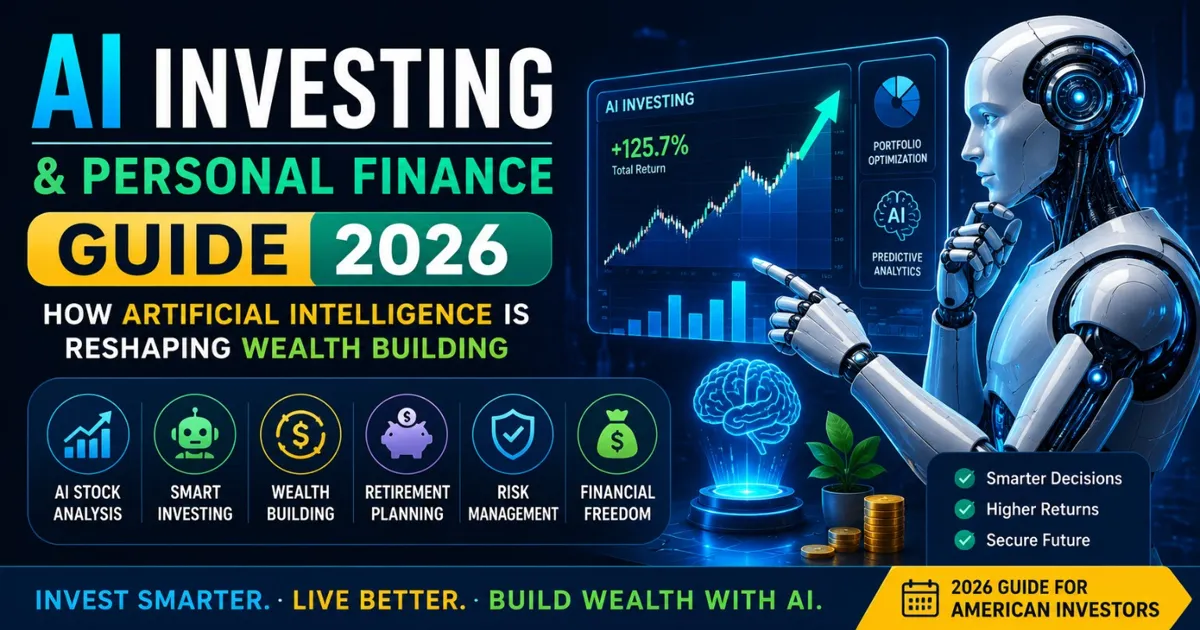
    AI Investing

    Introduction: Why AI Investing Is Becoming Essential for American Investors in 2026

    AI Investing is no longer a futuristic idea discussed only by technology companies and Wall Street analysts. In 2026, it has become one of the fastest-growing trends in personal finance and wealth management. Millions of Americans are using artificial intelligence to analyze investments, improve portfolio performance, manage risk, and make smarter financial decisions.

    The financial world is changing rapidly. Every day, investors face an overwhelming amount of information. Stock market updates, earnings reports, economic data, inflation trends, interest-rate announcements, and geopolitical events all influence investment performance. For the average investor, keeping track of everything can feel impossible.

    This is where AI Investing is creating a major advantage. Instead of manually reviewing hundreds of reports and market updates, investors can now use artificial intelligence to process enormous amounts of information within seconds. These tools help identify trends, evaluate risks, and uncover opportunities that might otherwise be missed.

    One reason AI Investing has become so popular is accessibility. A few years ago, advanced financial analysis tools were available mainly to hedge funds and institutional investors. Today, many of the same technologies are available through mobile apps, brokerage platforms, and personal finance tools that everyday Americans can use.

    Artificial intelligence is helping investors make decisions based on data rather than emotion. Fear and greed have always been two of the biggest obstacles to successful investing. Many investors buy when markets are rising and panic when markets decline. AI Investing helps reduce these emotional mistakes by focusing on facts, probabilities, and long-term trends.

    Another reason for the growing popularity of AI Investing is its ability to work alongside proven investing strategies. For example, investors who follow systematic investing approaches can use artificial intelligence to monitor portfolio performance and identify opportunities without abandoning their long-term plans.

    If you’re building wealth through regular investing, be sure to explore our
    Complete SIP Investing Guide 2026,
    which explains how consistent investing habits can help investors grow wealth over time.

    Artificial intelligence is also transforming broader financial management. Budgeting tools, retirement calculators, spending analysis platforms, and financial planning apps now use AI to provide more personalized recommendations.

    For a deeper look at how artificial intelligence is reshaping everyday money management, visit our
    AI Personal Finance Guide 2026.

    Trusted financial organizations continue to encourage investors to combine technology with financial education. Resources from the SEC, FINRA, and Investor.gov remain valuable sources of information for understanding investment risks and making informed decisions.

    The goal of AI Investing is not to replace human judgment. Instead, it provides investors with better tools, faster analysis, and stronger insights. Investors still need patience, discipline, diversification, and a long-term mindset. However, artificial intelligence can help make those decisions more informed and more efficient.

    Over the next decade, AI Investing is expected to become a standard part of personal finance. Investors who understand how these tools work today may be better prepared to take advantage of the opportunities they create tomorrow.

    How AI Investing Works: The Technology Behind Smarter Financial Decisions

    To understand why AI Investing is becoming so popular in 2026, it’s important to understand the technology behind it. While artificial intelligence may sound complex, its purpose is simple: help investors make better decisions using data, automation, and advanced analysis.

    Traditional investing often requires hours of research. Investors must read company reports, analyze financial statements, monitor economic trends, and stay updated on market news. AI Investing simplifies this process by processing massive amounts of information in seconds.

    Instead of manually reviewing hundreds of data points, investors can use AI-powered tools that identify trends, evaluate risk, and provide actionable insights. This allows investors to focus more on strategy and less on time-consuming research.

    Machine Learning: The Core of AI Investing

    Machine learning is one of the most important technologies behind AI Investing. These systems learn from historical market data and continuously improve as new information becomes available.

    For example, machine learning models can study stock price movements, earnings reports, economic indicators, and market behavior from previous years. By recognizing patterns, these systems help identify opportunities and risks that may influence future investment decisions.

    Unlike traditional software, machine learning systems adapt over time. This makes AI Investing more flexible and responsive to changing market conditions.

    Predictive Analytics and Market Forecasting

    Another major component of AI Investing is predictive analytics. These systems analyze historical data and current market conditions to estimate potential future outcomes.

    While no technology can predict the future with complete accuracy, predictive analytics helps investors evaluate probabilities rather than relying solely on guesswork.

    Many AI Investing platforms use predictive models to estimate portfolio risk, identify market opportunities, and recommend investment strategies that align with long-term financial goals.

    Natural Language Processing and Financial News

    Financial markets react quickly to news. Earnings announcements, inflation reports, Federal Reserve decisions, and global events can all impact investments.

    AI Investing platforms often use Natural Language Processing (NLP) to read and analyze financial news, analyst reports, earnings calls, and market commentary. These systems can identify positive or negative sentiment and highlight important developments for investors.

    This allows investors to stay informed without spending hours reading financial publications every day.

    Portfolio Optimization and Risk Management

    One of the biggest advantages of AI Investing is portfolio optimization. Artificial intelligence can evaluate thousands of investment combinations and recommend allocations that match an investor’s goals and risk tolerance.

    AI systems also monitor portfolios continuously. If risks increase or market conditions change significantly, investors can receive alerts or recommendations that help protect long-term performance.

    As AI Investing technology continues to improve, investors are gaining access to tools that were once available only to large financial institutions. These innovations are making investing more efficient, more accessible, and more data-driven than ever before.

    How AI Investing Analyzes Stocks in Seconds and Identifies Opportunities

    One of the biggest reasons AI Investing has become so popular among American investors is speed. Traditional stock research can take hours or even days. Investors often need to review earnings reports, financial statements, analyst opinions, market news, and economic data before making a decision. AI Investing platforms can analyze much of this information within seconds.

    This speed allows investors to react faster to changing market conditions and focus on opportunities that match their financial goals. Instead of manually sorting through thousands of data points, AI systems organize information into clear and actionable insights.

    How AI Investing Analyzes Stocks

    Modern AI Investing platforms collect information from multiple sources. These include company earnings reports, stock price history, valuation metrics, industry trends, analyst forecasts, and broader economic indicators.

    Artificial intelligence processes this information using machine learning models. The system looks for patterns that have historically influenced stock performance and uses those patterns to support future investment decisions.

    This process helps investors identify strong companies, monitor risk levels, and discover opportunities that might otherwise go unnoticed.

    Investors who want a deeper understanding of this process can explore our upcoming guide,
    How AI Analyzes Stocks in Seconds
    which explains how artificial intelligence processes market data at scale.

    Market Sentiment Analysis

    Financial markets are influenced not only by numbers but also by investor sentiment. Positive news often encourages buying activity, while negative headlines can trigger selling pressure.

    AI Investing platforms use Natural Language Processing (NLP) technology to analyze news articles, earnings call transcripts, analyst reports, and public discussions. These systems evaluate sentiment and help investors understand how the market may react to important events.

    By combining sentiment analysis with traditional financial data, AI Investing tools provide a more complete view of potential opportunities and risks.

    Pattern Recognition and Big Data

    Artificial intelligence excels at identifying patterns. AI Investing systems can evaluate years of historical data and compare it with current market conditions.

    For example, AI may identify relationships between earnings growth, revenue trends, interest rates, and stock performance. These insights help investors understand which companies are gaining momentum and which may face challenges.

    Because AI systems analyze much larger datasets than humans can realistically process, they often uncover opportunities hidden within complex market information.

    Can AI Predict Market Crashes?

    A common question among investors is whether AI Investing can predict stock market crashes. The answer is that no technology can accurately forecast every market decline.

    However, AI systems can identify warning signs such as unusual volatility, weakening economic conditions, declining earnings growth, and shifting investor sentiment.

    Investors interested in this topic can learn more in our upcoming guide,
    Can AI Predict Stock Market Crashes?

    AI vs Human Investors

    Artificial intelligence offers speed and data-processing power, while human investors bring experience, judgment, and long-term perspective. The most successful investors often combine both approaches.

    Our future article,
    AI Stock Pickers vs Human Investors in 2026
    will explore this debate in greater detail.

    As AI Investing continues to evolve, investors are gaining access to faster research tools, deeper market insights, and more sophisticated analysis than ever before.

    Best AI Investing Strategies for Beginners in 2026

    Understanding how AI Investing analyzes stocks is important, but knowing how to apply that information is what truly helps investors build wealth. In 2026, artificial intelligence is helping investors create smarter portfolios, reduce emotional decisions, and stay focused on long-term financial goals.

    The biggest advantage of AI Investing is that it allows investors to make data-driven decisions instead of reacting to market headlines. Whether someone is just starting their investment journey or already has years of experience, AI-powered tools can help improve portfolio management and risk control.

    Start With Diversification

    Diversification remains one of the most effective investing principles. Instead of placing all your money into one stock or sector, diversification spreads risk across multiple investments.

    AI Investing platforms can analyze thousands of assets and recommend balanced portfolios based on an investor’s goals and risk tolerance. This helps reduce concentration risk while creating opportunities for long-term growth.

    Many beginners struggle with asset allocation. AI systems simplify this process by automatically suggesting diversified portfolios that match individual objectives.

    Use Automated Investing

    One of the biggest reasons investors underperform is emotional decision-making. Fear during market declines and excitement during market rallies often lead to poor investment choices.

    AI Investing platforms help solve this problem through automation. Investors can set contribution schedules, portfolio rules, and investment goals while allowing technology to handle routine tasks.

    This approach encourages consistency and helps investors remain focused on long-term wealth creation.

    AI Portfolio Management Explained

    Portfolio management is another area where AI Investing is creating significant value. Artificial intelligence can continuously monitor portfolio performance, evaluate risk exposure, and identify opportunities for improvement.

    Instead of reviewing investments only a few times each year, AI systems analyze portfolios every day and provide recommendations when adjustments may be beneficial.

    Readers interested in learning more can explore our upcoming guide,

    AI Portfolio Management Explained: Smart Investing With AI

    Best AI Investing Strategies Comparison

    StrategyRisk LevelBest For
    Automated ETF InvestingLowBeginners
    AI Portfolio ManagementMediumLong-Term Investors
    AI Stock ScreeningMedium-HighActive Investors
    Growth-Focused AI InvestingHighAggressive Investors

    Learn From Proven Investing Principles

    Technology can improve investing decisions, but timeless financial principles still matter. One highly recommended resource is
    The Psychology of Money by Morgan Housel.

    The book focuses on investor behavior, patience, and long-term thinking—qualities that remain essential even in the age of AI Investing.

    Common Mistakes Investors Should Avoid

    Many investors assume AI Investing can guarantee profits. This is one of the biggest misconceptions in modern finance.

    Artificial intelligence can provide valuable insights, but successful investing still requires discipline, diversification, and realistic expectations. Investors should avoid blindly following recommendations without understanding their overall strategy.

    Future readers can learn more in our upcoming article,

    Biggest AI Investing Mistakes to Avoid in 2026

    Investors who combine AI Investing with proven wealth-building principles often place themselves in a stronger position to achieve long-term financial success.

    For beginners, one of the best starting points is understanding the basics of asset allocation, diversification, and automation. AI tools can support these strategies, but consistent investing habits remain the foundation of wealth creation.

    Our upcoming guide,
    Best AI Investing Strategies for Beginners in 2026
    will provide a deeper look at beginner-friendly approaches that can help investors build confidence and long-term wealth.

    How AI Investing Is Helping Americans Build Wealth Faster in 2026

    Building wealth has never been easy. It requires discipline, patience, and smart financial decisions. In 2026, AI Investing is making that journey easier by helping investors analyze opportunities, manage risk, and stay focused on long-term goals.

    For years, sophisticated financial tools were available mainly to hedge funds and institutional investors. Today, AI Investing platforms are giving everyday Americans access to powerful technology that can improve decision-making and support wealth-building strategies.

    Whether someone is investing for retirement, financial independence, passive income, or long-term growth, artificial intelligence is becoming an important part of the modern investor’s toolkit.

    How Millionaires Are Using AI in 2026

    Many high-net-worth investors have embraced AI Investing because it helps them process information faster and make more informed decisions. Rather than relying only on traditional research methods, they use artificial intelligence to analyze market trends, evaluate opportunities, and monitor portfolio performance.

    AI systems can review earnings reports, economic data, analyst forecasts, and valuation metrics simultaneously. This allows investors to identify opportunities more efficiently while staying focused on long-term wealth creation.

    Readers interested in advanced investing techniques can explore our upcoming guide,
    How Millionaires Are Using AI in 2026

    AI Wealth Management for Middle-Class Americans

    One of the most exciting developments in AI Investing is accessibility. Wealth management is no longer limited to wealthy individuals with large investment accounts.

    Today, middle-class families can access AI-powered financial tools that help create investment plans, monitor portfolios, track progress, and improve financial decision-making.

    These platforms often provide personalized recommendations based on goals, risk tolerance, and investment timelines. This allows investors to receive guidance without paying the high fees traditionally associated with wealth management services.

    For a deeper look at this trend, check out our future article,
    AI Wealth Management for Middle-Class Americans

    Best AI Wealth Building Tools in 2026

    The rapid growth of AI Investing has led to the development of powerful financial tools designed to help investors build wealth more efficiently.

    • Portfolio monitoring systems
    • Risk management platforms
    • Retirement forecasting tools
    • Dividend analysis software
    • Investment screening platforms
    • Personal finance dashboards

    These tools help investors save time while improving the quality of their financial decisions.

    Our upcoming guide,
    Best AI Wealth Building Tools in 2026
    will review some of the most useful platforms available today.

    Real-World Example of AI Investing and Wealth Building

    Imagine a 35-year-old investor who contributes money to a diversified portfolio every month. Instead of trying to predict short-term market movements, he uses an AI Investing platform to monitor portfolio performance and identify opportunities for improvement.

    The system automatically evaluates risk levels, suggests diversification adjustments, and provides insights based on changing market conditions. Over time, the investor remains disciplined and avoids many emotional decisions that often hurt long-term performance.

    This combination of consistency and technology can significantly improve the wealth-building process.

    Combining AI Investing With Dividend Strategies

    Many investors use AI Investing alongside dividend-focused strategies. Artificial intelligence can screen thousands of companies and identify businesses with strong dividend growth, healthy cash flow, and sustainable payout ratios.

    If you’re interested in creating a reliable income stream, explore our
    How to Build a Dividend Portfolio
    guide.

    The combination of dividend investing and AI Investing is becoming increasingly popular among investors seeking both passive income and long-term growth.

    Ultimately, wealth building is still driven by consistency, patience, and smart financial habits. AI Investing simply provides investors with better tools to execute those principles more effectively.

    AI Investing, Passive Income, and the Path to a Million-Dollar Portfolio

    One of the biggest goals for many American investors is creating passive income while growing long-term wealth. In 2026, AI Investing is helping investors achieve both objectives more efficiently by identifying opportunities, monitoring portfolios, and supporting disciplined investment strategies.

    Passive income allows investors to generate earnings without actively trading or working additional hours. While building passive income still requires time and capital, artificial intelligence is making the process easier by helping investors find quality investments and avoid common mistakes.

    AI and Passive Income Opportunities

    AI Investing platforms can analyze thousands of investments and identify assets that may generate reliable income. These include dividend-paying stocks, exchange-traded funds (ETFs), real estate investment trusts (REITs), and other income-focused securities.

    Instead of manually researching hundreds of companies, investors can use artificial intelligence to screen investments based on dividend growth, earnings stability, payout ratios, cash flow strength, and valuation metrics.

    This saves time and helps investors focus on opportunities that align with their financial goals.

    Readers interested in income-generating strategies can explore our upcoming guide,
    AI and Passive Income Opportunities

    Can AI Help Build a Million-Dollar Portfolio?

    Many investors wonder whether AI Investing can help them reach major financial milestones such as building a million-dollar portfolio.

    The answer is that artificial intelligence can support the process, but it cannot replace discipline, patience, and consistent investing. Wealth is typically built through regular contributions, long-term compounding, diversification, and smart decision-making.

    AI Investing improves efficiency by identifying opportunities, monitoring risk, and helping investors stay focused on their plans during periods of market volatility.

    Over time, these advantages can contribute to stronger financial outcomes.

    For a deeper look at this topic, read our future article,

    Can AI Help Build a Million-Dollar Portfolio?

    Dividend Investing and Long-Term Growth

    Dividend investing remains one of the most popular passive income strategies in America. Many AI Investing tools can automatically evaluate dividend-paying companies and identify businesses with strong fundamentals.

    Investors seeking dividend opportunities can also explore our
    Top Dividend Stocks USA 2026
    guide for additional research and ideas.

    Combining dividend investing with AI-powered analysis allows investors to build portfolios that generate income while maintaining long-term growth potential.

    The Rise of AI Financial Assistants

    Another growing trend is the development of AI-powered financial assistants. These tools can track spending, monitor investments, provide reminders, analyze budgets, and answer financial questions in real time.

    As technology advances, these assistants may become a central part of everyday financial management for millions of Americans.

    Readers can learn more in our upcoming guide,

    AI Financial Assistants: The Next Big Money Trend

    AI Investing is not simply changing how people invest. It is creating an entire financial ecosystem designed to help investors save time, improve decision-making, generate passive income, and build wealth more effectively over the long term.

    How AI Investing Is Transforming Retirement Planning in 2026

    Retirement planning has always been one of the most important financial goals for American investors. However, predicting future expenses, inflation, healthcare costs, investment returns, and life expectancy is not easy. In 2026, AI Investing is helping investors make more informed retirement decisions by using advanced forecasting tools and personalized financial analysis.

    Instead of relying solely on basic retirement calculators, investors can now use artificial intelligence to create dynamic retirement plans that adjust as market conditions and personal circumstances change.

    This technology is helping Americans prepare for retirement with greater confidence and a clearer understanding of their long-term financial needs.


    How AI Is Transforming Retirement Planning

    Traditional retirement planning often relies on fixed assumptions. Investors enter estimated retirement ages, expected returns, and savings goals into a calculator and receive a projection.

    AI Investing platforms take a more advanced approach. These systems continuously evaluate market conditions, portfolio performance, inflation trends, and spending habits. As new information becomes available, retirement projections can be updated automatically.

    This creates a more realistic and personalized planning experience.

    Readers interested in learning more can explore our future guide,

    How AI Is Transforming Retirement Planning for Americans

    AI Retirement Calculators: Are They Accurate?

    Modern retirement calculators powered by artificial intelligence can analyze significantly more variables than traditional planning tools.

    These systems often consider:

    • Portfolio growth rates
    • Expected inflation
    • Healthcare expenses
    • Social Security benefits
    • Investment risk levels
    • Tax considerations
    • Life expectancy estimates

    While no calculator can predict the future perfectly, AI Investing tools often provide more flexible and realistic forecasts because they continuously adapt to changing conditions.

    Investors can learn more in our upcoming article,

    AI Retirement Calculators: Are They Accurate in 2026?

    Using AI to Estimate Retirement Income

    One of the biggest concerns for retirees is generating enough income throughout retirement. AI Investing platforms help address this challenge by estimating future income from multiple sources.

    These sources may include retirement accounts, dividend-paying investments, pensions, Social Security benefits, and taxable investment portfolios.

    Rather than focusing only on account balances, AI systems evaluate income sustainability and withdrawal strategies. This gives investors a better understanding of how long their money may last under different market conditions.

    For a deeper analysis, check out our future guide,

    Using AI to Estimate Retirement Income: Complete 2026 Guide

    Portfolio Longevity and Retirement Risk

    A major retirement risk is outliving your savings. AI Investing tools address this issue by running thousands of simulations based on different economic and market scenarios.

    These projections help investors understand how inflation, market downturns, healthcare costs, and withdrawal rates could affect retirement outcomes.

    By identifying risks early, investors can make adjustments before problems become serious.

    A Timeless Resource for Retirement Investors

    Technology is changing retirement planning, but proven investing principles still matter. One highly recommended book is
    The Simple Path to Wealth by JL Collins.

    The book focuses on long-term investing, financial independence, and building wealth through simple, disciplined strategies that work well alongside AI Investing tools.

    As retirement planning becomes more complex, AI Investing is giving investors better forecasting tools, more personalized recommendations, and greater confidence in their financial future.

    AI Strategies for Early Retirement and Financial Independence

    Retirement no longer means waiting until your late sixties. In 2026, more Americans are pursuing financial independence and exploring ways to retire earlier than previous generations. AI Investing is becoming an important tool in this movement by helping investors make smarter decisions, improve savings rates, and optimize long-term wealth-building strategies.

    The FIRE movement, which stands for Financial Independence, Retire Early, has gained significant popularity over the last decade. The goal is simple: build enough wealth so that work becomes optional rather than necessary. Achieving this goal requires disciplined saving, consistent investing, and careful financial planning.

    AI Strategies for Early Retirement

    AI Investing platforms can help investors create personalized financial roadmaps based on income, expenses, savings rates, and retirement goals.

    Instead of relying on generic assumptions, artificial intelligence analyzes individual financial situations and provides recommendations that may accelerate progress toward financial independence.

    These recommendations can include increasing investment contributions, improving portfolio diversification, reducing unnecessary expenses, and optimizing asset allocation.

    Investors interested in this topic can explore our upcoming guide,

    AI Strategies for Early Retirement: Financial Freedom Guide 2026

    Can AI Help Americans Retire Richer?

    While AI Investing cannot guarantee higher returns, it can improve decision-making and help investors avoid costly mistakes. Many investors lose money because they panic during market downturns, chase short-term trends, or abandon long-term plans.

    Artificial intelligence helps reduce emotional decision-making by focusing on data, probabilities, and long-term financial objectives.

    Over time, better decisions and stronger discipline can contribute to improved retirement outcomes.

    Readers can learn more in our future article,

    Can AI Help Americans Retire Richer? Smart AI Wealth Strategies for 2026

    Future of AI in Personal Finance (2026–2030)

    The future of AI Investing extends far beyond portfolio management. Experts expect artificial intelligence to play a larger role in budgeting, tax planning, retirement forecasting, estate planning, and overall wealth management.

    As technology becomes more advanced, investors may gain access to highly personalized financial assistants capable of providing real-time guidance across nearly every area of personal finance.

    For a closer look at upcoming trends, explore our future guide,

    Future of AI in Personal Finance (2026–2030)

    The combination of disciplined investing and intelligent technology is creating new opportunities for Americans seeking financial freedom. AI Investing is helping investors make smarter decisions today while preparing for a more technology-driven financial future.

    How AI Is Transforming Credit Card Security and Banking Decisions

    Artificial intelligence is not only changing how people invest. It is also transforming how banks, lenders, and credit card companies protect consumers and make financial decisions. In 2026, AI-powered systems are helping millions of Americans detect fraud, improve credit health, and gain access to financial products more efficiently.

    As AI Investing becomes more common, many of the same technologies used to analyze investment opportunities are also being applied to banking and consumer finance. These systems process large amounts of data, identify patterns, and help financial institutions make faster and more accurate decisions.

    How AI Detects Credit Card Fraud in Real Time

    Credit card fraud remains a major challenge for financial institutions. Traditional fraud detection systems relied heavily on fixed rules and manual reviews. Today, artificial intelligence can monitor transactions in real time and identify suspicious activity within seconds.

    AI systems analyze spending behavior, purchase locations, transaction amounts, and account history. If unusual activity is detected, the system can flag the transaction, request verification, or temporarily block suspicious purchases.

    Investors and consumers interested in this topic can learn more in our upcoming guide,

    How AI Detects Credit Card Fraud in Real Time: 2026 Guide

    AI-Powered Credit Score Improvement Tools

    Many financial apps now use artificial intelligence to help consumers understand and improve their credit profiles.

    These platforms analyze payment history, debt utilization, account balances, and borrowing habits. Based on this information, they provide personalized recommendations that may help users strengthen their credit scores over time.

    Artificial intelligence makes credit education more accessible and easier to understand for everyday consumers.

    Readers can explore this topic further in our future article,

    AI Credit Score Tools: Best 2026 Guide to Credit Improvement

    How Banks Use AI to Approve Credit Cards

    Banks increasingly rely on artificial intelligence when evaluating credit card applications. AI systems can assess multiple financial factors quickly, helping lenders make faster and more informed decisions.

    These systems evaluate income stability, debt obligations, repayment history, spending behavior, and overall financial health before making recommendations.

    For a deeper explanation, check out our upcoming guide,

    How Banks Use AI to Approve Credit Cards

    Strong personal finances support long-term investing success. Investors looking to strengthen their financial foundation during uncertain economic periods can also explore our
    Recession-Proof Investing 2026
    guide.

    As artificial intelligence continues to evolve, AI Investing and AI-powered banking will become increasingly connected, helping Americans make smarter financial decisions while protecting their money more effectively.

    AI, Consumer Finance, and the Future of Financial Decision-Making

    Artificial intelligence is rapidly transforming consumer finance. Beyond AI Investing and portfolio management, AI is helping lenders evaluate risk, monitor spending behavior, and improve financial decision-making across the banking industry. In 2026, these technologies are becoming increasingly important for consumers who want greater control over their finances.

    Financial institutions now use artificial intelligence to process applications faster, personalize financial products, and identify potential risks before they become serious problems. This shift is creating a more efficient and data-driven financial ecosystem.

    AI and Buy Now Pay Later Risk Analysis

    Buy Now Pay Later (BNPL) services have become popular because they allow consumers to spread purchases over multiple payments. While convenient, these services can create financial risks if users take on more obligations than they can comfortably manage.

    Artificial intelligence helps lenders assess these risks by analyzing spending patterns, repayment history, income stability, and borrowing behavior. This allows providers to make more informed lending decisions while helping consumers avoid excessive debt.

    Readers interested in this topic can learn more in our upcoming guide,

    AI and Buy Now Pay Later Risk Analysis

    Future of AI Credit Decisions in America

    Traditional credit decisions often relied heavily on a limited number of financial metrics. Today, artificial intelligence can evaluate a wider range of data points to create a more complete financial profile.

    As AI technology continues to improve, lenders may be able to make faster, more accurate, and more personalized credit decisions. This could help qualified borrowers gain access to financial products more efficiently.

    Explore this trend further in our future article,

    Future of AI Credit Decisions in America

    AI Spending Analysis: Where Your Money Really Goes

    Many consumers underestimate how much they spend each month. Artificial intelligence can automatically categorize expenses, identify spending patterns, and highlight opportunities for improvement.

    By understanding where money is going, investors can redirect more cash toward savings, retirement accounts, and AI Investing strategies that support long-term wealth creation.

    Learn more in our upcoming guide,
    AI Spending Analysis

    Traditional Finance vs AI-Powered Finance

    FeatureTraditional FinanceAI-Powered Finance
    Decision SpeedHours or DaysSeconds or Minutes
    Data AnalysisLimitedLarge-Scale Analysis
    PersonalizationBasic RecommendationsHighly Personalized Insights
    Risk MonitoringPeriodic ReviewsContinuous Monitoring

    Many investors also use trusted brokerage platforms such as
    Charles Schwab
    to complement their AI Investing strategies with research tools, portfolio management resources, and retirement planning features.

    As artificial intelligence continues to reshape consumer finance, investors will gain access to smarter tools that support better spending habits, improved credit decisions, and stronger long-term financial outcomes.

    How AI Is Helping Americans Save More Money and Improve Financial Habits

    Building wealth is not only about earning higher investment returns. Successful investors understand that saving money consistently is just as important as AI Investing, retirement planning, and long-term portfolio growth. In 2026, artificial intelligence is helping Americans identify wasteful spending, improve budgeting habits, and uncover savings opportunities that can strengthen their financial future.

    Many households lose hundreds or even thousands of dollars each year through forgotten subscriptions, unnecessary fees, inefficient spending habits, and overlooked financial opportunities. AI-powered financial tools are designed to find these leaks and help consumers keep more of their money.

    AI Tools That Automatically Find Hidden Savings

    One of the most practical uses of artificial intelligence is identifying hidden savings opportunities. Modern financial apps analyze bank transactions, recurring charges, monthly expenses, and spending behavior to uncover areas where consumers may be overspending.

    For example, AI systems can detect duplicate subscriptions, unused memberships, excessive service fees, and recurring expenses that often go unnoticed. Instead of manually reviewing months of financial statements, users receive personalized recommendations within minutes.

    Readers interested in this topic can explore our future guide,

    AI Savings Tools: Hidden Savings Guide 2026

    Can AI Reduce Monthly Household Expenses?

    Rising living costs continue to challenge many American families. Housing expenses, groceries, insurance premiums, and utility bills have increased significantly over recent years.

    Artificial intelligence helps consumers analyze spending habits and identify areas where money can be saved. Even small monthly savings can add up over time and provide additional funds for AI Investing, retirement accounts, or emergency savings.

    Learn more in our upcoming article,
    AI Household Expenses

    AI-Powered Subscription Cancellation Tools

    Subscription services have become a major part of modern life. Streaming platforms, software memberships, fitness programs, and digital services often renew automatically.

    AI-powered financial tools can identify recurring charges and help consumers determine which subscriptions are providing value and which may no longer be necessary.

    This creates an easy way to reduce monthly expenses without significantly affecting quality of life.

    Readers can learn more in our future guide,
    AI Subscription Tools

    AI Budget Coaches vs Human Financial Advisors

    Artificial intelligence is also creating a new generation of budgeting tools often called AI budget coaches. These platforms provide spending analysis, savings recommendations, financial reminders, and budgeting assistance in real time.

    While human financial advisors remain valuable for complex planning needs, AI tools offer affordable support for everyday financial decisions.

    Our future article,
    AI Budget Coaches
    will compare the strengths of both approaches.

    The combination of strong saving habits and AI Investing creates a powerful foundation for long-term financial success. By reducing wasteful spending and improving money management, investors can free up more capital to invest, build wealth, and achieve their financial goals faster.

    The Future of AI Investing: What Comes Next for American Investors?

    AI Investing has already transformed how millions of Americans manage money, build portfolios, plan retirement, and improve financial decisions. However, the technology is still evolving. As artificial intelligence becomes more advanced, investors will gain access to smarter tools, deeper insights, and more personalized financial guidance than ever before.

    Between 2026 and 2030, experts expect AI Investing to play an even larger role in wealth building, financial planning, and everyday money management. Investors who understand these trends today may be better positioned to benefit from tomorrow’s opportunities.

    AI Side Hustles That Actually Make Money in 2026

    Artificial intelligence is creating new opportunities for individuals looking to earn extra income. Content creation, online businesses, digital marketing, automation consulting, and AI-powered research services are becoming increasingly popular side hustles.

    Many investors are using these additional income streams to increase savings and invest more aggressively for long-term goals.

    Learn more in our upcoming guide,

    AI Side Hustles That Actually Make Money in 2026

    AI vs Traditional Financial Advisors

    Artificial intelligence is making financial guidance more accessible, but human advisors still provide valuable expertise. AI Investing platforms excel at data analysis, automation, and portfolio monitoring, while financial advisors offer personalized guidance during major life decisions.

    For many investors, the future may involve combining both approaches to create a stronger financial strategy.

    Readers can explore this topic further in our future article,

    AI vs Traditional Financial Advisors: Which Is Better in 2026?

    AI Financial Assistants: The Next Big Money Trend

    AI-powered financial assistants are expected to become one of the biggest personal finance trends of the decade. These systems can track spending, monitor investments, answer financial questions, and provide personalized recommendations in real time.

    As technology improves, AI financial assistants may become a standard feature in banking, investing, and retirement planning platforms.

    Learn more in our upcoming guide,
    AI Financial Assistants: The Next Big Money Trend.

    Frequently Asked Questions

    1. What is AI Investing?

    AI Investing uses artificial intelligence, machine learning, and data analytics to help investors research opportunities, manage portfolios, and improve financial decision-making.

    2. Is AI Investing safe for beginners?

    Yes. Many AI Investing platforms are designed specifically for beginners and offer automated portfolio management, educational resources, and risk-management features.

    3. Can AI predict stock market crashes?

    No technology can predict every market crash. However, AI systems can identify warning signs and potential risks that investors may want to monitor.

    4. Can AI help with retirement planning?

    Yes. AI Investing platforms can analyze retirement goals, estimate future income, evaluate portfolio risk, and provide retirement projections.

    5. Does AI replace financial advisors?

    Not completely. AI provides powerful analytical tools, while human advisors offer personalized guidance and experience.

    6. Can AI improve personal finance management?

    Yes. Artificial intelligence can help with budgeting, spending analysis, savings optimization, debt management, and financial planning.

    7. What are the biggest benefits of AI Investing?

    Faster research, improved portfolio monitoring, better risk management, personalized recommendations, and more efficient financial decision-making.

    8. What is the future of AI Investing?

    The future includes smarter financial assistants, improved forecasting tools, advanced portfolio management systems, and more personalized financial guidance.

    Conclusion: Why AI Investing Matters in 2026 and Beyond

    AI Investing is no longer a future concept. It is already reshaping how Americans invest, save, plan for retirement, manage risk, and build wealth.

    The most successful investors will not rely on technology alone. Instead, they will combine AI Investing tools with timeless principles such as diversification, consistency, patience, and long-term thinking.

    Artificial intelligence can help investors make smarter decisions, but lasting wealth is still built through disciplined financial habits and a commitment to long-term goals.

    As you continue building your financial future, don’t forget to explore our
    Best Credit Cards 2026
    guide for additional personal finance strategies.

    📩 Join Our Free Investor Newsletter

    Get exclusive investing insights, AI Investing trends, retirement strategies, dividend opportunities, and personal finance tips delivered directly to your inbox.

    Stay informed. Invest smarter. Build wealth with confidence.

    Subscribe today and stay ahead of the financial future.


    👨‍💼 About the Author

    Subhash Rukade is the founder of FinanceInvestment.site, a growing personal finance platform dedicated to helping Americans make smarter money decisions through practical, research-driven content.

    With a strong passion for investing, AI-powered finance, dividend income strategies, retirement planning, and wealth building, Subhash creates easy-to-understand financial guides designed for both beginners and experienced investors.

    His mission is simple:
    “Make investing easier, smarter, and more accessible for everyone.”

    Through FinanceInvestment.site, he regularly publishes in-depth content covering:

    • 📈 Stock Market Investing
    • 🤖 AI Investing & Financial Technology
    • 💰 Dividend Income Strategies
    • 🏦 Retirement Planning
    • 💳 Credit Cards & Banking
    • 🛡️ Recession-Proof Investing
    • 🚀 Wealth Building & Financial Independence

    Whether you’re starting your first investment account or building a long-term portfolio, Subhash’s goal is to provide actionable insights that help readers achieve greater financial confidence and long-term success.

    🌐 Website:

    FinanceInvestment.site

    Thank you for reading AI Investing & Personal Finance Guide 2026.
    Here’s to smarter investing, stronger finances, and a wealthier future. 🚀

  • Is Buy Now Pay Later Better Than Credit Cards in 2026?

    Is Buy Now Pay Later Better Than Credit Cards in 2026?

    Is Buy Now Pay Later Better Than Credit Cards in 2026?

    is buy now pay later better than credit cards


    By Subhash Rukade | Updated May 29, 2026

    Why Buy Now Pay Later Is Growing Rapidly in America

    Millions of Americans are now asking is buy now pay later better than credit cards because digital payment systems continue changing rapidly across the United States in 2026.

    Today, consumers regularly use:

    • Buy Now Pay Later services
    • Traditional credit cards
    • Digital wallets
    • Mobile banking apps
    • Online shopping platforms

    Buy Now Pay Later platforms like Klarna, Affirm, and Afterpay have become extremely popular because they allow consumers to split purchases into smaller installment payments.

    Many Americans now prefer flexible payment systems because rising living costs and inflation continue affecting household budgets.

    Consumers often use BNPL systems for:

    • Electronics purchases
    • Fashion shopping
    • Travel bookings
    • Furniture purchases
    • Emergency expenses

    However, while Buy Now Pay Later systems may seem convenient, many financial experts still believe consumers should carefully compare BNPL services with traditional credit cards before making financial decisions.

    Financially disciplined Americans now prioritize:

    • Smarter budgeting habits
    • Controlled digital spending
    • Long-term financial awareness
    • Safer payment management
    • Better debt control

    Unfortunately, many consumers misunderstand how Buy Now Pay Later systems actually work.

    Some Americans incorrectly believe:

    • BNPL is always interest-free
    • Installment systems are safer than credit cards
    • Small payments never create debt risks
    • Multiple BNPL accounts are harmless

    Unfortunately, careless payment behavior often creates:

    • Overspending habits
    • Missed payment fees
    • Financial stress
    • Credit score risks
    • Long-term debt problems

    Consumers wanting deeper understanding of smarter credit systems also continue learning through:
    Ultimate Credit Card Guide 2026: Best Cards, Rewards & Smart Usage Tips.

    The good news is financially disciplined Americans may still use both BNPL systems and credit cards responsibly when they understand smarter budgeting strategies and long-term financial management habits.

    In this beginner-friendly 2026 guide, we’ll explain whether Buy Now Pay Later is better than credit cards, the biggest benefits and risks of both systems, common financial mistakes Americans make, and smarter payment strategies consumers use today.

    What Is Buy Now Pay Later and How Does It Work?

    Understanding is buy now pay later better than credit cards starts with learning how BNPL systems actually work and why millions of Americans now use them for everyday purchases in 2026.

    Buy Now Pay Later, often called BNPL, allows consumers to:

    • Purchase products immediately
    • Split payments into installments
    • Reduce upfront spending pressure
    • Delay full payment temporarily

    Many popular BNPL platforms now include:

    • Klarna
    • Affirm
    • Afterpay
    • PayPal Pay Later
    • Zip

    These payment systems have become extremely popular because they offer faster approval processes and flexible installment plans compared to traditional credit cards.

    How Buy Now Pay Later Works

    Most BNPL systems allow consumers to divide purchases into:

    • 4 interest-free installments
    • Monthly payment plans
    • Short-term financing options
    • Flexible repayment schedules

    For example:

    A $400 purchase may become:

    • $100 today
    • $100 after two weeks
    • $100 after four weeks
    • $100 after six weeks

    This flexible structure often makes larger purchases feel easier to manage financially.

    However, many consumers forget smaller installment payments may still create long-term financial pressure when multiple BNPL accounts are used simultaneously.

    How Credit Cards Work Differently

    Traditional credit cards operate differently because they provide:

    • Revolving credit lines
    • Monthly billing cycles
    • Minimum payment systems
    • Rewards and cashback programs

    Unlike BNPL systems, credit cards usually:

    • Report activity to credit bureaus
    • Help build credit history
    • Offer fraud protection systems
    • Provide travel and cashback rewards

    However, credit cards may also create:

    • High interest charges
    • Long-term debt risks
    • Overspending habits
    • Credit utilization problems

    Understanding is buy now pay later better than credit cards requires comparing both payment systems carefully instead of assuming one system is automatically safer.

    FeatureBuy Now Pay LaterCredit Cards
    Payment structureInstallment paymentsRevolving credit
    Approval processUsually easierCredit-based approval
    Interest chargesSometimes interest-freeOften high APR
    Rewards programsLimited rewardsCashback and travel rewards
    Credit score buildingLimited impactStrong credit-building potential
    Fraud protectionBasic protectionAdvanced fraud protection

    Why Americans Are Choosing BNPL More Frequently

    Many Americans now prefer BNPL systems because:

    • Monthly budgets feel tighter
    • Installment plans reduce immediate pressure
    • Approval systems feel easier
    • Online shopping continues growing rapidly

    However, financially disciplined consumers usually avoid using BNPL for:

    • Impulse purchases
    • Luxury spending
    • Unnecessary subscriptions
    • Emotion-driven shopping

    Many Americans also continue strengthening broader financial stability through:
    How Americans Are Protecting Their Money During a Recession in 2026.

    Consumers planning stronger long-term financial security also continue learning through:
    Retirement Healthcare Planning Strategies.

    Understanding how BNPL systems and credit cards work differently may help Americans build smarter spending habits while improving long-term financial control in 2026.

    Benefits of Buy Now Pay Later vs Credit Cards in 2026

    After understanding how BNPL systems work, many Americans still ask one important question:

    Is buy now pay later better than credit cards for budgeting, financial flexibility, and everyday spending in 2026?

    The answer depends heavily on spending discipline, financial habits, and long-term money management strategies.

    Both systems offer advantages.

    However, financially disciplined Americans now compare:

    • Payment flexibility
    • Interest costs
    • Budget control
    • Rewards systems
    • Long-term financial impact

    Understanding the benefits of both systems may help consumers make smarter payment decisions while avoiding unnecessary financial stress.

    1. BNPL Provides Short-Term Budgeting Flexibility

    Many Americans prefer Buy Now Pay Later because installment payments reduce immediate financial pressure.

    Instead of paying the full purchase amount upfront, consumers may spread costs across:

    • Biweekly installments
    • Monthly payment schedules
    • Short-term financing plans

    This flexibility often helps consumers:

    • Manage temporary cash flow issues
    • Reduce immediate spending pressure
    • Handle emergency purchases
    • Improve short-term budgeting

    For financially disciplined Americans, BNPL may become useful for planned purchases when repayment schedules remain manageable.

    2. Easier Approval Systems Attract Younger Consumers

    Many BNPL platforms offer faster approval processes compared to traditional credit cards.

    This often helps:

    • Young adults
    • Consumers with limited credit history
    • First-time digital shoppers
    • People avoiding hard credit checks

    Because approvals usually feel easier, Buy Now Pay Later systems continue attracting millions of younger American consumers in 2026.

    However, financially disciplined consumers still understand easier approval systems should never encourage careless spending behavior.

    3. Credit Cards Still Offer Strong Rewards Programs

    Traditional credit cards continue providing:

    • Cashback rewards
    • Travel points
    • Fraud protection systems
    • Purchase protection benefits
    • Credit-building opportunities

    Many financially disciplined Americans prefer credit cards because:

    • Rewards programs create long-term value
    • Fraud protection systems remain stronger
    • Responsible usage builds credit history
    • Travel protections improve financial flexibility

    Understanding is buy now pay later better than credit cards requires comparing convenience with long-term financial advantages.

    4. BNPL May Reduce Interest Costs Temporarily

    Some Buy Now Pay Later systems offer:

    • Interest-free installment plans
    • Short-term repayment structures
    • No annual fees
    • Simpler payment systems

    For disciplined consumers, this may help avoid high credit card APR charges.

    However, many Americans forget missed BNPL payments may still create:

    • Late payment fees
    • Debt accumulation
    • Overspending problems
    • Financial stress

    5. Credit Cards Help Build Long-Term Financial Strength

    Financial experts often believe traditional credit cards remain stronger for:

    • Building credit scores
    • Improving borrowing history
    • Creating long-term financial discipline
    • Accessing future loans

    Responsible credit card management may eventually help Americans qualify for:

    • Mortgage loans
    • Auto financing
    • Business loans
    • Lower interest rates

    Financially disciplined Americans usually understand payment systems become helpful only when spending habits remain controlled.

    Consumers wanting deeper understanding of smarter credit systems also continue learning through:
    Ultimate Credit Card Guide 2026: Best Cards, Rewards & Smart Usage Tips.

    Many investors also continue strengthening passive income systems through:
    Top Dividend Stocks USA 2026.

    BenefitBNPL AdvantageCredit Card Advantage
    Budget flexibilityInstallment paymentsFlexible revolving credit
    Approval processUsually easier approvalBetter long-term credit impact
    Rewards programsLimited rewardsCashback and travel rewards
    Interest managementSometimes interest-freeHigher APR risks
    Credit-building potentialLimited impactStrong long-term benefits

    Financially successful Americans now understand both BNPL systems and credit cards may become useful tools when spending habits remain disciplined and long-term financial goals stay clear.

    Risks and Common Buy Now Pay Later Mistakes Americans Make

    Even after understanding the benefits of BNPL systems, many Americans still ask:

    Is buy now pay later better than credit cards when financial risks and long-term money habits are considered carefully?

    The answer often depends more on spending discipline than the payment system itself.

    While BNPL services may feel convenient, financially careless behavior often creates:

    • Overspending habits
    • Missed payment fees
    • Financial stress
    • Debt accumulation
    • Long-term budgeting problems

    Financial experts now warn many Americans are underestimating the risks connected to multiple Buy Now Pay Later accounts.

    Real-World Example: Jessica From Texas

    Jessica, a 32-year-old marketing professional from Texas, regularly used Buy Now Pay Later services for:

    • Fashion purchases
    • Electronics shopping
    • Travel expenses
    • Home décor items

    At first, Jessica believed:

    • Small installment payments were harmless
    • Interest-free plans carried no risks
    • Multiple BNPL accounts were manageable
    • Credit cards were more dangerous

    Unfortunately, Jessica eventually opened:

    • Several BNPL accounts simultaneously
    • Multiple overlapping payment schedules
    • Impulse shopping habits online

    Because installment payments felt small individually, she stopped tracking total spending carefully.

    Eventually:

    • Late payment fees increased
    • Monthly financial pressure grew rapidly
    • Budgeting became difficult
    • Savings contributions slowed down

    Jessica later realized understanding is buy now pay later better than credit cards required stronger budgeting discipline and long-term financial awareness.

    She eventually improved her financial situation by:

    • Limiting BNPL usage
    • Tracking installment schedules weekly
    • Avoiding emotional shopping
    • Using credit cards more strategically
    • Prioritizing emergency savings

    As her financial habits improved, her budgeting stability and long-term money management became much stronger.

    Overspending Becomes Easier With BNPL Systems

    Many Americans spend more money simply because installment payments feel psychologically smaller.

    Consumers often think:

    • “It’s only $25 today.”
    • “I can afford small payments.”
    • “I’ll handle future installments later.”

    Unfortunately, this behavior often creates:

    • Impulse spending habits
    • Poor budgeting discipline
    • Accumulated installment obligations
    • Long-term financial stress

    Financially disciplined Americans usually avoid using BNPL systems for:

    • Luxury purchases
    • Emotional spending
    • Impulse shopping
    • Nonessential expenses

    Missed Payments May Still Create Financial Problems

    Although many BNPL systems advertise interest-free installments, missed payments may still create:

    • Late payment fees
    • Collection risks
    • Account restrictions
    • Financial stress

    Some BNPL providers may also:

    • Report activity to credit bureaus
    • Limit future financing access
    • Reduce payment flexibility

    Understanding is buy now pay later better than credit cards requires comparing convenience with long-term financial responsibility.

    Emotional Spending Creates Long-Term Risks

    Many Americans unknowingly use BNPL systems during:

    • Stressful situations
    • Holiday shopping periods
    • Social media shopping trends
    • Emotional spending moments

    Financially disciplined consumers usually:

    • Create monthly budgets
    • Track installment schedules carefully
    • Limit unnecessary financing
    • Avoid emotionally driven purchases

    Common BNPL MistakeFinancial ConsequenceSmarter Alternative
    Opening multiple BNPL accountsPayment confusionLimit financing accounts
    Impulse shoppingOverspending habitsCreate monthly budgets
    Ignoring payment schedulesLate feesTrack installments weekly
    Using BNPL for luxury purchasesFinancial stressPrioritize essential purchases
    Emotional spendingDebt accumulationUse disciplined budgeting

    Consumers wanting deeper understanding of smarter credit systems also continue learning through:
    Ultimate Credit Card Guide 2026: Best Cards, Rewards & Smart Usage Tips.

    Many Americans also continue improving long-term investing discipline through:
    How to Build a Dividend Portfolio.

    Understanding these common BNPL mistakes may help Americans improve budgeting discipline while protecting long-term financial stability in 2026.

    Smart Payment Strategies Americans Use With BNPL and Credit Cards in 2026

    After understanding the benefits and risks of both systems, many consumers still ask:

    Is buy now pay later better than credit cards for long-term budgeting, financial discipline, and smarter money management?

    Financial experts usually believe the smartest solution depends on:

    • Income stability
    • Budgeting discipline
    • Spending habits
    • Financial goals
    • Long-term money management

    In 2026, financially disciplined Americans now focus heavily on creating balanced payment strategies instead of depending entirely on one payment system.

    1. Use BNPL for Planned Essential Purchases

    Many financially disciplined Americans use Buy Now Pay Later systems carefully for:

    • Necessary electronics
    • Medical expenses
    • Home office equipment
    • Emergency replacement purchases

    These consumers usually:

    • Track installment schedules carefully
    • Limit active BNPL accounts
    • Avoid unnecessary financing
    • Prioritize repayment discipline

    Understanding is buy now pay later better than credit cards often depends on whether BNPL usage remains controlled and intentional.

    2. Use Credit Cards Strategically for Long-Term Benefits

    Financially disciplined Americans often prefer credit cards for:

    • Travel rewards
    • Cashback programs
    • Fraud protection systems
    • Recurring subscriptions
    • Credit-building opportunities

    Responsible credit card users usually:

    • Pay balances in full monthly
    • Avoid high-interest debt
    • Track spending carefully
    • Maintain low credit utilization

    These habits often help consumers:

    • Improve credit scores
    • Build stronger borrowing history
    • Reduce financial stress
    • Create long-term financial flexibility

    3. Emergency Funds Reduce Dangerous Payment Dependence

    Many Americans rely heavily on BNPL systems because emergency savings remain too small.

    Financial experts usually recommend:

    • Building emergency savings gradually
    • Reducing unnecessary financing
    • Avoiding emotional purchases
    • Improving monthly budgeting discipline

    Financially disciplined consumers often understand:

    Strong emergency funds reduce dependence on both BNPL systems and high-interest credit card debt.


    is buy now pay later better than credit cards

    4. Budgeting Discipline Improves Financial Stability

    Many online payment problems become worse because consumers stop tracking total spending carefully.

    Financially disciplined Americans usually:

    • Review payment schedules weekly
    • Monitor subscription services
    • Track installment obligations
    • Separate essential and nonessential spending

    These habits often help consumers:

    • Reduce overspending risks
    • Improve financial awareness
    • Maintain healthier budgets
    • Protect long-term financial stability

    5. Digital Payment Awareness Matters More Than Ever

    Many Americans now use:

    • Digital wallets
    • Mobile payment apps
    • BNPL platforms
    • Traditional credit cards

    Financially disciplined consumers understand payment convenience should never replace:

    • Budgeting discipline
    • Long-term financial planning
    • Emergency savings habits
    • Controlled spending behavior

    Understanding is buy now pay later better than credit cards may help Americans create smarter digital payment habits while improving long-term financial protection.

    Many investors also continue strengthening wealth protection systems through:
    Gold Investment Strategies USA.

    Financially successful Americans now understand both BNPL systems and credit cards may become useful tools when spending habits remain disciplined, organized, and connected to long-term financial goals.

    These practical payment strategies may help Americans reduce financial stress while improving budgeting stability in 2026.

    Future Trends of Buy Now Pay Later and Credit Cards in 2026

    The financial industry is evolving rapidly, and many experts believe the systems connected to is buy now pay later better than credit cards will continue changing dramatically during the next few years.

    In 2026, banks and financial technology companies are increasingly focusing on:

    • Artificial intelligence payment systems
    • Digital banking automation
    • Real-time spending analysis
    • Smarter fraud protection tools
    • Cashless payment ecosystems

    Because digital payments continue expanding across America, financially disciplined consumers now prioritize both payment flexibility and stronger financial control.

    Understanding is buy now pay later better than credit cards is becoming even more important as technology continues influencing how Americans spend, save, and manage money.

    AI Payment Systems Are Becoming Smarter

    Modern banking systems can now automatically analyze:

    • Spending behavior
    • Payment patterns
    • Subscription activity
    • Debt risks
    • Budgeting habits

    Many AI systems help Americans:

    • Track installment payments
    • Reduce overspending risks
    • Improve budgeting awareness
    • Protect financial accounts
    • Maintain safer digital payment habits

    These tools are becoming extremely popular because many consumers want smarter ways to improve long-term financial stability while reducing unnecessary debt risks.

    Government Regulation of BNPL Systems Is Increasing

    As Buy Now Pay Later services continue growing rapidly, financial regulators are now paying closer attention to:

    • Consumer protection standards
    • Late payment fees
    • Debt transparency
    • Credit reporting practices
    • Digital lending regulations

    Many experts believe stronger regulations may eventually:

    • Improve consumer safety
    • Reduce hidden payment risks
    • Increase financial transparency
    • Protect younger consumers

    Financially disciplined Americans now understand flexible payment systems still require responsible financial behavior.

    Credit Cards Continue Evolving With Digital Banking

    Traditional credit cards are also becoming more advanced in 2026.

    Many modern credit card systems now offer:

    • Real-time fraud alerts
    • Virtual card numbers
    • Biometric authentication
    • Advanced cashback systems
    • AI-driven budgeting insights

    These features often help Americans:

    • Improve online payment security
    • Track spending more effectively
    • Protect financial accounts
    • Maintain better budgeting discipline

    Understanding is buy now pay later better than credit cards may help Americans combine smarter payment flexibility with stronger long-term financial protection.

    Future Payment TrendMain BenefitPotential Risk
    AI budgeting systemsBetter spending awarenessTechnology dependence
    BNPL regulation growthImproved consumer protectionStricter approval systems
    Digital wallets expansionFaster transactionsCybersecurity risks
    Real-time fraud alertsSafer payment systemsAlert fatigue
    Biometric payment systemsStronger securityPrivacy concerns

    Government Financial Education Resources Continue Expanding

    Several official U.S. organizations now provide free financial education helping Americans improve payment awareness and digital banking safety.

    The Consumer Financial Protection Bureau provides beginner-friendly financial education:
    CFPB.gov.

    The Federal Trade Commission helps consumers stay aware of financial risks and online scams:
    FTC Consumer Protection.

    The U.S. Securities and Exchange Commission also provides long-term investing education:
    SEC.gov.

    Technology may continue changing payment systems rapidly.

    However, financially successful Americans now understand stronger financial stability usually develops through disciplined budgeting habits, controlled spending behavior, smarter payment strategies, and long-term financial awareness in 2026 and beyond.

    Frequently Asked Questions About Buy Now Pay Later vs Credit Cards

    Is Buy Now Pay Later Safer Than Credit Cards?

    Buy Now Pay Later systems may feel safer because installment payments are smaller and sometimes interest-free.

    However, financially disciplined Americans understand both payment systems may create financial risks when spending habits become careless.

    Responsible budgeting discipline remains more important than the payment method itself.

    Does BNPL Affect Credit Scores?

    Some Buy Now Pay Later providers may report payment activity to credit bureaus.

    Missed payments may eventually:

    • Damage financial credibility
    • Create collection risks
    • Reduce borrowing flexibility
    • Increase financial stress

    Financially disciplined consumers usually track installment schedules carefully to avoid late payment problems.

    Is Buy Now Pay Later Really Interest-Free?

    Some BNPL plans offer interest-free installments.

    However, certain providers may still charge:

    • Late payment fees
    • Extended financing interest
    • Account penalties
    • Additional service charges

    Consumers should always review repayment terms carefully before using BNPL systems.

    Which Is Better for Budgeting: BNPL or Credit Cards?

    The better option depends on financial discipline and spending behavior.

    Financial experts often believe:

    • BNPL may help with short-term payment flexibility
    • Credit cards may provide stronger long-term financial benefits
    • Controlled spending habits matter most

    Understanding is buy now pay later better than credit cards requires comparing convenience with long-term financial responsibility.

    Are Credit Cards Still Useful in 2026?

    Yes. Many financially disciplined Americans continue using credit cards for:

    • Cashback rewards
    • Travel protections
    • Fraud protection systems
    • Credit-building opportunities
    • Emergency financial flexibility

    Responsible credit card management may help Americans build stronger long-term financial stability when balances are paid on time consistently.

    Final Thoughts: Is Buy Now Pay Later Better Than Credit Cards?

    Millions of Americans continue asking is buy now pay later better than credit cards because digital payment systems, online shopping habits, and mobile banking continue evolving rapidly in 2026.

    The reality is simple:

    Both BNPL systems and traditional credit cards may become useful financial tools when consumers manage them responsibly.

    However, careless financial habits often create:

    • Overspending risks
    • Debt accumulation
    • Financial stress
    • Long-term budgeting problems

    Financially disciplined Americans now understand stronger financial stability usually develops through:

    • Controlled spending habits
    • Smarter budgeting systems
    • Emergency savings discipline
    • Long-term financial awareness
    • Responsible digital payment management

    Consumers wanting deeper understanding of smarter credit systems also continue learning through:
    Ultimate Credit Card Guide 2026: Best Cards, Rewards & Smart Usage Tips.

    Many Americans also continue improving long-term investing discipline through:
    How to Build a Dividend Portfolio.

    The biggest lesson consumers should remember is simple:

    Payment flexibility becomes powerful only when financial discipline stays stronger than emotional spending habits.

    Responsible digital payment habits today may help Americans build stronger financial confidence, safer budgeting systems, and better long-term financial stability in 2026 and beyond.

    About the Author

    Subhash Rukade is the founder of Finance Investment, a financial education platform focused on helping Americans improve budgeting discipline, digital payment awareness, investing knowledge, passive income systems, and long-term financial stability.

    He specializes in:

    • Credit card education
    • Buy Now Pay Later awareness
    • Digital payment strategies
    • Dividend investing
    • Long-term wealth-building education

    His mission is simple: Help Americans avoid emotional money mistakes, dangerous debt habits, and poor financial decisions through smarter financial education and disciplined long-term planning.

  • Best Credit Cards for Beginners in USA 2026: Smart Starter Guide

    Best Credit Cards for Beginners in USA 2026: Smart Starter Guide


    best credit cards for beginners in USA 2026

    Best Credit Cards for Beginners in USA 2026: Smart Starter Guide

    By Subhash Rukade | Updated May 24, 2026

    Why Credit Cards Matter for Beginners in 2026

    In 2026, millions of young Americans and first-time credit users are searching for the best credit cards for beginners in USA 2026 because building strong financial habits has become more important than ever.

    Credit cards are no longer used only for shopping convenience.

    Today, financially disciplined Americans use credit cards for:

    • Building credit scores
    • Creating financial flexibility
    • Managing emergency expenses
    • Earning cashback rewards
    • Improving long-term financial stability

    However, beginners often feel confused because modern credit card systems include:

    • APR rates
    • Rewards programs
    • Credit score rules
    • Billing cycles
    • Fraud protection systems

    Because inflation and living expenses continue rising across America, many first-time users are now learning how to use credit cards responsibly instead of emotionally.

    Financial discipline matters much more than owning expensive rewards cards.

    Many financially successful Americans now understand strong financial habits usually begin with:

    • Budget discipline
    • Controlled spending
    • Emergency preparedness
    • On-time payments
    • Long-term planning

    Consumers who want a complete understanding of modern credit card systems also continue learning through:
    Ultimate Credit Card Guide 2026: Best Cards, Rewards & Smart Usage Tips.

    In 2026, many beginner-friendly credit cards now provide:

    • No annual fees
    • Simple cashback rewards
    • Low security deposits
    • Basic approval requirements
    • Credit monitoring tools

    This is helping more Americans safely begin building stronger credit histories without unnecessary financial pressure.

    At the same time, beginners still make several dangerous mistakes including:

    • Overspending
    • Missing payments
    • Maxing out credit limits
    • Ignoring APR charges
    • Applying for too many cards

    Unfortunately, these mistakes may damage credit scores very quickly.

    Because of this, financially disciplined Americans now focus more heavily on learning safe credit card strategies before chasing rewards or premium benefits.

    The good news is beginners do not need perfect financial knowledge to start successfully.

    With the right habits and responsible usage, the best credit cards for beginners in USA 2026 may help young Americans:

    • Build stronger financial confidence
    • Improve long-term credit scores
    • Increase financial flexibility
    • Create smarter spending habits
    • Develop long-term wealth-building discipline

    In this beginner-friendly guide, we’ll explore the safest starter credit cards, smart budgeting strategies, common mistakes to avoid, and practical financial habits Americans can use to build stronger financial stability in 2026 and beyond.

    How Beginner Credit Cards Work in 2026

    Before applying for the best credit cards for beginners in USA 2026, Americans first need to understand how beginner credit cards actually work.

    Many first-time users feel confused because modern credit card systems now include:

    • APR charges
    • Credit limits
    • Billing cycles
    • Rewards programs
    • Minimum payments
    • Credit score tracking

    However, beginner credit cards are usually designed to help Americans safely build financial confidence and establish stronger credit histories over time.

    What Is a Beginner Credit Card?

    A beginner credit card is a starter-friendly financial product designed for:

    • Young adults
    • Students
    • First-time credit users
    • Consumers rebuilding credit

    These cards often include:

    • Lower approval requirements
    • Smaller credit limits
    • Basic cashback rewards
    • Educational budgeting tools
    • Credit monitoring features

    Financially disciplined beginners use these cards to slowly build positive credit history instead of chasing large rewards immediately.

    Secured vs Unsecured Credit Cards

    In 2026, beginner credit cards usually fall into two major categories:

    • Secured credit cards
    • Unsecured credit cards

    Secured cards typically require refundable security deposits.

    For example:

    • $200 deposit
    • $300 deposit
    • $500 deposit

    These deposits reduce lender risk while helping beginners build credit safely.

    Unsecured cards do not require deposits, but approval may become harder for first-time users with limited credit history.

    Card TypeBest ForRisk Level
    Secured Credit CardsFirst-time usersLow
    Unsecured Beginner CardsGood financial disciplineModerate
    Student Credit CardsCollege studentsModerate
    Cashback Starter CardsEveryday spendingModerate
    Low APR CardsBudget-focused usersModerate

    Understanding Billing Cycles and Payments

    Every beginner credit card operates using a monthly billing cycle.

    During this cycle:

    • Purchases accumulate
    • Balances increase
    • Rewards may build
    • Statements are generated

    At the end of the billing cycle, Americans receive a statement showing:

    • Total balance
    • Minimum payment due
    • Payment deadline
    • Interest charges

    Financially disciplined beginners usually pay balances in full every month to avoid expensive interest charges.

    APR Can Become Dangerous Quickly

    APR stands for Annual Percentage Rate.

    This is the interest charged when balances remain unpaid.

    In 2026, many beginner credit cards now charge:

    • 20% APR
    • 25% APR
    • 30% APR or higher

    Because of this, financially disciplined beginners focus heavily on:

    • Low balances
    • On-time payments
    • Controlled spending
    • Budget discipline

    Many Americans are also improving broader financial preparedness strategies through:
    How Americans Are Protecting Their Money During a Recession in 2026.

    Credit Utilization Matters for Beginners

    Credit utilization measures how much credit Americans use compared to available credit limits.

    For example:

    • $100 balance on a $1,000 limit = 10% utilization
    • $800 balance on a $1,000 limit = 80% utilization

    High utilization may damage credit scores quickly.

    Most financial experts recommend staying below 30%.

    Financially disciplined beginners usually aim for:

    • 10% utilization
    • Small monthly balances
    • Controlled spending habits
    • Automatic payment systems

    Many Americans also continue improving long-term healthcare and financial preparedness through:
    Retirement Healthcare Planning Strategies.

    Understanding how beginner credit cards work remains extremely important because the best credit cards for beginners in USA 2026 may help Americans build stronger financial stability when combined with budgeting discipline and responsible spending habits.

    Best Types of Beginner Credit Cards Americans Are Using in 2026

    In 2026, many first-time credit users are searching for the best credit cards for beginners in USA 2026 because banks now offer several beginner-friendly options designed for safer financial growth.

    However, not every beginner credit card works the same way.

    Some cards are better for:

    • Building credit scores
    • Cashback rewards
    • Students
    • Budget discipline
    • Low-interest borrowing

    Because of this, financially disciplined beginners usually choose cards based on long-term financial goals instead of emotional spending habits.

    1. Cashback Credit Cards for Beginners

    Cashback cards remain one of the most popular beginner-friendly credit card categories in America.

    These cards often provide:

    • 1%–5% cashback rewards
    • No annual fees
    • Simple rewards structures
    • Basic fraud protection

    Many financially disciplined beginners now use cashback cards for:

    • Groceries
    • Gas stations
    • Streaming subscriptions
    • Everyday purchases

    Because rewards are simple to understand, cashback cards remain ideal for first-time users learning financial discipline.

    2. Student Credit Cards Continue Helping Young Americans

    Student credit cards remain popular among college students and younger Americans with limited credit history.

    These cards often include:

    • Lower approval requirements
    • Small credit limits
    • Educational budgeting tools
    • Basic rewards programs

    Many financially disciplined students use these cards to begin building strong payment history early.

    This often improves long-term financial flexibility later in life.

    3. Secured Credit Cards Are Safer for Beginners

    Secured credit cards remain one of the safest starter options in 2026.

    These cards require refundable security deposits, which help reduce lender risk.

    Secured cards may help beginners:

    • Build payment history
    • Improve credit scores
    • Learn budgeting discipline
    • Avoid overspending

    Many financially disciplined Americans start with secured cards before upgrading to premium rewards cards later.

    4. No Annual Fee Cards Continue Growing

    Many beginner-friendly credit cards now remove annual fees completely.

    This helps first-time users avoid unnecessary financial pressure while learning responsible credit habits.

    No annual fee cards are especially useful for:

    • Young professionals
    • College students
    • Budget-conscious households
    • First-time credit users

    Beginner Card TypeBest ForMain Advantage
    Cashback CardsEveryday spendingSimple rewards
    Student CardsCollege studentsEasy approval
    Secured CardsBuilding credit safelyLow financial risk
    No Annual Fee CardsBudget beginnersLower costs
    Low APR CardsFinancial disciplineReduced interest pressure

    Low APR Cards Help Reduce Financial Pressure

    Some financially disciplined beginners now prioritize low APR cards instead of high-reward cards.

    Low APR cards may help Americans:

    • Reduce interest costs
    • Improve financial flexibility
    • Manage emergencies safely
    • Control debt risks

    Because inflation and living expenses remain elevated in 2026, many households now value lower borrowing costs more heavily.

    Many Americans also continue improving broader investment discipline through:
    Top Dividend Stocks USA 2026.

    Choosing the Right Beginner Card Matters

    Financially disciplined Americans now understand the best credit cards for beginners in USA 2026 are usually simple, easy-to-manage cards focused on:

    • Budget discipline
    • Low financial risk
    • Credit score building
    • Responsible spending habits
    • Long-term financial stability

    The goal for beginners should never be chasing luxury rewards immediately.

    Instead, successful beginners usually focus on:

    • Learning financial discipline
    • Paying balances on time
    • Maintaining low utilization
    • Building emergency savings
    • Improving long-term financial confidence

    Choosing the right beginner credit card may become one of the most important financial decisions young Americans make because strong credit habits developed early often improve financial flexibility for many years ahead.

    Common Credit Card Mistakes Beginners Still Make in 2026

    Even though millions of Americans are searching for the best credit cards for beginners in USA 2026, many first-time users still make financial mistakes capable of damaging credit scores and creating long-term financial stress.

    Unfortunately, beginners often focus too heavily on rewards while ignoring:

    • Budget discipline
    • APR charges
    • Credit utilization
    • Payment history
    • Long-term financial planning

    Because of this, financially disciplined Americans now prioritize financial education before aggressively using credit cards.

    1. Overspending Is the Biggest Beginner Mistake

    One of the most common beginner mistakes is emotional overspending.

    Many first-time users incorrectly treat credit limits like extra income instead of borrowed money.

    Unfortunately, this often leads to:

    • High-interest debt
    • Low savings
    • Financial stress
    • Credit score damage

    Financially disciplined beginners usually create spending plans before using rewards cards regularly.

    2. Missing Payments Damages Credit Scores Quickly

    Payment history remains one of the most important credit score factors in America.

    Even one missed payment may negatively affect:

    • Credit scores
    • Loan approvals
    • Future interest rates
    • Financial flexibility

    Because inflation and living expenses continue increasing across America, many beginners now automate monthly payments to avoid late fees and unnecessary stress.

    3. High Credit Utilization Creates Financial Risk

    Many beginners damage their credit scores by maxing out starter credit cards too quickly.

    For example:

    • $900 balance on a $1,000 limit = 90% utilization
    • $200 balance on a $1,000 limit = 20% utilization

    Most financial experts recommend keeping utilization below 30%.

    Financially disciplined Americans often aim for:

    • 10% utilization
    • Small balances
    • Monthly repayment discipline
    • Controlled spending habits

    Common Beginner MistakeFinancial ConsequenceSmart Alternative
    OverspendingDebt accumulationPlanned spending
    Missing paymentsCredit score damageAutopay setup
    High utilizationLower credit scoresBelow 30% usage
    Ignoring APRHigh interest costsFull monthly repayment
    Too many applicationsHard inquiriesSelective applications

    4. Applying for Too Many Cards Hurts Beginners

    Many first-time users apply for multiple cards too quickly after seeing rewards advertisements online.

    Unfortunately, excessive applications may:

    • Lower credit scores temporarily
    • Create hard inquiries
    • Increase financial temptation
    • Reduce approval chances later

    Financially disciplined Americans usually apply for credit slowly and strategically instead of emotionally.

    Real-World Example: Alex From California

    Alex, a 24-year-old software worker from California, opened his first credit card during college.

    At first, he focused heavily on cashback rewards and online shopping promotions without understanding how credit utilization and APR worked.

    Within one year:

    • His utilization exceeded 85%
    • Interest charges increased monthly
    • His credit score dropped significantly
    • Financial stress became overwhelming

    Eventually, Alex rebuilt his financial system by:

    • Tracking spending carefully
    • Using autopay systems
    • Reducing unnecessary purchases
    • Building emergency savings
    • Maintaining lower balances

    His experience reflects why financially disciplined Americans now prioritize education before aggressively using rewards cards.

    Consumers wanting a complete understanding of safer rewards systems also continue learning through:
    Ultimate Credit Card Guide 2026: Best Cards, Rewards & Smart Usage Tips.

    Many Americans also continue improving long-term investing discipline through:
    How to Build a Dividend Portfolio.

    Financial Discipline Matters More Than Rewards

    Financially successful Americans now understand the best credit cards for beginners in USA 2026 are not necessarily the cards offering the biggest rewards.

    Instead, the safest beginner cards are usually the ones helping consumers:

    • Develop strong spending habits
    • Protect credit scores
    • Build budgeting discipline
    • Avoid emotional debt
    • Create long-term financial stability

    Avoiding beginner mistakes remains extremely important because strong financial habits developed early may improve long-term financial flexibility for many years ahead.

    Smart Beginner Strategies for Building Credit Scores in 2026

    In 2026, financially disciplined Americans understand the best credit cards for beginners in USA 2026 are most valuable when used to build strong credit scores safely over time.

    A strong credit score may improve:

    • Loan approvals
    • Mortgage opportunities
    • Car financing rates
    • Apartment applications
    • Financial flexibility

    However, beginners often underestimate how important responsible credit habits become during the first few years of building financial history.

    Because of this, financially disciplined Americans now focus more heavily on long-term credit-building strategies instead of short-term rewards.

    1. Autopay Helps Beginners Avoid Late Payments

    One of the safest beginner strategies in 2026 is enabling automatic payments.

    Autopay systems help Americans:

    • Avoid missed payments
    • Protect credit scores
    • Reduce financial stress
    • Improve payment consistency

    Since payment history remains one of the biggest credit score factors, financially disciplined beginners now automate at least minimum payments every month.

    Many consumers also schedule reminders before statement due dates to maintain stronger budgeting awareness.

    2. Keeping Utilization Below 30% Protects Credit Scores

    Credit utilization measures how much available credit Americans are using.

    For example:

    • $200 balance on a $1,000 limit = 20% utilization
    • $800 balance on a $1,000 limit = 80% utilization

    Most financial experts recommend staying below 30%.

    However, financially disciplined beginners often target:

    • 10% utilization
    • Small monthly balances
    • Controlled spending habits
    • Fast repayment systems

    This often improves credit score growth more consistently.

    3. Emergency Savings Reduce Dependence on Debt

    Many Americans fall into dangerous debt cycles because they lack emergency savings during financial pressure.

    Unexpected expenses may include:

    • Healthcare bills
    • Vehicle repairs
    • Job interruptions
    • Insurance increases
    • Emergency travel costs

    Without emergency reserves, beginners may rely too heavily on high-interest credit cards during stressful situations.

    Financially disciplined Americans now prioritize:

    • Emergency funds
    • Budget discipline
    • Controlled spending
    • Monthly savings goals

    Many consumers also continue improving broader wealth protection strategies through:
    Gold Investment Strategies USA.


    best credit cards for beginners in USA 2026 credit score strategy

    Smart Beginner StrategyPositive Financial ImpactRisk If Ignored
    Autopay setupProtects payment historyLate fees and score damage
    Low utilizationImproves credit scoresHigh-risk profile
    Emergency savingsFinancial flexibilityDependence on debt
    Budget trackingControlled spendingOverspending habits
    Monthly repaymentLower interest costsAPR accumulation

    4. Credit Monitoring Helps Beginners Stay Aware

    Many financially disciplined Americans now monitor credit reports regularly to identify:

    • Fraud activity
    • Credit score changes
    • Utilization increases
    • Payment reporting errors

    Regular monitoring helps beginners improve financial awareness much earlier.

    Consumers wanting a deeper understanding of credit systems also continue learning through:
    Ultimate Credit Card Guide 2026: Best Cards, Rewards & Smart Usage Tips.

    Long-Term Financial Discipline Creates Better Results

    Financially successful Americans now understand strong credit scores are built slowly through consistent financial habits.

    The best credit cards for beginners in USA 2026 should help consumers:

    • Learn budgeting discipline
    • Build financial confidence
    • Avoid emotional spending
    • Create long-term stability
    • Improve financial flexibility gradually

    Building strong credit habits early remains extremely important because disciplined financial behavior developed during beginner years often improves long-term financial opportunities for decades ahead.

    Future Credit Card Trends Beginners Should Know in 2026

    The financial industry is changing rapidly, and many experts believe the best credit cards for beginners in USA 2026 will continue evolving far beyond traditional cashback and rewards systems.

    In 2026, beginners are no longer using credit cards only for purchases.

    Modern financial tools now include:

    • AI-powered budgeting
    • Virtual card technology
    • Fraud detection systems
    • Real-time spending alerts
    • Mobile wallet integrations

    Because digital banking continues growing across America, financially disciplined beginners now focus heavily on both financial flexibility and online security.

    AI Budgeting Tools Are Becoming More Popular

    Artificial intelligence is changing how Americans manage money in 2026.

    Many banking apps now use AI systems capable of:

    • Tracking spending habits
    • Detecting unusual transactions
    • Predicting future bills
    • Sending overspending alerts
    • Suggesting budget improvements

    These tools are helping beginners improve:

    • Financial awareness
    • Budget discipline
    • Monthly repayment habits
    • Emergency planning

    Financially disciplined Americans now use AI budgeting systems to avoid emotional spending and maintain stronger control over everyday expenses.

    Virtual Credit Cards Improve Online Safety

    Virtual credit cards are becoming increasingly popular among beginner users.

    These temporary digital card numbers help protect sensitive financial information during online shopping.

    Virtual cards may help Americans:

    • Reduce fraud risks
    • Protect payment details
    • Manage subscriptions safely
    • Improve digital security

    As online shopping continues increasing, many financially disciplined beginners now prioritize stronger fraud protection systems before using rewards aggressively.

    Mobile Payments Continue Replacing Traditional Cards

    Millions of Americans now use:

    • Apple Pay
    • Google Wallet
    • Tap-to-pay systems
    • Mobile banking apps
    • Smartwatch payments

    Because of this, many beginner-friendly credit cards now integrate advanced digital payment systems directly into mobile banking apps.

    This often improves:

    • Spending convenience
    • Real-time tracking
    • Fraud monitoring
    • Budget awareness

    Future TrendPotential BenefitPossible Risk
    AI budgeting toolsSmarter financial planningOverdependence on automation
    Virtual credit cardsBetter online securityTechnology confusion
    Mobile wallet systemsFaster paymentsCybersecurity threats
    Real-time alertsImproved fraud detectionNotification overload
    Biometric securitySafer account accessPrivacy concerns

    Fraud Protection Is Becoming More Advanced

    In 2026, many banks now use advanced fraud monitoring systems powered by artificial intelligence.

    Modern security systems may include:

    • Biometric login verification
    • Transaction alerts
    • Temporary account locking
    • Spending pattern analysis
    • Location-based fraud detection

    Because online scams continue increasing, financially disciplined beginners now review financial activity much more carefully than previous generations.

    Many Americans also continue improving broader recession-focused financial planning strategies through:
    How Americans Are Protecting Their Money During a Recession in 2026.

    Government Financial Education Resources Continue Expanding

    Several official U.S. organizations continue publishing educational financial resources for beginners in 2026.

    The Consumer Financial Protection Bureau provides beginner-friendly education about credit cards and budgeting:
    CFPB.gov.

    The Federal Trade Commission helps Americans stay aware of financial scams and fraud threats:
    FTC Consumer Protection.

    The U.S. Securities and Exchange Commission also provides long-term investing education:
    SEC.gov.

    Financial Discipline Will Still Matter Most

    Even though financial technology continues evolving rapidly, financially successful Americans now understand long-term financial stability still depends heavily on:

    • Budget discipline
    • Controlled spending
    • Emergency savings
    • Responsible borrowing
    • Long-term financial planning

    The best credit cards for beginners in USA 2026 will continue becoming smarter and more advanced, but strong financial habits will always remain the most important foundation for building long-term financial confidence and flexibility.

    FAQ About Beginner Credit Cards in 2026

    What Are the Best Credit Cards for Beginners in USA 2026?

    The best credit cards for beginners in USA 2026 are usually simple, beginner-friendly cards focused on:

    • Low financial risk
    • No annual fees
    • Easy approval systems
    • Basic cashback rewards
    • Credit score building

    Financially disciplined Americans usually prioritize safe financial habits before aggressively chasing rewards programs.

    Should Beginners Choose Secured or Unsecured Credit Cards?

    Secured credit cards remain safer for many first-time users because they help beginners:

    • Build credit history
    • Reduce overspending risks
    • Develop budgeting discipline
    • Improve payment consistency

    However, financially disciplined users with stable income and strong budgeting habits may also qualify for beginner unsecured cards.

    How Fast Can Beginners Build Credit Scores?

    Many Americans begin seeing credit score improvements within several months of responsible usage.

    Important habits include:

    • On-time payments
    • Low utilization
    • Controlled spending
    • Limited hard inquiries
    • Long-term account management

    Financial discipline matters much more than spending aggressively.

    How Many Credit Cards Should Beginners Have?

    Most financially disciplined beginners start with one card and slowly build experience before applying for additional accounts.

    Managing too many cards too early may increase:

    • Overspending risk
    • Missed payments
    • Budget confusion
    • Financial stress

    Successful beginners usually focus on building responsible habits first.

    Can Beginner Credit Cards Help Long-Term Financial Stability?

    Yes.

    When used responsibly, beginner credit cards may help Americans:

    • Improve credit scores
    • Increase financial flexibility
    • Build emergency preparedness
    • Create stronger budgeting discipline
    • Develop long-term financial confidence

    Many financially disciplined Americans eventually combine strong credit habits with:

    • Passive income systems
    • Dividend investing
    • Retirement planning
    • Portfolio diversification

    Many investors continue improving passive income strategies through:
    Top Dividend Stocks USA 2026.

    Final Thoughts on the Best Credit Cards for Beginners in USA 2026

    In 2026, credit cards continue becoming one of the most important financial tools young Americans use to build stronger financial futures.

    However, financially successful Americans now understand the best credit cards for beginners in USA 2026 are not necessarily the cards offering the biggest rewards.

    Instead, the safest beginner credit cards are usually the ones helping consumers:

    • Develop responsible spending habits
    • Protect credit scores
    • Improve budgeting discipline
    • Avoid emotional debt
    • Create long-term financial flexibility

    Financial discipline remains far more important than luxury rewards programs.

    Many beginners who become financially successful later in life usually focus heavily on:

    • On-time payments
    • Emergency savings
    • Low utilization
    • Long-term planning
    • Controlled spending habits

    Consumers wanting a deeper understanding of smarter rewards systems and modern credit card strategies also continue learning through:
    Ultimate Credit Card Guide 2026: Best Cards, Rewards & Smart Usage Tips.

    Many Americans also continue strengthening long-term investment discipline through:
    How to Build a Dividend Portfolio.

    Investors focused on broader financial diversification continue researching:
    Gold Investment Strategies USA.

    The biggest lesson beginners should remember is simple:

    Credit cards should help create financial flexibility — not financial stress.

    With budgeting discipline, responsible spending, emergency preparedness, and long-term financial thinking, beginner credit cards may become powerful financial tools capable of improving financial confidence and stability for many years ahead.

    About the Author

    Subhash Rukade is the founder of Finance Investment, a financial education platform focused on helping Americans improve budgeting discipline, investing knowledge, recession planning, passive income systems, and long-term financial stability.

    He specializes in:

    • Credit card strategy
    • Passive income systems
    • Dividend investing
    • Budget planning
    • Recession-proof financial strategies
    • Wealth-building education

    Through Finance Investment, he continues helping readers better understand:

    • Safe credit card usage
    • Financial discipline
    • Long-term investing
    • Emergency preparedness
    • Credit score management
    • Smarter money habits

    His mission is simple: Help Americans avoid emotional money mistakes, build stronger financial confidence, and create smarter long-term financial freedom through disciplined financial planning.