Tag: CD Maturity

  • Common CD Mistakes Beginners Should Avoid: 2026 Guide

    Common CD Mistakes Beginners Should Avoid: 2026 Guide

    FINANCEINVESTMENT • CD GUIDE 2026

    Common CD Mistakes Beginners Should Avoid

    SR
    Written by Subhash Rukade
    FinanceInvestment
    Updated August 25, 2026
    About 10–12 min read

    A practical look at the small CD decisions that can become expensive surprises later.

    Common CD Mistakes Beginners Should Avoid: Smart 2026 Guide
    Learn the common CD mistakes beginners should avoid, from choosing the wrong term to ignoring penalties, insurance, taxes, and automatic renewal.
    common-cd-mistakes-beginners-should-avoid
    Common CD Mistakes Beginners Should Avoid
    common CD mistakes,
    CD mistakes for beginners,
    CD investing mistakes,
    mistakes to avoid with CDs,
    certificate of deposit mistakes,
    CD early withdrawal penalty,
    CD maturity mistakes,
    CD renewal mistakes,
    CD ladder mistakes,
    CD safety mistakes
    https://financeinvestment.site/common-cd-mistakes-beginners-should-avoid/
    Subhash Rukade
    August 24, 2026
    About 10–12 minutes

    Common CD Mistakes Beginners Should Avoid Before Opening an Account
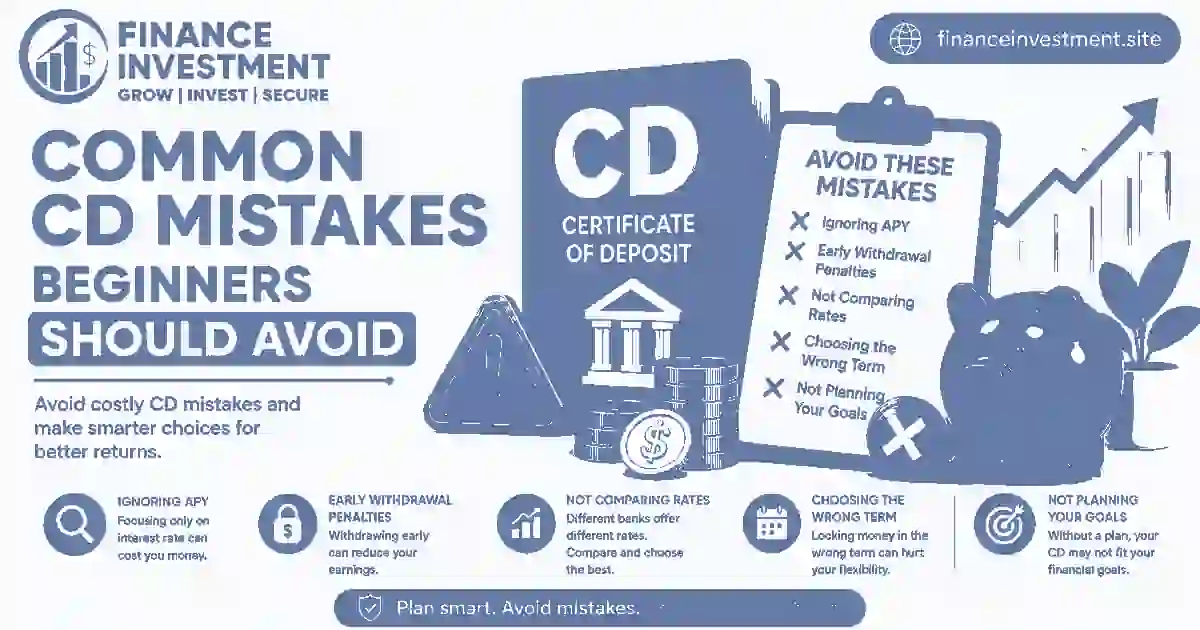
    Common CD Mistakes Beginners Should AvoidMany first-time CD buyers start with one question: What is the highest APY I can get? A good rate matters, but it should come after you know what the money is for and when you may need it. Some of the costliest CD mistakes happen before the account is opened—when you choose money that may be needed soon, pick a term that does not match your plans, or overlook an important account rule.

    A CD works best when the money has a clear job. Cash reserved for an emergency, an upcoming bill, or an uncertain expense may need more flexibility. On the other hand, money you can comfortably leave untouched may be a better candidate for a fixed-term certificate.

    The account’s fine print can change the picture. Minimum deposits, early-withdrawal penalties, renewal rules, insurance coverage, interest payments, and tax treatment can all affect the real value of the account. A higher advertised rate does not automatically make one CD better than another.

    If you want to understand how CDs fit together before comparing individual accounts, start with ourour CD Guide 2026 explains the basics before you compare specific certificates.

    What You’ll Learn

    • The mistakes beginners most often make with CDs
    • How to match the CD with your money and timeline
    • Which fees, penalties, and account rules deserve attention
    • Why APY should not be your only comparison point
    • How to make a cleaner decision before depositing your money

    Quick Answer: Which CD Mistakes Matter Most?

    The biggest beginner mistakes are usually simple: choosing a CD only for its APY, locking up money that may be needed soon, overlooking early-withdrawal penalties, skipping insurance checks, and failing to review what happens at maturity.

    6 Key Takeaways

    1. Look beyond APY: Compare the term, access rules, minimum deposit, and overall fit.
    2. Protect liquidity: Keep emergency money readily accessible instead of committing it to a standard CD.
    3. Read the penalty rules: Know what could happen if you withdraw before maturity.
    4. Check insurance: Confirm that the bank or credit union has the appropriate federal deposit or share insurance.
    5. Watch automatic renewal: A certificate may renew if you do not give instructions during the applicable grace period.
    6. Review taxes and interest: The advertised APY is not necessarily the amount you keep after taxes.

    Bottom line: A good CD decision is about more than chasing the highest rate. Look for a CD that fits your timeline, keeps your needed cash accessible, and has rules you understand before you fund it.

    At a Glance: CD Mistakes to Watch For
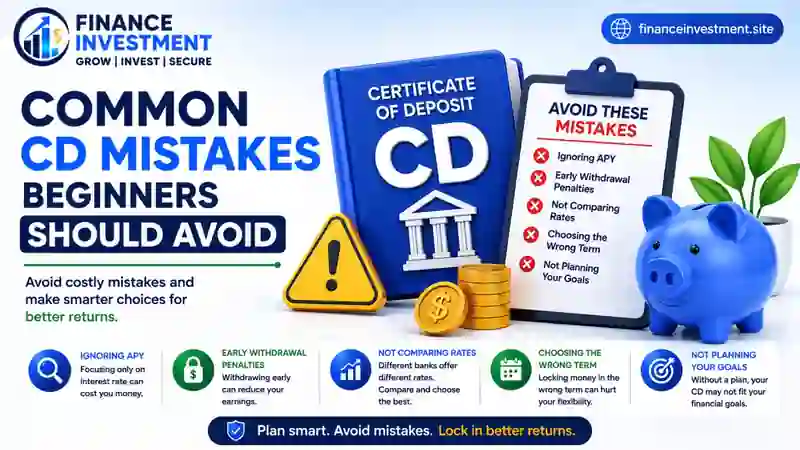
    Common CD Mistakes Beginners Should AvoidMost beginner mistakes can be caught with a quick review before you deposit the money. Before funding a certificate, check the term, withdrawal rules, insurance status, renewal instructions, and tax treatment. These details can matter more than a small difference in APY.

    Potential MistakeWhat to CheckWhy It Matters
    Chasing APYTerm and accessA higher rate may come with less flexibility
    Ignoring penaltiesEarly-withdrawal policyEarly access may reduce your return
    Skipping insurance checksFDIC or NCUA coverageConfirms applicable federal protection
    Forgetting renewalMaturity and grace periodYou may miss the chance to reassess your money

    A few minutes of checking the terms can save you from an unpleasant surprise later.

    Complete Beginner Guide to Choosing a CD

    Before opening a CD, think of it as a fixed agreement with rules you will need to follow until maturity. Before moving money, take a few minutes to understand what you are agreeing to. This simple review can help you avoid several common CD mistakes before they become expensive.

    1. Start With the Money You Are Using

    First, identify the purpose of the cash. Money needed for rent, an upcoming bill, or emergencies may not belong in a standard CD. Use funds that you can reasonably leave untouched for the selected term. If you are saving for a known near-term goal, a shorter certificate may be more appropriate.

    2. Check the Term and Minimum Deposit

    Look at the exact term, not just the advertised APY. A longer commitment may limit access for a longer period. Also check the minimum opening deposit. Some certificates accept small amounts, while others require substantially more. Our guide to how much money you need to open a CD can help with this part.

    3. Compare the APY With the Rules

    APY matters, but it should be viewed alongside the term, interest-payment schedule, and withdrawal conditions. A slightly lower rate may be more useful if the account gives you terms that better match your plans.

    4. Read the Early-Withdrawal Terms

    Find out how the penalty works before depositing the money. Some institutions calculate the charge using a set number of months of interest. The exact formula varies, so read the certificate disclosure rather than assuming every CD follows the same rule.

    5. Verify Insurance, Taxes, and Renewal Rules

    Confirm applicable FDIC insurance for a bank CD or NCUA share insurance for an eligible credit-union certificate. Also understand how interest may be reported for tax purposes. Finally, check whether the CD automatically renews and how long the grace period lasts.

    If all of these details fit your plan, you are in a much stronger position to choose a certificate without letting one attractive number make the decision for you.

    How a CD Works From Opening to Maturity

    Once you decide to open a certificate, the process is fairly straightforward. The important part is understanding what happens after the money leaves your regular account. A CD follows a defined timeline, so each stage has a specific purpose.

    Opening and Funding

    You apply through the bank or credit union, select the available certificate, and provide the required information. After approval, you fund the account with the amount you choose, subject to the institution’s minimum. The opening confirmation should show the principal, APY, term, maturity date, and other applicable conditions.

    During the CD Term

    The deposited money remains in the certificate while interest accrues according to its terms. Depending on the product, interest may compound inside the account or be paid according to a stated schedule. You normally do not need to manage the CD day to day, but keep the account documents available for reference.

    Approaching Maturity

    The maturity date is when the original term ends. The institution may send a notice explaining your options. You may be able to withdraw the funds, move them elsewhere, or renew the certificate. If automatic renewal applies, check the new rate and term before the grace period expires.

    Illustrative Example

    Elena opens a 12-month CD with $7,500. Her confirmation shows the agreed APY and maturity date. Several weeks before maturity, she reviews the renewal notice. Because she expects to use part of the money for a planned expense, she chooses not to let the entire balance automatically move into another CD.

    This simple timeline shows why reading the maturity notice matters just as much as opening the account correctly.

    Benefits and Drawbacks of Avoiding CD Mistakes

    Choosing the CD carefully can make the account easier to live with once the money is locked in. Still, even a well-chosen certificate has trade-offs. Knowing both sides helps you decide whether a CD belongs in your cash plan.

    ✓ Pros

    • Fewer surprises: Understanding the rules before opening the account makes the term easier to manage.
    • Better planning: A suitable maturity date can keep goal-specific money organized.
    • Rate certainty: A fixed-rate certificate can keep its stated rate during the agreed term.
    • More disciplined saving: Limited access can discourage unnecessary spending.

    ⚠ Cons

    • Reduced liquidity: Accessing money early can be less convenient than using a savings account.
    • Potential penalties: Early withdrawal may reduce the return under the certificate’s terms.
    • Inflation and taxes: The purchasing power and after-tax value of interest can be lower than the headline APY suggests.
    • Renewal risk: A new CD may offer a different rate when the original one matures.

    CD Mistake Comparison: The Shortcut vs. the Smarter Move

    A few choices made before funding can make a big difference later.. This comparison shows what a common shortcut looks like and what a more careful approach can look like instead.

    Common ShortcutPossible ProblemSmarter Move
    Chasing the highest APYThe term may not fit your plans.Compare APY with term, access, and account rules.
    Choosing the wrong termYou may need the money before maturity.Match the maturity date to your expected cash need.
    Ignoring early withdrawalA penalty can reduce your return.Read the withdrawal terms before depositing.
    Skipping insurance checksYou may misunderstand available federal protection.Verify applicable FDIC or NCUA coverage.
    Forgetting automatic renewalYour money may roll into a new term.Review maturity instructions and the grace period.
    Ignoring tax treatmentYour after-tax return may be lower than expected.Consider taxes when comparing the actual value of the CD.

    The goal is not to eliminate every trade-off. It is to make sure the certificate you choose matches the purpose of your money and the rules you are comfortable accepting.

    Costs, Risks and Expert Tips for Avoiding CD Mistakes

    A CD mistake does not always show up as an obvious fee. Sometimes the cost is lost flexibility, a missed opportunity, or a lower return than you expected. Looking at these risks before opening or renewing a certificate can make the decision much cleaner.

    Where the Financial Costs Can Appear

    Early withdrawal is one of the clearest risks. If you need the money before maturity, the institution may impose a penalty under the CD’s terms. That can reduce the interest you keep and may make the original APY less meaningful.

    There is also an opportunity cost. If market rates rise after you lock in a certificate, your money may continue earning the older rate until maturity. Inflation creates another concern because a fixed return may not keep pace with rising prices.

    Taxes can further reduce the amount you keep from interest earned in a taxable account. Also check insurance limits when placing a large balance with one institution. Federal deposit or share insurance has coverage rules, so do not assume every dollar is automatically protected.

    Expert Checks Before You Commit

    Premium Expert Tip

    Before funding a CD, write down five things: the APY, maturity date, early-withdrawal penalty, insurance coverage, and renewal terms. Before renewal, run the same check again. Your circumstances and available rates may have changed.

    Renewal deserves particular attention. A CD that made sense a year ago may not be the best place for the money today. Compare the new rate with current alternatives and ask whether you still need the same level of commitment.

    The simplest way to avoid these costs is to read the terms before funding the CD and review the account again before renewal.

    Common CD Mistakes and a Real-Life Example

    Not every CD mistake involves the interest rate. Beginners can also run into trouble by putting too much money into one certificate, misunderstanding how ownership affects insurance coverage, or simply missing an important maturity notice.

    Mistakes That Deserve Extra Attention

    • Overfunding one CD: Putting a large share of your cash into one certificate can leave too little money available for unexpected needs.
    • Ignoring account ownership: Deposit-insurance coverage can depend on how accounts are owned and how much is held within the applicable coverage categories. Do not assume separate account numbers automatically mean separate coverage.
    • Missing the maturity notice: A renewal window can be limited. If you do not review the notice, the CD may renew under the institution’s stated terms.
    • Misunderstanding interest payments: Interest may compound in the certificate or be paid according to a specific schedule. Read the account disclosure so you know when and where interest is credited.

    Illustrative Example: Sarah Spreads Her Cash

    Sarah has $80,000 available for several future goals. Instead of placing the entire amount into one CD, she keeps part of the money accessible and divides the remainder between certificates with different maturity dates. She also reviews the institution’s insurance information and sets a calendar reminder before each maturity date.

    Illustrative lesson: Sarah’s approach is hypothetical. The point is not that one structure is always best, but that spreading cash and reviewing account rules can reduce the consequences of a single decision.

    A CD should support your cash plan, not become the plan itself. Keeping track of ownership, coverage, interest, and maturity dates can prevent small oversights from turning into larger problems.

    Who Should Pay Special Attention to CD Mistakes?

    First-time buyers have more reason to slow down because CD terms can be unfamiliar at first. Large-balance savers should pay particular attention to deposit-insurance limits and account ownership. Retirees may need to think carefully about access to cash, especially when a CD is part of their regular income plan.

    Families can face similar issues when money is earmarked for tuition, a home purchase, or another known expense. People using several certificates should also keep track of different maturity dates, rates, and renewal instructions. A CD may be less suitable when the money could be needed without warning.

    Quick Decision Guide

    • New to CDs? Start with a manageable amount and understand the terms.
    • Holding a large balance? Review insurance and ownership carefully.
    • Need regular access? Keep enough cash outside the CD.
    • Using several CDs? Track every maturity and renewal date.

    Frequently Asked Questions About CD Mistakes

    What is the biggest mistake beginners make with CDs?

    A frequent mistake is looking at the APY without checking the term and account rules. The term, withdrawal rules, insurance, maturity instructions, and tax treatment also affect whether the CD fits your needs.

    Can you lose money by withdrawing from a CD early?

    You may receive less than the return you expected because the institution can generally charge an early-withdrawal penalty under the CD’s terms. Review the penalty before opening the account.

    Should I choose a CD with the highest APY

    Not necessarily. The highest APY may come with a term or conditions that do not fit your plans.

    How do I know if my CD is federally insured?

    For a bank CD, verify that the institution is FDIC-insured. For an eligible credit-union certificate, check for NCUA federal share insurance. Also consider applicable coverage limits.

    What happens if I forget my CD maturity date?

    The certificate may automatically renew according to its terms. Check the maturity notice and grace period so you have time to decide what to do with the money.

    Is automatic CD renewal a mistake?

    Automatic renewal itself is not necessarily a problem. The issue is letting the CD renew without checking the new rate, term, and your current plans.

    Are CD earnings taxable?

    Interest from a CD held in a regular taxable account is generally taxable as interest income. Your tax situation can affect the return you actually keep.

    Illustrative: What happens if a $10,000 CD earns 4%?

    Illustrative calculation only: At a hypothetical 4% APY for one year, $10,000 could earn approximately $400 under the stated assumptions. Actual earnings depend on the CD’s APY, compounding, and account terms.

    Final Verdict: Avoid the Mistakes That Can Cost You Later

    Avoiding CD mistakes starts with one simple habit: check the terms before moving your money. Do not let an attractive APY make the entire decision for you. The better certificate is the one whose term, access rules, minimum deposit, and maturity date fit your actual plans.

    Before funding a CD, verify the early-withdrawal penalty, applicable FDIC or NCUA insurance, interest-payment details, tax considerations, and automatic-renewal rules. These details may seem small when you open the account, but they can matter considerably if your plans change.

    It is also worth checking the account again when it approaches maturity. A CD that made sense when you opened it may not be the best choice when the term ends.

    For a broader look at certificates, rates, terms, and important account features, explore our

    CD Guide 2026
    .

    Practical takeaway: Read the fine print, protect the cash you may need, and compare the whole CD—not just the rate printed at the top.

    Make Your Next CD Decision With Fewer Surprises

    A good CD decision starts with understanding the rules before your money is committed. If you enjoy practical guides on CDs, saving, and everyday investing, join our newsletter for useful money insights and new guides.

    📧 subhashr325@gmail.com
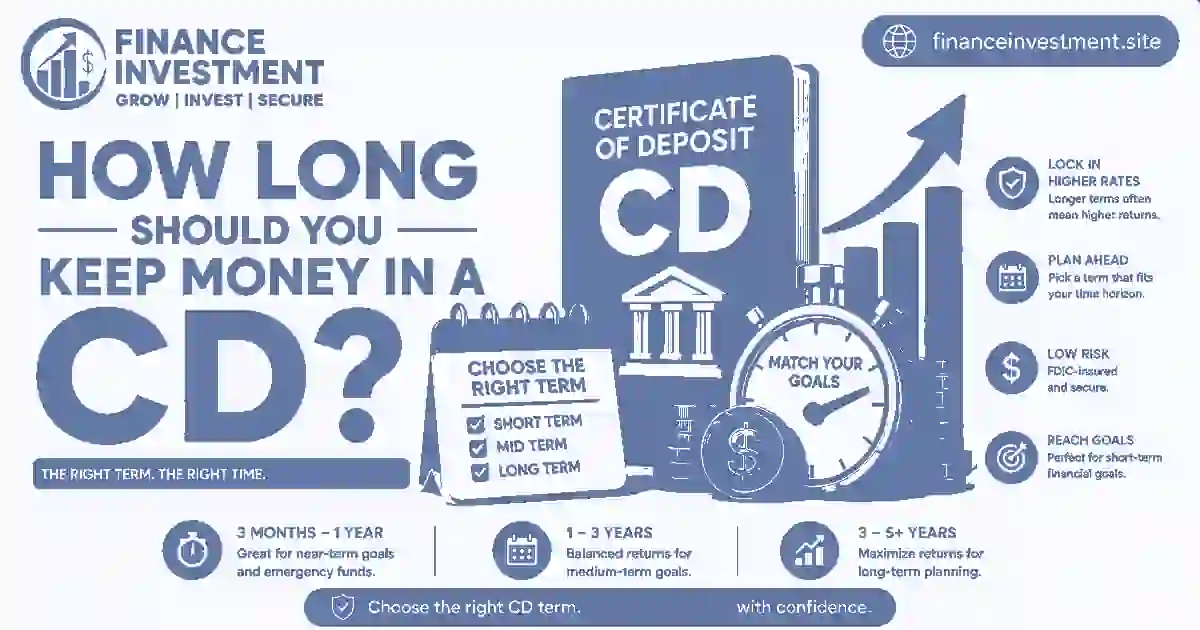
  • How Long Should You Keep Money in a CD? Smart 2026 Guide

    How Long Should You Keep Money in a CD? Smart 2026 Guide

    FINANCEINVESTMENT • CD GUIDE 2026

    How Long Should You Keep Money in a CD?

    SR
    Written by Subhash Rukade
    FinanceInvestment
    Updated August, 25, 2026.
    About 10–12 min read

    A practical guide to choosing a CD term, understanding maturity dates, and deciding how long your money should stay locked in.

    How Long Should You Keep Money in a CD? Smart Guide for 2026
    How long should you keep money in a CD? Learn how to choose the right CD term, match maturity dates to your goals, and balance returns with flexibility.
    how-long-should-you-keep-money-in-a-cd
    How Long Should You Keep Money in a CD
    how long to keep money in a CD,
    CD term length,
    CD maturity,
    how long should a CD be,
    CD investment term,
    6-month CD,
    1-year CD,
    2-year CD,
    5-year CD,
    when to renew a CD,
    CD maturity date
    https://financeinvestment.site/how-long-should-you-keep-money-in-a-cd/
    Subhash Rukade
    August 24, 2026
    About 10–12 minutes

    How Long Should You Keep Money in a CD?

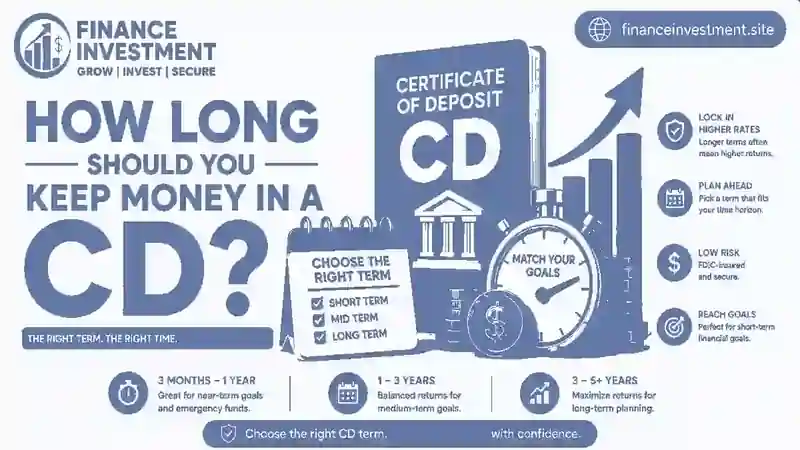
    How Long Should You Keep Money in a CD?How long should you keep money in a CD? The answer is not simply “until the rate stops looking attractive.” A better question is: When will this money need a new job? If the cash is being saved for a future purchase, tuition bill, home project, or another known purpose, the CD term should fit the date when that money becomes useful again.

    A six-month CD can make sense for a near-term expense. A one-year certificate may suit a goal farther away. Longer terms can work when you have no plans for the money for several years. The important part is leaving enough room between the CD’s maturity date and the point when you actually need the funds.

    Rate certainty is another reason people choose longer certificates. A fixed-rate CD can keep the agreed rate in place during the term, even if market rates change. But that certainty comes with less flexibility. If your plans change, accessing the money early may involve a penalty.

    Before choosing a term, it helps to understand the broader CD landscape. Our CD Guide 2026 can help you compare terms, rates, maturity rules, and other factors.

    What You’ll Learn

    • How to match a CD term with your financial timeline
    • When shorter or longer CDs may make sense
    • Why maturity timing matters as much as APY
    • How rate certainty can affect your decision
    • When keeping money flexible may be smarter

    Quick Answer: How Long Should You Keep Money in a CD?

    Usually, keep money in a CD for as long as you can comfortably leave it untouched. A 6-month or 1-year CD may fit a near-term goal, while a 2-, 3-, or 5-year CD can make more sense for money you will not need for several years. The best term balances the maturity date, rate certainty, and your need for access to the cash.

    6 Key Takeaways

    1. Match the term to your goal: Choose a maturity date that fits when you expect to need the money.
    2. Shorter terms offer more flexibility: They can reduce the time your cash stays committed.
    3. Longer terms can lock in a rate: This may be useful when you are comfortable leaving the money untouched.
    4. Liquidity still matters: A CD may charge an early-withdrawal penalty if you need the money before maturity.
    5. Do not chase APY alone: A slightly higher rate may not be worth a term that does not fit your plans.
    6. Have a maturity plan: Decide in advance whether you will withdraw, move, or renew the money when the CD ends.

    Bottom line: The ideal CD term is the one that keeps your money earning a predictable return without putting an important future expense out of reach.

    At a Glance: Choosing a CD Term

    Think of a CD term as a calendar commitment, not just an interest-rate choice. The closer your spending date, the more carefully you should protect access to the money. A longer certificate can provide rate certainty, but it also keeps your cash committed for more time.

    CD TermOften SuitsLiquidityRate Certainty
    6 monthsNear-term plansHigherShorter lock-in
    1 yearPlanned expensesModerateOne-year certainty
    2–3 yearsMedium-term goalsLowerLonger certainty
    5 yearsLong-range cash needsLowestLongest certainty

    These are planning ranges, not rules. A CD should not replace emergency cash or money you may need unexpectedly. Also check the institution’s early-withdrawal terms and whether the certificate automatically renews at maturity.

    Complete Beginner Guide to Choosing a CD Term

    A CD term is simply the length of time your money is committed to the certificate before its scheduled maturity date. Choosing one is easier when you start with the purpose of the money rather than the rate on the screen. How long should you keep money in a CD? Start by asking when you expect to need the cash and how much flexibility you want until then.

    Start With the Date, Not the Rate

    Suppose you are setting aside money for a home project next summer. A certificate that matures after the project begins could create an unnecessary problem. Instead, work backward from the spending date and leave some breathing room. This gives you time to review the maturity notice and decide what to do next.

    The same idea applies to money you expect to leave untouched for several years. If you have no planned use for the funds, a longer certificate may provide useful rate certainty. However, committing for longer also means giving up some access to the cash during the term.

    Understand What Happens at Maturity

    When a CD reaches maturity, the principal and applicable interest become available according to the institution’s terms. Some CDs automatically renew if you do nothing during the specified grace period. Others give you a window to withdraw or move the money. Check these rules before opening the certificate rather than discovering them later.

    Keep Liquidity in the Picture

    Money needed for emergencies should generally remain readily accessible rather than being locked into a CD. For planned cash, however, a certificate can create a useful boundary between money you intend to spend and money you are deliberately leaving alone.

    If you are unsure about the commitment, consider a shorter term or a CD ladder instead of putting the entire balance into one long certificate. For more background on the mechanics, see our guide to how CDs work.

    How a CD Term Works From Opening to Maturity

    How Long Should You Keep Money in a CDOnce you choose a CD, the term creates a simple timeline for your money. You deposit the agreed amount, accept the stated rate and maturity date, and generally leave the funds in place until the certificate ends. The important part is knowing what happens at each stage so the maturity date does not catch you by surprise.

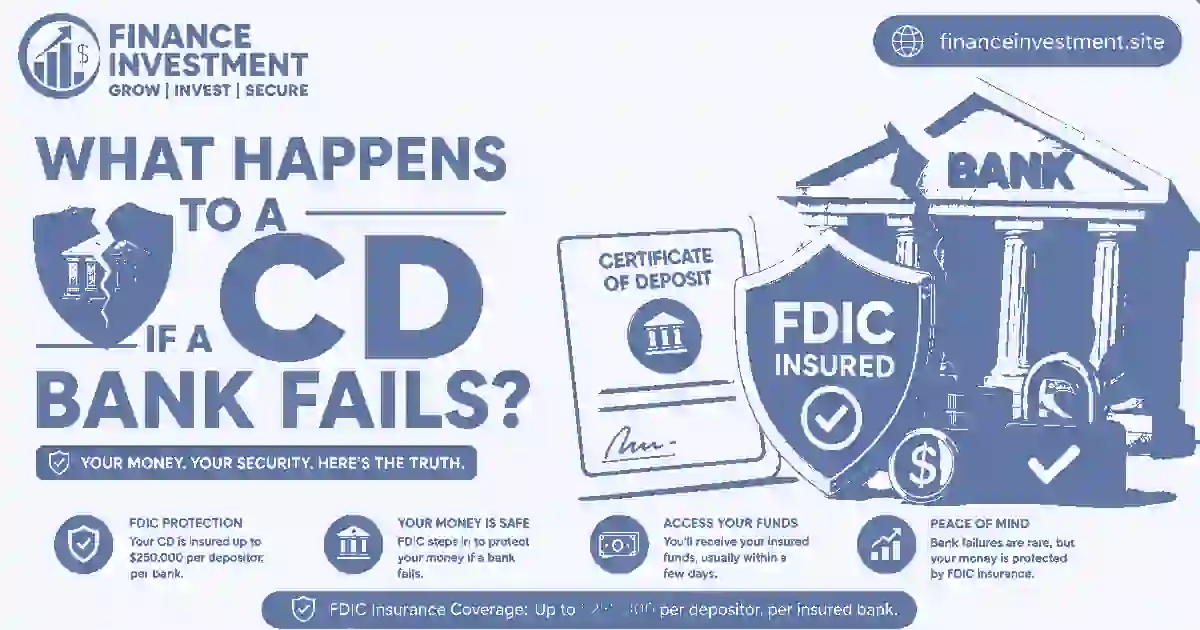
    1. Choose the Term and Maturity Date

    Look beyond the number of months. Check the exact maturity date shown by the bank or credit union. If you expect to use the money for a specific expense, make sure the certificate matures before you need to pay the bill.

    2. Fund the CD

    After opening the certificate, you transfer or deposit the amount required by the institution. The account then earns interest according to its stated terms. Some CDs compound interest, while others may offer different interest-payment options.

    3. Monitor the Timeline

    You usually do not need to manage the CD every day. Still, mark the maturity date on your calendar. Review the renewal instructions, grace period, and available choices before the certificate ends.

    4. Decide What Happens Next

    At maturity, you may be able to withdraw the money, transfer it to another account, or renew it into a new CD. The new certificate may have a different APY and term, so automatic renewal should not be treated as a decision you have already made.

    Illustrative example: Jordan places $8,000 into a 12-month CD because the money is earmarked for a planned expense the following year. About a month before maturity, Jordan reviews the renewal rate and decides whether the funds should be used, moved to savings, or placed into another certificate.

    Benefits and Drawbacks of Keeping Money in a CD

    Knowing how long should you keep money in a CD also means weighing what you gain from a fixed term against what you give up in flexibility. A CD can be useful when the money has a clear purpose, but it is not designed for every type of cash.

    ✓ Pros

    • Predictable return: A fixed-rate CD can provide a known rate for the agreed term.
    • Useful discipline: Limited access can make it easier to leave goal-specific money alone.
    • Rate certainty: You generally keep the agreed rate during the CD term even if market rates move.
    • Potentially stronger earnings: Some CDs may offer higher yields than readily accessible cash accounts.

    ⚠ Cons

    • Early-withdrawal risk: Taking money out before maturity may result in a penalty.
    • Less flexibility: Your cash is less accessible than money kept in a checking or savings account.
    • Inflation risk: Rising prices can reduce the purchasing power of a fixed return.
    • Reinvestment risk: When the CD matures, available rates may be lower than the rate you previously earned.

    CD Term Comparison: 6 Months to 5 Years

    Different CD terms solve different cash-planning problems. Instead of asking only which certificate pays the highest APY, consider how long you can leave the money untouched and how comfortable you are waiting for maturity.

    TermMay FitFlexibilityCommitment
    6 monthsNear-term cash needsHigherShort
    1 yearAnnual goalsModerateMedium
    18 monthsMedium-term plansModerate-lowLonger
    2 yearsPlanned medium-term expensesLowerLong
    3 yearsLonger-range goalsLowerLong
    5 yearsMoney with no near-term useLowestLongest

    If you are considering a shorter commitment, compare current options in our
    6-month CD guide.
    For a longer horizon, our
    3-year CD guide
    and
    5-year CD guide
    can help you explore those terms.

    Ultimately, how long should you keep money in a CD comes down to the relationship between your expected cash needs and the value of locking in a rate for longer.

    Costs, Risks and Expert Tips Before You Extend a CD

    A CD can look straightforward when you open it, but the decision becomes more important as the maturity date approaches. Before deciding how long should you keep money in a CD, review what could happen if your plans, rates, or cash needs change.

    Watch the Cost of Giving Up Flexibility

    An early withdrawal can trigger a penalty, depending on the certificate’s terms. That penalty is only one part of the cost. You may also miss better opportunities elsewhere if market rates rise while your money remains locked at an older rate.

    Inflation matters too. A fixed return can look attractive today but buy less in the future if prices rise faster than your earnings. Taxes can also reduce the amount you ultimately keep in a taxable account. Review the tax treatment before comparing the CD with another cash option.

    Think About What Happens After Maturity

    Reinvestment risk appears when a CD matures and new certificates offer lower rates. One way to reduce this timing problem is a CD ladder. Instead of putting everything into one certificate, you spread money across different maturity dates. That can create regular opportunities to reassess rates and cash needs.

    Expert Tip

    About a month before maturity, check four things: your upcoming cash needs, the new CD rates available, your savings alternatives, and the renewal terms. Then compare the after-tax return and flexibility—not just the headline APY.

    If the money still has no immediate purpose, renewing may be reasonable. If your plans have changed, moving the funds to a more accessible account could be the better move. The goal is not to keep a CD for a particular number of years; it is to keep the money committed only while the arrangement still fits your plan.

    Common CD-Term Mistakes and a Real-Life Example

    Many CD problems do not start when the certificate is opened. They appear later, when the saver needs the money, sees a better rate elsewhere, or discovers that the account renewed automatically. A few simple checks can prevent an attractive rate from becoming an awkward financial decision.

    Mistakes Worth Avoiding

    • Choosing only by APY: A higher rate is not helpful if the maturity date conflicts with an upcoming expense.
    • Ignoring the maturity date: Put the date on your calendar so you have time to review your options.
    • Using emergency cash: Money needed for unexpected bills generally needs easier access than a standard CD provides.
    • Overlooking automatic renewal: A CD may renew under the institution’s stated terms if you do not act during its grace period.
    • Skipping the penalty details: Check the early-withdrawal rules before committing money you might need early.

    Illustrative Example: Marcus Plans Ahead

    Marcus has $12,000 that he expects to use for a planned home renovation in about 14 months. He finds a 24-month CD with a slightly higher APY than a 12-month option. Instead of focusing only on the rate, he checks the maturity dates and realizes that the longer certificate would extend well beyond his planned spending date.

    Illustrative lesson: Marcus chooses a term that better fits his timeline and keeps his emergency reserve separate. The numbers and outcome are hypothetical; they are included only to demonstrate the decision process.

    The practical takeaway is simple: when deciding how long should you keep money in a CD, check the purpose, maturity date, access rules, and renewal terms before you look at the final APY.

    Who Should Choose a Longer CD Term?

    A CD can be a good fit for people who know when they will need their money and can leave it untouched until then. The key is having a clear reason for the commitment, rather than choosing a term simply because it offers an attractive rate.

    People Who May Benefit

    • Goal-based savers: Useful for money set aside for a known future expense.
    • Conservative investors: A fixed-rate CD can provide a predictable return during its term.
    • Families with planned expenses: A maturity date can line up with tuition, a vehicle purchase, or another scheduled cost.
    • Retirees: CDs may suit cash that is not needed immediately and is being held for a known future need.
    • Savers with emergency reserves: Having separate accessible cash makes it easier to leave the CD untouched.

    If you may need the money unexpectedly, a flexible savings account may be more appropriate. When asking how long should you keep money in a CD, the strongest signal is not your comfort with the term alone—it is whether you can genuinely leave the funds committed without disrupting your plans.

    Frequently Asked Questions About CD Terms

    How long should you keep money in a CD?

    Keep it for a term that ends before you need the money. Shorter certificates may suit near-term goals, while longer terms can fit cash you can leave untouched for several years.

    What happens when a CD reaches maturity?

    At maturity, the bank or credit union generally makes the principal and applicable interest available according to the account terms. You may be able to withdraw the money, transfer it, or renew the CD.

    Is a 5-year CD too long?

    Not necessarily. A 5-year term can make sense for money you are confident you will not need during that period. It may be less suitable for a planned expense that arrives sooner.

    Can I withdraw money from a CD before maturity?

    Usually, you can request an early withdrawal, but a standard CD may charge an early-withdrawal penalty. Check the certificate’s terms before opening it.

    Should I renew my CD when it matures?

    Not automatically. Compare the new APY, your upcoming cash needs, available savings options, and the new term before deciding whether to renew.

    Are shorter CDs better than longer CDs?

    Neither is automatically better. A shorter term can provide earlier access to your money, while a longer term can provide more time with a fixed rate.

    Can a CD ladder help with different maturity dates?

    Yes. A CD ladder spreads money across certificates with different maturity dates. This can create more regular opportunities to access funds or reassess available rates.

    Are CD earnings taxable?

    Interest from a CD held in a regular taxable account is generally taxable as interest income. Tax treatment can differ when a CD is held inside a tax-advantaged account.

    Illustrative: How much could a $10,000 CD earn?

    Illustrative calculation only: At a hypothetical 4% APY for one year, $10,000 would earn approximately $400 if the stated APY and compounding assumptions applied. Actual earnings depend on the CD’s terms, rate, and compounding method.

    Final Verdict: Choose the CD Term That Fits Your Timeline

    There is no universal answer to how long you should keep money in a CD. The better approach is to start with the date when you expect the money to become useful. A 6-month or 1-year certificate may work well for a nearer-term goal, while a 2-, 3-, or 5-year term can suit money that has a longer runway.

    The biggest mistake is choosing a term simply because its APY looks attractive. A higher rate can lose some of its appeal if you need the cash early and face a penalty or have to give up another opportunity. Maturity planning gives you a clearer way to make the decision.

    If you want to compare CD terms, rates, and key features in one place, explore our

    CD Guide 2026
    .

    Practical takeaway: Pick the shortest term that comfortably meets your goal, or choose a longer term only when you are confident the money can stay untouched.

    Make Your Next CD Decision With Confidence

    CD terms are easier to choose when your money has a clear purpose and timeline. If you enjoy practical guides on saving, CDs, and smarter money decisions, join our newsletter for useful updates without the noise.

    📧 subhashr325@gmail.com

    “

  • How to Use CDs for Short-Term Financial Goals in 2026

    How to Use CDs for Short-Term Financial Goals in 2026

    FINANCEINVESTMENT • CD GUIDE 2026

    How to Use CDs for Short-Term Financial Goals

    SR
    Written by Subhash Rukade
    FinanceInvestment
    Updated August,24, 2026.
    About 10–12 min read

    A practical guide to using certificates of deposit for money you expect to need within a defined short-term time frame.

    How to Use CDs for Short-Term Financial Goals in 2026
    Learn how to use CDs for short-term financial goals, choose the right CD term, protect your cash needs, and avoid locking up money too early.
    how-to-use-cds-for-short-term-financial-goals
    How to Use CDs for Short-Term Financial Goals
    short-term CD strategy,
    CDs for short-term goals,
    short-term savings with CDs,
    CD for a financial goal,
    short-term savings goals,
    CD maturity planning,
    choosing a CD term,
    short-term certificate of deposit
    https://financeinvestment.site/how-to-use-cds-for-short-term-financial-goals/
    Subhash Rukade
    August 23, 2026
    About 10–12 minutes

    Use the Deadline to Choose the CD, Not Just the Rate

    How to Use CDs for Short-Term Financial GoalsHow to Use CDs for Short-Term Financial Goals starts with a simple question: When will I actually need this money? If you know the answer, choosing a CD term becomes much easier. A certificate that matures after your goal arrives may offer a good APY, but it may be a poor fit if your cash is needed sooner.

    Think about a planned expense such as a car purchase, tuition bill, home repair, annual insurance payment, or a family trip. These goals have something in common: the money has a job and a deadline. A CD can give that cash a defined timeline while potentially earning more than leaving it completely idle.

    The key is to work backward from the date. If you need the money in six months, a five-year CD is obviously out of step. Even a one-year certificate may create a problem if the expense cannot wait. Early withdrawal can also reduce the benefit of using a CD in the first place.

    Before choosing a term, it helps to understand how CDs fit into a broader savings plan. Our CD Guide 2026 provides that bigger picture.

    What You’ll Learn

    • How to match a CD term with a financial deadline
    • When a short-term CD can make sense
    • Why the highest APY may not be the best choice
    • How to plan around maturity dates
    • When a flexible savings account may be better

    Quick Answer: Are CDs Good for Short-Term Financial Goals?

    Yes, a CD can work well for a short-term financial goal when you know roughly when the money will be needed and choose a maturity date that fits. The goal is to earn interest without creating a cash-access problem.

    6 Key Takeaways

    1. Start with the deadline: Know when the money must be available before choosing a CD term.
    2. Match maturity to the goal: A CD that matures too late can be inconvenient, even with a strong APY.
    3. Compare flexibility: A high-yield savings account may be better when the spending date could change.
    4. Don’t chase APY alone: Consider the term, withdrawal rules, and actual dollar earnings together.
    5. Keep emergency cash separate: A CD should not replace money you may need immediately.
    6. Plan the next step: Know where the money will go when the CD matures instead of making the decision at the last minute.

    Bottom line: A short-term CD works best when the maturity date fits the purpose of the money. The best rate is useful only if the timing works, too.

    Short-Term CD Planning at a Glance

    A useful way to think about a short-term CD is to start with the calendar. The closer your financial goal is, the more important access and timing become. The table below gives a simple starting framework rather than a one-size-fits-all rule.

    Financial GoalPossible CD TermMain Consideration
    3–6 months
    Planned bill or near-term purchase
    3–6 month CD, where availableKeep the maturity date comfortably before the money is needed.
    6–12 months
    Tuition, insurance or planned purchase
    6-month or 1-year CDLeave enough time after maturity to move or spend the funds.
    12–18 months
    Longer planned expense
    1-year or 18-month CDConsider whether the goal date could move before locking in.

    Key number: Give yourself a timing cushion. If a goal requires $10,000 on June 1, a certificate maturing close to that date may leave little room for delays. A flexible account can be more appropriate when the spending date is uncertain.

    Complete Beginner Guide to Using CDs for Short-Term Goals

    A CD becomes useful for a short-term goal when three things line up: you know approximately how much the goal will cost, you have a reasonable spending date, and you can leave the deposited money alone until the certificate matures.

    Define the Amount Before Shopping for a CD

    Start with the expense rather than the bank’s advertised rate. If you expect a home project to cost $6,000 next spring, decide how much of that $6,000 is already saved and how much can safely be committed. This keeps the CD tied to a real purpose instead of turning rate shopping into the goal itself.

    Work Backward From the Spending Date

    Give the maturity date some breathing room. Money needed on a specific day generally should not be locked in a certificate that matures that same morning. Allow time to receive maturity instructions, move the funds, and handle any unexpected delay.

    Use Different Maturities for Different Goals

    If several expenses are coming at different times, you do not have to put everything into one CD. A simple ladder can split the cash among certificates with different maturity dates. For example, money needed in six months can sit separately from money earmarked for next year. Each portion then has its own timeline.

    Consider a No-Penalty CD When Timing Is Less Certain

    A no-penalty CD may provide more flexibility because qualifying withdrawals can be made without the traditional early-withdrawal penalty, subject to the institution’s rules. Compare its APY and withdrawal conditions with standard CDs and liquid savings options before choosing it.

    Keep Emergency Savings Outside the Plan

    Your short-term goal fund and emergency fund serve different purposes. A vacation, vehicle purchase, or planned renovation can often wait or change. An urgent medical bill or home repair may not. Keeping emergency cash readily accessible helps prevent an unexpected expense from forcing you to break a CD early.

    How a Short-Term CD Strategy Works

    A short-term CD strategy works best when the certificate is treated as part of a timeline, not as a permanent home for your cash. You decide what the money is for, when you need it, and then build the CD around those facts.

    Step 1: Set the Goal Amount

    Write down the amount you expect to need. If the target is $8,000, decide whether the full amount is ready now or whether you are still saving toward it. This also helps you avoid committing money that belongs to another priority.

    Step 2: Mark the Date on Your Calendar

    Choose the date when the money should be available. Then work backward to find a suitable CD term. A small cushion between maturity and the actual expense can make the plan easier to manage.

    Step 3: Fund the Certificate

    After comparing APY, term, withdrawal rules, and other conditions, open the CD and transfer the amount you have decided to commit. Save the account confirmation and maturity date so you can review the plan later.

    Step 4: Track Maturity

    Don’t wait until maturity morning to think about the next move. Check the institution’s maturity and renewal rules in advance. Some CDs automatically renew if you do nothing during the applicable grace period.

    Illustrative Example

    Maya expects to spend $5,000 on a home improvement project in about eight months. She keeps her emergency reserve separate and places the goal money into a suitable shorter-term CD. Rather than choosing a certificate that matures after the project date, she selects one that gives her time to access the funds before the contractor needs payment. When the CD matures, she reviews the proceeds and moves the money toward the project instead of automatically renewing it.

    The final step is simple but important: match the maturity decision to the goal. If the expense has arrived, use the money. If the date has changed, reassess. A CD strategy should adapt to the goal rather than lock you into a decision you no longer need.

    Benefits & Drawbacks of Using CDs for Short-Term Goals

    A CD can bring structure to money that already has a purpose. But that structure comes with trade-offs. The biggest question is whether the benefit of a defined return outweighs the loss of easy access.

    ✓ Pros

    • Predictable return: A fixed-rate CD can make the expected interest easier to estimate.
    • Defined timeline: The maturity date gives the savings a clear finish line.
    • Goal separation: Moving goal money into a separate certificate can reduce the temptation to spend it elsewhere.
    • Potentially stronger yield: Depending on current rates, a CD may offer more interest than leaving the same cash in a low-yield account.

    △ Cons

    • Early-withdrawal risk: Taking money out before maturity may trigger a penalty on a standard CD.
    • Timing mismatch: A goal can move, but the original maturity date does not necessarily move with it.
    • Inflation risk: Rising prices can reduce the purchasing power of the money while it is locked in.
    • Reinvestment risk: When the CD matures, comparable rates may be lower if you still need to save the money.

    The strongest case for a CD is money with a reasonably predictable purpose and timeline. If either one is uncertain, flexibility may deserve more weight than a slightly higher rate.

    Short-Term Savings Comparison: CD vs Other Options

    A CD is only one way to park money for a near-term goal. The better choice depends on how certain your spending date is and how quickly you might need access to the cash.

    OptionBest FitLiquidityReturn Characteristics
    CDKnown goal dateLimited before maturityOften fixed for the selected term
    High-yield savingsUncertain timingGenerally highVariable rate
    Treasury billsShort government-backed investment horizonDepends on whether held to maturity or soldYield set by market conditions
    Money market deposit accountSavings with easier accessGenerally highVariable rate

    If your goal date is firm, a CD can provide a useful fixed timeline. If the date could move, a high-yield savings account may give you more room to adjust. For short government securities, Treasury bills offer another route, but their market and tax characteristics differ from bank CDs.

    Before committing cash, also consider how FDIC insurance applies to CDs. Protection, access, maturity, and return should be considered together rather than comparing APYs alone.

    Costs, Risks & Expert Tips for Short-Term CD Planning

    The biggest risk with a short-term CD is not usually the rate itself. It is choosing a certificate that does not fit what happens around the goal. A little planning can prevent a good savings idea from becoming inconvenient later.

    Know the Cost of Changing Your Mind

    A standard CD may charge an early-withdrawal penalty if you need the money before maturity. That matters when the spending date is only an estimate. Review the penalty before opening the certificate, especially if the goal could move forward unexpectedly.

    Consider What the Cash Could Do Elsewhere

    Locking money into a CD has an opportunity cost. You may give up access to a savings account or another option that could become more attractive while your CD is running. Inflation also matters because a fixed return does not guarantee the same purchasing power when prices rise.

    Plan for the Rate After Maturity

    Rates may be different when your CD matures. If you still need the money for a later goal, the next available CD could offer a lower yield. A short CD ladder can spread maturity dates and reduce the chance that every dollar reaches maturity at the same time.

    Don’t Forget Taxes

    Interest from a taxable CD is generally subject to federal income tax, and state or local taxes may also apply. Factor the after-tax return into your planning rather than treating the advertised APY as the entire gain.

    Give the Money a Job After Maturity

    Before the CD matures, decide whether the money will be spent, transferred to savings, or placed into another investment. This prevents an automatic renewal from making the decision for you.

    Premium Expert Tip

    Build the exit plan when you open the CD. Put the maturity date on your calendar, note the renewal rules, and decide where the proceeds should go. A CD works best when the ending date is part of the strategy from day one.

    Common Mistakes When Using CDs for Short-Term Goals

    A short-term CD can be simple to manage, but small planning errors can make the money harder to use when the goal arrives. The most common problems happen when the certificate is chosen around the rate instead of the purpose.

    Mistakes Worth Avoiding

    • Ignoring the exact goal date: A CD that matures after the money is needed can create unnecessary pressure.
    • Locking up flexible cash: If an expense could happen earlier than expected, consider whether a standard CD gives you enough access.
    • Skipping the withdrawal rules: Understand the early-withdrawal penalty before committing the money.
    • Letting the CD renew automatically: Check maturity instructions before the certificate reaches its end date.
    • Ignoring taxes and inflation: The advertised APY does not tell the whole story about what the money will be worth after taxes and rising prices.
    • Putting every goal on one maturity date: Separate maturity dates can make several upcoming expenses easier to manage.

    Real-Life Example: Jordan’s Wedding Fund

    Jordan has $7,500 saved for a wedding planned about nine months from now. He finds a longer CD with a slightly higher rate and considers using it because the APY looks attractive.

    Illustrative calculation only: If the longer CD produced an extra $60 of interest compared with a suitable shorter certificate, that additional return would still need to be weighed against the risk of needing the money before maturity.

    Jordan chooses a maturity date that fits his planned spending window instead. The decision gives the goal a clearer path without making a small rate difference the main priority.

    Practical lesson: A CD should make a short-term goal easier to fund, not harder to access. Choose the certificate around the date and purpose of the money first, then use the APY to refine the choice.

    Who Should Use CDs for Short-Term Goals?

    CDs tend to fit best when the purpose of the money is clear and the spending date is reasonably predictable. They are less useful when you may need the cash at any moment.

    Good Candidates for a Short-Term CD

    Goal-based savers can use CDs for planned expenses such as tuition, a vehicle purchase, a home project, or an annual bill. Families may also find them useful when several known expenses are coming at different times.

    Conservative investors who value a defined return may appreciate having a specific maturity date. The strategy is especially comfortable for people who already have a separate emergency reserve and can leave the CD untouched until maturity.

    Who May Prefer Flexible Savings?

    If your income is unpredictable, your emergency fund is incomplete, or the spending date could change suddenly, a liquid savings account may be a better fit. Flexibility can be more valuable than squeezing out a little extra interest.

    Quick Decision Guide

    Firm date + separate emergency fund + money can stay untouched? A CD may fit. Uncertain date or frequent access needed? Keep the money flexible. Several future expenses? Consider different maturity dates.

    Frequently Asked Questions About CDs for Short-Term Goals

    Are CDs good for short-term goals?

    They can be useful when you know when the money will be needed and can leave it untouched until maturity. A CD is less suitable when the spending date is uncertain.

    What CD term is best for short-term savings?

    There is no single best term. Choose one that matures before you need the money, while leaving enough time to access the proceeds and complete the planned expense.

    Can I use a 6-month CD for a financial goal?

    Yes. A 6-month CD can fit a goal that is several months away, provided the maturity date works with your actual spending schedule.

    Is a 1-year CD considered short term?

    For many savers, a one-year CD can serve a short-term or near-term goal. The important point is whether the one-year maturity matches when you expect to need the funds.

    What if I need the money before maturity?

    A standard CD may impose an early-withdrawal penalty. Review the certificate’s rules before opening it. A liquid savings account or no-penalty CD may provide more flexibility.

    Are no-penalty CDs useful?

    They can be useful when your goal date is not completely certain. However, compare the APY, withdrawal conditions, and other account terms before choosing one.

    Should emergency funds go into CDs?

    Usually, emergency money is better kept readily accessible. A CD can restrict access, which may be inconvenient when an unexpected expense requires immediate cash.

    Can I create a CD ladder for short-term goals?

    Yes. You can divide money among CDs with different maturity dates. This can help coordinate several upcoming expenses without putting the entire balance behind one maturity date.

    What happens when a CD matures?

    The principal and applicable interest become available according to the institution’s maturity rules. Some CDs automatically renew if you do not provide different instructions during the applicable grace period.

    Illustrative: How much can a short-term CD earn?

    Illustrative calculation only: A $5,000 CD earning a hypothetical 4% APY for six months would produce roughly $99 of interest before taxes, assuming simple half-year proportional earnings. Actual results depend on the CD’s APY, compounding, and terms.

    Final Verdict: Use the CD to Serve the Goal

    Short-term CDs can be a useful choice when you have a defined financial goal, a reasonably firm spending date, and enough separate cash to handle unexpected expenses. The certificate should fit the timeline of the goal rather than forcing the goal to fit the certificate.

    Start with the date you expect to need the money. Then compare CD terms that mature early enough to give you a practical window for accessing the proceeds. After that, look at APY, minimum deposits, withdrawal rules, and other account terms.

    A higher APY is not automatically the better deal. If it comes with a maturity date that is too late or makes your money harder to access, the extra interest may not be worth the trade-off. When the spending date is uncertain, a flexible savings option can make more sense.

    For a broader look at CD terms, rates, safety, and strategy, explore our CD Guide 2026.

    Practical takeaway: Choose the CD that reaches the finish line when your financial goal does. Once the timing works, use the rate to make the final choice.

    FINANCEINVESTMENT

    Make Your Next Savings Goal Easier

    If you enjoy practical guidance on CDs, savings, and investing, you can join the FinanceInvestment newsletter for simple ideas you can use when planning your next financial goal.

    📧 subhashr325@gmail.com

    A good short-term savings plan gives every dollar a purpose while leaving enough room for real life to change.

  • What Happens to a CD if a Bank Fails? 2026 Guide

    What Happens to a CD if a Bank Fails? 2026 Guide

    FINANCEINVESTMENT • CD GUIDE 2026

    What Happens to a CD if a Bank Fails?

    SR
    Written by Subhash Rukade
    FinanceInvestment
    Updated August,24, 2026.
    About 10–15 min read

    What happens to your CD when a bank fails? Learn how FDIC protection, CD maturity, accrued interest, and bank resolution can affect your money.

    What Happens to a CD if a Bank Fails? 2026 Guide
    What happens to a CD if a bank fails? Learn how FDIC protection works, what happens to your principal and interest, and what CD holders should expect.
    what-happens-to-a-cd-if-a-bank-fails
    What Happens to a CD if a Bank Fails
    CD if bank fails, what happens to CD when bank fails, bank failure CD, FDIC insured CD bank failure, CD deposit insurance, FDIC CD protection, what happens to CD interest, CD maturity after bank failure, failed bank CD, FDIC bank failure
    https://financeinvestment.site/what-happens-to-a-cd-if-a-bank-fails/
    Subhash Rukade
    August 23, 2026
    About 10–15 minutes

    What Happens to a CD if a Bank Fails?

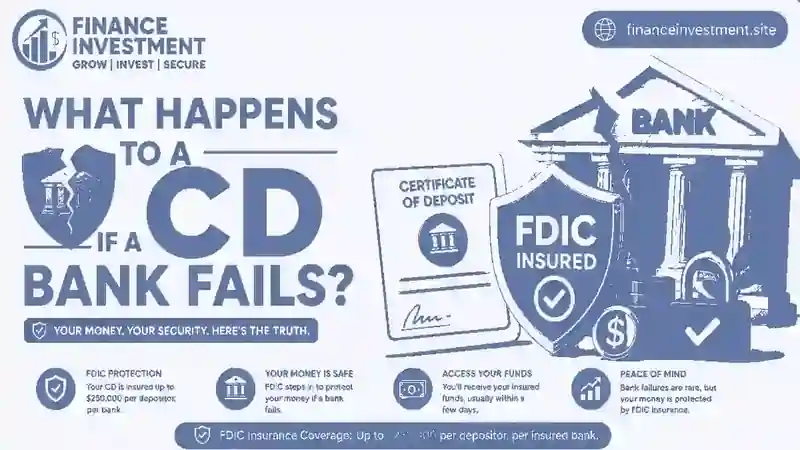
    What Happens to a CD if a Bank FailsA bank failure can make a CD owner wonder whether the money is suddenly frozen, lost, or stuck until the original maturity date. For an eligible deposit at an FDIC-insured bank, however, a bank closing does not simply make the CD disappear. The FDIC steps into the process and works to protect insured deposits under the applicable rules.

    What happens next depends on how the failed bank is resolved. In many cases, another bank assumes the failed institution’s deposits. If that happens, your CD may continue under the acquiring bank’s arrangements. If no acquiring institution takes over the deposits, the FDIC can pay insured depositors directly, subject to the applicable coverage limits.

    For CD holders, the important details are the issuing bank, insurance coverage, account ownership, principal, accrued interest, and the CD’s terms. A bank failure does not automatically mean you lose the interest you have earned or the entire deposit. At the same time, a failed-bank resolution can affect how and when you access the money, particularly when a CD is transferred to another institution.

    If you want the broader picture before diving into bank-failure scenarios, our CD Guide 2026 covers CD terms, rates, and strategies in one place.

    What You’ll Learn

    • What happens when an insured bank closes
    • How the FDIC handles failed-bank deposits
    • What can happen to your CD principal and accrued interest
    • How CD maturity and access may be affected
    • Why insurance limits and ownership still matter
    • What CD holders should check after a bank failure

    Quick Answer: What Happens to a CD if a Bank Fails?

    An eligible, FDIC-insured CD does not simply disappear when the issuing bank fails. The FDIC generally resolves the failure by arranging for another bank to assume the insured deposits or, when there is no acquiring bank, by paying depositors directly up to the applicable insurance limit.

    6 Key Takeaways

    1. Your insured balance remains protected: FDIC coverage includes principal and accrued interest through the bank’s failure date, subject to the applicable limit.
    2. Another bank may take over: In the most common resolution, a healthy bank assumes the failed bank’s insured deposits and customers become depositors of the acquiring institution.
    3. Your original CD terms may change: The acquiring bank is not required to keep the failed bank’s rates or account terms. Depositors may generally withdraw funds without an early-withdrawal penalty following the failure, subject to the applicable resolution terms.
    4. The FDIC may pay you directly: If no bank assumes the deposits, the FDIC can pay the insured balance directly.
    5. Amounts above insurance limits are different: Any uninsured portion is handled through the receivership process and is not guaranteed in the same way as insured deposits.
    6. Keep your records: Your CD statements, ownership information, and deposit records can help establish exactly what you own and how it should be treated.

    Bottom line: A bank failure can change who services your CD and may affect its original terms, but an eligible insured deposit is protected within the applicable FDIC limits. The key is knowing how much of your CD is insured and understanding what happens under the bank’s specific resolution.

    CD Bank Failure: At a Glance

    A bank failure does not automatically mean a CD holder has to start over. The outcome depends mainly on the FDIC resolution process and the amount of the depositor’s eligible funds that falls within applicable insurance coverage.

    What to CheckWhat It Means for Your CD
    FDIC-insured depositEligible funds are protected up to the applicable insurance limit.
    Principal + accrued interestBoth are considered when determining the insured balance, subject to coverage limits.
    Acquiring bankA healthy bank may assume the deposits and provide access to insured funds.
    No acquiring bankThe FDIC may pay depositors directly up to the insured balance.
    CD maturityThe treatment can depend on the resolution and the acquiring institution’s arrangements.
    Amount above coverageThe uninsured portion is handled through the failed bank’s receivership and is not protected like an insured deposit.

    One detail is easy to miss: an acquiring bank is not required to preserve the failed bank’s original rates or account terms. The FDIC notes that depositors can generally withdraw funds without an early-withdrawal penalty following the failure, subject to the resolution arrangements.

    For complicated deposit structures, the FDIC’s Electronic Deposit Insurance Estimator can help you review coverage across CDs and other eligible deposits at the same bank.

    Complete Beginner Guide: What a Bank Failure Means for Your CD

    A bank failure is the official closing of a bank because it can no longer meet its obligations. For a CD holder, that event changes who is responsible for the deposit, but it does not automatically turn an eligible insured CD into a loss.

    The FDIC Has Two Different Jobs

    It helps to separate two FDIC roles. As the insurer, the FDIC protects eligible deposits up to the applicable insurance limit. As the receiver, it takes control of the failed bank, handles its assets and settles claims, including claims involving deposits above the insured limit.

    That distinction matters because insured and uninsured money do not receive the same treatment. FDIC insurance covers an eligible CD’s principal and interest accrued or due through the bank’s failure date, subject to the applicable coverage limit.

    Where Your CD Fits Into the Process

    If another bank takes over the failed institution’s deposits, your insured deposit can move to the acquiring bank. You become a customer of that institution, but the original deposit agreement does not simply carry over unchanged. The acquiring bank is not required to keep the failed bank’s rate or account terms. FDIC guidance also says depositors can generally withdraw insured funds without an early-withdrawal penalty after the failure, subject to the resolution arrangements.

    If there is no acquiring bank for the deposits, the FDIC can pay depositors directly for their insured balance. Interest stops accruing on the failed bank’s accounts at the time of closing; if an acquiring bank takes over the deposits, that bank becomes responsible for establishing the post-failure interest treatment.

    Why Your Other Deposits Still Matter

    Insurance is calculated by depositor, insured bank, and ownership category. Your CD therefore cannot always be viewed separately from other deposits you hold at the same institution. Funds above the applicable insurance limit become part of the receivership claim rather than receiving the same guaranteed treatment as insured deposits.

    Brokered CDs Need an Extra Check

    A brokered CD can qualify for pass-through FDIC insurance when the underlying requirements are satisfied. The actual owner must own the funds, and the relevant ownership and agency information must be properly recorded. A brokerage platform itself is not the insurer.

    Beginner tip: If you ever receive a bank-failure notice, keep your CD statements and ownership records handy. Check the FDIC’s instructions for that specific failure rather than assuming your original CD rate, maturity date, or access rules will remain unchanged.

    How It Actually Works After a Bank Failure

    The process usually moves quickly, but the exact steps depend on how the failed bank is resolved. Here is what a CD holder can generally expect.

    1. The Bank Closes

    When regulators close an insured bank, the FDIC immediately begins working on the deposit side of the failure. Its goal is to provide prompt access to insured deposits.

    2. Another Bank May Take Over

    The preferred and most common resolution is a purchase-and-assumption transaction. A healthy bank assumes the failed bank’s insured deposits. Your insured CD can then become a deposit at the acquiring institution, giving you access to the covered funds.

    That does not guarantee the old CD rate will continue. The acquiring bank can establish different interest rates and terms. Depositors generally have the option to withdraw insured funds without an early-withdrawal penalty following the failure, subject to the specific resolution arrangements.

    3. The FDIC May Pay You Directly

    If no acquiring bank takes the deposits, the FDIC can pay the insured balance directly. Such payments generally begin within a few days of the bank closing, although accounts requiring additional documentation can take longer.

    What Happens to Interest?

    Interest is covered through the bank’s failure date, within the applicable insurance limit. Interest stops accruing at the failed bank when it closes. If another bank assumes the deposits, that bank becomes responsible for setting the post-failure interest treatment. If the FDIC pays the insured balance directly, interest does not continue beyond the failure date.

    Illustrative example: Suppose Maria has an eligible $40,000 CD when her bank fails. If another bank assumes the deposit, Maria may receive access through the new institution, but the new bank could establish a different rate. If the FDIC instead pays her directly, the insured amount would be paid based on the applicable coverage rules, and interest would not continue after the failure date.

    Benefits & Drawbacks of FDIC Protection

    What Happens to a CD if a Bank FailsFDIC protection gives CD owners an important safety net, but it does not mean every part of the original CD agreement survives a bank failure unchanged. The biggest benefit is protection of eligible deposits; the main tradeoff is that the resolution can alter how the CD is serviced.
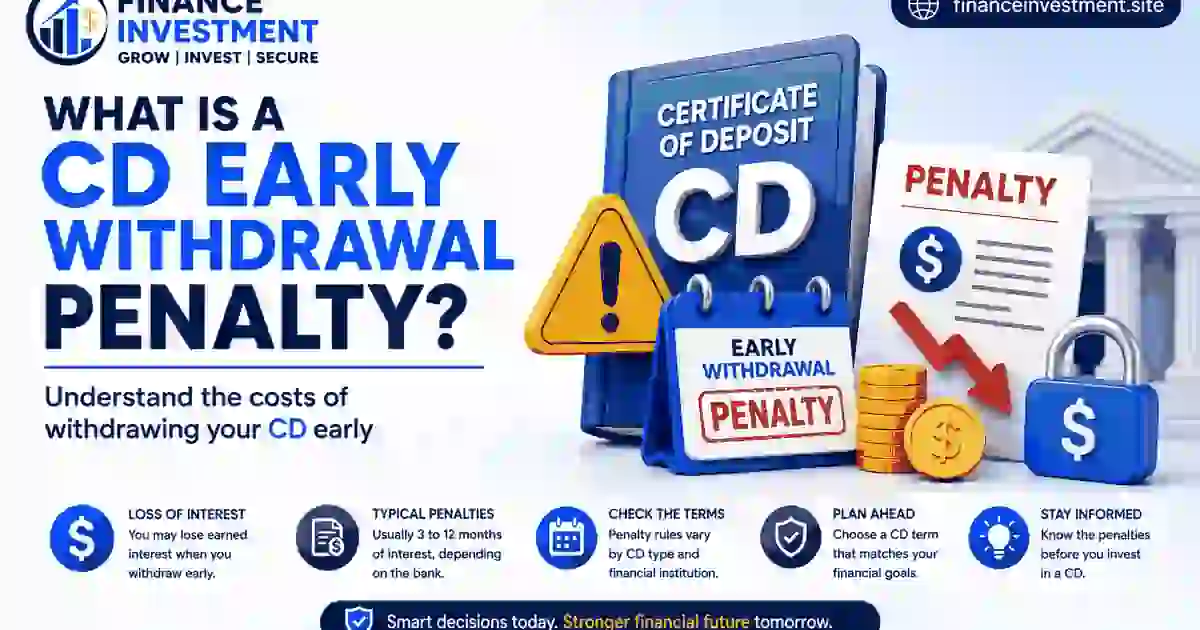
    ✓ Benefits

    • Eligible deposits are protected: Covered principal and accrued interest receive FDIC protection within the applicable limits.
    • Access may return quickly: When another bank assumes the deposits, customers may regain access without waiting for the entire receivership to finish.
    • No separate insurance purchase: Eligible deposits receive FDIC insurance automatically; you do not buy a separate policy for the CD.
    • Less uncertainty about principal: Within the coverage limit, a qualifying deposit is treated differently from a market investment during a bank failure.

    △ Drawbacks

    • The rate may change: An acquiring bank does not necessarily have to preserve the failed bank’s original CD rate.
    • Terms may be different: Servicing arrangements and account conditions can change after the transfer.
    • Coverage has limits: Money above the applicable insurance limit is not protected in the same way as an insured deposit.
    • Access can feel unfamiliar: Even when funds are protected, customers may need to follow new instructions or work with a different institution.

    The important distinction is that deposit protection and contract continuity are not the same thing. FDIC insurance can protect an eligible balance, while the bank-failure resolution determines how that deposit is transferred or paid.

    CD Bank-Failure Comparison: How Does Your Money Differ?

    A CD is only one way to hold cash. The useful comparison here is how each option behaves when the institution behind it runs into trouble, not simply which one offers the highest yield.

    OptionProtectionAccessReturn / Market Exposure
    FDIC-insured CDFDIC protection for eligible deposits within applicable limitsUsually restricted until maturity, although a bank failure can change access arrangementsFixed CD rate; no daily market pricing
    High-yield savings accountFDIC or NCUA protection when eligibleGenerally more flexibleRate can change; no stock-market exposure
    Treasury securitiesBacked by the U.S. government, not FDIC insuranceCan generally be sold before maturity, subject to market conditionsKnown terms, but market prices can move before maturity
    Money market deposit accountFDIC or NCUA protection when eligibleTypically more accessible than a CDRate can change; no stock-market exposure
    Stocks and bondsNot FDIC-insuredGenerally tradableMarket prices can rise or fall

    For someone building a CD portfolio, the term can matter as much as the institution. You can compare 6-month CD rates or 1-year CD rates when shorter commitments are more useful. Longer timelines can be explored through the 3-year CD guide or 5-year CD guide.

    The key difference is the type of protection involved. An eligible CD and savings account rely on federal deposit insurance when held at an insured institution. Treasury securities rely on the U.S. government’s backing, while stocks and bonds are market investments whose values can fluctuate.

    Costs, Risks & Expert Tips After a Bank Failure

    FDIC protection removes one major fear from an eligible CD, but it does not make every part of the experience predictable. A bank failure can create practical issues around rates, access, uninsured balances, and what you do with the money afterward.

    Your CD Rate May Not Survive the Transfer

    If another bank assumes the failed bank’s deposits, the acquiring institution does not necessarily have to keep the original CD rate. That can create a reinvestment risk: you may suddenly have money available at a time when comparable CD rates are lower than the rate you originally locked in. The FDIC explains that acquiring institutions may establish their own interest rates and terms.

    Watch the Uninsured Portion

    The biggest financial concern is usually the amount that falls outside applicable FDIC coverage. Deposits above the insurance limit become part of the failed bank’s receivership process rather than receiving the same protection as insured deposits. Recovery of an uninsured amount can depend on the value of the bank’s assets and the receivership process.

    That is why a large CD balance deserves more attention than simply comparing APYs. Review your other deposits at the same bank and consider how ownership categories affect your total coverage.

    Brokered CDs Need Extra Attention

    If you purchased a CD through a brokerage or another platform, identify the actual issuing bank. Pass-through insurance can apply when the required ownership and recordkeeping conditions are satisfied, but the platform itself is not the FDIC insurer.

    Practical Ways to Reduce Surprises

    • Verify the issuing bank’s FDIC status before depositing.
    • Keep your CD confirmation, statements, and ownership records.
    • Review all deposits held at the same institution.
    • Don’t assume a familiar financial platform means every CD is insured.
    • Read bank-failure notices carefully if your institution closes.
    • Keep some cash outside CDs so a resolution does not disrupt your entire cash reserve.

    Expert Tip

    Don’t build your CD strategy around the assumption that a bank failure will preserve your original rate. Treat FDIC insurance as protection for eligible deposits—not a promise that every original CD feature will remain unchanged. For larger balances, map your deposits by bank and ownership category before opening another certificate.

    Common Mistakes + A Real-Life Example

    A bank failure is stressful enough without discovering that a few assumptions about your CD were wrong. The most avoidable problems usually come from overlooking the details attached to the deposit.

    Common Mistakes to Avoid

    • Assuming FDIC insurance preserves every CD term: Insurance protects eligible deposits within applicable limits. It does not guarantee that an acquiring bank will keep the failed bank’s original rate or terms.
    • Ignoring uninsured balances: If your deposits exceed the applicable coverage limit, the excess is handled through the receivership process and does not receive the same protection as the insured portion.
    • Keeping too much cash at one institution: Several CDs and other deposits can count toward the same coverage calculation when they share the same ownership category.
    • Not identifying the issuing bank: When a CD is purchased through a financial platform, check which bank actually issued it. The platform itself may not be the insured institution.
    • Assuming your original rate will continue: A new bank that assumes deposits may establish different rates or terms.
    • Skipping official notices: The FDIC or acquiring bank may provide important instructions about access, account servicing, and what happens next. Don’t treat those messages as routine paperwork.

    Real-Life Example: David’s CD Strategy

    David has $180,000 in a CD and $90,000 in an individual savings account at the same bank. He assumes both accounts are separately protected because they are different products. When the bank fails, he discovers that the ownership category matters more than the account names.

    Illustrative calculation: $180,000 + $90,000 = $270,000. This example does not determine David’s actual insurance payout because the applicable ownership rules and accrued interest must also be reviewed. It simply shows why looking at each account separately can produce the wrong impression.

    David also reads the acquiring bank’s notice instead of assuming his original CD rate will remain unchanged. That gives him a clearer picture of what happens next and what choices are available under the resolution.

    Practical lesson: Don’t judge your protection by the CD’s APY or account name alone. Know the issuing bank, review your combined deposits, keep your records, and read the official resolution instructions if the institution ever fails.

    Who Should Be Most Concerned About Bank Failure?

    Bank failure is not something most CD savers need to worry about every day. The bigger issue is whether your deposit setup could leave you exposed if your institution runs into trouble.

    Savers Who Should Pay Closer Attention

    • People with large balances: If your eligible deposits may exceed applicable FDIC coverage limits, review the amount that could fall outside insurance.
    • Savers using one institution for everything: Keeping CDs, savings, and other deposits at one bank can make the total coverage calculation more important.
    • Brokered-CD holders: If you bought CDs through a brokerage or platform, identify the underlying issuing bank and understand how your ownership is recorded.
    • People without liquid reserves: A bank resolution can create uncertainty around account access. Keeping separate emergency cash at an accessible institution can provide breathing room.
    • Savers with complicated ownership: Trusts, joint accounts, business deposits, and other ownership arrangements can have different insurance rules. These situations deserve a closer review rather than a quick $250,000 calculation.

    Who May Be Comfortable With a Straightforward Insured CD?

    A saver with a manageable balance, a clearly identified FDIC-insured bank, a simple ownership structure, and separate liquid cash may have a much simpler setup to monitor.

    Quick decision guide: Review your bank exposure more carefully when your balances are large, your ownership structure is complex, or your CD came through a broker. If your deposit structure is simple and your emergency money remains liquid elsewhere, an insured CD can be easier to manage.

    Frequently Asked Questions About CDs and Bank Failures

    What happens to a CD when a bank fails?

    The FDIC generally arranges for another bank to assume insured deposits or pays depositors directly up to the applicable insured amount. Your CD does not simply disappear because the issuing bank closes.

    Does FDIC insurance protect CD principal?

    Yes, eligible CD principal is protected up to the applicable FDIC insurance limit. Coverage also includes qualifying accrued interest through the bank’s failure date.

    What happens to accrued CD interest?

    Interest accrued through the failure date is included when determining the insured balance, subject to the applicable coverage limit. Interest does not continue accruing at the failed bank after closure.

    Does the original CD rate continue after a bank failure?

    Not necessarily. An acquiring bank is not required to maintain the failed bank’s original rates or account terms.

    Can I withdraw a CD after a bank failure?

    If another bank assumes the deposit, depositors generally have the option to withdraw some or all insured funds without an early-withdrawal penalty, subject to the specific resolution arrangements.

    What happens if my CD exceeds FDIC coverage?

    The insured portion receives FDIC protection. Any uninsured amount becomes a claim against the failed bank’s receivership and is not guaranteed in the same way as an insured deposit. Recovery can depend on the assets available to the receivership.

    What happens to a brokered CD when the issuing bank fails?

    The treatment depends on the underlying issuing bank, ownership records, and whether the CD qualifies for applicable pass-through insurance. The brokerage platform itself is not the FDIC insurer.

    What happens to a CD’s maturity date after a bank failure?

    The original maturity date should not be assumed to remain unchanged. An acquiring institution can establish different terms, so CD holders should follow the official instructions provided during the bank-failure resolution.

    Is a CD at a credit union protected by FDIC or NCUA insurance?

    Eligible time deposits such as share certificates at federally insured credit unions are generally covered by NCUA share insurance rather than FDIC insurance. NCUA says eligible share accounts are insured up to applicable limits, including principal and posted dividends through the credit union’s closing date.

    Illustrative: What if I have a $300,000 CD when my bank fails?

    Illustrative example only: A $300,000 CD does not automatically receive $300,000 of standard FDIC coverage. The depositor’s ownership category, other deposits at the same bank, accrued interest, and applicable insurance rules would need to be reviewed to determine the protected amount.

    Final Verdict: What Should CD Holders Expect?

    If an FDIC-insured bank fails, an eligible CD does not simply vanish. The insured deposit is handled through the FDIC’s resolution process, which may involve transferring deposits to another bank or paying the insured amount directly. For most CD owners, the more important question is not whether the money exists, but how the failed bank’s resolution changes the way that money is handled.

    Your total deposits, ownership category, and accrued interest matter when determining how much receives FDIC protection. That makes it important to look at your entire relationship with the bank rather than viewing one CD in isolation.

    Also, don’t assume the original CD rate or maturity arrangement will remain untouched. An acquiring institution may establish different rates or terms. If that happens, your next decision may involve keeping the funds with the new bank or moving them elsewhere.

    Practical takeaway: FDIC insurance can provide meaningful confidence for eligible CD deposits, but good CD planning starts before a failure occurs. Verify the issuing bank, understand your coverage, keep important records, and maintain enough liquid cash outside CDs for everyday needs.

    For the bigger picture on choosing terms, rates, and CD strategies, explore our CD Guide 2026.

    Stay Informed About Smarter CD Decisions

    Want practical insights on CDs, savings, rates, and everyday money decisions? Join the FinanceInvestment newsletter for useful ideas without the financial jargon.

    📧 subhashr325@gmail.com

    Keep your CD strategy simple: understand the protection, know your limits, and choose terms that fit your cash needs.

    “

  • What Is a CD Early Withdrawal Penalty? 2026 Guide

    What Is a CD Early Withdrawal Penalty? 2026 Guide

    FINANCEINVESTMENT

    What Is a CD Early Withdrawal Penalty?

    Understand how CD withdrawal penalties work, what they can cost, and what to check before taking money out early.


    Written by Subhash Rukade


    Updated August,23, 2026

    SEO Title: What Is a CD Early Withdrawal Penalty? 2026 Guide

    Meta Description: Learn what a CD early withdrawal penalty is, how banks calculate it, what it can cost, and how to compare CD withdrawal rules before you commit your money.

    URL Slug: cd-early-withdrawal-penalty

    Focus Keyword: What Is a CD Early Withdrawal Penalty

    Secondary Keywords: CD early withdrawal penalty, early withdrawal penalty on CD, how CD withdrawal penalties work, CD penalty calculation, CD penalty rules, withdraw money from CD early, CD penalty fees

    Canonical URL: https://financeinvestment.site/cd-early-withdrawal-penalty/

    Author Name: Subhash Rukade

    Last Updated: August 21, 2026

    Reading Time: About 15 minutes

    Featured Image ALT: What Is a CD Early Withdrawal Penalty?

    What Is a CD Early Withdrawal Penalty?

    What Is a CD Early Withdrawal Penalty?A CD can feel wonderfully predictable—until life asks for the money before the maturity date. Maybe a medical bill arrives, a home repair cannot wait, or another opportunity suddenly needs cash. That is when the CD early withdrawal penalty becomes more than a line in the account agreement.

    The penalty is the price you may pay for taking money out before the CD finishes its term. Depending on the bank or credit union, it may reduce some of the interest you earned. In certain situations, the cost can be large enough to make an early withdrawal far less attractive than expected.

    That is why the penalty deserves attention before you open the certificate. Look beyond the APY. Check how the penalty is calculated, how long the CD runs, whether principal could be affected under the account’s terms, and how much cash you can comfortably keep outside the CD.

    If you’re still learning the basics, our Complete CD Guide 2026 provides a broader look at CD terms, rates, maturity dates, and strategies.

    What You’ll Learn

    This guide explains how early-withdrawal penalties work, how to estimate their cost, what questions to ask before opening a CD, and how to decide whether keeping the certificate intact or accessing the money early makes more sense.

    Quick Answer: When Does a CD Penalty Apply?

    Quick answer: A CD early withdrawal penalty may apply when you take money from a traditional CD before its stated maturity date. The amount depends on the institution and account terms. It is often charged against interest, but the exact rules can differ, so read the withdrawal section before opening the certificate.

    Six Things to Know

    1. The maturity date matters: Taking money out before the agreed end date can trigger the penalty.
    2. Penalties vary: Banks and credit unions can use different formulas and time periods.
    3. Interest may take the hit: Many penalties are designed around forfeiting a stated amount of interest.
    4. Principal rules need attention: Do not assume every account has identical protections if the penalty exceeds accrued interest.
    5. Insurance is separate: FDIC or NCUA coverage protects eligible deposits or shares if an insured institution fails; it does not waive an early-withdrawal penalty.
    6. Early access can still be reasonable: If keeping the money locked away creates a serious financial problem, paying a penalty may be preferable to going without needed funds or taking on expensive debt.

    Bottom line: Never judge a CD by its APY alone. The withdrawal rule tells you what flexibility could cost when your plans change.

    At a Glance: CD Early Withdrawal Penalties

    The cost of breaking a CD is not the same at every bank or credit union. The account agreement controls the calculation, so the useful comparison is the rule itself—not a penalty number copied from another institution.

    What to CheckWhy It Matters
    TriggerA withdrawal before the CD’s stated maturity may activate the penalty.
    Penalty formulaThe institution determines how the charge is calculated under the account terms.
    Interest impactThe penalty may reduce some of the interest you expected to keep.
    Principal impactCheck the agreement to understand what happens if the penalty exceeds available accrued interest.
    LiquidityA CD is less flexible than an ordinary savings account when you need cash early.
    InsuranceFDIC or NCUA insurance addresses eligible deposits or shares if an insured institution fails; it does not remove an early-withdrawal charge.

    Three Details Worth Reading Closely

    Maturity: Find the exact date when the CD ends. Penalty: Read the calculation method rather than relying on a general rule of thumb. Access: Check whether the institution offers any permitted withdrawal options or special provisions.

    Those details tell you much more about the real cost of a CD than the APY alone.

    Complete Beginner Guide to CD Early Withdrawal Penalties

    What Is a CD Early Withdrawal PenaltyA CD early withdrawal penalty is a charge or loss imposed when you take money from a certificate before its agreed maturity date, subject to the account’s specific terms. It exists because the bank or credit union priced the CD around keeping your deposit for a particular period.


    Why Do Banks Charge the Penalty?

    When you open a CD, the institution can plan around having your deposit for the stated term. An early withdrawal changes that arrangement. The penalty gives the institution a way to account for that disruption while encouraging customers to keep the certificate until maturity.

    Penalty Formulas Can Be Very Different

    There is no single penalty formula used by every institution. One CD may calculate the charge using a specified number of days or months of interest. Another account may use a different formula or have special conditions. Some products may also have unusual withdrawal provisions.

    For that reason, avoid assuming that a penalty advertised elsewhere will apply to your CD. The account agreement is the source that matters.

    Accrued Interest vs. Your Principal

    Many CD penalties are structured around interest. For example, the agreement might state that a certain amount of earned interest is forfeited when you withdraw early. But you should not assume that every account handles the calculation in exactly the same way.

    Read whether the penalty can exceed the interest already earned and what the agreement says about the amount you originally deposited. This distinction can materially affect the cost of leaving early.

    Does the CD Term Affect the Penalty?

    Often, penalty terms vary according to the certificate’s maturity period. A longer CD may have different withdrawal rules from a short-term CD at the same institution. That does not mean longer CDs always carry larger penalties; it means you need to compare the actual terms for each certificate.

    Maturity and the Grace Period

    Once the CD reaches maturity, the early-withdrawal rule generally stops applying to a normal withdrawal because the original term has ended. However, there may be a limited grace period for deciding what to do with the money. If the certificate automatically renews and you miss that window, accessing the newly renewed CD may once again be treated as an early withdrawal.

    Insurance Does Not Change the Penalty

    FDIC insurance protects eligible deposits at participating banks within applicable coverage limits. NCUA share insurance provides comparable protection for eligible shares at federally insured credit unions. Neither type of insurance gives you penalty-free access to a CD before maturity.

    What Beginners Should Read Before Opening

    • Exact early-withdrawal penalty formula
    • Whether the penalty is based on simple or stated interest terms
    • Minimum deposit requirements
    • Maturity date and grace period
    • Automatic-renewal instructions
    • Any permitted withdrawal exceptions
    • FDIC or NCUA insurance status and applicable limits

    A few minutes spent reading these details can prevent an unpleasant surprise if your plans change later.

    How a CD Early Withdrawal Penalty Works

    The easiest way to understand a CD penalty is to follow the transaction from the moment you ask for the money to the point where the institution calculates what you receive.

    Step 1: You Request the Withdrawal

    Suppose you opened a 24-month CD but need the funds during month 11. You contact the bank or credit union and request an early withdrawal. The institution checks the account’s terms and confirms whether the requested transaction is subject to an early-withdrawal penalty.

    Step 2: The Institution Applies Its Formula

    The calculation depends on the certificate agreement. The institution may use a specified amount of interest, a stated number of months, or another method described in the account disclosures. There is no universal penalty formula for every CD.

    Illustrative Calculation

    Imagine a hypothetical $10,000 CD with a 4.00% APY and a contract that charges six months of interest for an early withdrawal. Using a simple illustrative estimate, six months of interest would be about $200. If the account had earned only $150 in interest at the time of withdrawal, the actual amount charged would depend on the institution’s contract and applicable rules. This example is illustrative only, not a universal penalty calculation or current CD offer.

    What If There Isn’t Enough Accrued Interest?

    This is one of the details worth checking before signing up. If the stated penalty is greater than the interest already earned, the account agreement determines how the shortfall is handled. Do not assume that every bank treats the difference identically.

    Partial vs. Full Withdrawal

    Some CD products may offer limited withdrawal features, while traditional CDs commonly require the certificate to be closed for an early withdrawal. If partial access is available, check whether it carries a penalty and whether a minimum balance must remain.

    What Happens at Maturity?

    Once the original CD reaches maturity, withdrawing the funds is generally no longer an early withdrawal. However, an automatic renewal can create a new term. Always check the maturity notice and grace period before moving the money.

    The practical lesson is simple: the penalty is determined by the contract, so the actual disclosure matters more than a general rule of thumb.

    Benefits and Drawbacks of CD Early Withdrawal Penalties

    A withdrawal penalty is not simply a fee to avoid. It is part of the trade-off behind a traditional CD: you receive a defined return in exchange for agreeing to leave the money in place for a set period. That structure can be useful, but it becomes less attractive when your cash needs change.

    Pros

    • Encourages discipline: A withdrawal cost can make it easier to leave savings untouched for a planned goal.
    • Creates predictability: Keeping the CD until maturity allows you to preserve the agreed terms instead of reacting to every rate movement.
    • Supports planned saving: The restriction can be helpful when the money has a specific purpose and a clear timeline.

    Cons

    • Less access: An unexpected expense can turn a normally simple savings decision into a costly one.
    • Interest can be reduced: An early withdrawal may cause you to give up some of the interest you expected to earn.
    • Principal may need attention: Depending on the contract and applicable rules, the penalty may have implications beyond interest already accrued.
    • Opportunity cost: Once money is committed, you may be unable to move it easily if another attractive savings or investment opportunity appears.

    The key question is not whether a penalty is good or bad. It is whether the restriction matches your circumstances. Money with a known purpose and a reliable timeline may tolerate the trade-off. Cash that could be needed unexpectedly usually deserves more flexibility.

    CD Early Withdrawal Penalty Comparison by Term

    CD penalties are set by the individual account agreement, so there is no single penalty amount that applies to every 6-month, 1-year, or longer certificate. The table below compares the type of commitment you are making and the details worth checking before choosing a term.

    CD TermPenalty to CheckCommitmentFlexibilityUseful For
    6 monthsPenalty formula and interest periodShortEarlier maturityNear-term cash goals
    1 yearEarly-exit cost and minimum termModerateModerateOne-year targets
    18 monthsInterest forfeiture and withdrawal conditionsMediumLower before maturityMiddle-term goals
    2 yearsPenalty period and possible principal impactLongerLimitedPlanned future expenses
    3 yearsLonger-term withdrawal rulesLongLowerLong-range savings
    5 yearsFull penalty language and renewal termsVery longLowest before maturityDistant goals

    If you are comparing specific maturities, see our guides to the best 6-month CD rates, best 1-year CD rates, best 18-month CD rates, best 2-year CD rates, best 3-year CD rates, and best 5-year CD rates.

    A high-yield savings account generally offers easier access because it does not require the same fixed maturity commitment. The trade-off is that its rate can change, while a traditional CD generally locks its stated rate for the agreed term.

    Costs, Risks & Expert Tips for CD Withdrawals

    The real cost of breaking a CD is not always obvious from the penalty label. What matters is how the charge changes your expected earnings, how long your money has been in the certificate, and what you could have done with the cash instead.

    Look at the Return You Actually Keep

    Suppose a CD has been earning interest for several months and you withdraw early. A penalty based on interest can reduce the return you expected to receive. If the contract allows a charge that reaches beyond accrued interest, the effect can be more significant. Always read the exact calculation method rather than estimating from the APY alone.

    Breaking a CD Has an Opportunity Cost

    There is another cost that does not appear on the bank statement: the opportunity you give up. Once you close the certificate, you may lose access to its original fixed rate. If you later want another CD, the available rate could be higher or lower. You may also need the cash for an expense that earns little or no return.

    Compare the Penalty Formula Before the APY

    When two CDs offer similar yields, the withdrawal terms can help separate them. Check how many months or days of interest may be forfeited, whether the institution describes a minimum penalty, and what happens if accrued interest is insufficient. Also review any special withdrawal provisions.

    Reduce the Chance of an Emergency Withdrawal

    Keep your emergency reserve outside the CD. For planned expenses, use a maturity date that arrives before the money is needed. You can also avoid putting every dollar into one certificate, which gives you more room to adjust if circumstances change.

    A CD Ladder Can Add Flexibility

    A ladder spreads money across certificates with different maturity dates. Instead of having one large CD mature years later, staggered certificates create regular points where you can access or reinvest part of your savings without breaking the remaining certificates.

    Watch the Maturity and Renewal Window

    Mark the maturity date on your calendar. Review the renewal instructions before the grace period begins. An automatic renewal can create a new commitment, and withdrawing from that renewed certificate may once again trigger the account’s early-withdrawal rules.

    Expert Tip

    Before choosing between two similar CDs, ask one question: “If I suddenly need this money, what exactly will it cost me?” Write down the penalty formula, maturity date, and amount you intend to keep liquid. That three-part check can reveal which certificate gives you the better overall deal.

    Common CD Withdrawal Mistakes + A Real-Life Example

    Most costly CD mistakes happen before the withdrawal request is ever made. A saver may choose a certificate for its attractive rate, then discover later that the account works differently from what they expected.

    Mistakes Worth Avoiding

    • Looking only at APY: A strong rate does not tell you how expensive an early exit could be.
    • Assuming every penalty is the same: Banks and credit unions can use different formulas, so never rely on a penalty rule from another institution.
    • Confusing interest with principal: Find out exactly what the contract says if the stated penalty exceeds interest already earned.
    • Using emergency savings: Cash needed for unexpected expenses belongs somewhere accessible, not money you may have to break out of a CD.
    • Forgetting maturity: Missing the maturity or grace-period window can result in an automatic renewal.
    • Ignoring taxes: Losing some interest to a penalty is only part of the calculation. Tax treatment can also affect your final return.

    Real-Life Example: Lisa’s $15,000 CD

    Lisa places $15,000 into a hypothetical 18-month CD. Eight months later, she needs $5,000 for an unexpected expense. Her bank’s agreement requires an early-withdrawal calculation when the certificate is closed.

    Illustrative example: Assume the hypothetical penalty equals $150. If Lisa had accumulated $420 of interest, her estimated remaining interest after that penalty would be about $270, before taxes. The actual outcome depends entirely on the institution’s contract and account rules.

    Lisa could then compare that cost with her other options instead of assuming that breaking the CD is automatically the cheapest solution.

    Practical lesson: Know the exit cost before you commit. A CD works best when the money can stay invested for the full term, while unexpected expenses are covered by separate liquid savings.

    Who Should Choose a CD With an Early-Withdrawal Penalty?

    A traditional CD with a withdrawal penalty can be a good fit when you know the money can stay untouched. The restriction is easier to live with when your monthly cash flow is steady and the deposit has a specific job.

    It May Suit You If:

    • Your spending timeline is clear: You know roughly when the money will be needed and can choose a maturity date around that plan.
    • You prefer structured saving: A withdrawal restriction can discourage unnecessary spending and keep a planned lump sum out of everyday accounts.
    • You are comfortable with fixed commitments: Conservative savers may appreciate knowing the CD’s terms rather than managing a constantly changing savings rate.
    • You already have liquid reserves: An emergency fund gives you another source of cash if something unexpected happens.

    It May Not Be a Good Fit If:

    You expect major expenses soon, your income is unpredictable, or you may need quick access to most of the deposit. In those situations, a high-yield savings account or another flexible cash option may be easier to manage.

    Quick decision guide: If you can name the maturity date, fund the CD without touching your emergency reserve, and accept the withdrawal rules, a traditional CD may fit. If any of those three points feels uncertain, keep more of the money accessible.

    Frequently Asked Questions About CD Early Withdrawal Penalties

    What is a CD early withdrawal penalty?

    It is a charge or loss applied under a CD’s terms when you take money out before the certificate reaches maturity. The exact calculation depends on the institution and account agreement.

    Do all CDs have an early withdrawal penalty?

    No. Traditional CDs commonly have early-withdrawal rules, but account features can differ. Check the specific disclosure before opening any certificate.

    How is a CD early withdrawal penalty calculated?

    The formula varies. An institution may base the charge on a stated amount of interest or another method described in the account agreement. There is no universal formula.

    Can a CD penalty reduce my principal?

    It depends on the contract and applicable rules. Some penalties are structured around interest, while certain agreements may allow the charge to affect the deposited amount if accrued interest is insufficient.

    Can I make a partial withdrawal from a CD?

    That depends on the CD. Some products offer limited withdrawal features, while others require the certificate to be closed for an early withdrawal. Read the account terms carefully.

    Does FDIC or NCUA insurance cover an early withdrawal penalty?

    No. FDIC insurance protects eligible bank deposits within applicable limits, while NCUA share insurance protects eligible credit-union shares within applicable limits. Neither removes a contractual withdrawal penalty.

    What happens if I withdraw money on the CD maturity date?

    A withdrawal after the certificate reaches maturity generally is not an early withdrawal. However, automatic renewal rules can create a new CD term, so check the maturity and grace-period dates.

    Can a CD penalty affect my taxes?

    It can affect the amount of interest you ultimately keep. Tax treatment varies by situation, so consider the after-tax result when evaluating an early withdrawal.

    Can a CD ladder help reduce early-withdrawal risk?

    Yes. A ladder spreads money across certificates with different maturity dates. That can create more frequent access points without requiring you to break every CD when cash is needed.

    How much could an early withdrawal cost?

    Illustrative example: If a hypothetical CD penalty were $200 and you had earned $600 in interest, the penalty could reduce the interest you keep to roughly $400 before taxes. The actual cost depends on the CD’s contract.

    Final Verdict: Know the Exit Cost Before You Commit

    A CD penalty is easier to accept when the money has a clear purpose and you have little reason to touch it before maturity. In that situation, the withdrawal restriction can simply be part of the agreement you are comfortable with.

    The bigger mistake is choosing a CD because its APY looks attractive and discovering later that the access rules do not suit you. Put the withdrawal formula beside the APY when comparing certificates. Ask how the penalty is calculated, how much interest could be forfeited, and what the agreement says if accrued interest is not enough to cover the charge.

    Traditional CDs may suit savers with predictable cash needs, stable finances, and a separate emergency reserve. If your income is uncertain or you may need the deposit quickly, keeping more money in a flexible savings account can be the safer approach.

    For a broader look at CD terms, rates, maturity dates, and strategies, visit our Complete CD Guide 2026.

    Practical takeaway: Treat the penalty as part of the CD’s price. If you understand the exit cost and can comfortably leave the money alone, the restriction may be reasonable. If you cannot, choose flexibility instead.

    FINANCEINVESTMENT

    Stay Ahead of Your Next CD Decision

    Want more practical guides on CDs, rates, savings, and everyday money decisions? Reach out at
    subhashr325@gmail.com to stay connected with FinanceInvestment.

    A CD can be useful when you understand both the return and the restrictions. Know the exit cost, keep enough cash accessible, and make the term work for your plans.

  • Best 18-Month CD Rates in 2026: Compare Top CD Offers

    Best 18-Month CD Rates in 2026: Compare Top CD Offers

    Best 18-Month CD Rates in 2026


    By Subhash Rukade


    Updated August, 22, 2026


    12 min read

    A practical guide to comparing 18-month CD yields, deposits, penalties, maturity terms and real earning potential.

    Why an 18-Month CD Deserves a Closer Look in 2026

    Best 18-Month CD Rates in 2026The Best 18-Month CD Rates in 2026 are worth comparing carefully because this term sits between short-term flexibility and a longer rate lock. In August 2026, market observation + reader problem + why 18 months is different  although rates, deposits and account terms vary by institution. Bankrate’s current listings, for example, show Bread Savings at 4.50% APY with a $1,500 minimum, while other banks offer different combinations.

    That makes the decision more interesting than simply chasing the highest number. A slightly lower APY may offer a smaller opening deposit or more suitable terms, while a higher rate may require more money upfront. Our

    Complete CD Guide for 2026

    provides the broader picture.

    What You’ll Learn

    You’ll see how to compare 18-month APYs, minimum deposits, compounding, penalties and maturity rules, plus how this term stacks up against shorter and longer CDs.

    Quick Take: 18-Month CD Shopping in August 2026
    • Competitive 18-month CD offers are available above 4% APY, although rates and terms vary by institution.

    As of August 20, 2026, NerdWallet lists Bread Savings at 4.35% APY for an 18-month CD.

    Some offers require $1,000 or more to open, so check the minimum deposit before applying.

    Review the early-withdrawal penalty before committing your money.

    On larger balances, even a modest APY difference can affect total interest earned.

    Compare 12-, 18-, and 24-month CDs before deciding how long to lock up your money.

    Bottom line:

    The Best 18-Month CD Rates in 2026 can be attractive for money you won’t need for a year and a half, but the highest APY is only one part of the decision.

    18-Month CD Rates at a Glance

     The best 18-month CD rates in 2026 are currently around 4.50% APY. As of August 20, 2026, NerdWallet lists Bread Savings at 4.35% APY, while other rate trackers show offers reaching about 4.50%.

    Best for: Savers who can leave money untouched for 18 months.

    Key numbers: APY, minimum deposit, penalty and maturity date.

    August 2026 SnapshotWhat to Check
    Up to about 4.50% APYVerify the live offer
    Term: 18 monthsPlan around maturity
    Example minimum: $1,500Minimums vary by institution

    How to Shop for an 18-Month CD

    When comparing the Best 18-Month CD Rates in 2026, start with APY, but don’t stop there. Current August 2026 listings show competitive offers around 4% or higher, with Bread Savings listed at 4.25% APY and a $1,500 minimum deposit in Yahoo Finance’s recent comparison. Rates can change, so verify the bank’s current disclosure before applying.

    Look Beyond the APY

    APY makes different accounts easier to compare because it reflects the effect of compounding. Then check the minimum opening deposit and how interest is credited. For example, a $1,500 minimum may be comfortable for one saver but too restrictive for someone building an emergency fund.

    Calculate the Real Dollar Return

    Suppose you deposit $25,000 into an 18-month CD at a hypothetical 4.25% APY. If that APY remains applicable for the full term, the approximate interest would be about $1,602 before taxes, assuming the stated APY and normal compounding. Your actual result depends on the institution’s terms.

    Don’t overlook the exit cost:

    Early withdrawal penalties vary widely. Recent listings show penalties ranging from 60 days of interest to 180 days or more, depending on the institution. Read the penalty formula before committing money you may need.

    For a broader comparison, read our

    1-year CD rates guide

    and then see

    6-month CD rates

    before deciding how long you want your cash locked up.

    How an 18-Month CD Works

    Best 18-Month CD Rates in 2026An 18-month CD gives you a fixed term in exchange for a stated yield. The Best 18-Month CD Rates in 2026 can look appealing because the rate is generally locked for the entire term, but your money is also less accessible until maturity. Current August 2026 listings show a wide spread among offers, from accounts around 3.8% to 4.25% APY.

    APY & Compounding

    APY reflects the annualized return after compounding. Current 18-month listings include daily and monthly compounding, depending on the bank.

    Maturity & Renewal

    At maturity, you can usually withdraw the funds or renew under the bank’s then-current terms. Check the grace period before the CD automatically renews.

    For an August 2026 illustration, a $10,000 deposit earning 4.25% APY for 18 months would produce roughly $643 in interest if the stated APY applies throughout and the account compounds as assumed. Actual earnings depend on the bank’s disclosed calculation and crediting schedule.

    Early withdrawal matters:

    Current listings show penalties ranging from about 60 days to 180 days of interest, depending on the institution. That cost can materially reduce your return if you need the money early. 2

    For a broader explanation, read our

    guide to how CDs work
    .

    Benefits and Drawbacks of an 18-Month CD

    An 18-month CD can be a useful middle ground when you want a fixed return but don’t want to commit for several years. In August 2026, Bankrate lists several 18-month offers above 4% APY, including Bread Savings at 4.50%, although minimum deposits differ widely.

    ✓ Pros

    • Locks a fixed APY for 18 months.
    • Can provide a stronger return than many traditional savings accounts.
    • Useful for a planned expense more than a year away.
    • Long enough to avoid frequent rate-shopping.

    ✕ Cons

    • Your cash is less accessible before maturity.
    • Early withdrawal can reduce your interest earnings.
    • Rates on new CDs could become more attractive while your money is locked.
    • An 18-month term may be unnecessary for a goal due within a year.
    When it makes sense:

    An 18-month lock can work well when the money has a clear future purpose and you already have accessible cash elsewhere. If you may need the funds sooner, a 6- or 12-month CD—or a high-yield savings account—can preserve more flexibility. Current savings rates can also remain competitive, so compare the return you gain against the freedom you give up.

    18-Month CD Rate Comparison: August 2026

    The Best 18-Month CD Rates in 2026 are not always the highest CD rates overall. Recent August 2026 comparisons show Bread Savings at 4.25% APY with a $1,500 minimum, while Limelight Bank lists 4.10% with a $1,000 minimum and TAB Bank lists 4.05% with a $1,000 minimum.

    InstitutionAPYMinimumCompoundingPractical Use
    Bread Savings4.25%$1,500DailyCompetitive yield for a larger planned balance
    Limelight Bank4.10%$1,000Check current disclosureLower entry point
    TAB Bank4.05%$1,000Check current disclosureCompetitive alternative

    Rates shown are an August 2026 market snapshot and can change. Verify the institution’s current APY, compounding method, insurance status and withdrawal penalty before opening an account. Yahoo Finance’s August comparison evaluated more than 400 data points across CD terms using factors including APY, minimum deposit and customer service.

    Costs, Taxes, Risks & Expert Tips

    The Best 18-Month CD Rates in 2026 can produce a solid fixed return, but the headline APY isn’t your only consideration. Early access, taxes and insurance limits can change the value of an offer.

    Expert Tip

    Suppose you deposit $25,000 at a hypothetical 4.25% APY for 18 months. The estimated interest is about $1,602 before taxes, assuming the stated APY applies for the full term. Compare that gross figure with the return you could earn while keeping the money accessible.

    ⚠️ Watch the Exit Cost

    FDIC guidance notes that fixed-rate CDs generally allow early redemption only under the account’s stated terms, often with a penalty. ([fdic.gov](https://www.fdic.gov/consumer-resource-center/2023-11/shopping-certificate-deposit?utm_source=chatgpt.com)) CD interest is generally taxable as ordinary income; the IRS says interest income is generally taxable and reportable. ([irs.gov](https://www.irs.gov/faqs/interest-dividends-other-types-of-income/1099-int-interest-income?

    Common 18-Month CD Mistakes and a Real-Life Example

    The Best 18-Month CD Rates in 2026 can look tempting, but chasing the biggest APY can lead to a poor decision. Common mistakes include ignoring the minimum deposit, overlooking the early-withdrawal penalty, and assuming every advertised rate is available nationwide. August 2026 comparisons show meaningful differences between institutions and terms.

    A $40,000 Shopping Decision

    Imagine Maria has $40,000 available for 18 months. She finds one offer at 4.25% APY and another at 4.50%, but the higher-rate account has stricter terms. The extra 0.25 percentage point looks attractive, yet the difference is only about $150 in simple annual-interest terms on $40,000. If the higher-rate CD has a less suitable penalty or access rule, the small gain may not justify the trade-off.

    Practical lesson:

    Compare the complete offer—not just the headline APY. Check the deposit requirement, withdrawal rules, insurance coverage and maturity instructions before moving your money.

    Who Should Choose an 18-Month CD?

    Best Fit: Money With a Clear 18-Month Job

    The Best 18-Month CD Rates in 2026 may suit savers who know they can leave their money untouched until maturity. It can work well for:

    • Goal-based savers: money earmarked for a future purchase.
    • Retirees: surplus cash that isn’t needed for near-term expenses.
    • Families: funds being held for a known expense more than a year away.
    • Rate-sensitive savers: people seeking a fixed yield while rates remain competitive.
    • Surplus-cash holders: money already separated from emergency savings.

    If your timeline is uncertain, a shorter CD or high-yield savings account may offer a better balance of return and access. Current August 2026 coverage shows CD yields remain competitive, while term-by-term rates vary considerably.

    Frequently Asked Questions About 18-Month CDs

    1. What are the best 18-month CD rates in August 2026?

    Current listings show 18-month APYs reaching about 4.40%, while NerdWallet lists Bread Savings at 4.35%. Rates can change, so verify the live offer before opening an account.

    2. Is an 18-month CD a good choice right now?

    It can make sense if you can leave the money untouched for 18 months and want a fixed return. Compare the rate with shorter CDs and savings accounts first.

    3. What APY should I look for?

    As a current benchmark, 4% or more is considered a strong 18-month rate, with top offers around 4.40% in August 2026.

    4. How much money do I need to open one?

    Minimums vary. Some current offers require $1,000 or $1,500, while other CD products may have different requirements. Always check the bank’s disclosure.

    5. Are CD earnings taxable?

    Generally, yes. The IRS says most interest that becomes available to you is taxable income.

    6. What happens if I withdraw early?

    You may owe an early-withdrawal penalty under the CD’s terms. The amount varies by institution.

    7. Are 18-month CDs FDIC insured?

    CDs at FDIC-insured banks are generally covered within applicable deposit-insurance limits and ownership categories.

    8. Can CD rates change after I open one?

    A standard fixed-rate CD generally keeps its stated rate through the term. New CD offers can change as banks respond to market and Federal Reserve conditions.

    9. Should I choose an 18-month CD over a shorter term?

    Choose the longer term when the yield and your timeline make sense. If you may need the cash sooner, a shorter CD or accessible savings account may be a better fit.

    Final Verdict: Is an 18-Month CD Worth It in August 2026?

    The market still gives savers a reasonable opportunity to lock in competitive yields. As of August 20, 2026, NerdWallet lists an 18-month Bread Savings CD at 4.35% APY, while some CD terms elsewhere reach 4.50%.

    So, should you choose the Best 18-Month CD Rates in 2026? Choose an 18-month term if your money has a clear purpose beyond the next year and you value a fixed return. Compare first if a 12-month or 2-year CD offers a better combination of yield and flexibility. Wait only if you have a strong reason to keep your cash liquid or believe another term better matches your timeline.

    Simple rule:

    Don’t chase the highest APY blindly. Match the term, penalty and maturity date to your actual cash needs.

    For the bigger picture, visit our

    complete CD guide for 2026
    .

    Related Resources

    Keep exploring before you lock up your cash. These guides cover nearby CD terms, rate trends and practical earnings questions.

    Keep Building Smarter Savings Habits

    Get practical money guides in your inbox, then explore more CD resources when you’re ready to compare terms, yields and strategies.

    Questions or feedback?

    subhashr325@gmail.com