Tag: Best CD Rates

  • When Is the Best Time to Open a CD? Smart 2026 Guide

    When Is the Best Time to Open a CD? Smart 2026 Guide

    FINANCEINVESTMENT • CD TIMING GUIDE • 2026

    When Is the Best Time to Open a CD? Smart Timing Guide for 2026

    SR
    Written by Subhash Rukade
    FinanceInvestment

    Updated August 27, 2026

    About 10–12 min read

    The best time to open a CD is not always the day you see the highest advertised rate. Your cash needs, the term you can comfortably lock in, current rates, and what you expect to do with the money at maturity all matter.

    When Is the Best Time to Open a CD? Smart Timing Guide for 2026

    Find out when the best time to open a CD may be in 2026. Learn how rates, timing, CD terms, cash needs, rate locks, and CD ladders can shape your decision.
    when-is-the-best-time-to-open-a-cd
    best time to open a CD
    best time to open a CD in 2026,
    when to open a CD,
    when should I open a CD,
    CD timing,
    best time to lock in a CD rate,
    CD rates 2026,
    when to buy a CD,
    CD rate timing,
    should I open a CD now,
    CD ladder timing
    https://financeinvestment.site/when-is-the-best-time-to-open-a-cd/
    Subhash Rukade
    August 26, 2026
    About 10–12 minutes

    When Is the Best Time to Open a CD?

    When Is the Best Time to Open a CD? Smart Timing Guide for 2026The best time to open a CD is rarely determined by one perfect interest-rate moment. A better decision comes from looking at two things together: what CD rates are doing and when you expect to need your money. If you have cash you will not need for a defined period and you find a rate that fits your goals, opening a CD now can make sense rather than waiting indefinitely for something better.

    Waiting can be reasonable when you have an important expense approaching, need easy access to the money, or are not comfortable with the available terms. But waiting for the exact top of the rate cycle is difficult because nobody knows future rates with certainty.

    That is where a CD ladder can help. Instead of putting everything into one maturity date, you can spread deposits across different terms. As each CD matures, you get another opportunity to reassess rates and your cash needs. Our

    CD Guide 2026

    provides a broader look at how CDs can fit into a savings strategy.

    What You’ll Learn

    • When opening a CD now may make sense
    • When waiting may be the better choice
    • How your personal cash timeline affects CD timing
    • Why chasing the highest possible rate can backfire
    • How CD ladders can reduce the pressure to predict future rates

    Quick Answer: When Should You Open a CD?

    There is no single calendar date that guarantees the best CD rate. A practical decision starts with your own timeline, then weighs the rates and terms currently available.

    6-Step CD Timing Test

    1. Check your cash timeline: Make sure the money can remain untouched for the period you are considering.
    2. Review current rates: Look at several comparable CD offers instead of relying on one advertised rate.
    3. Choose your lock-in period: Decide whether a short, medium or longer term fits your plans.
    4. Compare the APYs: Once the terms are comparable, see whether the available return justifies locking up the funds.
    5. Consider staggered maturities: A CD ladder can give you multiple opportunities to reassess rates rather than making one large timing decision.
    6. Decide without chasing a perfect peak: If the rate and term already work for you, waiting solely for a higher future rate can leave the money earning less in the meantime.

    Bottom line: The best time to open a CD is often when the rate is reasonable and the term fits your financial timeline—not when you can somehow predict the exact market peak.

    CD Timing at a Glance

    Good CD timing starts with the relationship between the rate available today and the job your money needs to perform. This quick snapshot helps you judge the timing without trying to forecast every move in interest rates.

    Timing FactorWhat to Look AtTiming Signal
    Rate environmentAvailable CD APYsA competitive rate may support opening now
    Cash timelineWhen you may need the moneyNear-term needs favor flexibility
    CD termLength of commitmentChoose a term you can comfortably hold
    Rate lockFixed rate for the selected termUseful when today’s rate fits your expectations
    Maturity dateWhen the CD endsBest when it lines up with a future goal
    LiquidityHow much cash must stay accessibleHigher liquidity needs may argue against a long CD
    Ladder potentialMultiple maturity datesUseful when you want several future decision points
    Goal fitPurpose of the moneyA clear goal can make the timing decision easier

    Quick perspective: A CD can be well-timed even when rates are not at their absolute peak if the term, rate lock and maturity date fit your plan.

    Complete Beginner Guide: Should You Open a CD Now?

    best time to open a CDYou do not need to predict the next move in interest rates to make a sensible CD decision. A better approach is to work from your own financial timeline and then see how today’s available offers fit it.

    1. Start With Your Cash Needs

    First, separate money you may need soon from money that can stay untouched. Emergency savings and cash for upcoming bills generally need easier access. Only consider a CD for funds you can reasonably leave committed for the selected term.

    2. Check the Rates Available Today

    Look at current offers for the terms you could actually use. You can review our
    CD rates in 2026
    resource as one starting point. The goal is not to find a mythical perfect rate; it is to understand what is realistically available when you are making the decision.

    3. Choose a Term You Can Live With

    A higher APY may come with a longer commitment. If you know you will need the money in a year, locking it away for several years simply because the rate looks attractive may create a bigger problem later. Our guide to
    choosing the right CD
    can help you think through the term.

    4. Decide Whether the Rate Lock Is Worth Taking

    A fixed CD rate gives you certainty for the agreed term. That can be valuable if the current offer already meets your expectations. On the other hand, keeping all your cash uncommitted because rates might rise can mean giving up today’s known return.

    5. Plan the Maturity Date Before Opening

    Picture the date when the CD will mature. If it lands near a known expense, another investment decision, or a period when you expect to need cash, that timing deserves attention.

    6. Consider Staggering the Money

    You do not have to make one all-or-nothing timing call. A
    CD ladder
    can spread money across different maturity dates, giving you recurring opportunities to access funds and reconsider available rates.

    Beginner Tip

    If today’s CD fits your timeline and you are comfortable with the return, you do not need to wait for a perfect market moment. If it does not fit, waiting—or splitting the money—can be the smarter move.

    How CD Timing Works After You Open the Account

    When you open a fixed-rate CD, the institution generally locks in the stated rate for the selected term. Your deposit then remains in the certificate until maturity, subject to the account’s withdrawal rules. The important point is that the rate you receive is tied to the CD you open—not to whatever rates become available later.

    If market rates rise after you open the CD, your existing certificate normally keeps its agreed rate. You gain certainty, but you also give up the chance to move that money immediately into a newly available higher-rate CD. If rates fall, the same rate lock can work in your favor because your existing CD continues earning under its original terms.

    The term determines how long this trade-off lasts. A shorter CD gives you an earlier maturity date and another opportunity to reassess. A longer CD can provide a longer period of rate certainty, but your money remains committed for more time.

    Illustrative Example: Open Now vs. Wait

    Illustrative only: Imagine you have $20,000 available. A hypothetical one-year CD offers 4.25% APY today. If you open it, the account would earn roughly $850 over a year if the stated APY applies and the money remains under the CD’s terms.

    Now suppose you wait three months hoping for a better rate. A hypothetical offer later reaches 4.50%, but your money earned no CD interest during those three months. The higher future APY does not automatically mean waiting produced a better overall result. The outcome depends on how long the money remained uninvested and the rates actually available.

    Lesson: Waiting can work when rates improve enough to compensate for the return you gave up, but that result cannot be known in advance.

    This is why CD timing is partly about accepting a known return versus making a bet on future rates. A CD ladder can reduce the size of that bet by creating several maturity dates instead of requiring one large timing decision.

    Benefits and Drawbacks of Opening a CD at the Right Time

    Opening a CD when the rate and your timeline line up can turn idle cash into a predictable return. The trade-off is that the decision also fixes your rate and limits access for the selected term.

    Pros

    • Rate certainty: A fixed-rate CD can lock in the agreed return for its term.
    • Predictable earnings: You can estimate the interest under the CD’s stated terms.
    • Disciplined saving: Limited access can make it easier to leave designated savings untouched.
    • Protection from falling rates: A later decline in available rates does not normally change the locked rate.

    Cons

    • Missed upside: Rates could rise after you open the CD.
    • Reduced liquidity: Getting money out early may involve restrictions or penalties.
    • Inflation risk: The purchasing power of the return can change while your money is locked.
    • Opportunity cost: The money may have earned more elsewhere or served another financial goal.

    A Practical Perspective

    You do not need perfect timing for a CD to be useful. If the rate provides reasonable value, the term fits your plans, and you can accept the reduced access, locking in a known return can be more practical than waiting indefinitely for a better offer.

    Best CD Timing Scenarios Compared

    The right timing strategy can look different depending on how certain you are about your future cash needs and how much rate uncertainty you are comfortable accepting. These approaches offer different ways to balance today’s return with tomorrow’s flexibility.

    StrategyBest FitMain AdvantageMain Trade-Off
    Open nowYou like today’s rate and can commitLocks in a known returnFuture rates could be higher
    WaitYou have flexibility and expect conditions to improveKeeps the option to choose laterFuture rates may fall instead
    Short-term CDYou want an earlier decision pointMoney reaches maturity soonerRates may differ from longer terms
    Longer-term CDYou value longer rate certaintyLocks the rate for a longer periodLess flexibility if plans change
    CD ladderYou want several maturity datesReduces reliance on one timing decisionRequires more planning and tracking
    Keep cash flexibleYou may need the money soonEasy access to fundsPotentially lower return

    If you want several opportunities to reassess your money, explore
    how to build a CD ladder.
    For money with a shorter timeline, our guide to
    using CDs for short-term savings
    can help you evaluate the commitment.

    If your priority is deciding whether today’s rate is worth locking in, you can also review
    whether to lock in a CD rate now.

    Simple rule: The more flexibility you need, the less attractive a long lock-in may be. The more certain you are about the timeline, the easier it can be to use a fixed CD strategically.

    Costs, Risks & Expert Tips Before Opening a CD

    CD timing becomes harder when the decision is treated like a bet on where interest rates are heading. Forecasts can provide context, but they cannot tell you exactly what rates will do next. The bigger question is what you give up by waiting, locking in now, or choosing a term that later proves inconvenient.

    Watch the Cost of Waiting

    If your money sits in a lower-yield account while you wait for a better CD rate, the extra interest from a future offer must first make up for what you missed. A higher APY later is not automatically a better outcome.

    Understand Rate and Liquidity Risk

    If rates rise after you open a fixed-rate CD, your existing rate normally stays unchanged. If rates fall, that lock can become valuable. Either way, withdrawing early may trigger a penalty or other restrictions, so check the account terms before committing.

    Remember Taxes and Inflation

    CD interest is generally taxable income for federal tax purposes, which means the amount you keep can be lower than the headline earnings. Inflation also matters because a fixed return does not guarantee that your purchasing power will rise.

    Check Deposit Insurance and Account Limits

    Confirm that the institution is properly insured and consider how your total deposits are distributed across accounts and ownership categories. The standard FDIC coverage limit is generally $250,000 per depositor, per insured bank, per ownership category. Credit-union deposits use NCUA share insurance instead.

    Expert Tip

    Before locking in a CD, write down three numbers: the amount you are depositing, the maturity date, and the amount of accessible cash you will still have afterward. If those three numbers work together, the timing decision becomes much easier.

    Common CD Timing Mistakes to Avoid

    Trying to choose the perfect day to open a CD can create more uncertainty than it solves. A few common mistakes can turn an otherwise useful savings decision into an awkward one later.

    • Waiting for the perfect rate: Rates can move in either direction, so holding cash indefinitely for a higher offer may mean giving up interest today.
    • Following forecasts blindly: Rate predictions are estimates, not guarantees. Your financial timeline should carry more weight than a confident-sounding forecast.
    • Locking up money needed soon: A CD may be a poor fit for an upcoming tuition payment, home expense, emergency reserve, or other known need.
    • Ignoring early-withdrawal terms: Check the penalty and account rules before assuming you can access the money cheaply if plans change.
    • Overlooking taxes or insurance: Consider the after-tax return and verify applicable deposit insurance, especially when holding larger balances.
    • Choosing the wrong maturity date: A CD that matures at an inconvenient time can make a simple savings plan harder to manage.

    Illustrative Example: Maria’s Timing Decision

    Illustrative only: Maria has $15,000 that she expects to use for a home renovation in about 14 months. She considers a longer CD because its advertised APY is attractive, but the maturity date would fall well after her planned expense. Instead of chasing the higher rate, she chooses a shorter term that better matches her timeline and keeps other savings accessible.

    Her choice does not guarantee the highest possible return. It simply avoids making a rate decision that conflicts with a known financial goal.

    Who Should Open a CD?

    A CD can make sense for people who have money with a defined purpose and do not need immediate access to it. The timing becomes especially useful when a predictable return matters more than keeping every dollar fully flexible.

    People Who May Benefit

    • Beginners: A fixed rate and defined maturity date can make the savings plan easy to understand.
    • Retirees: CDs can provide predictable interest for money that is not needed immediately, although liquidity needs should come first.
    • Families: A CD may work for a known future expense, such as a planned education or large purchase.
    • Conservative savers: Those who prefer predictable returns may appreciate knowing the agreed rate for the CD term.
    • Goal-focused savers: A CD can fit well when the maturity date lines up with a future financial milestone.

    When Another Choice May Be Better

    A CD may not be appropriate if you expect to need the money soon, have not built an accessible emergency reserve, or are uncomfortable with early-withdrawal restrictions. In those situations, keeping more money in a flexible savings account can be more practical. Waiting can also make sense if the available CD terms do not fit your timeline and you have a reasonable alternative for holding the cash in the meantime.

    Key idea: A CD works best when its rate, term and maturity date fit the job you have assigned to the money.

    Frequently Asked Questions About the Best Time to Open a CD

    What is the best time to open a CD?

    The best time is usually when the available rate and term fit your financial timeline. You do not need to predict the exact market peak.

    Should I wait for CD rates to rise?

    Waiting can make sense when you have flexibility, but rates can also fall. Consider the interest you may give up while waiting.

    What happens when I lock in a CD rate?

    A fixed-rate CD generally keeps its stated rate for the agreed term, even if market rates later move higher or lower.

    Should I choose a short-term or long-term CD?

    Choose a term based on when you can comfortably use the money again. A longer term can provide extended rate certainty, while a shorter term gives you an earlier maturity date.

    Can CD rates rise after I open a CD?

    Yes. If market rates rise, your existing fixed-rate CD generally remains at its original rate until maturity.

    Can a CD ladder help with timing?

    Yes. A ladder spreads money across different maturity dates, giving you recurring opportunities to reassess rates and cash needs.

    Can I withdraw money from a CD before maturity?

    Some CDs permit early withdrawal subject to the account’s rules and a possible penalty. Check the terms before opening the account.

    Is CD interest taxable?

    CD interest is generally taxable income for federal tax purposes, although your specific tax situation can differ.

    Are CDs covered by deposit insurance?

    CDs at FDIC-insured banks generally receive FDIC deposit insurance within applicable limits. Qualifying federally insured credit-union accounts receive NCUA share insurance.

    Is opening a CD now always better than waiting?”

    Illustrative only: Suppose $10,000 can earn 4.25% APY today. Waiting for a higher rate could help if rates rise enough, but the money may earn less while you wait. The better choice depends on the eventual rate, waiting period and your cash needs.


    Final Verdict: Should You Open a CD Now or Wait?

    There is no reliable way to know the exact day when CD rates will reach their highest point. That makes waiting for a perfect rate a risky strategy on its own. A better decision is to ask whether today’s available rate is attractive enough for your goals and whether you can comfortably leave the money committed for the selected term.

    Opening a CD now can make sense when you have cash you will not need soon, the rate is competitive, and the maturity date fits your plans. Locking in can also provide useful certainty if you are concerned that rates could move lower.

    Waiting may be reasonable when you have an upcoming expense, need greater flexibility, or have a strong reason to keep the money available. A CD ladder can offer another path by spreading maturity dates instead of forcing one large timing decision.

    For a broader look at CD terms, strategies and safety considerations, explore our

    CD Guide 2026
    .

    Bottom line: You do not need perfect market timing. You need a CD rate, term and maturity date that make sense for your money today.

    FINANCEINVESTMENT • SMART CD GUIDANCE

    Make Your Next CD Decision With Confidence

    CD rates will change, but your savings goals do not have to wait for a perfect market moment. Get practical FinanceInvestment guidance on CDs, rates, savings strategies and smarter ways to plan your cash.

    📧 subhashr325@gmail.com
  • How to Compare CD Rates Before Opening a CD in 2026: Smart Guide

    How to Compare CD Rates Before Opening a CD in 2026: Smart Guide

    FINANCEINVESTMENT • CD RATE GUIDE • 2026

    How to Compare CD Rates Before Opening a CD in 2026

    SR
    Written by Subhash Rukade
    FinanceInvestment
    Updated August 27, 2026
    About 10–12 min read

    A CD can advertise an attractive APY, but the rate alone does not tell you whether the certificate is a good fit. Comparing the term, deposit requirements, withdrawal rules, interest payments, and maturity date can help you see the full picture before you commit your money.

    How to Compare CD Rates Before Opening a CD in 2026: Smart Rate-Shopping Guide
    Learn how to compare CD rates before opening a CD, including APY, terms, minimum deposits, withdrawal penalties, interest payments, and account safety.
    how-to-compare-cd-rates-before
    how to compare CD rates before opening a CD
    compare CD rates,
    CD rate comparison,
    best CD rates,
    compare CD APYs,
    CD rates before opening,
    how to compare CDs,
    CD term comparison,
    CD interest rates,
    CD minimum deposit,
    CD early withdrawal penalty,
    CD rate shopping
    Informational / Commercial / Transactional
    USA
    Beginners, Investors, Families & Retirees
    https://financeinvestment.site/how-to-compare-cd-rates-before/
    Subhash Rukade
    August 26, 2026
    About 10–12 minutes

    Comparing CD Rates Is About More Than the Biggest APY

    How to Compare CD Rates Before Opening a CD in 2026When you compare CD rates before opening a CD, the highest APY can grab your attention first. But a rate is only one piece of the deal. Two certificates can advertise different APYs while having very different terms, minimum deposits, withdrawal rules, and maturity dates.

    The term matters because it determines how long your money may remain committed. A slightly higher APY may not be useful if the CD matures after you expect to need the funds. Likewise, a low minimum deposit can make one certificate easier to use, while another may require a larger balance to qualify for its advertised offer.

    Interest-payment details deserve a closer look, too. Find out whether interest is compounded, credited to the CD, or paid elsewhere. Then check the early-withdrawal rules so you understand the potential cost of accessing your money ahead of schedule.

    For a broader foundation on certificates of deposit, visit our

    CD Guide 2026
    .
    This article builds on those basics by showing you how to compare competing CD offers before putting your money into one.

    What You’ll Learn

    • How to compare APYs without ignoring the fine print
    • Why CD terms and maturity dates matter
    • How minimum deposits can affect your choices
    • What to check in interest-payment and withdrawal rules
    • How to compare the overall value of competing CD offers

    Quick Answer: How to Compare CD Rates

    A useful CD comparison comes down to six checks. Start with the advertised APY, then make sure the term, deposit requirement, interest rules, withdrawal conditions, and maturity date fit the way you plan to use the money.

    6 Checks Before Opening a CD

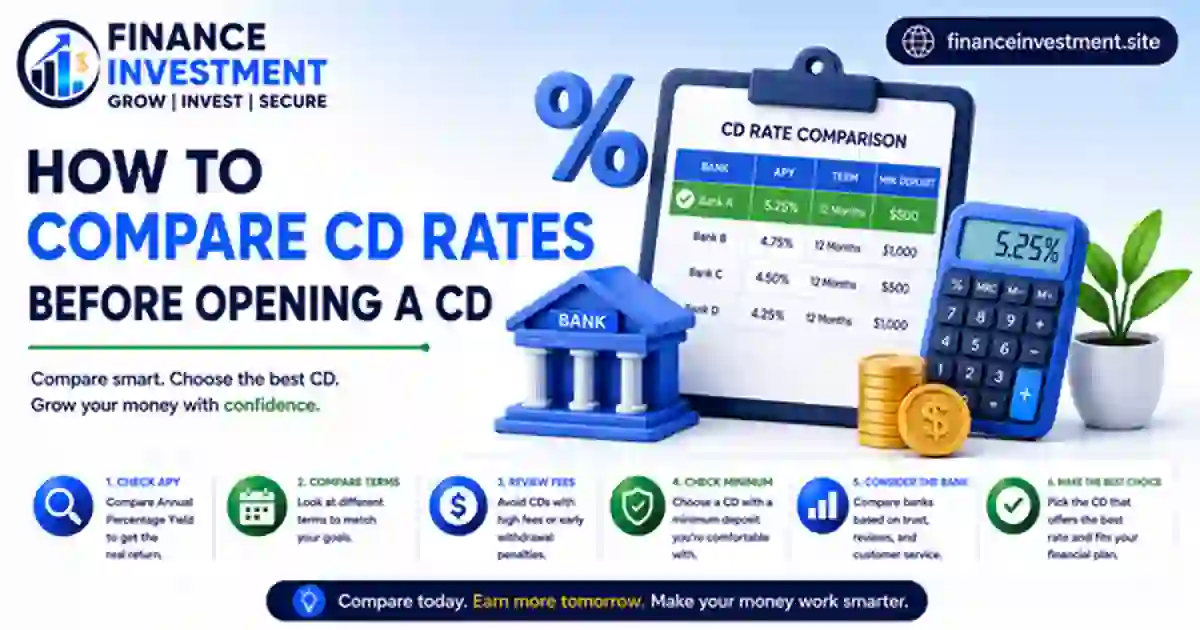
    1. Check the APY: Compare the annual percentage yield across similar CD terms rather than comparing unrelated maturities.
    2. Match the term: Choose a length that works with when you expect to need the money again.
    3. Verify the minimum deposit: Make sure the balance required for the advertised offer fits your available funds.
    4. Read the interest-payment rules: Find out when interest is credited and whether it stays in the CD or is paid to another account.
    5. Examine early-withdrawal terms: Understand the potential penalty before assuming the money will be easy to access.
    6. Confirm the maturity date: Know exactly when the CD ends and what instructions or renewal choices apply afterward.

    Bottom line: Compare CDs on the complete package, not just the number printed beside the APY.

    CD Rate Comparison at a Glance

    Before choosing between CD offers, put the important terms side by side. This makes it easier to spot a deal that looks attractive at first but has a requirement or restriction that does not suit your plans.

    FactorWhat to CompareQuestion to Ask
    APYAnnual percentage yieldIs the rate competitive for this term?
    TermLength of the CDCan I leave the money untouched that long?
    Minimum depositAmount required to open or earn the advertised rateDoes my deposit qualify?
    Interest payoutHow and when interest is credited or paidWhere will my interest go?
    Early withdrawalPenalty and access rulesWhat could access cost me?
    Maturity dateDate the fixed term endsWill the date fit my financial calendar?
    Deposit insuranceApplicable FDIC or NCUA coverageIs the institution federally insured?

    Quick check: A CD offer is easier to judge when its rate, restrictions, requirements, and timeline are viewed together.

    Complete Beginner Guide to Comparing CD Rates

    how to compare CD rates before opening a CDComparing CDs becomes much easier when you treat it like shopping for a financial product rather than chasing one impressive number. The process below gives you a consistent way to evaluate offers without getting distracted by headline rates.
    1. Set the Amount You Plan to Deposit

    Start with the actual amount you can comfortably place in a CD. Your deposit determines which offers you qualify for and whether minimum-balance requirements are relevant. Keep money needed for emergencies or near-term expenses outside the certificate.

    2. Choose Your Target Term

    Decide roughly how long you can leave the money untouched before comparing rates. Looking at a six-month CD beside a five-year CD simply because one has a higher APY can give you a misleading result. If you are unsure about the timeline, our guide on
    how long to keep money in a CD
    can help.

    3. Collect Comparable Offers

    Gather several CDs with similar terms and deposit requirements. Include banks and credit unions that meet your needs rather than limiting your search to the institution you already use. Our
    CD rates in 2026
    resource can provide another starting point for rate research.

    4. Check the APY and Requirements

    Record the APY alongside the minimum deposit, account eligibility, promotional conditions, and any restrictions attached to the offer. Make sure the advertised rate actually applies to your deposit amount and chosen term.

    5. Read the Account Terms

    Look for early-withdrawal penalties, interest-payment arrangements, automatic-renewal provisions, and maturity instructions. These details can matter long after the initial rate comparison is finished. For more on withdrawal costs, see our guide to
    CD early withdrawal.

    6. Make a Side-by-Side Choice

    Put your final candidates next to each other and ask which offer gives you the best overall fit for the money, timeline, and access you want. Then save the product terms before opening the account so you have a record of what you agreed to.

    Beginner Tip

    Compare like with like. Once the term and deposit amount are similar, APY differences become much more meaningful.

    How CD Rate Comparison Affects Your Potential Earnings

    Once you compare CDs with similar terms, the next step is understanding what the quoted APY could mean for your actual deposit. The amount you invest, the APY, the length of the CD, and the way the account compounds all influence the result. The maturity date then tells you when the agreed term ends and when you can review your next move.

    For example, a $10,000 deposit earning 4.00% APY for one year would produce about $400 in interest if the stated APY applies for the full year. A comparable $10,000 CD at 4.25% APY would produce about $425 over the same one-year period, before taxes and assuming the advertised APY applies.

    Illustrative Example: Same Deposit, Different APY

    Hypothetical CDDepositAPY1-Year Interest*
    Offer A$10,0004.00%About $400
    Offer B$10,0004.25%About $425

    *Illustrative figures only. Actual earnings depend on the CD’s stated APY, term, compounding and account terms. Taxes are not included.

    The difference becomes more noticeable as the deposit grows, but the rate should still be viewed alongside the term. A higher APY attached to a much longer CD may not be the better fit if you expect to use the money sooner. Likewise, a shorter CD may mature earlier, giving you another opportunity to compare available offers.

    This is why the maturity date belongs in the comparison. It connects today’s rate decision with tomorrow’s cash needs. Your goal is not simply to predict the biggest interest number; it is to understand what the CD can reasonably earn while fitting the period you are prepared to leave the money invested.

    Benefits and Drawbacks of Comparing CD Rates

    A careful CD comparison can do more than help you find a competitive return. It can also reveal whether the account fits your timeline and how easily you can live with its restrictions. Still, comparing offers takes a little extra attention, and a higher rate can sometimes come with a trade-off.

    Pros

    • Can help you identify a more competitive APY.
    • Makes differences in terms and account conditions easier to spot.
    • Can improve the expected return on money you do not need immediately.
    • Encourages a more deliberate choice instead of opening the first CD you see.
    • Can help match maturity dates with future financial goals.

    Cons

    • Rates can change, so today’s comparison may not remain current.
    • A higher APY may require a longer commitment.
    • Early access can reduce the interest you keep.
    • Promotional offers may have eligibility or balance requirements.
    • Comparing several institutions takes more time than choosing a familiar account.

    A Useful Way to Think About It

    The goal is not to spend hours hunting for a tiny rate difference. It is to find an offer where the return, commitment and account rules make sense together. That makes the comparison useful rather than simply competitive.

    CD Rate Comparison Methods Compared

    There is no single way to shop for a CD. Your starting point can change depending on whether your priority is return, timing, access, or how you want to spread your savings. The table below shows how each approach works and when it can be useful.

    ApproachMain FocusWorks Well WhenWatch For
    APY-firstHighest competitive returnYou can comfortably commit the money for the required termLonger terms or special requirements
    Term-firstWhen you need the moneyYour future cash date is already knownA shorter term may have a different rate
    Institution comparisonBank or credit union offersYou are willing to shop beyond your current providerEligibility and account requirements
    Goal-basedSpecific financial objectiveThe money has a known purpose and timelineA tempting rate that does not match the goal
    CD ladderMultiple maturity datesYou want recurring access pointsMore accounts to track
    Flexible-cash approachAccess and liquidityYou may need the money sooner than expectedPotentially lower return than a locked CD

    If several maturity dates appeal to you, learn
    how to build a CD ladder.
    If you are deciding between a fixed certificate and more accessible savings, our guide to
    using CDs for short-term savings
    can help you think through the trade-off.

    Practical takeaway: Start with the factor that matters most to your situation, then use the other criteria to narrow the field.

    Costs, Risks and Expert Tips Before Opening a CD

    A CD can look straightforward on the surface, yet the details behind an advertised rate can change the value of the offer. Before moving money, take a few minutes to look for conditions that may matter after the account is opened.

    Watch for Promotional Rates

    Some offers may be designed to attract new deposits or may have eligibility requirements. Confirm who qualifies, what balance is needed, how long the stated offer applies, and what happens when the CD reaches maturity. Do not assume a promotional rate automatically applies to every deposit.

    Consider the Cost of Locking In

    Market rates can change after you open a CD. If rates rise, a longer certificate may leave you committed to the earlier rate. If rates fall, however, locking in a competitive fixed rate may look more useful. There is no way to know the future path with certainty, so the term should fit your timeline rather than depend entirely on a rate prediction.

    Read the Fine Print Around Access

    Early withdrawal can result in a penalty or reduced interest. Check the exact rules before opening the account, especially if the money might be needed unexpectedly. Also verify whether the advertised APY requires a particular minimum balance.

    Do Not Ignore Taxes or Insurance

    CD interest held in a taxable account can create taxable income. A large deposit also deserves an insurance check. Confirm whether the bank is FDIC-insured or the credit union is federally insured by the NCUA, and consider your total balances under the applicable ownership category.

    Expert Tip: Save the Terms

    Before clicking “Open,” save or print the offer details. Keep the APY, term, minimum deposit, early-withdrawal policy, maturity instructions, and renewal terms with your financial records. A screenshot of the headline rate is not enough.

    Common Mistakes When Comparing CD Rates

    A rate comparison can go wrong even when the math looks simple. Most problems happen when savers compare offers that are not truly equivalent or focus on the headline number while overlooking the conditions attached to it.

    • Comparing different terms as if they were equal: A five-year CD and a six-month CD serve different timelines, even if one advertises a higher APY.
    • Ignoring deposit requirements: Check whether your balance qualifies for the advertised rate and whether a minimum deposit applies.
    • Overlooking promotional conditions: A special offer may have eligibility, funding, or other account requirements that affect who can receive it.
    • Forgetting maturity timing: A good rate can become inconvenient if the CD ends when you are likely to need the money elsewhere.
    • Looking only at the rate: Compare the expected interest on your actual deposit and term rather than assuming a small APY difference will create a major gain.
    • Opening too many CDs without checking coverage: Multiple certificates at the same institution can count toward applicable deposit-insurance limits.

    Illustrative Example: Elena Compares Two Offers

    Elena has $25,000 to place in a CD. One offer advertises a hypothetical 4.25% APY for one year, while another advertises 4.50% for five years. The second rate looks better, but Elena expects to use the money for a home-related expense in about 18 months. She chooses to compare one-year and shorter-term options instead of treating the five-year rate as the obvious winner.

    Illustrative lesson: The most attractive rate on the screen is not necessarily the most useful rate for the money.

    Who Should Compare CD Rates This Way?

    A detailed CD comparison is especially useful when the amount of money or length of the commitment makes small differences meaningful. It can also help people who want a predictable return without taking on the price swings associated with many market investments.

    Savers Who May Benefit Most

    Beginners can use a structured comparison to learn what they are actually agreeing to before locking away savings. Larger-balance savers may benefit because even a modest rate difference can affect the interest earned over time, while deposit-insurance limits deserve closer attention.

    Retirees may want to coordinate CD maturities with future cash needs. Families saving for a known expense can compare terms around the date they expect to use the money. Conservative investors and rate-sensitive savers may also appreciate the ability to compare fixed-return choices across institutions.

    When a Detailed Comparison May Not Be Worth It

    Spending hours chasing a tiny rate difference may not add much value if the deposit is small or the difference in expected interest is minimal. More importantly, money needed for an emergency or near-term bill should not be locked away simply to earn a higher rate. In those situations, liquidity can matter more than squeezing out the last few dollars of interest.

    Frequently Asked Questions About Comparing CD Rates

    How should I compare CD rates before opening an account?

    Compare CDs with similar terms first, then look at APY, minimum deposit, interest rules, early-withdrawal provisions, maturity date, and insurance coverage. This gives you a more useful comparison than looking at the advertised rate alone.

    Is APY the same as the interest rate on a CD?

    No. The interest rate is the stated rate paid on the deposit, while APY reflects the effect of compounding over a year. When comparing deposit products, APY is generally the more useful figure for comparing potential annual earnings.

    Does the CD term affect the rate I receive?

    Yes. Financial institutions can offer different rates for different terms. Compare CDs within the same or similar maturity period before deciding that one offer is better.

    Why does the minimum deposit matter when comparing CDs?

    Some CDs require a minimum opening deposit, and certain offers may require a particular balance to receive the advertised rate. Make sure your available funds qualify for the offer you are evaluating.

    Should I trust a promotional CD rate?

    A promotional rate can be attractive, but check eligibility, deposit requirements, term, availability and renewal conditions. The headline APY should be considered alongside the complete account terms.

    How do early-withdrawal penalties affect a CD comparison?

    An early-withdrawal penalty can reduce the interest you keep if you access the money before maturity. If there is a reasonable chance you will need the funds early, examine this rule before choosing a higher-rate CD.

    Why should I compare CD maturity dates?

    The maturity date determines when the fixed term ends and when the money becomes available under the account’s terms. A CD with an attractive APY may be inconvenient if its maturity date does not fit your financial plans.

    Are CDs covered by deposit insurance?

    CDs at FDIC-insured banks are generally covered as deposits within applicable limits. The standard FDIC insurance amount is $250,000 per depositor, per insured bank, for each ownership category. 0

    Is CD interest taxable?

    Generally, interest from CDs held in taxable accounts is taxable under federal income-tax rules. The IRS explains that CD interest generally must be included in income when received or when you are entitled to receive it, subject to applicable rules. 1

    Illustrative: Which CD could earn more on a $25,000 deposit?

    Illustrative example only: Suppose one hypothetical one-year CD offers 4.00% APY and another offers 4.25% APY for the same one-year term and deposit. Ignoring taxes and assuming the stated APYs apply, the second offer would produce roughly $62.50 more over one year on $25,000. Actual earnings depend on the institution’s terms and compounding.

    Final Verdict: Compare the Whole CD Offer

    The best way to compare CD rates before opening a CD is to look beyond the headline APY. A strong offer should make sense for the amount you are depositing, the time you can leave the money untouched, and the date when you expect to need it again.

    Start with comparable terms, then consider the minimum deposit, interest-payment rules, early-withdrawal provisions, maturity date and applicable deposit-insurance coverage. These details can make two seemingly similar CDs quite different once your money is committed.

    The highest APY can be worthwhile when the term and conditions fit your plans. But if it requires a longer commitment than you can comfortably handle, a slightly lower rate with a better timeline may be the more practical choice.

    If you want to strengthen your understanding before making a decision, explore our

    CD Guide 2026
    .
    It brings together CD basics, strategies, safety considerations and related guidance in one place.

    Bottom line: Choose the CD that gives your money a useful return without creating a term, access or account condition you will regret later.

    FINANCEINVESTMENT • SMART CD GUIDANCE

    Compare Smarter Before You Lock In Your Money

    CD rates change, and the details behind an offer matter. Get practical FinanceInvestment updates on CD rates, savings strategies, and smarter ways to make your cash work harder.

    📧 subhashr325@gmail.com

  • Best 5-Year CD Rates in 2026: Compare 60-Month CDs

    Best 5-Year CD Rates in 2026: Compare 60-Month CDs

    Best 5-Year CD Rates in 2026

    FINANCEINVESTMENT
    Best 5-Year CD Rates in 2026
    Written by Subhash Rukade

    SEO Title: Best 5-Year CD Rates in 2026: Compare 60-Month CDs

    Meta Description: Compare the best 5-year CD rates in 2026, understand 60-month CD terms, APY, penalties, insurance, risks, and long-term savings trade-offs.

    URL Slug: best-5-year-cd-rates-in-2026

    Focus Keyword: Best 5-Year CD Rates in 2026

    Secondary Keywords: 5-year CD rates, best 60-month CD rates, 5-year certificate of deposit rates, 60-month CD, 5-year CD APY, best 5-year CDs

    Canonical URL: https://financeinvestment.site/best-5-year-cd-rates-in-2026/

    Author Name: Subhash Rukade

    Last Updated: August 21, 2026

    Reading Time: About 15 minutes

    Featured Image ALT Text: Best 5-Year CD Rates in 2026

    Why a 5-Year CD Is a Bigger Decision

    Best 5-Year CD Rates in 2026Best 5-Year CD Rates in 2026 can look appealing when you want to lock in a return and leave the money alone. But a 60-month CD asks for something that shorter certificates do not: patience. Five years is long enough for your plans, expenses, and the interest-rate environment to change several times.

    That longer lock can work in your favor if deposit rates fall after you open the account. Your fixed rate may continue through maturity while newer CDs offer less. The other side of the deal is just as important. If rates climb substantially, your money may remain tied to the original rate unless the CD’s terms give you another option.

    That is why choosing a five-year certificate should start with your timeline, not just the headline APY. If the money has a specific long-term purpose and you are comfortable leaving it untouched, the longer term may fit. If you expect to need flexibility, a shorter CD or liquid savings option deserves a closer look.

    For a broader explanation of certificates, terms, strategies, and alternatives, you can explore our Complete CD Guide 2026.

    What You’ll Learn

    • How 60-month CDs work from opening to maturity
    • What to compare beyond the advertised APY
    • How rate changes can affect a five-year decision
    • Early-withdrawal costs, inflation, and other risks
    • When a 5-year CD may fit your financial plan

    Quick Answer: Are 5-Year CDs Worth Considering in 2026?

    Short answer: A 5-year CD can be attractive when you value a long fixed-rate period and are confident you will not need the money for 60 months. Bankrate’s survey showed a 1.75% national average APY for five-year CDs as of August 20, 2026, while its tracked top CD offers reached 4.50%. Individual five-year offers vary, so the headline average is only a starting point.

    6 Key Takeaways

    • Five years is a serious commitment: Only use money that does not have a likely near-term job.
    • The rate can work in your favor: A fixed rate stays in place even if newly offered CD rates fall.
    • Rising rates create opportunity cost: A higher-rate environment could make an older five-year CD less competitive.
    • Early access can be expensive: Check the exact early-withdrawal penalty before opening the account.
    • Insurance matters: Eligible deposits at FDIC-insured banks and eligible shares at federally insured credit unions receive coverage within applicable limits.
    • The right saver needs patience: A five-year CD can fit long-range goals, but someone expecting to need the cash sooner may prefer a shorter term or more liquid account.

    Bottom line: The best 5-year CD is not simply the one with the biggest APY. Look at the rate, penalty, minimum deposit, insurance, and what you expect interest rates and your own cash needs to look like over the next five years.

    At a Glance: 60-Month CDs in 2026

    A five-year CD is built for money you can leave untouched for a long stretch. The term is 60 months, so the details deserve more attention than the headline APY alone. Bankrate’s latest national survey lists the five-year CD average at 1.75% APY as of August 20, 2026. Some individual offers are considerably higher, which makes shopping around especially important.

    Term
    60 months
    National Average
    1.75% APY as of Aug. 20, 2026
    Liquidity
    Generally limited before maturity
    Insurance
    FDIC or NCUA when eligible

    Who Might Consider One?

    A 5-year CD may fit someone saving for a distant goal, building a conservative portion of a larger portfolio, or seeking a fixed rate without having to reinvest every year. It is less suitable for cash that may be needed on short notice.

    Numbers Worth Comparing

    FactorWhat to Check
    APYCompare the actual 60-month offer with other institutions.
    Minimum depositCheck the amount required to open the certificate.
    Early-withdrawal penaltyFind out what accessing the money early could cost.
    Maturity rulesReview the maturity date, grace period, and renewal instructions.
    InsuranceConfirm applicable FDIC or NCUA coverage and limits.

    Rate note: The 1.75% figure is a national average, not a recommendation or a guaranteed offer. Bankrate’s current listings show individual five-year CDs with APYs well above that average, so compare actual products before choosing one.

    Complete Beginner Guide to 60-Month CDs

    Best 5-Year CD Rates in 2026A 60-month CD is a time deposit that keeps your money in the account for five years. You deposit money at a bank or credit union, accept the account’s stated terms, and generally leave the funds there until the certificate reaches maturity. In exchange, a fixed-rate CD can give you a defined return over a much longer period than shorter certificates.


    How the Five-Year Term Works

    The clock starts when the certificate is opened and funded. From that point, the account follows the rate, interest-crediting schedule, withdrawal rules, and other terms in its agreement. The five-year period can be useful for a distant financial goal, but it also means you have fewer opportunities to move the money into a new certificate if market conditions change.

    That makes the maturity date especially important. A 60-month CD is not simply a place to park cash; it is a commitment with a specific finish line.

    APY and Compounding

    APY, or annual percentage yield, helps you compare the earning potential of different deposit accounts because it reflects the effect of compounding. The actual way interest is credited can vary by institution, so check whether earnings are paid monthly, quarterly, annually, or according to another schedule.

    For a basic explanation of the mechanics behind CD rates, see our guide to how CD interest rates work.

    Minimum Deposits Can Vary

    There is no single minimum deposit requirement for every 5-year CD. One institution may accept a relatively small opening deposit, while another may require a larger amount. Don’t stretch your budget just to qualify for a particular offer. The deposit should fit comfortably within the amount you have available for long-term savings.

    FDIC and NCUA Protection

    Eligible CDs at FDIC-insured banks are covered by FDIC deposit insurance. The standard coverage limit is $250,000 per depositor, per insured bank, for each ownership category. CDs are among the deposit products covered by FDIC insurance.

    At a federally insured credit union, a CD may be called a share certificate. The NCUA’s Share Insurance Fund covers eligible share deposits, including share certificates, generally up to $250,000 within the applicable coverage rules.

    What Beginners Should Check First

    • Verify the APY and how long it remains fixed.
    • Check the minimum opening deposit.
    • Read the early-withdrawal penalty carefully.
    • Confirm the institution’s FDIC or NCUA insurance status.
    • Record the maturity date and grace-period rules.
    • Find out whether the CD automatically renews after maturity.

    That last step can save you from an unwanted rollover. When a five-year CD matures, the next rate may be very different from the rate you originally accepted. Give yourself enough time to review the maturity notice and decide whether to withdraw, move, or reinvest the money.

    How a 5-Year CD Works From Day 1 to Maturity

    Once the certificate is funded, the process is mostly hands-off. What matters is knowing what happens during each stage and keeping track of the date when your five-year commitment ends.

    Opening and Funding

    You choose the institution, review the certificate agreement, and transfer the amount you want to deposit. Before confirming the transaction, save the APY, maturity date, early-withdrawal terms, and renewal instructions.

    Years 1 Through 5

    During the 60-month period, interest is credited according to the account’s terms. With a fixed-rate certificate, the agreed rate generally remains unchanged for the original term. You do not need to make monthly contributions to keep the CD active.

    The important difference is what happens outside the account. Deposit rates can move higher or lower while your certificate continues following its original agreement. That makes the five-year timeline useful for planning, but it can also limit your ability to react to new opportunities.

    At Maturity

    After 60 months, the certificate reaches maturity. Depending on the institution, you may withdraw the money, transfer it elsewhere, or renew it into another CD. A grace period may give you a short window to make that choice before automatic renewal takes effect.

    A Simple Five-Year Timeline

    TimeWhat Happens
    Day 1Deposit the money and confirm the rate and maturity date.
    Year 1The CD continues under its original terms while interest is credited.
    Years 2–4The certificate continues toward maturity; changing market rates do not normally change its fixed rate.
    Year 5Review the maturity notice and decide whether to withdraw or reinvest.
    Grace periodIf provided, use the window to give instructions before automatic renewal.

    A good habit is to set a reminder several weeks before maturity. That gives you time to compare current CD options rather than allowing the certificate to renew automatically without reviewing the new terms.

    Benefits and Drawbacks of a 5-Year CD

    A five-year certificate changes the balance between certainty and freedom. The longer term gives a fixed-rate CD more time to deliver the return you agreed to, but it also leaves less room to change direction if your finances or the rate environment shifts.

    Pros

    • Long rate protection: A competitive fixed rate can remain in place for the entire 60-month term, even if new deposit rates decline.
    • Predictable interest: The defined rate and maturity date can make long-range cash planning easier.
    • Potentially attractive yield: Some institutions offer competitive long-term CD rates, although the highest rate is not always attached to the longest term.
    • Less reinvestment work: You do not have to decide every year whether to renew another certificate.

    Cons

    • Five-year opportunity cost: If rates rise substantially, newer CDs could become more attractive while your money remains locked at the original rate.
    • Limited liquidity: Accessing the funds before maturity may come with restrictions or a penalty.
    • Early-withdrawal cost: The penalty can reduce your interest earnings and may make an early exit less appealing.
    • Inflation risk: Your account balance can grow while inflation reduces the purchasing power of that future money.

    The Five-Year Difference

    The biggest advantage of a 60-month CD is also its biggest limitation: time. A rate that looks attractive today has five years to prove whether it was a good choice. If rates decline, the longer lock can look valuable. If rates climb, the same decision can leave you wishing you had more flexibility.

    5-Year CD vs. Other Savings Options

    A 60-month CD sits at the long end of the usual CD range. Comparing it with shorter certificates and a high-yield savings account can show whether the extra years actually fit your plans.

    OptionTermLiquidityUseful For
    6-Month CD6 monthsGenerally higherNear-term goals and frequent rate reviews
    1-Year CD12 monthsModerateGoals roughly a year away
    2-Year CD24 monthsLowerMedium-term savings goals
    3-Year CD36 monthsGenerally lowerLonger planned expenses
    5-Year CD60 monthsGenerally lowestLong-range goals and extended rate protection
    High-Yield SavingsNo fixed termGenerally highestAccessible savings and changing needs

    Choosing the Term That Matches Your Timeline

    If five years feels too long, compare the best 6-month CD rates in 2026 or the best 1-year CD rates in 2026. You can also review the best CD rates in 2026 to compare terms side by side.

    For readers considering a middle ground, the 2026 CD rate forecast can provide useful context when thinking about how much rate flexibility you want to keep.

    Costs, Risks and Expert Tips for a 5-Year CD

    A five-year CD deserves a closer look at the fine print because a small disadvantage can matter for a long time. The rate may be fixed, but your financial circumstances and the broader rate environment can change during those 60 months.

    Early-Withdrawal Costs

    Most traditional CDs charge a penalty when you take money out before maturity. The amount varies by institution and product, so don’t assume every five-year CD uses the same formula. Some penalties can consume a substantial amount of interest, making an early exit costly. 0

    When comparing offers, look for the exact penalty period, whether the penalty can reach your principal, and whether any special withdrawal provisions apply.

    Inflation and Purchasing Power

    A fixed balance can still lose purchasing power. If inflation runs above your CD’s effective return for an extended period, the dollars you receive at maturity may buy less than they do today. Bankrate has also noted that inflation has been putting pressure on the real value of CD returns in 2026.

    The Five-Year Opportunity Cost

    The longer term creates another risk: rates could rise after you lock in. New CDs might become more attractive, but your existing certificate would generally continue under its original terms. That’s the price of having rate certainty for five years.

    Automatic Renewal

    Don’t let maturity sneak up on you. A CD may renew automatically if you don’t give instructions during the applicable grace period. Set a calendar reminder well before maturity so you can compare the new rate with other options.

    Consider a CD Ladder

    A ladder can spread money across different maturity dates rather than placing the entire amount into one five-year certificate. For example, you could divide savings among one-, two-, three-, four-, and five-year CDs. As each certificate matures, you regain access to a portion of the money while maintaining exposure to longer-term rates.

    Expert Tip

    Don’t compare five-year CDs by APY alone. Write down the APY, minimum deposit, early-withdrawal penalty, maturity date, renewal terms, and insurance coverage side by side. A slightly lower rate with better terms can be more useful than a headline rate that comes with restrictions you don’t want.

    Common 5-Year CD Mistakes + A Real-Life Example

    A five-year CD can look simple on the surface, but the longest terms leave more room for a small decision to become a costly one. Here are the mistakes worth catching before you deposit your money.

    Chasing the APY Without Reading the Terms

    A slightly higher rate can grab your attention, but check the minimum deposit, withdrawal penalty, compounding details, and renewal policy before choosing the account. A higher APY is not automatically the better deal.

    Putting Emergency Money Into a 5-Year CD

    Money you may need for an unexpected expense should not normally depend on a five-year maturity date. Keep short-term cash accessible instead of relying on an early CD withdrawal that could reduce your earnings.

    Ignoring What Could Happen to Rates

    Locking in a rate means accepting today’s terms for a long period. If market rates rise substantially later, you may have limited options without paying the applicable early-withdrawal cost.

    Forgetting Maturity and Taxes

    Mark the maturity date on your calendar. Also remember that CD interest can create taxable income even when you leave the earnings inside the account. Your individual tax treatment can vary.

    A Simple 5-Year Example

    Suppose Maria deposits $25,000 into a five-year CD earning an illustrative 4.00% APY. If the APY remained unchanged and the earnings compounded as assumed, the balance would be approximately $30,416 after five years.

    This is an illustrative calculation, not a current CD offer. Actual earnings depend on the institution’s APY, compounding method, account terms, and taxes.

    The practical lesson: A five-year CD works best when the money can stay committed for the full term and the account’s terms still look attractive after you read the fine print.

    Who Should Choose a 5-Year CD?

    A 5-year CD is most useful when the timing of your goal matches the length of the certificate. The decision becomes easier when you know roughly when the money will be needed and have other cash available for unexpected expenses.

    Who May Find It Useful?

    • Savers with a five-year goal: If the money has a known purpose several years away, a fixed-rate CD can give that portion of your savings a defined timeline.
    • Families planning ahead: Money earmarked for a distant education expense, major purchase, or other planned cost may have enough time to remain committed.
    • Retirees seeking predictable returns: A CD can provide a known rate for a defined period, although it should be considered alongside the rest of a retirement cash and income strategy.
    • Conservative savers: Someone who values deposit protection and a fixed return may prefer a CD over taking additional market risk with money reserved for a specific goal.
    • People with liquid reserves: Having accessible savings elsewhere makes it easier to leave the certificate untouched until maturity.

    Who Should Think Twice?

    A five-year term may be a poor fit if you expect to need the money soon, want to take advantage of potentially higher rates later, or would struggle to cover an unexpected expense without touching the CD.

    Quick Decision Guide

    Choose a 5-year CD: Your goal is five years away, the rate is competitive, and you have separate liquid savings.

    Look at shorter terms: Your plans may change, you need flexibility, or you expect to need the money before maturity.

    Frequently Asked Questions About 5-Year CDs

    What is the five-year CD rate environment in 2026?

    Bankrate reported a 1.75% national average APY for five-year CDs as of August 20, 2026. Individual offers can be much higher, so compare actual 60-month certificates rather than using the national average as an expected return.

    What happens if CD rates rise after I open a 5-year CD?

    With a typical fixed-rate CD, your original rate stays in effect through the term. If new five-year certificates start paying more, you generally cannot switch without following the account’s withdrawal rules.

    What if CD rates fall after I lock in my rate?

    A fixed rate can become more valuable if newly available CDs begin paying less. Your certificate generally continues earning the agreed rate until maturity, subject to its original terms.

    How does inflation affect a 5-year CD?

    Inflation can reduce the purchasing power of your future balance. A CD can increase your dollar balance while still producing a smaller gain in real purchasing power if inflation remains elevated.

    Can I withdraw money from a 5-year CD early?

    Many traditional CDs allow early withdrawal subject to a penalty, although the exact rules vary by institution. Read the penalty terms before opening the certificate so you know the potential cost of accessing the money early.

    What happens when a 5-year CD reaches maturity?

    At maturity, you can generally withdraw the funds, move them elsewhere, or renew the certificate, depending on the institution’s rules. A grace period may provide a limited window to give instructions before automatic renewal.

    Can a 5-year CD be part of a CD ladder?

    Yes. A ladder can spread money across certificates with different maturity dates, giving you periodic access to part of your savings while still using longer-term CDs for another portion.

    Are 5-year CDs insured?

    Eligible CDs at FDIC-insured banks receive FDIC deposit insurance within applicable limits. At federally insured credit unions, eligible share certificates receive NCUA share insurance, generally up to $250,000 per member-owner within the applicable ownership category.

    Is interest from a 5-year CD taxable?

    CD interest can generally create taxable income. Your actual tax treatment depends on the account and your circumstances, so consider the tax impact when estimating your after-tax return.

    How much could a 5-year CD earn on $20,000?

    Illustrative example: At a hypothetical 4.00% APY compounded annually, $20,000 would grow to about $24,333 after five years. This is only an illustration, not a current rate or guaranteed result; actual earnings depend on the CD’s APY, compounding method, terms, and taxes.

    Final Verdict: Is a 5-Year CD Right for You?

    A 5-year CD can be a sensible choice when the rate is competitive and you have a clear reason to keep the money invested for 60 months. The appeal is not simply the APY. You are also buying a fixed rate that can remain unchanged while the broader deposit market moves around you.

    But five years is long enough for the financial landscape to look very different. If rates rise substantially, you may miss better opportunities elsewhere. If your circumstances change, accessing the money early could also reduce the benefit of the original deal.

    For that reason, look beyond the advertised rate. Compare the APY, withdrawal penalty, minimum deposit, renewal policy, insurance coverage, and the role the money plays in your overall savings plan.

    A 5-year CD may suit a long-range saver who values certainty more than frequent access. Someone who expects changing cash needs or wants to react quickly to future rates may prefer shorter CDs or a savings account.

    If you want to compare terms, strategies, and alternatives before making that choice, visit our Complete CD Guide 2026.

    The useful question is not “Is this the highest APY?” It is “Would I still be comfortable with this decision if rates, prices, or my plans changed during the next five years?”

    FINANCEINVESTMENT

    Keep Your CD Research Moving

    Want more practical guides on CDs, savings, and smarter ways to manage your cash? Send a note to subhashr325@gmail.com to stay connected with FinanceInvestment.

    A five-year CD is a long decision. Take your time, compare the terms, and choose an option that still feels comfortable after the headline rate fades from view.

  • Best 3-Year CD Rates in 2026: Compare 36-Month CDs

    Best 3-Year CD Rates in 2026: Compare 36-Month CDs

    CD RATES • 2026 GUIDE

    Best 3-Year CD Rates in 2026

    Compare 36-month CDs, understand the trade-offs of a longer rate lock, and see what to check before committing your savings for three years.


    Written by


    Subhash Rukade

    Updated


    August 22, 2026

    Reading time


    About 14 min

    Introduction: Why a 3-Year CD Is a Bigger Rate Decision

    Best 3-Year CD Rates in 2026Choosing the Best 3-Year CD Rates in 2026 is different from picking a short-term certificate. With a 36-month CD, you are not simply choosing where to park your savings. You are deciding how much flexibility you are willing to give up for a fixed return over a longer stretch of time.

    That longer commitment can work in your favor when rates fall after you open the account. Your agreed rate generally stays in place through the term. But there is another side to that deal. If rates rise substantially later, your money remains tied to the original rate until the CD matures, unless the account has special withdrawal or upgrade features.

    That makes the timing of your financial goal especially important. Money needed for a house purchase, tuition bill, business expense, or emergency should not automatically be pushed into a three-year certificate just because the APY looks attractive.

    If you are still getting familiar with certificates of deposit, our CD Guide 2026 covers the broader basics. This guide takes the next step by looking closely at what changes when you commit your savings for 36 months.

    What You’ll Learn

    You will see how 3-year CDs work, what numbers deserve attention, where the longer term can help or hurt, how it compares with shorter CDs and savings accounts, and which savers may have a good reason to choose a 36-month maturity.

    Quick Answer: What Makes a 3-Year CD Different?

    Short answer: A 3-year CD can work well when you want a fixed return and already know you can leave the money alone for 36 months. Bankrate reported a 1.69% national average APY for 3-year CDs on August 12, 2026, while some top nationwide offers were around 4.50%. That gap shows why comparing individual offers matters more than relying on an average.

    6 Key Takeaways

    • The rate stays central to the decision: A competitive APY can make a long-term CD more attractive, but the account terms matter too.
    • Three years is a real commitment: Make sure the money has a purpose that extends beyond the maturity date.
    • Check the penalty before depositing: Early access can reduce your earnings, depending on the institution’s rules.
    • Compare more than APY: Look at minimum deposits, interest-crediting terms, renewal rules, and withdrawal penalties.
    • Protect your deposits: Eligible deposits at FDIC-insured banks and eligible shares at federally insured credit unions receive coverage within applicable limits.
    • Shop around: The difference between a national average and a competitive individual offer can be meaningful over a 36-month term.

    Bottom line: A 3-year CD deserves consideration when the rate is competitive, the terms are clear, and you are comfortable giving up access to the money until maturity.

    At a Glance: 3-Year CDs in 2026

    Before choosing a 36-month certificate, focus on the numbers that affect the actual decision. APY gets attention first, but the deposit requirement, penalty, insurance, and maturity rules can matter just as much.

    Term
    36 months
    Market Reference
    1.69% national average APY reported Aug. 12, 2026
    Access
    Generally limited before maturity
    Deposit Protection
    FDIC or NCUA when eligible

    Who Might Look at a 3-Year CD?

    This term can appeal to savers who have a longer time horizon and want to reduce the need to make frequent reinvestment decisions. It may also fit someone building a conservative part of a broader financial plan.

    Numbers Worth Comparing

    FactorWhat to Check
    APYCompare the actual 36-month offer with competing institutions.
    Minimum depositCheck whether the opening requirement fits your available cash.
    Early-withdrawal penaltyFind out how much an early exit could cost.
    Maturity rulesCheck the grace period and automatic-renewal instructions.
    InsuranceConfirm applicable FDIC or NCUA coverage.

    Rate reference: Bankrate reported a 1.69% national average APY for 3-year CDs on August 12, 2026. Individual offers can be much higher or lower than an average, so compare actual account offers before making a decision.

    Complete Beginner Guide to 36-Month CDs

    Best 3-Year CD Rates in 2026A 36-month CD is a time deposit designed for money you can leave untouched for three years. You deposit a set amount with a bank or credit union, agree to the account’s terms, and generally receive the stated rate through the certificate’s maturity date. In return for making that longer commitment, you get a clearer picture of how your savings can grow.


    What Makes a 3-Year CD Different?

    The biggest difference is the length of the commitment. A 6-month or 1-year CD gives you an earlier maturity date. A 3-year CD pushes that decision further into the future. That can be useful if your goal is several years away, but it also means you have more time to live with the rate you chose.

    For that reason, the best 36-month CD is not automatically the one with the highest advertised APY. Think about the entire term, including the rate, withdrawal rules, minimum deposit, and maturity options.

    How APY and Compounding Affect Your Return

    APY, or annual percentage yield, is the standard figure used to compare deposit-account returns because it reflects the effect of compounding. The way interest is credited can vary between products, so read the account disclosures rather than assuming every CD handles earnings in exactly the same way.

    If you want to understand the mechanics in more detail, our guide to how CD interest rates work goes deeper into rates and earnings.

    Minimum Deposits Matter

    Some CDs can be opened with a modest amount, while others require a larger deposit. A higher minimum does not automatically mean a better deal. Choose an amount that leaves enough cash available for emergencies and other financial needs.

    FDIC and NCUA Insurance

    Eligible deposits at an FDIC-insured bank are generally protected by FDIC deposit insurance within applicable coverage limits. The FDIC says deposits are automatically insured to at least $250,000 at each FDIC-insured bank.

    At a federally insured credit union, a CD may be called a share certificate. NCUA share insurance covers eligible time deposits such as share certificates within applicable limits.

    What Happens at Maturity?

    When the three-year term ends, the CD reaches maturity. Depending on the account, you may be able to withdraw the funds, transfer them, or place them into another CD. Some certificates automatically renew if you do not act during the institution’s stated grace period. The FDIC recommends checking renewal terms and the rate that would apply after maturity.

    That final detail is easy to overlook. Put the maturity date on your calendar so you have time to decide what the money should do next.

    How a 3-Year CD Works From Opening to Maturity

    Once you choose a 36-month certificate, the process becomes a timeline. Your main job is to understand what happens at each stage and keep an eye on the date when the commitment ends.

    Opening and Funding

    You select the institution, review the CD agreement, and deposit the amount required to open the account. The rate, APY, maturity date, early-withdrawal rules, and renewal terms should be clear before you confirm the deposit.

    The 36-Month Rate Lock

    For a typical fixed-rate CD, the agreed rate stays in place during the term. Your balance earns interest according to the account’s stated schedule. The money does not need daily attention, but you should keep the account documents available in case you need to check a term or maturity instruction.

    What Happens During the Three Years?

    Think of the CD as a savings bucket with a destination date. Interest is credited according to the product’s terms, while your original deposit remains committed. If you withdraw early, the institution may apply the penalty described in the account agreement.

    At Maturity: Withdraw or Renew?

    When the 36 months end, you reach the decision point. Depending on the account, you may withdraw the funds, transfer them, or renew into another CD. An automatic renewal can use the rate available for the new certificate rather than your original rate. Federal consumer rules require applicable maturity disclosures for renewing time accounts, and institutions must disclose renewal and grace-period terms.

    A Simple 36-Month Timeline

    StageWhat to Do
    Month 0Fund the CD and save the agreement, rate, and maturity date.
    Months 1–35Let the certificate run while interest is credited under its stated terms.
    Month 36Review the maturity notice and decide what you want to do with the money.
    Grace periodIf offered, use this window to withdraw or change the CD before automatic renewal takes effect.

    The renewal decision deserves attention because the new rate can be different from the one you originally locked in. The CFPB recommends comparing available rates before allowing an existing CD to roll over.

    Benefits and Drawbacks of a 3-Year CD

    A three-year certificate can be appealing when stability matters more than having every dollar available on demand. The extra time can make a fixed rate more valuable if deposit rates decline, but that same commitment can become a disadvantage if your plans or the rate environment change.

    Pros

    • Longer rate protection: A competitive fixed rate can remain in place for the full three-year term even if new deposit rates fall.
    • Predictable return: You have a defined rate and maturity date, which can make longer-term savings easier to plan.
    • Potentially attractive yield: Some institutions may offer competitive rates on longer certificates, although term structures vary across the market.
    • Useful for planned goals: A 36-month maturity can line up with a future expense that is several years away.

    Cons

    • Three-year opportunity cost: If rates rise significantly, your locked rate may look less attractive while your CD remains open.
    • Limited liquidity: The money is intended to stay in the certificate until maturity.
    • Early-withdrawal penalty: Accessing funds ahead of schedule may reduce your interest earnings or otherwise make the withdrawal costly.
    • Less room to change course: A three-year commitment can be uncomfortable if your financial plans are still uncertain.

    The Extra Year Can Change the Equation

    Suppose rates move sharply higher one year after you open a CD. A 1-year certificate would already be approaching maturity, while a 3-year certificate would still have roughly two years remaining. That is the trade-off: the longer term gives your original rate more time to work, but it also gives you more time to be stuck with it.

    For a saver with a firm long-term goal, that may be an acceptable trade. For someone who wants to react quickly to changing rates, it may not be.

    3-Year CD vs. Other Savings Options

    A 36-month certificate is the longest commitment in this comparison. That does not make it automatically better. The useful question is what you gain for accepting the extra time: a potentially attractive fixed return, a defined maturity date, and less need to revisit the account during the term.

    OptionCommitmentFlexibilityBest Use
    6-Month CDShortHigherNear-term goals and rate flexibility
    1-Year CDModerateModerateGoals about a year away
    2-Year CDLongLowerA defined two-year savings goal
    3-Year CDLongestLowestMoney you can leave untouched for three years
    High-Yield SavingsNoneHighestFlexible savings and accessible cash

    Which Term Fits Your Timeline?

    If three years feels too restrictive, compare the best 6-month CD rates in 2026 or the best 1-year CD rates in 2026. For a middle ground, our guide to the best 2-year CD rates in 2026 focuses on the 24-month option.

    Before choosing any term, it is also worth reviewing the broader list of best CD rates in 2026 so you can see how different maturities compare.

    Costs, Risks, and Expert Tips for a 3-Year CD

    A three-year CD deserves a closer look before you commit. The biggest issue is not simply whether the rate is attractive today. You also need to consider what could happen to your money over the next 36 months.

    Early-Withdrawal Costs

    If you take money out before maturity, a traditional CD may charge an early-withdrawal penalty. The formula differs between institutions. Some penalties are based on several months of interest, while others use a different calculation. Check the exact rule before opening the account.

    This matters more with a three-year term because there is a longer period during which an unexpected expense could arise. Keep emergency savings separate so you are less likely to break the CD at the wrong time.

    Inflation Can Reduce Your Real Return

    A fixed APY tells you how much your balance can grow in dollar terms. It does not guarantee that your purchasing power will grow at the same pace. If inflation stays elevated, the real value of your earnings may be less impressive than the account statement suggests.

    The Bigger Rate-Rise Risk

    Imagine deposit rates move considerably higher after you open a three-year CD. Your original rate generally remains fixed, which means you cannot simply move the money into a newer, higher-paying certificate without dealing with the existing account’s rules. That opportunity cost is more important here than with a six-month or one-year CD because the commitment lasts longer.

    Watch Automatic Renewal

    Do not assume maturity means the money automatically returns to your checking account. Some CDs renew unless you provide instructions during the grace period. Mark the maturity date well in advance and review the new rate before allowing a renewal.

    Could a CD Ladder Help?

    A ladder can reduce the pressure of putting every dollar into one maturity date. Instead of committing your entire savings balance to a single three-year certificate, you can divide the money among CDs with different maturity dates. When one matures, you can use the cash or reinvest it based on the rates and goals at that time.

    Expert Tip

    Compare the early-withdrawal penalty in actual dollars, not just the APY. A rate that looks slightly better may not be worth choosing if accessing the money later would cost you substantially more interest.

    Common 3-Year CD Mistakes and a Real-Life Example

    A three-year CD can be useful, but the wrong setup can make a good rate feel restrictive. Most problems come from treating the APY as the whole story.

    Choosing the Highest APY Without Reading the Terms

    A higher rate deserves attention, but check the minimum deposit, early-withdrawal penalty, insurance coverage, interest-crediting rules, and maturity instructions before opening the account.

    Using Emergency Cash

    Emergency money needs quick access. Putting that cash into a 36-month certificate can create a difficult choice if an unexpected expense arrives and withdrawing early triggers a penalty.

    Underestimating Rate-Lock Risk

    A rate that looks attractive today may look different if market rates climb later. With three years still remaining, you have more time exposed to that opportunity cost than you would with a shorter CD.

    Forgetting the Maturity Date

    Automatic renewal can happen if you do not provide instructions during the institution’s grace period. Add the maturity date to your calendar and review the renewal notice before the deadline.

    Overlooking Taxes

    Interest from a typical taxable CD is generally taxable income. Your actual after-tax return can therefore be lower than the advertised APY. Your individual tax treatment may vary.

    Real-Life Example: A $30,000 Three-Year CD

    Imagine Daniel has $30,000 that he will not need for three years. He already maintains a separate emergency fund, so this money has a longer-term purpose.

    Illustrative calculation: If a hypothetical CD earned 4.00% APY for the full 36 months, $30,000 would grow to approximately $33,745 before taxes, assuming the stated APY remained unchanged and earnings stayed in the account. This is an example, not a current bank offer or guaranteed result.

    The Practical Lesson

    Daniel’s decision works because the money has a clear three-year job and his emergency savings are separate. The same CD could be a poor choice for someone who expects to need the money next year. Match the term to the goal before comparing the rate.

    Who Should Choose a 3-Year CD?

    A three-year CD tends to work best when the money already has a destination. You are not trying to guess the perfect moment to move your cash. Instead, you are accepting a longer commitment because the timing fits your financial plan.

    People Who May Benefit

    • Beginners with a clear three-year goal: A fixed maturity can create a simple target for money you expect to use several years from now.
    • Families planning ahead: Savings for a future education expense, planned move, or major purchase may fit a 36-month timeline if the money is not needed sooner.
    • Retirees seeking predictable returns: A CD can provide a defined return on an eligible deposit without exposing that particular savings bucket to daily stock-market fluctuations.
    • Conservative savers: If stability matters more than reacting to every change in deposit rates, a longer fixed term may be appealing.
    • Investors with a separate emergency fund: Keeping accessible cash elsewhere can make it easier to leave the CD untouched until maturity.

    Who Should Think Twice?

    A three-year term may not suit someone who expects to need the money soon, is still building an emergency reserve, or wants to move savings quickly when market rates change. A shorter CD or liquid savings account may provide a better fit.

    Quick Decision Guide

    Have a three-year goal, separate emergency cash, and no need for this money before maturity? A 3-year CD may deserve a place on your shortlist. If any of those pieces are missing, compare a shorter term or a more accessible savings option first.

    Frequently Asked Questions About 3-Year CDs

    Is a 3-year CD better than a 2-year CD when the APYs are similar?

    Not necessarily. If the rates are close, the shorter term gives you an earlier maturity date and more flexibility. The 3-year option becomes more interesting when its rate or your timeline clearly justifies the extra year.

    What if CD rates rise during my 3-year term?

    A typical fixed-rate CD keeps its original rate. If new certificates begin paying more, your existing CD generally stays at the rate you accepted until maturity.

    What if CD rates fall after I lock in my rate?

    A falling-rate environment can make a previously locked fixed rate more attractive. Your certificate can continue earning its stated rate while newer offers become less competitive.

    How can a 3-year CD fit into a CD ladder?

    You can divide your savings among certificates with different maturity dates instead of putting everything into one term. As shorter CDs mature, you can use the cash or reinvest it based on your needs at that time.

    What happens if rates are lower when my 3-year CD matures?

    You can generally choose whether to withdraw the money or reinvest it, subject to the account’s maturity rules. If rates have fallen, having the original principal available gives you the chance to reassess rather than being tied to the old certificate.

    How should I compare a 3-year CD with a high-yield savings account?

    Compare the expected return with access to your money. A CD may provide a fixed rate for the term, while a high-yield savings account generally offers easier access but a variable rate that can change.

    How does inflation affect a 3-year CD?

    Inflation can reduce what your interest earnings can buy. Even when your account balance rises, the purchasing power of that money may grow more slowly if inflation remains elevated.

    Can retirees use 3-year CDs for income planning?

    They can use them as one part of a broader cash or fixed-income strategy. The maturity date can help with planning, but retirees should consider liquidity needs and avoid putting money needed for near-term expenses into a long lock-up.

    When is a shorter CD better than a 3-year CD?

    A shorter term may be preferable when you expect to need the money sooner or want more opportunities to reinvest at future rates. It can also make sense when the extra APY from the longer certificate is small.

    Should I put all my savings into one 3-year CD?

    Usually, there is little reason to make every savings dollar follow the same schedule. Keeping different buckets for short-term needs, upcoming goals, and longer-term savings can give you more room to adjust.

    Final Verdict: Is a 3-Year CD Right for You?

    A 3-year CD makes the most sense when you can give the money a clear three-year job. The appeal is not simply a higher APY. It is the ability to secure a fixed rate today and know what kind of return the certificate is designed to provide through its maturity date.

    There is a trade-off, though. Once your money is committed, you have less freedom to take advantage of higher rates that may appear later. That matters more with a 36-month term than with a shorter certificate. A competitive rate can work in your favor if rates fall, but it can feel restrictive if the market moves sharply upward.

    This option may suit savers who have accessible cash elsewhere and a financial goal that comfortably sits beyond the maturity date. If you might need the money sooner, keeping more of it liquid may be the smarter move.

    For a broader look at CD terms, strategies, and alternatives, visit our complete CD Guide 2026.

    The key takeaway: A 3-year CD is a commitment, not just a rate. Choose it when the maturity date fits your plan as well as the APY fits your expectations.

    Keep Your CD Research Moving

    Want practical money guides without the noise?

    Send us an email to stay connected with straightforward guides covering CDs, savings, investing, retirement, and everyday money decisions.

    Take your time, compare the terms, and choose a CD that fits the job your money needs to do.

    A three-year decision does not have to be complicated. Know your timeline, understand the trade-offs, and let the maturity date—not just the headline rate—guide your choice.

  • Best 2-Year CD Rates in 2026: Compare 24-Month CDs

    Best 2-Year CD Rates in 2026: Compare 24-Month CDs

    CD RATES • 2026 GUIDE

    Best 2-Year CD Rates in 2026

    A practical guide to comparing 24-month CD rates, understanding APY, and deciding whether locking your money away for two years makes sense.


    Written by


    Subhash Rukade

    Updated


    August 22, 2026

    Reading time


    About 14 min

    Is a 2-Year CD a Smart Move in 2026?

    Best 2-Year CD Rates in 2026If you have cash that you probably will not need for the next two years, a certificate of deposit can turn that waiting period into a chance to earn interest. The challenge is finding the Best 2-Year CD Rates in 2026 without focusing on APY alone.

    A 24-month CD gives you a fixed rate for a defined period. That can be appealing when you want predictable returns. But there is a trade-off. Your money is less flexible, and taking it out before maturity may trigger an early withdrawal penalty.

    There is another factor to consider. Interest rates can change while your money is locked in. If rates rise later, you may be stuck with the rate you originally accepted until the CD matures. If rates fall, however, that same fixed rate could become more valuable.

    That is why a good comparison goes beyond the headline APY. You also need to look at the minimum deposit, early withdrawal rules, deposit insurance, maturity options, and how the CD compares with shorter terms and savings accounts.

    If you want to understand the bigger picture first, read our CD Guide 2026. Then use this guide to decide whether a two-year term fits the money you have available.

    What You’ll Learn

    This guide will show you how 2-year CDs work, what features deserve the most attention, how to think about the trade-off between return and access to your money, and which savers may benefit most from a 24-month term.

     Are 2-Year CDs Worth Considering in 2026?

    Short answer: A 2-year CD can be a solid choice when you want a fixed return and know you can leave the money untouched for 24 months. As of August 2026, competitive 2-year CD offers are reaching roughly the low-4% APY range, although rates vary by institution and can change quickly. One recent market snapshot listed a top 24-month offer at 4.25% APY, so compare the actual offer, minimum deposit, and withdrawal rules rather than relying on a headline rate.

    6 Key Takeaways

    • APY is only one part of the deal. A higher yield can lose its appeal if the CD has a large minimum deposit or harsh early-withdrawal penalty.
    • Two years means less flexibility. Keep emergency savings and money needed for near-term expenses outside the CD.
    • A fixed rate cuts both ways. You get predictable earnings, but you may miss a better rate if market yields rise after you open the account.
    • Early withdrawals can be expensive. Penalties vary by institution and may reduce some of the interest you expected to earn.
    • Insurance matters. Eligible deposits at FDIC-insured banks are protected within applicable limits. At federally insured credit unions, share certificates receive NCUA share insurance within applicable limits.
    • The best fit is money with a clear two-year timeline. Families saving for a known future expense, conservative savers, and retirees seeking predictable income may find the structure useful.

    Bottom line: A competitive 2-year CD can work well when certainty matters more than instant access. The strongest choice is not simply the account with the biggest APY; it is the one whose rate, rules, insurance, and maturity date fit the job your money needs to do.

    At a Glance: 2-Year CD Rates in 2026

    A two-year CD is built for money that has a job later, not money you may need tomorrow. Here are the main points to check before opening one.

    Term
    24 months
    Rate Type
    Usually fixed until maturity
    Access
    Limited before maturity
    Insurance
    FDIC or NCUA, when eligible

    Who Is a 2-Year CD Best For?

    It can suit savers who have a known two-year time horizon, want predictable interest, and already keep separate cash for emergencies. It may also work for retirees or families who prefer a defined maturity date instead of taking market risk with money earmarked for a near-term goal.

    Key Numbers to Watch

    FactorWhy It Matters
    APYShows the annualized return, including compounding.
    Minimum depositDetermines how much you need to open the CD.
    Early withdrawal penaltyShows the potential cost of accessing money early.
    Maturity dateTells you when the original term ends and your options open up.

    Complete Beginner Guide to 2-Year CDs

    Best 2-Year CD Rates in 2026A 2-year certificate of deposit is a savings product with a simple trade-off: you agree to leave your money with a bank or credit union for a set period, and in return, you receive a stated interest rate. For a 24-month CD, that period is two years.
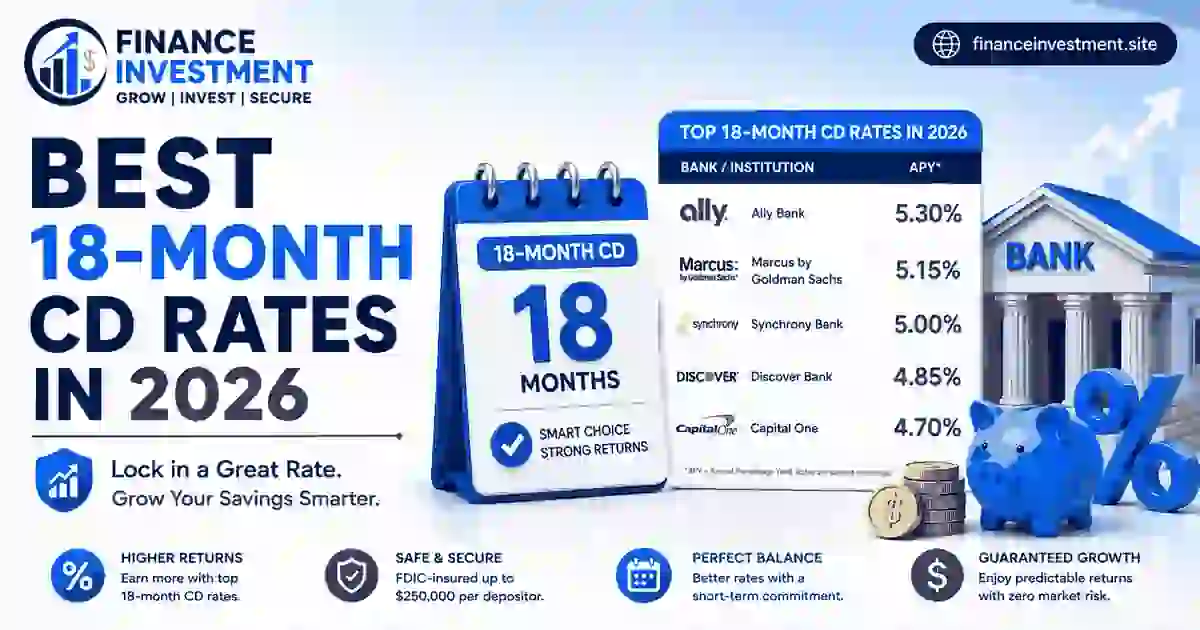
    Unlike a regular savings account, a CD is designed around a fixed maturity date. Once you open the account and fund it, the rate generally stays fixed through the term. That makes the return easier to estimate, but it also means you have less flexibility if your plans change.

    What Does a 24-Month CD Actually Mean?

    A 24-month CD simply means the certificate is scheduled to mature two years after it is opened. For example, if you open one in August 2026, the maturity date will generally fall around August 2028, subject to the institution’s specific terms.

    At maturity, you typically receive your original deposit plus the interest earned. The institution may give you a limited grace period to withdraw the money, change the CD, or choose another term. If you do nothing, some CDs automatically renew, so checking the maturity instructions matters.

    APY: The Number Beginners Should Compare

    APY, or annual percentage yield, is the standard figure used to compare deposit-account returns because it reflects the effect of compounding. A higher APY can produce more interest, but the difference should always be considered alongside the CD’s other rules.

    For a broader explanation of CD pricing and interest, see our guide on how CD interest rates work.

    Minimum Deposit and Insurance

    Minimum opening deposits vary widely. Some institutions allow relatively small deposits, while others reserve their most attractive offers for larger balances. Do not move money you may need for an emergency just to meet a higher minimum.

    Insurance is another basic check. Eligible deposits at an FDIC-insured bank are covered within applicable limits. At a federally insured credit union, eligible share deposits are generally protected by NCUA share insurance within applicable limits. Insurance protects against the failure of the covered institution; it does not protect you from every investment or rate risk.

    What Beginners Should Check First

    • APY and how long the rate is guaranteed.
    • Minimum opening deposit.
    • Early withdrawal penalty.
    • FDIC or NCUA insurance status.
    • Interest payment and compounding schedule.
    • Maturity and automatic-renewal rules.

    The goal is not simply to find a high number. It is to find a 24-month CD whose terms match the reason you are setting the money aside.

    How a 2-Year CD Works From Opening to Maturity

    A 2-year CD follows a fairly predictable path. You choose the account, deposit your money, lock in the stated rate, and leave the funds in place until the certificate reaches maturity. The details can vary by institution, but the basic process is similar.

    1. Open and Fund the CD

    You start by choosing a bank or credit union and reviewing its 24-month CD terms. After checking the APY, minimum deposit, insurance coverage, and withdrawal rules, you fund the certificate with the amount you want to save.

    2. Your Rate Is Locked In

    With a typical fixed-rate CD, the agreed rate remains in place during the two-year term. If market rates move down, your rate generally does not fall with them. If rates move up, however, you usually cannot switch to the new rate without dealing with the existing CD’s terms.

    3. Interest Builds

    The CD earns interest according to the institution’s stated schedule. Interest may compound within the account or be paid elsewhere, depending on the product. Your actual return therefore depends on the APY, starting balance, compounding rules, and account terms.

    4. The CD Reaches Maturity

    After 24 months, the certificate matures. You can generally take the money out, move it elsewhere, or choose another CD term. Many institutions provide a short grace period for making that decision.

    A Simple 24-Month Timeline

    TimeWhat Happens
    Day 1You deposit your chosen amount and accept the 24-month terms.
    Months 1–23The CD earns interest at its stated rate, subject to the account’s terms.
    Month 24The CD reaches maturity and your next-step window begins.
    Grace periodYou may be able to withdraw, transfer, or select a new term before automatic renewal.

    That final step deserves attention. If the CD automatically renews and you miss the grace period, your money could move into a new certificate with a different rate and term.

    Benefits and Drawbacks of a 2-Year CD

    A two-year CD works best when certainty has real value to you. You know the term, know the rate when you open the account, and can plan around a specific maturity date. That structure can be useful, but it also puts limits on what you can do with the money during those 24 months.

    Pros

    • Rate certainty: A fixed-rate CD can protect your agreed APY if market rates decline.
    • Predictable earnings: You can estimate the return more easily than with accounts whose rates change frequently.
    • Potentially stronger yield: A competitive CD may offer more than a basic savings account, depending on current market conditions.
    • Clear time frame: The maturity date gives your savings a defined destination.

    Cons

    • Limited access: Your money is committed for the agreed term unless the institution allows an early withdrawal.
    • Early withdrawal penalty: Taking money out before maturity can reduce your interest earnings and, depending on the terms, may affect principal.
    • Rate opportunity cost: If new CD rates climb after you lock in, your existing certificate generally stays at its original rate.
    • Less flexibility: Money tied up in a CD cannot respond as easily to an unexpected expense or a better opportunity elsewhere.

    Where the Trade-Off Matters Most

    Consider two savers with the same $20,000. One has a separate emergency fund and knows the money is not needed for two years. The other expects a major expense within the next year. The first saver may value the fixed return more; the second may value access more than a slightly higher yield.

    That difference is the heart of the decision. A CD can be attractive without being the right home for every dollar you have.

    2-Year CD vs. Other Savings Options

    A two-year term sits in an interesting spot. It gives you more time to earn at a locked rate than a short CD, but it does not commit your cash for as long as a three-year certificate. The better choice depends on when you expect to need the money and how much flexibility you want.

    Rates can also vary sharply by term and institution. For example, Bankrate’s August 2026 data shows some institutions offering similar or even higher yields on longer terms, while other offers favor shorter maturities. That makes comparing the actual APY available to you more useful than assuming a longer CD will always pay more.

    OptionTypical Trade-OffBest Use
    6-Month CDShort commitment and earlier access to maturity.Money you may need within a year.
    1-Year CDMiddle ground between yield and flexibility.Goals roughly one year away.
    2-Year CDLonger rate commitment with less liquidity.Cash with a clear two-year timeline.
    3-Year CDLonger lock-in and greater exposure to future rate changes.Money you can leave untouched longer.
    High-Yield SavingsRate can change, but access is generally much easier.Emergency funds and flexible savings.

    Which Term Deserves Your Attention?

    If you are leaning toward a shorter commitment, compare the best 6-month CD rates in 2026 and best 1-year CD rates in 2026. If your money has a firm two-year purpose, the 24-month option may offer a better balance between time and return.

    For a broader market comparison, our guide to the best CD rates in 2026 can help you see how different terms stack up before you commit.

    Costs, Risks, and Expert Tips for a 2-Year CD

    A two-year CD can look straightforward on paper, but the fine print can change the value of the deal. The biggest issues are not usually complicated. They come down to what happens if you need the money, rates move, or you forget about the account when it matures.

    Early-Withdrawal Costs

    Most traditional CDs are designed to stay open until maturity. If you take money out early, the institution may charge an early-withdrawal penalty. The formula varies, so check whether the penalty is based on a number of months’ interest, a percentage of the amount withdrawn, or another method.

    Do not compare CDs by APY alone. A slightly lower rate with a much more manageable penalty can be more practical if there is a reasonable chance you will need the funds.

    Inflation and Purchasing Power

    A fixed APY gives you a predictable nominal return, but your purchasing power can still change. If inflation runs higher than the return you earn after taxes, the real value of the money may grow slowly or even decline.

    What If Rates Rise?

    A locked rate protects you from falling deposit rates, but it also limits your ability to benefit from higher rates later. This is the main opportunity cost of committing money for two years. You are trading flexibility for certainty.

    Watch Automatic Renewal

    Many CDs can automatically renew when the term ends. That can be convenient, but it can also catch you off guard if the new rate or term is less attractive. Mark the maturity date on your calendar and review the renewal notice before the grace period ends.

    Consider a CD Ladder

    A CD ladder spreads money across different maturity dates instead of putting the entire balance into one certificate. For example, someone with $20,000 could divide it among several CDs with staggered terms. As each certificate matures, the money can be reinvested or used for the next financial goal.

    Expert Tip

    Before opening a CD, write down three numbers: the APY, the early-withdrawal penalty, and the maturity date. Those three details give you a quick picture of the return, the cost of changing plans, and when your money becomes flexible again.

    Common Mistakes With 2-Year CDs

    A good CD can still become a poor choice when the account is opened for the wrong reason. Most mistakes happen before the money ever starts earning interest.

    Chasing the Highest APY

    A top rate can grab attention, but it should not end the comparison. Check the minimum deposit, early-withdrawal penalty, insurance status, interest-payment rules, and maturity instructions. A slightly lower APY may be easier to live with if the terms are more flexible.

    Putting Emergency Money Into a CD

    Your emergency fund has a different job. It needs to be available when an unexpected bill arrives. Using a two-year CD for that cash can create a penalty at exactly the moment you need quick access.

    Forgetting the Maturity Date

    Automatic renewal can turn an overlooked CD into a new commitment. Put the maturity date on your calendar and review the renewal notice before the grace period closes.

    Ignoring Taxes

    Interest from a taxable CD is generally taxable income even if you leave the earnings inside the account. Your after-tax return can therefore be lower than the advertised APY. Your actual tax treatment depends on your circumstances, so consider the effect when comparing options.

    Real-Life Example: A $25,000 Decision

    Imagine Sarah has $25,000 that she expects to use for a home-related expense in about two years. She already has a separate emergency fund, so she does not need this particular cash for unexpected bills.

    She finds a hypothetical 2-year CD offering 4.00% APY. If the rate stayed fixed for the full term and the APY were applied as stated, $25,000 would grow to roughly $27,040 after two years, before taxes. That is an illustrative calculation, not a promise of what any specific bank will pay.

    Sarah’s decision becomes easier because the money already has a two-year purpose. Someone who might need the same $25,000 next month would face a very different trade-off.

    The Lesson

    The value of a CD is not measured by APY alone. The timing of your goal matters just as much. Match the term to the date you expect to need the money, then compare the rate and account rules.

    Who Should Choose a 2-Year CD?

    A 24-month CD makes the most sense when the timing of your goal lines up with the maturity date. You do not need to predict where rates will go. You simply need to know that the money can stay put for the agreed period.

    Good Fits for a 2-Year CD

    • Beginners with a defined goal: If you have money earmarked for a purchase or expense about two years away, a fixed-rate CD can provide a clear target date.
    • Families planning ahead: Money set aside for tuition, a planned move, or another known expense may benefit from a defined savings timeline.
    • Retirees seeking predictability: A CD can provide a known rate on eligible deposits without exposing that specific savings bucket to stock-market price swings.
    • Conservative savers: If preserving principal and knowing the return matters more than having immediate access, a two-year term may fit.

    Who May Want Something Else?

    A 2-year CD may be a poor fit if you are still building an emergency fund, expect to need the money soon, or want the freedom to move your cash whenever rates change. A high-yield savings account or shorter CD may offer a better balance for those situations.

    Quick Decision Guide

    Can you leave the money untouched for about two years? If yes, compare 2-year CD offers. If no, keep more flexibility and consider a shorter-term or liquid savings option.

    Frequently Asked Questions About 2-Year CDs

    Are 2-year CDs worth it in 2026?

    They can be useful if you want a fixed return and can leave the money untouched for 24 months. Compare the current APY with shorter CDs and savings accounts before opening one.

    What is a good 2-year CD rate?

    There is no single rate that stays “good” for the entire year. CD offers change by institution and market conditions. Compare the APY, minimum deposit, withdrawal penalty, and insurance together.

    How much can $10,000 earn in a 2-year CD?

    The amount depends on the APY and compounding method. For example, at a hypothetical 4% APY, $10,000 would grow to about $10,816 after two years before taxes. This is an illustration, not a current bank offer.

    Can I withdraw money from a 2-year CD early?

    Many traditional CDs allow early withdrawal subject to a penalty. The exact cost depends on the institution and account agreement, so check the penalty before depositing your money.

    Are 2-year CDs FDIC insured?

    An eligible CD at an FDIC-insured bank is generally covered by FDIC deposit insurance within applicable limits. FDIC coverage protects insured deposits if the covered bank fails.

    Are credit union CDs insured?

    Credit unions generally call CDs “share certificates.” At a federally insured credit union, eligible shares are protected by NCUA share insurance within applicable limits.

    What happens when a 2-year CD matures?

    At maturity, you generally can withdraw the money, transfer it, or choose another certificate. Some CDs automatically renew, so check the maturity notice and grace-period rules.

    Can CD rates rise after I open a 2-year CD?

    Yes. Market rates can rise after you lock in your CD. A fixed-rate certificate normally keeps its original rate, which means you may miss higher offers until your term ends.

    Is CD interest taxable?

    For a typical taxable CD, interest is generally taxable income. Your after-tax return can therefore be lower than the advertised APY. Your individual tax situation may differ.

    Who should consider a 2-year CD?

    It may suit someone with a clear two-year savings goal, separate emergency cash, and a preference for predictable returns. It may be less suitable if you expect to need the money soon.


    Final Verdict: When a 2-Year CD Makes Sense

    A 2-year CD can be a strong fit when you have money with a clear two-year purpose and value a predictable return more than immediate access. Current August 2026 rate listings show that competitive CD yields remain available, but the strongest rates are not necessarily attached to every term. That makes the exact 24-month offer worth comparing rather than assuming longer is always better.

    The bigger question is APY versus flexibility. If you can leave the money alone, a competitive fixed rate can provide useful certainty. If you may need the cash early, a savings account or shorter CD could be more practical.

    Beginners with a defined goal, families planning for a known expense, retirees seeking predictable returns, and conservative savers may find a two-year term appealing. Someone still building an emergency fund or expecting a near-term expense should probably keep that money accessible.

    For the broader picture on CD terms, strategies, and alternatives, continue with our complete CD Guide 2026.

    The takeaway: Choose a 2-year CD because its timing fits your goal—not simply because its APY looks attractive.

    Keep Your CD Research Simple

    Want more practical money guides?

    Join our email updates for straightforward guides on CDs, savings, investing, retirement, and other ways to make smarter decisions with your money.

    No complicated jargon. Just useful ideas you can come back to when you need them.

    A good savings decision does not have to be complicated. Start with your timeline, compare the terms carefully, and choose an account that gives your money a clear purpose.

  • Best 18-Month CD Rates in 2026: Compare Top CD Offers

    Best 18-Month CD Rates in 2026: Compare Top CD Offers

    Best 18-Month CD Rates in 2026


    By Subhash Rukade


    Updated August, 22, 2026


    12 min read

    A practical guide to comparing 18-month CD yields, deposits, penalties, maturity terms and real earning potential.

    Why an 18-Month CD Deserves a Closer Look in 2026

    Best 18-Month CD Rates in 2026The Best 18-Month CD Rates in 2026 are worth comparing carefully because this term sits between short-term flexibility and a longer rate lock. In August 2026, market observation + reader problem + why 18 months is different  although rates, deposits and account terms vary by institution. Bankrate’s current listings, for example, show Bread Savings at 4.50% APY with a $1,500 minimum, while other banks offer different combinations.

    That makes the decision more interesting than simply chasing the highest number. A slightly lower APY may offer a smaller opening deposit or more suitable terms, while a higher rate may require more money upfront. Our

    Complete CD Guide for 2026

    provides the broader picture.

    What You’ll Learn

    You’ll see how to compare 18-month APYs, minimum deposits, compounding, penalties and maturity rules, plus how this term stacks up against shorter and longer CDs.

    Quick Take: 18-Month CD Shopping in August 2026
    • Competitive 18-month CD offers are available above 4% APY, although rates and terms vary by institution.

    As of August 20, 2026, NerdWallet lists Bread Savings at 4.35% APY for an 18-month CD.

    Some offers require $1,000 or more to open, so check the minimum deposit before applying.

    Review the early-withdrawal penalty before committing your money.

    On larger balances, even a modest APY difference can affect total interest earned.

    Compare 12-, 18-, and 24-month CDs before deciding how long to lock up your money.

    Bottom line:

    The Best 18-Month CD Rates in 2026 can be attractive for money you won’t need for a year and a half, but the highest APY is only one part of the decision.

    18-Month CD Rates at a Glance

     The best 18-month CD rates in 2026 are currently around 4.50% APY. As of August 20, 2026, NerdWallet lists Bread Savings at 4.35% APY, while other rate trackers show offers reaching about 4.50%.

    Best for: Savers who can leave money untouched for 18 months.

    Key numbers: APY, minimum deposit, penalty and maturity date.

    August 2026 SnapshotWhat to Check
    Up to about 4.50% APYVerify the live offer
    Term: 18 monthsPlan around maturity
    Example minimum: $1,500Minimums vary by institution

    How to Shop for an 18-Month CD

    When comparing the Best 18-Month CD Rates in 2026, start with APY, but don’t stop there. Current August 2026 listings show competitive offers around 4% or higher, with Bread Savings listed at 4.25% APY and a $1,500 minimum deposit in Yahoo Finance’s recent comparison. Rates can change, so verify the bank’s current disclosure before applying.

    Look Beyond the APY

    APY makes different accounts easier to compare because it reflects the effect of compounding. Then check the minimum opening deposit and how interest is credited. For example, a $1,500 minimum may be comfortable for one saver but too restrictive for someone building an emergency fund.

    Calculate the Real Dollar Return

    Suppose you deposit $25,000 into an 18-month CD at a hypothetical 4.25% APY. If that APY remains applicable for the full term, the approximate interest would be about $1,602 before taxes, assuming the stated APY and normal compounding. Your actual result depends on the institution’s terms.

    Don’t overlook the exit cost:

    Early withdrawal penalties vary widely. Recent listings show penalties ranging from 60 days of interest to 180 days or more, depending on the institution. Read the penalty formula before committing money you may need.

    For a broader comparison, read our

    1-year CD rates guide

    and then see

    6-month CD rates

    before deciding how long you want your cash locked up.

    How an 18-Month CD Works

    Best 18-Month CD Rates in 2026An 18-month CD gives you a fixed term in exchange for a stated yield. The Best 18-Month CD Rates in 2026 can look appealing because the rate is generally locked for the entire term, but your money is also less accessible until maturity. Current August 2026 listings show a wide spread among offers, from accounts around 3.8% to 4.25% APY.

    APY & Compounding

    APY reflects the annualized return after compounding. Current 18-month listings include daily and monthly compounding, depending on the bank.

    Maturity & Renewal

    At maturity, you can usually withdraw the funds or renew under the bank’s then-current terms. Check the grace period before the CD automatically renews.

    For an August 2026 illustration, a $10,000 deposit earning 4.25% APY for 18 months would produce roughly $643 in interest if the stated APY applies throughout and the account compounds as assumed. Actual earnings depend on the bank’s disclosed calculation and crediting schedule.

    Early withdrawal matters:

    Current listings show penalties ranging from about 60 days to 180 days of interest, depending on the institution. That cost can materially reduce your return if you need the money early. 2

    For a broader explanation, read our

    guide to how CDs work
    .

    Benefits and Drawbacks of an 18-Month CD

    An 18-month CD can be a useful middle ground when you want a fixed return but don’t want to commit for several years. In August 2026, Bankrate lists several 18-month offers above 4% APY, including Bread Savings at 4.50%, although minimum deposits differ widely.

    ✓ Pros

    • Locks a fixed APY for 18 months.
    • Can provide a stronger return than many traditional savings accounts.
    • Useful for a planned expense more than a year away.
    • Long enough to avoid frequent rate-shopping.

    ✕ Cons

    • Your cash is less accessible before maturity.
    • Early withdrawal can reduce your interest earnings.
    • Rates on new CDs could become more attractive while your money is locked.
    • An 18-month term may be unnecessary for a goal due within a year.
    When it makes sense:

    An 18-month lock can work well when the money has a clear future purpose and you already have accessible cash elsewhere. If you may need the funds sooner, a 6- or 12-month CD—or a high-yield savings account—can preserve more flexibility. Current savings rates can also remain competitive, so compare the return you gain against the freedom you give up.

    18-Month CD Rate Comparison: August 2026

    The Best 18-Month CD Rates in 2026 are not always the highest CD rates overall. Recent August 2026 comparisons show Bread Savings at 4.25% APY with a $1,500 minimum, while Limelight Bank lists 4.10% with a $1,000 minimum and TAB Bank lists 4.05% with a $1,000 minimum.

    InstitutionAPYMinimumCompoundingPractical Use
    Bread Savings4.25%$1,500DailyCompetitive yield for a larger planned balance
    Limelight Bank4.10%$1,000Check current disclosureLower entry point
    TAB Bank4.05%$1,000Check current disclosureCompetitive alternative

    Rates shown are an August 2026 market snapshot and can change. Verify the institution’s current APY, compounding method, insurance status and withdrawal penalty before opening an account. Yahoo Finance’s August comparison evaluated more than 400 data points across CD terms using factors including APY, minimum deposit and customer service.

    Costs, Taxes, Risks & Expert Tips

    The Best 18-Month CD Rates in 2026 can produce a solid fixed return, but the headline APY isn’t your only consideration. Early access, taxes and insurance limits can change the value of an offer.

    Expert Tip

    Suppose you deposit $25,000 at a hypothetical 4.25% APY for 18 months. The estimated interest is about $1,602 before taxes, assuming the stated APY applies for the full term. Compare that gross figure with the return you could earn while keeping the money accessible.

    ⚠️ Watch the Exit Cost

    FDIC guidance notes that fixed-rate CDs generally allow early redemption only under the account’s stated terms, often with a penalty. ([fdic.gov](https://www.fdic.gov/consumer-resource-center/2023-11/shopping-certificate-deposit?utm_source=chatgpt.com)) CD interest is generally taxable as ordinary income; the IRS says interest income is generally taxable and reportable. ([irs.gov](https://www.irs.gov/faqs/interest-dividends-other-types-of-income/1099-int-interest-income?

    Common 18-Month CD Mistakes and a Real-Life Example

    The Best 18-Month CD Rates in 2026 can look tempting, but chasing the biggest APY can lead to a poor decision. Common mistakes include ignoring the minimum deposit, overlooking the early-withdrawal penalty, and assuming every advertised rate is available nationwide. August 2026 comparisons show meaningful differences between institutions and terms.

    A $40,000 Shopping Decision

    Imagine Maria has $40,000 available for 18 months. She finds one offer at 4.25% APY and another at 4.50%, but the higher-rate account has stricter terms. The extra 0.25 percentage point looks attractive, yet the difference is only about $150 in simple annual-interest terms on $40,000. If the higher-rate CD has a less suitable penalty or access rule, the small gain may not justify the trade-off.

    Practical lesson:

    Compare the complete offer—not just the headline APY. Check the deposit requirement, withdrawal rules, insurance coverage and maturity instructions before moving your money.

    Who Should Choose an 18-Month CD?

    Best Fit: Money With a Clear 18-Month Job

    The Best 18-Month CD Rates in 2026 may suit savers who know they can leave their money untouched until maturity. It can work well for:

    • Goal-based savers: money earmarked for a future purchase.
    • Retirees: surplus cash that isn’t needed for near-term expenses.
    • Families: funds being held for a known expense more than a year away.
    • Rate-sensitive savers: people seeking a fixed yield while rates remain competitive.
    • Surplus-cash holders: money already separated from emergency savings.

    If your timeline is uncertain, a shorter CD or high-yield savings account may offer a better balance of return and access. Current August 2026 coverage shows CD yields remain competitive, while term-by-term rates vary considerably.

    Frequently Asked Questions About 18-Month CDs

    1. What are the best 18-month CD rates in August 2026?

    Current listings show 18-month APYs reaching about 4.40%, while NerdWallet lists Bread Savings at 4.35%. Rates can change, so verify the live offer before opening an account.

    2. Is an 18-month CD a good choice right now?

    It can make sense if you can leave the money untouched for 18 months and want a fixed return. Compare the rate with shorter CDs and savings accounts first.

    3. What APY should I look for?

    As a current benchmark, 4% or more is considered a strong 18-month rate, with top offers around 4.40% in August 2026.

    4. How much money do I need to open one?

    Minimums vary. Some current offers require $1,000 or $1,500, while other CD products may have different requirements. Always check the bank’s disclosure.

    5. Are CD earnings taxable?

    Generally, yes. The IRS says most interest that becomes available to you is taxable income.

    6. What happens if I withdraw early?

    You may owe an early-withdrawal penalty under the CD’s terms. The amount varies by institution.

    7. Are 18-month CDs FDIC insured?

    CDs at FDIC-insured banks are generally covered within applicable deposit-insurance limits and ownership categories.

    8. Can CD rates change after I open one?

    A standard fixed-rate CD generally keeps its stated rate through the term. New CD offers can change as banks respond to market and Federal Reserve conditions.

    9. Should I choose an 18-month CD over a shorter term?

    Choose the longer term when the yield and your timeline make sense. If you may need the cash sooner, a shorter CD or accessible savings account may be a better fit.

    Final Verdict: Is an 18-Month CD Worth It in August 2026?

    The market still gives savers a reasonable opportunity to lock in competitive yields. As of August 20, 2026, NerdWallet lists an 18-month Bread Savings CD at 4.35% APY, while some CD terms elsewhere reach 4.50%.

    So, should you choose the Best 18-Month CD Rates in 2026? Choose an 18-month term if your money has a clear purpose beyond the next year and you value a fixed return. Compare first if a 12-month or 2-year CD offers a better combination of yield and flexibility. Wait only if you have a strong reason to keep your cash liquid or believe another term better matches your timeline.

    Simple rule:

    Don’t chase the highest APY blindly. Match the term, penalty and maturity date to your actual cash needs.

    For the bigger picture, visit our

    complete CD guide for 2026
    .

    Related Resources

    Keep exploring before you lock up your cash. These guides cover nearby CD terms, rate trends and practical earnings questions.

    Keep Building Smarter Savings Habits

    Get practical money guides in your inbox, then explore more CD resources when you’re ready to compare terms, yields and strategies.

    Questions or feedback?

    subhashr325@gmail.com