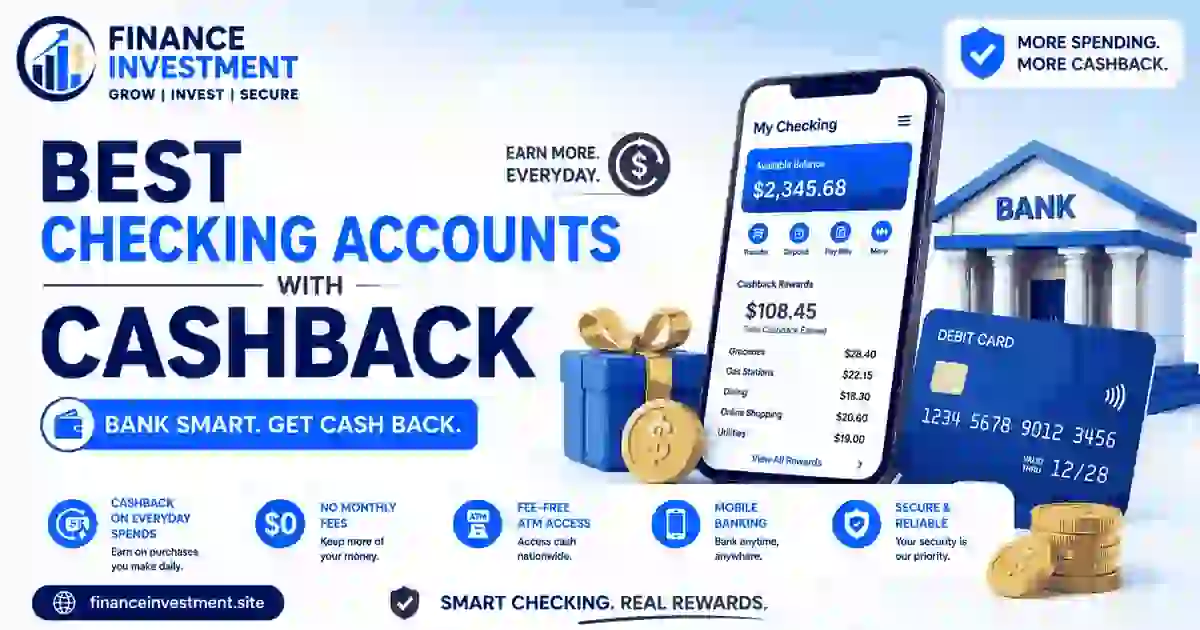
 Marcus uses his debit card for groceries, gas, streaming services, and a few restaurant meals each month. He already needs a checking account for those purchases, so he started wondering if some of that spending could earn money back without adding another credit card to his wallet.
The Best Checking Accounts with Cashback can turn qualifying everyday purchases into a small stream of rewards. That sounds simple, but the fine print matters. Some accounts limit which purchases qualify, cap monthly rewards, require direct deposit, or charge fees that can eat into what you earn.
A higher reward rate is not automatically the better deal. An account with a modest rate and no monthly fee may leave you with more money at the end of the year than one advertising a bigger percentage with several conditions.
What You’ll Learn
This guide breaks down how cashback checking works, what to compare, where rewards can fall short, and how to decide if the extra earnings are worth changing the way you bank.
For a broader look at checking accounts, see our
Checking Accounts USA 2026 guide
.
Quick Answer & Key Takeaways
The Best Checking Accounts with Cashback can reward eligible debit-card purchases, but the real value depends on the reward rate, qualifying transactions, monthly limits, fees, and account conditions.
- Check the reward rate: A higher percentage can mean more earnings, but only when spending qualifies.
- Look for reward caps: Monthly limits can reduce the value for frequent card users.
- Read the fee schedule: A monthly charge can offset your cashback.
- Check qualifying purchases: Not every debit transaction may earn rewards.
- Review account requirements: Direct deposit or other conditions may apply.
- Compare ATM access: Convenient, low-cost withdrawals still matter for everyday banking.
Bottom line: Choose the account based on what you can realistically earn after fees and restrictions, not the headline reward rate alone.
Table of Contents
At a Glance
The Best Checking Accounts with Cashback can make ordinary debit-card spending a little more rewarding. The key is finding an account where the rewards are useful without excessive fees, complicated requirements, or restrictive spending limits.
Quick Facts
Rewards vary by account. Check the rate, qualifying purchases, monthly cap, fees, and eligibility rules.
Best For
People who regularly use a debit card for eligible everyday purchases.
| Factor | What to Check |
|---|---|
| Cashback rate | Percentage earned on qualifying purchases |
| Reward limit | Monthly or annual earning cap |
| Monthly fee | $0 is preferable when rewards are modest |
| Requirements | Direct deposit, minimum activity, or other conditions |
Complete Beginner Guide
 A cashback checking account works like a regular checking account, but it can give you a reward when you make eligible purchases. You still receive deposits, pay bills, use your debit card, transfer money, and withdraw cash. The difference is that certain spending may earn a percentage back.
Best Checking Accounts with Cashback Before choosing one, read how the rewards are calculated. Some accounts pay cashback on specific debit-card purchases, while others require a certain number of transactions each month. There may also be a monthly reward ceiling. Once you reach that limit, additional purchases may earn nothing.
A Simple Spending Example
Elena uses her debit card for about $1,200 of eligible purchases each month. If an account pays 1% on those purchases, that would be $12 for the month before considering any limits or fees. Over a year, that could add up to $144 if her spending and the account terms stay the same.
That example also shows why the advertised percentage should not be the only thing you compare. If the account charges a $10 monthly fee, Elena could lose more in fees than she earns in rewards. A lower reward rate with no monthly charge might be worth more to her.
The Best Checking Accounts with Cashback should match your normal spending rather than encourage you to spend more. Check qualifying purchases, reward limits, posting dates, fees, ATM access, and any direct-deposit requirement.
If you are comparing reward accounts with simpler options, our
free checking accounts guide
can provide another useful reference.
How It Works
Cashback checking usually starts with an ordinary debit-card purchase. You pay the merchant, the transaction posts to your account, and the bank calculates any reward based on its rules. The reward may appear later as cash, an account credit, or another form of eligible payment.
The Basic Reward Path
Buy
→
Transaction Posts
→
Reward Calculated
→
Cashback Credited
Imagine Jordan spends $650 on eligible groceries, fuel, and household purchases during a month. If the account pays 1% on those transactions, the potential reward is $6.50, assuming the purchases qualify and the account’s reward limit has not been reached.
The Best Checking Accounts with Cashback can differ widely in how they define an eligible transaction. Some may exclude certain merchant categories, person-to-person transfers, ATM withdrawals, or other transactions. A qualifying direct deposit or minimum number of monthly purchases may also be required.
That is why the reward rate alone does not tell you what you will actually earn. Compare the account’s full reward formula, limits, fees, and timing before counting the cashback as part of your budget.
Benefits & Drawbacks
The Best Checking Accounts with Cashback can add a useful reward to spending you already planned. Still, the value depends on the account rules and how closely they match your habits.
Pros
- Earn money on eligible debit-card purchases
- No separate rewards card may be needed
- Rewards can offset some everyday banking costs
- Useful for people who already use debit frequently
- Cashback may be credited directly to the account
Cons
- Reward rates may be modest
- Some purchases may not qualify
- Monthly cashback caps can limit earnings
- Fees can reduce the reward’s real value
- Some accounts require specific monthly activity
The key trade-off: cashback is most useful when it comes from purchases you would make anyway. Chasing rewards by spending more can quickly wipe out the benefit.
Comparison Table
The Best Checking Accounts with Cashback should be compared with regular checking and other reward-based options. A higher reward rate can look attractive, but fees, limits, and qualifying-purchase rules determine what you actually keep.
| Account Type | Reward Potential | Main Benefit | Watch For |
|---|---|---|---|
| Cashback Checking | Varies by account | Rewards on eligible debit spending | Caps, fees, exclusions |
| Standard Checking | Usually none | Everyday banking | Monthly fees |
| Rewards Credit Card | Often higher | More reward categories | Interest if balance is carried |
| High-Yield Checking | Interest rather than cashback | Earnings on account balance | Balance or activity requirements |
Smart comparison: estimate your annual rewards from normal spending, then subtract any fees. That figure gives you a clearer picture than the advertised cashback percentage alone.
Costs, Risks & Expert Tips
The Best Checking Accounts with Cashback can still cost you more than they return if you overlook monthly fees, reward limits, ATM charges, or account requirements. A reward rate only matters when enough of your normal spending qualifies.
Before opening an account, check whether cashback applies to all debit purchases or only selected transactions. Also look for monthly earning caps, minimum activity requirements, direct-deposit rules, and the date rewards are credited.
Expert Tip
Estimate your rewards using last month’s real debit-card spending. If the projected annual cashback is only $80, a $7 monthly account fee would consume most of that benefit.
Warning
Do not increase your spending just to earn rewards. A cashback payment is small compared with the cost of buying things you do not need or carrying expensive debt.
Finally, review the current account agreement and fee schedule. Reward terms can change, so confirm the rules before relying on cashback as part of your regular budget.
Common Mistakes + Real-Life Example
The Best Checking Accounts with Cashback can lose their appeal when the reward rules are ignored. Common mistakes include focusing only on the advertised rate, overlooking monthly reward caps, assuming every debit purchase qualifies, and forgetting account fees.
Mistakes to Avoid
- Choosing a high rate without checking the reward cap
- Assuming all debit purchases qualify
- Ignoring monthly maintenance fees
- Spending extra just to earn cashback
- Forgetting direct-deposit or transaction requirements
A Real-Life Example
Priya spends about $900 a month on groceries, fuel, and household purchases. She chooses an account advertising cashback but discovers that only the first $500 of eligible spending earns rewards each month. She also pays a small monthly fee. After doing the math, she realizes the account gives her less value than a fee-free option with a lower reward rate.
The Best Checking Accounts with Cashback should reward spending you already planned, not encourage purchases you would otherwise skip.
Who Should Choose This?
The Best Checking Accounts with Cashback may suit people who already use a debit card for regular purchases and want a little value from that spending. The rewards can be worthwhile when the account has low fees and simple rules.
Premium Best Fit
- People who frequently use debit for everyday purchases
- Customers who can meet activity or deposit requirements naturally
- Bank users who prefer rewards without adding another card
- People who can stay within the account’s cashback limits
- Anyone willing to compare fees against expected rewards
It may not be worth switching if you rarely use debit, already earn stronger rewards elsewhere, or would need to change your spending habits to qualify. In that case, a simple low-fee checking account may be a better fit.
Frequently Asked Questions
What are checking accounts with cashback?
These accounts can return a percentage of eligible debit-card purchases as a reward. The bank sets the qualifying transactions, reward rate, and any earning limits.
What are the Best Checking Accounts with Cashback?
The Best Checking Accounts with Cashback offer useful rewards without excessive fees or difficult requirements. Compare the reward rate, eligible purchases, monthly caps, ATM access, and account conditions.
How does cashback checking work?
You make an eligible debit purchase, the transaction posts, and the bank calculates the reward under its account rules. Cashback may then be credited to the account.
Is cashback checking better than a regular checking account?
It depends on your spending. Cashback can add value if you use debit regularly and the account has low fees. A basic checking account may be better if you rarely use debit.
Do all debit-card purchases earn cashback?
No. Banks can exclude certain transactions or merchant categories. Always read the account’s reward terms before estimating your annual earnings.
Is there usually a cashback limit?
Some accounts place monthly or annual limits on rewards. Once you reach the stated cap, additional qualifying purchases may not earn more cashback.
Can checking account cashback have fees?
Yes. A reward account may still charge a monthly maintenance fee, ATM fee, or other service charge. Subtract those costs when comparing the real value.
Do cashback checking accounts require direct deposit?
Some do, while others do not. Direct deposit may be required to qualify for rewards, avoid a fee, or unlock particular account benefits.
How should I compare cashback checking accounts?
The Best Checking Accounts with Cashback should be judged by expected rewards after fees, qualifying purchases, reward limits, account requirements, ATM access, and everyday banking features.
Account terms and reward programs can change. Review the current disclosures before applying.
Final Verdict
The Best Checking Accounts with Cashback can make sense for someone who already relies on a debit card for groceries, fuel, household bills, and other routine purchases. The reward is a nice extra when it comes from spending that was already part of the monthly budget.
The important part is the math behind the headline offer. A generous cashback rate may come with a monthly cap, qualifying-transaction rules, direct-deposit conditions, or account fees. Those details can change the amount you actually keep.
Before switching banks, estimate your normal eligible spending and compare the expected yearly reward with every relevant fee. If the numbers work without changing your spending habits, the account may deserve a place in your everyday banking setup.
The strongest choice is not the account with the flashiest reward rate. It is the one that leaves you with more value after fees and restrictions.
Leave a Reply