Where Does an ATM Transaction Go?
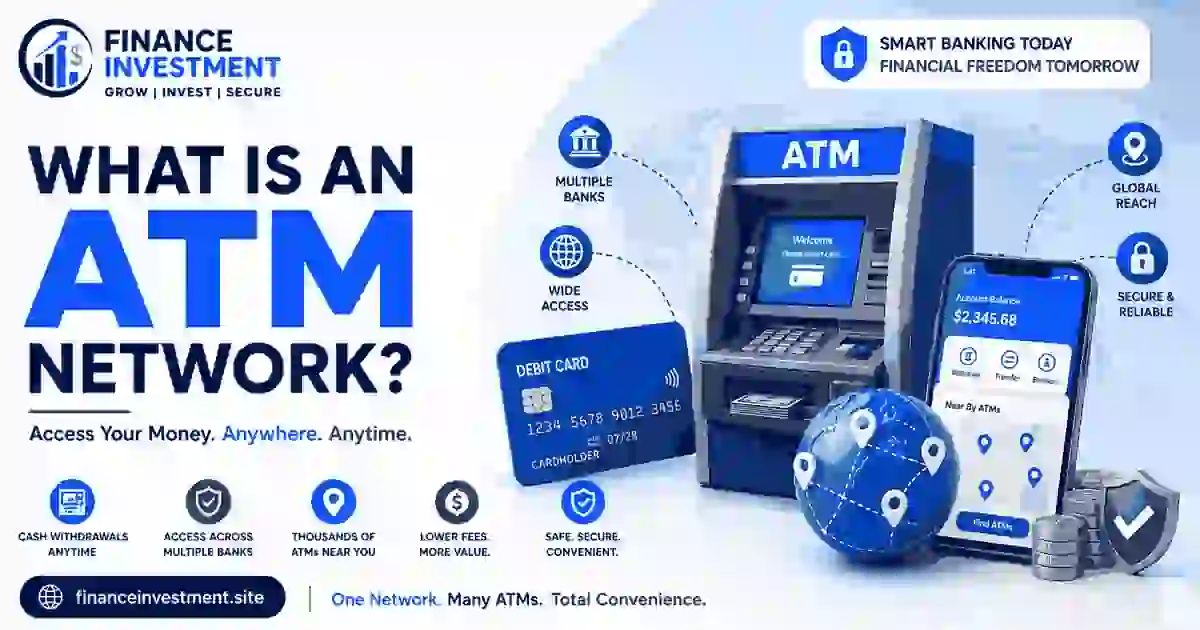 It’s Saturday afternoon, and Kevin needs cash for a local market. His bank branch is closed, but an ATM is only a few minutes away. He inserts his debit card, enters his PIN, and requests cash. What Is an ATM Network becomes easier to understand when you picture what happens behind that simple request.
The ATM sends Kevin’s transaction through a payment network that connects the machine with the bank or financial institution handling his account. The network helps route the request so the bank can check the account and respond. The debit card identifies the account and helps start that process.
Using your own bank’s ATM may avoid certain out-of-network charges. Another bank’s ATM can still work when networks support the card, although fees or different rules may apply. The ATM operator and the network are not always the same company, either.
For a broader look at the account behind these transactions, see our Checking Accounts USA 2026 guide.
What You’ll Learn
We’ll look at ATM networks, access, fees, out-of-network withdrawals, security, common mistakes, comparisons, and the questions people ask most often.
Quick Answer & Key Takeaways
What Is an ATM Network? It is a system that helps ATMs and financial institutions communicate when you request cash, check your balance, or use another supported ATM service. Your card starts the request, the network routes it, and the bank checks the account before responding.
Your own bank’s ATM may provide convenient access with fewer fees. An out-of-network machine can still work, but the bank, ATM operator, or both may have their own charges and rules.
6 Things to Remember
- ATM networks connect ATMs with financial institutions.
- Your debit card starts the ATM request.
- The network routes the request to the appropriate institution.
- The bank can approve or decline the transaction.
- ATM fees depend on bank and machine-operator policies.
- The ATM owner and network provider are not always the same.
Bottom Line: The network is the connection behind the ATM request; your bank’s rules determine how that request is handled.
With that basic picture in place, the next section lays out the rest of the guide so you can jump directly to the topic you need.
Table of Contents
Choose any topic above, or continue below for the practical facts first.
At a Glance
An ATM network helps route ATM requests between machines and financial institutions. Your card network, bank, and the ATM operator can each play a different role.
People who want convenient ATM access while understanding when network rules, withdrawal limits, or fees may apply.
What Is an ATM Network becomes clearer when you separate the network from the ATM owner. Your bank may have preferred machines, while another operator may provide access through a participating network.
| Item | What it means |
|---|---|
| ATM network | Connects ATM requests with financial institutions. |
| In-network ATM | ATM supported by your bank or network arrangement. |
| Out-of-network ATM | ATM outside your bank’s preferred network. |
| ATM operator | Company or institution operating the machine. |
| Fee | Possible charge based on applicable policies. |
| Withdrawal limit | Maximum amount allowed under account rules. |
| Balance inquiry | Checking available account information. |
These basics make it easier to see what happens when you actually use an ATM and why two machines can handle the same card differently.
Complete Beginner Guide
 Using an ATM looks simple, but several steps happen between inserting your card and receiving cash. The easiest way to understand What Is an ATM Network is to follow one normal withdrawal from start to finish.
Start by using a compatible debit card and an ATM you trust. Insert or tap your card as instructed, then enter your PIN privately. The ATM uses your card information to identify where the transaction should be sent. Never share your PIN with another person, even if someone offers to help.
Next, choose the service you need. For a cash withdrawal, enter the amount and review the information shown on the screen. The ATM sends the request through its network toward the financial institution connected to your account. Your bank then checks the transaction against available funds, account rules, and applicable limits.
If the request is approved, the ATM releases the cash and may provide a receipt. Your account activity should later show the withdrawal. A balance inquiry can also help you check the account before taking out money.
Before accepting an unfamiliar ATM, look for the displayed fee. Your bank may have a preferred network where certain charges are avoided or reimbursed. An out-of-network machine may involve additional costs, so checking the screen first can prevent surprises.
A Beginner Example
Lisa is traveling for a weekend family event and needs $80 in cash. She finds an ATM near the venue, checks the displayed fee, and confirms that the machine accepts her card. After entering her PIN and requesting $80, the ATM sends the request through its network. Her bank approves it because she has enough available money and remains within her withdrawal limit. Lisa takes the cash and keeps the receipt until the transaction appears correctly in her account.
If you want to understand the account receiving the transaction behind the scenes, our guide to How Does a Checking Account Work? provides the broader banking picture.
The important point is that the ATM is only one part of the process. The card, network, ATM operator, and financial institution can all have separate roles.
How It Works
When you use an ATM, the machine does not decide by itself whether you can take out cash. What Is an ATM Network becomes clearer when you look at the communication happening between the ATM, network, and financial institution.
The Transaction Path
You insert or tap your card and choose a service. The ATM creates a request containing the transaction details. The ATM operator and relevant network then route that request toward the financial institution connected to your account. What Is an ATM Network
The institution checks the account, including available funds and applicable rules. It then sends back an approval or decline. If approved, the ATM dispenses the requested cash. The transaction is recorded, and the account balance is adjusted according to the institution’s processing rules.
The ATM network and card network can have different jobs. One may help connect the ATM transaction to the appropriate institution, while the card network can provide the broader payment infrastructure associated with the card. The exact arrangement depends on the card, bank, and network involved.
The amount you see immediately is not always the final account entry at that exact moment. Authorization happens first, while final posting can occur later. That timing can affect when the withdrawal appears in your transaction history or available balance.
A Monthly Example
Daniel usually withdraws $120 once a month for small household expenses. This month, he uses an ATM outside his bank’s preferred network. The machine accepts his card, sends the request through the applicable network, and his bank approves the withdrawal. Daniel receives the cash and a receipt. Later, the completed withdrawal appears in his account activity. The ATM’s displayed fee and his bank’s rules determine whether an additional charge is reflected in the account.
Seeing the transaction as a chain of connected systems makes the next question more practical: what do you gain from this setup, and where can it create drawbacks?
Benefits & Drawbacks
An ATM network can make cash access much easier, especially when your bank’s own machines are not nearby. Still, the experience depends on your bank, the network, and the machine you choose. What Is an ATM Network is worth understanding before assuming every ATM will offer the same access or cost.
✓ What Can Help
- Wider ATM access
- Easier access to cash
- Convenient balance inquiries
- Potential access to preferred ATMs
- Useful when traveling
- Less dependence on branch hours
⚠ What to Watch
- Out-of-network fees
- Different ATM withdrawal limits
- Limited services on some machines
- Network availability varies
- ATM operator charges
- Security concerns at unfamiliar machines
A Practical Example
Priya is visiting her parents in another state and needs $100 in cash. Her bank has no nearby branch or preferred ATM, so she finds a participating machine at a local store. Before continuing, she checks the screen for the ATM fee. Her bank may also have its own rules for out-of-network withdrawals. The ATM works, but Priya realizes that having access to a machine does not automatically mean the withdrawal will be free.
For frequent travelers, broader network access can be valuable. For everyday banking, however, checking which machines are included with your account can save unnecessary charges. The same ATM may also have different limits or services than a machine operated by your own bank.
Knowing both sides makes it easier to compare ATM access with other ways of getting cash or moving money.
Comparison Table
Different ways of getting cash can look similar at first, but the costs, access, and rules can be quite different. What Is an ATM Network becomes more useful when you compare where the machine fits into your banking arrangement.
| Method | Access | Possible Fees | Availability | Best Use | Main Limitation |
|---|---|---|---|---|---|
| Bank-Owned ATM | Direct bank access | Often lower under bank terms | Depends on branch and ATM locations | Regular withdrawals | Fewer locations in some areas |
| In-Network ATM | Participating network machines | May be reduced or waived | Usually broader than one bank’s machines | Everyday access | Network rules apply |
| Out-of-Network ATM | Machines outside your preferred network | Bank or operator fees may apply | Can be useful when traveling | Emergency or occasional cash | Potentially higher cost |
| Branch Teller | In-person bank service | Depends on account and service | Limited by branch hours | Larger or unusual cash needs | Requires a physical branch |
How to Read This Table
There is no single option that works best in every situation. If you usually stay near your bank, a bank-owned ATM may be convenient. A participating network can provide more locations, while an out-of-network machine may be useful when you’re away from home. A branch teller can make sense when you need in-person assistance.
Your broader account setup also matters. Our guide to Types of Checking Accounts Explained can help you understand how account features differ.
The choice becomes clearer once you look beyond access and consider the charges, limits, and security issues that can affect a withdrawal.
Costs, Risks & Expert Tips
Using an ATM can feel straightforward, but the cost may depend on who operates the machine and how your bank handles outside-network withdrawals. What Is an ATM Network matters here because the network arrangement can affect where your card works and what charges you may encounter.
An ATM operator may display a fee before a withdrawal is completed. Your bank may also impose its own out-of-network charge. Foreign ATM use can bring additional costs where applicable. Check the screen before accepting a fee, and know your account’s daily withdrawal limit. A low available balance can also prevent a withdrawal even when the account normally has money in it.
Security deserves equal attention. Avoid machines that look damaged or have unusual card readers. Cover the keypad when entering your PIN, and be cautious of anyone standing unusually close. Card skimming can expose card information, while a stolen PIN can make unauthorized access more difficult to detect quickly.
Expert Tip
Before using unfamiliar machines, check your bank’s ATM fee schedule, preferred network, withdrawal limits, and any fee-reimbursement policy. Save those details in your banking app or account notes so you do not have to guess later.
Warning
If an ATM looks tampered with, your card behaves unexpectedly, or an unfamiliar ATM charge appears later, stop and contact your bank through an official channel. Do not ignore a small unexplained charge.
A Different Situation
Michael is traveling for work when he finds an ATM inside a hotel lobby. The machine works with his card, but the fee shown on screen is higher than he expected. Instead of accepting it immediately, he checks his bank’s app for nearby preferred ATMs. He finds another option a few blocks away and avoids the extra charge.
Knowing the fees and security warning signs beforehand can prevent small ATM decisions from becoming expensive or stressful problems.
Common Mistakes + Real-Life Example
Small ATM habits can create unnecessary trouble. Understanding What Is an ATM Network helps, but knowing what to avoid matters just as much when you’re using a machine away from home.
Avoid These Mistakes
- Skipping the fee screen: Read the charge before approving the withdrawal.
- Ignoring daily limits: Check your bank’s withdrawal limit before making a large cash request.
- Using a questionable ATM: Choose a machine in a secure, well-maintained location.
- Exposing your PIN: Shield the keypad with your hand while entering it.
- Leaving your card or cash: Wait until the transaction is completely finished before walking away.
- Missing an unusual withdrawal: Review account activity after using an unfamiliar machine.
- Assuming every ATM uses the same network: Check your bank’s preferred ATM network first.
- Delaying a fraud report: Contact your bank promptly when a transaction looks suspicious.
A Real-Life Example
Robert was leaving a concert when he stopped at an ATM near the parking garage. He needed $60 for the ride home and was in a hurry. The machine displayed a fee, but he approved it without reading the amount. Later, while checking his banking app, Robert noticed the withdrawal and realized he had also used a machine outside his bank’s preferred network. The cash was correct, but taking a few seconds to review the fee would have given him a chance to find another ATM nearby.
These mistakes are easy to prevent once ATM use becomes a quick habit: check the machine, protect your PIN, review the screen, and look over the account afterward. That approach matters even more for people who use ATMs regularly or travel often.
The right ATM setup also depends on how often you need cash, where you bank, and how comfortable you are with digital account management.
Who Should Choose This?
An ATM network can be especially useful for people who need regular access to cash but do not want their banking routine tied to one branch location. What Is an ATM Network matters most when you want to know where your card is likely to work and what terms may apply.
Everyday checking-account users, regular cash users, travelers, families, retirees, and students can all benefit from convenient ATM access. It can also help people who live far from a bank branch or frequently need quick balance inquiries. A broad preferred network can make these tasks easier.
Best Fit
- People who value broad ATM access.
- Users who can prioritize in-network machines.
- Anyone who regularly checks ATM fees and withdrawal limits.
A different approach may suit people who rarely use cash, have a convenient branch nearby, or simply prefer card and digital payments. What Is an ATM Network If your bank has limited ATM coverage in the places you visit, relying heavily on its network may also be less practical.
The best setup comes down to where you bank, how often you need cash, and how easily you can access machines that fit your account terms.
Frequently Asked Questions
What is an ATM network?
An ATM network is a system that helps ATMs communicate with banks and other financial institutions during transactions. It allows a customer’s debit card request to reach the institution that handles the account.
How does an ATM network work?
An ATM sends the transaction request through the applicable network. The financial institution checks the account and returns an approval or decline. If approved, the machine completes the requested service, such as dispensing cash.
What is the difference between an ATM network and a bank?
A bank holds or manages your account, while an ATM network helps route transaction information between participating machines and financial institutions. The two can have separate roles, even when a bank operates its own ATMs.
Can I use my debit card at any ATM?
Not necessarily. Your debit card may work at many participating machines, but network compatibility, bank rules, location, and transaction limits can affect access. An out-of-network ATM may also charge a fee.
What are out-of-network ATM fees?
Out-of-network ATM fees are charges that may apply when you use a machine outside your bank’s preferred network. The ATM operator may charge one fee, and your bank may impose another, depending on the applicable account terms.
How do I find my bank’s ATM network?
Check your bank’s website, mobile app, account agreement, or ATM locator. These sources can show participating machines and explain whether certain withdrawals qualify for fee-free access or reimbursement.
Are ATM networks safe?
ATM networks can provide secure transaction connections, but your own habits still matter. Protect your PIN, inspect unfamiliar machines, avoid suspicious card readers, and review your account when something does not look right.
Can ATM networks affect withdrawal limits?
Yes, but the withdrawal limit is generally determined by the bank, account, card, or ATM rules rather than the network alone. A particular machine may also have its own cash-dispensing restrictions.
What should I do if an ATM transaction looks wrong?
Contact your bank promptly through an official channel and review the transaction details. If you did not authorize the withdrawal, report it rather than waiting to see whether the charge disappears.
One useful takeaway: Knowing the difference between your bank, the ATM operator, and the network makes fees, access, and transaction rules much easier to understand.
The right choice ultimately depends on how often you use cash, where you bank, and which ATM access terms fit your routine.
Final Verdict
A reliable ATM network can make everyday cash access much easier, especially when you are away from your bank branch. What Is an ATM Network matters because the answer helps you understand why one ATM may fit your account better than another.
For regular withdrawals, a bank-owned or in-network ATM is usually the practical starting point. It may reduce the chance of extra charges, while your bank’s rules still determine withdrawal limits and other account conditions. Before using an unfamiliar machine, check the displayed fee and remember that the ATM operator can have its own charge.
Security should also shape the choice. A well-maintained ATM in a familiar location can be preferable to a questionable machine, particularly when you are traveling. If you rarely need cash, a branch visit or digital payment may fit your routine better. What Is an ATM Network
A Simple Rule
Choose the ATM option that gives you convenient access without ignoring the fees, limits, location, and security conditions attached to it.
For a broader look at choosing and managing checking accounts, visit our Checking Accounts USA 2026 guide.
ATM access is only one part of a banking setup. The related resources below can help you understand the account and payment tools connected to it.
Ready to Take Control of Your Checking Setup?
A little knowledge can make everyday banking decisions much easier. If you found this ATM guide useful, take a look at our other checking-account guides and find the topics that fit your situation.
Want more practical banking guides? Join the newsletter for new articles. And if this guide answered a question you had, feel free to share it or leave a comment with what you’d like us to cover next.
Leave a Reply