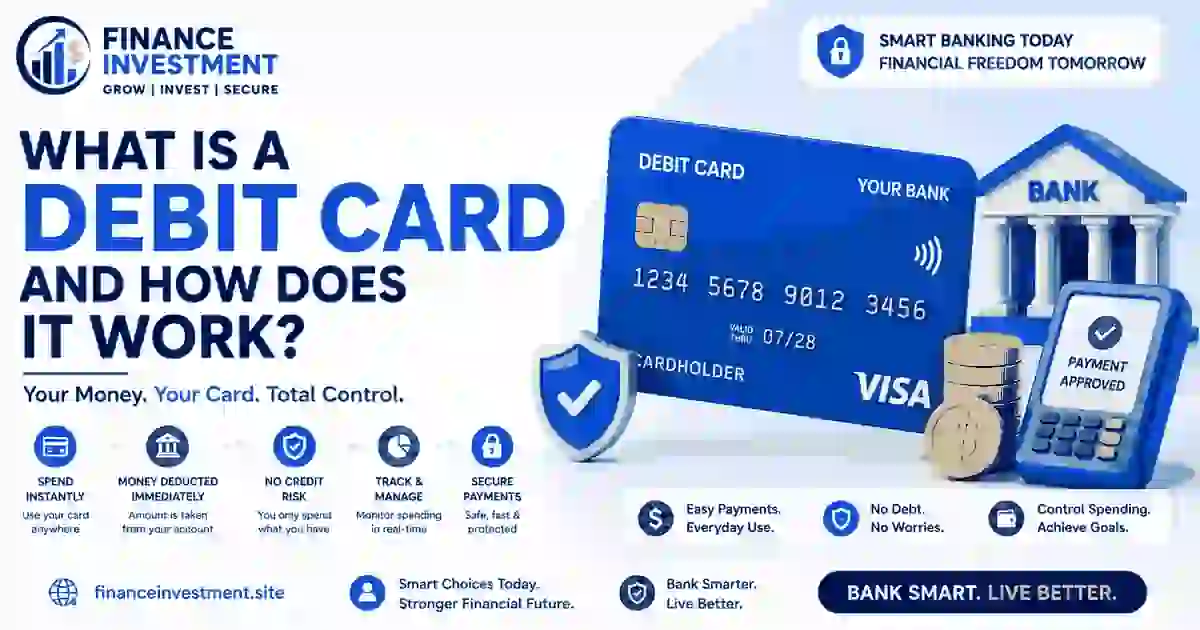
 Picture Maya standing at a coffee shop counter, tapping her card to pay for a $6.50 breakfast. She doesn’t hand over cash or borrow the money from a lender. What Is a Debit Card and How Does It Work becomes much easier to understand when you see what happens behind that simple tap: the purchase is connected to her bank account, and the transaction checks whether enough money is available.
A debit card is generally linked to a checking account. When you use it at a store, online, or at an ATM, the transaction is processed against the funds in that account. Your available balance matters because a purchase can reduce the money you have available for other payments.
Depending on the transaction, you may enter a PIN, use contactless payment, or provide card details online. Each method has its own security considerations, so keeping your card information private and checking your account regularly matters. Unlike a credit card, a debit card normally uses money already held in your account rather than creating a separate borrowing balance.
For a broader look at how checking accounts fit into everyday banking, see our Checking Accounts USA 2026 guide.
What You’ll Learn
We’ll look at how debit-card purchases and ATM withdrawals work, where the money comes from, the main benefits and drawbacks, possible fees, security concerns, common mistakes, and questions beginners often have.
Once the basic idea is clear, the next section gives you the quick answer and the key points worth remembering.
Quick Answer & Key Takeaways
What Is a Debit Card and How Does It Work? A debit card lets you pay for purchases or withdraw cash using money connected to your bank account. When you make a transaction, the bank checks the account and, when approved, the payment is taken from your available funds.
6 Key Takeaways
- Linked bank account: Your card is connected to an eligible deposit account, commonly a checking account.
- Purchase authorization: When you pay, the transaction is sent for approval before it is completed.
- Available balance: The amount you can actually use may be affected by pending transactions, holds, and recent payments.
- PIN, contactless, or online use: Different purchases may use a PIN, tap-to-pay, or card details entered on a website.
- ATM withdrawals: You can generally use the card at eligible ATMs to access cash, subject to your bank’s rules and limits.
- Security and monitoring: Protect your card information and review account activity so unfamiliar transactions can be addressed quickly.
Bottom Line:
A debit card is a convenient way to access money already held in your account, but knowing your available balance and watching your transactions can help prevent unpleasant surprises.
Now that the basic idea is clear, the navigation below lets you jump directly to the part of the guide you want to explore.
Table of Contents
Use the links above to move around the guide, or continue below for a quick snapshot of the key debit-card details.
At a Glance
- Usually linked to a checking account
- Card number identifies the card
- PIN may be required for certain transactions
- Contactless payments may be available
- ATM access depends on the card and network
- Available balance can change as transactions occur
- Daily purchase and ATM limits may apply
- Some transactions can involve fees
Everyday Account Access
A debit card can be useful for everyday purchases, online payments, and ATM withdrawals when you want to spend money already held in your bank account.
| Feature | What It Means |
|---|---|
| Purchase | Payment made at a store or other merchant. |
| ATM Withdrawal | Cash access subject to ATM, network, and bank rules. |
| Online Payment | Card details are entered at an eligible website or app. |
| PIN | A personal code used for certain card or ATM transactions. |
| Contactless | Tap-to-pay feature available on supported cards and terminals. |
| Available Balance | Money currently available for eligible transactions. |
| Authorization | The bank or card network checks and approves or declines a transaction. |
| Transaction Posting | The completed transaction is recorded in the account. |
Understanding What Is a Debit Card and How Does It Work also means knowing that an approved transaction and a fully posted transaction are not always the same thing. A purchase may first appear as pending before the final amount is recorded.
With those basic details in place, the next section walks through how a debit card is set up and used in everyday banking.
Complete Beginner Guide
 Getting a debit card is usually straightforward, but using one well takes a little more than swiping or tapping. Start by receiving the card from your bank or credit union and activating it through the method provided. During activation, you may be asked to create or confirm a PIN. Keep that number private and avoid writing it somewhere that can easily be found with the card.
Before making purchases, check which account is connected to the card. For many people, that will be a checking account. Our guide on How Does a Checking Account Work? explains how deposits, withdrawals, payments, and balances fit together.
At a store, you might insert the card, swipe it, or tap it on a contactless terminal. Depending on the transaction, you may enter your PIN or follow the terminal’s instructions. For online purchases, you normally enter the card number, expiration date, and security code on the merchant’s payment page. Only use trusted websites and avoid saving card details on devices you do not control.
You can also use the card at an eligible ATM to withdraw cash. Check the machine and your bank’s rules first because fees or withdrawal limits may apply. After any purchase or withdrawal, your account balance can change. Pending charges may also appear before a transaction is fully posted, so the number you see may not tell the whole story.
Jordan’s First Debit Card
Jordan received a new debit card after opening a checking account. Before using it, he activated the card, chose a PIN, and checked his banking app. He bought groceries with contactless payment, then noticed the purchase listed as pending. Later that evening, he checked again and saw the transaction had posted. That small habit helped him understand why checking his account after spending is useful.
Keep receipts when they may help with returns, larger purchases, or checking an unfamiliar transaction. You do not need to keep every receipt forever, but having a record can make it easier to match a purchase with your bank statement.
If the card is lost or stolen, contact the bank promptly using an official phone number or banking app. Don’t wait to see whether it turns up, especially if you notice transactions you don’t recognize. Understanding What Is a Debit Card and How Does It Work includes knowing how to protect the account connected to it.
Once a purchase leaves your hands, several steps happen before the final transaction appears in your account. That behind-the-scenes process is worth understanding because it explains pending charges, approvals, and balance changes.
How It Works
To understand What Is a Debit Card and How Does It Work, picture what happens after you hand your card to a payment terminal. The terminal sends the purchase request through the payment network to the bank connected to your card. The bank checks the account and decides whether the transaction can be approved.
The available funds matter at this point. If the account can support the transaction under the bank’s rules, the purchase may be approved. If not, it can be declined. An approved purchase may then appear as pending. That means the transaction has been authorized, but the final posting has not necessarily happened yet.
Once the merchant completes its side of the transaction, the payment is settled and the bank records the final amount. The balance is then adjusted to reflect the completed transaction. This is why a pending amount and a posted amount can appear at different times.
Why the Amount Can Change
Some merchants place an initial authorization that is different from the final charge. This can happen with situations such as restaurants, hotels, or fuel purchases, where the final amount may not be known at the first authorization. The pending amount can therefore be adjusted when the transaction is finalized.
ATM withdrawals follow a similar approval process, but the request comes from the ATM rather than a store terminal. The machine sends the withdrawal request to the relevant network and bank. After approval, cash is released and the account is updated according to the bank’s processing.
Online purchases use a different interface, but the basic idea remains similar. Instead of inserting or tapping a physical card, you provide card details through the merchant’s checkout system. The payment information is then sent for authorization.
Elena’s Hotel Stay
Elena booked a hotel during a July trip and used her debit card at check-in. The hotel placed a temporary authorization on her account. A few days later, after the stay was completed, the final charge was posted. Elena noticed that the amount shown while the transaction was pending was not exactly the same as the completed charge. The difference came from the hotel’s final transaction amount rather than a second purchase.
Knowing What Is a Debit Card and How Does It Work makes these balance changes easier to follow. A card payment is not always one instant event; authorization, processing, and final posting can happen at different points.
Once you see how the transaction moves from the card to the account, it becomes easier to weigh the everyday advantages against the situations where a debit card may require extra care.
Benefits & Drawbacks
A debit card can fit neatly into everyday banking, especially when you want to use money already sitting in your account. Still, What Is a Debit Card and How Does It Work is only part of the decision. The way you spend, how closely you watch your account, and the fees attached to certain services also matter.
Pros
- Easy for everyday purchases
- Direct access to money in the linked account
- Convenient ATM access
- Contactless payment at supported terminals
- Transactions can create useful spending records
- No separate credit balance to repay
Cons
- Money comes from the linked account
- Pending holds can reduce available funds
- Unauthorized activity can create security concerns
- ATM or other transaction fees may apply
- Frequent spending can make account tracking harder
- A lost card can create account-access and security concerns
Marcus Uses His Debit Card for a Busy Week
Marcus uses his debit card for groceries, a few online purchases, and an ATM withdrawal during a busy workweek. He likes seeing the transactions in his banking app because there is no separate card bill to remember. Later, he notices that an earlier purchase is still pending and that an ATM outside his bank’s network charged a fee. Nothing is wrong with the card; he simply learns that convenient access can still come with limits and costs.
For someone who wants simple access to existing bank funds, those trade-offs may be reasonable. Someone else may prefer a credit card, cash, or another payment method because of different spending habits or priorities. Looking at the choices side by side makes that difference easier to see.
Comparison Table
Choosing a payment method depends on where the money comes from, how quickly you need to use it, and how much control you want over each transaction. This comparison gives you a practical view of the main differences without assuming one option fits every household.
| Method | Funding Source | Borrowing? | Convenience | ATM Access | Payment Timing | Security | Fees | Record Keeping | Spending Control | Best Use | Main Limitation |
|---|---|---|---|---|---|---|---|---|---|---|---|
| Debit Card | Linked bank account | Usually no | High | Usually yes | Usually quick authorization | Card and account security matter | May apply in some situations | Digital account record | Uses existing funds | Everyday purchases | Funds come directly from the account |
| Credit Card | Credit line | Yes | High | Often available | Usually quick authorization | Card and account security matter | Interest or fees may apply | Detailed statement | Spending can exceed cash on hand | Purchases and credit-building | Creates a balance that must be repaid |
| Cash | Physical cash | No | Simple for accepted purchases | Not applicable | Immediate exchange | No card data involved | Usually no transaction fee | Receipts may be needed | Very direct | Small in-person purchases | Can be lost or stolen |
| Bank Transfer | Bank account | No | Useful for account-to-account payments | No direct card access | Can vary by transfer type | Account details must be protected | Depends on bank and transfer type | Digital transaction record | Direct account control | Moving money between accounts | Not designed for every checkout |
Start With the Money Source
The first question is where your payment money comes from. A debit card normally draws from an existing bank account, while a credit card uses a credit line. Cash works differently because the money has already been withdrawn. A bank transfer is better suited to moving funds between accounts than paying at a typical checkout.
For readers who are still learning how deposit accounts fit into everyday payments, Types of Checking Accounts Explained can provide useful background before you decide how you want to use your card.
There is no universal winner here. The right choice can change with the purchase, the amount involved, and the way you prefer to manage your money. The next section looks more closely at the costs and risks that can sit behind each option.
Costs, Risks & Expert Tips
A debit card can make a checkout feel almost effortless, but the transaction itself is only one part of the picture. What Is a Debit Card and How Does It Work also involves fees, account rules, and security risks that may show up before or after a purchase.
ATM use is one common place to watch for charges. Your bank may charge for using an out-of-network ATM, while the ATM owner may add its own fee. Foreign transactions can also carry additional charges, depending on the card and account terms. Before traveling, check the bank’s current policy rather than assuming every ATM or overseas purchase will cost the same.
Merchant authorization holds deserve attention too. A hotel, rental company, or other merchant may temporarily reserve more money than the final purchase amount. That can reduce your available balance even though the final charge has not posted yet. Depending on the account and its settings, spending beyond available funds can also create overdraft-related problems.
Security is another concern. Card skimming, fake payment pages, phishing messages, and unauthorized transactions can expose your account to unwanted activity. Daily purchase limits and ATM withdrawal limits provide another layer of control, but they vary by bank and account.
Know Your Card’s Rules Before You Need Them
Open your bank’s current fee schedule and note the ATM charges, withdrawal limits, purchase limits, and any foreign-transaction rules that apply to your card. Also turn on account alerts when available. A few minutes spent checking these details can make an unexpected charge much easier to spot.
Don’t Ignore an Unfamiliar Charge
If you see a transaction you do not recognize, check the details promptly. Contact your bank through an official channel if the charge appears unauthorized. Do not respond to a suspicious text, email, or phone call asking for your PIN, password, or full card information.
Renee Spots a Small Charge
Renee noticed a $4.99 debit-card transaction she didn’t recognize while checking her account one evening. At first, the amount seemed too small to worry about. Instead of ignoring it, she reviewed the transaction details and contacted her bank through its official app. The bank helped her investigate the charge and secure the card. Renee’s experience was a useful reminder that an unfamiliar small transaction deserves attention too.
A little attention can prevent a minor card issue from becoming a larger account problem. The same applies to everyday mistakes, which are often easier to fix when you catch them early.
Common Mistakes + Real-Life Example
Knowing What Is a Debit Card and How Does It Work is useful, but small habits can make a bigger difference than memorizing every card feature. Most problems start with something ordinary: forgetting a pending purchase, trusting the wrong payment message, or simply not checking the account often enough.
Avoid These Mistakes
- Ignoring the available balance: Check the amount you can actually use before a larger purchase rather than relying on memory.
- Forgetting pending purchases: Review recent activity so a pending charge doesn’t catch you off guard later.
- Using an unfamiliar ATM without checking fees: Look for the ATM’s fee notice and use your bank’s network when practical.
- Sharing your PIN or card details: Keep sensitive information private, even when someone claims to be helping you.
- Clicking suspicious payment links: Open the merchant or bank website yourself instead of using an unexpected message link.
- Saving card information on unsafe devices: Avoid storing card details on shared or poorly protected computers and phones.
- Waiting to report a lost card: Contact the bank promptly through an official channel rather than hoping the card turns up.
- Ignoring unfamiliar transactions: Review the charge and contact the bank if you cannot identify it.
Nora’s Weekend Shopping Trip
Nora went shopping on a Saturday and made several small purchases with her debit card. She checked her account that evening but only looked at the posted transactions. On Monday, she noticed another purchase she had forgotten about was still affecting her available funds. She also realized that she had nearly entered her card information into a payment link sent by text. After that experience, Nora started checking pending activity and opening payment websites directly instead of following unexpected links.
Nora’s situation wasn’t unusual. A debit card is easy to use, which can make it tempting to treat every payment as finished the moment you tap or enter the card details. Understanding What Is a Debit Card and How Does It Work means giving a little attention to what happens around each transaction, too.
Once those everyday habits are under control, the more useful question becomes whether this type of payment method actually fits the way you manage your money.
Who Should Choose This?
A debit card can make sense for people who already use a checking account for everyday spending. Students may like having a simple way to pay for meals and school expenses. Families can use one for regular shopping, while retirees may appreciate having ATM access without carrying much cash.
It can also suit people who prefer using money they already have rather than borrowing for purchases. Shoppers who make frequent in-store payments may find the card convenient, and electronic transaction records can make it easier to review where money went. Still, users who spend often should keep an eye on their account so several purchases do not quietly add up.
A Good Match for Simple Everyday Spending
A debit card may be practical for someone who wants direct access to checking funds, convenient ATM use, and electronic records of purchases. Regular balance checks are especially useful for people who make many small transactions.
A different payment method may make more sense for someone focused on credit-building or card rewards. Some people simply prefer cash, while others need a payment arrangement that does not draw directly from their checking balance. The right choice can also depend on how comfortable you are with managing frequent account activity.
In practical terms, What Is a Debit Card and How Does It Work matters most when you want a payment tool that connects everyday purchases with money already held in your account.
There are still plenty of small questions that come up when you start using one. The FAQ section answers the most common ones in plain language.
Frequently Asked Questions
What is a debit card?
A debit card is a payment card connected to a bank account. When you make an eligible purchase, the transaction generally uses money available in that account rather than a separate line of credit.
How does a debit card work?
A debit card sends a payment request through the merchant or ATM network to the bank. The bank checks the transaction against its rules and the available funds before approving or declining it. An approved transaction may appear as pending before it is fully posted.
Is a debit card the same as a credit card?
No. A debit card generally accesses money in a linked deposit account, while a credit card uses a credit line that you repay later. The two cards can look similar, but the source of the money is different.
Where does debit card money come from?
The money normally comes from the bank account connected to the card. For many consumers, that is a checking account. Your bank’s rules determine which transactions are eligible and how they affect the account.
Can I use a debit card at an ATM?
Yes. A debit card can generally be used at eligible ATMs to withdraw cash from the linked account. Your bank may set daily withdrawal limits, and an out-of-network ATM may charge a fee.
Can I use a debit card online?
Yes. You can generally use it at websites and apps that accept the card’s payment network. You may need the card number, expiration date, and security code. Only enter those details on websites you trust.
Are debit cards safe?
Debit cards can be used safely when you protect your PIN and card details, monitor transactions, and act quickly when something looks wrong. Contactless payment and other security features can help, but they do not replace regular account monitoring.
What should I do if my debit card is lost?
Contact your bank promptly through an official channel and follow its instructions for locking or replacing the card. Review recent transactions as well, especially if the card may have been used after it went missing.
Can debit card purchases cause overdrafts?
They can, depending on the account, transaction type, and bank’s overdraft settings. A purchase may also be declined when sufficient funds are not available. Check your bank’s current overdraft policy rather than assuming every transaction will receive the same treatment.
One useful takeaway: What Is a Debit Card and How Does It Work becomes much clearer when you separate the card itself from the bank account behind it. The card provides access; your account balance, bank rules, and transaction type determine what happens when you use it.
With the common questions covered, the final verdict can focus on when this payment method makes sense and where a different option may be more suitable.
Final Verdict
For everyday purchases, a debit card can be a practical choice when you want to spend money already held in your bank account. What Is a Debit Card and How Does It Work matters because the card gives you convenient access to those funds, whether you’re paying at a store, shopping online, or getting cash from an ATM.
The trade-off is that your spending is tied closely to your account. Keeping an eye on the available balance helps, especially when pending transactions are still waiting to post. Fees can also matter, particularly with certain ATMs or transactions. Good card security habits are equally important, and your spending pattern should fit comfortably within the money available to you.
A credit card may be more suitable for someone who values rewards or wants to build credit. Cash can still work well for purchases where physical money is preferred, while a bank transfer makes more sense when you’re moving money between accounts rather than paying at a checkout.
A Simple Way to Think About It
Use a debit card when direct access to your existing bank funds matches the way you normally spend. Just remember that convenience does not remove the need to watch your balance, review transactions, and understand your bank’s fees and limits.
For more context on choosing and managing a checking account, visit our Checking Accounts USA 2026 guide.
The card itself is only one part of everyday banking. The resources below can help you understand the account behind it and make better choices about how you use it.
Ready to Take Control of Your Checking Setup?
A debit card is just one part of everyday banking. Once you understand how it connects with your checking account, purchases, ATM use, and account activity become much easier to follow. Keep exploring the guides that match the way you actually bank.
Want more practical banking guides? Subscribe to the newsletter for new articles, and feel free to share this guide with someone who is learning the basics. If you have a debit-card question or a different experience, leave a comment—we’d love to hear it.
Good banking habits usually start with understanding the small things.
Leave a Reply