Finance Investment Editorial Team
Independent research, expert analysis, and practical financial guidance to help Americans make smarter banking, saving, and investing decisions with confidence.
✍ Written by Editorial Team , Subhash Rukade.
✔ Reviewed by Finance Experts
✓ Fact Checked
📅 Updated for, July 25, 2026
⏱ 11 Min Read
🛡 Editorial Integrity
How to Switch Savings Accounts in 2026
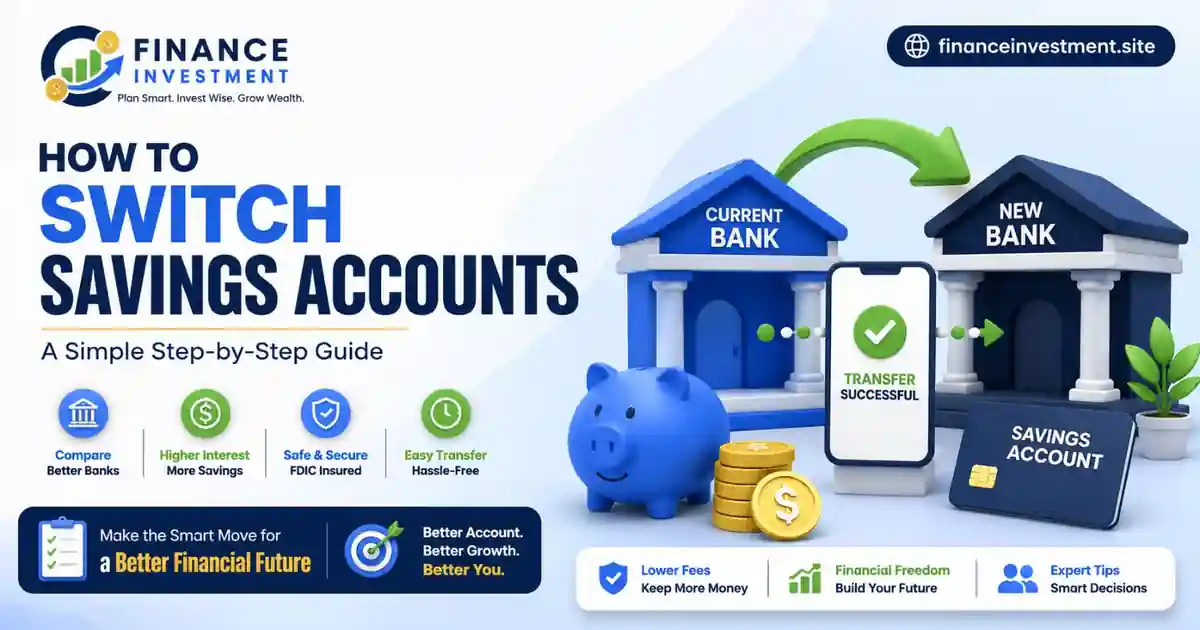 Knowing How to Switch Savings Accounts can help you earn more interest, reduce unnecessary fees, and take advantage of better banking features. Many people continue using the same savings account for years without realizing that another bank may offer a higher APY, lower costs, or a better digital experience. Making the switch doesn’t have to be difficult, and in most cases, it can be completed in just a few simple steps.
One of the biggest concerns people have is whether they’ll lose money or face unexpected problems during the transition. The good news is that changing savings accounts is usually straightforward when you plan ahead. By opening your new account first, transferring your money carefully, and closing the old account only after everything is complete, you can avoid unnecessary stress and keep your savings secure.
This guide explains the entire process in clear, easy-to-follow language. You’ll learn when it’s worth changing banks, how to compare savings accounts, what documents you’ll need, how to transfer your funds safely, and the common mistakes that can delay the process.
By the end of this guide, you’ll understand how to move your savings confidently, protect your money during the transition, and choose an account that supports your financial goals both today and in the future.High-Yield Savings Accounts USA Guide
Quick Answer
How to Switch Savings Accounts is a simple process when you follow the right order. Start by opening your new savings account before closing the old one. Once the new account is active, transfer your money, update any automatic deposits or transfers, confirm that all transactions have cleared, and then close your previous account. Taking these steps helps you avoid missed deposits, unnecessary fees, and interruptions to your savings.
Key Takeaways
- ✔ Open your new savings account before closing your current one.
- ✔ Compare APYs, fees, and account features before making the switch.
- ✔ Move automatic transfers and direct deposits to your new account.
- ✔ Verify that your money has arrived before requesting account closure.
- ✔ Keep copies of account statements and confirmation emails.
- ✔ Choose an FDIC- or NCUA-insured institution for added peace of mind.
Bottom Line: Switching to a better savings account can increase your interest earnings and improve your overall banking experience. A little planning today can help your money work harder for years to come.
Table of Contents
- At a Glance
- Complete Beginner Guide
- How the Switching Process Works
- Benefits & Drawbacks
- Comparison Table
- Costs, Risks & Expert Tips
- Common Mistakes & Real-Life Example
- Who Should Switch Savings Accounts?
- Frequently Asked Questions
- Final Verdict
How to Switch Savings Accounts at a Glance
Changing to a new savings account can be a smart financial move if your current account no longer meets your needs. Whether you’re looking for a higher APY, lower fees, or better online banking features, switching accounts is usually easier than most people expect. With a little planning, you can move your money safely without interrupting your savings goals.
Before making the switch, compare several banks instead of focusing only on the highest advertised interest rate. Look at monthly fees, minimum balance requirements, customer service, mobile banking tools, transfer options, and FDIC or NCUA insurance. Choosing the right account today can save you time and money in the future.
| Category | Details |
|---|---|
| Best For | Anyone looking for higher interest, lower fees, or improved banking features. |
| Time Required | Usually 30 minutes to complete the setup, plus a few business days for transfers. |
| Main Steps | Open a new account, transfer your funds, update automatic transactions, and close the old account. |
| Documents Needed | Government-issued ID, Social Security number, and your existing bank account details. |
| Safety | Choose an FDIC-insured bank or an NCUA-insured credit union. |
| Biggest Benefit | Earn more interest while enjoying better banking features and lower costs. |
Learning How to Switch Savings Accounts isn’t just about moving money. It’s about finding an account that works better for your financial goals and gives your savings a stronger opportunity to grow over time.
Complete Beginner Guide
If you’ve never changed banks before, don’t worry. Learning How to Switch Savings Accounts is a straightforward process when you take it one step at a time. The goal is to move your money safely while avoiding missed deposits, transfer delays, or unnecessary fees.
Start by researching a few savings accounts that match your needs. Compare more than just the annual percentage yield (APY). Look at monthly maintenance fees, minimum balance requirements, mobile banking features, customer service, and whether the bank is insured by the FDIC or, in the case of credit unions, the NCUA. Choosing the right account now can save you from repeating the process later.
Once you’ve selected a new bank, open your new savings account before making any changes to your existing one. During the application, you’ll typically provide your name, address, Social Security number, date of birth, and a government-issued photo ID. Many banks also ask you to link an existing checking account to fund your new savings account.
After your new account is active, transfer your savings and update any automatic transfers or direct deposits connected to the old account. Give the transfer enough time to clear before closing your previous account. Keeping both accounts open for a few days can help prevent payment issues or missed transactions.
Before requesting account closure, confirm that your balance has been transferred completely and that there are no pending transactions. Save copies of your final statements for your records.
Taking a little extra time during the transition can make the entire process smoother. A carefully planned switch helps protect your savings, avoids unnecessary complications, and allows you to enjoy the benefits of a better account with confidence.Online Banks vs. Traditional Banks
How the Switching Process Works
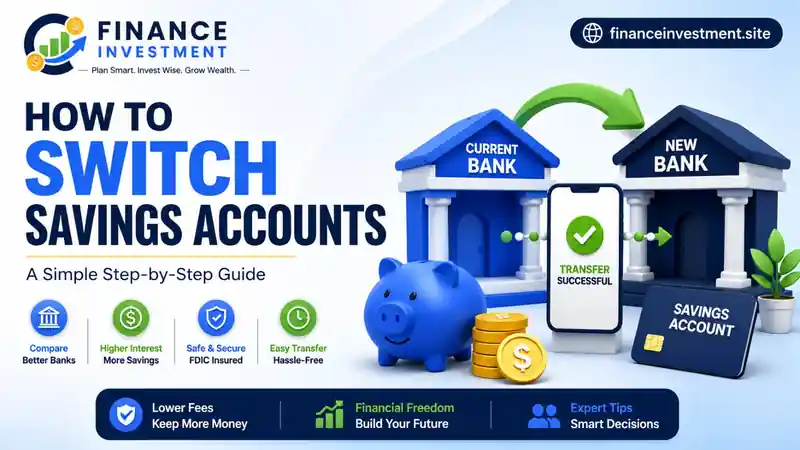 Understanding How to Switch Savings Accounts is easier when you know the order of each step. The process is designed to protect your money while making sure you don’t miss deposits, automatic transfers, or interest payments during the transition.
The first step is opening your new savings account. Most banks let you complete the application online in just a few minutes. Once your identity is verified and the account is approved, you’ll receive your new account details and can begin moving your savings.
Next, transfer your money from your old savings account to the new one. Depending on your bank, this may happen through an electronic transfer, an external bank transfer, or another approved funding method. The transfer usually takes a few business days, so it’s best to avoid closing your original account immediately.
After your funds arrive, update any automatic transfers or scheduled deposits connected to the old account. This includes transfers from your checking account and any recurring deposits you’ve already set up. Taking a few extra minutes to review these settings can help prevent missed transactions.
Once you’ve confirmed that your balance has moved successfully and there are no pending transactions, you can request to close your previous savings account. Keep a copy of your final statement for your records in case you need it later.
Following these steps carefully helps make the transition smooth and gives you confidence that your savings are secure while you begin earning the benefits offered by your new account.FDIC-insured bank
Benefits & Drawbacks
Changing to a new savings account can improve your overall banking experience, but it’s still important to weigh the advantages and possible drawbacks before making a decision. Taking a few minutes to compare your options can help you avoid unnecessary hassle and choose an account that better supports your financial goals.
✅ Pros
- Move to an account with a higher APY and earn more interest on your savings.
- Reduce or eliminate monthly maintenance fees.
- Take advantage of better mobile banking tools and online account management.
- Access improved customer service and modern banking features.
- Enjoy stronger budgeting tools, automatic transfers, and account alerts.
- Keep your money protected when using an FDIC-insured bank or NCUA-insured credit union.
❌ Cons
- Transferring funds may take a few business days.
- You’ll need to update automatic transfers linked to your old account.
- Closing your previous account too early could interrupt scheduled deposits.
- Some banks may require a minimum opening deposit or balance.
- Interest rates can change over time, even after you switch.
Learning How to Switch Savings Accounts can be worthwhile if your current bank no longer offers competitive rates or useful features. A carefully planned transition helps you avoid common problems while giving your savings the opportunity to earn more. Before making the move, compare the complete banking experience—not just the advertised APY—so your new account continues to meet your needs well into the future.Best Savings Accounts for Students
Compare Before You Switch
Not every savings account offers the same value. While a higher APY is important, it’s only one part of the decision. Comparing fees, account features, digital tools, and customer support can help you find an account that fits your long-term financial needs instead of focusing on a single number.
| Feature | Current Savings Account | New Savings Account |
|---|---|---|
| Interest Rate (APY) | May be lower than current market rates. | Often offers a more competitive APY. |
| Monthly Fees | Some accounts charge maintenance fees. | Many accounts have no monthly fee. |
| Minimum Balance | Requirements vary by bank. | Many banks have low or no minimum balance. |
| Mobile Banking | Basic online features. | Advanced app, alerts, and account management tools. |
| Automatic Transfers | May offer limited flexibility. | Easy scheduling and recurring transfers. |
| Deposit Protection | FDIC or NCUA insurance at eligible institutions. | FDIC or NCUA insurance at eligible institutions. |
| Best Choice | Suitable if it still meets your needs. | Better if it offers stronger value and features. |
Knowing How to Switch Savings Accounts isn’t just about transferring money from one bank to another. It’s also about choosing an account that gives you better value over time. Compare the complete banking experience, including interest earnings, fees, customer service, security, and digital tools, before making your final decision. A thoughtful comparison today can help your savings grow more efficiently while making everyday banking easier.
Costs, Risks & Expert Tips
Switching savings accounts is usually free, but it’s still worth checking the details before moving your money. While many banks don’t charge account closing fees, some may have minimum balance requirements, transfer limits, or conditions that affect bonus offers. Reading the account terms in advance can help you avoid surprises.
💡 Expert Tip
When deciding How to Switch Savings Accounts, don’t close your existing account immediately after opening a new one. Keep both accounts active until every transfer, automatic deposit, and scheduled payment has been completed successfully. This simple step can prevent delays and missed transactions.
Another common mistake is choosing a new account based only on the highest advertised APY. A slightly lower rate may still be the better option if the bank offers excellent customer service, a reliable mobile app, no monthly fees, and flexible transfer options.
Taking a little extra time to compare banks and plan the transition carefully can make the entire process much smoother. A well-organized switch helps protect your savings while allowing you to enjoy the long-term benefits of a better banking experience.Consumer Financial Protection Bureau (CFPB)
Common Mistakes & a Real-Life Example
Changing savings accounts is usually a smooth process, but small mistakes can create unnecessary delays or even cost you money. A little preparation before making the switch can help you avoid these problems and keep your savings moving without interruption.
Common Mistakes to Avoid
- Closing your old savings account before confirming that your money has arrived in the new account.
- Forgetting to update automatic transfers or recurring deposits after opening the new account.
- Choosing a bank based only on the highest APY without comparing fees, customer service, and account features.
- Ignoring minimum balance requirements that could reduce your earnings or trigger fees.
- Not saving copies of your final account statements after closing your previous account.
- Rushing the process instead of checking that every transfer has been completed successfully.
Real-Life Example
Michael, a homeowner in Florida, noticed that his old savings account was earning very little interest. After learning How to Switch Savings Accounts, he opened a new high-yield savings account before moving any money. He transferred his balance, updated his automatic monthly savings transfer, and waited until every transaction cleared before requesting the old account to be closed.
Because Michael followed each step carefully, the transition was completed without delays or missed deposits. He now earns more interest on the same savings balance while enjoying a better mobile banking experience and lower account costs. His experience shows that a well-planned switch can improve your finances without adding unnecessary stress.How High-Yield Savings Accounts Work
Who Should Switch Savings Accounts?
Switching savings accounts isn’t necessary for everyone, but it can be a smart decision if your current account no longer provides good value. If you’re earning a very low interest rate, paying monthly maintenance fees, or struggling with outdated online banking tools, it may be time to consider a better option.
Learning How to Switch Savings Accounts is especially helpful for people building an emergency fund, saving for a home, planning for retirement, or setting aside money for future expenses. Even a modest increase in your APY can make a noticeable difference as your savings continue to grow.
This guide is also useful for families, students, freelancers, and retirees who want a simpler banking experience with lower costs and better digital features. If your bank no longer meets your expectations for customer service or account flexibility, switching can improve both convenience and long-term savings.
However, before making the move, compare several accounts carefully and review the complete list of features—not just the advertised interest rate. Choosing a bank that fits your financial habits and future goals will help ensure the switch is worthwhile and beneficial for years to come.
Frequently Asked Questions
1. Why should I switch my savings account?
Many people switch because their current account offers a low interest rate, charges monthly fees, or lacks useful features. Moving to a better account can help your savings earn more while improving your overall banking experience.
2. How long does it take to switch savings accounts?
Opening a new account usually takes only a few minutes. After that, transferring your money and updating automatic transactions may take a few business days, depending on the banks involved.
3. Will I lose money when I switch banks?
In most cases, no. If you transfer your funds carefully and keep your old account open until every transaction is complete, you can avoid unnecessary fees and missed deposits.
4. Can I keep both savings accounts open for a while?
Yes. Keeping both accounts active during the transition is often the safest approach. It gives you time to confirm that your balance has been transferred and that all automatic deposits or transfers are working correctly.
5. Do I need to switch my direct deposits?
If your paycheck or any recurring deposits go directly into your savings account, you’ll need to update those instructions after opening your new account. This helps prevent delays or failed transactions.
6. Is my money protected after I switch?
Yes. As long as your new account is with an FDIC-insured bank or an NCUA-insured credit union, eligible deposits remain protected up to the applicable federal insurance limits.
7. When should I close my old savings account?
Wait until your money has arrived safely, automatic transfers have been updated, and there are no pending transactions. Closing the account too early can create avoidable problems.
8. Is learning How to Switch Savings Accounts worth it?
For many people, yes. If another bank offers better interest rates, lower fees, or stronger digital banking tools, switching can improve both your savings growth and your everyday banking experience without making your finances more complicated.
Final Verdict
Learning How to Switch Savings Accounts can be one of the simplest ways to improve your financial situation without changing your spending habits. If your current account pays a low interest rate, charges unnecessary fees, or no longer offers the features you need, moving to a better account may help your savings grow faster while making everyday banking more convenient.
The key is to plan the transition carefully. Open your new account first, transfer your money, update any automatic deposits or transfers, and verify that everything is working before closing your old account. Taking these steps helps prevent delays, missed transactions, and unnecessary stress.
When comparing banks, look beyond the advertised APY. Consider customer service, mobile banking tools, account fees, security, and overall convenience. An account that fits your financial habits is often a better long-term choice than one that simply offers the highest promotional rate.
A thoughtful switch today can lead to better interest earnings, lower costs, and a smoother banking experience for years to come. Choose carefully, stay organized, and let your savings work harder for your future.
Give Your Savings a Better Home
Your savings deserve more than a low interest rate. If your current account isn’t helping your money grow, now may be the right time to make a change. Compare your options, choose a bank that fits your financial goals, and complete the switch with confidence. A few simple steps today could lead to higher earnings, lower fees, and a better banking experience for years to come. Keep exploring our expert guides for practical tips that help you save smarter and build lasting financial security.
📩 Subscribe to Our Free Newsletter
Continue Reading
High-Yield Savings Accounts USA
|
Online Banks vs Traditional Banks
|
How High-Yield Savings Accounts Work
Leave a Reply