Callable CDs Explained: How They Work in 2026
Callable CDs: A Higher Rate With an Important Catch
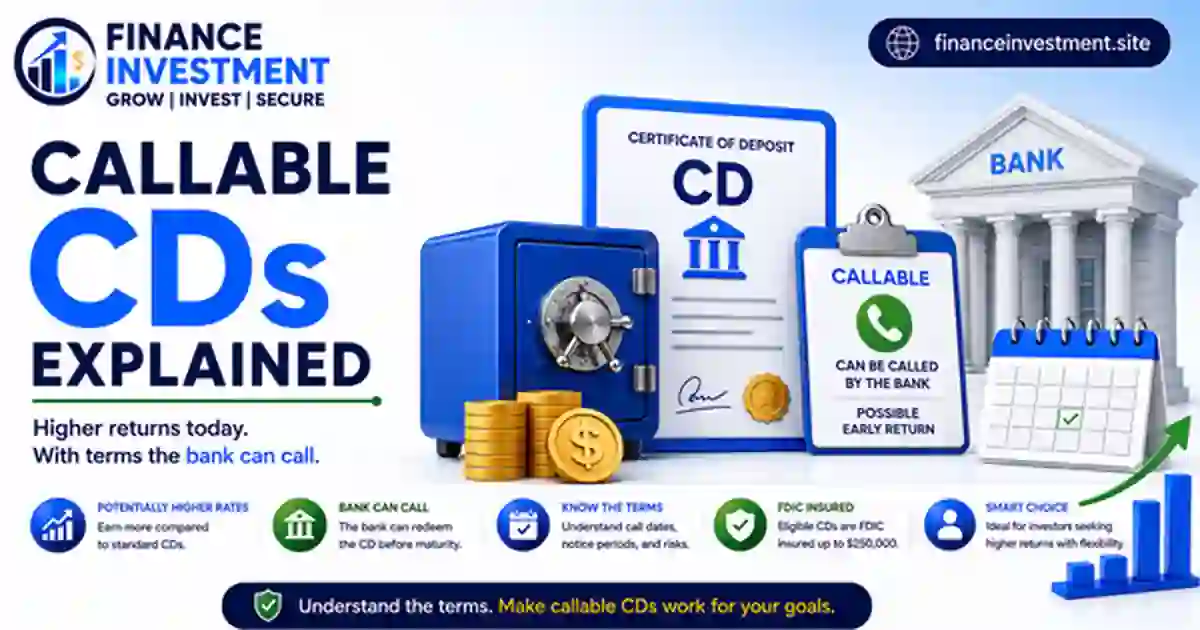 A callable CD can look appealing when its advertised rate is higher than
what you see on a comparable traditional CD. But there is a detail that
deserves attention: the bank or credit union may have the right to end
the CD before its stated maturity date. That feature can change how you
think about the return you are actually getting.
For example, imagine locking in a strong rate for several years. If market
rates later fall, the issuer may decide to call the CD according to the
terms of the account. You receive the amount specified under the contract,
but you may then have to reinvest that money at lower rates. The attractive
rate you saw at the beginning, therefore, is not always the same as the
rate you can count on for the entire advertised term.
If you are new to CDs, start with the broader
CD Guide 2026
before comparing more specialized CD types.
What You’ll Learn
This guide will show you how callable CDs work, what a call date means,
why issuers may exercise the call option, and how callable CDs differ
from standard CDs. You will also see the trade-offs involving rates,
liquidity, taxes, insurance, reinvestment and maturity—so you can judge
an offer by its full terms rather than its headline APY alone.
Quick Answer: What Is a Callable CD?
A callable CD is a certificate of deposit that can be
ended early by the issuing bank or credit union under specific terms.
In exchange for giving the issuer this flexibility, a callable CD may
offer a more attractive rate than some comparable CDs. The important
catch is that you cannot assume the advertised rate will remain in place
for the entire stated term if the CD is called.
Key Takeaways
- Issuer controls the call: The bank decides whether to exercise its call option.
- Rates are typically fixed: The stated rate generally stays fixed while the CD remains outstanding.
- Call risk matters: A called CD can leave you looking for a new place to invest your money.
- Protection may apply: Eligible deposits at an FDIC-insured bank or federally insured credit union can receive applicable deposit insurance.
- Taxes still matter: CD interest is generally taxable income when required under federal tax rules.
- Read the call terms: Check the call date, notice provisions, term and what happens if the issuer calls the CD.
A callable CD can offer a compelling rate, but the extra yield comes with
issuer call risk. Look beyond APY and make sure the call provisions fit
your time horizon and need for predictable income.
Callable CDs at a Glance
A callable CD combines a fixed deposit rate with an issuer’s right to
redeem the CD before its stated maturity. That extra feature makes the
call terms just as important as the advertised APY.
| Key Fact | What to Know |
|---|---|
| Rate | Usually fixed while the CD remains outstanding. |
| Call period | The issuer can call the CD only according to its stated terms. |
| Maturity | The original term may be longer than the period the CD actually stays open. |
| Access | Early access is governed by the contract; a callable CD is not the same as a no-penalty CD. |
| Protection | Eligible deposits may receive FDIC or NCUA insurance within applicable limits. |
| Minimum | Deposit requirements vary by institution and product. |
| Taxes | Interest is generally taxable income for federal tax purposes. |
Best use: Callable CDs may suit savers who value a potentially
higher fixed rate and can accept the possibility of having their money
returned earlier than expected.
Complete Beginner Guide to Callable CDs
 A callable CD is a type of certificate of deposit with one important
difference from a basic CD: the financial institution may have the right
to end the CD before its scheduled maturity date. The account still works
around a deposit, an interest rate and a defined term, but the issuer gets
an additional option that can affect how long your money stays invested.
How the Basic Structure Works
You start by depositing a specific amount, known as the principal.
The bank then pays interest according to the rate and terms disclosed when
you open the account. The APY shows the annualized return while
accounting for the effect of compounding, making it more useful for comparing
CD offers than a simple interest rate alone.
The term tells you the scheduled length of the CD, such as
one year, three years or five years. At maturity, the CD reaches
the end of that scheduled term. With a callable CD, however, the issuer may
be able to redeem it earlier if the contract allows a call during the
specified call period.
Callable CD vs. Standard CD
A standard CD generally keeps your money invested until its stated maturity,
unless you withdraw early under the account’s withdrawal rules. A callable
CD adds issuer call risk: the institution can potentially return your
principal and applicable interest before the original maturity date.
That is why a higher advertised rate should be considered alongside the
call schedule and other contract details.
Where Ownership Fits In
CDs can be held individually or jointly, depending on the institution and
account structure. Eligible deposits at an FDIC-insured bank or federally
insured credit union may receive applicable deposit insurance within legal
limits. Callable CDs therefore sit closer to the cash-saving side of a
portfolio than to higher-volatility investments, although the call feature
creates a reinvestment consideration that ordinary savings accounts may not.
For a broader foundation, see our
guide to standard CDs
How Callable CDs Work
A callable CD follows a fairly simple path, but one extra feature can
change the outcome: the issuing bank or credit union may have the right
to redeem the CD before its scheduled maturity. Here is how the process
typically unfolds.
1. Choose the CD and Review the Call Terms
Before opening the account, check the APY, deposit requirement, scheduled
term and, most importantly, the call provisions. Look for the first
possible call date, how often the issuer can call the CD and what you
receive if the CD is redeemed.
2. Fund the Account
You deposit the required principal according to the institution’s rules.
Once the CD is opened, the disclosed rate generally applies while the
account remains outstanding under its terms.
3. Interest Accrues
The CD earns interest according to its stated rate and compounding
schedule. Your actual earnings can depend on when interest is credited,
whether it is paid out or added to the balance, and the product’s
specific terms.
4. The Issuer Reaches the Call Date
Once the CD becomes callable, the issuer can exercise its call option
if the contract permits it. This is controlled by the institution—not
by the depositor. If the issuer does not call the CD, it can continue
toward its original maturity.
5. Called CD vs. CD That Reaches Maturity
If the CD is called, the institution returns the amount specified under
the contract, ending the deposit earlier than originally expected. You
then have to decide where that money goes next. If the CD reaches
maturity instead, you can follow the maturity instructions, such as
withdrawing the funds, transferring them or allowing an eligible renewal.
A callable CD does not give you control over the timing of the exit.
The call schedule tells you when the issuer gets that option, so keep
your own cash needs separate from money committed to the CD.
Benefits & Drawbacks of Callable CDs
Callable CDs can be attractive when the rate is competitive, but the
higher potential return comes with a trade-off. The key question is
whether the added rate is worth giving the issuer more control over
when the CD ends.
✓ Benefits
- Potentially attractive rates: Some callable CDs may
offer a higher rate to compensate savers for accepting the call feature. - Rate stability: While the CD remains outstanding,
its stated rate generally does not fluctuate with daily market rates. - Deposit protection: Eligible deposits at an
FDIC-insured bank or federally insured credit union may receive
applicable insurance within coverage limits. - Defined structure: The CD provides a stated term,
rate and contractual call provisions rather than leaving every detail
open-ended.
⚠ Drawbacks
- Call risk: The issuer may redeem the CD before its
scheduled maturity when the contract allows it. - Reinvestment risk: If the CD is called after rates
fall, comparable new deposits may offer less attractive returns. - Inflation risk: A fixed rate may lose purchasing power
if inflation remains higher than the return. - Less certainty about timing: You may receive your
money earlier than planned, which can disrupt a specific savings goal.
Benefits & Drawbacks of Callable CDs
A callable CD can be appealing when you want a fixed return and the
offered rate is competitive. The trade-off is that the bank gets an
option that a standard CD usually does not: it may be able to redeem
the CD before the scheduled maturity date.
Benefits of Callable CDs
- Potentially higher rates:
Some callable CDs offer a stronger APY than comparable products to
compensate for the issuer’s call option. - Fixed-rate structure:
The stated rate generally remains fixed while the CD stays outstanding
under its terms. - Deposit protection:
Eligible deposits may receive FDIC or NCUA insurance within applicable
coverage limits. - Defined terms:
The contract spells out the rate, scheduled maturity and circumstances
under which the issuer can call the CD.
Drawbacks to Consider
- Call risk:
The issuer may end the CD early when the contract permits it. - Reinvestment risk:
If rates have fallen when your CD is called, a new CD may offer a
lower return. - Inflation risk:
A fixed return may not keep pace with rising prices. - Less control over timing:
The money could come back before your original savings plan reaches
its intended date.
A higher APY can be useful, but it should be weighed against the possibility
that the issuer ends the CD when market conditions make that attractive
for the institution.
Callable CDs Compared With Other Savings Options
A callable CD is not automatically better than a regular CD or a savings
account. Each option gives you a different mix of return, access and
predictability. The biggest distinction is who controls the timing: with
a callable CD, the issuer may have the right to end the deposit early.
| Option | Rate | Access | Best Use |
|---|---|---|---|
| Callable CD | Usually fixed | Contract-based; issuer may call early | Savers seeking a fixed return who accept call risk |
| Standard CD | Usually fixed | Limited before maturity | Money with a defined time horizon |
| High-Yield Savings | Variable | Generally easy | Emergency funds and flexible savings |
| Money Market Account | Usually variable | More flexible than a CD | Cash reserves needing convenient access |
Minimum deposits and fees vary by institution, so the advertised APY is
only one part of the decision. Eligible deposits at an FDIC-insured bank
or federally insured credit union can receive applicable deposit insurance
within coverage limits. Interest earned from these deposit products is
generally taxable income, although the exact tax treatment depends on the
account and your circumstances.
If you are deciding between a callable product and a conventional deposit,
our
Standard CDs Explained
guide provides a useful starting point. For a more flexible comparison,
see our guide to
CDs vs. high-yield savings accounts
.
A callable CD can make sense for a rate-focused saver who accepts issuer
call risk. A high-yield savings account or money market account may be
more suitable when keeping funds readily accessible matters more.
Costs, Risks & Expert Tips for Callable CDs
The most important cost of a callable CD is not always a visible fee.
The bigger concern can be what happens when the issuer exercises its
call option. A good offer should be judged by its full terms, not just
the headline APY.
Costs and Risks to Check
. Call Risk- bank’s decision to call a CD is not the same as a customer’s early
withdrawal. When the issuer exercises its call right, the redemption
follows the terms stated in the CD agreement. Your own withdrawal rights
are a separate matter.
- Reinvestment risk: If market rates have fallen when
the CD is called, replacing it could mean accepting a lower yield. - Early-withdrawal rules: Do not assume that a callable
CD gives you penalty-free access. Your own withdrawal rights are
determined by the account agreement. - Inflation: A fixed return can lose purchasing power
when inflation runs above the CD’s effective return. - Taxes: Interest from taxable CDs is generally subject
to federal income tax, even when the money remains in the account. - Fees and minimums: Check the institution’s disclosure
for account fees, minimum opening deposits and any conditions attached
to the advertised rate.
Practical Checks Before Opening One
- Find the exact first call date and full call schedule.
- Confirm what you receive if the issuer calls the CD.
- Verify that the institution is FDIC-insured or federally insured by NCUA, as applicable.
- Check your total deposits against applicable insurance limits.
- Keep money needed for near-term bills outside the CD.
- Decide in advance where the funds could go if the CD is called.
Expert Tip
Treat the call date as a planning date, not a guaranteed maturity date.
If the money has a specific future job, keep enough flexibility elsewhere
so an unexpected early redemption does not force a rushed reinvestment decision.
Common Callable CD Mistakes and an Illustrative Example
The issuer later calls the CD before its scheduled maturity. The saver
receives the applicable principal and interest, but now has to decide
where to place the money. If comparable CD rates have fallen, the next
available rate may be lower.
Common Mistakes to Avoid
- Choosing by APY alone: A higher rate does not tell you
when the issuer can call the CD or how long you may actually keep that rate. - Skipping the call schedule: The first callable date,
notice provisions and redemption terms deserve a careful look. - Assuming every callable CD works the same way:
Call periods, terms and redemption conditions can differ between products. - Overlooking insurance: Verify the institution and keep
your deposits within applicable FDIC or NCUA coverage limits. - Forgetting taxes: Interest from a taxable CD can create
income-tax consequences even if you leave the earnings in the account. - Ignoring liquidity: Money needed for an upcoming expense
should not depend on whether a callable CD remains open. - Having no reinvestment plan: If the CD is called, rates
available at that time may be lower than the rate you originally locked in.
Who Should Consider a Callable CD?
Callable CDs can make sense for savers who are comfortable trading some
control over timing for a potentially attractive fixed rate. They may be
worth considering when the money is not needed for everyday expenses and
the account’s call terms are easy to understand.
Who May Find Them Useful?
- Beginners: Those learning about fixed-rate deposits and
willing to read the contract carefully. - Families: Savers setting aside money for a known future
goal who can handle an earlier return of funds. - Retirees: Investors seeking predictable interest from
eligible deposit products, provided the call risk fits their income plan. - Larger-balance savers: People who can manage deposit
insurance limits across institutions when necessary. - Conservative investors: Those who prioritize principal
stability over market-based growth.
When Another Option May Fit Better
If you need frequent access to the money, a
high-yield savings account
may offer greater flexibility. A standard CD can be easier to plan around
when you want a defined maturity without an issuer call feature. For a
very short-term goal, keeping the money readily available may matter more
than locking in a potentially higher rate.
Frequently Asked Questions About Callable CDs
What is a callable CD?
A callable CD is a certificate of deposit that gives the issuing
institution the right to redeem the CD before its scheduled maturity,
subject to the contract’s call terms.
Are callable CDs safe?
They can provide principal stability when offered by an eligible
insured institution, but the call feature creates reinvestment risk.
They are not the same as investments whose market value fluctuates.
Are callable CDs FDIC insured?
An eligible callable CD issued by an FDIC-insured bank may be covered by
FDIC deposit insurance within applicable limits.
How does the call date work?
The call date is the earliest date on which the issuer may exercise its
redemption right if the contract permits it. It does not mean the CD
will definitely be called.
Is the rate on a callable CD fixed?
Callable CDs commonly have a fixed stated rate while the CD remains
outstanding, but the issuer’s call option can shorten the period during
which you receive that rate.
What happens if a callable CD is called early?
The institution redeems the CD according to the contract, returning the
applicable principal and interest. You then decide how to use or
reinvest the funds.
Do callable CDs have minimum deposits?
Minimum opening deposits vary by bank, credit union and product. Always
check the specific account disclosure rather than assuming every callable
CD has the same requirement.
Are callable CD earnings taxable?
Interest from a taxable CD is generally included in income for federal
tax purposes. Your actual tax treatment can depend on the account and
your individual circumstances.
Can I withdraw from a callable CD whenever I want?
No. A callable CD’s issuer call feature is different from your own
withdrawal rights. Any early withdrawal by you is governed by the
account agreement and may involve a penalty.
Are callable CDs good for short-term savings?
They may not be ideal when you need dependable access to the money on a
specific date. A flexible savings option can be easier to manage for
short-term needs.
Final Verdict: Are Callable CDs Worth Considering?
Callable CDs can be a useful choice for savers who want a fixed rate and
are comfortable with the possibility that the issuer may end the CD before
its scheduled maturity. They can work particularly well when you have a
defined savings goal but do not need to control the exact date your money
comes back.
Still, the highest APY should not automatically win. The first call date,
call schedule and redemption terms can matter just as much as the quoted
rate. If the CD is called after market rates have fallen, finding a
comparable replacement may be difficult.
Liquidity also deserves attention. Keep money needed for emergencies or
near-term expenses somewhere easier to access. And remember that interest
from taxable CDs can affect your federal tax bill, reducing your
after-tax return.
Bottom Line
A callable CD is best viewed as a trade-off: potentially attractive fixed
earnings in exchange for issuer call risk. For a broader look at CD types,
strategies and choosing a product, explore our
CD Guide 2026
.
Related Resources
Want to go deeper before choosing a CD? These guides cover the practical
questions that usually come next:
Best CD Rates in 2026
How CD Interest Rates Work
What Is a Certificate of Deposit?
CD Early Withdrawal Explained
How to Build a CD Ladder in 2026
How CD Earnings Are Taxed
CD vs. High-Yield Savings Account
For authoritative information, review
FDIC deposit insurance
,
Treasury.gov
and the
IRS
for current federal guidance.
Make Your Next CD Decision With Confidence
Want more practical guidance on CDs, rates and savings strategies?
Explore our
CD Guide 2026
and keep learning before you lock in your next deposit.
You can also reach us at
subhashr325@gmail.com
.
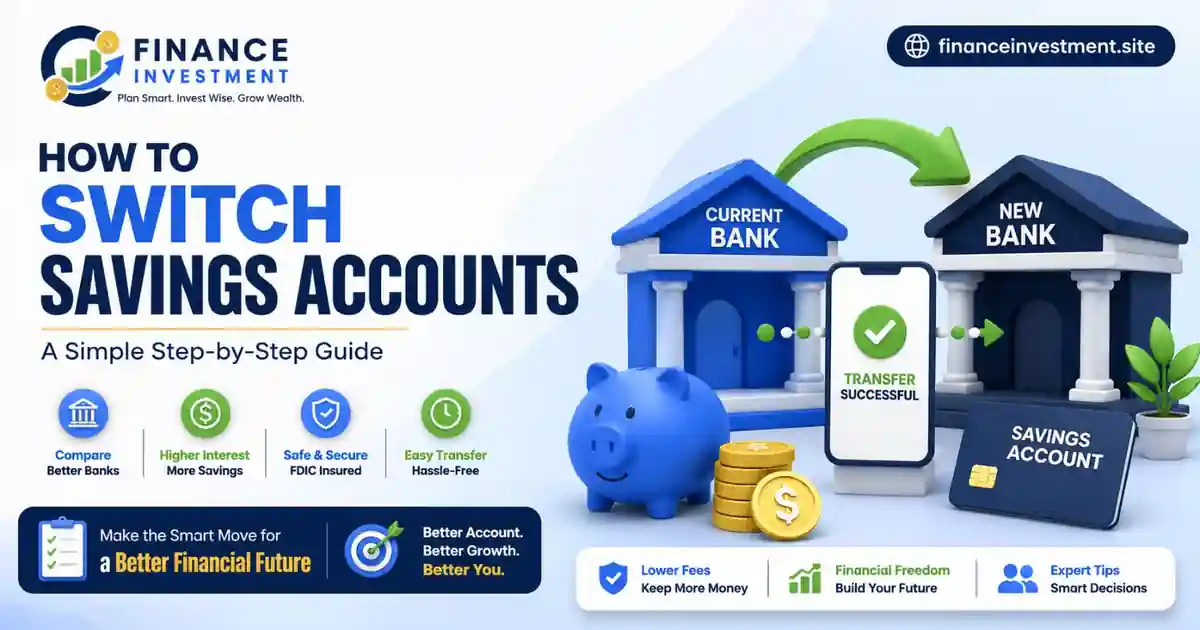
 Understanding How to Switch Savings Accounts is easier when you know the order of each step. The process is designed to protect your money while making sure you don’t miss deposits, automatic transfers, or interest payments during the transition.
 Understanding How to Open a High-Yield Savings Account becomes much easier once you know what happens behind the scenes. The process is designed to verify your identity, connect your funding source, and create a secure account where your money can earn interest from the day your deposit is received.
 Using the Best Banks for Automatic Savings can make saving feel much easier because the process happens automatically. Instead of deciding every week how much to save, your bank follows the schedule you create. This approach helps many people stay consistent and reach financial goals without changing their daily routine. Even so, it’s helpful to understand both the advantages and the possible drawbacks before choosing an account.
 Not every savings account is the same. The Best Savings Accounts for Seniors balance strong interest rates with safety, convenience, and low costs. Instead of looking at APY alone, compare several features together. A slightly lower interest rate may still be the better choice if the account offers excellent customer service, no monthly fees, and simple access to your money.