Are Cashier’s Checks and Money Orders FDIC Insured?
 Are Cashier’s Checks and Money Orders FDIC Insured? What Buyers Should Know
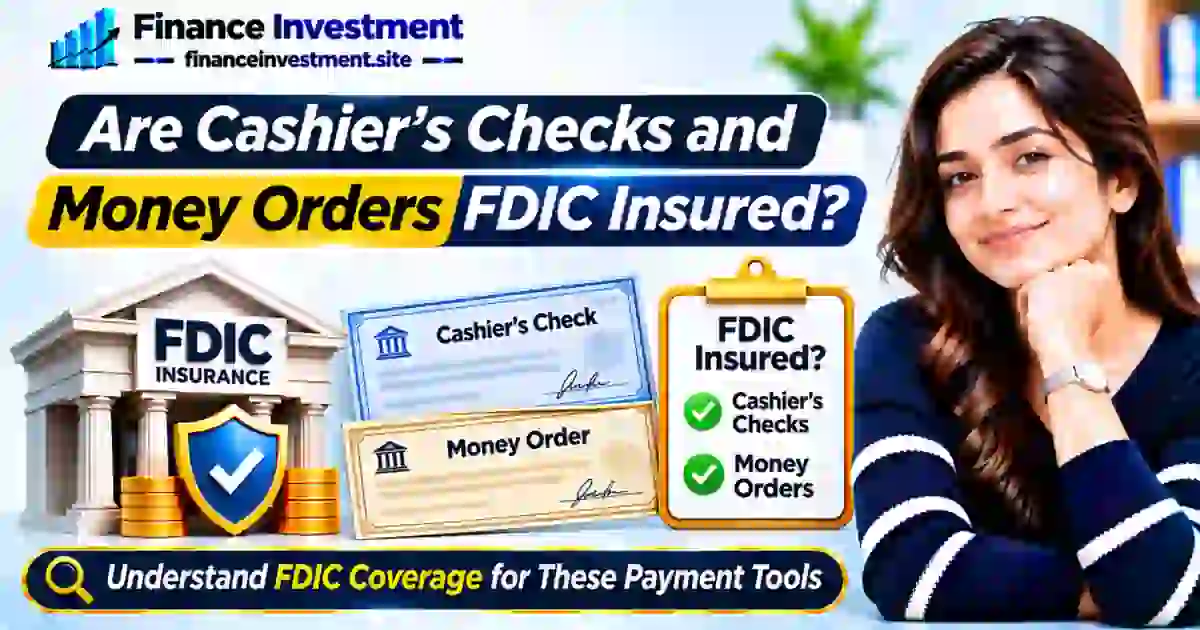 Are Cashier’s Checks and Money Orders FDIC Insured? What Buyers Should Know
Are cashier’s checks and money orders FDIC insured? Imagine buying a cashier’s check for a car purchase or picking up a money order to pay rent. You’ve already handed over the money, but what protects that payment if the company or bank behind it runs into trouble?
The answer starts with the issuer. Cashier’s checks are generally issued by banks or credit unions, while money orders may come from banks, the U.S. Postal Service, or private companies. FDIC insurance can apply to qualifying instruments issued by FDIC-insured banks, subject to applicable ownership and coverage rules.
Are Cashier’s Checks FDIC Insured
A money order purchased elsewhere isn’t automatically FDIC insured.
Our FDIC and NCUA insurance guide covers deposit protection more broadly. This article focuses on payment instruments, bank failures, and the practical differences between insurance coverage and protection against fraud.
What You’ll Learn
- When cashier’s checks and money orders qualify for FDIC coverage.
- Why the issuing bank or company makes a difference.
- What happens if an issuing bank fails.
- How to compare payment methods before handing over your money.
Quick Answer: Are Cashier’s Checks and Money Orders FDIC Insured?
Yes, in qualifying cases. Cashier’s checks and money orders issued by FDIC-insured banks generally qualify for deposit insurance, subject to applicable limits and ownership rules. Money orders issued by nonbank providers, including the U.S. Postal Service, are not automatically FDIC insured.
6 Key Takeaways
- Bank-issued cashier’s checks: Generally eligible when issued by an FDIC-insured bank.
- Bank-issued money orders: Generally eligible under applicable FDIC rules.
- Retail and postal money orders: Do not assume FDIC coverage.
- Coverage limit: Generally $250,000 per depositor, per insured bank, per ownership category.
- Bank failure: FDIC insurance addresses qualifying losses when an insured bank fails.
- Fraud or theft: FDIC deposit insurance does not reimburse ordinary payment scams or stolen instruments.
Bottom Line: Check who issued the payment, confirm the bank’s FDIC status, and understand that deposit insurance is different from protection against fraud.
Table of Contents
At a Glance: Cashier’s Checks and Money Orders
Quick Coverage Comparison
| Payment Type | FDIC Status | Typical Use |
|---|---|---|
| Bank cashier’s check | Generally eligible* | Large purchases |
| Bank-issued money order | Generally eligible* | Prepaid payments |
| USPS money order | Not FDIC insured | Mail and bill payments |
| Retail-provider money order | Not automatically FDIC insured | Everyday payments |
*Coverage note: Eligible bank-issued instruments are subject to FDIC rules and applicable insurance limits. The $250,000 standard limit is not a separate allowance for every check or money order.
Complete Beginner Guide: Cashier’s Checks, Money Orders and FDIC Eligibility
Suppose you’re paying a contractor $4,000. Your bank offers a cashier’s check, while a nearby store sells money orders. Both let you pay without writing a personal check, but they work differently. Understanding those differences can help you avoid confusion when making an important payment.
What Is a Cashier’s Check?
A cashier’s check is issued by a bank or credit union after it receives the required funds. The institution, rather than your personal checking account, is responsible for paying the check. These checks are commonly requested for vehicle purchases, property transactions and other substantial payments.
What Is a Money Order?
A money order is a prepaid payment instrument available from banks, post offices and private providers. It’s useful when you need a paper payment but don’t have checks. Each issuer sets its own purchase limits, fees and replacement procedures.
When Does FDIC Insurance Apply?
Cashier’s checks and money orders issued by FDIC-insured banks are recognized as deposit products. Their coverage is subject to FDIC ownership rules and insurance limits. It isn’t a separate insurance allowance for every payment instrument.
Credit unions use a different system: qualifying deposits at federally insured credit unions are protected through the NCUA, not the FDIC. Private-provider money orders should not be assumed to carry FDIC protection simply because the provider has a banking relationship.
Before purchasing: Ask who actually issues the instrument and whether that institution is federally insured. Our FDIC insurance verification guide explains how to check a bank’s status.
Finally, keep your receipt and record the instrument number. If a payment is delayed, lost or questioned, those details can make tracing it easier.
How FDIC Coverage Works for Cashier’s Checks and Money Orders
What if a bank closes while its cashier’s check is still sitting in someone’s drawer? The payment hasn’t been cashed, but the bank that issued it no longer operates. Here’s how deposit insurance comes into play.
Step 1: Confirm the Issuing Bank
First, identify the bank responsible for the instrument. FDIC insurance applies to eligible official items issued by FDIC-insured banks. A store selling a money order does not necessarily make that store the issuer.
Step 2: Determine the Applicable Coverage
If an insured bank fails while an eligible cashier’s check or money order remains unpaid, the FDIC determines coverage using the relevant ownership information and deposit records. The amount may be combined with other deposits in the same ownership category at that bank.
Step 3: Understand the Bank-Failure Process
The FDIC may arrange for another bank to assume insured deposits or pay eligible claimants directly. Treatment of outstanding instruments can depend on the resolution method and documentation available. Learn more in our guide to how the FDIC transfers accounts after a bank failure.
Important: Keep the original instrument, receipt and issuer details. If the issuing bank fails before payment, follow the FDIC’s instructions rather than assuming the check will clear normally.
Benefits and Drawbacks of Cashier’s Checks and Money Orders
Cashier’s checks and money orders can make certain payments easier, especially when the recipient doesn’t accept personal checks. However, both have costs and limitations worth understanding before you pay.
✓ Benefits
- Funds collected upfront: The issuer generally receives payment before providing the instrument.
- Payment flexibility: Money orders can help people who don’t have personal checks.
- Useful for larger purchases: Some sellers request cashier’s checks for substantial transactions.
- Potential FDIC coverage: Eligible instruments issued by insured banks receive applicable deposit insurance protection.
✕ Drawbacks
- Possible fees: Issuers may charge purchase or replacement fees.
- Replacement delays: Lost instruments may require an investigation or additional documentation.
- Counterfeit risks: Fraudsters can create fake checks or exploit payment scams.
- Coverage differences: Nonbank-issued money orders don’t automatically qualify for FDIC insurance.
Practical takeaway: Consider the recipient’s requirements, issuer, fees and replacement process before deciding which payment method to use.
Cashier’s Check vs. Money Order: A Practical Comparison
A cashier’s check may be more suitable for a major purchase, while a money order can be convenient for everyday payments. However, fees, purchase limits and insurance eligibility vary by issuer. Compare the details before choosing.
| Feature | Cashier’s Check | Bank Money Order | USPS Money Order | Retail Money Order |
|---|---|---|---|---|
| Issuer | Bank or credit union | Bank | U.S. Postal Service | Usually a private payment company |
| Typical Amount | Often used for larger payments | Issuer-specific limits | Up to $1,000 per domestic money order | Provider-specific limits |
| Purchase Fees | Bank-dependent | Bank-dependent | Published USPS rates | Provider-dependent |
| FDIC Eligibility | If issued by an FDIC-insured bank* | Generally eligible* | Not FDIC insured | Not automatically insured |
| Where to Buy | Banks or credit unions | Participating banks | Post offices | Participating retail outlets |
*Insurance note: FDIC coverage applies to eligible instruments issued by FDIC-insured banks, subject to applicable limits and ownership rules. Qualifying credit union obligations may fall under NCUA share insurance instead.
Quick Take: Choose a cashier’s check when a recipient requests bank-backed payment for a larger transaction. For smaller bills, a money order may be easier to obtain. Always verify the issuer and the recipient’s requirements.
Costs, Risks and Expert Tips Before You Buy
Before paying for a cashier’s check or money order, consider more than the purchase price. Fees, replacement rules and fraud risks can affect the total cost of a transaction.
Purchase and Replacement Fees
Banks may charge for cashier’s checks, although certain account packages waive the fee. Money order prices vary by issuer and amount. If an instrument is lost, replacement may require documentation, additional charges and a waiting period. Cashier’s checks can have stricter replacement requirements than ordinary personal checks.
The Risk of Fake Checks
A counterfeit cashier’s check may look genuine, even to an experienced seller. Your bank might make deposited funds available before discovering the check is fraudulent. If the payment is later returned, the bank may reverse the credit.
Fraud Warning: Be suspicious of buyers who overpay and request a refund. Never send back the difference simply because a deposited check appears in your available balance. FDIC insurance does not cover this type of scam.
Expert Tips for Safer Transactions
Expert Tip: For an unfamiliar buyer or expensive sale, independently contact the issuing bank to ask about verification. Remember that verification efforts cannot guarantee a check will never be returned.
- Confirm fees and replacement policies before purchasing.
- Keep receipts, instrument numbers and transaction records.
- Report a missing or suspicious instrument to its issuer promptly.
For more information, read the FTC’s guide to avoiding fake-check scams.
Common Mistakes to Avoid
Cashier’s checks and money orders may seem straightforward, but a few misunderstandings can create expensive problems.
- Assuming every money order is FDIC insured: Coverage depends on the actual issuer and applicable deposit insurance rules.
- Confusing FDIC insurance with fraud protection: Deposit insurance protects eligible deposits when an insured bank fails, not against counterfeit payments.
- Trusting an available balance: A deposited check can appear available before the bank discovers it is fake.
- Discarding purchase records: Losing receipts or instrument numbers can complicate tracking and replacement requests.
Real-Life Example: A $3,000 Cashier’s Check
Imagine Sarah sells her laptop for $2,000. A buyer sends a $3,000 cashier’s check and asks her to return the extra $1,000. The deposit appears in Sarah’s account, so she sends the refund.
Days later, her bank identifies the check as counterfeit and reverses the $3,000 credit. Sarah may now lose the $1,000 she sent. FDIC insurance would not reimburse that scam loss.
Bottom line: Verify unfamiliar payments independently, keep your records and understand what deposit insurance actually protects.
Who Should Choose a Cashier’s Check or Money Order?
Choosing a payment method becomes easier when you consider the amount, recipient requirements and issuing institution.
- Homebuyers and vehicle buyers: Consider a cashier’s check for larger transactions when the recipient accepts it. Independently confirm payment instructions.
- People without checking accounts: USPS or retail money orders can be convenient for eligible bills and smaller payments.
- Bank customers: Compare cashier’s checks and bank-issued money orders for fees, purchase limits and replacement policies.
- Insurance-conscious consumers: Verify the actual issuer. FDIC insurance applies to eligible bank-issued instruments; qualifying credit union obligations may have NCUA protection instead.
Quick recommendation: Confirm acceptance, total fees and cancellation or replacement rules before paying. Never assume all issuers offer identical protections.
Frequently Asked Questions
Final Verdict: Are Cashier’s Checks and Money Orders FDIC Insured?
Yes, when issued by an FDIC-insured bank. Eligible cashier’s checks and bank-issued money orders receive deposit insurance protection, subject to applicable coverage limits and ownership rules. USPS money orders are not FDIC insured, while retail money orders require separate issuer verification.
For larger payments, a cashier’s check may be practical. For smaller transactions, a money order may offer greater convenience. Neither eliminates counterfeit-payment risks.
Our Recommendation: Verify the issuing institution and payment requirements before buying. For a deeper explanation, read our FDIC and NCUA Insurance Explained guide.
Have a Money Question? Keep Exploring.
Understanding FDIC insurance can help you make more informed payment decisions. Explore our guides on FDIC and NCUA insurance and verifying FDIC coverage.
📩 Get in Touch With FinanceInvestment
Disclaimer: This article is for educational purposes only and is not personalized financial or legal advice. Confirm current insurance rules and issuer policies with the appropriate institution.