Tag: Smart Investing

  • Future of AI in Personal Finance (2026–2030): How Artificial Intelligence Will Transform Money Management

    Future of AI in Personal Finance (2026–2030): How Artificial Intelligence Will Transform Money Management


    Future of AI in Personal Finance (2026–2030): What Americans Can Expect

    Author: Subhash Rukade

    Published: June 18, 2026


    Future of AI in Personal FinanceWhy the Future of AI in Personal Finance Matters

    Future of AI in Personal Finance is becoming one of the most important topics for investors, savers, and everyday Americans. Artificial intelligence is no longer limited to technology companies or Wall Street firms. Today, AI-powered tools help people manage budgets, track spending, monitor investments, improve savings habits, and make smarter financial decisions.

    Over the last few years, adoption of AI in personal finance has accelerated rapidly. Millions of Americans already use AI-driven budgeting apps, robo-advisors, spending trackers, and automated investing platforms. What makes the period between 2026 and 2030 especially exciting is the possibility that these tools could become far more personalized and intelligent.

    Instead of simply tracking expenses, future AI systems may act like full-time financial coaches. They could analyze spending patterns, identify opportunities to save money, recommend investments, monitor credit health, and help families achieve financial goals with minimal effort.

    The impact could extend beyond convenience.

    AI may help close financial knowledge gaps by providing guidance that was previously available only through expensive financial advisors. This could make professional-quality financial planning more accessible to middle-class households across the United States.

    Investors interested in understanding how AI is already transforming wealth creation should also explore our
    AI Investing Guide 2026.

    While the opportunities are significant, challenges also exist. Privacy concerns, security risks, regulatory changes, and overreliance on algorithms will continue to shape how AI evolves in the financial sector.

    The future of AI in personal finance is not about replacing people. It is about helping individuals make smarter financial decisions faster and with greater confidence.

    In this guide, we’ll explore how AI may transform budgeting, investing, retirement planning, wealth building, and everyday money management between 2026 and 2030.

    How AI Is Changing Personal Finance Today

    To understand the Future of AI in Personal Finance, it’s important to look at how artificial intelligence is already transforming money management in 2026.

    Just a few years ago, managing finances often required spreadsheets, manual budgeting, and frequent meetings with financial advisors. Today, AI-powered tools can automate many of these tasks and provide personalized recommendations in real time.

    For millions of Americans, this means spending less time managing money and more time focusing on financial goals.

    AI Budgeting Automation

    One of the biggest improvements AI has brought to personal finance is automated budgeting.

    Modern AI apps can analyze income, categorize expenses, identify spending patterns, and suggest ways to reduce unnecessary costs.

    Instead of manually tracking every transaction, users receive automated insights that help improve financial habits.

    Readers who want a deeper understanding of current AI finance tools can explore our
    AI Personal Finance 2026
    guide.

    AI Spending Analysis

    Artificial intelligence can identify spending trends that many people overlook.

    For example, AI may detect rising subscription costs, recurring charges, or categories where spending has increased unexpectedly.

    These insights help users make better decisions and improve monthly cash flow.

    AI Savings Optimization

    Saving money consistently is often challenging.

    AI-powered platforms can automate transfers into savings accounts based on income patterns and spending behavior.

    Some tools even adjust savings contributions automatically without disrupting everyday finances.

    Credit Monitoring and Financial Health

    Many AI-driven financial apps now provide real-time credit monitoring.

    Users receive alerts about credit score changes, unusual account activity, and opportunities to improve credit profiles.

    Choosing the right financial products also plays an important role. Readers can compare options in our
    Best Credit Cards 2026
    guide.

    Goal-Based Financial Planning

    Future AI systems are expected to become even more effective at helping users achieve financial goals.

    Whether saving for retirement, buying a home, building an emergency fund, or creating passive income, AI can monitor progress and suggest adjustments along the way.

    📊 Comparison Table: AI Finance Tools vs Traditional Money Management

    FeatureAI Finance ToolsTraditional Methods
    Budget TrackingAutomatedManual
    Spending AnalysisReal-Time InsightsPeriodic Review
    Savings ManagementAutomaticUser Controlled
    Credit MonitoringContinuous AlertsOccasional Checks
    Goal TrackingAI RecommendationsManual Planning

    The Future of AI in Personal Finance will likely build upon these capabilities, creating smarter and more personalized financial systems that can help Americans manage money more effectively between 2026 and 2030.

    Future AI Tools Americans May Use by 2030

    The Future of AI in Personal Finance will likely go far beyond simple budgeting apps and investment trackers.

    Between 2026 and 2030, artificial intelligence may evolve into a comprehensive financial assistant capable of helping individuals manage nearly every aspect of their financial lives.

    Many experts believe future AI systems will become more personalized, proactive, and capable of delivering advice tailored to each user’s unique situation.

    AI Financial Coaches

    One of the most exciting developments may be the rise of AI financial coaches.

    Instead of generic recommendations, these systems could analyze income, expenses, debt levels, savings habits, and financial goals to provide personalized guidance.

    Future AI coaches may send alerts when spending becomes excessive, suggest ways to increase savings, and recommend financial actions based on changing life circumstances.

    AI Retirement Planning

    Retirement planning is often one of the most complex financial challenges Americans face.

    Future AI platforms may help users estimate retirement income needs, project healthcare expenses, calculate withdrawal strategies, and adjust portfolios automatically as retirement approaches.

    This could make retirement planning more accessible for millions of households.

    AI Tax Optimization

    Taxes have a major impact on long-term wealth building.

    Future AI systems may identify tax-saving opportunities, monitor capital gains exposure, recommend tax-efficient investments, and assist with retirement account optimization.

    By reducing tax inefficiencies, investors may be able to keep more of their investment returns.

    Hyper-Personalized Financial Advice

    Today’s financial apps often provide recommendations based on broad categories.

    By 2030, AI may deliver highly customized financial guidance based on spending behavior, career progression, family needs, risk tolerance, and long-term goals.

    This level of personalization could significantly improve financial decision-making.

    AI Wealth-Building Assistants

    Future AI assistants may combine budgeting, investing, tax planning, debt management, and retirement planning into a single platform.

    Instead of using multiple financial tools, users may interact with one intelligent system capable of managing their entire financial ecosystem.

    The Future of AI in Personal Finance may ultimately be defined by convenience, personalization, and automation.

    📘 Recommended Finance Book


    The Psychology of Money by Morgan Housel

    This bestselling finance book explains how behavior, decision-making, and long-term thinking influence financial success. Even as AI becomes more advanced, understanding human financial behavior will remain essential.

    While these future tools offer exciting possibilities, investors should remember that artificial intelligence is still a tool. Long-term financial success will continue to depend on discipline, planning, and informed decision-making.

    How AI Could Transform Investing and Wealth Building

    One of the most exciting aspects of the Future of AI in Personal Finance is its potential to transform investing and wealth building.

    For decades, successful investing required extensive research, market knowledge, and significant time commitments. Between 2026 and 2030, artificial intelligence may make professional-level investing tools accessible to millions of everyday investors.

    Instead of spending hours analyzing financial statements and market trends, investors may increasingly rely on AI systems to identify opportunities, manage risk, and optimize portfolios.

    AI Portfolio Management

    Future AI investing platforms may continuously monitor portfolios and adjust allocations based on market conditions, risk tolerance, and financial goals.

    These systems could automatically rebalance investments, identify concentration risks, and recommend diversification strategies.

    This may help investors maintain disciplined long-term strategies while reducing emotional decision-making.

    Investors seeking a deeper understanding of these trends should explore our
    AI Investing Guide 2026.

    AI and Dividend Investing

    Dividend investing remains one of the most popular wealth-building strategies among Americans.

    Future AI tools may help investors identify quality dividend stocks, analyze payout sustainability, monitor dividend growth, and optimize income-focused portfolios.

    Readers interested in building reliable income streams can review our
    How to Build a Dividend Portfolio
    guide.

    Investors looking for specific opportunities may also benefit from our
    Top Dividend Stocks USA 2026
    resource.

    Personalized Investing Strategies

    Future AI systems may create customized portfolios based on an investor’s age, income, spending habits, retirement goals, and risk profile.

    Rather than offering generic recommendations, AI may build highly personalized investment plans designed to support specific financial objectives.

    Future of AI in Personal Finance Example

    📊 Real-World Case Study

    Imagine a 35-year-old investor saving for retirement while also building passive income.

    A future AI platform could analyze monthly cash flow, monitor investment performance, identify tax-saving opportunities, and automatically allocate funds between retirement accounts, dividend investments, and emergency savings.

    As financial goals change over time, the system could continuously adjust recommendations without requiring constant manual oversight.

    This type of intelligent financial management could help investors stay on track while reducing complexity.

    Long-Term Wealth Building

    The Future of AI in Personal Finance is not simply about convenience.

    Its greatest impact may be helping individuals develop better financial habits, remain consistent with investing plans, and avoid emotional decisions that often reduce long-term returns.

    By combining automation, personalization, and advanced analytics, AI has the potential to become one of the most powerful wealth-building tools available to investors between 2026 and 2030.

    Future Trends: What AI Personal Finance Could Look Like by 2030

    The Future of AI in Personal Finance becomes even more exciting when we look beyond today’s budgeting apps and robo-advisors. Between 2026 and 2030, artificial intelligence is expected to evolve from a helpful financial tool into a complete digital financial assistant capable of managing many aspects of personal finance automatically.

    Today, most financial applications simply react to user behavior. They show spending reports, investment performance, and savings progress after financial decisions have already been made. However, future AI systems may become predictive rather than reactive.

    Instead of telling users what happened, AI could help prevent financial mistakes before they occur. This shift could dramatically improve money management for millions of Americans.

    For example, an AI financial assistant may detect that a household’s spending is increasing faster than income. It could immediately suggest budget adjustments, identify unnecessary subscriptions, recommend debt repayment strategies, and propose savings opportunities before financial stress develops.

    Hyper-Personalized Financial Planning

    One of the biggest trends in the Future of AI in Personal Finance will be hyper-personalized financial planning. Future AI platforms may analyze hundreds of financial variables, including income, expenses, debt levels, investment goals, retirement objectives, risk tolerance, family size, and major life events.

    As a result, financial recommendations may become highly customized. Two investors with similar incomes could receive completely different strategies based on their financial behavior and long-term goals.

    This personalized approach could help Americans make better financial decisions while reducing common investing and budgeting mistakes.

    AI-Powered Retirement Planning

    Retirement planning is likely to become significantly smarter by 2030. Future AI systems may continuously monitor retirement accounts, market conditions, inflation trends, healthcare costs, and projected retirement expenses.

    Instead of reviewing retirement plans once a year, investors may receive real-time recommendations whenever adjustments become necessary.

    For example, if inflation rises unexpectedly, AI could recommend increasing retirement contributions or adjusting asset allocation to protect long-term purchasing power.

    Investors who want to prepare for uncertain market conditions should also explore our
    Recession-Proof Investing Guide
    for additional wealth-preservation strategies.

    Voice-Based Financial Assistants

    Another major trend is the rise of conversational financial assistants. Similar to today’s virtual assistants, future AI systems may allow users to manage their finances through natural conversations.

    Instead of opening multiple apps, users might simply ask:

    • How much did I spend this month?
    • Am I saving enough for retirement?
    • Can I afford a new car payment?
    • Which investment account needs attention today?

    The AI assistant could instantly provide personalized answers using real-time financial information.

    One Dashboard for Your Entire Financial Life

    By 2030, AI platforms may connect banking, investing, insurance, mortgages, taxes, retirement accounts, and credit cards into one unified system.

    Instead of managing multiple financial applications, Americans may control their entire financial life through a single AI-powered dashboard.

    Readers interested in current AI money-management tools can also review our
    AI Personal Finance Guide
    to understand how these technologies are already transforming personal finance today.

    Challenges That Still Need Solutions

    Despite the exciting opportunities, challenges remain. Data privacy, cybersecurity, algorithm transparency, and regulatory oversight will become increasingly important as AI gains greater access to personal financial information.

    Americans will need to balance automation with human judgment. While AI can improve financial efficiency, it should not completely replace critical thinking and personal responsibility.

    The Future of AI in Personal Finance looks incredibly promising. Investors who learn how to use AI responsibly could benefit from smarter budgeting, stronger investing decisions, more efficient retirement planning, and better long-term wealth-building opportunities throughout the remainder of this decade.

    Practical Strategies for Using AI Between 2026 and 2030

    The Future of AI in Personal Finance offers tremendous opportunities, but success will depend on how investors use these tools.

    Artificial intelligence can improve financial decision-making, automate routine tasks, and provide valuable insights. However, the most successful investors will likely combine AI technology with sound financial principles.

    The goal should be to use AI as a financial partner rather than relying on it completely.

    1. Use the Hybrid AI + Human Approach

    One of the smartest strategies for the future is combining artificial intelligence with human judgment.

    AI can analyze data, monitor portfolios, and identify opportunities, while investors provide goals, priorities, and common sense.

    This combination can reduce emotional decision-making without giving up personal control.

    2. Automate Savings and Investing

    Future AI tools will likely make automation easier than ever.

    Investors can use AI systems to automate savings contributions, retirement investing, emergency fund building, and portfolio rebalancing.

    Automation helps maintain consistency even during market volatility.

    3. Focus on Long-Term Goals

    The most effective AI systems are likely to be goal-oriented.

    Whether saving for retirement, building passive income, buying a home, or achieving financial independence, investors should clearly define objectives before using AI recommendations.

    Technology works best when guided by specific goals.

    4. Continue Learning About Finance

    AI can simplify investing, but financial education remains important.

    Investors who understand diversification, risk management, and long-term planning will be better prepared to evaluate AI recommendations.

    💰 Wealth Growth Calculator Example

    Assume an investor contributes $400 per month into a diversified investment portfolio earning an average annual return of 8%.

    Investment PeriodEstimated Portfolio Value
    10 Years~$73,000
    20 Years~$236,000
    30 Years~$596,000

    This example highlights the power of consistency and compounding rather than relying solely on predictions.

    📊 Comparison Table: Smart AI User vs Poor AI User

    Smart AI UserPoor AI User
    Uses AI with clear goalsFollows AI blindly
    Diversifies investmentsChases trends
    Reviews recommendationsIgnores risks
    Focuses on long-term wealthSeeks quick profits
    Combines AI with financial knowledgeRelies entirely on automation

    📘 Recommended Finance Book


    The Simple Path to Wealth by JL Collins

    This popular investing book focuses on simplicity, long-term investing, and financial independence. These principles will remain valuable even as AI becomes more sophisticated.

    The Future of AI in Personal Finance may dramatically change how people manage money, but timeless financial habits such as consistency, patience, and disciplined investing will continue to drive long-term success.

    The Future of AI in Personal Finance: Looking Ahead to 2030

    The Future of AI in Personal Finance is likely to be one of the most significant financial trends of the next decade.

    Between 2026 and 2030, artificial intelligence may become deeply integrated into everyday money management. Instead of simply tracking spending or monitoring investments, AI systems could help Americans make smarter financial decisions in real time.

    As technology improves, financial planning may become more personalized, affordable, and accessible than ever before.

    Future Banking Trends

    Banks are already investing heavily in artificial intelligence.

    By 2030, AI-powered banking platforms may provide personalized savings recommendations, predictive cash-flow management, fraud prevention, and customized lending solutions.

    Customers could receive financial guidance tailored specifically to their spending habits and financial goals.

    Future Investing Trends

    AI-driven investing platforms are expected to become more sophisticated.

    Future systems may analyze global economic conditions, market trends, corporate earnings, and investor behavior simultaneously to provide more refined recommendations.

    Investors may gain access to professional-grade portfolio management tools at a fraction of traditional advisory costs.

    Future Retirement Planning

    Retirement planning could become one of the biggest beneficiaries of AI innovation.

    Future AI systems may automatically adjust retirement contributions, estimate healthcare expenses, monitor portfolio risk, and generate income strategies based on changing life circumstances.

    This could help millions of Americans prepare more effectively for retirement.

    Frequently Asked Questions

    1. Will AI replace financial advisors?

    AI will likely automate many routine tasks, but human advisors may continue providing emotional support, complex planning, and personalized guidance.

    2. Is AI personal finance safe?

    Most reputable platforms use strong security measures. However, users should always review privacy policies and security practices before sharing financial information.

    3. Can AI help people save more money?

    Yes. AI tools can identify spending patterns, automate savings, and provide personalized recommendations that support financial goals.

    4. Will AI improve investing results?

    AI may improve research and portfolio management, but it cannot eliminate investment risk or guarantee profits.

    5. How will AI affect retirement planning?

    AI may help investors estimate retirement needs, manage portfolios, and optimize income strategies more efficiently.

    6. What is the biggest benefit of AI in personal finance?

    The ability to provide personalized financial guidance at scale may be one of the greatest advantages of AI-powered finance tools.

    Conclusion

    The Future of AI in Personal Finance has the potential to transform how Americans budget, save, invest, and build wealth between 2026 and 2030.

    Artificial intelligence may simplify financial management, improve investing decisions, strengthen retirement planning, and help individuals achieve financial goals more efficiently.

    However, technology works best when combined with financial education, critical thinking, and long-term planning.

    Investors who understand both the opportunities and limitations of AI will likely be best positioned to benefit from this financial transformation.

    For a deeper understanding of how artificial intelligence is reshaping investing today, explore our
    AI Investing Guide 2026.

    Trusted Financial Resources

    📩 Join Our Free AI Finance Newsletter

    Get AI investing insights, personal finance strategies, wealth-building ideas, retirement planning tips, and future finance trends delivered directly to your inbox.


    Subscribe today and stay ahead of the future of money management.


    👨‍💼 About the Author

    Subhash Rukade writes about AI investing, personal finance, retirement planning, passive income, and wealth-building strategies. His goal is to help readers make smarter financial decisions through practical, easy-to-understand financial education.


    🚀 The future belongs to investors who combine smart technology with smart financial habits.

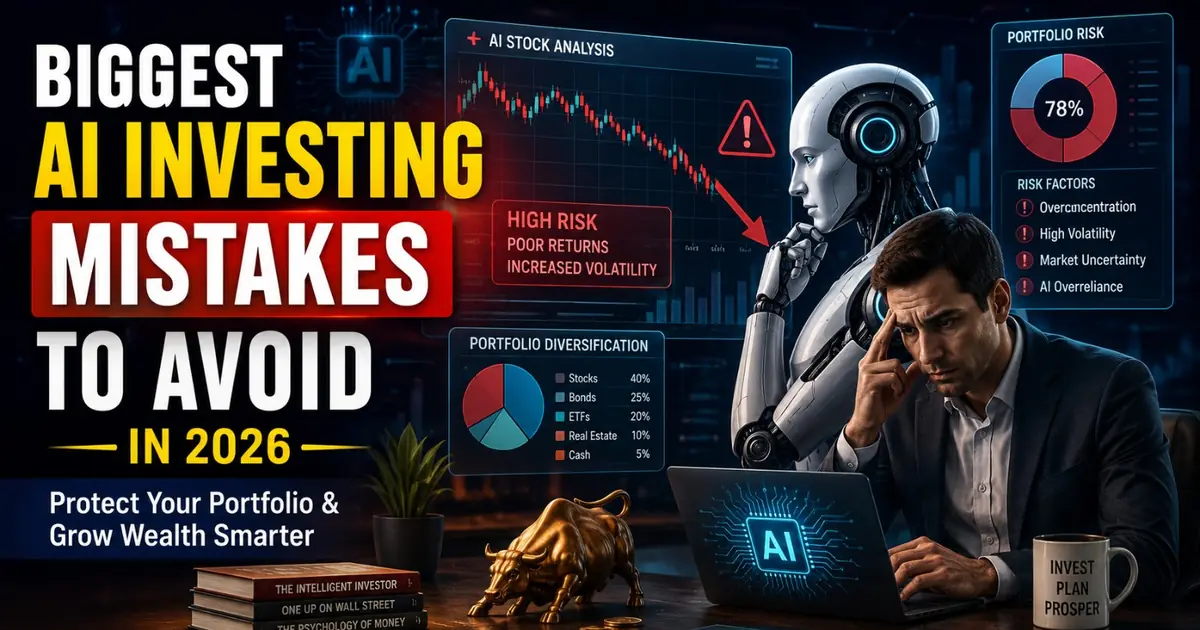
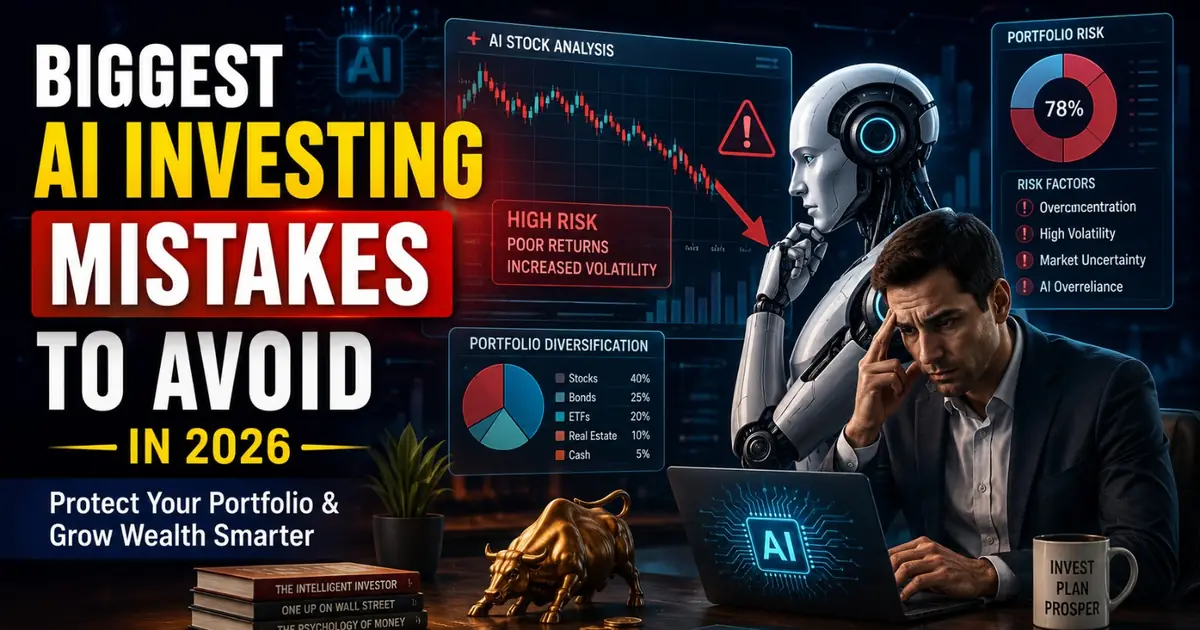
  • Biggest AI Investing Mistakes to Avoid in 2026: Protect Your Portfolio and Grow Wealth Smarter

    Biggest AI Investing Mistakes to Avoid in 2026: Protect Your Portfolio and Grow Wealth Smarter


    Biggest AI Investing Mistakes to Avoid in 2026: Protect Your Portfolio and Invest Smarter

    Author: Subhash Rukade

    Published: June 17, 2026

    Biggest AI Investing Mistakes to Avoid

    Why AI Investing Mistakes Matter More Than Ever in 2026

    Biggest AI Investing Mistakes to Avoid has become an important topic for investors as artificial intelligence continues transforming the way people manage money. AI-powered investing platforms can analyze huge amounts of data, automate portfolio management, identify trends, and provide personalized recommendations within seconds.

    Because of these capabilities, millions of Americans are now using AI tools to support retirement planning, wealth building, passive income strategies, and long-term investing goals.

    However, despite all the benefits, artificial intelligence is not perfect.

    Many investors assume that AI can predict markets accurately or eliminate investment risk completely. Unfortunately, that belief often leads to costly mistakes.

    Artificial intelligence can improve decision-making, but it cannot guarantee profits. Markets remain influenced by economic events, geopolitical developments, interest rates, investor behavior, and unexpected risks that even the most advanced algorithms cannot fully predict.

    As AI investing becomes more mainstream in 2026, investors must learn how to use these tools wisely.

    The goal should never be replacing common sense with automation.

    Instead, successful investors use AI as a powerful assistant that helps improve research, portfolio management, and risk analysis while maintaining human oversight.

    If you’re new to this rapidly growing trend, we strongly recommend reading our
    AI Investing Guide 2026,
    which provides a complete overview of how artificial intelligence is changing investing and wealth management.

    In this guide, we’ll explore the biggest AI investing mistakes to avoid, explain why these mistakes occur, and provide practical strategies that can help investors protect their portfolios while taking advantage of AI-powered financial tools.

    Avoiding a few common mistakes today could make a significant difference in your long-term financial success tomorrow.

    Mistake #1: Blindly Trusting AI Recommendations

    One of the Biggest AI Investing Mistakes to Avoid is assuming that artificial intelligence is always correct.

    Many investors are impressed by AI’s ability to analyze markets, process data, and generate investment recommendations within seconds. While these capabilities are powerful, they can create a false sense of confidence.

    AI is a tool—not a crystal ball.

    No algorithm can predict the future with complete accuracy.

    Financial markets are influenced by countless factors, including economic conditions, interest rates, political events, corporate earnings, consumer behavior, and unexpected global developments.

    Even the most advanced AI systems can only make decisions based on available data.

    When unusual market conditions occur, AI models may struggle because they rely heavily on historical patterns.

    Why Blind Trust Can Be Dangerous

    Some investors assume that if an AI platform recommends a stock, ETF, or investment strategy, it must be the best option available.

    This mindset can lead to poor diversification, excessive risk-taking, and emotional disappointment when investments fail to perform as expected.

    Successful investing still requires critical thinking.

    Investors should evaluate recommendations, understand risks, and ensure investment choices align with their financial goals.

    Human Oversight Still Matters

    The most successful investors use AI as a decision-support tool rather than a decision-maker.

    Artificial intelligence can identify opportunities, but human judgment remains important when evaluating financial goals, risk tolerance, and market uncertainty.

    Investors interested in improving overall money management should also review our
    AI Personal Finance 2026
    guide.

    Building a strong financial foundation often starts with choosing the right financial products. Readers may also benefit from our
    Best Credit Cards 2026
    resource.

    📊 Comparison Table: Smart AI Use vs Risky AI Use

    Smart AI UseRisky AI Use
    Researching investment ideasBuying assets without research
    Portfolio monitoringIgnoring portfolio risks
    Using AI alongside human judgmentTrusting AI blindly
    Diversifying investmentsConcentrating in a few assets
    Long-term planningChasing short-term predictions

    The key lesson is simple.

    AI can improve investing decisions, but investors should never surrender responsibility for their financial future. Combining AI insights with sound judgment remains one of the best ways to reduce risk and build long-term wealth.

    Mistake #2: Ignoring Diversification and Overloading on AI Stocks

    Another one of the Biggest AI Investing Mistakes to Avoid in 2026 is failing to diversify properly.

    As artificial intelligence continues dominating headlines, many investors are pouring large portions of their portfolios into AI-related stocks and technology companies.

    While some AI businesses have delivered impressive growth, concentrating too much money in a single sector can significantly increase risk.

    History has repeatedly shown that even the most promising industries experience corrections, volatility, and unexpected setbacks.

    Investors who place all their money into one trend often expose themselves to unnecessary financial risk.

    Why Diversification Still Matters

    Diversification remains one of the most effective risk-management strategies available to investors.

    Instead of relying on one industry, diversified portfolios spread investments across multiple asset classes, sectors, and income sources.

    This approach helps reduce the impact of poor performance in any single investment.

    AI can identify opportunities, but it should not replace the fundamental principle of diversification.

    The Danger of AI Stock Hype

    Many investors assume every company associated with artificial intelligence will become a long-term winner.

    However, strong marketing, media attention, and investor excitement do not always translate into sustainable profits.

    Some companies benefit from temporary hype cycles while others struggle to convert innovation into long-term earnings growth.

    Investors should evaluate business fundamentals, revenue growth, profitability, competitive advantages, and valuation before making investment decisions.

    Building a Balanced Portfolio

    A diversified portfolio may include growth stocks, dividend stocks, index funds, bonds, cash reserves, and alternative investments depending on individual goals.

    Investors interested in creating reliable income streams should review our
    How to Build a Dividend Portfolio
    guide.

    Readers seeking strong dividend opportunities may also benefit from our
    Top Dividend Stocks USA 2026
    resource.

    📘 Recommended Finance Book


    The Intelligent Investor by Benjamin Graham

    This classic investing book emphasizes diversification, risk management, and disciplined decision-making—principles that remain just as important in the AI investing era.

    The most successful investors understand that AI can improve research and portfolio management, but diversification remains essential for protecting wealth and reducing long-term risk.

    In the next section, we’ll examine another costly mistake: chasing AI hype instead of focusing on business fundamentals.

    Mistake #3: Chasing AI Hype Instead of Business Fundamentals

    One of the most expensive examples of the Biggest AI Investing Mistakes to Avoid is chasing hype instead of focusing on investment fundamentals.

    Artificial intelligence has become one of the hottest themes in financial markets. As a result, investors often rush into AI-related stocks simply because they are trending on social media, appearing in news headlines, or receiving attention from analysts.

    Unfortunately, hype and long-term value are not always the same thing.

    Many investors become excited about a company’s AI potential without fully understanding its financial health, revenue growth, profitability, debt levels, or competitive position.

    History shows that popular trends can create market bubbles.

    When expectations become unrealistic, stock prices may rise much faster than business performance. Eventually, reality catches up, and investors who bought at inflated valuations often suffer significant losses.

    Why Fundamentals Matter

    Successful investing focuses on businesses, not headlines.

    Before investing in any AI-related company, investors should examine:

    • Revenue growth
    • Profitability trends
    • Cash flow strength
    • Competitive advantages
    • Debt levels
    • Valuation metrics

    A company with strong fundamentals is often better positioned for long-term success than one receiving attention solely because of AI-related news.

    The Fear of Missing Out (FOMO)

    FOMO is one of the biggest drivers of poor investment decisions.

    When investors see stocks rising rapidly, they often fear being left behind.

    This emotional response can lead to buying investments at inflated prices without conducting proper research.

    AI investing should be driven by analysis and strategy—not excitement and speculation.

    Biggest AI Investing Mistakes to Avoid Example

    📊 Real-World Example

    Consider an investor who purchased several AI-related stocks during a period of intense market enthusiasm.

    Instead of reviewing financial statements and valuation metrics, the investor relied primarily on social media recommendations and AI-generated stock rankings.

    When market sentiment changed, several of those stocks experienced sharp declines.

    Meanwhile, diversified investors who focused on quality businesses and long-term fundamentals were better positioned to manage volatility.

    The lesson is clear.

    Artificial intelligence can improve research and investment analysis, but it should never replace fundamental investing principles.

    Investors who focus on business quality, reasonable valuations, and long-term wealth creation are far more likely to achieve sustainable success than those who chase every new trend.

    Mistake #4 and #5: Ignoring Fees and Investing Without a Plan

    Some of the Biggest AI Investing Mistakes to Avoid have nothing to do with technology itself.

    In many cases, investors lose money because they overlook basic investing principles. Two of the most common mistakes are ignoring investment costs and investing without a clear financial plan.

    Even the most advanced AI platform cannot overcome these weaknesses.

    Mistake #4: Ignoring Fees and Hidden Costs

    Many investors focus entirely on potential returns while paying little attention to fees.

    Although AI investing platforms are often less expensive than traditional financial advisors, costs still matter.

    Management fees, fund expense ratios, trading costs, subscription fees, and platform charges can reduce long-term returns.

    A seemingly small annual fee can compound into thousands of dollars over decades.

    Before selecting any AI investing platform, investors should understand exactly what they are paying and what services are included.

    Lower costs allow more capital to remain invested and benefit from long-term compounding.

    Mistake #5: Investing Without a Clear Plan

    Another major mistake is investing without specific goals.

    Many investors buy stocks, ETFs, or AI-generated recommendations without determining why they are investing in the first place.

    Successful investing begins with a plan.

    Whether the objective is retirement, passive income, financial independence, wealth building, or education savings, every investment decision should support a larger financial strategy.

    Investors who follow structured investment plans often make better long-term decisions than those reacting to short-term market movements.

    Readers looking to build consistent investing habits should review our
    SIP Investing Guide 2026.

    Protecting wealth during economic uncertainty is equally important. Our
    Recession-Proof Investing 2026
    guide offers additional strategies for risk management.

    📘 Recommended Finance Book


    The Psychology of Money by Morgan Housel

    This bestselling book explains why behavior, patience, and long-term planning often have a greater impact on investment success than market predictions.

    AI can help automate investing decisions, but it cannot define personal goals or create discipline. Investors who understand costs, establish clear objectives, and maintain consistent strategies are far more likely to build lasting wealth over time.

    Biggest AI Investing Mistakes to Avoid #1: Blindly Trusting AI Recommendations

    Practical AI Investing Strategies for 2026

    Avoiding the Biggest AI Investing Mistakes to Avoid is only part of the equation. Investors must also follow proven strategies that help balance risk, improve returns, and support long-term wealth creation.

    Artificial intelligence can be a powerful investing assistant when used correctly. The key is combining AI tools with sound investing principles.

    1. Use AI for Research, Not Blind Decisions

    AI platforms can quickly analyze market data, identify trends, and evaluate thousands of securities.

    However, investors should treat AI recommendations as starting points for research rather than automatic buy signals.

    Combining AI insights with personal analysis can lead to more informed decisions.

    2. Follow a Diversified Investment Strategy

    Diversification remains one of the most effective ways to manage risk.

    Instead of concentrating investments in a single AI stock or technology sector, investors should spread assets across multiple industries and investment types.

    A balanced portfolio can help reduce volatility during market downturns.

    3. Rebalance Portfolios Regularly

    Market movements can gradually shift portfolio allocations away from intended targets.

    Many AI platforms offer automated rebalancing features that help maintain appropriate asset allocations.

    Regular portfolio reviews can improve risk management and long-term consistency.

    4. Combine AI With Human Judgment

    One of the strongest investing approaches in 2026 is the hybrid model.

    AI handles data analysis, portfolio monitoring, and automation while investors apply experience, goals, and personal judgment.

    This combination helps reduce emotional decision-making while maintaining flexibility.

    💰 Investment Growth Calculator Example

    Suppose an investor contributes $500 per month to a diversified portfolio earning an average annual return of 8%.

    Years InvestedEstimated Portfolio Value
    10 Years~$91,000
    20 Years~$295,000
    30 Years~$745,000

    This example highlights the power of consistency and compounding rather than relying on short-term predictions.

    📊 Comparison Table: Smart AI Investor vs Risky AI Investor

    Smart AI InvestorRisky AI Investor
    Diversifies investmentsConcentrates in hype stocks
    Reviews recommendationsFollows AI blindly
    Focuses on long-term goalsChases short-term gains
    Controls riskIgnores portfolio balance
    Uses AI + human judgmentDepends entirely on automation

    📘 Recommended Finance Book


    The Simple Path to Wealth by JL Collins

    This popular investing book focuses on simplicity, diversification, and long-term wealth creation—principles that remain essential regardless of how advanced AI investing becomes.

    The most successful investors use AI to enhance their strategies, not replace them. Technology works best when paired with discipline, patience, and a clear investment plan.

    The Future of AI Investing (2026–2030)

    The future of Biggest AI Investing Mistakes to Avoid is closely connected to how artificial intelligence continues evolving over the next several years.

    AI investing platforms are becoming more advanced, more personalized, and more accessible to everyday investors. However, future success will depend not only on technology but also on how investors use these tools responsibly.

    The investors who understand both the opportunities and limitations of AI are likely to have a significant advantage.

    Smarter AI Investing Tools

    By 2030, AI platforms may be capable of providing highly personalized investment recommendations based on income, spending patterns, tax situations, retirement goals, and risk tolerance.

    These systems could help investors make faster and more informed financial decisions while reducing administrative work.

    Greater Transparency and Regulation

    As artificial intelligence becomes more involved in investment management, regulators are expected to increase oversight.

    Investors will likely demand greater transparency regarding how algorithms make recommendations and manage portfolios.

    Trust, security, and accountability will become increasingly important.

    The Rise of Hybrid Investing

    Many experts believe the future belongs to hybrid investing.

    Instead of choosing between technology and human expertise, investors may combine both approaches.

    AI can analyze data and automate portfolio management while humans provide judgment, emotional discipline, and long-term planning.

    Frequently Asked Questions

    1. Is AI investing safe?

    AI investing can be safe when used through reputable platforms and combined with proper diversification and risk management.

    2. Can AI predict stock market movements?

    No system can predict markets perfectly. AI analyzes data and probabilities but cannot eliminate uncertainty.

    3. What is the biggest AI investing mistake?

    Blindly trusting AI recommendations without conducting personal research is one of the most common mistakes.

    4. Should I invest only in AI stocks?

    Most financial experts recommend diversification rather than concentrating investments in a single sector.

    5. Can beginners use AI investing tools?

    Yes. Many platforms are designed specifically for beginner investors and offer automated portfolio management.

    6. What is the future of AI investing?

    The future will likely include more personalized investment strategies, stronger regulation, and greater integration between AI tools and human advisors.

    Final Thoughts on the Biggest AI Investing Mistakes to Avoid

    Understanding the Biggest AI Investing Mistakes to Avoid can help investors make better decisions and reduce unnecessary risks.

    Many investors enter the market without recognizing the Biggest AI Investing Mistakes to Avoid. As a result, they may follow AI recommendations blindly, ignore diversification, or chase market hype.

    The smartest investors learn from the Biggest AI Investing Mistakes to Avoid before those mistakes damage their portfolios.

    Whether you are a beginner or experienced investor, avoiding the Biggest AI Investing Mistakes to Avoid should be a priority in 2026.

    By focusing on diversification, risk management, long-term planning, and proper research, investors can avoid the Biggest AI Investing Mistakes to Avoid and build wealth more confidently.

    Remember that AI is a tool. It is not a guarantee of success. Investors who understand the Biggest AI Investing Mistakes to Avoid are often better prepared for market volatility and long-term investing challenges.

    The future of investing will include more artificial intelligence, but the ability to recognize the Biggest AI Investing Mistakes to Avoid will remain an important skill for every investor.

    Conclusion

    Understanding the Biggest AI Investing Mistakes to Avoid can help investors protect their portfolios, reduce risk, and make smarter financial decisions.

    Artificial intelligence offers powerful tools for portfolio management, market analysis, and wealth building. However, successful investing still depends on diversification, patience, discipline, and long-term planning.

    The most effective investors use AI as a valuable assistant rather than a replacement for critical thinking.

    If you want a complete understanding of how artificial intelligence is changing investing, be sure to explore our
    AI Investing Guide 2026.

    By combining smart technology with proven investing principles, investors can position themselves for long-term success in an increasingly AI-driven financial world.

    Trusted Financial Resources

    📩 Join Our Free AI Investing Newsletter

    Get AI investing insights, portfolio strategies, wealth-building ideas, retirement planning tips, and market updates delivered directly to your inbox.


    Subscribe today and stay ahead of the future of investing.


    👨‍💼 About the Author

    Subhash Rukade writes about AI investing, personal finance, passive income, dividend investing, and wealth-building strategies. His mission is to help readers make informed financial decisions through practical and easy-to-understand financial education.


    🚀 Great investing isn’t about avoiding every mistake. It’s about learning from mistakes early and staying committed to long-term financial success.

  • AI Wealth Management for Middle-Class Americans: Smart Strategies for 2026

    AI Wealth Management for Middle-Class Americans: Smart Strategies for 2026


    AI Wealth Management for Middle-Class Americans: Smart Strategies for 2026

    Author: Subhash Rukade

    Published: June 16, 2026

    AI Wealth Management for Middle-Class Americans

    Why AI Wealth Management Is Becoming Essential in 2026

    AI Wealth Management for Middle-Class Americans is no longer a futuristic concept. In 2026, it is becoming one of the most practical ways for families to take control of their finances, grow investments, and build long-term wealth.

    Across the United States, middle-class households face growing financial pressure. Housing costs remain high, healthcare expenses continue to rise, and everyday necessities consume a larger portion of monthly income than they did just a few years ago.

    Many families want to invest for retirement, build emergency savings, and create additional income streams. However, finding the time and knowledge to manage money effectively can be difficult.

    This is where artificial intelligence is making a difference.

    Modern AI-powered financial tools can analyze spending patterns, monitor investments, automate savings, and provide personalized financial recommendations. Tasks that once required expensive financial advisors are now available through affordable digital platforms.

    For middle-class Americans, this represents a major opportunity.

    Instead of guessing where money is being wasted, AI can identify spending leaks. Instead of manually tracking investments, AI can monitor portfolios around the clock. These small improvements can lead to meaningful financial progress over time.

    Investors who want a broader understanding of how artificial intelligence is changing investing should also explore our
    AI Investing Guide 2026.

    The goal of AI wealth management is not to replace personal responsibility. Rather, it helps individuals make better financial decisions with less effort and more confidence.

    In this guide, you’ll discover how middle-class Americans are using AI in 2026 to save more, invest smarter, reduce financial stress, and move closer to long-term financial freedom.

    Best AI Wealth Management Tools for Middle-Class Americans in 2026

    One reason AI Wealth Management for Middle-Class Americans is growing so quickly is that powerful financial tools have become more affordable and easier to use.

    A few years ago, advanced wealth management services were often reserved for high-net-worth individuals. Today, AI-powered platforms allow ordinary investors to access many of the same financial advantages.

    These tools help users manage spending, track investments, automate savings, and make smarter financial decisions without spending hours analyzing data.

    AI Budgeting Tools

    Budgeting remains the foundation of successful wealth building.

    AI budgeting platforms automatically categorize expenses, track spending patterns, and identify areas where money may be wasted.

    Instead of manually reviewing bank statements, users receive personalized recommendations designed to improve financial efficiency.

    AI Portfolio Tracking

    Many investors struggle to monitor multiple accounts and investments.

    AI-powered portfolio trackers simplify the process by providing real-time performance updates, diversification analysis, and risk assessments.

    These tools help investors stay informed without becoming overwhelmed by market noise.

    Robo-Advisors

    Robo-advisors use artificial intelligence to create and manage investment portfolios.

    Based on your goals and risk tolerance, these platforms recommend investments and automatically rebalance portfolios when needed.

    This makes investing more accessible for busy families.

    AI Savings Automation

    One of the most effective wealth-building habits is consistent saving.

    AI tools can automatically transfer money into savings and investment accounts based on spending behavior and income patterns.

    Small contributions made regularly often lead to significant long-term growth.

    For additional financial automation strategies, explore our
    AI Personal Finance 2026
    guide.

    📊 AI Wealth Management Tools Comparison

    Tool TypePurposeMain Benefit
    AI BudgetingExpense TrackingHigher Savings
    Portfolio TrackerInvestment MonitoringBetter Decisions
    Robo-AdvisorAutomated InvestingTime Savings
    AI Savings ToolsAutomatic DepositsConsistent Wealth Growth

    Many financially successful households also optimize rewards and cash flow through strategic credit card usage. Readers can learn more in our
    Best Credit Cards 2026
    guide.

    The key advantage of AI wealth management is not complexity. It is simplicity.

    These tools help middle-class families make smarter decisions, stay organized, and focus on long-term financial goals rather than daily money stress.

    In the next section, we’ll explore how AI helps families move beyond budgeting and start building real wealth through investing and passive income strategies.

    How AI Helps Middle-Class Families Build Wealth in 2026

    The true value of AI Wealth Management for Middle-Class Americans goes far beyond budgeting. While controlling expenses is important, long-term wealth is created through consistent investing, smart financial decisions, and disciplined saving habits.

    Artificial intelligence is helping middle-class families do all three more effectively than ever before.

    Instead of relying on guesswork, investors can now use AI-powered insights to build portfolios, manage risk, and identify opportunities that align with their financial goals.

    Automated Investing Makes Wealth Building Easier

    One of the biggest barriers to investing is uncertainty.

    Many people hesitate because they don’t know which investments to choose or when to invest.

    AI-powered investing platforms simplify this process by analyzing market data, risk levels, and investment objectives automatically.

    These systems help investors stay consistent instead of trying to time the market.

    Consistency is often more important than finding the perfect investment.

    Dividend Investing with AI

    Many financially successful Americans use dividend investing as part of their wealth-building strategy.

    AI tools can evaluate dividend stocks by analyzing earnings growth, payout ratios, cash flow strength, and historical performance.

    This allows investors to identify quality companies that may provide reliable passive income over time.

    Readers interested in building income-producing portfolios should explore our
    How to Build a Dividend Portfolio
    guide.

    You can also review our
    Top Dividend Stocks USA 2026
    article for additional research.

    AI Risk Analysis Improves Decision-Making

    Wealth building is not only about earning returns.

    Protecting money is equally important.

    AI systems continuously monitor portfolios and identify potential risks before they become major problems.

    They can detect excessive concentration, changing market conditions, and increasing volatility.

    This helps investors make informed adjustments while maintaining long-term discipline.

    Building Wealth Through Better Habits

    Artificial intelligence also supports behavioral improvements.

    Many AI platforms send reminders, track progress, and encourage consistent saving and investing habits.

    These small actions can create powerful long-term results when repeated over many years.

    📘 Recommended Reading:

    The Psychology of Money by Morgan Housel

    The biggest advantage of AI wealth management is not that it guarantees success.

    Its real strength lies in helping ordinary investors make smarter decisions, stay consistent, and avoid costly financial mistakes.

    For middle-class Americans, that combination can become a powerful engine for long-term wealth creation.

    AI Wealth Management vs Traditional Financial Planning: What Works Better for Middle-Class Families?

    One of the biggest questions investors ask in 2026 is whether AI Wealth Management for Middle-Class Americans can truly compete with traditional financial planning.

    The answer depends on personal goals, budget, and financial complexity. However, for many middle-class households, AI-powered tools provide a more affordable and accessible solution.

    Comparison Table

    FeatureAI Wealth ManagementTraditional Advisor
    CostLow Monthly FeeHigh Advisory Fees
    Availability24/7 AccessAppointment Required
    Portfolio MonitoringReal-TimePeriodic Reviews
    Savings AutomationAutomaticManual Setup
    PersonalizationData-DrivenHuman Experience
    Best ForMiddle-Class InvestorsHigh-Net-Worth Clients

    Real-World Example

    Consider a middle-class family earning $90,000 annually. Before using AI wealth management tools, they struggled to track spending, maintain consistent investments, and grow savings.

    After adopting an AI-powered budgeting and investing platform, they identified nearly $350 in unnecessary monthly expenses.

    Instead of letting that money disappear, they redirected it into automated investments and dividend-focused assets.

    Within twelve months, their emergency fund grew substantially, monthly investment contributions increased, and overall financial confidence improved.

    The family also used recommendations from our
    How to Build a Dividend Portfolio
    guide to create a stronger income-producing investment strategy.

    While AI did not create wealth overnight, it helped them make smarter financial decisions consistently.

    This is why AI Wealth Management for Middle-Class Americans is becoming increasingly popular. It offers practical tools that help families stay organized, invest regularly, and work toward long-term financial freedom without paying expensive advisory fees.

    Common Mistakes to Avoid When Using AI Wealth Management

    While AI Wealth Management for Middle-Class Americans offers powerful tools for saving, investing, and financial planning, success is never automatic.

    Many investors make avoidable mistakes that reduce the effectiveness of AI-powered financial systems.

    Understanding these mistakes can help families get better results and build wealth more efficiently.

    1. Relying Completely on AI

    One of the most common mistakes is assuming AI can handle every financial decision without human involvement.

    Although artificial intelligence can analyze large amounts of data and identify patterns, it cannot predict every market event or personal financial need.

    Investors should view AI as a financial assistant rather than a replacement for personal responsibility.

    2. Ignoring Diversification

    Some investors become overly confident in AI-generated recommendations and place too much money into a small number of investments.

    Diversification remains one of the most important principles of successful investing.

    A balanced portfolio that includes stocks, dividend investments, bonds, and other assets can help reduce overall risk.

    3. Not Reviewing Financial Goals

    Financial goals change over time.

    Marriage, home purchases, career changes, and retirement planning can all affect investment priorities.

    Even if AI is managing portions of a portfolio, investors should regularly review goals and adjust strategies when necessary.

    4. Emotional Investing During Market Volatility

    Artificial intelligence can provide objective recommendations, but emotions still influence many investment decisions.

    Some investors panic during market declines and abandon long-term plans.

    Others become overly aggressive during strong bull markets.

    Successful investors focus on long-term goals rather than short-term market movements.

    Investors concerned about economic uncertainty should review our
    Recession-Proof Investing 2026
    guide for additional risk-management strategies.

    5. Failing to Automate Consistently

    Many families start strong but stop investing regularly after a few months.

    Consistency is often more important than finding the perfect investment.

    Automatic contributions can help investors stay disciplined and continue building wealth regardless of market conditions.

    📘 Recommended Finance Book


    The Psychology of Money by Morgan Housel

    This bestselling book explains how behavior, discipline, and decision-making often matter more than investment knowledge alone.

    The most successful users of AI wealth management combine technology with patience, diversification, and long-term thinking.

    By avoiding these common mistakes, middle-class investors can use AI tools more effectively and improve their chances of achieving financial freedom.

    Practical AI Wealth Strategies Middle-Class Americans Can Start Today

    The biggest lesson from AI Wealth Management for Middle-Class Americans is that building wealth does not require a six-figure investment portfolio.

    Many of the same strategies used by wealthy investors can be applied by ordinary families with modest incomes.

    Artificial intelligence helps simplify financial decisions, automate good habits, and create consistency.

    Over time, these advantages can make a significant difference.

    1. Automate Your Savings

    One of the easiest ways to build wealth is to remove emotion from the saving process.

    AI-powered savings tools can automatically move money into savings accounts whenever income is received.

    Some platforms even analyze spending patterns and determine how much can be saved safely without affecting monthly bills.

    This creates a “save first” approach that helps families grow wealth consistently.

    2. Use AI Budgeting Tools Weekly

    Many households only review finances when a problem occurs.

    AI budgeting systems make it easier to stay informed.

    They provide real-time updates, spending alerts, and personalized recommendations that improve financial awareness.

    Small adjustments made regularly often lead to meaningful long-term results.

    3. Invest Consistently Instead of Timing the Market

    Many investors wait for the perfect opportunity before investing.

    Unfortunately, perfect timing is extremely difficult.

    AI platforms often encourage systematic investing strategies that focus on consistency rather than market predictions.

    Regular contributions can help reduce emotional decision-making.

    4. Build Passive Income Streams

    Middle-class investors can use AI research tools to identify opportunities that generate recurring income.

    Dividend investing remains one of the most popular approaches.

    AI can analyze company fundamentals and help investors identify businesses with strong dividend histories.

    💰 AI Wealth Growth Calculator Example

    Assume AI helps a household save:

    • $100/month through budgeting improvements
    • $75/month through subscription optimization
    • $75/month through reduced impulse spending

    Total Monthly Savings = $250

    Annual Savings = $3,000

    If invested consistently, those savings could contribute significantly to long-term wealth growth.

    📈 Simple Wealth Growth Example

    • Monthly Investment = $250
    • Annual Contribution = $3,000
    • 5 Years = $15,000+ Contributions
    • Additional Growth Potential Through Investment Returns

    Recommended Financial Resources

    📘

    Atomic Habits by James Clear

    💰

    Rocket Money Financial Management Platform

    The most important advantage of AI wealth management is not complexity.

    It is consistency.

    By automating good financial habits and providing better insights, AI gives middle-class families a practical path toward long-term financial security and wealth creation.

    Future of AI Wealth Management for Middle-Class Americans (2026–2030)

    The future of AI Wealth Management for Middle-Class Americans looks incredibly promising.

    What started as simple budgeting and investment tracking tools is quickly evolving into a complete financial management ecosystem.

    Between 2026 and 2030, artificial intelligence is expected to become deeply integrated into every aspect of personal finance.

    For middle-class families, this could create opportunities that were once available only to wealthy investors and professional financial advisors.

    AI Financial Assistants Will Become Common

    Today’s AI tools focus on individual tasks such as budgeting, spending analysis, or portfolio monitoring.

    Future AI financial assistants will likely combine these services into one intelligent platform.

    These systems may help users:

    • Track spending automatically
    • Optimize savings goals
    • Monitor investments in real time
    • Reduce debt faster
    • Plan retirement more efficiently
    • Identify financial risks before they become serious problems

    This level of automation could dramatically improve financial decision-making for ordinary households.

    Personalized Wealth Management

    One of the biggest advantages of future AI systems will be personalization.

    Rather than offering generic financial advice, AI platforms will create recommendations based on income, age, family size, financial goals, risk tolerance, and spending habits.

    This customized approach may help families make more informed financial decisions.

    AI-Powered Retirement Planning

    Retirement planning remains one of the biggest financial challenges facing middle-class Americans.

    Future AI systems may continuously adjust retirement projections based on inflation, investment performance, income growth, and lifestyle changes.

    This could help investors stay on track and avoid costly mistakes.

    Frequently Asked Questions

    1. What is AI Wealth Management?

    AI Wealth Management uses artificial intelligence to help individuals manage savings, investments, budgeting, and long-term financial planning.

    2. Is AI Wealth Management only for wealthy investors?

    No. Modern AI tools are increasingly affordable and accessible to middle-class households.

    3. Can AI replace financial advisors?

    AI can improve efficiency and provide insights, but human expertise remains valuable for complex financial decisions.

    4. Is AI investing safe?

    AI can support better decision-making, but all investments carry risk. Investors should always perform their own research.

    5. How can AI help families save more money?

    AI identifies spending leaks, automates savings, tracks budgets, and provides personalized recommendations.

    6. What is the biggest advantage of AI wealth management?

    The ability to make smarter financial decisions with less time and effort.

    Conclusion

    The rise of AI Wealth Management for Middle-Class Americans represents one of the most important financial trends of 2026.

    Artificial intelligence is helping families save more, invest smarter, reduce financial stress, and work toward long-term financial freedom.

    While AI is not a magic solution, it can provide valuable insights and automation that improve financial outcomes over time.

    Families that combine AI-powered tools with discipline, consistent investing, and clear financial goals may be better positioned to build lasting wealth.

    To learn more about how artificial intelligence is transforming investing, budgeting, and financial planning, explore our
    AI Investing Guide 2026.

    Additional trusted resources:

    📩 Join Our Free Finance Newsletter

    Get AI investing insights, wealth-building strategies, retirement tips, and personal finance guidance delivered directly to your inbox.


    Subscribe today and take the next step toward financial freedom.


    👨‍💼 About the Author

    Subhash Rukade writes about AI, investing, personal finance, wealth building, and passive income strategies. His goal is to help readers make smarter financial decisions through practical and easy-to-understand financial education.


    🚀 Small financial improvements today can become significant wealth-building opportunities tomorrow.

  • Ultimate Credit Card Guide 2026: Best Credit Cards, Rewards & Smart Usage Tips

    Ultimate Credit Card Guide 2026: Best Credit Cards, Rewards & Smart Usage Tips


    best credit cards 2026 featured image

    Ultimate Credit Card Guide 2026: Best Cards, Rewards & Smart Usage Tips

    By Subhash Rukade | Updated May 23, 2026

    Why Credit Cards Matter More Than Ever in 2026

    In 2026, credit cards have become much more than simple payment tools for Americans.

    Today, millions of households across the United States use credit cards for:

    • Cashback rewards
    • Travel benefits
    • Emergency spending
    • Online shopping
    • Credit score building
    • Business expenses

    Because inflation and living expenses continue rising across America, many consumers are now searching for the best credit cards 2026 offers capable of improving financial flexibility and long-term money management.

    At the same time, credit cards can become dangerous financial tools when used without discipline.

    Many Americans continue struggling with:

    • High-interest debt
    • Late payment penalties
    • Low credit scores
    • Overspending habits
    • Emotional spending decisions

    This is one reason understanding smart credit card strategies has become increasingly important during uncertain economic conditions in 2026.

    Financially disciplined Americans now use credit cards strategically instead of emotionally.

    Many consumers focus on:

    • Cashback optimization
    • Travel rewards
    • Credit score improvement
    • Emergency preparedness
    • Budget discipline

    Many Americans are also improving broader financial stability through long-term investing and recession planning strategies explained in:
    How Americans Are Protecting Their Money During a Recession in 2026.

    Healthcare costs also continue affecting household finances across America, which is why many families are prioritizing smarter financial planning through:
    Retirement Healthcare Planning Strategies.

    In 2026, banks are competing aggressively by offering:

    • Higher cashback percentages
    • Travel reward bonuses
    • 0% APR offers
    • Balance transfer deals
    • Premium lifestyle benefits

    Because of this, many Americans now search for the best credit cards 2026 consumers can safely use for both rewards optimization and long-term financial growth.

    However, smart credit card usage is not only about rewards.

    Long-term financial success often depends on:

    • Responsible spending habits
    • Payment discipline
    • Low credit utilization
    • Strong budgeting systems
    • Emergency financial planning

    In this ultimate guide, we’ll explore how credit cards work in 2026, the best types of rewards cards Americans are using, common financial mistakes to avoid, and the smartest strategies for building stronger financial stability while maximizing credit card benefits safely.

    How Credit Cards Work in 2026

    Before choosing the best credit cards 2026 offers, Americans first need to understand how credit cards actually work.

    Many consumers use credit cards daily without fully understanding:

    • APR charges
    • Billing cycles
    • Interest accumulation
    • Credit utilization
    • Minimum payment traps

    Because of this, millions of Americans continue paying unnecessary interest and damaging their long-term financial stability.

    What Is a Credit Card?

    A credit card is a revolving line of credit provided by a bank or financial institution.

    Unlike debit cards, credit cards allow consumers to borrow money temporarily and repay it later.

    When used responsibly, credit cards may help Americans:

    • Build credit scores
    • Earn cashback rewards
    • Receive fraud protection
    • Improve financial flexibility
    • Access travel benefits

    However, poor financial discipline may quickly create expensive debt problems.

    Understanding Billing Cycles

    Every credit card operates on a billing cycle, usually lasting around 30 days.

    During this cycle:

    • Purchases are recorded
    • Balances increase
    • Rewards accumulate
    • Interest may begin building

    At the end of the cycle, the card issuer sends a statement showing:

    • Total balance
    • Minimum payment due
    • Payment deadline
    • Interest charges

    Financially disciplined Americans usually pay balances in full every month to avoid high-interest debt.

    APR Can Become Dangerous Quickly

    APR stands for Annual Percentage Rate.

    This represents the interest charged on unpaid balances.

    In 2026, many credit cards now charge:

    • 20% APR
    • 25% APR
    • 30% APR or higher

    Because inflation and consumer debt continue increasing across America, many households underestimate how dangerous high APR debt may become over time.

    This is one reason many financially disciplined Americans continue learning smarter debt management strategies through:

    Credit Card Interest Explained (APR Guide 2026)

    Minimum Payments Create Debt Traps

    One of the biggest financial mistakes Americans make is paying only the minimum balance due each month.

    Although minimum payments may temporarily reduce financial pressure, they often:

    • Increase long-term interest costs
    • Extend debt repayment periods
    • Reduce financial flexibility
    • Damage long-term savings growth

    Because of this, financially disciplined consumers usually prioritize aggressive balance repayment strategies.

    Credit Utilization Strongly Impacts Credit Scores

    Credit utilization measures how much credit Americans use compared to their total credit limit.

    For example:

    • $1,000 balance on a $10,000 limit = 10% utilization
    • $8,000 balance on a $10,000 limit = 80% utilization

    High utilization ratios may negatively affect credit scores.

    Most financial experts recommend keeping utilization below 30%.

    Many financially disciplined Americans now focus heavily on smarter utilization strategies explained in:

    How to Build Credit Score with Credit Cards

    Credit Card FeatureSmart UsageDangerous Usage
    APRPaid in full monthlyCarrying high balances
    UtilizationBelow 30%Above 80%
    RewardsStrategic spendingImpulse purchases
    PaymentsOn-time monthlyLate or missed payments
    BudgetingPlanned spendingEmotional spending

    Many Americans also continue comparing payment tools through:

    Credit Card vs Debit Card: Which Is Better?

    Beginner consumers who want deeper understanding of billing systems and rewards structures also continue learning through:

    How Credit Cards Work: Simple Guide 2026

    Understanding how credit cards work remains one of the most important financial skills Americans can develop in 2026 because smart usage habits may improve rewards, strengthen credit scores, and reduce long-term financial stress.

    Best Types of Credit Cards Americans Are Using in 2026

    In 2026, millions of Americans are searching for the best credit cards 2026 offers capable of improving rewards, reducing financial stress, and increasing long-term financial flexibility.

    However, not every credit card is designed for the same financial goals.

    Some cards are better for:

    • Cashback rewards
    • Travel benefits
    • Business spending
    • Balance transfers
    • Large purchases
    • Credit score building

    Because of this, financially disciplined Americans usually choose credit cards based on their spending habits and long-term financial strategy.

    1. Cashback Credit Cards Continue Growing in Popularity

    Cashback cards remain one of the most popular credit card categories in America because they provide simple and flexible rewards.

    Many cashback cards now offer:

    • 1%–5% cashback
    • Dining rewards
    • Gas station rewards
    • Online shopping bonuses
    • Grocery cashback

    Many Americans now use cashback rewards strategically to offset inflation and rising living expenses.

    Consumers searching for stronger cashback opportunities also continue exploring:

    Best Travel Reward Credit Cards 2026

    2. Travel Rewards Credit Cards Are Becoming More Competitive

    Travel rewards cards continue attracting Americans who frequently travel for business or vacations.

    These cards may provide:

    • Airline miles
    • Hotel rewards
    • Airport lounge access
    • Travel insurance
    • Priority boarding

    Because competition between banks continues increasing in 2026, many travel cards now offer larger signup bonuses and premium travel benefits.

    Many consumers are also researching smarter travel optimization strategies through:

    How Credit Card Rewards Really Work in 2026

    3. Business Credit Cards Help Entrepreneurs Manage Expenses

    Small business owners and side hustlers increasingly rely on business credit cards to improve cash flow management and expense tracking.

    Business cards may help entrepreneurs:

    • Separate personal and business expenses
    • Earn higher rewards
    • Manage advertising costs
    • Track tax deductions
    • Improve financial organization

    Many entrepreneurs continue researching:
    Best Balance Transfer Credit Cards 2026

    5. 0% APR Credit Cards Help Manage Large Purchases

    Many Americans now use 0% APR credit cards for:

    4. Balance Transfer Cards Continue Helping Americans Reduce Debt

    Balance transfer cards remain popular because they may temporarily reduce high-interest debt pressure.

    Many balance transfer cards now offer:

        • 0% APR promotional periods
        • Lower interest costs
        • Debt consolidation benefits
        • Improved repayment flexibility

    However, financially disciplined Americans understand balance transfers only work when combined with strong budgeting discipline.

    Many consumers continue researching smarter debt reduction systems through:

    Best Balance Transfer Credit Cards 2026

    5. 0% APR Credit Cards Help Manage Large Purchases

    Many Americans now use 0% APR credit cards for:

        • Home improvements
        • Emergency purchases
        • Medical expenses
        • Furniture financing
        • Large electronics purchases

    These cards may temporarily reduce interest pressure during promotional periods.

    Many consumers continue researching:
    Best 0 APR Credit Cards for Big Purchases in 2026

    Credit Card TypeBest ForRisk Level
    Cashback CardsEveryday spendingLow-Moderate
    Travel Rewards CardsFrequent travelersModerate
    Business Credit CardsEntrepreneursModerate
    Balance Transfer CardsDebt managementModerate
    0% APR CardsLarge purchasesModerate

    Many financially disciplined Americans now understand the best credit cards 2026 consumers choose should align with long-term financial goals instead of emotional spending habits.

    Smart credit card selection may help Americans:

        • Improve cashback rewards
        • Build stronger credit scores
        • Reduce financial stress
        • Improve budgeting flexibility
        • Strengthen long-term financial stability

    Understanding which credit card category matches personal financial goals remains one of the most important financial decisions Americans can make in 2026.

    How Americans Use Credit Card Rewards Smartly in 2026

    In 2026, millions of Americans are using rewards programs more strategically because inflation and rising living expenses continue affecting household budgets across the country.

    This is one reason the best credit cards 2026 consumers prefer are often reward-focused cards capable of improving cashback, travel benefits, and long-term financial flexibility.

    However, financially disciplined Americans understand rewards only become valuable when spending habits remain controlled and intentional.

    Cashback Strategies Continue Helping Americans Save Money

    Many Americans now use cashback cards to reduce everyday expenses during inflationary periods.

    Strategic cashback usage may help consumers earn rewards from:

        • Groceries
        • Gas stations
        • Dining purchases
        • Streaming subscriptions
        • Online shopping

    Some financially disciplined consumers now rotate multiple cards to maximize category-specific rewards.

    For example:

        • One card for groceries
        • One card for travel
        • One card for online purchases

    Because of this, many Americans are now researching:

    Best Cashback Credit Cards in USA 2026

    Travel Rewards Continue Becoming More Valuable

    Travel-focused Americans continue using premium rewards cards because airline miles and hotel points may create substantial long-term savings opportunities.

    Many travel rewards cards now include:

        • Airport lounge access
        • Priority boarding
        • Travel insurance
        • Hotel upgrade programs
        • International spending benefits

    Many financially disciplined travelers now optimize points systems strategically instead of randomly accumulating rewards.

    Consumers continue exploring advanced travel optimization strategies through:

    How Americans Earn Free Travel with Credit Cards

    Online Shopping Rewards Continue Growing

    As digital spending increases across America, many credit card issuers now provide stronger online shopping rewards and purchase protections.

    Some online shopping benefits now include:

        • Extended warranties
        • Purchase protection
        • Retail cashback bonuses
        • Fraud protection
        • Price matching

    Many Americans continue researching:

    Best Credit Cards for Online Shopping Rewards in 2026

    Rewards CategoryPotential BenefitsBest Usage Strategy
    Cashback RewardsEveryday savingsCategory optimization
    Travel RewardsFlights and hotelsPoint maximization
    Dining RewardsRestaurant cashbackRegular usage categories
    Online ShoppingRetail savingsProtected purchases
    Signup BonusesLarge initial rewardsControlled spending goals

    Reward Chasing Can Become Dangerous

    Although rewards programs may provide strong financial benefits, some Americans make the mistake of overspending only to earn points or cashback.

    Unfortunately, emotional reward chasing may lead to:

        • Higher debt balances
        • Interest accumulation
        • Budget problems
        • Reduced financial flexibility

    Financially disciplined Americans now understand rewards are only valuable when balances are paid responsibly and spending remains controlled.

    Long-Term Financial Discipline Matters More Than Rewards

    Many financially successful Americans now focus more heavily on:

        • Budget discipline
        • Credit score protection
        • Low utilization
        • On-time payments
        • Long-term financial planning

    Many consumers are also improving broader financial flexibility through recession planning strategies explained in:
    How Americans Are Protecting Their Money During a Recession in 2026.

    Understanding how rewards systems actually work remains one of the most important financial skills Americans can develop because the best credit cards 2026 consumers choose often become powerful financial tools when combined with discipline, budgeting, and responsible spending habits.

    How Credit Cards Impact Credit Scores in 2026

    In 2026, credit scores continue playing a major role in the financial lives of Americans.

    Many consumers now understand the best credit cards 2026 users choose may either improve long-term financial stability or damage financial flexibility depending on how cards are managed.

    Credit scores affect:

        • Loan approvals
        • Mortgage rates
        • Car financing
        • Insurance premiums
        • Apartment applications
        • Business funding opportunities

    Because of this, financially disciplined Americans now prioritize stronger credit score management strategies during uncertain economic conditions.

    Payment History Remains the Biggest Credit Score Factor

    Payment history continues remaining one of the most important components of credit scoring models in 2026.

    Late payments may negatively affect:

        • Credit scores
        • Loan eligibility
        • Interest rates
        • Financial reputation

    Even one missed payment may remain on a credit report for years.

    Because of this, financially disciplined Americans usually:

        • Enable autopay
        • Track due dates carefully
        • Maintain emergency savings
        • Avoid overspending

    Many consumers continue learning deeper payment strategies through:

    How Late Payments Hurt Your Credit Score in 2026

    Credit Utilization Strongly Affects Financial Flexibility

    Credit utilization measures how much credit Americans use compared to available credit limits.

    For example:

        • $500 balance on a $5,000 limit = 10% utilization
        • $4,000 balance on a $5,000 limit = 80% utilization

    Most financial experts recommend keeping utilization below 30%.

    Many financially disciplined Americans now aim for:

        • 10% utilization
        • Low revolving balances
        • Responsible monthly spending
        • Fast repayment strategies

    Many consumers continue researching:

    Best Credit Utilization Strategy for Higher Credit Scores

    Credit Score FactorPositive ImpactNegative Impact
    Payment HistoryOn-time paymentsLate payments
    Credit UtilizationBelow 30%High balances
    Credit AgeLong account historyClosing old accounts
    Hard InquiriesLimited applicationsToo many applications
    Credit MixDiverse accountsLimited credit profile

    Hard Inquiries Can Temporarily Lower Scores

    Every time Americans apply for a new credit card, lenders may perform a hard inquiry.

    Too many hard inquiries within short periods may:

        • Lower credit scores temporarily
        • Increase lender concerns
        • Reduce approval odds

    Because of this, financially disciplined consumers avoid unnecessary applications.

    Many Americans continue learning the differences between inquiry types through:

    Soft Inquiry vs Hard Inquiry Explained in 2026

    Credit Score Myths Continue Confusing Americans

    Many consumers still believe outdated credit myths in 2026.

    Some common myths include:

        • Checking credit scores lowers scores
        • Carrying balances improves credit
        • Closing cards always helps credit
        • High income guarantees strong credit

    Unfortunately, misinformation often leads to poor financial decisions and unnecessary stress.

    Consumers continue researching:

    Credit Score Myths Americans Still Believe in 2026

    Smart Credit Card Usage Can Improve Financial Stability

    Financially disciplined Americans now understand strong credit scores often improve:

        • Financial flexibility
        • Loan approval opportunities
        • Lower borrowing costs
        • Investment opportunities
        • Long-term wealth building

    Many Americans are also improving broader financial planning strategies through:
    How to Build a Dividend Portfolio.

    Investors focused on long-term passive income continue researching:
    Top Dividend Stocks USA 2026.

    Understanding how credit cards impact financial health remains extremely important because the best credit cards 2026 consumers choose may either strengthen long-term wealth building opportunities or create unnecessary financial pressure depending on spending discipline and repayment habits.

    Common Credit Card Mistakes Americans Still Make in 2026

    Even though millions of Americans now use rewards cards strategically, many consumers still make expensive financial mistakes that create long-term debt and financial stress.

    This is one reason understanding the best credit cards 2026 strategies is not enough by itself.

    Financial discipline and responsible spending habits remain equally important.

    Unfortunately, many Americans continue making emotional financial decisions during inflationary periods and economic uncertainty.

    1. Overspending for Rewards

    One of the biggest mistakes consumers make is overspending simply to earn cashback or travel points.

    Although rewards programs may appear attractive, financially disciplined Americans understand rewards only create value when balances are paid responsibly.

    Overspending for points may lead to:

        • High-interest debt
        • Budget problems
        • Reduced emergency savings
        • Financial stress

    Many Americans continue learning smarter rewards strategies through:
    How Credit Card Rewards Really Work.

    2. Missing Payments Damages Credit Scores

    Late payments continue becoming one of the fastest ways Americans damage credit scores.

    Missed payments may cause:

        • Penalty fees
        • APR increases
        • Credit score declines
        • Reduced loan approval odds

    Because inflation continues increasing monthly financial pressure in 2026, many Americans now automate payments to reduce financial risk.

    Consumers continue researching:
    How Late Payments Hurt Your Credit Score.

    3. Maxing Out Credit Cards Creates Financial Pressure

    High utilization ratios remain one of the most common credit card mistakes Americans continue making.

    Maxing out credit cards may:

        • Lower credit scores
        • Increase financial stress
        • Reduce borrowing flexibility
        • Create long-term debt problems

    Financially disciplined Americans usually maintain:

        • Low balances
        • Controlled spending
        • Monthly repayment systems
        • Emergency savings reserves

    4. Ignoring APR Can Become Expensive Quickly

    Many Americans focus heavily on rewards while ignoring high APR rates attached to their cards.

    Unfortunately, even small balances may become expensive when interest compounds monthly.

    This is one reason financially disciplined consumers prioritize:

        • Full monthly payments
        • Low-interest cards
        • Debt reduction systems
        • Budget discipline

    Consumers continue learning deeper debt management systems through:
    Credit Card Interest Explained (APR Guide 2026).

    Common MistakeFinancial ConsequenceSmart Alternative
    Overspending for rewardsHigher debtPlanned spending
    Late paymentsCredit score damageAutopay systems
    High utilizationReduced credit flexibilityBelow 30% utilization
    Ignoring APRExpensive interest chargesFull monthly repayment
    Emotional spendingBudget instabilityControlled budgeting

    5. Emotional Spending Continues Hurting Americans

    Social media influence, inflation pressure, and lifestyle comparisons continue increasing emotional spending habits across America.

    Unfortunately, emotional purchases often reduce:

        • Emergency savings
        • Investment opportunities
        • Long-term financial flexibility
        • Debt repayment progress

    Many financially disciplined Americans now focus heavily on:

        • Budget tracking
        • Spending awareness
        • Emergency preparedness
        • Long-term financial planning

    Consumers continue researching:

    Common Credit Card Mistakes Beginners Make

    Many Americans are also improving recession-focused financial planning strategies through:
    How Americans Are Protecting Their Money During a Recession in 2026.

    Understanding common financial mistakes remains extremely important because even the best credit cards 2026 consumers use may become dangerous financial tools when spending discipline and repayment systems are ignored.

    Smart Credit Card Budgeting Strategy Americans Are Using in 2026

    In 2026, rising living expenses and inflation pressure continue affecting household budgets across the United States.

    Because of this, financially disciplined Americans now understand the best credit cards 2026 users choose only become powerful financial tools when combined with smart budgeting systems.

    Without budgeting discipline, even high-reward credit cards may quickly create:

        • Debt accumulation
        • Financial stress
        • Low credit scores
        • Reduced savings
        • Long-term financial instability

    Why Budgeting Matters More Than Ever

    Many Americans now use credit cards for:

        • Groceries
        • Gas expenses
        • Healthcare bills
        • Travel purchases
        • Online shopping

    However, inflation continues increasing the cost of everyday spending across America.

    Because of this, financially disciplined consumers now track spending more carefully than ever before.

    Strong budgeting systems may help Americans:

        • Avoid overspending
        • Reduce financial stress
        • Protect credit scores
        • Increase savings
        • Improve long-term wealth building

    The 50/30/20 Budget Strategy Remains Popular

    Many financially disciplined Americans continue using the 50/30/20 budgeting rule during economic uncertainty.

    This strategy divides income into:

        • 50% for essential expenses
        • 30% for lifestyle spending
        • 20% for savings and investing

    Many Americans now use credit cards strategically inside this budgeting structure instead of making emotional purchases.

    Financially disciplined consumers usually:

        • Track monthly spending
        • Limit unnecessary purchases
        • Pay balances on time
        • Monitor utilization ratios
        • Maintain emergency savings

    Emergency Savings Protect Credit Health

    One of the biggest reasons Americans fall into credit card debt is lack of emergency savings.

    Unexpected expenses may include:

        • Healthcare bills
        • Car repairs
        • Job interruptions
        • Home maintenance costs
        • Insurance increases

    Without emergency reserves, many households rely heavily on high-interest credit cards during financial emergencies.

    Because of this, financially disciplined Americans continue improving broader financial preparedness through:
    Retirement Healthcare Planning Strategies.

    Budgeting HabitSmart Financial OutcomeDangerous Alternative
    Tracking expensesControlled spendingEmotional purchases
    Monthly repaymentLower interest costsGrowing debt balances
    Emergency savingsFinancial flexibilityDependence on debt
    Low utilizationHigher credit scoresCredit score damage
    Planned spendingLong-term stabilityImpulse spending

    Financially Disciplined Americans Focus on Long-Term Stability

    Many financially successful Americans now understand smart credit card budgeting is closely connected to broader financial planning strategies.

    Consumers increasingly focus on:

        • Emergency preparedness
        • Passive income systems
        • Investment growth
        • Retirement planning
        • Debt reduction

    Many investors continue improving long-term financial stability through:
    How to Build a Dividend Portfolio.

    Americans focused on recession survival strategies also continue learning through:
    How Americans Are Protecting Their Money During a Recession in 2026.

    Debt Reduction Requires Financial Discipline

    Many Americans continue struggling with high-interest debt because emotional spending habits often overpower budgeting discipline.

    Financially disciplined consumers now prioritize:

        • Debt repayment systems
        • Spending awareness
        • Monthly budgeting reviews
        • Automatic savings contributions
        • Controlled credit card usage

    Consumers continue researching smarter repayment systems through:

    How Americans Escape Credit Card Debt

    Many households are also learning stronger budgeting systems through:

    Smart Credit Card Budgeting Strategy 2026

    Understanding budgeting discipline remains one of the most important financial skills Americans can develop because even the best credit cards 2026 consumers choose may become dangerous financial tools without responsible spending habits and long-term financial planning systems.

    Best Credit Card Strategy for Beginners in 2026

    In 2026, many young Americans and first-time credit users are searching for the best credit cards 2026 offers capable of helping them build strong financial habits safely.

    However, beginners often feel overwhelmed because credit cards now include:

        • Rewards systems
        • APR structures
        • Credit score rules
        • Annual fees
        • Travel benefits
        • Balance transfer offers

    Because of this, financially disciplined beginners usually focus on building strong financial habits before chasing premium rewards programs.

    Why Beginners Should Start Slowly

    Many first-time credit card users make the mistake of applying for expensive premium cards too early.

    Unfortunately, this may create:

        • Overspending pressure
        • High annual fees
        • Debt accumulation
        • Credit score damage

    Financially disciplined Americans usually begin with:

        • Low-fee cards
        • Simple cashback systems
        • Controlled spending limits
        • Automatic payment systems

    Many consumers continue researching beginner-friendly strategies through:
    Best Credit Cards for Beginners in USA 2026.

    Secured Credit Cards Continue Helping New Users

    Secured credit cards remain one of the safest ways beginners build credit history in 2026.

    These cards usually require:

        • Refundable security deposits
        • Lower spending limits
        • Basic approval requirements

    Responsible secured card usage may help Americans:

        • Build payment history
        • Improve credit scores
        • Increase financial trust with lenders
        • Develop budgeting discipline

    Many beginners eventually upgrade to premium rewards cards after building stronger financial histories.

    Building Credit Scores Requires Patience

    Many Americans expect instant credit score improvements after opening new accounts.

    However, financially disciplined consumers understand strong credit profiles usually improve slowly over time.

    Important beginner habits include:

        • Paying balances on time
        • Maintaining low utilization
        • Avoiding emotional spending
        • Keeping accounts active responsibly

    Many Americans continue learning stronger credit-building systems through:

    How to Improve Credit Score Fast in 2026


    best credit cards 2026 beginner strategy

    Beginners Should Focus More on Financial Habits Than Rewards

    Many financially successful Americans now understand credit cards should support long-term financial stability instead of encouraging emotional spending habits.

    Strong financial habits may help beginners:

        • Protect credit scores
        • Avoid debt traps
        • Improve budgeting discipline
        • Increase financial flexibility
        • Build long-term financial confidence

    Financially disciplined consumers also continue learning broader investing and diversification strategies through:
    Gold Investment Strategies USA.

    Many Americans focused on passive income and long-term wealth building continue researching:
    Top Dividend Stocks USA 2026.

    Beginner StrategySmart OutcomeDangerous Alternative
    Low utilizationHigher credit scoresMaxed-out balances
    On-time paymentsStrong payment historyLate payment penalties
    Budget disciplineControlled spendingEmotional spending
    Simple cashback cardsEasy rewards managementComplex premium debt
    Emergency savingsFinancial flexibilityDependence on debt

    Financial Discipline Creates Long-Term Success

    Many financially disciplined Americans now understand the best credit cards 2026 beginners choose are usually simple, low-risk cards capable of helping consumers build stronger financial habits gradually.

    Responsible credit card usage remains one of the most important financial skills Americans can develop because strong credit scores, controlled spending habits, and disciplined budgeting systems may improve long-term financial flexibility for decades ahead.

    Real-World Example: How One American Improved Credit Score and Eliminated Credit Card Stress

    Understanding how the best credit cards 2026 consumers use can improve financial stability becomes much easier through real-world examples.

    In 2026, millions of Americans continue struggling with:

        • High-interest debt
        • Overspending habits
        • Low credit scores
        • Inflation pressure
        • Financial stress

    However, financially disciplined consumers are increasingly learning how to transform credit cards into powerful financial tools instead of dangerous debt traps.

    Meet Jessica From Texas

    Jessica is a 32-year-old marketing professional from Texas who struggled with credit card debt for several years.

    At first, she used multiple credit cards emotionally without understanding:

        • APR charges
        • Credit utilization
        • Budget discipline
        • Long-term repayment costs

    Because inflation and rising living expenses continued affecting her monthly finances, Jessica increasingly relied on credit cards for:

        • Dining purchases
        • Online shopping
        • Travel expenses
        • Emergency spending

    Unfortunately, this created serious financial pressure over time.

    Her Biggest Financial Mistakes

    Jessica eventually realized several dangerous financial habits were damaging both her budget and credit score.

    Her biggest mistakes included:

        • Paying only minimum balances
        • Overspending for rewards
        • Ignoring utilization ratios
        • Missing occasional due dates
        • Using cards emotionally during stress

    Over time, her credit score dropped significantly while interest charges continued increasing every month.


    best credit cards 2026 real world example

    How Jessica Improved Her Financial Situation

    After realizing how much financial stress debt was creating, Jessica slowly rebuilt her financial system using stronger budgeting discipline and smarter credit card habits.

    She began focusing on:

        • Paying balances aggressively
        • Reducing unnecessary spending
        • Tracking monthly expenses
        • Using cashback strategically
        • Building emergency savings

    Jessica also stopped opening unnecessary credit cards and focused on keeping utilization below 30%.

    Financial AreaBefore ImprovementsAfter Improvements
    Credit Score612748
    Credit Utilization82%18%
    Monthly Interest Costs$420$35
    Emergency Savings$500$9,000
    Financial StressVery HighMuch Lower

    Cashback Rewards Became Useful Instead of Dangerous

    Once Jessica improved spending discipline, rewards programs finally became financially beneficial instead of risky.

    She started using cashback cards strategically for:

        • Groceries
        • Gas purchases
        • Utility bills
        • Monthly subscriptions

    Because balances were now paid on time, rewards became valuable instead of expensive.

    Jessica also continued improving long-term financial planning through:
    How to Build a Dividend Portfolio.

    Financial Discipline Changed Everything

    Jessica eventually realized financial success depended less on finding perfect rewards cards and more on developing stronger financial habits.

    Her long-term financial strategy now focuses on:

        • Budget discipline
        • Emergency preparedness
        • Investment growth
        • Credit score protection
        • Long-term wealth building

    Many Americans are also improving broader recession-focused financial planning through:
    How Americans Are Protecting Their Money During a Recession in 2026.

    Jessica’s experience reflects a growing trend across America as financially disciplined consumers increasingly understand the best credit cards 2026 users choose become far more powerful when combined with budgeting discipline, controlled spending, emergency savings, and long-term financial planning systems.

    Credit Card Debt and APR Dangers Americans Must Understand in 2026

    In 2026, credit card debt continues becoming one of the biggest financial problems affecting households across the United States.

    Although the best credit cards 2026 consumers use may provide rewards and financial flexibility, high-interest debt may quickly destroy long-term financial stability when spending discipline disappears.

    Millions of Americans continue struggling with:

        • High APR rates
        • Growing monthly balances
        • Minimum payment traps
        • Interest accumulation
        • Financial stress

    Because inflation and living expenses remain elevated in 2026, many consumers unknowingly rely too heavily on revolving debt during financial emergencies.

    How APR Creates Expensive Long-Term Debt

    APR stands for Annual Percentage Rate.

    This represents the interest charged when Americans carry unpaid balances month after month.

    Many credit cards now charge:

        • 20% APR
        • 25% APR
        • 30% APR or higher

    Unfortunately, many consumers underestimate how quickly compound interest may increase total repayment costs.

    For example:

        • A $5,000 balance at 25% APR may generate thousands in long-term interest charges
        • Minimum payments may stretch repayment periods for years
        • Interest accumulation may reduce savings and investment opportunities

    This is one reason financially disciplined Americans now focus heavily on aggressive debt reduction strategies.

    Many consumers continue learning deeper repayment systems through:

    How to Pay Off Credit Card Debt Faster in 2026

    Minimum Payments Create Dangerous Debt Cycles

    Many Americans mistakenly believe minimum monthly payments are enough to manage credit card debt safely.

    Unfortunately, minimum payments often:

        • Keep balances growing
        • Increase total interest costs
        • Delay financial progress
        • Reduce financial flexibility

    Financially disciplined Americans usually prioritize:

        • Paying balances in full
        • Extra monthly payments
        • Debt snowball systems
        • Debt avalanche strategies

    Debt HabitFinancial OutcomeSmart Alternative
    Minimum payments onlyLong-term debtAggressive repayment
    High utilizationCredit score damageBelow 30% utilization
    Emotional spendingBudget instabilityPlanned spending
    Ignoring APRHigh interest costsLow-interest management
    No emergency savingsDependence on debtEmergency preparedness

    Balance Transfer Cards Can Help Reduce Interest Pressure

    Many financially disciplined Americans now use balance transfer cards strategically to reduce high-interest debt pressure.

    Balance transfer offers may temporarily provide:

        • 0% APR periods
        • Lower repayment costs
        • Debt consolidation opportunities
        • Improved repayment flexibility

    However, balance transfers only work effectively when combined with:

        • Budget discipline
        • Controlled spending
        • Aggressive repayment plans
        • Emergency savings systems

    Many consumers continue researching:
    Best Balance Transfer Credit Cards 2026.

    Debt Stress Continues Affecting Financial Health

    Financial stress caused by high-interest debt continues impacting millions of Americans in 2026.

    Heavy debt may negatively affect:

        • Mental health
        • Emergency preparedness
        • Investment opportunities
        • Retirement planning
        • Long-term financial confidence

    Many financially disciplined consumers now focus heavily on:

        • Controlled spending
        • Emergency savings
        • Passive income systems
        • Debt reduction planning
        • Long-term investing

    Many Americans are also improving broader wealth protection strategies through:
    Gold Investment Strategies USA.

    Financial Discipline Matters More Than Rewards

    Many financially successful Americans now understand even the best rewards programs become dangerous when balances remain unpaid for long periods.

    Long-term financial success usually depends more heavily on:

        • Spending discipline
        • Debt control
        • Emergency preparedness
        • Budget planning
        • Investment growth

    Consumers continue researching:

    Warning Signs of Dangerous Credit Card Debt in 2026

    Understanding debt and APR dangers remains one of the most important financial skills Americans can develop because the best credit cards 2026 consumers use may either strengthen financial flexibility or create long-term financial pressure depending on repayment discipline and budgeting habits.

    How Americans Protect Credit Cards From Fraud and Scams in 2026

    In 2026, digital payments continue growing rapidly across the United States.

    Because of this, millions of Americans are using the best credit cards 2026 consumers trust for:

        • Online shopping
        • Travel bookings
        • Subscription services
        • Mobile payments
        • Business purchases

    However, as online transactions continue increasing, credit card fraud and financial scams are also becoming more sophisticated.

    Financially disciplined Americans now understand protecting financial information is just as important as earning rewards or improving credit scores.

    Online Credit Card Fraud Continues Rising

    Cybercriminals continue targeting consumers through:

        • Fake shopping websites
        • Phishing emails
        • Text message scams
        • Social media fraud
        • Data breaches

    Unfortunately, many Americans still share sensitive financial information without verifying websites or payment systems carefully.

    Because of this, financially disciplined consumers now prioritize stronger online protection habits in 2026.

    How Americans Use Credit Cards Safely Online

    Many financially disciplined Americans now follow strict security habits when shopping online.

    Safe online credit card habits include:

        • Using secure websites only
        • Avoiding public Wi-Fi payments
        • Enabling transaction alerts
        • Monitoring statements regularly
        • Using strong passwords

    Consumers continue researching:

    Safe Online Credit Card Usage Guide for Secure Digital Payments

    Fraud Protection Features Continue Improving

    Many major banks now offer advanced fraud protection systems capable of detecting suspicious activity quickly.

    Modern fraud protection systems may include:

        • Instant transaction alerts
        • AI fraud monitoring
        • Virtual card numbers
        • Biometric authentication
        • Temporary card locking

    These systems help Americans reduce financial risk during online purchases and travel spending.

    Consumers continue learning stronger security systems through:

    Top Credit Card Fraud Protection Strategies Every American Should Know

    Security HabitSmart Protection OutcomeDangerous Alternative
    Secure passwordsReduced hacking riskWeak passwords
    Transaction alertsFast fraud detectionIgnoring statements
    Verified websitesSafer online purchasesFake websites
    Two-factor authenticationHigher account securityNo account protection
    Virtual cardsSafer digital paymentsExposing card information

    AI Scams Are Becoming More Advanced

    In 2026, AI-powered scams are becoming increasingly dangerous for American consumers.

    Scammers now use:

        • AI-generated emails
        • Fake customer support calls
        • Deepfake financial scams
        • Social engineering attacks

    Because these scams often appear realistic, financially disciplined Americans now verify financial requests much more carefully before sharing sensitive information.

    Consumers continue researching:

    Warning Signs and Prevention Tips for Credit Card Scams in 2026

    Government Agencies Continue Warning Consumers

    Several official U.S. government organizations continue publishing fraud prevention and consumer protection resources for Americans.

    The Consumer Financial Protection Bureau provides educational tools focused on credit card safety and consumer financial protection:
    CFPB.gov.

    The Federal Trade Commission also continues helping Americans identify fraud and scam threats:
    FTC Consumer Protection.

    Many consumers also continue researching broader financial protection strategies through:
    How Americans Are Protecting Their Money During a Recession in 2026.

    Financial Awareness Remains the Best Protection

    Financially disciplined Americans now understand credit card security depends heavily on:

        • Spending awareness
        • Fraud monitoring
        • Secure online habits
        • Regular statement reviews
        • Financial education

    Many Americans also continue improving long-term financial flexibility through:
    How to Build a Dividend Portfolio.

    Understanding fraud prevention remains one of the most important financial skills Americans can develop because even the best credit cards 2026 consumers use may become financial risks when security habits and online protection systems are ignored.

    Advanced Credit Card Strategies Wealthy Americans Use in 2026

    In 2026, financially successful Americans are using the best credit cards 2026 offers much more strategically than average consumers.

    Instead of treating credit cards as simple spending tools, many wealthy Americans now use them to:

        • Optimize cash flow
        • Maximize rewards
        • Protect business expenses
        • Improve travel experiences
        • Increase financial flexibility

    However, financially disciplined consumers understand advanced credit card strategies only work effectively when spending habits remain controlled and intentional.

    Luxury Credit Cards Continue Growing in Popularity

    Premium rewards cards continue attracting high-income Americans because they provide:

        • Airport lounge access
        • Luxury travel perks
        • Dining rewards
        • Concierge services
        • Exclusive event access

    Some premium cards also offer:

        • Hotel upgrades
        • Travel credits
        • Priority reservations
        • Premium insurance protection

    Many consumers continue researching:

    Luxury Credit Cards Explained: Amex Platinum & Premium Card Benefits

    “`0

    Business Owners Use Credit Cards for Cash Flow Optimization

    Entrepreneurs and business owners increasingly use business credit cards strategically to improve monthly cash flow management.

    Many financially disciplined business owners now separate:

        • Personal expenses
        • Business purchases
        • Advertising costs
        • Travel spending
        • Operational expenses

    This often improves:

        • Expense tracking
        • Tax organization
        • Reward optimization
        • Budget discipline

    Many entrepreneurs continue researching:

    Best Business Credit Cards in USA 2026

    Side Hustlers Continue Maximizing Rewards

    As side hustles continue growing across America, many consumers now use credit cards strategically for:

        • Freelance expenses
        • Content creation tools
        • Marketing costs
        • Equipment purchases
        • Online business subscriptions

    Financially disciplined side hustlers often use rewards systems to offset business expenses while maintaining strong budgeting discipline.

    Many consumers continue exploring:

    Best Credit Cards for Side Hustlers in 2026

    Advanced StrategyPotential BenefitFinancial Risk
    Luxury rewards optimizationPremium travel benefitsHigh annual fees
    Business expense separationImproved organizationOverspending risk
    Travel point maximizationLower travel costsReward chasing
    Side hustle spending rewardsCash flow flexibilityDebt accumulation
    Signup bonus optimizationLarge reward opportunitiesToo many applications

    Wealthy Americans Focus on Financial Discipline First

    Many financially successful Americans now understand rewards alone rarely create wealth.

    Long-term financial success usually depends more heavily on:

        • Controlled spending
        • Budget discipline
        • Investment growth
        • Emergency preparedness
        • Financial planning systems

    Many wealthy Americans also focus heavily on:

        • Passive income growth
        • Portfolio diversification
        • Long-term investing
        • Asset protection
        • Recession preparedness

    Investors continue improving passive income systems through:
    How to Build a Dividend Portfolio.

    Many Americans also continue researching stronger diversification strategies through:
    Gold Investment Strategies USA.

    Travel Optimization Has Become Extremely Competitive

    In 2026, many premium rewards users strategically combine:

        • Airline reward systems
        • Hotel loyalty programs
        • Dining rewards
        • Transfer bonuses
        • Travel spending categories

    Financially disciplined travelers often save thousands annually by optimizing points and reward ecosystems carefully.

    Many consumers continue researching:

    How Rich Americans Use Credit Cards Smartly in 2026

    Understanding advanced rewards strategies remains important because the best credit cards 2026 consumers choose may become powerful financial tools when combined with budgeting discipline, controlled spending habits, long-term investing, and strong financial planning systems.

    Future Credit Card Trends Americans Will See in 2026 and Beyond

    The credit card industry continues evolving rapidly as technology, AI systems, and digital finance reshape how Americans manage money.

    Because of this, the best credit cards 2026 consumers choose are becoming smarter, faster, and more personalized than ever before.

    Many financially disciplined Americans now understand future financial success will depend not only on rewards optimization but also on adapting to changing digital payment systems safely.

    AI-Powered Budgeting Tools Continue Growing

    Artificial intelligence is now changing how Americans manage:

        • Monthly budgets
        • Credit utilization
        • Debt repayment
        • Fraud monitoring
        • Spending analysis

    Many banking apps now use AI systems capable of:

        • Detecting unusual spending
        • Predicting upcoming bills
        • Tracking spending habits
        • Suggesting budgeting improvements
        • Sending real-time alerts

    Because inflation and financial pressure continue affecting Americans in 2026, AI budgeting systems are becoming increasingly popular for improving financial awareness and spending discipline.

    Virtual Credit Cards Are Becoming More Common

    Virtual credit cards continue gaining popularity because they provide stronger online shopping security.

    These digital card systems may help Americans:

        • Reduce fraud risk
        • Protect card information
        • Control subscription spending
        • Improve online transaction security

    Many major banks now offer temporary virtual card numbers for online purchases and subscription services.

    Financially disciplined Americans increasingly use these systems to improve digital payment safety.

    Buy Now Pay Later Continues Competing With Credit Cards

    Buy Now Pay Later services continue growing rapidly across America.

    Many consumers now use installment payment systems for:

        • Online shopping
        • Electronics purchases
        • Furniture financing
        • Travel expenses

    However, many financially disciplined Americans now realize unmanaged installment spending may become just as dangerous as high-interest credit card debt.

    Consumers continue researching:
    Is Buy Now Pay Later Better Than Credit Cards?.

    Future TrendPotential BenefitPossible Risk
    AI budgeting toolsSmarter spending analysisOverdependence on automation
    Virtual credit cardsHigher online securityTechnology confusion
    Digital walletsFaster paymentsCybersecurity threats
    Buy Now Pay LaterFlexible purchasesHidden debt accumulation
    Biometric authenticationImproved account protectionPrivacy concerns

    Digital Wallets Continue Replacing Traditional Payments

    Millions of Americans now use:

        • Apple Pay
        • Google Wallet
        • Tap-to-pay systems
        • Mobile banking apps
        • Smartwatch payments

    Because of this, major banks continue improving digital payment ecosystems connected to rewards credit cards.

    Many financially disciplined Americans now prioritize:

        • Secure payment systems
        • Fraud monitoring
        • AI budgeting tools
        • Real-time transaction tracking

    Government Agencies Continue Monitoring Consumer Financial Protection

    Several government organizations continue helping Americans understand changing financial technologies and consumer protection systems.

    The Consumer Financial Protection Bureau continues publishing educational resources focused on responsible credit usage:
    CFPB.gov.

    The Federal Trade Commission also provides fraud awareness and digital security guidance:
    FTC Consumer Protection.

    The U.S. Securities and Exchange Commission continues helping Americans improve broader financial education:
    SEC.gov.

    Financial Discipline Will Continue Mattering Most

    Even though technology continues improving rapidly, financially disciplined Americans now understand long-term financial success still depends heavily on:

        • Budget discipline
        • Controlled spending
        • Emergency preparedness
        • Debt management
        • Long-term investing

    Many Americans continue improving broader financial stability through:
    How Americans Are Protecting Their Money During a Recession in 2026.

    Investors also continue focusing on diversified wealth protection strategies through:
    Gold Investment Strategies USA.

    Understanding future financial trends remains extremely important because the best credit cards 2026 consumers choose will increasingly integrate AI systems, digital security tools, rewards optimization, and advanced financial technologies designed to improve both convenience and long-term financial flexibility.

    Frequently Asked Questions About Credit Cards in 2026

    What Are the Best Credit Cards 2026 Americans Are Using?

    The best credit cards 2026 consumers prefer usually depend on individual financial goals.

    Some Americans prioritize:

        • Cashback rewards
        • Travel points
        • Business spending benefits
        • 0% APR offers
        • Balance transfer opportunities

    Financially disciplined consumers usually choose cards based on spending habits instead of emotional marketing offers.

    Can Credit Cards Help Build Wealth?

    Credit cards themselves do not create wealth directly.

    However, responsible credit card usage may help Americans:

        • Improve credit scores
        • Increase financial flexibility
        • Earn cashback rewards
        • Protect emergency spending
        • Optimize business expenses

    Many financially successful Americans combine smart credit card usage with:

        • Long-term investing
        • Passive income systems
        • Budget discipline
        • Diversification strategies

    Many investors continue improving passive income systems through:
    How to Build a Dividend Portfolio.

    How Many Credit Cards Should Americans Have?

    There is no perfect number for everyone.

    Financially disciplined Americans usually focus more heavily on:

        • Responsible management
        • Low utilization
        • On-time payments
        • Controlled spending

    Some consumers manage one card successfully, while others strategically optimize multiple cards for:

        • Travel rewards
        • Cashback categories
        • Business spending
        • Emergency flexibility

    Are Luxury Credit Cards Worth It?

    Luxury rewards cards may become valuable for Americans who frequently:

        • Travel often
        • Spend heavily on dining
        • Use airport lounges
        • Maximize premium rewards systems

    However, financially disciplined consumers understand premium cards only make sense when annual fees and rewards remain financially balanced.

    Many Americans continue researching
    Luxury Credit Cards Explained: Amex Platinum & Premium Card Benefits

    “`0

    What Is the Safest Way to Use Credit Cards?

    Financially disciplined Americans usually follow several important rules:

        • Pay balances on time
        • Keep utilization low
        • Avoid emotional spending
        • Track budgets carefully
        • Maintain emergency savings

    Consumers also continue researching:
    How to Use Credit Cards Safely Online.

    Final Thoughts on the Best Credit Cards 2026 Americans Are Using

    In 2026, credit cards continue becoming powerful financial tools for millions of Americans.

    When used responsibly, the best credit cards 2026 consumers choose may help improve:

        • Cashback rewards
        • Travel flexibility
        • Credit score growth
        • Emergency preparedness
        • Financial organization

    However, financially disciplined Americans now understand rewards alone rarely create long-term financial stability.

    Real financial success usually depends more heavily on:

        • Budget discipline
        • Controlled spending habits
        • Debt management
        • Emergency savings
        • Long-term financial planning

    Many consumers continue improving financial flexibility through:

        • Cashback optimization
        • Travel reward systems
        • Credit score management
        • Diversified investing
        • Passive income strategies

    Financially disciplined Americans are also improving long-term wealth protection through:
    How Americans Are Protecting Their Money During a Recession in 2026.

    Many investors continue strengthening long-term diversification systems through:
    Gold Investment Strategies USA.

    Passive income investors also continue researching:
    Top Dividend Stocks USA 2026.

    The most important lesson many financially successful Americans now understand is simple:

    Credit cards should support financial freedom, not create financial pressure.

    By combining budgeting discipline, responsible spending habits, long-term investing, emergency preparedness, and smart rewards optimization, Americans may transform the best credit cards 2026 offers into powerful financial tools capable of improving long-term financial flexibility and wealth building opportunities for years ahead.

    About the Author

    Subhash Rukade is the founder of Finance Investment, a financial education platform focused on helping Americans improve investing knowledge, budgeting discipline, recession planning, passive income systems, and long-term financial stability.

    He specializes in:

    • Credit card strategy
    • Passive income systems
    • Dividend investing
    • Recession-proof investing
    • Budget planning
    • Wealth protection strategies

    Through Finance Investment, he continues helping readers better understand:

    • Cashback optimization
    • Travel rewards strategies
    • Credit score management
    • Financial discipline
    • Long-term investing
    • Emergency financial preparedness

    His mission is simple: Help Americans use financial tools wisely, avoid emotional money mistakes, and build stronger long-term financial freedom through smarter investing and disciplined financial planning.

  • Is Gold Still a Good Investment in 2026? Trends, Risks, and Returns

    Is Gold Still a Good Investment in 2026? Trends, Risks, and Returns


    Is Gold Still a Good Investment in 2026? Trends, Risks, and Returns

    Author: Subhash Rukade                   Date: 09/04/2026


    Is gold still a good investment USA 2026 is one of the most searched questions among investors today. With rising inflation, stock market volatility, and economic uncertainty, many people are reconsidering gold as a safe investment option.

    Gold has always been known as a store of value. For centuries, investors have relied on gold to protect their wealth during uncertain times. However, in modern financial markets, investors now have multiple options like stocks, ETFs, and digital assets.

    This raises an important question: does gold still hold its value in today’s fast-changing economy?

    In 2026, gold continues to attract attention due to inflation concerns, geopolitical tensions, and market instability. While some investors see gold as a safe haven, others question its growth potential compared to stocks and other assets.

    If you want to understand how gold ETFs compare with physical gold, check this detailed guide on

    gold ETF vs physical gold in the USA
    to make smarter investment decisions.

    Gold is not just about safety. It also plays a key role in diversification. A well-balanced portfolio often includes gold to reduce overall risk.

    However, gold is not perfect. It has its own risks, limitations, and return patterns that every investor should understand before investing.

    This guide will help you analyze whether gold is still a good investment in 2026. You will learn about current trends, potential risks, expected returns, and smart strategies to invest in gold.

    By the end of this article, you will have a clear answer to whether gold deserves a place in your portfolio.

    Advertisement


    Why Investors Still Buy Gold in 2026

    To answer is gold still a good investment USA 2026, it is important to understand why investors continue to buy gold even today. Despite modern investment options, gold remains one of the most trusted assets.

    1. Gold as an Inflation Hedge

    Inflation reduces the value of money over time. When prices rise, your purchasing power decreases.

    Gold has historically performed well during inflation. As inflation increases, gold prices often rise, helping investors protect their wealth.

    • Preserves value during inflation
    • Acts as a long-term store of wealth
    • Protects purchasing power

    This makes gold a reliable option in uncertain economic conditions.

    2. Safe Haven During Market Uncertainty

    Gold is known as a safe haven asset. When markets become unstable, investors move their money into gold.

    • Protects during stock market crashes
    • Maintains value during economic crises
    • Provides stability in volatile markets

    In 2026, global uncertainties continue to make gold attractive for investors.

    3. Portfolio Diversification

    Diversification is essential for reducing investment risk.

    Gold behaves differently from stocks and bonds. When equities fall, gold often performs better.

    • Reduces overall portfolio risk
    • Balances market volatility
    • Improves long-term stability

    This is why financial experts recommend including gold in a diversified portfolio.

    4. Liquidity and Accessibility

    Gold is a highly liquid asset. Investors can easily convert it into cash.

    • Gold ETFs can be sold instantly
    • Physical gold can be sold through dealers

    This flexibility makes gold a practical investment option.

    5. Global Demand and Value

    Gold has universal value. It is recognized and accepted worldwide.

    • Used by central banks
    • Demand in jewelry and industry
    • Global acceptance as a valuable asset

    This global demand supports gold prices over time.

    6. Where to Park Money Before Investing?

    Before investing in gold, it is important to keep your funds safe and accessible.

    You can explore options like

    high-yield savings accounts in the USA
    to earn interest while planning your investment.

    7. Gold vs Modern Investments

    Let’s compare gold with other popular investments:

    • Stocks: High growth but high risk
    • Cryptocurrency: High volatility
    • Gold: Stable and protective

    This shows why gold continues to hold its place in modern portfolios.

    Key Takeaway

    Gold remains relevant in 2026 because it provides stability, protection, and diversification. While it may not offer the highest returns, it plays a critical role in reducing risk.

    In the next section, we will explore gold trends, risks, and return potential to understand its future as an investment.

    Advertisement

    Gold Investment in 2026: Trends, Risks, and Returns

    To fully answer is gold still a good investment USA 2026, we must analyze current trends, potential risks, and expected returns. These factors determine whether gold deserves a place in your portfolio.

    1. Gold Market Trends in 2026

    Gold continues to be influenced by global economic conditions.

    • Rising inflation keeps demand strong
    • Central banks are increasing gold reserves
    • Investors are shifting toward safe assets

    These trends indicate that gold remains relevant in 2026.

    2. Impact of Interest Rates

    Interest rates play a major role in gold prices.

    • High interest rates → lower gold demand
    • Low interest rates → higher gold demand

    In 2026, fluctuating interest rates create both opportunities and risks for gold investors.

    3. Gold vs Stock Market Performance

    Gold and stocks behave differently.

    • Stocks → higher returns but higher risk
    • Gold → stable but lower returns

    During market crashes, gold often outperforms stocks.

    4. Expected Returns from Gold

    Gold is not a high-growth asset. It typically delivers moderate returns.

    • Average annual return → 5–8%
    • Best for long-term wealth protection

    Investors should not expect rapid gains from gold.

    5. Risks of Investing in Gold

    Gold is considered safe, but it is not risk-free.

    a. Price Volatility

    Gold prices can fluctuate based on market conditions.

    b. No Passive Income

    Gold does not generate dividends or interest.

    c. Opportunity Cost

    Investing heavily in gold may limit exposure to high-growth assets like stocks.

    d. Storage Risk (Physical Gold)

    Physical gold requires secure storage.

    e. Platform Risk (Digital Gold)

    Digital gold depends on the reliability of the provider.

    6. When Gold Performs Best

    Gold performs well in specific situations:

    • During inflation
    • During economic uncertainty
    • During stock market downturns

    This makes gold a defensive asset.

    7. When Gold Underperforms

    Gold may underperform in certain conditions:

    • Strong stock market growth
    • High interest rates
    • Economic stability

    In these scenarios, other assets may offer better returns.

    8. Should You Invest in Gold in 2026?

    The answer depends on your investment goals.

    • If you want safety → Yes
    • If you want high growth → Limited allocation

    Gold works best as part of a diversified portfolio.

    If you want to understand how gold ETFs compare with physical gold, check this guide on

    gold ETF vs physical gold in the USA
    .

    Key Takeaway

    Gold remains a valuable investment in 2026, but it should not be your only asset. It provides stability, protection, and moderate returns.

    In the next section, we will compare gold with other assets to help you decide where it fits in your portfolio.

    Advertisement

    Gold vs Stocks vs Bonds: Which Investment is Better in 2026?

    To answer is gold still a good investment USA 2026, it is important to compare gold with other major asset classes like stocks and bonds. Each investment type offers different levels of risk, return, and stability.

    Comparison Table

    FactorGoldStocksBonds
    ReturnsModerate (5–8%)High (8–12%)Low (2–5%)
    RiskLow to moderateHighLow
    StabilityHighLow to moderateHigh
    IncomeNo incomeDividendsInterest
    LiquidityHighVery highModerate
    Best ForWealth protectionGrowthIncome stability

    What This Comparison Shows

    The table clearly shows that each asset serves a different purpose in a portfolio.

    • Gold → Protection and stability
    • Stocks → Growth and high returns
    • Bonds → Income and low risk

    No single asset is enough on its own.

    Why Gold Still Matters

    Even though gold does not provide high returns, it plays a critical role:

    • Reduces portfolio volatility
    • Protects against inflation
    • Balances risk

    This is why gold is still relevant in 2026.

    Ideal Portfolio Allocation

    A balanced portfolio may look like this:

    • 60% Stocks
    • 30% Bonds
    • 10% Gold

    This structure provides growth, income, and protection.

    Diversification Strategy

    Gold works best when combined with other investments.

    You can explore strategies like

    gold investment strategies in the USA
    and

    passive income ideas in the USA
    to build multiple income streams.

    External Authority Insight

    According to the U.S. Securities and Exchange Commission (SEC), diversification across asset classes is essential to reduce risk and improve long-term returns.


    SEC Investing Basics Guide

    When to Choose Gold Over Other Assets

    • During market uncertainty
    • When inflation is high
    • When you want portfolio protection

    When to Focus More on Stocks

    • For long-term growth
    • During strong economic conditions

    When Bonds Are Useful

    • For stable income
    • For low-risk investing

    Key Takeaway

    Gold is not meant to replace stocks or bonds. Instead, it complements them. A diversified portfolio that includes gold can provide better stability and long-term performance.

    In the next section, we will look at a real example to understand how gold performs in a portfolio.

    Real Example: Is Gold Still a Good Investment in 2026?

    To better understand is gold still a good investment USA 2026, let’s look at a real-life example. This will help you see how gold performs in a practical scenario.

    gold investment returns example USA 2026

    Example: Investing $2,000

    Let’s assume two investors, Mark and Lisa, each invest $2,000.

    • Mark invests in gold
    • Lisa invests in stocks

    Mark (Gold Investment)

    Mark invests in gold ETFs.

    • Investment → $2,000
    • Average return → 6%

    After one year:

    • Value → ~$2,120

    Gold provides stable but moderate returns.

    Lisa (Stock Investment)

    Lisa invests in stocks.

    • Investment → $2,000
    • Average return → 10%

    After one year:

    • Value → ~$2,200

    Stocks provide higher returns but also higher risk.

    What Happens During Market Crash?

    Now imagine a market downturn:

    • Stocks drop by 20%
    • Gold increases by 8%

    New values:

    • Mark (Gold) → ~$2,160
    • Lisa (Stocks) → ~$1,760

    This shows how gold protects wealth during uncertainty.

    Key Learning from This Example

    • Gold offers stability
    • Stocks offer growth
    • Combination provides balance

    How You Can Apply This Strategy

    Instead of choosing one, use both:

    • Invest in gold for safety
    • Invest in stocks for growth

    If you want to understand ETF vs physical gold, check this guide on

    gold ETF vs physical gold in the USA
    .

    Key Insight

    Gold may not deliver the highest returns, but it plays a crucial role in protecting your portfolio during uncertain times.

    In the next section, we will explore common mistakes and smart tips for investing in gold.

    Common Mistakes and Smart Tips for Gold Investment in 2026

    While evaluating is gold still a good investment USA 2026, many investors make mistakes that reduce their returns. Understanding these mistakes and applying smart strategies can help you invest more effectively.

    Common Mistakes to Avoid

    1. Expecting High Returns from Gold

    Gold is not a high-growth asset like stocks. Expecting rapid gains can lead to disappointment.

    2. Overinvesting in Gold

    Putting too much money into gold can limit your portfolio growth.

    3. Ignoring Diversification

    Investing only in gold increases risk. A balanced portfolio is essential.

    4. Not Understanding Costs

    Physical gold includes storage costs, while ETFs have expense ratios. Ignoring these reduces returns.

    5. No Emergency Fund

    Investing without a financial safety net can lead to forced selling during market downturns.

    You can plan your safety fund here:

    emergency fund planning in the USA
    .

    Smart Tips for Better Gold Investment

    1. Keep Gold Allocation Balanced

    Maintain 5–10% allocation to gold for optimal portfolio stability.

    2. Use Gold for Protection, Not Growth

    Gold is best used as a hedge against inflation and market volatility.

    3. Combine Multiple Assets

    Mix gold with stocks and bonds for better performance.

    4. Invest Consistently

    Use dollar-cost averaging to reduce risk and build your investment gradually.

    5. Stay Updated

    Follow market trends and economic indicators to make informed decisions.

    Recommended reads:


    The Intelligent Investor by Benjamin Graham


    The Psychology of Money by Morgan Housel


    Your Money or Your Life by Vicki Robin

    External Insight

    According to financial experts, diversification and disciplined investing are key to long-term success.


    SEC Investing Basics Guide

    Key Takeaway

    Gold can be a valuable investment in 2026, but only when used correctly. Avoid common mistakes and follow smart strategies to maximize its benefits.

    In the final section, we will answer common questions and provide a clear conclusion to help you decide if gold is right for you.

    Frequently Asked Questions (FAQ)

    1. Is gold still a good investment in 2026?

    Yes, gold is still a good investment in 2026 for stability, inflation protection, and diversification. However, it should not be your only investment.

    2. How much gold should I hold in my portfolio?

    Experts recommend allocating 5–10% of your portfolio to gold.

    3. Does gold give regular income?

    No, gold does not provide dividends or interest. It mainly offers price appreciation and stability.

    4. Is gold safer than stocks?

    Gold is generally safer and less volatile than stocks, but stocks offer higher growth potential.

    5. What is the best way to invest in gold?

    Gold ETFs are the easiest and most efficient option for most investors.


    Final Verdict: Is Gold Still Worth It in 2026?

    The answer to is gold still a good investment USA 2026 is YES — but with a strategy.

    Gold remains one of the most reliable assets for protecting wealth, reducing risk, and stabilizing your portfolio. However, it is not designed for high growth.

    In 2026, smart investors are using gold as a defensive asset rather than a primary growth tool.

    • ✔ Use gold for stability
    • ✔ Combine it with stocks for growth
    • ✔ Maintain proper allocation (5–10%)

    This balanced approach helps you build a stronger and more resilient portfolio.

    If you want to understand how gold ETFs compare with physical gold, check this complete guide on

    gold ETF vs physical gold in the USA
    and make smarter investment decisions.

    Build Your Smart Investment Strategy Today 🚀

    👉 Want more expert investing insights?

    Subscribe to our newsletter and get the latest tips on gold investing, passive income, and wealth-building strategies directly in your inbox.

    About the Author

    Subhash Rukade is a finance content creator focused on helping readers understand investing, passive income, and wealth-building strategies. His mission is to simplify complex financial topics and guide U.S. investors toward smarter financial decisions.

  • Gold Investment Strategies for U.S. Investors in 2026 (Smart Portfolio Guide)

    Gold Investment Strategies for U.S. Investors in 2026 (Smart Portfolio Guide)


    Gold Investment Strategies for U.S. Investors in 2026 (Smart Portfolio Guide)

    Author:Subhash Rukade                    Date: 09/04/2026.

    gold investment strategies USA 2026

    Gold investment strategies USA 2026 are becoming increasingly important for investors who want to build a stable and diversified portfolio. With rising inflation, market volatility, and economic uncertainty, gold continues to play a crucial role in wealth protection.

    Many investors make the mistake of buying gold randomly without a clear strategy. However, successful investors follow structured plans to maximize returns and reduce risk.

    Gold is not just a safe haven asset. It is also a powerful diversification tool that helps balance your portfolio during market downturns.

    In 2026, investors have multiple options to invest in gold, including physical gold, gold ETFs, and digital gold. Each option requires a different strategy.

    If you want to understand how gold ETFs compare with physical gold, check this detailed guide on

    gold ETF vs physical gold in the USA
    to make smarter investment decisions.

    The key to success is not just investing in gold but using the right strategy based on your financial goals.

    This guide will help you understand the best gold investment strategies for U.S. investors in 2026. You will learn how to allocate gold in your portfolio, choose the right investment method, and build long-term wealth.

    By the end of this article, you will have a clear roadmap to create a smart gold investment strategy.

    Advertisement


    Why Gold is Important in a Smart Investment Portfolio (2026)

    To build effective gold investment strategies USA 2026, you must understand why gold plays such a crucial role in a portfolio. Gold is not just another asset. It is a powerful tool for stability, protection, and diversification.

    1. Gold as an Inflation Hedge

    Inflation reduces the value of money over time. When prices rise, your purchasing power decreases.

    Gold has historically acted as a hedge against inflation. When inflation increases, gold prices often rise as well.

    • Protects wealth during inflation
    • Maintains long-term value
    • Acts as a store of wealth

    This makes gold a reliable asset in uncertain economic conditions.

    2. Portfolio Diversification

    Diversification is one of the most important principles in investing.

    Gold behaves differently from stocks and bonds. When stock markets fall, gold often performs better.

    • Reduces overall portfolio risk
    • Balances market volatility
    • Improves long-term stability

    This is why financial experts recommend including gold in your portfolio.

    3. Safe Haven Asset

    Gold is considered a safe haven asset. During economic crises, investors move their money into gold.

    • Protects during market crashes
    • Maintains value in uncertainty
    • Provides financial security

    In 2026, with global uncertainty, gold continues to be a preferred safe investment.

    4. Liquidity Advantage

    Gold is a highly liquid asset. You can easily convert it into cash.

    • Gold ETFs can be sold instantly
    • Physical gold can be sold through dealers

    This flexibility makes gold a practical investment option.

    5. Long-Term Wealth Preservation

    Gold is not about quick profits. It is about preserving wealth over time.

    Unlike stocks, gold does not depend on company performance. Its value is driven by global demand and economic factors.

    • Stable long-term asset
    • Protects against currency devaluation
    • Maintains purchasing power

    6. Where to Park Money Before Investing?

    Before building your gold strategy, it is important to keep your funds secure and accessible.

    You can explore options like

    high-yield savings accounts in the USA
    to earn interest while planning your investments.

    7. Recommended Gold Allocation

    Experts generally recommend allocating 5–10% of your portfolio to gold.

    • Too little → less protection
    • Too much → reduced growth potential

    Finding the right balance is key to a successful strategy.

    8. Gold vs Other Assets

    Let’s compare gold with other investments:

    • Stocks: High return but high risk
    • Bonds: Stable but lower returns
    • Gold: Stable and protective

    This shows why gold is essential in a balanced portfolio.

    Key Takeaway

    Gold is not just an investment. It is a protection tool that helps stabilize your portfolio during uncertain times.

    In 2026, including gold in your portfolio is no longer optional. It is a smart financial strategy.

    In the next section, we will explore the best gold investment strategies that U.S. investors can use to maximize returns.

    Advertisement

    Best Gold Investment Strategies for U.S. Investors in 2026

    To build successful gold investment strategies USA 2026, you need a structured approach. Simply buying gold is not enough. The right strategy helps you maximize returns while minimizing risk.

    1. Gold ETF Strategy (Most Popular)

    Gold ETFs are one of the easiest and most efficient ways to invest in gold.

    • No storage required
    • Easy to buy and sell
    • Low cost

    Popular ETFs include GLD and IAU. These funds track gold prices closely.

    Best for: Beginners and long-term investors

    2. Physical Gold Strategy

    Physical gold includes coins, bars, and jewelry.

    • Tangible asset
    • Long-term security
    • No dependency on platforms

    However, it comes with storage and security challenges.

    Best for: Conservative investors

    3. Digital Gold Strategy

    Digital gold allows you to invest online without physical ownership.

    • Convenient
    • No storage issues
    • Flexible investment

    It is becoming popular among modern investors.

    Best for: Tech-savvy investors

    4. Diversification Strategy

    Instead of choosing one option, combine multiple gold investments.

    • ETF + physical gold
    • Digital + ETF mix

    This reduces risk and improves stability.

    5. Percentage Allocation Strategy

    Experts recommend allocating 5–10% of your portfolio to gold.

    • 5% → low risk exposure
    • 10% → stronger protection

    Over-allocation can reduce growth potential.

    6. Long-Term vs Short-Term Strategy

    Gold works best as a long-term investment.

    • Short-term → price fluctuations
    • Long-term → stable growth

    Patience is key to success.

    7. Dollar-Cost Averaging Strategy

    Instead of investing a lump sum, invest regularly.

    • Reduces market timing risk
    • Builds consistent portfolio

    This strategy is ideal for beginners.

    8. Inflation Protection Strategy

    Use gold to protect your portfolio during inflation.

    • Increase gold allocation during inflation
    • Reduce risk exposure

    This keeps your portfolio stable.

    9. Balanced Portfolio Strategy

    Combine gold with other assets:

    • Stocks for growth
    • Bonds for stability
    • Gold for protection

    This creates a well-balanced portfolio.

    Which Strategy is Best for You?

    The best strategy depends on your goals:

    • Beginner → ETF strategy
    • Conservative → Physical gold
    • Modern investor → Digital gold
    • Smart investor → Combination strategy

    If you want to understand how gold ETFs compare with physical gold, check this guide on

    gold ETF vs physical gold in the USA
    .

    Key Takeaway

    There is no single best strategy. The most effective approach is a balanced combination of different gold investments based on your financial goals.

    In the next section, we will compare these strategies side by side to help you choose the best one.

    Advertisement

    Gold Investment Strategies Comparison: ETF vs Physical vs Digital Gold (2026)

    To build effective gold investment strategies USA 2026, comparing different gold investment options is essential. Each strategy has its own benefits, risks, and suitability.

    Comparison Table

    FactorGold ETFsPhysical GoldDigital Gold
    OwnershipIndirectDirectIndirect
    StorageNot requiredRequiredNot required
    LiquidityVery highModerateHigh
    CostLow expense ratioHigh (making + storage)Low
    ConvenienceVery easyLess convenientVery easy
    RiskMarket riskTheft + storage riskPlatform risk
    Best ForBeginners & tradersLong-term holdersModern investors

    What This Comparison Shows

    The table highlights that no single strategy is perfect. Each option serves different investment needs.

    • Gold ETFs are best for liquidity and ease
    • Physical gold is best for ownership and security
    • Digital gold is best for convenience

    Your strategy should align with your financial goals.

    Best Strategy Based on Investor Type

    • Beginner: Gold ETFs
    • Conservative investor: Physical gold
    • Tech-savvy investor: Digital gold
    • Smart investor: Combination of all

    This helps you create a balanced portfolio.

    Diversification Strategy

    Gold should be part of a broader investment plan.

    You can explore strategies like

    gold investment strategies in the USA
    and

    passive income ideas in the USA
    to build multiple income streams.

    External Authority Insight

    According to the U.S. Securities and Exchange Commission (SEC), diversification helps reduce risk and improve long-term returns.


    SEC Investing Basics Guide

    Key Takeaway

    The best gold investment strategy is not choosing one option but combining multiple strategies. This approach reduces risk and improves long-term stability.

    In the next section, we will look at a real portfolio example to understand how these strategies work in practice.

    Real Portfolio Example: Gold Investment Strategy for U.S. Investors (2026)

    To understand gold investment strategies USA 2026, let’s look at a practical example. This will help you see how a smart investor builds a gold portfolio.


    gold portfolio strategy USA 2026Example: $5,000 Investment Portfolio

    Let’s assume Emma is a U.S. investor with $5,000 to invest in gold as part of her portfolio.

    • Total investment → $5,000
    • Goal → Stability + long-term growth

    Step 1: Gold Allocation

    Emma allocates 10% of her total portfolio to gold:

    • Gold investment → $500

    This keeps her portfolio balanced.

    Step 2: Strategy Breakdown

    Emma uses a diversified gold strategy:

    • $250 → Gold ETFs (IAU)
    • $150 → Physical gold (coins)
    • $100 → Digital gold

    This combination reduces risk and improves flexibility.

    Step 3: Expected Returns

    Assuming gold grows at 6–8% annually:

    • ETF returns → stable growth
    • Physical gold → long-term security
    • Digital gold → flexible returns

    Total estimated return → ~$30–$40 per year initially.

    Step 4: Long-Term Growth Strategy

    Emma reinvests and adds $50 monthly:

    • Increases ETF holdings
    • Builds long-term portfolio

    This helps her grow wealth over time.

    Step 5: Risk Management

    Emma manages risk by:

    • Diversifying across gold types
    • Keeping gold allocation limited
    • Balancing with other assets

    This ensures stability.

    Key Learning from This Example

    This example shows that strategy matters more than investment size.

    • Start small
    • Diversify smartly
    • Stay consistent

    How You Can Apply This Strategy

    You can follow a similar plan:

    • Allocate 5–10% to gold
    • Use ETF + physical + digital mix
    • Invest regularly

    If you want to understand ETF vs physical gold in detail, check this guide on

    gold ETF vs physical gold in the USA
    .

    Key Insight

    In 2026, smart investors are not just buying gold. They are using structured strategies to build stable and diversified portfolios.

    In the next section, we will explore common mistakes and smart tips to improve your gold investment strategy.

    Common Mistakes and Smart Tips for Gold Investment Strategies (2026)

    While building gold investment strategies USA 2026, many investors make mistakes that reduce their returns. Avoiding these mistakes and applying smart strategies can help you build a strong and stable portfolio.

    Common Mistakes to Avoid

    1. Over-Allocating to Gold

    Investing too much in gold can limit your portfolio growth. Gold is a protective asset, not a high-growth asset.

    2. Choosing the Wrong Strategy

    Some investors focus only on physical gold or only on ETFs. This reduces diversification.

    3. Ignoring Costs

    Physical gold includes storage and making charges, while ETFs have expense ratios. Ignoring these costs affects returns.

    4. Lack of Diversification

    Putting all your money into one type of gold increases risk.

    5. No Emergency Fund

    Investing without a financial safety net can lead to forced selling during market downturns.

    You can plan your safety fund here:

    emergency fund planning in the USA
    .

    Smart Tips for Better Gold Investment

    1. Keep Gold Allocation Balanced

    Maintain 5–10% allocation to gold for optimal portfolio balance.

    2. Combine Multiple Strategies

    Use a mix of ETFs, physical gold, and digital gold for diversification.

    3. Focus on Long-Term Investing

    Gold works best as a long-term asset for wealth protection.

    4. Invest Regularly

    Use dollar-cost averaging to reduce risk and build your portfolio consistently.

    5. Stay Updated with Market Trends

    Keep track of gold prices, inflation, and economic trends.

    Recommended reads:


    The Intelligent Investor by Benjamin Graham


    The Psychology of Money by Morgan Housel


    Your Money or Your Life by Vicki Robin

    External Insight

    According to financial experts, diversification and disciplined investing are key to long-term success.


    SEC Investing Basics Guide

    Key Takeaway

    Successful gold investing is not about timing the market. It is about following a disciplined strategy, managing risk, and staying consistent.

    In the final section, we will answer common questions and provide a clear conclusion to help you implement these strategies.

    Frequently Asked Questions (FAQ)

    1. What is the best gold investment strategy in 2026?

    The best strategy is a combination of gold ETFs, physical gold, and digital gold. This approach reduces risk and improves portfolio stability.

    2. How much gold should I include in my portfolio?

    Experts recommend allocating 5–10% of your portfolio to gold.

    3. Are gold ETFs better than physical gold?

    Gold ETFs are more convenient and cost-effective, while physical gold offers direct ownership. The best choice depends on your goals.

    4. Is gold a safe investment in 2026?

    Yes, gold is considered a safe haven asset that protects against inflation and market volatility.

    5. Can beginners follow gold investment strategies?

    Yes, beginners can start with gold ETFs and gradually diversify their investments.


    Conclusion

    The gold investment strategies USA 2026 approach is all about smart planning, diversification, and discipline.

    Gold is not just a traditional asset. It is a powerful tool for protecting wealth, reducing risk, and stabilizing your portfolio.

    By combining gold ETFs, physical gold, and digital gold, you can create a balanced and resilient investment strategy.

    In 2026, successful investors are not just buying gold. They are using structured strategies to maximize returns and minimize risk.

    If you want to understand how gold ETFs compare with physical gold, check this complete guide on

    gold ETF vs physical gold in the USA
    and make smarter investment decisions.

    Build Your Smart Gold Portfolio Today 🚀

    👉 Want more expert investing strategies?

    Subscribe to our newsletter and get the latest tips on gold investing, passive income, and wealth building delivered directly to your inbox.

    About the Author

    Subhash Rukade is a finance content creator focused on helping readers understand investing, passive income, and financial planning. His mission is to simplify complex financial concepts and guide USA investors toward smarter financial decisions.