Tag: Money Management

  • How to Switch Savings Accounts in 2026: A Simple Step-by-Step Guide

    How to Switch Savings Accounts in 2026: A Simple Step-by-Step Guide


    FI

    Finance Investment Editorial Team

    Independent research, expert analysis, and practical financial guidance to help Americans make smarter banking, saving, and investing decisions with confidence.


    ✍ Written by Editorial Team , Subhash Rukade.


    ✔ Reviewed by Finance Experts


    ✓ Fact Checked


    📅 Updated for, July 25, 2026


    ⏱ 11 Min Read


    🛡 Editorial Integrity


    How to Switch Savings Accounts in 2026

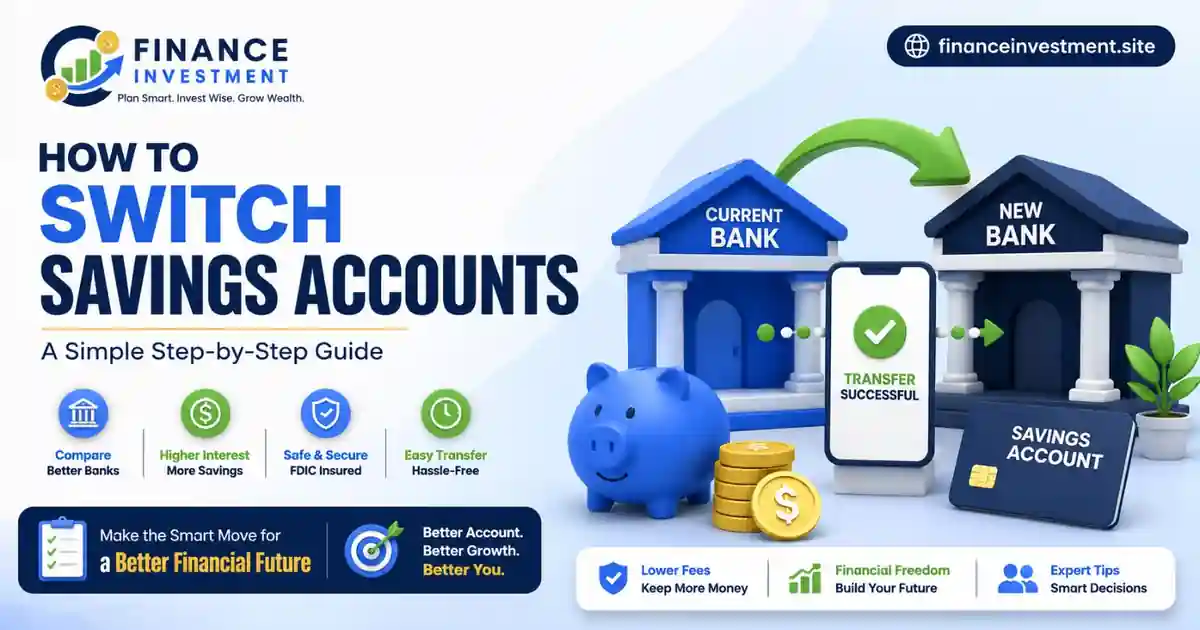
    How to Switch Savings AccountsKnowing How to Switch Savings Accounts can help you earn more interest, reduce unnecessary fees, and take advantage of better banking features. Many people continue using the same savings account for years without realizing that another bank may offer a higher APY, lower costs, or a better digital experience. Making the switch doesn’t have to be difficult, and in most cases, it can be completed in just a few simple steps.

    One of the biggest concerns people have is whether they’ll lose money or face unexpected problems during the transition. The good news is that changing savings accounts is usually straightforward when you plan ahead. By opening your new account first, transferring your money carefully, and closing the old account only after everything is complete, you can avoid unnecessary stress and keep your savings secure.

    This guide explains the entire process in clear, easy-to-follow language. You’ll learn when it’s worth changing banks, how to compare savings accounts, what documents you’ll need, how to transfer your funds safely, and the common mistakes that can delay the process.

    By the end of this guide, you’ll understand how to move your savings confidently, protect your money during the transition, and choose an account that supports your financial goals both today and in the future.High-Yield Savings Accounts USA Guide


    Quick Answer

    How to Switch Savings Accounts is a simple process when you follow the right order. Start by opening your new savings account before closing the old one. Once the new account is active, transfer your money, update any automatic deposits or transfers, confirm that all transactions have cleared, and then close your previous account. Taking these steps helps you avoid missed deposits, unnecessary fees, and interruptions to your savings.

    Key Takeaways

    • ✔ Open your new savings account before closing your current one.
    • ✔ Compare APYs, fees, and account features before making the switch.
    • ✔ Move automatic transfers and direct deposits to your new account.
    • ✔ Verify that your money has arrived before requesting account closure.
    • ✔ Keep copies of account statements and confirmation emails.
    • ✔ Choose an FDIC- or NCUA-insured institution for added peace of mind.

    Bottom Line: Switching to a better savings account can increase your interest earnings and improve your overall banking experience. A little planning today can help your money work harder for years to come.


    Table of Contents

    • At a Glance
    • Complete Beginner Guide
    • How the Switching Process Works
    • Benefits & Drawbacks
    • Comparison Table
    • Costs, Risks & Expert Tips
    • Common Mistakes & Real-Life Example
    • Who Should Switch Savings Accounts?
    • Frequently Asked Questions
    • Final Verdict


    How to Switch Savings Accounts at a Glance

    Changing to a new savings account can be a smart financial move if your current account no longer meets your needs. Whether you’re looking for a higher APY, lower fees, or better online banking features, switching accounts is usually easier than most people expect. With a little planning, you can move your money safely without interrupting your savings goals.

    Before making the switch, compare several banks instead of focusing only on the highest advertised interest rate. Look at monthly fees, minimum balance requirements, customer service, mobile banking tools, transfer options, and FDIC or NCUA insurance. Choosing the right account today can save you time and money in the future.

    CategoryDetails
    Best ForAnyone looking for higher interest, lower fees, or improved banking features.
    Time RequiredUsually 30 minutes to complete the setup, plus a few business days for transfers.
    Main StepsOpen a new account, transfer your funds, update automatic transactions, and close the old account.
    Documents NeededGovernment-issued ID, Social Security number, and your existing bank account details.
    SafetyChoose an FDIC-insured bank or an NCUA-insured credit union.
    Biggest BenefitEarn more interest while enjoying better banking features and lower costs.

    Learning How to Switch Savings Accounts isn’t just about moving money. It’s about finding an account that works better for your financial goals and gives your savings a stronger opportunity to grow over time.


    Complete Beginner Guide

    If you’ve never changed banks before, don’t worry. Learning How to Switch Savings Accounts is a straightforward process when you take it one step at a time. The goal is to move your money safely while avoiding missed deposits, transfer delays, or unnecessary fees.

    Start by researching a few savings accounts that match your needs. Compare more than just the annual percentage yield (APY). Look at monthly maintenance fees, minimum balance requirements, mobile banking features, customer service, and whether the bank is insured by the FDIC or, in the case of credit unions, the NCUA. Choosing the right account now can save you from repeating the process later.

    Once you’ve selected a new bank, open your new savings account before making any changes to your existing one. During the application, you’ll typically provide your name, address, Social Security number, date of birth, and a government-issued photo ID. Many banks also ask you to link an existing checking account to fund your new savings account.

    After your new account is active, transfer your savings and update any automatic transfers or direct deposits connected to the old account. Give the transfer enough time to clear before closing your previous account. Keeping both accounts open for a few days can help prevent payment issues or missed transactions.

    Before requesting account closure, confirm that your balance has been transferred completely and that there are no pending transactions. Save copies of your final statements for your records.

    Taking a little extra time during the transition can make the entire process smoother. A carefully planned switch helps protect your savings, avoids unnecessary complications, and allows you to enjoy the benefits of a better account with confidence.Online Banks vs. Traditional Banks


    How the Switching Process Works

    How to Switch Savings AccountsUnderstanding How to Switch Savings Accounts is easier when you know the order of each step. The process is designed to protect your money while making sure you don’t miss deposits, automatic transfers, or interest payments during the transition.


    The first step is opening your new savings account. Most banks let you complete the application online in just a few minutes. Once your identity is verified and the account is approved, you’ll receive your new account details and can begin moving your savings.

    Next, transfer your money from your old savings account to the new one. Depending on your bank, this may happen through an electronic transfer, an external bank transfer, or another approved funding method. The transfer usually takes a few business days, so it’s best to avoid closing your original account immediately.

    After your funds arrive, update any automatic transfers or scheduled deposits connected to the old account. This includes transfers from your checking account and any recurring deposits you’ve already set up. Taking a few extra minutes to review these settings can help prevent missed transactions.

    Once you’ve confirmed that your balance has moved successfully and there are no pending transactions, you can request to close your previous savings account. Keep a copy of your final statement for your records in case you need it later.

    Following these steps carefully helps make the transition smooth and gives you confidence that your savings are secure while you begin earning the benefits offered by your new account.FDIC-insured bank


    Benefits & Drawbacks

    Changing to a new savings account can improve your overall banking experience, but it’s still important to weigh the advantages and possible drawbacks before making a decision. Taking a few minutes to compare your options can help you avoid unnecessary hassle and choose an account that better supports your financial goals.

    ✅ Pros

    • Move to an account with a higher APY and earn more interest on your savings.
    • Reduce or eliminate monthly maintenance fees.
    • Take advantage of better mobile banking tools and online account management.
    • Access improved customer service and modern banking features.
    • Enjoy stronger budgeting tools, automatic transfers, and account alerts.
    • Keep your money protected when using an FDIC-insured bank or NCUA-insured credit union.

    ❌ Cons

    • Transferring funds may take a few business days.
    • You’ll need to update automatic transfers linked to your old account.
    • Closing your previous account too early could interrupt scheduled deposits.
    • Some banks may require a minimum opening deposit or balance.
    • Interest rates can change over time, even after you switch.

    Learning How to Switch Savings Accounts can be worthwhile if your current bank no longer offers competitive rates or useful features. A carefully planned transition helps you avoid common problems while giving your savings the opportunity to earn more. Before making the move, compare the complete banking experience—not just the advertised APY—so your new account continues to meet your needs well into the future.Best Savings Accounts for Students


    Compare Before You Switch

    Not every savings account offers the same value. While a higher APY is important, it’s only one part of the decision. Comparing fees, account features, digital tools, and customer support can help you find an account that fits your long-term financial needs instead of focusing on a single number.

    FeatureCurrent Savings AccountNew Savings Account
    Interest Rate (APY)May be lower than current market rates.Often offers a more competitive APY.
    Monthly FeesSome accounts charge maintenance fees.Many accounts have no monthly fee.
    Minimum BalanceRequirements vary by bank.Many banks have low or no minimum balance.
    Mobile BankingBasic online features.Advanced app, alerts, and account management tools.
    Automatic TransfersMay offer limited flexibility.Easy scheduling and recurring transfers.
    Deposit ProtectionFDIC or NCUA insurance at eligible institutions.FDIC or NCUA insurance at eligible institutions.
    Best ChoiceSuitable if it still meets your needs.Better if it offers stronger value and features.

    Knowing How to Switch Savings Accounts isn’t just about transferring money from one bank to another. It’s also about choosing an account that gives you better value over time. Compare the complete banking experience, including interest earnings, fees, customer service, security, and digital tools, before making your final decision. A thoughtful comparison today can help your savings grow more efficiently while making everyday banking easier.


    Costs, Risks & Expert Tips

    Switching savings accounts is usually free, but it’s still worth checking the details before moving your money. While many banks don’t charge account closing fees, some may have minimum balance requirements, transfer limits, or conditions that affect bonus offers. Reading the account terms in advance can help you avoid surprises.

    💡 Expert Tip

    When deciding How to Switch Savings Accounts, don’t close your existing account immediately after opening a new one. Keep both accounts active until every transfer, automatic deposit, and scheduled payment has been completed successfully. This simple step can prevent delays and missed transactions.

    Another common mistake is choosing a new account based only on the highest advertised APY. A slightly lower rate may still be the better option if the bank offers excellent customer service, a reliable mobile app, no monthly fees, and flexible transfer options.

    Taking a little extra time to compare banks and plan the transition carefully can make the entire process much smoother. A well-organized switch helps protect your savings while allowing you to enjoy the long-term benefits of a better banking experience.Consumer Financial Protection Bureau (CFPB)


    Common Mistakes & a Real-Life Example

    Changing savings accounts is usually a smooth process, but small mistakes can create unnecessary delays or even cost you money. A little preparation before making the switch can help you avoid these problems and keep your savings moving without interruption.

    Common Mistakes to Avoid

    • Closing your old savings account before confirming that your money has arrived in the new account.
    • Forgetting to update automatic transfers or recurring deposits after opening the new account.
    • Choosing a bank based only on the highest APY without comparing fees, customer service, and account features.
    • Ignoring minimum balance requirements that could reduce your earnings or trigger fees.
    • Not saving copies of your final account statements after closing your previous account.
    • Rushing the process instead of checking that every transfer has been completed successfully.

    Real-Life Example

    Michael, a homeowner in Florida, noticed that his old savings account was earning very little interest. After learning How to Switch Savings Accounts, he opened a new high-yield savings account before moving any money. He transferred his balance, updated his automatic monthly savings transfer, and waited until every transaction cleared before requesting the old account to be closed.

    Because Michael followed each step carefully, the transition was completed without delays or missed deposits. He now earns more interest on the same savings balance while enjoying a better mobile banking experience and lower account costs. His experience shows that a well-planned switch can improve your finances without adding unnecessary stress.How High-Yield Savings Accounts Work


    Who Should Switch Savings Accounts?

    Switching savings accounts isn’t necessary for everyone, but it can be a smart decision if your current account no longer provides good value. If you’re earning a very low interest rate, paying monthly maintenance fees, or struggling with outdated online banking tools, it may be time to consider a better option.

    Learning How to Switch Savings Accounts is especially helpful for people building an emergency fund, saving for a home, planning for retirement, or setting aside money for future expenses. Even a modest increase in your APY can make a noticeable difference as your savings continue to grow.

    This guide is also useful for families, students, freelancers, and retirees who want a simpler banking experience with lower costs and better digital features. If your bank no longer meets your expectations for customer service or account flexibility, switching can improve both convenience and long-term savings.

    However, before making the move, compare several accounts carefully and review the complete list of features—not just the advertised interest rate. Choosing a bank that fits your financial habits and future goals will help ensure the switch is worthwhile and beneficial for years to come.


    Frequently Asked Questions

    1. Why should I switch my savings account?

    Many people switch because their current account offers a low interest rate, charges monthly fees, or lacks useful features. Moving to a better account can help your savings earn more while improving your overall banking experience.

    2. How long does it take to switch savings accounts?

    Opening a new account usually takes only a few minutes. After that, transferring your money and updating automatic transactions may take a few business days, depending on the banks involved.

    3. Will I lose money when I switch banks?

    In most cases, no. If you transfer your funds carefully and keep your old account open until every transaction is complete, you can avoid unnecessary fees and missed deposits.

    4. Can I keep both savings accounts open for a while?

    Yes. Keeping both accounts active during the transition is often the safest approach. It gives you time to confirm that your balance has been transferred and that all automatic deposits or transfers are working correctly.

    5. Do I need to switch my direct deposits?

    If your paycheck or any recurring deposits go directly into your savings account, you’ll need to update those instructions after opening your new account. This helps prevent delays or failed transactions.

    6. Is my money protected after I switch?

    Yes. As long as your new account is with an FDIC-insured bank or an NCUA-insured credit union, eligible deposits remain protected up to the applicable federal insurance limits.

    7. When should I close my old savings account?

    Wait until your money has arrived safely, automatic transfers have been updated, and there are no pending transactions. Closing the account too early can create avoidable problems.

    8. Is learning How to Switch Savings Accounts worth it?

    For many people, yes. If another bank offers better interest rates, lower fees, or stronger digital banking tools, switching can improve both your savings growth and your everyday banking experience without making your finances more complicated.


    Final Verdict

    Learning How to Switch Savings Accounts can be one of the simplest ways to improve your financial situation without changing your spending habits. If your current account pays a low interest rate, charges unnecessary fees, or no longer offers the features you need, moving to a better account may help your savings grow faster while making everyday banking more convenient.

    The key is to plan the transition carefully. Open your new account first, transfer your money, update any automatic deposits or transfers, and verify that everything is working before closing your old account. Taking these steps helps prevent delays, missed transactions, and unnecessary stress.

    When comparing banks, look beyond the advertised APY. Consider customer service, mobile banking tools, account fees, security, and overall convenience. An account that fits your financial habits is often a better long-term choice than one that simply offers the highest promotional rate.

    A thoughtful switch today can lead to better interest earnings, lower costs, and a smoother banking experience for years to come. Choose carefully, stay organized, and let your savings work harder for your future.


    Give Your Savings a Better Home

    Your savings deserve more than a low interest rate. If your current account isn’t helping your money grow, now may be the right time to make a change. Compare your options, choose a bank that fits your financial goals, and complete the switch with confidence. A few simple steps today could lead to higher earnings, lower fees, and a better banking experience for years to come. Keep exploring our expert guides for practical tips that help you save smarter and build lasting financial security.


    📩 Subscribe to Our Free Newsletter

    Continue Reading

    High-Yield Savings Accounts USA
    |
    Online Banks vs Traditional Banks
    |
    How High-Yield Savings Accounts Work

  • Best Savings Accounts for Seniors in 2026: Compare Top High-Yield Options for Retirees

    Best Savings Accounts for Seniors in 2026: Compare Top High-Yield Options for Retirees


    FI

    FinanceInvestment Editorial Team

    FinanceInvestment’s editorial team researches banking products, retirement planning, and personal finance strategies to create accurate, practical, and unbiased guides for American readers. Every article is carefully reviewed to ensure it is current, trustworthy, and easy to understand.

    ✍ Written by                      FinanceInvestment Editorial Team   Subhash Rukade  

    ✔ Reviewed by Financial      Research Team                      

    ✓ Fact Checked

    📅 Updated: July 24, 2026

    ⏱ Reading Time: 12 Minutes

    🛡 Editorial Integrity      Reviewed

    This guide is based on publicly available information from banks, credit unions, and trusted financial organizations. Our editorial team compares interest rates, fees, FDIC insurance, accessibility, customer experience, and retirement-friendly banking features to help seniors choose a savings account that supports long-term financial security and peace of mind.


    Best Savings Accounts for Seniors in 2026: Find the Right Place for Your Retirement Cash

    Best Savings Accounts for SeniorsChoosing the Best Savings Accounts for Seniors is about more than finding the highest interest rate. During retirement, every dollar should stay safe, remain easy to access, and continue earning competitive returns. The right account can help your emergency fund grow, protect your purchasing power, and provide peace of mind without taking unnecessary investment risks.

    Many banks now offer high-yield savings accounts with no monthly maintenance fees, low minimum balance requirements, mobile banking, and FDIC insurance. However, comparing dozens of options can quickly become overwhelming. Some accounts advertise attractive APYs but include restrictions, while others focus on convenience and customer service instead of maximizing interest earnings.

    This guide to the Best Savings Accounts for Seniors simplifies the process. Whether you’re recently retired, living on a fixed income, or planning for retirement in the next few years, you’ll learn how to compare important features, avoid costly mistakes, and choose an account that matches your financial goals.

    What You’ll Learn

    • How senior-friendly savings accounts work
    • Which features matter most for retirees
    • How to compare APYs, fees, and FDIC protection
    • Ways to earn more interest without taking extra risk
    • Tips for selecting a savings account that supports your retirement plan


    Quick Answer

    The Best Savings Accounts for Seniors combine competitive APYs, FDIC insurance, low or no monthly fees, and easy access to your money. A strong savings account should help your retirement cash earn more interest while keeping it safe and available whenever unexpected expenses arise. Online banks often provide higher yields, while traditional banks may offer more in-person support. The best choice depends on your financial goals, comfort with digital banking, and the level of service you prefer.

    Key Takeaways

    • Choose accounts with competitive APYs and no unnecessary monthly fees.
    • Always confirm that your deposits are protected by FDIC or NCUA insurance.
    • Compare online and traditional banks before opening an account.
    • Keep enough cash for emergencies while allowing your balance to earn interest.
    • Review your savings account regularly because rates can change over time.
    • Select features that match your retirement lifestyle, including easy transfers and strong customer support.

    Bottom Line: A well-chosen savings account can protect your retirement funds, improve interest earnings, and make managing everyday finances much easier.


    Table of Contents

    1. What Is a Savings Account for Seniors?
    2. How These Accounts Work
    3. Benefits and Potential Drawbacks
    4. Comparison of Popular Account Features
    5. Costs, Risks, and Expert Tips
    6. Common Mistakes to Avoid
    7. Who Should Open One?
    8. Frequently Asked Questions
    9. Final Verdict


    Best Savings Accounts for Seniors at a Glance

    Finding the Best Savings Accounts for Seniors doesn’t have to be complicated. The right account should help your retirement savings grow while keeping your money secure and easy to access. Many seniors look for a combination of competitive interest rates, no monthly maintenance fees, simple online banking, and dependable customer service. Since most retirees rely on fixed or predictable income, even a slightly higher APY can make a noticeable difference over time.

    It’s also important to choose an account insured by the FDIC or NCUA so your deposits remain protected within federal coverage limits. Beyond safety, consider features like low minimum balance requirements, automatic transfers, and easy access to your funds whenever unexpected expenses arise.

    Quick FactDetails
    Best ForRetirees, seniors, and anyone seeking a safe place for cash savings.
    SafetyChoose FDIC- or NCUA-insured financial institutions.
    Ideal APYA competitive high-yield rate with no hidden conditions.
    Monthly FeesPrefer accounts with no monthly maintenance charges.
    Key FeaturesOnline banking, mobile access, automatic transfers, and responsive customer support.
    Main GoalProtect retirement savings while earning more interest with minimal risk.


    Complete Beginner Guide to Savings Accounts for Seniors

    If you’re retired or getting close to retirement, choosing the Best Savings Accounts for Seniors can help you manage your money with greater confidence. A savings account is designed to keep your cash secure while earning interest. Unlike stocks or mutual funds, the value of your savings doesn’t rise and fall with the market, making it a dependable place for emergency funds and short-term financial goals.

    Many seniors use a savings account to cover unexpected medical bills, home repairs, travel expenses, or other costs that can appear without warning. Keeping several months of living expenses in an easily accessible account can reduce financial stress and help you avoid withdrawing money from long-term investments at the wrong time.

    When comparing accounts, don’t focus only on the advertised interest rate. Look at the complete picture, including monthly maintenance fees, minimum balance requirements, withdrawal flexibility, customer support, and digital banking features. Even a slightly lower APY may be worthwhile if the account offers better service and fewer restrictions.

    Most banks and credit unions now let you open an account online in just a few minutes. You’ll usually need a government-issued ID, your Social Security number, contact information, and money for the initial deposit if one is required. Once your account is active, you can set up direct deposits, automatic transfers, and online alerts to make saving easier.

    The best approach is to choose an account that fits your retirement lifestyle. A simple, low-cost savings account with competitive interest and federal deposit insurance can provide both security and steady growth for the cash you may need in the years ahead.


    How Savings Accounts for Seniors Work

    The Best Savings Accounts for Seniors are designed to keep your money safe while earning interest every month. After you deposit funds into the account, the bank pays you interest based on the account’s annual percentage yield (APY). The interest is usually added to your balance monthly, allowing your savings to grow over time through compounding.

    Your deposits remain available whenever you need them. You can transfer money to a checking account, pay bills, or withdraw cash, although some banks may have policies that limit certain types of withdrawals. Before opening an account, it’s worth reviewing these rules so there are no surprises later.

    Most savings accounts are protected by FDIC insurance at banks or NCUA insurance at credit unions. This federal coverage helps safeguard your deposits up to the applicable limits if your financial institution ever fails, making savings accounts one of the safest places to keep retirement cash.

    Many modern accounts also include online banking, mobile apps, account alerts, direct deposit, and automatic transfers. These tools make it easier to monitor your balance and build your savings without extra effort.

    As interest rates change, you can compare your current account with newer options. Moving your money to a higher-yield account may help your retirement savings earn more while maintaining the same level of security and accessibility.


    Benefits and Drawbacks of Savings Accounts for Seniors

    Choosing the Best Savings Accounts for Seniors can make managing retirement money much easier. A quality savings account provides security, steady interest earnings, and quick access to cash when unexpected expenses arise. At the same time, it’s important to understand a few limitations before deciding where to keep your money.

    ✅ Advantages

    • Your deposits are protected by FDIC or NCUA insurance within federal coverage limits.
    • High-yield accounts can earn significantly more interest than traditional savings accounts.
    • Most accounts charge no monthly maintenance fees.
    • Your money remains available for emergencies and everyday financial needs.
    • Online and mobile banking make it simple to monitor balances and transfer funds.
    • Automatic transfers help you save consistently without extra effort.

    ❌ Potential Drawbacks

    • Interest rates can change as market conditions shift.
    • Returns may not always keep pace with inflation.
    • Some banks require a minimum balance to earn the highest APY.
    • Certain accounts offer fewer in-person services than traditional banks.
    • Keeping too much cash in savings could limit long-term growth compared with diversified investments.

    For many retirees, a savings account works best as part of a broader financial plan. It offers a safe place for emergency funds and short-term expenses while allowing long-term investments to remain focused on future growth.


    Compare Savings Account Features Before You Choose

    Best Savings Accounts for SeniorsNot every savings account is the same. The Best Savings Accounts for Seniors balance strong interest rates with safety, convenience, and low costs. Instead of looking at APY alone, compare several features together. A slightly lower interest rate may still be the better choice if the account offers excellent customer service, no monthly fees, and simple access to your money.


    The table below highlights the most important features retirees should review before opening a new account.

    FeatureHigh-Yield Online BankTraditional Bank
    Interest Rate (APY)Usually higherUsually lower
    Monthly FeesOften noneMay apply
    Minimum BalanceOften low or noneVaries by bank
    FDIC/NCUA InsuranceYesYes
    Online & Mobile BankingExcellentGood to excellent
    Branch AccessLimited or noneAvailable
    Best ForMaximizing interest earningsCustomers who prefer in-person banking

    Quick Tip: Compare the total value of an account—not just the APY. Look at fees, customer support, digital tools, withdrawal flexibility, and federal deposit insurance before making your decision.


    Costs, Risks, and Expert Tips

    The Best Savings Accounts for Seniors are often inexpensive to maintain, but it’s still worth checking the account details before opening one. Many banks have eliminated monthly maintenance fees, while others may waive them if you keep a minimum balance or receive regular deposits. Reading the fee schedule can help you avoid unnecessary charges.

    Savings accounts are considered one of the safest places to keep your money because eligible deposits are protected by FDIC or NCUA insurance. The biggest risk isn’t losing your deposit—it’s earning an interest rate that doesn’t keep up with inflation. If prices rise faster than your savings, your purchasing power can gradually decline.

    💡 Expert Tips

    • Compare APYs at least twice a year because rates can change.
    • Choose accounts with no monthly maintenance fees whenever possible.
    • Keep emergency savings separate from everyday spending money.
    • Verify FDIC or NCUA insurance before depositing large amounts.
    • Review your savings strategy annually to make sure it still supports your retirement goals.


    Common Mistakes to Avoid + A Real-Life Example

    Even after choosing the Best Savings Accounts for Seniors, a few common mistakes can reduce the value of your savings. Paying attention to small details can help you earn more interest while keeping your retirement money secure.

    ⚠ Common Mistakes

    • Leaving money in an account that pays a very low interest rate.
    • Ignoring monthly maintenance fees that slowly reduce your balance.
    • Keeping more cash than necessary instead of balancing savings with long-term investments.
    • Opening an account without confirming FDIC or NCUA insurance.
    • Never comparing rates, even when better options become available.
    • Choosing an account based only on promotional offers instead of long-term value.

    Real-Life Example

    Linda, a 68-year-old retiree, kept $40,000 in a traditional savings account that earned very little interest. After comparing several banks, she moved her money to a high-yield savings account with no monthly fees and federal deposit insurance. Without taking on additional investment risk, her annual interest income increased while her savings remained fully accessible for medical expenses and emergencies. Reviewing her account once a year also helped her stay competitive as interest rates changed.


    Who Should Choose a Savings Account for Seniors?

    The Best Savings Accounts for Seniors are a smart choice for retirees who want to protect their money while earning steady interest. They work well for people who value safety, flexibility, and easy access to cash without exposing their savings to market fluctuations.

    If you receive Social Security benefits, pension payments, or retirement income, a high-quality savings account can help you manage everyday finances and prepare for unexpected expenses. It also provides a convenient place to keep an emergency fund, helping you avoid selling long-term investments during market downturns.

    These accounts are also ideal for seniors planning a major purchase, setting aside money for healthcare costs, or building a financial cushion for future needs. Many retirees appreciate accounts with no monthly fees, competitive interest rates, and simple online or in-person banking options.

    Is This Right for You?

    • ✔ You want a safe place to keep retirement savings.
    • ✔ You need quick access to cash for emergencies.
    • ✔ You want your savings to earn more interest than a traditional account.
    • ✔ You prefer low fees, federal deposit insurance, and simple account management.


    Frequently Asked Questions

    1. What are the Best Savings Accounts for Seniors?

    The Best Savings Accounts for Seniors are accounts that offer competitive APYs, no or low monthly fees, FDIC or NCUA insurance, and convenient access to your money. The right choice depends on your financial goals, banking preferences, and how often you need to access your savings.

    2. Are high-yield savings accounts safe for retirees?

    Yes. If the account is held at an FDIC-insured bank or an NCUA-insured credit union, your eligible deposits are protected up to federal insurance limits. This makes high-yield savings accounts one of the safest places to keep emergency and short-term retirement funds.

    3. How much money should a senior keep in a savings account?

    Many financial professionals recommend keeping enough cash to cover several months of living expenses. The exact amount depends on your monthly budget, healthcare needs, and other income sources such as Social Security or a pension.

    4. Should seniors choose an online bank or a traditional bank?

    Online banks often provide higher interest rates and lower fees, while traditional banks offer branch access and face-to-face customer service. The better option depends on which features matter most to you.

    5. Do seniors pay taxes on savings account interest?

    Yes. Interest earned from a savings account is generally considered taxable income under U.S. tax rules. Your bank may issue a Form 1099-INT if your interest income meets reporting requirements.

    6. Can I withdraw money whenever I need it?

    In most cases, yes. Savings accounts are designed to provide easy access to your money, although some banks may have transaction policies or transfer limits. Always review the account terms before opening one.

    7. How often should I compare savings accounts?

    Checking your account once or twice a year is a good habit. Interest rates and account features change over time, and comparing options regularly may help you earn more without increasing your risk.

    8. Is a savings account enough for retirement planning?

    A savings account is an important part of a retirement plan, but it usually shouldn’t be your only financial tool. Many retirees combine cash savings with investments, retirement accounts, and other income sources to balance safety, growth, and long-term financial stability.


    Final Verdict

    Choosing the Best Savings Accounts for Seniors is about finding the right balance between safety, accessibility, and long-term value. A well-designed savings account won’t make you wealthy overnight, but it can help your retirement money earn steady interest while remaining available when you need it most.

    As you compare different banks, look beyond the advertised APY. Consider monthly fees, FDIC or NCUA insurance, customer service, digital banking tools, and how easily you can manage your account. These features often have a greater impact on your overall banking experience than a small difference in interest rates.

    Your financial needs may also change over time. Reviewing your savings account once or twice a year gives you the opportunity to move to a better option if rates improve or your priorities shift. Even a modest increase in interest can add meaningful value over several years.

    The best savings account is one that supports your retirement lifestyle, protects your cash, and gives you confidence that your money is working for you. With careful comparison and regular reviews, you can choose an account that fits your goals today and continues to serve you well in the years ahead.


    Take the Next Step Toward Smarter Saving

    Choosing the right savings account is only one part of building a stronger financial future. Continue learning about high-yield savings, retirement planning, and practical money strategies to make the most of every dollar. Our expert guides are designed to help you compare options with confidence and stay informed as financial products change.


    📩 Subscribe to Our Free Newsletter

    Continue Reading

    High-Yield Savings Accounts USA Guide  |
    Online Banks vs Traditional Banks  |
    Retirement Planning Guide

  • Best Savings Accounts for Families in 2026: Compare Top Family Savings Options

    Best Savings Accounts for Families in 2026: Compare Top Family Savings Options


    FI

    FinanceInvestment Editorial Team

    Independent personal finance researchers dedicated to helping American families make smarter banking, saving, and investing decisions through accurate, practical, and easy-to-understand financial guides.


    ✍ Written by FinanceInvestment Editorial Team   Subhash                Rukade.


    ✔ Reviewed by Financial Research Team


    ✓ Fact Checked


    📅 Updated: July 23, 2026


    ⏱ Reading Time: 12 Minutes


    🛡 Editorial Integrity Reviewed

    This guide was researched using publicly available information from reputable financial institutions and government resources. Our editorial team evaluates savings account features, interest rates, fees, accessibility, and consumer protections to provide unbiased recommendations for families in the United States.


    Best Savings Accounts for Families in 2026

    Best Savings Accounts for FamiliesFinding the best savings accounts for families isn’t just about earning a higher interest rate. It’s about choosing an account that helps your household save for both everyday needs and long-term goals. Whether you’re building an emergency fund, planning a family vacation, saving for your child’s education, or preparing for retirement, the right savings account can make managing money much easier.

    With so many banks offering different APYs, fees, mobile apps, and family-friendly features, deciding where to keep your savings can feel overwhelming. Some accounts reward larger balances, while others focus on flexibility, digital banking, or automatic savings tools. Knowing what matters most can help you avoid unnecessary fees and earn more from your money.

    This guide is designed to simplify the process. You’ll learn how best savings accounts for families work, which features deserve your attention, how to compare banks confidently, and the common mistakes families should avoid before opening an account. We’ll also explain how high-yield savings accounts compare with traditional bank accounts and what to consider before making a final decision.

    By the end of this guide, you’ll have the knowledge to choose a savings account that fits your family’s financial goals, keeps your money secure, and helps every dollar work harder for your future.


    💡 Quick Answer

    If you’re looking for the best savings accounts for families, focus on more than just the highest APY. A great family savings account should offer competitive interest rates, no monthly maintenance fees, FDIC insurance, easy online access, and tools that make saving for multiple goals simple. The right account can help your family grow an emergency fund, prepare for future expenses, and keep your savings secure while earning interest.

    📌 Key Takeaways

    • Choose accounts with competitive APYs and no monthly maintenance fees.
    • Make sure the bank offers FDIC insurance for eligible deposits.
    • Compare mobile banking features, automatic savings tools, and account accessibility.
    • Look for flexible options that support both short-term and long-term family goals.
    • Review balance requirements and withdrawal rules before opening an account.
    • Compare several banks instead of selecting the first account you find.

    Bottom Line: The best savings accounts for families combine strong returns, low costs, and convenient banking features, making it easier to build financial security for every stage of family life.


    Table of Contents

    1. What Are Family Savings Accounts?
    2. How Family Savings Accounts Work
    3. Benefits and Drawbacks
    4. Comparison of Popular Savings Account Options
    5. Costs, Risks, and Expert Tips
    6. Common Mistakes to Avoid
    7. Who Should Open a Family Savings Account?
    8. Frequently Asked Questions
    9. Final Verdict


    Best Savings Accounts for Families at a Glance

    The best savings accounts for families help households save for both planned and unexpected expenses while earning interest on their money. Whether you’re building an emergency fund, saving for your children’s education, planning a vacation, or preparing for retirement, choosing the right account can make reaching those goals much easier.

    Not every savings account offers the same value. Some banks focus on higher Annual Percentage Yields (APYs), while others provide better digital banking tools, lower fees, or features designed for busy families. Comparing these details before opening an account can help you maximize your savings and avoid unnecessary costs.

    FeatureQuick Overview
    Best ForFamilies building emergency funds and long-term savings.
    Interest EarningsCompetitive APYs help savings grow faster than many traditional accounts.
    Monthly FeesMany top accounts charge no monthly maintenance fee.
    SafetyLook for FDIC-insured banks to protect eligible deposits.
    Digital FeaturesMobile apps, automatic transfers, and savings goal trackers.
    Ideal Savings GoalsEmergency funds, education, home improvements, vacations, and future family expenses.

    Quick Summary: The best savings accounts for families offer a balance of competitive interest rates, low fees, convenient online banking, and secure FDIC protection. Choosing an account that matches your family’s financial goals can make saving easier and more rewarding over time.


    Complete Beginner’s Guide to Family Savings Accounts

    Best Savings Accounts for FamiliesIf you’ve never opened a family savings account before, don’t worry. The process is simpler than many people expect. The best savings accounts for families are designed to help households save money safely while earning interest. They also make it easier to prepare for both planned expenses and unexpected emergencies.

    A family savings account can be used for many financial goals. Some families save for a home down payment, while others build an emergency fund, set aside money for their children’s education, plan vacations, or prepare for major life events. Keeping these savings separate from everyday spending can make budgeting much easier.

    When comparing accounts, don’t focus only on the advertised APY. A higher interest rate is valuable, but you should also look at monthly maintenance fees, minimum balance requirements, withdrawal policies, customer service, and mobile banking features. Many online banks offer competitive rates along with helpful tools such as automatic transfers, savings goals, and spending alerts.

    Security is another important factor. Choose a bank that offers FDIC insurance for eligible deposits so your family’s savings remain protected. It’s also helpful to select an account with a simple mobile app that allows you to monitor balances, schedule transfers, and track your progress toward financial goals.

    The best savings accounts for families are those that fit your household’s needs, encourage consistent saving, and provide easy access when you need your money. Starting with regular monthly deposits—even small ones—can create healthy financial habits and help your savings grow steadily over time.


    How Family Savings Accounts Work

    The best savings accounts for families work much like a standard savings account, but they’re used to help households save for shared financial goals. After opening an account, you can deposit money whenever it fits your budget. As your balance grows, the bank pays interest based on the account’s Annual Percentage Yield (APY), allowing your savings to increase over time.

    Many families set up automatic transfers from their checking account every payday. This simple habit makes saving consistent and removes the need to remember monthly deposits. Even modest contributions can add up over time, especially when interest is earned on the growing balance.

    Most banks also provide online and mobile banking, making it easy to check your balance, schedule transfers, track savings goals, and monitor account activity from anywhere. Some accounts even include budgeting tools and savings trackers that help families stay focused on their financial plans.

    While the best savings accounts for families make it easy to access your money when needed, they’re designed for saving rather than everyday spending. Keeping these funds separate from your regular checking account can reduce unnecessary spending and help you stay on track toward important goals such as building an emergency fund, paying for education, or planning future family expenses.


    Benefits and Drawbacks of Family Savings Accounts

    The best savings accounts for families can help households build financial security while keeping money easily accessible for future needs. However, like any financial product, they have both advantages and limitations. Understanding both sides can help you choose an account that matches your family’s goals.

    ✅ Pros

    • Earn interest while keeping your money available when needed.
    • Many accounts have no monthly maintenance fees.
    • FDIC insurance protects eligible deposits.
    • Automatic transfers make regular saving easier.
    • Mobile banking apps help families track balances and savings goals.
    • Suitable for emergency funds, education savings, vacations, and other long-term family goals.

    ❌ Cons

    • Interest rates may change over time.
    • Some banks require a minimum balance to earn the highest APY.
    • Certain accounts may limit specific types of withdrawals or transfers.
    • Returns are generally lower than long-term investment options.
    • Account features and digital tools vary between banks.

    Overall, the best savings accounts for families provide a safe and flexible way to build savings. Comparing fees, interest rates, and account features before opening an account can help your family receive the greatest long-term value.


    Compare Different Family Savings Account Options

    Choosing the best savings accounts for families becomes easier when you compare the features that matter most. While every family has different financial goals, factors such as interest rates, monthly fees, digital banking tools, account accessibility, and FDIC protection can make a significant difference over time.

    The table below highlights the key differences you should evaluate before opening a family savings account.

    FeatureTraditional BankOnline BankBest Choice
    Interest Rate (APY)Usually lowerOften more competitiveOnline Bank
    Monthly FeesMay applyOften no monthly feeOnline Bank
    Branch AccessExcellentLimited or noneTraditional Bank
    Mobile BankingGoodExcellentOnline Bank
    Automatic Savings ToolsAvailable at some banksCommon featureOnline Bank
    FDIC InsuranceYes (eligible deposits)Yes (eligible deposits)Both

    For many households, the best savings accounts for families are those that balance competitive interest rates, low fees, reliable customer service, and convenient digital banking. Comparing these features before opening an account can help your family choose a solution that supports both short-term needs and long-term financial goals.


    Costs, Risks, and Expert Tips

    The best savings accounts for families are often affordable, but it’s still important to understand the costs before opening an account. Many banks offer family savings accounts with no monthly maintenance fee, while others may charge fees if your balance falls below a required minimum. Reviewing the fee schedule can help you avoid unnecessary expenses.

    Interest rates are another factor to watch. A bank may advertise an attractive APY today, but savings rates can increase or decrease as market conditions change. It’s also worth checking whether the account has withdrawal limits, balance requirements, or conditions for earning the highest interest rate.

    💡 Expert Tip: Don’t choose the best savings accounts for families based only on the highest APY. Look for a combination of competitive interest rates, low fees, FDIC insurance, strong mobile banking, automatic savings tools, and reliable customer support. These features can provide greater value over the long term than a slightly higher interest rate alone.

    Comparing several banks before making a decision can help your family find an account that supports both your everyday needs and your future financial goals.


    Common Mistakes Families Make When Choosing a Savings Account

    Opening a savings account is an important step toward financial security, but choosing the wrong account can reduce the benefits over time. The best savings accounts for families should support your household’s goals, not create unnecessary costs or limitations. Avoiding a few common mistakes can help your savings grow more efficiently.

    Common Mistakes to Avoid

    • Focusing only on the highest APY: A high interest rate is attractive, but monthly fees, minimum balance requirements, and account features are just as important.
    • Ignoring fees: Even small maintenance fees can slowly reduce your family’s savings if you’re not paying attention.
    • Not comparing different banks: Checking several online and traditional banks often leads to better rates and more useful features.
    • Skipping automatic savings: Setting up recurring transfers makes it easier to save consistently without relying on memory.
    • Using savings for everyday spending: Keeping emergency savings separate from daily expenses helps protect your long-term financial goals.

    Real-Life Example

    The Johnson family wanted to build a stronger emergency fund after unexpected home repairs affected their budget. Instead of choosing the first bank they found, they compared several options and selected one of the best savings accounts for families with no monthly fees, a competitive APY, and automatic monthly transfers. By saving a fixed amount every payday, they steadily grew their emergency fund and felt more prepared for future expenses without making major changes to their lifestyle.


    Who Should Choose a Family Savings Account?

    The best savings accounts for families are a smart choice for households that want to build financial stability while keeping their money safe and accessible. Whether you’re saving for short-term expenses or planning years ahead, the right account can help you stay organized and reach your financial goals with confidence.

    • Parents with young children: Ideal for building emergency savings, education funds, or future family expenses.
    • Couples managing shared finances: A great way to save together for a home, vacations, or other major life goals.
    • Families creating an emergency fund: Keeping dedicated savings separate from everyday spending provides extra financial security.
    • New homeowners: Perfect for setting aside money for home maintenance, repairs, and unexpected costs.
    • Retirees supporting family members: Helpful for managing savings while remaining prepared for future financial needs.

    The best savings accounts for families offer competitive interest rates, low fees, FDIC protection, and convenient online banking. If your goal is to grow savings steadily while maintaining easy access to your money, opening a family savings account can be a practical step toward stronger long-term financial health.


    Frequently Asked Questions

    1. What is a family savings account?

    A family savings account is a bank account designed to help households save money for shared financial goals. Families often use these accounts to build emergency funds, save for vacations, children’s education, home improvements, or other future expenses while earning interest on their balance.

    2. What should I look for in the best savings accounts for families?

    When comparing the best savings accounts for families, look beyond the advertised APY. Consider monthly fees, minimum balance requirements, FDIC insurance, mobile banking features, customer service, and automatic savings tools. Choosing an account that fits your family’s lifestyle is just as important as earning a competitive interest rate.

    3. Are family savings accounts safe?

    Yes. If the account is held at an FDIC-insured bank, eligible deposits are protected up to the applicable federal insurance limits. This helps provide peace of mind while your family works toward its financial goals.

    4. Can I access my money whenever I need it?

    In most cases, yes. Savings accounts are designed to give you access to your funds when needed, although some banks may have policies regarding certain types of withdrawals or transfers. Always review the account terms before opening one.

    5. Do online banks offer better savings accounts?

    Many online banks offer higher APYs and lower fees because they have lower operating costs than traditional banks. However, the best choice depends on your family’s preferences for branch access, customer support, and digital banking features.

    6. Can I open more than one savings account?

    Absolutely. Many families use multiple savings accounts to organize different goals, such as emergency savings, vacations, holiday spending, or future education costs. Separating your savings can make budgeting easier.

    7. How much should a family keep in savings?

    The ideal amount depends on your income, monthly expenses, and financial goals. Many financial professionals recommend building an emergency fund that can cover several months of essential living expenses while continuing to save for future needs.

    8. Are family savings accounts better than keeping money in a checking account?

    For long-term savings, yes. The best savings accounts for families usually earn more interest than standard checking accounts while encouraging better saving habits and helping your money grow over time.


    Final Verdict

    The best savings accounts for families can play an important role in building long-term financial security. Whether you’re creating an emergency fund, saving for your children’s future, planning a family vacation, or preparing for unexpected expenses, the right savings account gives your money a safe place to grow while remaining accessible when you need it.

    Before opening an account, compare more than just the advertised APY. Review monthly fees, minimum balance requirements, FDIC insurance, mobile banking features, customer service, and automatic savings tools. A slightly lower interest rate may still offer greater overall value if the account provides better flexibility and fewer fees.

    The best savings accounts for families are those that match your household’s financial goals and encourage consistent saving over time. By choosing wisely and making regular deposits, your family can build stronger financial habits, stay prepared for life’s unexpected costs, and move confidently toward future milestones with greater peace of mind.


    📩 Stay One Step Ahead with Smarter Family Finance Tips

    If this guide on the Best Savings Accounts for Families helped you, join the FinanceInvestment newsletter for practical advice on saving, banking, retirement planning, investing, and building long-term wealth. Every guide is written to help you make confident financial decisions with simple, reliable information.


    📧 Subscribe Free

    ✔ Weekly Money Tips   •   ✔ Free Guides   •   ✔ Unsubscribe Anytime

    Continue Reading