How to Buy Treasury Bills
How to Buy Treasury Bills: Start With the Right Route
 How to Buy Treasury Bills is easier when you first understand where the purchase happens and what you are actually ordering. In the U.S., individual investors can buy Treasury bills directly through TreasuryDirect or through a brokerage account. The steps are different, but both routes can give you access to Treasury bill investments.
Buying a T-bill is more than choosing an amount and clicking purchase. You need to select a maturity, decide how much face value you want, understand whether you are placing a new-issue order, and know when the bill will mature. Treasury bills are issued at a discount and generally pay their face value at maturity when held until then.
If Treasury bills are new to you, our
Treasury Bills Explained guide
covers the fundamentals. This article goes one step further by showing how the buying process fits together, from choosing an account to placing an order and planning for maturity.
What You’ll Learn
- What you need before buying your first Treasury bill.
- How the TreasuryDirect purchase process works.
- How a brokerage can be used to purchase Treasury bills.
- How to choose a maturity that fits your cash timeline.
- What a noncompetitive order means for individual investors.
- What to check before submitting a Treasury bill order.
Quick Answer: How Do You Buy Treasury Bills?
To buy Treasury bills, you can purchase newly issued bills through TreasuryDirect or through a brokerage that offers Treasury securities. Start by choosing a maturity and deciding how much to invest. Then review the available offering, submit the appropriate order and check the settlement and maturity details. TreasuryDirect uses noncompetitive bidding for individual purchases, meaning you accept the yield determined at the auction.
Key Takeaways
- Treasury bills can be purchased directly through TreasuryDirect or through a brokerage that offers Treasury securities.
- Before placing an order, choose a maturity that matches when you expect to need the money.
- TreasuryDirect individual purchases use noncompetitive bidding, so you do not enter the auction yield yourself.
- Treasury bills are generally issued at a discount and pay their face value at maturity when held to maturity.
- A brokerage may also provide access to Treasury bills already trading in the secondary market.
- Before buying, review the purchase amount, maturity date, settlement information and any applicable brokerage fees or charges.
Buying a T-bill is fairly simple once you know the route you want to use. The important part is matching the maturity to your cash needs and understanding whether you are buying a new issue or a bill in the secondary market.
Table of Contents
Treasury Bills Buying at a Glance
Buying a Treasury bill comes down to a few practical decisions: where you will buy it, which maturity fits your plans, how much you want to invest and whether you are purchasing a new issue or a bill already trading in the secondary market. Once those choices are clear, the order itself becomes easier to follow.
Key Details to Check
| Detail | What to Check | Why It Matters |
|---|---|---|
| Maturity | Available bill term and maturity date | Tells you when the bill is scheduled to mature. |
| Purchase price | Amount required for the order | Helps determine the difference between what you pay and the face value received at maturity. |
| Order type | New issue or secondary market | Pricing and the purchase process can differ between the two markets. |
| Account | TreasuryDirect or brokerage | Determines where you place, hold and manage the investment. |
Before opening the order screen, know how long you can leave the money invested and when you may need it back. Then compare the available bill terms and purchase details that fit that timeline.
Complete Beginner Guide: What You Need Before Buying Treasury Bills
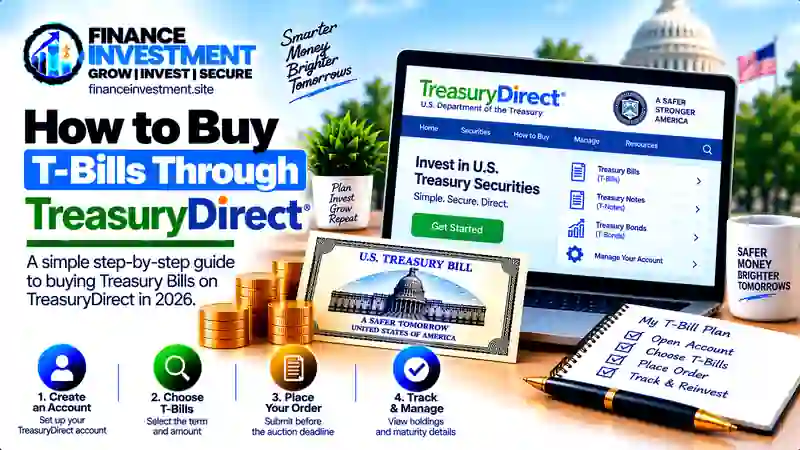 Before you buy Treasury bills, get three things clear: where you will purchase them, how long you can leave the money invested and how much you want to commit. Having those answers ready makes the order process much easier to follow.
1. Choose Your Buying Account
You can buy eligible Treasury securities directly through TreasuryDirect or use a brokerage that offers Treasury securities. TreasuryDirect is designed for direct purchases from the Treasury, while a brokerage may also give you access to Treasury securities in the secondary market.
2. Match the Maturity to Your Cash Needs
Look at your upcoming expenses before selecting a bill. The maturity date tells you when the security becomes due, so avoid choosing a term that conflicts with a known cash need. If you may need the money earlier, understand the secondary-market selling process before you buy.
3. Prepare the Purchase Details
For a new Treasury auction, you specify the par amount you want to purchase. Treasury auction announcements state the applicable minimum bid and purchase multiples. A noncompetitive bid accepts the yield or discount rate determined at the auction instead of entering your own competitive rate.
Before submitting an order, confirm the account, bill maturity, par amount and order type. If you are using a brokerage, also check its current transaction pricing and any applicable fees or minimums.
If you want to understand the security before placing an order, read our
guide to how Treasury bills work
.
Then you can move on to the actual purchase process.
How Buying Treasury Bills Works
Once you know which account and maturity you want, the buying process follows a simple sequence. The exact screens depend on the platform, but you generally select the bill, review the order details, submit the purchase and then wait for the issue or trade to settle.
Step 1: Choose the Bill and Maturity
Start by reviewing the available Treasury bill offerings. For a new auction, check the bill’s term, auction date, issue date, maturity date and the minimum purchase amount or applicable purchase multiples stated in the offering information.
Step 2: Submit Your Order
For a new TreasuryDirect purchase, an individual investor generally submits a noncompetitive bid. You enter the par amount you want to purchase rather than specifying your own competitive discount rate. A noncompetitive bid accepts the rate or discount rate awarded through the auction.
Step 3: Complete the Purchase
For a new issue, the Treasury conducts the auction and determines the resulting pricing. Your purchase is then completed according to the applicable settlement terms. If you buy an existing T-bill through a brokerage’s secondary market, the transaction uses the market price available when your order is executed instead of waiting for a new Treasury auction.
Step 4: Track the Maturity Date
After the purchase, keep the maturity date in your records. A Treasury bill becomes due on that date. If you hold it until maturity, the Treasury pays the bill’s face value. You can then use the proceeds, reinvest them or move the money toward another financial goal.
Save your order confirmation, issue date and maturity date after buying. If you plan to reinvest the proceeds, note the maturity date on your calendar so you have time to review the next available Treasury bill options.
The biggest difference between the two buying routes is what happens after you place the order. TreasuryDirect is built around direct Treasury purchases, while a brokerage can also give you access to securities already trading in the secondary market.
Benefits and Drawbacks of Buying Treasury Bills
Treasury bills can be useful for short-term cash that has a defined purpose and timeline. They offer a clear maturity structure, but buying them also means thinking ahead about liquidity, taxes and what you will do when the bill matures.
Benefits
- You can choose an available maturity that fits a planned cash need.
- Treasury bills are obligations of the U.S. government.
- Treasury bill interest is generally exempt from state and local income taxes.
- TreasuryDirect provides a direct way to purchase newly issued Treasury securities.
Drawbacks
- If you need the money before maturity, you may need to sell the bill through the secondary market.
- A pre-maturity sale can produce a market price that is different from what you originally paid.
- The yield available when you reinvest may be higher or lower than the yield on your current bill.
- Treasury bill interest is generally subject to federal income tax.
Look at your cash timeline before focusing on the quoted yield. A bill that matures when you actually need the money may fit your plan more naturally than one selected only because its annualized yield appears higher.
TreasuryDirect vs. Brokerage: How to Buy Treasury Bills
TreasuryDirect and brokerage accounts can both provide access to Treasury bills, but they serve different purposes. TreasuryDirect lets investors purchase eligible Treasury securities directly from the U.S. Treasury, while a brokerage can place Treasury orders alongside stocks, bonds and other investments. Some brokers also provide access to Treasury securities in the secondary market.
| Feature | TreasuryDirect | Brokerage |
|---|---|---|
| New Treasury issues | Direct access to eligible Treasury auctions | Available through brokers that offer Treasury auction orders |
| Existing T-bills | TreasuryDirect is primarily designed for Treasury holdings and direct purchases | Some brokers offer existing Treasury securities in the secondary market |
| Auction order | Individual investors generally use noncompetitive bidding | Order process depends on the brokerage |
| Account experience | Focused on Treasury securities | Treasury bills can be managed alongside other investments |
| Purchase costs | TreasuryDirect charges no purchase fee or commission | Costs depend on the brokerage, account and transaction |
When a Brokerage May Be Convenient
A brokerage can be convenient if you already keep your investments in one account. Depending on the firm, you may be able to purchase new Treasury issues and access existing securities in the secondary market. However, brokerage fees and trading arrangements vary, so review the firm’s current fee schedule and transaction terms before placing an order. Investor.gov notes that brokerage costs can include commissions, markups or markdowns and other account-related charges. 1
What to Compare Before Choosing
- Whether you want a newly issued Treasury bill or an existing security in the secondary market.
- How easily you want to manage Treasury bills alongside your other investments.
- The brokerage’s current transaction costs, account requirements and trading terms.
- How you would handle the investment if your cash needs change before maturity.
Compare the complete buying experience rather than looking only at a commission. Check auction access, secondary-market availability, pricing, account features and how you plan to manage the bill after purchase.
Costs, Taxes, Risks and Expert Tips
Buying Treasury bills is relatively straightforward, but the purchase price is only one part of the decision. Before placing an order, consider brokerage costs, federal taxes, maturity timing and what could happen if you need to sell the bill before it matures.
Costs to Know
TreasuryDirect does not charge a purchase fee or commission for Treasury securities. Brokerage costs can vary by firm and transaction, so check the broker’s current pricing before placing an order. A secondary-market purchase can also have a different price from a newly issued Treasury bill.
Taxes and Market Risk
Treasury bill interest is generally subject to federal income tax but exempt from state and local income taxes. The discount on a Treasury bill is generally treated as interest income when the bill reaches maturity. If you sell before maturity, the market price can be higher or lower than what you paid because market conditions and interest rates can change.
Before buying, check the maturity date, purchase amount, expected cash need and tax treatment. If you may need the money early, understand how selling through the secondary market could affect your proceeds.
For a closer look at Treasury bill pricing, read our
Treasury Bill Yield vs. Interest Rate guide
.
Common Mistakes When Buying Treasury Bills
Buying Treasury bills is straightforward, but the details still matter. Most problems happen when investors choose a maturity, purchase amount or buying method without first considering when they may need the money.
1. Choosing a Maturity Without Checking Your Cash Needs
Before buying, look at when you expect to use the money. If you need the funds before the bill matures, you may need to sell through the secondary market, where the market price can be different from your original purchase price.
2. Confusing Face Value With Purchase Price
Treasury bills are generally issued at a discount and mature at face value. That means the amount paid at purchase can be less than the amount due at maturity. Review both figures before submitting an order so you understand the transaction.
3. Forgetting to Plan for Maturity
A Treasury bill has a defined maturity date. Before buying, decide what you expect to do with the proceeds when the bill matures. You may need the money for an expense, move it to another account or consider another investment.
Suppose an investor has $10,000 available for a Treasury bill and expects to use that money for a planned expense in about four months. Instead of selecting a maturity without checking the timeline, the investor can review the available Treasury bill terms and consider which maturity date fits the expected cash need. If the money is needed earlier than the selected maturity, the investor should also understand the potential effects of selling in the secondary market.
A Simple Pre-Purchase Check
- Confirm the bill’s maturity date.
- Review the purchase amount and face value.
- Check whether you are buying a new issue or a secondary-market security.
- Decide how you expect to use the proceeds when the bill matures.
Who Should Consider Buying T-Bills?
Treasury bills may fit investors who have cash available for a defined period and want a U.S. Treasury security with a specific maturity date. Whether they fit your situation depends on your cash needs, investment timeline and overall financial plan.
May Fit
- Investors planning for a known short-term cash need.
- Families setting aside money for an upcoming expense.
- Investors who want short-term Treasury securities as part of a broader portfolio.
- Retirees managing a portion of their cash for planned near-term spending.
Consider the Timing First
- Investors who may need the money before the selected maturity should understand the secondary market.
- Investors seeking long-term portfolio growth may need to consider other asset types as well.
- Money needed for an emergency reserve may require a more accessible cash option.
Start with the date you expect to need the money. Then compare that timeline with the available Treasury bill maturities. If your cash needs could change, understand the potential price impact of selling before maturity before committing the funds.
Frequently Asked Questions About Buying Treasury Bills
1. Where can I buy Treasury bills?
You can buy newly issued Treasury bills directly through TreasuryDirect or through a brokerage that offers Treasury securities. Some brokerages also provide access to Treasury bills in the secondary market.
2. Can beginners buy Treasury bills?
Yes. Individual investors can buy Treasury bills through TreasuryDirect or an eligible brokerage account. For TreasuryDirect auction purchases, individual investors generally use noncompetitive bids, which accept the yield or discount rate determined at the auction.
3. Do Treasury bills pay monthly interest?
No. Treasury bills do not make periodic coupon payments. They are generally issued at a discount and mature at face value. The difference between the purchase price and amount paid at maturity generally represents the bill’s interest income.
4. What happens when a Treasury bill matures?
When a Treasury bill reaches its maturity date, the Treasury pays its face value. If you hold the bill through maturity, you do not need to sell it in the secondary market. Eligible TreasuryDirect investors can also arrange for proceeds from maturing securities to be reinvested into new Treasury securities.
5. Can I sell a Treasury bill before maturity?
Yes. Treasury bills are marketable securities and can generally be sold in the secondary market before maturity. The selling price may be higher or lower than your original purchase price because market prices can change.
6. Are Treasury bill earnings taxable?
Treasury bill interest is generally subject to federal income tax but exempt from state and local income taxes. Your individual tax situation may differ, so review the applicable IRS rules and tax documents when preparing your return.
7. Can I buy Treasury bills through a brokerage?
Yes. Many brokerages offer Treasury securities, including newly issued Treasury bills and, depending on the firm, securities available in the secondary market. Check the brokerage’s current trading terms, pricing and order requirements before buying.
8. Is holding a Treasury bill until maturity an option?
Yes. An investor can hold a Treasury bill until its maturity date instead of selling it in the secondary market. This can avoid the need to sell at a changing market price, but the appropriate approach depends on when the investor expects to need the money.
Treasury auction procedures, account rules and tax requirements can change. Check current TreasuryDirect and IRS information before placing a purchase or making a tax decision.
Final Takeaway: How to Buy Treasury Bills
Buying Treasury bills comes down to a few practical decisions. Choose where you want to buy, select a maturity that matches your cash timeline, decide how much you want to invest and review the order details before submitting the purchase.
TreasuryDirect provides a direct way to purchase newly issued Treasury securities. A brokerage can place Treasury bills alongside other investments and, depending on the firm, may also provide access to the secondary market. Your choice of platform should reflect how you want to purchase and manage the investment.
Before placing an order, check the maturity date, purchase amount, pricing, tax treatment and the process for selling before maturity. If you are still comparing Treasury bill basics, our
Treasury Bills Explained guide
can help you review how these securities work.
The key connection is between the Treasury bill’s maturity date and your expected cash need. Once that timeline is clear, you can compare the available buying routes, review the costs and understand what happens if your plans change before maturity.