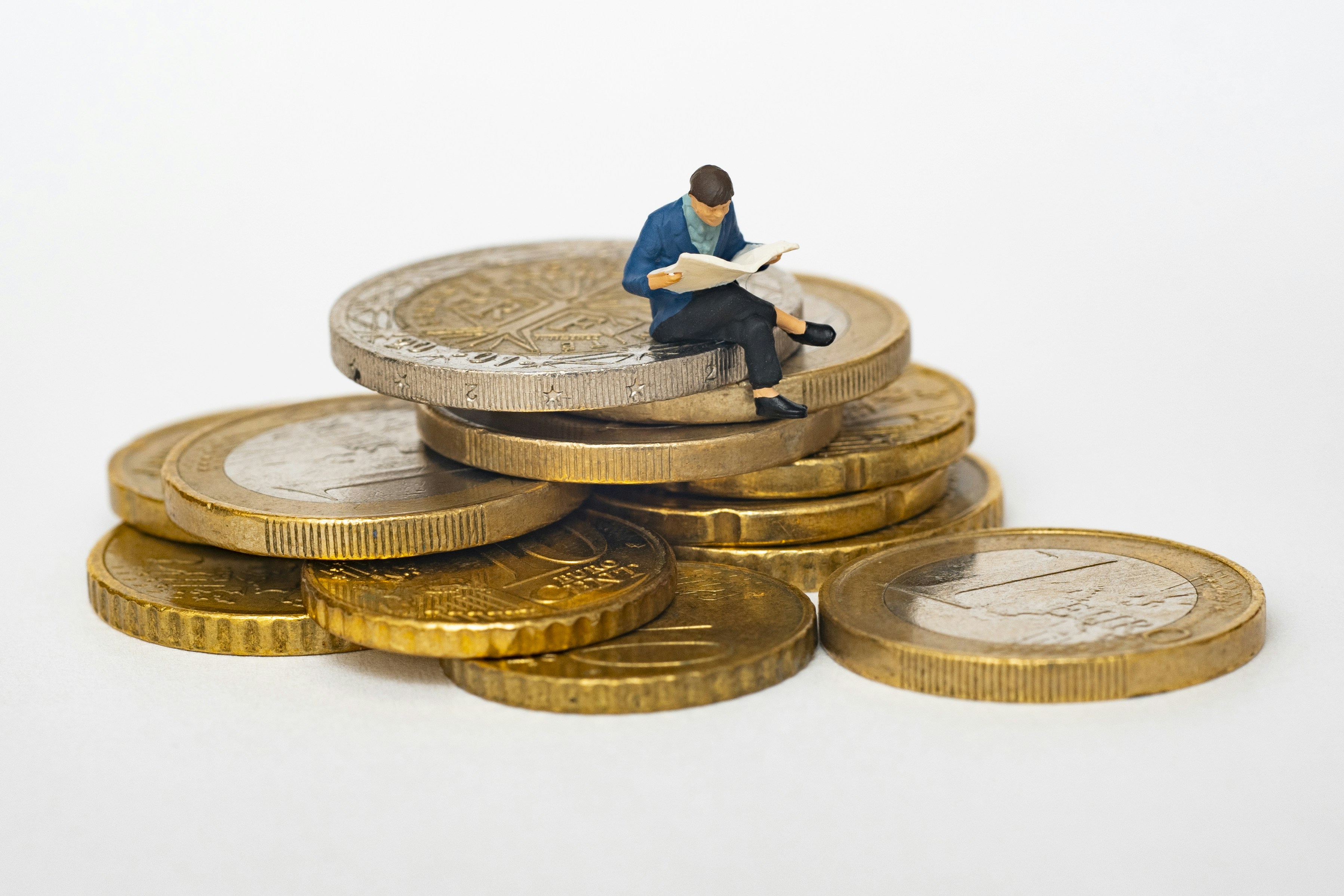

Tag: financial planning

  • How Much Emergency Fund Do You Really Need in 2026? (3–6–12 Rule Explained)

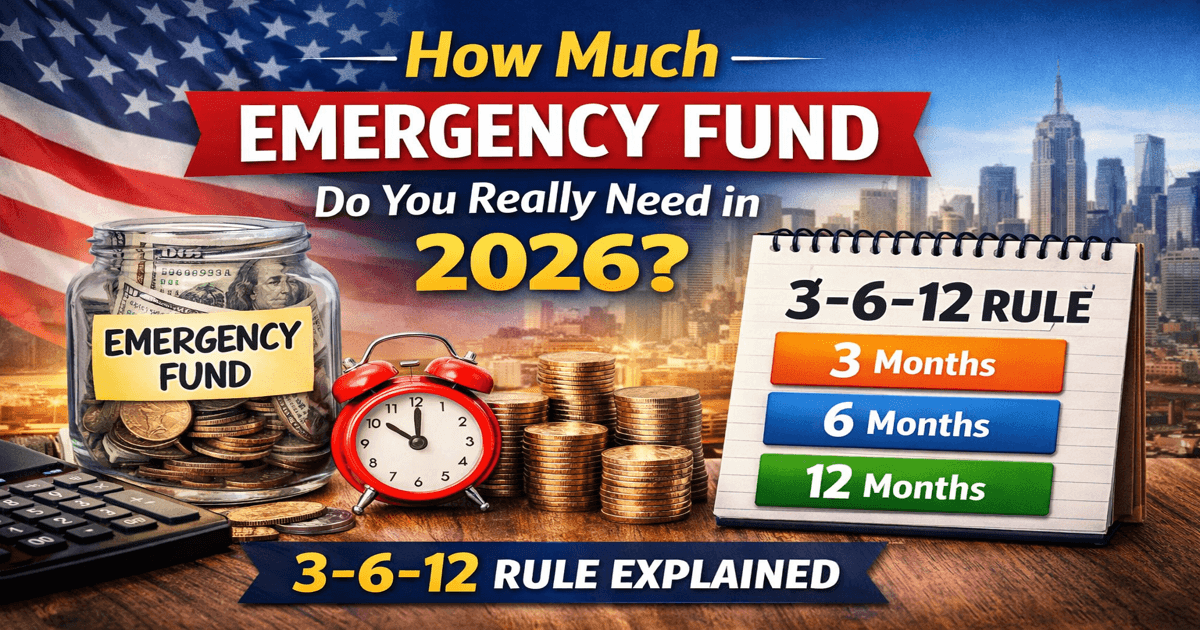
    How Much Emergency Fund Do You Really Need in 2026? (3–6–12 Rule Explained)


    How Much Emergency Fund Do You Really Need in 2026? (3–6–12 Rule Explained)

    how much emergency fund do you need in 2026 USA

    How much emergency fund do you need in 2026 is one of the most important financial questions for Americans today. With rising inflation, job uncertainty, and unexpected expenses becoming more common, having the right amount of savings is no longer optional — it is essential.

    Many people either save too little or overestimate their needs. Both approaches can be risky. Saving too little can leave you financially vulnerable during emergencies, while saving too much in low-return accounts can limit your wealth growth.

    This is where the 3–6–12 rule comes in. It is a simple yet powerful guideline that helps you determine exactly how much emergency fund you should maintain based on your lifestyle and income stability.

    In 2026, financial planning is no longer about guesswork. It is about using smart strategies to balance safety and growth.

    If you want a complete breakdown of emergency fund planning, check this detailed guide on

    how much emergency fund Americans should save in 2026
    to build a strong financial foundation.

    In this guide, we will explain the 3–6–12 rule in detail, help you calculate your ideal emergency fund, and show you how to build it step by step.

    By the end of this article, you will have a clear answer to how much emergency fund you really need in 2026 and how to achieve it efficiently.

    Advertisement


    What is an Emergency Fund and Why It Matters in 2026?

    Before deciding how much emergency fund you need in 2026, it is important to understand what an emergency fund actually is and why it plays a critical role in your financial security.

    What is an Emergency Fund?

    An emergency fund is a dedicated amount of money set aside to cover unexpected expenses. These expenses can include job loss, medical emergencies, car repairs, or urgent home maintenance.

    Unlike regular savings, this fund is strictly reserved for emergencies. It is not meant for planned expenses like vacations, shopping, or investments.

    Why Emergency Funds Are More Important in 2026

    In 2026, financial uncertainty in the USA has increased due to inflation, economic shifts, and changing job markets. Many Americans face unpredictable income and rising living costs.

    Without an emergency fund, unexpected expenses can lead to debt. Credit cards and loans may solve short-term problems but create long-term financial stress.

    An emergency fund acts as a financial safety net. It helps you handle unexpected situations without disrupting your financial stability.

    Key Features of an Emergency Fund

    • Safety: Your money should not be exposed to risk
    • Liquidity: Funds should be easily accessible
    • Purpose: Used only for emergencies

    Where Should You Keep Your Emergency Fund?

    Choosing the right place to store your emergency fund is just as important as building it. Your money should remain safe while earning some interest.

    High-yield savings accounts are one of the best options because they offer better returns compared to traditional accounts.

    You can explore top options here:

    high-yield savings accounts in the USA
    to maximize your savings.

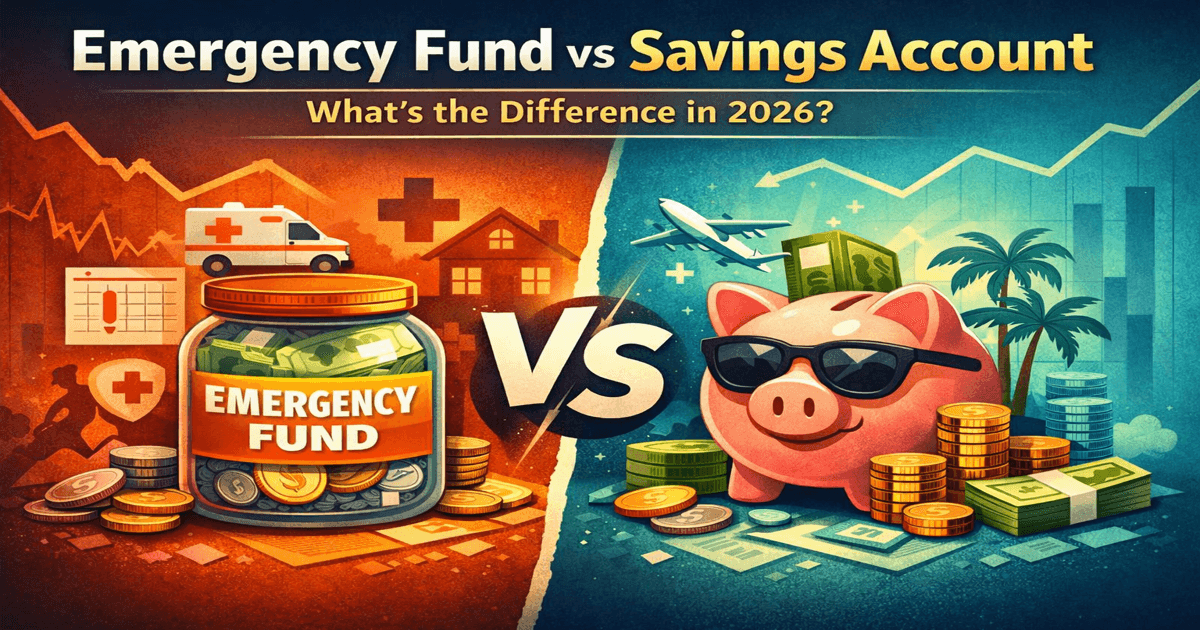
    Emergency Fund vs Regular Savings

    Many people confuse an emergency fund with regular savings. However, both serve different purposes.

    • Emergency Fund: Used only for unexpected situations
    • Regular Savings: Used for planned financial goals

    Keeping them separate helps you stay disciplined and ensures that your emergency fund is always available when needed.

    Why You Should Start Now

    The sooner you start building your emergency fund, the better prepared you will be for unexpected situations. Even small contributions can grow into a strong financial cushion over time.

    Key Takeaway

    An emergency fund is your first line of financial defense. It protects you from uncertainty and helps you maintain stability during difficult times.

    In the next section, we will explain the 3–6–12 rule in detail to help you calculate exactly how much emergency fund you need in 2026.

    Advertisement

    The 3–6–12 Rule Explained: How Much Emergency Fund Do You Need in 2026?

    To answer how much emergency fund you need in 2026, financial experts recommend following the 3–6–12 rule. This rule helps you decide the right amount of savings based on your income stability, job security, and lifestyle.

    Instead of guessing, this method gives you a clear and practical framework.

    What is the 3–6–12 Rule?

    The 3–6–12 rule suggests saving a certain number of months’ worth of living expenses:

    • 3 months → Basic safety
    • 6 months → Standard financial security
    • 12 months → Maximum protection

    Your ideal emergency fund depends on your personal financial situation.

    3-Month Emergency Fund (Minimum Level)

    A 3-month emergency fund is the starting point. It provides basic protection against short-term financial disruptions.

    This level is suitable if:

    • You have a stable job
    • You have multiple income sources
    • Your expenses are low and predictable

    However, this level may not be enough during long-term unemployment or major emergencies.

    6-Month Emergency Fund (Recommended Level)

    A 6-month emergency fund is considered the standard for most Americans in 2026. It offers a strong balance between safety and financial flexibility.

    This level is ideal if:

    • You rely on a single income
    • You have family responsibilities
    • Your job stability is moderate

    This is the most commonly recommended target for financial security.

    12-Month Emergency Fund (Maximum Security)

    A 12-month emergency fund provides the highest level of financial protection. It is ideal for people with uncertain income or higher financial risks.

    This level is suitable if:

    • You are self-employed or a freelancer
    • Your income is unstable
    • You work in a high-risk industry

    While this level offers maximum security, it may take longer to build.

    How to Choose the Right Level

    Choosing the right level depends on your situation:

    • Stable job → 3 to 6 months
    • Moderate risk → 6 months
    • High risk → 9 to 12 months

    You should also consider your monthly expenses, lifestyle, and financial obligations.

    If you want a complete breakdown, check this guide on

    how much emergency fund Americans should save in 2026
    to align your savings plan.

    Why the 3–6–12 Rule Works

    This rule works because it balances risk and practicality. It ensures that you are prepared for both short-term and long-term financial disruptions.

    It also helps you avoid two common mistakes:

    • Saving too little (financial risk)
    • Saving too much in low-return accounts (lost opportunities)

    2026 Financial Reality

    In 2026, economic conditions make it even more important to follow this rule. Inflation and job uncertainty mean that having a larger emergency fund is often safer.

    Many experts now recommend aiming closer to the 6-month or even 12-month range.

    Key Takeaway

    The 3–6–12 rule is a simple yet powerful way to determine how much emergency fund you need. It provides clarity and helps you build a strong financial safety net.

    In the next section, we will show you how to calculate your exact emergency fund amount step by step.

    Advertisement

    How to Calculate Your Emergency Fund in 2026 (Step-by-Step Guide)

    Now that you understand the 3–6–12 rule, the next step is to calculate how much emergency fund you need in 2026 based on your personal expenses.

    Step 1: Calculate Your Monthly Expenses

    Start by listing your essential monthly expenses. These include:

    • Rent or mortgage
    • Food and groceries
    • Utilities
    • Insurance
    • Transportation

    For example, if your monthly expenses are $3,000, this becomes your base number.

    Step 2: Apply the 3–6–12 Rule

    Multiply your monthly expenses based on your risk level:

    • 3 months → $3,000 × 3 = $9,000
    • 6 months → $3,000 × 6 = $18,000
    • 12 months → $3,000 × 12 = $36,000

    This gives you a clear target for your emergency fund.

    Quick Calculation Table

    Monthly Expenses3 Months Fund6 Months Fund12 Months Fund
    $2,000$6,000$12,000$24,000
    $3,000$9,000$18,000$36,000
    $4,000$12,000$24,000$48,000
    $5,000$15,000$30,000$60,000

    Step 3: Choose the Right Level

    Use this table to decide your target based on your financial situation:

    • Stable job → 3 to 6 months
    • Moderate risk → 6 months
    • High risk → 9 to 12 months

    Where Should You Keep This Money?

    Your emergency fund should be stored in a safe and liquid account.

    Explore the best options here:

    high-yield savings accounts in the USA
    .

    What About Investments?

    Emergency funds should not be invested in risky assets like stocks or gold. These are better suited for long-term growth.

    If you want to understand investment options, check this guide on

    gold ETF vs physical gold
    .

    External Authority Insight

    According to the Federal Deposit Insurance Corporation (FDIC), insured savings accounts are one of the safest places to keep your money.


    FDIC Deposit Insurance Overview

    Key Takeaway

    Calculating your emergency fund is simple when you follow a structured approach. By understanding your expenses and applying the 3–6–12 rule, you can determine the exact amount you need.

    In the next section, we will look at a real-life example to make this calculation even clearer.

    Real Example: How Much Emergency Fund Do You Need in 2026? (USA Scenario)

    To better understand how much emergency fund you need in 2026, let’s look at a real-life example. This will help you apply the 3–6–12 rule in a practical way.

    emergency fund calculation example USA 2026

    Example: Monthly Income $5,000

    Let’s assume Emily lives in the USA and earns $5,000 per month. Her essential monthly expenses are $3,500.

    • Monthly income → $5,000
    • Monthly expenses → $3,500
    • Potential savings → $1,500

    Step 1: Apply the 3–6–12 Rule

    Emily calculates her emergency fund based on her expenses:

    • 3 months → $3,500 × 3 = $10,500
    • 6 months → $3,500 × 6 = $21,000
    • 12 months → $3,500 × 12 = $42,000

    Step 2: Choose the Right Level

    Since Emily has a stable job but supports her family, she decides to aim for a 6-month emergency fund.

    This gives her a target of $21,000.

    Step 3: Monthly Saving Plan

    If Emily saves $1,500 per month:

    • 3 months → $4,500 saved
    • 6 months → $9,000 saved
    • 12 months → $18,000 saved
    • 14 months → $21,000 (goal achieved)

    This shows that building a strong emergency fund takes time and consistency.

    How to Speed Up the Process

    Emily can reach her goal faster by:

    • Reducing unnecessary expenses
    • Increasing her income through side hustles
    • Using high-yield savings accounts

    Where Should She Keep Her Fund?

    To ensure safety and returns, Emily stores her emergency fund in a high-yield savings account. This allows her money to grow while remaining accessible.

    If you want to plan your fund correctly, check this guide on

    how much emergency fund Americans should save in 2026
    .

    Key Insight

    This example shows that the right emergency fund amount depends on your expenses, lifestyle, and financial responsibilities.

    By following the 3–6–12 rule and staying consistent, you can build a strong financial safety net in 2026.

    In the next section, we will explore common mistakes and smart tips to optimize your emergency fund strategy.

    Common Mistakes to Avoid and Smart Tips to Build Your Emergency Fund Faster

    While calculating how much emergency fund you need in 2026, many people make mistakes that slow down their progress or put their finances at risk. Avoiding these mistakes and following smart strategies can help you build your fund faster and more effectively.

    Common Mistakes to Avoid

    1. Saving Too Little

    Many people underestimate their expenses and save less than required. This can leave you financially vulnerable during emergencies.

    2. Investing Emergency Funds

    Emergency funds should not be invested in stocks, crypto, or volatile assets. Market fluctuations can reduce your savings when you need them the most.

    3. Keeping Money in Low-Interest Accounts

    Traditional savings accounts offer very low returns, which reduces the growth of your money over time.

    4. Not Separating Emergency Fund

    Mixing your emergency fund with regular savings can lead to unnecessary spending.

    5. Ignoring Inflation

    In 2026, inflation can reduce the value of your savings. This is why choosing the right storage option is important.

    Smart Tips to Build Your Emergency Fund

    1. Start Small and Stay Consistent

    Even small monthly contributions can grow into a strong emergency fund over time.

    2. Use High-Yield Savings Accounts

    Keep your emergency fund in accounts that offer better returns while maintaining safety.

    Explore options here:

    high-yield savings accounts in the USA
    .

    3. Automate Your Savings

    Set up automatic transfers to ensure consistent saving every month.

    4. Increase Your Income

    Additional income sources can significantly speed up your savings journey.

    Check ideas here:

    passive income ideas in the USA
    .

    5. Keep Investments Separate

    Use investments for long-term growth, not for emergency funds.

    Learn more here:

    gold investment strategies in the USA
    .

    Recommended Resources

    To improve your financial habits and mindset, these books can help:


    The Psychology of Money by Morgan Housel


    I Will Teach You to Be Rich by Ramit Sethi


    Your Money or Your Life by Vicki Robin

    Key Takeaway

    Building the right emergency fund requires discipline, planning, and smart decisions. By avoiding common mistakes and applying these strategies, you can secure your financial future in 2026.

    In the final section, we will answer common questions and give you a clear conclusion to take action.

    Frequently Asked Questions (FAQ)

    1. How much emergency fund do I really need in 2026?

    Most financial experts recommend saving 3 to 6 months of living expenses. However, depending on your job stability and financial situation, you may need up to 12 months of savings.

    2. Is a 3-month emergency fund enough?

    A 3-month fund provides basic protection, but it may not be enough during long-term unemployment or major emergencies.

    3. Should I save 6 or 12 months?

    If your income is stable, 6 months is sufficient. If your income is unpredictable or you are self-employed, 12 months is a safer option.

    4. Where should I keep my emergency fund?

    The best place is a high-yield savings account because it offers safety, liquidity, and interest earnings.

    5. Can I invest my emergency fund?

    No, emergency funds should remain in safe and easily accessible accounts, not in risky investments.


    Conclusion

    So, how much emergency fund do you need in 2026 depends on your lifestyle, income stability, and financial responsibilities.

    The 3–6–12 rule provides a clear and practical way to determine your ideal savings. While 3 months offers basic protection, 6 months is the standard recommendation, and 12 months provides maximum security.

    The key is to start early, stay consistent, and build your fund step by step. Even small contributions can create a strong financial safety net over time.

    If you want a detailed breakdown and personalized guidance, check this complete guide on

    how much emergency fund Americans should save in 2026
    and take control of your financial future.

    Secure Your Financial Future Today 🚀

    👉 Want more smart finance strategies?

    Subscribe to our newsletter and get expert tips on saving, investing, and wealth-building delivered directly to your inbox.

    About the Author

    Subhash Rukade is a finance content creator focused on helping readers understand saving, investing, and financial planning. His mission is to simplify complex financial concepts and guide USA investors toward smarter financial decisions.

  • Best Places to Keep Your Emergency Fund in the USA (2026 Guide)

    Best Places to Keep Your Emergency Fund in the USA (2026 Guide)


    Best Places to Keep Your Emergency Fund in the USA (2026 Guide)

    best places to keep emergency fund USA 2026

    Best places to keep your emergency fund in the USA is a critical decision that can impact your financial security in 2026. With rising inflation, economic uncertainty, and unexpected life events, having an emergency fund is essential — but where you keep that money matters just as much.

    Many Americans make the mistake of either keeping their emergency savings in low-interest accounts or investing them in risky assets like stocks and cryptocurrencies. Both approaches can be problematic. Low-interest accounts reduce your earning potential, while risky investments can lead to losses when you need the money the most.

    An ideal emergency fund should be safe, easily accessible, and capable of earning reasonable returns. It should protect your money from risk while still helping it grow over time.

    Choosing the right place to store your emergency fund ensures that you are financially prepared for unexpected situations such as job loss, medical emergencies, or urgent repairs.

    If you want to understand how much you should save before choosing a storage option, check this detailed guide on

    how much emergency fund Americans should save in 2026
    to build a strong financial foundation.

    In this guide, we will explore the best places to keep your emergency fund in the USA, compare different options, and help you choose the safest and most effective strategy for 2026.

    By the end of this article, you will have a clear understanding of where to store your emergency fund for maximum safety, liquidity, and growth.

    Advertisement


    What is Emergency Fund Storage and Why It Matters in 2026?

    To understand the best places to keep your emergency fund in the USA, you must first understand what emergency fund storage actually means. It is not just about saving money — it is about choosing the right place where your money stays safe, accessible, and useful when you need it the most.

    What is Emergency Fund Storage?

    Emergency fund storage refers to where you keep your emergency savings. This could be a bank account, cash, or another financial instrument. The key idea is to ensure that your money is always available for urgent situations.

    Unlike long-term investments, emergency funds are not meant to generate high returns. Their main purpose is safety and liquidity. This means you should be able to access your money quickly without losing value.

    Why Storage Choice is Critical in 2026

    In 2026, financial conditions in the USA are changing rapidly. Inflation is affecting purchasing power, and interest rates are fluctuating. This makes it even more important to choose the right place for your emergency fund.

    If you keep your money in a low-interest account, you may lose value over time due to inflation. On the other hand, if you invest your emergency fund in volatile assets like stocks or cryptocurrency, you risk losing money during market downturns.

    This is why choosing the right storage option is essential. It helps you balance safety, liquidity, and reasonable returns.

    Key Factors to Consider

    When deciding where to keep your emergency fund, focus on these three key factors:

    • Safety: Your money should be protected from risk and loss.
    • Liquidity: You should be able to access your funds instantly.
    • Returns: Your savings should earn some interest to grow over time.

    Balancing these three factors is the key to effective emergency fund management.

    Where Most People Go Wrong

    Many Americans make mistakes when choosing where to store their emergency fund:

    • Keeping money in checking accounts with zero interest
    • Investing emergency funds in risky assets
    • Not separating emergency savings from regular spending money

    These mistakes can reduce the effectiveness of your emergency fund and create financial stress during emergencies.

    Best Beginner-Friendly Option

    For most investors, high-yield savings accounts are the best starting point. They offer a balance of safety, liquidity, and interest earnings.

    You can explore the best options here:

    high-yield savings accounts in the USA
    to maximize your emergency fund benefits.

    Storage vs Investment: Key Difference

    It is important to understand that emergency fund storage is different from investing. Investments are designed for growth, while emergency funds are designed for protection.

    Your emergency fund should always be in a low-risk and highly liquid place. Mixing it with investments can expose you to unnecessary risk.

    Key Takeaway

    Emergency fund storage is a critical part of financial planning. Choosing the right place ensures that your money is safe, accessible, and still growing.

    In the next section, we will explore the best places to keep your emergency fund in the USA and compare them in detail.

    Advertisement

    Best Places to Keep Your Emergency Fund in the USA (2026 Breakdown)

    When it comes to choosing the best places to keep your emergency fund in the USA, not all options are created equal. Your goal should be to find a balance between safety, liquidity, and reasonable returns.

    In this section, we will break down the top options available in 2026 and help you decide which one fits your financial situation.

    1. High-Yield Savings Account (Best Overall Choice)

    A high-yield savings account (HYSA) is the most recommended option for emergency funds. It offers higher interest rates compared to traditional savings accounts while keeping your money safe and easily accessible.

    • FDIC insured (up to $250,000)
    • Easy withdrawals
    • Interest rates between 3%–5% in 2026

    This makes HYSA the perfect balance between safety and growth.

    If you are still planning your savings amount, check this guide on

    how much emergency fund Americans should save in 2026
    to align your strategy.

    2. Cash (For Immediate Emergencies)

    Keeping a small portion of your emergency fund in cash can be useful for immediate access during emergencies like power outages or urgent repairs.

    However, cash should only be a small part of your total fund because it does not earn any interest and can lose value due to inflation.

    • Instant access
    • No returns
    • Risk of theft or loss

    3. Money Market Accounts

    Money market accounts are another safe option. They offer slightly higher interest than traditional savings accounts and provide limited transaction flexibility.

    • FDIC insured
    • Moderate returns (2%–4%)
    • Limited withdrawals

    This option is suitable for people who want a mix of savings and checking account features.

    4. Treasury Bills (Low-Risk Government Option)

    Treasury bills (T-bills) are short-term government securities. They are considered very safe because they are backed by the U.S. government.

    • Very low risk
    • Predictable returns
    • Less liquidity compared to HYSA

    While T-bills are safe, they may not provide instant access to your money, which is important for emergencies.

    5. Avoid Risky Investments

    It is important to avoid storing your emergency fund in risky assets such as:

    • Stocks
    • Cryptocurrency
    • Long-term investments

    These options can provide higher returns, but they also come with volatility. You may lose money when you need it the most.

    If you want to explore investment options separately, check this guide on

    gold investment strategies in the USA
    .

    How to Choose the Best Option

    The best place for your emergency fund depends on your priorities:

    • If safety is your priority → HYSA
    • If instant access is needed → Cash (small portion)
    • If you want flexibility → Money market account
    • If you want ultra safety → Treasury bills

    Most experts recommend keeping 80–90% of your emergency fund in a high-yield savings account and a small portion in cash.

    Key Takeaway

    The best places to keep your emergency fund in 2026 are those that protect your money while keeping it accessible. High-yield savings accounts remain the top choice, supported by small allocations in cash or other safe instruments.

    In the next section, we will compare these options in a simple table to help you make a clear decision.

    Advertisement

    Comparison Table: Best Places to Keep Your Emergency Fund in the USA

    To choose the best places to keep your emergency fund in the USA, it is helpful to compare all options side by side. Each option offers different levels of safety, liquidity, and returns.

    Quick Comparison Table

    OptionSafetyLiquidityReturnsBest For
    High-Yield Savings AccountVery High (FDIC Insured)High3%–5%Best overall emergency fund storage
    CashHighVery High0%Immediate emergencies
    Money Market AccountHigh (FDIC Insured)Medium2%–4%Flexible savings option
    Treasury BillsVery High (Government-backed)Low to Medium3%–5%Low-risk short-term holding
    Stocks / CryptoLowHighHigh but unstableNot recommended for emergency funds

    What This Table Shows

    The comparison clearly shows that high-yield savings accounts provide the best balance of safety, liquidity, and returns. This makes them the most suitable option for storing your emergency fund.

    Cash is useful for immediate access but should only be a small portion of your total fund. Money market accounts offer flexibility but slightly lower returns.

    Treasury bills are safe but lack instant liquidity, which is important for emergencies. Risky investments like stocks and cryptocurrencies should be avoided for emergency funds.

    How to Use This Information

    Instead of choosing just one option, many investors use a combination strategy:

    • 80–90% in high-yield savings accounts
    • 5–10% in cash
    • Optional small portion in safe instruments like T-bills

    This approach ensures maximum safety and accessibility while still earning some interest.

    You can explore safe savings options here:

    high-yield savings accounts in the USA
    .

    For diversification strategies, check this guide on

    gold ETF vs physical gold
    for USA investors.

    External Authority Insight

    According to the Federal Deposit Insurance Corporation (FDIC), insured bank accounts are among the safest places to keep your money. You can learn more here:


    FDIC Deposit Insurance Overview

    Key Takeaway

    The best place for your emergency fund depends on your need for safety and liquidity. For most people, a high-yield savings account remains the top choice, supported by small allocations in cash or other safe options.

    In the next section, we will look at a real-life example to understand how to allocate your emergency fund effectively.

    Real Example: How to Allocate Your Emergency Fund in 2026 (USA Scenario)

    To better understand the best places to keep your emergency fund in the USA, let’s look at a real-life example. This will help you see how to divide your savings across different options for maximum safety and accessibility.

    Example: Monthly Expenses $3,000

    Let’s assume Sarah lives in the USA and her essential monthly expenses are $3,000. Based on the 3–6 month rule, her emergency fund target would be:

    • 3 months → $9,000
    • 6 months → $18,000

    Sarah decides to build a 3-month emergency fund first and gradually move to 6 months.

    Smart Allocation Strategy

    Instead of keeping all her money in one place, Sarah uses a balanced approach:

    • $7,500 (85%) → High-Yield Savings Account
    • $1,000 (10%) → Cash at home
    • $500 (5%) → Money Market Account

    This strategy ensures:

    • Maximum safety for most of the funds
    • Immediate access to cash during emergencies
    • Some flexibility with additional accounts

    Why This Strategy Works

    By keeping the majority of her emergency fund in a high-yield savings account, Sarah earns interest while keeping her money safe. The small cash reserve helps her handle urgent situations without delays.

    The money market account adds an extra layer of flexibility, especially for slightly larger expenses.

    What If She Chooses the Wrong Option?

    If Sarah had invested her emergency fund in stocks or crypto, she could face losses during market downturns. This would create financial stress when she needs money the most.

    Similarly, keeping all funds in cash would result in zero returns and loss of value due to inflation.

    Planning Your Own Emergency Fund

    You can follow a similar approach by calculating your monthly expenses and dividing your fund based on safety and accessibility.

    If you are unsure about how much to save, check this guide on

    how much emergency fund Americans should save in 2026
    to build a strong plan.

    Key Insight

    This example shows that the best strategy is not just about choosing one place but using a combination of safe and accessible options.

    By allocating your emergency fund wisely, you can protect your money while ensuring it is always available when needed.

    In the next section, we will discuss common mistakes and smart tips to help you optimize your emergency fund strategy in 2026.

    Common Mistakes to Avoid and Smart Tips to Manage Your Emergency Fund

    While choosing the best places to keep your emergency fund in the USA, many investors make mistakes that reduce safety or limit access to funds. Avoiding these mistakes and applying smart strategies can help you protect your savings effectively.

    Common Mistakes to Avoid

    1. Investing Emergency Funds in Risky Assets

    Many people try to earn higher returns by investing their emergency funds in stocks or cryptocurrency. This is risky because market fluctuations can reduce your savings when you need them the most.

    2. Keeping All Money in Cash

    While cash provides instant access, it does not generate returns and loses value due to inflation. Keeping your entire emergency fund in cash is not a smart strategy.

    3. Using Low-Interest Accounts

    Traditional savings accounts often offer very low interest rates. This reduces your earning potential over time.

    4. Not Separating Emergency Fund

    Mixing your emergency fund with your regular spending account can lead to unnecessary usage. Always keep it separate.

    5. Ignoring Liquidity

    Some people invest in assets that are difficult to access quickly. Emergency funds must always be easily accessible.

    Smart Tips to Manage Your Emergency Fund

    1. Use High-Yield Savings Accounts

    Keep the majority of your funds in high-yield savings accounts to earn interest while maintaining safety.

    2. Diversify Storage

    Use a combination of HYSA, cash, and safe instruments to balance safety and accessibility.

    3. Build Additional Income Streams

    Extra income can help you grow your emergency fund faster.

    Explore ideas here:

    passive income ideas in the USA
    .

    4. Review Your Fund Regularly

    Your expenses may change over time. Review your emergency fund every 6–12 months to ensure it meets your needs.

    5. Keep Long-Term Investments Separate

    Investments like gold or ETFs should be part of your long-term strategy, not your emergency fund.

    Learn more here:

    gold investment strategies in the USA
    .

    Recommended Resource

    If you want to improve your financial habits, this book is highly recommended:


    The Psychology of Money by Morgan Housel

    Key Takeaway

    Managing your emergency fund correctly is just as important as building it. By avoiding common mistakes and applying these smart tips, you can ensure your money remains safe, accessible, and effective in 2026.

    In the final section, we will answer common questions and provide a clear conclusion with actionable steps.

    Frequently Asked Questions (FAQ)

    1. What is the best place to keep an emergency fund in the USA?

    The best place is a high-yield savings account because it offers safety, liquidity, and interest earnings. It allows quick access to your money during emergencies.

    2. Should I keep my emergency fund in cash?

    You can keep a small portion in cash for immediate access, but the majority should be stored in a secure and interest-earning account.

    3. Can I invest my emergency fund?

    No, emergency funds should not be invested in risky assets like stocks or cryptocurrency. They must remain safe and easily accessible.

    4. How much emergency fund should I have?

    Most financial experts recommend saving 3 to 6 months of living expenses, depending on your financial situation.

    5. Are high-yield savings accounts safe?

    Yes, they are FDIC-insured up to $250,000, making them one of the safest options for storing emergency funds.


    Conclusion

    So, best places to keep your emergency fund in the USA ultimately depend on one key principle — safety with easy access.

    High-yield savings accounts remain the top choice for most Americans because they provide a perfect balance of security, liquidity, and steady returns. Adding a small portion in cash and considering other safe options can further strengthen your strategy.

    The most important thing is to avoid risky investments and ensure your money is always available when you need it. Your emergency fund is not for growth — it is for protection.

    If you want to build your emergency fund correctly from the start, check this detailed guide on

    how much emergency fund Americans should save in 2026
    and create a strong financial safety net today.

    Secure Your Financial Future Today 🚀

    👉 Want more smart finance tips?

    Subscribe to our newsletter and get expert strategies on saving, investing, and wealth-building delivered directly to your inbox.

    About the Author

    Subhash Rukade is a finance content creator focused on helping readers understand saving, investing, and financial planning. His goal is to simplify complex financial topics and guide USA investors toward smarter financial decisions.

  • How to Build an Emergency Fund Fast in 2026 (USA Strategy Guide)

    How to Build an Emergency Fund Fast in 2026 (USA Strategy Guide)


    How to Build an Emergency Fund Fast in 2026 (USA Strategy Guide)

    how to build emergency fund fast USA 2026 savings plan

    How to build an emergency fund fast in 2026 is one of the most important financial questions for Americans today. With rising inflation, job uncertainty, and unexpected expenses, having a strong financial safety net is no longer optional — it is essential.

    Many people in the USA are living paycheck to paycheck, which makes it difficult to save money. A sudden job loss, medical emergency, or car repair can quickly create financial stress. This is where an emergency fund becomes a lifesaver.

    However, the biggest challenge is not understanding the importance of saving — it is knowing how to build an emergency fund quickly without disrupting your daily life. Most financial advice suggests saving slowly over time, but in 2026, a faster and smarter approach is required.

    An emergency fund is not just about saving money. It is about creating financial security, reducing stress, and giving yourself the freedom to handle unexpected situations confidently.

    If you want to understand how much you should ideally save, check this complete guide on

    how much emergency fund Americans should save in 2026
    to build a strong foundation.

    In this guide, we will break down a practical and step-by-step strategy to help you build your emergency fund faster than traditional methods. You will learn proven techniques, smart saving tips, and real-world examples tailored specifically for USA investors.

    By the end of this article, you will have a clear plan to create your emergency fund quickly and secure your financial future in 2026.


    Advertisement

    What is an Emergency Fund and Why It Matters in 2026?

    To understand how to build an emergency fund fast in 2026, you first need to understand what an emergency fund actually is and why it plays a crucial role in financial stability.

    What is an Emergency Fund?

    An emergency fund is a dedicated amount of money set aside to cover unexpected expenses. These expenses can include medical emergencies, job loss, car repairs, or sudden home maintenance costs.

    Unlike regular savings, this fund is not meant for shopping, vacations, or planned expenses. It is strictly reserved for urgent situations where you need immediate financial support.

    Why Emergency Funds Are More Important in 2026

    In 2026, financial uncertainty has increased due to inflation, economic changes, and job market fluctuations. Many Americans are facing rising living costs, which makes it even more important to have a financial safety net.

    Without an emergency fund, people often rely on credit cards or loans during crises. This leads to debt and financial stress. An emergency fund helps you avoid these situations and maintain control over your finances.

    The 3–6 Month Rule Explained

    Financial experts recommend saving at least 3 to 6 months of living expenses in your emergency fund. This ensures that you can manage your essential expenses even if your income stops temporarily.

    • 3 months → basic safety level
    • 6 months → strong financial protection
    • 9–12 months → ideal for high-risk jobs or self-employed individuals

    The exact amount depends on your lifestyle, job stability, and financial responsibilities.

    Where Should You Keep Your Emergency Fund?

    Choosing the right place to store your emergency fund is just as important as building it. Your money should be safe, easily accessible, and still earn some interest.

    High-yield savings accounts (HYSA) are one of the best options because they offer higher interest rates while keeping your money secure.

    You can explore the best options here:

    high-yield savings accounts in the USA
    to maximize your savings.

    Emergency Fund vs Regular Savings

    Many people confuse an emergency fund with regular savings. However, they serve different purposes.

    • Emergency Fund: For unexpected expenses only
    • Regular Savings: For planned goals like travel or shopping

    Separating these two helps you stay disciplined and ensures that your emergency fund is always available when needed.

    Key Takeaway

    An emergency fund is your financial safety net. It protects you from unexpected situations and gives you peace of mind. In 2026, having this fund is not just a good habit — it is a necessity.

    In the next section, we will explore a step-by-step plan to help you build your emergency fund quickly and efficiently.

    Advertisement

    Step-by-Step Plan to Build an Emergency Fund Fast in 2026

    If you are serious about how to build an emergency fund fast in 2026, you need a clear and practical plan. Saving money randomly will not work. Instead, you must follow a structured approach that focuses on speed, discipline, and consistency.

    Step 1: Calculate Your Monthly Expenses

    Start by identifying your essential monthly expenses. This includes rent, food, utilities, insurance, and transportation.

    For example, if your monthly expenses are $3,000, your minimum emergency fund should be:

    • 3 months → $9,000
    • 6 months → $18,000

    This gives you a clear savings target.

    Step 2: Set a Realistic Savings Goal

    Instead of aiming for a large amount immediately, break your goal into smaller milestones.

    • First goal → $1,000 (starter fund)
    • Second goal → 3 months expenses
    • Final goal → 6 months expenses

    This approach makes the process easier and more achievable.

    Step 3: Cut Unnecessary Expenses

    To build your emergency fund quickly, you must reduce non-essential spending. Identify areas where you can save money:

    • Cancel unused subscriptions
    • Reduce dining out
    • Limit impulse purchases

    Even saving $200–$500 per month can significantly speed up your progress.

    Step 4: Automate Your Savings

    Automation is one of the most powerful strategies. Set up automatic transfers from your checking account to your savings account.

    This ensures consistency and removes the temptation to spend money.

    Step 5: Increase Your Income

    If cutting expenses is not enough, focus on increasing your income. This is the fastest way to build your emergency fund.

    • Freelancing
    • Part-time jobs
    • Online side hustles

    You can explore more options in this guide on

    passive income ideas in the USA
    .

    Step 6: Use a High-Yield Savings Account

    Always keep your emergency fund in a high-yield savings account. This helps your money grow while remaining safe and accessible.

    Check this detailed guide on

    how much emergency fund Americans should save in 2026
    to align your savings strategy.

    30–60–90 Day Emergency Fund Plan

    First 30 Days

    • Save $500–$1,000
    • Cut unnecessary expenses
    • Start automation

    Next 60 Days

    • Increase savings rate
    • Add extra income sources
    • Reach $2,000–$3,000

    90 Days Goal

    • Build 3 months emergency fund
    • Stabilize savings habit

    This structured plan helps you achieve results faster than traditional saving methods.

    Why Speed Matters

    Building an emergency fund quickly reduces financial risk. The sooner you reach your target, the more secure you become.

    Unexpected expenses can happen anytime. Having a ready fund protects you from debt and stress.

    Key Takeaway

    Building an emergency fund fast is possible with the right strategy. By combining expense control, automation, and income growth, you can achieve your financial safety goal in a short time.

    In the next section, we will explore the best places to store your emergency fund and how to maximize safety and returns.

    Advertisement

    Best Places to Store Your Emergency Fund in 2026 (Safety + Liquidity)

    Once you understand how to build an emergency fund fast in 2026, the next important step is choosing the right place to store your money. Your emergency fund should be safe, easily accessible, and capable of earning some interest.

    Top Options to Store Your Emergency Fund

    1. High-Yield Savings Account (HYSA)

    This is the best option for most USA investors. It offers higher interest rates compared to traditional savings accounts while keeping your money safe and liquid.

    Explore top options here:

    high-yield savings accounts in the USA
    .

    2. Cash (Emergency Cash Reserve)

    Keeping a small amount of cash at home can be useful for immediate emergencies. However, it should not be your primary storage method because it does not earn interest.

    3. Money Market Accounts

    Money market accounts offer a balance between savings and checking accounts. They provide moderate interest and allow limited transactions.

    4. Short-Term Investments (Low Risk)

    Some investors consider low-risk options like gold or ETFs. However, these are not ideal for immediate emergencies due to limited liquidity.

    You can understand this better in this guide on

    gold ETF vs physical gold
    for USA investors.

    Comparison Table: Where Should You Keep Your Emergency Fund?

    OptionSafetyLiquidityReturnsBest For
    High-Yield Savings AccountVery HighHigh3%–5%Best overall choice
    CashHighVery High0%Immediate needs
    Money Market AccountHighMedium2%–4%Flexible savings
    Gold / ETFsModerateLowVariableLong-term hedge

    External Authority Insight

    According to the Federal Deposit Insurance Corporation (FDIC), insured savings accounts are among the safest places to keep your money, especially for emergency funds. You can read more here:


    FDIC Deposit Insurance Overview

    What is the Best Choice?

    For most investors, a high-yield savings account is the best place to store an emergency fund. It offers safety, liquidity, and decent returns — all essential factors for emergency savings.

    You can also keep a small portion in cash for immediate use, but the majority should remain in a secure, interest-earning account.

    Key Takeaway

    The right storage strategy ensures that your emergency fund remains safe and accessible while still growing over time. Choosing the wrong option can reduce your returns or limit access when you need funds the most.

    In the next section, we will look at a real-life example to understand how quickly you can build your emergency fund.

    Advertisement

    Real Example: How Fast Can You Build an Emergency Fund in 2026?

    To truly understand how to build an emergency fund fast in 2026, let’s look at a real-life example. This will help you see how savings, income, and discipline come together to build a strong financial safety net.

    Example: Monthly Income $4,000 (USA Investor)

    Let’s assume John earns $4,000 per month and his essential expenses are $2,500.

    • Monthly income: $4,000
    • Essential expenses: $2,500
    • Potential savings: $1,500

    Based on the 3–6 month rule, John’s emergency fund target would be:

    • 3 months → $7,500
    • 6 months → $15,000

    Monthly Savings Plan

    If John saves $1,000 per month:

    • 3 months → $3,000 saved
    • 6 months → $6,000 saved
    • 8 months → $8,000+ (3-month goal reached)

    If John increases savings to $1,500 per month:

    • 3 months → $4,500
    • 5 months → $7,500 (3-month fund achieved)
    • 10 months → $15,000 (full fund achieved)

    How to Speed Up the Process

    John can build his emergency fund faster by:

    • Reducing unnecessary expenses
    • Increasing income through side hustles
    • Using a high-yield savings account

    For example, if he adds an extra $500 from a side hustle:

    • Total monthly savings → $2,000
    • 3-month fund → achieved in 4 months
    • 6-month fund → achieved in 8 months

    Where to Keep the Fund

    To maximize safety and returns, John should store his emergency fund in a secure account.

    Check this detailed guide on

    how much emergency fund Americans should save in 2026
    to plan your savings correctly.

    Key Insight

    This example shows that building an emergency fund is not about earning more — it is about managing money wisely. Even with a moderate income, a disciplined approach can help you achieve your financial goals quickly.

    The faster you build your emergency fund, the sooner you gain financial security and peace of mind.

    In the next section, we will explore common mistakes and smart tips to help you maximize your savings strategy.

    Common Mistakes to Avoid and Smart Tips to Build Your Emergency Fund Faster

    While learning how to build an emergency fund fast in 2026, many investors make common mistakes that slow down their progress. Avoiding these mistakes and following smart strategies can help you reach your goal much faster.

    Common Mistakes to Avoid

    1. Saving Without a Clear Goal

    Many people start saving without defining a target amount. This leads to inconsistency and lack of motivation. Always set a clear goal based on your monthly expenses.

    2. Keeping Money in Low-Interest Accounts

    Using traditional savings accounts with very low interest reduces your earning potential. Your money should grow while staying safe.

    3. Using Emergency Fund for Non-Emergencies

    Spending your emergency fund on vacations or shopping defeats its purpose. This fund should only be used for real emergencies.

    4. Ignoring Income Growth Opportunities

    Focusing only on cutting expenses can limit your savings speed. Increasing your income is often the fastest way to build your fund.

    5. Not Reviewing Financial Progress

    If you do not track your progress, you may lose focus. Regularly review your savings and adjust your strategy.

    Smart Tips to Build Your Emergency Fund Faster

    1. Automate Your Savings

    Set up automatic transfers to ensure consistent saving. This reduces the temptation to spend money.

    2. Use High-Interest Savings Accounts

    Keep your emergency fund in accounts that offer better returns. This helps your savings grow without extra effort.

    3. Start a Side Hustle

    Additional income can significantly speed up your savings journey. Even small extra earnings can make a big difference.

    You can explore ideas here:

    passive income ideas in the USA
    .

    4. Reduce Fixed Expenses

    Lowering recurring expenses like subscriptions or utility bills can free up more money for savings.

    5. Stay Consistent and Disciplined

    Consistency is more important than saving large amounts occasionally. Small, regular contributions lead to long-term success.

    Recommended Resource

    If you want to improve your financial habits and mindset, this book is highly recommended:


    The Psychology of Money by Morgan Housel

    Key Takeaway

    Building an emergency fund fast requires both discipline and smart decision-making. By avoiding common mistakes and applying these strategies, you can reach your financial goals quickly and securely.

    In the final section, we will answer common questions and give you a clear conclusion with actionable next steps.

    Frequently Asked Questions (FAQ)

    1. How fast can I build an emergency fund in 2026?

    You can build an emergency fund within 3 to 12 months depending on your income, expenses, and saving discipline. With a strong strategy, many Americans can achieve a basic fund in under 6 months.

    2. How much emergency fund should I have?

    Financial experts recommend saving at least 3 to 6 months of living expenses. This provides a strong safety net during emergencies.

    3. Where should I keep my emergency fund?

    The best place is a high-yield savings account because it offers safety, liquidity, and interest earnings.

    4. Can I invest my emergency fund?

    No, emergency funds should not be invested in risky assets. They should remain safe and easily accessible.

    5. What is the fastest way to build an emergency fund?

    The fastest way is to combine expense reduction, automatic savings, and additional income sources.


    Conclusion

    So, how to build an emergency fund fast in 2026 comes down to one simple principle — consistency with the right strategy.

    By understanding your expenses, setting clear goals, and using smart saving techniques, you can build your emergency fund much faster than you think. The key is to take action today and stay disciplined.

    High-yield savings accounts, automation, and additional income sources can significantly accelerate your progress. At the same time, avoiding common mistakes ensures that your savings remain secure and effective.

    If you want a deeper understanding of how much you should save, check this detailed guide on

    how much emergency fund Americans should save in 2026
    and build your financial safety net with confidence.

    Take Control of Your Financial Future 🚀

    👉 Want more smart finance strategies?

    Subscribe to our newsletter and get expert tips on saving, investing, and wealth-building delivered directly to your inbox.

    About the Author

    Subhash Rukade is a finance content creator focused on helping readers understand saving, investing, and wealth-building strategies. His mission is to simplify financial concepts and guide USA investors toward smarter financial decisions.

  • Is Gold a Good Investment in 2026 USA? Smart Investor Guide


    Is Gold a Good Investment in 2026? Complete Guide for U.S. Investors

    Written by Subhash Rukade

    Published on April 5, 2026


    is gold a good investment 2026 USA financial concept

    The question is gold a good investment 2026 USA is becoming increasingly important as investors look for safe and reliable ways to protect their wealth. With inflation rising, interest rates fluctuating, and economic uncertainty continuing, gold remains one of the most trusted assets in the financial world.

    For decades, gold has been considered a safe-haven investment. During times of market volatility, investors turn to gold to preserve their wealth.
    gold investment strategy 2026 USA Unlike stocks or cryptocurrencies, gold has intrinsic value and a long history of stability.

    However, investing in gold is not just about safety. Investors also want to understand whether gold can provide returns and fit into a modern portfolio. In 2026, the investment landscape is changing, and investors are looking for assets that offer both protection and growth.

    Gold investment comes in various forms, including physical gold, gold ETFs, and digital gold. Each option offers different benefits and risks. Choosing the right form depends on your financial goals, investment horizon, and risk tolerance.

    For a complete investment strategy, explore our detailed
    gold investment strategy 2026 USA
    gold investment strategy 2026
    guide to understand how gold fits into a diversified portfolio.

    In this guide, we will explore whether gold is a good investment in 2026, analyze its benefits and risks, and help U.S. investors make informed decisions.

    Is Gold a Good Investment 2026 USA: Key Benefits of Investing in Gold

    To answer the question is gold a good investment 2026 USA, it is important to understand the key benefits that make gold a popular choice among investors. Gold has been used as a store of value for centuries, and even in modern financial markets, it continues to play a crucial role in wealth protection and portfolio diversification.

    One of the biggest advantages of gold is its ability to act as a hedge against inflation. When inflation rises, the purchasing power of money decreases. During such times, gold prices tend to increase because investors move their money into safer assets. This makes gold an effective tool for preserving wealth in uncertain economic conditions.

    Another important benefit is stability. Compared to stocks and cryptocurrencies, gold is less volatile. While it may not deliver extremely high returns in a short period, it provides consistent performance over the long term. This makes it an ideal choice for conservative investors who prioritize safety over rapid growth.

    Gold also plays a key role in portfolio diversification. By including gold in your investment portfolio, you can reduce overall risk. When stock markets decline, gold often performs well, balancing losses in other assets. This is why financial experts recommend allocating a portion of your portfolio to gold.

    According to

    Investopedia
    , gold has historically maintained its value during economic downturns, making it a reliable asset for long-term investors.

    Liquidity is another major advantage of gold. It is easy to buy and sell gold in global markets. Whether you invest in physical gold, ETFs, or digital gold, you can quickly convert your investment into cash when needed. This flexibility makes gold a practical investment option.

    In addition, gold is not directly affected by corporate performance or business risks. Unlike stocks, which depend on company earnings, gold’s value is driven by global demand and economic conditions. This independence adds an extra layer of security to your investment portfolio.

    For investors looking for a complete strategy, it is important to combine these benefits with proper planning. You can learn more in our detailed
    gold investment guide USA 2026
    gold investment strategy 2026
    guide, where we explain how to use gold effectively in a diversified portfolio.

    Another key benefit is global acceptance. Gold is recognized and valued worldwide, making it a universal asset. This means your investment retains value regardless of geographic location or currency fluctuations.

    By understanding these benefits, it becomes clear why many investors consider gold a strong investment option in 2026. The combination of stability, liquidity, and wealth protection makes gold an essential part of a balanced financial strategy.

    Is Gold a Good Investment 2026 USA: Risks and Smart Investment Strategies

    While answering the question is gold a good investment 2026 USA, it is equally important to understand the risks involved along with smart strategies to manage them. Gold is a stable asset, but like any investment, it comes with its own set of challenges.

    Key Risks of Investing in Gold

    One of the main risks of gold investment is that it does not generate passive income. Unlike stocks that pay dividends or real estate that generates rental income, gold only increases in value based on market demand. This means investors rely entirely on price appreciation for returns.

    Another risk is price fluctuation. Although gold is more stable than many other assets, its price can still fluctuate due to changes in interest rates, global demand, and currency movements. Short-term investors may find these fluctuations challenging.

    Storage and security are also concerns for those investing in physical gold. Keeping gold safe requires secure storage, which may involve additional costs such as lockers or insurance.

    Market timing is another risk factor. Investors who buy gold during peak prices may face lower returns if prices stabilize or decline. This is why timing and strategy are important.

    Smart Strategies to Invest in Gold

    To overcome these risks, investors should follow proven strategies. One of the best approaches is dollar-cost averaging. Instead of investing a large amount at once, invest regularly over time. This reduces the impact of market volatility and helps achieve a better average price.

    Another effective strategy is diversification. Gold should not be your only investment. Combining gold with stocks, bonds, and real estate helps reduce overall risk and improve portfolio performance.

    Long-term investing is key to success in gold investment. Gold performs best when held over a longer period. Investors who remain patient and avoid short-term trading are more likely to see stable returns.

    If you are ready to start investing, you can

    open a gold investment account
    with a trusted platform that offers access to gold ETFs and other investment options for U.S. investors.

    Another smart approach is to set clear financial goals. Decide how much gold you want to include in your portfolio and stick to that allocation. This helps avoid over-investment and keeps your portfolio balanced.

    Monitoring economic indicators such as inflation, interest rates, and global events can also help you make better investment decisions. These factors directly impact gold prices and provide valuable insights for investors.

    By understanding both the risks and strategies, investors can make informed decisions and maximize the benefits of gold investment. The key is to stay disciplined, follow a plan, and focus on long-term growth.

    Ultimately, when approached correctly, gold can be a valuable part of your investment strategy in 2026.

    Is Gold a Good Investment 2026 USA: Comparison with Other Investment Options

    To fully answer the question is gold a good investment 2026 USA, it is important to compare gold with other popular investment options. Each asset class has its own advantages and risks, and understanding these differences can help you make smarter financial decisions.

    Gold vs Stocks

    Stocks are known for their high return potential, especially over the long term. However, they are also more volatile and depend on company performance and market conditions. Gold, on the other hand, offers stability and acts as a hedge during market downturns. When stock markets fall, gold prices often rise, providing balance to your portfolio.

    Gold vs Real Estate

    Real estate is another popular investment option that provides long-term growth and potential rental income. However, it requires a large initial investment and involves maintenance costs. Gold is more liquid and easier to buy and sell, making it a more flexible investment option for many investors.

    Gold vs Cryptocurrency

    Cryptocurrencies like Bitcoin offer high growth potential but come with significant risk and volatility. In contrast, gold provides stability and long-term value. While crypto can deliver quick gains, it also carries higher risk. This is why many investors use gold as a safer alternative.

    Expert Tips for Choosing the Right Investment

    When deciding whether gold is a good investment in 2026, it is important to align your choice with your financial goals. If your priority is safety and wealth protection, gold is a strong option. If you are looking for high returns and can handle risk, stocks or cryptocurrencies may be suitable.

    A balanced approach is often the best strategy. Instead of choosing one asset, combine multiple investments to create a diversified portfolio. This reduces risk and improves long-term performance.

    Investors should also consider their investment horizon. Gold is ideal for long-term stability, while other assets may be better for short-term growth. Understanding your timeline helps you make better decisions.

    Another important tip is to stay consistent. Regular investing and disciplined planning are more effective than trying to time the market perfectly. Investors who follow a structured approach are more likely to succeed.

    By comparing gold with other investment options and following expert tips, you can clearly understand whether gold is a good investment for your portfolio in 2026. The key is to maintain balance, manage risk, and focus on long-term financial growth.

    Conclusion: Is Gold a Good Investment in 2026 USA?

    The question is gold a good investment 2026 USA can be answered by understanding your financial goals and risk tolerance. Gold continues to be one of the most reliable assets for protecting wealth, especially during inflation and economic uncertainty. While it may not deliver rapid short-term returns, it provides long-term stability and security.

    In 2026, gold remains a valuable part of a diversified investment portfolio. Investors who include gold in their portfolio can reduce overall risk and protect their wealth during market volatility. It acts as a balance against high-risk assets like stocks and cryptocurrencies.

    best gold investment strategy in 2026

    However, gold should not be your only investment. A smart strategy involves combining gold with other asset classes such as stocks, real estate, and digital assets. This approach helps you achieve both stability and growth.

    Successful investors focus on long-term planning rather than short-term market movements. By following disciplined strategies such as regular investing, diversification, and proper allocation, you can maximize the benefits of gold investment.

    If you are ready to begin your investment journey, start by setting clear goals and choosing the right type of gold investment. Whether you prefer physical gold, ETFs, or digital platforms, consistency and knowledge are the keys to success.

    👉 Take the first step today and build a strong financial future by making smart investment decisions in 2026.

    👤 Author: Subhash Rukade

    Subhash Rukade is a finance content creator helping U.S. investors understand gold investment, personal finance, and wealth-building strategies through practical and easy-to-follow guidance.

    📅 Published on: April 5, 2026

  • Gold Buying Tips USA: Smart Strategies to Invest in Gold in 2026

    Gold Buying Tips USA: Smart Strategies to Invest in Gold in 2026


    Gold Buying Tips USA: Smart Investment Guide for 2026

    Written by Subhash Rukade

    Published on April 5, 2026


    gold buying tips USA investment strategy 2026

    Gold buying tips USA are essential for investors who want to make smart and profitable investment decisions in 2026. With inflation rising, economic uncertainty increasing, and financial markets becoming more volatile, gold continues to be one of the most trusted safe-haven assets in the United States.

    However, simply buying gold is not enough. Many beginners enter the market without proper knowledge and end up making costly mistakes. This is why understanding the right gold buying tips USA can help you avoid risks and improve long-term returns. A well-planned strategy ensures that you invest at the right time and choose the right type of gold.

    Gold investment comes in different forms, including physical gold like coins and bars, gold ETFs, and digital gold platforms. Each option has its own advantages and risks. Investors must choose based on their financial goals, budget, and risk tolerance. For example, physical gold is suitable for long-term holding, while ETFs provide liquidity and easy trading options.

    Another important factor is market timing. Gold prices are influenced by inflation, interest rates, and global economic conditions. Investors who follow gold buying tips USA can identify better entry points and avoid buying at peak prices. This helps in maximizing profits and reducing potential losses.

    In 2026, successful investors are those who combine knowledge, strategy, and discipline. By following proven gold buying tips USA, you can build a strong investment portfolio and protect your wealth from economic uncertainties.

    Gold Buying Tips USA: Why Strategy and Timing Matter in 2026

    Understanding the gold buying tips USA is not just about choosing the right type of gold—it is also about knowing when and how to invest. In 2026, gold prices are influenced by several economic factors, making strategy and timing extremely important for investors.

    One of the biggest factors affecting gold prices is inflation. When inflation rises, the value of money decreases, and investors shift toward gold as a safe-haven asset. This increased demand pushes gold prices higher. By following the right gold buying tips USA, investors can identify early signs of inflation and invest before prices peak.

    Interest rates also play a major role in gold investment decisions. When interest rates are low, traditional investments like savings accounts and bonds offer lower returns. This makes gold more attractive. On the other hand, rising interest rates can slow down gold price growth. Smart investors monitor these changes to time their investments better.

    Another important aspect is market uncertainty. Economic slowdowns, geopolitical tensions, and stock market volatility often increase demand for gold. During such times, investors prefer safer assets to protect their wealth. Using proven gold buying tips USA helps investors prepare for these situations and take advantage of price movements.

    According to

    Investopedia
    , gold has historically acted as a hedge against inflation and economic instability, making it a reliable investment option for long-term wealth protection.

    In addition to timing, having a clear investment strategy is equally important. Instead of investing a large amount at once, many experts recommend a gradual investment approach. This reduces risk and helps investors benefit from price fluctuations over time.

    For a complete long-term investment roadmap, you can explore our detailed
    gold investment strategy 2026 USA
    gold investment strategy 2026
    guide, where we explain how to combine timing, allocation, and diversification effectively.

    Another key strategy is diversification. Gold should not be your only investment. Combining gold with stocks, real estate, and other assets helps reduce overall risk and improve portfolio stability. Investors who follow balanced strategies are more likely to achieve consistent returns.

    By applying these gold buying tips USA, investors can make informed decisions, avoid common mistakes, and build a strong investment portfolio in 2026. The key is to stay informed, invest consistently, and focus on long-term growth rather than short-term market fluctuations.

    Gold Buying Tips USA: Smart Strategies to Invest in Gold in 2026

    Applying the right gold buying tips USA means using proven strategies that help you invest confidently and reduce risk. In 2026, successful investors are not relying on luck—they are following structured approaches that allow them to build wealth over time.

    One of the most effective strategies is dollar-cost averaging. This method involves investing a fixed amount regularly instead of investing all your money at once. By doing this, you reduce the impact of market volatility and avoid the risk of buying at peak prices. Over time, this strategy helps you achieve a better average buying price.

    Another important strategy is buying during market corrections. Gold prices often experience short-term declines due to profit booking or temporary economic changes. These dips create excellent opportunities for investors to enter the market at lower prices. Instead of waiting for the perfect timing, buying during these corrections can improve long-term returns.

    Diversification is also a key part of gold investment. Investors should not rely only on one type of gold investment. You can divide your investment across physical gold, gold ETFs, and digital platforms. This reduces risk and gives you flexibility in managing your portfolio.

    According to the

    World Gold Council
    , global demand, central bank policies, and economic trends play a major role in determining gold prices. Understanding these factors helps investors make smarter decisions.

    If you are looking to start investing easily, you can

    open a gold investment account
    with a trusted platform that provides secure access to gold ETFs and diversified investment options for U.S. investors.

    Another smart approach is setting clear investment goals. Decide in advance how much gold you want to own and what percentage of your portfolio it should represent. This helps you stay disciplined and avoid emotional decisions.

    Long-term thinking is essential when investing in gold. Gold is not designed for quick profits; it is a wealth protection asset. Investors who remain patient and follow a consistent strategy are more likely to achieve success over time.

    By following these gold buying tips USA, investors can reduce risk, improve returns, and build a strong financial foundation in 2026. The key is to stay consistent, informed, and focused on long-term growth.

    Gold Buying Tips USA: Common Mistakes to Avoid and Expert Tips

    Even when investors understand basic strategies, many still make mistakes that reduce their returns. Following the right gold buying tips USA means not only knowing what to do, but also what to avoid. In 2026, avoiding common errors can make a big difference in your investment success.

    Common Mistakes Investors Should Avoid

    One of the most common mistakes is buying gold during price peaks. Many investors enter the market when prices are already high due to fear of missing out. This often results in lower returns because they buy at the wrong time.

    Another mistake is trying to perfectly time the market. Investors often wait for the lowest price, which is almost impossible to predict. This leads to missed opportunities and delayed investments.

    Emotional investing is also a major issue. Decisions based on fear, panic, or hype can lead to poor outcomes. Instead of reacting emotionally, investors should follow a structured plan.

    gold investment guide USA 2026

    Ignoring diversification is another mistake. Some investors put all their money into gold, thinking it is the safest option. While gold is a strong asset, relying only on one investment increases risk.

    Expert Tips for Smart Gold Investment

    To succeed in gold investing, experts recommend following a disciplined approach. One of the best gold buying tips USA is to invest gradually instead of making large one-time investments. This helps reduce risk and improves average buying price.

    Another important tip is to stay informed about economic trends. Monitoring inflation, interest rates, and global events can help you understand when to invest. Knowledge is a powerful tool in making better financial decisions.

    Investors should also focus on long-term goals. Gold is not a short-term profit asset but a wealth protection tool. Staying patient and consistent can lead to better results over time.

    Finally, always review and rebalance your portfolio. As gold prices change, your allocation may shift. Adjusting your investments helps maintain balance and ensures long-term stability.

    By avoiding these mistakes and following expert gold buying tips USA, investors can make smarter decisions and build a strong portfolio in 2026.

    Conclusion

    Understanding the gold buying tips USA is essential for making smart investment decisions in 2026. Gold continues to be one of the most reliable assets for protecting wealth during inflation and economic uncertainty. However, success in gold investment depends on strategy, timing, and discipline.

    By following proven methods such as dollar-cost averaging, buying during market dips, and staying informed about economic trends, investors can reduce risk and improve long-term returns. Instead of trying to predict the perfect market timing, focusing on consistency and planning can deliver better results.

    best gold investment strategy in 2026

    It is also important to remember that gold should be part of a diversified portfolio. Combining gold with other assets like stocks and real estate can provide both stability and growth. Investors who maintain a balanced approach are more likely to achieve financial success.

    In 2026, smart investors are those who stay patient, avoid emotional decisions, and follow structured strategies. By applying the right gold buying tips USA, you can build a secure and strong financial future.

    👉 Start your gold investment journey today and take control of your financial growth with smart and informed decisions.

    👤 Author: Subhash Rukade

    Subhash Rukade is a finance content creator helping U.S. investors understand gold investment, personal finance, and wealth-building strategies with practical and easy-to-follow guidance.

    📅 Published on: April 5, 2026