Tag: credit management

  • Future of AI Credit Decisions in America: Complete 2026 Guide

    Future of AI Credit Decisions in America: Complete 2026 Guide


    Future of AI Credit Decisions in America: Complete 2026 Guide

    Author: Subhash Rukade

    Published: June 14, 2026
    AI Credit Decisions

    Why the Future of AI Credit Decisions in America Matters

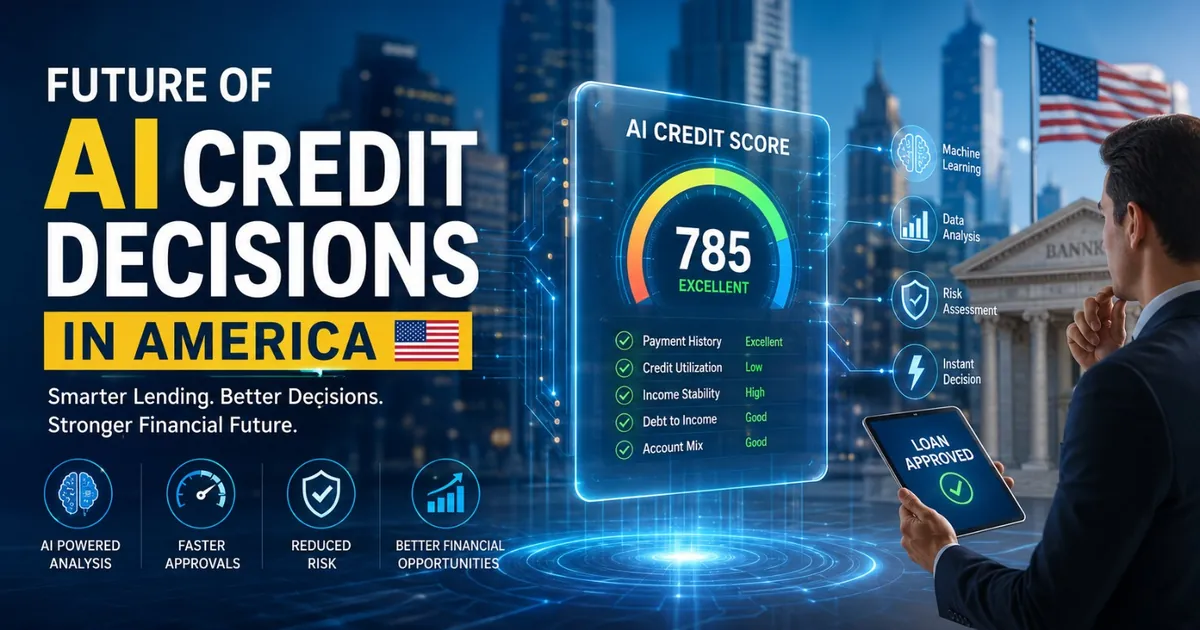
    The Future of AI Credit Decisions in America is becoming one of the most important developments in modern finance. Banks, lenders, fintech companies, and credit card issuers are rapidly adopting artificial intelligence to improve lending decisions and reduce financial risk.

    For decades, credit decisions were largely based on traditional credit scores, income verification, and manual underwriting processes. While these methods remain important, they often fail to provide a complete picture of a consumer’s financial behavior.

    Today, AI Credit Decisions are changing that reality.

    Modern artificial intelligence systems can analyze hundreds of financial variables within seconds. These systems evaluate spending behavior, debt obligations, income stability, repayment history, account activity, and fraud indicators to create a more accurate borrower profile.

    As a result, lenders can make faster and smarter decisions while consumers benefit from quicker approvals and more personalized financial products.

    The same AI technologies transforming credit approvals are also reshaping investing, retirement planning, budgeting, and wealth management. Readers interested in the broader impact of artificial intelligence should explore our
    AI Investing Guide 2026.

    Supporters believe AI Lending can make financial services more accessible and efficient. Critics, however, raise questions about transparency, privacy, and fairness.

    These discussions are becoming increasingly important as more financial institutions rely on machine learning models to make lending decisions.

    In this guide, you’ll learn how AI Credit Decisions work, the technologies behind them, real-world examples, common mistakes borrowers make, and what the future of AI-powered lending may look like in America between 2026 and 2030.

    How AI Makes Credit Decisions in America

    Modern AI Credit Decisions systems are transforming how lenders evaluate borrowers. Instead of relying only on traditional credit scores, artificial intelligence analyzes a much broader range of financial information.

    This allows banks and financial institutions to make faster, more accurate, and more personalized lending decisions.

    As the Future of AI Credit Decisions in America continues to evolve, understanding how these systems work is becoming increasingly important for consumers and investors alike.

    AI Credit Scoring

    Traditional credit scoring models focus primarily on payment history, credit utilization, account age, and outstanding debt.

    AI Credit Decisions go much further.

    Artificial intelligence evaluates hundreds of data points simultaneously and identifies patterns that may not be visible through traditional underwriting methods.

    Machine learning models continuously improve as they process more financial information, making lending decisions more accurate over time.

    Income Verification and Financial Stability

    AI Lending systems can analyze income consistency, cash flow patterns, employment stability, and banking activity.

    Instead of relying solely on reported income, AI evaluates whether consumers demonstrate stable financial behavior over extended periods.

    This provides lenders with a more complete understanding of repayment capacity.

    Spending Behavior Analysis

    One of the most powerful advantages of AI Credit Decisions is behavioral analysis.

    Artificial intelligence examines spending habits, recurring expenses, savings activity, debt obligations, and financial discipline.

    Consumers who consistently demonstrate responsible money management often receive more favorable risk assessments.

    This creates opportunities for borrowers who may not fit traditional lending models.

    Fraud Detection

    Fraud prevention has become a major priority for lenders.

    AI systems can detect suspicious activity, identity inconsistencies, unusual application behavior, and abnormal transaction patterns within seconds.

    This helps protect both financial institutions and consumers from fraud-related losses.

    Traditional Lending vs AI Credit Decisions

    FactorTraditional LendingAI Credit Decisions
    Decision SpeedHours or DaysSeconds or Minutes
    Data SourcesLimited Financial DataHundreds of Financial Variables
    Fraud DetectionBasic VerificationAdvanced AI Monitoring
    PersonalizationLowHigh
    Risk AssessmentMainly Credit ScoresBehavior + Financial Data

    Consumers interested in maximizing approval opportunities should also review our
    Best Credit Cards 2026
    guide to understand how lenders evaluate applicants.

    The Future of AI Credit Decisions in America will likely involve even more advanced analytics, allowing lenders to make fairer and more accurate credit decisions while expanding access to financial products for qualified consumers.

    Technologies Behind AI Credit Decisions

    The rapid growth of AI Credit Decisions would not be possible without several advanced technologies working together behind the scenes.

    Banks, credit card companies, and fintech firms are investing billions of dollars in artificial intelligence to improve lending accuracy, reduce fraud, and expand access to financial services.

    As the Future of AI Credit Decisions in America continues evolving, these technologies will become even more important.

    Machine Learning

    Machine learning serves as the foundation of most AI Lending systems.

    Machine learning models are trained using millions of historical lending records, repayment histories, and financial transactions.

    These systems learn which borrower behaviors are associated with successful repayment and which patterns indicate elevated risk.

    Unlike traditional underwriting models, machine learning continuously improves as more data becomes available.

    This allows lenders to adapt quickly to changing economic conditions and consumer behavior.

    Predictive Analytics

    Predictive analytics helps AI estimate future borrower behavior.

    Rather than focusing only on past financial performance, AI Credit Decisions use predictive models to forecast future repayment probability.

    For example, borrowers with stable income, responsible spending habits, and strong repayment histories may receive lower risk scores.

    This improves approval accuracy and reduces default rates.

    Alternative Data Sources

    Traditional lending often relies heavily on credit scores and credit reports.

    Modern AI Lending systems can also analyze alternative financial information.

    Examples include:

    • Bank account activity
    • Income consistency
    • Savings patterns
    • Recurring bill payments
    • Cash flow behavior
    • Financial stability indicators

    These additional insights help create a more complete picture of borrower risk.

    Open Banking

    Open banking is becoming one of the most important drivers of AI Credit Decisions.

    With customer permission, lenders can securely access broader financial information directly from banking institutions.

    This allows AI systems to evaluate real-time financial health rather than relying only on historical credit data.

    As open banking expands across America, lending decisions are expected to become more personalized and accurate.

    Debt-to-Income Calculator Example

    One important metric frequently used in AI Lending models is the debt-to-income ratio (DTI).

    Formula:

    Debt-to-Income Ratio = Monthly Debt Payments ÷ Monthly Income × 100

    Example:

    • Monthly Income = $6,000
    • Monthly Debt Payments = $1,800

    Calculation:

    ($1,800 ÷ $6,000) × 100 = 30%

    A lower DTI ratio generally improves AI Credit Decisions because it indicates stronger repayment capacity.

    Consumers interested in AI-driven budgeting, saving, and investing tools should also explore our
    AI Personal Finance 2026
    guide.

    By combining machine learning, predictive analytics, alternative data, and open banking, AI Credit Decisions are creating a smarter and more efficient lending environment for both consumers and financial institutions.

    Real-World Case Study: How AI Credit Decisions Work in Practice

    To understand the Future of AI Credit Decisions in America, it helps to look at a realistic example of how artificial intelligence evaluates borrowers today.

    Meet David, a 32-year-old software engineer living in California. David earns a stable income, maintains consistent savings habits, and pays his bills on time. However, because he had only been actively building credit for a few years, his credit history was shorter than many traditional lenders preferred.

    In early 2026, David applied for a premium rewards credit card offered by a major U.S. financial institution.

    Future of AI Credit Decisions in America Case Study

    Step 1: AI Reviews the Application

    Immediately after David submitted his application, the lender’s AI system began analyzing hundreds of financial data points.

    Instead of reviewing only his credit score, the AI Lending platform evaluated:

    • Income consistency
    • Employment stability
    • Monthly cash flow
    • Debt-to-income ratio
    • Credit utilization rate
    • Savings activity
    • Payment history
    • Fraud risk indicators

    This process took less than one minute.

    Step 2: AI Risk Assessment

    The AI Credit Decisions system identified several positive signals.

    David had maintained the same employer for four years, regularly contributed to savings accounts, and kept his credit utilization below 20%.

    The model also found a strong history of on-time payments and no suspicious financial activity.

    Although his credit history was shorter than average, the AI recognized multiple indicators of financial responsibility.

    As a result, the system assigned David a low-risk score.

    Step 3: Approval Decision

    After completing its analysis, the AI recommended approval.

    The lender automatically approved the application and assigned a competitive credit limit based on David’s overall financial profile.

    The entire process—from application submission to approval—took less than three minutes.

    📊 Case Study Summary

    • Applicant: David (California)
    • Employment Stability: 4 Years
    • Credit Utilization: 18%
    • Debt-to-Income Ratio: 28%
    • Fraud Indicators: None
    • AI Risk Assessment: Low Risk
    • Decision: Approved
    • Approval Time: Under 3 Minutes

    What This Means for Borrowers

    This example demonstrates one of the biggest advantages of AI Credit Decisions.

    Traditional lending systems may have focused heavily on David’s shorter credit history. AI Lending models looked at the bigger picture and identified strong financial habits that reduced overall risk.

    As the Future of AI Credit Decisions in America continues evolving, more consumers may benefit from fairer and more comprehensive evaluations.

    Investors preparing for economic uncertainty should also explore our
    Recession-Proof Investing 2026
    guide for additional long-term financial strategies.

    The combination of speed, accuracy, and broader financial analysis is one reason AI-powered lending is expected to become the standard across the U.S. financial industry.

    Common Mistakes That Hurt AI Credit Decisions

    While modern AI Credit Decisions systems are becoming more advanced, borrowers can still make mistakes that negatively impact approval outcomes.

    Artificial intelligence may evaluate hundreds of financial variables, but responsible financial behavior remains one of the most important factors in lending decisions.

    Understanding these common mistakes can help consumers improve approval chances and strengthen their overall financial profiles.

    1. High Credit Utilization

    Credit utilization measures how much of your available credit you are currently using.

    Many consumers carry balances that use a large percentage of their credit limits.

    AI Lending systems often view high utilization as a sign of increased financial risk.

    Most financial experts recommend keeping utilization below 30%, while levels below 10% are often viewed more favorably.

    2. Submitting Multiple Credit Applications

    Applying for several loans or credit cards within a short period can create concerns for lenders.

    Multiple hard inquiries may signal financial stress or an urgent need for credit.

    AI Credit Decisions models frequently monitor application frequency when calculating borrower risk.

    Consumers should apply strategically and avoid unnecessary credit applications.

    3. Missing Payments

    Payment history remains one of the strongest predictors of future repayment behavior.

    Even a few missed payments can significantly affect risk assessments.

    AI systems recognize patterns associated with repayment problems and may adjust lending decisions accordingly.

    Making every payment on time remains one of the most effective ways to improve financial credibility.

    4. Ignoring Credit Reports

    Many consumers rarely review their credit reports.

    Unfortunately, reporting errors, outdated information, and fraudulent activity can negatively impact borrowing opportunities.

    Regular monitoring helps identify problems before they affect future AI Credit Decisions.

    5. Carrying Excessive Debt

    Debt levels continue to play an important role in AI Lending models.

    Borrowers carrying excessive debt may appear riskier, even when income levels are relatively strong.

    Reducing debt obligations often improves both financial health and approval odds.

    📊 AI Credit Risk Factors Chart

    The following factors commonly influence AI Credit Decisions:

    • Payment History — 35%
    • Credit Utilization — 30%
    • Debt-to-Income Ratio — 15%
    • Income Stability — 10%
    • Credit History Length — 10%

    Example Scenario

    Consider two borrowers applying for the same credit product.

    Applicant A has a credit score of 720 but uses 85% of available credit and recently submitted four credit applications.

    Applicant B has a credit score of 690, maintains 15% credit utilization, and has a stable repayment history.

    Many AI Credit Decisions systems may consider Applicant B less risky despite the slightly lower credit score.

    This demonstrates why modern AI Lending models evaluate broader financial behavior instead of focusing solely on traditional credit metrics.

    Consumers who want to build stronger long-term financial habits should also explore our
    SIP Investing Guide 2026.

    Avoiding these common mistakes can significantly improve future approval opportunities and help borrowers present a stronger financial profile to AI-powered lending systems.

    How to Improve Future AI Credit Decisions

    As the Future of AI Credit Decisions in America continues evolving, consumers who build strong financial habits will have a significant advantage.

    Modern AI Lending systems evaluate much more than traditional credit scores. They analyze repayment behavior, debt management, income stability, spending habits, and overall financial responsibility.

    The good news is that many of these factors are within your control.

    By taking proactive steps today, you can improve future approval opportunities and strengthen your financial profile.

    1. Build a Strong Credit Profile

    Your credit profile remains one of the most important components of AI Credit Decisions.

    Pay bills on time, keep credit card balances low, and avoid unnecessary hard inquiries.

    Consistent positive behavior helps AI systems recognize you as a lower-risk borrower.

    Even small improvements made consistently can have a meaningful impact over time.

    2. Reduce Existing Debt

    AI Lending models closely evaluate debt obligations.

    Borrowers carrying high debt levels may appear riskier, regardless of income.

    Reducing balances on credit cards, personal loans, and other debts can improve debt-to-income ratios and strengthen future AI Credit Decisions.

    Lower debt also creates greater financial flexibility during economic uncertainty.

    3. Use AI Budgeting and Financial Tools

    Many modern financial platforms use artificial intelligence to help consumers manage money more effectively.

    These tools can track spending patterns, identify unnecessary expenses, monitor credit utilization, and suggest opportunities to improve financial health.

    Using AI-powered budgeting tools can help build the positive financial behaviors that lenders increasingly value.

    4. Maintain Stable Financial Habits

    AI systems look for consistency.

    Stable income, regular savings contributions, responsible spending, and on-time payments all contribute to stronger risk assessments.

    The Future of AI Credit Decisions in America will likely place even greater emphasis on long-term financial behavior rather than isolated financial events.

    5. Focus on Long-Term Wealth Building

    Strong financial habits extend beyond borrowing.

    Building investments, creating passive income streams, and maintaining emergency savings can improve overall financial stability.

    Investors looking to strengthen their financial future should explore our
    How to Build a Dividend Portfolio
    guide.

    You can also review our
    Top Dividend Stocks USA 2026
    article for additional long-term investment opportunities.

    Recommended Financial Resources

    📘

    The Psychology of Money by Morgan Housel

    📘

    I Will Teach You To Be Rich by Ramit Sethi

    📊

    Experian Credit Monitoring Services

    Consumers who combine responsible borrowing with disciplined financial planning are likely to benefit the most from future AI Credit Decisions.

    As AI Lending continues advancing, strong financial habits will remain one of the most powerful factors influencing approval outcomes and access to better financial opportunities.

    Future Trends in AI Credit Decisions (2026–2030)

    The Future of AI Credit Decisions in America is expected to evolve rapidly between 2026 and 2030. Financial institutions are investing heavily in artificial intelligence to create faster, more accurate, and more personalized lending experiences.

    As AI technology becomes more sophisticated, consumers may see significant improvements in credit approvals, financial accessibility, fraud prevention, and personalized lending products.

    The next generation of AI Credit Decisions will likely transform nearly every aspect of consumer lending.

    Hyper-Personalized Lending

    One of the biggest trends in AI Lending is hyper-personalization.

    Instead of using broad approval criteria, future AI systems will evaluate each borrower individually using real-time financial data.

    This could help lenders offer customized credit limits, interest rates, repayment schedules, and financial products tailored to each consumer’s financial situation.

    Borrowers with strong financial habits may receive more favorable lending terms than ever before.

    Real-Time Credit Approvals

    The future of AI Credit Decisions will likely involve instant approvals.

    As machine learning models become faster and more accurate, lenders may be able to complete risk assessments within seconds.

    Consumers could receive lending decisions almost immediately after submitting applications.

    This level of efficiency would dramatically improve the customer experience while reducing operational costs for financial institutions.

    Expansion of Open Banking

    Open banking is expected to become a major driver of AI Credit Decisions.

    With customer permission, lenders can securely access broader financial information, including spending patterns, account balances, savings behavior, and cash flow data.

    This creates a more complete financial profile and allows AI systems to make smarter lending decisions.

    Responsible AI and Regulation

    As AI Lending becomes more common, regulators are increasing oversight to ensure transparency and fairness.

    Organizations such as the
    Consumer Financial Protection Bureau (CFPB),
    the
    Federal Reserve,
    and the
    U.S. Securities and Exchange Commission (SEC)
    continue monitoring AI adoption across the financial industry.

    Future regulations may require lenders to provide greater transparency regarding how AI Credit Decisions are made and how consumer data is used.

    Frequently Asked Questions

    1. What are AI Credit Decisions?

    AI Credit Decisions use artificial intelligence and machine learning to evaluate borrowers, assess risk, and improve lending decisions.

    2. Will AI replace traditional credit scores?

    Not completely. Credit scores will likely remain important, but AI systems will supplement them with broader financial analysis.

    3. Can AI improve approval rates?

    Yes. AI can identify responsible borrowers who may be overlooked by traditional underwriting methods.

    4. Is AI Lending safe?

    When properly regulated and monitored, AI Lending can improve fraud detection, risk management, and lending accuracy.

    5. How does open banking affect AI Credit Decisions?

    Open banking provides AI systems with additional financial information that can improve lending accuracy and personalization.

    6. How can consumers prepare for future AI Credit Decisions?

    Maintaining strong financial habits, reducing debt, monitoring credit reports, and building stable income streams can improve future lending outcomes.

    Conclusion

    The Future of AI Credit Decisions in America represents one of the most important transformations in modern finance.

    Artificial intelligence is helping lenders make faster, smarter, and more accurate decisions while creating new opportunities for responsible borrowers.

    As AI Lending continues evolving, consumers who maintain strong financial habits and embrace modern financial tools will be best positioned to benefit from these changes.

    The same innovations transforming credit approvals are also reshaping investing, wealth management, retirement planning, and personal finance.

    To learn more about how artificial intelligence is changing the financial world, explore our
    AI Investing Guide 2026.

    📩 Join Our Free Finance Newsletter

    Get AI investing insights, credit strategies, wealth-building ideas, and personal finance tips delivered directly to your inbox.


    Subscribe today and stay ahead of the future of finance.


    👨‍💼 About the Author

    Subhash Rukade is a finance writer focused on AI, investing, credit strategies, and wealth-building opportunities. His goal is to help readers make smarter financial decisions and build long-term financial success in a rapidly changing economy.


    🚀 Thank you for reading. Build strong financial habits today and prepare for the future of AI-powered finance.
  • AI and Buy Now Pay Later Risk Analysis: Complete 2026 Guide

    AI and Buy Now Pay Later Risk Analysis: Complete 2026 Guide


    AI and Buy Now Pay Later Risk Analysis: Complete 2026 Guide

    Author: Subhash Rukade

    Published: June 14, 2026

    AI BNPL Risk

    Why AI and Buy Now Pay Later Risk Analysis Matters in 2026

    AI and Buy Now Pay Later Risk Analysis is becoming one of the most important developments in consumer finance. As millions of Americans use Buy Now Pay Later services for online shopping, travel, electronics, and everyday purchases, lenders need smarter ways to evaluate risk and protect both consumers and businesses.

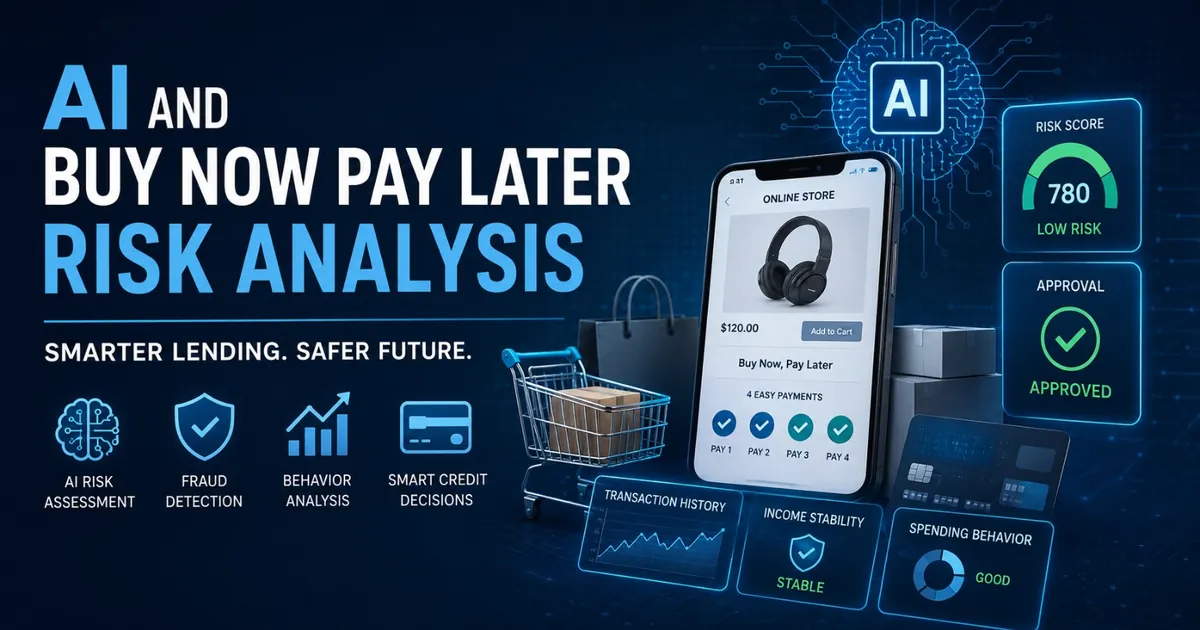
    Traditional lending models often rely heavily on credit scores and historical borrowing records. However, modern BNPL providers now use artificial intelligence to analyze spending behavior, income patterns, repayment history, banking activity, and fraud indicators within seconds.

    This shift allows lenders to make faster and more accurate decisions while helping responsible consumers gain access to flexible payment options.

    The same technology transforming BNPL lending is also reshaping investing, retirement planning, and personal finance. To explore these innovations further, read our
    AI Investing Guide 2026.

    In this guide, you’ll learn how AI evaluates Buy Now Pay Later applications, the technologies behind AI risk analysis, real-world examples, common mistakes consumers make, and what the future of BNPL lending may look like in America.

    How AI Evaluates Buy Now Pay Later Applications

    Modern AI and Buy Now Pay Later Risk Analysis systems help lenders make faster and smarter decisions than traditional lending models.

    Instead of reviewing only a credit score, artificial intelligence evaluates multiple financial signals to determine whether an applicant can responsibly manage Buy Now Pay Later payments.

    This allows BNPL providers to reduce lending risk while improving approval accuracy.

    AI Risk Scoring

    One of the most important parts of AI BNPL Risk analysis is automated risk scoring.

    AI systems collect financial information and assign a risk level to each applicant. The lower the risk score, the higher the likelihood of approval.

    Unlike traditional underwriting, AI can analyze hundreds of variables simultaneously and identify patterns that human reviewers may overlook.

    Income and Cash Flow Analysis

    Many BNPL providers now use artificial intelligence to evaluate income stability and cash flow behavior.

    Instead of focusing only on reported income, AI examines whether consumers maintain consistent deposits, healthy account balances, and reliable spending habits.

    This helps lenders understand whether future installment payments are likely to be made on time.

    Spending Behavior Monitoring

    AI also evaluates spending patterns to determine overall financial responsibility.

    For example, a consumer who regularly pays bills on time and maintains reasonable spending habits may appear less risky than someone who frequently overspends.

    Behavioral analysis has become one of the most valuable components of AI and Buy Now Pay Later Risk Analysis.

    Fraud Detection Systems

    Fraud prevention is another major advantage of AI lending technology.

    Artificial intelligence can detect suspicious activity, unusual transactions, identity inconsistencies, and abnormal purchasing behavior within seconds.

    These systems help protect both consumers and BNPL providers from financial losses.

    Credit History Review

    Although AI uses advanced analytics, credit history still matters.

    Payment history, existing debt levels, credit utilization, and previous borrowing behavior remain important indicators during the approval process.

    However, AI combines these traditional factors with many additional data points to create a more complete financial profile.

    Traditional Lending vs AI BNPL Analysis

    FactorTraditional LendingAI BNPL Risk Analysis
    Decision SpeedHours or DaysSeconds or Minutes
    Data SourcesLimitedHundreds of Variables
    Fraud DetectionBasic ChecksAdvanced AI Monitoring
    PersonalizationLowHigh
    Risk AssessmentMostly Credit ScoreBehavior + Financial Data

    Consumers considering flexible payment options should also compare BNPL services with traditional rewards cards. Our
    Best Credit Cards 2026
    guide can help you choose the right option for your financial goals.

    As AI continues evolving, lenders are becoming more effective at balancing convenience with responsible lending practices. This is one reason AI and Buy Now Pay Later Risk Analysis is expected to remain a major part of consumer finance throughout 2026 and beyond.

    AI Technologies Behind Buy Now Pay Later Risk Analysis

    The rapid growth of Buy Now Pay Later services would not be possible without advanced artificial intelligence systems working behind the scenes.

    Modern AI and Buy Now Pay Later Risk Analysis platforms use multiple technologies to evaluate borrowers, predict repayment behavior, and reduce financial risk.

    These systems help lenders approve qualified applicants quickly while maintaining responsible lending standards.

    Machine Learning

    Machine learning serves as the foundation of most AI BNPL Risk systems.

    Banks and BNPL providers train machine learning models using millions of historical transactions and repayment records.

    The system learns which financial behaviors are associated with successful repayment and which patterns may indicate elevated risk.

    As more data becomes available, the model continuously improves its accuracy.

    This allows lenders to adapt to changing consumer behavior and economic conditions much faster than traditional lending systems.

    Predictive Analytics

    Predictive analytics helps AI estimate the probability that a borrower will successfully complete future installment payments.

    Rather than focusing only on past financial behavior, predictive models forecast future outcomes based on current financial patterns.

    For example, AI may identify a borrower with stable income and low debt as more likely to make payments on time compared to someone showing signs of financial stress.

    This capability improves lending decisions while reducing default rates.

    Behavioral Analysis

    Behavioral analysis has become one of the most valuable tools in AI and Buy Now Pay Later Risk Analysis.

    AI evaluates spending habits, purchase frequency, repayment patterns, account activity, and overall financial discipline.

    These insights help lenders understand how consumers manage money beyond traditional credit scores.

    A borrower who consistently demonstrates responsible financial behavior may receive a more favorable risk assessment.

    Open Banking Data

    With customer permission, many BNPL providers now use open banking technology to access additional financial information.

    This may include transaction history, account balances, income deposits, and spending trends.

    The result is a more complete picture of financial health and repayment capacity.

    Open banking is expected to play an increasingly important role in AI lending decisions over the coming years.

    Debt-to-Income Calculator Example

    One important metric used during AI BNPL Risk evaluations is the debt-to-income ratio.

    Formula:

    Debt-to-Income Ratio = Monthly Debt Payments ÷ Monthly Income × 100

    Example:

    • Monthly Income = $5,000
    • Monthly Debt Payments = $1,500

    Calculation:

    ($1,500 ÷ $5,000) × 100 = 30%

    A lower debt-to-income ratio generally improves lending decisions because it indicates stronger repayment capacity.

    To learn how artificial intelligence is transforming budgeting, saving, and investing, explore our
    AI Personal Finance 2026
    guide.

    By combining machine learning, predictive analytics, behavioral analysis, and open banking data, AI lending platforms can make more informed decisions while creating a safer and more efficient BNPL ecosystem.

    Real-World Case Study: How AI Evaluates BNPL Risk

    To understand how AI and Buy Now Pay Later Risk Analysis works in practice, let’s look at a realistic example involving a typical American consumer.

    Meet Sarah, a 31-year-old marketing manager from Florida. Like many consumers, she frequently shops online and occasionally uses Buy Now Pay Later services for larger purchases.

    In early 2026, Sarah wanted to purchase a new laptop worth $1,200 and selected a BNPL payment option that would allow her to spread the cost across several months.

    AI and Buy Now Pay Later Risk Analysis Example

    Step 1: AI Reviews the Application

    As soon as Sarah submitted her application, the BNPL provider’s AI system began analyzing hundreds of financial variables.

    Instead of reviewing only her credit score, the AI evaluated:

    • Monthly income stability
    • Bank account activity
    • Existing debt obligations
    • Previous repayment history
    • Spending behavior
    • Current BNPL commitments
    • Fraud risk indicators

    The entire review process took only a few seconds.

    Step 2: Risk Assessment

    The AI BNPL Risk model identified several positive indicators.

    Sarah maintained a stable income, had a strong repayment history, and carried relatively low debt compared to her earnings.

    The system also found no unusual transaction patterns or fraud concerns.

    Because the overall financial profile appeared healthy, the AI assigned a low-risk score.

    Step 3: Approval Decision

    Based on the risk assessment, the application received approval almost instantly.

    The lender offered a payment schedule that fit Sarah’s financial profile while maintaining responsible lending standards.

    This demonstrates one of the biggest advantages of AI and Buy Now Pay Later Risk Analysis. Qualified consumers can receive fast approvals while lenders reduce the likelihood of future payment problems.

    📊 BNPL Case Study Summary

    • Applicant: Sarah (Florida)
    • Purchase Amount: $1,200
    • Income Stability: Strong
    • Debt Level: Moderate
    • Fraud Indicators: None
    • AI Risk Score: Low Risk
    • Decision: Approved
    • Approval Time: Under 60 Seconds

    Why This Matters

    Traditional lending systems might focus primarily on credit history. AI lending models take a broader approach by analyzing real-time financial behavior and repayment capacity.

    This allows responsible borrowers to access financing more easily while helping lenders maintain healthy risk management practices.

    Consumers preparing for economic uncertainty should also explore our
    Recession-Proof Investing 2026
    guide for additional financial planning strategies.

    As AI continues improving, BNPL providers are becoming better at identifying qualified borrowers, reducing defaults, and creating safer lending environments for both consumers and businesses.

    Common Buy Now Pay Later Mistakes Consumers Make

    While Buy Now Pay Later services offer convenience and flexibility, they can also create financial challenges when used irresponsibly.

    Many consumers focus on the small installment payments and overlook the total amount they are committing to repay.

    This is why AI and Buy Now Pay Later Risk Analysis has become so important for lenders in 2026.

    Artificial intelligence helps identify potential repayment risks, but consumers still need to make smart financial decisions.

    Let’s look at the most common mistakes that increase BNPL risk.

    1. Taking Multiple BNPL Loans at the Same Time

    One of the biggest mistakes consumers make is opening several Buy Now Pay Later agreements simultaneously.

    Each individual payment may appear manageable, but the combined obligations can quickly become difficult to track.

    Many borrowers underestimate how much they owe because payments are spread across multiple platforms.

    AI BNPL Risk systems closely monitor this behavior because multiple active BNPL accounts often increase repayment risk.

    2. Missing Installment Payments

    Late payments remain one of the strongest warning signs in AI lending models.

    Missing installments can lead to fees, account restrictions, and potential credit reporting consequences depending on the lender.

    Consistent repayment behavior helps maintain a healthy financial profile and improves future approval opportunities.

    3. Overspending Because Approval Is Easy

    Fast approvals can sometimes encourage consumers to spend more than they normally would.

    The psychological effect of splitting payments into smaller amounts may make expensive purchases feel more affordable than they actually are.

    Responsible budgeting remains essential regardless of how easy financing becomes.

    4. Ignoring the Impact on Overall Debt

    Some borrowers treat BNPL purchases differently from traditional debt.

    However, installment obligations still affect overall financial health and repayment capacity.

    AI and Buy Now Pay Later Risk Analysis models evaluate total debt exposure when determining future lending decisions.

    5. Failing to Monitor Financial Accounts

    Consumers who do not regularly review bank accounts, repayment schedules, and spending patterns are more likely to encounter financial difficulties.

    Monitoring accounts helps identify potential issues before they become serious problems.

    📊 BNPL Risk Factors Chart

    Common factors that increase BNPL repayment risk:

    • Multiple Active BNPL Loans — 30%
    • Missed Payments — 25%
    • High Debt Levels — 20%
    • Overspending Behavior — 15%
    • Income Instability — 10%

    Example Scenario

    Consider a consumer who uses four different BNPL services for electronics, furniture, clothing, and travel expenses.

    Although each payment appears affordable individually, the combined monthly obligation may exceed their budget.

    AI lending systems identify this pattern as a potential risk indicator and may adjust future approval decisions accordingly.

    Consumers interested in strengthening their overall financial discipline should also review our
    SIP Investing Guide 2026,
    which discusses long-term wealth-building habits and financial planning strategies.

    Avoiding these common mistakes can help consumers use BNPL services responsibly while maintaining stronger financial health and better borrowing opportunities in the future.

    How to Use Buy Now Pay Later Responsibly in 2026

    Buy Now Pay Later services can be useful financial tools when used correctly. However, responsible usage is essential for maintaining financial stability and avoiding unnecessary debt.

    As AI and Buy Now Pay Later Risk Analysis becomes more advanced, lenders are increasingly evaluating consumer behavior, repayment habits, and financial discipline before approving future applications.

    Consumers who manage BNPL services responsibly are more likely to benefit from faster approvals and better lending opportunities.

    1. Create a Budget Before Using BNPL

    Before making any BNPL purchase, calculate whether the future installment payments fit comfortably within your monthly budget.

    A purchase may seem affordable when divided into smaller payments, but multiple BNPL commitments can quickly add up.

    The safest approach is to treat every BNPL purchase as real debt that must be repaid on schedule.

    2. Limit the Number of Active BNPL Accounts

    Many consumers make the mistake of using several BNPL providers simultaneously.

    Managing too many installment plans increases the risk of missed payments and financial stress.

    AI BNPL Risk systems often view excessive BNPL activity as a warning sign.

    Keeping the number of active repayment plans low makes financial management much easier.

    3. Make Payments on Time

    Payment history remains one of the strongest indicators of financial responsibility.

    Late payments can result in fees, account restrictions, and lower approval chances for future financing requests.

    Setting automatic payments or calendar reminders can help ensure installment obligations are never missed.

    4. Use AI Budgeting Tools

    Modern AI-powered budgeting applications can help consumers monitor spending patterns, track upcoming payments, and identify areas where expenses can be reduced.

    These tools provide valuable insights that support better financial decision-making.

    Many consumers are already using artificial intelligence to improve budgeting, saving, and debt management.

    5. Focus on Long-Term Financial Goals

    While BNPL services can provide short-term convenience, long-term wealth building should remain a priority.

    Consumers should balance spending with saving and investing.

    Learning how to build income-generating assets can strengthen financial security and reduce reliance on short-term financing options.

    For long-term wealth-building strategies, explore our
    How to Build a Dividend Portfolio
    guide.

    Investors can also review our
    Top Dividend Stocks USA 2026
    article for additional income-focused investment ideas.

    Recommended Financial Resources

    📘

    The Psychology of Money by Morgan Housel

    📘

    I Will Teach You To Be Rich by Ramit Sethi

    📊

    Experian Credit Monitoring Services

    Consumers who combine responsible borrowing habits with smart financial planning are in the best position to benefit from Buy Now Pay Later services while avoiding unnecessary financial risk.

    As AI and Buy Now Pay Later Risk Analysis continues evolving, disciplined financial behavior will remain one of the strongest factors influencing future lending decisions.

    Future of AI and Buy Now Pay Later Risk Analysis

    The future of AI and Buy Now Pay Later Risk Analysis looks increasingly sophisticated as artificial intelligence becomes a larger part of consumer finance.

    Over the next several years, BNPL providers are expected to use more advanced risk models, real-time financial data, and predictive analytics to make lending decisions faster and more accurately.

    The goal is simple: provide responsible consumers with flexible payment options while reducing financial risk for lenders.

    Open Banking Will Improve Risk Assessment

    One of the biggest trends shaping the future of AI BNPL Risk systems is open banking.

    With customer permission, lenders can access broader financial information, including spending habits, income patterns, savings behavior, and account activity.

    This creates a more complete financial profile and allows AI systems to make better-informed lending decisions.

    More Personalized Lending Decisions

    Future AI lending models will become increasingly personalized.

    Rather than relying heavily on generic approval criteria, lenders will tailor decisions based on individual financial behavior and repayment history.

    This may help qualified borrowers gain access to financing even when traditional credit histories are limited.

    Stronger Consumer Protection

    Regulators are paying closer attention to Buy Now Pay Later services as adoption continues growing.

    Organizations such as the
    Consumer Financial Protection Bureau (CFPB),
    the
    Federal Reserve,
    and the
    U.S. Securities and Exchange Commission (SEC)
    are monitoring developments in digital lending and consumer protection.

    Future regulations may require greater transparency, stronger disclosures, and improved risk management standards across the BNPL industry.

    Frequently Asked Questions

    1. What is AI and Buy Now Pay Later Risk Analysis?

    It is the use of artificial intelligence to evaluate borrower risk, analyze financial behavior, detect fraud, and improve lending decisions for BNPL services.

    2. Does AI approve BNPL applications instantly?

    In many cases, yes. Modern AI systems can analyze financial information and generate lending decisions within seconds.

    3. Can BNPL affect credit scores?

    Depending on the provider and repayment behavior, BNPL activity may influence credit reports and future lending decisions.

    4. What factors do AI BNPL Risk systems evaluate?

    Common factors include income stability, spending patterns, repayment history, existing debt levels, account activity, and fraud indicators.

    5. Is BNPL safer than credit cards?

    Both options have advantages and risks. Responsible use remains the most important factor regardless of the financing method chosen.

    6. How can consumers reduce BNPL risk?

    Maintaining a budget, limiting active installment plans, making payments on time, and monitoring spending habits can significantly reduce risk.

    Conclusion

    Artificial intelligence is transforming the Buy Now Pay Later industry. Modern AI and Buy Now Pay Later Risk Analysis systems help lenders make smarter decisions, reduce fraud, improve approval accuracy, and create safer lending environments.

    For consumers, understanding how these systems work can lead to better financial decisions and more responsible use of BNPL services.

    The same technologies driving AI-powered lending are also changing investing, retirement planning, wealth management, and personal finance.

    To learn more about these innovations, visit our
    AI Investing Guide 2026.

    📩 Join Our Free Finance Newsletter

    Get AI finance insights, investing strategies, BNPL updates, credit tips, and wealth-building ideas delivered directly to your inbox.


    Subscribe today and stay ahead of the future of finance.


    About the Author

    Subhash Rukade writes about AI, investing, personal finance, credit management, and wealth-building strategies to help readers make smarter money decisions in a rapidly changing financial world.


    🚀 Thank you for reading. Use AI wisely, manage debt responsibly, and build a stronger financial future.

  • AI Credit Card Approval: How Banks Use AI to Approve Credit Cards in 2026

    AI Credit Card Approval: How Banks Use AI to Approve Credit Cards in 2026


    AI Credit Card Approval: How Banks Use AI to Approve Credit Cards in 2026

    Author: Subhash Rukade

    Published: June 14, 2026

    AI Credit Card Approval

    How Banks Use AI to Approve Credit Cards in 2026

    AI Credit Card Approval systems are transforming the way banks evaluate applications in 2026. Instead of relying only on traditional credit scores and manual reviews, financial institutions now use artificial intelligence to analyze risk, verify information, and make approval decisions within minutes.

    Modern AI models evaluate multiple factors, including credit history, income stability, spending behavior, payment patterns, debt levels, and banking activity. This allows banks to make faster and more accurate lending decisions while reducing fraud and financial risk.

    As artificial intelligence becomes a larger part of personal finance, many consumers are curious about what happens behind the scenes when they apply for a new credit card.

    To understand how AI is changing investing, banking, and financial planning, explore our
    AI Investing Guide 2026.

    In this guide, you’ll learn how banks use AI to approve credit cards, what data is analyzed, why approvals are becoming faster, and how consumers can improve their chances of getting approved in 2026.

    Traditional vs AI Credit Card Approval

    For decades, banks relied on traditional underwriting systems to approve or reject credit card applications. These systems primarily focused on credit scores, income verification, debt levels, and manual reviews performed by loan officers.

    While traditional methods worked reasonably well, they often required more time and sometimes failed to capture a complete picture of an applicant’s financial behavior.

    Today, AI Credit Card Approval systems are changing the process dramatically.

    Artificial intelligence allows banks to analyze large amounts of financial information within seconds. Instead of reviewing only a few data points, AI evaluates hundreds of variables simultaneously to determine risk levels and approval eligibility.

    How Traditional Credit Card Approval Worked

    In the traditional process, banks generally reviewed:

    • Credit score
    • Credit history length
    • Income information
    • Existing debt obligations
    • Past payment history
    • Manual verification documents

    This process could take several days and sometimes required additional paperwork before a final decision was made.

    Although effective, traditional underwriting often depended heavily on historical credit data.

    How AI Credit Card Approval Works

    Modern AI systems go far beyond traditional scoring models.

    Banks use machine learning algorithms to evaluate spending patterns, banking activity, debt management behavior, account stability, fraud indicators, and financial trends.

    The system then calculates a risk score and recommends an approval decision within minutes.

    Because AI can process significantly more information than a human reviewer, the approval process becomes faster and often more accurate.

    Benefits for Banks

    • Faster application processing
    • Improved fraud detection
    • Lower operational costs
    • More accurate risk assessment
    • Better customer experience

    Benefits for Consumers

    • Quicker approval decisions
    • Less paperwork
    • More personalized credit offers
    • Improved access to credit
    • Fairer evaluation methods

    Traditional vs AI Credit Card Approval Comparison

    FactorTraditional ApprovalAI Credit Card Approval
    Decision SpeedHours to DaysMinutes or Seconds
    Data AnalysisLimited VariablesHundreds of Variables
    Fraud DetectionBasic ChecksAdvanced AI Monitoring
    PersonalizationLowHigh
    Operational EfficiencyManual ReviewAutomated Processing

    Consumers looking for the best cards available today should also review our
    Best Credit Cards 2026
    guide before applying.

    As AI continues evolving, banks are increasingly replacing slow manual reviews with intelligent systems that deliver faster, smarter, and more reliable credit decisions.

    AI Technologies Used by Banks to Approve Credit Cards

    Modern AI Credit Card Approval systems rely on several advanced technologies that help banks evaluate applications faster and more accurately than traditional underwriting methods.

    Instead of looking at only a credit score, artificial intelligence analyzes hundreds of financial signals simultaneously. This allows banks to make smarter lending decisions while reducing fraud and financial risk.

    Let’s examine the key technologies driving today’s AI lending systems.

    Machine Learning

    Machine learning is the foundation of most AI credit decisions.

    Banks train machine learning models using millions of historical lending records. These systems learn which financial behaviors are associated with responsible borrowers and which patterns may indicate higher risk.

    As new data becomes available, the models continuously improve their accuracy.

    This means AI can adapt to changing economic conditions and consumer behavior much faster than traditional underwriting systems.

    Predictive Analytics

    Predictive analytics helps banks estimate the likelihood that an applicant will successfully manage future credit obligations.

    Rather than focusing only on past financial behavior, AI evaluates trends and forecasts future risk.

    This approach helps financial institutions make more informed lending decisions while expanding access to qualified applicants.

    Behavioral Analysis

    Modern AI systems analyze spending habits, payment behavior, banking activity, and account stability.

    For example, consistent bill payments and responsible account management may strengthen an application, even when traditional credit history is limited.

    Behavioral analysis provides a more complete picture of financial responsibility.

    Alternative Data Sources

    One reason AI Credit Card Approval systems are becoming more popular is their ability to evaluate alternative financial data.

    Some AI models may consider factors such as banking activity, income consistency, savings behavior, and cash flow patterns.

    This can help applicants with shorter credit histories demonstrate financial reliability.

    Credit Risk Models

    Banks use AI-powered risk models to assign a credit risk score to every application.

    The lower the predicted risk, the greater the likelihood of approval.

    These models evaluate hundreds of variables simultaneously, helping lenders make decisions with greater confidence.

    Credit Utilization Calculator Example

    Credit utilization is one of the most important factors in many approval decisions.

    Simple Formula:

    Credit Utilization = (Current Balance ÷ Total Credit Limit) × 100

    Example:

    • Total Credit Limit = $10,000
    • Current Balance = $2,500

    Calculation:

    ($2,500 ÷ $10,000) × 100 = 25%

    A utilization rate below 30% is generally viewed more favorably by lenders and AI underwriting systems.

    To learn how artificial intelligence is improving budgeting, investing, and financial planning, explore our
    AI Personal Finance Guide 2026.

    By combining machine learning, predictive analytics, behavioral analysis, and advanced risk models, AI lending platforms help banks approve qualified applicants faster while maintaining strong risk controls.

    Real-World Case Study: How AI Approved a Credit Card Application

    To better understand how AI Credit Card Approval works, let’s look at a realistic example that reflects how many modern banks evaluate applications in 2026.

    Meet Michael, a 27-year-old software engineer from Texas. Although he had a stable income and strong savings habits, he had only recently started building his credit history.

    Because of his limited credit profile, Michael worried that traditional lenders might reject his application.

    How Banks Use AI to Approve Credit Cards

    The Application Process

    Michael applied online for a rewards credit card offered by a major U.S. bank.

    Within seconds, the bank’s AI lending system began analyzing his application.

    Instead of relying only on a traditional credit score, the AI reviewed multiple financial indicators:

    • Monthly income consistency
    • Bank account activity
    • Savings patterns
    • Existing debt obligations
    • Payment history
    • Credit utilization levels
    • Employment stability

    How the AI Evaluated Risk

    The applicant’s credit history was relatively short, which might have created challenges under older underwriting models.

    However, the AI Credit Card Approval system identified several positive signals.

    Michael maintained regular direct deposits, consistently paid bills on time, carried very little debt, and demonstrated responsible financial behavior.

    The machine learning model recognized these patterns as indicators of a lower-risk borrower.

    As a result, the system generated a favorable risk score.

    The Approval Decision

    After analyzing hundreds of variables, the AI recommended approval.

    The bank automatically approved the application and provided a competitive credit limit based on the applicant’s overall financial profile.

    The entire process took less than three minutes.

    📊 Case Study Summary

    • Applicant: Michael (Texas)
    • Credit History: Limited
    • Income Stability: Strong
    • Debt Level: Low
    • Credit Utilization: 18%
    • AI Risk Assessment: Low Risk
    • Decision: Approved
    • Approval Time: Under 3 Minutes

    This example demonstrates one of the biggest advantages of modern AI lending systems. Instead of focusing exclusively on credit scores, banks can evaluate a broader financial picture.

    That approach may help qualified consumers gain access to credit even when their traditional credit history is relatively limited.

    Investors and consumers preparing for uncertain economic conditions should also review our
    Recession-Proof Investing 2026
    guide.

    As AI Credit Card Approval systems continue evolving, banks are becoming better at identifying responsible borrowers while reducing unnecessary rejections and improving customer experiences.

    Common Mistakes That Reduce Credit Card Approval Chances

    Even though modern AI Credit Card Approval systems are more advanced than traditional underwriting models, applicants can still make mistakes that reduce their chances of getting approved.

    Artificial intelligence helps banks make smarter decisions, but the quality of those decisions still depends on the financial information available.

    Understanding these common mistakes can help consumers improve approval odds and strengthen their overall financial profile.

    1. High Credit Utilization

    Credit utilization remains one of the most important factors evaluated during the approval process.

    Many applicants carry balances that use a large percentage of their available credit limits.

    High utilization may signal financial stress and increase perceived lending risk.

    Most experts recommend keeping utilization below 30%, while levels under 10% are often viewed even more favorably.

    2. Applying for Multiple Credit Cards at Once

    Submitting several credit card applications within a short period can trigger multiple hard inquiries.

    AI lending systems may interpret excessive applications as a sign that an applicant urgently needs credit.

    This behavior can negatively affect approval decisions.

    Instead, consumers should apply strategically and only when necessary.

    3. Income Reporting Errors

    Providing inaccurate income information is another common mistake.

    Banks use income data to evaluate repayment capacity and overall financial stability.

    Applicants should always provide accurate and verifiable information.

    Even small reporting mistakes can delay or complicate the approval process.

    4. Ignoring Credit Monitoring

    Many consumers fail to monitor their credit reports regularly.

    Errors, fraudulent activity, or outdated information may reduce approval chances without the applicant realizing it.

    Regular monitoring helps identify potential issues before applying for new credit.

    5. Carrying Excessive Debt

    AI Credit Card Approval systems evaluate existing debt obligations carefully.

    High debt levels may increase risk scores and reduce approval odds, even when credit scores appear strong.

    Reducing debt before applying can improve the overall application profile.

    📊 Factors That Influence AI Credit Card Approval

    The chart below illustrates common factors considered by many AI lending systems.

    Approval Influence Ranking:

    • Payment History — 35%
    • Credit Utilization — 30%
    • Income Stability — 15%
    • Credit History Length — 10%
    • Existing Debt Levels — 10%

    Consumers looking to strengthen their financial profiles should also review our
    AI Credit Score Tools Guide,
    which explains how artificial intelligence can help improve credit health and borrowing opportunities.

    Avoiding these common mistakes can significantly improve approval odds and help applicants present a stronger financial profile to AI-powered lending systems.

    How to Increase Your Credit Card Approval Chances in 2026

    While banks continue improving AI Credit Card Approval systems, consumers can take several practical steps to improve their chances of getting approved.

    The good news is that many of the factors evaluated by AI lending models are within your control.

    By strengthening your financial profile before applying, you can significantly improve approval odds and potentially qualify for better credit card offers.

    1. Improve Your Credit Score

    Although AI evaluates more than just credit scores, your score still plays an important role in most lending decisions.

    Paying bills on time, reducing outstanding balances, and avoiding unnecessary credit applications can help strengthen your credit profile.

    Consistent positive behavior often produces the best long-term results.

    2. Reduce Existing Debt

    AI lending systems carefully evaluate current debt obligations.

    Applicants carrying high levels of debt may appear riskier to lenders.

    Reducing balances before applying can improve debt-to-income ratios and lower overall risk scores.

    Even modest debt reduction can make a positive difference.

    3. Monitor Credit Reports Regularly

    Errors on credit reports can negatively impact approval decisions.

    Reviewing reports regularly allows consumers to identify inaccurate information and dispute mistakes before submitting applications.

    Many AI-powered financial tools now provide automated credit monitoring and alerts.

    4. Use AI Financial Tools

    Modern AI tools can help consumers track spending, manage debt, monitor credit utilization, and improve overall financial health.

    These platforms often provide personalized recommendations that support stronger approval outcomes.

    The same technologies driving AI Credit Card Approval are also helping consumers build healthier financial habits.

    5. Practice Smart Borrowing Habits

    Responsible borrowing remains one of the strongest signals evaluated by AI underwriting systems.

    Making payments on time, maintaining low utilization, and avoiding excessive debt can demonstrate financial responsibility over time.

    Banks reward applicants who consistently manage credit wisely.

    Investors interested in strengthening their long-term financial future should also explore our
    How to Build a Dividend Portfolio
    guide.

    For additional investing ideas, review our
    Top Dividend Stocks USA 2026
    and
    SIP Investing Guide 2026.

    Recommended Resources

    📘

    The Psychology of Money by Morgan Housel

    📘

    I Will Teach You To Be Rich by Ramit Sethi

    📊

    Experian Credit Monitoring Services

    As AI lending technology continues evolving, consumers who maintain strong financial habits will remain in the best position to benefit from faster approvals, better offers, and improved access to credit.

    Future of AI Credit Decisions in America

    The future of AI Credit Card Approval is expected to be faster, smarter, and more personalized than ever before.

    As artificial intelligence continues evolving, banks will gain access to more advanced tools that improve lending accuracy while helping consumers receive fairer and more customized credit decisions.

    Many experts believe AI lending technology will play a major role in shaping the future of consumer finance throughout the next decade.

    Open Banking and Better Financial Insights

    One of the biggest trends influencing AI credit decisions is open banking.

    With consumer permission, financial institutions can securely analyze broader financial information, including banking activity, savings habits, income patterns, and cash flow behavior.

    This creates a more complete picture of financial health and may help qualified consumers gain access to credit even when traditional credit histories are limited.

    Personalized Lending Decisions

    Future AI systems will become increasingly personalized.

    Instead of applying identical approval standards to every applicant, banks may tailor lending decisions based on individual financial behavior and risk profiles.

    This approach can improve both customer experience and lending accuracy.

    Responsible AI and Regulation

    As AI lending expands, regulators are paying closer attention to transparency and fairness.

    Financial institutions must ensure AI systems avoid bias and comply with consumer protection laws.

    Organizations such as the
    Consumer Financial Protection Bureau (CFPB),
    the
    Federal Reserve,
    and the
    U.S. Securities and Exchange Commission (SEC)
    continue monitoring developments across the financial industry.

    Frequently Asked Questions

    1. How do banks use AI to approve credit cards?

    Banks use AI to analyze credit history, income patterns, debt levels, spending behavior, fraud indicators, and other financial data to assess risk and make approval decisions.

    2. Is AI Credit Card Approval faster than traditional underwriting?

    Yes. AI systems can review hundreds of variables within seconds, allowing many applications to receive decisions almost instantly.

    3. Can AI approve applicants with limited credit history?

    In some cases, yes. AI may evaluate alternative financial signals such as income stability, banking activity, and savings behavior.

    4. What factors matter most during AI credit decisions?

    Payment history, credit utilization, debt levels, income stability, and overall financial behavior remain important factors.

    5. Does AI replace human underwriters completely?

    No. Many lenders still use human oversight for complex cases, compliance reviews, and final approval decisions.

    6. How can consumers improve approval chances?

    Maintaining strong credit habits, reducing debt, monitoring credit reports, and using AI financial tools can improve approval odds.

    Conclusion

    Artificial intelligence is transforming the credit card industry. Modern AI Credit Card Approval systems help banks evaluate risk more accurately, reduce fraud, improve efficiency, and provide faster lending decisions.

    For consumers, these advancements can create better access to credit, more personalized offers, and a smoother application experience.

    The same technologies shaping AI lending are also transforming investing, wealth management, retirement planning, and personal finance.

    To explore these broader innovations, visit our
    AI Investing Guide 2026.

    📩 Join Our Free Finance Newsletter

    Get investing insights, AI finance trends, credit card strategies, and wealth-building ideas delivered directly to your inbox.


    Subscribe today and stay ahead of the future of finance.


    About the Author

    Subhash Rukade writes about investing, AI finance, credit management, and wealth-building strategies to help readers make smarter financial decisions in a rapidly changing economy.


    🚀 Thank you for reading. Use technology wisely, build strong financial habits, and create a better financial future.

  • How Americans Escape Credit Card Debt in 2026

    How Americans Escape Credit Card Debt in 2026

    How Americans Escape Credit Card Debt in 2026

    how americans escape credit card debt


    By Subhash Rukade | Updated May 28, 2026

    Why Credit Card Debt Is Becoming a Bigger Problem in 2026

    Millions of Americans are searching for how americans escape credit card debt because rising APR rates and increasing living costs are creating serious financial pressure across the United States in 2026.

    Today, many consumers continue struggling with:

    • High-interest credit card balances
    • Expensive monthly payments
    • Long repayment timelines
    • Growing financial stress

    Because borrowing costs remain elevated, financially disciplined Americans now focus heavily on smarter debt reduction strategies and long-term financial stability.

    Unfortunately, many beginners still misunderstand how credit card debt grows over time.

    Some Americans incorrectly believe:

    • Minimum payments reduce debt quickly
    • APR charges remain small long term
    • More income automatically fixes debt problems
    • Balance transfers solve everything instantly

    However, poor financial habits often create:

    • Higher long-term debt accumulation
    • Lower financial flexibility
    • Credit score instability
    • Emotional financial pressure

    Financially disciplined borrowers usually prioritize:

    • Controlled spending habits
    • Automatic repayment systems
    • Lower utilization ratios
    • Long-term budgeting discipline

    Consumers wanting deeper understanding of smarter borrowing systems also continue learning through:
    Ultimate Credit Card Guide 2026: Best Cards, Rewards & Smart Usage Tips.

    The good news is Americans may still escape dangerous debt cycles once they understand how high-interest borrowing actually works and how financially disciplined consumers manage repayment strategically.

    In this beginner-friendly 2026 guide, we’ll explain why credit card debt continues growing, the smartest debt reduction strategies Americans use today, common repayment mistakes consumers make, and the financial habits disciplined borrowers use to improve long-term financial stability.

    Why Americans Fall Into Credit Card Debt in 2026

    Understanding how americans escape credit card debt starts with learning why millions of consumers continue falling into expensive debt cycles across the United States.

    In 2026, rising living costs, emotional spending habits, and higher APR rates are creating major financial pressure for many households.

    Financially disciplined Americans usually understand one important fact:

    Credit card debt rarely becomes dangerous overnight.

    Instead, debt problems often grow slowly through unhealthy financial habits and inconsistent repayment behavior.

    1. Emotional Spending Continues Growing Across America

    Many Americans accumulate expensive credit card debt because emotional spending habits overpower budgeting discipline.

    Emotional borrowing commonly develops during:

    • Holiday shopping seasons
    • Stressful financial situations
    • Online shopping sales
    • Lifestyle pressure
    • Impulse purchases

    Unfortunately, emotional spending often creates:

    • Higher revolving balances
    • Long-term APR pressure
    • Lower savings flexibility
    • Growing financial stress

    Financially disciplined borrowers usually separate:

    • Needs from wants
    • Emergency spending from luxury purchases
    • Budget priorities from emotional shopping

    2. High APR Rates Make Debt More Expensive

    Because borrowing costs remain elevated in 2026, many credit cards now charge:

    • 20% APR
    • 25% APR
    • 30% APR or higher

    These high APR systems often cause debt balances to grow much faster than consumers expect.

    Many Americans underestimate how quickly interest compounds when balances remain unpaid for long periods.

    Understanding how americans escape credit card debt may help consumers reduce unnecessary APR exposure while improving financial stability.

    3. Minimum Payment Traps Hurt Long-Term Financial Stability

    One of the biggest mistakes Americans continue making is relying only on minimum monthly payments.

    Unfortunately, minimum payment systems often:

    • Extend repayment timelines dramatically
    • Increase long-term interest costs
    • Create larger debt accumulation
    • Reduce investment flexibility

    Financially disciplined Americans usually prioritize:

    • Extra monthly payments
    • Aggressive repayment planning
    • Automatic payment systems
    • Controlled borrowing behavior

    4. Lifestyle Inflation Creates Financial Pressure

    As incomes increase, many Americans also increase spending habits aggressively.

    This lifestyle inflation often includes:

    • Luxury purchases
    • Frequent travel spending
    • High monthly subscriptions
    • Expensive dining habits
    • Premium shopping behavior

    Unfortunately, rising lifestyle costs often weaken:

    • Emergency savings growth
    • Debt repayment flexibility
    • Long-term budgeting discipline
    • Financial stability

    Debt HabitFinancial ConsequenceSmarter Financial Habit
    Minimum payments onlyLong-term debt pressureAggressive repayment planning
    Emotional shoppingHigher revolving balancesBudget-focused spending
    High utilization ratiosCredit instabilityMaintain below 30% utilization
    Ignoring APR costsGrowing interest expensesTrack borrowing costs carefully
    Lifestyle inflationLower savings flexibilityControlled monthly budgeting

    Many Americans also continue strengthening broader financial preparedness through:
    How Americans Are Protecting Their Money During a Recession in 2026.

    Consumers planning stronger long-term financial stability also continue learning through:
    Retirement Healthcare Planning Strategies.

    Understanding why debt problems develop may help Americans build healthier repayment systems while improving long-term financial stability in 2026.

    Smart Debt Reduction Strategies Americans Use in 2026

    After understanding how americans escape credit card debt, the next important step is learning how financially disciplined consumers reduce debt strategically while improving long-term financial stability.

    In 2026, successful borrowers no longer rely only on minimum payments or emotional financial decisions.

    Instead, financially disciplined Americans focus heavily on:

    • Aggressive repayment systems
    • Lower utilization ratios
    • Controlled spending behavior
    • Automatic payment systems
    • Long-term financial discipline

    Understanding how americans escape credit card debt may help consumers reduce financial pressure while improving repayment flexibility faster.

    1. The Avalanche Method Helps Reduce APR Costs Faster

    One of the most popular repayment systems Americans use in 2026 is the avalanche method.

    This strategy focuses on:

    • Paying highest APR balances first
    • Reducing long-term interest costs
    • Accelerating overall debt reduction
    • Improving financial efficiency

    Financially disciplined borrowers usually continue making minimum payments on smaller balances while aggressively targeting high-interest accounts first.

    This strategy often helps consumers:

    • Reduce total APR expenses
    • Improve repayment speed
    • Maintain stronger financial control
    • Lower long-term debt pressure

    2. The Snowball Method Builds Financial Motivation

    Many Americans prefer the snowball method because it creates faster emotional motivation.

    This strategy focuses on:

    • Paying smaller balances first
    • Creating quick repayment wins
    • Improving financial confidence
    • Maintaining long-term repayment discipline

    Financially disciplined borrowers understand emotional motivation sometimes becomes just as important as financial mathematics during long debt reduction journeys.

    3. Balance Transfer Systems Reduce Short-Term APR Pressure

    Some Americans use balance transfer systems strategically to reduce expensive APR costs temporarily.

    Balance transfer cards often provide:

    • 0% introductory APR periods
    • Lower short-term interest costs
    • Debt consolidation flexibility
    • Improved repayment opportunities

    However, financially disciplined Americans understand balance transfer systems only work effectively when repayment habits improve simultaneously.

    Consumers learning how americans escape credit card debt quickly realize promotional APR periods require aggressive repayment discipline.

    4. Automatic Payments Improve Repayment Consistency

    Many financially successful Americans now rely heavily on automatic payment systems.

    Automatic payments often help consumers:

    • Avoid late fees
    • Protect credit stability
    • Reduce emotional financial mistakes
    • Maintain repayment consistency

    Financially disciplined borrowers usually combine:

    • Automatic minimum payments
    • Additional monthly payments
    • Weekly debt monitoring
    • Budget-focused planning

    Consumers wanting deeper understanding of smarter credit systems also continue learning through:
    Ultimate Credit Card Guide 2026: Best Cards, Rewards & Smart Usage Tips.

    Many investors also continue strengthening passive income systems through:
    Top Dividend Stocks USA 2026.

    Debt Reduction StrategyMain BenefitPotential Challenge
    Avalanche methodLower long-term APR costsRequires strong discipline
    Snowball methodBuilds financial motivationHigher APR balances remain longer
    Balance transfer systemsTemporary APR reliefPromotional period limits
    Automatic paymentsImproves repayment consistencyNeeds account monitoring
    Budget-focused planningStronger financial awarenessLifestyle adjustments required

    Financially successful Americans now understand how americans escape credit card debt is not about finding instant financial shortcuts.

    Instead, long-term success usually develops through disciplined repayment habits, smarter budgeting systems, and controlled borrowing behavior.

    Real-World Example and Common Debt Mistakes Americans Make

    Even after understanding how americans escape credit card debt, many consumers still struggle financially because emotional spending habits and poor repayment discipline continue creating dangerous long-term debt cycles.

    Credit cards may become useful financial tools when managed responsibly.

    However, unhealthy borrowing behavior often creates:

    • Higher APR pressure
    • Long repayment timelines
    • Lower financial flexibility
    • Growing emotional stress

    Real-World Example: Daniel From Florida

    Daniel, a 39-year-old real estate consultant from Florida, wanted to improve his financial stability before investing more aggressively in 2026.

    At first, Daniel underestimated how quickly credit card debt could grow.

    He believed:

    • Minimum payments were enough
    • APR charges remained manageable
    • Higher income would eventually solve debt problems
    • Rewards cards always provided advantages

    Unfortunately, Daniel regularly:

    • Used multiple credit cards emotionally
    • Ignored utilization ratios
    • Made only minimum payments
    • Overspent during travel and online shopping

    Because his financial discipline became inconsistent:

    • APR charges increased rapidly
    • Debt balances continued growing
    • Monthly repayment pressure worsened
    • Investment flexibility declined

    Daniel later realized understanding how americans escape credit card debt required more than simply earning higher income.

    He eventually improved his financial habits by:

    • Using automatic payment systems
    • Reducing emotional spending
    • Tracking debt balances weekly
    • Following aggressive repayment timelines

    As his repayment consistency improved, his financial stress gradually decreased and his long-term financial stability strengthened.

    Late Payments Create Long-Term Financial Damage

    Many Americans continue damaging financial stability through inconsistent payment behavior.

    Late payments often create:

    • Penalty APR activation
    • Higher interest expenses
    • Credit score instability
    • Reduced borrowing flexibility

    Financially disciplined Americans usually prioritize:

    • Automatic repayment systems
    • Weekly budget reviews
    • Emergency savings protection
    • Controlled monthly spending

    Ignoring APR Costs Creates Debt Pressure

    Many consumers focus heavily on rewards programs while ignoring APR structures.

    Unfortunately, high APR systems often:

    • Increase long-term debt accumulation
    • Reduce repayment flexibility
    • Create financial instability
    • Slow investment growth opportunities

    Financially disciplined borrowers usually compare:

    • APR structures
    • Utilization ratios
    • Repayment flexibility
    • Total borrowing costs

    Emotional Spending Weakens Debt Reduction Progress

    Many Americans continue accumulating unnecessary debt because emotional spending habits overpower budgeting discipline.

    Emotional borrowing commonly develops during:

    • Online shopping sales
    • Holiday spending seasons
    • Stressful financial situations
    • Lifestyle pressure
    • Impulse purchases

    Financially disciplined borrowers usually separate:

    • Needs from wants
    • Emergency expenses from luxury spending
    • Budget priorities from emotional purchases

    Common Debt MistakeFinancial ConsequenceSmarter Alternative
    Minimum payments onlyLong repayment timelinesAggressive repayment planning
    Late paymentsPenalty APR activationAutomatic payment systems
    Emotional spendingHigher revolving balancesBudget-focused spending
    Ignoring APR costsGrowing interest pressureTrack borrowing costs carefully
    High utilization ratiosCredit instabilityMaintain below 30% utilization

    Consumers wanting deeper understanding of smarter credit systems also continue learning through:
    Ultimate Credit Card Guide 2026: Best Cards, Rewards & Smart Usage Tips.

    Many Americans also continue improving long-term investing discipline through:
    How to Build a Dividend Portfolio.

    Understanding how americans escape credit card debt may help consumers avoid dangerous repayment mistakes while building healthier long-term financial stability in 2026.

    Practical Financial Discipline Strategies Americans Use to Escape Debt Faster

    After understanding how americans escape credit card debt, the next important step is learning how financially disciplined consumers maintain healthier budgeting habits and avoid returning to dangerous debt cycles.

    In 2026, successful borrowers improve financial stability by focusing on:

    • Controlled spending behavior
    • Lower utilization ratios
    • Emergency savings systems
    • Budget-focused repayment planning
    • Long-term financial discipline

    Consumers learning how americans escape credit card debt quickly realize debt reduction only works effectively when financial habits improve consistently.

    1. Spending Control Helps Americans Reduce Debt Faster

    One of the biggest reasons debt continues growing is uncontrolled lifestyle spending.

    Financially disciplined Americans usually separate:

    • Essential purchases
    • Emergency expenses
    • Luxury spending
    • Impulse shopping behavior

    This helps consumers:

    • Reduce revolving balances
    • Avoid unnecessary APR charges
    • Protect monthly cash flow
    • Improve repayment consistency

    Many financially disciplined borrowers now use weekly budget reviews to maintain stronger financial awareness.

    2. Lower Utilization Ratios Improve Financial Stability

    High utilization ratios continue hurting millions of American credit profiles every year.

    Financial experts usually recommend:

    • Below 30% utilization
    • Single-digit utilization when possible
    • Smaller revolving balances
    • Controlled borrowing behavior

    Lower utilization often helps consumers:

    • Improve credit stability
    • Strengthen lender confidence
    • Reduce borrowing pressure
    • Maintain healthier financial flexibility

    Many financially disciplined Americans now make multiple monthly payments instead of waiting for statement deadlines.


    how americans escape credit card debt

    3. Emergency Savings Help Americans Avoid New Debt

    Many Americans continue accumulating debt because unexpected emergencies force additional borrowing.

    Financially disciplined borrowers usually prioritize:

    • Emergency savings accounts
    • Monthly cash reserves
    • Controlled lifestyle inflation
    • Smarter spending discipline

    Even smaller emergency funds may help consumers:

    • Avoid panic borrowing
    • Reduce emotional financial stress
    • Protect repayment consistency
    • Improve long-term financial flexibility

    4. Smarter Budgeting Habits Create Long-Term Benefits

    Many financially successful Americans now focus heavily on:

    • Tracking monthly expenses
    • Reducing emotional purchases
    • Prioritizing debt reduction
    • Improving financial awareness
    • Protecting long-term investment goals

    These habits often help consumers:

    • Reduce debt faster
    • Maintain lower utilization ratios
    • Strengthen financial confidence
    • Improve long-term financial stability

    Financially disciplined borrowers understand how americans escape credit card debt is closely connected to smarter budgeting systems and controlled borrowing habits.

    Many investors also continue strengthening wealth protection systems through:
    Gold Investment Strategies USA.

    Financially successful Americans now understand stronger financial stability usually develops through controlled spending habits, smarter repayment systems, and long-term budgeting discipline.

    These practical financial strategies may help Americans reduce debt faster while building healthier long-term financial stability in 2026.

    Future Debt Reduction Trends and AI Banking Systems in 2026

    The financial industry is evolving rapidly, and many experts believe the systems connected to how americans escape credit card debt will continue changing dramatically during the next few years.

    In 2026, banks and financial technology companies are increasingly using:

    • Artificial intelligence
    • Automated budgeting systems
    • Real-time debt alerts
    • Personalized repayment planning
    • Advanced financial tracking tools

    Because financial awareness continues growing across America, financially disciplined consumers now prioritize both smarter debt reduction systems and long-term financial stability.

    Understanding how americans escape credit card debt is becoming even more important as AI banking systems continue influencing repayment strategies and borrowing behavior.

    AI Budgeting Systems Are Becoming More Advanced

    Modern banking apps can now automatically analyze:

    • Monthly spending behavior
    • Debt repayment consistency
    • Utilization ratios
    • APR exposure levels
    • Financial risk signals

    Many AI systems help Americans:

    • Track debt balances instantly
    • Reduce emotional spending
    • Improve budgeting discipline
    • Monitor repayment progress
    • Protect long-term financial stability

    These tools are becoming extremely popular because many consumers want smarter ways to reduce debt while improving financial awareness.

    Real-Time Debt Alerts Improve Financial Discipline

    Some financial institutions now provide instant notifications whenever:

    • Balances rise too quickly
    • Utilization ratios increase
    • Payment deadlines approach
    • Large purchases occur
    • Suspicious account activity appears

    This helps consumers:

    • Detect overspending faster
    • Avoid penalty APR activation
    • Protect repayment consistency
    • Maintain healthier borrowing habits

    Financially disciplined Americans increasingly rely on automated financial alerts to maintain stronger budgeting discipline and lower debt pressure.

    Personalized Lending Systems Continue Expanding

    Many banks now use advanced algorithms to personalize:

    • APR offers
    • Debt consolidation systems
    • Balance transfer promotions
    • Repayment recommendations
    • Financial monitoring tools

    Consumers with healthier repayment histories and lower utilization ratios often receive:

    • Better borrowing opportunities
    • Lower APR systems
    • Improved financial flexibility
    • Stronger lending confidence

    Understanding how americans escape credit card debt may help consumers qualify for healthier borrowing systems while avoiding unnecessary financial pressure.

    Future Debt Reduction TrendMain BenefitPotential Risk
    AI budgeting systemsSmarter financial analysisTechnology dependence
    Real-time debt alertsBetter financial awarenessToo many notifications
    Automated repayment systemsImproved payment consistencyNeeds account monitoring
    Personalized lending systemsLower borrowing pressureOverspending temptation
    Digital fraud protectionImproved account securityCybersecurity risks

    Government Financial Education Resources Continue Expanding

    Several official U.S. organizations now provide free financial education helping Americans better understand debt management and long-term financial planning.

    The Consumer Financial Protection Bureau provides beginner-friendly borrowing education:
    CFPB.gov.

    The Federal Trade Commission helps consumers stay aware of fraud and scam risks:
    FTC Consumer Protection.

    The U.S. Securities and Exchange Commission also provides long-term investing education:
    SEC.gov.

    Technology may continue changing borrowing systems rapidly.

    However, financially successful Americans now understand smarter repayment discipline, controlled spending habits, and healthier budgeting systems will always remain the most important factors for reducing debt and improving long-term financial stability in 2026 and beyond.

    Frequently Asked Questions About Credit Card Debt in 2026

    What Is the Fastest Way to Escape Credit Card Debt?

    Many financially disciplined Americans believe the fastest way to reduce debt is combining:

    • Aggressive repayment planning
    • Controlled spending habits
    • Lower utilization ratios
    • Automatic payment systems
    • Budget-focused discipline

    Consumers learning how americans escape credit card debt quickly realize consistent financial discipline matters more than temporary financial shortcuts.

    Are Balance Transfer Cards Helpful for Debt Reduction?

    Balance transfer cards may help Americans reduce short-term APR pressure when used responsibly.

    These cards often provide:

    • 0% promotional APR periods
    • Debt consolidation flexibility
    • Lower short-term borrowing costs
    • Improved repayment opportunities

    However, financially disciplined borrowers understand balance transfer systems only work effectively when spending habits improve simultaneously.

    Does Debt Settlement Hurt Credit Scores?

    Debt settlement programs sometimes create temporary credit score instability.

    Because lenders may view settled debt negatively, financially disciplined Americans usually prioritize:

    • Direct repayment systems
    • Budget-focused debt reduction
    • Lower utilization ratios
    • Automatic payment consistency

    Long-term financial discipline often remains one of the safest strategies for improving borrowing stability.

    What Utilization Ratio Is Considered Healthy?

    Most financial experts recommend:

    • Below 30% utilization
    • Single-digit utilization when possible
    • Controlled revolving balances
    • Smaller monthly borrowing activity

    Lower utilization often helps consumers:

    • Improve credit stability
    • Strengthen lender confidence
    • Reduce financial pressure
    • Maintain healthier borrowing flexibility

    Should Americans Close Old Credit Cards?

    Closing older accounts sometimes reduces available credit limits and may increase utilization ratios.

    Financially disciplined Americans usually review:

    • Annual fees
    • Credit history length
    • Utilization impact
    • Overall borrowing flexibility

    Understanding how americans escape credit card debt may help consumers make healthier long-term borrowing decisions while improving financial stability.

    Final Thoughts on How Americans Escape Credit Card Debt

    Understanding how americans escape credit card debt has become increasingly important because millions of Americans now face rising APR pressure and growing financial stress in 2026.

    When consumers misunderstand debt systems, they often create:

    • Long-term repayment pressure
    • Higher interest expenses
    • Lower financial flexibility
    • Growing emotional stress

    However, financially successful Americans now understand stronger financial stability usually develops through:

    • Smarter repayment discipline
    • Controlled spending behavior
    • Lower utilization ratios
    • Automatic budgeting systems
    • Long-term financial planning

    Consumers wanting deeper understanding of smarter credit systems also continue learning through:
    Ultimate Credit Card Guide 2026: Best Cards, Rewards & Smart Usage Tips.

    Many Americans also continue improving long-term investing discipline through:
    How to Build a Dividend Portfolio.

    The biggest lesson Americans should remember is simple:

    Credit card debt becomes dangerous only when emotional borrowing behavior becomes stronger than financial discipline.

    Responsible repayment habits today may help Americans build stronger confidence, healthier borrowing stability, and better long-term financial freedom in 2026 and beyond.

    About the Author

    Subhash Rukade is the founder of Finance Investment, a financial education platform focused on helping Americans improve budgeting discipline, credit score management, investing knowledge, passive income systems, and long-term financial stability.

    He specializes in:

    • Debt reduction strategies
    • Smart budgeting systems
    • Credit management education
    • Dividend investing
    • Long-term wealth-building education

    His mission is simple: Help Americans avoid emotional money mistakes and build smarter long-term financial freedom through disciplined financial planning and responsible borrowing habits.