How to Reinvest a Matured CD in 2026
Your CD has matured. Now comes the useful part: deciding what the principal and earned interest should do next. Reinvesting can keep your money working, but the next term should fit your rate expectations, cash needs, and timeline.
A Matured CD Gives You a New Money Decision
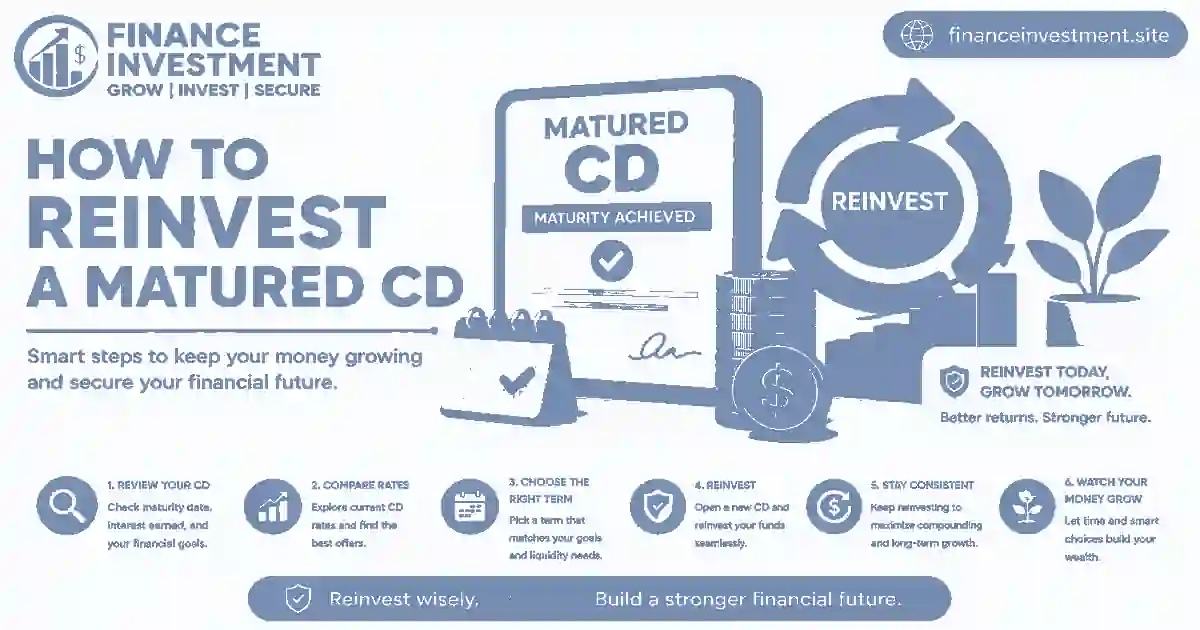 Knowing how to reinvest a matured CD starts with one simple idea: maturity gives your money a fresh assignment. The original CD term is over, so you can decide whether the principal, earned interest, or both should go into another certificate.
That does not mean you have to put the entire balance back into a new CD. You might need part of the money for a home repair, tuition, a family expense, or an upcoming purchase. Keeping some cash accessible while reinvesting the rest can sometimes make more sense than locking everything away again.
The next choice also deserves more than a quick look at the advertised rate. Consider the new CD’s APY, term, interest-payment rules, maturity date, and how easily you could access the money if plans change. A shorter term may fit an upcoming goal, while a longer term could suit money you will not need for years.
If you want to review the basics before choosing your next move, our
CD Guide 2026
explains CD terms, rates, safety, and strategies. This guide goes one step further by focusing on what to do with the money after the original CD has matured.
What You’ll Learn
- How principal and interest can be handled after maturity
- When full or partial reinvestment may make sense
- How to compare a new CD before committing funds
- How term length can affect your next maturity date
- How to balance potential returns with access to cash
Quick Answer: How to Reinvest a Matured CD
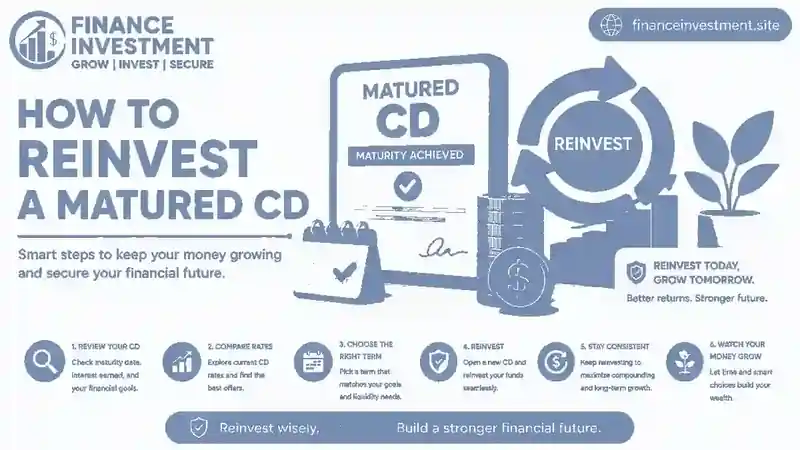
Reinvesting a matured CD means deciding where the available balance should go next instead of treating the old CD as an automatic template for the new one. A simple review can help you choose a term and amount that fit your plans.
6 Practical Steps
- Check the matured balance: Confirm the principal, credited interest, and total amount available for your next decision.
- Separate near-term cash needs: Set aside money you expect to use soon instead of automatically committing the entire balance.
- Compare current APYs: Look beyond your previous CD and compare current offers from suitable banks or credit unions.
- Choose the new term: Match the CD length with when you expect to need the money again.
- Decide how much to reinvest: You can reinvest all, part, or none of the matured funds depending on your goals.
- Confirm the new maturity details: Record the new APY, term, maturity date, interest rules, and account destination.
Bottom line: Reinvestment works best when the new CD is chosen for today’s goals rather than simply copied from yesterday’s certificate.
Matured CD Reinvestment at a Glance
Once a CD reaches maturity, the useful question is not simply how much money is available. You also need to understand what portion came from the original deposit, what was earned, and how much you want committed again. This snapshot keeps the main numbers together before you choose the next home for the funds.
| Factor | What to Check | Why It Matters |
|---|---|---|
| Matured balance | Total funds available | Sets the amount you can allocate |
| Principal | Original deposit | Shows the core amount being redeployed |
| Interest | Earned amount credited | Can increase the amount available for reinvestment |
| New APY | Current offer | Determines potential earnings under the new CD |
| Term | Length of the new CD | Determines how long funds may remain committed |
| Liquidity | How much cash should remain accessible | Helps avoid locking up money needed soon |
| Reinvestment amount | Full or partial balance | Lets the strategy match your cash needs |
| Next maturity date | End date of the new term | Helps you plan the next financial decision |
Complete Beginner Guide to Reinvesting a Matured CD
 Reinvesting a matured CD does not require a complicated strategy. The goal is to make the next deposit fit your life today, rather than simply repeating the old certificate. A few deliberate checks can make the decision much clearer.
1. Confirm the Final Amount
Start with the actual amount available after maturity. Check the original principal, credited interest, and any amount that was paid separately during the previous term. Your account statement should show what is available to move or reinvest.
2. Keep Money You Expect to Use
Before opening another CD, think about expenses coming within the next several months. An emergency reserve, tuition payment, home project, or planned purchase may deserve cash access. Do not put money into a fixed term simply because the balance is already sitting there.
3. Compare New CD Offers
Look at current APYs, minimum deposits, terms, interest-payment choices, and early-withdrawal rules. Your previous CD’s rate is not a useful benchmark by itself. Our guide on
CD rates in 2026
can be a starting point when comparing available offers.
4. Pick a Term That Fits Your Calendar
Think about when you may need the money again. A shorter certificate can bring the next decision closer, while a longer one may work for funds you can leave untouched for a longer period. For help comparing terms, see our guide on
choosing the right CD.
5. Choose Full or Partial Reinvestment
You do not have to reinvest every dollar. For example, you could keep enough for an upcoming expense and place the remaining balance into a new certificate. This can provide a middle ground between earning a fixed return and maintaining accessible cash.
6. Record the New Maturity Date
Once the new CD is opened, save its APY, term, maturity date, and renewal instructions. Put the next maturity date on your calendar well in advance so the next decision does not arrive unexpectedly.
Beginner Tip
Treat the matured balance as fresh money. Recheck your goals and today’s choices instead of assuming the old CD’s strategy still fits.
How CD Reinvestment Works After Maturity
When a CD matures, the original term is finished and the available proceeds can be given a new purpose. The amount available may include the original principal and interest that was credited under the CD’s terms. From there, you decide how much stays accessible and how much goes into another certificate.
From Maturity to a New CD
Think of the process as a simple chain: old CD → maturity → available proceeds → cash allocation → new CD → new maturity date. If you reinvest the entire balance, the full eligible amount goes into the new certificate. If you reinvest only part, the remainder can stay outside the CD for an intended expense, emergency reserve, or another financial purpose.
Full Versus Partial Reinvestment
Full reinvestment keeps more money working under the new CD’s terms. Partial reinvestment creates a middle ground: some funds can continue earning a fixed return while another portion remains available. Neither approach is automatically better; the useful choice depends on when you expect to need the money.
Illustrative Example: $32,500 Matured CD
Imagine Daniel has $32,500 available when his CD matures. He expects to spend $7,500 within the next year, so he keeps that portion accessible and considers placing the remaining $25,000 into a new CD. The new certificate has its own APY, term, and maturity date. This example is illustrative only; actual earnings depend on the selected CD and its terms.
The important change is that the new CD should be evaluated on its own merits. The fact that the money previously earned interest in a CD does not mean the same term or amount must be used again. Reinvestment is a new decision with a new timeline.
Benefits and Drawbacks of Reinvesting a Matured CD
Reinvesting can keep a matured balance working instead of leaving it idle, but the trade-off is that another CD creates another period of limited access. The decision is strongest when the expected benefit fits the time you can comfortably leave the money alone.
✓ Pros
- Continued interest: Eligible funds can keep earning under the new CD’s terms.
- Compounding potential: Reinvesting earned interest can increase the amount working over future terms.
- Predictable returns: A fixed CD can provide clearer expectations than accounts with variable rates.
- Disciplined saving: Another fixed term can reduce the temptation to spend money set aside for longer-term goals.
✕ Cons
- Limited liquidity: Accessing funds before the new maturity can be restricted or costly.
- Rate risk: A long-term commitment can look less attractive if market rates later rise.
- Taxes: Interest earned in a taxable account can create tax obligations.
- Inflation: A fixed return may not keep pace with rising prices after taxes and inflation are considered.
- Opportunity cost: Money placed in another CD cannot simultaneously be used for a different opportunity or financial need.
Reinvestment is therefore less about keeping every dollar locked up and more about deciding which dollars can afford to stay committed. A partial approach can sometimes preserve flexibility while keeping a portion of the matured balance earning a fixed return.
CD Reinvestment Strategies Compared
A matured balance does not have to follow one path. You can match the structure of the new money arrangement to your timeline, rather than choosing a strategy simply because it worked for the previous CD.
| Strategy | How It Works | Best Fit | Main Trade-Off |
|---|---|---|---|
| Full reinvestment | Places the eligible matured balance into a new CD. | Money not needed soon | Less accessible cash |
| Partial reinvestment | Splits the balance between a new CD and accessible funds. | Mixed cash needs | Smaller amount earns the CD return |
| Short-term CD | Uses a shorter fixed term before the next maturity. | Nearer-term goals | May offer less time for interest to accumulate |
| Long-term CD | Commits funds for a longer period. | Longer-range savings | Greater commitment |
| CD ladder | Divides money among CDs with different maturity dates. | Staggered access | More accounts to track |
| Flexible savings | Keeps some or all funds outside a fixed CD. | Frequent or uncertain cash needs | Rate can change |
If staggered access sounds useful, see our guide to
building a CD ladder.
For a different way to structure staggered maturities, you can also compare a
CD ladder and CD barbell strategy.
If you are unsure how long to commit the money, our guide to
how long to keep money in a CD
can help you think through the timeline before choosing the next certificate.
Costs, Risks and Expert Tips for CD Reinvestment
Reinvesting a matured CD can feel straightforward because the money is already in a familiar savings vehicle. Still, the new decision creates its own risks. The rate, timing, access rules and size of the deposit can all change the outcome.
Watch What Happens to Rates
A competitive rate today may not look as attractive later if market rates move higher. A long term can provide certainty, but it can also limit your ability to benefit from future offers. On the other hand, waiting for a better rate can leave the money earning less while you wait. The trade-off is worth considering before committing.
Understand Early-Withdrawal Costs
A new CD can restrict access before maturity. If you unexpectedly need the money, an early-withdrawal penalty may reduce the interest you keep. Review the account’s withdrawal rules rather than assuming the new certificate will have the same conditions as the old one. Our guide to
CD early-withdrawal rules
explains the issue in more detail.
Account for Taxes and Inflation
Interest from a CD held in a taxable account can create taxable income. At the same time, inflation can reduce what your future dollars can buy. A higher quoted return does not automatically mean a higher improvement in purchasing power after taxes and inflation.
Check Insurance and Concentration
If the matured balance is large, review applicable FDIC or NCUA deposit-insurance coverage before adding the money to an existing account at the same institution. Concentrating too much cash under one ownership category can create coverage issues when balances exceed applicable limits.
Expert Tip
Before funding the new CD, write down five details: APY, term, maturity date, withdrawal rules and where the money will be held. If any one of them is unclear, pause before transferring the matured balance.
Common CD Reinvestment Mistakes
A matured CD can make reinvesting feel routine, but small oversights can leave you with the wrong amount, term, or timing. These mistakes are easy to avoid when you treat the new CD as a fresh financial decision.
- Reinvesting everything: Putting the full balance back into a CD can leave too little cash for an expense you already know is coming.
- Chasing the highest rate: A higher APY may not be worth choosing a term that extends beyond when you expect to need the money.
- Overlooking interest-payment rules: Check whether interest stays in the CD, is paid to another account, or follows another schedule.
- Ignoring insurance coverage: A larger matured balance may require a closer look at applicable FDIC or NCUA coverage limits.
- Choosing the wrong maturity date: A CD that ends after an important financial deadline may create an inconvenient cash-access problem.
- Forgetting the new terms: Save the APY, term, maturity date, and renewal instructions instead of relying on memory.
Illustrative Example: Mark Splits His Matured Balance
Mark receives $40,000 when his CD matures. He is tempted by a higher-rate two-year CD and considers putting the entire amount into it. Instead, he realizes he expects a $10,000 family expense next year. He keeps that portion accessible and considers placing the remaining $30,000 into a new CD. He also records the new maturity date so the certificate does not surprise him later.
Illustrative lesson: A strong reinvestment decision considers the calendar as carefully as the rate.
Who Should Reinvest a Matured CD?
Reinvesting can be a sensible choice when the money has a clear job and you are comfortable committing it for another fixed period. The best candidate is not necessarily the person chasing the highest rate; it is someone whose timeline matches the new CD.
People Who May Benefit From Reinvestment
Beginners may appreciate the structure of a fixed-term account when they have already set aside an emergency reserve. Larger-balance savers may use several CDs or institutions to organize cash while paying attention to applicable deposit-insurance limits.
Retirees with predictable income needs may reinvest money that will not be required during the new term. Families can do the same with funds earmarked for a later expense. Conservative savers who value a defined return may also find a new CD useful for money with a known time horizon.
When Reinvestment May Not Fit
Keeping the matured balance liquid may make more sense if an expense is approaching, an emergency reserve needs replenishing, or you expect rates or your financial plans to change soon. A flexible savings account or another financial option may be preferable when access matters more than locking in a fixed return.
The key question is simple: Can this money comfortably stay committed until the new maturity date? If the answer is uncertain, consider keeping at least part of it accessible.
Frequently Asked Questions About Reinvesting a Matured CD
What happens to my principal when a CD matures?
The original principal becomes available according to the CD’s maturity terms. You can generally direct eligible funds toward a new CD, another account, or a planned expense.
Can I reinvest both my CD principal and interest?
Yes, if the interest has been credited to the amount available for reinvestment. Check how your original CD handled interest payments before calculating the new deposit.
Should I reinvest the entire matured CD?
Not necessarily. Full reinvestment may suit money you will not need soon, while partial reinvestment can leave some funds accessible.
How do I choose the APY for a new CD?
Compare the current APY with the term, withdrawal rules, minimum deposit, and other account conditions. A higher rate is not automatically better if the term does not fit your plans.
What CD term should I choose after maturity?
Choose a term based on when you expect to need the money again. A shorter term may offer an earlier access point, while a longer term can keep funds committed for more time.
Can I reinvest part of a matured CD and keep the rest in cash?
Often, yes. If the institution permits it, you can divide the matured proceeds between a new CD and an accessible account.
Are taxes due on CD interest when I reinvest it?
Reinvesting interest does not necessarily make it tax-free. Interest from a CD held in a taxable account can generally be subject to applicable federal income-tax rules.
Can I withdraw money from my new CD before maturity?
Access depends on the CD’s terms. An early withdrawal may be permitted but can result in a penalty or reduced interest, so review the account agreement first.
Can a CD ladder be used when reinvesting a matured CD?
Yes. Instead of placing the entire balance into one maturity date, you can divide funds among CDs with different terms so portions mature at different times.
Illustrative: How much could a $20,000 matured CD earn after reinvestment?
Illustrative example only: If $20,000 were placed into a hypothetical new CD at a stated 4% APY for one year, the ending balance would be about $20,800, assuming the APY and account terms produced that result. Actual earnings depend on the specific CD.
Is my reinvested CD covered by FDIC or NCUA insurance?
Coverage depends on whether the institution is an FDIC-insured bank or a federally insured credit union and whether your deposits remain within applicable coverage limits and ownership categories. Check the institution and your total balances before placing a large matured balance into a new CD.
Final Verdict: How to Reinvest a Matured CD
Reinvesting a matured CD can be a straightforward way to keep money working, but the new certificate should earn its place rather than inherit the old CD’s terms by default. Start with what you need the money to do next.
If the full balance is unlikely to be needed during the next term, reinvesting most or all of it may fit. If you have an upcoming expense or want more flexibility, keeping part of the proceeds accessible while reinvesting the remainder can create a better balance.
Evaluate the new CD independently. Compare its APY, term, interest rules, early-withdrawal provisions, maturity date, and applicable deposit-insurance coverage. The previous CD’s rate or term should not automatically determine the next one.
For a broader look at CD basics, rates, safety, and strategies, visit our
CD Guide 2026
.
It can help you put the reinvestment decision into the larger picture of your savings plan.
Bottom line: Reinvest the amount you can comfortably leave committed, and let your current goals—not the old CD—set the terms for what comes next.
Make Your Next CD Decision With Confidence
Your CD maturity date can be the start of a better savings decision. Get practical FinanceInvestment updates on CDs, rates, saving strategies, and smarter ways to manage your money.
📧 subhashr325@gmail.com
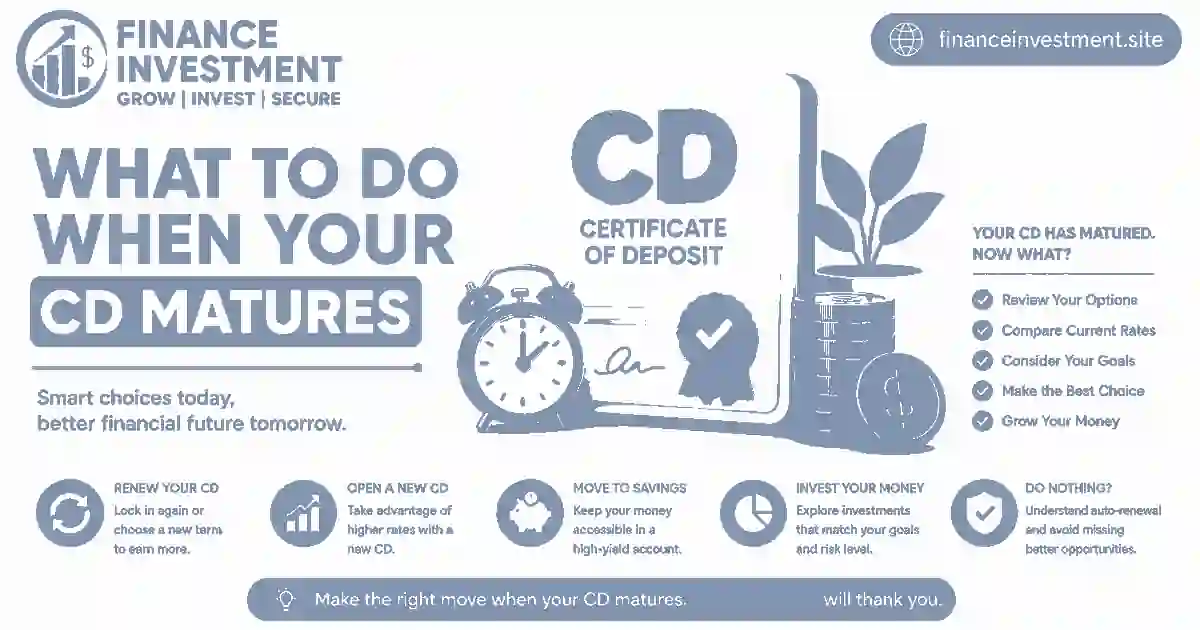
 When your CD reaches maturity, you do not need to make the next decision blindly. A simple review of the account notice, available dates, and your current cash plans can help you move the money deliberately instead of reacting at the last minute.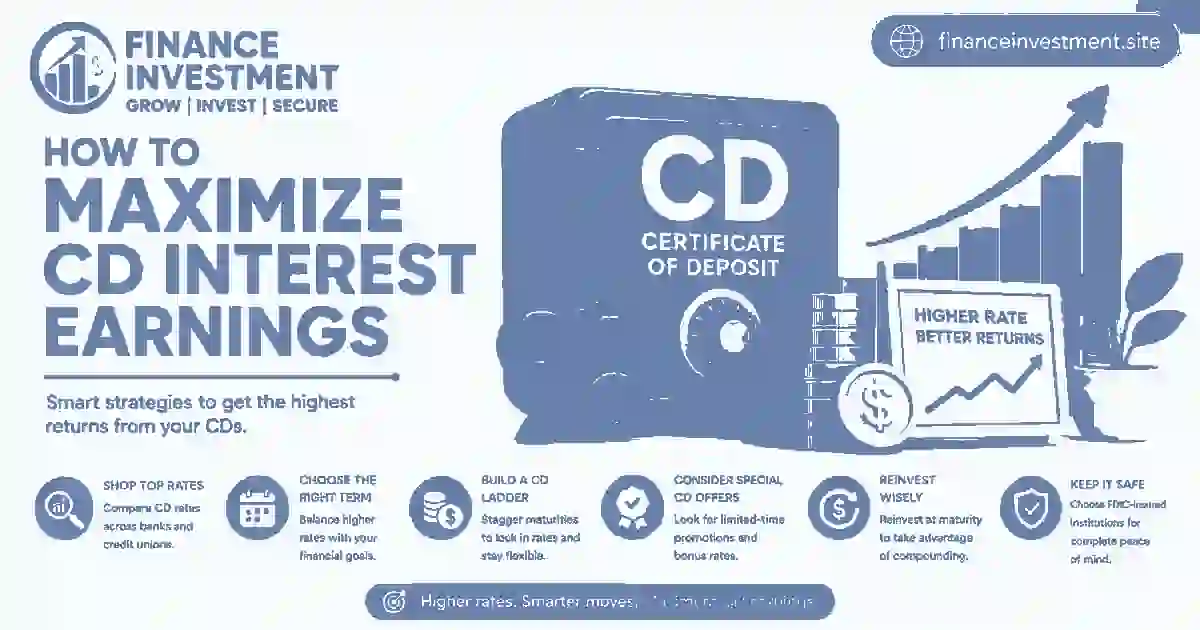
 If you are opening your first CD, start with the money itself rather than the advertised rate. Decide what the funds are for, when you might need them, and how much can remain untouched. That gives you a practical limit for the CD before you begin comparing offers.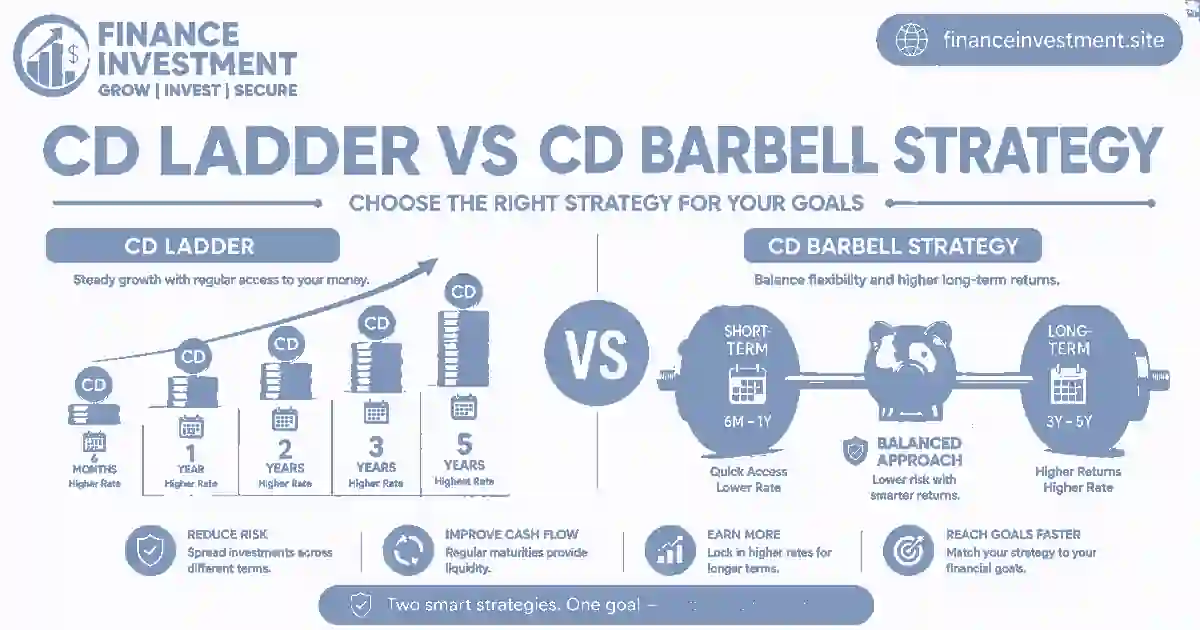
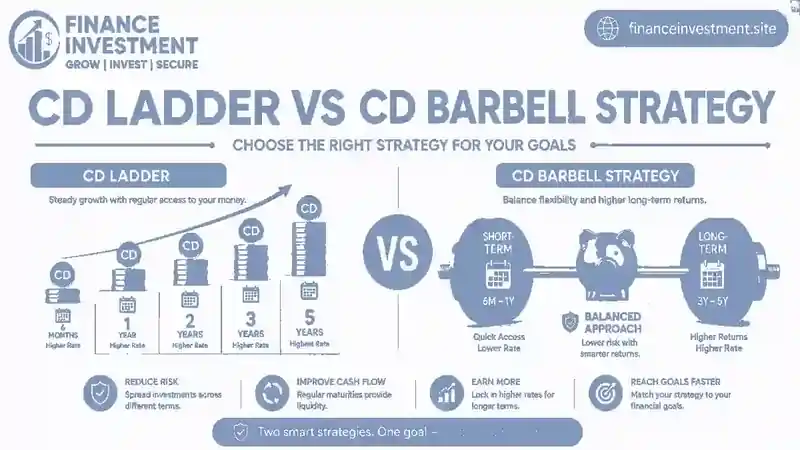 The main difference becomes clearer once the certificates are actually in place. You are not simply choosing several CDs; you are creating a schedule for when portions of your money become available and when you will decide what to do next.