Tag: Apartment Insurance

  • Renters Insurance vs Landlord Insurance: What’s the Difference & Which One Do You Need? (2026 Guide)

    Renters Insurance vs Landlord Insurance: What’s the Difference & Which One Do You Need? (2026 Guide)


    Renters Insurance vs Landlord Insurance: Key Differences Every USA Renter Should Know (2026)

    Author: Subhash Rukade

    Published: July 13, 2026


    Renters Insurance vs Landlord InsuranceRenters Insurance vs Landlord Insurance: Why Knowing the Difference Matters

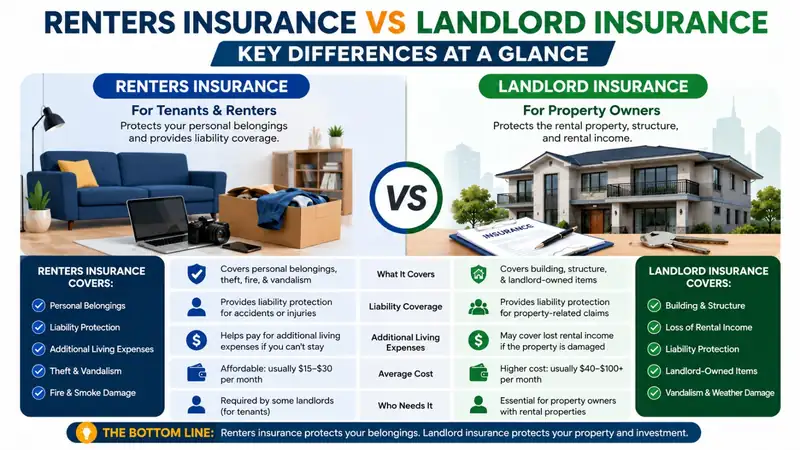
    Renters Insurance vs Landlord Insurance is one of the most misunderstood topics among renters and property owners in the United States. Many renters assume their landlord’s insurance protects their furniture, electronics, clothing, and other personal belongings. At the same time, some landlords mistakenly believe their policy also covers a tenant’s possessions. In reality, these two insurance policies serve completely different purposes.

    A landlord insurance policy primarily protects the rental property’s structure and the owner’s financial interests. On the other hand, renters insurance is designed to protect the tenant’s personal belongings, provide liability coverage, and help pay temporary living expenses if a covered event makes the rental home uninhabitable.

    Understanding the difference can save you from expensive surprises after a fire, theft, storm, or liability claim. Whether you’re renting your first apartment, managing multiple rental properties, or simply reviewing your insurance coverage, knowing who is responsible for what is essential.

    If you’re new to insurance, start with our complete Insurance for Beginners USA Guide. It explains common insurance terms, policy limits, deductibles, and coverage options to help you make smarter financial decisions.

    In this guide, you’ll learn the key differences between renters insurance and landlord insurance, what each policy covers, what isn’t covered, average costs, who needs each type of insurance, and practical tips for choosing the right protection in 2026. By the end, you’ll know exactly which policy fits your situation and why having the right coverage can protect both your property and your finances.

    💡 Quick Tip

    If you rent a home or apartment, never assume your landlord’s insurance protects your personal belongings. In most cases, only a renters insurance policy covers your furniture, electronics, clothing, and personal possessions after a covered loss.


    Quick Answer: Renters Insurance vs Landlord Insurance

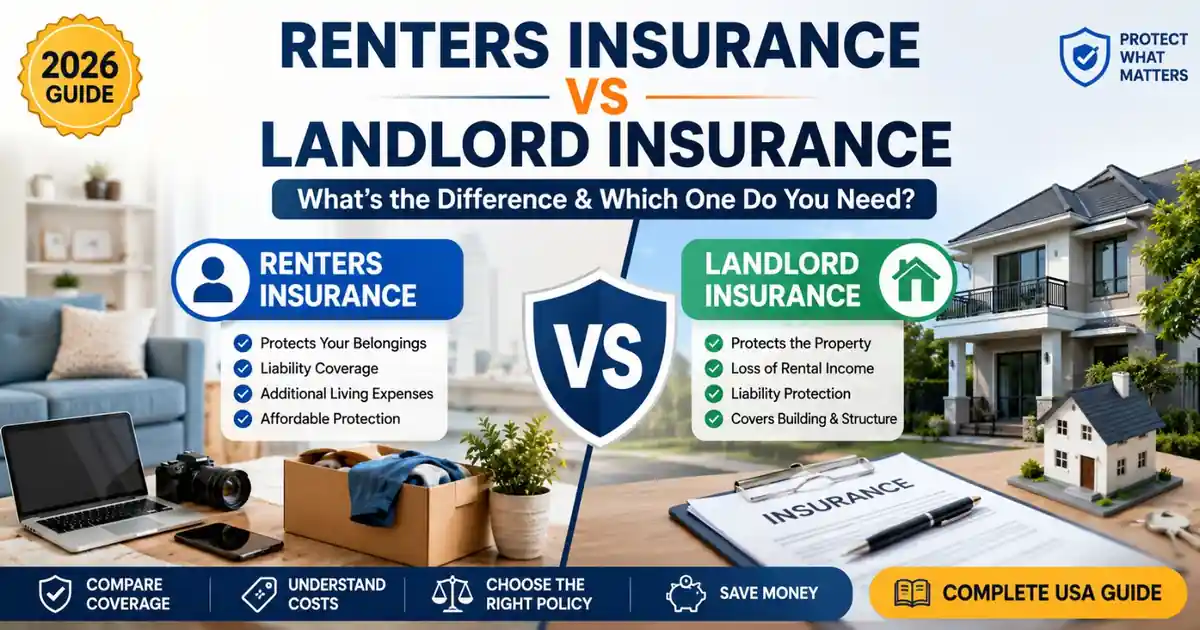
    Renters Insurance vs Landlord Insurance comes down to who is being protected. Renters insurance protects the tenant’s personal belongings, provides liability coverage, and may pay for temporary living expenses after a covered loss. Landlord insurance protects the rental property’s structure, certain landlord-owned items, and may cover lost rental income after covered damage. If you’re renting a home, you typically need renters insurance. If you own a rental property, landlord insurance is the appropriate choice.

    📌 Quick Facts

    CategoryDetails
    Best ForRenters Insurance: Tenants  |  Landlord Insurance: Property Owners
    Average CostRenters Insurance: $10–$30/month  |  Landlord Insurance: $80–$200/month (varies by property and location)
    Coverage / BenefitsRenters insurance covers personal belongings and liability. Landlord insurance covers the rental property’s structure, landlord-owned property, and certain rental income losses.
    ProsAffordable protection, reduced financial risk, liability coverage, and peace of mind for both tenants and property owners.
    ConsNeither policy covers everything. Floods, earthquakes, and normal wear and tear usually require separate coverage or are excluded.

    ⭐ Expert Summary

    The biggest mistake renters make is assuming their landlord’s insurance protects their personal belongings. In reality, renters insurance and landlord insurance work together—not as replacements for one another. Having the right policy can prevent major financial losses after unexpected events.


    Table of Contents

    1. What Is Renters Insurance vs Landlord Insurance?
    2. Key Differences Between Both Policies
    3. Why Choosing the Right Policy Matters
    4. Beginner-Friendly Explanation
    5. Coverage Comparison
    6. Cost & Value
    7. Frequently Asked Questions


    What Is Renters Insurance vs Landlord Insurance?

    Renters Insurance vs Landlord Insurance compares two insurance policies that protect different people involved in a rental property. Although both policies relate to the same home or apartment, they provide coverage for completely different risks.

    Renters insurance is purchased by tenants. It helps protect personal belongings such as furniture, electronics, clothing, and other valuables. Most policies also include personal liability protection and Additional Living Expenses (ALE) if the rental becomes temporarily uninhabitable after a covered event.

    Landlord insurance, sometimes called rental property insurance, is purchased by the property owner. It mainly protects the building itself, detached structures, landlord-owned property, and may also help replace lost rental income if the property cannot be rented because of a covered claim.


    Why It Matters

    Many renters mistakenly believe their landlord’s insurance covers everything inside the apartment. Unfortunately, that’s one of the most expensive misconceptions in real estate. If your laptop, television, furniture, or clothing is stolen or destroyed in a fire, your landlord’s insurance generally won’t pay to replace those items.

    Likewise, landlords should never assume a tenant’s renters insurance will protect the rental building itself. Without the proper policy, repairing structural damage after a covered event could become a major financial burden.

    Understanding which policy covers which risks helps both tenants and property owners avoid costly surprises and ensures everyone has the right level of financial protection.


    Beginner-Friendly Explanation

    Think of it this way:

    • Renters Insurance protects everything you own inside the rental property.
    • Landlord Insurance protects everything the property owner owns, including the building itself.

    For example, if a kitchen fire damages the apartment building and destroys your furniture, the landlord’s insurance usually pays for repairs to the building, while your renters insurance may help replace your personal belongings and cover temporary hotel expenses if the home becomes uninhabitable.

    💡 Beginner Tip

    Remember this simple rule: The landlord insures the building, while the renter insures their belongings. Having both policies in place provides complete protection for everyone involved in the rental property.


    How Renters Insurance and Landlord Insurance Work Together

    Renters Insurance vs Landlord Insurance isn’t about choosing one policy over the other. Instead, these two insurance policies work together to provide complete protection for both the tenant and the property owner. Each policy covers different risks, which helps prevent disputes and unexpected financial losses after accidents or disasters.

    Step 1: The Landlord Purchases Landlord Insurance

    Before renting out a property, the landlord purchases landlord insurance. This policy primarily protects the rental home’s structure, attached buildings, garages, fences, and certain landlord-owned items such as appliances provided with the rental.

    Step 2: The Tenant Purchases Renters Insurance

    After signing the lease, the tenant buys renters insurance to protect personal belongings like furniture, electronics, clothing, kitchen appliances, bicycles, and other valuables. The policy also includes personal liability coverage and additional living expenses for covered events.

    Step 3: A Covered Loss Happens

    If a fire, theft, windstorm, vandalism, or another covered event occurs, each insurance company handles the portion of the claim covered by its policy. The landlord’s insurer pays for eligible damage to the building, while the renter’s insurer may reimburse damaged personal belongings and other covered expenses.

    Step 4: Claims Are Filed Separately

    Even though both policies may be involved in the same incident, landlords and tenants usually file separate insurance claims. This ensures each party receives compensation for their own covered losses according to their policy limits and deductible.

    Who Needs Which Policy?

    • ✅ Apartment renters
    • ✅ House renters
    • ✅ College students renting off-campus housing
    • ✅ Condo renters
    • ✅ Property owners renting homes or apartments
    • ✅ Real estate investors with rental properties

    Why Understanding the Difference Is Important

    Knowing who is responsible for which type of coverage prevents costly misunderstandings after an unexpected loss. Tenants avoid paying out of pocket for damaged belongings, while landlords protect one of their biggest financial investments—the rental property itself.

    If you’re planning for long-term financial security while protecting your assets, explore our Retirement Planning Guide. It shares practical strategies for building wealth and protecting your financial future.

    💡 Expert Tip

    The best protection comes when both the landlord and the tenant carry the appropriate insurance policy. One policy protects the property, while the other protects the people and belongings inside it. Together, they provide complete financial security after covered events.


    What’s Covered: Renters Insurance vs Landlord Insurance

    Renters Insurance vs Landlord Insurance becomes much easier to understand when you compare exactly what each policy covers. Although both policies protect against financial losses, they insure different types of property and different people. Knowing these differences helps renters and landlords avoid unexpected expenses after a covered event.

    ✅ What Renters Insurance Covers

    Renters insurance is designed to protect the tenant—not the building. A standard renters insurance policy typically includes:

    • Personal belongings such as furniture, clothing, electronics, and appliances
    • Theft and burglary protection
    • Fire and smoke damage
    • Vandalism
    • Personal liability coverage
    • Medical payments for injured guests
    • Additional Living Expenses (ALE) if the rental becomes temporarily uninhabitable

    ✅ What Landlord Insurance Covers

    Landlord insurance protects the rental property’s owner and the physical structure of the building. Most policies include:

    • The rental home’s structure
    • Detached garages, sheds, and fences
    • Landlord-owned appliances and fixtures
    • Loss of rental income after certain covered events
    • Property owner’s liability protection
    • Damage caused by fire, storms, hail, and other covered perils

    ❌ What’s Usually NOT Covered

    • Flood damage (separate flood insurance required)
    • Earthquake damage (usually optional coverage)
    • Normal wear and tear
    • Pest or insect damage
    • Intentional damage
    • Neglected maintenance issues

    Key Features Comparison

    FeatureRenters InsuranceLandlord Insurance
    Building Protection❌ No✅ Yes
    Personal Belongings✅ Yes❌ No
    Personal Liability✅ Yes✅ Yes
    Additional Living Expenses✅ Yes❌ Usually No
    Loss of Rental Income❌ No✅ Yes
    Tenant’s Furniture✅ Yes❌ No


    Renters Insurance vs Landlord Insurance Comparison Guide⭐ Expert Insight

    Neither renters insurance nor landlord insurance replaces the other. They complement each other by protecting different risks. If you’re renting, you need renters insurance to protect your belongings. If you own the rental property, landlord insurance protects your investment and rental income.


    Cost & Comparison: Renters Insurance vs Landlord Insurance

    One of the biggest differences in Renters Insurance vs Landlord Insurance is the cost. Since renters insurance covers only a tenant’s personal belongings and liability, it is much less expensive than landlord insurance. Landlord insurance protects an entire rental property, making it naturally more expensive because the insurer assumes a greater financial risk.

    Even though landlord insurance has a higher premium, both policies provide valuable financial protection that can prevent thousands of dollars in unexpected expenses after a covered loss.

    Average Insurance Cost in 2026

    Policy TypeAverage Monthly CostAverage Annual Cost
    Renters Insurance$10–$30$120–$360
    Landlord Insurance$80–$200$960–$2,400

    What Affects the Cost?

    • Property location and ZIP code
    • Coverage limits selected
    • Deductible amount
    • Age and condition of the property
    • Previous insurance claims
    • Safety features such as smoke alarms and security systems
    • Optional endorsements and additional coverage

    Renters Insurance vs Landlord Insurance Comparison

    FeatureRenters InsuranceLandlord Insurance
    Who Buys It?TenantProperty Owner
    Protects Personal Belongings✅ Yes❌ No
    Protects Building Structure❌ No✅ Yes
    Liability Protection✅ Included✅ Included
    Loss of Rental Income❌ No✅ Usually Covered
    Best ForApartment & Home RentersRental Property Owners

    Best Insurance Strategy

    The best approach is for both parties to carry their own insurance policy. Tenants should purchase renters insurance to protect their belongings and liability, while landlords should maintain landlord insurance to safeguard the property and rental income. Together, these policies provide complete protection and reduce financial risk for everyone involved.

    If you’re looking for smarter ways to grow your money while protecting your finances, explore our AI Investing Guide 2026, where you’ll discover modern investing strategies designed for long-term wealth building.

    Recommended Financial Products

    💰 Money-Saving Tip

    Compare quotes from at least three insurance companies before purchasing a policy. Increasing your deductible, installing security devices, and bundling eligible insurance policies can help lower your premium while maintaining strong financial protection.


    How to Choose the Right Insurance Policy

    Choosing between Renters Insurance vs Landlord Insurance is simple once you understand your role. If you rent a home or apartment, you need renters insurance to protect your belongings. If you own rental property, landlord insurance is essential for protecting your investment and rental income. Buying the right policy before an unexpected loss can save thousands of dollars in repair and replacement costs.

    Step-by-Step Buying Guide

    Step 1: Identify Your Role

    Ask yourself one question: Are you renting the property or do you own it? Renters need renters insurance, while property owners need landlord insurance.

    Step 2: Calculate Your Coverage Needs

    Tenants should estimate the replacement value of personal belongings. Landlords should calculate the rebuilding cost of the rental property and any landlord-owned items inside it.

    Step 3: Compare Multiple Quotes

    Always compare quotes from at least three insurance companies. Look beyond price and compare coverage limits, deductibles, exclusions, customer service, and claim satisfaction.

    Step 4: Review Policy Exclusions

    Read the policy carefully to understand what isn’t covered. You may need additional protection for floods, earthquakes, or expensive valuables depending on your situation.

    Step 5: Purchase Before You Need It

    Insurance only protects future events. Waiting until after damage occurs means the loss won’t be covered, so it’s best to buy your policy before moving in or renting out your property.

    Money-Saving Tips

    • Compare quotes every year before renewing.
    • Bundle eligible insurance policies for additional discounts.
    • Choose a deductible that fits your budget.
    • Install smoke detectors, security systems, and deadbolt locks.
    • Keep a claim-free history whenever possible.
    • Review your coverage annually as your needs change.

    Common Discounts Available

    DiscountPotential Savings
    Multi-Policy BundleUp to 25%
    Security System5–15%
    Smoke & Fire Alarms3–10%
    Automatic Payments2–5%
    Paperless Billing2–5%

    ⭐ Expert Recommendation

    Don’t buy insurance based only on the lowest premium. The best policy is the one that provides the right amount of protection for your property, belongings, and financial situation. Spending a few extra minutes comparing policies today could save you thousands of dollars after a future claim.


    9 Common Mistakes People Make with Renters Insurance vs Landlord Insurance

    Understanding Renters Insurance vs Landlord Insurance is only the first step. Many renters and property owners still make costly mistakes that leave them underinsured or paying thousands of dollars out of pocket after an unexpected event. Avoiding these common mistakes can help you choose the right policy and protect your finances.

    1. Assuming One Policy Covers Everything

    The biggest misconception is believing landlord insurance also covers a tenant’s personal belongings. In reality, each policy protects different risks.

    2. Buying the Cheapest Policy Without Comparing Coverage

    A lower premium may also mean lower coverage limits, fewer benefits, or higher deductibles. Always compare coverage before choosing a policy.

    3. Not Reading Policy Exclusions

    Floods, earthquakes, pest damage, and normal wear and tear are usually excluded from standard policies. Read the policy carefully before purchasing.

    4. Underestimating the Value of Personal Belongings

    Many renters don’t realize their furniture, electronics, clothing, and household items could cost tens of thousands of dollars to replace.

    5. Choosing the Wrong Coverage Limits

    Buying too little coverage can leave both renters and landlords responsible for large out-of-pocket expenses after a major claim.

    6. Forgetting to Update the Policy

    After purchasing expensive electronics, furniture, or making property improvements, update your insurance coverage to reflect the increased value.

    7. Waiting Until After Damage Occurs

    Insurance only covers future covered events. Purchasing a policy after damage has already happened won’t protect you from that loss.

    8. Not Comparing Quotes Every Year

    Insurance companies regularly change rates and discounts. Shopping around before renewal may help you save money.

    9. Ignoring Liability Protection

    Many people focus only on property coverage and overlook liability insurance, which can protect against expensive legal claims and medical expenses.

    Real-Life USA Example

    Sarah rented an apartment in Florida and believed her landlord’s insurance would replace her belongings after a kitchen fire. While the landlord’s insurance paid to repair the building, Sarah had no renters insurance, so she personally paid nearly $16,000 to replace her furniture, electronics, clothing, and household items. A renters insurance policy costing less than $20 per month could have covered most of those losses.

    Expert Tips

    • Create a home inventory with photos and receipts.
    • Review your insurance policy every year.
    • Compare quotes from multiple insurers before renewing.
    • Understand deductibles and policy exclusions.
    • Choose replacement cost coverage whenever possible.
    • Ask about every available insurance discount.
    • Store important insurance documents securely online.
    • Purchase the correct policy before moving in or renting out a property.

    Building financial security means protecting both your home and your investments. Learn smart long-term strategies in our Recession-Proof Investing Guide, where you’ll discover practical ways to safeguard your wealth during uncertain economic conditions.

    Helpful Government Resources

    ⚠️ Expert Reminder

    The right insurance policy can save you thousands of dollars after an unexpected event—but only if you choose the correct coverage before disaster strikes. Whether you’re a renter or a property owner, reviewing your insurance annually is one of the smartest financial habits you can develop.


    Pros & Cons of Renters Insurance vs Landlord Insurance

    When comparing Renters Insurance vs Landlord Insurance, it’s important to understand that neither policy is better than the other. Each serves a different purpose. The right choice depends on whether you’re renting a property or owning one. Here’s a quick comparison of the advantages and limitations of each policy.

    ✅ Pros❌ Cons
    Protects the right person based on their role (tenant or landlord).Neither policy covers every possible type of damage.
    Provides valuable liability protection against legal claims.Flood and earthquake coverage usually require separate policies.
    Helps reduce major out-of-pocket expenses after covered events.Deductibles apply before insurance benefits are paid.
    Renters insurance is affordable for most households.Choosing low coverage limits may leave you underinsured.
    Landlord insurance helps protect rental property and rental income.Premiums may increase after multiple insurance claims.
    Together, both policies provide complete protection for rental properties.Coverage and exclusions vary between insurance companies.

    ⭐ Final Verdict

    The smartest approach isn’t choosing between renters insurance and landlord insurance—it’s making sure the correct person has the correct policy. Renters should protect their belongings with renters insurance, while property owners should protect their investment with landlord insurance. Together, these policies provide complete financial protection and greater peace of mind for everyone involved.


    Frequently Asked Questions (FAQs)

    1. What is the difference between renters insurance and landlord insurance?

    Renters Insurance vs Landlord Insurance comes down to who is protected. Renters insurance protects the tenant’s personal belongings, liability, and additional living expenses. Landlord insurance protects the rental property’s structure, landlord-owned items, and may cover lost rental income after certain covered events.

    2. Do renters need insurance if the landlord already has insurance?

    Yes. A landlord’s insurance generally does not cover a tenant’s personal belongings. If your furniture, electronics, clothing, or other valuables are damaged or stolen, you’ll usually need renters insurance to receive compensation.

    3. Is landlord insurance required by law?

    No. Landlord insurance is not usually required by law, but mortgage lenders may require it. Even when it’s optional, most property owners purchase landlord insurance to protect their investment.

    4. What does renters insurance usually cover?

    Most renters insurance policies cover personal belongings, theft, fire, smoke damage, vandalism, personal liability, medical payments to guests, and additional living expenses if the rental becomes temporarily uninhabitable.

    5. Does landlord insurance cover tenant damage?

    It depends on the cause of the damage. Some accidental damage may be covered, but intentional damage caused by tenants is generally not covered. Coverage varies by insurance company and policy.

    6. Can both insurance policies pay for the same claim?

    Sometimes both policies are involved in the same incident, but they usually pay for different losses. For example, landlord insurance may cover building repairs, while renters insurance covers the tenant’s damaged belongings.

    7. Which insurance policy costs more?

    Landlord insurance is generally more expensive because it protects the building and rental property. Renters insurance is one of the most affordable insurance products in the United States, often costing between $10 and $30 per month.

    8. Can landlords require renters insurance?

    Yes. Many landlords require tenants to maintain an active renters insurance policy before moving in or renewing a lease. This requirement helps reduce disputes after unexpected losses.

    9. How can I save money on insurance?

    Compare quotes from multiple insurance companies, bundle eligible policies, choose an appropriate deductible, install safety devices, and ask about available discounts before purchasing coverage.

    10. Which policy should I buy?

    If you rent a home or apartment, buy renters insurance. If you own rental property, purchase landlord insurance. If you’re both a landlord and a renter in different situations, you may need both policies.

    💡 Quick Takeaway

    Understanding Renters Insurance vs Landlord Insurance helps you avoid costly mistakes and choose the right protection. While these policies cover different risks, together they provide complete financial security for both tenants and property owners.


    Final Verdict: Renters Insurance vs Landlord Insurance

    Choosing between Renters Insurance vs Landlord Insurance isn’t about deciding which policy is better—it’s about understanding which one matches your role. If you’re renting a home or apartment, renters insurance protects your personal belongings, liability, and temporary living expenses. If you own rental property, landlord insurance helps protect your building, rental income, and long-term investment.

    For the best financial protection, tenants and landlords should each carry the appropriate insurance policy. Together, these policies reduce financial risk, simplify the claims process, and provide peace of mind when unexpected events occur.

    If you’re still learning about insurance, don’t miss our complete Insurance for Beginners USA Guide. It explains insurance basics, deductibles, coverage limits, and smart strategies for choosing the right policy in 2026.


    📩 Join 25,000+ Smart Readers

    Get the latest insurance guides, investing tips, retirement planning strategies, and personal finance advice delivered directly to your inbox—for free.


    📧 Subscribe Free


    ✅ Weekly Finance Tips   |
    ✅ Insurance Guides   |
    ✅ Investing Ideas   |
    ✅ 100% Free

    SR

    Subhash Rukade

    Subhash Rukade is the founder of FinanceInvestment.site and writes detailed, research-backed guides on insurance, investing, retirement planning, credit cards, and personal finance for U.S. readers. His mission is to simplify complex financial topics into practical, easy-to-understand advice that helps readers make smarter money decisions.


    🌐 Visit Website


    📚 Read More Guides
     

  • What Does Renters Insurance Cover? Complete Coverage Guide for USA Renters (2026)

    What Does Renters Insurance Cover? Complete Coverage Guide for USA Renters (2026)


    What Does Renters Insurance Cover? Complete Coverage Guide for USA Renters (2026)

    Author: Subhash Rukade

    Published Date: July 12, 2026

    What Does Renters Insurance Cover?

    If you’re renting an apartment, condo, or house in the United States, you may be wondering what does renters insurance cover. Many renters assume their landlord’s insurance protects their personal belongings, but that’s a common misconception. A landlord’s policy covers the building—not your furniture, electronics, clothing, or other valuables.

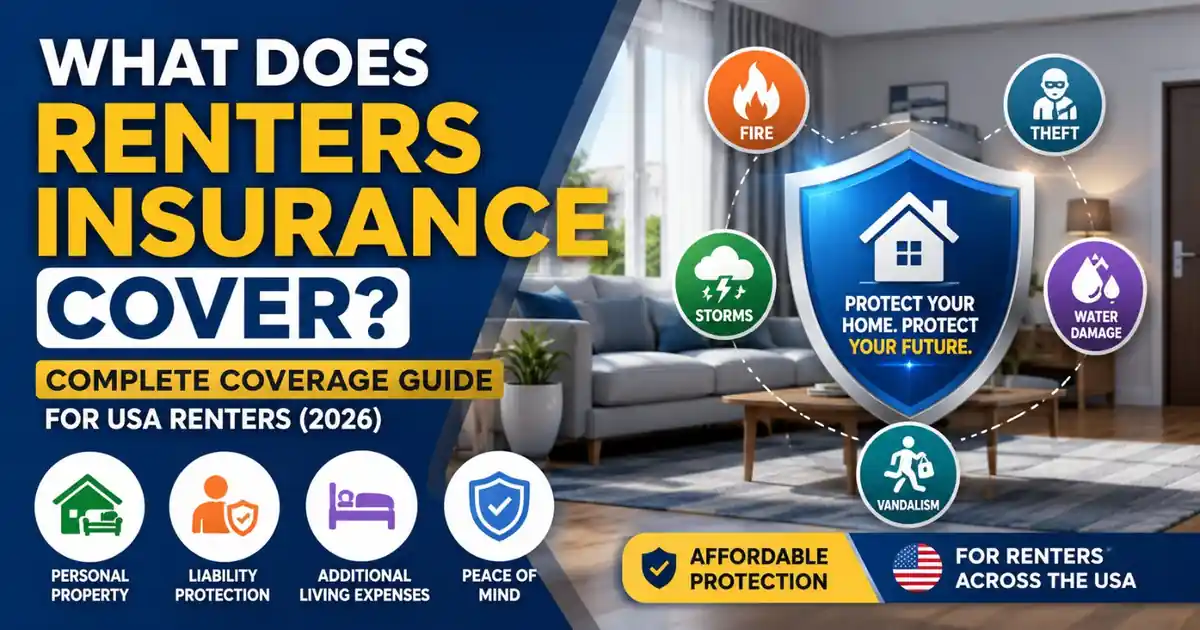
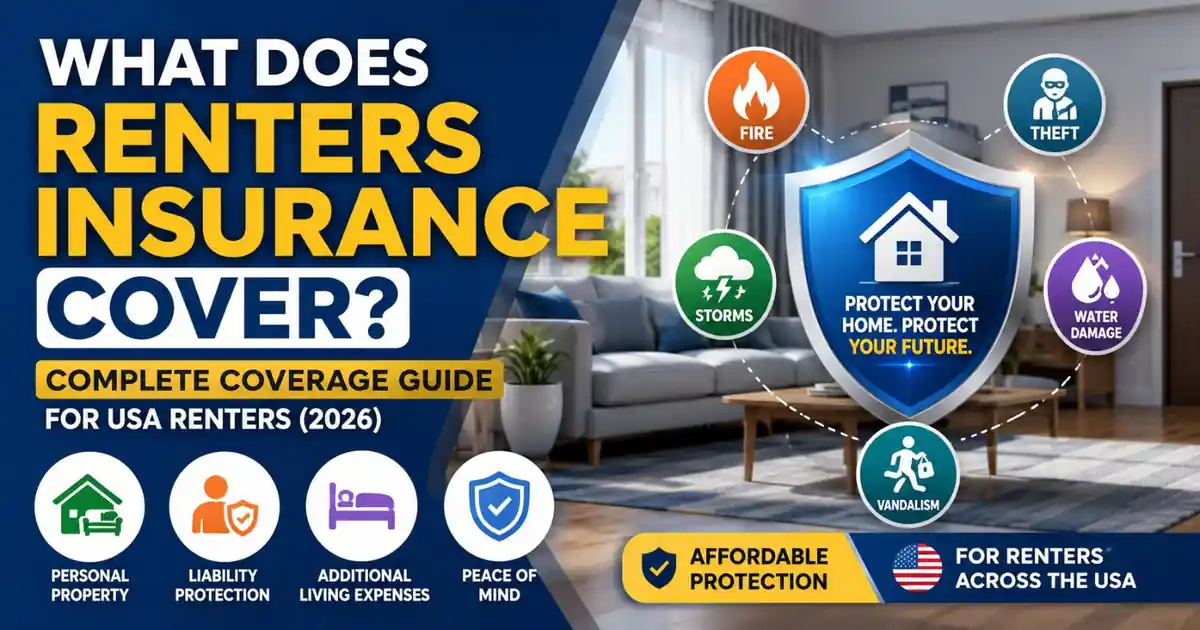
    A renters insurance policy helps protect your personal property from covered events such as fire, theft, vandalism, smoke damage, and certain types of water damage. Most policies also include personal liability coverage and additional living expenses if your rental becomes temporarily uninhabitable after a covered loss.

    In this complete 2026 guide, you’ll learn exactly what renters insurance covers, what it doesn’t cover, common exclusions, average costs, how claims work, and practical tips for choosing the right coverage. By the end, you’ll know whether your current policy provides enough protection for your lifestyle.

    Before exploring renters insurance in detail, read our comprehensive Insurance for Beginners USA Guide. It explains insurance basics and will help you better understand the different types of coverage available.


    Quick Answer: What Does Renters Insurance Cover?

    What does renters insurance cover? A standard renters insurance policy protects your personal belongings from covered events such as fire, theft, vandalism, smoke damage, lightning, and certain types of water damage. Most policies also include personal liability coverage, medical payments to others, and additional living expenses (ALE) if your rental home becomes temporarily uninhabitable after a covered loss. However, floods, earthquakes, normal wear and tear, and intentional damage are usually not covered unless you purchase separate protection.

    📌 Quick Facts

    CategoryDetails
    Best ForApartment renters, condo renters, college students, families, and anyone renting a home in the USA.
    Average Cost$15–$30 per month ($180–$360 per year).
    Coverage / BenefitsPersonal property, liability protection, medical payments to others, and additional living expenses (ALE).
    ProsAffordable premiums, protects valuable belongings, includes liability coverage, and offers financial peace of mind.
    ConsFloods, earthquakes, pest damage, and normal wear and tear are generally excluded. High-value items may require additional coverage.

    Understanding exactly what your renters insurance covers is the first step toward avoiding costly surprises when you need to file a claim. In the next section, we’ll explain how renters insurance works, why it matters, and what every renter should know before choosing a policy.


    Table of Contents

    1. What Does Renters Insurance Cover?
    2. Why Coverage Matters
    3. How Renters Insurance Works
    4. Items Covered by Renters Insurance
    5. What Isn’t Covered?
    6. Coverage Comparison
    7. Buying Guide
    8. Common Mistakes
    9. FAQs
    10. Final Recommendation

    What Does Renters Insurance Cover?

    What Does Renters Insurance Cover? A renters insurance policy protects your personal belongings and finances when unexpected events occur. While your landlord’s insurance covers the building itself, renters insurance is designed to protect everything you own inside your rental home. It also provides liability protection if you’re legally responsible for injuries or property damage involving another person.
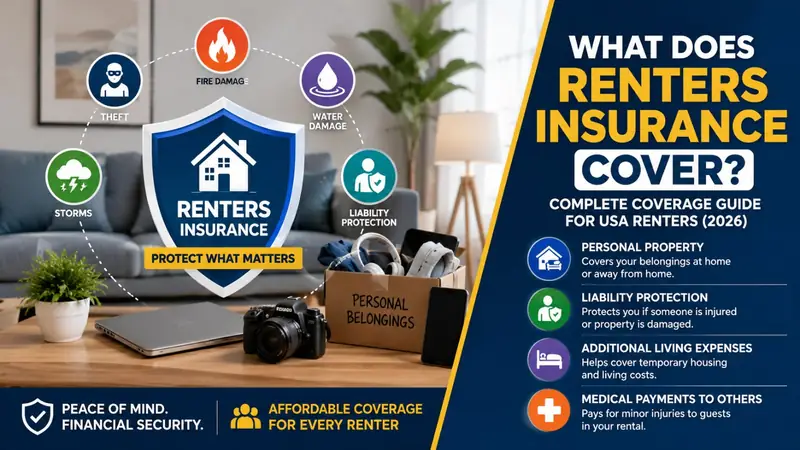

    A standard renters insurance policy typically covers losses caused by fire, smoke, theft, vandalism, lightning, windstorms, and certain types of accidental water damage. In addition to replacing damaged belongings, many policies help pay hotel bills, meals, and temporary housing if your apartment or rental home becomes uninhabitable after a covered loss.

    Coverage usually extends to everyday household items such as furniture, clothing, televisions, laptops, smartphones, kitchen appliances, bicycles, and many other personal possessions. Depending on your insurer, you can also purchase optional endorsements for expensive jewelry, collectibles, cameras, musical instruments, or home business equipment.

    Why Renters Insurance Coverage Matters in 2026

    Many renters underestimate the value of everything they own. A sofa, dining table, television, laptop, gaming console, mattress, clothing, kitchen appliances, and personal accessories can easily add up to $30,000 or more. Without renters insurance, replacing those items after a fire or burglary could seriously impact your finances.

    Another major advantage is personal liability coverage. If a visitor slips inside your apartment or you accidentally cause damage to someone else’s property, your policy may help cover legal expenses, medical bills, and settlement costs up to your coverage limits.

    For a relatively low monthly premium, renters insurance provides financial protection that can save you thousands of dollars after an unexpected event. That’s why millions of Americans consider it one of the best-value insurance products available today.

    💡 Beginner Tip

    Don’t judge the value of renters insurance by its monthly premium. Instead, compare it with the cost of replacing everything you own. Most renters discover that their belongings are worth far more than they initially expected.

    Coming Next: In Section 5, you’ll learn exactly how renters insurance works, who needs it most, and how to choose the right amount of coverage for your personal situation.


    How Renters Insurance Coverage Works

    Understanding what does renters insurance cover becomes much easier when you know how a policy works. Renters insurance is designed to protect your finances when unexpected covered events damage your belongings or create legal liability. Instead of paying the entire cost yourself, your insurance company helps cover eligible expenses after you pay your deductible.

    Step 1: Purchase the Right Policy

    Start by estimating the total value of your personal belongings. Most insurance companies allow you to choose your personal property limit, liability coverage, deductible, and optional endorsements. Selecting the right limits ensures your belongings receive adequate protection if you ever need to file a claim.

    Step 2: A Covered Event Happens

    If your apartment is damaged by a covered event such as fire, smoke, theft, vandalism, lightning, or certain types of accidental water damage, document the damage immediately. Take photographs, keep receipts whenever possible, and notify your insurance company as soon as you can.

    Step 3: File Your Insurance Claim

    Most insurers let you submit claims online or through a mobile app. A claims representative reviews your documentation, confirms that the loss is covered under your policy, and calculates your reimbursement based on your coverage limits and deductible.

    Step 4: Receive Your Payment

    After your claim is approved, your insurer pays the covered amount according to your policy terms. If your rental home becomes temporarily uninhabitable, additional living expense (ALE) coverage may also reimburse hotel stays, meals, and other temporary housing costs.

    Who Needs Renters Insurance?

    • ✔ Apartment renters
    • ✔ College students living off campus
    • ✔ Families renting a home
    • ✔ Roommates protecting their personal belongings
    • ✔ Young professionals
    • ✔ Military families living in rental housing
    • ✔ Retirees renting apartments or condominiums

    Why Renters Insurance Is Important

    Many renters believe they don’t own enough valuable property to justify buying insurance. In reality, replacing furniture, electronics, clothing, kitchen appliances, and everyday household items after a disaster can easily cost tens of thousands of dollars. Renters insurance protects not only your belongings but also your financial future through liability protection and temporary living expense coverage.

    Protecting your finances shouldn’t stop with insurance. Building a long-term retirement strategy is equally important. Explore our Retirement Planning Guide to learn practical ways to grow your wealth while protecting what you’ve worked hard to build.

    💡 Expert Tip

    Create a digital inventory of your belongings by taking photos and saving receipts in cloud storage. If you ever need to file a claim, having accurate records can speed up the process and help ensure you receive the correct reimbursement.


    What Does Renters Insurance Cover? Complete Coverage Guide

    If you’re searching for the answer to What Does Renters Insurance Cover?, the good news is that a standard renters insurance policy protects much more than just your furniture. Most policies include protection for your personal belongings, liability claims, temporary living expenses, and medical payments to guests after covered incidents. Understanding exactly what’s included—and what’s excluded—helps you choose the right policy and avoid unpleasant surprises when filing a claim.

    ✅ What’s Covered?

    • Personal Property: Furniture, clothing, electronics, laptops, televisions, smartphones, kitchen appliances, bicycles, books, and many other personal belongings.
    • Fire & Smoke Damage: Covers belongings damaged by fire, smoke, and lightning.
    • Theft & Burglary: Pays to repair or replace stolen belongings, even if some items are stolen away from your home (subject to policy limits).
    • Vandalism: Covers damage caused by intentional vandalism.
    • Windstorms & Hail: Most policies include protection against wind and hail damage.
    • Personal Liability: Helps pay legal expenses and damages if you’re responsible for someone else’s injury or property damage.
    • Medical Payments to Others: Pays limited medical expenses if a guest is accidentally injured inside your rental home.
    • Additional Living Expenses (ALE): Covers hotel stays, meals, and temporary housing if your apartment becomes uninhabitable after a covered loss.

    ❌ What’s NOT Covered?

    • Flood damage (requires separate flood insurance)
    • Earthquake damage (optional coverage in many states)
    • Normal wear and tear
    • Pest or insect damage
    • Intentional damage
    • Vehicle theft or damage (covered by auto insurance)
    • Business-related property beyond policy limits
    • High-value jewelry, artwork, collectibles, and cash without additional endorsements

    Key Features of a Quality Renters Insurance Policy

    • Replacement Cost Coverage
    • High Personal Liability Limits
    • Identity Theft Protection
    • Scheduled Personal Property Coverage
    • 24/7 Online Claims Support
    • Fast Mobile App Claims
    • Flexible Deductible Options
    • Multi-Policy Discount Opportunities

    Coverage Comparison Table

    Coverage TypeStandard Policy
    Personal Belongings✅ Covered
    Fire & Smoke Damage✅ Covered
    Theft✅ Covered
    Personal Liability✅ Covered
    Medical Payments✅ Covered
    Additional Living Expenses✅ Covered
    Flood Damage❌ Not Covered
    Earthquake Damage❌ Optional Coverage


    What Does Renters Insurance Cover Guide

    💡 Expert Insight

    One of the biggest advantages of renters insurance is liability protection. Many renters focus only on replacing their belongings, but liability coverage can protect your savings if you’re sued after accidentally injuring someone or damaging another person’s property. That’s why financial experts consider renters insurance one of the best-value insurance products available.


    Renters Insurance Cost & Coverage Comparison (2026)

    After learning what does renters insurance cover, the next question most renters ask is, “How much does it cost?” Fortunately, renters insurance is one of the most affordable insurance products in the United States. Even a basic policy can protect tens of thousands of dollars in personal belongings while providing liability protection and additional living expense coverage.

    The exact premium depends on several factors, including where you live, the value of your belongings, your deductible, your claims history, and the amount of liability coverage you choose. For most renters, the monthly premium is far less than the potential cost of replacing damaged or stolen property.

    Average Renters Insurance Cost (2026)

    Coverage LevelMonthly PremiumAnnual Cost
    Basic Coverage$15–$18$180–$216
    Standard Coverage$18–$25$216–$300
    Premium Coverage$25–$35+$300–$420+

    Factors That Affect Your Premium

    • Location and ZIP code
    • Personal property coverage limit
    • Liability coverage amount
    • Deductible selection
    • Previous insurance claims
    • Building safety features
    • Credit-based insurance score (where permitted)
    • Optional endorsements for valuable items

    Coverage Comparison

    Without Renters InsuranceWith Renters Insurance
    You pay to replace stolen or damaged belongings yourself.Your policy helps replace covered belongings after your deductible.
    No liability protection.Personal liability coverage helps pay legal and medical expenses.
    You pay hotel and meal expenses after a covered disaster.Additional Living Expenses (ALE) may reimburse temporary housing costs.
    Greater financial risk.More financial security and peace of mind.

    Best Renters Insurance Companies in 2026

    • State Farm – Excellent customer service and nationwide availability.
    • Lemonade – Great digital experience with fast online claims.
    • Allstate – Strong discounts and customizable coverage options.
    • Nationwide – Flexible policies with optional endorsements.
    • USAA – Outstanding choice for eligible military members and their families.

    Saving money on insurance can free up more cash for investing and wealth building. Learn how technology is changing investing by reading our AI Investing Guide 2026, which explains how artificial intelligence can help you make smarter financial decisions.

    You can also earn rewards while paying your insurance premiums by using trusted financial products such as the Chase Freedom Unlimited®, American Express Blue Cash Preferred®, or Capital One Venture Rewards, depending on your eligibility and spending habits.

    💰 Expert Money-Saving Tip

    Compare quotes from at least three insurance companies before purchasing a policy. Bundling renters and auto insurance, increasing your deductible, and installing safety devices like smoke detectors or security systems can reduce your premium while maintaining excellent coverage.


    How to Choose the Right Renters Insurance Coverage (2026 Buying Guide)

    Knowing what does renters insurance cover is only the first step. The next step is choosing a policy that matches your belongings, budget, and lifestyle. Buying too little coverage could leave you paying thousands of dollars out of pocket after a loss, while buying unnecessary coverage may increase your monthly premium. Following a simple buying process helps you get the best value from your policy.

    Step 1: Create a Home Inventory

    Walk through your apartment or rental home and make a list of everything you own. Include furniture, electronics, televisions, laptops, smartphones, clothing, jewelry, kitchen appliances, bicycles, gaming consoles, and other valuables. This inventory helps determine the right amount of personal property coverage.

    Step 2: Estimate Replacement Cost

    Think about how much money it would cost to replace everything with new items. Many renters underestimate the value of their belongings until they complete an inventory. Choosing replacement cost coverage instead of actual cash value can provide better protection after a covered loss.

    Step 3: Compare Multiple Insurance Companies

    Don’t purchase the first policy you find. Compare at least three insurers and evaluate:

    • Monthly premium
    • Coverage limits
    • Deductibles
    • Liability protection
    • Claim satisfaction ratings
    • Customer service reviews
    • Available discounts
    • Financial strength ratings

    Step 4: Choose the Right Deductible

    A higher deductible usually lowers your monthly premium, but you’ll pay more when filing a claim. Select a deductible that fits comfortably within your emergency savings.

    Step 5: Review Your Policy Every Year

    Your insurance needs change over time. Update your coverage after purchasing expensive electronics, furniture, jewelry, or other valuable belongings to ensure your policy continues to provide adequate protection.

    Money-Saving Tips

    • Bundle renters and auto insurance with the same insurer.
    • Install smoke detectors and monitored security systems.
    • Increase your deductible if you have sufficient emergency savings.
    • Enroll in automatic payments.
    • Choose paperless billing when available.
    • Ask about claim-free and loyalty discounts.
    • Compare quotes before every renewal.
    • Review your policy annually to avoid paying for unnecessary coverage.

    Common Discounts Available

    DiscountPotential Savings
    Multi-Policy BundleUp to 25%
    Security Devices5–15%
    Claim-Free Discount5–10%
    Automatic Payments3–5%
    Paperless Billing2–5%

    Many renters also maximize everyday spending by paying insurance premiums with rewards credit cards such as the Chase Freedom Unlimited®, the Capital One Venture Rewards, or the American Express Blue Cash Preferred®, depending on eligibility.

    ✅ Expert Recommendation

    The best renters insurance policy isn’t always the cheapest one. Focus on choosing adequate personal property limits, strong liability coverage, excellent customer service, and available discounts. A well-chosen policy can protect your finances for years while costing less than many everyday subscriptions.


    9 Common Mistakes Renters Make About Insurance Coverage

    Knowing what does renters insurance cover is only part of protecting yourself financially. Many renters purchase a policy without fully understanding its limits, exclusions, or optional coverages. Others don’t buy renters insurance at all because they assume they don’t own enough valuable property. Avoiding these common mistakes can save you thousands of dollars after an unexpected loss.

    1. Assuming the Landlord’s Insurance Covers Your Belongings

    This is the most common mistake. Your landlord’s insurance protects the building itself—not your furniture, clothing, electronics, appliances, or other personal possessions.

    2. Underestimating the Value of Personal Property

    Many renters believe they own only a few thousand dollars’ worth of belongings. After creating a home inventory, they often discover their personal property is worth $25,000–$50,000 or more.

    3. Buying Coverage Based Only on Price

    The cheapest renters insurance policy isn’t always the best value. Lower premiums may come with reduced coverage limits, higher deductibles, or fewer policy benefits.

    4. Ignoring Liability Coverage

    Personal liability protection is one of the most valuable features of renters insurance. If someone is injured inside your rental home or you accidentally damage another person’s property, liability coverage may help pay legal fees, settlements, and medical expenses.

    5. Not Reading Policy Exclusions

    Floods, earthquakes, intentional damage, pest infestations, and normal wear and tear are usually excluded from standard renters insurance policies. Understanding these exclusions helps you avoid surprises when filing a claim.

    6. Forgetting to Update Coverage

    Buying new electronics, furniture, jewelry, or expensive equipment without updating your policy may leave you underinsured after a covered loss.

    7. Choosing a Deductible That’s Too High

    A higher deductible lowers your premium, but you’ll pay more out of pocket if you file a claim. Select a deductible that comfortably fits your emergency budget.

    8. Waiting Too Long to Purchase Insurance

    Some renters delay buying insurance until after moving in. Unfortunately, accidents and theft can happen at any time. It’s best to activate coverage before or on your move-in date.

    9. Never Comparing Policies at Renewal

    Insurance companies regularly update premiums and discounts. Comparing quotes every renewal period can help you maintain excellent coverage while reducing costs.

    Real-Life USA Example

    Michael, a renter in Phoenix, Arizona, believed he didn’t own enough valuable items to justify renters insurance. After a break-in, his laptop, television, camera equipment, gaming console, and several personal belongings were stolen. Replacing everything cost nearly $14,000. A renters insurance policy costing less than $20 per month would have covered most of the loss after his deductible, saving him thousands of dollars.

    Expert Tips

    • Create a digital inventory with photos and receipts.
    • Review your coverage every year.
    • Compare policies from multiple insurers before renewing.
    • Choose replacement cost coverage whenever possible.
    • Understand every exclusion before purchasing.
    • Keep copies of your insurance documents in cloud storage.
    • Ask about every available discount.
    • File claims promptly after a covered event.
    • Review liability limits if your financial situation changes.

    Protecting your belongings is only one part of long-term financial security. Learn how to safeguard your investments during uncertain markets by reading our Recession-Proof Investing 2026 Guide, where you’ll discover strategies to strengthen your financial future.

    Helpful Government Resources

    ⚠️ Expert Reminder

    The best renters insurance policy is one that matches the value of your belongings and provides adequate liability protection. Understanding exactly what renters insurance covers—and what it doesn’t—can prevent costly financial mistakes and give you greater peace of mind.


    Pros & Cons of Renters Insurance Coverage

    Now that you understand what does renters insurance cover, it’s helpful to weigh its advantages and limitations before purchasing a policy. While renters insurance is one of the most affordable types of insurance available, it’s important to know both what it does well and where additional coverage may be necessary.

    For most renters, the benefits far outweigh the disadvantages because a relatively small monthly premium can provide valuable financial protection against unexpected losses, liability claims, and temporary housing expenses.

    ✅ Pros❌ Cons
    Protects personal belongings from covered events like fire, theft, vandalism, smoke damage, and windstorms.Flood and earthquake damage are usually not included in a standard policy.
    Includes personal liability coverage if you’re legally responsible for injuries or property damage.High-value jewelry, collectibles, artwork, and cash may require additional endorsements.
    Pays Additional Living Expenses (ALE) if your rental home becomes temporarily uninhabitable.You must pay your deductible before receiving claim payments.
    Affordable monthly premiums, typically between $15 and $30.Premiums may increase after multiple insurance claims.
    Many insurers offer discounts for bundling policies, installing safety devices, and automatic payments.Normal wear and tear, pest damage, and intentional damage aren’t covered.
    Easy online quotes, mobile apps, and digital claims processing make policies simple to manage.Choosing low coverage limits can leave you underinsured after a major loss.
    Provides peace of mind and protects your long-term financial stability.Optional coverages increase your monthly premium.

    Expert Opinion

    Financial experts generally agree that renters insurance offers outstanding value because it protects both your belongings and your financial future. Even if you believe you don’t own many expensive items, replacing everyday essentials after a fire or burglary can easily cost tens of thousands of dollars.

    When choosing a policy, focus on more than just the monthly premium. Compare personal property limits, liability coverage, deductibles, claim satisfaction, customer service, and optional endorsements. Selecting the right policy today can save you significant money and stress in the future.

    ⭐ Final Expert Verdict

    For most renters in the United States, renters insurance is a smart financial investment. Understanding exactly what renters insurance covers, selecting appropriate coverage limits, and reviewing your policy annually will help ensure you’re protected against unexpected events while keeping your insurance costs affordable.


    Frequently Asked Questions (FAQs)

    1. What does renters insurance typically cover?

    A standard renters insurance policy usually covers personal belongings, personal liability, medical payments to others, and additional living expenses (ALE). Covered events commonly include fire, theft, vandalism, smoke damage, lightning, windstorms, and certain types of accidental water damage.

    2. Does renters insurance cover theft?

    Yes. Most renters insurance policies cover theft of your personal belongings both inside your rental home and, in many cases, while you’re away from home. Coverage limits and exclusions vary by insurer, so always review your policy carefully.

    3. Does renters insurance cover water damage?

    It depends on the cause. Most policies cover sudden and accidental water damage, such as a burst pipe. However, flood damage from rising water is generally excluded and requires a separate flood insurance policy.

    4. Does renters insurance cover my laptop, phone, and electronics?

    Yes. Personal electronics such as laptops, desktop computers, smartphones, tablets, televisions, gaming consoles, and other household electronics are usually covered if they’re damaged or stolen due to a covered event.

    5. Does renters insurance cover roommates?

    Usually not. Most insurers recommend that each roommate purchase their own renters insurance policy unless both individuals are specifically listed on the same policy. Always check with your insurance company before assuming shared coverage.

    6. How much renters insurance coverage do I need?

    Create a home inventory and estimate the replacement value of everything you own. Many renters choose personal property limits between $20,000 and $50,000, while renters with expensive belongings may need higher coverage limits.

    7. What items usually aren’t covered?

    Standard renters insurance policies typically exclude flood damage, earthquake damage, normal wear and tear, pest infestations, intentional damage, and high-value collectibles beyond policy limits unless optional endorsements are added.

    8. Is renters insurance worth the monthly cost?

    For most renters, yes. Paying around $15–$30 per month provides financial protection that could save thousands of dollars after a covered loss. It’s one of the most affordable insurance products available in the United States.

    9. Can I lower my renters insurance premium?

    Yes. You can often reduce your premium by bundling policies, increasing your deductible, installing security devices, maintaining a good insurance score where applicable, and asking your insurer about available discounts.

    10. How do I file a renters insurance claim?

    Contact your insurance company as soon as possible after a covered loss. Document the damage with photos, prepare a list of affected belongings, gather receipts if available, and submit your claim through your insurer’s website, mobile app, or claims department.

    💡 Quick Summary

    Understanding what renters insurance covers helps you choose the right policy and avoid expensive surprises. Most policies protect your belongings, liability, and temporary living expenses after covered losses, making renters insurance one of the best values for renters in 2026.


    Conclusion: What Does Renters Insurance Cover and Why It Matters

    Understanding What Does Renters Insurance Cover is one of the most important steps toward protecting your financial future as a renter. A standard renters insurance policy doesn’t just protect your furniture and electronics—it also provides valuable liability coverage, medical payments to others, and additional living expenses if a covered disaster forces you to leave your rental home temporarily.

    For most renters in the United States, paying a small monthly premium is a smart investment compared to the potentially huge cost of replacing personal belongings after a fire, theft, vandalism, or other covered event. The right policy can save you thousands of dollars while giving you confidence that you’re financially prepared for unexpected situations.

    Before purchasing a policy, compare multiple insurance companies, understand your deductible, review policy exclusions, and choose coverage limits that match the value of your belongings. Spending a little extra time today can prevent expensive surprises tomorrow.

    If you’re still learning about insurance, don’t miss our complete Insurance for Beginners USA Guide. It explains deductibles, policy limits, insurance terminology, and practical tips that will help you choose the right protection for your needs.


    📬 Get Weekly Insurance & Money Tips — Free!

    Join thousands of readers who receive practical insurance advice, investing strategies, retirement planning tips, and money-saving ideas delivered directly to their inbox every week—100% free.


    📩 Subscribe Free


    ✅ Weekly Insurance Guides   |
    ✅ Investing Tips   |
    ✅ Retirement Planning   |
    ✅ 100% Free


    SR

    Subhash Rukade

    Founder of FinanceInvestment.site. I create research-backed, beginner-friendly guides on insurance, investing, retirement planning, credit cards, and personal finance to help U.S. readers make smarter financial decisions with confidence.

  • Is Renters Insurance Worth It? Benefits, Costs & Expert Advice for USA Renters (2026 Guide)

    Is Renters Insurance Worth It? Benefits, Costs & Expert Advice for USA Renters (2026 Guide)


    Author: Subhash Rukade

    Published: July 12, 2026

    Is Renters Insurance Worth It? (2026 USA Guide): Benefits, Costs & Expert Advice


    Is Renters Insurance Worth ItIs Renters Insurance Really Worth Paying For in 2026?

    Is Renters Insurance Worth It? This is one of the most common questions asked by apartment renters across the United States. Many people assume their landlord’s insurance protects everything inside the rental property. Unfortunately, that’s a costly misconception. A landlord’s policy generally covers the building itself—not your furniture, electronics, clothing, jewelry, or personal belongings.

    Imagine returning home after a fire, theft, burst pipe, or severe storm damages everything you own. Replacing those items could cost thousands of dollars. Without renters insurance, those expenses usually come directly out of your pocket. A renters insurance policy can also help pay for liability claims, guest injuries, legal expenses, and temporary living costs if your rental becomes uninhabitable after a covered loss.

    The best part is affordability. In most parts of the United States, renters insurance costs only about $10–$30 per month, making it one of the least expensive types of insurance available. For the price of a few streaming subscriptions, you can gain valuable financial protection and peace of mind.

    If you’re new to insurance, begin with our complete Insurance for Beginners USA Guide. It explains important insurance terms, deductibles, policy limits, and coverage options that make choosing the right renters insurance policy much easier.

    Throughout this guide, you’ll learn exactly what renters insurance covers, what it doesn’t cover, how much it costs in 2026, when it’s worth buying, who should consider it, and practical ways to choose the best policy for your budget. We’ll also compare the benefits and drawbacks so you can confidently decide whether renters insurance is the right investment for your situation.

    💡 Quick Tip

    Many renters own far more personal property than they realize. Before deciding to skip renters insurance, create a simple home inventory with estimated replacement values. You may discover that replacing your belongings would cost tens of thousands of dollars—far more than the annual premium for a renters insurance policy.


    Quick Answer: Is Renters Insurance Worth It?

    Yes, renters insurance is worth it for most renters in the United States. For an average cost of $10–$30 per month, a renters insurance policy can protect your personal belongings against fire, theft, vandalism, smoke damage, and other covered events. It also includes personal liability coverage and may pay for temporary living expenses if your rental becomes uninhabitable after a covered loss. Considering the relatively low premium compared to the potentially high cost of replacing your belongings, renters insurance offers excellent value for most tenants in 2026.

    📌 Quick Facts

    CategoryDetails
    Best ForApartment renters, condo renters, college students, roommates, and families renting a home.
    Average CostApproximately $10–$30 per month or $120–$360 per year.
    Coverage / BenefitsPersonal belongings, liability protection, medical payments to guests, and Additional Living Expenses (ALE).
    ProsAffordable premiums, financial protection, liability coverage, temporary housing benefits, and peace of mind.
    ConsFloods and earthquakes usually require separate coverage. High-value items may need additional endorsements, and deductibles apply when filing claims.

    ⭐ Expert Summary

    For the cost of just a few coffees each month, renters insurance can protect thousands of dollars’ worth of personal belongings and shield you from expensive liability claims. That’s why financial experts generally consider it one of the best-value insurance products available for renters in the USA.


    Table of Contents

    1. What Is Renters Insurance?
    2. Is Renters Insurance Worth It?
    3. How Renters Insurance Works
    4. What Does It Cover?
    5. Average Cost in 2026
    6. Buying Guide
    7. Common Mistakes
    8. Pros & Cons
    9. Frequently Asked Questions
    10. Final Recommendation


    What Is Renters Insurance?

    Renters insurance is a type of insurance policy designed to protect people who rent an apartment, condominium, townhouse, or house. Unlike a landlord’s insurance policy, which mainly covers the building itself, renters insurance protects your personal belongings and provides financial protection if unexpected events occur.

    A standard renters insurance policy typically covers damage caused by fire, theft, vandalism, smoke, lightning, windstorms, and certain types of water damage. Most policies also include personal liability coverage, which helps pay legal expenses if you’re responsible for accidentally injuring someone or damaging another person’s property.

    Another valuable benefit is Additional Living Expenses (ALE). If your rental home becomes temporarily uninhabitable because of a covered disaster, your insurance may help pay for hotel accommodations, meals, and other temporary living costs until repairs are completed.


    Why Renters Insurance Matters in 2026

    Many renters believe they don’t own enough valuable property to justify buying insurance. However, once you add together furniture, clothing, electronics, kitchen appliances, smartphones, laptops, gaming systems, and jewelry, replacing everything after a fire or burglary could easily cost $25,000 to $50,000 or more.

    Many first-time renters ask Is Renters Insurance Worth It before signing their lease agreement.

    For an average monthly premium of only $10–$30, renters insurance can prevent a major financial setback. It also provides peace of mind because you know you’re protected against many unexpected events that could otherwise result in significant out-of-pocket expenses.

    In addition, many landlords now require proof of renters insurance before approving a lease. Having an active policy can make the rental process easier while protecting both you and your property throughout your lease term.


    Beginner-Friendly Explanation

    If you’ve never purchased insurance before, think of renters insurance as a financial safety net. Instead of paying thousands of dollars to replace damaged belongings after a covered event, you pay a small monthly premium, and your insurance company helps cover eligible losses according to your policy.

    For example, imagine someone steals your laptop, television, and furniture during a burglary. Without renters insurance, replacing those items could seriously impact your savings. With the right policy, your insurer may reimburse most of the replacement cost after your deductible.

    💡 Beginner Tip

    Don’t judge renters insurance by its monthly cost. Instead, compare the premium with the total value of everything you own. Most renters discover that protecting thousands of dollars’ worth of belongings for less than a dollar a day is a smart financial decision.


    How Renters Insurance Works

    If you’re still asking Is Renters Insurance Worth It?, understanding how a renters insurance policy works can help you make an informed decision. Renters insurance is designed to reduce your financial burden after unexpected events such as theft, fire, vandalism, smoke damage, or certain types of water damage. Instead of paying the full replacement cost yourself, your insurance company helps cover eligible losses according to your policy terms.

    The process is simple, affordable, and designed to provide financial protection when you need it most. Once you purchase a policy and pay your monthly premium, your coverage remains active as long as your policy stays in force.

    Step 1: Estimate the Value of Your Belongings

    Before purchasing renters insurance, create a home inventory. Include furniture, electronics, clothing, appliances, jewelry, laptops, gaming consoles, and other valuable possessions. This helps you choose the appropriate personal property coverage limit.

    Step 2: Select Your Coverage Options

    Choose the amount of personal property protection, liability coverage, deductible, and optional endorsements that best match your needs. Many insurers also allow you to add identity theft protection or scheduled coverage for expensive jewelry and collectibles.

    Step 3: Pay Your Monthly Premium

    After purchasing your policy, you’ll pay a monthly or annual premium. Most renters pay between $10 and $30 per month, making renters insurance one of the most affordable insurance products available.

    Step 4: File a Claim After a Covered Loss

    If a covered event occurs, notify your insurance company immediately. Document the damage with photos, keep receipts whenever possible, and submit your claim online, through a mobile app, or by contacting your insurance representative.

    Step 5: Receive Compensation

    After reviewing your claim, the insurance company pays the covered amount according to your policy after subtracting your deductible. If your home becomes temporarily uninhabitable, your Additional Living Expenses (ALE) coverage may also reimburse hotel costs, meals, and temporary housing.

    Who Should Buy Renters Insurance?

    • ✔ Apartment renters
    • ✔ College students living off campus
    • ✔ Families renting a home
    • ✔ Roommates (each should usually have their own policy)
    • ✔ Young professionals
    • ✔ Military families living in rental housing
    • ✔ Retirees who rent instead of own

    Why Renters Insurance Is Important

    Many renters underestimate the value of their belongings until disaster strikes. Replacing furniture, electronics, clothing, kitchen appliances, and personal items after a fire or burglary can cost tens of thousands of dollars. Renters insurance protects not only your possessions but also your savings by helping cover liability claims and temporary living expenses.

    Protecting your home is only one part of a strong financial plan. Learn how to prepare for your future with our Retirement Planning Guide, which explains practical strategies to build long-term financial security while protecting your current lifestyle.

    💡 Expert Tip

    Take photos of every room in your home and store copies of receipts in cloud storage. Having a digital inventory can make the claims process much faster and improve the chances of receiving the correct reimbursement after a covered loss.


    What Does Renters Insurance Cover and Why Is It Worth It?

    If you’re still wondering, Is Renters Insurance Worth It?, the answer largely depends on what you own and how much financial risk you’re willing to take. A standard renters insurance policy protects far more than just your furniture. It can safeguard your personal belongings, protect you from expensive liability claims, and even pay for temporary housing after a covered disaster.

    Although coverage varies slightly between insurance companies, most standard renters insurance policies include four major types of protection. Understanding each one will help you decide whether renters insurance provides enough value for your situation.

    ✅ Personal Property Coverage

    This is the primary reason most people buy renters insurance. Personal property coverage helps repair or replace your belongings if they’re damaged or stolen because of a covered event.

    Examples include:

    • Furniture
    • Clothing and shoes
    • Laptops and desktop computers
    • Smartphones and tablets
    • Televisions
    • Kitchen appliances
    • Gaming consoles
    • Bicycles
    • Books and personal collections

    ✅ Personal Liability Protection

    If someone is injured inside your rental home or you accidentally damage another person’s property, personal liability coverage may help pay legal fees, settlements, and medical expenses. This protection alone can save thousands of dollars after an unexpected accident.

    ✅ Additional Living Expenses (ALE)

    If your apartment becomes temporarily uninhabitable because of a covered event such as a fire or severe storm, your insurance may reimburse hotel stays, restaurant meals, laundry expenses, and other temporary living costs until repairs are completed.

    ✅ Medical Payments to Others

    Most renters insurance policies include limited medical payments coverage for guests who are accidentally injured in your rental home, regardless of who was at fault.

    What’s Usually NOT Covered?

    While renters insurance offers valuable protection, it’s equally important to understand its limitations.

    • ❌ Flood damage
    • ❌ Earthquake damage
    • ❌ Normal wear and tear
    • ❌ Pest or insect damage
    • ❌ Intentional damage
    • ❌ Damage caused by neglect
    • ❌ High-value jewelry beyond policy limits (unless scheduled)
    • ❌ Business equipment exceeding policy limits

    Key Features to Look For

    • Replacement Cost Coverage
    • At Least $100,000 in Liability Protection
    • Identity Theft Coverage
    • Fast Online Claims Process
    • 24/7 Customer Support
    • Mobile App Claim Tracking
    • Optional Scheduled Personal Property Coverage
    • Multi-Policy Bundle Discounts

    Coverage Comparison

    CoverageStandard Renters Policy
    Personal Property✅ Covered
    Fire & Smoke Damage✅ Covered
    Theft & Burglary✅ Covered
    Personal Liability✅ Covered
    Medical Payments✅ Covered
    Additional Living Expenses✅ Covered
    Flood Damage❌ Not Covered
    Earthquake Damage❌ Usually Optional


    ⭐ Expert Insight

    For most renters, replacing furniture, electronics, clothing, and everyday household items after a disaster would cost far more than several years of renters insurance premiums. That’s why financial experts generally consider renters insurance one of the best-value insurance products available in the United States. Choosing adequate coverage today can prevent major financial stress tomorrow.


    Renters Insurance Cost & Comparison (2026)

    One of the biggest reasons many renters ask, “Is Renters Insurance Worth It?” is the monthly cost. Fortunately, renters insurance remains one of the most affordable insurance products in the United States. For a relatively small monthly premium, you can protect thousands of dollars worth of personal belongings while also receiving liability protection and additional living expense coverage.

    Your exact premium depends on several factors, including your location, deductible, coverage limits, insurance history, credit-based insurance score (where permitted), and optional endorsements. Even with higher coverage limits, most renters find the cost surprisingly affordable compared to the financial protection they receive.

    If you’ve decided Is Renters Insurance Worth It, follow this step-by-step buying guide to choose the best policy.

    Average Renters Insurance Cost in 2026

    Coverage LevelMonthly CostAnnual Cost
    Basic Policy$10–$15$120–$180
    Standard Policy$15–$25$180–$300
    Premium Coverage$25–$35+$300–$420+

    What Affects Your Premium?

    • Your city and ZIP code
    • Total value of your personal belongings
    • Coverage limits you choose
    • Deductible amount
    • Previous insurance claims
    • Building age and safety features
    • Credit-based insurance score (where allowed)
    • Optional endorsements for valuables

    Coverage Comparison

    Without Renters InsuranceWith Renters Insurance
    You pay to replace damaged or stolen belongings yourself.Your insurer helps replace covered belongings after your deductible.
    No liability protection.Liability coverage may pay legal expenses and settlements.
    You pay hotel and meal costs after a covered disaster.Additional Living Expenses (ALE) may reimburse temporary housing costs.
    Greater financial risk.Better financial protection and peace of mind.

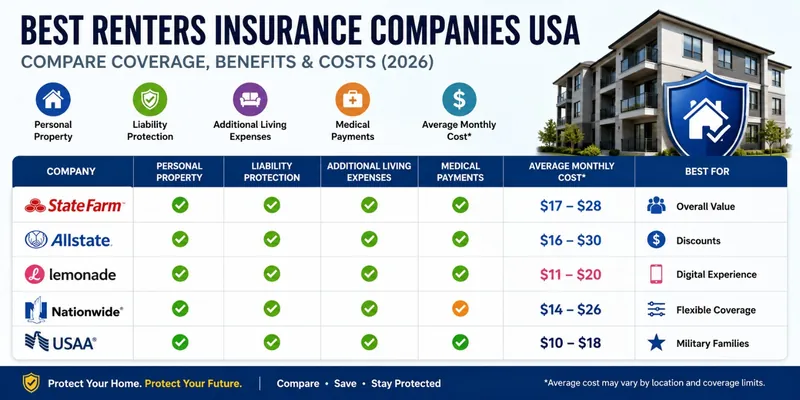
    Best Renters Insurance Companies Worth Considering

    Insurance CompanyBest ForStarting Monthly Price*
    State FarmOverall Value~$15
    LemonadeFast Digital Claims~$10
    AllstateDiscounts & Bundles~$18
    NationwideFlexible Coverage~$17
    USAAMilitary Families~$12

    *Prices vary by location, coverage limits, deductible, and underwriting factors.

    Saving money on insurance gives you more opportunities to build wealth over time. Discover how technology is changing personal finance in our AI Investing Guide 2026, where you’ll learn practical strategies for smarter investing and financial planning.

    Recommended Financial Products

    Many renters also maximize everyday spending by using rewards credit cards when paying eligible bills. Popular options include:

    💰 Money-Saving Expert Tip

    Always compare quotes from at least three insurance companies before purchasing a policy. Bundling renters and auto insurance, choosing a higher deductible, installing smoke detectors, and maintaining a claim-free history can significantly reduce your premium while keeping excellent protection.


    How to Buy the Right Renters Insurance Policy (2026 Guide)

    If you’ve decided that renters insurance is worth it, the next step is choosing the right policy. While most renters insurance plans provide similar basic protection, coverage limits, deductibles, customer service, claim handling, and optional features can vary significantly between insurance companies. Taking time to compare policies can help you get the best value while avoiding unnecessary expenses.

    The goal isn’t simply to find the cheapest policy—it’s to choose one that provides enough protection for your belongings and financial situation without paying for coverage you don’t need.

    Step-by-Step Buying Guide

    Step 1: Create a Home Inventory

    Walk through every room in your apartment and make a list of your belongings. Include furniture, clothing, electronics, kitchen appliances, jewelry, sports equipment, bicycles, and anything else you would need to replace after a major loss.

    Step 2: Estimate Replacement Value

    Calculate how much it would cost to buy everything new today. Many renters underestimate the value of their possessions until they complete a detailed inventory.

    Step 3: Compare Multiple Insurance Companies

    Request quotes from at least three insurers and compare:

    • Monthly premium
    • Personal property coverage
    • Liability protection
    • Deductible options
    • Replacement cost coverage
    • Customer reviews
    • Claim satisfaction ratings
    • Available discounts

    Step 4: Select the Right Deductible

    A higher deductible usually lowers your monthly premium. However, you’ll pay more out of pocket when filing a claim. Choose an amount that comfortably fits your emergency savings.

    Step 5: Review Your Policy Every Year

    Your insurance needs change over time. Update your policy whenever you purchase expensive electronics, jewelry, furniture, or other valuable belongings.

    Smart Money-Saving Tips

    • Compare quotes before purchasing and at every renewal.
    • Bundle renters and auto insurance with the same company.
    • Install smoke detectors and home security systems.
    • Choose automatic payments for additional discounts.
    • Enroll in paperless billing.
    • Maintain a claim-free history whenever possible.
    • Increase your deductible only if you have adequate emergency savings.
    • Review your policy annually to ensure your coverage still meets your needs.

    Common Discounts Available

    Discount TypePotential Savings
    Multi-Policy BundleUp to 25%
    Security System5–15%
    Smoke & Fire Alarms3–10%
    Automatic Payments3–5%
    Paperless Billing2–5%
    Claim-Free HistoryVaries by insurer

    Recommended Financial Products

    Using the right financial products can help you manage insurance expenses while earning valuable rewards.

    ⭐ Expert Recommendation

    The best renters insurance policy is the one that provides enough protection for your belongings and liability risks—not necessarily the lowest premium. Compare coverage, customer satisfaction, financial strength, and discounts before making your final decision. Spending a few extra minutes comparing policies today could save you thousands of dollars after a future claim.


    9 Common Mistakes That Make Renters Insurance Less Valuable

    Many people ask, “Is Renters Insurance Worth It?” The answer is yes—but only if you purchase the right policy and understand how it works. Unfortunately, many renters make simple mistakes that reduce their protection or leave them paying thousands of dollars after an unexpected loss. Avoiding these mistakes can help you get the maximum value from your renters insurance policy.

    1. Believing Your Landlord’s Insurance Covers Your Belongings

    This is the biggest misconception among renters. Your landlord’s insurance generally protects the building—not your furniture, clothing, electronics, or other personal possessions.

    2. Choosing Coverage Based Only on the Lowest Price

    A cheap policy may have lower coverage limits, higher deductibles, or fewer benefits. Always compare coverage—not just the monthly premium.

    3. Underestimating the Value of Your Personal Property

    Many renters think they own only a few thousand dollars’ worth of belongings. After creating a home inventory, they often discover replacement costs exceeding $30,000–$50,000.

    4. Ignoring Personal Liability Coverage

    Liability protection is one of the most valuable parts of renters insurance. If someone is injured inside your rental home or you accidentally damage another person’s property, liability coverage may help pay legal expenses and settlements.

    5. Not Reading Policy Exclusions

    Standard renters insurance usually doesn’t cover floods, earthquakes, pest infestations, normal wear and tear, or intentional damage. Understanding exclusions helps prevent unpleasant surprises during the claims process.

    6. Forgetting to Update Your Coverage

    Buying a new laptop, television, jewelry, or expensive furniture without updating your policy may leave you underinsured after a covered loss.

    7. Choosing a Deductible That’s Too High

    While a higher deductible lowers your monthly premium, it also increases the amount you’ll pay before insurance benefits begin. Choose a deductible you can comfortably afford.

    8. Waiting Until After Moving In

    Many renters postpone buying insurance until weeks or months after moving. Theft, fires, or accidents can happen at any time, so it’s best to activate coverage before or on your move-in day.

    9. Never Comparing Policies at Renewal

    Insurance companies frequently adjust premiums, discounts, and coverage options. Comparing quotes every renewal can help you find better protection at a lower price.

    Real-Life USA Example

    Emily, a renter in Dallas, Texas, decided not to purchase renters insurance because she thought replacing her belongings would be inexpensive. After a kitchen fire filled her apartment with smoke, her furniture, clothing, electronics, and household items were damaged beyond repair. The total replacement cost exceeded $18,000. A renters insurance policy costing less than $20 per month would have covered most of those expenses after her deductible, saving her thousands of dollars.

    Expert Tips

    • Create a digital home inventory with photos and receipts.
    • Review your policy once every year.
    • Compare quotes from multiple insurance companies before renewing.
    • Choose replacement cost coverage whenever possible.
    • Understand all policy exclusions before purchasing.
    • Store insurance documents securely in cloud storage.
    • Ask your insurer about every available discount.
    • Report claims promptly after a covered loss.
    • Increase liability limits if your financial situation changes.

    Protecting your belongings is only one part of financial security. Learn how to safeguard your investments during uncertain economic conditions by reading our Recession-Proof Investing Guide, where you’ll discover practical strategies for building long-term wealth.

    Helpful Government Resources

    ⚠️ Expert Reminder

    The true value of renters insurance isn’t measured by its monthly premium—it’s measured by how much financial stress it can prevent after an unexpected disaster. Understanding your policy, maintaining adequate coverage, and reviewing it annually will help ensure your insurance remains one of the smartest financial decisions you make as a renter.


    Pros & Cons: Is Renters Insurance Worth It?

    After comparing the coverage, costs, and benefits, it’s easier to answer the question, “Is Renters Insurance Worth It?” For most renters in the United States, the answer is yes. However, like any financial product, renters insurance has both advantages and limitations. Understanding both sides will help you choose the right policy and set realistic expectations before purchasing coverage.

    ✅ Pros❌ Cons
    Protects personal belongings against fire, theft, vandalism, smoke damage, and many other covered events.Flood and earthquake damage usually require separate insurance policies.
    Includes personal liability protection for legal expenses and property damage claims.You must pay your deductible before insurance benefits begin.
    Provides Additional Living Expenses (ALE) if your rental home becomes temporarily uninhabitable.High-value jewelry, artwork, collectibles, and cash may require optional endorsements.
    Affordable monthly premiums, typically between $10 and $30.Premiums may increase after multiple insurance claims.
    Many insurers offer discounts for bundling, automatic payments, and home security devices.Normal wear and tear, pest damage, and intentional damage are not covered.
    Fast online quotes, mobile apps, and digital claim filing make policies easy to manage.Choosing low coverage limits can leave you underinsured after a major loss.
    Provides peace of mind and protects your long-term financial stability.Optional add-ons increase the total cost of your policy.

    Overall Expert Evaluation

    For the vast majority of renters, the benefits of renters insurance greatly outweigh the disadvantages. Replacing furniture, electronics, clothing, and everyday household items after a fire or burglary can easily cost tens of thousands of dollars. Paying a small monthly premium for that level of financial protection is a practical decision for most households.

    When shopping for coverage, don’t focus only on price. Compare personal property limits, liability protection, deductible options, customer satisfaction ratings, financial strength, and available discounts. Choosing a reliable insurance company with adequate coverage can save you significant money and stress if you ever need to file a claim.

    ⭐ Final Verdict

    If you rent an apartment, condo, townhouse, or house in the United States, renters insurance is absolutely worth considering. For less than a dollar a day, you can protect your belongings, reduce financial risk, gain valuable liability coverage, and enjoy greater peace of mind. For most renters in 2026, it’s one of the smartest and most affordable financial decisions you can make.


    Frequently Asked Questions (FAQs)

    1. Is renters insurance really worth it?

    Yes. For most renters, renters insurance is worth it because it provides financial protection for your personal belongings, liability claims, and additional living expenses after covered events. Since policies typically cost only $10–$30 per month, the value usually far exceeds the annual premium.

    2. What does renters insurance actually cover?

    A standard renters insurance policy generally covers personal property, fire damage, theft, vandalism, smoke damage, personal liability, medical payments to guests, and Additional Living Expenses (ALE) if your rental home becomes temporarily uninhabitable after a covered loss.

    3. What is usually not covered by renters insurance?

    Most standard policies do not cover flood damage, earthquake damage, pest infestations, normal wear and tear, intentional damage, or expensive valuables that exceed policy limits unless additional coverage is purchased.

    4. How much renters insurance coverage do I need?

    Create a home inventory and estimate the replacement cost of everything you own. Many renters choose between $20,000 and $50,000 in personal property coverage, but the right amount depends on your individual belongings.

    5. Does renters insurance cover roommates?

    In most cases, no. Each roommate should purchase their own renters insurance policy unless both individuals are specifically listed on the same policy by the insurance company.

    6. Can renters insurance cover theft outside my apartment?

    Yes. Many renters insurance policies provide limited protection for belongings stolen away from your home, such as a laptop stolen from your vehicle or luggage stolen while traveling. Coverage limits vary by insurer.

    7. Will my premium increase after filing a claim?

    Possibly. Depending on the insurance company, claim history, and type of loss, your premium may increase after one or more claims. That’s why many experts recommend using insurance for significant losses rather than minor incidents.

    8. Can I cancel renters insurance at any time?

    Yes. Most insurance companies allow you to cancel your policy whenever you choose. However, if your landlord requires renters insurance as part of your lease agreement, canceling your policy could violate your lease.

    9. How can I lower my renters insurance premium?

    You may reduce your premium by bundling policies, increasing your deductible, installing smoke detectors or security systems, enrolling in automatic payments, and comparing quotes from multiple insurers before renewing.

    10. Is renters insurance required by law?

    No. Renters insurance is generally not required by federal or state law. However, many landlords and property management companies require tenants to maintain an active renters insurance policy before signing or renewing a lease.

    💡 Quick Takeaway

    For most people renting an apartment or home in the United States, renters insurance provides excellent value. A small monthly premium can protect thousands of dollars in personal belongings while offering liability protection and financial peace of mind. That’s why financial professionals consistently recommend renters insurance as one of the smartest and most affordable insurance products available.


    Final Verdict: Is Renters Insurance Worth It?

    After reviewing the coverage, costs, benefits, and potential risks, the answer is clear—yes, renters insurance is worth it for most renters in the United States. For a relatively small monthly premium, you can protect thousands of dollars’ worth of personal belongings while gaining valuable liability protection and financial security if unexpected events occur.

    Whether you’re renting your first apartment, sharing a home with roommates, or downsizing during retirement, renters insurance provides protection that can prevent a minor accident or major disaster from becoming a serious financial setback. Instead of worrying about replacing furniture, electronics, clothing, or paying legal expenses after a covered event, you’ll have the confidence of knowing your policy is designed to help.

    Before choosing a policy, compare multiple insurance companies, understand your deductible, review coverage limits, and ask about available discounts. Spending a little extra time researching today can save you thousands of dollars in the future.

    If you’re building a complete financial protection plan, don’t miss our Insurance for Beginners USA Guide. It explains essential insurance concepts, policy terms, and smart buying strategies that every renter should understand before purchasing coverage.

    📩 Join 25,000+ Smart Readers

    Get the latest insurance guides, investing tips, retirement strategies, credit card reviews, and personal finance updates delivered straight to your inbox—for FREE.


    📧 Subscribe Free


    ✅ Weekly Finance Tips   |
    ✅ Insurance Guides   |
    ✅ Investment Ideas   |
    ✅ 100% Free

    SR

    Subhash Rukade

    Founder of FinanceInvestment.site and a personal finance writer specializing in insurance, investing, retirement planning, credit cards, and wealth-building strategies for U.S. readers. Every guide is thoroughly researched and written to simplify complex financial topics into practical, beginner-friendly advice you can confidently use.


    🌐 Visit Website


    📚 Read More Guides


  • Best Renters Insurance Companies USA (2026): Compare Coverage, Costs & Top Picks

    Best Renters Insurance Companies USA (2026): Compare Coverage, Costs & Top Picks


    Author: Subhash Rukade

    Published: July 12, 2026

    Best Renters Insurance Companies USA (2026): Compare Coverage, Cost & Top Picks


    Best Renters Insurance Companies USAWhy Choosing the Right Renters Insurance Matters in 2026

    Best Renters Insurance Companies USA can help protect your personal belongings, finances, and peace of mind for just a few dollars each month. Many renters mistakenly believe their landlord’s insurance covers their furniture, electronics, clothing, and valuables. Unfortunately, that’s not how renters insurance works. If a fire, theft, burst pipe, or other covered event damages your belongings, you could end up paying thousands of dollars out of pocket without the right policy.

    The good news is that renters insurance remains one of the most affordable types of insurance available in the United States. For many renters, a quality policy costs less than the price of a few cups of coffee each month while providing valuable protection for personal property, liability claims, additional living expenses, and even certain medical payments.

    However, not every insurance company offers the same value. Coverage limits, deductibles, claim satisfaction, customer service, available discounts, and digital tools can vary significantly from one insurer to another. Choosing the wrong provider may leave you with coverage gaps or higher premiums than necessary.

    If you’re new to insurance, start with our comprehensive Insurance for Beginners USA Guide. It explains essential insurance terms, deductibles, policy limits, and practical tips that will make comparing renters insurance companies much easier.

    In this guide, you’ll discover the best renters insurance companies in the USA for 2026, compare coverage options, understand average costs, learn how to save money with discounts, and find practical tips for choosing the policy that best fits your lifestyle and budget. Whether you’re renting your first apartment, sharing a house with roommates, or downsizing during retirement, this guide will help you make an informed decision.

    💡 Quick Tip

    Don’t choose renters insurance based only on the lowest premium. Compare coverage limits, replacement cost options, liability protection, deductibles, customer reviews, and available discounts to find the best long-term value.


    Quick Answer: Best Renters Insurance Companies USA

    Best Renters Insurance Companies USA include providers such as State Farm, Allstate, Lemonade, USAA (for eligible military members), and Nationwide. The right company depends on your budget, the value of your belongings, where you live, and the level of liability protection you need. Most renters insurance policies cost between $15 and $30 per month while providing financial protection for personal property, liability claims, temporary living expenses, and certain medical payments.

    🏠 Quick Facts

    CategoryDetails
    Best ForApartment renters, college students, families, roommates, and retirees renting a home.
    Average Cost$15–$30 per month ($180–$360 per year).
    CoveragePersonal belongings, personal liability, additional living expenses (ALE), and medical payments to others.
    ProsAffordable premiums, valuable financial protection, optional replacement cost coverage, and liability protection.
    ConsFloods and earthquakes usually require separate coverage, and very valuable items may need additional endorsements.

    Although renters insurance isn’t legally required in most states, many landlords require tenants to carry a policy before signing a lease. Even if it isn’t mandatory, a low-cost renters insurance policy can protect you from thousands of dollars in unexpected losses after a covered event.

    In the next section, we’ll explain what renters insurance is, why it matters, and how to compare the best renters insurance companies in the USA with confidence.


    Table of Contents

    1. What Is Renters Insurance?
    2. Why Renters Insurance Matters
    3. How Renters Insurance Works
    4. Coverage Explained
    5. Cost & Company Comparison
    6. Buying Guide
    7. Common Mistakes
    8. Pros & Cons
    9. Frequently Asked Questions
    10. Final Recommendation

    What Is Renters Insurance?

    Best Renters Insurance Companies USA offer policies that protect renters from unexpected financial losses. Unlike homeowners insurance, renters insurance does not cover the building itself because that responsibility belongs to the landlord. Instead, it protects your personal belongings, provides liability coverage if someone is injured in your rental home, and helps pay for temporary living expenses if your apartment or house becomes uninhabitable after a covered event.

    A standard renters insurance policy typically covers furniture, electronics, clothing, kitchen appliances, jewelry (up to policy limits), bicycles, and many other personal belongings against covered risks such as fire, smoke, theft, vandalism, lightning, and certain types of water damage.

    Many policies also include personal liability coverage, which can help pay legal expenses or medical bills if you’re legally responsible for accidentally injuring someone or damaging another person’s property.

    Why Renters Insurance Matters in 2026

    Many renters assume they don’t own enough valuable property to justify buying insurance. However, replacing everyday items such as a laptop, television, smartphone, furniture, clothing, and kitchen equipment after a fire or burglary can easily cost $20,000 or more.

    Renters insurance offers an affordable way to protect those belongings while also providing financial security against liability claims and unexpected housing costs after covered disasters. For most people, paying less than one dollar per day for this protection is a smart financial decision.

    Choosing one of the Best Renters Insurance Companies USA also gives you access to better claims service, flexible coverage options, mobile apps, optional endorsements, and discounts that may not be available from smaller providers.

    💡 Beginner Tip

    Your landlord’s insurance protects the building—not your personal belongings. If a covered disaster damages your furniture, clothing, electronics, or other valuables, renters insurance may be the only financial protection you have. That’s why comparing the Best Renters Insurance Companies USA before signing a lease is a smart move.

    Next Up: In the next section, we’ll explain exactly how renters insurance works, who should buy it, and how to choose the right coverage for your needs.


    How Renters Insurance Works: Step-by-Step Guide

    Understanding how the Best Renters Insurance Companies USA operate makes it much easier to choose the right policy. Renters insurance is designed to protect you financially when a covered event damages your belongings or when you’re legally responsible for injuries or property damage to others. Instead of paying thousands of dollars yourself, your insurance company helps cover eligible expenses according to your policy limits.

    Step 1: Choose the Right Coverage

    Start by estimating the value of everything you own, including furniture, electronics, clothing, kitchen appliances, jewelry, sports equipment, and other personal belongings. This helps you select an appropriate personal property coverage limit.

    Step 2: Select Your Deductible

    Your deductible is the amount you pay before your insurance coverage begins. Choosing a higher deductible usually lowers your monthly premium, while a lower deductible increases your premium but reduces your out-of-pocket costs when filing a claim.

    Step 3: Purchase Your Policy

    Once your application is approved, your renters insurance policy becomes active. Many insurance companies allow you to manage your policy, pay premiums, update coverage, and submit claims directly through their mobile apps or online customer portals.

    Step 4: File a Claim if Needed

    If a covered event such as fire, theft, smoke damage, or vandalism occurs, notify your insurance company as soon as possible. After reviewing your claim and supporting documents, the insurer will determine your eligible reimbursement based on your policy terms and deductible.

    Who Should Buy Renters Insurance?

    • ✔ Apartment renters
    • ✔ College students living off campus
    • ✔ Families renting homes or apartments
    • ✔ Roommates protecting personal belongings
    • ✔ Retirees living in rental communities
    • ✔ Anyone renting a condo, townhouse, or house

    Why Renters Insurance Is Worth Having

    Even if you don’t own expensive furniture or electronics, replacing everyday items after a fire or burglary can quickly become financially overwhelming. A renters insurance policy provides valuable protection for a relatively low monthly cost while also helping protect your personal finances through liability coverage.

    Building financial security isn’t just about protecting your belongings—it’s also about preparing for the future. Learn practical long-term financial strategies in our Retirement Planning Guide and discover how smart financial decisions today can help create greater financial freedom tomorrow.

    💡 Expert Tip

    Create a digital inventory of your belongings by taking photos, recording serial numbers, and saving purchase receipts. If you ever need to file a claim, this documentation can speed up the claims process and improve the accuracy of your reimbursement.


    What the Best Renters Insurance Companies USA Cover

    Choosing one of the Best Renters Insurance Companies USA means more than finding the lowest monthly premium. The right policy should provide comprehensive protection for your belongings, personal liability, and unexpected living expenses while offering flexible coverage options and excellent customer service.

    Although coverage varies slightly between insurance companies, most standard renters insurance policies include several important protections designed to safeguard your finances after a covered loss.

    What’s Covered?

    • Personal Property Coverage: Protects furniture, clothing, electronics, laptops, TVs, smartphones, kitchen appliances, bicycles, and other belongings against covered events.
    • Personal Liability Coverage: Helps pay legal expenses and damages if you’re legally responsible for accidentally injuring someone or damaging another person’s property.
    • Additional Living Expenses (ALE): Pays for hotel stays, meals, and temporary housing if your rental home becomes uninhabitable because of a covered loss.
    • Medical Payments to Others: Covers limited medical expenses if a guest is accidentally injured in your rental property, regardless of fault.

    What’s Usually NOT Covered?

    • Flood damage (requires separate flood insurance)
    • Earthquake damage (requires separate coverage)
    • Intentional damage
    • Normal wear and tear
    • Pest infestations
    • Business equipment beyond policy limits
    • High-value jewelry, collectibles, or artwork without additional endorsements

    Coverage Comparison Table

    Coverage TypeIncluded in Standard Policy?
    Personal Belongings✅ Yes
    Personal Liability✅ Yes
    Additional Living Expenses✅ Yes
    Medical Payments✅ Yes
    Flood Damage❌ Separate Policy Required
    Earthquake Damage❌ Optional Coverage

    Key Features to Look For

    • Replacement Cost Coverage
    • High Liability Limits
    • Identity Theft Protection
    • Scheduled Personal Property Coverage
    • 24/7 Online Claims
    • Mobile App Policy Management
    • Multi-Policy Discounts
    • Fast Claim Processing


    Best Renters Insurance Companies USA Coverage Comparison

    💡 Expert Insight

    When comparing the Best Renters Insurance Companies USA, don’t focus only on monthly premiums. Review replacement cost coverage, liability limits, customer satisfaction ratings, claim settlement speed, available discounts, and optional endorsements. A slightly higher premium often provides significantly better long-term protection and value.


    Best Renters Insurance Companies USA: Cost Comparison & Top Picks (2026)

    Price is important when choosing the Best Renters Insurance Companies USA, but it shouldn’t be your only consideration. The cheapest policy isn’t always the best value. Comparing monthly premiums, coverage limits, deductibles, customer satisfaction, available discounts, and claim service helps you find a policy that offers both affordability and reliable protection.

    In 2026, the average renters insurance policy in the United States costs between $15 and $30 per month. However, your actual premium depends on where you live, the value of your belongings, your deductible, coverage limits, and your claims history.

    Average Renters Insurance Cost (2026)

    Coverage LevelMonthly CostAnnual Cost
    Basic Coverage$15–$18$180–$216
    Standard Coverage$18–$25$216–$300
    Premium Coverage$25–$35+$300–$420+

    What Affects Your Premium?

    • Location: Crime rates, weather risks, and local claim history.
    • Coverage Amount: Higher coverage limits increase premiums.
    • Deductible: Higher deductibles usually lower monthly costs.
    • Claims History: Previous insurance claims may affect pricing.
    • Credit-Based Insurance Score: In many states, better credit can lead to lower premiums.
    • Safety Features: Smoke detectors, sprinkler systems, and monitored alarms often qualify for discounts.

    Best Renters Insurance Companies USA (2026)

    CompanyBest ForHighlights
    State FarmOverall ValueAffordable premiums and strong local agent network.
    LemonadeDigital ExperienceFast online quotes, AI-powered claims, and simple mobile app.
    AllstateDiscountsExcellent bundling opportunities and optional add-ons.
    NationwideFlexible CoverageCustomizable policies with optional endorsements.
    USAAMilitary FamiliesOutstanding value for eligible military members and veterans.

    If saving money on renters insurance frees up extra cash each month, consider investing those savings for long-term financial growth. Our AI Investing Guide 2026 explains how modern investing strategies can help build wealth while managing everyday expenses wisely.

    Many renters also maximize everyday spending with trusted financial products such as the Chase Freedom Unlimited®, the Capital One Venture Rewards, and the American Express Blue Cash Preferred®. Comparing rewards and benefits can help you earn extra value on regular purchases.

    💰 Money-Saving Tip

    Request quotes from at least three renters insurance companies before purchasing a policy. Even with similar coverage, annual premiums can vary by hundreds of dollars depending on the insurer, available discounts, and your location.


    How to Choose the Best Renters Insurance Companies USA (2026 Buying Guide)

    Selecting one of the Best Renters Insurance Companies USA isn’t just about finding the lowest monthly premium. The right policy should match your lifestyle, protect your belongings, provide enough liability coverage, and offer excellent customer support when you need it most. Following a step-by-step approach helps you avoid buying too little—or paying for coverage you don’t need.

    Step 1: Estimate the Value of Your Belongings

    Create a simple home inventory before requesting quotes. Include furniture, electronics, laptops, gaming consoles, clothing, jewelry, kitchen appliances, bicycles, and other valuables. Knowing their replacement value helps you choose the right coverage limit.

    Step 2: Decide Between Actual Cash Value and Replacement Cost

    Replacement Cost Coverage usually pays more because it helps replace damaged belongings with new items of similar quality. Actual Cash Value policies deduct depreciation, resulting in a lower claim payment but a lower premium.

    Step 3: Compare Multiple Insurance Companies

    Always compare at least three companies before purchasing a policy. Review:

    • Coverage limits
    • Deductibles
    • Monthly premiums
    • Customer satisfaction ratings
    • Claim processing speed
    • Available discounts
    • Financial strength ratings

    Step 4: Choose the Right Liability Coverage

    Most renters choose liability limits between $100,000 and $300,000. If you frequently host guests or own pets, consider purchasing higher liability protection for greater financial security.

    Step 5: Review Optional Add-Ons

    If you own expensive jewelry, collectibles, musical instruments, cameras, or business equipment, ask whether additional endorsements are available. Standard renters insurance policies may have lower limits for these items.

    Money-Saving Tips

    • Bundle renters and auto insurance with the same company.
    • Increase your deductible if you have emergency savings.
    • Install smoke detectors and monitored security systems.
    • Ask about paperless billing and automatic payment discounts.
    • Maintain a good credit-based insurance score where applicable.
    • Review your policy every year as your belongings change.
    • Remove unnecessary optional endorsements.
    • Compare new quotes before every renewal.

    Common Discounts Offered by Top Insurers

    DiscountPotential Savings
    Multi-Policy BundleUp to 25%
    Protective Devices5–15%
    Claim-Free History5–10%
    Automatic Payments3–5%
    Paperless Billing2–5%

    Many renters also save money by paying premiums with reward credit cards such as the Chase Freedom Unlimited®, Capital One Venture Rewards, or American Express Blue Cash Preferred®, depending on eligibility and spending habits.

    ✅ Expert Buying Checklist

    • Estimate the value of everything you own.
    • Compare quotes from at least three companies.
    • Select Replacement Cost Coverage if your budget allows.
    • Choose adequate liability protection.
    • Ask about all available discounts.
    • Review exclusions before purchasing.
    • Read customer reviews and claim ratings.
    • Update your policy annually as your needs change.

    Expert Recommendation: The Best Renters Insurance Companies USA combine affordable pricing, strong customer service, fast claims handling, flexible coverage options, and financial stability. Comparing policies carefully today can save you significant money and stress in the future.


    9 Common Mistakes When Choosing the Best Renters Insurance Companies USA

    Buying renters insurance is one of the smartest financial decisions a renter can make. However, many people still make costly mistakes that leave them underinsured or paying more than necessary. Avoiding these common errors can help you get the most value from the Best Renters Insurance Companies USA while protecting your finances.

    1. Choosing the Cheapest Policy Only

    A low premium may look attractive, but cheaper policies often provide lower coverage limits, higher deductibles, or fewer benefits. Always compare coverage—not just price.

    2. Underestimating the Value of Your Belongings

    Many renters guess the value of their possessions instead of creating a home inventory. Electronics, furniture, clothing, and kitchen appliances add up much faster than most people expect.

    3. Ignoring Liability Coverage

    Liability protection is one of the most valuable parts of renters insurance. Medical bills and legal expenses after an accident can easily exceed your savings if you’re not adequately insured.

    4. Not Reading Policy Exclusions

    Floods, earthquakes, intentional damage, and certain high-value items usually aren’t covered by a standard renters insurance policy. Always review exclusions before purchasing.

    5. Forgetting to Update Coverage

    If you buy new electronics, expensive furniture, jewelry, or other valuables, review your policy to ensure your coverage still matches the value of your belongings.

    6. Choosing a Deductible That’s Too High

    A higher deductible lowers your premium, but make sure you can comfortably afford it if you need to file a claim.

    7. Missing Available Discounts

    Many insurers offer discounts for bundling policies, installing security devices, enrolling in automatic payments, or remaining claim-free. Ask about every available discount before purchasing.

    8. Waiting Until After Moving In

    The safest approach is to activate your renters insurance before moving into your new apartment or rental home. This ensures your belongings are protected from day one.

    9. Never Comparing Companies

    Coverage, customer service, claim satisfaction, and pricing vary significantly between providers. Comparing several companies usually results in better protection at a lower cost.

    Real-Life USA Example

    Emily, a 28-year-old marketing professional from Denver, rented her first apartment and decided to skip renters insurance to save money. Six months later, a kitchen fire in a neighboring unit filled her apartment with smoke and damaged her furniture, clothing, laptop, and television. Because she didn’t have renters insurance, she paid nearly $11,500 out of pocket to replace her belongings. Afterward, she purchased a comprehensive renters insurance policy that cost less than $20 per month—far less than the financial loss she experienced.

    Expert Tips

    • Create a digital inventory of your belongings with photos and receipts.
    • Compare quotes from at least three insurance companies.
    • Choose replacement cost coverage whenever possible.
    • Review your policy every year.
    • Understand deductibles and coverage limits.
    • Ask about all available discounts.
    • Read customer reviews before purchasing.
    • Store important insurance documents digitally.
    • File claims promptly after a covered loss.

    Protecting your belongings is only one part of long-term financial security. Learn how to prepare your investments for uncertain markets in our Recession-Proof Investing 2026 Guide and discover strategies that can help strengthen your overall financial future.

    Helpful Government Resources

    For official insurance guidance and consumer protection, visit these trusted resources:

    ⚠️ Expert Reminder

    The Best Renters Insurance Companies USA aren’t always the ones with the lowest premiums. Focus on coverage quality, financial strength, claim satisfaction, customer service, and available discounts. Spending a few extra dollars each month can save you thousands when you need to file a claim.


    Pros & Cons of Choosing the Best Renters Insurance Companies USA

    Before purchasing a policy, it’s important to understand both the advantages and limitations of renters insurance. While the Best Renters Insurance Companies USA provide valuable financial protection at an affordable price, no insurance policy covers every possible situation. Reviewing the pros and cons below will help you choose coverage that matches your needs and budget.

    ✅ Pros❌ Cons
    Protects personal belongings from covered risks such as fire, theft, smoke damage, and vandalism.Flood and earthquake damage usually require separate insurance policies.
    Provides personal liability protection if someone is injured in your rental home.Coverage limits may not fully protect expensive jewelry, collectibles, or artwork without endorsements.
    Pays additional living expenses if a covered loss makes your rental home temporarily uninhabitable.You’ll still pay your deductible before insurance benefits apply.
    Affordable monthly premiums, often starting around $15 per month.Premiums may increase after multiple claims or policy changes.
    Many insurers offer discounts for bundling, security systems, and automatic payments.Not every loss or accident is covered under a standard renters insurance policy.
    Fast online quotes, mobile apps, and digital claims simplify policy management.Some optional coverages require additional premiums.
    Provides financial peace of mind for renters, students, families, and retirees.Choosing the wrong policy may leave important coverage gaps.

    Expert Opinion

    For most renters, purchasing coverage from one of the Best Renters Insurance Companies USA is a smart financial decision. A relatively small monthly premium can protect thousands of dollars’ worth of personal belongings while also providing liability protection that could save you from significant legal or medical expenses.

    The best approach is to compare multiple companies, review policy details carefully, and choose coverage based on your belongings and financial situation—not simply the lowest price. A quality renters insurance policy provides long-term value, greater financial security, and peace of mind.

    ⭐ Expert Recommendation

    If you’re renting an apartment, condo, townhouse, or house, don’t wait until after a disaster to think about insurance. Compare the Best Renters Insurance Companies USA, select adequate coverage limits, review your policy every year, and take advantage of available discounts to maximize both protection and value.


    Frequently Asked Questions (FAQs)

    1. What is the best renters insurance company in the USA for 2026?

    There isn’t a single company that’s best for everyone. However, Best Renters Insurance Companies USA commonly include State Farm, Allstate, Lemonade, Nationwide, and USAA (for eligible military members). The right choice depends on your location, budget, coverage needs, and customer service preferences.

    2. How much does renters insurance cost in the USA?

    Most renters insurance policies cost between $15 and $30 per month, or approximately $180 to $360 per year. Your premium depends on your location, coverage limits, deductible, claims history, and available discounts.

    3. What does renters insurance usually cover?

    A standard renters insurance policy generally covers personal belongings, personal liability, additional living expenses (ALE), and medical payments to others after covered events such as fire, theft, vandalism, smoke damage, and certain types of water damage.

    4. What isn’t covered by renters insurance?

    Most standard policies don’t cover flood damage, earthquake damage, normal wear and tear, intentional damage, pest infestations, or high-value items beyond policy limits unless additional coverage is purchased.

    5. Is renters insurance required by law?

    No. Renters insurance isn’t legally required in most U.S. states. However, many landlords and property management companies require tenants to carry renters insurance before signing or renewing a lease.

    6. How much personal property coverage do I need?

    Create a home inventory and estimate the replacement value of your belongings. Many renters choose coverage between $20,000 and $50,000, while households with expensive electronics or valuable possessions may need higher limits.

    7. Can roommates share one renters insurance policy?

    Some insurance companies allow roommates to share a policy, but many recommend each roommate purchase their own coverage. Always confirm the company’s policy rules before making a decision.

    8. Does renters insurance cover theft outside my apartment?

    Many policies provide limited protection for belongings stolen away from your home, such as a laptop or bicycle. Coverage limits vary by insurer, so always review your policy details.

    9. Can I bundle renters and auto insurance?

    Yes. Most major insurance companies offer multi-policy discounts when you bundle renters insurance with auto insurance. Bundling can reduce premiums while making policy management more convenient.

    10. Is renters insurance worth buying?

    Yes. Considering its low monthly cost and valuable protection for personal belongings, liability claims, and temporary living expenses, renters insurance is one of the best financial investments most renters can make.

    💡 Quick Summary

    The Best Renters Insurance Companies USA offer affordable protection for your belongings, liability, and unexpected living expenses. Compare multiple insurers, choose adequate coverage limits, and review your policy annually to ensure you always have the right level of protection.


    Conclusion: Which Is the Best Renters Insurance Company for You?

    Finding the Best Renters Insurance Companies USA isn’t about choosing the company with the cheapest premium—it’s about finding the right balance of coverage, affordability, customer service, and financial protection. A well-designed renters insurance policy can protect thousands of dollars’ worth of personal belongings while also covering liability claims and temporary living expenses after a covered loss.

    Whether you’re renting your first apartment, sharing a home with roommates, or living in a rental property during retirement, renters insurance is one of the most affordable ways to protect your financial future. Spending just a few dollars each month today could save you thousands after an unexpected fire, theft, vandalism, or liability claim.

    Before purchasing a policy, compare multiple insurance companies, review coverage limits, understand deductibles, and ask about available discounts. Taking a little extra time now can help you avoid costly surprises later.

    If you’re still learning how insurance works, don’t miss our complete Insurance for Beginners USA Guide. It explains deductibles, policy limits, insurance terminology, and practical tips to help you make smarter insurance decisions.

    🏠 Stay Ahead with Smarter Insurance & Money Tips

    Join thousands of readers who receive practical insurance advice, investing strategies, retirement planning tips, and personal finance updates delivered directly to their inbox every week—completely free.


    📩 Subscribe Free


    ✅ Weekly Insurance Guides   |
    ✅ Investing Tips   |
    ✅ Retirement Planning   |
    ✅ 100% Free


    SR

    Subhash Rukade

    Founder of FinanceInvestment.site. I help U.S. readers make smarter decisions about insurance, investing, retirement planning, and personal finance through practical, easy-to-understand, research-backed financial guides.