Renters Insurance vs Landlord Insurance: Key Differences Every USA Renter Should Know (2026)
Author: Subhash Rukade
Published: July 13, 2026
 Renters Insurance vs Landlord Insurance: Why Knowing the Difference Matters
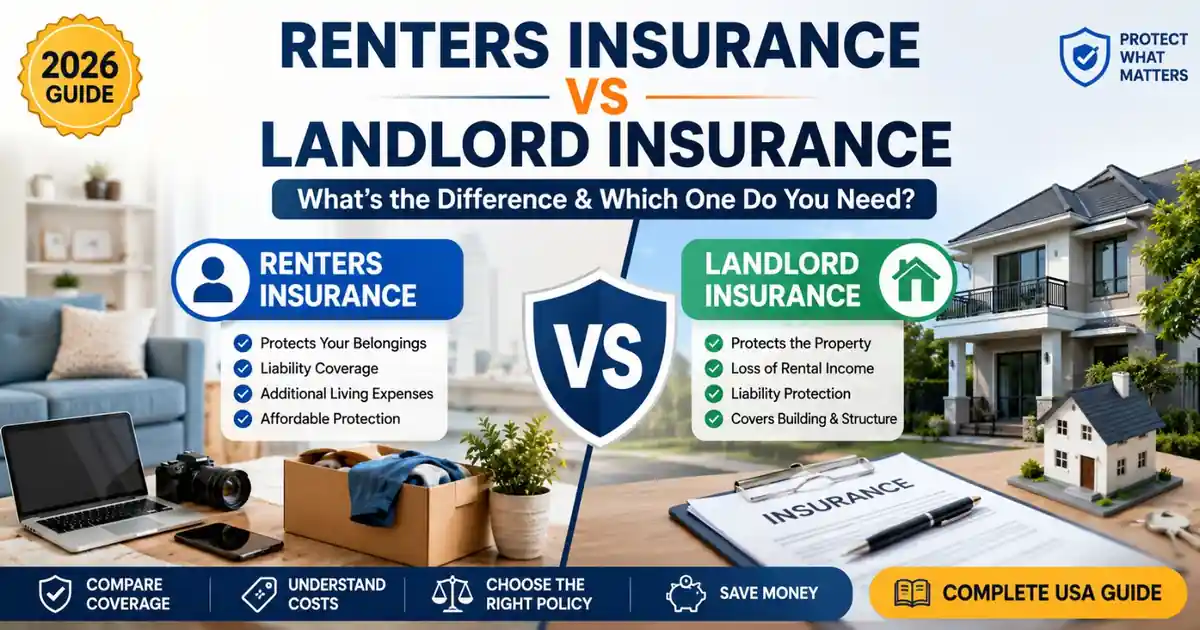
Renters Insurance vs Landlord Insurance is one of the most misunderstood topics among renters and property owners in the United States. Many renters assume their landlord’s insurance protects their furniture, electronics, clothing, and other personal belongings. At the same time, some landlords mistakenly believe their policy also covers a tenant’s possessions. In reality, these two insurance policies serve completely different purposes.
A landlord insurance policy primarily protects the rental property’s structure and the owner’s financial interests. On the other hand, renters insurance is designed to protect the tenant’s personal belongings, provide liability coverage, and help pay temporary living expenses if a covered event makes the rental home uninhabitable.
Understanding the difference can save you from expensive surprises after a fire, theft, storm, or liability claim. Whether you’re renting your first apartment, managing multiple rental properties, or simply reviewing your insurance coverage, knowing who is responsible for what is essential.
If you’re new to insurance, start with our complete Insurance for Beginners USA Guide. It explains common insurance terms, policy limits, deductibles, and coverage options to help you make smarter financial decisions.
In this guide, you’ll learn the key differences between renters insurance and landlord insurance, what each policy covers, what isn’t covered, average costs, who needs each type of insurance, and practical tips for choosing the right protection in 2026. By the end, you’ll know exactly which policy fits your situation and why having the right coverage can protect both your property and your finances.
💡 Quick Tip
If you rent a home or apartment, never assume your landlord’s insurance protects your personal belongings. In most cases, only a renters insurance policy covers your furniture, electronics, clothing, and personal possessions after a covered loss.
Quick Answer: Renters Insurance vs Landlord Insurance
Renters Insurance vs Landlord Insurance comes down to who is being protected. Renters insurance protects the tenant’s personal belongings, provides liability coverage, and may pay for temporary living expenses after a covered loss. Landlord insurance protects the rental property’s structure, certain landlord-owned items, and may cover lost rental income after covered damage. If you’re renting a home, you typically need renters insurance. If you own a rental property, landlord insurance is the appropriate choice.
📌 Quick Facts
| Category | Details |
|---|---|
| Best For | Renters Insurance: Tenants | Landlord Insurance: Property Owners |
| Average Cost | Renters Insurance: $10–$30/month | Landlord Insurance: $80–$200/month (varies by property and location) |
| Coverage / Benefits | Renters insurance covers personal belongings and liability. Landlord insurance covers the rental property’s structure, landlord-owned property, and certain rental income losses. |
| Pros | Affordable protection, reduced financial risk, liability coverage, and peace of mind for both tenants and property owners. |
| Cons | Neither policy covers everything. Floods, earthquakes, and normal wear and tear usually require separate coverage or are excluded. |
⭐ Expert Summary
The biggest mistake renters make is assuming their landlord’s insurance protects their personal belongings. In reality, renters insurance and landlord insurance work together—not as replacements for one another. Having the right policy can prevent major financial losses after unexpected events.
Table of Contents
What Is Renters Insurance vs Landlord Insurance?
Renters Insurance vs Landlord Insurance compares two insurance policies that protect different people involved in a rental property. Although both policies relate to the same home or apartment, they provide coverage for completely different risks.
Renters insurance is purchased by tenants. It helps protect personal belongings such as furniture, electronics, clothing, and other valuables. Most policies also include personal liability protection and Additional Living Expenses (ALE) if the rental becomes temporarily uninhabitable after a covered event.
Landlord insurance, sometimes called rental property insurance, is purchased by the property owner. It mainly protects the building itself, detached structures, landlord-owned property, and may also help replace lost rental income if the property cannot be rented because of a covered claim.
Why It Matters
Many renters mistakenly believe their landlord’s insurance covers everything inside the apartment. Unfortunately, that’s one of the most expensive misconceptions in real estate. If your laptop, television, furniture, or clothing is stolen or destroyed in a fire, your landlord’s insurance generally won’t pay to replace those items.
Likewise, landlords should never assume a tenant’s renters insurance will protect the rental building itself. Without the proper policy, repairing structural damage after a covered event could become a major financial burden.
Understanding which policy covers which risks helps both tenants and property owners avoid costly surprises and ensures everyone has the right level of financial protection.
Beginner-Friendly Explanation
Think of it this way:
- Renters Insurance protects everything you own inside the rental property.
- Landlord Insurance protects everything the property owner owns, including the building itself.
For example, if a kitchen fire damages the apartment building and destroys your furniture, the landlord’s insurance usually pays for repairs to the building, while your renters insurance may help replace your personal belongings and cover temporary hotel expenses if the home becomes uninhabitable.
💡 Beginner Tip
Remember this simple rule: The landlord insures the building, while the renter insures their belongings. Having both policies in place provides complete protection for everyone involved in the rental property.
How Renters Insurance and Landlord Insurance Work Together
Renters Insurance vs Landlord Insurance isn’t about choosing one policy over the other. Instead, these two insurance policies work together to provide complete protection for both the tenant and the property owner. Each policy covers different risks, which helps prevent disputes and unexpected financial losses after accidents or disasters.
Step 1: The Landlord Purchases Landlord Insurance
Before renting out a property, the landlord purchases landlord insurance. This policy primarily protects the rental home’s structure, attached buildings, garages, fences, and certain landlord-owned items such as appliances provided with the rental.
Step 2: The Tenant Purchases Renters Insurance
After signing the lease, the tenant buys renters insurance to protect personal belongings like furniture, electronics, clothing, kitchen appliances, bicycles, and other valuables. The policy also includes personal liability coverage and additional living expenses for covered events.
Step 3: A Covered Loss Happens
If a fire, theft, windstorm, vandalism, or another covered event occurs, each insurance company handles the portion of the claim covered by its policy. The landlord’s insurer pays for eligible damage to the building, while the renter’s insurer may reimburse damaged personal belongings and other covered expenses.
Step 4: Claims Are Filed Separately
Even though both policies may be involved in the same incident, landlords and tenants usually file separate insurance claims. This ensures each party receives compensation for their own covered losses according to their policy limits and deductible.
Who Needs Which Policy?
- ✅ Apartment renters
- ✅ House renters
- ✅ College students renting off-campus housing
- ✅ Condo renters
- ✅ Property owners renting homes or apartments
- ✅ Real estate investors with rental properties
Why Understanding the Difference Is Important
Knowing who is responsible for which type of coverage prevents costly misunderstandings after an unexpected loss. Tenants avoid paying out of pocket for damaged belongings, while landlords protect one of their biggest financial investments—the rental property itself.
If you’re planning for long-term financial security while protecting your assets, explore our Retirement Planning Guide. It shares practical strategies for building wealth and protecting your financial future.
💡 Expert Tip
The best protection comes when both the landlord and the tenant carry the appropriate insurance policy. One policy protects the property, while the other protects the people and belongings inside it. Together, they provide complete financial security after covered events.
What’s Covered: Renters Insurance vs Landlord Insurance
Renters Insurance vs Landlord Insurance becomes much easier to understand when you compare exactly what each policy covers. Although both policies protect against financial losses, they insure different types of property and different people. Knowing these differences helps renters and landlords avoid unexpected expenses after a covered event.
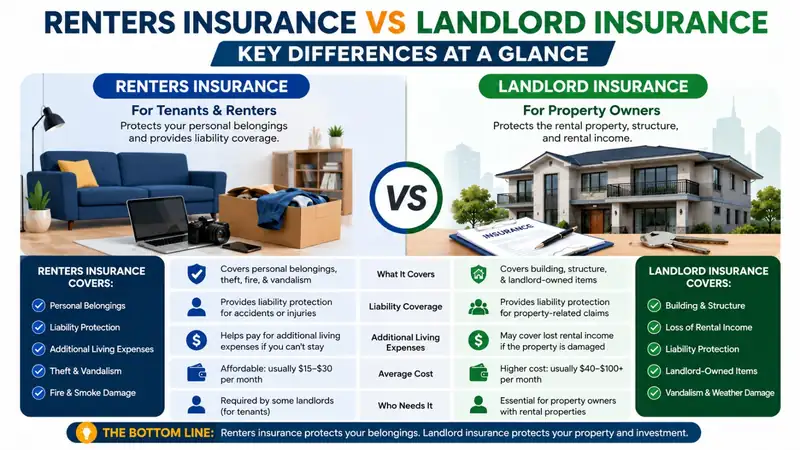
✅ What Renters Insurance Covers
Renters insurance is designed to protect the tenant—not the building. A standard renters insurance policy typically includes:
- Personal belongings such as furniture, clothing, electronics, and appliances
- Theft and burglary protection
- Fire and smoke damage
- Vandalism
- Personal liability coverage
- Medical payments for injured guests
- Additional Living Expenses (ALE) if the rental becomes temporarily uninhabitable
✅ What Landlord Insurance Covers
Landlord insurance protects the rental property’s owner and the physical structure of the building. Most policies include:
- The rental home’s structure
- Detached garages, sheds, and fences
- Landlord-owned appliances and fixtures
- Loss of rental income after certain covered events
- Property owner’s liability protection
- Damage caused by fire, storms, hail, and other covered perils
❌ What’s Usually NOT Covered
- Flood damage (separate flood insurance required)
- Earthquake damage (usually optional coverage)
- Normal wear and tear
- Pest or insect damage
- Intentional damage
- Neglected maintenance issues
Key Features Comparison
| Feature | Renters Insurance | Landlord Insurance |
|---|---|---|
| Building Protection | ❌ No | ✅ Yes |
| Personal Belongings | ✅ Yes | ❌ No |
| Personal Liability | ✅ Yes | ✅ Yes |
| Additional Living Expenses | ✅ Yes | ❌ Usually No |
| Loss of Rental Income | ❌ No | ✅ Yes |
| Tenant’s Furniture | ✅ Yes | ❌ No |
 ⭐ Expert Insight
 ⭐ Expert Insight
Neither renters insurance nor landlord insurance replaces the other. They complement each other by protecting different risks. If you’re renting, you need renters insurance to protect your belongings. If you own the rental property, landlord insurance protects your investment and rental income.
Cost & Comparison: Renters Insurance vs Landlord Insurance
One of the biggest differences in Renters Insurance vs Landlord Insurance is the cost. Since renters insurance covers only a tenant’s personal belongings and liability, it is much less expensive than landlord insurance. Landlord insurance protects an entire rental property, making it naturally more expensive because the insurer assumes a greater financial risk.
Even though landlord insurance has a higher premium, both policies provide valuable financial protection that can prevent thousands of dollars in unexpected expenses after a covered loss.
Average Insurance Cost in 2026
| Policy Type | Average Monthly Cost | Average Annual Cost |
|---|---|---|
| Renters Insurance | $10–$30 | $120–$360 |
| Landlord Insurance | $80–$200 | $960–$2,400 |
What Affects the Cost?
- Property location and ZIP code
- Coverage limits selected
- Deductible amount
- Age and condition of the property
- Previous insurance claims
- Safety features such as smoke alarms and security systems
- Optional endorsements and additional coverage
Renters Insurance vs Landlord Insurance Comparison
| Feature | Renters Insurance | Landlord Insurance |
|---|---|---|
| Who Buys It? | Tenant | Property Owner |
| Protects Personal Belongings | ✅ Yes | ❌ No |
| Protects Building Structure | ❌ No | ✅ Yes |
| Liability Protection | ✅ Included | ✅ Included |
| Loss of Rental Income | ❌ No | ✅ Usually Covered |
| Best For | Apartment & Home Renters | Rental Property Owners |
Best Insurance Strategy
The best approach is for both parties to carry their own insurance policy. Tenants should purchase renters insurance to protect their belongings and liability, while landlords should maintain landlord insurance to safeguard the property and rental income. Together, these policies provide complete protection and reduce financial risk for everyone involved.
If you’re looking for smarter ways to grow your money while protecting your finances, explore our AI Investing Guide 2026, where you’ll discover modern investing strategies designed for long-term wealth building.
Recommended Financial Products
- Chase Freedom Unlimited® – Excellent cash-back rewards on everyday purchases.
- American Express Blue Cash Preferred® – Great for household and grocery rewards.
- Capital One Venture Rewards – Flexible travel rewards and benefits.
💰 Money-Saving Tip
Compare quotes from at least three insurance companies before purchasing a policy. Increasing your deductible, installing security devices, and bundling eligible insurance policies can help lower your premium while maintaining strong financial protection.
How to Choose the Right Insurance Policy
Choosing between Renters Insurance vs Landlord Insurance is simple once you understand your role. If you rent a home or apartment, you need renters insurance to protect your belongings. If you own rental property, landlord insurance is essential for protecting your investment and rental income. Buying the right policy before an unexpected loss can save thousands of dollars in repair and replacement costs.
Step-by-Step Buying Guide
Step 1: Identify Your Role
Ask yourself one question: Are you renting the property or do you own it? Renters need renters insurance, while property owners need landlord insurance.
Step 2: Calculate Your Coverage Needs
Tenants should estimate the replacement value of personal belongings. Landlords should calculate the rebuilding cost of the rental property and any landlord-owned items inside it.
Step 3: Compare Multiple Quotes
Always compare quotes from at least three insurance companies. Look beyond price and compare coverage limits, deductibles, exclusions, customer service, and claim satisfaction.
Step 4: Review Policy Exclusions
Read the policy carefully to understand what isn’t covered. You may need additional protection for floods, earthquakes, or expensive valuables depending on your situation.
Step 5: Purchase Before You Need It
Insurance only protects future events. Waiting until after damage occurs means the loss won’t be covered, so it’s best to buy your policy before moving in or renting out your property.
Money-Saving Tips
- Compare quotes every year before renewing.
- Bundle eligible insurance policies for additional discounts.
- Choose a deductible that fits your budget.
- Install smoke detectors, security systems, and deadbolt locks.
- Keep a claim-free history whenever possible.
- Review your coverage annually as your needs change.
Common Discounts Available
| Discount | Potential Savings |
|---|---|
| Multi-Policy Bundle | Up to 25% |
| Security System | 5–15% |
| Smoke & Fire Alarms | 3–10% |
| Automatic Payments | 2–5% |
| Paperless Billing | 2–5% |
⭐ Expert Recommendation
Don’t buy insurance based only on the lowest premium. The best policy is the one that provides the right amount of protection for your property, belongings, and financial situation. Spending a few extra minutes comparing policies today could save you thousands of dollars after a future claim.
9 Common Mistakes People Make with Renters Insurance vs Landlord Insurance
Understanding Renters Insurance vs Landlord Insurance is only the first step. Many renters and property owners still make costly mistakes that leave them underinsured or paying thousands of dollars out of pocket after an unexpected event. Avoiding these common mistakes can help you choose the right policy and protect your finances.
1. Assuming One Policy Covers Everything
The biggest misconception is believing landlord insurance also covers a tenant’s personal belongings. In reality, each policy protects different risks.
2. Buying the Cheapest Policy Without Comparing Coverage
A lower premium may also mean lower coverage limits, fewer benefits, or higher deductibles. Always compare coverage before choosing a policy.
3. Not Reading Policy Exclusions
Floods, earthquakes, pest damage, and normal wear and tear are usually excluded from standard policies. Read the policy carefully before purchasing.
4. Underestimating the Value of Personal Belongings
Many renters don’t realize their furniture, electronics, clothing, and household items could cost tens of thousands of dollars to replace.
5. Choosing the Wrong Coverage Limits
Buying too little coverage can leave both renters and landlords responsible for large out-of-pocket expenses after a major claim.
6. Forgetting to Update the Policy
After purchasing expensive electronics, furniture, or making property improvements, update your insurance coverage to reflect the increased value.
7. Waiting Until After Damage Occurs
Insurance only covers future covered events. Purchasing a policy after damage has already happened won’t protect you from that loss.
8. Not Comparing Quotes Every Year
Insurance companies regularly change rates and discounts. Shopping around before renewal may help you save money.
9. Ignoring Liability Protection
Many people focus only on property coverage and overlook liability insurance, which can protect against expensive legal claims and medical expenses.
Real-Life USA Example
Sarah rented an apartment in Florida and believed her landlord’s insurance would replace her belongings after a kitchen fire. While the landlord’s insurance paid to repair the building, Sarah had no renters insurance, so she personally paid nearly $16,000 to replace her furniture, electronics, clothing, and household items. A renters insurance policy costing less than $20 per month could have covered most of those losses.
Expert Tips
- Create a home inventory with photos and receipts.
- Review your insurance policy every year.
- Compare quotes from multiple insurers before renewing.
- Understand deductibles and policy exclusions.
- Choose replacement cost coverage whenever possible.
- Ask about every available insurance discount.
- Store important insurance documents securely online.
- Purchase the correct policy before moving in or renting out a property.
Building financial security means protecting both your home and your investments. Learn smart long-term strategies in our Recession-Proof Investing Guide, where you’ll discover practical ways to safeguard your wealth during uncertain economic conditions.
Helpful Government Resources
- National Association of Insurance Commissioners (NAIC)
- Consumer Financial Protection Bureau (CFPB)
- USA.gov
⚠️ Expert Reminder
The right insurance policy can save you thousands of dollars after an unexpected event—but only if you choose the correct coverage before disaster strikes. Whether you’re a renter or a property owner, reviewing your insurance annually is one of the smartest financial habits you can develop.
Pros & Cons of Renters Insurance vs Landlord Insurance
When comparing Renters Insurance vs Landlord Insurance, it’s important to understand that neither policy is better than the other. Each serves a different purpose. The right choice depends on whether you’re renting a property or owning one. Here’s a quick comparison of the advantages and limitations of each policy.
| ✅ Pros | ❌ Cons |
|---|---|
| Protects the right person based on their role (tenant or landlord). | Neither policy covers every possible type of damage. |
| Provides valuable liability protection against legal claims. | Flood and earthquake coverage usually require separate policies. |
| Helps reduce major out-of-pocket expenses after covered events. | Deductibles apply before insurance benefits are paid. |
| Renters insurance is affordable for most households. | Choosing low coverage limits may leave you underinsured. |
| Landlord insurance helps protect rental property and rental income. | Premiums may increase after multiple insurance claims. |
| Together, both policies provide complete protection for rental properties. | Coverage and exclusions vary between insurance companies. |
⭐ Final Verdict
The smartest approach isn’t choosing between renters insurance and landlord insurance—it’s making sure the correct person has the correct policy. Renters should protect their belongings with renters insurance, while property owners should protect their investment with landlord insurance. Together, these policies provide complete financial protection and greater peace of mind for everyone involved.
Frequently Asked Questions (FAQs)
1. What is the difference between renters insurance and landlord insurance?
Renters Insurance vs Landlord Insurance comes down to who is protected. Renters insurance protects the tenant’s personal belongings, liability, and additional living expenses. Landlord insurance protects the rental property’s structure, landlord-owned items, and may cover lost rental income after certain covered events.
2. Do renters need insurance if the landlord already has insurance?
Yes. A landlord’s insurance generally does not cover a tenant’s personal belongings. If your furniture, electronics, clothing, or other valuables are damaged or stolen, you’ll usually need renters insurance to receive compensation.
3. Is landlord insurance required by law?
No. Landlord insurance is not usually required by law, but mortgage lenders may require it. Even when it’s optional, most property owners purchase landlord insurance to protect their investment.
4. What does renters insurance usually cover?
Most renters insurance policies cover personal belongings, theft, fire, smoke damage, vandalism, personal liability, medical payments to guests, and additional living expenses if the rental becomes temporarily uninhabitable.
5. Does landlord insurance cover tenant damage?
It depends on the cause of the damage. Some accidental damage may be covered, but intentional damage caused by tenants is generally not covered. Coverage varies by insurance company and policy.
6. Can both insurance policies pay for the same claim?
Sometimes both policies are involved in the same incident, but they usually pay for different losses. For example, landlord insurance may cover building repairs, while renters insurance covers the tenant’s damaged belongings.
7. Which insurance policy costs more?
Landlord insurance is generally more expensive because it protects the building and rental property. Renters insurance is one of the most affordable insurance products in the United States, often costing between $10 and $30 per month.
8. Can landlords require renters insurance?
Yes. Many landlords require tenants to maintain an active renters insurance policy before moving in or renewing a lease. This requirement helps reduce disputes after unexpected losses.
9. How can I save money on insurance?
Compare quotes from multiple insurance companies, bundle eligible policies, choose an appropriate deductible, install safety devices, and ask about available discounts before purchasing coverage.
10. Which policy should I buy?
If you rent a home or apartment, buy renters insurance. If you own rental property, purchase landlord insurance. If you’re both a landlord and a renter in different situations, you may need both policies.
💡 Quick Takeaway
Understanding Renters Insurance vs Landlord Insurance helps you avoid costly mistakes and choose the right protection. While these policies cover different risks, together they provide complete financial security for both tenants and property owners.
Final Verdict: Renters Insurance vs Landlord Insurance
Choosing between Renters Insurance vs Landlord Insurance isn’t about deciding which policy is better—it’s about understanding which one matches your role. If you’re renting a home or apartment, renters insurance protects your personal belongings, liability, and temporary living expenses. If you own rental property, landlord insurance helps protect your building, rental income, and long-term investment.
For the best financial protection, tenants and landlords should each carry the appropriate insurance policy. Together, these policies reduce financial risk, simplify the claims process, and provide peace of mind when unexpected events occur.
If you’re still learning about insurance, don’t miss our complete Insurance for Beginners USA Guide. It explains insurance basics, deductibles, coverage limits, and smart strategies for choosing the right policy in 2026.
📩 Join 25,000+ Smart Readers
Get the latest insurance guides, investing tips, retirement planning strategies, and personal finance advice delivered directly to your inbox—for free.
✅ Weekly Finance Tips |
✅ Insurance Guides |
✅ Investing Ideas |
✅ 100% Free
SR
Subhash Rukade
Subhash Rukade is the founder of FinanceInvestment.site and writes detailed, research-backed guides on insurance, investing, retirement planning, credit cards, and personal finance for U.S. readers. His mission is to simplify complex financial topics into practical, easy-to-understand advice that helps readers make smarter money decisions.
🌐 Visit Website
📚 Read More Guides
Leave a Reply