Editorial Information
| Written by | FinanceInvestment Editorial Team, Subhash Rukade. |
| Reviewed by | Senior Banking & Personal Finance Editor |
| Last Updated | July 21, 2026 |
| Reading Time | About 11–13 Minutes |
| Audience | U.S. Beginners, Families, Students, Professionals, Investors & Retirees |
✔ Independently Researched
✔ Fact Checked
✔ Editorially Reviewed
✔ Updated for 2026 Banking Information
Editorial Note
This guide is based on research from official U.S. banking regulations, government resources, and trusted financial institutions. Our editorial team explains complex banking topics in clear, practical language to help readers make confident financial decisions.

Savings Account vs Checking Account: Which One Is Right for You in 2026?
Choosing a bank account may seem straightforward, but picking the wrong one can make managing your money harder than it needs to be. If you’re comparing a Savings Account vs Checking Account, you’re already taking the right first step toward building better financial habits.
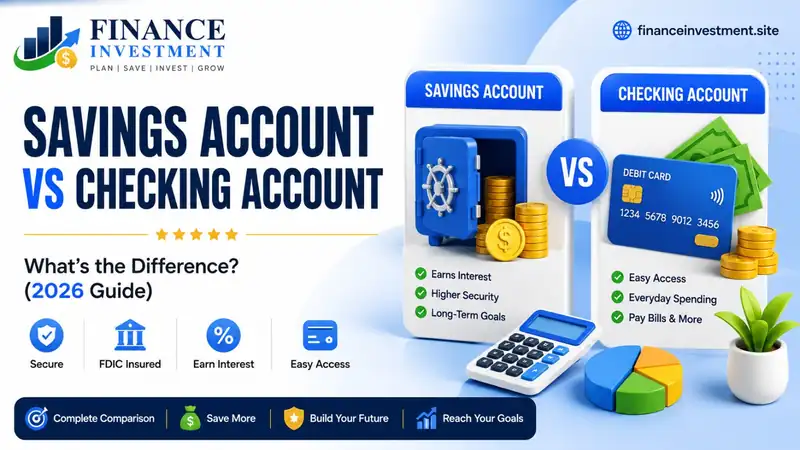
Although both accounts help you manage your money, they serve different purposes. A checking account is built for everyday spending, bill payments, and purchases. A savings account is designed to help you set money aside while earning interest over time.
Many people open one account and try to use it for everything. That often leads to missed opportunities, lower interest earnings, or unnecessary fees. Knowing what each account is meant to do can help you organize your finances more effectively.
This guide explains the key differences in plain English. You’ll learn how each account works, when to use one instead of the other, how they compare on fees, interest, accessibility, and security, and why many Americans choose to have both.
By the end, you’ll know which account fits your daily banking needs, which one supports your savings goals, and how the right combination can make managing your money much easier in 2026.
Quick Answer & Key Takeaways
Quick Answer
When comparing a Savings Account vs Checking Account, the right choice depends on how you plan to use your money. A checking account is built for everyday banking, while a savings account is meant for money you want to set aside for future needs. Most people benefit from having both because each account plays a different role in a healthy financial plan.
Key Takeaways
- Use a checking account for daily spending, bills, and debit card purchases.
- Choose a savings account to build an emergency fund and future savings.
- Savings accounts usually earn interest, while many checking accounts pay little or none.
- Checking accounts offer easier access to your money for everyday transactions.
- Keeping separate accounts can make budgeting simpler and reduce unnecessary spending.
- Many banks allow you to link both accounts for convenient money transfers.
Bottom Line
A checking account helps you manage everyday expenses, while a savings account helps you prepare for tomorrow. Using each account for its intended purpose creates a simple banking system that’s easier to manage and supports long-term financial stability.
Table of Contents
Jump to any section below or read the guide from start to finish for a complete comparison of savings and checking accounts.
Savings Account vs Checking Account at a Glance
At first glance, savings and checking accounts look almost identical. Both let you deposit money, transfer funds, and manage your finances through online or mobile banking. The real difference is their purpose. A checking account is built for everyday spending, while a savings account is designed to help you set money aside for future goals.
Choosing the right account becomes much easier once you understand how you’ll use your money. If you’re paying bills, receiving your paycheck, or making purchases with a debit card, a checking account is usually the better fit. If you’re building an emergency fund, saving for a vacation, or preparing for a major purchase, a savings account is often the smarter choice.
Quick Facts
- Best for Daily Spending: Checking Account
- Best for Growing Savings: Savings Account
- Interest Earnings: Usually higher with a savings account
- Debit Card Access: Primarily available with checking accounts
- Common Use: Many people keep both accounts and transfer money between them.
Comparison Snapshot
| Feature | Savings Account | Checking Account |
|---|---|---|
| Main Purpose | Save money for future goals | Manage everyday spending |
| Interest | Usually earns interest | Often earns little or no interest |
| Debit Card | Sometimes available | Typically included |
| Best For | Emergency funds and planned savings | Bills, shopping, and direct deposits |
Summary
A savings account and a checking account aren’t competitors—they’re partners. One helps you spend wisely, while the other helps you build financial security. Keeping your everyday money separate from your long-term savings makes budgeting easier, reduces the temptation to overspend, and helps you stay focused on your financial goals. That’s why many banks encourage customers to use both accounts together rather than relying on just one.
Complete Beginner Guide to Savings Accounts vs Checking Accounts
If you’re opening your first bank account, it’s easy to wonder whether you need a savings account or a checking account. The truth is, both accounts are useful, but they serve different purposes. Understanding that difference can help you manage your money more effectively.
A savings account is designed for money you don’t plan to spend right away. It gives your savings a separate home and usually earns interest on your balance. People often use it to build an emergency fund, save for a vacation, buy a home, or prepare for other future expenses.
A checking account is built for everyday banking. It’s where many people receive their paycheck, pay monthly bills, shop with a debit card, withdraw cash from ATMs, and transfer money. Since the goal is convenience, checking accounts typically offer quick and easy access to your funds.
Rather than asking which account is better, think about what you’re trying to accomplish. If the money is meant for daily spending, a checking account makes life easier. If you’re setting money aside for a future goal, a savings account is usually the better choice.
Expert Tip
Many financial experts recommend using both accounts together. Deposit your income into a checking account for everyday expenses, then move part of each paycheck into a savings account. This simple habit helps you build savings without changing your daily routine.
Once you understand the role of each account, managing your money becomes much simpler. Instead of wondering where your cash should go, you’ll know exactly which account fits each financial goal.
 How Savings Accounts and Checking Accounts Work
 How Savings Accounts and Checking Accounts Work
Although both accounts are offered by banks and credit unions, they’re built for different types of money management. Knowing how each one works can help you decide where your money should go.
How a Savings Account Works
When you deposit money into a savings account, the bank pays interest on your balance. As your money remains in the account, it continues to earn interest, helping your savings grow over time. Since this account is meant for saving rather than spending, people often use it for emergency funds or future financial goals.
How a Checking Account Works
A checking account is designed for everyday transactions. You can receive direct deposits, pay bills, write checks, use a debit card, withdraw cash from ATMs, and make online purchases. The focus is convenience instead of earning interest.
Using Both Together
Many people connect their savings and checking accounts. Their paycheck is deposited into the checking account, and a portion is transferred to savings each month. This simple routine makes it easier to cover everyday expenses while steadily building savings for the future.
Quick Tip
Think of your checking account as your spending account and your savings account as your progress account. Giving each one a clear purpose can make budgeting easier and help you stay on track with your financial goals.
Benefits & Drawbacks
Both account types play an important role in personal finance. A checking account makes everyday banking simple, while a savings account helps you prepare for future expenses. Looking at the advantages and limitations of each can help you decide how they fit into your financial routine.
✅ Savings Account – Benefits
- Earns interest on your balance.
- Helps build an emergency fund.
- Keeps long-term savings separate from daily spending.
- Encourages better saving habits.
- Eligible deposits are protected by FDIC or NCUA insurance within applicable limits.
❌ Savings Account – Drawbacks
- Not designed for everyday purchases.
- Some banks may limit certain withdrawals or transfers.
- Interest rates vary from one financial institution to another.
Expert Insight
Instead of choosing one account over the other, consider giving each account a specific job. Use your checking account for income and monthly expenses, then move extra money into savings on a regular schedule. This simple habit can make budgeting easier while helping your savings grow over time.
Savings Account vs Checking Account: Side-by-Side Comparison
Choosing between a savings account and a checking account becomes much easier when you compare their features side by side. While both help you manage your money, they’re built for different purposes. One focuses on saving, while the other is designed for everyday banking.
| Feature | Savings Account | Checking Account |
|---|---|---|
| Main Purpose | Save money for future goals | Handle everyday spending |
| Interest Earnings | Usually earns interest | Often little or no interest |
| Debit Card | May be available | Usually included |
| Bill Payments | Limited use | Designed for regular payments |
| ATM Access | Available at many banks | Widely available |
| Best For | Emergency funds and long-term savings | Daily banking and purchases |
Key Insight
A checking account keeps your everyday finances moving, while a savings account helps you build financial security over time. Instead of replacing one another, these accounts work best as a team. Using each account for its intended purpose can simplify budgeting, reduce unnecessary spending, and make it easier to reach your financial goals.
Costs, Risks & Expert Tips
Before opening either account, take a few minutes to review the account terms. While both savings and checking accounts are considered low-risk banking products, fees and features can vary from one financial institution to another.
Some checking accounts charge monthly maintenance fees unless you meet certain requirements, such as maintaining a minimum balance or setting up direct deposit. Savings accounts may also have minimum balance requirements or lower interest rates than expected, depending on the bank.
Expert Tips
- Choose a bank with low fees and reliable customer service.
- Keep spending money and savings in separate accounts.
- Set up automatic transfers to build savings consistently.
- Review your account benefits once a year.
Warning
Avoid keeping all of your money in a checking account. Separating your savings from everyday spending can help you avoid impulse purchases and make it easier to reach long-term financial goals.
Common Mistakes to Avoid (With a Real-Life Example)
Choosing the right bank account isn’t difficult, yet many people end up using the wrong account for the wrong purpose. A few simple changes can make managing your money much easier and help you build healthier financial habits.
Common Mistakes
- Keeping all of your money in a checking account instead of setting aside savings.
- Using a savings account for everyday purchases and frequent bill payments.
- Ignoring monthly fees, minimum balance requirements, or account features.
- Leaving savings idle without earning competitive interest.
Real-Life Example
Michael receives his paycheck every two weeks and deposits everything into his checking account. By the end of most months, very little is left because all of his money is available to spend.
After opening a savings account, he started transferring $200 from each paycheck automatically. Within a year, he had built a solid emergency fund without changing his lifestyle or tracking every purchase.
The biggest difference wasn’t earning interest—it was keeping his savings separate from his everyday spending.
Key Takeaway
Give every dollar a job. Use your checking account for bills and daily expenses, and let your savings account hold money that’s meant for future goals. A simple system is often easier to maintain than a complicated budget.
Who Should Choose a Savings Account or a Checking Account?
The answer depends on how you use your money. One account helps you handle everyday expenses, while the other helps you prepare for future needs. For most people, using both accounts creates a simple and effective banking system.
A Savings Account Is a Great Choice If You…
- Are building an emergency fund.
- Want to save for a vacation, home, or another future goal.
- Prefer keeping savings separate from daily spending.
- Would like your money to earn interest while it sits in the bank.
- Need a safe place to grow your cash over time.
A Checking Account Is a Better Fit If You…
- Receive your paycheck through direct deposit.
- Pay bills every month.
- Use a debit card for shopping and everyday purchases.
- Need quick access to your money through ATMs or online banking.
- Handle frequent financial transactions.
Our Recommendation
For most households, the strongest approach is to use both accounts together. Keep everyday spending money in your checking account and move part of each paycheck into a savings account. This habit helps you stay organized, build savings steadily, and avoid spending money that was meant for future goals.
Frequently Asked Questions
1. What is the main difference between a savings account and a checking account?
A checking account is designed for everyday banking, such as paying bills, making purchases, and receiving direct deposits. A savings account is intended for money you want to keep for future goals while earning interest.
2. Can I have both a savings account and a checking account?
Yes. In fact, many banks encourage customers to use both. A checking account handles daily expenses, while a savings account helps you build financial security over time.
3. Which account earns more interest?
In most cases, savings accounts pay higher interest than checking accounts. Some checking accounts earn interest, but the rate is often lower than what’s available with a savings account.
4. Which account should my paycheck go into?
Most people have their paycheck deposited into a checking account because it’s easier to pay bills and cover everyday expenses. From there, they transfer part of their income into savings.
5. Can I use a debit card with a savings account?
Some banks provide a debit card for savings accounts, but checking accounts are designed for regular debit card purchases and ATM withdrawals.
6. Are both accounts protected by FDIC or NCUA insurance?
Yes. Eligible bank accounts are protected by FDIC insurance, while eligible credit union accounts are covered by NCUA insurance, both within applicable coverage limits.
7. Is a savings account good for an emergency fund?
Yes. A savings account is one of the most common places to keep an emergency fund because it separates savings from daily spending while allowing your balance to earn interest.
8. Do I need a savings account if I already have a checking account?
Having only a checking account works for daily banking, but adding a savings account makes it easier to build long-term financial stability and prepare for unexpected expenses.
9. Can I transfer money between my checking and savings accounts?
Yes. Most banks let you move money between linked accounts through online banking, a mobile app, or automatic transfers.
10. Which account is better for beginners?
For most beginners, opening both accounts is a smart choice. A checking account covers everyday banking, while a savings account helps build healthy saving habits from the start.
Final Verdict: Savings Account vs Checking Account
After comparing a Savings Account vs Checking Account, it’s clear that each one serves a different purpose. A checking account keeps your everyday finances running smoothly, while a savings account helps you prepare for future goals and unexpected expenses.
If you’re looking for an account to receive your paycheck, pay bills, shop with a debit card, and handle daily transactions, a checking account is the practical choice. If your goal is to build an emergency fund, save for a major purchase, or simply grow your cash over time, a savings account is the better place for that money.
You don’t have to choose one over the other. Many people find that using both accounts creates a simple system that’s easier to manage. Daily spending stays separate from long-term savings, making it easier to stick to a budget and avoid dipping into money you’ve set aside for future plans.
Final Thought
The right bank account isn’t the one with the most features—it’s the one that matches how you manage your money. Give your checking account the job of handling everyday expenses and let your savings account focus on building your financial future. Together, they provide a strong foundation for smarter money management in 2026 and beyond.
Take the Next Step Toward Better Money Management
Choosing the right bank account is one of the easiest ways to improve your financial life. Whether you’re opening your first account or updating the way you manage your money, small changes today can make a big difference over time.
Join the FinanceInvestment Newsletter for practical saving tips, investing ideas, retirement strategies, and easy-to-understand financial guides created for everyday Americans.
Continue Your Financial Journey
Ready to learn more? Explore these helpful guides to strengthen your savings, improve your banking habits, and build a solid financial future.
- High-Yield Savings Accounts USA: Complete Guide
- How High-Yield Savings Accounts Work
- Retirement Planning Guide
- Best Credit Cards in the USA (2026)
Thank you for reading FinanceInvestment. We hope this guide helps you choose the right account with confidence and makes managing your money a little simpler every day.
Leave a Reply