High-Yield Savings Account vs Treasury Bills: Complete USA Guide (2026)
Author: Finance Investment Editorial Team, Subhash Rukade.
Published: July 20, 2026
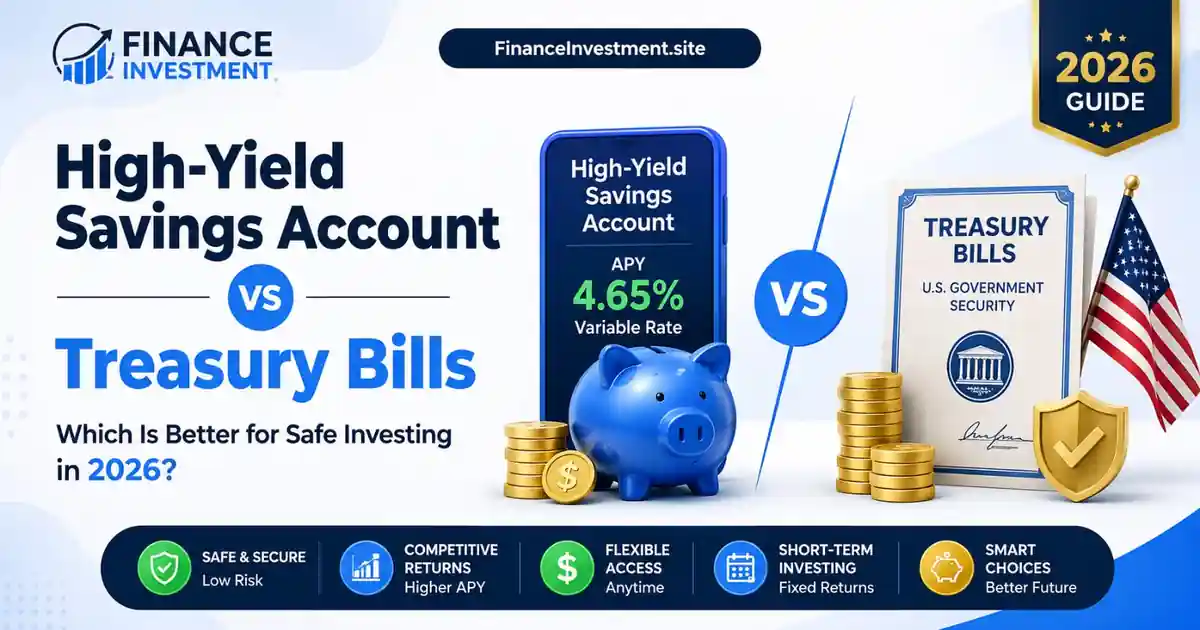 When it comes to protecting your money, many Americans compare a High-Yield Savings Account vs Treasury Bills to decide where their cash can work the hardest without taking unnecessary risk. Both options are considered safe, but they earn returns differently and serve different financial goals. Understanding those differences can help you keep more of your money while making smarter financial decisions in 2026.
A high-yield savings account offers competitive interest rates and lets you access your money whenever you need it. Treasury Bills, often called T-Bills, are short-term U.S. government securities sold at a discount and redeemed at full value when they mature. Because they’re backed by the U.S. government, many investors view them as one of the safest places to keep cash for a fixed period.
The best choice depends on your priorities. Are you building an emergency fund? Looking for a place to park cash for a few months? Trying to reduce taxes on investment income? Each option has strengths, and knowing when to use one over the other can improve your overall financial strategy.
In this guide, you’ll learn how a High-Yield Savings Account vs Treasury Bills compares in terms of returns, liquidity, taxes, safety, risks, and real-world use cases. By the end, you’ll know which option fits your savings goals and whether combining both can help you earn more while keeping your money secure.
If you’re new to high-yield savings accounts, start with our
High-Yield Savings Accounts USA Guide.
It explains how these accounts work, how APYs are calculated, and what to look for before opening one.
Quick Answer
When comparing a High-Yield Savings Account vs Treasury Bills, the better option depends on how you plan to use your money. A high-yield savings account is ideal if you want competitive interest while keeping your cash available at any time. Treasury Bills (T-Bills) are better suited for money you can leave untouched until maturity and are backed by the U.S. government. If flexibility is your priority, choose a high-yield savings account. If you’re looking for a short-term, low-risk investment with potential tax advantages, Treasury Bills are often the stronger choice.
Quick Facts
| Best For | High-yield savings for everyday flexibility, Treasury Bills for short-term cash you don’t need immediately. |
| Average Cost | Most high-yield savings accounts have no monthly fee. Treasury Bills have no management fee when purchased directly through TreasuryDirect. |
| Coverage / Benefits | High-yield savings accounts may qualify for FDIC or NCUA insurance. Treasury Bills are backed by the full faith and credit of the U.S. government. |
| Pros | Low risk, competitive returns, excellent capital preservation, and simple to understand. |
| Cons | Savings account rates can change, while Treasury Bills require holding until maturity to receive the full expected return. |
Table of Contents
- What Is a High-Yield Savings Account?
- What Are Treasury Bills?
- High-Yield Savings Account vs Treasury Bills
- Why This Comparison Matters
- Which Option Fits Your Financial Goals?
- Key Differences Every Beginner Should Know
What Is a High-Yield Savings Account vs Treasury Bills?
A High-Yield Savings Account vs Treasury Bills comparison helps you understand two of the safest places to keep your money in 2026. While both are designed to preserve your cash and generate returns, they work in different ways and are built for different financial needs.
A high-yield savings account is a bank deposit account that pays a higher Annual Percentage Yield (APY) than a traditional savings account. Your money remains available whenever you need it, making this account an excellent choice for emergency funds and short-term savings goals.
Treasury Bills, often called T-Bills, are short-term debt securities issued by the U.S. Department of the Treasury. Instead of paying regular interest, they’re sold below their face value. When the bill reaches maturity, the government pays you its full value. The difference between what you paid and what you receive becomes your return.
Why This Comparison Matters
Many Americans assume every safe investment works the same way, but that’s not the case. A high-yield savings account offers flexibility because you can usually access your money whenever you need it. Treasury Bills generally provide predictable returns backed by the U.S. government, but your money stays invested until the maturity date unless you sell the security before then.
Choosing the right option depends on your financial goals. Someone building an emergency fund will often value easy access to cash. On the other hand, someone saving for a planned expense a few months away may prefer Treasury Bills because of their stability and potential tax advantages.
If you’re creating a long-term financial plan, our
Retirement Planning Guide
explains how cash savings, government securities, and retirement investments can work together.
Beginner-Friendly Explanation
Think of a high-yield savings account as money parked in a secure garage that you can drive away anytime. Treasury Bills are more like reserving a parking space for a fixed period—you leave your money there until the agreed date, and in return, you earn a guaranteed return backed by the U.S. government. Both options are low risk, but the right one depends on how soon you’ll need your cash.
How Does a High-Yield Savings Account vs Treasury Bills Work?
Understanding a High-Yield Savings Account vs Treasury Bills starts with knowing how each option earns money. Both are considered low-risk places to keep cash, but they generate returns in completely different ways. One works like a traditional bank account with a higher interest rate, while the other is a short-term government investment purchased at a discount.
How a High-Yield Savings Account Works
A high-yield savings account is offered by banks and credit unions. After opening the account, you deposit money and begin earning interest based on the account’s Annual Percentage Yield (APY). Interest is usually calculated daily and added to your balance every month, allowing your savings to grow over time.
One of the biggest advantages is flexibility. You can transfer money into the account whenever you like and withdraw funds when an unexpected expense arises. That’s why many financial experts recommend using a high-yield savings account as the home for an emergency fund.
How Treasury Bills Work
Treasury Bills, or T-Bills, are issued by the U.S. Department of the Treasury with terms that typically range from a few weeks to one year. Instead of paying regular interest, they’re sold below their face value. For example, you might pay $9,800 for a Treasury Bill with a $10,000 face value. When it matures, the government pays you the full $10,000, and the difference becomes your investment return.
Because Treasury Bills mature on a fixed date, they’re commonly used for short-term cash management rather than everyday savings.
Who Should Choose Each Option?
- People building an emergency fund.
- Retirees looking for low-risk income strategies.
- Families saving for a future home purchase.
- Investors holding cash before entering the stock market.
- Anyone looking for a safe place to protect short-term savings.
Why This Decision Matters
The choice between a high-yield savings account and Treasury Bills affects more than your interest rate. It also influences how quickly you can access your money, how your earnings are taxed, and whether your savings continue working toward your financial goals without unnecessary risk.
If you’re planning to grow your wealth over time instead of simply saving cash, our
AI Investing Guide 2026
explains how safe savings, investing, and long-term portfolio growth can work together.
Key Point
A high-yield savings account gives you continuous access to your money while earning interest. Treasury Bills require you to hold your investment until maturity to receive the full return. Choosing the right option depends on whether flexibility or a fixed short-term investment better matches your financial needs.
High-Yield Savings Account vs Treasury Bills: Complete Guide
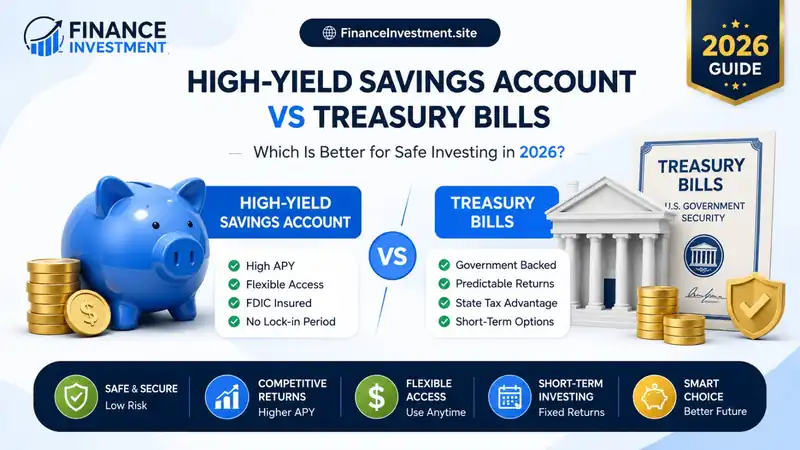
When comparing a High-Yield Savings Account vs Treasury Bills, it’s important to look beyond the interest rate. Both options are designed to protect your money, but they serve different purposes. A high-yield savings account focuses on convenience and liquidity, while Treasury Bills are meant for short-term investing with the backing of the U.S. government.
The right choice depends on your financial goals. If you expect to use your money at any time, a high-yield savings account usually makes more sense. If you can leave your cash untouched until a specific maturity date, Treasury Bills may offer an attractive alternative.
What a High-Yield Savings Account Covers
- Daily interest on your deposited balance.
- Easy online transfers and withdrawals.
- FDIC or NCUA protection within applicable limits.
- No investment experience required.
- Suitable for emergency funds and short-term savings.
What Treasury Bills Cover
- Short-term investment periods ranging from a few weeks to one year.
- Backed by the full faith and credit of the U.S. government.
- Predictable returns when held until maturity.
- No state or local income tax on earnings.
- Available through TreasuryDirect or brokerage accounts.
What’s Not Covered
Neither option is designed for long-term wealth creation like stocks or equity mutual funds. A high-yield savings account may lose purchasing power if inflation rises faster than its interest rate. Treasury Bills also have opportunity costs because your money remains invested until maturity unless you sell before the term ends.
If your goal is significant long-term growth, you’ll usually need investments that offer higher return potential, although they also come with greater risk.
Key Features Comparison
| Feature | High-Yield Savings Account | Treasury Bills |
|---|---|---|
| Safety | FDIC/NCUA insured (eligible accounts) | Backed by the U.S. government |
| Liquidity | Very High | Available after maturity or by selling early |
| Interest | Variable APY | Fixed return at purchase |
| Investment Term | No fixed term | 4 to 52 weeks |
| Best Use | Emergency savings | Short-term investing |
Did You Know?
Many experienced investors don’t choose one option over the other. Instead, they keep their emergency fund in a high-yield savings account while investing extra cash in Treasury Bills that mature at different times throughout the year. This approach balances flexibility with predictable returns.
If you’re building a complete financial safety plan, our
Insurance for Beginners USA Guide
shows how emergency savings, insurance coverage, and low-risk investments work together to strengthen your financial future.
Cost & Comparison: High-Yield Savings Account vs Treasury Bills
One of the biggest reasons Americans compare a High-Yield Savings Account vs Treasury Bills is to find the best return without taking unnecessary risk. The good news is that neither option usually comes with expensive fees. Instead, the real comparison comes down to interest rates, taxes, flexibility, and how long you’re comfortable leaving your money untouched.
Average Cost
Most high-yield savings accounts have no monthly maintenance fee when you choose an online bank with competitive rates. Treasury Bills also don’t charge an investment management fee when purchased directly through TreasuryDirect. If you buy T-Bills through some brokerage firms, you should always review their fee schedule before investing.
What Affects Your Return?
- Current Federal Reserve interest rates.
- Length of the Treasury Bill maturity.
- Changes in savings account APYs.
- Inflation during your investment period.
- Your need for immediate access to cash.
- Federal and state tax treatment.
High-Yield Savings Account vs Treasury Bills Comparison
| Feature | High-Yield Savings Account | Treasury Bills |
|---|---|---|
| Risk Level | Very Low | Very Low |
| Return Type | Variable APY | Fixed at Purchase |
| Access to Money | Anytime | At Maturity or by Selling Early |
| State Income Tax | Generally Taxable | Generally Exempt |
| Best For | Emergency Savings | Short-Term Investing |
Best Options for Americans in 2026
If daily access to your money is important, a competitive high-yield savings account from a trusted online bank is usually the better choice. However, if you’re saving for a known expense several months away and don’t need immediate access, Treasury Bills can provide reliable returns backed by the U.S. government.
Many experienced investors combine both strategies. They keep emergency savings in a high-yield account while investing extra cash in Treasury Bills with staggered maturity dates. This approach improves flexibility without giving up the safety of government-backed investments.
Pro Tip
Instead of choosing only one option, consider using a high-yield savings account for money you’ll need soon and Treasury Bills for cash you won’t touch for several months. This simple strategy helps maximize returns while keeping your finances flexible.
If you’re preparing your portfolio for uncertain markets, our
Recession-Proof Investing Guide
shows how cash, government securities, and diversified investments can work together during changing economic conditions.
How to Choose Between a High-Yield Savings Account and Treasury Bills
Choosing between a High-Yield Savings Account vs Treasury Bills doesn’t have to be complicated. The best option depends on how soon you’ll need your money, your comfort with locking funds for a fixed period, and your overall financial goals. Instead of chasing the highest advertised return, focus on finding the solution that matches your cash flow and future plans.
Step 1: Define Your Savings Goal
Start by deciding why you’re saving. If you’re building an emergency fund or setting aside money for unexpected expenses, a high-yield savings account is usually the better fit because your money remains accessible. If you’re saving for a planned purchase a few months away, Treasury Bills may provide a more predictable return.
Step 2: Decide When You’ll Need the Money
Ask yourself one simple question: “Will I need this money before the investment matures?” If the answer is yes or you’re unsure, a high-yield savings account offers greater flexibility. If the answer is no, Treasury Bills can be an excellent short-term investment.
Step 3: Compare Current Rates
Interest rates change throughout the year. Compare the latest APYs offered by reputable banks with current Treasury Bill yields before making your decision. A small difference in yield can have a noticeable impact on larger balances.
Step 4: Review Tax Benefits
Treasury Bill earnings are generally exempt from state and local income taxes, which may increase your after-tax return depending on where you live. High-yield savings account interest is generally taxable at the federal, state, and local levels.
Step 5: Keep Your Savings Diversified
Many financial planners recommend dividing your cash instead of relying on a single option. Keeping emergency savings in a high-yield savings account while placing extra cash into Treasury Bills allows you to balance accessibility with potentially higher short-term returns.
Money-Saving Tips
- Choose accounts with no monthly maintenance fees.
- Compare APYs and Treasury Bill yields before investing.
- Avoid withdrawing money you may need before a T-Bill matures.
- Review rates every few months because they can change.
- Consider combining both options instead of choosing only one.
Are There Any Discounts?
Unlike credit cards or insurance products, there are no promotional discounts for Treasury Bills. However, you can improve your overall return by selecting banks that offer competitive APYs with no monthly fees and by purchasing Treasury Bills directly through the U.S. Treasury instead of paying unnecessary brokerage fees.
If you’re also working on improving your overall financial strategy, don’t miss our
Best Credit Cards 2026 Guide.
Using the right savings account alongside a rewards credit card can help you manage cash more efficiently while maximizing everyday financial benefits.
Common Mistakes to Avoid When Choosing Between a High-Yield Savings Account vs Treasury Bills
Even though both options are considered safe, many Americans make costly mistakes when comparing a High-Yield Savings Account vs Treasury Bills. A small misunderstanding about liquidity, taxes, or interest rates can reduce your overall return. Avoiding these common mistakes will help you make smarter financial decisions in 2026.
1. Chasing the Highest Yield Without Looking at Flexibility
Many people focus only on the highest advertised return. However, earning a slightly higher yield isn’t helpful if you need your money before a Treasury Bill matures. Always match your investment with your financial timeline.
2. Using Treasury Bills for Emergency Savings
Emergency funds should be available immediately. While Treasury Bills are very safe, they’re designed for fixed investment periods. A high-yield savings account is generally the better place for money you may need without notice.
3. Ignoring Tax Differences
Many investors forget that Treasury Bill earnings are generally exempt from state and local income taxes, while interest from most savings accounts is taxable. Your after-tax return may be different than expected.
4. Forgetting That Savings Rates Can Change
High-yield savings account APYs aren’t guaranteed forever. Banks can increase or decrease rates based on market conditions, so review your account periodically instead of assuming today’s rate will last.
5. Putting All Your Cash Into One Option
Keeping every dollar in either a savings account or Treasury Bills limits flexibility. Many experienced investors split their cash between both to balance accessibility and predictable returns.
6. Buying Before Comparing Current Rates
Treasury Bill yields and savings account APYs change regularly. Comparing current rates before investing can improve your earnings with very little extra effort.
7. Choosing a Bank That Charges Fees
Monthly maintenance fees can reduce your interest income. Look for accounts with no monthly fees and competitive APYs.
8. Skipping Your Overall Financial Plan
Safe savings are only one part of building wealth. Your emergency fund, retirement savings, insurance, and long-term investments should work together instead of being managed separately.
Real-Life USA Example
Sarah, a teacher in Texas, planned to buy a new car within six months. Instead of leaving all of her savings in a checking account, she kept three months of living expenses in a high-yield savings account and invested the remaining cash in a six-month Treasury Bill. She maintained easy access to emergency funds while earning a stronger return on money she didn’t need right away.
Expert Tips
- Review interest rates every few months.
- Keep emergency savings separate from investment cash.
- Compare after-tax returns, not just advertised yields.
- Diversify short-term cash instead of relying on one product.
- Reassess your strategy whenever your financial goals change.
To build a stronger long-term income strategy alongside safe cash savings, read our
Top Dividend Stocks USA 2026 Guide.
Helpful Resources
- TreasuryDirect — Buy Treasury Bills directly from the U.S. Treasury.
- FDIC — Learn about federal deposit insurance for eligible bank accounts.
- Consumer Financial Protection Bureau (CFPB) — Compare banking products and consumer guidance.
Recommended Financial Tools
- Open a Fidelity Brokerage Account to purchase Treasury Bills and other investments.
- Charles Schwab Brokerage Account for Treasury and cash management solutions.
- Best-Selling Personal Finance Books on Amazon to improve your investing knowledge.
Pros and Cons of a High-Yield Savings Account vs Treasury Bills
When comparing a High-Yield Savings Account vs Treasury Bills, there isn’t a single winner for everyone. Both options are among the safest places to keep cash, but each serves a different purpose. Your decision should depend on how quickly you may need your money, your tax situation, and your financial goals rather than simply choosing the highest yield.
| Option | Pros | Cons |
|---|---|---|
| High-Yield Savings Account |
|
|
| Treasury Bills |
|
|
Key Takeaway
If immediate access to cash is your top priority, a high-yield savings account is usually the better choice. If you can leave your money invested for a fixed period and want a government-backed return with potential state tax advantages, Treasury Bills are an excellent option. Many Americans achieve the best balance by using both as part of a well-rounded savings strategy.
Frequently Asked Questions About High-Yield Savings Account vs Treasury Bills
1. Which is better: a High-Yield Savings Account or Treasury Bills?
There isn’t a single answer for everyone. A High-Yield Savings Account vs Treasury Bills comparison depends on your financial goals. A high-yield savings account is better if you need quick access to your money, while Treasury Bills are a smart choice if you can leave your cash invested until maturity and want a government-backed return.
2. Are Treasury Bills safer than high-yield savings accounts?
Both are considered very safe. Treasury Bills are backed by the full faith and credit of the U.S. government. High-yield savings accounts are generally protected by FDIC or NCUA insurance up to applicable limits, making them one of the safest places to keep emergency savings.
3. Can I lose money with Treasury Bills?
If you purchase Treasury Bills and hold them until maturity, you’ll generally receive the full face value. However, if you sell them before maturity in the secondary market, the price may be higher or lower depending on market conditions.
4. Do high-yield savings accounts or Treasury Bills pay better in 2026?
Returns change throughout the year because interest rates move with market conditions. Before investing, compare the latest APYs offered by banks with current Treasury Bill yields. The better choice may change as interest rates rise or fall.
5. Can I use both a high-yield savings account and Treasury Bills?
Yes. Many financial professionals recommend using both. Keep your emergency fund in a high-yield savings account for immediate access, and invest extra cash that you won’t need for several months in Treasury Bills to earn a predictable return.
6. Where can I buy Treasury Bills?
You can purchase Treasury Bills directly through the
TreasuryDirect
website or through many brokerage firms. If you’re opening a brokerage account for Treasury investments, compare trusted platforms such as
Fidelity
or
Charles Schwab
to find features that fit your investing style.
Final Thoughts on High-Yield Savings Account vs Treasury Bills
Choosing between a High-Yield Savings Account vs Treasury Bills isn’t about finding a universal winner. It’s about selecting the option that matches your financial goals, timeline, and cash needs. Both are among the safest ways to protect your money, but they solve different problems.
If you want immediate access to your savings for unexpected expenses, a high-yield savings account remains one of the smartest choices available. On the other hand, if you’re saving for a planned purchase and won’t need your money for a few months, Treasury Bills offer predictable government-backed returns that can improve your short-term cash strategy.
Key Takeaways
- Choose a high-yield savings account for flexibility and emergency savings.
- Choose Treasury Bills for short-term investing with fixed maturity dates.
- Compare current APYs and Treasury Bill yields before investing.
- Consider taxes, liquidity, and your financial timeline—not just the highest return.
- Many successful investors use both options together to balance accessibility and predictable income.
Our Recommendation
For most Americans, the strongest strategy isn’t choosing one over the other. Build your emergency fund in a high-yield savings account, then invest excess cash that you won’t need immediately into Treasury Bills. This balanced approach helps you stay prepared for unexpected expenses while making idle cash work harder.
If you haven’t already, read our complete
High-Yield Savings Accounts USA Guide.
It explains how to compare APYs, choose the right bank, and maximize your savings throughout 2026.
Stay Ahead of Your Financial Goals
Want more practical investing guides, money-saving strategies, and easy-to-understand financial comparisons? Bookmark FinanceInvestment.site and explore our latest resources designed specifically for U.S. readers.
Have a question or suggestion? We’d love to hear from you at
subhashr325@gmail.com.
Before you go, consider opening a trusted brokerage account such as
Fidelity
or
Charles Schwab
to start investing in Treasury Bills and other low-risk investments as part of a diversified financial plan.
Leave a Reply