Dividend ETF SIP Strategy: Complete 2026 Guide for American Investors
By Subhash Rukade | Updated June 8, 2026
Why Dividend ETF SIP Investing Is Becoming Popular in 2026
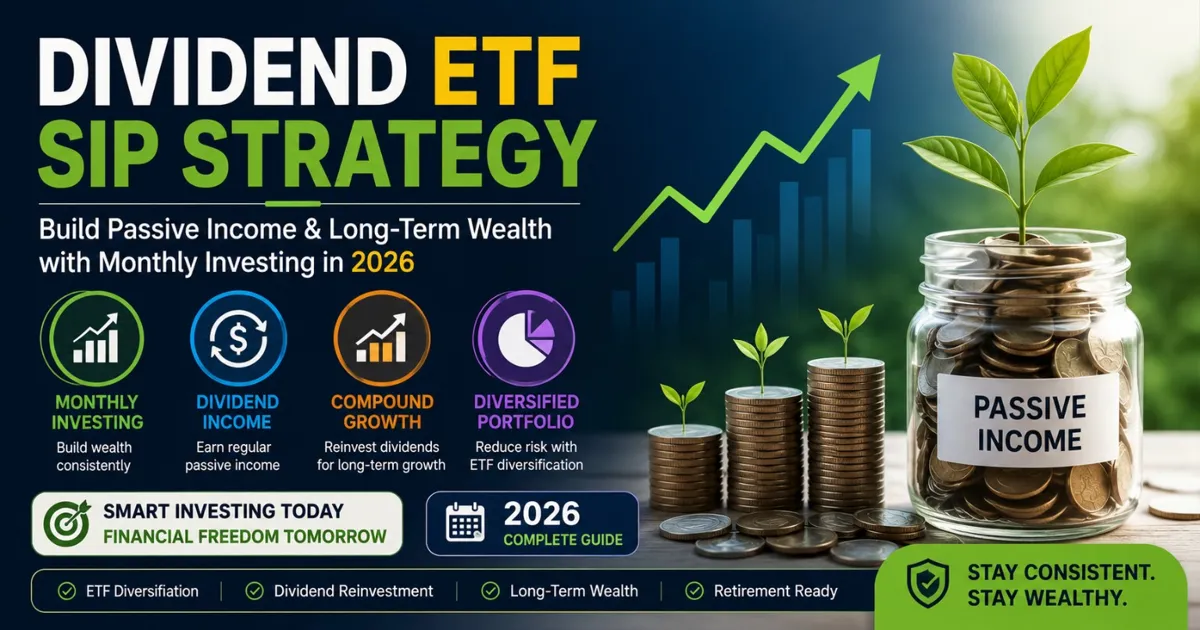
The Dividend ETF SIP Strategy is becoming one of the most popular investing approaches among American investors in 2026.
Many investors want more than just portfolio growth. They also want investments that can generate income over time.
That is exactly where dividend ETFs attract attention.
Dividend ETFs invest in companies that regularly distribute a portion of their profits to shareholders through dividends. Instead of selecting individual dividend stocks, investors can gain exposure to dozens or even hundreds of dividend-paying companies through a single ETF.
When combined with a Systematic Investment Plan (SIP), dividend ETFs become a powerful long-term wealth-building tool.
A Dividend ETF SIP Strategy allows investors to invest a fixed amount every month regardless of market conditions.
This approach helps investors benefit from dollar-cost averaging, portfolio diversification, and long-term compounding.
Even better, many dividend ETFs automatically distribute income that can be reinvested to purchase additional shares.
Over time, this creates a compounding effect that can significantly increase portfolio value.
One reason this strategy is attracting attention is that many Americans are looking for ways to build passive income while preparing for retirement.
Dividend ETFs offer a balance between growth and income, making them appealing for both younger investors and retirees.
If you are new to monthly investing, start with our complete guide:
SIP Investing Guide 2026: How Monthly Investing Builds Long-Term Wealth
Strong personal finance habits can also improve investing success. Investors should review:
Best Credit Cards 2026: Rewards, Cashback & Smart Usage Guide
In this guide, you’ll learn how a Dividend ETF SIP Strategy works, the best dividend ETF categories for 2026, common mistakes investors make, practical portfolio strategies, and long-term techniques that can help create sustainable wealth and passive income.
How a Dividend ETF SIP Strategy Works
A Dividend ETF SIP Strategy combines two powerful investing concepts: dividend investing and systematic monthly investing.
Instead of investing a large amount at one time, investors contribute a fixed amount every month into a dividend-focused exchange-traded fund (ETF).
This approach helps create consistency while reducing the stress of trying to predict market movements.
For many investors, the strategy offers a practical way to build wealth and generate future passive income at the same time.
Monthly Investing Creates Long-Term Discipline
One of the biggest advantages of a Dividend ETF SIP Strategy is investing discipline.
Investors commit to contributing a fixed amount every month regardless of whether markets are rising or falling.
This habit removes much of the emotional decision-making that often hurts investment performance.
Over time, consistent investing helps investors steadily accumulate ETF shares and grow their portfolios.
Many successful investors focus on consistency rather than attempting to predict short-term market movements.
Dividend Reinvestment Accelerates Growth
Dividend ETFs distribute income generated from the companies they own.
Instead of spending those dividend payments, many investors choose to reinvest them.
Reinvested dividends purchase additional ETF shares, which can then generate even more dividends in the future.
This process creates a compounding effect that can significantly increase portfolio growth over long periods.
For investors with long time horizons, dividend reinvestment often becomes one of the most valuable components of a Dividend ETF SIP Strategy.
Dollar-Cost Averaging Reduces Timing Risk
A Dividend ETF SIP Strategy naturally uses dollar-cost averaging.
When ETF prices decline, monthly contributions purchase more shares.
When prices rise, contributions purchase fewer shares.
Over time, this process can help smooth market volatility and reduce the risk of investing a large amount at the wrong time.
This benefit makes monthly investing especially attractive for beginners.
Dividend ETF SIP vs Individual Dividend Stock Investing
| Feature | Dividend ETF SIP | Individual Dividend Stocks |
|---|---|---|
| Diversification | High | Limited |
| Risk Level | Lower | Higher |
| Stock Selection Required | No | Yes |
| Monthly Investing Simplicity | Very Easy | Moderate |
| Dividend Income Potential | Consistent | Depends on Company |
| Beginner Friendly | Excellent | Moderate |
The biggest strength of a Dividend ETF SIP Strategy is its simplicity. Investors gain diversification, dividend income, dollar-cost averaging, and long-term compounding through one disciplined investing approach. For many Americans, this combination creates a strong foundation for building future wealth and passive income.
Best Dividend ETF Categories for 2026
A successful Dividend ETF SIP Strategy begins with choosing the right type of dividend ETF.
Not all dividend ETFs follow the same investment approach.
Some focus on dividend growth, others prioritize higher income, and some aim to balance income with long-term capital appreciation.
Understanding these categories can help investors build a portfolio that matches their financial goals and risk tolerance.
For SIP investors, diversification across different dividend ETF categories may provide a balanced combination of growth, income, and stability.
Dividend Growth ETFs
Dividend Growth ETFs invest in companies that have a strong history of increasing dividends over time.
These businesses often have healthy balance sheets, stable earnings, and strong competitive advantages.
While dividend yields may not be the highest initially, growing dividend payments can create significant long-term income potential.
Many investors consider dividend growth ETFs a core component of a Dividend ETF SIP Strategy because they offer both income and capital appreciation opportunities.
High-Yield Dividend ETFs
High-yield dividend ETFs focus on companies that currently pay above-average dividend yields.
These funds can provide stronger immediate income compared to dividend growth funds.
However, investors should carefully evaluate sustainability because extremely high yields may sometimes signal additional risks.
A balanced approach often works best when including high-yield investments in a diversified portfolio.
Broad Dividend ETFs
Broad dividend ETFs invest across a large number of dividend-paying companies from different sectors.
This diversification helps reduce reliance on a small group of businesses.
For many investors, broad dividend ETFs provide an excellent foundation for long-term monthly investing.
These funds typically combine income generation with portfolio stability.
Retirement-Focused Dividend ETFs
Many retirement investors seek reliable income streams while preserving portfolio growth potential.
Retirement-focused dividend ETFs often emphasize quality companies with established dividend histories.
These funds may help investors generate income while maintaining diversified market exposure.
Investors interested in building a complete income-focused portfolio should also review:
How to Build a Dividend Portfolio
Dividend ETF Categories Compared
| ETF Category | Main Objective | Suitable For |
|---|---|---|
| Dividend Growth ETF | Rising Future Income | Long-Term Investors |
| High-Yield Dividend ETF | Current Income | Income-Focused Investors |
| Broad Dividend ETF | Diversification + Income | Most SIP Investors |
| Retirement Income ETF | Stable Income | Retirement Planning |
A Recommended Investing Book
One of the most valuable books for dividend and long-term investors is:
The Psychology of Money by Morgan Housel
The book highlights how patience, consistency, and disciplined investing habits often matter more than attempting to predict market movements.
The biggest lesson from this section is simple:
the Dividend ETF SIP Strategy becomes stronger when investors select dividend ETF categories that align with their financial goals. A diversified mix of dividend growth, income-focused, and broad dividend ETFs can help create a balanced portfolio designed for long-term success.
Building a Dividend ETF SIP Portfolio for Long-Term Success
A successful Dividend ETF SIP Strategy is not simply about buying a single ETF and hoping for the best.
The most effective investors build diversified portfolios designed to generate income, reduce risk, and support long-term growth.
A well-structured portfolio can help investors stay confident during market volatility while creating a reliable foundation for future passive income.
The goal is to balance income generation with long-term capital appreciation.
Create a Diversified ETF Allocation
Many investors build their Dividend ETF SIP Strategy using multiple ETF categories rather than relying on one fund.
For example, a diversified portfolio may include:
- 50% Dividend Growth ETFs
- 25% Broad Dividend ETFs
- 15% High-Yield Dividend ETFs
- 10% Broad Market ETFs
This type of allocation can help balance current income with future dividend growth potential.
Diversification also reduces the impact of poor performance from any single sector or company.

Focus on Quality Over Yield
One of the most common mistakes investors make is chasing the highest dividend yield available.
A very high yield is not always a positive sign.
Sometimes it reflects financial challenges within a company or sector.
Instead, investors should focus on companies and ETFs with strong dividend histories, healthy cash flows, and sustainable payout ratios.
Quality often delivers better long-term results than yield alone.
Combine Dividend ETFs With Dividend Stocks
Some investors choose to supplement their Dividend ETF SIP Strategy with carefully selected dividend stocks.
This approach may provide additional income opportunities while maintaining diversification through ETFs.
Investors interested in individual dividend opportunities should also review:
Growth ETFs vs Dividend ETFs
| Feature | Growth ETFs | Dividend ETFs |
|---|---|---|
| Primary Objective | Capital Growth | Income + Growth |
| Dividend Payments | Low or None | Regular Income |
| Retirement Income Potential | Lower | Higher |
| Volatility | Often Higher | Moderate |
| Passive Income | Limited | Strong Potential |
A Recommended Wealth-Building Book
One of the most respected investing books for ETF investors is:
The Simple Path to Wealth by JL Collins
The book explains how low-cost investing, diversification, and long-term discipline can help investors achieve financial independence.
The biggest lesson from this section is simple:
a Dividend ETF SIP Strategy works best when investors prioritize diversification, quality, and consistency. Building a balanced portfolio today can create stronger income and wealth-building opportunities for years to come.
Real Investor Example and Common Dividend ETF Investing Mistakes
A Dividend ETF SIP Strategy can be a powerful wealth-building tool, but long-term success depends on investor behavior just as much as fund selection.
Many investors start with good intentions. However, emotional decisions, unrealistic expectations, and poor portfolio management can reduce returns over time.
Understanding common mistakes can help investors stay on track and maximize the benefits of dividend investing.
A Real Dividend ETF SIP Example
Imagine a 30-year-old investor who decides to invest $500 every month into a diversified dividend ETF portfolio.
The portfolio includes a dividend growth ETF, a broad dividend ETF, and a high-quality income ETF.
Instead of trying to predict market movements, the investor contributes every month regardless of market conditions.
When markets decline, the monthly contribution purchases more ETF shares.
When dividends are paid, they are automatically reinvested into additional shares.
Over the years, the investor benefits from three powerful forces:
- Consistent monthly investing
- Dividend reinvestment
- Long-term compounding
This example demonstrates why patience and consistency often outperform short-term market predictions.
Common Mistake #1: Chasing Extremely High Dividend Yields
Many new investors believe higher yields always mean better investments.
Unfortunately, extremely high yields can sometimes indicate financial problems within a company or sector.
A sustainable dividend is usually more valuable than an unusually high payout that may be reduced later.
Quality and consistency should remain priorities.
Common Mistake #2: Ignoring Diversification
Some investors concentrate too heavily in one ETF, sector, or industry.
This increases risk and can create unnecessary portfolio volatility.
A diversified Dividend ETF SIP Strategy helps spread risk across multiple companies and sectors.
Common Mistake #3: Emotional Investing
Market declines often create fear.
Some investors stop investing when prices fall.
Others sell investments during temporary market downturns.
These reactions can hurt long-term performance.
Successful investors typically remain focused on long-term goals rather than short-term market headlines.
Disciplined Investor vs Emotional Investor
| Investment Habit | Disciplined Investor | Emotional Investor |
|---|---|---|
| Monthly Contributions | Consistent | Irregular |
| Dividend Reinvestment | Automatic | Often Ignored |
| Market Corrections | Continues Investing | Stops Investing |
| Diversification | Strong | Limited |
| Long-Term Focus | High | Low |
| Wealth Building Potential | Higher | Often Lower |
Investors preparing for uncertain economic conditions should also review:
Recession-Proof Investing 2026
For a complete roadmap to monthly investing and long-term wealth creation, continue with:
SIP Investing Guide 2026: How Monthly Investing Builds Long-Term Wealth
The biggest lesson from this section is simple:
a Dividend ETF SIP Strategy works best when investors stay diversified, reinvest dividends, and remain disciplined during market volatility. Consistency often becomes the difference between average results and long-term financial success.
Practical Tips and Future Trends for Dividend ETF Investors in 2026
A successful Dividend ETF SIP Strategy is built on more than selecting the right ETF. Investors must also develop habits that support consistency, diversification, and long-term growth.
In 2026, investing technology continues evolving rapidly. Automated investing platforms, artificial intelligence tools, and advanced portfolio management resources are making it easier than ever for investors to build passive income and long-term wealth.
Understanding these trends can help investors improve decision-making and remain focused on their financial goals.
Automate Your Dividend ETF SIP Strategy
Automation is one of the simplest ways to improve investing discipline.
Most brokerage firms now allow investors to schedule automatic monthly ETF purchases.
This removes the need to manually place trades every month and helps ensure consistent contributions regardless of market conditions.
Automated investing can reduce emotional decision-making while strengthening long-term investing habits.
For many investors, automation becomes a key factor behind successful portfolio growth.
Use Dividend Reinvestment Whenever Possible
Dividend reinvestment remains one of the most powerful tools available to long-term investors.
Rather than spending dividend payments, reinvesting them allows investors to purchase additional ETF shares.
These additional shares can then generate future dividends, creating a compounding effect that accelerates portfolio growth.
Over decades, dividend reinvestment can contribute significantly to total returns.
Diversification Beyond Dividend ETFs
Although dividend ETFs provide diversification, some investors choose to expand their portfolios further by adding:
- Broad Market ETFs
- S&P 500 Funds
- International Funds
- Bond Funds
- Gold Investments
This approach may help reduce volatility while maintaining growth potential.
Investors interested in defensive diversification strategies should also review:
Gold Investment Strategies USA
Manual Investing vs Automated Dividend ETF SIP Investing
| Feature | Manual Investing | Automated Investing |
|---|---|---|
| Contribution Process | Investor Initiated | Automatic |
| Consistency | Variable | Very High |
| Emotional Influence | Higher | Lower |
| Time Required | More | Less |
| Long-Term Discipline | Depends on Investor | Strongly Supported |
Learn From Trusted Financial Sources
Reliable information is essential for long-term investing success.
Many investors also use:
for research, retirement planning tools, dividend investing resources, and portfolio management insights.
The biggest lesson from this section is simple:
a Dividend ETF SIP Strategy becomes even more effective when combined with automation, dividend reinvestment, diversification, and continuous financial education. Investors who remain disciplined and embrace long-term investing habits often position themselves for stronger income and wealth-building opportunities.
Frequently Asked Questions About Dividend ETF SIP Strategy
1. What Is a Dividend ETF SIP Strategy?
A Dividend ETF SIP Strategy involves investing a fixed amount every month into dividend-focused exchange-traded funds. This approach combines regular investing, diversification, dividend income, and long-term compounding.
2. Are Dividend ETFs Good for Beginners?
Yes. Dividend ETFs provide exposure to multiple dividend-paying companies through a single investment. This diversification makes them easier to manage than building a portfolio of individual dividend stocks.
3. Should Dividends Be Reinvested?
Many long-term investors choose to reinvest dividends because reinvestment purchases additional shares that can generate future dividends. This process helps accelerate compounding.
4. How Much Should I Invest Each Month?
The amount depends on your income, financial goals, and investment timeline. The most important factor is consistency. Many successful investors start with an affordable amount and increase contributions over time.
5. Can Dividend ETF SIP Investing Help With Retirement Planning?
Many retirement investors use dividend ETFs because they offer potential income generation along with long-term portfolio growth. Dividend-focused investing can become an important component of retirement income planning.
Final Thoughts on Dividend ETF SIP Strategy
After exploring dividend investing, monthly contributions, dividend reinvestment, portfolio diversification, and long-term wealth creation, one conclusion becomes clear:
A Dividend ETF SIP Strategy remains one of the most practical ways for American investors to build wealth and passive income in 2026.
Unlike speculative investing approaches, dividend ETF investing focuses on consistency, diversification, and long-term financial growth.
Investors do not need to predict short-term market movements or constantly search for the next winning stock.
Instead, they can follow a disciplined investment process built around proven wealth-building principles:
- Invest consistently every month.
- Reinvest dividends whenever possible.
- Stay diversified across sectors and industries.
- Keep investment costs low.
- Remain invested during market volatility.
- Allow compounding to work over time.
These habits have helped investors navigate bull markets, bear markets, recessions, inflation cycles, and economic uncertainty throughout history.
For many Americans, dividend ETF investing offers a balance between portfolio growth and income generation that few other investment strategies can match.
The combination of regular contributions and dividend reinvestment can create powerful long-term results.
For a complete roadmap to monthly investing and wealth creation, continue with:
SIP Investing Guide 2026: How Monthly Investing Builds Long-Term Wealth
Whether your goal is retirement planning, passive income, financial independence, or generational wealth, a Dividend ETF SIP Strategy can provide a strong foundation for achieving those objectives.
The greatest advantage of this strategy is not complexity.
It is consistency.
And consistency remains one of the most powerful wealth-building habits available to investors today.
📈 Join the Finance Investment Newsletter
Get dividend investing insights, ETF strategies, retirement planning tips, passive income ideas, and market updates delivered directly to your inbox.
Join thousands of investors building stronger financial futures through disciplined investing and smarter financial decisions.
👨💼 About the Author
Subhash Rukade
Founder of Finance Investment and a passionate financial educator dedicated to helping investors understand ETF investing, dividend investing, retirement planning, portfolio diversification, and long-term wealth building.
- 📈 Dividend ETF Investing
- 💰 Passive Income Strategies
- 🏦 Retirement Planning
- 📊 SIP Investing Guidance
- 🪙 Portfolio Diversification
- 📚 Personal Finance Education
Through Finance Investment, Subhash shares practical financial education designed to help readers avoid common investing mistakes and build lasting wealth through disciplined strategies.
✅ Beginner-Friendly Investing Guides
✅ USA-Focused Financial Content
✅ Dividend ETF & SIP Strategies
✅ Practical Wealth-Building Education
🌐 Finance Investment
Helping Investors Build Wealth One Smart Decision at a Time.
Leave a Reply