
Category: Blog

Your blog category

  • Emergency Funds for Retirees: How Much Is Enough in 2026?

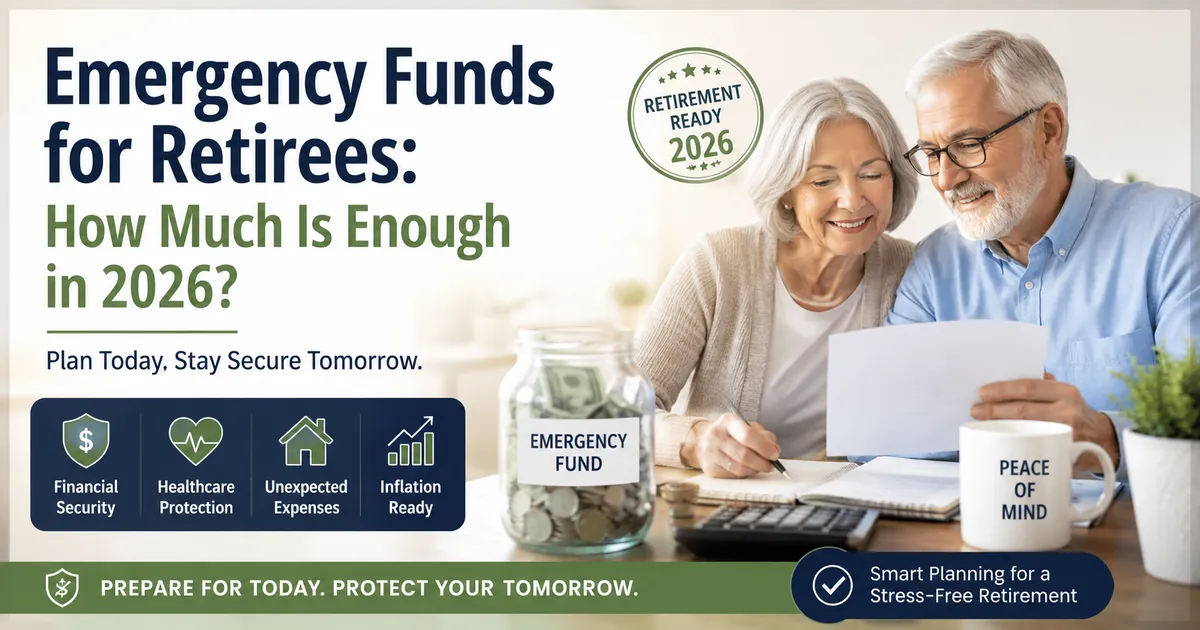
    Emergency Funds for Retirees: How Much Is Enough in 2026?


    emergency fund for retirees featured image

    Emergency Funds for Retirees: How Much Is Enough in 2026?

    By Subhash Rukade | Updated May 17, 2026

    Why Emergency Funds Matter More for Retirees in 2026

    In 2026, millions of Americans are becoming increasingly concerned about healthcare inflation, market volatility, and unexpected retirement expenses.

    This is one reason building an emergency fund for retirees has become one of the most important retirement planning priorities across the United States.

    Many retirees now realize financial emergencies may happen at any stage of retirement because of:

    • Healthcare expenses
    • Prescription inflation
    • Home repair emergencies
    • Unexpected family support needs
    • Economic uncertainty

    Unlike younger workers, retirees often have fewer opportunities to recover financially from large unexpected expenses because retirement income may remain fixed or limited.

    Because of this, many financially disciplined retirees now prioritize stronger emergency savings systems capable of protecting long-term retirement stability.

    Many investors first learn the basics of long-term investing before building healthcare-focused retirement systems. This beginner-friendly guide explains those fundamentals clearly:
    How to Invest in Stocks in 2026.

    Many Americans also continue learning broader healthcare retirement strategies through this detailed pillar guide:
    Retirement Healthcare Planning in 2026.

    Healthcare inflation continues becoming one of the biggest concerns for retirees because medical costs are increasing faster than ordinary living expenses in many areas of America.

    Many retirees now focus on:

    • Healthcare emergency savings
    • Passive income systems
    • Inflation protection strategies
    • Diversified retirement portfolios
    • Long-term financial discipline

    This is why emergency fund for retirees planning has become increasingly important for Americans preparing for retirement flexibility, financial stability, and long-term peace of mind.

    In this guide, we’ll explore how much emergency savings retirees may need in 2026, which financial strategies retirees are using today, and the biggest emergency fund mistakes Americans should avoid during retirement years.

    What Is an Emergency Fund for Retirees?

    In 2026, many Americans are focusing more seriously on building an emergency fund for retirees because unexpected expenses continue affecting retirement stability across the country.

    An emergency fund is a dedicated savings reserve designed to help retirees handle unexpected financial situations without damaging long-term retirement investments or creating emotional financial stress.

    Many financially disciplined retirees now understand emergency savings may become one of the most important retirement protection tools during uncertain economic periods.

    1. Healthcare Emergencies Can Be Expensive

    Healthcare costs continue rising rapidly across the United States because of:

    • Prescription inflation
    • Hospital expenses
    • Specialized medical treatment
    • Insurance deductibles
    • Long-term healthcare services

    Unexpected healthcare expenses may quickly create financial pressure during retirement years without proper emergency savings preparation.

    This is one reason emergency fund for retirees strategies increasingly focus on healthcare flexibility and financial protection.

    2. Inflation Continues Affecting Retirement Budgets

    Inflation remains one of the biggest financial concerns for retirees in 2026 because fixed retirement income may lose purchasing power over time.

    Retirees now face rising costs for:

    • Food
    • Utilities
    • Healthcare
    • Insurance
    • Housing expenses

    Emergency savings may help retirees handle temporary inflationary periods more comfortably without liquidating long-term investments during market downturns.

    3. Home Repairs Create Unexpected Expenses

    Many retirees own homes that may eventually require expensive maintenance or emergency repairs.

    Unexpected housing expenses may include:

    • Roof repairs
    • Air conditioning replacement
    • Water damage
    • Plumbing emergencies
    • Storm-related repairs

    A properly funded emergency savings system may help retirees avoid debt and financial stress during these situations.

    4. Retirement Cash Reserve Strategies Matter

    Many financially disciplined retirees now separate emergency savings from long-term investment portfolios.

    Emergency funds are commonly kept in:

    • High-yield savings accounts
    • Money market accounts
    • Short-term cash reserves
    • Low-risk retirement accounts

    This may help retirees access funds quickly during financial emergencies without selling long-term investments during volatile market conditions.

    5. Financial Flexibility Improves Retirement Confidence

    Many retirees now realize emergency savings are not only about money.

    Strong emergency reserves may also improve:

    • Emotional financial confidence
    • Healthcare flexibility
    • Retirement stability
    • Long-term peace of mind

    This is why emergency fund for retirees planning increasingly connects with broader retirement healthcare and passive income strategies.

    Emergency SituationEstimated Cost
    Hospital Emergency$3,000–$15,000
    Major Home Repair$5,000–$20,000
    Prescription InflationVaries Monthly
    Insurance Deductibles$1,000–$7,000
    Family Financial SupportVaries by Situation

    Many financially disciplined retirees now understand emergency fund for retirees planning should focus not only on cash reserves but also on long-term financial flexibility and healthcare preparedness.

    Best Financial Strategies to Build Emergency Savings in Retirement

    In 2026, many financially disciplined Americans are building diversified financial systems to better protect retirement stability during unexpected emergencies.

    This is one reason emergency fund for retirees planning increasingly focuses on passive income systems, healthcare preparedness, and long-term diversification.

    Many retirees now understand emergency savings should work alongside retirement investments instead of replacing them entirely.

    Successful emergency savings planning often includes:

    • Dividend investing
    • High-yield savings accounts
    • ETF diversification
    • Passive income systems
    • Inflation protection strategies


    emergency fund for retirees strategy

    1. Dividend Investing Creates Passive Income

    Dividend investing remains one of the most popular retirement income strategies for Americans preparing for unexpected expenses and healthcare emergencies.

    Many financially stable companies continue paying recurring dividends capable of supporting passive income systems during retirement years.

    Dividend income may help retirees:

    • Reduce financial stress
    • Support emergency healthcare costs
    • Improve retirement flexibility
    • Protect long-term investments

    Many retirement-focused investors continue building stronger dividend income systems using this guide:
    How to Build a Dividend Portfolio.

    Many retirees also continue researching stronger dividend-focused investments here:
    Top Dividend Stocks USA 2026.

    2. High-Yield Savings Accounts Improve Liquidity

    Many retirees now keep part of their emergency savings inside high-yield savings accounts because they may provide:

    • Quick cash access
    • Lower financial risk
    • Better interest earnings
    • Emergency flexibility

    Liquidity remains important because unexpected financial situations may require immediate cash access during retirement years.

    3. ETFs Help Diversify Retirement Investments

    ETFs continue becoming increasingly popular among retirees because they simplify diversification while reducing investing complexity.

    Many retirees use ETFs to gain exposure to:

    • Healthcare companies
    • Dividend-paying corporations
    • Broad stock market indexes
    • Bond markets
    • Real estate sectors

    Diversified ETFs may help retirees reduce emotional investing stress during uncertain market conditions and inflationary periods.

    4. Passive Income Systems Improve Retirement Stability

    Many successful retirees now prioritize multiple passive income systems instead of depending entirely on one retirement income source.

    Passive income investing may help retirees:

    • Handle healthcare emergencies
    • Protect retirement savings
    • Reduce emotional financial stress
    • Strengthen long-term financial stability

    5. Diversification Helps Reduce Financial Pressure

    Many retirees now realize emergency savings work best when combined with diversified retirement systems and long-term financial discipline.

    Many Americans continue learning broader healthcare retirement strategies through this detailed pillar guide:
    Retirement Healthcare Planning in 2026.

    Real-World Example of Emergency Savings for Retirees

    Understanding how retirees prepare for unexpected expenses becomes easier when you look at realistic retirement examples used by financially disciplined Americans today.

    Many successful retirees are no longer depending entirely on fixed retirement income because healthcare inflation and economic uncertainty continue increasing across the United States.

    This is one reason building an emergency fund for retirees has become increasingly important for Americans preparing for retirement flexibility and long-term financial stability.

    Meet Robert and Linda From Arizona

    Robert and Linda are a retired couple from Arizona who spent years preparing financially for unexpected healthcare costs and retirement emergencies.

    Several years before retirement, they realized inflation and medical expenses could become some of their biggest long-term financial challenges.

    After researching retirement healthcare strategies, they gradually built a diversified retirement system focused on:

    • Emergency healthcare savings
    • Dividend investing
    • ETF diversification
    • Passive income systems
    • Inflation protection strategies

    How They Built Emergency Financial Protection

    Instead of depending only on retirement accounts, Robert and Linda carefully prepared for:

    • Unexpected hospital bills
    • Prescription inflation
    • Home repair emergencies
    • Insurance deductibles
    • Family financial support situations

    They also maintained dedicated cash reserves to improve financial flexibility during uncertain economic conditions.

    Biggest Emergency Savings Mistakes Retirees Should AvoidMany retirees accidentally create financial pressure during retirement because of weak emergency planning and poor savings discipline.This is one reason emergency fund for retirees planning has become increasingly important for Americans preparing for healthcare inflation and long-term retirement stability.Avoiding common retirement savings mistakes may significantly improve healthcare flexibility, financial confidence, and long-term peace of mind during retirement years.1. Keeping Too Little Emergency SavingsOne of the biggest retirement mistakes is underestimating future emergency expenses.Many retirees only prepare for ordinary monthly expenses while ignoring:

    • Healthcare emergencies
    • Hospital deductibles
    • Prescription inflation
    • Unexpected home repairs
    • Family financial support situations

    Financial experts now believe retirees should maintain stronger emergency reserves compared to younger workers because retirement income may remain fixed or limited.2. Ignoring Healthcare InflationHealthcare inflation continues becoming one of the biggest retirement challenges across America.Medical costs continue increasing because of:

    • Prescription drug inflation
    • Insurance premium increases
    • Long-term care expenses
    • Advanced healthcare treatment costs

    Many financially disciplined retirees now combine emergency savings with broader retirement healthcare planning systems.Many Americans also continue learning healthcare-focused retirement strategies through this detailed guide:
    Retirement Healthcare Planning in 2026.3. Depending Entirely on One Income SourceSome retirees depend too heavily on one retirement income source such as:

    • Social Security
    • Pension income
    • One investment account
    • One dividend stock

    This may increase financial stress during:

    • Market volatility
    • Healthcare emergencies
    • Economic downturns
    • Unexpected inflation periods

    Many financially disciplined retirees now focus on:

    • Dividend investing
    • Emergency healthcare savings
    • ETF diversification
    • Passive income systems
    • Long-term financial flexibility

    4. Emotional Investing DecisionsFear and emotional financial reactions continue causing poor retirement decisions across America.Some retirees panic during:

    • Market downturns
    • Inflation headlines
    • Economic uncertainty
    • Healthcare cost increases

    Experienced retirees often understand:

    • Markets move in cycles
    • Long-term discipline matters
    • Diversification reduces financial stress
    • Emergency reserves improve confidence

    Many investors continue learning stronger retirement diversification strategies through this guide:
    How Americans Are Building Retirement Wealth in 2026.5. No Inflation Protection StrategyInflation continues reducing purchasing power for many retirees across the United States.Without inflation protection, emergency savings may lose financial effectiveness over time.Many retirees now prioritize:

    • Dividend growth investing
    • Healthcare diversification
    • Gold investments
    • Long-term portfolio balance
    • Passive income systems

    Some retirees also diversify retirement portfolios using defensive investment strategies during uncertain economic conditions:
    Gold Investment Strategies USA.What Financial Experts RecommendThe official U.S. Securities and Exchange Commission continues publishing retirement investing education and diversification resources:
    SEC.gov.Many retirement-focused investors also continue using financial education resources from:
    Investor.gov.Many financially successful retirees believe disciplined emergency savings, diversification, and healthcare preparedness usually outperform emotional financial decisions over time.

    Emergency CategoryAnnual Cost
    Healthcare Emergencies$7,500
    Prescription Expenses$3,200

    Future Trends in Retirement Emergency Planning

    The future of emergency fund for retirees planning continues evolving rapidly as healthcare inflation, AI-powered retirement tools, and digital financial systems become increasingly important across the United States.

    In 2026, many retirees are focusing more seriously on financial flexibility, healthcare preparedness, and passive income diversification.

    Modern retirement emergency planning is becoming more technology-driven, personalized, and long-term focused than ever before.

    1. AI Retirement Planning Is Expanding

    Artificial intelligence is increasingly influencing retirement savings and emergency planning decisions.

    Modern financial platforms now use AI systems to help analyze:

    • Healthcare expense projections
    • Emergency savings goals
    • Retirement inflation risks
    • Passive income performance
    • Portfolio diversification

    These tools may help retirees make more informed emergency savings decisions while reducing emotional financial behavior.

    2. Digital Savings Tools Continue Growing

    Many Americans now use digital retirement planning platforms to better organize emergency funds and retirement budgets.

    Modern retirement systems may help retirees:

    • Track emergency savings
    • Monitor healthcare expenses
    • Estimate inflation exposure
    • Manage passive income systems
    • Improve financial organization

    Technology is helping many retirees improve retirement discipline and financial preparedness.

    3. Healthcare Inflation Protection Is Becoming More Important

    Many financial experts believe healthcare inflation may remain one of the biggest retirement challenges over the next decade.

    Because of this, many financially disciplined retirees now prioritize:

    • Healthcare emergency savings
    • Passive income systems
    • Inflation protection investing
    • Diversified retirement portfolios
    • Long-term financial flexibility

    Many retirees now combine emergency savings planning with broader retirement wealth-building systems.

    4. Automated Passive Income Systems Continue Expanding

    Many retirement-focused investors now use automated investing systems to maintain consistent passive income growth during retirement years.

    Modern investing platforms may automatically:

    • Reinvest dividends
    • Balance investment portfolios
    • Track retirement goals
    • Monitor emergency savings growth

    Automation may help retirees remain disciplined during uncertain inflation periods and market volatility.

    5. Long-Term Emergency Planning Is Becoming Mainstream

    Many Americans now realize retirement emergency planning should be treated as an important part of long-term financial strategy instead of temporary cash management.

    Because of this, emergency fund for retirees planning increasingly focuses on:

    • Healthcare flexibility
    • Financial discipline
    • Passive income growth
    • Emergency preparedness
    • Long-term diversification

    Many financially successful retirees now understand retirement stability requires preparation for both financial and healthcare uncertainty.

    6. Professional Retirement Research Is Easier to Access

    Modern retirees now have easier access to professional retirement research and financial education resources.

    Platforms like Nasdaq continue publishing retirement-focused investing insights and market research:
    Nasdaq Market Research.

    Many retirees also continue using professional retirement planning tools and educational resources from:
    Fidelity Retirement Planning.

    As healthcare expenses and economic uncertainty continue rising, emergency fund for retirees planning will likely remain one of the most important financial priorities for Americans preparing for retirement stability and long-term peace of mind.

    Frequently Asked Questions About Emergency Funds for Retirees

    How Much Emergency Savings Do Retirees Need?

    The ideal emergency savings amount depends on retirement lifestyle, healthcare needs, monthly expenses, and overall financial flexibility.

    Many financially disciplined Americans now maintain an emergency fund for retirees capable of covering at least:

    • 6–24 months of living expenses
    • Healthcare emergencies
    • Insurance deductibles
    • Unexpected home repairs
    • Family financial support situations

    Retirees with higher healthcare risks often prioritize larger emergency savings reserves for greater long-term stability.

    Should Retirees Keep Cash or Invest?

    Many retirees now use a balanced strategy that combines:

    • Cash reserves for short-term emergencies
    • Dividend investments for passive income
    • ETFs for diversification
    • Healthcare savings for medical flexibility

    This approach may help retirees maintain liquidity while still protecting long-term investment growth during retirement years.

    What Emergencies Should Retirees Prepare For?

    Many financially disciplined retirees now prepare for:

    • Healthcare emergencies
    • Prescription inflation
    • Major home repairs
    • Economic downturns
    • Unexpected family financial responsibilities

    Emergency preparedness may help retirees reduce emotional financial stress during uncertain situations.

    How Do Retirees Protect Against Healthcare Inflation?

    Many retirees now focus on:

    • Passive income systems
    • Dividend investing
    • Healthcare emergency savings
    • Inflation protection strategies
    • Diversified retirement portfolios

    Many retirement-focused investors continue building stronger passive income systems using this guide:
    How to Build a Dividend Portfolio.

    What Is the Best Emergency Fund Strategy for Retirees?

    Many financially disciplined retirees now combine:

    • Emergency savings accounts
    • Passive income investing
    • Healthcare reserves
    • ETF diversification
    • Long-term financial discipline

    This balanced strategy may help retirees improve retirement flexibility while reducing emotional financial pressure during uncertain economic periods.

    Final Thoughts on Emergency Funds for Retirees in 2026

    In 2026, millions of Americans are realizing emergency savings may become one of the most important retirement protection systems during uncertain economic conditions.

    This is why building an emergency fund for retirees has become an increasingly important part of modern retirement planning across the United States.

    Financially disciplined retirees now understand retirement stability is no longer based only on traditional retirement accounts or fixed monthly income.

    Instead, many successful retirees focus on:

    • Emergency healthcare savings
    • Passive income systems
    • Dividend investing
    • Long-term diversification
    • Inflation protection strategies

    Many retirees now prioritize diversification because healthcare inflation, prescription costs, and unexpected emergencies may continue increasing over time.

    Many Americans also continue learning broader healthcare retirement strategies through this detailed pillar guide:
    Retirement Healthcare Planning in 2026.

    The most important step is remaining disciplined, diversified, and focused on long-term financial preparedness instead of reacting emotionally to short-term market headlines or economic uncertainty.

    Over time, disciplined emergency savings planning may help retirees create stronger retirement confidence, better financial flexibility, and greater long-term peace of mind.

    About the Author

    Subhash Rukade is the founder of Finance Investment, a financial education platform focused on helping everyday Americans build smarter retirement systems, passive income strategies, and long-term financial confidence.

    He specializes in:

    • Retirement planning
    • Healthcare financial planning
    • Dividend investing
    • ETF investing
    • Passive income systems
    • Long-term wealth building

    Through Finance Investment, he continues helping readers better understand:

    • Emergency fund for retirees planning
    • Healthcare savings strategies
    • Passive income investing
    • Dividend investing
    • Financial independence planning
    • Long-term retirement preparation

    His mission is simple: Help beginner investors avoid emotional financial mistakes, prepare for rising healthcare costs, and build long-term retirement systems with confidence and discipline.

  • Long-Term Care Planning for Retirement in America in 2026

    Long-Term Care Planning for Retirement in America in 2026


    long-term care retirement planning featured image

    Long-Term Care Planning for Retirement in America in 2026

    By Subhash Rukade | Updated May 17, 2026

    Why Long-Term Care Retirement Planning Matters More Than Ever

    In 2026, millions of Americans are becoming increasingly concerned about rising healthcare costs and how long-term medical care may affect retirement savings.

    This is one reason long-term care retirement planning has become one of the most important financial priorities for retirees across the United States.

    Healthcare inflation continues increasing because medical services, assisted living facilities, and nursing care costs are rising faster than ordinary living expenses.

    Many retirees now realize long-term care expenses may become one of the largest financial challenges during retirement years.

    Long-term healthcare costs often include:

    • Assisted living services
    • Nursing home expenses
    • Home healthcare support
    • Memory care services
    • Long-term rehabilitation treatment

    Because Americans are living longer, many financially disciplined retirees now focus on preparing for decades of healthcare-related expenses during retirement.

    Many investors first learn the basics of long-term investing before building healthcare-focused retirement systems. This beginner-friendly guide explains those fundamentals clearly:
    How to Invest in Stocks in 2026.

    Many Americans also continue learning broader healthcare retirement strategies through this detailed pillar guide:
    Retirement Healthcare Planning in 2026.

    Many financially successful retirees now understand retirement healthcare planning requires more than simply saving money inside traditional retirement accounts.

    Instead, retirees increasingly focus on:

    • Healthcare emergency savings
    • Passive income systems
    • Healthcare diversification
    • Long-term care insurance planning
    • Inflation protection strategies

    This is why long-term care retirement planning has become increasingly important for Americans preparing for retirement stability, healthcare flexibility, and long-term peace of mind.

    In this guide, we’ll explore how Americans are preparing for rising long-term care expenses, which financial strategies retirees are using today, and the biggest healthcare planning mistakes investors should avoid in 2026.

    What Is Long-Term Care Retirement Planning?

    In 2026, many Americans are focusing more seriously on long-term care retirement planning because healthcare expenses continue rising rapidly during retirement years.

    Long-term care planning involves preparing financially for healthcare services retirees may eventually need because of aging, illness, disability, or chronic medical conditions.

    Many retirees mistakenly assume traditional healthcare coverage fully protects them from long-term care expenses.

    However, long-term healthcare services may become extremely expensive without proper retirement planning and healthcare preparation.

    1. Nursing Care Expenses Continue Rising

    Nursing home care remains one of the most expensive retirement healthcare costs in America.

    Many retirees eventually require nursing support because of:

    • Chronic illness
    • Mobility limitations
    • Memory-related conditions
    • Post-surgery rehabilitation

    Because healthcare inflation continues increasing, nursing care expenses may significantly affect retirement savings over time.

    2. Assisted Living Is Becoming More Common

    Many retirees now choose assisted living communities because they provide healthcare support while still allowing greater independence compared to full nursing facilities.

    Assisted living services may include:

    • Daily healthcare assistance
    • Medication management
    • Meal services
    • Emergency healthcare support
    • Social activities

    Many financially disciplined retirees now include assisted living projections inside long-term care retirement planning strategies.

    3. Home Healthcare Services Are Expanding

    Some retirees prefer home healthcare services because they allow individuals to remain inside familiar environments during retirement years.

    Home healthcare may include:

    • Nursing assistance
    • Therapy services
    • Medication monitoring
    • Daily living support

    Home healthcare flexibility is becoming increasingly popular as healthcare technology improves across America.

    4. Long-Term Care Insurance Matters

    Many retirees now explore long-term care insurance because Medicare may not fully cover all long-term healthcare services.

    Long-term care insurance may help support:

    • Nursing home expenses
    • Home healthcare costs
    • Assisted living services
    • Extended medical support

    Healthcare insurance costs may vary significantly depending on age, health conditions, and coverage choices.

    5. Healthcare Inflation Creates Financial Pressure

    Healthcare inflation continues becoming one of the biggest retirement concerns for Americans in 2026.

    Medical expenses may rise faster than ordinary living costs because of:

    • Prescription inflation
    • Labor shortages
    • Advanced healthcare technology
    • Longer life expectancy

    This is why long-term care retirement planning increasingly focuses on healthcare flexibility, emergency healthcare savings, and diversified retirement systems.

    Care TypeAverage Retirement Cost
    Nursing Home Care$8,000–$11,000 Monthly
    Assisted Living$4,000–$7,000 Monthly
    Home Healthcare$25–$40 Hourly
    Memory Care Services$5,000–$10,000 Monthly
    Long-Term RehabilitationVaries by Treatment

    Many financially disciplined retirees now understand long-term care retirement planning should focus not only on healthcare coverage but also on long-term financial flexibility and retirement stability.

    Best Financial Strategies for Long-Term Care Costs in Retirement

    In 2026, many financially disciplined Americans are building diversified retirement systems to better prepare for rising healthcare expenses and long-term care costs.

    This is one reason long-term care retirement planning increasingly focuses on passive income systems, healthcare savings, and long-term investment diversification.

    Many retirees now understand healthcare protection requires more than simply relying on traditional retirement accounts.

    Successful long-term care planning often includes:

    • Healthcare emergency savings
    • Dividend investing
    • ETF diversification
    • Passive income systems
    • Inflation protection strategies


    long-term care retirement planning strategy

    1. Healthcare Emergency Savings Improve Retirement Stability

    Many retirees now maintain dedicated healthcare emergency savings capable of supporting:

    • Unexpected medical procedures
    • Prescription expenses
    • Long-term care deductibles
    • Home healthcare emergencies

    Healthcare emergency funds may help retirees reduce financial stress during uncertain healthcare situations.

    2. Dividend Investing Supports Long-Term Healthcare Costs

    Dividend investing remains one of the most popular retirement income strategies for Americans preparing for future healthcare expenses.

    Many financially stable companies continue paying recurring dividends capable of supporting passive income systems during retirement years.

    Dividend income may help retirees:

    • Offset healthcare premiums
    • Support assisted living expenses
    • Improve retirement flexibility
    • Reduce long-term financial pressure

    Many retirement-focused investors continue building stronger dividend income systems using this guide:
    How to Build a Dividend Portfolio.

    Many retirees also continue researching stronger dividend-focused investments here:
    Top Dividend Stocks USA 2026.

    3. ETFs Simplify Retirement Diversification

    ETFs continue becoming increasingly popular among retirees because they simplify diversification while reducing investing complexity.

    Many retirees use ETFs to gain exposure to:

    • Healthcare companies
    • Dividend-paying corporations
    • Broad stock market indexes
    • Bond markets
    • Real estate sectors

    Diversified ETFs may help retirees reduce emotional investing stress during uncertain market conditions and healthcare inflation periods.

    4. Passive Income Systems Improve Healthcare Flexibility

    Many successful retirees now prioritize multiple passive income systems instead of depending entirely on one retirement income source.

    Passive income investing may help retirees:

    • Handle rising long-term care costs
    • Reduce emotional financial stress
    • Improve retirement confidence
    • Strengthen long-term financial stability

    5. Long-Term Healthcare Planning Requires Diversification

    Many retirees now realize healthcare planning works best when combined with diversified retirement systems and long-term financial discipline.

    Many Americans continue learning broader healthcare retirement strategies through this detailed pillar guide:
    Retirement Healthcare Planning in 2026.

    Real-World Example of Long-Term Care Retirement Planning

    Understanding how retirees prepare for future healthcare expenses becomes easier when you look at realistic retirement examples used by financially disciplined Americans today.

    Many successful retirees are not depending entirely on traditional retirement systems because long-term healthcare costs continue increasing across the United States.

    This is one reason long-term care retirement planning has become increasingly important for Americans preparing for retirement stability and healthcare flexibility.

    Meet Michael and Susan From Florida

    Michael and Susan are a retired couple from Florida who spent years preparing financially for rising healthcare and assisted living expenses during retirement.

    Several years before retirement, they realized long-term healthcare expenses could become one of their largest financial challenges later in life.

    After researching retirement healthcare strategies, they gradually built a diversified retirement system focused on:

    • Healthcare emergency savings
    • Dividend investing
    • ETF diversification
    • Long-term care insurance
    • Passive income systems

    How They Prepared for Long-Term Care Expenses

    Instead of depending only on traditional retirement accounts, Michael and Susan carefully prepared for:

    • Assisted living expenses
    • Home healthcare support
    • Nursing care costs
    • Prescription inflation
    • Unexpected medical emergencies

    They also maintained dedicated healthcare savings to improve retirement flexibility during uncertain medical situations.

    Healthcare SourceMonthly Cost
    Long-Term Care Insurance$320
    Healthcare Emergency Savings$600
    Prescription Expenses$210
    Dividend Income Support$820
    Home Healthcare Planning$450

    How Diversification Improved Their Retirement Stability

    Because Michael and Susan built multiple financial systems, they became less emotionally affected by temporary healthcare inflation and market volatility.

    This helped them:

    • Reduce financial stress
    • Improve healthcare flexibility
    • Prepare for long-term medical expenses
    • Handle healthcare emergencies more comfortably

    This is one reason long-term care retirement planning continues becoming a major financial priority for Americans in 2026.

    How Passive Income Reduced Healthcare Pressure

    Their passive income strategy helped support:

    • Prescription medication expenses
    • Insurance premiums
    • Assisted living preparation
    • Long-term retirement budgeting

    Many financially disciplined retirees now prioritize passive income systems capable of improving healthcare flexibility during retirement years.

    What Michael and Susan Learned About Retirement Healthcare Planning

    After years of financial preparation, they realized successful long-term care retirement planning is rarely built through emotional decisions or short-term financial thinking.

    Instead, financially successful retirees often focus on:

    • Diversification
    • Long-term financial discipline
    • Healthcare emergency planning
    • Passive income growth
    • Retirement flexibility

    Many Americans continue learning broader healthcare retirement strategies through this detailed pillar guide:
    Retirement Healthcare Planning in 2026.

    Their experience reflects a growing trend across America as retirees increasingly combine healthcare savings, insurance planning, and diversified retirement systems for stronger long-term healthcare stability.

    Biggest Long-Term Care Planning Mistakes Retirees Should Avoid

    Many retirees accidentally increase long-term healthcare expenses because of poor financial preparation and emotional retirement decisions.

    This is one reason long-term care retirement planning has become increasingly important for Americans preparing for healthcare inflation and long-term retirement stability.

    Avoiding common retirement healthcare mistakes may significantly improve financial flexibility and healthcare confidence during retirement years.

    1. Waiting Too Long to Start Planning

    One of the biggest retirement healthcare mistakes is delaying long-term care preparation until medical problems already appear.

    Healthcare expenses and insurance costs may increase significantly with age and health-related risks.

    Many financially disciplined retirees now begin healthcare planning years before retirement to improve long-term flexibility and financial preparedness.

    2. Ignoring Healthcare Inflation

    Many retirees underestimate how strongly healthcare inflation may affect retirement savings over time.

    Medical expenses often rise faster than ordinary living costs because of:

    • Prescription inflation
    • Labor shortages
    • Healthcare technology costs
    • Longer life expectancy

    Many financially successful retirees now prioritize inflation protection and diversified passive income systems capable of supporting long-term healthcare expenses.

    3. No Healthcare Emergency Savings

    Unexpected medical situations may quickly create financial pressure without dedicated healthcare emergency funds.

    Many retirees now maintain healthcare reserves capable of supporting:

    • Hospital expenses
    • Prescription costs
    • Assisted living emergencies
    • Home healthcare services

    Healthcare emergency savings may help retirees reduce financial stress during uncertain medical situations.

    4. Poor Retirement Diversification

    Some retirees depend too heavily on one investment category or one retirement income source.

    This may increase financial risk during:

    • Healthcare inflation periods
    • Market volatility
    • Economic uncertainty
    • Medical emergencies

    Many financially successful retirees now combine:

    • Dividend investing
    • ETF diversification
    • Healthcare emergency savings
    • Passive income systems
    • Long-term care insurance planning

    Some retirees also diversify retirement portfolios using defensive investment strategies during uncertain economic periods:
    Gold Investment Strategies USA.

    5. Emotional Financial Decisions

    Fear and panic continue causing poor healthcare and retirement decisions across America.

    Some retirees make emotional financial changes because of short-term market volatility or healthcare inflation headlines.

    Experienced retirees often understand:

    • Markets move in cycles
    • Healthcare costs change over time
    • Long-term discipline matters
    • Diversification helps reduce emotional stress

    Many financially disciplined retirees now prioritize consistent long-term healthcare planning instead of reacting emotionally during uncertain economic conditions.

    Many investors continue learning stronger retirement diversification strategies through this guide:
    How Americans Are Building Retirement Wealth in 2026.

    What Financial Experts Recommend

    The official Medicare website continues publishing updated retirement healthcare coverage guidance and long-term care resources:
    Medicare.gov.

    Many retirement-focused investors also continue using financial education resources from:
    Investor.gov.

    Many financially successful retirees believe disciplined healthcare planning, diversification, and emergency preparation usually outperform emotional financial decisions over time.

    Future Trends in Long-Term Care Retirement Planning

    The future of long-term care retirement planning continues evolving rapidly as healthcare technology, AI-powered retirement tools, and healthcare inflation protection strategies become increasingly important across the United States.

    In 2026, many retirees are focusing more seriously on healthcare flexibility, passive income systems, and long-term medical preparedness.

    Modern retirement healthcare planning is becoming more technology-driven, personalized, and data-focused than ever before.

    1. AI Healthcare Planning Is Expanding

    Artificial intelligence is increasingly influencing retirement healthcare and financial planning decisions.

    Modern financial platforms now use AI systems to help analyze:

    • Healthcare expense projections
    • Long-term care risks
    • Retirement income needs
    • Portfolio diversification
    • Healthcare inflation exposure

    These tools may help retirees make more informed healthcare and retirement decisions while reducing emotional financial behavior.

    2. Digital Retirement Tools Continue Growing

    Many Americans now use digital retirement planning platforms to better organize healthcare savings and long-term financial goals.

    Modern retirement systems may help retirees:

    • Track healthcare expenses
    • Monitor retirement portfolios
    • Estimate future healthcare inflation
    • Manage passive income systems
    • Improve long-term financial organization

    Technology is helping many retirees improve retirement discipline and healthcare preparedness.

    3. Healthcare Inflation Protection Is Becoming More Important

    Many financial experts believe healthcare inflation may remain one of the biggest retirement challenges over the next decade.

    Because of this, many financially disciplined retirees now prioritize:

    • Passive income systems
    • Healthcare emergency savings
    • Long-term healthcare insurance
    • Inflation protection investing
    • Diversified retirement portfolios

    Many retirees now combine healthcare planning with broader retirement wealth-building systems.

    4. Automated Passive Income Systems Continue Expanding

    Many retirement-focused investors now use automated investing systems to maintain consistent passive income growth during retirement years.

    Modern investing platforms may automatically:

    • Reinvest dividends
    • Balance investment portfolios
    • Track retirement goals
    • Monitor healthcare savings

    Automation may help retirees remain disciplined during uncertain healthcare inflation periods and market volatility.

    5. Long-Term Healthcare Planning Is Becoming Mainstream

    Many Americans now realize retirement healthcare planning should be treated as an important part of long-term financial strategy instead of a short-term insurance decision.

    Because of this, long-term care retirement planning increasingly focuses on:

    • Healthcare flexibility
    • Emergency preparedness
    • Financial discipline
    • Passive income growth
    • Long-term diversification

    Many financially successful retirees now understand retirement healthcare planning requires preparation for both financial and medical uncertainty.

    6. Professional Retirement Research Is Easier to Access

    Modern retirees now have easier access to professional retirement healthcare research and financial education resources.

    Platforms like Nasdaq continue publishing retirement-focused investing insights and healthcare market research:
    Nasdaq Market Research.

    Many retirees also continue using professional retirement planning tools and educational resources from:
    Fidelity Retirement Planning.

    As healthcare expenses continue rising, long-term care retirement planning will likely remain one of the most important financial priorities for Americans preparing for retirement stability and long-term healthcare flexibility.

    Frequently Asked Questions About Long-Term Care Retirement Planning

    What Is Long-Term Care Retirement Planning?

    Long-term care retirement planning involves preparing financially for future healthcare services retirees may eventually need because of aging, illness, disability, or chronic medical conditions.

    Many Americans now prioritize long-term care retirement planning because healthcare inflation and medical costs continue rising during retirement years.

    Does Medicare Cover Long-Term Care?

    Medicare may provide limited healthcare coverage for certain short-term medical services, but it generally does not fully cover extended long-term care expenses.

    This is why many retirees also prepare through:

    • Healthcare emergency savings
    • Long-term care insurance
    • Passive income systems
    • Diversified retirement portfolios

    How Much Should Retirees Save for Healthcare?

    Healthcare savings needs vary depending on:

    • Retirement lifestyle
    • Medical conditions
    • Insurance coverage
    • Healthcare inflation
    • Long-term care preferences

    Many financially disciplined retirees now prioritize diversified healthcare savings systems instead of depending entirely on one retirement income source.

    Are Long-Term Care Insurance Policies Worth It?

    For many retirees, long-term care insurance may help reduce financial pressure from:

    • Nursing home expenses
    • Assisted living costs
    • Home healthcare services
    • Extended medical support

    Coverage costs and benefits vary significantly depending on age, health conditions, and policy structure.

    How Do Retirees Prepare for Healthcare Inflation?

    Many financially disciplined retirees now prepare for healthcare inflation by focusing on:

    • Passive income systems
    • Healthcare emergency savings
    • Dividend investing
    • ETF diversification
    • Long-term financial discipline

    Many retirement-focused investors continue building stronger passive income systems using this guide:
    How to Build a Dividend Portfolio.

    Final Thoughts on Long-Term Care Retirement Planning in 2026

    In 2026, millions of Americans are realizing healthcare planning may become one of the biggest long-term financial priorities during retirement years.

    This is why long-term care retirement planning has become an increasingly important part of modern retirement strategy across the United States.

    Financially disciplined retirees now understand retirement healthcare preparation is no longer based only on traditional retirement accounts or fixed income systems.

    Instead, many successful retirees focus on:

    • Healthcare flexibility
    • Passive income systems
    • Emergency healthcare savings
    • Dividend investing
    • Long-term financial discipline

    Many retirees now prioritize diversification because healthcare inflation, assisted living costs, and medical expenses may continue increasing over time.

    Many Americans also continue learning broader healthcare retirement strategies through this detailed pillar guide:
    Retirement Healthcare Planning in 2026.

    The most important step is remaining disciplined, diversified, and focused on long-term healthcare stability instead of reacting emotionally to short-term financial headlines or economic uncertainty.

    Over time, disciplined healthcare planning may help retirees create stronger retirement confidence, better healthcare flexibility, and greater long-term financial peace of mind.

    About the Author

    Subhash Rukade is the founder of Finance Investment, a financial education platform focused on helping everyday Americans build smarter retirement systems, passive income strategies, and long-term financial confidence.

    He specializes in:

    • Retirement planning
    • Healthcare financial planning
    • Dividend investing
    • ETF investing
    • Passive income systems
    • Long-term wealth building

    Through Finance Investment, he continues helping readers better understand:

    • Long-term care retirement planning
    • Healthcare savings strategies
    • Passive income investing
    • Dividend investing
    • Financial independence planning
    • Long-term retirement preparation

    His mission is simple: Help beginner investors avoid emotional financial mistakes, prepare for rising healthcare costs, and build long-term retirement systems with confidence and discipline.

  • Medicare vs Private Insurance for Retirees in 2026

    Medicare vs Private Insurance for Retirees in 2026


    Medicare vs private insurance featured image

    Medicare vs Private Insurance for Retirees in 2026

    By Subhash Rukade | Updated May 16, 2026

    Why Retirees Compare Medicare vs Private Insurance in 2026

    In 2026, millions of Americans are comparing healthcare coverage options because medical expenses continue rising across the United States.

    This is one reason Medicare vs private insurance has become one of the most important retirement healthcare discussions among retirees today.

    Healthcare inflation, longer life expectancy, and rising medical costs are forcing many retirees to carefully evaluate their healthcare planning strategies before and after retirement.

    Many financially disciplined retirees now realize healthcare expenses may become one of the largest financial challenges during retirement years.

    Healthcare costs continue increasing because of:

    • Prescription drug inflation
    • Insurance premium increases
    • Hospital expenses
    • Long-term care services
    • Specialized medical treatment

    Because of these rising costs, retirees are increasingly focused on understanding the differences between Medicare and private insurance coverage.

    Many Americans first learn the basics of long-term investing before building healthcare-focused retirement systems. This beginner-friendly guide explains those fundamentals clearly:
    How to Invest in Stocks in 2026.

    Many retirees also continue learning broader healthcare retirement strategies through this detailed pillar guide:
    Retirement Healthcare Planning in 2026.

    Medicare remains one of the most important healthcare programs for retirees in America, but many people still choose additional private insurance coverage because Medicare may not fully cover all healthcare expenses.

    Many financially successful retirees now focus on:

    • Healthcare flexibility
    • Emergency healthcare savings
    • Passive income systems
    • Long-term retirement planning
    • Inflation protection

    This is why understanding Medicare vs private insurance may help retirees make smarter healthcare and retirement planning decisions in 2026.

    In this guide, we’ll explore how Medicare and private insurance compare, which retirement healthcare strategies many retirees are using today, and the biggest healthcare planning mistakes retirees should avoid.

    Medicare vs Private Insurance Explained for Retirees

    In 2026, many retirees are carefully comparing Medicare vs private insurance because healthcare decisions may strongly affect long-term retirement stability and financial flexibility.

    Although both healthcare systems provide medical coverage, they differ significantly in costs, coverage options, provider flexibility, and long-term retirement planning benefits.

    Understanding these differences may help retirees choose healthcare strategies better suited to their retirement goals and medical needs.

    1. What Is Medicare?

    Medicare is a federal healthcare program primarily designed for Americans age 65 and older.

    Medicare generally includes:

    • Hospital insurance
    • Medical insurance
    • Prescription drug coverage
    • Medicare Advantage plans

    Many retirees choose Medicare because it may provide lower-cost healthcare coverage compared to some private insurance plans.

    However, Medicare may still involve:

    • Deductibles
    • Premiums
    • Co-payments
    • Coverage limitations

    2. What Is Private Insurance?

    Private insurance refers to healthcare plans offered by private insurance companies instead of government healthcare programs.

    Many retirees choose private insurance because it may offer:

    • Broader provider networks
    • Additional healthcare services
    • Specialized coverage options
    • Faster access to some treatments

    However, private insurance costs may sometimes become expensive during retirement years because of rising healthcare inflation and age-related medical risks.

    3. Cost Differences Between Medicare and Private Insurance

    One of the biggest factors retirees compare during Medicare vs private insurance planning is monthly healthcare costs.

    Many retirees evaluate:

    • Monthly premiums
    • Prescription expenses
    • Deductibles
    • Out-of-pocket maximums
    • Long-term healthcare expenses

    Healthcare costs may vary significantly depending on medical conditions, healthcare usage, and retirement lifestyle preferences.

    4. Flexibility and Provider Access

    Some retirees prefer private insurance because it may provide greater flexibility for specialist care and provider networks.

    Others prefer Medicare because of:

    • National availability
    • Predictable coverage structure
    • Government-backed healthcare support

    Many financially disciplined retirees compare both systems carefully before making retirement healthcare decisions.

    5. Long-Term Retirement Planning Matters

    Healthcare planning is no longer only about choosing insurance coverage.

    Many retirees now focus on:

    • Healthcare inflation protection
    • Passive income systems
    • Healthcare emergency savings
    • Long-term retirement flexibility

    This is why Medicare vs private insurance planning increasingly connects with broader retirement wealth-building strategies in 2026.

    FeatureMedicarePrivate Insurance
    Government BackedYesNo
    Provider FlexibilityModerateHigher
    Monthly PremiumsUsually LowerMay Be Higher
    Coverage OptionsStructured PlansMore Customization
    Healthcare CostsVariesVaries

    Many financially disciplined retirees now understand Medicare vs private insurance decisions should focus not only on current healthcare costs but also on long-term retirement stability and healthcare flexibility.

    Best Retirement Strategies for Healthcare Protection in 2026

    In 2026, many financially disciplined Americans are building diversified retirement systems to better manage healthcare costs and improve long-term financial flexibility.

    This is one reason Medicare vs private insurance planning increasingly connects with broader retirement investing and passive income strategies.

    Many retirees now understand healthcare protection requires more than simply choosing an insurance plan.

    Successful retirement healthcare planning often includes:

    • Healthcare emergency savings
    • Passive income systems
    • Dividend investing
    • ETF diversification
    • Inflation protection strategies


    Medicare vs private insurance strategy

    1. Healthcare Emergency Savings Improve Retirement Stability

    Many retirees now maintain dedicated healthcare emergency funds capable of supporting:

    • Unexpected hospital bills
    • Prescription expenses
    • Insurance deductibles
    • Emergency medical procedures

    Healthcare emergency savings may help retirees reduce financial stress during uncertain medical situations.

    2. Dividend Investing Supports Healthcare Costs

    Dividend investing remains one of the most popular retirement income strategies for Americans preparing for future healthcare expenses.

    Many financially stable companies continue paying recurring dividends capable of supporting passive income systems during retirement years.

    Dividend income may help retirees:

    • Offset insurance premiums
    • Support prescription expenses
    • Improve retirement flexibility
    • Reduce financial stress

    Many retirement-focused investors continue building stronger dividend income systems using this guide:
    How to Build a Dividend Portfolio.

    Many retirees also continue researching stronger dividend-focused investments here:
    Top Dividend Stocks USA 2026.

    3. ETFs Simplify Retirement Diversification

    ETFs continue becoming increasingly popular among retirees because they simplify diversification while reducing investing complexity.

    Many retirees use ETFs to gain exposure to:

    • Healthcare companies
    • Dividend-paying corporations
    • Broad stock market indexes
    • Bond markets
    • Real estate sectors

    Diversified ETFs may help retirees reduce emotional investing stress during uncertain market conditions and healthcare inflation periods.

    4. Passive Income Systems Improve Healthcare Flexibility

    Many successful retirees now prioritize multiple passive income systems instead of depending entirely on one retirement income source.

    Passive income investing may help retirees:

    • Handle rising healthcare costs
    • Reduce emotional financial stress
    • Improve retirement confidence
    • Strengthen long-term financial stability

    5. Long-Term Healthcare Planning Matters

    Many retirees now realize healthcare planning works best when combined with long-term financial discipline and diversified retirement systems.

    Many Americans continue learning broader healthcare retirement strategies through this detailed pillar guide:
    Retirement Healthcare Planning in 2026.

    Real-World Example of Medicare vs Private Insurance Planning

    Understanding how retirees compare healthcare options becomes easier when you look at realistic retirement examples used by financially disciplined Americans today.

    Many successful retirees are not depending entirely on one healthcare solution because retirement medical expenses continue increasing across the United States.

    This is one reason Medicare vs private insurance planning has become increasingly important for Americans preparing for long-term healthcare flexibility and retirement stability.

    Meet Robert and Linda From Texas

    Robert and Linda are a retired couple from Texas who spent years preparing financially for rising healthcare expenses during retirement.

    Several years before retirement, they realized healthcare inflation and medical expenses could become one of their largest long-term financial challenges.

    After researching Medicare and private insurance options, they gradually built a diversified retirement system focused on:

    • Healthcare emergency savings
    • Dividend investing
    • ETF diversification
    • Passive income systems
    • Long-term retirement planning

    How They Compared Medicare and Private Insurance

    Instead of choosing healthcare coverage based only on monthly premiums, Robert and Linda carefully evaluated:

    • Prescription coverage
    • Doctor access
    • Hospital networks
    • Deductibles
    • Long-term healthcare flexibility

    After comparing costs and benefits, they combined Medicare coverage with supplemental private insurance to improve healthcare flexibility during retirement years.

    Healthcare SourceMonthly Cost
    Medicare Premiums$380
    Supplemental Insurance$240
    Prescription Expenses$180
    Healthcare Emergency Savings$500
    Dividend Income Support$760

    How Diversification Improved Their Retirement Stability

    Because Robert and Linda built multiple financial systems, they became less emotionally affected by temporary healthcare inflation and market volatility.

    This helped them:

    • Reduce financial stress
    • Improve healthcare flexibility
    • Prepare for medical inflation
    • Handle emergency medical expenses more comfortably

    This is one reason Medicare vs private insurance planning continues becoming a major retirement healthcare priority for Americans in 2026.

    How Passive Income Reduced Healthcare Pressure

    Their passive income strategy helped support:

    • Prescription medication expenses
    • Insurance premiums
    • Unexpected medical costs
    • Long-term retirement budgeting

    Many financially disciplined retirees now prioritize passive income systems capable of improving healthcare flexibility during retirement years.

    What Robert and Linda Learned About Retirement Healthcare Planning

    After years of financial preparation, they realized successful retirement healthcare planning is rarely built through emotional decisions or short-term financial thinking.

    Instead, financially successful retirees often focus on:

    • Diversification
    • Long-term financial discipline
    • Healthcare emergency planning
    • Passive income growth
    • Retirement flexibility

    Many Americans continue learning broader healthcare retirement strategies through this detailed pillar guide:
    Retirement Healthcare Planning in 2026.

    Their experience reflects a growing trend across America as retirees increasingly combine Medicare, private insurance, and diversified retirement systems for stronger long-term healthcare stability.

    Biggest Medicare and Insurance Mistakes Retirees Should Avoid

    Many retirees accidentally increase long-term healthcare expenses because of poor planning and emotional financial decisions during retirement years.

    This is one reason Medicare vs private insurance planning has become increasingly important for Americans preparing for healthcare inflation and retirement stability.

    Avoiding common retirement healthcare mistakes may significantly improve financial flexibility and long-term healthcare confidence.

    1. Choosing Plans Based Only on Monthly Premiums

    Some retirees focus only on low monthly premiums without carefully evaluating:

    • Deductibles
    • Prescription coverage
    • Provider networks
    • Out-of-pocket costs
    • Long-term healthcare flexibility

    A cheaper healthcare plan may sometimes create higher long-term medical expenses during retirement years.

    2. Ignoring Healthcare Coverage Gaps

    Many retirees assume Medicare automatically covers every healthcare expense.

    However, Medicare may not fully cover:

    • Dental treatment
    • Vision care
    • Long-term care services
    • Certain specialized medications

    This is why many retirees compare Medicare vs private insurance carefully before making long-term healthcare decisions.

    3. No Healthcare Emergency Fund

    Unexpected medical situations may create major financial pressure without emergency healthcare savings.

    Many financially disciplined retirees now maintain dedicated healthcare emergency funds capable of supporting:

    • Hospital expenses
    • Insurance deductibles
    • Prescription inflation
    • Unexpected medical procedures

    Healthcare emergency savings may help retirees reduce financial stress during uncertain healthcare situations.

    4. Poor Retirement Diversification

    Some retirees depend too heavily on one retirement income source or one healthcare strategy.

    This may increase financial risk during:

    • Healthcare inflation periods
    • Market volatility
    • Economic uncertainty
    • Medical emergencies

    Many financially successful retirees now combine:

    • Dividend investing
    • ETF diversification
    • Healthcare emergency savings
    • Passive income systems
    • Supplemental healthcare planning

    Some retirees also diversify retirement portfolios using defensive investment strategies during uncertain economic periods:
    Gold Investment Strategies USA.

    5. Emotional Financial Decisions

    Fear and confusion continue causing poor healthcare and retirement decisions across America.

    Some retirees quickly change healthcare plans or investment systems because of short-term financial headlines or temporary market volatility.

    Experienced retirees often understand:

    • Healthcare costs change over time
    • Markets move in cycles
    • Long-term discipline matters
    • Diversification helps reduce emotional stress

    Many financially disciplined retirees now prioritize consistent long-term healthcare planning instead of reacting emotionally during uncertain economic conditions.

    Many investors continue learning stronger retirement diversification strategies through this guide:
    How Americans Are Building Retirement Wealth in 2026.

    What Financial Experts Recommend

    The official Medicare website continues publishing updated healthcare coverage guidance and retirement healthcare resources:
    Medicare.gov.

    Many retirement-focused investors also continue using financial education resources from:
    Investor.gov.

    Many financially successful retirees believe disciplined healthcare planning, diversification, and emergency preparation usually outperform emotional financial decisions over time.

    Future Trends in Retirement Healthcare Insurance Planning

    The future of Medicare vs private insurance planning continues evolving rapidly as healthcare technology, AI-powered insurance tools, and retirement healthcare strategies become increasingly advanced across the United States.

    In 2026, many retirees are focusing more seriously on healthcare flexibility, inflation protection, and long-term medical planning.

    Modern retirement healthcare planning is becoming more technology-driven, data-focused, and personalized than ever before.

    1. AI Healthcare Planning Is Expanding

    Artificial intelligence is increasingly influencing retirement healthcare and insurance planning decisions.

    Modern financial and healthcare platforms now use AI systems to help analyze:

    • Healthcare expense projections
    • Insurance plan comparisons
    • Prescription cost estimates
    • Retirement healthcare risks
    • Long-term financial goals

    These tools may help retirees make more informed Medicare and private insurance decisions while reducing emotional financial behavior.

    2. Digital Insurance Tools Continue Growing

    Many Americans now use digital healthcare planning platforms to compare insurance coverage and retirement healthcare expenses.

    Modern healthcare systems may help retirees:

    • Track medical expenses
    • Compare insurance plans
    • Estimate healthcare inflation
    • Manage prescription costs
    • Monitor retirement budgets

    Technology is helping many retirees improve long-term healthcare organization and retirement discipline.

    3. Healthcare Inflation Protection Is Becoming More Important

    Many financial experts believe healthcare inflation may remain one of the biggest retirement challenges over the next decade.

    Because of this, many financially disciplined retirees now prioritize:

    • Passive income systems
    • Healthcare emergency savings
    • Inflation protection strategies
    • Diversified retirement portfolios
    • Long-term healthcare flexibility

    Many retirees now combine Medicare and supplemental insurance planning with broader retirement investment systems.

    4. Automated Passive Income Systems Continue Expanding

    Many retirement-focused investors now use automated investing systems to maintain consistent passive income growth during retirement years.

    Modern platforms may automatically:

    • Reinvest dividends
    • Balance investment portfolios
    • Track retirement goals
    • Monitor healthcare savings

    Automation may help retirees remain disciplined during uncertain healthcare inflation periods and market volatility.

    5. Long-Term Healthcare Planning Is Becoming Mainstream

    Many Americans now realize healthcare planning should be treated as an important part of long-term retirement strategy instead of a short-term insurance decision.

    Because of this, Medicare vs private insurance planning increasingly focuses on:

    • Healthcare flexibility
    • Financial discipline
    • Emergency preparedness
    • Retirement diversification
    • Passive income systems

    Many financially successful retirees now understand retirement healthcare planning requires preparation for both financial and medical uncertainty.

    6. Professional Retirement Research Is Easier to Access

    Modern retirees now have easier access to professional retirement healthcare research and financial education resources.

    Platforms like Nasdaq continue publishing retirement-focused investing insights and healthcare market research:
    Nasdaq Market Research.

    Many retirees also continue using professional retirement planning tools and educational resources from:
    Fidelity Retirement Planning.

    As healthcare expenses continue rising, retirement healthcare insurance planning will likely remain one of the most important financial priorities for Americans preparing for long-term retirement stability and healthcare flexibility.

    Frequently Asked Questions About Medicare vs Private Insurance

    Is Medicare Better Than Private Insurance for Retirees?

    The answer depends on healthcare needs, retirement lifestyle, and financial goals.

    Many retirees prefer Medicare because it may offer lower monthly costs and government-backed healthcare coverage.

    Others prefer supplemental private insurance because it may provide:

    • Broader provider access
    • Additional healthcare services
    • More healthcare flexibility
    • Specialized treatment coverage

    This is why many Americans compare Medicare vs private insurance carefully before making long-term retirement healthcare decisions.

    Do Retirees Need Supplemental Insurance?

    Many retirees choose supplemental insurance because Medicare may not fully cover every healthcare expense.

    Supplemental coverage may help support:

    • Prescription expenses
    • Dental treatment
    • Vision care
    • Specialized healthcare services

    Healthcare needs vary significantly between retirees, so coverage decisions often depend on individual medical and financial situations.

    What Healthcare Costs Does Medicare Not Fully Cover?

    Although Medicare provides important healthcare support, some expenses may still require additional financial planning.

    These may include:

    • Long-term care services
    • Dental expenses
    • Vision treatment
    • Certain prescription medications
    • Out-of-pocket deductibles

    Many retirees now build healthcare emergency savings and passive income systems to improve long-term healthcare flexibility.

    How Do Retirees Prepare for Healthcare Inflation?

    Many financially disciplined retirees now prepare for healthcare inflation by focusing on:

    • Healthcare emergency savings
    • Passive income systems
    • Dividend investing
    • ETF diversification
    • Long-term financial discipline

    Many retirement-focused investors continue building stronger passive income systems using this guide:
    How to Build a Dividend Portfolio.

    Which Option Is Better for Long-Term Retirement?

    There is no universal answer because healthcare needs, budgets, and retirement goals differ for every retiree.

    Many financially disciplined Americans now combine Medicare with supplemental private insurance and diversified retirement investing systems for stronger long-term healthcare flexibility.

    Final Thoughts on Medicare vs Private Insurance in 2026

    In 2026, millions of Americans are realizing healthcare planning may become one of the biggest long-term financial priorities during retirement years.

    This is why Medicare vs private insurance planning has become an increasingly important part of modern retirement strategy across the United States.

    Financially disciplined retirees now understand retirement healthcare planning is no longer based only on choosing one insurance plan.

    Instead, many successful retirees focus on:

    • Healthcare flexibility
    • Passive income systems
    • Emergency healthcare savings
    • Dividend investing
    • Long-term financial discipline

    Many retirees now prioritize diversification because healthcare inflation, prescription costs, and medical expenses may continue increasing over time.

    Many Americans also continue learning broader healthcare retirement strategies through this detailed pillar guide:
    Retirement Healthcare Planning in 2026.

    The most important step is remaining disciplined, diversified, and focused on long-term healthcare stability instead of reacting emotionally to short-term financial headlines or insurance marketing pressure.

    Over time, disciplined healthcare planning may help retirees create stronger retirement confidence, better healthcare flexibility, and greater long-term financial peace of mind.

    About the Author

    Subhash Rukade is the founder of Finance Investment, a financial education platform focused on helping everyday Americans build smarter retirement systems, passive income strategies, and long-term financial confidence.

    He specializes in:

    • Retirement planning
    • Healthcare financial planning
    • Dividend investing
    • ETF investing
    • Passive income systems
    • Long-term wealth building

    Through Finance Investment, he continues helping readers better understand:

    • Medicare vs private insurance planning
    • Healthcare savings strategies
    • Passive income investing
    • Dividend investing
    • Financial independence planning
    • Long-term retirement preparation

    His mission is simple: Help beginner investors avoid emotional financial mistakes, prepare for rising healthcare costs, and build long-term retirement systems with confidence and discipline.

  • Best Health Savings Accounts (HSA) for Retirement Planning in 2026

    Best Health Savings Accounts (HSA) for Retirement Planning in 2026


    Best Health Savings Accounts (HSA) for Retirement Planning in 2026

    By Subhash Rukade | Updated May 16, 2026

    best HSA for retirement

    Why the Best HSA for Retirement Matters More Than Ever

    In 2026, millions of Americans are becoming increasingly focused on healthcare savings and long-term retirement planning because medical expenses continue rising rapidly across the United States.

    This is one reason finding the best HSA for retirement has become a major financial priority for investors preparing for future healthcare costs.

    Health Savings Accounts, commonly called HSAs, are becoming increasingly popular because they combine:

    • Tax advantages
    • Healthcare savings
    • Investment flexibility
    • Long-term retirement planning
    • Healthcare inflation protection

    Many financially disciplined retirees now realize healthcare expenses may become one of the largest long-term financial challenges during retirement years.

    Healthcare costs continue increasing because of:

    • Prescription inflation
    • Insurance premium increases
    • Hospital expenses
    • Long-term care services
    • Longer life expectancy

    This is why many Americans now use HSAs not only for current healthcare expenses but also for long-term retirement investing strategies.

    Many investors first learn the basics of long-term investing before building healthcare-focused retirement systems. This beginner-friendly guide explains those fundamentals clearly:
    How to Invest in Stocks in 2026.

    Many Americans also continue learning broader healthcare retirement strategies through this detailed pillar guide:
    Retirement Healthcare Planning in 2026.

    Another major reason HSAs are growing in popularity is their unique triple tax advantage.

    Many financially successful investors now use HSAs because contributions may be tax-deductible, investment growth may remain tax-free, and qualified healthcare withdrawals may also avoid taxes.

    Because of these advantages, many Americans now consider HSAs one of the most powerful retirement healthcare planning tools available in 2026.

    In this guide, we’ll explore the best HSA for retirement planning, the most popular HSA providers Americans are using today, and the biggest HSA mistakes investors should avoid during retirement preparation.

    What Makes an HSA Good for Retirement Planning?

    In 2026, many financially disciplined Americans are searching for the best HSA for retirement because healthcare expenses continue becoming a major retirement concern across the United States.

    Not all Health Savings Accounts offer the same investment flexibility, fees, or retirement advantages.

    This is why understanding the most important HSA features may help retirees make smarter long-term financial decisions.

    1. Triple Tax Advantages Make HSAs Powerful

    One of the biggest reasons many investors consider HSAs valuable for retirement planning is their unique triple tax advantage.

    HSAs may provide:

    • Tax-deductible contributions
    • Tax-free investment growth
    • Tax-free healthcare withdrawals for qualified expenses

    Because of these benefits, many financially successful investors now view HSAs as long-term retirement healthcare tools instead of short-term spending accounts.

    2. Investment Options Matter for Long-Term Growth

    Many HSA providers now allow account holders to invest money in:

    • ETFs
    • Mutual funds
    • Stocks
    • Bond funds

    Investment flexibility may help HSA balances grow over long periods while supporting retirement healthcare planning goals.

    This is one reason many investors now search carefully for the best HSA for retirement instead of choosing accounts based only on convenience.

    3. Low Fees Help Retirement Savings Grow Faster

    High account fees may gradually reduce long-term retirement savings over time.

    Many financially disciplined investors now prioritize HSA providers offering:

    • Low maintenance fees
    • Commission-free investing
    • No hidden account costs
    • Flexible investment options

    Lower fees may help retirees preserve more money for future healthcare expenses and retirement flexibility.

    4. Long-Term Healthcare Savings Improve Retirement Stability

    Many retirees now understand healthcare expenses may continue increasing for decades during retirement years.

    This is why HSAs are increasingly used for:

    • Prescription medication expenses
    • Insurance deductibles
    • Hospital bills
    • Long-term healthcare planning

    Many financially successful retirees now prioritize healthcare savings systems capable of supporting future medical inflation and retirement stability.

    5. Retirement Flexibility Is Extremely Important

    Many investors prefer HSAs because unused healthcare savings may continue growing over time instead of disappearing annually like some flexible spending accounts.

    This flexibility may help retirees:

    • Reduce healthcare stress
    • Improve retirement confidence
    • Support long-term healthcare planning
    • Build emergency healthcare reserves

    HSA FeatureRetirement Benefit
    Tax-Deductible ContributionsLower Current Taxes
    Tax-Free GrowthLong-Term Wealth Building
    Investment OptionsRetirement Growth Potential
    Low FeesPreserves Retirement Savings
    Healthcare FlexibilitySupports Future Medical Expenses

    Many financially disciplined Americans now understand the best HSA for retirement planning should combine tax efficiency, investment flexibility, low fees, and long-term healthcare savings capabilities.

    Best HSA Providers for Retirement Planning in 2026

    In 2026, many Americans are carefully comparing HSA providers because choosing the best HSA for retirement may significantly affect long-term healthcare savings and retirement flexibility.

    Not all HSA providers offer the same investment features, fees, or retirement planning tools.

    This is why financially disciplined investors now focus on HSA providers offering:

    • Low fees
    • Strong investment options
    • Easy account management
    • Retirement investing tools
    • Long-term healthcare flexibility


    best HSA for retirement strategy

    1. Fidelity HSA

    Many retirement-focused investors consider Fidelity one of the best HSA for retirement providers because it offers:

    • No account maintenance fees
    • Broad investment options
    • ETF investing
    • Mutual fund access
    • Strong retirement tools

    Many financially disciplined retirees prefer Fidelity because it combines healthcare savings with long-term investing flexibility.

    2. Lively HSA

    Lively continues growing in popularity because of its simple digital experience and beginner-friendly retirement investing tools.

    Many investors like Lively because it offers:

    • User-friendly interface
    • Investment flexibility
    • Low account costs
    • Easy healthcare expense tracking

    Some investors use Lively alongside diversified retirement portfolios focused on passive income systems and long-term healthcare planning.

    3. HealthEquity

    HealthEquity remains one of the largest HSA providers in America and continues attracting retirement-focused investors.

    Many retirees use HealthEquity because it offers:

    • Healthcare investment tools
    • Digital retirement planning
    • Expense management features
    • Long-term savings flexibility

    HealthEquity also continues expanding retirement planning and healthcare investing resources for Americans preparing for rising medical expenses.

    4. Optum Bank HSA

    Optum Bank remains another popular HSA provider for Americans focused on healthcare inflation protection and retirement savings.

    Many investors appreciate Optum because it offers:

    • Investment account access
    • Healthcare spending management
    • Long-term retirement flexibility
    • Mobile account tools

    Many financially disciplined retirees use Optum Bank to support long-term healthcare emergency savings and retirement healthcare planning.

    5. HSA Bank

    HSA Bank remains popular among retirees because it combines healthcare savings with investment opportunities.

    Many investors choose HSA Bank because it provides:

    • Retirement investment access
    • Healthcare savings flexibility
    • Investment account integration
    • Passive income investing support

    Some retirees combine HSA investing with dividend-focused retirement systems for stronger long-term healthcare planning.

    Many retirement-focused investors continue building passive income systems alongside HSA accounts using this guide:
    How to Build a Dividend Portfolio.

    Many investors also continue researching stronger dividend-focused retirement strategies here:
    Top Dividend Stocks USA 2026.

    Real-World Example of Using an HSA for Retirement Planning

    Understanding how Americans use Health Savings Accounts becomes easier when you look at realistic retirement examples used by financially disciplined investors today.

    Many successful retirees now combine HSAs with diversified investing systems because healthcare expenses continue increasing across the United States.

    This is one reason finding the best HSA for retirement has become increasingly important for Americans preparing for long-term healthcare costs.

    Meet Michael and Sarah From Arizona

    Michael and Sarah are a retired couple from Arizona who started focusing seriously on healthcare savings several years before retirement.

    After researching rising healthcare expenses and retirement inflation, they realized traditional retirement accounts alone might not fully support future medical costs.

    Because of this, they gradually built a diversified retirement system focused on:

    • HSA investing
    • Dividend income
    • ETF diversification
    • Healthcare emergency savings
    • Passive income systems

    How They Used Their HSA for Long-Term Retirement Planning

    Instead of using their HSA only for short-term healthcare spending, Michael and Sarah focused on long-term investment growth inside the account.

    Over time, they used HSA investment options including:

    • Healthcare ETFs
    • Index funds
    • Dividend-focused investments
    • Bond diversification

    This disciplined strategy helped their healthcare savings continue growing while preparing for future medical inflation.

    Retirement AccountAllocation
    HSA Investments22%
    Dividend ETFs28%
    401(k)30%
    Bond Investments10%
    Healthcare Emergency Savings10%

    How HSA Investing Improved Their Retirement Flexibility

    Because Michael and Sarah used long-term HSA investing strategies, they became more financially prepared for:

    • Prescription expenses
    • Insurance deductibles
    • Hospital bills
    • Unexpected healthcare emergencies

    Their diversified healthcare savings strategy also helped reduce emotional financial stress during uncertain market conditions.

    Why Diversification Helped Their Retirement Plan

    Michael and Sarah realized retirement healthcare planning works best when retirees combine multiple financial systems instead of depending entirely on one income source.

    This helped them improve:

    • Healthcare flexibility
    • Retirement stability
    • Long-term confidence
    • Inflation preparedness

    This is one reason many financially disciplined Americans now search carefully for the best HSA for retirement instead of selecting accounts based only on convenience.

    What Michael and Sarah Learned About HSA Retirement Planning

    After years of investing discipline, they realized successful retirement healthcare planning usually requires:

    • Long-term thinking
    • Healthcare diversification
    • Passive income systems
    • Tax-efficient investing
    • Financial patience

    Many Americans continue learning broader healthcare retirement strategies through this detailed pillar guide:
    Retirement Healthcare Planning in 2026.

    Their experience reflects a growing trend across America as retirees increasingly use HSAs for long-term healthcare investing and retirement flexibility.

    Biggest HSA Retirement Planning Mistakes Americans Should Avoid

    Many Americans accidentally reduce the long-term benefits of Health Savings Accounts because of poor financial planning and short-term decision-making.

    This is one reason finding the best HSA for retirement is only part of the process. Using the account correctly also matters for long-term healthcare and retirement success.

    Avoiding common HSA mistakes may significantly improve retirement flexibility and healthcare preparedness during future inflationary periods.

    1. Using HSA Money Only for Short-Term Spending

    Many people use HSAs only for current healthcare expenses instead of allowing investments to grow over long periods.

    Although HSAs may help cover short-term medical bills, many financially disciplined investors now use HSAs as long-term retirement healthcare investing tools.

    Long-term investing inside HSAs may help retirees:

    • Build tax-efficient healthcare savings
    • Prepare for medical inflation
    • Improve retirement flexibility
    • Reduce healthcare-related financial stress

    2. Ignoring Investment Options

    Some HSA account holders leave large balances sitting in low-interest cash accounts for years.

    Although emergency cash remains important, many HSA providers now offer investment access including:

    • ETFs
    • Mutual funds
    • Dividend investments
    • Index funds

    Ignoring investment opportunities may reduce long-term retirement growth potential.

    3. Poor Diversification

    Some retirees depend too heavily on one investment category or one retirement account.

    This may increase financial risk during:

    • Healthcare emergencies
    • Market volatility
    • Inflation periods
    • Economic uncertainty

    Many financially successful retirees now combine:

    • HSA investing
    • Dividend investing
    • ETF diversification
    • Bond exposure
    • Healthcare emergency savings

    Some retirees also diversify retirement portfolios using defensive investment strategies during uncertain economic periods:
    Gold Investment Strategies USA.

    4. No Long-Term Healthcare Strategy

    Many Americans underestimate how strongly healthcare costs may affect retirement savings over time.

    Without long-term healthcare planning, retirees may struggle with:

    • Prescription inflation
    • Insurance premium increases
    • Hospital expenses
    • Long-term care costs

    Many financially disciplined retirees now treat HSAs as important parts of broader retirement healthcare planning systems.

    5. Emotional Investing During Market Volatility

    Fear and panic continue causing poor retirement investing decisions across America.

    Some retirees sell long-term investments during temporary market declines because of short-term financial headlines and economic uncertainty.

    Experienced investors often understand:

    • Markets move in cycles
    • Volatility is normal
    • Long-term investing requires patience
    • Diversification helps reduce emotional stress

    Many financially disciplined retirees now prioritize disciplined healthcare investing instead of reacting emotionally during uncertain market conditions.

    Many investors continue learning stronger retirement diversification strategies through this guide:
    How Americans Are Building Retirement Wealth in 2026.

    What Financial Experts Recommend

    The IRS continues publishing updated HSA contribution rules and retirement healthcare guidelines for investors:
    IRS HSA Rules.

    Many retirement-focused investors also continue using educational planning resources from:
    Investor.gov.

    Many financially successful retirees believe disciplined investing, diversification, and long-term healthcare preparation usually outperform emotional financial decisions over time.

    Future Trends in HSA Retirement Planning

    The future of best HSA for retirement planning continues evolving rapidly as healthcare technology, AI-powered investing tools, and digital retirement platforms become increasingly popular across the United States.

    In 2026, many retirees are focusing more seriously on healthcare savings systems capable of supporting long-term medical expenses and retirement flexibility.

    Modern HSA retirement planning is becoming more technology-driven, automated, and investment-focused than ever before.

    1. AI Financial Planning Is Expanding

    Artificial intelligence is increasingly influencing healthcare savings and retirement investing decisions.

    Modern financial platforms now use AI systems to help analyze:

    • Healthcare expense projections
    • Retirement goals
    • Portfolio diversification
    • Passive income opportunities
    • Long-term financial risks

    These tools may help retirees make more informed healthcare and retirement decisions while reducing emotional investing behavior.

    2. Digital HSA Investing Is Growing Rapidly

    Many HSA providers now offer digital investing platforms capable of simplifying retirement healthcare planning.

    Modern HSA systems may help investors:

    • Track healthcare savings
    • Monitor investment growth
    • Manage medical expenses
    • Automate contributions
    • Build retirement portfolios

    Technology is helping many retirees improve long-term financial organization and healthcare investing discipline.

    3. Healthcare Inflation Protection Is Becoming More Important

    Many financial experts believe healthcare inflation may remain one of the biggest retirement challenges over the next decade.

    This is why many financially disciplined Americans now prioritize:

    • Tax-efficient healthcare savings
    • Passive income systems
    • Diversified retirement portfolios
    • Long-term healthcare investing
    • Emergency healthcare reserves

    Many retirees now use HSAs as part of broader retirement inflation protection systems.

    4. Automated Passive Income Systems Continue Expanding

    Many retirement-focused investors now use automated investing systems to maintain consistent portfolio growth inside retirement and HSA accounts.

    Modern platforms may automatically:

    • Reinvest dividends
    • Balance investment portfolios
    • Track retirement goals
    • Monitor healthcare savings

    Automation may help retirees remain disciplined during uncertain market conditions and healthcare inflation periods.

    5. Long-Term Healthcare Investing Is Becoming Mainstream

    Many Americans now realize healthcare expenses may continue increasing for decades during retirement years.

    Because of this, the best HSA for retirement increasingly focuses on:

    • Investment flexibility
    • Tax efficiency
    • Long-term portfolio growth
    • Healthcare emergency planning
    • Retirement income stability

    Many financially successful retirees now understand retirement healthcare planning requires preparation for both financial and medical uncertainty.

    6. Professional Retirement Research Is Easier to Access

    Modern retirees now have easier access to professional retirement research and financial education resources.

    Platforms like Nasdaq continue publishing retirement-focused investing insights and healthcare market research:
    Nasdaq Market Research.

    Many retirees also continue using professional retirement planning tools and educational resources from:
    Fidelity Retirement Planning.

    As healthcare expenses continue rising, HSA retirement planning will likely remain one of the most important financial priorities for Americans preparing for long-term retirement stability and healthcare flexibility.

    Frequently Asked Questions About the Best HSA for Retirement

    Are HSAs Good for Retirement Planning?

    Yes. Many financially disciplined Americans now consider HSAs one of the most powerful retirement healthcare planning tools available because of their triple tax advantages and long-term investment flexibility.

    The best HSA for retirement may help retirees:

    • Reduce taxes
    • Prepare for healthcare inflation
    • Build healthcare savings
    • Improve retirement flexibility

    Can HSA Money Be Invested?

    Yes. Many HSA providers now allow investors to use:

    • ETFs
    • Mutual funds
    • Stocks
    • Bond funds

    Long-term investing may help HSA balances grow while supporting future healthcare expenses during retirement years.

    What Happens to an HSA After Age 65?

    After age 65, HSA money may still be used for qualified healthcare expenses tax-free.

    Non-medical withdrawals after age 65 may generally avoid penalties, although ordinary income taxes may still apply.

    Because of this flexibility, many retirees now use HSAs as part of broader retirement planning systems.

    Which HSA Provider Is Best for Retirement?

    Many retirement-focused investors compare HSA providers based on:

    • Investment options
    • Low fees
    • Healthcare flexibility
    • Digital tools
    • Retirement investing support

    Popular HSA providers in 2026 include:

    • Fidelity
    • Lively
    • HealthEquity
    • Optum Bank
    • HSA Bank

    How Do HSAs Help With Healthcare Inflation?

    Many retirees now prioritize HSAs because healthcare inflation may continue increasing medical expenses during retirement years.

    HSAs may help retirees:

    • Build tax-efficient healthcare savings
    • Prepare for medical inflation
    • Reduce healthcare-related stress
    • Improve long-term retirement flexibility

    Final Thoughts on the Best HSA for Retirement in 2026

    In 2026, millions of Americans are realizing healthcare expenses may become one of the biggest long-term financial challenges during retirement years.

    This is why finding the best HSA for retirement has become one of the most important parts of modern retirement planning across the United States.

    Financially disciplined retirees now understand successful retirement healthcare planning is no longer based only on traditional retirement accounts or fixed income systems.

    Instead, many successful retirees focus on:

    • Tax-efficient healthcare savings
    • Passive income systems
    • Dividend investing
    • ETF diversification
    • Long-term financial discipline

    Many retirement-focused investors continue building stronger passive income systems using this guide:
    How to Build a Dividend Portfolio.

    Many Americans also continue learning broader healthcare retirement strategies through this detailed pillar guide:
    Retirement Healthcare Planning in 2026.

    The most important step is remaining disciplined, diversified, and focused on long-term financial goals instead of reacting emotionally to short-term market headlines or healthcare inflation fears.

    Over time, disciplined HSA investing may help Americans create stronger healthcare flexibility, better retirement confidence, and greater long-term financial peace of mind.

    About the Author

    Subhash Rukade is the founder of Finance Investment, a financial education platform focused on helping everyday Americans build smarter retirement systems, passive income strategies, and long-term financial confidence.

    He specializes in:

    • Retirement planning
    • Healthcare financial planning
    • Dividend investing
    • ETF investing
    • Passive income systems
    • Long-term wealth building

    Through Finance Investment, he continues helping readers better understand:

    • Best HSA for retirement planning
    • Healthcare savings strategies
    • Passive income investing
    • Dividend investing
    • Financial independence planning
    • Long-term retirement preparation

    His mission is simple: Help beginner investors avoid emotional financial mistakes, prepare for rising healthcare costs, and build long-term retirement systems with confidence and discipline.

  • How Inflation Is Increasing Retirement Medical Expenses in 2026

    How Inflation Is Increasing Retirement Medical Expenses in 2026


    healthcare inflation retirement featured image

    How Inflation Is Increasing Retirement Medical Expenses in 2026

    By Subhash Rukade | Updated May 16, 2026

    Why Healthcare Inflation Retirement Planning Matters More Than Ever

    In 2026, millions of Americans are becoming increasingly concerned about rising healthcare expenses and how inflation may affect long-term retirement stability.

    This is one reason healthcare inflation retirement planning has become one of the biggest financial priorities for retirees across the United States.

    Healthcare inflation continues rising because medical costs often increase faster than ordinary living expenses.

    Many retirees now realize inflation may gradually reduce purchasing power during retirement years if healthcare costs continue increasing for decades.

    Healthcare inflation affects retirees through:

    • Prescription medication costs
    • Insurance premium increases
    • Hospital expenses
    • Long-term care services
    • Emergency healthcare bills

    Many financially disciplined retirees now focus on:

    • Passive income systems
    • Dividend investing
    • Healthcare emergency savings
    • Diversified portfolios
    • Inflation protection strategies

    Many investors first learn the basics of long-term investing before building inflation-focused retirement systems. This beginner-friendly guide explains those fundamentals clearly:
    How to Invest in Stocks in 2026.

    Many Americans also continue learning broader healthcare retirement strategies through this detailed pillar guide:
    Retirement Healthcare Planning in 2026.

    Another growing concern is longer life expectancy because retirees may spend 20 to 30 years managing retirement healthcare costs.

    This means even moderate healthcare inflation may significantly affect retirement savings over long periods.

    Many financially successful retirees now prioritize diversification, passive income systems, and inflation protection instead of depending entirely on fixed retirement income sources.

    In this guide, we’ll explore how inflation is increasing retirement medical expenses in 2026, the investment strategies retirees are using to protect financial stability, and the biggest healthcare inflation mistakes Americans should avoid.

    How Inflation Is Increasing Retirement Medical Expenses

    In 2026, rising inflation continues creating major financial pressure for retirees across the United States.

    This is one reason healthcare inflation retirement planning has become increasingly important for Americans preparing for long-term medical expenses and financial stability.

    Many retirees now realize healthcare inflation often rises faster than ordinary living expenses, which may significantly reduce retirement purchasing power over time.

    1. Prescription Drug Prices Continue Rising

    Prescription medication costs remain one of the fastest-growing healthcare expenses in America.

    Many retirees now spend significant portions of retirement income on:

    • Heart medications
    • Diabetes treatment
    • Blood pressure medication
    • Specialized therapies

    For retirees living on fixed income systems, rising prescription expenses may strongly affect long-term retirement flexibility.

    Many financially disciplined retirees now prioritize passive income systems capable of supporting future healthcare inflation risks.

    2. Insurance Premiums Reduce Retirement Purchasing Power

    Healthcare insurance premiums continue increasing for many retirees in 2026.

    Retirees often face growing expenses related to:

    • Medicare supplemental plans
    • Private healthcare coverage
    • Dental insurance
    • Vision insurance
    • Long-term care insurance

    These rising expenses may gradually reduce retirement purchasing power during long retirement periods.

    3. Hospital Costs Continue Increasing

    Hospital services remain one of the largest inflation-driven retirement healthcare expenses across America.

    Unexpected medical situations may create substantial financial pressure because costs may include:

    • Emergency care
    • Surgical procedures
    • Medical testing
    • Recovery services
    • Specialist consultations

    Many financially disciplined retirees now maintain healthcare emergency savings because hospital expenses may rise unexpectedly during retirement years.

    4. Long-Term Care Inflation Is Extremely Expensive

    Long-term care expenses continue increasing rapidly across the United States.

    These services may include:

    • Assisted living facilities
    • Nursing home care
    • Home healthcare support
    • Memory care services

    Many retirees underestimate how strongly long-term care inflation may affect retirement savings over time.

    5. Inflation Slowly Reduces Purchasing Power

    Even moderate inflation may significantly reduce purchasing power during retirement years.

    This means retirees may eventually need more money to maintain the same healthcare lifestyle and medical coverage.

    This is one reason healthcare inflation retirement planning continues becoming a major financial priority in 2026.

    Healthcare ExpenseInflation Trend
    Prescription DrugsVery High
    Insurance PremiumsHigh Increase
    Hospital ServicesModerate to High
    Long-Term CareExtremely High
    Dental & Vision CareModerate Increase

    Many financially successful retirees now understand healthcare inflation retirement planning requires diversification, passive income systems, and long-term financial discipline capable of supporting rising medical expenses during retirement years.

    Best Investment Strategies to Fight Healthcare Inflation During Retirement

    In 2026, many financially disciplined Americans are using diversified investing strategies to better manage rising healthcare inflation and protect long-term retirement stability.

    This is one reason healthcare inflation retirement planning increasingly focuses on passive income systems, inflation protection, and diversified portfolios.

    Many retirees now understand strong retirement systems require investments capable of supporting:

    • Passive income generation
    • Inflation protection
    • Healthcare flexibility
    • Long-term wealth growth
    • Emergency financial preparedness


    healthcare inflation retirement strategy

    1. Dividend Investing Supports Inflation Protection

    Dividend investing remains one of the most popular retirement income strategies for Americans preparing for rising healthcare inflation.

    Many financially stable companies continue paying recurring dividends capable of supporting passive income systems during retirement years.

    Dividend income may help retirees:

    • Offset insurance premiums
    • Support prescription expenses
    • Improve retirement flexibility
    • Reduce inflation-related financial stress

    Many retirement-focused investors continue building stronger dividend income systems using this guide:
    How to Build a Dividend Portfolio.

    Many retirees also continue researching stronger dividend-focused investments here:
    Top Dividend Stocks USA 2026.

    2. ETFs Simplify Inflation Diversification

    ETFs continue becoming increasingly popular among retirees because they simplify diversification while reducing investing complexity.

    Many retirees use ETFs to gain exposure to:

    • Healthcare companies
    • Dividend-paying corporations
    • Broad stock market indexes
    • Bond markets
    • Real estate sectors

    Diversified ETFs may help retirees reduce emotional investing stress during uncertain inflation periods and market volatility.

    3. Gold Diversification Helps Some Retirees

    Some retirees include gold investments inside diversified retirement portfolios because gold has historically been viewed as a defensive asset during inflationary periods.

    Many retirement-focused investors continue learning defensive diversification strategies here:
    Gold Investment Strategies USA.

    Although gold prices may fluctuate, some investors believe diversification may help improve long-term retirement stability during uncertain economic conditions.

    4. Bond Investments Improve Retirement Stability

    Many retirees include bond investments inside retirement portfolios because bonds may help reduce volatility and improve financial stability.

    Bond income systems may help retirees:

    • Reduce market risk
    • Create more predictable income
    • Improve portfolio balance
    • Support healthcare emergency reserves

    Although bond returns may fluctuate, many financially disciplined retirees still consider them important for healthcare inflation retirement planning.

    5. Passive Income Systems Improve Financial Flexibility

    Many successful retirees now prioritize multiple passive income systems instead of depending entirely on one retirement income source.

    Passive income investing may help retirees:

    • Handle rising healthcare costs
    • Reduce emotional financial stress
    • Improve retirement confidence
    • Strengthen long-term financial stability

    Many Americans continue learning broader healthcare retirement strategies through this detailed pillar guide:
    Retirement Healthcare Planning in 2026.

    6. Healthcare Emergency Funds Reduce Inflation Pressure

    Many retirees now understand healthcare emergencies may happen unexpectedly during retirement years.

    This is why financially disciplined Americans often maintain separate healthcare emergency savings capable of supporting:

    • Unexpected hospital expenses
    • Prescription inflation
    • Emergency medical procedures
    • Insurance deductibles

    Although savings accounts alone may not fully offset inflation over long periods, emergency healthcare reserves may still improve financial flexibility during uncertain medical situations.

    7. Healthcare Sector Investments Are Growing

    Some retirees gain exposure to healthcare-related companies because healthcare demand continues increasing as America’s population ages.

    Healthcare-focused investments may include:

    • Healthcare ETFs
    • Pharmaceutical companies
    • Medical technology businesses
    • Healthcare REITs

    Some investors believe healthcare innovation may continue creating long-term investment opportunities during future inflationary periods.

    8. Consistent Investing Helps Fight Inflation

    Many financially successful retirees avoid emotional investing behavior during temporary market declines and inflation-related economic uncertainty.

    Experienced investors often understand:

    • Markets move in cycles
    • Inflation changes over time
    • Volatility is normal
    • Long-term discipline matters

    This disciplined mindset may help retirees remain focused on long-term retirement and healthcare goals instead of reacting emotionally to short-term financial headlines.

    9. Diversification Remains Extremely Important

    Many financially disciplined retirees now combine multiple investment categories instead of depending entirely on one retirement strategy.

    Diversification may help retirees improve:

    • Inflation protection
    • Portfolio flexibility
    • Retirement stability
    • Emergency preparedness

    Many financially successful retirees combine:

    • Dividend investing
    • ETFs
    • Bonds
    • Gold diversification
    • Passive income systems

    This balanced strategy may help retirees prepare for healthcare inflation retirement risks while maintaining long-term financial confidence during uncertain economic conditions.

    Real-World Example of How Retirees Handle Healthcare Inflation

    Understanding how retirees manage rising medical expenses becomes easier when you look at realistic retirement examples used by financially disciplined Americans today.

    Many successful retirees are not depending entirely on fixed retirement income systems because inflation may gradually reduce purchasing power over time.

    This is one reason healthcare inflation retirement planning increasingly focuses on diversification, passive income systems, and long-term financial discipline.

    Meet James and Linda From Florida

    James and Linda are a retired couple from Florida who spent years preparing financially for rising healthcare inflation during retirement.

    Several years before retirement, they realized healthcare inflation and medical expenses could become one of their largest long-term financial challenges.

    After researching inflation-focused retirement strategies, they gradually built a diversified retirement system focused on:

    • Dividend investing
    • ETF diversification
    • Healthcare emergency savings
    • Bond income
    • Passive income systems

    How They Structured Their Retirement Income System

    Instead of depending heavily on one retirement account or one income source, James and Linda diversified their financial strategy over time.

    They continued investing consistently while specifically preparing for rising healthcare inflation and future medical expenses.

    Income SourceMonthly Contribution
    Dividend ETFs$780
    Dividend Stocks$560
    Bond Income$340
    Healthcare Emergency Savings$520
    Social Security$2,400
    REIT Investments$330

    How Diversification Improved Their Retirement Stability

    As James and Linda diversified their retirement portfolio, they became less dependent on one income source and more financially flexible during inflationary periods.

    This helped them:

    • Reduce financial stress
    • Improve retirement confidence
    • Prepare for healthcare inflation
    • Handle emergency medical expenses more comfortably

    This is one reason healthcare inflation retirement planning continues becoming a major financial priority for Americans in 2026.

    How Passive Income Reduced Inflation Pressure

    Because James and Linda built multiple passive income systems, they became less emotionally affected by temporary market volatility and rising healthcare expenses.

    Their passive income strategy helped support:

    • Prescription medication costs
    • Insurance premiums
    • Unexpected medical expenses
    • Long-term retirement budgeting

    Many financially disciplined retirees now prioritize passive income systems capable of improving long-term healthcare flexibility during retirement years.

    What James and Linda Learned About Healthcare Inflation Retirement Planning

    After years of financial preparation, they realized successful healthcare inflation retirement planning is rarely built through emotional investing or risky short-term financial decisions.

    Instead, financially successful retirees often focus on:

    • Diversification
    • Long-term investing discipline
    • Passive income growth
    • Healthcare emergency savings
    • Financial patience

    Many Americans continue learning broader healthcare retirement strategies through this detailed pillar guide:
    Retirement Healthcare Planning in 2026.

    Their experience reflects a growing trend across America as retirees increasingly build diversified retirement systems capable of supporting healthcare inflation, medical expenses, and long-term financial stability.

    Biggest Healthcare Inflation Retirement Mistakes Americans Should Avoid

    Many Americans accidentally weaken their long-term retirement plans because of poor financial preparation and unrealistic expectations about inflation.

    This is one reason healthcare inflation retirement planning has become increasingly important for retirees across the United States.

    Avoiding common retirement mistakes may significantly improve long-term financial stability and retirement flexibility during inflationary periods.

    1. Ignoring Healthcare Inflation

    One of the biggest retirement mistakes is underestimating how strongly inflation may affect future healthcare expenses.

    Medical expenses often rise faster than ordinary living costs because of:

    • Prescription inflation
    • Insurance premium increases
    • Hospital expense growth
    • Long-term care inflation

    Many financially disciplined retirees now prioritize inflation protection and diversified passive income systems capable of supporting rising healthcare expenses over long periods.

    2. Keeping Too Much Cash in Low-Interest Accounts

    Some retirees keep excessive amounts of money inside low-interest savings accounts for long periods.

    Although emergency savings remain important, inflation may gradually reduce the purchasing power of cash over time.

    Many financially successful retirees now balance emergency healthcare savings with diversified investment systems capable of generating long-term growth and passive income.

    3. No Healthcare Emergency Fund

    Many retirees fail to maintain dedicated healthcare emergency savings.

    Unexpected medical situations may quickly create financial pressure without:

    • Cash reserves
    • Emergency healthcare savings
    • Passive income systems
    • Portfolio diversification

    Many financially disciplined retirees now prioritize emergency healthcare funds capable of supporting unexpected medical costs during retirement years.

    4. Emotional Investing During Inflationary Periods

    Fear and panic continue causing poor retirement investing decisions across America.

    Some retirees sell long-term investments during temporary market declines because of inflation-related economic uncertainty.

    Experienced investors often understand:

    • Markets move in cycles
    • Inflation changes over time
    • Volatility is normal
    • Long-term investing requires patience

    Many financially disciplined retirees now prioritize diversified passive income systems instead of reacting emotionally during uncertain inflation periods.

    5. Poor Diversification Increases Risk

    Many retirees depend too heavily on one investment category or one retirement income source.

    This may increase financial risk during:

    • Healthcare emergencies
    • Inflation periods
    • Market volatility
    • Economic uncertainty

    Many financially successful retirees now combine:

    • Dividend investing
    • ETF diversification
    • Bond income
    • Gold diversification
    • Healthcare emergency savings

    Many investors continue learning stronger retirement diversification strategies through this guide:
    How Americans Are Building Retirement Wealth in 2026.

    What Financial Experts Recommend

    The U.S. Securities and Exchange Commission encourages investors to focus on diversification, realistic expectations, and long-term financial planning:
    SEC Investor Education.

    Many retirement-focused investors also continue using educational planning resources from:
    U.S. Securities and Exchange Commission.

    Many financially successful retirees believe consistency, diversification, emergency healthcare preparation, and disciplined investing usually outperform emotional financial decisions over time.

    Frequently Asked Questions About Healthcare Inflation Retirement Planning

    Why Is Healthcare Inflation Rising So Fast?

    Healthcare inflation continues rising because of:

    • Prescription drug costs
    • Hospital expenses
    • Insurance premium increases
    • Healthcare technology expenses
    • Longer life expectancy

    Many financially disciplined retirees now prioritize healthcare inflation retirement planning because medical expenses may continue increasing for decades during retirement years.

    How Does Inflation Affect Retirees?

    Inflation gradually reduces purchasing power over time.

    This means retirees may eventually need more money to maintain the same healthcare lifestyle and medical coverage.

    Healthcare inflation may strongly affect:

    • Prescription expenses
    • Insurance premiums
    • Emergency medical costs
    • Long-term care services

    What Investments Help Fight Healthcare Inflation?

    Many financially disciplined retirees use diversified investments capable of supporting passive income generation and inflation protection.

    Popular retirement-focused investment strategies include:

    • Dividend stocks
    • Dividend ETFs
    • Bond investments
    • Gold diversification
    • Healthcare-focused ETFs

    Many Americans continue learning broader healthcare retirement strategies through this detailed pillar guide:
    Retirement Healthcare Planning in 2026.

    Are Dividend Stocks Good During Inflation?

    Many retirees use dividend stocks because recurring dividend income may help support:

    • Prescription medication expenses
    • Insurance premiums
    • Emergency healthcare costs
    • Long-term retirement budgeting

    Many financially disciplined retirees continue researching stronger dividend-focused retirement strategies here:
    Top Dividend Stocks USA 2026.

    How Do Retirees Protect Purchasing Power?

    Many retirees now prioritize diversified passive income systems because inflation may reduce retirement purchasing power over time.

    Financially disciplined retirees often combine:

    • Dividend investing
    • ETF diversification
    • Healthcare emergency savings
    • Defensive investments
    • Long-term financial planning

    Final Thoughts on Healthcare Inflation Retirement Planning in 2026

    In 2026, millions of Americans are realizing healthcare inflation may become one of the biggest long-term financial challenges during retirement years.

    This is why healthcare inflation retirement planning has become one of the most important parts of modern retirement preparation across the United States.

    Financially disciplined retirees now understand retirement success is no longer based only on traditional retirement systems or fixed income sources.

    Instead, successful retirees often focus on:

    • Passive income systems
    • Healthcare emergency savings
    • Dividend investing
    • ETF diversification
    • Long-term financial discipline

    Many retirees now prioritize flexibility because inflation, prescription costs, insurance premiums, and long-term care expenses may continue increasing over time.

    Many retirement-focused investors continue building stronger passive income systems using this guide:
    How to Build a Dividend Portfolio.

    Many Americans also continue learning broader healthcare retirement strategies through this detailed pillar guide:
    Retirement Healthcare Planning in 2026.

    The most important step is remaining disciplined, diversified, and focused on long-term financial goals instead of reacting emotionally to short-term inflation headlines or economic uncertainty.

    Over time, disciplined healthcare inflation retirement planning may help Americans create stronger financial confidence, better retirement flexibility, and greater peace of mind during retirement years.

    About the Author

    Subhash Rukade is the founder of Finance Investment, a financial education platform focused on helping everyday Americans build smarter retirement systems, passive income strategies, and long-term financial confidence.

    He specializes in:

    • Retirement planning
    • Healthcare financial planning
    • Dividend investing
    • ETF investing
    • Passive income systems
    • Long-term wealth building

    Through Finance Investment, he continues helping readers better understand:

    • Healthcare inflation retirement planning
    • Healthcare inflation strategies
    • Passive income investing
    • Dividend investing
    • Financial independence planning
    • Long-term retirement preparation

    His mission is simple: Help beginner investors avoid emotional financial mistakes, prepare for rising healthcare costs, and build long-term retirement systems with confidence and discipline.

  • Healthcare Costs in Retirement: How Americans Are Preparing Financially in 2026

    Healthcare Costs in Retirement: How Americans Are Preparing Financially in 2026


    retirement healthcare costs featured image

    Healthcare Costs in Retirement: How Americans Are Preparing Financially in 2026

    By Subhash Rukade | Updated May 16, 2026

    Why Retirement Healthcare Costs Are Becoming a Major Financial Concern

    In 2026, millions of Americans are becoming increasingly concerned about rising retirement healthcare costs and how these expenses may affect long-term financial stability during retirement years.

    Healthcare inflation continues creating major financial pressure across the United States because medical expenses often rise faster than ordinary living costs.

    Many retirees now realize healthcare expenses may become one of the largest financial challenges during retirement.

    This is one reason financially disciplined Americans are focusing more seriously on:

    • Healthcare savings
    • Passive income systems
    • Long-term investing
    • Emergency healthcare planning
    • Inflation protection

    Retirement healthcare costs continue increasing because of:

    • Prescription drug inflation
    • Hospital expenses
    • Insurance premium increases
    • Long-term care services
    • Longer life expectancy

    Many retirees now understand retirement success no longer depends only on traditional retirement accounts or Social Security benefits.

    Instead, financially successful retirees often build diversified financial systems capable of supporting:

    • Medical emergencies
    • Passive income needs
    • Healthcare flexibility
    • Long-term retirement stability

    Many investors first learn the basics of long-term investing before building healthcare-focused retirement systems. This beginner-friendly guide explains those fundamentals clearly:
    How to Invest in Stocks in 2026.

    Many retirees also continue learning broader retirement healthcare strategies through this detailed pillar guide:
    Retirement Healthcare Planning in 2026.

    Another growing concern is inflation because healthcare costs often continue rising for decades after retirement begins.

    This means retirement healthcare costs may gradually reduce purchasing power if retirees are not financially prepared.

    Many financially disciplined retirees now prioritize diversification, passive income systems, and healthcare emergency savings instead of depending heavily on one retirement income source.

    In this guide, we’ll explore how Americans are preparing financially for rising retirement healthcare costs in 2026, the investment strategies retirees are using today, and the biggest healthcare planning mistakes investors should avoid.

    Biggest Healthcare Expenses Retirees Face in 2026

    In 2026, rising retirement healthcare costs continue becoming one of the biggest financial challenges for retirees across the United States.

    Many Americans underestimate how strongly medical expenses may affect retirement savings and long-term financial flexibility.

    Healthcare expenses often continue rising throughout retirement because of:

    • Medical inflation
    • Longer life expectancy
    • Prescription drug costs
    • Insurance premium increases
    • Long-term care expenses

    1. Medicare Does Not Cover Everything

    Many retirees believe Medicare will fully handle healthcare expenses during retirement years.

    However, Medicare often does not completely cover:

    • Dental treatment
    • Vision care
    • Long-term care services
    • Specialized prescriptions
    • Certain medical procedures

    Because of these coverage gaps, many retirees continue paying significant out-of-pocket healthcare expenses throughout retirement.

    This is one reason retirement healthcare costs continue becoming a major financial concern for Americans in 2026.

    2. Prescription Drug Costs Continue Rising

    Prescription medication expenses remain one of the fastest-growing retirement healthcare costs in America.

    Many retirees spend thousands of dollars annually on:

    • Heart medications
    • Diabetes treatment
    • Blood pressure medication
    • Specialized therapies

    For retirees living on fixed income systems, rising prescription expenses may strongly affect long-term retirement flexibility.

    3. Hospital Bills Are Extremely Expensive

    Unexpected hospital visits may quickly create financial stress during retirement years.

    Hospital-related expenses may include:

    • Emergency care
    • Surgical procedures
    • Medical testing
    • Recovery treatment
    • Specialist consultations

    Many financially disciplined retirees now prioritize emergency healthcare savings because unexpected hospital bills may significantly affect retirement savings.

    4. Insurance Premiums Continue Increasing

    Healthcare insurance premiums remain one of the largest retirement healthcare costs for many Americans.

    Retirees often pay increasing costs related to:

    • Medicare supplemental plans
    • Private healthcare coverage
    • Dental insurance
    • Vision insurance
    • Long-term care insurance

    Many retirees now focus on passive income systems capable of helping offset rising insurance expenses during retirement years.

    5. Long-Term Care Expenses Create Major Financial Pressure

    Long-term care services continue becoming increasingly expensive across America.

    These services may include:

    • Assisted living facilities
    • Nursing home care
    • Home healthcare support
    • Memory care treatment

    Many retirees underestimate how strongly long-term care expenses may affect retirement savings over time.

    Healthcare ExpenseAverage Cost Trend
    Prescription DrugsRising Rapidly
    Insurance PremiumsHigh Increase
    Hospital ServicesModerate to High
    Long-Term CareVery High
    Dental & Vision CareModerate Increase

    Many financially disciplined retirees now understand retirement healthcare costs require long-term planning, diversification, and passive income systems capable of supporting financial stability during uncertain healthcare situations.

    Best Investment Strategies for Managing Retirement Healthcare Costs

    In 2026, many financially disciplined Americans are using diversified investing strategies to better manage rising retirement healthcare costs during retirement years.

    Healthcare expenses continue increasing because of inflation, prescription costs, insurance premiums, and longer life expectancy.

    This is why many retirees now focus on passive income systems and diversified portfolios capable of supporting long-term financial flexibility.


    retirement healthcare costs strategy

    1. Dividend Investing Supports Healthcare Income

    Dividend investing remains one of the most popular retirement income strategies for Americans preparing for future healthcare expenses.

    Many financially stable companies continue paying recurring dividends capable of supporting passive income systems during retirement years.

    Dividend income may help retirees:

    • Offset insurance premiums
    • Support prescription costs
    • Improve retirement flexibility
    • Reduce financial stress

    Many retirement-focused investors continue building stronger dividend income systems using this guide:
    How to Build a Dividend Portfolio.

    Many retirees also continue researching stronger dividend-focused investments here:
    Top Dividend Stocks USA 2026.

    2. ETFs Simplify Retirement Diversification

    ETFs continue becoming increasingly popular among retirees because they simplify diversification while reducing investing complexity.

    Many retirees use ETFs to gain exposure to:

    • Healthcare companies
    • Dividend-paying corporations
    • Broad stock market indexes
    • Bond markets
    • Real estate sectors

    Diversified ETFs may help retirees reduce emotional investing stress during uncertain market conditions and healthcare inflation periods.

    3. REIT Investments Add Passive Income

    Many financially disciplined retirees include REIT investments inside retirement portfolios to improve passive income generation and diversification.

    Healthcare-related REITs may provide exposure to:

    • Medical office buildings
    • Senior housing facilities
    • Healthcare infrastructure
    • Hospital properties

    Some retirees combine REIT exposure with dividend investing and ETFs for stronger retirement healthcare cost planning.

    4. Bond Investments Improve Portfolio Stability

    Many retirees include bonds inside retirement portfolios because bonds may help reduce market volatility and improve financial stability.

    Bond income systems may help retirees:

    • Reduce investment risk
    • Create more predictable income
    • Improve retirement balance
    • Support emergency healthcare reserves

    Although bond returns may fluctuate, many financially disciplined retirees still consider them important for retirement healthcare costs planning.

    5. Passive Income Systems Improve Financial Flexibility

    Many successful retirees now prioritize multiple passive income systems instead of depending entirely on one retirement income source.

    Passive income investing may help retirees:

    • Handle rising healthcare costs
    • Reduce emotional financial stress
    • Improve retirement confidence
    • Strengthen long-term financial stability

    Many Americans continue learning broader retirement healthcare strategies through this detailed pillar guide:
    Retirement Healthcare Planning in 2026.

    Real-World Example of How Americans Prepare for Retirement Healthcare Costs

    Understanding how retirees manage retirement healthcare costs becomes easier when you look at realistic retirement examples used by financially disciplined Americans today.

    Many successful retirees are not depending entirely on Social Security or basic healthcare coverage.

    Instead, they focus on diversified retirement systems capable of supporting rising healthcare expenses, passive income needs, and long-term financial flexibility.

    Meet David and Maria From Texas

    David and Maria are a retired couple from Texas who spent years preparing financially for future healthcare expenses during retirement.

    Several years before retirement, they realized healthcare inflation and medical costs could become one of their largest long-term financial challenges.

    After researching retirement healthcare costs and passive income investing strategies, they gradually built a diversified retirement system focused on:

    • Dividend investing
    • ETF diversification
    • Healthcare emergency savings
    • Bond income
    • Passive income systems

    How They Structured Their Retirement Income System

    Instead of depending heavily on one retirement account or one income source, David and Maria diversified their financial strategy over time.

    They continued investing consistently while specifically preparing for future healthcare-related expenses.

    Income SourceMonthly Contribution
    Dividend ETFs$760
    Dividend Stocks$540
    Bond Income$350
    Healthcare Emergency Savings$500
    Social Security$2,300
    REIT Investments$320

    How Diversification Improved Their Retirement Stability

    As David and Maria diversified their retirement portfolio, they became less dependent on one income source and more financially flexible during uncertain healthcare situations.

    This helped them:

    • Reduce financial stress
    • Improve retirement confidence
    • Prepare for healthcare inflation
    • Handle emergency medical expenses more comfortably

    This is one reason retirement healthcare costs continue becoming a major financial priority for Americans in 2026.

    How Passive Income Reduced Financial Pressure

    Because David and Maria built multiple passive income systems, they became less emotionally affected by temporary market volatility and rising healthcare expenses.

    Their passive income strategy helped support:

    • Prescription medication costs
    • Insurance premiums
    • Unexpected medical expenses
    • Long-term retirement budgeting

    Many financially disciplined retirees now prioritize passive income systems capable of improving long-term healthcare flexibility during retirement years.

    What David and Maria Learned About Retirement Healthcare Costs

    After years of financial preparation, they realized successful retirement healthcare planning is rarely built through emotional investing or risky short-term financial decisions.

    Instead, financially successful retirees often focus on:

    • Diversification
    • Long-term investing discipline
    • Passive income growth
    • Healthcare emergency savings
    • Financial patience

    Many Americans continue learning broader retirement healthcare strategies through this detailed pillar guide:
    Retirement Healthcare Planning in 2026.

    Their experience reflects a growing trend across America as retirees increasingly build diversified retirement systems capable of supporting healthcare expenses, inflation protection, and long-term financial stability.

    Biggest Retirement Healthcare Mistakes Americans Should Avoid

    Many Americans accidentally increase their retirement healthcare costs because of poor financial preparation, emotional investing decisions, and unrealistic expectations about future medical expenses.

    Avoiding common retirement healthcare mistakes may significantly improve long-term financial stability and retirement flexibility.

    1. Ignoring Healthcare Inflation

    One of the biggest retirement mistakes is underestimating healthcare inflation.

    Medical expenses often rise faster than general living costs because of:

    • Prescription drug inflation
    • Insurance premium increases
    • Hospital expenses
    • Long-term care costs

    Many financially disciplined retirees now prioritize inflation protection and diversified passive income systems capable of supporting rising healthcare costs over time.

    Some retirees also diversify retirement portfolios using defensive investment strategies during uncertain economic periods:
    Gold Investment Strategies USA.

    2. No Healthcare Emergency Fund

    Many retirees fail to maintain dedicated healthcare emergency savings.

    Unexpected medical situations may quickly create financial pressure without:

    • Cash reserves
    • Emergency savings
    • Passive income systems
    • Portfolio diversification

    Many financially successful retirees now prioritize emergency healthcare funds capable of supporting unexpected medical costs during retirement years.

    3. Depending Only on Social Security

    Some retirees depend almost entirely on Social Security benefits for retirement income and healthcare expenses.

    Although Social Security may provide important financial support, many retirees realize it may not fully cover:

    • Healthcare inflation
    • Prescription expenses
    • Insurance premiums
    • Long-term care services

    This is one reason retirement healthcare costs continue becoming a major concern for Americans in 2026.

    4. Emotional Investing During Market Volatility

    Fear and panic continue causing poor retirement investing decisions across America.

    Some retirees sell long-term investments during temporary market declines because of short-term financial headlines and economic uncertainty.

    Experienced investors often understand:

    • Markets move in cycles
    • Volatility is normal
    • Long-term investing requires patience

    Many financially disciplined retirees now prioritize diversified passive income systems instead of reacting emotionally during uncertain periods.

    5. Poor Diversification

    Many retirees depend too heavily on one investment category or one retirement income source.

    This may increase financial risk during:

    • Healthcare emergencies
    • Market volatility
    • Inflation periods
    • Economic uncertainty

    Many financially successful retirees now combine:

    • Dividend investing
    • ETF diversification
    • Bond income
    • Healthcare emergency savings
    • Passive income systems

    Many investors continue learning stronger retirement diversification strategies through this guide:
    How Americans Are Building Retirement Wealth in 2026.

    What Financial Experts Recommend

    The U.S. Securities and Exchange Commission encourages investors to focus on diversification, realistic expectations, and long-term financial planning:
    SEC Investor Education.

    Many retirement-focused investors also continue using educational planning resources from:
    U.S. Securities and Exchange Commission.

    Many financially successful retirees believe consistency, diversification, emergency healthcare preparation, and disciplined investing usually outperform emotional financial decisions over time.

    Future Trends in Retirement Healthcare Costs and Financial Planning

    The future of retirement healthcare costs planning continues evolving rapidly as healthcare technology, AI-powered financial tools, and passive income investing become increasingly important across the United States.

    In 2026, many retirees are focusing more seriously on diversified healthcare planning systems capable of supporting long-term medical expenses and financial flexibility.

    Modern retirement healthcare planning is becoming more technology-driven, automated, and data-focused than ever before.

    1. AI Healthcare Planning Is Expanding

    Artificial intelligence is increasingly influencing retirement healthcare planning and long-term financial management.

    Modern financial platforms now use AI systems to help analyze:

    • Healthcare expense projections
    • Retirement budgeting
    • Portfolio diversification
    • Passive income opportunities
    • Long-term financial risks

    These tools may help retirees make more informed healthcare and retirement decisions while reducing emotional investing behavior.

    2. Digital Retirement Tools Continue Growing

    Many Americans now use digital financial tools to improve healthcare savings and retirement visibility.

    Modern retirement platforms may help retirees:

    • Track healthcare expenses
    • Monitor investment performance
    • Estimate retirement income
    • Manage emergency healthcare savings
    • Build passive income systems

    Technology is helping many retirees improve long-term financial organization and retirement discipline.

    3. Healthcare Technology Investments Are Expanding

    Healthcare technology companies continue growing rapidly because America’s aging population is increasing demand for healthcare services and medical innovation.

    Many retirees now gain exposure to healthcare sectors through:

    • Healthcare ETFs
    • Dividend-paying healthcare companies
    • Medical REIT investments
    • Healthcare-focused mutual funds

    Some investors believe healthcare innovation may continue creating long-term investment opportunities throughout the retirement sector.

    4. Automated Passive Income Systems Are Becoming More Popular

    Many financially disciplined retirees now use automated investing systems to maintain consistent passive income growth during retirement years.

    Modern platforms may automatically:

    • Reinvest dividends
    • Balance portfolios
    • Track retirement goals
    • Monitor healthcare savings

    Automation may help retirees remain disciplined during uncertain market conditions and healthcare inflation periods.

    5. Inflation Protection Will Become More Important

    Many financial experts believe healthcare inflation may remain one of the biggest retirement challenges over the next decade.

    This is why retirement healthcare costs planning increasingly focuses on:

    • Passive income generation
    • Diversification
    • Inflation protection
    • Long-term investing discipline
    • Healthcare emergency savings

    Many financially successful retirees now understand retirement healthcare planning requires preparation for both financial and medical uncertainty.

    6. Professional Retirement Research Is Easier to Access

    Modern retirees now have easier access to professional retirement research and financial education resources.

    Platforms like Nasdaq continue publishing retirement-focused investing insights and healthcare market research:
    Nasdaq Market Research.

    Many retirees also continue using professional retirement planning tools and educational resources from:
    Fidelity Retirement Planning.

    As healthcare expenses continue rising, retirement healthcare costs planning will likely remain one of the most important financial priorities for Americans preparing for long-term retirement stability and peace of mind.

    Frequently Asked Questions About Retirement Healthcare Costs

    How Much Do Retirees Spend on Healthcare in Retirement?

    Healthcare expenses vary depending on:

    • Insurance coverage
    • Prescription costs
    • Healthcare needs
    • Retirement lifestyle
    • Long-term care requirements

    Many financially disciplined Americans now prioritize retirement healthcare costs planning years before retirement because medical expenses may continue increasing over long periods.

    Does Medicare Cover All Retirement Healthcare Costs?

    No. Medicare helps many retirees, but it may not fully cover:

    • Dental care
    • Vision treatment
    • Long-term care services
    • Specialized prescriptions
    • Certain medical procedures

    This is one reason many retirees continue building diversified healthcare savings and passive income systems during retirement years.

    What Investments Help Retirement Healthcare Planning?

    Many financially disciplined retirees use diversified investments capable of supporting passive income generation and long-term retirement flexibility.

    Popular retirement-focused investment strategies include:

    • Dividend stocks
    • Dividend ETFs
    • Bond investments
    • REIT diversification
    • Healthcare-focused ETFs

    Many Americans continue learning broader healthcare retirement strategies through this detailed pillar guide:
    Retirement Healthcare Planning in 2026.

    Are Dividend Stocks Good for Retirees?

    Many retirees use dividend stocks because recurring dividend income may help support:

    • Prescription medication expenses
    • Insurance premiums
    • Emergency healthcare costs
    • Long-term retirement budgeting

    Many financially disciplined retirees continue researching stronger dividend-focused retirement strategies here:
    Top Dividend Stocks USA 2026.

    How Do Retirees Handle Healthcare Inflation?

    Many retirees now prioritize diversified passive income systems because healthcare inflation may reduce retirement purchasing power over time.

    Financially disciplined retirees often combine:

    • Dividend investing
    • ETF diversification
    • Healthcare emergency savings
    • Defensive investments
    • Long-term financial planning

    Final Thoughts on Retirement Healthcare Costs in 2026

    In 2026, millions of Americans are realizing healthcare expenses may become one of the biggest long-term financial challenges during retirement years.

    This is why retirement healthcare costs planning has become one of the most important parts of modern retirement preparation across the United States.

    Financially disciplined retirees now understand retirement success is no longer based only on basic savings accounts or traditional retirement systems.

    Instead, successful retirees often focus on:

    • Passive income systems
    • Healthcare emergency savings
    • Dividend investing
    • ETF diversification
    • Long-term financial discipline

    Many retirees now prioritize flexibility because healthcare inflation, prescription costs, insurance premiums, and long-term care expenses may continue increasing over time.

    Many retirement-focused investors continue building stronger passive income systems using this guide:
    How to Build a Dividend Portfolio.

    Many Americans also continue learning broader healthcare retirement strategies through this detailed pillar guide:
    Retirement Healthcare Planning in 2026.

    The most important step is remaining disciplined, diversified, and focused on long-term financial goals instead of reacting emotionally to short-term market headlines or economic uncertainty.

    Over time, disciplined retirement healthcare planning may help Americans create stronger financial confidence, better retirement flexibility, and greater peace of mind during retirement years.

    About the Author

    Subhash Rukade is the founder of Finance Investment, a financial education platform focused on helping everyday Americans build smarter retirement systems, passive income strategies, and long-term financial confidence.

    He specializes in:

    • Retirement planning
    • Healthcare financial planning
    • Dividend investing
    • ETF investing
    • Passive income systems
    • Long-term wealth building

    Through Finance Investment, he continues helping readers better understand:

    • Retirement healthcare costs
    • Healthcare inflation strategies
    • Passive income investing
    • Dividend investing
    • Financial independence planning
    • Long-term retirement preparation

    His mission is simple: Help beginner investors avoid emotional financial mistakes, prepare for rising healthcare costs, and build long-term retirement systems with confidence and discipline.