Bank Transfer vs. Payment: What’s the Difference?
Subhash Rukade
FinanceInvestment
Learn how bank transfers differ from payments, how common methods work, and what to consider before sending money.
Bank Transfer vs. Payment: Understanding the Difference
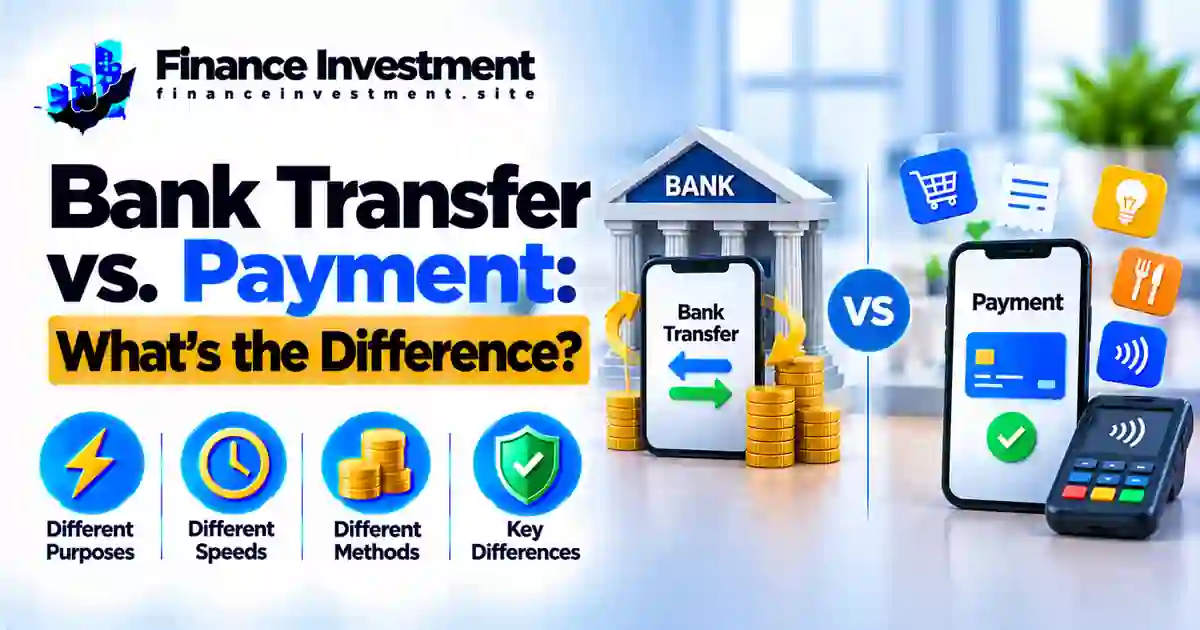
When comparing bank transfer vs. payment, remember that a transfer describes moving money between accounts, while a payment means giving money to settle a purchase, bill, or obligation. The terms can overlap: paying a bill from your checking account may involve a bank transfer behind the scenes.
For example, moving savings to another bank is a transfer. Paying for groceries with a debit card is a payment. Sending rent to a landlord is a payment that may use an electronic transfer. Knowing the difference helps you compare fees, understand processing times, and choose a method that fits the situation.
For a wider overview, start with our
guide to bank transfers and payment methods.
This article takes a closer look at how the terms differ and when they overlap.
What You’ll Learn
- How transfers and payments differ—and where they overlap.
- Where ACH, wire transfers, debit cards, and payment apps fit in.
- How to compare fees, timing, and recipient details.
- How to recognize common payment risks and make informed choices.
Bank Transfer vs. Payment: The Short Answer
A bank transfer moves money between accounts; a payment settles a purchase, bill, or obligation. One transaction can do both—for example, paying a bill through your bank using ACH. Choose a method based on the recipient, urgency, fees, and available options.
Key Takeaways
- ACH is commonly used for routine electronic bank transactions.
- Wire transfers may suit urgent or wire-required payments, but fees can apply.
- Debit cards are mainly used to pay merchants, not transfer funds between your own accounts.
- Payment apps can simplify eligible person-to-person payments.
- Fees, limits, and delivery times depend on the bank or service.
- Check the recipient details before authorizing a transaction.
Bottom Line
Match the method to the purpose, cost, timing, and recipient requirements.
Bank Transfer vs. Payment at a Glance
A transfer describes how money moves; a payment describes what the money is for. One transaction can be both, such as paying a bill through your bank.
Example: moving savings between your bank accounts.
Example: paying rent, a utility bill, or a store.
On a small screen, swipe horizontally to see every column.
| Feature | Bank Transfer | Payment |
|---|---|---|
| Purpose | Move money between accounts | Settle a purchase or obligation |
| Examples | ACH or wire transfer | Debit card, bill, or app payment |
| Fees | Depend on the bank and method | Depend on the provider and method |
| Timing | Varies by transfer type | Varies by payment method |
Quick Take
Start with the purpose of the transaction, then compare the available methods, fees, delivery estimates, and recipient requirements.
A Beginner’s Guide to Bank Transfers and Payments
In U.S. banking, a transfer describes how money moves, while a payment describes what the money is for. The same transaction can be both. Your bank statement may label activity as a transfer, bill payment, card purchase, or electronic withdrawal, depending on how it was processed.
Three Everyday Examples
Moving Savings
Moving $500 from checking at one bank to savings at another is a bank transfer.
Paying Rent
Paying your landlord is a payment. Your bank may send the money electronically or mail a check.
Buying Groceries
A debit-card purchase is a payment, usually processed through a card network.
Where ACH and Wire Transfers Fit In
ACH is a U.S. electronic network used for transactions such as direct deposits, bill payments, and bank transfers. Wire transfers use wire networks and may suit urgent or high-value transactions. Fees, availability, and processing times depend on the provider and transfer details.
Beginner Tip
Check the recipient’s details, fees, and expected delivery time before authorizing a transaction. A confirmation screen does not necessarily mean the money has arrived.
How Bank Transfers and Payments Work
A typical electronic transaction has three stages: authorization, processing, and completion. The exact steps depend on whether you use an ACH transfer, wire transfer, debit card, or payment service.
STEP 1
Authorize
Enter the amount and recipient details, review any fee, and approve the transaction through your bank or payment provider.
STEP 2
Process
The relevant bank or payment network handles the transaction according to its rules, checks, and processing schedule.
STEP 3
Complete
The payment or transfer reaches the applicable completion stage. When funds become available depends on the method and provider.
Why Processing Times Differ
ACH transfers may take longer than some faster electronic payment options. Wire transfers have their own deadlines and processing rules, while a debit-card authorization can appear before final settlement. Cutoff times, weekends, holidays, and provider policies can also affect timing.
Before You Send Money
Double-check the recipient, account details, and amount. For an unexpected request, verify it using a trusted contact method before authorizing the transaction.
How Bank Transfers and Payments Work
An electronic transaction generally involves authorizing the transaction, processing it through the relevant bank or payment network, and completing the transfer or payment. The exact process depends on the method you choose.
STEP 1
Authorize
Enter the amount and recipient details, review any fee, and approve the transaction through your bank or payment provider.
STEP 2
Process
The transaction is routed and handled under the relevant network’s rules. Processing may include verification and other required checks.
STEP 3
Complete
The transaction progresses to completion, and the recipient’s access to the funds depends on the payment method and provider.
Why Processing Times Differ
ACH transfers follow ACH network processing schedules, while wire transfers have separate deadlines and procedures. Debit-card transactions may show a pending authorization before final settlement. Bank cutoff times, weekends, holidays, and provider policies can affect when a transaction is completed or funds become available.
Before You Send Money
Verify the recipient’s details and the amount before approving a transaction. If a payment request is unexpected, contact the person or organization through a trusted, independently verified channel.
Benefits and Drawbacks of Bank Transfers and Payments
Bank transfers and payment methods offer convenience, but the right choice depends on your purpose, timing, fees, and risk tolerance.
Benefits
- Move money electronically without handling cash.
- Use ACH for many direct deposits, bills, and recurring transfers.
- Use cards or payment apps for convenient purchases and eligible person-to-person payments.
- Choose wire transfers when their features and timing fit the transaction.
Drawbacks
- Fees and transfer limits vary by provider and method.
- Processing and fund availability may take longer than expected.
- Incorrect recipient details can cause delays or misdirected funds.
- Scam payments may be difficult to recover, even when you contact your provider quickly.
Before You Choose
Compare fees, delivery estimates, limits, and applicable protections. Verify the recipient independently, and contact your bank or payment provider immediately if you suspect fraud.
Bank Transfer vs. Payment: A Side-by-Side Comparison
ACH and wire transfers are ways to move money between accounts. Debit cards and payment apps are commonly used to make payments, although an app may rely on a bank transfer or another payment network behind the scenes. Compare the options by purpose, timing, and cost—not by speed alone.
| Option | Typical Use | Timing | Cost |
|---|---|---|---|
| ACH transfer | Direct deposits, bills, recurring transfers | Depends on processing schedules and service | Bank or service fees may apply |
| Wire transfer | Certain urgent or high-value transfers | May arrive the same business day; deadlines and checks matter | Sending or receiving fees may apply |
| Debit card | In-store and online purchases | Authorization is often quick; settlement occurs later | Costs depend on account and transaction terms |
| Payment app | Eligible person-to-person payments or purchases | App payments and withdrawals to a bank may have different timelines | Fees depend on the app, funding source, and transaction |
Timing, fees, limits, and dispute options vary by provider and transaction type. Review the applicable terms before authorizing a transaction.
Which Option Fits Your Needs?
ACH is commonly used for recurring bills and direct deposits. Debit cards suit many everyday purchases. A wire transfer may fit a transaction requiring that network’s capabilities. Before using a payment app, verify the recipient and understand the provider’s cancellation and dispute policies.
Costs, Risks, and Tips for Safer Transactions
The cost and risk of sending money depend on the payment method, provider, and transaction details. Compare fees, delivery estimates, and available protections before choosing an option.
Understand the Possible Fees
- ACH transfers: Many common transactions have no customer fee, but charges depend on the bank, account, and service.
- Wire transfers: Domestic or international wires may involve sending, receiving, or intermediary-bank fees.
- Cards and payment apps: Fees can vary by funding source, transaction type, and whether you choose an instant transfer.
Recognize the Risks
Incorrect recipient details can delay a transaction or send money to the wrong account. Scammers may impersonate banks, landlords, relatives, or businesses and pressure you to pay urgently. Some authorized transactions are difficult to reverse, so verify unexpected requests before sending money.
Review these guides to learn about payment app scams and strengthen your account with this bank account security checklist.
Before You Send Money
- Confirm the recipient, account details, and amount.
- Check fees, limits, and estimated delivery time.
- Verify unexpected requests using a trusted contact method you find independently.
- Enable transaction alerts and contact your bank immediately if you suspect fraud.
Common Mistakes When Sending Money
Rushing a transaction can lead to avoidable costs, delays, or financial loss. Before sending money, check these common mistakes.
1. Selecting the Wrong Recipient
A wrong account detail, phone number, or saved contact can direct a payment to the wrong person. Confirm the recipient and transaction details before authorizing it.
2. Overlooking Fees and Timing
Ignoring service fees, transfer limits, cutoff times, or estimated delivery can lead to unexpected costs or late payments.
3. Trusting Urgent Payment Requests
Scammers may impersonate a bank, landlord, relative, or business and pressure you to act quickly. Verify unexpected requests using contact details you already trust or independently obtain.
Illustrative Example: A Rent Payment
Fictional scenario: Jordan needs to pay $1,200 in monthly rent. An email claims the landlord has changed bank accounts and demands immediate payment to the new account.
Rather than sending the money, Jordan contacts the landlord using the phone number listed on the signed lease. The landlord confirms that the payment instructions have not changed.
Lesson: Never rely solely on an email or message announcing new payment details. Verify the change independently before transferring money.
If you send money to the wrong recipient or suspect fraud, contact your bank or payment provider immediately. Ask what options are available to stop, recall, or dispute the transaction. Recovery is not guaranteed, and the available options depend on the payment method and circumstances.
Who Should Choose a Bank Transfer or Another Payment Method?
The right option depends on the purpose of the transaction, how quickly funds are needed, the cost, and the recipient’s payment options.
Regular Bills
ACH payments or bank bill pay can work well for recurring bills. Check the payment deadline and allow enough processing time.
Everyday Purchases
Debit cards are convenient for many in-store and online purchases. Review your account terms and check transactions for unfamiliar charges.
Large or Urgent Transfers
A wire transfer may fit certain high-value or time-sensitive transactions. Verify the recipient, fees, cutoff time, and receiving instructions first.
Friends and Family
A supported payment app can simplify person-to-person payments. Confirm the recipient because mistaken or scam payments may be difficult to recover.
Before You Decide
Compare the total cost, expected arrival time, recipient details, and applicable protections. The fastest-looking option may not be the best fit for every transaction.
Frequently Asked Questions
1. What is the difference between a bank transfer and a payment?
A bank transfer describes moving money between accounts. A payment is money given to settle a purchase, bill, or other obligation. A payment may use a bank transfer as its underlying method.
2. Is an ACH transfer the same as a wire transfer?
No. ACH transactions use the U.S. Automated Clearing House network for activities such as direct deposits and bill payments. Wire transfers use wire networks and have different processing procedures, fees, and rules.
3. Which is faster: a bank transfer or a payment?
It depends on the method and provider. Some card or app transactions are authorized quickly, while ACH and wire transfers follow their own processing schedules. Authorization does not necessarily mean the funds have fully settled or are available to the recipient.
4. Do bank transfers usually have fees?
Some transfers are free, while others carry fees. The cost depends on the bank, account, transfer type, destination, and service. Review the applicable fee schedule before confirming the transaction.
5. Can I cancel a bank transfer after sending it?
Not always. Cancellation or recall options depend on the transfer method, transaction status, and provider rules. Contact your bank promptly if you entered incorrect details or suspect fraud.
6. Are payment apps considered bank transfers?
Not necessarily. A payment app is a service for sending or receiving money. Depending on the app and transaction, funds may move through an app balance, linked bank account, card, or another supported method.
7. Which option is safer for sending money?
No method is risk-free, and protections differ by transaction type. Use a trusted provider, verify the recipient, secure your account, and understand the applicable dispute process. Treat unexpected urgent payment requests with caution.
8. What should I do if I send money to the wrong person?
Contact your bank or payment provider immediately. Explain the mistake and ask whether a cancellation, recall, or dispute is available. Recovery is not guaranteed; provide accurate transaction details and follow the provider’s instructions.
Final Verdict: Bank Transfer vs. Payment
The key difference in bank transfer vs. payment is what each term describes. A bank transfer explains how money moves between accounts, while a payment is made to settle a purchase, bill, or other obligation. A payment may be completed through a bank transfer, debit card, or payment app.
Choose based on the transaction, not just convenience. ACH may suit eligible recurring bills, debit cards work well for many everyday purchases, and wire transfers may fit certain high-value or time-sensitive transactions. Compare fees, expected timing, recipient details, and applicable protections before authorizing payment.
Continue Learning
For a broader explanation of how money moves through the U.S. banking system, explore our complete guide to bank transfers and payments.
FinanceInvestment
Make More Confident Banking Decisions
Understanding bank transfers and payment methods can help you compare costs, check processing times, and make informed financial decisions. Always verify transaction details and choose a method that fits your needs.
Have a question or feedback about this guide? You can contact FinanceInvestment by email.
This link opens your device’s default email application, if configured.
Explore More Banking Guides
Continue learning with these related FinanceInvestment resources.
How ACH Transfers Work
Understand how ACH is used for direct deposits, bills, and electronic transfers.
Bank Account Security Checklist
Find practical ways to protect your account and monitor transactions.
How to Use Online Banking Safely
Learn safer habits for accessing accounts and managing digital transactions.
Leave a Reply